Visualização normal

Antes de ontemCybersecurity News
  • ✇Cybersecurity News
  • Google Launches Gemini 3.5 Transcribe With Sub-Second Streaming Latency Do Son
    Google's new Gemini 3.5 Transcribe model achieves sub-1-second streaming latency and a 4% word error rate, while auto-correcting filler words and speaker corrections. Related Posts: uBlock Origin v1.74.0 Is the Final Version for Chrome Before Google's Delisting Microsoft Unveils the AI at Work Roadmap NVIDIA Hugging Face Acquisition Rumors Surface The post Google Launches Gemini 3.5 Transcribe With Sub-Second Streaming Latency appeared first on Daily CyberSecurity.
     

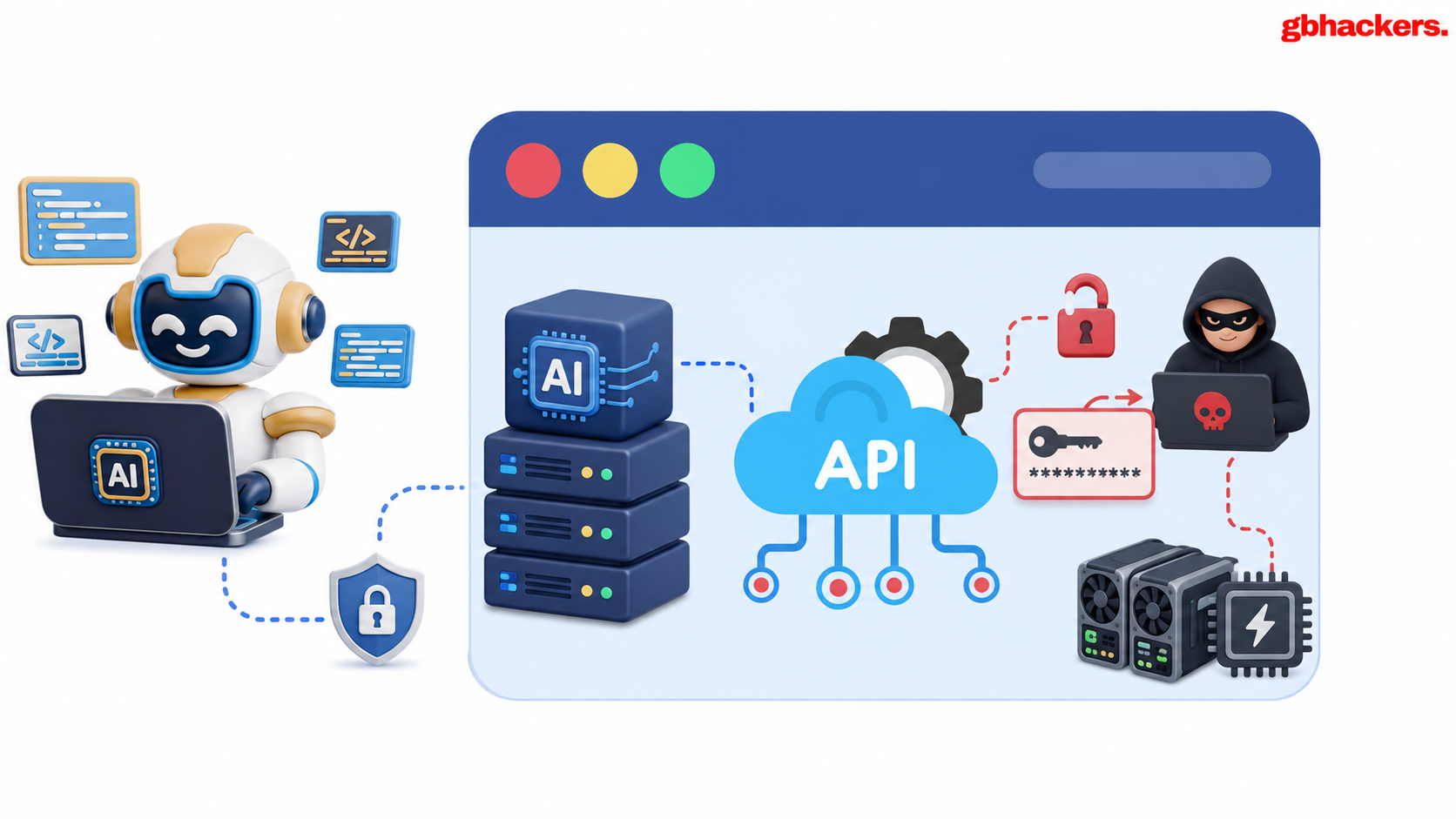
Hackers Are Targeting AI Servers to Steal API Keys and Hijack Computing Power

AI infrastructure is rapidly becoming a high-value enterprise attack surface. Attackers targeting LiteLLM AI gateways, RAGFlow retrieval platforms, and Kestra workflow orchestration environments to steal model-provider credentials, establish persistence, access backend data, and deploy cryptominers. The appeal is clear. AI gateways often centralize OpenAI, Azure, Anthropic, Gemini, and other provider API keys; retrieval platforms hold […]

The post Hackers Are Targeting AI Servers to Steal API Keys and Hijack Computing Power appeared first on GBHackers Security | #1 Globally Trusted Cyber Security News Platform.

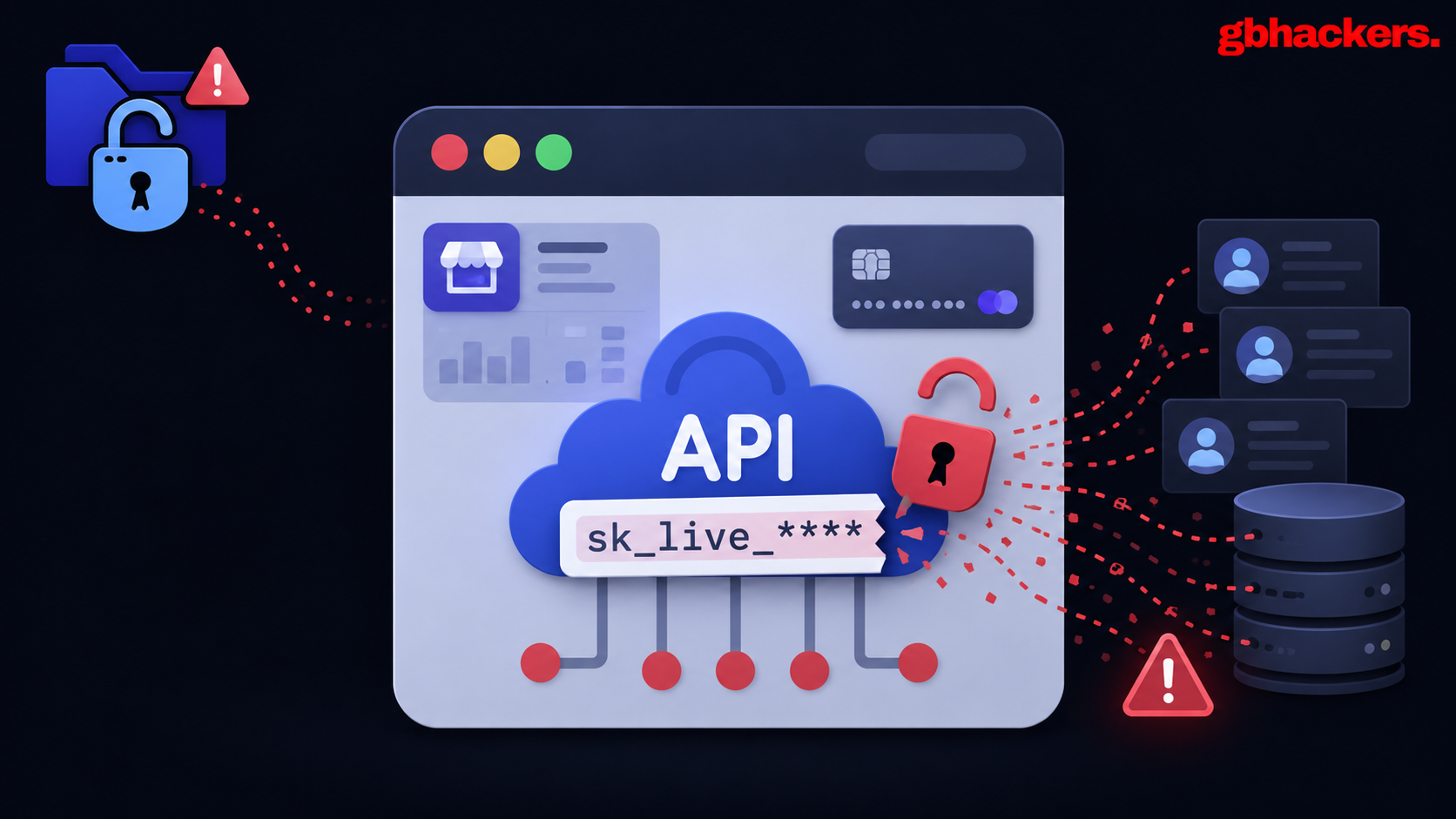
659 Stripe Merchant API Keys Leaked Online, Exposing 688,000 Customer Records

A data leak published on a cybercrime data-trading forum has exposed live Stripe API credentials for 659 merchant accounts, along with approximately 35 GB of customer- and payment-related data. The exposure affects an estimated 688,363 customer records across merchants in 42 countries, but available evidence indicates that Stripe’s own infrastructure was not breached. The dataset […]

The post 659 Stripe Merchant API Keys Leaked Online, Exposing 688,000 Customer Records appeared first on GBHackers Security | #1 Globally Trusted Cyber Security News Platform.

  • ✇Cybersecurity News
  • CVE-2026-71479: New API Integer Overflow Exploited in the Wild Do Son
    CVE-2026-71479, a CVSS 9.1 integer overflow in New API billing, is exploited in the wild to self-credit balances. Update to rc.18 now. Related Posts: CVE-2026-71290: Apache HttpClient Flaw Lets Attackers Intercept and Modify Traffic (CVSS 9.1) PoC Discloses for CVE-2026-64849: watchTowr Sees Attacks on MLflow SSRF CVE-2026-75045: Unauthenticated Attacker Could Download YouTrack Database Backups The post CVE-2026-71479: New API Integer Overflow Exploited in the Wild appeared first on Daily Cyb
     
  • ✇Firewall Daily – The Cyber Express
  • Critical wp2shell Vulnerability Hits WordPress Core, Patch Released Ashish Khaitan
    WordPress has released security updates to address the wp2shell vulnerability, a critical flaw that allowed attackers to achieve remote code execution (RCE) on vulnerable sites using a single anonymous web request.   Unlike many previous attacks, this issue did not require plugins, authentication, or third-party code, making affected core installations particularly vulnerable. Security patches were released in WordPress 6.9.5 and 7.0.2.  wp2shell Vulnerability Exposed Core WordPress Sites 
     

Critical wp2shell Vulnerability Hits WordPress Core, Patch Released

wp2shell vulnerability

WordPress has released security updates to address the wp2shell vulnerability, a critical flaw that allowed attackers to achieve remote code execution (RCE) on vulnerable sites using a single anonymous web request.   Unlike many previous attacks, this issue did not require plugins, authentication, or third-party code, making affected core installations particularly vulnerable. Security patches were released in WordPress 6.9.5 and 7.0.2. 

wp2shell Vulnerability Exposed Core WordPress Sites 

Tracked as CVE-2026-63030, the wp2shell vulnerability is described in the official WordPress release notes as a "REST API batch-route confusion and SQL injection" issue that can result in remote code execution. The flaw originates from the REST API batch endpoint located at /wp-json/batch/v1, or its legacy query-string alias ?rest_route=/batch/v1, allowing exploitation through a single anonymous web request.  The vulnerability was discovered by Adam Kues of Assetnote, an attack surface management division of Searchlight Cyber, through the WordPress HackerOne programme.   To provide defenders time to update their systems, Searchlight Cyber intentionally withheld technical exploitation details, stating, "Given the egregious nature of the flaw and to ensure defenders have adequate time, we are refraining from disclosing technical specifics at this juncture." 

Second SQL Injection Flaw Patched 

The same security release also fixed CVE-2026-60137, another critical SQL injection vulnerability. WordPress credited researchers TF1T, dtro, and haongo for reporting the issue. Unlike the wp2shell vulnerability, this flaw predates the latest release and was backported to WordPress 6.8.6. The wp2shell vulnerability only affects versions 6.9.0 to 6.9.4 and 7.0.0 to 7.0.1.  Severity ratings differ across security advisories. While WordPress classifies CVE-2026-63030 as "high severity," the corresponding GitHub Security Advisory (GHSA-ff9f-jf42-662q) labels it as Critical with a CVSS score of 7.5. Regardless of classification, both vulnerabilities require immediate patching because the wp2shell vulnerability can be exploited without authentication. 

Immediate Updates Recommended 

Powering around 40% of websites, WordPress responded by enabling forced automatic updates for affected versions, including WordPress 7.1 beta2, to secure pre-release installations. As of 17 July, there were no confirmed reports of active exploitation. However, security researchers warned that because WordPress is open source and patch-related code changes became publicly available immediately, proof-of-concept exploits could emerge within hours.  Administrators should verify that every internet-facing WordPress installation has successfully received the update, as some hosting environments disable automatic updates or lock websites to specific versions. Site owners can also check exposure using the public tool available at wp2shell.com. If immediate patching is not possible, temporarily blocking both REST API batch endpoints at the Web Application Firewall (WAF) level can reduce risk, although this should not replace installing the official update.  Security teams managing multiple WordPress websites should also monitor for spikes in anonymous web request traffic targeting batch endpoints, as the wp2shell vulnerability demonstrates how overlooked core features can introduce severe security risks. 

AsyncAPI npm Supply Chain Attack: Malware Injected Into Packages With 2 Million Weekly Downloads

15 de Julho de 2026, 08:55

AsyncAPI npm packages with 2M weekly downloads were compromised, spreading malware with info-stealing, crypto-theft and RAT capabilities.

OX Security researchers disclosed on July 14 that the AsyncAPI npm organization was compromised, with malicious code injected into four packages that together account for over 2 million weekly downloads. The affected versions are @asyncapi/generator 3.3.1, @asyncapi/generator-components 0.7.1, @asyncapi/generator-helpers 1.1.1, and @asyncapi/specs 6.11.2 and 6.11.2-alpha.1. AsyncAPI is widely used by developers building event-driven APIs, which means the blast radius here touches a broad cross-section of professional development environments.

“This is a highly sophisticated, multi-stage supply chain attack. The malware functions as a hybrid info-stealer, crypto-stealer, and Remote Access Trojan (RAT).” reads the report published by OX. “It actively attempts to confuse analysts by mimicking known campaigns (like Miasma) and targets developers and repository maintainers.”

OX describes what was injected as far more than a simple credential harvester. The malware payload runs to 91,973 lines of code. Whoever wrote this was not in a hurry.

The infrastructure choices are deliberate and designed for resilience. The malware uses IPFS, a legitimate peer-to-peer file storage network, to host its payload and as a fallback command-and-control server if the primary C2 at 85[.]137[.]53[.]71 becomes unavailable.

“The malware uses ipfs.io – a legitimate peer-to-peer network to store and share data – in order to store its malicious payload. Later on it uses it as a fallback server in case the C2 server is not functional.” OX explains. “The malware also uses a wide array of backup communication nodes and beacons to keep communication alive even after the C2 fails, and to bypass network-based blocks.”

Beyond IPFS, the malware maintains communication through BitTorrent bootstrap nodes including router.bittorrent.com, router.utorrent.com, and dht.transmissionbt.com, giving it multiple fallback paths if any single channel is blocked at the network level.

The self-propagation capability is what makes this particularly dangerous for developer environments. If the malware finds valid authentication tokens for npm, PyPI, or Cargo on the compromised machine, it attempts to publish itself into packages the victim maintains on those registries. One compromised developer account becomes a new distribution vector.

The researchers found an embedded Ethereum contract address, 0x12c37A86a0Ed0beBe5d1d6a43E42f07860eAc710, in the code, however, they were not able to fully determine how it’s used operationally.

The malware checks whether it’s running inside a virtual machine, whether an endpoint detection tool is present, and whether the system’s locale is set to Russian. If any of those conditions are true, it terminates. This is standard practice for malware that doesn’t want to infect its operators’ own machines or run inside a security researcher’s sandbox.

“Although the malware has some similarities to the Shai-Hulud and Miasma campaigns, and it contains the Miasma string multiple times inside its code, this malware isn’t the same as them, nor is it attributed to the Miasma/Shai-Hulud/TeamPCP campaigns that we’ve seen in the past.” states the report.

The Miasma references inside the code appear to be deliberate misdirection rather than a genuine connection, a tactic designed to send analysts chasing the wrong attribution trail.

npm’s version 12 introduced restrictions on post-install scripts, specifically to prevent malware from executing code at install time. The attackers here didn’t need that vector.

The malicious payload was injected directly into the main JavaScript file of each affected package, making it indistinguishable from legitimate code at install time and executable the moment the package is imported in a project.

If you use any of the affected package versions, the immediate steps are to revoke all developer tokens associated with npm, PyPI, and Cargo on any machine that may have run these packages, rotate secrets, and audit recent commits and package releases in your own registries for unauthorized changes. Monitor for unexpected outbound connections to BitTorrent bootstrap nodes or IPFS gateways on developer networks, as these are the malware’s communication channels and would be unusual in a typical development environment. Check whether any packages you maintain have had unauthorized versions published while the affected versions were in use on your machines.

“npm’s v12 is out, blocking post-install scripts, but threat actors didn’t need to use them as they just embedded the malicious code inside the main JavaScript file without being blocked.” concludes the report. “This amplifies the message we extensively discussed in npm Is Fighting the Right War With the Wrong Weapons – and we don’t see this trend changing anytime soon.”

Follow me on Twitter: @securityaffairs and Facebook and Mastodon

Pierluigi Paganini

(SecurityAffairs – hacking, AsyncAPI)

Upwind Finds Coordinated Supply Chain Campaign Compromising Multiple AsyncAPI npm Packages

Upwind links compromised AsyncAPI npm packages to a coordinated supply chain attack spanning repositories, publishing pipelines, and developer systems at risk.

212 New Venezuela Earthquake Domains Prompt Donation Scam Warnings

Researchers spotted 212 new domains registered after Venezuela's earthquake, warning donors of donation scam risks and urging them to verify relief sites first.

Unlocking the Cloudflare app ecosystem with OAuth for all

24 de Junho de 2026, 03:00

Cloudflare provides services that help run 20% of the web, but we don’t do it alone. Developers on our platform use a myriad of tools and services from other companies too. Cloudflare provides a rich API for our platform that enables developers to create automations, CI/CD, and integrations that glue together the various parts of their infrastructure. Earlier this month, we announced self-managed OAuth, making it easier for customers to create and manage their own OAuth clients for delegated access to the Cloudflare API.

Cloudflare isn’t new to OAuth. If you’ve used Wrangler, or used integrations from partners like PlanetScale, then you’ve already used it. However, until now, third-party OAuth was only available through a small number of manually onboarded integrations, and was not available to developers more broadly. That meant developers building their own integrations had to rely on API tokens, which are harder to manage and a poor fit for many delegated application flows. 

Over the last year, we onboarded a growing number of early partners while improving the consent, revocation, and security model behind Cloudflare OAuth. But as our Developer Platform grew and agentic tools drove demand for delegated access, it became clear that opening up OAuth to all customers was critical to the success of our platform. 

With self-managed OAuth, developers can now offer a standard OAuth flow where customers grant scoped access directly, making it easier to build SaaS integrations, internal developer platforms, and agentic tools while giving users clearer consent, easier revocation, and more control over what an application can do.

Scaling the ecosystem securely

While our earlier OAuth solution was sufficient for a small number of carefully managed partners, we realized that our permissions model, our consent experience, and our ways of mitigating potential abuse vectors were not mature enough. 

Earlier this year we updated our consent experience to make it clearer which application is requesting access, and what permissions it will receive. We also added revocation to the dashboard so developers can easily control which applications have access to their data, and made app ownership more visible to prevent OAuth phishing attacks. 

Opening self-managed OAuth to all customers also required major upgrades to our underlying OAuth engine. This process required a large amount of planning to do with minimal user interruption, while also ensuring data stability and security.

Planning the upgrade to our OAuth engine

Years ago, we deployed Hydra, an open-source OAuth engine, to power Cloudflare OAuth under the hood. That deployment served us well when usage was limited, but as the developer platform grew and agentic workflows became more common, it became clear that we needed a major upgrade to unlock new capabilities and improve performance. 

As we planned the upgrade, we decided to do two smaller sequential upgrades rather than doing one large upgrade.  First, we would move to the latest 1.X release, evaluate any behavior or performance changes, and then proceed with the 2.X upgrade.

During our upgrade planning, it became clear that even the 1.X upgrade would still impact customers because the Hydra database required extensive schema migrations that:

  1. Created indexes in a manner that would claim an exclusive lock on critical tables, preventing active users from performing important OAuth operations 
  2. Added columns to critical tables, and moved other columns to new tables

There was also a quirk in the version of Hydra we were using in which the SDK would perform SELECT * operations, causing deserialization issues with the schema changes.

To prevent user impact, we rewrote the SQL migrations to use features such as CREATE INDEX CONCURRENTLY, and built a custom version of Hydra which selected explicit columns rather than SELECT *.

With the latest 1.X upgrade planned out, we now needed to create a plan for the even larger 2.X upgrade. We identified three potential options, and weighed the benefits and drawbacks of each one. Doing an in-place upgrade was not going to work for us, due to the sheer amount of schema changes the major version bump brought with it. We decided that a blue-green strategy would work, but there was more that needed to be done than simply flipping a switch to start using the new version. The upgrade and migration process would take multiple hours, and we needed the system to continue functioning correctly in that time window.

The first blue-green option would involve disabling writes to the database, preventing any new authorizations from occurring. This means they would not be lost in the transition, but it also meant that nobody would be able to use existing OAuth apps unless they already had a valid credential. It also presented another large problem: if users needed to revoke access from an application for any reason, it would not be possible while the upgrade was being performed.

To combat these issues, we came up with a way to leave writes to the database enabled, at the cost of losing some of them in the switch to the green version. The first thing to solve was minimizing the number of writes for new tokens. There was an operational lever we pulled: increasing the expiry time of tokens to multiple hours. This would allow apps that received new tokens before the upgrade to continue using them without needing to refresh.

With reducing writes solved, we needed to come up with a way to not lose any revocations our users performed during the upgrade window. To do this, we created a queue system (using Cloudflare Queues!) which, after a revocation event, would have a record written into the queue with information about that revocation. This would allow us to drain the queue with the database flipped to the green version, replaying all revocation events that took place in the time window in which they would have been lost. This was critical to get right, otherwise applications that users had revoked would inadvertently have their access restored.

Executing the upgrade

Upgrading to 1.X

From an operational point of view, our first upgrade to the last 1.X release went off without any hitches. Our custom database migrations ran faster than we expected, with no user impact. We had to do a hard cutover to the new version because the old version was unable to introspect tokens that were created by the newer version.

After the cutover, we saw an increase in refresh token errors that we had not seen before. This ended up being due to stricter refresh invalidation behaviors in the new version; if a refresh token was reused, Hydra would invalidate the whole access and refresh token chain. This is problematic for Wrangler and MCP clients. These clients both have a high request volume, and a single reused refresh token would invalidate the entire session.

We mitigated this by adding refresh token coalescing behavior to our Worker which routes OAuth traffic to the correct destination. This allowed us to briefly cache the refresh token request before it reached Hydra, so that if we detected a retry we could short-circuit the request and respond without invalidating the tokens. Fortunately, 2.X versions of Hydra have a configurable “refresh token grace period”, which resolves this by allowing a refresh token to be retried for a period of time without invalidating the whole chain.

Upgrading to 2.X

Since multiple hours of high user-facing impact would not be acceptable, we had our blue-green upgrade strategy set. At a high level, this sounds simple; the migrations would run on a copy of our production database, and then cut over along with the new Hydra version after they complete. In reality, there were a lot more moving parts:

  • Enable revocation replay capture queue
  • Copy and restore our database to the new target
  • Targeted data cleanup — existing data violated some new constraints introduced in the newer versions, which could prevent migrations from succeeding
  • Perform cutovers on the Hydra service along with two additional critical internal systems simultaneously to prevent any errors
  • Post-cutover monitoring and validation

We chose an upgrade window when Hydra had the lowest request volume per second to minimize lost token writes. Other than some timeout tuning, our production migrations ran well against the new database: the net runtime in production was approximately three hours. After the migrations completed, we carefully rolled out the new version of the Hydra service, along with two additional system configs to flip our systems to use the new SDK version.

Shortly after cutting traffic over, we observed that a data cleanup job in our authorization service (which relies on the Hydra consent session API) was being overeager in its purging of OAuth policy data. After investigation, we discovered that there was an issue in one of the Hydra migrations that corrupted the state of certain valid OAuth sessions, which resulted in the migration marking them as invalid. The valid sessions being corrupted caused a disagreement between Hydra and our authorization service, manifesting as an increase in 403s. To mitigate this, we did data restorations and began work on improvements for OAuth authorization behaviors to remove reliance on static policy data.

Beyond the data cleanup issue, there were some additional small fixes more driven by specific client behaviors which we landed quickly. 

With the Hydra version upgrade complete, OAuth traffic has remained stable with improved system performance and reliability for our customers. It also brought production onto the same foundation our newer OAuth APIs had already been validated against in staging, clearing the way for our self-managed OAuth release on June 3

Performance improvements

After completing a large upgrade like this, it is always rewarding and illuminating to look at some broad metrics about the impact. We gathered additional metrics during the database migrations, and observed considerable performance improvements after the upgrade was complete.

Database

Hydra performance

Self-managed OAuth for all

Opening up OAuth to all customers is an important step toward a broader Cloudflare app ecosystem. Today, any Cloudflare customer can create their own OAuth applications and build integrations on top of Cloudflare. We’re extremely excited to launch Cloudflare self-managed OAuth for all. 

To get started, take a look at our documentation or jump straight to the OAuth apps page in the dashboard and create your first OAuth app.

Best Crypto Payment Solutions for E-Commerce Businesses

Compare crypto payment gateways for ecommerce, including checkout tools, stablecoin payments, fiat settlement, plugins, APIs and business payouts.

E-Signature Security Checklist Before Selecting an E-Signature Tool

Electronic signature security starts before the first document is sent. A company needs to know how files are…
  • ✇Firewall Daily – The Cyber Express
  • Critical Ghost CMS Vulnerability Exploited to Hack 700+ Websites Ashish Khaitan
    A critical Ghost CMS vulnerability identified as CVE-2026-26980 has been exploited in a widespread cyber campaign that compromised more than 700 websites, including platforms associated with major institutions such as Harvard University, University of Oxford, and DuckDuckGo. Security researchers say the attacks leveraged weaknesses in the Ghost content management system to inject malicious JavaScript code aimed at facilitating ClickFix malware attacks.  The attacks were detailed by Chinese cy
     

Critical Ghost CMS Vulnerability Exploited to Hack 700+ Websites

CVE-2026-26980

A critical Ghost CMS vulnerability identified as CVE-2026-26980 has been exploited in a widespread cyber campaign that compromised more than 700 websites, including platforms associated with major institutions such as Harvard University, University of Oxford, and DuckDuckGo. Security researchers say the attacks leveraged weaknesses in the Ghost content management system to inject malicious JavaScript code aimed at facilitating ClickFix malware attacks.  The attacks were detailed by Chinese cybersecurity company QiAnXin and its XLab research team, which warned that threat actors are actively exploiting unpatched Ghost installations in an ongoing “large-scale poisoning” campaign. 

CVE-2026-26980 Enabled Unauthorized Access to Ghost CMS Sites 

The exploited flaw, tracked as CVE-2026-26980, was disclosed and patched in February 2026 in version 6.19.1 of the Ghost content management system. Ghost is a widely used open-source CMS focused on blogging, digital publishing, newsletters, and memberships. According to its developers, the platform powers more than 100,000 websites globally.  The Ghost CMS vulnerability is an SQL injection flaw affecting Ghost’s Content API. Researchers at SentinelOne previously warned that the vulnerability could allow unauthenticated attackers to extract sensitive data directly from a site’s database. This included authentication tokens, website content, and user credentials.  The flaw received a CVSS severity score of 9.4, highlighting the serious risks posed by CVE-2026-26980. The vulnerability was reportedly discovered by Anthropic using its Claude AI system. What made the Ghost CMS vulnerability especially dangerous was its ability to expose a site’s Admin API Key. Once attackers obtained this key, they could abuse Ghost’s Admin API to directly modify published articles and inject malicious code into legitimate websites without authorization.

Hundreds of Websites Infected 

According to QiAnXin XLab, attackers began exploiting CVE-2026-26980 shortly after the security patch became publicly available. Investigators noted that a DLL file involved in the campaign carried a compilation timestamp dated February 16, 2026 — the same day the patch for the Ghost CMS vulnerability was announced. The malicious activity was first detected on May 7, 2026, and by early May, researchers had already identified hundreds of compromised websites running the Ghost content management system. More than 700 websites across various industries were eventually found to be affected. The victims included organizations operating in sectors such as artificial intelligence, software development, blockchain, cybersecurity, fintech, media, SaaS, and higher education. Researchers found that nearly half of the compromised websites were personal blogs or independently operated sites. However, many others belonged to major institutions and technology-focused organizations.  QiAnXin stated that many victims were notified about the compromises, but the majority reportedly failed to respond to the alerts.  “At least two groups are currently actively conducting such poisoning operations, and some sites have even become the target of competition between the two parties, with different malicious code being implanted one after another within a single day,” the researchers said. 

Malicious JavaScript Injected Into Ghost CMS Articles 

The attackers used the Ghost CMS vulnerability to tamper with website articles by appending malicious JavaScript loaders to the bottom of pages. These loaders were designed to support ClickFix attacks — a growing social engineering tactic that tricks users into manually executing malware on their systems.  The injected code acted as a two-stage loader that retrieved additional payloads at runtime from an external domain identified as “clo4shara[.]xyz/11z77u3.php.” Researchers said the infrastructure gave attackers flexibility to swap payloads while maintaining the same loader framework across multiple compromised Ghost CMS sites.  QiAnXin explained that the PHP script functioned as a traffic distribution and cloaking system powered by Adspect, a commercial cloaking service. The script gathered browser fingerprinting data from visitors and selectively redirected targets based on predefined rules.  “Directly accessing clo4shara[.]xyz/11z77u3.php reveals a piece of code, which is actually a typical traffic distribution script,” XLab researchers explained. “Its core function is to collect various fingerprint information from the user's browser and upload it to the server, then perform actions such as redirection, popups, and downloads based on the returned instructions.”  The cloaking mechanism helped attackers avoid detection by ensuring that only intended victims received malicious payloads, while automated scanners and crawlers were shown harmless web content instead. 
  • ✇Firewall Daily – The Cyber Express
  • Cisco Secure Workload Flaw CVE-2026-20223 Gets Maximum CVSS 10 Rating Ashish Khaitan
    Cisco has released security updates to fix a critical vulnerability, tracked as CVE-2026-20223, affecting its Cisco Secure Workload platform. The flaw, which received the maximum CVSS score of 10.0, could allow an unauthenticated remote attacker to access sensitive information and make unauthorized configuration changes through vulnerable REST API endpoints. The company said the issue originates from insufficient validation and authentication checks in internal REST API functions used by Secu
     

Cisco Secure Workload Flaw CVE-2026-20223 Gets Maximum CVSS 10 Rating

CVE-2026-20223

Cisco has released security updates to fix a critical vulnerability, tracked as CVE-2026-20223, affecting its Cisco Secure Workload platform. The flaw, which received the maximum CVSS score of 10.0, could allow an unauthenticated remote attacker to access sensitive information and make unauthorized configuration changes through vulnerable REST API endpoints. The company said the issue originates from insufficient validation and authentication checks in internal REST API functions used by Secure Workload. The vulnerability has also been classified under CWE-306, a category associated with missing authentication protections for critical operations. According to Cisco, “an attacker could exploit this vulnerability if they can send a crafted API request to an affected endpoint.” The company added that a successful exploitation of CVE-2026-20223 could allow attackers to “read sensitive information and make configuration changes across tenant boundaries with the privileges of the Site Admin user.”

CVE-2026-20223 Impacts Internal Secure Workload REST API Functions 

Cisco stated in its advisory that the vulnerability affects internal REST API endpoints within Cisco Secure Workload Cluster Software. The issue impacts both SaaS and on-premises deployments regardless of device configuration.  However, the company clarified that the flaw does not affect the web-based management interface. Instead, the exposure is limited to internal API functions associated with Secure Workload infrastructure.  The advisory, identified as “cisco-sa-csw-pnbsa-g8WEnuy,” was first published on May 20, 2026, at 16:00 GMT. Cisco assigned the flaw a base CVSS score of 10.0 due to the severity of the potential impact and the lack of authentication requirements needed for exploitation. The issue is internally tracked under Cisco Bug ID CSCwt99942.  Cisco explained that the root cause behind CVE-2026-20223 is “insufficient validation and authentication when accessing REST API endpoints.” Because of these missing protections, attackers may be able to bypass authorization boundaries and gain access to site resources with Site Admin-level privileges. 

Cisco Warns of Cross-Tenant Data Exposure Risks 

The company warned that exploitation of CVE-2026-20223 could allow unauthorized access to sensitive information across tenant environments. Attackers could also modify configurations across tenant boundaries while operating with elevated Site Admin permissions.  The nature of the vulnerability makes it particularly severe in multi-tenant Secure Workload environments where administrative controls and segmentation are critical for protecting customer data.  Cisco also confirmed that there are currently no workarounds available to mitigate the REST API vulnerability. As a result, organizations using affected Secure Workload releases are being advised to install fixed software versions as quickly as possible. The company stated that temporary mitigations are not enough to fully remediate the issue and strongly recommended upgrading to patched releases to avoid future exposure related to CVE-2026-20223. 

Fixed Secure Workload Versions for CVE-2026-20223 

Cisco released patches for affected Secure Workload versions and outlined the following fixed releases: 
  • Cisco Secure Workload Release 3.10 — fixed in version 3.10.8.3  
  • Cisco Secure Workload Release 4.0 — fixed in version 4.0.3.17  
  • Cisco Secure Workload Release 3.9 and earlier — customers are advised to migrate to a fixed release  
The company also noted that the cloud-based Cisco Secure Workload SaaS deployment has already been secured against CVE-2026-20223. Cisco said no user action is required for SaaS customers because the fixes have already been applied to the hosted environment.  Customers requiring additional support were advised to contact the Cisco Technical Assistance Center (TAC) or their contracted maintenance providers for guidance regarding patch deployment and remediation. 

Cisco Says No Active Exploitation Has Been Detected 

Despite the maximum severity rating assigned to CVE-2026-20223, Cisco stated that its Product Security Incident Response Team (PSIRT) is “not aware of any public announcements or malicious use of the vulnerability” at the time of disclosure. The company added that the vulnerability was identified during internal security testing rather than through reports of active attacks in the wild. The disclosure highlights the increasing risks associated with insecure REST API implementations in enterprise infrastructure products. Vulnerabilities tied to CWE-306 can become especially dangerous when authentication checks are absent from critical administrative functions. As more organizations rely on APIs to manage workloads, automate infrastructure, and support cloud-native environments, flaws like CVE-2026-20223 demonstrate how authentication weaknesses in Secure Workload platforms can expose sensitive systems and tenant data to unauthorized access.  Cisco published version 1.0 of the advisory as a final release on May 20, 2026, and has not indicated whether additional revisions related to the Secure Workload REST API vulnerability are expected. 

Deleted Google API Keys Remain Active up to 23 Minutes, Study Finds

Deleted Google API Keys remain active for up to 23 minutes after deletion, exposing GCP, Gemini, BigQuery, and Maps data to attackers.
  • ✇Firewall Daily – The Cyber Express
  • eBay Struggles with Widespread Outage, Disrupting Transactions and API Access Ashish Khaitan
    The e-commerce platform eBay, a giant in online auctions and fixed-price listings, faced widespread disruptions beginning late Sunday, April 26, 2026, extending into Monday, as users across the globe reported severe technical issues. The eBay outage, which has crippled essential features of the site, particularly the API, has left many buyers and sellers frustrated, struggling to access critical functions, including search features, listings, and checkout processes.  As users faced slow page
     

eBay Struggles with Widespread Outage, Disrupting Transactions and API Access

eBay Outage

The e-commerce platform eBay, a giant in online auctions and fixed-price listings, faced widespread disruptions beginning late Sunday, April 26, 2026, extending into Monday, as users across the globe reported severe technical issues. The eBay outage, which has crippled essential features of the site, particularly the API, has left many buyers and sellers frustrated, struggling to access critical functions, including search features, listings, and checkout processes.  As users faced slow page loads, failed transactions, and difficulty completing sales, a series of unverified reports surfaced suggesting that the hacktivist group 313 Team was behind the massive denial-of-service (DDoS) attack, claiming responsibility for the outage. While the true cause remains unconfirmed by eBay, the timing and scale of the disruption have fueled speculation that a cyberattack was involved. 

The Scope of the eBay Outage 

The eBay outage first began to affect eBay users on the afternoon of April 26, when they began reporting issues with the platform’s functionality. According to Downdetector, a popular service that tracks online outages, the spike in complaints reached around 3:30 PM ET, with the situation worsening the evening. As of 10:30 PM ET, more than 1,300 outage reports were logged, although the number eventually decreased to about 600 by 11:50 PM ET.  Users complained that essential functions like search were malfunctioning, and pages were loading extremely slowly. "I can't even search for anything or complete a purchase," one frustrated user posted on social media. Others echoed similar concerns, noting that critical transactions were unable to be completed, with error messages preventing them from checking out.  Sellers also voiced their frustrations, noting that they could not access the API, which is crucial for the functioning of third-party tools used to manage listings, inventory, and sales. "It’s been nearly 6 hours since the API went down, and we have no word from support," one seller wrote, emphasizing the financial impact of the outage. 

Social Media Users Complain About the Outage

While eBay has not officially confirmed the cause of the outage, rumors quickly began circulating on social media that the hacktivist group 313 Team was responsible for a DDoS attack targeting the platform. DDoS attacks, which flood a website with traffic to overwhelm its servers and take it offline, have become a frequent tactic for hacktivist groups in recent years. The group, which has previously targeted high-profile organizations, allegedly posted a claim on various forums, taking credit for the disruption. However, this attribution has not been independently verified, and eBay has not provided details about the nature of the attack. The company’s official status page displayed no alerts of a cyberattack, showing only minor updates on the system’s functionality.  Despite these official updates, the community’s response has been vocal, with many users continuing to report issues well into the night. One individual posted, "It’s not just down for me, it’s down for everyone. Is this part of a bigger attack targeting e-commerce sites?"  With eBay’s customer support channels largely silent or offering only generic responses, users took to social media to express their frustration. The company’s Instagram account, where many users had previously reached out for help, quickly became a forum for complaints. One commenter wrote, “Brooo you’re down—come on, get up! I need to pay for an auction.” Others left similar messages, questioning the reliability of the platform and demanding answers. 
  • ✇The Cloudflare Blog
  • Active defense: introducing a stateful vulnerability scanner for APIs John Cosgrove · Alex Povel · Malte Reddig
    Security is traditionally a game of defense. You build walls, set up gates, and write rules to block traffic that looks suspicious. For years, Cloudflare has been a leader in this space: our Application Security platform is designed to catch attacks in flight, dropping malicious requests at the edge before they ever reach your origin. But for API security, defensive posturing isn’t enough. That’s why today, we are launching the beta of Cloudflare’s Web and API Vulnerability Scanner. We are start
     

Active defense: introducing a stateful vulnerability scanner for APIs

9 de Março de 2026, 11:00

Security is traditionally a game of defense. You build walls, set up gates, and write rules to block traffic that looks suspicious. For years, Cloudflare has been a leader in this space: our Application Security platform is designed to catch attacks in flight, dropping malicious requests at the edge before they ever reach your origin. But for API security, defensive posturing isn’t enough. 

That’s why today, we are launching the beta of Cloudflare’s Web and API Vulnerability Scanner. 

We are starting with the most pervasive and difficult-to-catch threat on the OWASP API Top 10: Broken Object Level Authorization, or BOLA. We will add more vulnerability scan types over time, including both API and web application threats.

The most dangerous API vulnerabilities today aren’t generic injection attacks or malformed requests that a WAF can easily spot. They are logic flaws—perfectly valid HTTP requests that meet the protocol and application spec but defy the business logic.

To find these, you can’t just wait for an attack. You have to actively hunt for them.

The Web and API Vulnerability Scanner will be available first for API Shield customers. Read on to learn why we are focused on API security scans for this first release.

Why purely defensive security misses the mark

In the web application world, vulnerabilities often look like syntax errors. A SQL injection attempt looks like code where data should be. A cross-site scripting (XSS) attack looks like a script tag in a form field. These have signatures.

API vulnerabilities are different. To illustrate, let’s imagine a food delivery mobile app that communicates solely with an API on the backend. Let’s take the orders endpoint:

Endpoint Definition: /api/v1/orders

In a broken authorization attack like BOLA, User A (the attacker) requests to update the delivery address of a paid-for order belonging to User B (the victim). The attacker simply inserts User B’s {order_id} in the PATCH request.

Here is what that request looks like, with ‘8821’ as User B’s order ID. Notice that User A is fully authenticated with their own valid token:

The request headers are valid. The authentication token is valid. The schema is correct. To a standard WAF, this request looks perfect. A bot management offering may even be fooled if a human is manually sending the attack requests.

User A will now get B’s food delivered to them! The vulnerability exists because the API endpoint fails to validate if User A actually has permission to view or update user B’s data. This is a failure of logic, not syntax. To fix this, the API developer could implement a simple check: if (order.userID != user.ID) throw Unauthorized;

You can detect these types of vulnerabilities by actively sending API test traffic or passively listening to existing API traffic. Finding these vulnerabilities through passive scanning requires context. Last year we launched BOLA vulnerability detection for API Shield. This detection automatically finds these vulnerabilities by passively scanning customer traffic for usage anomalies. To be successful with this type of scanning, you need to know what a "valid" API call looks like, what the variable parameters are, how a typical user behaves, and how the API behaves when those parameters are manipulated.

Yet there are reasons security teams may not have any of that context, even with access to API Shield’s BOLA vulnerability detection. Development environments may need to be tested but lack user traffic. Production environments may (thankfully) have a lack of attack traffic yet still need analysis, and so on. In these circumstances, and to be proactive in general, teams can turn to Dynamic Application Security Testing (DAST). By creating net-new traffic profiles intended specifically for security testing, DAST tools can look for vulnerabilities in any environment at any time.

Unfortunately, traditional DAST tools have a high barrier to entry. They are often difficult to configure, require you to manually upload and maintain Swagger/OpenAPI files, struggle to authenticate correctly against modern complex login flows, and can simply lack any API-specific security tests (e.g. BOLA).

Cloudflare’s API scanning advantage

In the food delivery order example above, we assumed the attacker could find a valid order to modify. While there are often avenues for attackers to gather this type of intelligence in a live production environment, in a security testing exercise you must create your own objects before testing the API’s authorization controls. For typical DAST scans, this can be a problem, because many scanners treat each individual request on its own. This method fails to chain requests together in the logical pattern necessary to find broken authorization vulnerabilities. Legacy DAST scanners can also exist as an island within your security tooling and orchestration environment, preventing their findings from being shared or viewed in context.

Vulnerability scanning from Cloudflare is different for a few key reasons. 

First, Security Insights will list results from our new scans alongside any existing Cloudflare security findings for added context. You’ll see all your posture management information in one place. 

Second, we already know your API’s inputs and outputs. If you are an API Shield customer, Cloudflare already understands your API. Our API Discovery and Schema Learning features passively catalog your endpoints and learn your traffic patterns. While you’ll need to manually upload an OpenAPI spec to get started for our initial release, you will be able to get started quickly without one in a future release.

Third, because we sit at the edge, we can turn passive traffic inspection knowledge into active intelligence. It will be easy to verify BOLA vulnerability detection risks (found via traffic inspection) by sending net-new HTTP requests with the vulnerability scanner.

And finally, we have built a new, stateful DAST platform, as we detail below. Most scanners require hours of setup to "teach" the tool how to talk to your API. With Cloudflare, you can effectively skip that step and get started quickly. You provide the API credentials, and we’ll use your API schemas to automatically construct a scan plan.

Building automatic scan plans

APIs are commonly documented using OpenAPI schemas. These schemas denote the host, method, and path (commonly, an “endpoint”) along with the expected parameters of incoming requests and resulting responses. In order to automatically build a scan plan, we must first make sense of these API specifications for any given API to be scanned.

Our scanner works by building up an API call graph from an OpenAPI document and subsequently walking it, using attacker and owner contexts. Owners create resources, attackers subsequently try to access them. Attackers are fully authenticated with their own set of valid credentials. If an attacker successfully reads, modifies or deletes an unowned resource, an authorization vulnerability is found.

Consider for example the above delivery order with ID 8821. For the server-side resource to exist, it needed to be originally created by an owner, most likely in a “genesis” POST request with no or minimal dependencies (previous necessary calls and resulting data). Modelling the API as a call graph, such an endpoint constitutes a node with no or few incoming edges (dependencies). Any subsequent request, such as the attacker’s PATCH above, then has a data dependency (the data is order_id) on the genesis request (the POST). Without all data provided, the PATCH cannot proceed.

Here we see in purple arrows the nodes in this API graph that are necessary to visit to add a note to an order via the POST /api/v1/orders/{order_id}/note/{note_id} endpoint. Importantly, none of the steps or logic shown in the diagram is available in the OpenAPI specification! It must be inferred logically through some other means, and that is exactly what our vulnerability scanner will do automatically.

In order to reliably and automatically plan scans across a variety of APIs, we must accurately model these endpoint relationships from scratch. However, two problems arise: data quality of API specifications is not guaranteed, and even functionally complete schemas can have ambiguous naming schemes. Consider a simplified OpenAPI specification for the above API, which might look like

We can see that the POST endpoint returns responses such as

To a human observer, it is quickly evident that $.result.id is the value to be injected in order_id for the PATCH endpoint. The id property might also be called orderId, value or something else, and be nested arbitrarily. These subtle inconsistencies in OpenAPI documents of arbitrary shape are intractable for heuristics-based approaches.

Our scanner uses Cloudflare’s own Workers AI platform to tackle this fuzzy problem space. Models such as OpenAI’s open-weight gpt-oss-120b are powerful enough to match data dependencies reliably, and to generate realistic fake data where necessary, essentially filling in the blanks of OpenAPI specifications. Leveraging structured outputs, the model produces a representation of the API call graph for our scanner to walk, injecting attacker and owner credentials appropriately.

This approach tackles the problem of needing human intelligence to infer authorization and data relationships in OpenAPI schemas with artificial intelligence to do the same. Structured outputs bridge the gap from the natural language world of gpt-oss back to machine-executable instructions. In addition to Workers AI solving the planning problem, self-hosting on Workers AI means our system automatically benefits from Cloudflare’s highly available, globally distributed architecture.

Built on proven foundations

Building a vulnerability scanner that customers will trust with their API credentials demands proven infrastructure. We did not reinvent the wheel here. Instead, we integrated services that have been validated and deployed across Cloudflare for two crucial components of our scanner platform: the scanner’s control plane and the scanner’s secrets store.

The scanner's control plane integrates with Temporal for Scan Orchestration, on which other internal services at Cloudflare already rely. The complexity of the numerous test plans executed in each Scan is effectively managed by Temporal's durable execution framework. 

The entire backend is written in Rust, which is widely adopted at Cloudflare for infrastructure services. This lets us reuse internal libraries and share architectural patterns across teams. It also positions our scanner for potential future integration with other Cloudflare systems like FL2 or our test framework Flamingo – enabling scenarios where scanning could coordinate more tightly with edge request handling or testing infrastructure.

Credential security through HashiCorp’s Vault Transit Secret Engine

Scanning for broken authentication and broken authorization vulnerabilities requires handling API user credentials. Cloudflare takes this responsibility very seriously.

We ensure that our public API layer has minimal access to unencrypted customer credentials by using HashiCorp's Vault Transit Secret Engine (TSE) for encryption-as-a-service. Immediately upon submission, credentials are encrypted by TSE—which handles the encryption but does not store the ciphertext—and are subsequently stored on Cloudflare infrastructure. 

Our API is not authorized to decrypt this data. Instead, decryption occurs only at the last stage when a TestPlan makes a request to the customer's infrastructure. Only the Worker executing the test is authorized to request decryption, a restriction we strengthen using strict typing with additional safety rails inside Rust to enforce minimal access to decryption methods.

We further secure our customers’ credentials through regular rotation and periodic rewraps using TSE to mitigate risk. This process means we only interact with the new ciphertext, and the original secret is kept unviewable.

What’s next?

We are releasing BOLA vulnerability scanning starting today as an Open Beta for all API Shield customers, and are working on future API threat scans for future release. Via the Cloudflare API, you can trigger scans, manage configuration, and retrieve results programmatically to integrate directly into your CI/CD pipelines or security dashboards. For API Shield Customers: check the developer docs to start scanning your endpoints for BOLA vulnerabilities today.

We are starting with BOLA vulnerabilities because they are the hardest API vulnerability to solve and the highest risk for our customers. However, this scanning engine is built to be extensible.

In the near future, we plan to expand the scanner’s capabilities to cover the most popular of the OWASP Web Top 10 as well: classic web vulnerabilities like SQL injection (SQLi) and cross-site scripting (XSS). To be notified upon release, sign up for the waitlist here, and you’ll be first to learn when we expand the engine to general web application vulnerabilities.

❌
❌