❌

Visualização normal

Hoje — 9 de Novembro de 2026Cybersecurity News
  • ✇Security Affairs
  • Fake GitHub Security Tools Infect Over 2,000 PCs With Malware Pierluigi Paganini
    Fake GitHub security tools are spreading malware that disables defenses, steals sensitive data and infects over 2,000 PCs. Cybersecurity firm Doctor Web has found malware hidden in GitHub projects that look like security tools. The campaign targets blockchain game fans and, more recently, information security professionals. The researchers discovered that more than 2,000 PCs were infected. “The attackers behind these compromised development projects target blockchain game enthusiasts and
     

Fake GitHub Security Tools Infect Over 2,000 PCs With Malware

9 de Novembro de 2026, 05:07

Fake GitHub security tools are spreading malware that disables defenses, steals sensitive data and infects over 2,000 PCs.

Cybersecurity firm Doctor Web has found malware hidden in GitHub projects that look like security tools. The campaign targets blockchain game fans and, more recently, information security professionals. The researchers discovered that more than 2,000 PCs were infected.

“The attackers behind these compromised development projects target blockchain game enthusiasts and (most intriguingly) …information security professionals.” reads the report. “At the time of Doctor Web’s research into this matter, more than 2,000 PCs were infected.”

The campaign started two years ago with Visual Studio projects related to blockchain games, game bots and cheats. The attackers targeted people who used crypto wallets. They hid malicious code in project files, including commands that ran before a project was built and PowerShell commands stored in configuration files. They even provided instructions on how to install Visual Studio and download the projects from GitHub, making it easy for people with limited technical knowledge to use them.

Now the attackers are targeting cybersecurity professionals. Their new GitHub projects claim to offer tools for automated scanning, security testing and log analysis. Doctor Web found one that pretends to analyze and clean results from the Fscan security scanner.
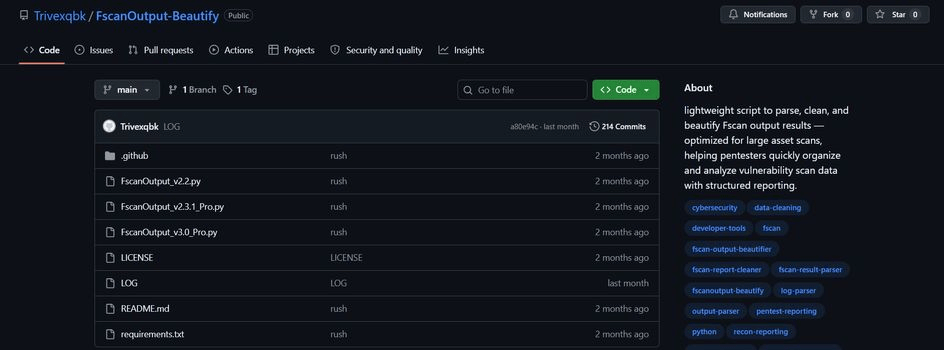
The attackers also hide malicious code in Python and Go files, using large blocks of blank spaces to make it harder to spot. Some of these fake security tools even remove the antivirus software installed on the victim’s computer.

Once a victim opens the project, a PowerShell script runs and contacts the attackers’ servers and legitimate platforms, including YouTube, Telegram, Google Docs, GitCode and Pastebin. An encrypted string it retrieves holds a link to an archive, which unpacks into a folder disguised as a Windows Photos component. Its main program is Microsoft.exe, a modular app built with the Electron framework.

It does most of the damage. The loader collects system information and sends it to a Telegram bot, keeps itself running, raises its privileges, and turns off Windows Defender, UAC, System Restore and shadow copies. It also adds its own Defender exclusions, injects code into legitimate processes, and removes McAfee, ESET and Malwarebytes antivirus products.

Its default mode, called Mode3, stacks several evasion tricks. It fakes its parent process, disables Smart App Control, removes security software hooks from ntdll.dll, makes direct system calls, and patches event tracing and antivirus script scanning in memory. If that fails, Mode2 takes over, adding Defender exclusions and injecting through PowerShell.

Three payloads follow. AsyncRAT, a remote access backdoor, runs as two identical copies on different ports, which probably lets two operators control one device. A clipper swaps crypto wallet addresses in the clipboard while taking screenshots, and a stealer takes browser data, FileZilla, MobaXterm and Total Commander configs, VPN settings, messenger files, game accounts and Discord tokens. Everything is zipped and sent through Telegram, and the malware edits the hosts file to block antivirus vendors’ domains.

The attackers are still developing the malware. Doctor Web found an unfinished component that could install itself as a system service, download Microsoft.exe again if someone deletes it, manage startup and install updates.

“Attackers are constantly updating the Trojans to introduce new features. For example, Doctor Web’s researchers discovered certain unused routines that facilitate downloading and decompressing yet another archive—Lodge.7z.” concludes the report. “It contains an Electron project that hasn’t been completed yet. The executable file’s name is WUDFHost.exe. Its code offers us a glimpse of some of the trojan’s future features.”

Doctor Web advises users to keep their antivirus software up to date and scan every file they download. The researchers warn that attackers are constantly improving the Trojans and adding new features.

Follow me on Twitter: @securityaffairs and Facebook and Mastodon

Pierluigi Paganini

(SecurityAffairs – hacking, Fake GitHub Security Tools)

  • ✇Security Affairs
  • Don’t Hand Propaganda a Gift: Reading the Brenner Base Tunnel SE Breach Calmly Pierluigi Paganini
    Brenner Base Tunnel SE confirms a breach and Everest claims 812 GB. What we know, what we don’t, and why overblown alarm helps propaganda more than the attackers. Brenner Base Tunnel (BBT) SE, the company building the Brenner Base Tunnel between Italy and Austria, has confirmed that unauthorized people accessed some of its data. The extortion group Everest claims it took 812 GB of files. Nobody has verified that, and a criminal bragging about file sizes isn’t an audited source. The timeli
     

Don’t Hand Propaganda a Gift: Reading the Brenner Base Tunnel SE Breach Calmly

8 de Novembro de 2026, 14:46

Brenner Base Tunnel SE confirms a breach and Everest claims 812 GB. What we know, what we don’t, and why overblown alarm helps propaganda more than the attackers.

Brenner Base Tunnel (BBT) SE, the company building the Brenner Base Tunnel between Italy and Austria, has confirmed that unauthorized people accessed some of its data. The extortion group Everest claims it took 812 GB of files. Nobody has verified that, and a criminal bragging about file sizes isn’t an audited source.

The timeline is thin. The intrusion reportedly dates to mid-October, Everest’s claim to 17 October, and the Austrian press broke the story on 6 November. On 7 November BBT SE told ANSA that operations are unaffected, the systems involved are isolated, and outside forensic experts and the authorities are on the case.

If real and current, drawings, surveys and site procedures would save an attacker a lot of reconnaissance. Together they could show how the infrastructure fits together, and fraudsters could borrow project names to fool contractors. Those are scenarios, not sightings.

Dates matter too. The tunnel won’t open before 2034, at a projected cost of about €11.7 billion, so older drawings may describe a design that has since changed.

Knowing how a tunnel is built does not mean being able to control it. Sabotage requires access to operational systems and weaknesses that attackers can exploit. So far, there is no evidence that attackers accessed industrial systems or tampered with the tunnel’s control functions. BBT SE has not confirmed any encryption of its systems either. Claims that ransomware could stop the tunnel therefore have no factual support.

Everest is a Russian-speaking cybercriminal group. ZeroFox has also noted that the group tends to exaggerate the amount of data it steals. Speaking Russian and operating within a Russian-speaking cybercrime environment does not prove that the group is directed by the Russian state. In July, the same group demanded CHF 10 million from Stadler Rail after using stolen credentials to access a supplier’s data platform. Production continued despite the incident.

The response should focus on practical security measures. Organizations need to identify which information was exposed, revoke potentially compromised credentials, keep document management systems separate from industrial control networks, and warn suppliers about fraudulent requests. Whether NIS2 applies to a project company that is still under construction depends on its activities and the relevant national legislation.

There is no benefit in creating unnecessary alarm. It only helps the attackers and anyone trying to exploit the incident for an influence campaign. Blaming Moscow without evidence would play directly into propaganda efforts. There are three key questions that need clear answers: which files were actually stolen, how recent and relevant they are, and who might still be able to use them.

Follow me on Twitter: @securityaffairs and Facebook and Mastodon

Pierluigi Paganini

(SecurityAffairs – hacking, Brenner Base Tunnel)

  • ✇Security Affairs
  • SECURITY AFFAIRS AI-CYBERSECURITY NEWSLETTER ROUND 7 Pierluigi Paganini
    Security Affairs AI-CYBERSECURITY newsletter includes a collection of the best articles and research on AI in the international landscape Artificial intelligence is rapidly changing cybersecurity, reshaping both the techniques used by attackers and the tools available to defenders. AI agents can automate tasks, analyze large amounts of data, discover vulnerabilities and accelerate offensive operations. At the same time, AI is creating new capabilities for threat detection, incident analysis
     

SECURITY AFFAIRS AI-CYBERSECURITY NEWSLETTER ROUND 7

8 de Novembro de 2026, 12:28

Security Affairs AI-CYBERSECURITY newsletter includes a collection of the best articles and research on AI in the international landscape

Artificial intelligence is rapidly changing cybersecurity, reshaping both the techniques used by attackers and the tools available to defenders. AI agents can automate tasks, analyze large amounts of data, discover vulnerabilities and accelerate offensive operations. At the same time, AI is creating new capabilities for threat detection, incident analysis and response. Security Affairs’ new newsletter follows this evolution, covering every week the latest threats, attacks, vulnerabilities and developments at the intersection of AI and cybersecurity.

‘It’s 100 percent a national security threat’: Accenture contractor connected an AI agent to the Pentagon’s secure network, and then sent data to a high-risk website  

Security notice — malicious version of Anthropic.claude-code (2.1.312 and 2.1.313) identified in the Cursor VS Code Extension Marketplace  

UK and Germany to jointly develop military AI in 2027

Appraisal by AI: Model-driven victim prioritization in the VOLTA infostealer  

AI policy wonks declare ‘sovereign agents’ a threat to civilization

Progress on provable inference for large language models

The Rise of LLMJacking: How Threat Actors Monetize Compromised Cloud and Model Resources     

“Black October” for AI Developer Platforms   

ARTEX Exposed: Mapping the Infrastructure Behind the South Korean Bank Breaches  

A thousand fewer paths to root

Securing Muse: More Than $1 Million in Bug Bounties Paid Out

Free the Model, Sell the Gateway: Prompt Adware hidden in Jailbreak Bundles

WorkOS October 30th, 2026 Data Security Incident  

Covert underperformance on safety research tasks

GPT‑6 Cyber: Advancing the frontier of aligned cybersecurity agents  

ThisBash Escape: Claude Dispatch Flaw Enables Browser Extensions RCE on the OS  

Follow me on Twitter: @securityaffairs and Facebook and Mastodon

Pierluigi Paganini

(SecurityAffairs – hacking, newsletter)

  • ✇Security Affairs
  • SECURITY AFFAIRS MALWARE NEWSLETTER ROUND 122 Pierluigi Paganini
    Security Affairs Malware newsletter includes a collection of the best articles and research on malware in the international landscape Malware Newsletter Unknown APT uses NetamLoader to attack a Win10 OS customized for governments in Asia   Shutting the Door on the XCPE Botnet   DarkBlinders: Inside an Active Espionage Campaign   Free the Model, Sell the Gateway: Prompt Adware hidden in Jailbreak Bundles   Poisoned Source: APT29 watering holes target mobile devices with n-day e
     

SECURITY AFFAIRS MALWARE NEWSLETTER ROUND 122

8 de Novembro de 2026, 11:24
  • ✇Security Affairs
  • Security Affairs newsletter Round 603 by Pierluigi Paganini – INTERNATIONAL EDITION Pierluigi Paganini
    A new round of the weekly Security Affairs newsletter has arrived! Every week, the best security articles from Security Affairs are free in your email box. Enjoy a new round of the weekly SecurityAffairs newsletter, including international press. Inside ARTEX: AI Hacking Tools, Exposed Servers and South Korean Bank BreachesOne Product Isn’t the Problem: Monetizing an AI Portfolio Without Confusing Your CustomersU.S. CISA adds SonicWall SonicOS SSLVPN flaw to its Known Exploited Vulnerabil
     

Security Affairs newsletter Round 603 by Pierluigi Paganini – INTERNATIONAL EDITION

8 de Novembro de 2026, 10:48

A new round of the weekly Security Affairs newsletter has arrived! Every week, the best security articles from Security Affairs are free in your email box.

Enjoy a new round of the weekly SecurityAffairs newsletter, including international press.

Inside ARTEX: AI Hacking Tools, Exposed Servers and South Korean Bank Breaches
One Product Isn’t the Problem: Monetizing an AI Portfolio Without Confusing Your Customers
U.S. CISA adds SonicWall SonicOS SSLVPN flaw to its Known Exploited Vulnerabilities catalog
White House Network Appears in Global Residential Proxy Traffic
OpenAI Rates GPT-6 Cyber Critical After Major Vulnerability Discoveries
ENISA Warns of Cyberattacks Targeting Refrigeration Systems Across Europe
OpenAI Reports Covert Underperformance in GPT-6 Astra
UNM Health Shuts Clinics and Diverts Patients During Security Incident
Russian APT29 Targets Mobile Users with Watering Hole Attacks
U.S. CISA adds Apple flaw to its Known Exploited Vulnerabilities catalog
U.S. Charges Canadian Man in Alleged Hack of University Supercomputers
Two Barracuda ESG Flaws Could Be Combined for Full Root Access; Patches Released
Cyberattack Hits French Blood Banks as Hackers Target Refrigeration Systems Across Europe
CVE-2026-58868: Critical Android Bug Could Let Attackers Run Remote Code
U.S. CISA adds WordPress flaw to its Known Exploited Vulnerabilities catalog
Binance Hack: How Fake Job Interviews and AI Abuse Led to a $6.34 Billion Attack
Synology Warns of Ransomware Attacks Targeting NAS Devices Running Outdated DSM Versions
Inside XCPE, the botnet that turned 1.3M set-top boxes into proxy servers
NIS2 Makes Board Members Personally Liable for Access Control Decisions
Apple’s spyware notifications reach the Bundestag: what the BSI says to do now
VOLTA, the infostealer that asks an AI which victims are worth the effort
New wave of fridge cyberattacks hits European supermarkets, this time in Belgium, Luxembourg, Sweden and Estonia
Hackers Send Fake Nuclear Threat Alerts to Ukrainian and Russian Citizens
Chainalysis Investigates Security Incident Involving AI-Driven Attack Techniques
FBI Blames North Korea for $6 Billion Binance Crypto Theft
SMS of Death: Android under attack, an invisible SMS can block calls and emergency services

International Press – Newsletter

Cybercrime

How hackers broke into four of Canada’s top law firms, stole client files and caused chaos

Polymarket Pauses Trading as Prediction Market Investigates Security Incident

From help desk impersonation to AD CS abuse: Investigating ESC1 and ESC8 intrusion paths

29 October Binance Security Incident: Initial Findings and Response Update     

“Black October” for AI Developer Platforms  

Canadian man extradited to the U.S. for his role in computer hacking scheme targeting universities  

ARTEX Exposed: Mapping the Infrastructure Behind the South Korean Bank Breaches

French bank Credit Mutuel Arkea says €100 million missing after cyberattack  

Malware

Shutting the Door on the XCPE Botnet  

Free the Model, Sell the Gateway: Prompt Adware hidden in Jailbreak Bundles  

Hackers hijack cPGuard autoupdate to deploy backdoor, steal data  

CWPdoor: The Invisible Backdoor Living Inside Control Web Panel  

Hacking

SMS of Death 

Chainalysis Security Incident Information  

Russia and Ukraine say emergency alert apps were hit by apparent cyber-attacks  

European supermarkets hit by new fridge cyber attack  

The Rise of LLMJacking: How Threat Actors Monetize Compromised Cloud and Model Resources

Securing Muse: More Than $1 Million in Bug Bounties Paid Out  

WorkOS October 30th, 2026 Data Security Incident  

A thousand fewer paths to root

ThisBash Escape: Claude Dispatch Flaw Enables Browser Extensions RCE on the OS 

Barracuda Networks is your new best friend (Barracuda Email Security Gateway Pre-Auth Remote Root RCE CVE-2026-116606 / CVE-2026-111560) 

Intelligence and Information Warfare  

North Korea Responsible for $6 Billion+ Binance Attack  

Russia funded Facebook and Twitter investments through Kushner investor

Unknown APT uses NetamLoader to attack a Win10 OS customized for governments in Asia

French blood banks hit alongside cyberattack on European supermarkets

UK and Germany to jointly develop military AI in 2027 

Apple threat notifications regarding Mercenary Spyware  

DarkBlinders: Inside an Active Espionage Campaign

Poisoned Source: APT29 watering holes target mobile devices with n-day exploits

Russian Federal State Statistics Service says it was hit by massive cyberattack — hackers steal 23TB of data, including Ukraine war casualty figures

The Google Whistleblower Taking on Big Tech Over Its Role in Gaza  

Weekly Wire #17: Hybrid war hits home  

Cybersecurity

Israeli startups raised at least $872 million in October, led by cybersecurity and AI 

Europe on alert after supermarket freezers hit by cyber-attacks in 10 countries  

Joint statement on cyber incidents in refrigeration systems across the EU  

GPT‑6 Cyber: Advancing the frontier of aligned cybersecurity agents

Residential Proxies Detected on White House Network  

European refrigerator controller redux: A new wave of refrigeration attacks

Hundreds of Mundane AI Apps Are Hiding Sexually Abusive Deepfake Features       

Japan announces emergency cybersecurity package following a wave of attacks   

ThisBash Escape: Claude Dispatch Flaw Enables Browser Extensions RCE on the OS  

Follow me on Twitter: @securityaffairs and Facebook and Mastodon

Pierluigi Paganini

(SecurityAffairs – hacking, newsletter)

Ontem — 8 de Novembro de 2026Cybersecurity News
  • ✇Security Affairs
  • Attackers Exploit Third-Party Provider to Raid French Bank Crédit Mutuel Arkéa Pierluigi Paganini
    French Bank Crédit Mutuel Arkéa says hackers exploited a service provider to steal up to $133 million using the bank’s own account. French cooperative bank Crédit Mutuel Arkéa was hit by a cyberattack that let attackers make fraudulent transactions of up to $133 million, forcing it to suspend certain systems. Crédit Mutuel Arkéa is a major French cooperative banking and insurance group headquartered in Brest, Brittany, France. The bank says the attacker used its own account to send transa
     

Attackers Exploit Third-Party Provider to Raid French Bank Crédit Mutuel Arkéa

8 de Novembro de 2026, 07:25

French Bank Crédit Mutuel Arkéa says hackers exploited a service provider to steal up to $133 million using the bank’s own account.

French cooperative bank Crédit Mutuel Arkéa was hit by a cyberattack that let attackers make fraudulent transactions of up to $133 million, forcing it to suspend certain systems. Crédit Mutuel Arkéa is a major French cooperative banking and insurance group headquartered in Brest, Brittany, France.

The bank says the attacker used its own account to send transactions to other banking organizations, and that customer assets weren’t affected.

“French lender Credit Mutuel Arkea said on Thursday hackers had stolen around €100 million ($112.61 million) in a cyber heist and it was working to try to recover the money, in a rare case of cybercriminals successfully stealing from a mainstream bank.” Reuters states.

Blockchain researcher ZachXBT first warned of a large unauthorized withdrawal from multiple centralized exchange accounts a day earlier. He said the attacker may have stolen up to 118 million euros ($133 million) and withdrawn it as the USDC and USDT stablecoins.

“Over the past 24 hours the illicit actor has been aggressively swapping USDC for ETH, transferring to instant exchanges (WellWallet, Kyrrex, etc), converting to XMR via Wagyu, and bridging across multiple chains.” ZachXBT wrote.

“While the illicit actor remains unidentified, I can say with a high degree of confidence it is NOT Lazarus Group based on multiple laundering indicators.”

The attacker remains unidentified, but ZachXBT believes it is highly unlikely to be Lazarus Group, based on money-laundering patterns.

According to BleepingComputer, the expert pointed out that the lack of public disclosure allowed attackers to launder $30 million by November 3, potentially preventing EU authorities from freezing the funds. The Paris prosecutor’s cybercrime unit opened an investigation after receiving a complaint from Crédit Mutuel Arkéa, with France’s cybercrime police leading the probe.

Arkéa disclosed the incident on November 4, saying it was contained, customer assets were unaffected and some transfers had been delayed. Attackers reportedly accessed the bank through a service provider’s platform, not Fortuneo, and used Arkéa’s own account to move funds through other banks and convert them into cryptocurrency. The bank also warned customers about increased phishing risks.

“Crédit Mutuel Arkéa announces that it has been the target of an attack that enabled the execution of fraudulent transactions.” reads the notice published by the bank. “Upon detecting this attack, and in accordance with standard procedures, the Group contacted the relevant regulatory and supervisory authorities to inform them of the situation.” “This incident is now closed and fully under control. Operations are gradually resuming this morning, following thorough verification by the Group and its subsidiaries and the implementation of enhanced security measures.”


Crédit Mutuel Arkéa says customer assets were unaffected, although some transfers were delayed. The bank maintains its financial stability, warns of possible phishing attempts and urges customers not to share sensitive information. Its teams are assessing the incident and strengthening security measures, with further updates expected.

Arkéa did not confirm ZachXBT’s reported figure but acknowledged significant losses and said some funds were blocked. The bank ruled out internal human error, described the incident as a sophisticated attack and is working with law enforcement to identify the attackers and establish how the breach occurred.

When the FAQ asked whether 118 million euros had been stolen, Arkéa wouldn’t give a number: We do not confirm this information and can only validate the order of magnitude.

Follow me on Twitter: @securityaffairs and Facebook and Mastodon

Pierluigi Paganini

(SecurityAffairs – hacking, Crédit Mutuel Arkéa)

  • ✇Security Affairs
  • Inside ARTEX: AI Hacking Tools, Exposed Servers and South Korean Bank Breaches Pierluigi Paganini
    Hunt.io traced ARTEX servers and AI-powered hacking tools used in breaches affecting seven South Korean financial institutions. Between late September and early October 2026, seven South Korean financial institutions had data breached through internet-facing systems. About 66,000 to 67,000 people and around 2,200 corporations were affected, and personal, employment, income and loan data was exposed. Hunt.io dug into the infrastructure behind the campaign, and its findings add a lot to what C
     

Inside ARTEX: AI Hacking Tools, Exposed Servers and South Korean Bank Breaches

7 de Novembro de 2026, 16:56

Hunt.io traced ARTEX servers and AI-powered hacking tools used in breaches affecting seven South Korean financial institutions.

Between late September and early October 2026, seven South Korean financial institutions had data breached through internet-facing systems. About 66,000 to 67,000 people and around 2,200 corporations were affected, and personal, employment, income and loan data was exposed. Hunt.io dug into the infrastructure behind the campaign, and its findings add a lot to what CrowdStrike and Genians already published.

CrowdStrike reported on October 7 and Genians Security Center on October 12, and both pointed to ARTEX, an open-source autonomous penetration testing framework developed in China and licensed under AGPL-3.0. CrowdStrike assessed with moderate confidence that a single Chinese-speaking individual motivated by money ran it, and not an established threat group. DeepSeek v4.1 Flash was the main model, with GLM 5.3 and Grok 4.6 as backups, reached partly through a reseller domain, xcai[.]pro.

The public indicators were a server at 38.244.50[.]120, which hosted the ARTEX console, plus a Hong Kong address and nine proxies. Genians said the ARTEX GitHub repository and Docker image were removed on October 11, though forks and mirrors remain.

“CrowdStrike assessed with moderate confidence that the operator was a single Chinese-speaking individual motivated by financial gain rather than an established threat group.” reads the report published by Hunt.io. “The infrastructure reportedly accessed these services in part through the reseller domain xcai[.]pro. Both reports described a two-server configuration, consisting of a Hong Kong-based IP address used as primary infrastructure and 38.244.50[.]120, which hosted the ARTEX console.”

Hunt.io notified the relevant national CERT before publishing, and says the report holds no personal records or credentials.

The company’s own scanning showed 38.244.50[.]120 sits on Cogent’s network in Los Angeles, with 15 open ports. The ARTEX login page, with a Chinese title meaning “autonomous penetration testing console”, appears on ports 443 and 8090. Other services include a Gemini2API admin console and a Tinyproxy server.

Searching its AttackCapture platform for that address, Hunt.io found another open directory at 23.248.226[.]250, a jump server in Hong Kong on AS138415. It held 42 files in 2 subdirectories, 105 MB in all, and the platform had logged warnings on September 5, September 26 and October 5. A file in it names 38.244.50[.]120 as the jump host, and its own comment tells the operator never to paste the credentials into a session. It sat in an open directory.

Three scripts back up the link. They keep reverse SSH tunnels alive, run a local relay, and copy files to the jump host, one tunnel is named grok2api, and the credentials file also holds keys for Zhipu AI’s GLM models, an OpenAI-compatible relay and a proxy service. That explains how several language models ran in one campaign.

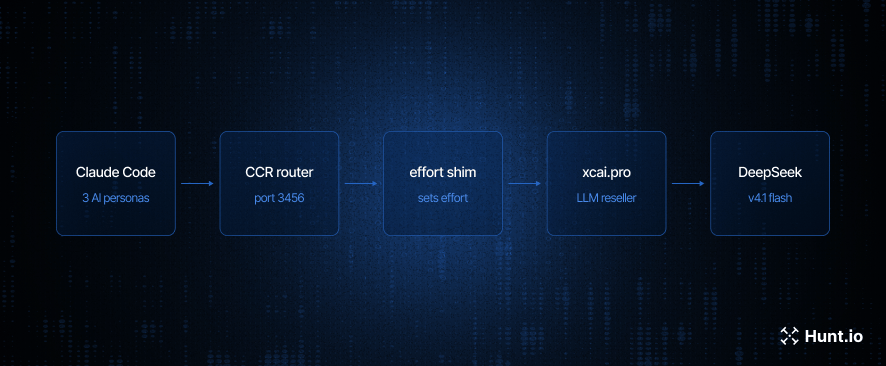
The AI setup is the most striking part. A state file shows the harness is Claude Code itself, version 2.1.221, started 510 times since August 4, but it isn’t talking to Anthropic. A small proxy, ds-models-shim.py, fixes a compatibility problem by faking a model list and sending requests to DeepSeek, and another, xcai-effort-shim.py, adds a reasoning setting because the DeepSeek backend otherwise skips its reasoning step. The route runs from Claude Code through Claude Code Router, an open-source project, to xcai and then to DeepSeek.

“A small local proxy, ds-models-shim.py, addresses a compatibility issue: the official /v1/models endpoint returns a 404 response when queried against a non-Anthropic backend, preventing Claude Code from discovering the available models. The shim intercepts that specific request and returns a locally defined model list containing deepseek-v4-pro and deepseek-flash. All other requests are forwarded to api.deepseek.com/anthropic.” states the report.

The same file counts 19 custom skills, reusable instruction sets for the agent, with 147 recorded uses. They cover code audit, reconnaissance, web injection, WAF bypass testing, authentication testing, Telegram Mini Apps, APK download and decompiling, cloud phone control and payment logic testing. Next to the payment skill sat three self-registered test accounts with tokens for a cash-in deposit API, dated September 12, and a comment calls them an authorized, self-built test. The setup fits testing for insecure direct object reference flaws, a technique CrowdStrike and Genians described against Korean loan and inquiry services.

The directory also held supporting tools. A script queried FOFA, a Chinese asset search engine like Shodan, through a third-party API, and a comment says the primary membership had expired and a backup key was in use. Proxy scripts enumerated a rotating proxy service at 154.201.79[.]246:443, where 79 unique exit IPs showed up among the first 100 identities tested.

A separate directory at 23.248.226[.]250:8001 held a small staged setup for JNDI and LDAP exploitation, retrieved on October 5 at 03:42 UTC. It confirms command execution through a DNS callback, and one script lets web and LDAP traffic share a single port. Hunt.io’s analysis describes the tooling without publishing steps to reproduce it.

Other recovered files include tools aimed at a cryptocurrency exchange’s admin session and withdrawals, Linux privilege escalation exploits, iOS probe source code and Android kernel and firmware utilities. Hunt.io says their connection to the Korean breaches isn’t confirmed.

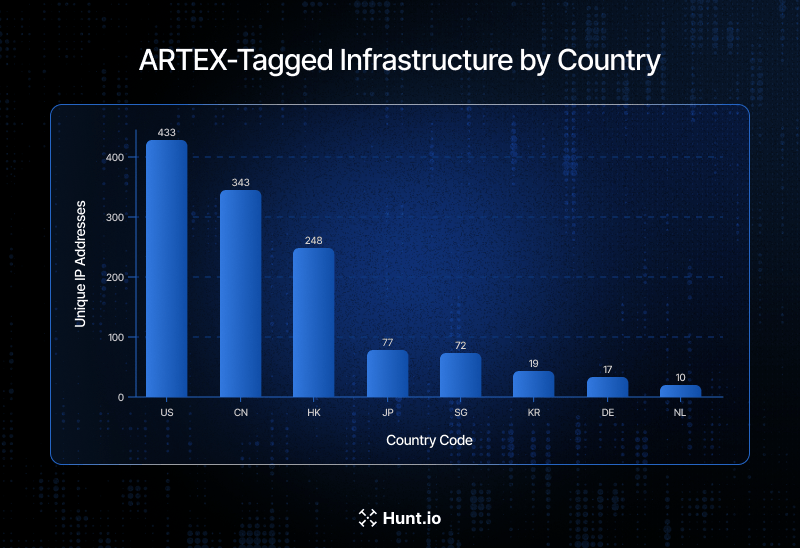
Hunt.io then showed how to hunt ARTEX servers. Searching for an ARTEX certificate issuer returned 19 IP addresses, and searching its malware classification returned 1,303 addresses across 30 countries, led by the United States, China and Hong Kong. Those figures show where addresses are registered, not where the operator sits.

“The result returned 19 distinct IP addresses, including 38.244.50[.]120. This method is precise but limited to hosts that expose a matching certificate. Systems using a different certificate will not appear in these results.” continues the report.

Matching the console’s page title returned about 1,300 IPs, and a looser search found 21 title strings, 19 of them likely ARTEX consoles, in English, Chinese, Korean, Japanese, Russian, Portuguese and Vietnamese.

A malware-name search in AttackCapture gave 280 results with open directories. One at 130.94.31[.]86:18888 in Seoul held two small scripts, and another at 156.251.11[.]39 held an SMB reconnaissance toolkit whose test script writes a file named artex_probe_11876.txt.

More hosts held exploitation kits for DedeCMS and FangCMS, a CAPTCHA bypass suite, a RuoYi and Spring administrative console exploit and CAPTCHA-based login automation. Together they show the framework attracting many operators.

For defenders, the advice is plain. Remove public access and put administration behind VPNs or allowlists, and reset SSH passwords and rotate API keys, proxy credentials and tokens that exposed files may have revealed. Patch internet-facing services, watch for unexpected LDAP and JNDI activity, DNS callbacks and remote script downloads, and store secrets in a managed vault with least-privilege permissions. Also restrict access to model gateways, watch their requests, and enforce compliance rules on managed phones. Hunt.io’s lesson is that an investigation shouldn’t stop at the first list of indicators, because

The company also published indicators of compromise in its analysis.

“The findings highlight risks associated with exposed administrative services, reusable credentials, remote access tunnels, proxy infrastructure, and exploitation tooling.” concludes the report.

Follow me on Twitter: @securityaffairs and Facebook and Mastodon

Pierluigi Paganini

(SecurityAffairs – hacking, ARTEX)

Hot fridges, a fake nuclear alert and a $6bn heist: are we in the foothills of a hacking epidemic?

As AI exposes flaws in IT systems and geopolitics plays out on the cyber frontline, some experts say the events of recent weeks could soon be a common occurrence

Alex Pearce was doing the morning rounds at his fruit and vegetable wholesale business in London on Monday last week when he noticed something odd.

The defrost light on refrigeration unit 2 was on, and the panel reading was 150C. Unit 4 was the same.

Continue reading...

© Composite: Guardian Design/Getty Images

© Composite: Guardian Design/Getty Images

© Composite: Guardian Design/Getty Images

Antes de ontemCybersecurity News
  • ✇Security Affairs
  • UNM Health Shuts Clinics and Diverts Patients During Security Incident Pierluigi Paganini
    A cybersecurity incident forced UNM Health to divert ambulances, cancel appointments, and pause care while it contained the threat. On Monday, October 26, the University of New Mexico Health System (UNM Health) faced the kind of security incident that healthcare leaders dread: one serious enough to change how patients could receive emergency care. A major hospital network in New Mexico worked urgently on Monday to fix a cybersecurity problem. The issue forced it to send ambulances to oth
     

UNM Health Shuts Clinics and Diverts Patients During Security Incident

5 de Novembro de 2026, 10:48

A cybersecurity incident forced UNM Health to divert ambulances, cancel appointments, and pause care while it contained the threat.

On Monday, October 26, the University of New Mexico Health System (UNM Health) faced the kind of security incident that healthcare leaders dread: one serious enough to change how patients could receive emergency care.

A major hospital network in New Mexico worked urgently on Monday to fix a cybersecurity problem. The issue forced it to send ambulances to other hospitals and left the state without a hospital emergency department able to treat the most serious injuries.

UNM Health operates New Mexico’s only Level 1 trauma center. These centers treat the most serious and complex injuries. Even a temporary closure can put extra pressure on other hospitals.

UNM Health runs New Mexico’s only Level 1 trauma center. That matters because a Level 1 center handles the most complex injuries, and losing even temporary access to it puts pressure on every nearby hospital.

The organization told patients not to come to its main Albuquerque hospital and canceled appointments across more than 30 clinics.

“The University of New Mexico Health System is experiencing a cybersecurity issue at this time. UNM Health officials are actively working to resolve this issue. Currently, all ambulance traffic is being diverted to other hospitals and all appointments at all clinics today have been cancelled. UNM Health patients should not show up to UNM Health facilities on October 26. Emergencies should be handled by 911 and non-emergencies should be delayed until further notice.” reads the update published by the organization on October 26, 2026. “The cybersecurity threat is affecting the entire University of New Mexico Health Sciences Center. “

UNM said its IT security teams identified the threat around 11 a.m. and began containment work. They later said the event affected some end-user devices but did not reach core systems or servers.

Leadership activated an Emergency Operations Center, brought in outside support, and notified state and federal law enforcement. That is the right sequence: isolate first, investigate second, communicate continuously.

From 12:30 to 2:30 p.m., UN Health temporarily stopped accepting new patients while teams protected the network. “System outages also required the suspension of outpatient surgeries and appointments for the remainder of the day.”

This was not an abstract IT problem. Patients arrived for care and were told to reschedule. Staff had to explain, repeatedly, why a hospital visit could not proceed as planned.

UNM also canceled classes at its Health Sciences Center and sent nonessential employees home. Medical, nursing, pharmacy, and population health students lost a day of instruction because the institution had to protect its network.

Other providers stepped in. Presbyterian Healthcare Services and Lovelace Health System coordinated with UNM and took additional patients, which is exactly what a functioning regional healthcare system should do.

UNM Health began restoring its systems on Monday afternoon. By the following day, hospitals, ambulance services and clinics were back to normal.

The incident is still under criminal investigation. Employees reported messages claiming that patient, student and staff data had been stolen, but UNM has not confirmed this. The hospital also warned people to watch out for phishing and fraud attempts by attackers exploiting the incident.

Follow me on Twitter: @securityaffairs and Facebook and Mastodon

Pierluigi Paganini

(SecurityAffairs – hacking, UNM Health)

  • ✇Security Affairs
  • U.S. Charges Canadian Man in Alleged Hack of University Supercomputers Pierluigi Paganini
    A Canadian man was extradited to the U.S. to face charges over hacking universities and hijacking their computers to mine cryptocurrency. A Canadian man, Ryan James Roach (35), has been extradicted to the United States to face charges tied to a hacking operation that targeted universities and other schools. Roach was extradited on October 28 and now faces federal charges alongside Mathiew James Stubbings, 41, of Ontario. The indictment alleges that, from June 2016 to December 2019, the tw
     

U.S. Charges Canadian Man in Alleged Hack of University Supercomputers

5 de Novembro de 2026, 03:20

A Canadian man was extradited to the U.S. to face charges over hacking universities and hijacking their computers to mine cryptocurrency.

A Canadian man, Ryan James Roach (35), has been extradicted to the United States to face charges tied to a hacking operation that targeted universities and other schools. Roach was extradited on October 28 and now faces federal charges alongside Mathiew James Stubbings, 41, of Ontario.

The indictment alleges that, from June 2016 to December 2019, the two men hacked computers, stole login details, and used victims’ machines to mine cryptocurrency for themselves.

“They used virtual private servers in multiple countries, which were registered under false names. These servers transmitted malware and mining software to victim computers and stored stolen login credentials.” DoJ states. “Victims of the scheme included educational institutions in New York, Tennessee, North Carolina, and Massachusetts. Some of the computers damaged by the defendants were located at an institution of higher learning in the Western District of New York.”

The targets were not random home PCs. Prosecutors say the pair went after U.S. schools with supercomputers, including institutions in New York, Tennessee, North Carolina and Massachusetts. Some affected computers belonged to a higher-education institution in western New York.

“To carry out the scheme, Roach and Stubbings surreptitiously accessed victim computers without authorization, deployed malware to gain control, stole victim login credentials, exfiltrated the data to servers that they controlled, and forcing victim computers to use their processing power to mine cryptocurrency for the financial benefit of the defendants.” DoJ continues.

That is a lot of effort to turn someone else’s research hardware into a personal crypto rig.

The alleged method was also more involved than a single phishing email. The indictment says they looked for weaknesses in victims’ networks, used servers and compromised machines from one victim to hide their tracks, and then moved through the network once inside. The duo used sophisticated techniques and tools to conduct reconnaissance and expand their access within the network.

The charges include conspiracy to obtain information from and damage protected computers, obtaining information from a protected computer, and intentional damage to a protected computer. Each carries up to 10 years in prison and a $250,000 fine. Prosecutors also allege the pair damaged at least 10 protected computers in one year and caused at least $5,000 in losses.

Roach appeared before U.S. Magistrate Judge Mark W. Pedersen and is being held pending a detention hearing. Extradition proceedings for Stubbings continue in Canada. The FBI, the Justice Department’s Computer Crime and Intellectual Property Section, and the Office of International Affairs worked on the case.

For security teams, the useful part is not the alleged crypto-mining. It is the reminder that universities remain attractive targets because they hold powerful computing resources, broad networks, and plenty of people with access. Patch quickly, watch for unusual processing load, and treat credential theft as a serious incident rather than a nuisance.

“The fact that a defendant has been charged with a crime is merely an accusation and the defendant is presumed innocent until and unless proven guilty.” DoJ concludes.

Follow me on Twitter: @securityaffairs and Facebook and Mastodon

Pierluigi Paganini

(SecurityAffairs – hacking, University Supercomputers)

  • ✇The CyberWire
  • The more you know, the less you know.
    This week, hosts of N2K CyberWire ⁠⁠⁠⁠⁠⁠⁠⁠⁠⁠⁠⁠⁠⁠⁠⁠⁠⁠⁠⁠⁠⁠⁠⁠⁠⁠⁠⁠⁠⁠⁠Maria Varmazis⁠⁠⁠⁠⁠⁠⁠⁠⁠⁠⁠⁠⁠⁠⁠⁠⁠⁠⁠⁠⁠⁠⁠⁠⁠⁠⁠⁠⁠⁠⁠⁠⁠⁠⁠⁠⁠⁠⁠⁠⁠⁠⁠⁠⁠⁠⁠⁠⁠⁠⁠⁠⁠⁠⁠⁠⁠⁠⁠⁠ and⁠⁠⁠⁠⁠⁠⁠⁠⁠⁠⁠⁠⁠⁠⁠⁠⁠⁠⁠⁠⁠⁠⁠⁠⁠⁠⁠⁠⁠⁠⁠⁠⁠⁠⁠⁠⁠⁠⁠⁠⁠⁠⁠⁠⁠⁠⁠⁠⁠⁠⁠⁠⁠⁠⁠⁠⁠⁠⁠⁠⁠⁠⁠⁠⁠⁠⁠⁠⁠⁠⁠⁠⁠⁠⁠⁠⁠⁠⁠⁠⁠⁠⁠⁠⁠⁠⁠⁠⁠⁠⁠⁠⁠⁠⁠⁠⁠⁠⁠⁠⁠⁠⁠⁠⁠⁠⁠⁠⁠ ⁠⁠⁠⁠⁠⁠⁠⁠⁠⁠⁠⁠⁠⁠⁠⁠⁠⁠⁠⁠⁠⁠⁠⁠⁠⁠⁠⁠⁠⁠⁠⁠⁠⁠⁠⁠⁠⁠⁠⁠⁠⁠⁠⁠⁠⁠⁠⁠⁠⁠⁠⁠Dave Bittner⁠⁠⁠⁠⁠⁠⁠⁠⁠⁠⁠⁠⁠⁠⁠⁠⁠⁠⁠⁠⁠⁠⁠⁠⁠⁠⁠⁠⁠⁠⁠⁠⁠⁠⁠⁠⁠⁠⁠⁠⁠⁠⁠⁠⁠⁠⁠⁠⁠⁠⁠⁠ alongside ⁠⁠⁠⁠⁠⁠⁠⁠⁠⁠⁠⁠⁠⁠⁠⁠⁠⁠⁠⁠⁠⁠⁠⁠⁠⁠⁠⁠⁠⁠⁠⁠⁠⁠⁠⁠⁠⁠⁠⁠⁠⁠⁠⁠⁠⁠⁠⁠⁠⁠⁠⁠⁠⁠Joe Carrigan⁠⁠⁠⁠⁠⁠⁠⁠⁠⁠⁠⁠⁠⁠⁠⁠⁠⁠⁠⁠⁠⁠⁠⁠⁠⁠⁠⁠⁠⁠⁠⁠⁠⁠⁠⁠⁠⁠⁠⁠⁠⁠⁠⁠⁠⁠⁠⁠⁠⁠⁠⁠⁠⁠
     

The more you know, the less you know.

5 de Novembro de 2026, 03:00
This week, hosts of N2K CyberWire ⁠⁠⁠⁠⁠⁠⁠⁠⁠⁠⁠⁠⁠⁠⁠⁠⁠⁠⁠⁠⁠⁠⁠⁠⁠⁠⁠⁠⁠⁠⁠Maria Varmazis⁠⁠⁠⁠⁠⁠⁠⁠⁠⁠⁠⁠⁠⁠⁠⁠⁠⁠⁠⁠⁠⁠⁠⁠⁠⁠⁠⁠⁠⁠⁠⁠⁠⁠⁠⁠⁠⁠⁠⁠⁠⁠⁠⁠⁠⁠⁠⁠⁠⁠⁠⁠⁠⁠⁠⁠⁠⁠⁠⁠ and⁠⁠⁠⁠⁠⁠⁠⁠⁠⁠⁠⁠⁠⁠⁠⁠⁠⁠⁠⁠⁠⁠⁠⁠⁠⁠⁠⁠⁠⁠⁠⁠⁠⁠⁠⁠⁠⁠⁠⁠⁠⁠⁠⁠⁠⁠⁠⁠⁠⁠⁠⁠⁠⁠⁠⁠⁠⁠⁠⁠⁠⁠⁠⁠⁠⁠⁠⁠⁠⁠⁠⁠⁠⁠⁠⁠⁠⁠⁠⁠⁠⁠⁠⁠⁠⁠⁠⁠⁠⁠⁠⁠⁠⁠⁠⁠⁠⁠⁠⁠⁠⁠⁠⁠⁠⁠⁠⁠⁠ ⁠⁠⁠⁠⁠⁠⁠⁠⁠⁠⁠⁠⁠⁠⁠⁠⁠⁠⁠⁠⁠⁠⁠⁠⁠⁠⁠⁠⁠⁠⁠⁠⁠⁠⁠⁠⁠⁠⁠⁠⁠⁠⁠⁠⁠⁠⁠⁠⁠⁠⁠⁠Dave Bittner⁠⁠⁠⁠⁠⁠⁠⁠⁠⁠⁠⁠⁠⁠⁠⁠⁠⁠⁠⁠⁠⁠⁠⁠⁠⁠⁠⁠⁠⁠⁠⁠⁠⁠⁠⁠⁠⁠⁠⁠⁠⁠⁠⁠⁠⁠⁠⁠⁠⁠⁠⁠ alongside ⁠⁠⁠⁠⁠⁠⁠⁠⁠⁠⁠⁠⁠⁠⁠⁠⁠⁠⁠⁠⁠⁠⁠⁠⁠⁠⁠⁠⁠⁠⁠⁠⁠⁠⁠⁠⁠⁠⁠⁠⁠⁠⁠⁠⁠⁠⁠⁠⁠⁠⁠⁠⁠⁠Joe Carrigan⁠⁠⁠⁠⁠⁠⁠⁠⁠⁠⁠⁠⁠⁠⁠⁠⁠⁠⁠⁠⁠⁠⁠⁠⁠⁠⁠⁠⁠⁠⁠⁠⁠⁠⁠⁠⁠⁠⁠⁠⁠⁠⁠⁠⁠⁠⁠⁠⁠⁠⁠⁠⁠⁠⁠⁠⁠ are discussing the latest in social engineering scams, phishing schemes, and criminal exploits that are making headlines. We start with some follow up from Adina, who shares a few more examples of things that become more complicated the more you learn about them, including statistics and the real-world effects of changes to complex systems. Dave adds quantum physics to the list. Maria covers new research from Akamai showing that online scam detections doubled in the past year, overtaking phishing for the first time in the company's data. Dave explores the case of a Brazilian man who traveled nearly 2,000 kilometers to meet a woman he fell in love with online, only to discover she was an AI-generated personality. Joe examines a phishing email disguised as a Calendly notification that claims to provide access to an official Social Security statement and potentially delivers malware. Our Catch of the Day features two suspicious emails, including an unsolicited donation offer supposedly from a billionaire.

  • ✇Security Affairs
  • CVE-2026-58868: Critical Android Bug Could Let Attackers Run Remote Code Pierluigi Paganini
    Critical Android flaw CVE-2026-58868 could allow remote code execution without user interaction on devices running Android 14 through 17. Google has fixed CVE-2026-58868, a critical Android vulnerability affecting versions 14 through 17. The flaw is a critical Android vulnerability caused by a heap buffer overflow in the onOutputReceived function of FrameDecoder.cpp. The flaw can trigger an out-of-bounds write, potentially allowing a remote attacker to execute arbitrary code on a vulnerable
     

CVE-2026-58868: Critical Android Bug Could Let Attackers Run Remote Code

4 de Novembro de 2026, 07:26

Critical Android flaw CVE-2026-58868 could allow remote code execution without user interaction on devices running Android 14 through 17.

Google has fixed CVE-2026-58868, a critical Android vulnerability affecting versions 14 through 17. The flaw is a critical Android vulnerability caused by a heap buffer overflow in the onOutputReceived function of FrameDecoder.cpp. The flaw can trigger an out-of-bounds write, potentially allowing a remote attacker to execute arbitrary code on a vulnerable device. Exploitation requires neither user interaction nor additional execution privileges, making it a potential zero-click attack.

“cve-2026-58868 In onOutputReceived of FrameDecoder.cpp, there is a possible out-of-bounds write due to a heap buffer overflow.” reads the advisory. “This could lead to remote code execution with no additional execution privileges needed. User interaction is not needed for exploitation.”

Devices receive the fix through security patch level 2026-11-01 or later, depending on manufacturers and carriers. Google is not aware of active exploitation of the flaws in its November 2026 bulletin.

Google’s November 2026 Android security bulletin addresses 216 vulnerabilities, including 23 rated Critical. Two of these flaws, CVE-2026-58876 and CVE-2026-58936, affect the System component and could allow remote code execution without user interaction.

The bulletin also lists five other Critical flaws in the System component. Three could lead to privilege escalation, while two could cause denial-of-service conditions. Another Critical vulnerability affects the Framework component and could also allow remote code execution.

Six Critical vulnerabilities affect the Android kernel. Two involve Bluetooth code, three affect the protected Kernel-based Virtual Machine (pKVM), and one is in the Human Interface Device (HID) component. The most severe kernel flaw could allow a remote attacker to gain elevated privileges without user interaction.

The November 5 patch level also addresses Critical vulnerabilities in MediaTek modem code and a closed-source Qualcomm component. Google’s bulletin lists eight Critical MediaTek modem flaws, while MediaTek’s own November security bulletin details six of them: CVE-2026-20499 and CVE-2026-20545 through CVE-2026-20549.

MediaTek describes these six vulnerabilities as out-of-bounds write flaws caused by missing bounds checks, integer overflow or improper input validation. The company says it is not aware of any active exploitation in the wild.

The Qualcomm issue is tracked as CVE-2026-25285 and affects a closed-source component. Google does not provide further technical details in its bulletin.

One of the critical issues fixed by Google is CVE-2026-58882 (aka SMS of Death), which could allow attackers to remotely disable a phone by sending a specially crafted SMS message. The flaw affects decodeWapPdu, a function responsible for processing WAP Push messages, a type of content delivered through the SMS infrastructure.

The vulnerability is particularly concerning because exploitation reportedly requires no user interaction. An attacker only needs the victim’s phone number to send a malicious message. The message doesn’t appear in the SMS inbox, so the victim may have no indication of what caused the problem.

The issue also raises concerns about the reliability of mobile communications during an attack. According to a technical analysis published on October 29 by security researcher Mark B, a malformed WAP Push message can crash com.android.phone, the Android system component responsible for handling telephony functions. The crash can terminate ongoing calls, including emergency calls.

Tests on several Android phone models reportedly reproduced the crash consistently. The phone can also become stuck in a crash loop because Android retries processing the malicious message whenever the device starts. As a result, the device may continue crashing until the offending message is removed.

There is an important distinction, however. Google’s security bulletin and the CVE record identify the vulnerable decodeWapPdu function, but neither explicitly confirms that CVE-2026-58882 is the same issue described in the researcher’s SMS of Death report. The technical overlap is worth investigating, but the two reports shouldn’t be treated as definitively describing the same vulnerability without further confirmation.

Follow me on Twitter: @securityaffairs and Facebook and Mastodon

Pierluigi Paganini

(SecurityAffairs – hacking, CVE-2026-58868)

  • ✇Security Affairs
  • Binance Hack: How Fake Job Interviews and AI Abuse Led to a $6.34 Billion Attack Pierluigi Paganini
    Binance reveals how fake job interviews, malware and internal AI abuse enabled attackers to steal $6.34 billion. The Binance security incident on October 29 shows how a fake recruitment process can become the entry point to critical financial infrastructure. The attackers combined social engineering, compromised developer tools, stolen credentials and abuse of an internal AI application to reach the cryptocurrency exchange’s wallet signing systems. “Woah – so the Binance hack was indeed v
     

Binance Hack: How Fake Job Interviews and AI Abuse Led to a $6.34 Billion Attack

3 de Novembro de 2026, 16:44

Binance reveals how fake job interviews, malware and internal AI abuse enabled attackers to steal $6.34 billion.

The Binance security incident on October 29 shows how a fake recruitment process can become the entry point to critical financial infrastructure. The attackers combined social engineering, compromised developer tools, stolen credentials and abuse of an internal AI application to reach the cryptocurrency exchange’s wallet signing systems.

“Woah – so the Binance hack was indeed via a dodgy job interview for one of its developers who was tricked into downloading malware as part of the “interview” – costing the company >$3bn…” the popular best seller author and cybercrime expert Geoff White wrote on LinkedIn. “Worth noting:
– The 2016 hack of Bangladesh Bank also attributed to North Korea’s Lazarus Group of hackers was via a job application
– The 2022 theft of $625m from video game Axie Infinity happened via offering an employee a juicy job offer
RECRUITMENT IS RISK. If you’re not educating employees on this, start now…
– The 2024 heist of $1.5b from Bybit relied on tricking an employee of its supplier into downloading a dodgy share trading app onto the work machine (so not using a recruitment lure, but still deceiving a target into downloading malware)”

In its initial findings and response update, published on November 3, Binance described the operation as a “sophisticated, multi-stage campaign.” The company estimates that approximately $6.34 billion in digital assets were affected. The FBI attributed the incident to the North Korea-linked APT “TraderTraitor,” also tracked as Lazarus Group and APT38.

“Our current investigation indicates that this was a sophisticated, multi-stage campaign. It was not a single isolated breach or a simple phishing incident.” reads the update published by the crypto firm. “The attackers combined a range of techniques, including social engineering by fake recruitment interviews, malicious software downloads, compromised internal AI tooling, endpoint compromise, and an advanced transaction-authorisation method.”

The operation began months before the theft. In June 2026, an engineer from Binance’s Wallet DevOps team downloaded a tampered Homebrew installation while searching online for a popular AI coding tool. Binance detected the suspicious activity, replaced the device and rotated the associated credentials, but information about the engineer’s role and colleagues had already been exposed.

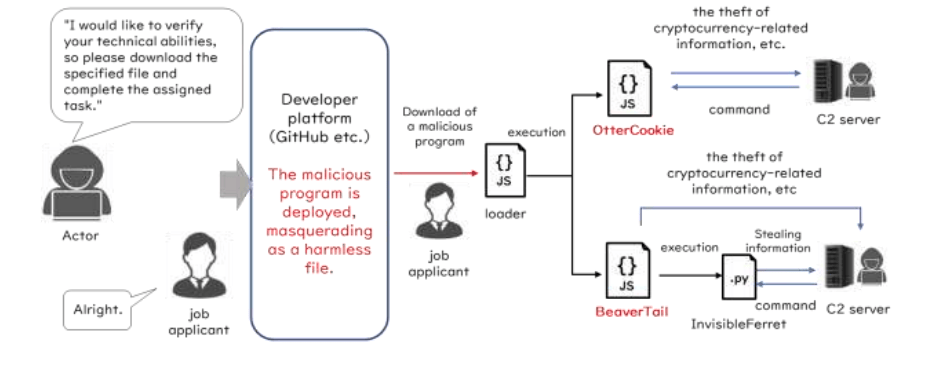
The attackers then targeted another software engineer through a legitimate job-hunting platform. In September, someone posing as a Project Director arranged two interviews: first with an HR representative, then with someone claiming to be the CEO of a fictitious company. During the first video interview, the supposed HR representative shared a social media account containing personal photos and videos to establish credibility.

At the end of the second interview, the engineer was asked to download a technical assignment containing a malicious code repository onto his work computer. The malware executed during setup, replacing a legitimate development tool component with a malicious version. It used obfuscation to evade detection, executed commands and established communication with an attacker-controlled server. Binance said its endpoint security tools didn’t detect the malware at the time.

“The second interview was conducted in a popular social chat app, near the end of the interview, Engineer B was instructed to download an “assignment” containing a malicious code repository onto his work computer.” states the firm. “The repository contained malicious code that executed during the setup process, initiating a series of unauthorized activities.”

The compromise then moved beyond the affected workstation. On October 20, attackers used the compromised computer to abuse an internal AI tool and gain access to the systems of two other employees, including the Wallet DevOps engineer initially targeted in June. They discovered that his computer contained a token with container deployment permissions.

This is one of the more significant aspects of the incident. The report doesn’t identify a vulnerability in the AI model itself. Instead, it shows how an internal application can become an attack pivot when an adversary gains access to a compromised employee’s environment and the permissions available to that user.

“The attacker leveraged the compromised computer of engineer B and used an internal AI tool to gain control over the Wallet DevOps Engineer A and another Wallet Software Engineer C.” states the report. “The attacker soon discovered Wallet DevOps Engineer A had a container deployment permission token on his computer.”

On October 29, the attackers used stolen credentials to access another engineer’s computer, deploy a container and execute a malicious script. This gave them access to Binance’s internal wallet signing service, allowing them to initiate transactions outside the normal withdrawal process.

The transfers involved several blockchain networks. Five Binance hot wallets sent 233.46 million XRP to an attacker-controlled address, while other transfers involved approximately 970,500 SOL, 44.2 million OP and 18,270 BTC.

The attackers also exploited Ethereum’s EIP-7702 authorization mechanism to grant a malicious smart contract partial execution rights over a Binance hot wallet.

“EIP-7702 allows an account to delegate certain execution rights to a smart contract without exposing the private key. In this case, the attacker used that mechanism to give an attacker-controlled smart contract partial execution rights over a Binance hot wallet.” the company states.

Suspending withdrawals wasn’t enough to stop the transfers because the malicious authorizations already existed on-chain and operated independently of Binance’s normal withdrawal infrastructure.

Binance had to develop a specific procedure to revoke them. The use of Multi-Party Computation (MPC) meant there was no single private key that could immediately invalidate the unauthorized permissions. The final unauthorized transfer, involving 2,961.9 ETH, was finalized at 23:56 UTC. Binance cleared the malicious authorization at 00:10 UTC on October 30.

The company estimates that approximately $6.34 billion in assets were affected, of which around $2.85 billion had been frozen or intercepted as of its November 3 update. Binance says it will absorb the financial impact and has already replenished 98% of the affected token assets, based on figures reported on October 31.

The exchange has rebuilt the affected wallet infrastructure and internal AI tool, replaced compromised devices, revoked associated credentials and tokens, and strengthened endpoint monitoring and wallet-service controls. It is also engaging independent cybersecurity firms to review the incident.

The attack highlights the need to treat recruitment processes, developer workstations and internal AI applications as part of the corporate attack surface. Technical assignments should run in isolated environments, deployment credentials should be short-lived and tightly restricted, and internal AI tools should never inherit unnecessary access to sensitive systems.

Binance also said its security team had detected and prevented 57 suspected North Korea-linked cyber threat cases during 2026. These included fake job interviews, malicious developer tools, compromised software packages and browser extensions, fake video-conferencing applications and campaigns designed to steal credentials or deploy remote-access malware.

The incident is another reminder that attackers don’t always need to break directly into critical infrastructure. Sometimes, compromising the people and tools that manage it is enough.

“We are sharing this initial report because security improves when the industry learns together.” concludes the update.

In September, Japan’s National Police Agency, the FBI, the US Department of Defense’s Cyber Crime Center, and intelligence agencies from Australia and Germany published a joint advisory about a group called WaterPlum, better known as Contagious Interview. The name says it all. The job interview is the infection vector.

The numbers in the advisory are hard to shrug off. At least 30,000 devices infected across more than 100 countries, funds or credentials stolen from over 7,000 cryptocurrency wallets, and a total of 1.7 billion yen, roughly $10.71 million, funneled back to North Korea. The victims are almost always the same type: freelance developers and specialists in blockchain and Web3 work.

Japan’s NPA and the FBI assess that both WaterPlum operators and some North Korean IT workers report to the same place, the 313 General Bureau of the Munitions Industry Department, under the Workers’ Party’s Central Committee. That’s not a loose affiliation. It’s an org chart.

The trap itself is almost embarrassingly simple. WaterPlum actors pose as recruiters or hiring managers, often impersonating real AI, crypto, or NFT companies, and reach out on social media, job boards, and freelance platforms. Candidates get invited to a technical interview, then told to download a file to complete a coding test or fix a supposed bug on the video call.

Follow me on Twitter: @securityaffairs and Facebook and Mastodon

Pierluigi Paganini

(SecurityAffairs – hacking, Binance)

  • ✇Security Affairs
  • Synology Warns of Ransomware Attacks Targeting NAS Devices Running Outdated DSM Versions Pierluigi Paganini
    Synology warns of ransomware attacks exploiting a 2024 flaw in outdated NAS devices, urging users to update DSM immediately. A security fix released in 2024 is now at the centre of ransomware attacks against Synology NAS devices. The company has found attackers targeting systems that still run outdated versions of DiskStation Manager (DSM), putting files stored on these network storage devices at risk of encryption and extortion. Synology disclosed the attacks on October 29, 2026. Its inv
     

Synology Warns of Ransomware Attacks Targeting NAS Devices Running Outdated DSM Versions

3 de Novembro de 2026, 13:31

Synology warns of ransomware attacks exploiting a 2024 flaw in outdated NAS devices, urging users to update DSM immediately.

A security fix released in 2024 is now at the centre of ransomware attacks against Synology NAS devices. The company has found attackers targeting systems that still run outdated versions of DiskStation Manager (DSM), putting files stored on these network storage devices at risk of encryption and extortion.

Synology disclosed the attacks on October 29, 2026. Its investigation found that threat actors are taking advantage of a vulnerability that the vendor had already addressed in December 2024. “These attacks aim to encrypt data and extort ransom.” The warning highlights how devices left without security updates can remain exposed long after vendors have released a fix.

The company hasn’t identified the exact vulnerability used in the attacks. Instead, it refers customers to Synology-SA-24:20, a security advisory published on November 5, 2024, which documents three flaws affecting DSM. The advisory was updated as fixes became available across different software branches, with the DSM 6.2 update released on December 5.

The three vulnerabilities have different security implications. CVE-2024-10441 is the most severe, with a CVSS score of 9.8. It affects the system plugin daemon and could allow an unauthenticated remote attacker to execute arbitrary code on a vulnerable device.

CVE-2024-50629 has a CVSS score of 5.3 and affects the DSM webapi component. It could allow remote attackers to read limited files. The third issue, CVE-2024-10445, is rated 4.3 and concerns improper certificate validation in the update functionality. It could allow an attacker in an adjacent network position to write limited files.

Synology hasn’t confirmed which of these vulnerabilities attackers are exploiting. The three flaws should therefore be considered part of the security advisory, not three confirmed entry points in the current ransomware campaign.

The vendor has released corrected builds for all the affected DSM branches. Users should check the full version number installed on their NAS and compare it with the minimum fixed releases listed in the advisory:

  • DSM 7.2.2: 7.2.2-72806-1 or later.
  • DSM 7.2.1: 7.2.1-69057-6 or later.
  • DSM 7.2: 7.2-64570-4 or later.
  • DSM 7.1: 7.1.1-42962-7 or later.
  • DSM 6.2: 6.2.4-25556-8 or later.

The impact of a ransomware infection on a NAS can extend well beyond the storage device itself. Businesses often use these systems to keep shared documents, operational files and backup copies in one place. If attackers encrypt that data, employees may lose access to essential information, while recovery can become much harder if the NAS also holds the backups needed to restore other systems.

Updating DSM is therefore an immediate priority for administrators and home users alike. Synology is also advising customers to enable automatic updates so that future security fixes don’t depend entirely on someone checking for them manually.

“Synology also recommends enabling automatic updates to keep DSM up to date at all times.” concludes the advisory.

Follow me on Twitter: @securityaffairs and Facebook and Mastodon

Pierluigi Paganini

(SecurityAffairs – hacking, NAS)

  • ✇Security Affairs
  • Inside XCPE, the botnet that turned 1.3M set-top boxes into proxy servers Pierluigi Paganini
    Google dismantled a 1.3 million-device botnet allegedly built by Android TV box maker Videostrong to enable ad fraud and proxy abuse. Google and its partners dismantled a backdoor called XCPE that had enrolled more than 1.3 million set-top boxes in a botnet. The result of the investigation into the malware operation is the striking part: Videostrong Technology Co., an Android device maker, built and ran the botnet for money. Google says it is highly confident that Videostrong delibera
     

Inside XCPE, the botnet that turned 1.3M set-top boxes into proxy servers

3 de Novembro de 2026, 06:52

Google dismantled a 1.3 million-device botnet allegedly built by Android TV box maker Videostrong to enable ad fraud and proxy abuse.

Google and its partners dismantled a backdoor called XCPE that had enrolled more than 1.3 million set-top boxes in a botnet. The result of the investigation into the malware operation is the striking part: Videostrong Technology Co., an Android device maker, built and ran the botnet for money.

Google says it is highly confident that Videostrong deliberately created, spread and operated the backdoor. The company reportedly sold access to criminal groups and installed their malware on infected devices. The malware was used for ad fraud, secretly added devices to residential proxy networks and installed other malicious software.

Google says this was not the work of a rogue employee or a simple coding mistake. The backdoor was found in many device models and brands over several years. Its operation involved dedicated infrastructure and regularly changing configurations.

“We assess with high confidence that the backdoor and botnet were intentionally developed, deployed, and operated for financial gain by Videostrong Technology Co., an Android Original Equipment Manufacturer (OEM) and Original Design Manufacturer (ODM).” Google states. “Videostrong monetized the backdoor by selling access to criminal affiliates and loading those affiliates’ malware modules onto infected devices. “

Google has now cut all ties with Videostrong. The company is banned from making devices with pre-installed Google apps. The ban also covers any future subsidiaries or business partners, and Videostrong can no longer supply software to other certified device makers.

Videostrong got around Google’s compatibility and security tests with code obfuscation. The malicious code loaded after a device’s first boot, which the tests didn’t catch. Google has changed its review process and is improving how it checks firmware on certified Android TV devices.

Google also took legal action against the domains and servers Videostrong used to control the botnet, and against the control domains of over a dozen malware families loaded through the backdoor. Those affiliates spread their modules through other channels too, so Google expects the takedown to cut access to at least 10 million more compromised devices. Japan’s National Police Agency, Lumen, HUMAN Security, Plume, Synthient and TrendAI worked on the operation.

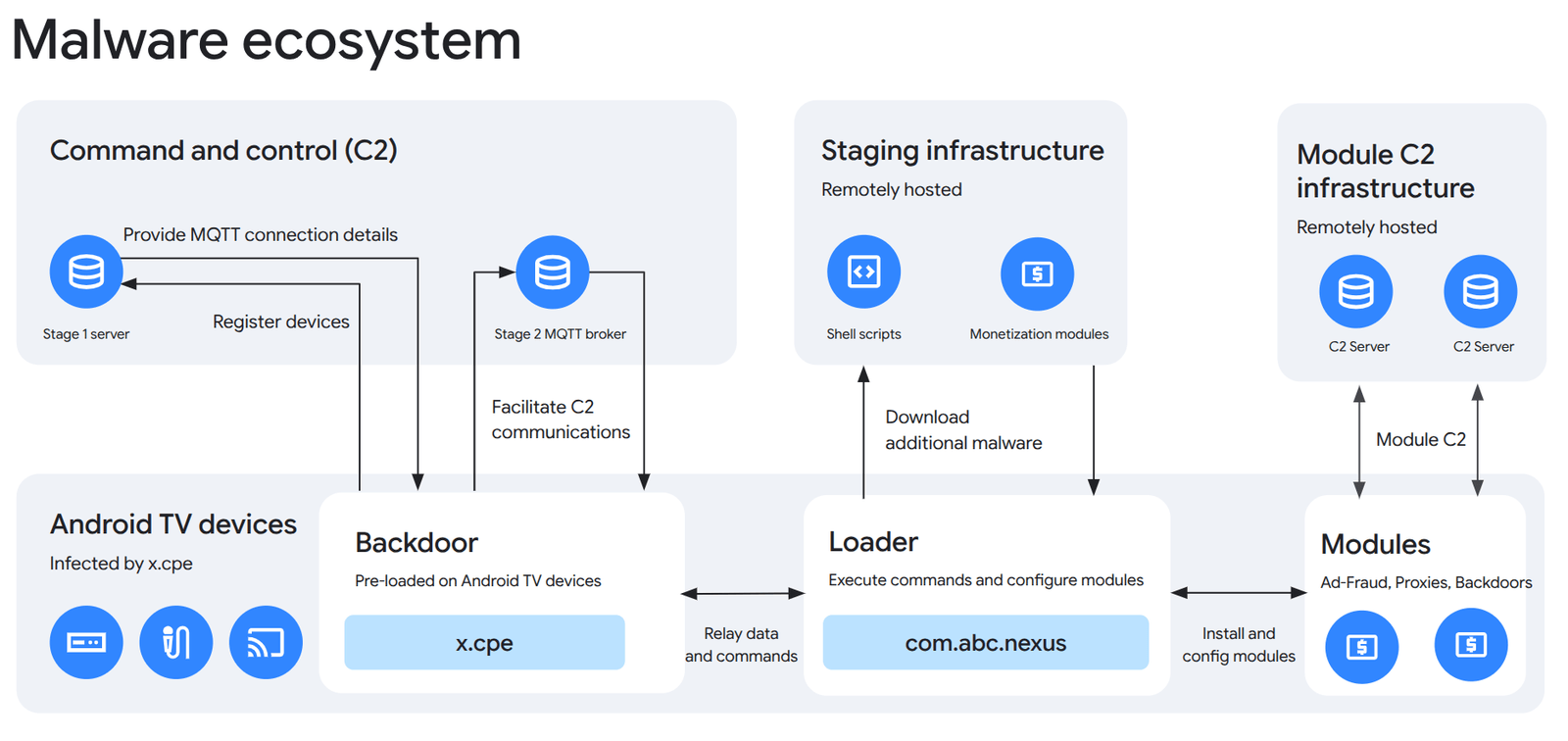
The malware has three stages. The primary backdoor, x.cpe (called com.oemservice in some builds), is preloaded in the firmware and runs with system privileges. If a user uninstalls it, it reinstalls itself from the /oem/ partition at the next reboot. It handles communication with the control server and passes work to a loader called com.abc.nexus, which carries its own anti-analysis tricks and sets up the money-making modules.

These modules are supplied by other criminals working as affiliates. They can arrive as programs built into the backdoor, software packages added to its loader, or extra apps downloaded later. Many turn the device into a residential proxy, allowing other people to use the victim’s home internet connection to hide their online activity. Others commit ad fraud or install additional backdoors. In other words, a set-top box becomes a proxy server without its owner’s knowledge.

The backdoor uses two steps to control infected devices. First, the box sends an HTTP request to download settings, location data and network information. It then maintains a live connection through MQTT, a lightweight messaging protocol, to receive commands from the operators. Google found that all analyzed samples used the same MQTT server to communicate with infected devices.

“Additional monetization modules as well as various shell scripts and legitimate applications are hosted remotely and downloaded by infected devices upon command from the operator via the MQTT broker.” continues the report. “A significant majority of these files are hosted as Github releases on operator-owned Github pages. Other files are hosted on operator-controlled servers and file hosting sites.”

Through this connection, attackers could secretly install apps, run commands and scripts, take screenshots, record keystrokes and map the victim’s network. They could also disable Google Play Protect’s app verification to install software without the user’s knowledge. Google observed operators taking screenshots, recording keystrokes, collecting account and device information, stealing app lists and system logs, and opening remote command-line sessions. However, most of their activity involved installing, removing and managing malware modules.

The malicious files came from several sources. The attackers mainly used GitHub releases hosted on their own accounts, the Filemail file-sharing service and two servers under their control. Network traffic analysis also suggests that the operators managed the command infrastructure through remote interfaces and an EMQX web console, connecting from IP addresses outside the infected device network.

Most infected devices are Android TV set-top boxes, but Google also found telehealth devices, karaoke machines and digital signage. One device can run several modules at once, up to three residential proxy kits. That shows Videostrong wants to squeeze every infected device as hard as it can. The proxy and bandwidth-sharing kits named in the report include Linkfog, AppSalt, GaGaNode, BWM, Traffmonetizer, EarnFM and NetNut.

Some of those kits enroll devices without asking. AppSalt’s SDK, owned by Honeygain, calls an opt-in function without showing any consent screen, and it stops running if the app came from the official Google Play Store. Ad-fraud modules such as Fission and HiddenView fire off fake ad impressions in the background, and HiddenView also uses hidden browser windows to simulate clicks and scrolling.

The configuration shows a well-run operation. MQTT messages carry resource limits for each module, download links per processor type, and priority weights. Devices are assigned to one of six timezone-based pools on ott.szbboys[.]com. Devices report their bandwidth use and alarms back, so the modules stay within set limits.

Google says the underlying market is resilient. Backdoor operators, ad-fraud rings and residential proxy providers work as an interconnected supply chain, and when one part gets disrupted they quickly switch to new loaders or rival kits. Lasting change, it says, needs accountability across hardware makers, the residential proxy industry and the broader technology sector.

Google wants retailers and distributors to require independent security audits from device manufacturers and to delist any implicated in supply-chain abuse. It says proxy providers’ claims of ethical sourcing need transparent, auditable proof of user consent, and that in its analysis these providers asked for consent only when platform policy forced them to. Silent opt-in remains the most common way devices become exit nodes.

For consumers, Google advises caution with apps that pay you for “unused bandwidth” or “sharing your internet”, which are a main way illicit proxy networks grow. Stick to app stores you trust, review permissions for third-party VPNs and proxies, and keep Google Play Protect on. Buy connected devices like set-top boxes only from reputable manufacturers, and check the partner list on Google’s Android TV website. Google also urges mobile platforms, ISPs, online marketplaces and other tech platforms to keep sharing intelligence.

“A device manufacturer intentionally infecting their users with malware is an unacceptable breach of trust. By turning everyday hardware into persistent beachheads for criminal affiliates, Videostrong prioritized illicit post-sale recurring revenue over the safety and privacy of its users.” concludes the report. “Downstream hardware brands, white-label resellers, telecommunications providers, and online e-commerce marketplaces also share responsibility for closing this vector.”

Follow me on Twitter: @securityaffairs and Facebook and Mastodon

Pierluigi Paganini

(SecurityAffairs – hacking, newsletter)

  • ✇Security Affairs
  • VOLTA, the infostealer that asks an AI which victims are worth the effort Pierluigi Paganini
    VOLTA is an AI-powered infostealer that steals personal data, then uses LLMs to assess victims’ value and rank targets for attackers. Cisco Talos has analyzed a new Windows infostealer called VOLTA, which calls itself VOLTA-AUTODOXER. It steals the usual data, then hands the loot to a large language model that ranks what the victim is worth. Ryan Fetterman laid it out in a Talos report, after the malware turned up through the CAIRN research effort. “There is a new idea in the cybercrime w
     

VOLTA, the infostealer that asks an AI which victims are worth the effort

2 de Novembro de 2026, 15:34

VOLTA is an AI-powered infostealer that steals personal data, then uses LLMs to assess victims’ value and rank targets for attackers.

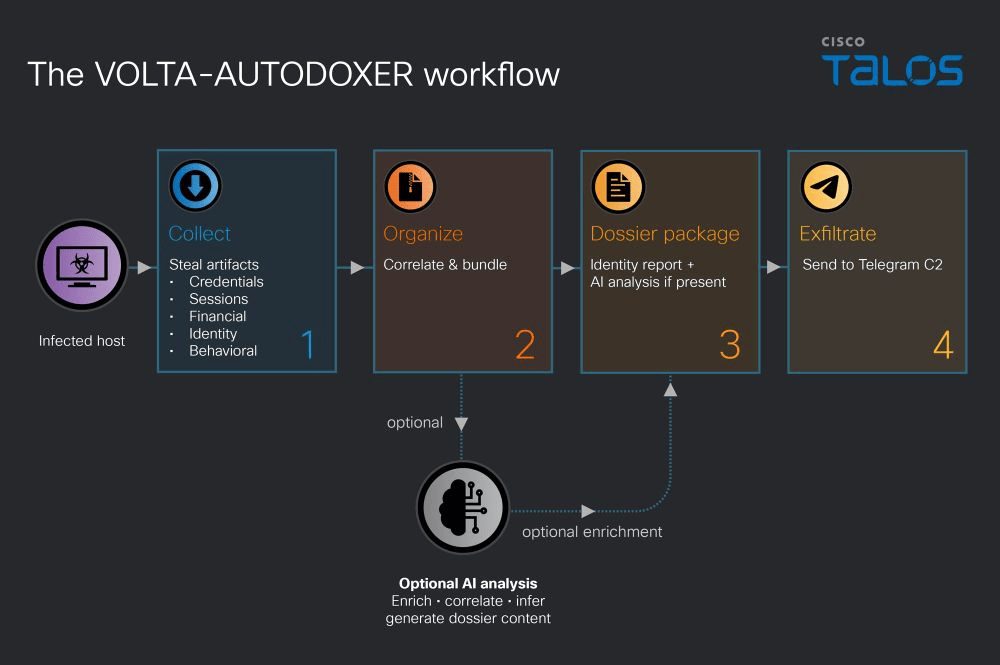
Cisco Talos has analyzed a new Windows infostealer called VOLTA, which calls itself VOLTA-AUTODOXER. It steals the usual data, then hands the loot to a large language model that ranks what the victim is worth. Ryan Fetterman laid it out in a Talos report, after the malware turned up through the CAIRN research effort.

“There is a new idea in the cybercrime world — cast a wide net, steal everything, and let AI sort out the specifics. A new malware self-named “VOLTA-AUTODOXER,” surfaced through the CAIRN research effort, is a self-deleting Windows infostealer that augments its post-theft workflow with an LLM-powered victim-profiling stage.” reads the report published by Talos.

The malware deletes itself after running and does not use servers controlled by the attacker. Instead, it uses third-party systems to carry out its activities.

The malicious code supports data-stealing features are advanced. It collects browser passwords, cookies and saved payment card details from Chromium browsers, as well as data from Firefox, Thunderbird and Outlook. It also steals Slack workspace information and login sessions from Discord, Telegram, Steam, Battle.net and Roblox.

The malware also collects Microsoft OAuth tokens, SSH keys, cloud service credentials, screenshots and all saved Wi-Fi passwords. For crypto wallets, it tries to crack the wallet password directly on the infected device and saves the results in its report. To steal some browser tokens, it must bypass Chrome’s App-Bound Encryption.

But VOLTA goes further. It also builds a detailed profile of the victim. This includes their location and home address, employer and company domain, estimated year of birth, the last four digits of payment cards, Slack workspaces and information about who created documents. It also looks for signs of iPhone backups and checks the current value of the victim’s Roblox account.

“After harvesting the standard stealer haul, including browser passwords; cookies; payment cards; cryptocurrency wallet seed phrases; Discord, Telegram, Steam, and Roblox sessions; Microsoft OAuth tokens; SSH and cloud-provider keys; Wi-Fi profiles; and screenshots, VOLTA builds a structured evidence bundle about the person behind the machine.” states the report.

It uses the victim’s own logged-in sessions to fill the gaps. It searches Gmail for receipts from Amazon, DoorDash, Uber Eats, Grubhub, Walmart and PayPal to confirm a home address, pulls order histories from Uber Eats and DoorDash, and adds detail to the victim’s Discord profile. Even a takeout history can now count as evidence.

The bundle goes to OpenRouter, a routing service for AI models, with a system prompt that tells the model to act as a forensic intelligence analyst drafting a target assessment.

“The required output includes a section titled “WHAT THEY’RE WORTH” with valuables ranked by monetization with a low/medium/high tier, and a section on “THEIR OPSEC” containing an assessment of the victim’s security posture and password hygiene.” states the report. “The model is the operator’s triage analyst; it turns a raw credential log into a prioritized and citation-backed dossier of the victim and their monetizable assets.”

It also needs a section called “THEIR OPSEC”, rating the victim’s security habits and password hygiene. In short, it’s a performance review for the person it just robbed.

The prompt asks for something agents do well: connecting scattered facts. It pushes the model to link names, addresses or universities to patterns in the victim’s passwords. The model isn’t hunting for new data, only stretching what the malware already took. The operator wants a short, blunt assessment with a trail of citations.

By default VOLTA calls Anthropic’s Claude Opus 4.6. If the model refuses, which VOLTA spots by scanning replies for phrases like “I can’t” or “I’m not able”, it moves on to Moonshot AI’s Kimi K2 and then Google’s Gemini 2.5 Flash. A low temperature setting of 0.2 keeps the output consistent.

The requests are hand-built JSON with no software kit, and the malware still runs without the AI stage if no API key is present.

Talos sees the fallback system as evidence that the malware’s author expected security protections and designed ways to bypass them.

The AI analysis runs directly on the victim’s computer, using their own internet connection, before any data is sent out. The malware creates a file called Identity_Report.txt, receives the AI’s response in AI_Analysis.txt, and sends both files together in a ZIP archive called volta_dox.zip.

The stolen data can be sent to the attacker in up to three stages. The first archive, volta_log.zip, contains the information collected by the malware. The second, volta_dox.zip, contains the AI analysis. A third archive, volta_doxnet.zip, is created if the malware finds additional network information. The attacker receives everything through a Telegram channel.

The malware also has six configurable fields that can be changed when it is built. This suggests that its author may offer a builder service, allowing customers to create their own customised versions.

The credentials stored in these fields are encrypted, but the encryption is weak because the key is stored inside the malware itself. Anyone who analyses the file can recover them.

If VOLTA is sold as a commercial product, its AI feature could allow even inexperienced criminals to identify valuable victims and receive detailed, ranked profiles directly through Telegram.

For defense, Talos suggests an application control policy that restricts which processes can launch Chrome with the –headless flag, which would block the App-Bound Encryption bypass. At minimum, alert when Chrome starts with –headless from any process outside a known developer set. Storing credentials in hardware-backed stores also helps.

If you’re compromised, the main program may have deleted itself, but try to keep %APPDATA%\volta_debug.txt. It’s a timestamped log of what was collected and whether the AI call worked. Revoke any exposed tokens and change passwords. If a wallet’s seed phrase sat in plaintext on disk, treat the wallet as fully compromised and move the funds to a new wallet whose seed was generated on an air-gapped device.

“VOLTA is a mature stealer with a late-stage AI layer added for one purpose: relieving the operator of analytical work. The axis of AI improvement here is not speed or scale but effort displacement; the same logic visible in CLOSEDQUORUM, though applied to a different phase.” concludes the post. “These implants reflect the same underlying logic: Identify the step that requires the most sustained human attention and replace it with a model call. The question for defenders is not whether this pattern will appear elsewhere, but which phase it touches next.”

Follow me on Twitter: @securityaffairs and Facebook and Mastodon

Pierluigi Paganini

(SecurityAffairs – hacking, malware)

  • ✇The CyberWire
  • Taking the bait out of phishing.
    Welcome in! You’ve entered, Only Malware in the Building. Join us each month to sip tea and solve mysteries about today’s most interesting threats. Your host is ⁠⁠⁠⁠⁠⁠⁠⁠⁠⁠⁠⁠⁠⁠⁠⁠Selena Larson⁠⁠⁠⁠⁠⁠⁠⁠⁠⁠⁠⁠⁠⁠⁠⁠, ⁠⁠⁠⁠⁠⁠⁠⁠⁠⁠⁠⁠⁠⁠⁠⁠Proofpoint⁠⁠⁠⁠⁠⁠⁠⁠⁠⁠⁠⁠⁠⁠⁠⁠ intelligence analyst and host of their podcast ⁠⁠⁠⁠⁠⁠⁠⁠⁠⁠⁠⁠⁠⁠⁠⁠DISCARDED⁠⁠⁠⁠⁠⁠⁠⁠⁠⁠⁠⁠⁠⁠⁠⁠. Inspired by the residents of a building in New York’s exclusive upper west side, Selena is joined by her co-hosts ⁠⁠⁠⁠⁠⁠⁠⁠⁠⁠⁠⁠⁠⁠⁠⁠N2K Networks⁠⁠⁠⁠⁠⁠⁠⁠⁠⁠⁠⁠⁠⁠⁠⁠
     

Taking the bait out of phishing.

3 de Novembro de 2026, 03:00
Welcome in! You’ve entered, Only Malware in the Building. Join us each month to sip tea and solve mysteries about today’s most interesting threats. Your host is ⁠⁠⁠⁠⁠⁠⁠⁠⁠⁠⁠⁠⁠⁠⁠⁠Selena Larson⁠⁠⁠⁠⁠⁠⁠⁠⁠⁠⁠⁠⁠⁠⁠⁠, ⁠⁠⁠⁠⁠⁠⁠⁠⁠⁠⁠⁠⁠⁠⁠⁠Proofpoint⁠⁠⁠⁠⁠⁠⁠⁠⁠⁠⁠⁠⁠⁠⁠⁠ intelligence analyst and host of their podcast ⁠⁠⁠⁠⁠⁠⁠⁠⁠⁠⁠⁠⁠⁠⁠⁠DISCARDED⁠⁠⁠⁠⁠⁠⁠⁠⁠⁠⁠⁠⁠⁠⁠⁠. Inspired by the residents of a building in New York’s exclusive upper west side, Selena is joined by her co-hosts ⁠⁠⁠⁠⁠⁠⁠⁠⁠⁠⁠⁠⁠⁠⁠⁠N2K Networks⁠⁠⁠⁠⁠⁠⁠⁠⁠⁠⁠⁠⁠⁠⁠⁠ ⁠⁠⁠⁠⁠⁠⁠⁠⁠⁠⁠⁠⁠⁠⁠⁠Dave Bittner⁠⁠⁠⁠⁠⁠⁠⁠⁠⁠⁠⁠⁠⁠⁠⁠ and ⁠⁠⁠⁠⁠⁠⁠⁠⁠⁠⁠⁠⁠⁠⁠Keith Mularski⁠⁠⁠⁠⁠⁠⁠⁠⁠⁠⁠⁠⁠⁠⁠, former FBI cybercrime investigator and now Chief Global Ambassador at ⁠⁠⁠⁠⁠⁠⁠⁠⁠⁠⁠⁠⁠⁠⁠Qintel⁠⁠⁠⁠⁠⁠⁠⁠⁠⁠⁠⁠⁠⁠⁠. Being a security researcher is a bit like being a detective: you gather clues, analyze the evidence, and consult the experts to solve the cyber puzzle. This month our hosts dive into the growing Chinese-speaking cybercrime ecosystem and the rise of threat actors behind large-scale credential phishing operations. They explore a major disruption targeting Chinese-language phishing kits CoGUI, CoAceV, and CoFish_Ws, which have fueled hundreds of millions of malicious messages, particularly targeting Japanese organizations, and examine what the takedown could mean for the broader cybercrime landscape.

  • ✇Cybersecurity News
  • North Korean Threat Actors Accelerate Cyber Operations With Artificial Intelligence Do Son
    Microsoft reveals how North Korean threat actors use tools like ARTEX. See how AI-enabled North Korean threat actors speed up cyber operations. Related Posts: Binance Hack Investigation Traces Historic $6.3B Breach Polymarket Supply Chain Attack Drains Trader Wallets Binance Hot Wallet Breach Prompts Multibillion-Dollar Inquiry The post North Korean Threat Actors Accelerate Cyber Operations With Artificial Intelligence appeared first on Daily CyberSecurity.
     

New wave of fridge cyberattacks hits European supermarkets, this time in Belgium, Luxembourg, Sweden and Estonia

2 de Novembro de 2026, 09:09

A new wave of fridge cyberattacks hit supermarket refrigeration systems across five European countries, raising temperatures and causing food losses.


A new wave of fridge cyberattacks has affected supermarket refrigeration systems in several European countries. Fridges and freezers suddenly rose in temperature overnight, with some incidents suspected to be caused by hackers. On Monday, November 2, Ahold Delhaize and Colruyt reported an IT incident affecting dozens of stores in Belgium and Luxembourg. Swedish supermarket chains ICA and Coop also reported similar problems.

“Ahold Delhaize and Colruyt said on Monday that an IT ​incident overnight hit fridges and freezers in dozens of stores in Belgium and Luxembourg, while Swedish grocers ‌ICA and Coop reported similar temperature spikes, with one store blaming a cyberattack.” Reuters states.

BREAKING: 🇸🇪 Swedish grocery giant ICA, one of Sweden's largest supermarket chains, says several of its stores have been hit by a cyberattack overnight, causing refrigerators and freezers to be remotely set to 50°C.

The incident has likely resulted in large quantities of food… pic.twitter.com/wrcmGHw1qV

— GeoInsider (@InsiderGeo) November 2, 2026

“Problems were discovered at several grocery stores in Sweden overnight Monday.” reported Sweden Herald.

“We are aware that a limited number of stores were affected by an incident overnight that affected their refrigeration and freezer systems. Ica is providing support in handling the incident, Ica Group press officer Gustaf Nilsson tells TT.”

The latest incidents follow a similar wave of fridge cyberattacks in France last month. In mid-October, a large cyberattack hit the refrigeration systems of hundreds of French supermarkets, BFMTV revealed. The attackers targeted equipment from the Danish maker Danfoss that many French stores use to regulate their cold. Fresh and frozen stock was destroyed, and the Paris prosecutor says there were also fires.

The method is simple and nasty. Refrigeration systems have a forced defrost function that clears ice buildup, and the attackers appear to have triggered it remotely in a continuous mode, with a temperature setting of 50 degrees. The equipment heated for several hours instead of keeping goods cold, and when staff opened the fridges and freezers in the morning, a sector source told BFM, “a wave of heat” came out.

The attack caused fires and food losses. However, cybersecurity consultant Emil Olofsson of Integrity 360 told Swedish news agency TT that temperatures reached 80°C in some cases and several units caught fire. This figure differs from the one reported by police.

ICA Kvantum in Sjöbo said on Facebook that a cyberattack caused the refrigeration problems. ICA Hägerstensåsen in Stockholm was also reportedly affected. According to the Sjöbo store, the temperature inside its fridges and freezers rose to 50°C.

In Belgium, Delhaize detected unusual temperature increases in its refrigeration systems on Monday. Spokesperson Sarah De Meester said the company is investigating the incident.

Stephan Moelans, CEO of Sabcobel, the company that manages Delhaize’s refrigeration systems, told news agency Belga that hackers had switched the units’ evaporators to defrost mode. His office declined to comment to Reuters. Colruyt Group, which operates Spar stores in Belgium through a franchise system, said five stores had suffered attacks on their refrigeration systems. Meanwhile, Belgian newspaper Le Soir reported that dozens of Delhaize and Carrefour stores were affected.

🇧🇪🇸🇪 UPDATE: REFRIGERATION DISRUPTIONS SPREAD ACROSS EUROPE – SWEDEN AND BELGIUM AFFECTED

IN SWEDEN:
• At least 6 ICA supermarkets affected by suspected refrigeration system hacks.
• Coop has now CONFIRMED that 6 of its stores in central Sweden are also affected.
• Freezer… https://t.co/a3oGMrGdmz pic.twitter.com/8Q3CFDDLhT

— Coffe Report (@CoffeReport) November 2, 2026

It follows a similar attack in France last month. Police said hackers seized control of the cooling units at hundreds of supermarkets and raised temperatures as high as 50 degrees Celsius (122 Fahrenheit), which caused fires and food losses. Cybersecurity consultant Emil Olofsson of Integrity 360 told TT, Sweden’s news agency, that temperatures there reached 80 degrees and some units caught fire, a figure that differs from the police number.

In Belgium, Delhaize noticed temperature increases in its cooling systems on Monday, spokesperson Sarah De Meester said, and the company is investigating. Stephan Moelans, CEO of the refrigeration firm Sabcobel, which runs Delhaize’s systems, told the news agency Belga it was a cyberattack that switched the units’ evaporators to defrost mode. His office declined to comment to Reuters. Colruyt Group, which runs Spar stores in Belgium under a franchise system, said five shops had their fridge systems attacked, and Le Soir reported that dozens of Delhaize and Carrefour stores were affected.

Ahold also reported a cybersecurity incident to Dutch police last month, after it detected suspicious activity in its infrastructure. Nothing in the reporting ties that report to Monday’s incident.

🇧🇪🧊🇸🇪 Fridges and freezers at dozens of supermarkets in Belgium and Sweden overheated overnight in a suspected cyberattack, similar to the one that hit French stores three weeks ago. Delhaize calls it an "IT incident."

Delhaize said about 40 of its Belgian stores were affected… pic.twitter.com/qzw6uDybWb

— 🔥🗞The Informant (@theinformant_x) November 2, 2026

In Sweden, John Billow, head of the national cybersecurity centre, told Reuters his team was working on several incidents involving refrigeration systems in grocery stores around the country. An ICA Kvantum store in Sjöbo said on Facebook that a cyberattack caused its problems, and an ICA store told its followers that its temperatures had been “hacked” overnight and set to 50 degrees. Fifty degrees is fine for a beach and poor for ice cream. That store later said it had opened.

At ICA Baronen in Stockholm, a notice said all the freezers were broken because of a cyberattack. The sales manager said the attack came at 2 a.m. and staff noticed it at 5:30 a.m. ICA Hägerstensåsen in Stockholm was reportedly hit too.

ICA said only a limited number of stores were affected and that it is helping them deal with the incident. However, press officer Gustaf Nilsson did not say how many stores were involved.

Coop told Swedish news agencies Aftonbladet and TT that six stores in central Sweden had similar problems. Press manager Carlos Cancino said it was still unclear whether any food would need to be thrown away or whether the refrigeration units had simply stopped working or had switched to heating mode. He also did not rule out further incidents affecting other stores.

An Estonian supermarket chain was also affected. Its refrigeration systems were reportedly set to 50°C, technology provider Kitman Coldtech told public broadcaster ERR. CEO Jann Mutso did not reveal the name of the supermarket chain, saying: “This is very recent. It happened this morning.”

How did the attackers get in? In France, Olofsson says they obtained login details for the control systems, which were exposed directly to the internet. He says the attack targeted a product that controls the cooling systems and that the hack isn’t very complicated, so amateurs may have carried it out.

Billow says Swedish authorities have noticed in recent weeks that quite a lot of exposed operational technology devices exist in Sweden, and they’ve been clear that these must be updated or patched.

Refrigerators and heating systems, security cameras and alarm networks were once largely mechanical, and now they can be monitored and controlled remotely. That gives cybercriminals new openings. Authorities haven’t said who was behind last month’s incidents, and nobody has claimed responsibility.


The Sweden Herald reported that the cause of the attacks on Swedish supermarkets remains unknown.

Update 20:00 Rome Time

The company at the center of the European supermarket refrigeration cyberattacks is Danfoss the same company whose refrigeration systems were targeted during the cyberattacks in France a few weeks ago.

Danfoss says the incidents are primarily exploiting vulnerabilities in… pic.twitter.com/3tDNVMOyhn

— GeoInsider (@InsiderGeo) November 2, 2026

Follow me on Twitter: @securityaffairs and Facebook and Mastodon

Pierluigi Paganini

(SecurityAffairs – hacking, fridge cyberattacks)

  • ✇Security Affairs
  • FBI Blames North Korea for $6 Billion Binance Crypto Theft Pierluigi Paganini
    The FBI blames North Korea for stealing $6 billion from Binance and urges crypto firms to block transactions linked to the stolen funds. The FBI has named North Korea as the party behind the theft of more than $6 billion in virtual assets from the crypto exchange Binance, on or about October 29, 2026. The bureau published its findings in a public alert. The FBI specifically blames the North Korea-linked APT “TraderTraitor,” also tracked as Lazarus Group and APT38. Binance hasn’t named a c
     

FBI Blames North Korea for $6 Billion Binance Crypto Theft

1 de Novembro de 2026, 16:23

The FBI blames North Korea for stealing $6 billion from Binance and urges crypto firms to block transactions linked to the stolen funds.

The FBI has named North Korea as the party behind the theft of more than $6 billion in virtual assets from the crypto exchange Binance, on or about October 29, 2026. The bureau published its findings in a public alert. The FBI specifically blames the North Korea-linked APT “TraderTraitor,” also tracked as Lazarus Group and APT38.

Binance hasn’t named a culprit, but the blockchain analysis firm TRM has. It was the first to attribute the attack to TraderTraitor, and Chainalysis also said it’s highly confident in that finding.

“The Federal Bureau of Investigation (FBI) is releasing information advising the Democratic People’s Republic of Korea (North Korea) was responsible for the theft of more than $6 billion USD in virtual assets from cryptocurrency exchange Binance, on or about October 29, 2026. The FBI refers to this specific North Korean malicious cyber activity as “TraderTraitor.”” reads the FBI’s statement.

“The FBI, together with partners at the USSS and IRS-CI, has observed TraderTraitor actors converting stolen assets primarily into Ethereum (ETH). It is expected these assets will then be further laundered by converting them using DeFi and instant swap services as they prepare them for further laundering stages.”

Attackers used access from an engineer’s laptop to reach a service container and send unauthorized withdrawal requests. Binance says it has found no evidence that attackers stole any wallet private keys.

The FBI, along with the U.S. Secret Service (USSS) and IRS Criminal Investigation (IRS-CI), has spotted TraderTraitor actors turning the stolen assets mostly into Ethereum (ETH). The agencies expect the next step to be more laundering, by swapping the funds through DeFi and instant swap services as the actors prepare them for later stages. Instant swap services are aptly named.

The alert is aimed at private companies as well as law enforcement agencies. The FBI, USSS and IRS-CI are asking several types of businesses to help stop the money laundering. These include THORNode operators, who support the THORChain network, RPC node operators, who provide apps with access to blockchains, instant crypto exchanges, DeFi platforms, blockchain analytics companies and other crypto service providers.

The request is clear: these companies should block any transactions involving the wallet addresses used by TraderTraitor, including funds that can be traced back to them. According to the FBI, these addresses have received stolen funds and are controlled by North Korean attackers or are closely linked to them. The full list of addresses is included in the alert.

If you run any of these services, the first job is to check your blocklists against that list. The second is to look at transaction flows that touch those addresses indirectly, since the FBI says to block anything “derived from” them, not just direct transfers. Blockchain analytics firms are named for a reason, because tracing derived funds is their work.

The FBI says it’s committed to protecting the virtual asset community by identifying, mitigating and disrupting North Korea’s illicit cybercrime and virtual asset theft.

“The FBI maintains its commitment to protecting the virtual asset community by identifying, mitigating, and disrupting North Korea’s illicit cybercrime and virtual asset theft activities.” concludes the report. “If you have any information to provide, please contact your local FBI field office or FBI’s Internet Crime Complaint Center at ic3.gov.”

TRM says the attacker moved about $6.36 billion out of Binance wallets on ten blockchains on October 29, most of it in roughly 20 minutes starting at 20:05 UTC. That makes it the largest crypto theft on record, about four times the $1.5 billion Bybit hack of February 2025.

“On October 29, 2026, an attacker moved approximately USD 6.36 billion out of Binance wallets on ten blockchains, most of it in about 20 minutes starting at 20:05 UTC. That makes this the largest crypto theft on record, about four times the USD 1.5 billion Bybit hack of February 2025. Binance has confirmed a security incident and suspended withdrawals on several networks.” TRM said. “TRM attributes the attack to TraderTraitor, North Korea’s elite hacking unit, based on robust on and off-chain intelligence. We make this judgment with high confidence. TRM is tracking the funds and alerting partners through the Beacon Network.”

Freezing the money only went partway. Tether, Circle, Ripple and World Liberty Financial froze about $2.67 billion in stablecoins, and Arbitrum’s Security Council froze 8,426 ETH and 74.6 million ARB, for roughly $2.7 billion in all. But the attacker raced the freezes by selling USDT to market makers and borrowing ETH against USDT on Aave. It now holds more than 420,000 ETH and 18,270 BTC, about $2.4 billion beyond any issuer’s reach.

The early freeze numbers were messy too, Tether and Circle froze approximately $1.79 billion in stablecoins associated with the suspicious transfers in the initial reports. Those amounts describe different moments, and you shouldn’t add them without checking whether they cover distinct assets. A freeze works on tokens that have an issuer to call, and Ether and Bitcoin don’t.

Below is the link to my interview regarding the Binance case for Italian state television.

https://www.youtube.com/watch?v=DtvhBA9TdPo

Follow me on Twitter: @securityaffairs and Facebook and Mastodon

Pierluigi Paganini

(SecurityAffairs – hacking, Binance)

❌
❌