Visualização normal

Ontem — 7 de Setembro de 2026Cybersecurity News

Tengu Mirai-Style Linux Bot Hides as Kernel Worker to Launch DDoS and Proxy Attacks

A newly analyzed Linux malware sample, dubbed Tengu, combines Mirai-style botnet tradecraft with broad persistence, DDoS, SSH probing, and proxy capabilities. The stripped 32-bit ELF masquerades as a Linux kernel worker process while targeting servers, embedded devices, and IoT-adjacent systems. It has no symbols, uses NX protection and partial RELRO, and carries a SHA-256 hash […]

The post Tengu Mirai-Style Linux Bot Hides as Kernel Worker to Launch DDoS and Proxy Attacks appeared first on GBHackers Security | #1 Globally Trusted Cyber Security News Platform.

Antes de ontemCybersecurity News
  • ✇Blog oficial da Kaspersky
  • Pontos cegos na detecção: como os arquivos poliglotas são criados Stan Kaminsky
    Arquivos criados com a técnica poliglota têm aparecido cada vez mais em ciberataques nos últimos anos. Eles permitem que os invasores façam o malware passar pelos filtros de e-mail e pelos verificadores de arquivos, enganem as vítimas em ataques de phishing e dificultem as investigações de incidentes. Para conseguir isso, os invasores constroem deliberadamente um arquivo que o sistema pode interpretar como formatos diferentes, dependendo do aplicativo em que ele é aberto.  Um exemplo clássico é
     

Pontos cegos na detecção: como os arquivos poliglotas são criados

4 de Setembro de 2026, 08:00

Arquivos criados com a técnica poliglota têm aparecido cada vez mais em ciberataques nos últimos anos. Eles permitem que os invasores façam o malware passar pelos filtros de e-mail e pelos verificadores de arquivos, enganem as vítimas em ataques de phishing e dificultem as investigações de incidentes. Para conseguir isso, os invasores constroem deliberadamente um arquivo que o sistema pode interpretar como formatos diferentes, dependendo do aplicativo em que ele é aberto.  Um exemplo clássico é um arquivo que pode ser tratado como uma imagem PNG ou um arquivo ZIP. Basta alterar a extensão do arquivo ou simplesmente usar um ou outro aplicativo para abri-lo.

Vamos entender por que é possível criar arquivos desse tipo, quais combinações de formatos já foram usadas em ataques reais e como as organizações podem se proteger contra essa ameaça.

Por que é possível criar arquivos poliglotas

Os formatos de dados por trás dos arquivos poliglotas raramente são exóticos. Tudo se resume a uma combinação inteligente de formatos comuns que são estruturalmente compatíveis. Os poliglotas exploram pelo menos uma das seguintes peculiaridades em determinados formatos de arquivo:

  • A maioria dos formatos de arquivo precisa ser decodificada a partir do primeiro byte, mas alguns precisam ser lidos a partir do final. O exemplo mais claro é um arquivo ZIP: um início corrompido ou ausente não impede que os aplicativos leiam o arquivo, porque todos os cabeçalhos necessários ficam no final. Isso permite que os invasores simplesmente concatenem dois arquivos (no exemplo acima, um PNG e um ZIP). A parte inicial é lida como uma imagem PNG válida, enquanto a parte final é lida como um arquivo ZIP válido.
  • Muitos formatos funcionam como bonecas russas matrioscas: embora externamente tenham uma extensão específica correspondente ao uso pretendido, internamente o arquivo é, essencialmente, um arquivo ZIP que contém os dados necessários. Esse grupo inclui documentos modernos do Office (DOCX/XLSX/PPTX), pacotes de instalação do Android (APK), arquivos de biblioteca Java (JAR) e muitos outros.
  • Alguns formatos não têm requisitos estruturais rígidos ou têm requisitos suficientemente flexíveis para que o aplicativo que processa o arquivo consiga localizar o trecho de que precisa, mesmo quando esse trecho não está no início.

O repositório Polydet no GitHub apresenta vários exemplos de combinações possíveis de arquivos para criar um arquivo poliglota. De acordo com a classificação da MITRE, essa técnica se enquadra na categoria Masquerading (T1036.008, Masquerade File Type).

Exemplos de arquivos poliglotas em ciberataques conhecidos

Análises de campanhas de malware disponíveis publicamente revelam diversos tipos de arquivos poliglotas. Os invasores adaptam todo o cenário do ataque a uma combinação específica de tipos de arquivo.

O grupo Head Mare entregou o malware PhantomPyramid como um anexo ZIP. O arquivo consistia em código executável do Windows (EXE), com um pequeno arquivo ZIP concatenado ao final. Quando a vítima abriu o arquivo compactado, ele continha um arquivo com a extensão PDF.LNK que, então, iniciava esse mesmo anexo poliglota, desta vez como um arquivo executável.

No ataque documentado pela JPCERT, os invasores criaram um arquivo que começava como PDF e era detectado como PDF pela maioria dos verificadores, mas tinha uma extensão DOC e era aberto nos aplicativos do Office como um arquivo DOC válido contendo macros maliciosas.

Os ataques que disseminaram os cavalos de Tróia StrRAT e Ratty usaram um arquivo poliglota criado a partir de um pacote de instalação assinado do Windows (MSI), com código Java malicioso (JAR) anexado ao final.

Os ataques do StrelaStealer usaram um arquivo poliglota com extensão HTML: uma biblioteca do Windows (DLL) com um documento HTML de chamariz concatenado ao final. Um atalho no arquivo compactado iniciou o arquivo duas vezes: uma vez por meio do comando start (o equivalente a um clique duplo, que abriu um navegador exibindo o documento HTML) e outra por meio do rundll32 (que iniciou a DLL maliciosa).

Em um ataque simulado, mas engenhoso, os pesquisadores concatenaram dois arquivos ZIP comuns e descobriram que diferentes ferramentas populares de compactação exibiam o arquivo combinado de maneiras diferentes: algumas mostravam apenas o primeiro arquivo compactado, outras apenas o segundo, e outras mostravam ambos ao mesmo tempo, como se fossem um único arquivo compactado com conteúdo compartilhado. Se o invasor estiver familiarizado com a infraestrutura da vítima e souber quais softwares estão instalados, poderá usar essa combinação para mostrar um arquivo às ferramentas de segurança e outro à vítima.

Os invasores empregaram uma complexa matriosca de malware em uma campanha que distribuiu o infostealer IcedID. Eles anexaram um arquivo ZIP aos e-mails de phishing; descompactá-lo produziu um arquivo ISO. Esse ISO, por sua vez, era descompactado em um arquivo CHM (Ajuda do Windows) criado com a técnica poliglota. Quando a vítima o abriu com a ferramenta padrão de Ajuda do Windows, o arquivo executou um script JavaScript incorporado ao conteúdo da ajuda, que iniciou o aplicativo padrão mshta (host de aplicativos HTML da Microsoft) e o direcionou para esse mesmo arquivo CHM. Os autores da campanha empacotaram um aplicativo HTA dentro do arquivo CHM de forma que sua presença não interferisse na leitura do arquivo como um documento de ajuda inócuo. O manipulador de HTA, por sua vez, simplesmente ignora todos os dados irrelevantes no início do arquivo até encontrar o script HTA.

Como as ferramentas de segurança lidam com arquivos poliglotas

Os exemplos acima deixam claro como esse truque de leitura dupla permite que os invasores implantem malware no computador da vítima. Mas como os filtros de e-mail e os sistemas EDR realmente lidam com arquivos desse tipo? A resposta depende inteiramente da solução específica, portanto, isso precisa ser verificado, seja por meio da análise da documentação técnica do fornecedor, seja pela execução de um teste controlado na infraestrutura corporativa, com todas as devidas precauções.  De modo geral, apenas dois pontos são válidos em todos os casos:

  • A maioria das soluções de segurança não confia na extensão informada de um arquivo; em vez disso, verifica seu início para determinar sua estrutura real. É por isso que, no ataque descrito acima, o arquivo PDF com extensão DOC foi analisado como um PDF inofensivo, enquanto a macro maliciosa estava na parte DOC concatenada.
  • Se um arquivo começar como algo inofensivo (por exemplo, uma imagem) e sua extensão corresponder, uma análise mais sofisticada provavelmente não será aplicada a ele. Os invasores podem explorar isso: as instruções que acompanham o arquivo podem orientar a vítima a renomeá-lo para que o comportamento do sistema acabe associado à segunda carga útil, e não à imagem.

Como proteger uma organização contra ataques de arquivos poliglotas

A defesa contra arquivos poliglotas não requer soluções técnicas ou organizacionais complexas. O que exige são boas práticas de segurança sólidas e consistentes em toda a organização:

  • use listas fechadas de aplicativos autorizados a serem executados nas estações de trabalho dos funcionários. exclua aplicativos do Windows desatualizados, ferramentas administrativas da Microsoft não utilizadas, softwares de acesso remoto e de transferência de arquivos e qualquer outro software considerado potencialmente perigoso ou obsoleto.
  • use soluções de segurança de e-mail avançadas e equipadas com CDR (tecnologia de Desarme e Reconstrução de Conteúdo, que desarma anexos suspeitos e os reconstrói em versões mais seguras) e tecnologia de detonação (que executa anexos suspeitos em um ambiente isolado para análise). configure a análise aprofundada para anexos que apresentem sinais externos de serem arquivos poliglotas: todos os arquivos compactados e do Office, arquivos com extensões não padrão e assim por diante.
  • da mesma forma, configure a solução EDR para realizar uma análise aprofundada de possíveis arquivos poliglotas.
  • crie regras de monitoramento que gerem alertas para combinações incomuns entre um processo e os arquivos que ele recebe para processamento, como um arquivo CHM iniciado por meio do mshta ou um arquivo HTML iniciado por meio do rundll32, como nos exemplos acima.
  • adicione informações básicas sobre arquivos poliglotas ao programa de conscientização em segurança utilizado pela organização, para que os usuários fiquem atentos quando forem orientados a alterar a extensão de um arquivo ou a manipulá-lo de alguma forma incomum, por exemplo, abrindo-o em um aplicativo específico.

  • ✇Blog oficial da Kaspersky
  • Malware em sistemas de infoentretenimento automotivos: como ocorre a infecção Dmitry Kalinin
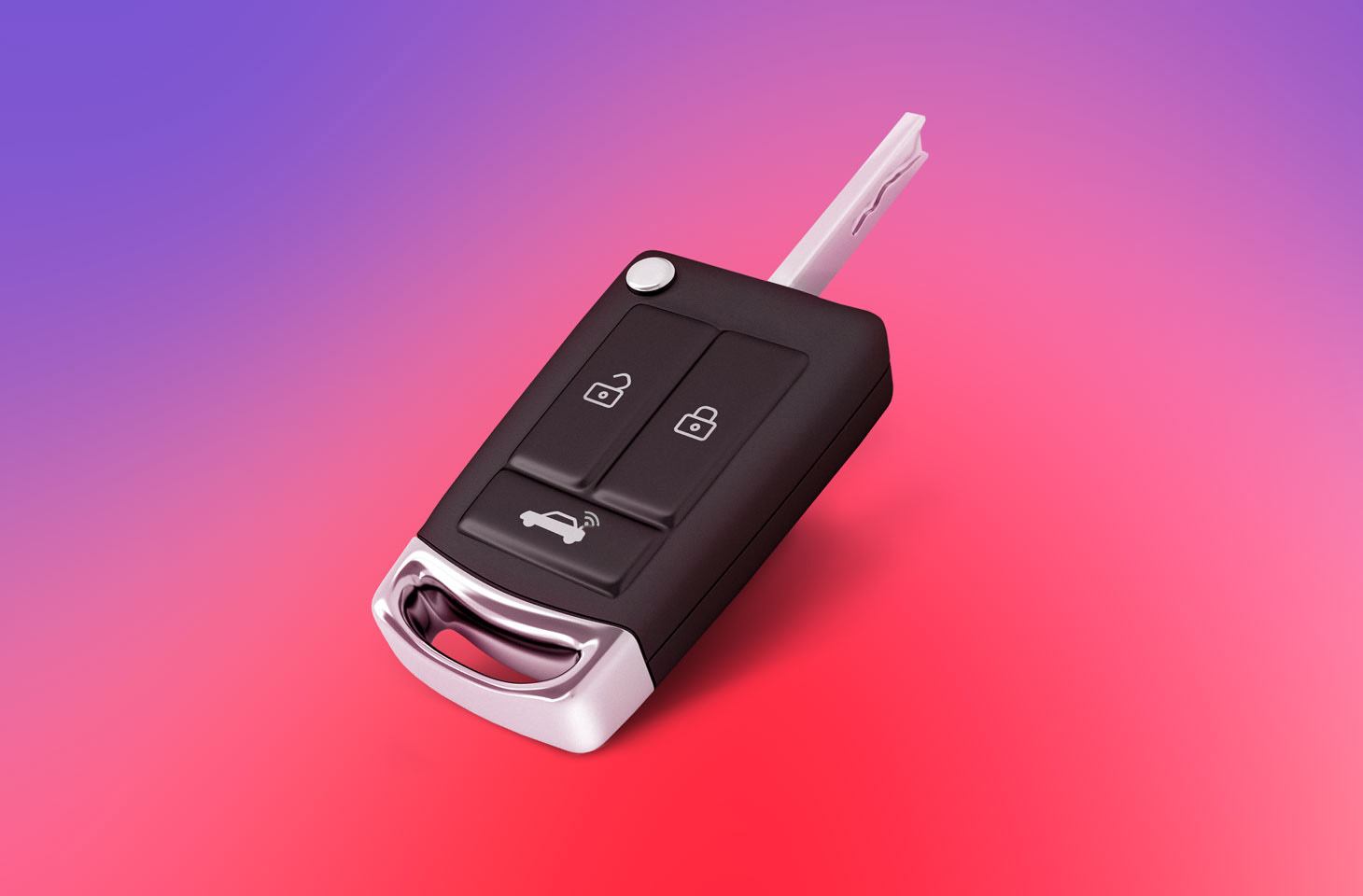
    Em junho de 2026, descobrimos um malware incomum que tem como alvo… centrais multimídia automotivas baseadas em Android. Este é o primeiro caso documentado de malware distribuído para centrais multimídia automotivas por meio de um serviço de atualização automática de firmware. Já abordamos diversos incidentes de cibersegurança automotiva, mas, em geral, eles envolviam vazamentos de dados na infraestrutura digital das fabricantes ou testes conduzidos por pesquisadores de segurança. No entanto, es
     

Malware em sistemas de infoentretenimento automotivos: como ocorre a infecção

29 de Agosto de 2026, 09:03

Em junho de 2026, descobrimos um malware incomum que tem como alvo… centrais multimídia automotivas baseadas em Android. Este é o primeiro caso documentado de malware distribuído para centrais multimídia automotivas por meio de um serviço de atualização automática de firmware. Já abordamos diversos incidentes de cibersegurança automotiva, mas, em geral, eles envolviam vazamentos de dados na infraestrutura digital das fabricantes ou testes conduzidos por pesquisadores de segurança.

No entanto, este caso envolve malware que cibercriminosos estão distribuindo ativamente. Os objetivos são cometer fraude publicitária e criar uma botnet de proxies formada por centrais multimídia automotivas infectadas. Neste artigo, explicamos o que é uma central multimídia automotiva, como os invasores infectam esses dispositivos e o que isso pode significar para os motoristas.

O que é uma central multimídia automotiva?

Primeiro, vamos esclarecer o que é exatamente uma central multimídia automotiva. O termo pode parecer técnico, mas, na realidade, a maioria dos motoristas interage com uma delas sempre que usa o carro. A central multimídia é o sistema de infoentretenimento do veículo, geralmente centrado em uma tela usada para controlar a navegação, a música e outras funções do veículo. Nos carros modernos, as centrais multimídia automotivas costumam estar conectadas à Internet.

As fabricantes usam frequentemente o Android nas centrais multimídia por sua praticidade, já que o sistema foi desenvolvido para atender a diferentes usos automotivos e oferece diversas vantagens:

  • muitas opções de personalização da interface;
  • facilidade para desenvolver aplicativos;
  • a possibilidade de adicionar aplicativos e componentes próprios ao sistema;
  • um grande ecossistema de aplicativos já existente.

No entanto, essas mesmas vantagens também criam riscos, pois os aplicativos podem ser maliciosos em vez de legítimos. E foi exatamente isso que aconteceu neste caso: usando um aplicativo malicioso, invasores incorporaram veículos a uma botnet. Veja como isso aconteceu…

Como os invasores infectam as centrais multimídia automotivas e qual malware utilizam?

Primeiro, é importante observar que esse malware não afeta todas as centrais multimídia automotivas, mas apenas aquelas que utilizam software desenvolvido pela empresa chinesa DoFun. A empresa desenvolve firmware, aplicativos e serviços de nuvem para sistemas de infoentretenimento automotivos baseados em Android e, de acordo com seu site, atende a mais de 30 milhões de proprietários de veículos em todo o mundo.

Para distribuir o malware para o sistema de infoentretenimento de um veículo, os invasores usam o TWCore, um aplicativo de sistema legítimo responsável pelas atualizações de software nas centrais multimídia automotivas da DoFun. Em condições normais, o TWCore obtém da nuvem da desenvolvedora informações sobre os arquivos que precisam ser baixados e instalados no dispositivo. Esses arquivos são, principalmente, atualizações de software já instalado na central multimídia, mas o mesmo mecanismo pode ser usado para instalar novos aplicativos. E é exatamente isso que os invasores exploram: eles usam o TWCore para instalar o JarService (um dropper de cavalo de Troia malicioso) nas centrais multimídia automotivas.

O JarService é essencialmente um aplicativo “vazio”. Ou seja, ele não tem uma interface de usuário e não tenta se passar por um serviço legítimo. A ausência de uma interface faz todo sentido neste caso: os invasores não precisam convencer o usuário a instalar o malware manualmente, e nenhuma interação do usuário é necessária.

O código do JarService contém, de forma criptografada, a carga útil da próxima etapa, além de informações sobre sua versão e ponto de entrada. A função do JarService é descriptografar esses dados e iniciar a próxima etapa da infecção: um módulo malicioso de download. Depois de iniciado, o módulo de download se conecta ao servidor de comando e controle (C2) dos invasores e envia informações sobre o malware instalado. Em resposta, o servidor fornece um link para a carga útil da próxima etapa. O módulo de download obtém essa carga útil, descriptografa-a e a executa.

Neste caso, o malware instala um tipo de malware conhecido como “clicker”, usado para aumentar fraudulentamente o número de impressões de anúncios. Depois de ser executado, o malware entra em contato regularmente com o servidor C2 e envia informações sobre o dispositivo infectado, incluindo seu modelo, resolução de tela, endereço MAC e detalhes da rede Wi-Fi conectada. Em troca, o malware pode receber vários comandos dos invasores. Por exemplo, ele pode fazer solicitações HTTP e abrir páginas da Web. Mas, mais importante ainda, pode baixar e executar código malicioso adicional no sistema de infoentretenimento do veículo comprometido.

Os invasores usam esse recurso para instalar um módulo malicioso chamado zhima, que adiciona a central multimídia infectada a uma botnet. A botnet resultante é usada para operar um serviço conhecido como proxy residencial, permitindo que os invasores direcionem seu tráfego por meio dos dispositivos infectados ao realizar ataques e outras atividades maliciosas.

Quem está por trás do malware e o que os invasores pretendem alcançar?

Os invasores infectam centrais multimídia automotivas com malware principalmente para expandir a botnet. Uma investigação realizada por especialistas da Kaspersky constatou que a operação está associada à plataforma maliciosa BADBOX e, mais especificamente, a um dos agentes de ameaça ligados a ela: o MoYu Group. Indícios no código do malware, juntamente com semelhanças em relação à infraestrutura anteriormente atribuída ao MoYu Group, apontam para o envolvimento do grupo. A própria BADBOX reúne uma série de atividades maliciosas voltadas à infecção de dispositivos Android e à exploração clandestina de seus recursos.

Os invasores, então, ganham dinheiro monetizando o acesso a recursos que pertencem a outras pessoas. Ao investigar a infraestrutura da botnet, nossos especialistas descobriram vínculos entre o MoYu Group e os serviços PXYEDGE e ProxyForU, que oferecem serviços de proxy residencial. Esses serviços permitem que clientes de todo o mundo direcionem seu tráfego de Internet por meio de dispositivos conectados à botnet e, assim, acessem a Internet usando os endereços IP desses dispositivos. Isso sugere que as centrais multimídia automotivas infectadas já podem estar sendo usadas como parte dessa infraestrutura.

Como o malware afeta os usuários?

Em primeiro lugar, o malware consome parte dos recursos computacionais da central multimídia automotiva. A carga adicional pode fazer com que o sistema de infoentretenimento do veículo fique mais lento ou menos estável. Ao mesmo tempo, é muito provável que a velocidade da conexão de Internet do dispositivo infectado também diminua, pois os invasores podem direcionar grandes volumes de tráfego por meio dele.

Também vale destacar que o malware não se limita a oferecer funcionalidade de proxy. Ele pode receber comandos dos invasores, além de baixar e executar código malicioso adicional. Como resultado, as consequências de uma infecção podem variar de acordo com a carga útil que os operadores da botnet decidirem instalar no dispositivo.

Conclusão

Este caso demonstra mais uma vez que ataques a todos os tipos de dispositivos conectados à Internet, de decodificadores de TV a sistemas de infoentretenimento automotivo, não são apenas uma possibilidade teórica, mas uma realidade concreta. Os invasores estão constantemente procurando novos dispositivos cujos recursos possam explorar para seus próprios fins. Por isso, a proteção contra malware é importante muito além de computadores e smartphones.

Nossos especialistas informaram a desenvolvedora sobre o esquema de distribuição do malware que identificaram, e ela corrigiu os problemas de segurança identificados.

Uma análise técnica completa do malware está disponível na Securelist.

Que outros métodos os invasores podem usar para comprometer um veículo e quais riscos eles representam para os motoristas? Leia mais em nossas publicações:

  • ✇Security Affairs
  • Norway ’s Digital Government Infrastructure Hit by a new DDoS Attack Pierluigi Paganini
    Norway ’s shared government infrastructure suffered a third DDoS attack, disrupting digital services but showing no signs of data compromise. Norway ‘s shared digital government infrastructure has been hit by another distributed denial-of-service (DDoS) attack that disrupted services used by citizens, businesses and public agencies. The incident began at 03:38 CEST on Monday, August 24, and targeted infrastructure operated by the Norwegian Digitalisation Agency, Digdir, together with its ser
     

Norway ’s Digital Government Infrastructure Hit by a new DDoS Attack

25 de Agosto de 2026, 14:51

Norway ’s shared government infrastructure suffered a third DDoS attack, disrupting digital services but showing no signs of data compromise.

Norway ‘s shared digital government infrastructure has been hit by another distributed denial-of-service (DDoS) attack that disrupted services used by citizens, businesses and public agencies. The incident began at 03:38 CEST on Monday, August 24, and targeted infrastructure operated by the Norwegian Digitalisation Agency, Digdir, together with its service provider Vivicta.

The timing matters because this isn’t an isolated event. Digdir says it’s the third DDoS attack against its services in a short period, following incidents in June and on August 3.

“The Norwegian Directorate for Digitalisation (Digdir) has been subjected to a denial of service attack (DDoS attack) that has been ongoing since 03:38 on the night of Monday, August 24.” reads the statement published by Digdir Agency. “This is the third time in a short time that this type of attack has been directed at Digdir’s solutions. Digdir is working closely with our subcontractor Vivicta. NSM and the Norwegian Data Protection Authority have also been notified of the case.”

That status update refers to the test environment, but the underlying attack also affected production services. Digdir reported that several shared services became completely unavailable for short periods, while others remained accessible but suffered connection failures, slow responses and longer-than-usual login times.

Digdir operates several pieces of Norway’s shared public-sector infrastructure. Among them are ID-porten, MinID, Maskinporten, eFormidling, eInnsyn, the Contact and Reservation Register, Ansattporten and other services used by government agencies and external applications.

That makes an attack on Digdir more significant than an ordinary website outage. When a shared authentication service goes down, the disruption can propagate to services that aren’t themselves under attack.

That’s exactly what happened. Altinn, Norway’s central platform for communication between citizens, businesses and government, was also affected, while other public services relying on ID-porten experienced login problems. Earlier attacks this summer produced similar effects, including disruption to access to Helsenorge, NAV and Skatteetaten.

The technical distinction is important: the attackers didn’t need to break into every downstream service. They could create disruption simply by overwhelming a shared dependency.

And that’s often the uncomfortable reality of modern public infrastructure. The weakest point isn’t necessarily the service citizens see on their screens. It can be the common authentication, messaging or data-exchange layer underneath it.

Digdir has stressed that the incident is about availability, not evidence of a successful intrusion. The agency also says it has found no indication that personal data was exposed. Digdir has notified Norway’s National Security Authority, NSM, and the Data Protection Authority, Datatilsynet, as part of its response.

“There are no indications that the attack has led to a security breach or that personal data has been compromised, says Director Frode Danielsen at Digdir.” continues the statement.

That distinction deserves attention because cyberattack doesn’t automatically mean “data theft”. In this case, the confirmed impact is service disruption, while there is currently no evidence that attackers compromised Digdir’s systems or accessed personal information.

The operational consequences are still serious. Public-sector users may see failed connections, slow responses or authentication problems even though the underlying applications themselves haven’t been compromised.

The June incident already demonstrated how much disruption a DDoS attack against Digdir’s infrastructure can cause. That attack targeted ID-porten through Vivicta’s network infrastructure and temporarily affected services including ID-porten, MinID, Maskinporten, eInnsyn and eFormidling.

Another attack followed on August 3. Digdir restored normal operations the following day, but the agency said the incident had again affected several shared services and that it would review the event together with Vivicta and other partners.

Now there’s a third incident. That repetition is more interesting from a defensive perspective than the raw duration of any single outage.

Digdir and Vivicta are clearly able to mitigate the attacks and restore services. The harder question is whether repeated attacks against the same shared infrastructure can keep generating enough operational friction to become a recurring problem for the wider public sector.

This is where DDoS stops being just a bandwidth problem. A sufficiently persistent campaign can force defenders to keep changing traffic controls, filtering rules and protection measures, while legitimate users continue to depend on the same infrastructure.

Digdir’s own status updates show that dynamic clearly. On August 24, the agency first reported improvement, then said several solutions were completely down, followed by further stabilization efforts.

There is currently no official attribution for the attacks. Norwegian media have raised the possibility of Russian involvement, but that remains speculation rather than an established finding.

That distinction matters. A DDoS campaign can be politically motivated, financially motivated, conducted for disruption or simply intended to demonstrate capability. Without technical evidence and an official attribution process, assigning responsibility to a particular state or group would be premature.

What is established is the target and the effect. The attacks repeatedly hit infrastructure that sits underneath a large number of Norwegian digital public services.

That’s enough to make the incidents strategically relevant without adding an attribution story that the evidence doesn’t yet support.

The Norwegian case is also a useful reminder that cybersecurity isn’t limited to confidentiality and integrity. Availability is a security property too, particularly when the affected systems provide national digital services.

A compromised database is an obvious security incident. An authentication service that repeatedly becomes unavailable can create a different kind of problem: citizens can’t access services, businesses can’t complete procedures and government agencies may struggle to perform routine operations.

Digdir says its services have largely stabilized, although some disruptions remain. As of the latest incident updates, ID-porten still had limitations, eSignering remained unavailable because of those ID-porten restrictions, and some users were still reporting connection problems or increased response times with Maskinporten.

Follow me on Twitter: @securityaffairs and Facebook and Mastodon

Pierluigi Paganini

(SecurityAffairs – hacking, newsletter)

  • ✇Cybersecurity News
  • Kimwolf Botnet Malware Upgrades DDoS and C2 Defenses Do Son
    Palo Alto Networks analyzed Kimwolf botnet malware. Read our Kimwolf botnet malware analysis to learn how it attacks Android TV boxes. Related Posts: Project CAV3RN Framework Adds DNS and Google Relays DeadLock Ransomware Employs Decentralized Infrastructure Apple Sends Mercenary Spyware Alerts to Users in 110+ Countries The post Kimwolf Botnet Malware Upgrades DDoS and C2 Defenses appeared first on Daily CyberSecurity.
     
  • ✇Security Affairs
  • DDoS Attacks Cause Major Threema Outages Pierluigi Paganini
    Large DDoS attacks disrupted Threema, causing severe communication outages. Threema On-Prem users were unaffected by the attacks. Threema suffered multiple large-scale DDoS attacks that disrupted its secure messaging service and caused severe communication issues. Organizations using Threema On-Prem were not affected, as their deployments run on their own infrastructure. Threema is a Swiss paid secure messaging service, similar to WhatsApp or Signal, focused heavily on privacy and securit
     

DDoS Attacks Cause Major Threema Outages

16 de Agosto de 2026, 20:38

Large DDoS attacks disrupted Threema, causing severe communication outages. Threema On-Prem users were unaffected by the attacks.

Threema suffered multiple large-scale DDoS attacks that disrupted its secure messaging service and caused severe communication issues. Organizations using Threema On-Prem were not affected, as their deployments run on their own infrastructure.

Threema is a Swiss paid secure messaging service, similar to WhatsApp or Signal, focused heavily on privacy and security.

“If the attack originates simultaneously from multiple (and potentially changing) sources, it is referred to as a “Distributed Denial of Service” (DDoS) attack. This makes the attack significantly more difficult to defend against because it is not possible to simply block a single source.” reads the report. “Because sophisticated attackers constantly change their methods, sources, and attack patterns during an attack, a cat-and-mouse game ensues, with both sides continuously reacting to the other’s most recent action.”

Users began reporting Threema outages on Tuesday evening. The company initially blamed a network issue at its colocation provider, but later confirmed it was facing a series of DDoS attacks. The attacks caused intermittent disruptions into Wednesday, with users in several countries still reporting problems even after Threema’s status page showed the service as operational.

The company said a series of large-scale DDoS attacks also targeted its colocation partner, Nine. Attack patterns kept changing, making mitigation difficult. The service was unavailable for about four hours Tuesday evening, followed by intermittent outages Wednesday morning. Normal operations were restored at 12:23 p.m. CEST.

“It is not entirely clear whether Threema was the primary target or whether the attacks were directed at multiple targets. In any case, they continued over an extended period and their patterns were constantly adapted, making them difficult to defend against.” continues the report. “As a result of these attacks, Threema was unavailable on Tuesday between 7:30 p.m. and 11:30 p.m. CEST. The page providing information on the current system status was initially not updated due to a technical issue unrelated to the attack. We therefore temporarily took it offline until the problem was resolved.”

Threema communicated the service disruptions progressively through social media, while Threema Work customers received updates by email. To strengthen its defenses, Threema deployed additional upstream DDoS protection on August 14, filtering malicious traffic before it reached its infrastructure.

The company also plans to improve its status page with an incident history and RSS feed, giving users and administrators another way to receive independent service updates.

“We will also expand the status page in the coming days. The update will include an incident history and an RSS feed that interested users and Threema Work administrators can subscribe to in order to receive system updates through an independent channel.” concludes the report. “We apologize for any inconvenience caused and appreciate your understanding.”

Follow me on Twitter: @securityaffairs and Facebook and Mastodon

Pierluigi Paganini

(SecurityAffairs – hacking, DDoS)

“Business customers using Threema Work were informed via email on Wednesday morning about the unstable service conditions, and account managers provided information on the current situation in response to inquiries.”

To avoid similar incidents, the Swiss company has implemented “specialized DDoS protection as an additional measure” to filter attack traffic upstream and reduce the load on its infrastructure.

Follow me on Twitter: @securityaffairs and Facebook and Mastodon

Pierluigi Paganini

(SecurityAffairs – hacking, newsletter)

  • ✇Cyber Security News
  • Threema Secure Messaging Service Hit by Massive DDoS Attack Abinaya
    Threema, a privacy-focused secure messaging service, was hit by a series of large-scale distributed denial-of-service (DDoS attacks) that temporarily disrupted access for users. The incidents affected the platform on Tuesday evening and continued intermittently through Wednesday morning before normal operations were restored. According to Threema, the service was unavailable between 7:30 p.m. and 11:30 p.m. CEST on Tuesday. Users also experienced short, intermittent disruptions on Wednesda
     

Threema Secure Messaging Service Hit by Massive DDoS Attack

17 de Agosto de 2026, 08:49

Threema, a privacy-focused secure messaging service, was hit by a series of large-scale distributed denial-of-service (DDoS attacks) that temporarily disrupted access for users.

The incidents affected the platform on Tuesday evening and continued intermittently through Wednesday morning before normal operations were restored. According to Threema, the service was unavailable between 7:30 p.m. and 11:30 p.m. CEST on Tuesday.

Users also experienced short, intermittent disruptions on Wednesday morning as the attacks continued and shifted in pattern. Threema confirmed that all services had returned to normal operation by 12:23 p.m. CEST.

A distributed denial-of-service attack, commonly known as a DDoS attack, attempts to make an online service unavailable by overwhelming its infrastructure with a very high volume of traffic.

Unlike a conventional attack launched from a single system, DDoS operations use many sources, often including compromised devices spread across different networks and locations. This distributed approach makes mitigation more difficult.

Security teams cannot simply block a single malicious IP address because attackers can rapidly change traffic sources, request types, and attack patterns. The result is often a continuous contest between defenders adapting their filtering controls and attackers modifying their methods.

Threema Hit by Massive DDoS Attack

Threema said the attacks targeted both its infrastructure and its colocation partner, Nine. It remains unclear whether Threema was the sole intended target or whether the activity was part of a broader campaign against multiple organizations.

The company described the incident as an ongoing wave of attacks with constantly changing patterns, making it more challenging to block without affecting legitimate users.

Importantly, Threema stressed that the attacks affected service availability rather than the confidentiality or security of user data. A DDoS attack does not inherently provide attackers with access to servers, messages, account data, or internal systems.

Its purpose is to consume network bandwidth, processing capacity, or other infrastructure resources until valid user requests can no longer be handled reliably.

The incident also affected Threema’s public status page. The company said the page was initially not updated because of a separate technical issue unrelated to the DDoS activity.

The status page was temporarily taken offline until that issue was resolved, limiting the availability of official outage information during part of the incident.

Threema communicated updates through its social media channels and notified Threema Work business customers by email on Wednesday morning. Account managers also responded to customer inquiries as the service instability continued.

Organizations using Threema OnPrem were not affected. The OnPrem product operates on customer-managed infrastructure, meaning those deployments remained available while Threema’s hosted service was under attack.

In response to the incident, Threema implemented an additional specialized DDoS protection mechanism. The new control filters malicious traffic upstream before it reaches Threema’s core infrastructure, reducing the burden on internal systems and existing defensive layers.

The company confirmed on August 14, 2026, at 6:05 p.m. CEST that the upstream filtering protection had been activated in its production environment.

Threema also plans to expand its status page with incident history and an RSS feed. This would provide users and Threema Work administrators with an independent channel to receive system status alerts during future outages.

 Strengthen Your SOC by Accelerating Threat Detection & Rapid Investigations. -> Integrate ANY.RUN With Your SOC Now.

The post Threema Secure Messaging Service Hit by Massive DDoS Attack appeared first on Cyber Security News.

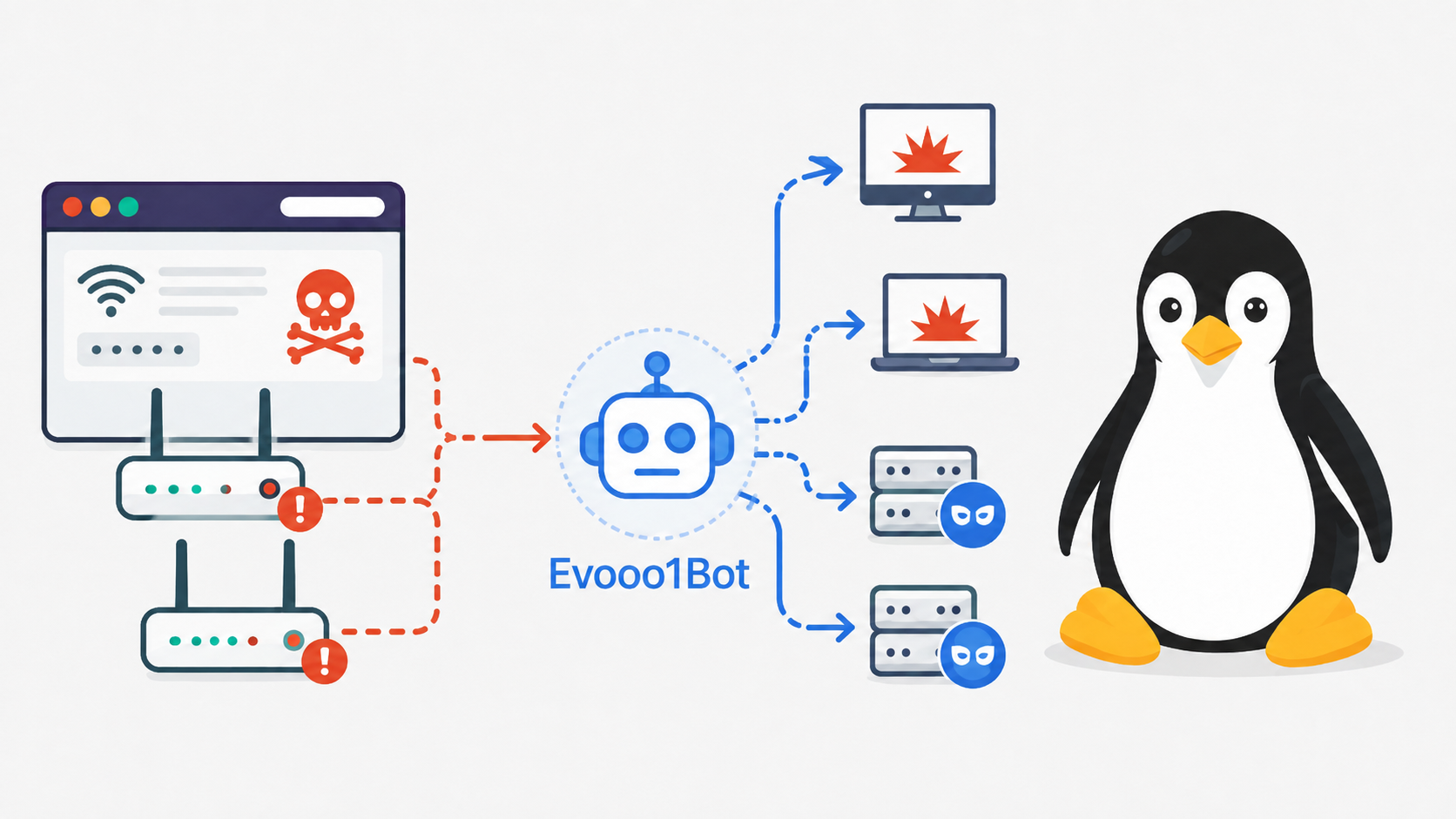
Evooo1Bot Turns Compromised Routers Into DDoS Bots and Anonymous Proxy Nodes

A newly identified Linux botnet dubbed Evooo1Bot is targeting vulnerable internet-facing routers, edge appliances, cameras, and enterprise systems, combining Mirai-derived DDoS capabilities with proxy relaying, credential theft, SSH brute forcing, and exploit-driven propagation. FortiGuard Labs observed activity beginning in July 2026, with operators using a modular toolset that elevates compromised devices from disposable DDoS nodes […]

The post Evooo1Bot Turns Compromised Routers Into DDoS Bots and Anonymous Proxy Nodes appeared first on GBHackers Security | #1 Globally Trusted Cyber Security News Platform.

  • ✇Cyber Security News
  • 1 Tbps DDoS Attacks Become the New Normal as Cloudflare Reports Record H1 Activity Abinaya
    Cloudflare has reported a sharp rise in large-scale distributed denial-of-service attacks during the first half of 2026, blocking 935 network-layer attacks exceeding 1 terabit per second. The company said hyper-volumetric attacks grew 519% between the first and second quarters, showing that attackers are increasingly capable of delivering extreme traffic floods at a rapid pace. The findings appear in Cloudflare’s 25th DDoS Threat Report, which combines data from January through June 2026.
     

1 Tbps DDoS Attacks Become the New Normal as Cloudflare Reports Record H1 Activity

13 de Agosto de 2026, 08:55

Cloudflare has reported a sharp rise in large-scale distributed denial-of-service attacks during the first half of 2026, blocking 935 network-layer attacks exceeding 1 terabit per second.

The company said hyper-volumetric attacks grew 519% between the first and second quarters, showing that attackers are increasingly capable of delivering extreme traffic floods at a rapid pace.

The findings appear in Cloudflare’s 25th DDoS Threat Report, which combines data from January through June 2026. Unlike previous reports that covered each quarter separately, this edition provides a half-year view of attacks observed and mitigated across the Cloudflare network.

During the period, Cloudflare mitigated 23.2 million network-layer DDoS attacks and 29.64 trillion HTTP DDoS requests. This amounts to roughly 5,343 network-layer attacks per hour, or about 128,000 per day.

Cloudflare Blocks 935 DDoS Attacks Over 1 Tbps

The figures show that DDoS activity remains a constant operational threat for organizations operating public-facing infrastructure. Hyper-volumetric DDoS attacks are defined as attacks exceeding 1 Tbps, 1 billion packets per second, or 1 million requests per second.

Hyper-volumetric attacks (Source : cloudflare )
Hyper-volumetric attacks (Source: Cloudflare)

Cloudflare mitigated 805 attacks above 1 Tbps during the second quarter alone. These attacks can overwhelm internet connections, network equipment, and data centers before security teams have time to investigate alerts or manually activate mitigation controls.

Despite the growth of record-scale attacks, most DDoS incidents were smaller and shorter. Cloudflare said 96.62% of network-layer attacks stayed below 500 Mbps, while 90.60% ended in less than 10 minutes.

April 2026 was a peak month for DDoS activity and volume (Source : cloudflare )
April 2026 was a peak month for DDoS activity and volume (Source: Cloudflare)

However, even a 100 Mbps flood can disrupt an unprotected website or server. A short attack can also cause longer service problems, including routing instability, TCP retransmissions, application timeouts, and degraded downstream services.

The main attack vectors also changed significantly. DNS-based attacks represented 34.3% of all network-layer DDoS activity during the first half of the year. DNS floods increased from 25.7% of attacks in the first quarter to 40.0% in the second quarter.

Attackers use DNS floods to exhaust the query capacity of authoritative DNS servers, potentially making domains and related online services inaccessible.

CLDAP floods also grew 580% quarter over quarter, becoming the third-most-common network-layer attack vector in the second quarter.

Top attack source countries (Source : cloudflare )
Top attack source countries (Source: Cloudflare)

This technique abuses exposed LDAP-over-UDP services, often on UDP port 389, to reflect amplified traffic at victims using spoofed source addresses.

Geopolitical events continued to influence targeting patterns. Media, Production and Publishing was the most attacked industry in both quarters, receiving 14.2% of all mitigated HTTP DDoS requests. Cloudflare linked sustained pressure on the sector to coverage of events involving Iran, Ukraine, and the World Cup.

Government organizations also saw a major shift. The sector moved from 29th place in the first quarter to ninth place in the second quarter during Operation Epic Fury.

Meanwhile, China ranked as the most attacked location in the second quarter, followed by the United States and Turkey. Cloudflare said automated, always-on protection is essential because modern DDoS attacks can begin, peak, and end within seconds.

 Strengthen Your SOC by Accelerating Threat Detection & Rapid Investigations. -> Integrate ANY.RUN With Your SOC Now.

The post 1 Tbps DDoS Attacks Become the New Normal as Cloudflare Reports Record H1 Activity appeared first on Cyber Security News.

Cloudflare Mitigates 23.2 Million DDoS Attacks as 1 Tbps Attacks Surge 519%

Cloudflare has mitigated 23.2 million network-layer DDoS attacks and stopped 29.64 trillion HTTP DDoS requests during the first half of 2026. This underscores a significant increase in both the frequency and intensity of Internet-scale attacks. The company’s latest DDoS Threat Report, produced by its Cloudforce One threat intelligence team, combines data collected from January to […]

The post Cloudflare Mitigates 23.2 Million DDoS Attacks as 1 Tbps Attacks Surge 519% appeared first on GBHackers Security | #1 Globally Trusted Cyber Security News Platform.

  • ✇Security Affairs
  • Kimwolf v7 Hides DDoS Traffic Behind Chrome Fingerprints and Ethereum Pierluigi Paganini
    Kimwolf v7: The Android TV Botnet That Now Hides Its Traffic Behind Chrome Fingerprints and Ethereum Palo Alto Networks Unit 42 discovered Kimwolf v7 on February 3, 2026, while hunting threats following public disclosures of the botnet’s earlier activity. The new version substantially upgrades the DDoS capabilities and command infrastructure of a botnet that has been targeting Android TV boxes since August 2025, while its Linux counterpart AISURU has been active since mid-2024. The opera
     

Kimwolf v7 Hides DDoS Traffic Behind Chrome Fingerprints and Ethereum

12 de Agosto de 2026, 05:27

Kimwolf v7: The Android TV Botnet That Now Hides Its Traffic Behind Chrome Fingerprints and Ethereum

Palo Alto Networks Unit 42 discovered Kimwolf v7 on February 3, 2026, while hunting threats following public disclosures of the botnet’s earlier activity.

The new version substantially upgrades the DDoS capabilities and command infrastructure of a botnet that has been targeting Android TV boxes since August 2025, while its Linux counterpart AISURU has been active since mid-2024. The operators’ core objective hasn’t changed, build a large-scale DDoS platform, but the methods for sustaining it and hiding its traffic have become considerably more sophisticated.

“This version upgrades its distributed denial-of-service (DDoS) attack capabilities and the resilience of its command-and-control (C2) infrastructure. Kimwolf primarily affects Android TV boxes and set-top boxes.

Kimwolf v7 adds an HTTP/2-based DDoS flood that constructs complete browser fingerprints. This makes attack traffic more difficult to distinguish from legitimate browsing.” reads the report by Palo Alto Networks.

“The threat’s binary includes five hard-coded public Ethereum-based endpoints for resolving Ethereum Name Service (ENS) domains. ENS is a blockchain-based naming system used to obtain C2 addresses.”

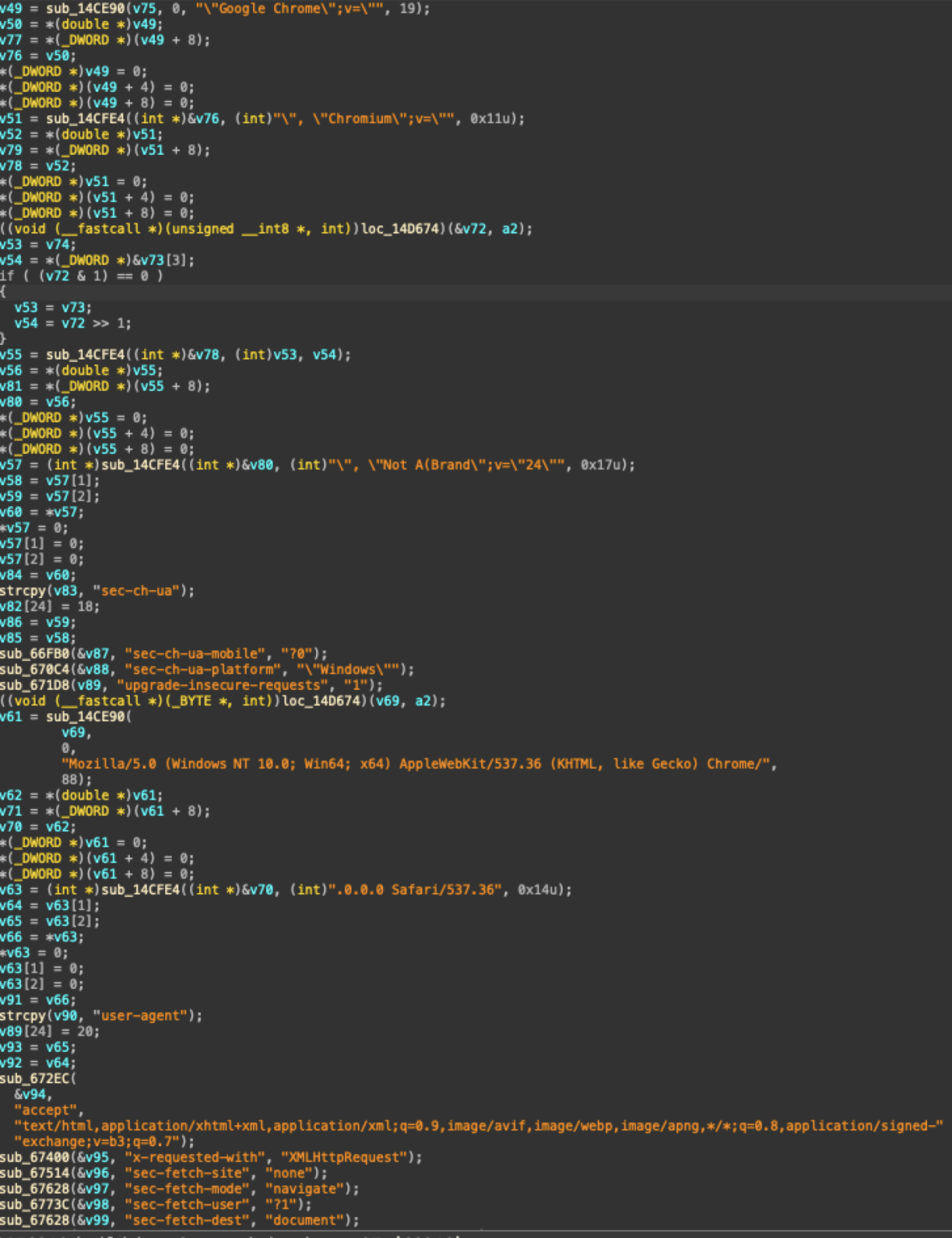
The nghttp2 library powers the HTTP/2 flood and constructs headers that mirror legitimate Chrome browser behavior at the protocol level, making rate-limiting and fingerprint-based DDoS mitigation significantly harder.

On top of that, the botnet uses Ethereum’s naming service to resolve its command server address, querying five legitimate public blockchain RPC endpoints shuffled randomly before each attempt, which means blocking any individual endpoint does almost nothing.

“Kimwolf also carries a hard-coded Tor .onion hidden service as a backup and a local proxy architecture for flexible routing between clearnet and Tor.” continues the report. “The malware developers added this function to directly respond to C2 server takedown efforts in December 2025.”

The three-tier structure, Ethereum ENS, then Tor hidden service, then local proxy on 127.0.0.1:23075, is a direct operational response to two takedowns the botnet suffered in December 2025. The local proxy routes all C2 traffic through the same local address regardless of whether it’s going to the clearnet or Tor, which means the proxy component can be updated independently without redeploying the main bot binary. Unit 42 also identified what it assesses with moderate confidence to be an operator-controlled RPC facade at eth.rpcuniverse.com, based on its single-tenant hosting, registration timing, and exclusive presence in Kimwolf samples.

Kimwolf spreads by abusing residential proxy services to reach Android TV boxes that ship with Android Debug Bridge enabled on port 5555. Once tunneled into a local network through a proxy endpoint, attackers can install the malware without any authentication. The botnet masks itself as “netd_service” to blend in with legitimate Android system processes, and Unit 42 found eight APK packages distributed between October and December 2025 that masquerade as a system service called SystemService, probing for root access before executing a bundled kernel payload.

Version 7 also strips out all scanning, exploitation, and brute-force functionality from the main binary — the operators have separated the propagation pipeline from the DDoS core. External loaders now handle initial access, while the Kimwolf binary handles attacks and acts as a relay. The attack method count was consolidated from 43 text-named commands in earlier versions to 15 numbered methods covering layers 3 through 7, including the new HTTP/2 flood, a high-performance UDP flood with ARM NEON SIMD acceleration optimized for the processors in Android TV boxes, and a TLS/HTTPS flood. Unit 42 clustered C2 infrastructure across 22 IP addresses in Saint Petersburg, Russia, all sharing the same SSH host key between December 2025 and February 2026.

The defensive guidance from Unit 42 is straightforward: treat Android TV boxes as untrusted devices and segment them from enterprise networks. Disabling ADB or restricting it to USB-only access removes the primary way this botnet gets onto devices. For detection, watch for outbound HTTPS connections to Ethereum RPC endpoints from devices that normally have no business touching blockchain services, Tor circuit activity or SOCKS5 proxy traffic from TV boxes, connections to localhost port 23075, and any Android consumer device running a process named “netd_service.”

“Kimwolf v7 is a focused evolution of an already large-scale botnet. The HTTP/2 flood with Chrome browser fingerprinting complicates application-layer DDoS mitigation, as attack traffic now mirrors legitimate browser behavior at the protocol and header level.” concludes the report. “The three-tier C2 system (Ethereum ENS, Tor .onion, local proxy) indicates that the operators are investing in infrastructure built to withstand takedown operations.”

In March, the U.S. DoJ disrupted command-and-control infrastructure used by several IoT botnets, including AISURUKimwolf, JackSkid, and Mossad. The operation involved authorities from Canada and Germany, along with major tech companies, to target botnet operators and weaken their global cybercrime activities.

The AISURU/Kimwolf botnet was linked to a record-breaking DDoS attack that peaked at 31.4 Tbps and lasted just 35 seconds. Cloudflare said the November 2025 incident was part of a surge in hyper-volumetric HTTP DDoS attacks observed in late 2025, all automatically detected and mitigated.

Kimwolf is a newly discovered Android botnet linked to the Aisuru botnet that has infected over 1.8 million devices and issued more than 1.7 billion DDoS attack commands, according to XLab.

The Kimwol Android botnet primarily targets TV boxes, compiled using the NDK and equipped with DDoS, proxy forwarding, reverse shell, and file management functions. It encrypts sensitive data with a simple Stack XOR, uses DNS over TLS to hide communication, and authenticates C2 commands with elliptic curve digital signatures. Recent versions even incorporate EtherHiding to resist takedowns via blockchain domains.

Kimwolf follows a naming pattern of “niggabox + v[number]”; versions v4 and v5 have been tracked. By taking over one C2 domain, researchers observed around 2.7 million IPs interacting over three days, indicating a likely infection scale exceeding 1.8 million devices. Its infrastructure spans multiple C2s, global time zones, and versions, making it hard to estimate the total number of infections.

The botnet borrows the code from the Aisuru family, however, operators redesigned it to evade detection. Its primary function is traffic proxying, though it can execute massive DDoS attacks, as seen in a three-day period issuing 1.7 billion commands between November 19 and 22.

Follow me on Twitter: @securityaffairs and Facebook and Mastodon

Pierluigi Paganini

(SecurityAffairs – hacking, Kimwolf v7)

  • ✇Security Affairs
  • Cisco Warns of Seven ClamAV Flaws, Two With Public PoCs Pierluigi Paganini
    Cisco warns that seven ClamAV flaws affect Secure Endpoint Connector products, with two having public PoCs that could enable remote DoS attacks. Cisco warned that seven ClamAV vulnerabilities affect its Secure Endpoint Connector on Windows, macOS and Linux. ClamAV is an open-source antivirus engine widely used to scan files and emails for malware. The company states that two flaws have public PoCs and could let unauthenticated attackers cause DoS conditions. “Multiple vulnerabilities
     

Cisco Warns of Seven ClamAV Flaws, Two With Public PoCs

11 de Agosto de 2026, 13:05

Cisco warns that seven ClamAV flaws affect Secure Endpoint Connector products, with two having public PoCs that could enable remote DoS attacks.

Cisco warned that seven ClamAV vulnerabilities affect its Secure Endpoint Connector on Windows, macOS and Linux. ClamAV is an open-source antivirus engine widely used to scan files and emails for malware.

The company states that two flaws have public PoCs and could let unauthenticated attackers cause DoS conditions.

“Multiple vulnerabilities in ClamAV could allow a remote attacker to cause a denial of service (DoS) condition, interrupting scanning operations.” reads the advisory.

The flaws, tracked as CVE-2026-20337 to CVE-2026-20339 and CVE-2026-20345 to CVE-2026-20348, affect ClamAV parsers for several file formats. ClamAV fixed them in version 1.5.4, Cisco later warned that public PoCs are available for the vulnerabilities CVE-2026-20337 and CVE-2026-20338. Company’s PSIRT said it has no evidence that attackers have exploited these vulnerabilities in the wild.

“”The Cisco PSIRT is aware that proof-of-concept exploit code is available for the vulnerabilities that are described in CVE-2026-20337 and CVE-2026-20338.The Cisco PSIRT is not aware of proof-of-concept exploit code for any of the other vulnerabilities that are described in this advisory.” continues the advisory. “The Cisco PSIRT is not aware of any malicious use of the vulnerabilities that are described in this advisory.”

Below are the descriptions of CVE-2026-20337 and CVE-2026-20338:

  • CVE-2026-20337 (CVSS score of 7.5) – CVE-2026-20337: ClamAV Zip File Format Processing Out-of-Bounds Write Vulnerability – A vulnerability in the zip archive parser of ClamAV could allow an unauthenticated, remote attacker to cause a DoS condition on an affected device. This vulnerability is due to improper boundary checks for content in zip files during scanning, which may result in an out-of-bounds write condition. An attacker could exploit this vulnerability by submitting a crafted zip file for scanning. A successful exploit could allow the attacker to cause the ClamAV scanning process to terminate, resulting in a DoS condition on the affected software.
  • CVE-2026-20337 (CVSS score of 7.5) – ClamAV Zip File Format Processing Memory Corruption Vulnerability – A vulnerability in the zip archive parser of ClamAV could allow an unauthenticated, remote attacker to cause a DoS condition on an affected device. This vulnerability is due to improper memory handling when processing content in zip files during scanning. An attacker could exploit this vulnerability by submitting a crafted zip file for scanning. A successful exploit could allow the attacker to cause the ClamAV scanning process to terminate as a result of a memory double-free, resulting in a DoS condition on the affected software.

Cisco identified the affected products in its advisory and recommends customers check the related bug IDs for details on each vulnerability.

Affected Cisco Software PlatformCVSS Base ScoreSecurity Impact RatingCisco Bug IDsFirst Fixed Release
Secure Endpoint Connector for Linux5.3MediumCSCwv87285Release no. TBD (Aug 2026)
Secure Endpoint Connector for Mac5.3MediumCSCwv87286Release no. TBD (Aug 2026)
Secure Endpoint Connector for Windows7.5HighCSCwv87283Release no. TBD (Aug 2026)

Secure Endpoint Private Cloud is not affected, but must distribute the fixes to endpoints.

Cisco said no workaround is available. Patches will be released in August. The flaws are high risk on Windows because ClamAV runs with elevated privileges, while macOS and Linux face medium risk.

Follow me on Twitter: @securityaffairs and Facebook and Mastodon

Pierluigi Paganini

(SecurityAffairs – hacking, newsletter)

  • ✇Cybersecurity News
  • CVE-2026-39868: Public PoC Discloses a macOS and iOS Kernel Memory Corruption Flaw Do Son
    Full details and PoC exploit code for CVE-2026-39868 are public. The macOS kernel vulnerability in DTrace lets an app corrupt kernel memory. Patch now. Related Posts: CVE-2026-5430: WSO2 Account Takeover Flaws Rated Up to CVSS 10 CVE-2026-66747: Zbtlink Router Backdoor ENDLESSDOORS Enables Unauthenticated Remote Code Execution as Root CVE-2026-64561: Zapscape KVM Escape Runs Commands With Kernel Root Privilege, PoC Exploit Code Publicly Disclosed The post CVE-2026-39868: Public PoC Discloses
     

“I’m Allowed”: Hackers Use Simple Claims to Bypass AI Guardrails

Cisco Talos found hackers using simple authorization claims to bypass AI guardrails, build DDoS attack tools, steal credentials and access live camera services.

New Dolphin X Malware Uses AI Profiler to Rank High-Value Victims

Dolphin X malware targets more than 300 apps and includes an AI Profiler that scores infected Windows PCs to help criminals identify high-value victims quickly.
  • ✇Security Affairs
  • OpenSSL Fixes HollowByte Memory Exhaustion Bug Pierluigi Paganini
    Okta disclosed HollowByte, an 11-byte OpenSSL flaw that lets remote attackers exhaust server memory and trigger denial-of-service attacks. Okta’s Red Team disclosed a denial-of-service vulnerability in OpenSSL they named HollowByte, and the attack payload is exactly 11 bytes. A remote, unauthenticated attacker sends that payload and the server allocates up to 131 KB of memory before the TLS handshake even begins, then blocks a worker thread waiting for data that never arrives. No credentials
     

OpenSSL Fixes HollowByte Memory Exhaustion Bug

18 de Julho de 2026, 15:24

Okta disclosed HollowByte, an 11-byte OpenSSL flaw that lets remote attackers exhaust server memory and trigger denial-of-service attacks.

Okta’s Red Team disclosed a denial-of-service vulnerability in OpenSSL they named HollowByte, and the attack payload is exactly 11 bytes. A remote, unauthenticated attacker sends that payload and the server allocates up to 131 KB of memory before the TLS handshake even begins, then blocks a worker thread waiting for data that never arrives. No credentials required, no prior access, no exploit chain.

“When a rogue header lands, the state machine triggers an unvalidated allocation.” reads the advisory. “When the malicious 11-byte payload arrives, the TLS state machine reads the 4-byte handshake header and triggers an unvalidated pre-allocation based on the header’s 3-byte length declaration:

Read Header⟶grow_init_buf()⟶OPENSSL_clear_realloc()⟶malloc(attacker_size)

Because there is no payload validation at this early stage, malloc() allocates up to 131 KB based solely on the untrusted packet’s claims. The worker thread then blocks, waiting indefinitely for data that will never arrive.”

Older versions of OpenSSL trust the attacker’s declared message size and allocate memory for it before any data has actually arrived. The fix is conceptually simple, grow the buffer only as bytes actually land on the wire, but the vulnerable design has been in place long enough to affect a wide range of software.

The memory problem doesn’t end when the connection drops.

“When an attacking connection drops, OpenSSL frees the buffer. However, glibc does not immediately return small-to-medium allocations to the operating system; it keeps them for potential reuse.” continues the advisory. “By launching waves of connections with randomized claimed sizes, an attacker prevents the allocator from reusing those freed chunks. “

The heap fragments progressively, the server’s resident memory footprint climbs continuously, and the only way to reclaim it is to restart the process. The attacker can disconnect and the damage stays.

Okta tested the attack against unpatched and patched NGINX instances under realistic conditions.

“In a standard 1 GB RAM environment, the unpatched server was OOM-killed at 547 MB of frozen, fragmented memory.” states Okta. “In higher-spec testing (16 GB RAM), the attack successfully locked up 25% of the system’s total memory while staying safely under the connection ceiling, meaning standard connection-limiting defenses won’t stop it.”

Rate limiting and connection caps, the standard first-line defenses against this type of attack, don’t help here because the attacker doesn’t need many connections to cause meaningful damage.

The scope is broad.

“Because OpenSSL is widely used and embedded, this vulnerability affects a variety of software, including web servers (Apache, NGINX), language runtimes (Node.js, Python, Ruby, PHP), and databases (MySQL, PostgreSQL).” concludes the report.

The OpenSSL team fixed it through incremental buffer growth, the server now only allocates memory as data actually arrives, so an empty claim costs nothing, merged in PRs 30792, 30793, and 30794. The fix was included in OpenSSL v4.0.1 and silently backported to versions 3.6.3, 3.5.7, 3.4.6, and 3.0.21. No CVE was assigned; OpenSSL treated it as a hardening fix rather than a security advisory. Update your OpenSSL packages regardless.

Follow me on Twitter: @securityaffairs and Facebook and Mastodon

Pierluigi Paganini

(SecurityAffairs – hacking, HollowByte)

FBI and Spanish Police Arrest Alleged Cyber Army of Russia Reborn Member

Spanish police and the FBI arrested an alleged Cyber Army of Russia Reborn member as international efforts against pro Russia cyberattacks continue worldwide.

Veja como os hackers usam scripts do PowerShell para roubar contas do Telegram | Blog oficial da Kaspersky

3 de Julho de 2026, 09:00

Existem dezenas de maneiras de invadir uma conta do Telegram. Revelamos com frequência casos de phishing nos Miniaplicativos do Telegram, golpes usando bots, presentes e brindes, além de muitas outras táticas. Hoje, estamos analisando outro método de sequestro de conta: um método baseado em um script do PowerShell.

O script enganoso, chamado de “Atualização de telemetria do Windows”, na verdade serve como uma ferramenta para sequestrar sessões do Telegram. Ele coleta dados de computadores completamente indefesos e os envia aos invasores por meio de um bot do Telegram.

Um script malicioso contendo um malware de roubo de dados

Os cibercriminosos costumam usar scripts do PowerShell para baixar malware e coletar dados de forma oculta. Desta vez, os pesquisadores descobriram um script no Pastebin disfarçado de atualização comum do Windows. Na realidade, trata-se de um infostealer projetado para sequestrar dados de sessão do Telegram para Windows e permitir que hackers assumam o controle de contas sem senha nem código de verificação.

Mas, afinal, o que é um script do PowerShell? Pense nisso como um arquivo de texto repleto de comandos para um computador Windows. Em vez de uma pessoa gastar tempo clicando e executando tarefas manualmente, o computador segue essas instruções para fazer tudo automaticamente em questão de segundos.

Esse script do PowerShell rouba dados de sessão do Telegram para Windows, permitindo que hackers invadam contas sem usar uma senha nem códigos de verificação

Os pesquisadores logo identificaram um token de bot do Telegram e um ID de chat na parte superior do script, além de várias referências à pasta tdata. Essa pasta é onde o Telegram para Windows mantém as chaves de autorização usadas para fazer login dos usuários nos seus servidores. Se esses dados forem capturados por invasores, será possível acessar a conta do Telegram da vítima sem precisar de uma senha nem de um código de verificação. Os invasores, então, mantêm o acesso até que a vítima verifique suas sessões ativas no aplicativo e encerre manualmente as sessões suspeitas.

Como o malware de roubo de dados funciona

O malware chega ao computador da vítima disfarçado de script do PowerShell de atualização da telemetria do Windows. Assim que é executado, esse script reúne informações básicas do sistema: nome de usuário, nome do host e endereço IP público. Em seguida, ele verifica se o Telegram Desktop está instalado. Se estiver, o script força o encerramento do aplicativo para desbloquear os arquivos do Telegram para edição.

A partir daí, o resto é simples: o script compacta todo o conteúdo da pasta tdata em um diretório temporário, encaminha o arquivo compactado para os invasores e, então, exclui o arquivo do computador para ocultar seus rastros.

A boa notícia é que é provável que o malware de roubo de dados ainda não tenha comprometido nenhuma conta, pois não foram encontradas provas de transferências reais de dados. Parece que os pesquisadores detectaram esse script malicioso do PowerShell enquanto ele ainda estava na fase de teste do protótipo.

Outro sinal de alerta é seu nome bem suspeito. Os cibercriminosos normalmente usam nomes neutros para ocultar seus bots e aplicativos. Mas, nesse caso, quando os pesquisadores o identificaram, o bot estava sendo executado sob o nome aleatório afhbhfsdvfh_bot com uma descrição bastante honesta: Atacante do Telegram. Os pesquisadores observaram que, embora o bot provavelmente tenha sido submetido a testes funcionais, ele ainda não havia sido implementado em escala, o que explica o nome aleatório.

Como se defender contra scripts do PowerShell

A defesa contra esse malware de roubo de dados sem nome requer uma abordagem de segurança em camadas. Em primeiro lugar, é preciso entender como um script do PowerShell vai parar no seu PC. Isso geralmente ocorre por meio de anexos de e-mail maliciosos, vulnerabilidades de software, aplicativos infectados ou truques de engenharia social. É por isso que recomendamos a instalação de um pacote de segurança robusto no seu dispositivo e extrema cautela ao clicar em links e baixar arquivos.

  • Tome cuidado com os downloads. Sempre verifique os sites que você usa para baixar arquivos. Opte por fontes oficiais e confiáveis. E lembre-se de que os canais do Telegram e do Discord, bem como sites duvidosos e criados apenas para golpes, definitivamente não se encaixam nessa descrição.
  • Cuidado com links e anexos de e-mail. Lembre-se de que o e-mail continua sendo o método de entrega de malware favorito dos cibercriminosos. Os cibercriminosos podem enviar um script do PowerShell diretamente para sua caixa de entrada como anexo ou induzir você a clicar em um link que aciona um download automático.
  • Mantenha seus aplicativos e SO atualizados. As vulnerabilidades de software podem surgir a qualquer momento, mas as correções geralmente são disponibilizadas rapidamente. Recomendamos instalar atualizações assim que elas forem disponibilizadas. Para facilitar as coisas, basta ativar as atualizações automáticas sempre que possível.

Instale o Kaspersky Premium em cada dispositivo onde você usa o Telegram. Nossa solução de segurança bloqueia malwares, anexos maliciosos, spam, tentativas de phishing e sites suspeitos. A assinatura do Kaspersky Premium inclui um gerenciador de senhas. Ele gera senhas fortes e exclusivas e as armazena com segurança, impede que você insira suas credenciais em sites falsos e é útil para aumentar a segurança do Telegram, que abordaremos a seguir.

Como proteger sua conta do Telegram

Para proteger sua conta do Telegram contra esses tipos de golpes de sequestro, recomendamos o seguinte:

  • Monitore regularmente sua atividade no Telegram. Os hackers costumam roubar contas para o envio em massa de spam e para aplicar golpes. É uma boa ideia verificar seu histórico de conversas de vez em quando para verificar se não apareceram novas conversas ou mensagens que você não enviou.
  • Encerre sessões não reconhecidas imediatamente. Se você suspeitar que foi vítima desse infostealer ou de qualquer outro ataque cibernético, encerre todas as outras sessões do Telegram o mais rápido possível acessando ConfiguraçõesDispositivosEncerrar todas as outras sessões.

Se sua conta do Telegram já foi invadida, você tem 24 horas para expulsar os invasores encerrando as sessões deles. Explicamos por que essa regra existe e mapeamos todas as formas possíveis de recuperar sua conta no nosso guia detalhado: O que fazer se sua conta do Telegram for hackeada?

Mas é essencial reforçar a segurança da sua conta. Primeiro, configure uma senha na nuvem acessando ConfiguraçõesPrivacidade e segurançaVerificação em duas etapas. Uma senha comum não é suficiente; ela deve ser exclusiva e difícil de comprometer. Recomendamos ler nossa postagem sobre o assunto: Como criar uma senha inesquecível.

Melhor ainda, opte por chaves de acesso: uma tecnologia que não requer o uso de senhas e oferece proteção avançada contra vazamentos e phishing. Para configurar esse método de login, vá para ConfiguraçõesPrivacidade e segurançaChaves de acesso. A maneira mais fácil de gerenciar suas chaves de acesso é com o Kaspersky Password Manager. Nosso aplicativo multiplataforma garante que você possa fazer login no Telegram usando suas chaves de acesso salvas, esteja no Windows, Android, iOS ou macOS.

Para saber mais sobre como os cibercriminosos podem invadir sua conta do Telegram e como protegê-la, confira nossas outras postagens:

  • ✇Firewall Daily – The Cyber Express
  • Indonesian Media Outlet Tempo Targeted by 24.9 Million DDoS Requests Ashish Khaitan
    A major wave of cyberattacks on Tempo has disrupted access to one of Indonesia's leading news websites, with the media outlet reporting millions of malicious requests directed at its servers over several days. The Tempo cyberattack, which began on Friday, June 5, 2026, involved a distributed denial-of-service (DDoS) assault designed to overwhelm the company's infrastructure and hinder public access to its journalism. According to Tempo's technology team, the attacks generated an extraordinary
     

Indonesian Media Outlet Tempo Targeted by 24.9 Million DDoS Requests

cyberattacks on Tempo

A major wave of cyberattacks on Tempo has disrupted access to one of Indonesia's leading news websites, with the media outlet reporting millions of malicious requests directed at its servers over several days. The Tempo cyberattack, which began on Friday, June 5, 2026, involved a distributed denial-of-service (DDoS) assault designed to overwhelm the company's infrastructure and hinder public access to its journalism. According to Tempo's technology team, the attacks generated an extraordinary volume of fake internet traffic, placing significant pressure on the organization's servers and temporarily affecting the availability of the website for readers in Indonesia and elsewhere.

24.9 Million Requests Recorded During Cyberattacks on Tempo 

Tempo Digital Chief Technology Officer Heru Tjatur Tjahja said the cyberattacks on Tempo had reached an unprecedented scale. By Monday, June 8, 2026, the company's monitoring systems had logged a total of 24.9 million requests aimed at its servers.  “The total attacks flooding our website as of June 8 reached 24.9 million requests,” Tjahja said on Monday, June 8, 2026.  The Tempo cyberattack relied on bot-generated traffic, a common tactic used in DDoS incidents. Such attacks typically involve networks of compromised devices sending enormous numbers of requests simultaneously, overwhelming targeted systems and making websites difficult or impossible to access.  Tjahja explained that preliminary findings indicated the attacks occurred intermittently but intensified dramatically during certain periods. 

Largest Wave Hit During Evening Hours 

The investigation into the cyberattacks on Tempo revealed a pattern in the timing of the attacks. According to Tjahja, the attackers frequently launched their operations during evening and early morning hours, when activity surged sharply.  One of the most significant attack waves occurred between 8:30 p.m. and midnight. During that period alone, Tempo recorded 12.97 million attack requests within a span of just two hours.  “For example, the first major wave consisted of 12.97 million attacks in only two hours. From 8:30 p.m. until midnight, the attackers carried out a digital assault,” he said.  The intensity of the attack highlighted the scale of resources being used against the Indonesian media organization. 

Attack Traffic Traced Beyond Indonesia 

Early analysis conducted by Tempo's technology team suggested that the sources of the malicious traffic extended well beyond Indonesia's borders.  While the exact identities of those responsible remain unclear, investigators traced attack activity to multiple countries. According to Tempo, traffic associated with the cyberattacks on Tempo originated from Colombia, the United States, the Philippines, Bangladesh, Mexico, and Indonesia.  The international nature of the attack traffic reflects the complexity of modern DDoS operations, which often use distributed networks of compromised devices globally to conceal the origin of an attack. 

Possible Link to Earlier CMS Breach Attempt 

Tjahja believes the Tempo cyberattack may be connected to an earlier security incident that targeted the organization's content management system (CMS) at the end of May 2026.  During that earlier intrusion attempt, attackers managed to unpublish several articles that had already been published on the website. According to Tjahja, the content affected by the breach involved corruption-related reporting.  However, the CMS architecture limited the level of access available to unauthorized users. As a result, the attackers were unable to permanently remove the articles and could only temporarily unpublish them.  According to Tjahja, the sequence of events suggests a possible connection between the two incidents.  “It appears that those behind the attacks were unhappy and then proceeded with the DDoS attack,” he said. 

TV boxes maliciosas: descubra como uma “SuperBox” barata transforma sua casa em um nó proxy para cibercriminosos | Blog oficial da Kaspersky

2 de Junho de 2026, 10:00

Netflix, Apple TV+, Disney+, Hulu, Amazon Prime, YouTube Premium… Hoje em dia, as famílias que seguem a lei costumam pagar, em média, de cinco a dez assinaturas apenas para assistir ao conteúdo que desejam, com gastos mensais facilmente ultrapassando a casa dos cem dólares. Não é surpresa, portanto, que as redes sociais e os marketplaces on-line estejam registrando um aumento na demanda por “caixas mágicas”. Surgidas no final de 2025, essas TV boxes Android prometem desbloquear milhares de canais e oferecer acesso gratuito a serviços de streaming mediante um único pagamento.

Os anúncios desses dispositivos estão inundando o TikTok e o Instagram: influenciadores sorridentes tiram os SuperBoxes da caixa, conectam-nos à TV e navegam por inúmeros canais. Parece a solução perfeita contra o alto preço das assinaturas, certo? Mas, na prática, essa é uma das formas mais fáceis de permitir a entrada de uma botnet na sua rede doméstica.

Captura de tela de um vídeo do TikTok mostrando um SuperBox em ação

Um vídeo promocional no TikTok explicando como é ótimo quando tudo é grátis simplesmente cancelar todas as suas assinaturas

O que há de errado com essas TV boxes baratas?

Já surgiram vários relatos sobre TV boxes maliciosas, mas agora sua divulgação atingiu uma escala realmente alarmante.

No final de 2025, analistas examinaram vários modelos do SuperBox, um dispositivo popular disponível nas principais lojas de varejo e marketplaces on-line. As descobertas foram muito preocupantes: logo após serem ligados, os dispositivos começaram a enviar solicitações aos servidores do aplicativo de mensagens chinês Tencent QQ e ao serviço de proxy Grass, efetivamente disponibilizando a largura de banda da Internet do usuário para terceiros.

Dentro do firmware, os pesquisadores descobriram aplicativos completamente incomuns em um reprodutor de mídia: um scanner de rede, um analisador de tráfego e ferramentas de sequestro de DNS. Com isso, o dispositivo não apenas transmite conteúdo pirata, mas também vasculha a rede local em busca de outros alvos (incluindo interfaces industriais SCADA) e fica pronto para participar de ataques DDoS. Também foi descoberto que os SuperBoxes contêm pastas com o nome revelador “secondstage”, um forte indício de malware em vários estágios.

Mais recentemente, em abril de 2026, o podcast Darknet Diaries publicou uma entrevista com um pesquisador de segurança conhecido pelo pseudônimo D3ada55, que compartilhou diversos detalhes preocupantes sobre essas caixas, incluindo o fato de que elas ainda eram vendidas livremente em plataformas como Amazon, Walmart e Best Buy.

A evolução da infecção: do BADBOX ao Keenadu

O caso do SuperBox está longe de ser a única ocorrência em que os dispositivos Android foram transformados em nós de botnet ou vendidos com infecções de fábrica. Aqui estão os casos mais recentes:

  • BADBOX 2.0. Em julho de 2025, a Google processou os operadores de uma botnet que comprometeu mais de 10 milhões de dispositivos Android, principalmente TV boxes, tablets e projetores baratos que não tinham certificação do Google Play Protect. Conforme informamos anteriormente, o BADBOX 2.0 tem como alvo TV boxes e opera tanto como uma rede proxy quanto como uma plataforma de fraude publicitária.
  • Kimwolf. Em dezembro de 2025, a equipe do QiAnXin XLab descobriu uma botnet DDoS que havia sequestrado cerca de 1,8 milhão de dispositivos Android. O hardware infectado incluía modelos genéricos de fabricantes pouco conhecidos que usavam nomes chamativos como TV BOX, SuperBox, XBOX, SmartTV e outros. O alcance da infecção foi enorme, com dispositivos comprometidos distribuídos para o mundo todo. Os países mais atingidos foram o Brasil, Índia, Estados Unidos, Argentina, África do Sul, Filipinas e México.
  • Keenadu. Nossos especialistas descobriram esse malware à espreita no firmware de dispositivos novos em novembro de 2025, mas ele só chamou atenção depois de publicarmos um estudo sobre ele em fevereiro de 2026. O Keenadu se disfarça de componente legítimo do sistema, até mesmo entrando em aplicativos de desbloqueio facial e potencialmente concedendo aos invasores acesso a dados biométricos, informações bancárias e mensagens pessoais.

Todas essas histórias compartilham a mesma origem: o cavalo de Troia Triada, documentado pela primeira vez pelos nossos pesquisadores em 2016 e apelidado na época de “um dos cavalos de Troia móveis mais avançados”. Ao longo da última década, ele evoluiu de um malware comum para um backdoor modular integrado diretamente ao firmware durante a fabricação.

Como o esquema de infecção funciona

Os fabricantes de TV boxes baratas cortam gastos em tudo: certificação do Google Play Protect, auditorias de firmware e atualizações de segurança. Muitos desses dispositivos são executados no Android Open Source Project sem nenhuma garantia de segurança. Em algum lugar ao longo da cadeia de suprimentos, seja na fábrica, por meio de um intermediário ou em uma distribuidora, um backdoor é injetado na imagem do firmware. Nossos especialistas suspeitam que o próprio fabricante pode nem estar ciente do comprometimento.

A escala da infecção transforma milhões de caixas idênticas na base perfeita para uma botnet: cada dispositivo comprometido representa um endereço IP exclusivo que pode ser alugado para terceiros. Operadores de botnet, como o Kimwolf, lucram com isso não apenas por meio de ataques DDoS distribuídos, mas também revendendo a largura de banda de smart TVs e TV boxes infectadas.

O que isso significa para você

Uma TV box infectada fica na sala de estar, conectada ao Wi-Fi doméstico. Isso significa que ela pode detectar smartphones com aplicativos bancários, unidades de armazenamento conectadas à rede (NAS) com arquivos da família, câmeras IP, fechaduras inteligentes, computadores de trabalho e qualquer outro dispositivo conectado à sua rede Wi-Fi.

Com esse tipo de vetor de acesso inicial dentro da sua rede doméstica, um invasor pode interceptar tráfego não criptografado, falsificar solicitações de DNS, verificar portas e procurar vulnerabilidades em dispositivos vizinhos. Além disso, seu endereço IP pode ser usado para atividades fraudulentas. Como resultado, na melhor das hipóteses, seu IP acabará entrando em listas de bloqueio, e serviços legítimos começarão a barrar seu acesso por atividade suspeita; na pior, autoridades podem bater à sua porta.

Como identificar um gadget potencialmente perigoso

Você deve ficar alerta se um dispositivo:

  • For vendido sob uma marca sem nome ou genérica, como T95, X96Q, MX10, TV BOX, SuperBox ou similares
  • Promete acesso vitalício gratuito a serviços premium pagos mediante um único pagamento
  • Exige que você desative o Google Play Protect ou instale APKs de terceiros durante a configuração inicial
  • Não tem uma certificação do Play Protect
  • É promovido por meio de campanhas agressivas de spam nas redes sociais

Como evitar hospedar um nó de botnet

  • Compre TV boxes certificadas com Google Play Protect ou adquira dispositivos diretamente de operadoras de telecomunicações e provedores de Internet confiáveis.
  • Isole todos os dispositivos domésticos inteligentes. Configure uma rede Wi-Fi separada no roteador da sua casa para TV boxes, câmeras, alto-falantes inteligentes, aspiradores robóticos e dispositivos semelhantes, mantendo smartphones, unidades NAS e computadores na rede principal. Isso evita que o malware se espalhe para seus dispositivos mais importantes.
  • Atualize o firmware com frequência em todos os dispositivos, e não se esqueça do roteador, pois ele também representa um elo vulnerável na cadeia.
  • Remova todos os aplicativos da TV box Android que não foram instalados por você, especialmente lojas de aplicativos alternativas, “impulsionadores” de Wi-Fi e “limpadores de sistema”.
  • Monitore o tráfego da sua rede. Roteadores modernos e o Kaspersky Premium conseguem exibir os destinos de conexão de cada dispositivo. Conexões frequentes entre um reprodutor de mídia e servidores na China representam um forte sinal de alerta de segurança.
  • Instale o Kaspersky Premium em todos os seus dispositivos, pois ele protege contra cavalos de Troia e bloqueia páginas de phishing usadas para distribuir arquivos APK infectados.
  • Não desative o Google Play Protect e evite instalar APKs de fontes duvidosas, pois esse é o principal vetor de infecção usado para burlar a loja oficial de aplicativos.
  • Em caso de dúvida, devolva a TV box. Não vale a pena arriscar sua biometria, dados bancários ou a reputação do seu endereço IP por causa de um dispositivo de streaming barato.

Quer saber como proteger seus dispositivos domésticos inteligentes? Leia mais nas nossas postagens relacionadas:

A sua TV, seu smartphone e seus alto-falantes inteligentes estão espionando você?

Seu roteador está trabalhando secretamente para inteligências estrangeiras?

Casa não tão inteligente

Lar, smart lar

Como proteger sua casa smart

❌
❌