As AI exposes flaws in IT systems and geopolitics plays out on the cyber frontline, some experts say the events of recent weeks could soon be a common occurrenceAlex Pearce was doing the morning rounds at his fruit and vegetable wholesale business in London on Monday last week when he noticed something odd.The defrost light on refrigeration unit 2 was on, and the panel reading was 150C. Unit 4 was the same. Continue reading...
As AI exposes flaws in IT systems and geopolitics plays out on the cyber frontline, some experts say the events of recent weeks could soon be a common occurrence
Alex Pearce was doing the morning rounds at his fruit and vegetable wholesale business in London on Monday last week when he noticed something odd.
The defrost light on refrigeration unit 2 was on, and the panel reading was 150C. Unit 4 was the same.
Separate actions also take place outside fence and across Europe in backlash against impact of AI boomActivists have stormed the site of a Microsoft datacentre being built in Amsterdam, as the backlash to the social and environmental harms of the AI boom spreads across Europe.Protesters from Geef Tegengas, a Dutch direct action group, clashed with police while breaking into a construction site at Westpoort, Amsterdam, where some members climbed a crane, lit flares and tied helium balloons to equ
Separate actions also take place outside fence and across Europe in backlash against impact of AI boom
Activists have stormed the site of a Microsoft datacentre being built in Amsterdam, as the backlash to the social and environmental harms of the AI boom spreads across Europe.
Protesters from Geef Tegengas, a Dutch direct action group, clashed with police while breaking into a construction site at Westpoort, Amsterdam, where some members climbed a crane, lit flares and tied helium balloons to equipment.
Hackers altered refrigeration controls at three French blood service sites, but staff protected plasma supplies and prevented damage to blood products.
Hackers altered refrigeration controls at three French blood service sites, but staff protected plasma supplies and prevented damage to blood products.
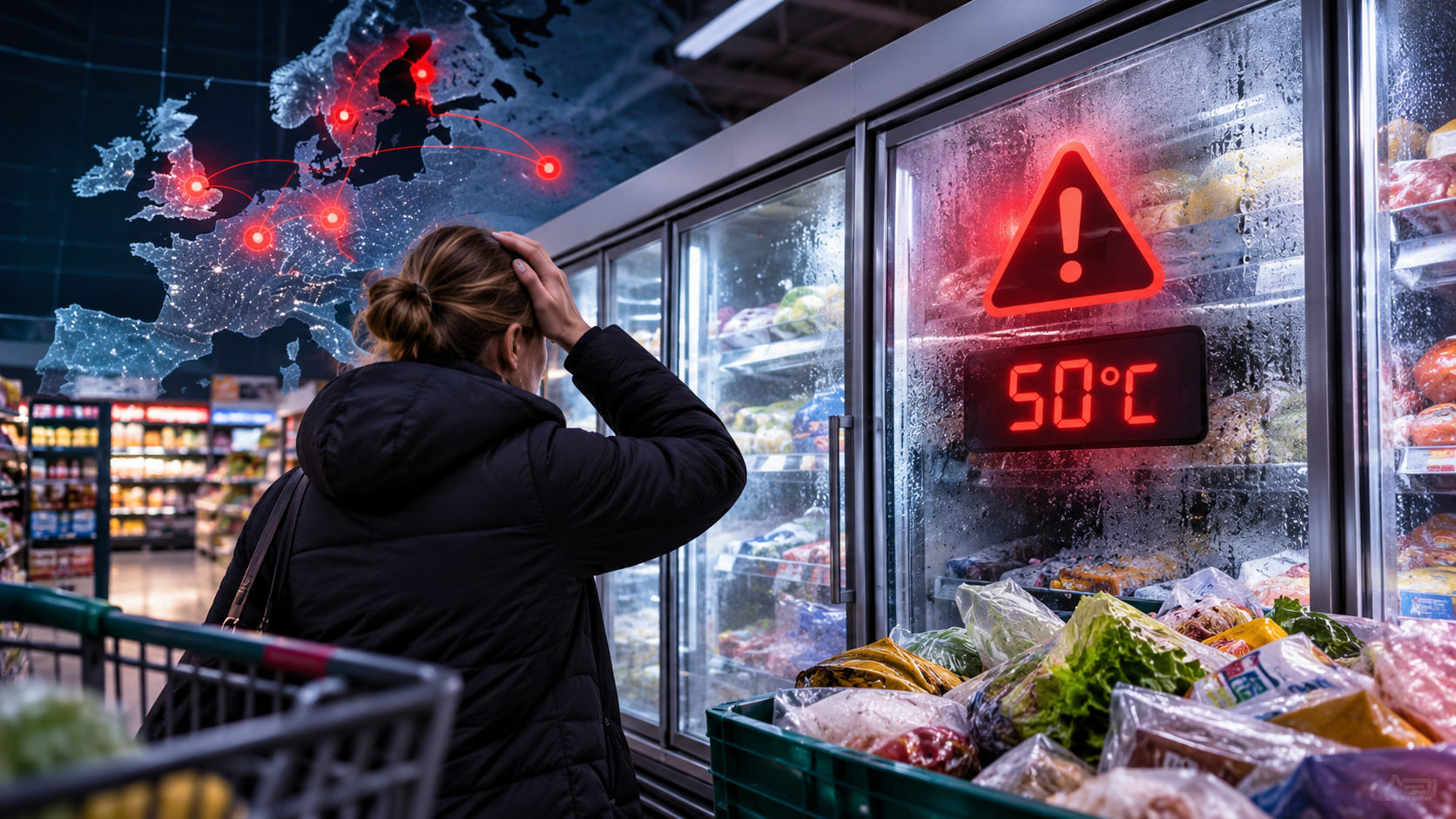
Supermarkets in Sweden, Belgium, Luxembourg, Ireland and Estonia were throwing out spoiled food on Monday after their fridges and freezers stopped doing their job. In at least two cases, temperatures had been pushed to 50 degrees Celsius (122 degrees Fahrenheit). The apparent supermarket cyberattack came only weeks after attackers took control of cooling equipment in hundreds of stores across France.
That raises an obvious question: why are supermarket freezers suddenly a target, and why now?
How the Supermarket Cyberattack Unfolded Across Europe
Sweden saw some of the clearest signs of tampering. ICA Group spokesperson Gustaf Nilsson told the TT news agency that "a limited number" of stores were affected overnight by an incident involving refrigeration systems. One ICA Kvantum store in Sjöbo, in southern Sweden, was more direct. In a Facebook post, it said its fridges and freezers had been hacked and set to 50 degrees Celsius, and that staff were discarding affected products. The Coop chain also reported problems with fridges and freezers at six stores in central Sweden, according to TT, though it did not immediately share details.
In Belgium, Delhaize said an "IT incident" had affected refrigeration in several dozen stores, mostly in Belgium and a few in neighbouring Luxembourg. "In the affected stores, the range of fresh and frozen products is temporarily somewhat limited. Our distribution centers are operating normally, and there has been no disruption to deliveries to our stores," spokesperson Sarah De Meester said. Carrefour said a cyberattack targeting refrigeration had affected 15 of its more than 700 Belgian stores, and described the impact as "extremely limited.
In Ireland, Musgrave Group said refrigeration systems in 13 SuperValu stores were affected by the "cyber incident." Chilled and frozen products were removed from sale as a precaution. By Monday afternoon, the company said the incident had been "fully resolved" and that restocking of chilled and frozen ranges was "well under way."
In Estonia, refrigeration technology company Kitman Coldtech said attackers had accessed a computer controlling a client's refrigeration system and raised the temperature to 50 degrees Celsius, public broadcaster ERR reported. Chief executive Jann Mutso declined to name the store but said the attack was addressed within minutes and caused no significant damage. The Selver supermarket chain confirmed that one of its outlets was affected.
Is This Supermarket Cyberattack Linked to France?
None of the companies has publicly linked Monday's incidents to France, but the pattern is hard to miss.
Last month, attackers remotely took control of refrigeration systems in hundreds of supermarkets and independent stores across France. They pushed fridge and freezer temperatures as high as 50 degrees Celsius. French TV channel BFM reported that the attackers appeared to trigger a forced defrost option, which kept units heating instead of cooling. By morning, tonnes of food had perished. Some equipment had melted, and in some stores the heat had sparked fires.
Five of France's major retail groups were hit: E.Leclerc, Intermarché, Carrefour, Monoprix and Coopérative U. At least 300 Intermarché and Netto stores were affected. Coopérative U reported more than 100 stores, Carrefour said 80, and Monoprix said about 5% of its roughly 490 stores were targeted.
Bruce Hallas, CEO at Re-thinking the Human Factor, who lives in France, noted on LinkedIn that current estimates sit around 400 stores. He added that some individual branches reported losses of about €250,000. Retailers say millions of euros' worth of food was spoiled, which makes food losses the most visible cost of the attack.
Why the Supermarket Cyberattack Targeted Fridges
The French case offers the strongest clue. The attack did not rely on a new exploit. It targeted ageing systems: internet-connected devices that were still online years after their manufacturer stopped supporting them. Experts say this weakness is common across retail and industry. The cyberattacks in France appeared to target old systems in particular.
Timing made the damage worse. In France, the attackers struck while shops were closed, so temperatures kept rising for hours with no one in the store to notice. Monday's incidents in Sweden also happened overnight.
Estonia shows the other side of the picture. There, the intrusion was caught within minutes and caused no significant damage. The difference between tonnes of ruined stock and almost no loss came down to how quickly someone noticed.
What We Still Don't Know
Key questions remain open. The reports do not say who is behind the attacks or what they want. The full scale is also unclear. Estimates for France range from around 400 to more than 500 stores, and ICA has not said how many of its Swedish stores were hit. The chains affected on Monday have not confirmed whether their equipment shares the ageing, unsupported setup seen in France.
What is clear is that the same tactic has now reached at least five European countries, with fridge temperatures set to 50 degrees Celsius each time.
A new wave of fridge cyberattacks hit supermarket refrigeration systems across five European countries, raising temperatures and causing food losses.
A new wave of fridge cyberattacks has affected supermarket refrigeration systems in several European countries. Fridges and freezers suddenly rose in temperature overnight, with some incidents suspected to be caused by hackers. On Monday, November 2, Ahold Delhaize and Colruyt reported an IT incident affecting dozens of stores in Belgium and Lu
A new wave of fridge cyberattacks hit supermarket refrigeration systems across five European countries, raising temperatures and causing food losses.
A new wave of fridge cyberattacks has affected supermarket refrigeration systems in several European countries. Fridges and freezers suddenly rose in temperature overnight, with some incidents suspected to be caused by hackers. On Monday, November 2, Ahold Delhaize and Colruyt reported an IT incident affecting dozens of stores in Belgium and Luxembourg. Swedish supermarket chains ICA and Coop also reported similar problems.
“Ahold Delhaize and Colruyt said on Monday that an IT incident overnight hit fridges and freezers in dozens of stores in Belgium and Luxembourg, while Swedish grocers ICA and Coop reported similar temperature spikes, with one store blaming a cyberattack.” Reuters states.
BREAKING: Swedish grocery giant ICA, one of Sweden's largest supermarket chains, says several of its stores have been hit by a cyberattack overnight, causing refrigerators and freezers to be remotely set to 50°C.
“Problems were discovered at several grocery stores in Sweden overnight Monday.” reported Sweden Herald.
“We are aware that a limited number of stores were affected by an incident overnight that affected their refrigeration and freezer systems. Ica is providing support in handling the incident, Ica Group press officer Gustaf Nilsson tells TT.”
The latest incidents follow a similar wave of fridge cyberattacks in France last month. In mid-October, a large cyberattack hit the refrigeration systems of hundreds of French supermarkets, BFMTV revealed. The attackers targeted equipment from the Danish maker Danfoss that many French stores use to regulate their cold. Fresh and frozen stock was destroyed, and the Paris prosecutor says there were also fires.
The method is simple and nasty. Refrigeration systems have a forced defrost function that clears ice buildup, and the attackers appear to have triggered it remotely in a continuous mode, with a temperature setting of 50 degrees. The equipment heated for several hours instead of keeping goods cold, and when staff opened the fridges and freezers in the morning, a sector source told BFM, “a wave of heat” came out.
The attack caused fires and food losses. However, cybersecurity consultant Emil Olofsson of Integrity 360 told Swedish news agency TT that temperatures reached 80°C in some cases and several units caught fire. This figure differs from the one reported by police.
ICA Kvantum in Sjöbo said on Facebook that a cyberattack caused the refrigeration problems. ICA Hägerstensåsen in Stockholm was also reportedly affected. According to the Sjöbo store, the temperature inside its fridges and freezers rose to 50°C.
In Belgium, Delhaize detected unusual temperature increases in its refrigeration systems on Monday. Spokesperson Sarah De Meester said the company is investigating the incident.
Stephan Moelans, CEO of Sabcobel, the company that manages Delhaize’s refrigeration systems, told news agency Belga that hackers had switched the units’ evaporators to defrost mode. His office declined to comment to Reuters. Colruyt Group, which operates Spar stores in Belgium through a franchise system, said five stores had suffered attacks on their refrigeration systems. Meanwhile, Belgian newspaper Le Soir reported that dozens of Delhaize and Carrefour stores were affected.
UPDATE: REFRIGERATION DISRUPTIONS SPREAD ACROSS EUROPE – SWEDEN AND BELGIUM AFFECTED
IN SWEDEN: • At least 6 ICA supermarkets affected by suspected refrigeration system hacks. • Coop has now CONFIRMED that 6 of its stores in central Sweden are also affected. • Freezer… https://t.co/a3oGMrGdmzpic.twitter.com/8Q3CFDDLhT
It follows a similar attack in France last month. Police said hackers seized control of the cooling units at hundreds of supermarkets and raised temperatures as high as 50 degrees Celsius (122 Fahrenheit), which caused fires and food losses. Cybersecurity consultant Emil Olofsson of Integrity 360 told TT, Sweden’s news agency, that temperatures there reached 80 degrees and some units caught fire, a figure that differs from the police number.
In Belgium, Delhaize noticed temperature increases in its cooling systems on Monday, spokesperson Sarah De Meester said, and the company is investigating. Stephan Moelans, CEO of the refrigeration firm Sabcobel, which runs Delhaize’s systems, told the news agency Belga it was a cyberattack that switched the units’ evaporators to defrost mode. His office declined to comment to Reuters. Colruyt Group, which runs Spar stores in Belgium under a franchise system, said five shops had their fridge systems attacked, and Le Soir reported that dozens of Delhaize and Carrefour stores were affected.
Ahold also reported a cybersecurity incident to Dutch police last month, after it detected suspicious activity in its infrastructure. Nothing in the reporting ties that report to Monday’s incident.
Fridges and freezers at dozens of supermarkets in Belgium and Sweden overheated overnight in a suspected cyberattack, similar to the one that hit French stores three weeks ago. Delhaize calls it an "IT incident."
In Sweden, John Billow, head of the national cybersecurity centre, told Reuters his team was working on several incidents involving refrigeration systems in grocery stores around the country. An ICA Kvantum store in Sjöbo said on Facebook that a cyberattack caused its problems, and an ICA store told its followers that its temperatures had been “hacked” overnight and set to 50 degrees. Fifty degrees is fine for a beach and poor for ice cream. That store later said it had opened.
At ICA Baronen in Stockholm, a notice said all the freezers were broken because of a cyberattack. The sales manager said the attack came at 2 a.m. and staff noticed it at 5:30 a.m. ICA Hägerstensåsen in Stockholm was reportedly hit too.
ICA said only a limited number of stores were affected and that it is helping them deal with the incident. However, press officer Gustaf Nilsson did not say how many stores were involved.
Coop told Swedish news agencies Aftonbladet and TT that six stores in central Sweden had similar problems. Press manager Carlos Cancino said it was still unclear whether any food would need to be thrown away or whether the refrigeration units had simply stopped working or had switched to heating mode. He also did not rule out further incidents affecting other stores.
An Estonian supermarket chain was also affected. Its refrigeration systems were reportedly set to 50°C, technology provider Kitman Coldtech told public broadcaster ERR. CEO Jann Mutso did not reveal the name of the supermarket chain, saying: “This is very recent. It happened this morning.”
How did the attackers get in? In France, Olofsson says they obtained login details for the control systems, which were exposed directly to the internet. He says the attack targeted a product that controls the cooling systems and that the hack isn’t very complicated, so amateurs may have carried it out.
Billow says Swedish authorities have noticed in recent weeks that quite a lot of exposed operational technology devices exist in Sweden, and they’ve been clear that these must be updated or patched.
Refrigerators and heating systems, security cameras and alarm networks were once largely mechanical, and now they can be monitored and controlled remotely. That gives cybercriminals new openings. Authorities haven’t said who was behind last month’s incidents, and nobody has claimed responsibility.
The Sweden Herald reported that the cause of the attacks on Swedish supermarkets remains unknown.
Update 20:00 Rome Time
The company at the center of the European supermarket refrigeration cyberattacks is Danfoss the same company whose refrigeration systems were targeted during the cyberattacks in France a few weeks ago.
Apparent attempt to hack Rade Bajić’s iPhone comes amid efforts to undermine landmark criminal caseA Serbian prosecutor who investigated the authorities’ allegedly illegal scheme to help the Trumps build a tower in Belgrade has been targeted with advanced spyware, expert analysis indicates.The finding suggests a disturbing new element in the authoritarian Serbian regime’s campaign to undermine what is believed to be the first criminal case related to global moneymaking drive of the US president’
Apparent attempt to hack Rade Bajić’s iPhone comes amid efforts to undermine landmark criminal case
A Serbian prosecutor who investigated the authorities’ allegedly illegal scheme to help the Trumps build a tower in Belgrade has been targeted with advanced spyware, expert analysis indicates.
The finding suggests a disturbing new element in the authoritarian Serbian regime’s campaign to undermine what is believed to be the first criminal case related to global moneymaking drive of the US president’s family, which critics describe as a “pay to play” scheme trading the Trump administration’s favour for business opportunities.
Whether it was youngsters proving their skills or state sabotage, Europe’s most hacked country was left with a mountain of waste after food began cooking in freezersShortly before midnight last Sunday, the digital thermostats controlling hundreds of supermarket cold aisles across France began to flicker and rise.In a “bizarre and unprecedented” cyber-attack, hackers had remotely overridden the temperature settings on thousands of freezers, fridges and chiller cabinets pushing them from as low as
Whether it was youngsters proving their skills or state sabotage, Europe’s most hacked country was left with a mountain of waste after food began cooking in freezers
Shortly before midnight last Sunday, the digital thermostats controlling hundreds of supermarket cold aisles across France began to flicker and rise.
In a “bizarre and unprecedented” cyber-attack, hackers had remotely overridden the temperature settings on thousands of freezers, fridges and chiller cabinets pushing them from as low as -27C (-16.6F) to well over 50C (122F).
Dutch police arrested convicted hacker Pepijn van der Stap in the ShinyHunters probe into the Odido breach, which exposed data belonging to millions of customers.
Dutch police arrested convicted hacker Pepijn van der Stap in the ShinyHunters probe into the Odido breach, which exposed data belonging to millions of customers.
ShinyHunters claims it stole 297GB of data from the Council of Europe, including payroll and medical records, but the organization has not confirmed a breach.
The post ShinyHunters Claims Council of Europe HR Data, Threatens Leak appeared first on TechRepublic.
ShinyHunters claims it stole 297GB of data from the Council of Europe, including payroll and medical records, but the organization has not confirmed a breach.
Russian state has tolerated parallel probiv market for its convenience but now Ukrainian spies are exploiting itRussia is scrambling to rein in the country’s sprawling illicit market for leaked personal data, a shadowy ecosystem long exploited by investigative journalists, police and criminal groups.For more than a decade, Russia’s so-called probiv market – a term derived from the verb “to pierce” or “to punch into a search bar” – has operated as a parallel information economy built on a network
Russian state has tolerated parallel probiv market for its convenience but now Ukrainian spies are exploiting it
Russia is scrambling to rein in the country’s sprawling illicit market for leaked personal data, a shadowy ecosystem long exploited by investigative journalists, police and criminal groups.
For more than a decade, Russia’s so-called probiv market – a term derived from the verb “to pierce” or “to punch into a search bar” – has operated as a parallel information economy built on a network of corrupt officials, traffic police, bank employees and low-level security staff willing to sell access to restricted government or corporate databases.

 Entrar