❌

Visualização normal

Antes de ontemCybersecurity News

Kerala Police Signs MoU With Cyble to Use Threat Intelligence in Cybercrime Probes

12 de Outubro de 2026, 05:34

Kerala Police Signs MoU With Cyble

A new Kerala Police MoU will bring threat intelligence into cybercrime investigations in the state. Cyble, an AI-native cybersecurity company, has signed a three-year Memorandum of Understanding with Kerala Police that covers intelligence support, investigative assistance and capacity building. The agreement was signed through Cyble's Indian subsidiary, Cyble Infosec India Private Limited. It will support the Kerala Police Cyber Operations wing and Cyberdome in identifying and investigating emerging cyber threats. The announcement was made on October 12, 2026.

Why the Kerala Police MoU Focuses on Threat Intelligence

According to Cyble, cybercriminals increasingly use underground online forums and illicit marketplaces to trade stolen credentials, distribute leaked data, coordinate ransomware operations and facilitate fraud. Identifying these activities before they cause harm requires timely intelligence and effective collaboration between technology providers and law enforcement agencies. [caption id="attachment_114716" align="aligncenter" width="600"]Kerala Police MoU Image Source: Cyble[/caption]

What MoU Covers

Under the MoU, Cyble will support Kerala Police with intelligence relevant to cybercrime investigations. This includes compromised credentials, ransomware activity, data leaks, phishing and fraud infrastructure, and the impersonation of government and police brands. The collaboration has three other parts:
  • No-cost evaluation access to select Cyble platforms.
  • Training for police officers in open-source intelligence (OSINT) and dark web investigations.
  • Joint research into emerging threats such as AI-enabled fraud, deepfakes, mule account networks and investment scams.
Public awareness initiatives will also form part of the collaboration. “Effective cybercrime investigations require timely intelligence, especially when criminal activity originates across borders and moves through hidden online networks,” said Beenu Arora, Co-Founder and CEO of Cyble. “Kerala Police has taken a proactive approach to cyber policing through Cyberdome. Through this collaboration, we aim to help investigators access relevant threat intelligence, strengthen their investigative capabilities, and better understand emerging threats targeting citizens and institutions.” Ankit Asokan, IPS, Kerala Police, said: “Cybercrime investigations increasingly require access to timely intelligence on threats that may originate beyond conventional online channels. This collaboration will support Cyberdome and our officers with relevant intelligence, strengthen investigative capabilities, and contribute to efforts to protect citizens from evolving cyber threats.”

Aim of the Kerala Police MoU

The MoU reflects a shared focus on strengthening cybercrime response through collaboration, intelligence sharing and knowledge development. By combining Cyble's threat intelligence capabilities with Kerala Police's investigative expertise, the partnership aims to support more informed investigations and improve awareness of emerging cyber risks. Cyble describes itself as an AI-native cybersecurity company that helps governments and enterprises identify, prioritize and respond to cyber threats. It is headquartered in Cupertino, California, and serves customers globally, with offices in regions including Australia, Malaysia, Singapore, the Middle East and India.
  • ✇Firewall Daily – The Cyber Express
  • Global Crackdown on West African Crime Networks Leads to 58 Arrests Samiksha Jain
    An eight-month international operation targeting West African organized crime groups has resulted in 58 arrests and the identification of 263 suspects across 22 countries, according to INTERPOL. Operation Jackal IV, conducted from November 2025 to June 2026, focused on disrupting criminal networks, tracing illicit funds, identifying high-value targets and supporting arrests and prosecutions. The operation brought together countries across six continents to tackle the growing global threat pos
     

Global Crackdown on West African Crime Networks Leads to 58 Arrests

26 de Agosto de 2026, 05:12

West African Organized Crime Groups

An eight-month international operation targeting West African organized crime groups has resulted in 58 arrests and the identification of 263 suspects across 22 countries, according to INTERPOL. Operation Jackal IV, conducted from November 2025 to June 2026, focused on disrupting criminal networks, tracing illicit funds, identifying high-value targets and supporting arrests and prosecutions. The operation brought together countries across six continents to tackle the growing global threat posed by West African criminal networks, including Black Axe and similar groups. These networks have been linked to a significant share of global cyber-enabled financial fraud, including romance scams, cryptocurrency and investment scams, and business email compromise fraud.

Operation Jackal IV Targets West African Organized Crime Groups

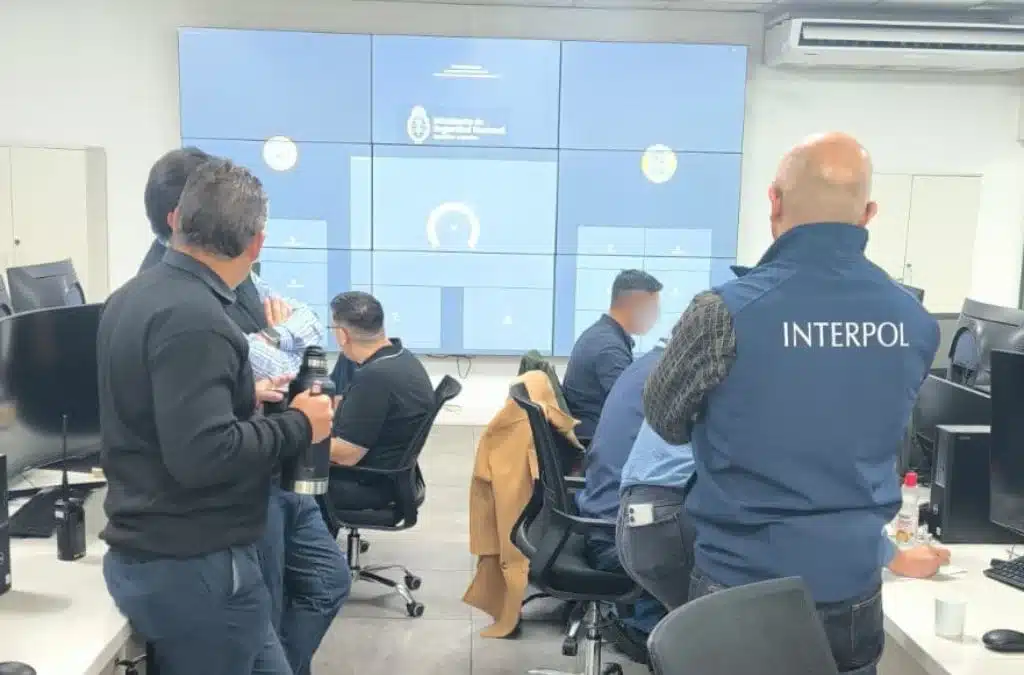
Operation Jackal IV also targeted money laundering activities used to move and conceal criminal proceeds across borders. INTERPOL coordinated cross-border intelligence sharing, analysis and operational support during the operation. It also provided specialized training to strengthen international investigations into financial crime. Tomonobu Kaya, Director of the INTERPOL Financial Crime and Anti-Corruption Centre, said the operation showed the importance of international cooperation in following illicit financial flows and disrupting criminal networks. [caption id="attachment_113806" align="aligncenter" width="600"]West African Organized Crime Groups Image Source: INTERPOL[/caption]

Major Arrests and Financial Crime Investigations

In Argentina, authorities identified 196 individuals linked to a major Crime-as-a-Service network suspected of providing website domains and money laundering support to West African organized crime groups. The investigation resulted in 17 arrests, with an INTERPOL Operational Support Team assisting with analysis of seized data and identification of suspects and criminal networks. South African authorities raided seven locations in Johannesburg linked to a syndicate involved in romance and investment scams targeting retirees in English-speaking countries. Investigators arrested 39 people, seized USD 2.67 million and blocked 257 bank accounts. In Italy, investigators identified an individual connected to a pan-European money laundering network that used shell companies, remittance services and cash withdrawals. One account processed EUR 845,000, or about USD 736,000, through 560 transactions involving 20 financial instruments. Romanian authorities dismantled a criminal group operating an investment scam through a call centre. The group promoted high returns from stocks and cryptocurrencies, with victims' money transferred to electronic wallets controlled by perpetrators. Authorities estimated that EUR 143 million had been stolen and laundered globally. Eleven people were arrested, while cash, cryptocurrency, six real estate properties and luxury watches were seized.

Sextortion and Crime-as-a-Service Emerge

Beyond individual investigations, the operation highlighted emerging threats involving sextortion and Crime-as-a-Service. INTERPOL identified an increase in West African organized crime groups using sextortion to target minors, including victims as young as 14. In these cases, offenders typically contacted minors through social media, established trust and persuaded them to share explicit images or videos. They then threatened to distribute the material to the victim's contacts unless a ransom was paid. Investigators also found that some criminal syndicates were procuring Crime-as-a-Service from external providers, including through the dark web. These services were used to outsource activities such as money laundering and other operational functions. While several cases from Operation Jackal IV remain under investigation, the preliminary results demonstrate the scale and international reach of the networks targeted during the eight-month operation. The participating countries were Austria, Argentina, Australia, Canada, Côte d'Ivoire, France, Germany, Indonesia, Ireland, Italy, Japan, Malaysia, the Netherlands, Nigeria, Portugal, South Africa, Spain, Sweden, Switzerland, the United Arab Emirates, the United Kingdom and the United States.
❌
❌