The Blinder Tunnel campaign used a fake Dubai Airports coding test to drop ShelbyLoader V2 on an Iraqi target. See how it works and how to defend.
Related Posts:
ccTLD Registry Hijacks Let Attackers Mint TLS Certs
ShinyHunters Hacker Arrest in Jordan Aids FBI Probe
Warlock Ransomware Group Hits Water and Telecom Operators Through SharePoint Flaws
The post Iran-Linked Hackers Pose as Dubai Airports Recruiters in Blinder Tunnel Campaign Against Iraq appeared first on Daily CyberSecurity.
Cyberattacks on oil tankers show how connected ships can expose navigation and critical systems, threatening safety, ports and global trade.
U.S. Coast Guard personnel and FBI agents boarded two Texas‑bound energy tankers last month after cyberattacks hit the vessels while they were underway, according to U.S. officials. One of the ships was the VL Prosperity, a 1,093‑foot Liberian‑flagged crude oil supertanker headed to Galveston, Texas. Iranian state media identified the ship soon after th
Cyberattacks on oil tankers show how connected ships can expose navigation and critical systems, threatening safety, ports and global trade.
U.S. Coast Guard personnel and FBI agents boarded two Texas‑bound energy tankers last month after cyberattacks hit the vessels while they were underway, according to U.S. officials. One of the ships was the VL Prosperity, a 1,093‑foot Liberian‑flagged crude oil supertanker headed to Galveston, Texas. Iranian state media identified the ship soon after the incident and claimed hackers gained access to propulsion, navigation and cargo systems, knocking out communications for about 30 hours.
“U.S. Coast Guard personnel and FBI agents boarded two Texas-bound energy tankers last month after cyberattacks struck the vessels while they were traveling toward the United States, according to U.S. officials.” CBS News reports.
The Coast Guard has not publicly pinned the attacks on Iran. Rear Adm. Amy Grable, commander of U.S. Coast Guard Cyber Command, told CBS News that investigators did find evidence of a malicious cyber actor after assessing the vessel’s IT and other onboard systems.
“They started out by doing an assessment of the information technology and the other systems on board the vessel, and they did find malicious cyber activity,” Grable told CBS News.“When these vessels are highly connected, they’re susceptible to cyber threats,” Grable said, warning that an attack could lead to “a vessel blocking a waterway or a pollution incident or any other number of safety and security hazards to our ports and waterways.”
The U.S. is still working to determine whether the two cyberattacks are connected and whether Iran or another foreign adversary was behind them.
The VL Prosperity, a supertanker carrying about 2.3 million barrels of oil, reportedly suffered a cyberattack on Aug. 7 near the Strait of Gibraltar. The vessel had left Egypt for Galveston and slowed near Gibraltar around the time of the incident. An Iranian report, citing an unnamed crew member, claimed hackers breached the engine room and interfered with cooling, engine speed and fuel systems.
Grable said Coast Guard teams had been alerted by interagency partners and went offshore with the FBI to climb aboard, one of roughly 40 to 50 missions the Coast Guard’s Cyber Protection Team has undertaken in the past year. Investigators hunted for malware and combed through IT systems to root out malicious activity, with a particular focus on whether those IT systems were connected to propulsion, navigation and other critical safety systems. Response teams did not find any evidence indicating the ship had become unsafe to navigate when they boarded it.
The concern around large cargo vessels and maritime critical infrastructure goes well beyond stolen files or disrupted communications. Modern commercial vessels increasingly run on internet‑connected systems for navigation, propulsion, steering, ballast and other critical machinery, so a cyberattack that penetrates those operational systems could be weaponized or manipulated.
Authorities fear the danger of a large vessel being compromised near an American port. “Of course we’re worried about a collision, an explosion, anything that blocks the channel for other vessels to safely enter and exit the port, pollution incidents — we’re kind of worried about the whole gamut,” Grable said. The economic stakes are colossal, with Grable noting that about $5.4 trillion in commerce flows through U.S. ports annually, so even a small disruption can cause major delays.
Experts warn that cyberattacks against ships may not require highly advanced skills. Malicious code is already widely available, while AI can help attackers identify vulnerable, internet-facing systems and speed up attacks. In some vessels, satellite internet may be separated from critical systems by little more than a firewall, with navigation, propulsion, steering and ballast sharing the same network. Experts recommend network segmentation, phishing protection and basic cyber hygiene.
Cyber access to a ship could create risks similar to remote hijacking, experts warn. However, taking full control of a supertanker is unlikely. A more realistic threat is disrupting critical systems such as navigation or propulsion, potentially making the vessel unsafe or causing it to run aground.
Back to the attack on the two oil tankers, the U.S. has not publicly stated who is behind either cyberattack, but Iranian state media began pushing content around the VL Prosperity incident before U.S. authorities even acknowledged the boarding. Four days after Mehr’s initial report, Iran’s Tasnim News Agency published an article with the headline, “No American Vessel Is Safe Anymore: Will Cannons Give Way to Codes?” DuBose stressed that the Iranian narrative remains unverified, cautioning that Iranian‑linked actors are often quick to oversell their cyber influence.
Attributing a cyberattack is very complex and can take weeks or even months. Investigators usually study how the attackers operated, looking at their tactics, techniques and procedures, often called TTPs. These patterns can act like digital fingerprints and help connect an attack to known threat groups.
The growing concern is that ships are becoming more connected. Satellite communications and links between IT networks and onboard control systems can create new entry points for attackers. Experts say the industry should take this risk seriously, but not assume that every ship can simply be taken over remotely.
Because maritime infrastructure is critical, governments are also introducing basic cybersecurity requirements for the sector. For ship owners and operators, the message is simple: pay attention to cybersecurity and strengthen the systems that protect critical onboard operations.
UK, US, and Dutch agencies expose Chosen Brick, Iranian malware used to track and harass dissidents, journalists, and activists via Telegram.
The UK, the US, and the Netherlands published a joint advisory warning about a Windows malware family, dubbed Chosen Brick, that Iran’s intelligence services use to track down dissidents, journalists, and activists, and the stakes for the people on the receiving end go well beyond a locked file server.
“CHOSEN BRICK is a malware family that has been
UK, US, and Dutch agencies expose Chosen Brick, Iranian malware used to track and harass dissidents, journalists, and activists via Telegram.
The UK, the US, and the Netherlands published a joint advisory warning about a Windows malware family, dubbed Chosen Brick, that Iran’s intelligence services use to track down dissidents, journalists, and activists, and the stakes for the people on the receiving end go well beyond a locked file server.
“CHOSEN BRICK is a malware family that has been used to target individuals around the world including in the UK, US and the Netherlands from at least 2025. CHOSEN BRICK enables Iranian state cyber actors to collect information on a target’s contacts, emails and social media messages, which could enable tracking of their movements.” reads the advisory. “Iran almost certainly uses cyber activity to support the repression of individuals who are seen as a threat to the regime, such as dissidents, activists and journalists.”
The advisory was issued jointly by the UK’s National Cyber Security Centre, the FBI, and the Netherlands’ AIVD. The three agencies gave a name to malware activity that security researchers had already been tracking under different names.
This is not the first time Iranian state-linked actors have used Telegram-based malware against the Iranian diaspora. In March, the FBI reported that Iranian actors had been using Telegram as command infrastructure to target dissidents, with activity dating back to late 2023. The latest advisory adds a formal name, a joint attribution, and a more detailed look at how the malware operates.
Iran has repeatedly used cyber operations to target people it considers a threat to the regime, including dissidents, activists and journalists. Iranian intelligence services have also been linked to plots involving the kidnapping or killing of perceived opponents abroad. For victims of CHOSEN BRICK, the risk may extend beyond cyber intrusion.
Personal information belonging to some victims has reportedly appeared on pro-Iranian leak sites, potentially exposing them to further harassment, intimidation or physical threats. The publication of such data could increase the risks faced by individuals already targeted by Iranian actors.
” In some cases, the Iranian intelligence services have plotted to kidnap or conduct lethal operations against individuals internationally, who they perceive as enemies of the regime.” continues the advisory.
Stolen personal data from CHOSEN BRICK victims has also shown up on pro-Iranian leak sites, turned into a harassment tool rather than just an intelligence asset.
That combination changes the calculus for defenders. A compromised laptop is normally a data problem. Here, it can become a physical safety problem for the person who owns it.
The attack starts on a messaging app, not an email inbox. Operators build rapport with a target over WhatsApp or Telegram first, sometimes for a while, before ever sending a file.
Iranian cyber actors first contacted targets through social messaging apps, spending time building trust before attempting to deliver malware. Their social engineering was tailored to each victim and relied on detailed information gathered during prior research.
In some cases, the attackers pretended to be someone the target already knew, making the approach appear legitimate. In others, they posed as technical support staff from the messaging platform. This combination of reconnaissance, impersonation and trusted communication channels helped make the malicious messages more convincing and increased the chances of successful infection.
“Iranian cyber actors engaged with targets via social messaging applications to build rapport prior to attempting to deliver the malware. The nature of the social engineering varies between targets and uses extensive target knowledge from research conducted in preparation (T1589).” the agencies state. “The actor often purports to be an individual previously known to the target or technical support from the social messaging platform (T1566.003).”
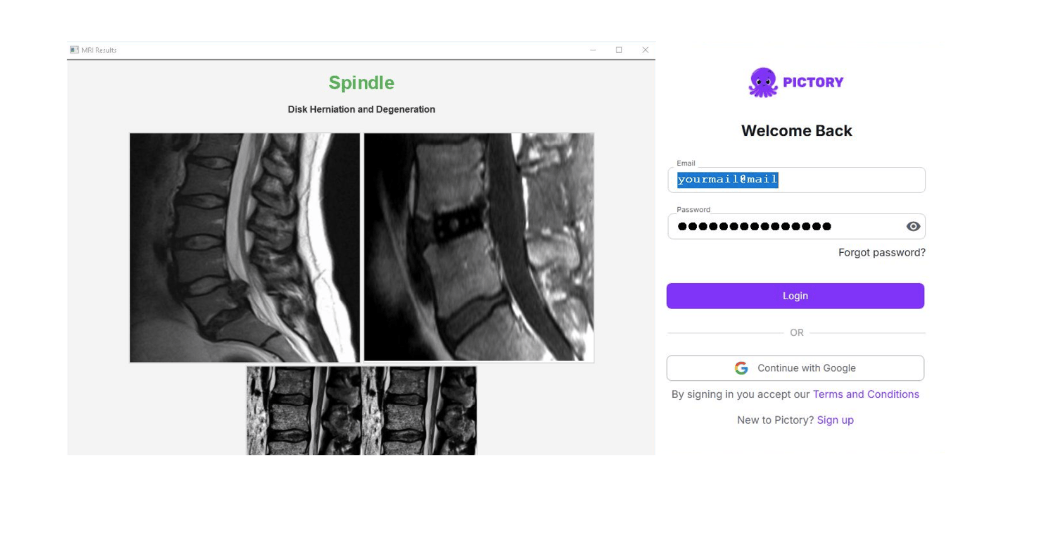
The lure files themselves are dressed up as things a target would plausibly want to open: fake installers for Pictory, RunwayML, Norton Antivirus, Telegram itself, Adobe Flash Player, or KeePass. Other versions arrive disguised as MRI scan results, which is a particularly grim way to earn someone’s click. Whatever the disguise, the file shows a convincing decoy screen while the real payload installs quietly in the background.
The attackers also have a backup plan. They usually target a victim’s work device first, but if the initial attempt fails or they think they may be detected, they try to move the attack to a personal device. They may ask the victim to open the file on their own phone or computer, bypassing the security controls protecting the work device.
A company can tightly secure an employee’s work laptop, but it has much less control over the personal devices they use every day.
Whatever the file is supposed to contain, it shows the victim a realistic-looking screen related to the topic, helping the attackers maintain the deception. In the background, the file downloads and runs the main malware component, which the NCSC tracks as CHOSEN BRICK. This gives the attackers control over the compromised device. So far, all observed attacks have targeted Windows systems.
Corporate IT can lock down a work laptop all it wants. It has no say over the phone in someone’s pocket.
CHOSEN BRICK has only ever been seen hitting Windows machines. It sets up persistence through a registry Run key so it survives a reboot, and it tries to add its own exclusions to Microsoft Defender to keep from getting flagged.
The malware uses Telegram for command and control, with each infected device linked to its own Telegram bot ID. This keeps victims separated and makes investigations more difficult. Newer versions also use HTTPS or SOCKS5 proxies, adding another layer between the malware and network monitoring.
The malware sends stolen data through Telegram bots and cloud storage services such as VultrObjects and StorjShare. It can also download and install additional malware when attackers want more access.
“Files and collected data are exfiltrated through a combination of the Telegram bot (T1041) and through the use of cloud object stores such as VultrObjects and StorjShare (T1567.002). Recent variations in this malware family include the use of HTTPS/SOCKS5 proxies to obscure the use of Telegram bots (T1090.002).” states the report. “If the malware is instructed by the cyber actor to download additional malware it is written to disk in a configurable location.”
The new payload is saved using the same persistence method as the main malware. One sample used the path C:\Windows \SysWOW64, with an unusual space after “Windows.”
The unusual space after “Windows” creates a non-standard folder path that is not normally found on Windows systems. According to the NCSC, the attackers deliberately created this location to deploy their malware. It is a small but effective trick: the path looks legitimate at first glance, but it can bypass security rules or allowlists that only recognize standard Windows folders.
Once running, CHOSEN BRICK can collect a wide range of data, including screenshots, microphone audio, WhatsApp and Telegram chats stored in browsers, emails and system information. It can also delete files and even wipe the entire system. So far, researchers have not seen it spread laterally on its own. However, because it can download and run additional payloads, attackers could manually expand their access if a compromised device is considered valuable.
The malware also has two distinctive fingerprints. Researchers repeatedly found the mutex names “ytyjyujyu” and “noi672pp434awkc12f” in samples. These unusual strings could help security teams identify CHOSEN BRICK during threat hunting.
In March, the FBI also published a FLASH notice focused specifically on how Iranian state-backed actors lean on Telegram as C2 infrastructure, which pairs well with the NCSC’s broader writeup.
If you’re hunting for this on your own network, a few domains are worth flagging when they show up unexpectedly in DNS or proxy logs: api.telegram.org, backblazeb2.com, vultrobjects.com, storjshare.io, iproyal.com, and lightningproxies.net. None of these are malicious on their own, which is exactly why the malware picked them. It’s the context that matters, not the domain name.
On the registry side, check HKCU\Software\Microsoft\Windows\CurrentVersion\Run for anything unfamiliar. Previously observed malicious entries used value names like “SMQDService” and “winappx,” though the advisory is careful to note these names will change and shouldn’t be treated as fixed indicators.
The recommended defenses are straightforward. Users should avoid installing software from links or attachments, keep applications updated, use active antivirus protection, and take SmartScreen warnings seriously. Organizations should also use phishing-resistant MFA, application allowlisting, email security and endpoint monitoring, while checking the published indicators against their own logs.
One important point concerns personal devices. Attackers may switch to a victim’s phone when security controls block access to a work laptop. Organizations protecting high-risk users, including journalists, activists and NGO workers, should therefore also provide security guidance for personal devices. Protecting only the corporate laptop may leave the device attackers target next exposed.
The US Navy has told its entire workforce of 340,000 active-duty personnel, 58,000 reservists, and 210,000 civilian employees to clean up their social media profiles, because adversaries might be using them to determine who they are, where they live, and when they may not be at home.
Read more in my article on the Hot for Security blog.
The US Navy has told its entire workforce of 340,000 active-duty personnel, 58,000 reservists, and 210,000 civilian employees to clean up their social media profiles, because adversaries might be using them to determine who they are, where they live, and when they may not be at home.
Read more in my article on the Hot for Security blog.
This blog is now closedHundreds of petrol stations across Australia run out of fuel as Albanese inks supply deal with SingaporeSA premier warns One Nation poses threat to federal Labor as Marles says party only ‘about stunts and the vibe’Get our breaking news email, free app or daily news podcastThe pollies have been asked this morning whether people should consider working from home to save fuel, as conflict escalates in the Middle East.Tehran has said it will “irreversibly destroy” essential i
The pollies have been asked this morning whether people should consider working from home to save fuel, as conflict escalates in the Middle East.
Tehran has said it will “irreversibly destroy” essential infrastructure across the Middle East, including vital water systems, if the US follows through on Donald Trump’s threat to “obliterate” Iran’s power plants unless the strait of Hormuz is fully opened within two days.
This is like Covid style restrictions I think that are potentially being floated. I would not support that in any way, and I don’t think businesses would do so either …
If people can work from home and they want to and it works for their employers, fine, I think that’s terrific, but it doesn’t help small businesses. It certainly doesn’t help the truckers and the fishers and the farmers and the manufacturers and the miners that are relying on fuel supply.

 Entrar