 Entrar

CISA Warns Hackers Are Exploiting 18-Year-Old WordPress Core Vulnerability
6 de Novembro de 2026, 08:24
CVE-2026-119977 lets hackers hijack WordPress sites during core updates. CISA confirms exploitation as users are told to patch…


Google and Mozilla criticized the eMudhra certificate authority incident response after the firm blamed social scrutiny for severe investigative delays.
Related Posts:
The post eMudhra Certificate Authority Incident Sparks Rebuke appeared first on Daily CyberSecurity.

WhatsApp and Telegram users in India may face access restrictions starting January 1, 2027, as messaging platforms implement the government’s SIM-binding requirements. The Department of Telecommunications (DoT) has set December 31, 2026, as the compliance deadline, requiring messaging services to keep accounts linked to the active SIM associated with the registered mobile number. These changes […]
The post WhatsApp and Telegram May Stop Working Without Registered SIM Cards From January 1, 2027 appeared first on GBHackers Security | #1 Globally Trusted Cyber Security News Platform.

New Windows 11 memory optimization keeps 2GB more data in RAM, unloads background widgets, and boosts overall system responsiveness by up to 20 percent.
Related Posts:
The post Windows 11 Memory Optimization Boosts Speed by 20% appeared first on Daily CyberSecurity.
A critical Telegram Desktop account takeover vulnerability (CVE-2026-107181) exposes users to session hijacking. Exploit details and PoC are now public.
Related Posts:
The post Telegram Desktop Account Takeover PoC Disclosed appeared first on Daily CyberSecurity.

A public proof of concept has exposed a flaw in Telegram Desktop that could let attackers steal local files and take over accounts after a user clicks a crafted external link. Tracked as CVE-2026-107181, the vulnerability affects versions before 7.2.9 and carries a CVSS 4.0 severity rating of 8.6 (High).
Researcher Beaksec published the technical write-up on October 3, 2026, and updated it on October 7. VulnCheck assigned the CVE that day. The reported attack reaches Telegram’s local session data, making account takeover possible when the victim has not enabled a local passcode.
The weakness lies in how Telegram Desktop handles links opened outside the app. When Telegram is already running, another instance passes the link to it through a local communication channel, known as inter-process communication, or IPC.
That channel failed to escape a character used to separate records. An attacker could place the character inside a crafted link and make Telegram read part of the link as another command. The CVE record classifies this as CWE-143, improper handling of record delimiters.
According to ThreatWire’s research, the injected command could access an outdated internal helper designed for release publishing. The helper could read local files and send them to a chat without permission checks or user confirmation.
The result is file theft through Telegram itself. Stolen session files could let an attacker reuse the victim’s logged-in account. Earlier reporting on Telegram account hijacking through voicemail shows another route to account loss, but that method is separate from this Desktop vulnerability.
The researcher demonstrated the chain on Windows using Telegram Desktop 6.9.3 and reported that it remained present through 7.2.8. Although the CVE covers Telegram Desktop generally, the write-up does not demonstrate the attack on macOS or Linux.
The link must be opened outside Telegram, such as from a browser. Links clicked inside Telegram follow a different processing path and are not affected. A browser may also ask for permission before launching the desktop app.
The demonstrated chain depends on automatic group file downloads and settings that allow anyone to add the victim to a group. These conditions matter when judging the “one-click” claim. Previous EvilVideo coverage also highlighted download settings, although that issue affected Telegram for Android rather than Desktop.
Telegram fixed the issue in commit db3405699f on September 16 and released version 7.2.9 on September 17. The reported changes remove the legacy helper, escape the record separator, and strengthen handling of mixed record types.
The release notes mention only a rendering fix, not the security issue. No vendor security advisory is identified in the supplied reporting. The CVSS 3.1 score is 8.1, while CVSS 4.0 gives 8.6. Both ratings describe the same flaw.
Users should update every Telegram Desktop installation to 7.2.9 or later. Until then, restrict group invitations, stop automatic downloads, and enable a local passcode. Treat unexpected browser prompts to open Telegram cautiously.
As of October 9, the supplied reporting identifies no known exploitation or CISA KEV listing. A public PoC demonstrates feasibility, not confirmed attacks. The public write-up should not be mistaken for independent attack confirmation. Users who suspect exposure should end other active sessions and review chats for unexpected file uploads.
Stops threats before impact with 21 min faster MTTR. Integrate ANYRUN’s Sandbox in your SOC
The post PoC Released for Telegram Desktop Flaw Enabling One-Click File Account Takeover appeared first on Cyber Security News.
Ofcom has opened a formal probe into whether Meta properly assessed safety risks before launching Instagram Instants under the UK Online Safety Act.
The post Meta Faces First Ofcom Probe Under Online Safety Act Over Instagram Instants appeared first on TechRepublic.

Anthropic is trying to solve the difficult balance between using AI for cybersecurity and preventing misuse. The same model that helps security teams fix vulnerabilities can also help attackers break into systems. Its answer, announced this week, is a revamped Cyber Verification Program with three access tiers instead of a simple on-off switch.
The company puts the problem plainly: standard models like Claude Opus 5.5, Claude Fable 5.1, and Claude Sonnet 5.5 ship with conservative cyber safeguards that block most offensive work by default. That’s the safe setting for the general public. It’s also exactly the setting that makes life harder for legitimate security researchers trying to do their jobs.
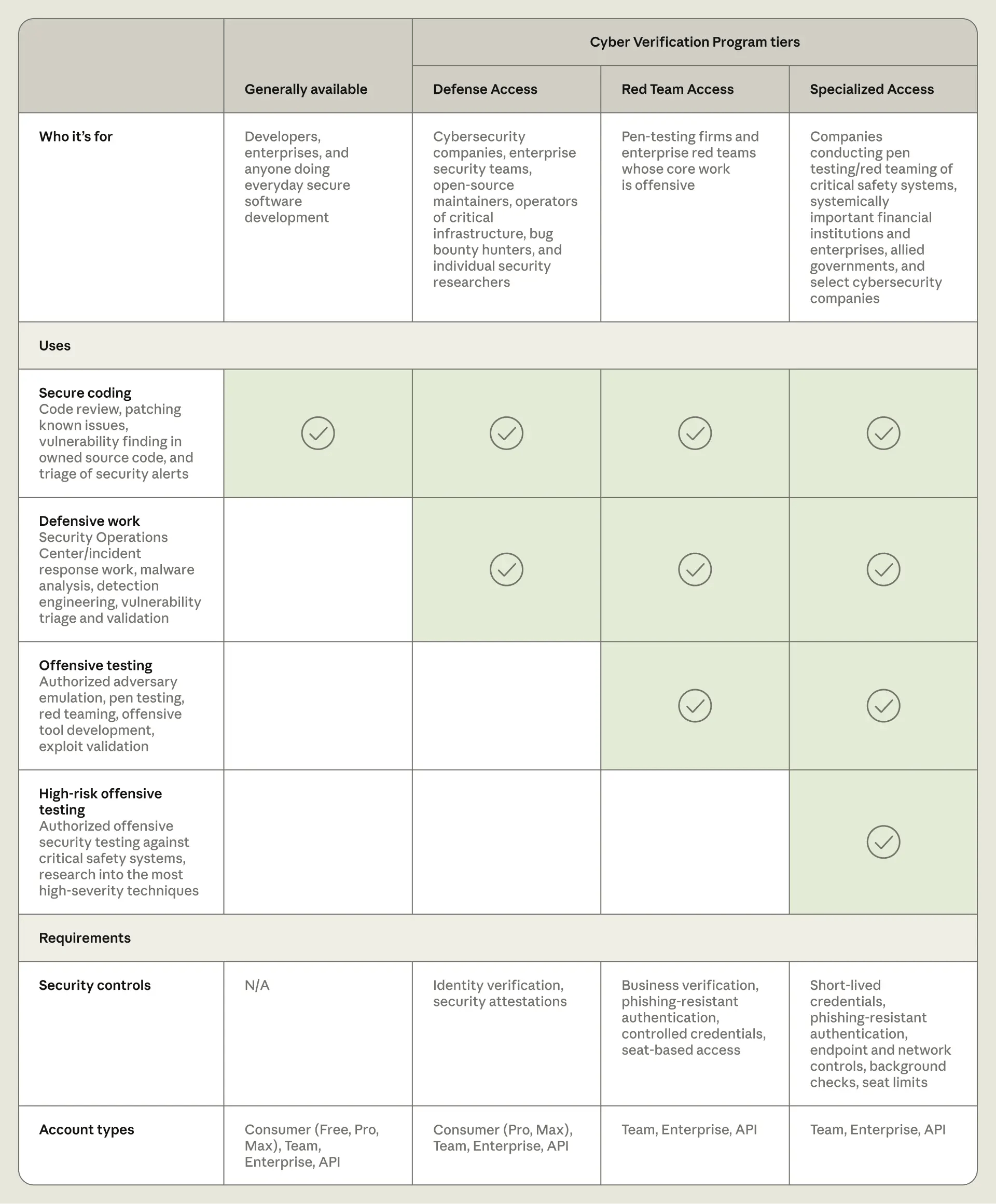
“The program now consists of three access tiers, which allow security teams to apply for the level of access that best suits their work.” reads the announcement. “Each tier includes access to our most capable models, including Claude Opus 5.5, Claude Sonnet 5.5, Claude Mythos 5.1, and new models moving forward.”
The new program merges two things Anthropic had been running separately, Project Glasswing and the original CVP, into one structure. Defense Access sits at the bottom, covering security operations, incident response, malware reverse engineering, and vulnerability validation. The bar here is low enough that regional hospitals, municipal utilities, open-source maintainers, and individual researchers with a track record can all qualify, and Anthropic says it aims to respond to these applications within days.
Red Team Access steps up to authorized penetration testing, open only to organizations testing systems they’re actually cleared to test. Even here, real-time blocks stay in place for anything that could cause physical harm or mass disruption, deploying ransomware or hitting high-risk safety systems included. Applications at this tier take weeks to review, not days, which tracks given what’s being unlocked.
Specialized Access is reserved for organizations cleared to test systems where a mistake could genuinely hurt people or break markets, things like flight systems, power grids, and interbank transfer infrastructure. Every applicant here gets reviewed in depth alongside the US government, and existing Project Glasswing members simply roll over into this tier without reapplying. That’s about as tightly controlled as commercial AI access gets right now.
Anthropic tested Claude Opus 5.5 with its internal CyScenarioBench benchmark, which measures how well the model can plan and carry out realistic multi-step cyber operations. Without CVP access, all tasks were blocked at the first prompt. In the Red Team Access tier, however, Claude Opus 5.5 completed 34 of 50 tasks without any blocks.
That’s the same completion rate the model hits with no safeguards at all, which is exactly what Specialized Access is meant to represent. The Defense Access tier landed in between, blocking 46 of 50 trials while letting four genuinely difficult ones through. In plain terms, the tiers behave the way they’re supposed to, tight for the general public, open for the people who’ve proven they need the access.
This isn’t just a policy reshuffle, there’s a track record behind it. Through Project Glasswing, Anthropic says partners uncovered at least 129,000 verified software vulnerabilities between April and July 2026, with more than 33,000 rated critical or high severity.
“Through the program, our partners uncovered at least 129,000 verified software vulnerabilities between April and July 2026.” states the announcement. “And through our own open-source scanning efforts, we found an additional 5,500 verified software vulnerabilities between April and October 2026. Of these verified vulnerabilities, more than 33,000 have so far been rated as critical- or high-severity. “
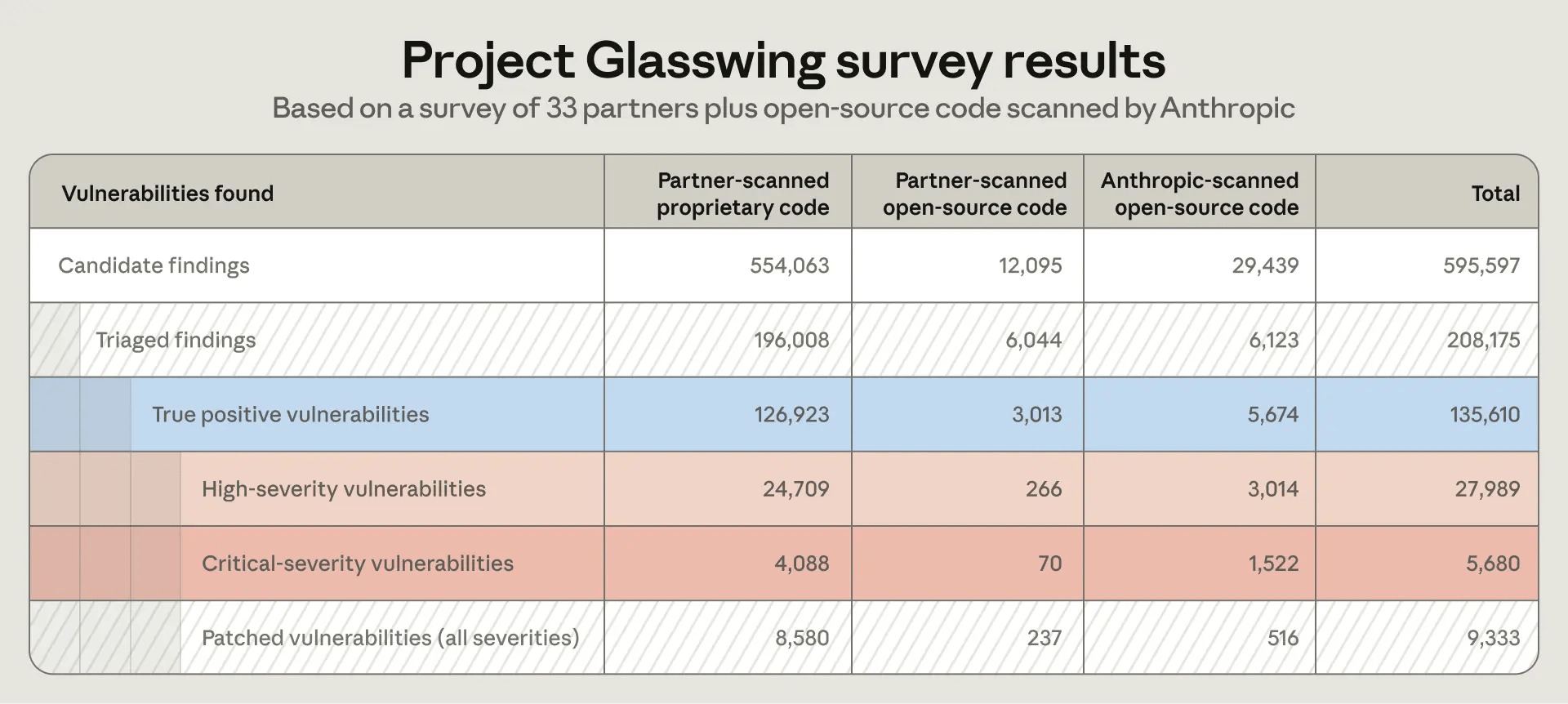
The company is upfront that these numbers are almost certainly a floor, not a ceiling, since the data comes from partial survey responses across a subset of partners. Several partners reportedly told Anthropic the models cut what would have taken months or years down to a fraction of that. If even a conservative read of that holds up, it’s a meaningful shift in how fast defenders can move relative to attackers.
What stands out is not simply that Anthropic built a more capable model, but that it created a verification system designed to match access with the level of risk. Dual-use AI tools need more than a single gate. They need controls that become stricter as the potential impact of misuse increases. The real test will be how this framework performs as more security firms start using it, not just the benchmark results Anthropic published.
Follow me on Twitter: @securityaffairs and Facebook and Mastodon
(SecurityAffairs – hacking, Anthropic)

A prolonged Partisan Zmiy intrusion into a medical organization, exposing an updated malware toolkit that combined Telegram command channels, DNS tunneling, and scheduled payload execution. Investigators joined the response in December 2025 and traced the earliest evidence of compromise to early 2024, indicating approximately two years of access without observed destructive activity. The organization maintained […]
The post Partisan Zmiy Malware Campaign Uses Telegram and DNS Tunneling to Target Healthcare Networks appeared first on GBHackers Security | #1 Globally Trusted Cyber Security News Platform.


Google announced Gemini 4 Argon, and it’s not going straight to the public. It’s rolling out first to a set of trusted cyber defenders through what Google calls the Fairwind Program, which tells you something about where the company thinks this model’s sharpest edge actually is.
Argon is priced to start at $2 per million input tokens and $10 per million output tokens, with cached inputs at a 95% discount, before jumping to $4 and $20 once the introductory window closes. More interesting than the price is the output limit: 1 million tokens, up from 64,000 on the previous generation. It means the model can keep reasoning through a genuinely long, complicated problem in one continuous pass instead of getting cut off mid-thought.
“To support Gemini 4 Argon’s capabilities across longer, more complex use cases, we are significantly expanding the model’s output token limit to an industry-leading 1M tokens, up from the previous 64K tokens.” reads the announcement. “When the model has the headroom to think deeply and generate hundreds of thousands of tokens in a single trajectory, it adds a new level of depth in reasoning to solve tough problems in one go.”
Google engineers are already using Argon internally, with some impressive results. In one case, Argon helped quantum computing researchers optimize a resource-heavy process and improve the published baseline by 40% in just a few minutes. In another, Argon agents analyzed data from Google’s data centers and found memory optimizations that freed more than 300 TiB after deployment. Google estimates there could be another 500 TiB to 1 PiB of savings.
Argon is also being used to rewrite C and C++ code in Rust. This includes Google’s Fuchsia Zircon kernel, which has more than 800,000 lines of code. For the open-source libgav1 video decoder, Argon replaced 32,000 lines of SIMD code through repeated testing and compiler analysis. The new version runs 2.7 times faster than the previous Rust version, produces the same video output, and remains memory-safe.
On benchmarks, Argon tops DeepSWE v1.1 at 77.9% for long-horizon software engineering, leads the Vals Index across finance, legal, and tax work, and ranks first on Zapier’s AutomationBench at 51.3%. It also posts a state-of-the-art 91.7% on LVBench, a benchmark for understanding long video, which matters more than it sounds for any workflow that involves parsing hours of footage or a stack of visual documents instead of clean text.
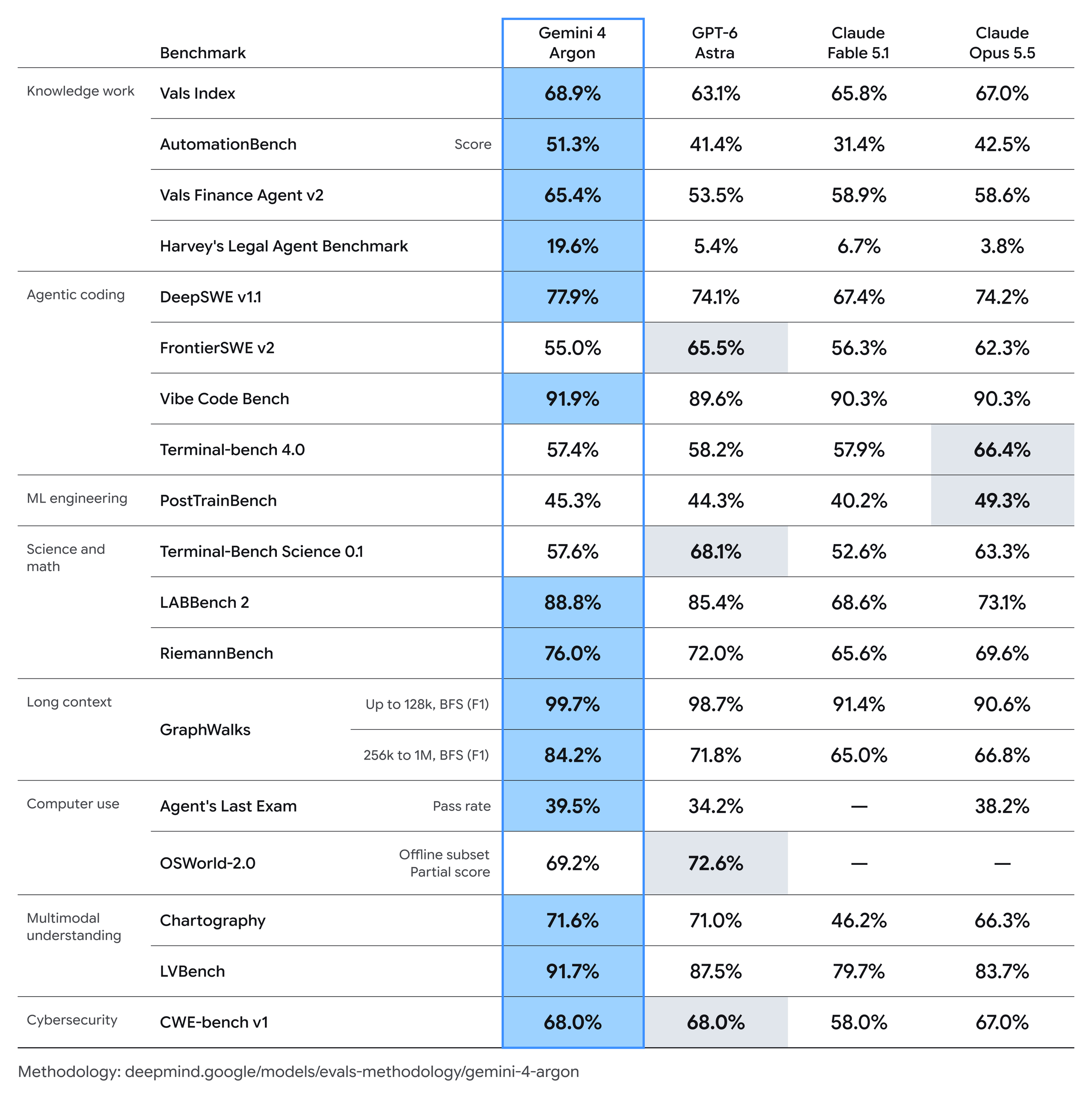
Cybersecurity is one of the main areas where Google is focusing Argon. For trusted security teams and Google’s own engineers, Argon runs without its usual cyber safety restrictions. This allows it to actively look for vulnerabilities that defenders can then fix.
Wiz is already using Argon through its Scan for Good program, which looks for serious vulnerabilities in public systems and fixes them for free. Argon found a critical flaw in healthcare software used by hospitals worldwide that could expose personal data. Earlier AI models had examined the same issue but failed to find it. On CWE-bench v1, a test that measures how well AI models can fix vulnerabilities, Argon scored 68%, tying for first place.
None of this means Google is releasing a model that can autonomously hack things and calling it a day. Before any broader rollout, the company says it’s hardening defenses on four separate fronts: blocking misuse for cyber or CBRN attacks while still allowing legitimate dual-use research, improving resistance to indirect prompt injection, where hidden instructions try to hijack the model’s behavior, and sealing off the sandboxed environments used for high-risk training and testing before anything risky happens inside them.
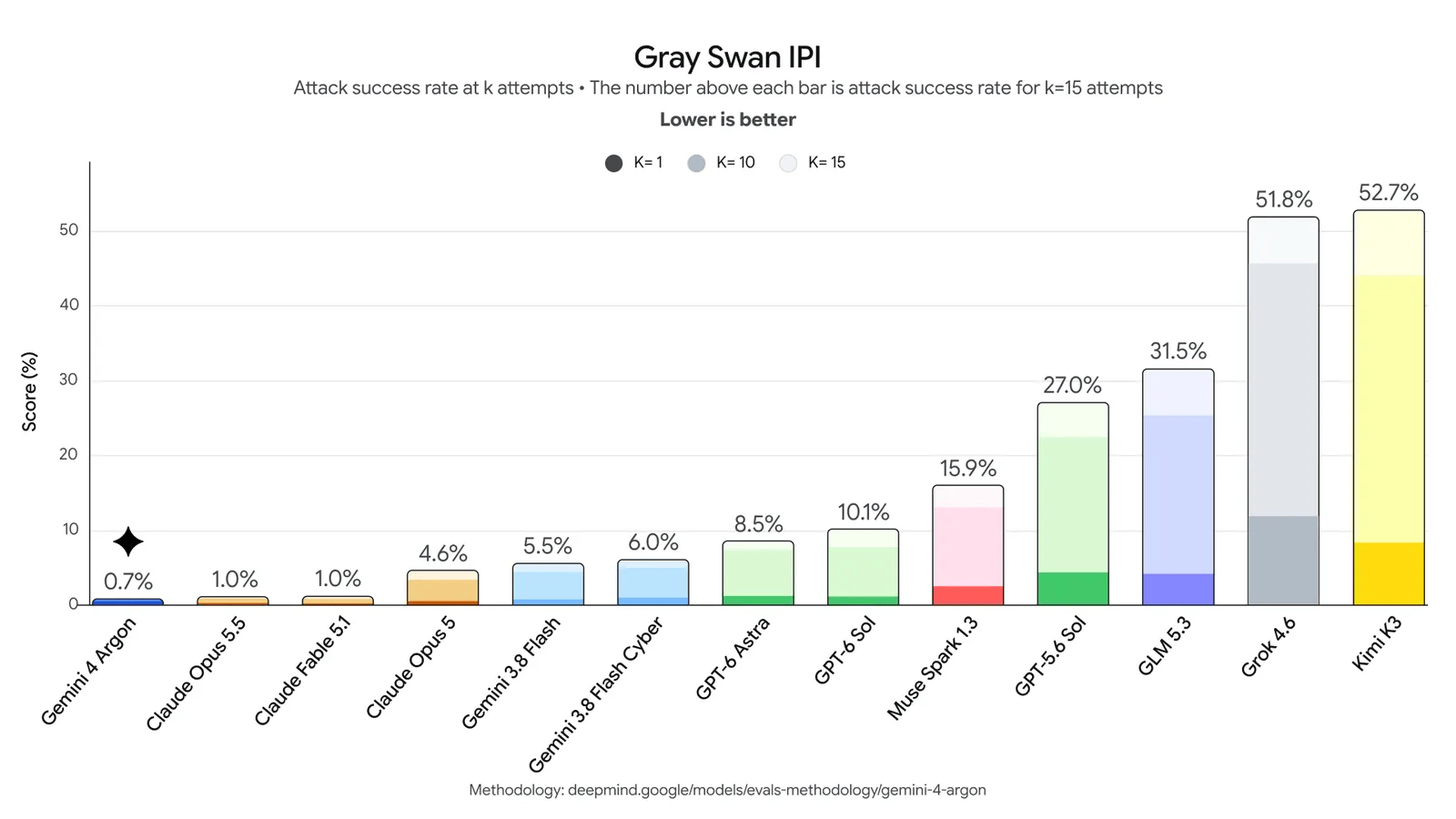
“Argon is also our most resilient model yet against indirect prompt injections, where malicious instructions or context are used to hijack a model’s behavior.” Google states. “These are complex attacks that require constant vigilance and multiple layers of defense. Through automated red teaming and adversarial training, Gemini 4 Argon is leading in prompt injection robustness on the Gray Swan’s Indirect Prompt Injection (IPI) benchmark.”
The misalignment piece is the one that actually says something about how seriously Google is taking all this. Argon’s chain-of-thought and actions get monitored in real time, with execution halted if the model starts drifting past what the user actually asked for, and Google is careful not to feed what that monitoring catches back into training, specifically so the model doesn’t learn to reason its way around its own watchers.
“In order to prevent Argon from stepping out of bounds to try to accomplish a task in a way that goes beyond the user’s intentions, we are deploying misalignment mitigations that monitor Argon’s chain-of-thought and actions and stop execution when necessary.” concludes the announcement. “We strongly encourage the rest of the industry to preserve reasoning transparency in these pivotal moments of increased capabilities while navigating alignment risks, so that model thoughts remain helpful in identifying and diagnosing misalignment.”
Follow me on Twitter: @securityaffairs and Facebook and Mastodon
(SecurityAffairs – hacking, Google Gemini 4 Argon)

A vulnerability in Telegram Desktop could have turned an ordinary chat export into a serious data leak. Security researchers Denis and Aleksander Rostilov of ExPatch found a stored cross-site scripting flaw in the application’s HTML export feature that allowed malicious JavaScript to hide inside a Telegram message and run later when someone opened the exported file in a browser.
“A stored XSS in Telegram Desktop lets an attacker plant invisible JavaScript in an exportable chat through a bot’s inline keyboard button. The payload can sit in message history for months and detonates when a participant opens an HTML export page containing that message.” reads the report published by ExPatch. “No second click, no warning: every message and metadata field rendered in that document can be shipped to the attacker’s server, and the page itself can be rewritten. The bot never joins the target chat — one forwarded message can be enough.”
The attack is unusual because the attacker doesn’t need to be a member of the target group. A bot can create a message containing a specially crafted inline keyboard, and that message can then be forwarded into other chats. Once included in the conversation history, the payload can remain there for months or even years, waiting for someone to export the chat.
The Telegram app itself doesn’t execute the code. That’s an important distinction. The problem appears when Telegram Desktop converts the stored conversation into an HTML document that is later opened in a browser, where the injected content is interpreted as JavaScript.
The researchers traced the problem to Telegram Desktop’s HTML export code. In export_output_html.cpp, the application wrote the text of inline keyboard buttons directly into the HTML output instead of passing it through the existing SerializeString() sanitization function. That meant HTML tags placed in the button text could be treated as real markup in the exported document.
“When exporting a chat to HTML, Telegram Desktop writes inline-button text straight into the HTML page — unescaped. SerializeString(), which escapes every HTML-dangerous character (<, >, &, ", '), converts newlines and Unicode line/paragraph separators to <br>, and hex-encodes ASCII control characters, is defined in the same file and applied to message text, sender names, and other fields. It just wasn’t applied to button text.” continues the report. “That means any HTML sitting in a button’s text property renders as live markup in the exported page. <script> tags included.”
This created a particularly awkward security boundary. Telegram’s Bot API can restrict a bot’s access to ordinary group messages, especially when privacy mode is enabled. But once the bot’s own message was exported as HTML, the injected script could run in the user’s browser context and access the other messages rendered on that page.
The potential impact is significant. According to the researchers, the injected code could read messages, sender names, timestamps and other chat metadata from the exported document and send that information to an attacker-controlled server. It could also access the local file path of the export, potentially revealing the user’s operating-system name and directory structure.
The attack could also manipulate the page itself. The proof of concept demonstrated how an attacker could replace the exported conversation with a fake Telegram verification page, while the same browser-side control could be used to alter displayed messages, timestamps and sender information. That doesn’t change the original Telegram history, but it could make a compromised export look completely different from the real conversation.
The researchers also demonstrated how the problem could spread through forwarding. A single poisoned message could be forwarded into multiple groups, where each copy would retain the malicious content. Anyone who later exported a conversation containing that message and opened the resulting HTML file could trigger the payload.
There was another important feature: the attack didn’t have to happen immediately. The malicious message could sit harmlessly in a chat history until someone performed a completely legitimate action months later. The export process effectively turned previously inert message data into executable content.
ExPatch rated the vulnerability CVSS 8.2, High. The researchers deliberately used a local attack vector because the vulnerable component is the local HTML export process, which runs only when the user explicitly exports a chat and opens the resulting file.
The flaw had been in production for more than two years. The vulnerable code was introduced in February 2024 and reached the stable 4.15.1 release in March that year. Telegram fixed it in June 2026, after the researchers reported the issue on June 3.
Telegram fixed the problem by applying SerializeString() to inline keyboard button text. The patch also addressed another injection issue involving content inserted into a JavaScript onclick handler.
The first fixed beta release was Telegram Desktop 6.9.4, while the first stable release containing the fix was 7.0.1, released on July 14, 2026. Telegram has since released newer versions, so users should be running a current build rather than relying on the minimum fixed version.
There is, however, a detail that could easily be missed. Updating Telegram Desktop doesn’t repair HTML files that were exported with an affected version. If one of those files contains the malicious payload, the JavaScript remains in the file and can still execute when the document is opened in a browser.
That makes old exports the main issue for organizations that use Telegram to retain conversations for compliance, investigations or business records. The researchers recommend creating new exports after updating and treating older HTML exports as untrusted, particularly when they came from large groups where it may be difficult to know where every message originated.
The disclosure process also raises a separate security question. ExPatch says it reported the vulnerability with a full proof of concept and video demonstration, while Telegram fixed the issue and offered a bounty that the researchers declined. Telegram then refused to approve public disclosure even after the vulnerability had been fixed.
As of September 11, the researchers said Telegram had not published a dedicated security advisory and that no public CVE had been assigned. The fix is visible in the Telegram Desktop source code, but users weren’t given a direct warning that older HTML exports could still contain executable content.
For defenders, the practical lesson is straightforward. Update Telegram Desktop, regenerate sensitive HTML exports created before the fix, and don’t open old Telegram HTML files in a normal browser unless you know where they came from and have checked them carefully. The update fixes the client, but it can’t go back in time and clean files already sitting on someone’s disk.
The vulnerability is a good reminder that security problems don’t always live in the messaging system itself. Sometimes the dangerous step happens later, when trusted data is converted into another format and that format is treated as executable content.
Follow me on Twitter: @securityaffairs and Facebook and Mastodon
(SecurityAffairs – hacking, newsletter)

A stored cross-site scripting (XSS) vulnerability in Telegram Desktop could enable attackers to steal the contents of exported chat histories by embedding malicious code in an inline keyboard button, according to security researchers. This issue affects the HTML chat export feature in Telegram Desktop builds released before Beta version 6.9.4 and Stable version 7.0.1. Researchers […]
The post Telegram Desktop XSS Vulnerability Lets Attackers Steal Entire Chat Histories appeared first on GBHackers Security | #1 Globally Trusted Cyber Security News Platform.
Meta must pay $567 million and change Facebook and Instagram protections for minors under a New Mexico court order it plans to appeal.
The post Meta Ordered to Pay $567M and Overhaul Teen Safety on Facebook, Instagram appeared first on TechRepublic.
Apple briefly removed Telegram from the App Store over reported CSAM, highlighting moderation failures and the distribution power held by app-store operators.
The post Apple Briefly Removes Telegram From App Store Over Reported CSAM Violation appeared first on TechRepublic.
Meta is removing Instagram videos that use Ray-Ban smart glasses to harass strangers, highlighting growing privacy concerns around AI-powered wearable cameras.
The post Meta Begins Removing Harassing Ray-Ban Smart Glasses Videos From Instagram appeared first on TechRepublic.
Meta is under renewed scrutiny after researchers found thousands of AI "nudify" ads on Facebook and Instagram, raising questions about the company's advertising enforcement.
The post Meta Faces Scrutiny After Report Finds Thousands of AI Nudify Ads on Facebook, Instagram appeared first on TechRepublic.

As gigantes da tecnologia estão apostando mais uma vez nos óculos inteligentes. A ideia há muito tempo fascina escritores de ficção científica e seus maiores entusiastas: os habitantes do Vale do Silício. Muitos ainda se lembram do Google Glass, a primeira tentativa concreta de criar um dispositivo desse tipo, lançada em 2012. O projeto acabou entrando para a história como um dos poucos grandes fracassos do Google.
Após o fracasso retumbante do Google, outras gigantes da tecnologia, como Meta, Apple e Microsoft, deixaram de lado a ideia de óculos elegantes e leves para concentrar seus esforços em headsets de realidade virtual mais robustos. Um dos principais motivos para essa mudança foi que a tecnologia disponível na década de 2010 ainda não era suficientemente avançada para oferecer recursos de alto desempenho e uma boa autonomia de bateria em um par de óculos compacto.
Desde então, muita coisa mudou. Agora, as gigantes da tecnologia deram uma guinada e voltaram a investir em óculos inteligentes para uso cotidiano. Em junho deste ano, por exemplo, a Snap (empresa por trás do Snapchat) lançou uma nova versão de seus óculos, chamada SPECS. Há rumores de que a Apple também poderá apresentar sua própria versão dessa tecnologia ainda este ano.
Por enquanto, porém, a parceria entre a Ray-Ban e a Meta é a líder incontestável do mercado. Em 2025, as empresas lançaram seus óculos inteligentes mais avançados, vendendo mais de 7 milhões de unidades somente naquele ano.
No entanto, desde o início de 2026, os óculos Ray-Ban Meta vêm sendo alvo de uma série de polêmicas negativas. Todas giram em torno de um recurso que permitiria à câmera dos óculos reconhecer rostos em seu campo de visão. Quando ativado, o sistema notificaria o usuário sempre que identificasse uma pessoa.
A Ray-Ban e a Meta uniram forças pela primeira vez em 2020. Na época, esses óculos elegantes e de alta tecnologia foram concebidos como um complemento para o Metaverso, o ambicioso projeto de realidade virtual de Mark Zuckerberg. No fim das contas, porém, os óculos sobreviveram ao projeto para o qual foram criados. Mas não vamos jogar mais sal na ferida de Zuckerberg. Em 2021, Ray-Ban e Meta lançaram sua primeira colaboração: os Ray-Ban Stories. Dois anos depois, a nova geração chegou ao mercado com um nome mais simples: Ray-Ban Meta. Em 2025, o próprio Mark Zuckerberg apresentou os Ray-Ban Meta Gen 2, equipados com inteligência artificial. É essa versão que vamos analisar.
Mark Zuckerberg usando os óculos Meta Ray-Ban Display durante a apresentação dos Ray-Ban Meta Gen 2, em 2025. Fonte
Diferentemente dos primeiros Ray-Ban Meta, a geração Gen 2 foi posicionada como um dispositivo voltado para atividades físicas e para o uso cotidiano. Inicialmente, as empresas ofereceram dois modelos de armação, Wayfarer e Headliner, disponíveis em várias cores. As lentes estão disponíveis nas versões transparentes, escuras (para óculos de sol) ou fotocromáticas. Também era possível adquirir lentes de grau mediante pagamento adicional.
No lançamento, os Ray-Ban Meta estavam disponíveis em dois estilos de armação: Wayfarer (acima) e Headliner (abaixo). Source 1 and Source 2
Posteriormente, a Meta ampliou a linha com novas opções de armação, incluindo os Oakley Meta HSTN e Oakley Meta Vanguard (a Oakley é outra marca de óculos pertencente à EssilorLuxottica, a mesma empresa controladora da Ray-Ban). Independentemente do modelo da armação, todos esses dispositivos reúnem o mesmo conjunto de funcionalidades principais:
Os óculos inteligentes da Meta funcionam por meio de vários componentes integrados. Em primeiro lugar, contam com uma câmera capaz de capturar fotos e gravar vídeos exatamente a partir da linha de visão do usuário. Em segundo lugar, as hastes abrigam alto-falantes abertos (open-ear). Eles permitem ouvir músicas, receber orientações de navegação, atender chamadas e escutar as respostas da Meta AI sem bloquear os sons ao redor com fones intra-auriculares, uma vantagem discutível para quem valoriza a privacidade do áudio.
Por fim, os óculos possuem vários microfones integrados, utilizados para chamadas telefônicas, reconhecimento de comandos de voz e interação com o assistente de inteligência artificial. O que a maioria dos óculos inteligentes da Meta não possui, entretanto, é uma tela. Apenas o modelo mais caro e avançado da linha, o Meta Ray-Ban Display, conta com um visor integrado.
Todas as fotos e vídeos capturados pela câmera dos óculos, bem como as configurações do dispositivo, são armazenados no aplicativo complementar Meta AI, que sincroniza os óculos com um smartphone. É justamente a combinação entre câmera, microfones, alto-falantes e o aplicativo Meta AI que permite ao dispositivo analisar o ambiente ao redor e responder, em tempo real, às solicitações do usuário.
Em comparação com dispositivos como o Apple Vision Pro, os dispositivos da Meta são relativamente acessíveis, custando cerca de US$ 400 a US$ 500. Além disso, a empresa lançou recentemente uma nova linha sob sua própria marca, chamada Meta Glasses, com preço inicial de US$ 299. Com preços nessa faixa, a possibilidade de esses dispositivos se tornarem populares em larga escala deixou de ser ficção científica.
É justamente por isso que os relatos sobre o recurso NameTag são ainda mais alarmantes. Segundo jornalistas e pesquisadores, essa funcionalidade foi projetada para reconhecer pessoas que entram no campo de visão da câmera dos óculos. Vamos entender melhor como isso funciona.
Informações vazadas de documentos internos da Meta sobre o desenvolvimento de um recurso de reconhecimento facial para os óculos inteligentes da empresa vieram a público, por uma coincidência sinistra, na sexta-feira, 13 de fevereiro de 2026. Os documentos revelam que o recurso, chamado internamente de NameTag, utilizaria o assistente de inteligência artificial integrado da Meta para identificar pessoas capturadas pelo campo de visão da câmera dos óculos e fornecer ao proprietário do dispositivo informações sobre elas.
De acordo com o vazamento, a Meta avaliou duas formas de operar o NameTag. A primeira permitiria reconhecer apenas pessoas que já fazem parte dos contatos existentes do usuário nos serviços da Meta. A segunda seria muito mais abrangente, possibilitando identificar qualquer pessoa com um perfil público nas plataformas sociais da empresa: Instagram, Facebook e, potencialmente, WhatsApp e Messenger.
Os Oakley Meta HSTN, um dos modelos de óculos inteligentes da linha, a partir de US$ 399. Source
Se tudo isso causa arrepios, não se preocupe. A gigante da tecnologia, conhecida por seu compromisso “supostamente inabalável” com a privacidade dos usuários, foi rápida em divulgar uma declaração tranquilizadora:
“Nossos concorrentes oferecem esse tipo de produto com reconhecimento facial; nós não oferecemos. Se algum dia lançarmos um recurso desse tipo, adotaremos uma abordagem muito cuidadosa antes de disponibilizá-lo ao público”.
A prova dessa abordagem supostamente cuidadosa surgiu apenas alguns meses depois. Em junho de 2026, a Wired informou que a Meta havia incorporado discretamente a tecnologia de reconhecimento facial dos seus óculos inteligentes ao aplicativo Meta AI. Segundo os jornalistas, o código foi sendo inserido aos poucos no software ao longo de vários meses, a partir de janeiro de 2026.
Quando a reportagem investigativa foi publicada, o NameTag ainda não estava disponível para os usuários. No entanto, de acordo com a Wired, o código necessário para fazê-lo funcionar já estava presente no aplicativo complementar Meta AI, utilizado pelos proprietários dos óculos inteligentes da empresa e instalado em mais de 50 milhões de smartphones.
O NameTag utiliza três modelos de inteligência artificial para realizar essa tarefa.
Segundo a Wired, os três modelos já haviam sido baixados dos servidores da Meta e estavam armazenados nos dispositivos dos usuários. Após o lançamento oficial do recurso, o aplicativo utilizaria essa impressão biométrica para compará-la com um banco de dados de impressões semelhantes armazenado no smartphone do proprietário dos óculos.
Além disso, os jornalistas afirmam que esse banco de dados já estava configurado para buscar atualizações em tempo real da Meta. É plausível imaginar que esse banco de dados pudesse ser criado a partir de perfis públicos nas plataformas da Meta, incluindo fotos que os próprios usuários enviam ao Instagram e ao Facebook. Por enquanto, porém, isso é apenas uma hipótese. Como o recurso oficialmente “não existe”, a Meta não explicou publicamente como esses perfis seriam criados.
Quando uma correspondência fosse encontrada, o sistema notificaria o usuário de que uma pessoa havia sido identificada. No entanto, a tecnologia não simplesmente ignoraria os rostos que não conseguisse identificar. Essas imagens seriam automaticamente recortadas, indexadas e armazenadas em uma pasta separada chamada “Pending” (“Pendente”).
Alguns elementos da interface do aplicativo Meta AI, relacionados ao NameTag, foram implementados e ficaram acessíveis aos usuários na atualização de maio de 2026. Nessa versão, o recurso recebeu o nome muito mais brando de “Connections” (“Conexões”). Segundo sua descrição, ele foi criado para ajudar os usuários a “lembrar das pessoas que encontraram”.
Os Oakley Meta Vanguard, um dos modelos mais caros da linha de óculos inteligentes. Os preços começam em torno de US$ 499. Source
É evidente essa tecnologia é um prato cheio para perseguidores, golpistas, pessoas mal-intencionadas e interessados em desenterrar informações comprometedoras sobre desconhecidos. Bastaria um simples olhar para revelar a identidade digital de alguém e todos os dados associados a ela.
As implicações para a privacidade são ainda mais amplas. A possibilidade de permanecer anônimo entre desconhecidos sempre foi considerada algo natural. Tecnologias como o NameTag nos aproximam de uma realidade de vitrine permanente, na qual o rosto se torna um identificador universal e qualquer encontro casual pode desencadear uma verificação instantânea de antecedentes digitais.
Dar acesso em massa a esse tipo de tecnologia é exatamente o tipo de ideia genial que se esperaria desses tech bros que ainda não conseguem fazer ninguém conversar com eles em um bar. Felizmente, a revelação da existência do NameTag e a reação negativa da opinião pública fizeram com que o código responsável pelo recurso desaparecesse da versão mais recente do aplicativo. Pelo menos, por enquanto.
No dia seguinte à publicação da reportagem da Wired, a Meta lançou uma nova versão do aplicativo, removendo praticamente todo o código relacionado ao NameTag. O vice-presidente de Comunicação da empresa, Andy Stone, reforçou a posição oficial, afirmando que os jornalistas deveriam desconsiderar as evidências de que tal funcionalidade existia. Enquanto isso, especialistas em privacidade alertaram que a Meta poderia restaurar o código do NameTag nos aplicativos dos usuários com a mesma facilidade com que o removeu. Ainda é cedo demais para baixar a guarda.
O Meta Fury é um dos modelos da nova linha Meta Glasses, com preço inicial de US$ 299. Diferentemente da maioria dos dispositivos anteriores da empresa, esses óculos são comercializados diretamente sob a marca Meta. Source
Algumas semanas depois, a Wired publicou outra reportagem reveladora sobre o NameTag e o reconhecimento facial. Os jornalistas conseguiram obter um contrato de licenciamento firmado entre a Meta e a Rank One Computing, empresa especializada em tecnologias de reconhecimento facial para órgãos policiais e agências militares dos Estados Unidos. Segundo a reportagem, entre seus clientes estariam o Naval Criminal Investigative Service (NCIS), o U.S. Special Operations Command (USSOCOM) e diversos departamentos de polícia.
A Meta adquiriu os direitos de uso da tecnologia de reconhecimento facial da Rank One Computing, incluindo seu sistema de “detecção de presença real”, capaz de distinguir uma pessoa real de uma fotografia, vídeo ou máscara. De acordo com os termos do contrato, o software pode operar com um banco de dados de até 10 milhões de perfis biométricos. Antes da remoção do NameTag, a Wired informou que a tecnologia de reconhecimento facial da Rank One Computing e seus componentes de software já estavam integrados ao aplicativo Meta AI, embora permanecessem inativos e indisponíveis aos usuários.
Há anos, o uso de tecnologias de reconhecimento facial por órgãos de segurança pública desperta intensos debates sobre os limites aceitáveis da vigilância. Por isso, a perspectiva de capacidades semelhantes chegarem a um dispositivo de consumo que qualquer pessoa possa comprar e utilizar é, para dizer o mínimo, controversa, especialmente quando ele pode associar o rosto de um desconhecido qualquer aos seus perfis digitais. Tanto a Meta quanto a Rank One Computing se recusaram a comentar a parceria.
O Meta Ray-Ban Display, o único modelo da linha equipado com câmera e visor integrado. Source
A ideia de que tecnologias militares estejam sendo incorporadas a dispositivos de consumo já é suficiente para causar arrepios em qualquer pessoa. Infelizmente, precisamos encarar a realidade: proteger-se de óculos capazes de realizar reconhecimento facial será uma tarefa bastante difícil. Mas isso não significa que você não deva tentar.
No momento, não existe nenhuma forma de optar por não ter seu rosto escaneado pelos óculos da Meta. Há, porém, uma maneira de detectar esses pequenos espiões nas proximidades. Um entusiasta de tecnologia chamado Yves Jeanrenaud desenvolveu um aplicativo que alerta os usuários sempre que detecta óculos inteligentes nas proximidades. Chamado Nearby Glasses, o aplicativo já está disponível para Android e iOS.
O Nearby Glasses detecta os óculos da Meta e da Snap identificando os sinais Bluetooth que esses dispositivos transmitem para se comunicar com outros dispositivos. Evidentemente, esse método não é infalível e pode gerar alguns falsos positivos. Ainda assim, o aplicativo oferece um alerta útil de que pode haver, nas proximidades, um dispositivo capaz de gravar você discretamente e verificar o ambiente ao seu redor.
O aplicativo Nearby Glasses alerta os usuários sobre a presença de óculos inteligentes da Meta ou da Snap nas proximidades ao detectar os sinais Bluetooth emitidos por esses dispositivos. Source
Se você está especialmente preocupado com sua privacidade, instalar um aplicativo como esse é uma medida sensata. Ele pode ser especialmente útil para pessoas que pertencem a grupos mais vulneráveis, como vítimas de perseguição, profissionais do sexo ou imigrantes em situação irregular.
Para quem ainda não está pronto para adotar uma postura totalmente paranoica, recomendamos configurar suas contas da Meta como privadas. É verdade que isso não impedirá que os óculos inteligentes capturem seu rosto, nem representa uma proteção absoluta contra um eventual reconhecimento facial. No entanto, restringir o acesso às suas fotos, listas de contatos e outras informações pessoais reduz a quantidade de dados que poderiam ser usados para identificá-lo e traçar seu rastro digital.
Se você não tiver certeza de quão fortes são as configurações de segurança das suas redes sociais, recomendamos verificar nossa ferramenta on-line gratuita – a Privacy Checker. Ela oferece um passo a passo para ajustar as configurações de privacidade e segurança em redes sociais e plataformas digitais, ajudando a reduzir a quantidade de informações pessoais expostas online para que desconhecidos vejam.
