❌

Visualização normal

Hoje — 9 de Novembro de 2026Cybersecurity News
  • ✇Security Affairs
  • CISA and the FBI Warn Of Attacks against Industrial Refrigeration Controllers Pierluigi Paganini
    US agencies warn attackers are going after industrial refrigeration controllers. The fixes are basic, and most start with getting them off the internet. CISA, the FBI, HHS, USDA and the Department of Transportation published a joint advisory on attacks against industrial refrigeration controllers and cold chain monitoring systems. The activity is global. Healthcare, chemical, food and transport companies use these systems to watch temperatures, keep logs, run defrost cycles and save energy,
     

CISA and the FBI Warn Of Attacks against Industrial Refrigeration Controllers

9 de Novembro de 2026, 08:57

US agencies warn attackers are going after industrial refrigeration controllers. The fixes are basic, and most start with getting them off the internet.

CISA, the FBI, HHS, USDA and the Department of Transportation published a joint advisory on attacks against industrial refrigeration controllers and cold chain monitoring systems. The activity is global. Healthcare, chemical, food and transport companies use these systems to watch temperatures, keep logs, run defrost cycles and save energy, including in refrigerated trucks.

“The authoring organizations are aware of malicious cyber actors targeting electronic temperature controllers and commercial refrigeration controllers in retail grocery and cold storage facilities.” reads the advisory published by CISA. “The actors may exploit vulnerabilities or weaknesses in unpatched or internet-accessible controllers to remotely alter settings and force units into continuous heating and defrost cycles, which can cause widespread inventory loss and equipment hazards.”

The targets are electronic temperature controllers and commercial refrigeration controllers used in grocery stores and cold-storage sites. Attackers may exploit flaws in unpatched or internet-accessible controllers to change settings remotely and force units into continuous heating and defrost cycles. In plain terms, someone could cook your freezer from the other side of the world.

The agencies identify three ways in: bypassing authentication, injecting arbitrary code, and exploiting weak configurations. Once inside, an attacker can change temperatures, which can shorten equipment life, create a fire hazard and destroy stock. Spoiled products that reach consumers can also create a safety risk.

“The actors may exploit vulnerabilities or weaknesses in unpatched or internet-accessible controllers to remotely alter settings and force units into continuous heating and defrost cycles, which can cause widespread inventory loss and equipment hazards.” continues the adviosry.

An attacker can also hide the damage. Operators lose sight of current temperatures, and that’s a bad moment to learn a cold room has been warm for hours.

CISA’s Chris Butera adds that every organization that depends on these systems should assume it’s a target. The advice follows the Cross-Sector Cybersecurity Performance Goals from CISA and NIST, a minimum set of practices for any organization.

Start with exposure. Keep controller panels off the internet, and if you need remote access, put an up-to-date firewall or similar gateway in front of it. Then separate industrial equipment from the office network with its own virtual network.

Next, fix the basics. Change default passwords, use strong ones, and add phishing-resistant multifactor authentication where you can. Update firmware, and retire or replace devices the maker no longer supports.

Allow only trusted devices and IP addresses to change system settings. Keep tested backups in a separate location, disconnected from the network. Enable logging and regularly check the logs. If devices do not record activity, monitor the network traffic between them.

U.S. organizations should report suspicious activity to CISA’s 24/7 operations center or the FBI’s Internet Crime Complaint Center. Healthcare organizations can also contact HHS.

Reports should include the date, time and location of the incident, a description of the activity, the number of people affected, the equipment involved, and a contact person within the organization.

One control gets forgotten more than the rest. A controller shouldn’t be able to push a freezer past what’s safe, whoever is giving the orders.

“The authoring organizations strongly urge industrial refrigeration and cold chain monitoring system owners and operators to secure remote access to their OT systems.” concludes the report. “To strengthen system security, owners and operators should review the following resources and implement recommended mitigations:

Follow me on Twitter: @securityaffairs and Facebook and Mastodon

Pierluigi Paganini

(SecurityAffairs – hacking, newsletter)

  • ✇Security Affairs
  • Fake GitHub Security Tools Infect Over 2,000 PCs With Malware Pierluigi Paganini
    Fake GitHub security tools are spreading malware that disables defenses, steals sensitive data and infects over 2,000 PCs. Cybersecurity firm Doctor Web has found malware hidden in GitHub projects that look like security tools. The campaign targets blockchain game fans and, more recently, information security professionals. The researchers discovered that more than 2,000 PCs were infected. “The attackers behind these compromised development projects target blockchain game enthusiasts and
     

Fake GitHub Security Tools Infect Over 2,000 PCs With Malware

9 de Novembro de 2026, 05:07

Fake GitHub security tools are spreading malware that disables defenses, steals sensitive data and infects over 2,000 PCs.

Cybersecurity firm Doctor Web has found malware hidden in GitHub projects that look like security tools. The campaign targets blockchain game fans and, more recently, information security professionals. The researchers discovered that more than 2,000 PCs were infected.

“The attackers behind these compromised development projects target blockchain game enthusiasts and (most intriguingly) …information security professionals.” reads the report. “At the time of Doctor Web’s research into this matter, more than 2,000 PCs were infected.”

The campaign started two years ago with Visual Studio projects related to blockchain games, game bots and cheats. The attackers targeted people who used crypto wallets. They hid malicious code in project files, including commands that ran before a project was built and PowerShell commands stored in configuration files. They even provided instructions on how to install Visual Studio and download the projects from GitHub, making it easy for people with limited technical knowledge to use them.

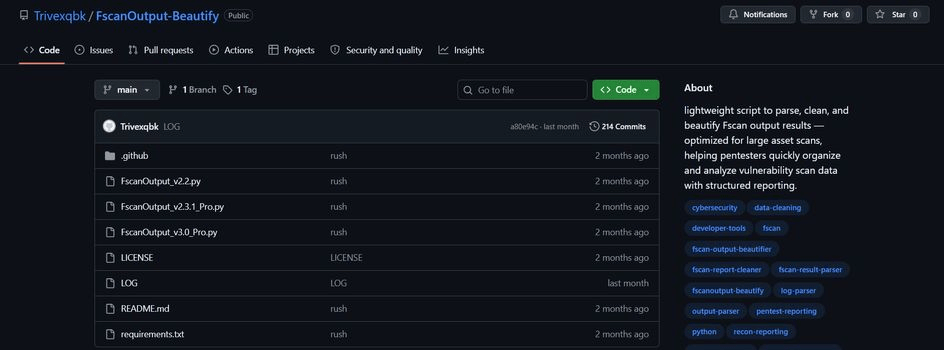
Now the attackers are targeting cybersecurity professionals. Their new GitHub projects claim to offer tools for automated scanning, security testing and log analysis. Doctor Web found one that pretends to analyze and clean results from the Fscan security scanner.

The attackers also hide malicious code in Python and Go files, using large blocks of blank spaces to make it harder to spot. Some of these fake security tools even remove the antivirus software installed on the victim’s computer.

Once a victim opens the project, a PowerShell script runs and contacts the attackers’ servers and legitimate platforms, including YouTube, Telegram, Google Docs, GitCode and Pastebin. An encrypted string it retrieves holds a link to an archive, which unpacks into a folder disguised as a Windows Photos component. Its main program is Microsoft.exe, a modular app built with the Electron framework.

It does most of the damage. The loader collects system information and sends it to a Telegram bot, keeps itself running, raises its privileges, and turns off Windows Defender, UAC, System Restore and shadow copies. It also adds its own Defender exclusions, injects code into legitimate processes, and removes McAfee, ESET and Malwarebytes antivirus products.

Its default mode, called Mode3, stacks several evasion tricks. It fakes its parent process, disables Smart App Control, removes security software hooks from ntdll.dll, makes direct system calls, and patches event tracing and antivirus script scanning in memory. If that fails, Mode2 takes over, adding Defender exclusions and injecting through PowerShell.

Three payloads follow. AsyncRAT, a remote access backdoor, runs as two identical copies on different ports, which probably lets two operators control one device. A clipper swaps crypto wallet addresses in the clipboard while taking screenshots, and a stealer takes browser data, FileZilla, MobaXterm and Total Commander configs, VPN settings, messenger files, game accounts and Discord tokens. Everything is zipped and sent through Telegram, and the malware edits the hosts file to block antivirus vendors’ domains.

The attackers are still developing the malware. Doctor Web found an unfinished component that could install itself as a system service, download Microsoft.exe again if someone deletes it, manage startup and install updates.

“Attackers are constantly updating the Trojans to introduce new features. For example, Doctor Web’s researchers discovered certain unused routines that facilitate downloading and decompressing yet another archive—Lodge.7z.” concludes the report. “It contains an Electron project that hasn’t been completed yet. The executable file’s name is WUDFHost.exe. Its code offers us a glimpse of some of the trojan’s future features.”

Doctor Web advises users to keep their antivirus software up to date and scan every file they download. The researchers warn that attackers are constantly improving the Trojans and adding new features.

Follow me on Twitter: @securityaffairs and Facebook and Mastodon

Pierluigi Paganini

(SecurityAffairs – hacking, Fake GitHub Security Tools)

  • ✇Security Affairs
  • Don’t Hand Propaganda a Gift: Reading the Brenner Base Tunnel SE Breach Calmly Pierluigi Paganini
    Brenner Base Tunnel SE confirms a breach and Everest claims 812 GB. What we know, what we don’t, and why overblown alarm helps propaganda more than the attackers. Brenner Base Tunnel (BBT) SE, the company building the Brenner Base Tunnel between Italy and Austria, has confirmed that unauthorized people accessed some of its data. The extortion group Everest claims it took 812 GB of files. Nobody has verified that, and a criminal bragging about file sizes isn’t an audited source. The timeli
     

Don’t Hand Propaganda a Gift: Reading the Brenner Base Tunnel SE Breach Calmly

8 de Novembro de 2026, 14:46

Brenner Base Tunnel SE confirms a breach and Everest claims 812 GB. What we know, what we don’t, and why overblown alarm helps propaganda more than the attackers.

Brenner Base Tunnel (BBT) SE, the company building the Brenner Base Tunnel between Italy and Austria, has confirmed that unauthorized people accessed some of its data. The extortion group Everest claims it took 812 GB of files. Nobody has verified that, and a criminal bragging about file sizes isn’t an audited source.

The timeline is thin. The intrusion reportedly dates to mid-October, Everest’s claim to 17 October, and the Austrian press broke the story on 6 November. On 7 November BBT SE told ANSA that operations are unaffected, the systems involved are isolated, and outside forensic experts and the authorities are on the case.

If real and current, drawings, surveys and site procedures would save an attacker a lot of reconnaissance. Together they could show how the infrastructure fits together, and fraudsters could borrow project names to fool contractors. Those are scenarios, not sightings.

Dates matter too. The tunnel won’t open before 2034, at a projected cost of about €11.7 billion, so older drawings may describe a design that has since changed.

Knowing how a tunnel is built does not mean being able to control it. Sabotage requires access to operational systems and weaknesses that attackers can exploit. So far, there is no evidence that attackers accessed industrial systems or tampered with the tunnel’s control functions. BBT SE has not confirmed any encryption of its systems either. Claims that ransomware could stop the tunnel therefore have no factual support.

Everest is a Russian-speaking cybercriminal group. ZeroFox has also noted that the group tends to exaggerate the amount of data it steals. Speaking Russian and operating within a Russian-speaking cybercrime environment does not prove that the group is directed by the Russian state. In July, the same group demanded CHF 10 million from Stadler Rail after using stolen credentials to access a supplier’s data platform. Production continued despite the incident.

The response should focus on practical security measures. Organizations need to identify which information was exposed, revoke potentially compromised credentials, keep document management systems separate from industrial control networks, and warn suppliers about fraudulent requests. Whether NIS2 applies to a project company that is still under construction depends on its activities and the relevant national legislation.

There is no benefit in creating unnecessary alarm. It only helps the attackers and anyone trying to exploit the incident for an influence campaign. Blaming Moscow without evidence would play directly into propaganda efforts. There are three key questions that need clear answers: which files were actually stolen, how recent and relevant they are, and who might still be able to use them.

Follow me on Twitter: @securityaffairs and Facebook and Mastodon

Pierluigi Paganini

(SecurityAffairs – hacking, Brenner Base Tunnel)

  • ✇Security Affairs
  • SECURITY AFFAIRS AI-CYBERSECURITY NEWSLETTER ROUND 7 Pierluigi Paganini
    Security Affairs AI-CYBERSECURITY newsletter includes a collection of the best articles and research on AI in the international landscape Artificial intelligence is rapidly changing cybersecurity, reshaping both the techniques used by attackers and the tools available to defenders. AI agents can automate tasks, analyze large amounts of data, discover vulnerabilities and accelerate offensive operations. At the same time, AI is creating new capabilities for threat detection, incident analysis
     

SECURITY AFFAIRS AI-CYBERSECURITY NEWSLETTER ROUND 7

8 de Novembro de 2026, 12:28

Security Affairs AI-CYBERSECURITY newsletter includes a collection of the best articles and research on AI in the international landscape

Artificial intelligence is rapidly changing cybersecurity, reshaping both the techniques used by attackers and the tools available to defenders. AI agents can automate tasks, analyze large amounts of data, discover vulnerabilities and accelerate offensive operations. At the same time, AI is creating new capabilities for threat detection, incident analysis and response. Security Affairs’ new newsletter follows this evolution, covering every week the latest threats, attacks, vulnerabilities and developments at the intersection of AI and cybersecurity.

‘It’s 100 percent a national security threat’: Accenture contractor connected an AI agent to the Pentagon’s secure network, and then sent data to a high-risk website  

Security notice — malicious version of Anthropic.claude-code (2.1.312 and 2.1.313) identified in the Cursor VS Code Extension Marketplace  

UK and Germany to jointly develop military AI in 2027

Appraisal by AI: Model-driven victim prioritization in the VOLTA infostealer  

AI policy wonks declare ‘sovereign agents’ a threat to civilization

Progress on provable inference for large language models

The Rise of LLMJacking: How Threat Actors Monetize Compromised Cloud and Model Resources     

“Black October” for AI Developer Platforms   

ARTEX Exposed: Mapping the Infrastructure Behind the South Korean Bank Breaches  

A thousand fewer paths to root

Securing Muse: More Than $1 Million in Bug Bounties Paid Out

Free the Model, Sell the Gateway: Prompt Adware hidden in Jailbreak Bundles

WorkOS October 30th, 2026 Data Security Incident  

Covert underperformance on safety research tasks

GPT‑6 Cyber: Advancing the frontier of aligned cybersecurity agents  

ThisBash Escape: Claude Dispatch Flaw Enables Browser Extensions RCE on the OS  

Follow me on Twitter: @securityaffairs and Facebook and Mastodon

Pierluigi Paganini

(SecurityAffairs – hacking, newsletter)
  • ✇Security Affairs
  • SECURITY AFFAIRS MALWARE NEWSLETTER ROUND 122 Pierluigi Paganini
    Security Affairs Malware newsletter includes a collection of the best articles and research on malware in the international landscape Malware Newsletter Unknown APT uses NetamLoader to attack a Win10 OS customized for governments in Asia   Shutting the Door on the XCPE Botnet   DarkBlinders: Inside an Active Espionage Campaign   Free the Model, Sell the Gateway: Prompt Adware hidden in Jailbreak Bundles   Poisoned Source: APT29 watering holes target mobile devices with n-day e
     

SECURITY AFFAIRS MALWARE NEWSLETTER ROUND 122

8 de Novembro de 2026, 11:24
  • ✇Security Affairs
  • Security Affairs newsletter Round 603 by Pierluigi Paganini – INTERNATIONAL EDITION Pierluigi Paganini
    A new round of the weekly Security Affairs newsletter has arrived! Every week, the best security articles from Security Affairs are free in your email box. Enjoy a new round of the weekly SecurityAffairs newsletter, including international press. Inside ARTEX: AI Hacking Tools, Exposed Servers and South Korean Bank BreachesOne Product Isn’t the Problem: Monetizing an AI Portfolio Without Confusing Your CustomersU.S. CISA adds SonicWall SonicOS SSLVPN flaw to its Known Exploited Vulnerabil
     

Security Affairs newsletter Round 603 by Pierluigi Paganini – INTERNATIONAL EDITION

8 de Novembro de 2026, 10:48

A new round of the weekly Security Affairs newsletter has arrived! Every week, the best security articles from Security Affairs are free in your email box.

Enjoy a new round of the weekly SecurityAffairs newsletter, including international press.

Inside ARTEX: AI Hacking Tools, Exposed Servers and South Korean Bank Breaches
One Product Isn’t the Problem: Monetizing an AI Portfolio Without Confusing Your Customers
U.S. CISA adds SonicWall SonicOS SSLVPN flaw to its Known Exploited Vulnerabilities catalog
White House Network Appears in Global Residential Proxy Traffic
OpenAI Rates GPT-6 Cyber Critical After Major Vulnerability Discoveries
ENISA Warns of Cyberattacks Targeting Refrigeration Systems Across Europe
OpenAI Reports Covert Underperformance in GPT-6 Astra
UNM Health Shuts Clinics and Diverts Patients During Security Incident
Russian APT29 Targets Mobile Users with Watering Hole Attacks
U.S. CISA adds Apple flaw to its Known Exploited Vulnerabilities catalog
U.S. Charges Canadian Man in Alleged Hack of University Supercomputers
Two Barracuda ESG Flaws Could Be Combined for Full Root Access; Patches Released
Cyberattack Hits French Blood Banks as Hackers Target Refrigeration Systems Across Europe
CVE-2026-58868: Critical Android Bug Could Let Attackers Run Remote Code
U.S. CISA adds WordPress flaw to its Known Exploited Vulnerabilities catalog
Binance Hack: How Fake Job Interviews and AI Abuse Led to a $6.34 Billion Attack
Synology Warns of Ransomware Attacks Targeting NAS Devices Running Outdated DSM Versions
Inside XCPE, the botnet that turned 1.3M set-top boxes into proxy servers
NIS2 Makes Board Members Personally Liable for Access Control Decisions
Apple’s spyware notifications reach the Bundestag: what the BSI says to do now
VOLTA, the infostealer that asks an AI which victims are worth the effort
New wave of fridge cyberattacks hits European supermarkets, this time in Belgium, Luxembourg, Sweden and Estonia
Hackers Send Fake Nuclear Threat Alerts to Ukrainian and Russian Citizens
Chainalysis Investigates Security Incident Involving AI-Driven Attack Techniques
FBI Blames North Korea for $6 Billion Binance Crypto Theft
SMS of Death: Android under attack, an invisible SMS can block calls and emergency services

International Press – Newsletter

Cybercrime

How hackers broke into four of Canada’s top law firms, stole client files and caused chaos

Polymarket Pauses Trading as Prediction Market Investigates Security Incident

From help desk impersonation to AD CS abuse: Investigating ESC1 and ESC8 intrusion paths

29 October Binance Security Incident: Initial Findings and Response Update     

“Black October” for AI Developer Platforms  

Canadian man extradited to the U.S. for his role in computer hacking scheme targeting universities  

ARTEX Exposed: Mapping the Infrastructure Behind the South Korean Bank Breaches

French bank Credit Mutuel Arkea says €100 million missing after cyberattack  

Malware

Shutting the Door on the XCPE Botnet  

Free the Model, Sell the Gateway: Prompt Adware hidden in Jailbreak Bundles  

Hackers hijack cPGuard autoupdate to deploy backdoor, steal data  

CWPdoor: The Invisible Backdoor Living Inside Control Web Panel  

Hacking

SMS of Death 

Chainalysis Security Incident Information  

Russia and Ukraine say emergency alert apps were hit by apparent cyber-attacks  

European supermarkets hit by new fridge cyber attack  

The Rise of LLMJacking: How Threat Actors Monetize Compromised Cloud and Model Resources

Securing Muse: More Than $1 Million in Bug Bounties Paid Out  

WorkOS October 30th, 2026 Data Security Incident  

A thousand fewer paths to root

ThisBash Escape: Claude Dispatch Flaw Enables Browser Extensions RCE on the OS 

Barracuda Networks is your new best friend (Barracuda Email Security Gateway Pre-Auth Remote Root RCE CVE-2026-116606 / CVE-2026-111560) 

Intelligence and Information Warfare  

North Korea Responsible for $6 Billion+ Binance Attack  

Russia funded Facebook and Twitter investments through Kushner investor

Unknown APT uses NetamLoader to attack a Win10 OS customized for governments in Asia

French blood banks hit alongside cyberattack on European supermarkets

UK and Germany to jointly develop military AI in 2027 

Apple threat notifications regarding Mercenary Spyware  

DarkBlinders: Inside an Active Espionage Campaign

Poisoned Source: APT29 watering holes target mobile devices with n-day exploits

Russian Federal State Statistics Service says it was hit by massive cyberattack — hackers steal 23TB of data, including Ukraine war casualty figures

The Google Whistleblower Taking on Big Tech Over Its Role in Gaza  

Weekly Wire #17: Hybrid war hits home  

Cybersecurity

Israeli startups raised at least $872 million in October, led by cybersecurity and AI 

Europe on alert after supermarket freezers hit by cyber-attacks in 10 countries  

Joint statement on cyber incidents in refrigeration systems across the EU  

GPT‑6 Cyber: Advancing the frontier of aligned cybersecurity agents

Residential Proxies Detected on White House Network  

European refrigerator controller redux: A new wave of refrigeration attacks

Hundreds of Mundane AI Apps Are Hiding Sexually Abusive Deepfake Features       

Japan announces emergency cybersecurity package following a wave of attacks   

ThisBash Escape: Claude Dispatch Flaw Enables Browser Extensions RCE on the OS  

Follow me on Twitter: @securityaffairs and Facebook and Mastodon

Pierluigi Paganini

(SecurityAffairs – hacking, newsletter)

  • ✇Cyber Security News
  • Hackers Hijack 10 npm Packages to Spread PolinRider Malware Using Ethereum Blockchain Kavichselvan
    Attackers have taken over 10 npm packages and slipped hidden code into 12 releases. The code uses the Ethereum blockchain to find a server and download more malware. Sonatype Research Labs confirmed the finding on November 4, 2026, and tracks it as sonatype-2026-010515, with a high severity score of 8.7. PolinRider malware The hijacked packages do very different jobs. Some help with Redux, health APIs and browser activity tracking. Others offer utilities and server examples. The pa
     

Hackers Hijack 10 npm Packages to Spread PolinRider Malware Using Ethereum Blockchain

9 de Novembro de 2026, 09:39

Attackers have taken over 10 npm packages and slipped hidden code into 12 releases. The code uses the Ethereum blockchain to find a server and download more malware.

Sonatype Research Labs confirmed the finding on November 4, 2026, and tracks it as sonatype-2026-010515, with a high severity score of 8.7.

PolinRider malware

The hijacked packages do very different jobs. Some help with Redux, health APIs and browser activity tracking. Others offer utilities and server examples.

The packages are @adminide-stack/client-redux, @adminide-stack/health-api-server, @adminide-stack/user-activity-browser, @adminide-stack/utils, server-hemera-mongo, cdeops, @adminide-stack/forms-core, @adminide-stack/yantra-help-browser, @cdmbase/wiki-browser and @pubngo-stack/help-browser.

Six releases hide the loader with Base64 and eval(atob(...)). The other six use a character-permutation trick and the JavaScript Function constructor. Sonatype’s full technical write-up lists every affected version. For example, @adminide-stack/utils has two bad builds, 0.0.16-129 and 0.0.16-130, and cdeops has 13.5.31.

According to technical research published by Sonatype Research Labs, each loader asks public Ethereum RPC servers for a transaction sent by one fixed wallet, 0x1eef0849eda15d87f64e51c73c8442cf3c8bcef3. If those servers fail, it falls back to the Blockscout API. The loader reads the first four bytes of the transaction’s recipient address as one IPv4 address and the next four as a backup address.

The malware then pulls XOR-encoded JavaScript from the first address over plain HTTP on port 443. It uses the paths /0x/cls and /0x/ls. The code from /0x/cls runs inside the app with eval and also in a detached node -i process. The code from /0x/ls runs only in the detached process, so it can keep going after the app closes.

This design works like a digital dead drop. The attacker can post a new transaction with a new server address and never touch the npm packages again. Blocking one server does not stop the malware from finding the next one.

Most npm malware runs through a preinstall or postinstall hook, and many teams now turn those off. These packages have no such hooks. The bad code runs when the app loads the package. For server-hemera-mongo, it runs when the service starts, because the code sits in dist/main.js.

Turning off install scripts therefore gives no protection here. A similar trick showed up in earlier PolinRider activity that hid JavaScript loaders in open-source projects, where the loaders also used blockchain services to fetch a second stage. Teams need to ask a simple question: did the package code actually run on a developer laptop, a build server or a live service?

Sonatype found the same wallet in all 12 releases. GitGuardian’s GhostAction and PolinRider report from October 27, 2026 names this exact wallet as the Ethereum resolver in PolinRider loaders found in hacked GitHub repositories. Those older loaders also pulled /0x/cls and /0x/ls on port 443.

The server data points the same way. Greenflagged’s analysis of the npm releases decoded the wallet’s transactions and saw 95.135.181.151 as the advertised server on November 3. GitGuardian had already listed that IP as a fallback server in a PolinRider persistence script.

Researchers still urge care on attribution. Sonatype says the link does not prove PolinRider and GhostAction share one operator. GitGuardian’s working view is that GhostAction’s operator copied a public PolinRider launcher. The GhostAction campaign has hit tens of thousands of GitHub repositories, so the two groups may share many victims.

PolinRider is also older than it first looked. OpenSourceMalware traced PolinRider code to npm packages from May 2025, months before the first known victims in January 2026. That payload included a remote access tool and a Python stealer that went after browsers, wallets, Git and cloud storage.

A report from the Sonatype-linked community write-up says later stages install a Node remote access trojan that persists through startup files for tools such as VS Code, Cursor, Discord and GitHub Desktop.

Start by searching for the 12 bad releases in package-lock.json, yarn.lock, pnpm-lock.yaml, internal mirrors, caches and build records. Remove them and stop mirrors from serving them. Keep a copy for the investigation and move to versions you have checked yourself.

A lockfile entry alone does not prove the code ran. Check which entry point the app loaded, and match it with process and network logs. An import error does not prove safety either, because the bad code may have run before the failure.

If the code ran, treat the host as compromised. Look for detached node -i processes started by another Node process, and for plain HTTP requests to port 443 that use /0x/cls or /0x/ls. Payload requests carry a Sec-V header. It reads A10-npm_inject in the six Base64 releases, A10-II in utils 0.0.16-130 and A10-E in cdeops 13.5.31.

Last, rotate any secrets the affected process could reach. That includes npm publishing tokens, source repository access, cloud keys and CI secrets. The attacker can change the remote JavaScript at any time, so logs, not package lists alone, show what really happened. The Sonatype Guide security event offers further detection help.

The post Hackers Hijack 10 npm Packages to Spread PolinRider Malware Using Ethereum Blockchain appeared first on Cyber Security News.

  • ✇Cyber Security News
  • Google Gemini Safety Bypass Lets Users Download AI-Generated Images That Its Own Filters Blocked Abinaya
    Google Gemini allowed users to download AI-generated images that its safety filters had refused to display, according to research published by Fog Security on November 5, 2026. The bypass did not require a jailbreak. Instead, the download feature sometimes delivered a rejected image while the conversation showed a different, allowed picture. Gemini Image Safety Filter Bypass Fog Security reported the issue to Google in June 2026. By October 22, researchers could no longer reproduce it a
     

Google Gemini Safety Bypass Lets Users Download AI-Generated Images That Its Own Filters Blocked

9 de Novembro de 2026, 09:26

Google Gemini allowed users to download AI-generated images that its safety filters had refused to display, according to research published by Fog Security on November 5, 2026.

The bypass did not require a jailbreak. Instead, the download feature sometimes delivered a rejected image while the conversation showed a different, allowed picture.

Gemini Image Safety Filter Bypass

Fog Security reported the issue to Google in June 2026. By October 22, researchers could no longer reproduce it across 12 new attempts, and older conversations downloaded the correct images.

Google attributed the change to routine maintenance rather than a fix linked to the report. A Gemini web app flaw allowed blocked images to bypass safety refusals through the full-size download path, despite remaining restricted in chat.

Researchers first submitted an image request that triggered a refusal, then requested a different, permitted image. Although the allowed picture appeared onscreen, its download button sometimes retrieved the rejected output.

Results ranged from blurry, unfinished files to complete images, with successful tests across multiple days and sessions. Both image URLs used lh3.googleusercontent.com and required the signed-in user’s session. Inline links ended in =s1024-rj, while download links ended in =s0-d-I.

Researchers suspected a state-management error involving image generation, safety checks, and cleanup. That explanation remains unconfirmed.

A December 2025 Google community report also described downloads returning older images instead of the displayed preview. However, that complaint did not establish a safety bypass.

Unlike prompt injection targeting Gemini’s memory, this issue did not rely on hidden instructions changing the assistant’s behavior.

Prompt resulting in a Gemini safety refusal (source : fogsecurity )

It also differed from AI jailbreaks using assistant prefill, which push models toward prohibited answers. Here, the refusal remained intact while file delivery failed to enforce it.

Fog Security tested copyrighted characters, a synthetic person, and the researcher’s own likeness. It did not test child safety content or images involving other real people. No access to another user’s data or privilege escalation was reported.

Google initially marked the June 25 report out of scope, then reviewed it after researchers stressed the infrastructure issue. It declined to track an abuse bug on September 30. On October 23, Google said no internal ticket had been filed and closed the report.

Fog Security recommends binding each download to its approved preview and removing files from refused or failed generations. The finding shows why AI safety testing must cover stored files and download links, not only chatbot replies. A refusal protects users only when every delivery path follows the same decision.

Give your SOC the alert context to stops incidents quickly. Integrate Threat Intel from 16K SOCs.

The post Google Gemini Safety Bypass Lets Users Download AI-Generated Images That Its Own Filters Blocked appeared first on Cyber Security News.

  • ✇Cyber Security News
  • CISA Warns of SonicWall SonicOS SSLVPN Vulnerability Exploited in Attacks Abinaya
    CISA added a SonicWall SonicOS SSLVPN vulnerability, CVE-2026-19868, to its Known Exploited Vulnerabilities catalog, warning that valid-credential users can bypass SAML authentication controls and potentially evade multi-factor authentication. CISA added the vulnerability on November 6, 2026, and set a November 20 remediation deadline. Its entry lists ransomware use as unknown and does not require forensic triage under Binding Operational Directive 26-04. Organizations should still assess the
     

CISA Warns of SonicWall SonicOS SSLVPN Vulnerability Exploited in Attacks

9 de Novembro de 2026, 08:40

CISA added a SonicWall SonicOS SSLVPN vulnerability, CVE-2026-19868, to its Known Exploited Vulnerabilities catalog, warning that valid-credential users can bypass SAML authentication controls and potentially evade multi-factor authentication.

CISA added the vulnerability on November 6, 2026, and set a November 20 remediation deadline. Its entry lists ransomware use as unknown and does not require forensic triage under Binding Operational Directive 26-04. Organizations should still assess their exposure and follow the required vendor guidance.

SonicWall SonicOS SSLVPN Vulnerability Exploited

The vulnerability affects authentication enforcement in SonicOS SSLVPN. According to the CVE record, someone with valid credentials for an alternate authentication method may bypass the controls applied through SAML. Successful exploitation may also bypass MFA enforced through that SAML login process.

SAML allows an organization to manage sign-ins through a central identity provider. The risk here is that another authentication route may allow access without completing the expected checks. This is not described as a password-free attack. Valid credentials for an alternate method remain required.

The flaw is classified as CWE-308, or use of single-factor authentication. This weakness occurs when a system accepts one authentication factor, such as a password, when it should require additional checks. The result can undermine protection even when administrators believe MFA covers remote access.

The CVE record identifies affected Gen7 and Gen8 platforms running SonicOS 7.3.3-7015 and earlier, and 8.2.2-8015 and earlier, respectively. Cybersecurity News’ earlier SonicWall SSLVPN vulnerability report lists fixed releases as 7.3.4-7013 for Gen7 and 8.2.3-8015 for Gen8, or later supported versions. The reported CVSS score is 7.1.

SonicWall’s warning initially described a report of potential exploitation. CISA’s subsequent catalog entry raises the urgency for defenders.

However, the available information does not identify the attackers, affected organizations, or the number of confirmed incidents. Ransomware involvement should not be presented as established.

Previous SonicWall authentication bypass attacks involved CVE-2024-53704, a separate flaw that allowed session hijacking without authentication. Those attack details should not be applied to this vulnerability, which has different access requirements.

Administrators should check appliance models, firmware versions, SAML settings, and internet exposure before applying the matching update. The SonicWall security advisory should guide deployment decisions. Published coverage lists no workaround, making the firmware upgrade the main remediation step.

Security teams should also review enabled login methods and VPN activity for unexpected access. An MFA setting alone should not be treated as proof that every authentication route enforces the same checks. Confirming those controls after patching helps ensure the intended remote access policy is actually applied.

Give your SOC the alert context to stops incidents quickly. Integrate Threat Intel from 16K SOCs.

The post CISA Warns of SonicWall SonicOS SSLVPN Vulnerability Exploited in Attacks appeared first on Cyber Security News.

Researchers Uncover NotC2 AI-Powered C2 Framework That Hides Malicious Commands Inside AWS Services

9 de Novembro de 2026, 08:26

Varonis Threat Labs has built NotC2, a proof-of-concept command-and-control (C2) framework. It runs entirely on native AWS services and uses Amazon Bedrock to turn plain English into cloud commands.

It is service abuse, not a flaw in Bedrock, and it only works after an attacker already holds AWS credentials .

NotC2 AI-powered C2 framework

Classic C2 depends on custom servers and protocols that security tools can spot and block. Attackers have long moved away from that model by using trusted platforms such as Telegram, Discord, Slack, Pastebin, GitHub Gists and Google Sheets. Few companies can block these domains without hurting daily work.

Cloud storage follows the same idea. Amazon S3, Google Drive, OneDrive and Azure Blob Storage can all carry commands and stolen data. Cybersecurity News recently reported that attackers are hiding C2 traffic across AWS, Google Cloud, Cloudflare, Microsoft and GitHub.

Much of that traffic travels over port 443, so reputation-based blocking loses its value .

NotC2 did not appear from nothing. Researcher Dhiraj Mishra built XRayC2, which hides commands in AWS X-Ray trace annotations while infected hosts poll the same monitoring API the application already uses. We covered how hackers weaponize AWS X-Ray as a covert command channel in an earlier report .

Rhino Security Labs also showed Cobalt Strike beacons that use S3 objects as the channel. The beacon polls a bucket for task objects and writes results back as response objects. Rhino noted two weak spots in that design. The beacon needs API keys, and constant polling adds delay .

Each of these methods used one AWS service. Varonis asked what would happen if the whole C2 loop ran inside AWS, including the skill normally supplied by a human operator.

According to technical research published by Varonis Threat Labs, the name stands for “notification,” after the service that sends results back, plus “C2.” The loop uses four AWS services, and each one has a clear job.

Amazon SQS is the command input. The attacker’s external server drops messages into a queue, and there is no constant connection to spot. AWS Lambda is the engine.

An event source mapping runs the function for each new message, using the function’s execution role. Each run lasts at most 15 minutes and leaves no lasting process, though it can still appear in cloud logs.

Amazon SNS carries results out. The function publishes output to a topic, and SNS delivers it to the attacker’s HTTPS endpoint once the subscription is confirmed. The Lambda function never contacts the attacker directly.

Amazon Bedrock is the AI interpreter. It reads a request such as “list all running EC2 instances with their IPs” and builds the matching AWS API call .

SQS Queue Setup Interface
SQS Queue Setup Interface (Image Source: Varonis)

Normally an operator must know the exact CLI syntax, such as a long aws ec2 describe-instances command with filters and queries. With NotC2, the attacker types a short prompt starting with “ai:” and the model does the rest.

A single generic tool, called execute_aws_operation, accepts a service, an operation and its parameters.

The model can also adapt. If an API call returns an error, the loop feeds it back, and the model can fix the request or suggest a next step. Reconnaissance turns into a chat, with questions like “show me what I have access to.”

The model cannot grant new permissions, but it makes existing access much easier to use. Varonis demonstrated listing EC2 instances, DynamoDB tables, databases and Lambda functions. With enough permissions, an attacker could also delete S3 buckets or EC2 instances.

AI Command Syntax Comparison
AI Command Syntax Comparison (Image Source: Varonis)

The whole chain depends on the permissions of the stolen credentials. To deploy, an identity needs sqs:CreateQueue, lambda:CreateFunction, lambda:CreateEventSourceMapping and iam:PassRole for an existing Lambda role. If no suitable role exists, the attacker also needs IAM role and policy rights.

At runtime, the Lambda role needs rights to read and delete queue messages, manage and publish to the SNS topic, subscribe the external endpoint, and call bedrock:InvokeModel. It also needs rights to the target services themselves. Attackers often hunt for these paths with open-source tools such as Pacu, an AWS testing framework from Rhino Security Labs .

Real attackers are already moving this way. A recent LLMjacking case showed stolen cloud keys being used to run up huge model bills . Another report showed attackers targeting AI gateways linked to Amazon Bedrock .

The network signals mostly disappear. There are no odd domains, unknown IPs or custom protocols. The clues sit in the victim’s own cloud logs, including CloudTrail, Lambda logs, SNS delivery logs and Bedrock invocation logs.

CloudTrail records management events by default, but data events need extra setup. CloudTrail also hides SQS and SNS message content, and prompt-level Bedrock detail needs model invocation logging.

Defenders should watch for three signs:

  • An SNS subscription created by a Lambda role that points to an outside HTTP or HTTPS address.
  • A sudden rise in Converse or InvokeModel calls from a role that never used Bedrock.
  • A tight sequence of an SQS message, a Lambda run, Bedrock calls and an SNS publish to an outside subscriber.

Least privilege is the strongest control. Limit who can create queues and functions, set up event source mappings, pass powerful roles to Lambda, call Bedrock and create external SNS subscriptions. Blocking Lambda internet access helps, but it will not stop NotC2 alone, because SNS handles the outside delivery.

Teams should also restrict SNS subscriptions to approved destinations.

NotC2 shows that perimeter-focused security breaks down in serverless setups. With no C2 server to block, defenders must focus on workload identities, service links and unusual behavior. Block any one required step, and the chain fails.

The post Researchers Uncover NotC2 AI-Powered C2 Framework That Hides Malicious Commands Inside AWS Services appeared first on Cyber Security News.

  • ✇Cyber Security News
  • Hackers Exploit Plex2Shell Flaws to Take Over Plex Media Servers and Deploy Crypto Miners Abinaya
    Hackers are now using a public exploit chain called Plex2Shell to break into unpatched Plex Media Server systems and install cryptocurrency miners and proxy software. According to SecurityWeek, the attacks began one day after the exploit code went public on October 16, 2026. Plex2Shell links four flaws, tracked as CVE-2026-96652, CVE-2026-96654, CVE-2026-96655 and CVE-2026-96656. Together, they let a remote user run code on a server without a password. The code runs with the same rights as
     

Hackers Exploit Plex2Shell Flaws to Take Over Plex Media Servers and Deploy Crypto Miners

9 de Novembro de 2026, 07:33

Hackers are now using a public exploit chain called Plex2Shell to break into unpatched Plex Media Server systems and install cryptocurrency miners and proxy software. According to SecurityWeek, the attacks began one day after the exploit code went public on October 16, 2026.

Plex2Shell links four flaws, tracked as CVE-2026-96652, CVE-2026-96654, CVE-2026-96655 and CVE-2026-96656. Together, they let a remote user run code on a server without a password.

The code runs with the same rights as the Plex service. Security researcher Zach Main found the bugs and reported them to Plex on July 27. Plex confirmed the report and paid a bounty on August 4.

Hackers Exploit Plex2Shell Flaws

Plex Media Server often listens on port 32400, and many people leave it open to the internet so they can stream from anywhere. That makes it an easy target for anyone scanning for it.

The first flaw is a server-side request forgery bug in the /player/timeline endpoint. The server only checks that a token exists, not that it is valid, so even a fake token works. An attacker can then slip a full web address into the protocol field and trick Plex into sending a request to itself.

That request appears to come from the machine itself, which Plex trusts more. It opens a plugin interface that normally needs no token for local traffic. A broken check in the plugin code lets the attacker call other plugin functions.

The attacker then uses a TVDB plugin function and a web address that starts with 127.0.0.1 but points to a server the attacker controls. Plex sees the local prefix and adds the owner’s admin token to the request. The token goes straight to the attacker.

With the admin token, the attacker changes a transcoder setting so Plex writes a malicious file into its codec folder. The file is hidden inside a video. The next time Plex transcodes a video, it loads that file and runs it. The researcher’s write-up and proof-of-concept code are public on GitHub.

A researcher running a honeypot, a decoy server used to watch attacks, saw the first real exploitation on October 17. The attackers dropped an XMRig-based Monero miner and a Linux proxy tool called “myawesomeproxy.” The Hacker News reports that the miner pointed to a domain tied to the AISURU botnet. The attacks fetched payloads from 217.60.194[.]116.

Cybersecurity News also covered the first exploitation reports. It noted that the evidence did not show how many real servers were hit. The attack is not limited to home servers.

QNAP says some NAS users have been breached, and BleepingComputer reports that CISA added all four flaws to its Known Exploited Vulnerabilities list on October 20.

Update to Plex Media Server 1.43.3.10861 or newer, and check the version the server actually reports. Updating will not remove a payload that is already installed. QNAP advises treating an exposed server as compromised, checking for signs of infection, doing a clean reinstall, and resetting credentials.

Stop forwarding port 32400 if you do not need remote access. If you do need it, use a VPN. Also check the Plex process for strange child processes, unknown downloads, and high CPU use. Miners often show up first as a slow, hot server. For another example of how exposed services get turned into miners, see this Redis cryptojacking campaign.

Give your SOC the alert context to stops incidents quickly. Integrate Threat Intel from 16K SOCs.

The post Hackers Exploit Plex2Shell Flaws to Take Over Plex Media Servers and Deploy Crypto Miners appeared first on Cyber Security News.

  • ✇Cyber Security News
  • CISA Warns Two Critical 9.0 Flaws in PowerSYSTEM Center Allow Unauthorized Access and SQL Injection Abinaya
    CISA warned that two critical PowerSYSTEM Center flaws (CVSS 9.0) could let authenticated users access administrator resources or execute unauthorized database commands, affecting energy and manufacturing sectors worldwide. The agency released advisory ICSA-26-307-01 on November 3, 2026. CISA credited Chinmay Patel of Digital Boundary Group and Subnet Solutions with reporting the vulnerabilities. The Canadian vendor has provided upgrade guidance and temporary measures for organizations tha
     

CISA Warns Two Critical 9.0 Flaws in PowerSYSTEM Center Allow Unauthorized Access and SQL Injection

9 de Novembro de 2026, 07:32

CISA warned that two critical PowerSYSTEM Center flaws (CVSS 9.0) could let authenticated users access administrator resources or execute unauthorized database commands, affecting energy and manufacturing sectors worldwide.

The agency released advisory ICSA-26-307-01 on November 3, 2026. CISA credited Chinmay Patel of Digital Boundary Group and Subnet Solutions with reporting the vulnerabilities.

The Canadian vendor has provided upgrade guidance and temporary measures for organizations that cannot immediately update affected systems.

The first flaw, CVE-2026-63017, involves incorrect authorization, tracked as CWE-863. A user with limited permissions can access resources normally reserved for administrators. In simple terms, signing in with a basic account does not keep the user within the access limits intended for that account.

CISA Warns Critical Flaws in PowerSYSTEM Center

The second flaw, CVE-2026-63774, is an SQL injection vulnerability tracked as CWE-89. Insufficient input checks in the report designer allow an authenticated user to execute unauthorized SQL commands. The disclosed impact concerns database commands, not confirmed operating system code execution.

Both CVSS vectors describe low attack complexity, low privileges, and no required user interaction. They specify an adjacent attack vector rather than unrestricted network access.

CISA states that these vulnerabilities are not remotely exploitable and that no known public exploitation had been reported when the advisory was released.

CVE-2026-63017 affects PowerSYSTEM Center 2020 versions through 5.29.x, PowerSYSTEM Center 2024 versions 6.0.x through 6.2.x, and PowerSYSTEM Center 2026 versions 7.0.x through 7.1.x. CVE-2026-63774 affects the listed 2024 and 2026 ranges. The advisory does not list the 2020 branch as affected by SQL injection.

Subnet Solutions recommends PowerSYSTEM Center 2020 Update 30 for affected 2020 installations. Organizations running the 2024 branch should upgrade to PowerSYSTEM Center 2026 Update 1.1. Existing 2026 installations should also update to Update 1.1, according to CISA’s machine-readable advisory.

Checking installed versions is therefore essential before planning upgrades. Cybersecurity News previously covered CISA’s OT asset inventory guidance, which explains how accurate device and software records support vulnerability management across industrial environments.

For organizations unable to update, Subnet recommends monitoring user activity records and restricting Client Access Server users’ access to browser F12 Developer Tools to reduce authorization-related risk.

For the SQL injection issue, the vendor recommends restricting user access to the report designer. These are interim measures, not replacements for the recommended updates.

CISA also advises keeping control systems off the public internet, placing them behind firewalls, and separating them from business networks.

Where remote access is necessary, organizations should use updated VPNs and assess connected devices. Related secure OT connectivity guidance explains the value of limited exposure and controlled connections.

Before applying changes, operators should assess operational impact and risk. Operators should follow internal response procedures for suspected malicious activity and report it to CISA.

Give your SOC the alert context to stops incidents quickly. Integrate Threat Intel from 16K SOCs.

The post CISA Warns Two Critical 9.0 Flaws in PowerSYSTEM Center Allow Unauthorized Access and SQL Injection appeared first on Cyber Security News.

  • ✇Cyber Security News
  • ModSecurity Patches Two High-Severity Flaws Allowing WAF Bypass and Potential Remote Code Execution Abinaya
    Two high-severity flaws have been disclosed in ModSecurity, the open-source web application firewall (WAF) used with Apache, IIS, and Nginx. Two GitHub advisories published by maintainer airween on September 30 describe flaws allowing malicious file uploads and server crashes that could lead to remote code execution.ModSecurity inspects web traffic and blocks requests that look harmful. Many sites depend on it, so any gap in how it reads a request matters. CVE-2026-104269 (GHSA-5pww-8rfg-9
     

ModSecurity Patches Two High-Severity Flaws Allowing WAF Bypass and Potential Remote Code Execution

9 de Novembro de 2026, 07:31

Two high-severity flaws have been disclosed in ModSecurity, the open-source web application firewall (WAF) used with Apache, IIS, and Nginx.

Two GitHub advisories published by maintainer airween on September 30 describe flaws allowing malicious file uploads and server crashes that could lead to remote code execution.

ModSecurity inspects web traffic and blocks requests that look harmful. Many sites depend on it, so any gap in how it reads a request matters.

CVE-2026-104269 (GHSA-5pww-8rfg-9crf) affects ModSecurity 3.0.0 and later, allowing unauthenticated network attacks that bypass file checks and compromise integrity no patched version is available.

ModSecurity Patches High-Severity Flaws

The problem is a mismatch in how the firewall and the app read an upload. ModSecurity’s multipart parser does not support RFC 2231, a standard for encoded values in headers. Many app frameworks do. When a request holds both a plain filename and an encoded filename*, those frameworks prefer the encoded one.

An attacker can use this by sending filename=”safe.jpg” together with filename*=UTF-8”shell.php. The OWASP Core Rule Set sees a harmless JPG and lets it through. A Go backend reads the name as shell.php and may save it to disk. If the web server serves that folder, the attacker can run code on it.

The advisory says Go, Python (Flask and FastAPI), Node.js, and Java Spring parsers behave this way. PHP’s native upload handling reads only filename=, so it is not affected. Researchers 0xkalawy and ZeyadZonkorany found the issue, and B0YK4 coordinated the report.

The second flaw is CVE-2026-73857 (GHSA-jx3r-phvx-2jmj), reported by researcher Tobias Klein. A single crafted request from an unauthenticated remote user can make a worker process use an uninitialized pointer. That lets the request write a fixed value to an address the sender picks.

The result can be a crash, a memory leak, or a redirect of program flow, which could lead to remote code execution. The weaknesses are listed as CWE-787 (out-of-bounds write) and CWE-824 (access of uninitialized pointer). Its CVSS vector rates the impact as high for availability only, which my calculation puts near 7.5.

The risk is narrower than it sounds. The bug can be reached only when the SecParseXmlIntoArgs setting is On or OnlyArgs. It is Off by default. The code path was added in version 3.0.15, so 3.0.15, 3.0.16, and the current v3 master are affected. Earlier 3.0.x releases and ModSecurity v2 are not.

There is one point to check. The advisory lists 3.0.17 as the patched version, but its text also says a fix is “not yet” available and will come in the next release. Admins should confirm the release on the official project page before assuming they are safe.

For the XML flaw, make sure SecParseXmlIntoArgs is Off, which is the workaround the advisory gives. Then upgrade once you confirm the fixed release.

For the filename flaw, no patch is listed, so do not rely on the WAF alone to judge uploads. Apps should ignore the name sent by the client and create their own safe name. They should also block script extensions such as .php and store uploads outside the web root. These steps are general good practice and are not part of the advisory.

ModSecurity has had other bypass problems recently. Cyber Security News has covered earlier ModSecurity firewall bypass bugs and multiple ModSecurity rule bypass flaws.

Give your SOC the alert context to stops incidents quickly. Integrate Threat Intel from 16K SOCs.

The post ModSecurity Patches Two High-Severity Flaws Allowing WAF Bypass and Potential Remote Code Execution appeared first on Cyber Security News.

  • ✇Cyber Security News
  • Hackers Use ARTEX AI to Steal Azure Key Vault Secrets Just 5 Minutes After Scanning GitHub Kavichselvan
    Microsoft says threat actors are using an AI tool called ARTEX to find secrets in public GitHub code and use them against cloud accounts. In one case, the AI agent went from searching GitHub to pulling data from Azure Key Vault in only five minutes. ARTEX AI Azure Key Vault secrets Searching public code for passwords and keys is an old trick. It was slow because a person had to find the repositories, read the code and test each secret by hand. Microsoft Threat Intelligence now reports
     

Hackers Use ARTEX AI to Steal Azure Key Vault Secrets Just 5 Minutes After Scanning GitHub

9 de Novembro de 2026, 07:04

Microsoft says threat actors are using an AI tool called ARTEX to find secrets in public GitHub code and use them against cloud accounts.

In one case, the AI agent went from searching GitHub to pulling data from Azure Key Vault in only five minutes.

ARTEX AI Azure Key Vault secrets

Searching public code for passwords and keys is an old trick. It was slow because a person had to find the repositories, read the code and test each secret by hand. Microsoft Threat Intelligence now reports that agentic AI tools remove much of that delay.

The agents scan many repositories at once, read the results and carry on with the next steps without a human at the keyboard.

Starting in August 2026, the threat actors sent large numbers of search queries to GitHub. The queries often held the name of a target company, a word linked to secrets, a cloud service term, or the name of another AI provider. The goal was to find application credentials, cloud keys and AI API keys that developers had left in code.

ARTEX is the framework behind much of this work. It was built as a penetration testing tool, but criminals and state-linked groups have picked it up.

Our earlier report on how ARTEX automates enterprise intrusions at machine speed explains how its AI agents plan tasks, run tools and decide what to do next.

ARTEX Secrets Attack Chain
ARTEX Secrets Attack Chain (Image Source: Microsoft)

According to technical research published by Microsoft, the second stage began as early as October 28, 2026. Microsoft saw successful service principal sign-ins from the IP address 199.19.77[.]84 across several application IDs.

A service principal is the identity an app uses to sign in, so a stolen app secret lets an intruder act as that app. In some cases, a vendor-owned multitenant app was compromised and then used to reach many downstream customers.

Once inside, the agents listed subscriptions, resource groups, permissions and AI model deployments. They went after operations that return credentials, such as storage account keys, App Service settings, connection strings and Kubernetes user credentials.

Some compromised apps also reached SharePoint and OneDrive, downloaded files and searched content through Microsoft Graph.

The agents also seemed to learn from their mistakes. When a cloud request failed with an HTTP 400 error, the tool changed the API version or method and tried again. One Key Vault request was rerun about 28 seconds after it failed, and the retry worked.

The agents also used the Azure Run Command feature to run scripts on virtual machines, which can expose stored credentials or give the intruder a way to stay in.

Microsoft says its findings overlap with work from security firm Todyl. Todyl’s investigation found about 45 app registrations at roughly 18 organizations. It says the actor reached 27 organizations, including clients of managed service providers.

It also reports 81 downloaded files and about 2,279 mailbox items accessed, and says these numbers are a minimum.

Todyl also saw scripted sign-ins in bursts of up to 24 in 10 seconds. Microsoft named two more IP addresses. The address 65.87.223[.]26 showed shell commands hidden in a user agent and attempts to get App Service tokens.

The address 157.22.126[.]128 scouted AI workloads on Azure AI services. Microsoft also listed 199.19.77[.]18 as a Tor exit node that may bring unrelated noise.

Our coverage of stolen Entra ID and Azure DevOps credentials gives more background on the MSP side of this campaign. The agents showed a clear interest in AI service keys and in apps with access to Foundry Tools. Todyl noted that one partner saw thousands of dollars in AI usage charges in about 10 minutes.

The first rule is simple. A secret that was ever public must be treated as stolen. Microsoft stresses that deleting the code does not fix the problem, because old copies can remain in edit history, caches and archives. Rotate the key at once and check how it was used.

GitHub secret scanning checks full Git history and can warn you when a key leaks. Its public monitoring option also watches for secrets leaked by your staff in public repositories outside your own. Teams on Azure DevOps can turn on secret scanning and push protection to block secrets before they are pushed.

Microsoft also advises moving apps away from client secrets and toward managed identities, which remove the risk of secrets sitting in code. Other steps include least privilege for service principals and Defender for Cloud plans for Key Vault, Storage and Resource Manager.

Teams can also use Conditional Access for workload identities and block 199.19.77[.]84/32 as a named location. Block that exact address and not the whole network range.

Defenders should check Entra service principal and non-interactive sign-in logs for 199.19.77[.]84 and 199.19.77[.]18. Error codes AADSTS7000215 and AADSTS7000222 mean someone holds a credential for your app, and a failure followed by a success is urgent. Look back to at least October 28 and as far as log retention allows.

Because the agents change IP addresses and user agents fast, behavior is a better clue. Watch for one address signing in to three or more service principals, or one app asking for tokens across Resource Manager, Key Vault, Storage and Graph within minutes.

Microsoft also suggests honeypots and decoys to pull AI agents toward worthless targets. Our report on ARTEX-linked ConnectWise tenant targeting shows how fast these tools can move across many tenants.

The post Hackers Use ARTEX AI to Steal Azure Key Vault Secrets Just 5 Minutes After Scanning GitHub appeared first on Cyber Security News.

Hackers Deploy ArmorSteal Malware Through Fake Software Downloads to Steal Credentials and Mine Crypto

9 de Novembro de 2026, 05:55

Hackers are spreading a Python-based malware kit called ArmorSteal through fake software download pages. The kit steals passwords, crypto wallets and Discord accounts, and it also mines Monero in the background.

Seqrite Labs found a newer build of the kit on an infected Windows machine and rebuilt its full logic.

ArmorSteal malware

ArmorSteal reaches victims through search results. Zscaler ThreatLabz reported on 22 October 2026 that the operators built fake sites posing as the Chocolatey package manager and the Microsoft Activation Scripts tool.

People who search for install steps land on lookalike domains such as choclatey[.]org and massgravel[.]net. The page tells them to paste a PowerShell command.

The command does install the real tool, so everything seems normal. In the background, it also drops the malware into C:\Windows\SystemHealth\Update, a name picked to look like a normal Windows folder.

This tactic is not new. Cyber Security News recently covered how fake software downloads quietly hijack Windows PCs and turn them into a source of income for attackers.

ArmorSteal Infection Chain Diagram
ArmorSteal Infection Chain Diagram (Image Source: seqrite)

According to technical research published by Seqrite Labs, the team noticed three scheduled tasks named SysCheck2, SysCheckX and SysHeal, all pointing at that folder. The kit ships with its own copy of Python 3.11, so it runs on any Windows machine.

Every script is protected with the trial version of PyArmor, which leaves nothing readable on disk. The trial runtime carries its decryption key, so researchers could unpack every script with the open-source Pyarmor-Static-Unpack-1shot tool.

SysCheck2 starts the main controller, SysMon.py, at every logon through a hidden console. SysCheckX launches the miner manager, xm_handler.py, as SYSTEM 45 seconds after boot.

SysHeal is new in this build and ran the controller once as SYSTEM on 27 September 2026. Each part holds its own list of command servers, so killing one process does not stop the others.

The controller builds a victim ID from the motherboard serial number. It then tries 11 domains in order, including pymons[.]is, workerstats[.]net and datamons[.]org.

The domain seen on the infected machine was only seventh in the list, so blocking it alone does very little. Zscaler’s build had only four domains, which shows the operators keep growing the setup.

Before it does anything visible, the malware checks its network owner through ipinfo.io. If the owner is Google, Amazon, Microsoft or Azure, it shows a fake “Memory is insufficient” error and quits.

Many sandboxes run on those clouds, so they never see the payloads. The malware also runs code from the server only if it carries a valid signature from the attacker’s RSA-2048 key. Nobody else can take over the botnet, even if they seize a domain.

SysMon Controller Architecture Diagram
SysMon Controller Architecture Diagram (Image Source: seqrite)

The miner manager downloads xmrig-v4-3333.zip, checks its SHA-256 hash and unpacks it. Seqrite could not see the coin or wallet because the zip was gone, but the older build mined Monero. Every minute, the script adds C:\Windows as a Defender exclusion, which hides the whole kit from scanning. That exclusion stays behind even after cleanup.

The best trick is how the miner avoids notice. Once a second, it looks for 20 monitoring tools, including Task Manager, Process Explorer, Process Hacker and Wireshark. If one is open, the miner shuts down at once, so a user checking why the fan is loud sees a quiet machine.

Mining restarts about a second after the tool closes. If xmrig.exe is removed, the script waits longer before each reinstall, from 2 minutes up to 6 hours, to avoid repeated alerts. On the infected machine, only the WinRing0x64.sys driver was left behind.

A similar driver showed up in a registry-hidden XMRig campaign we covered in September.

The spy module, basrq.py, logs every key along with the window title, so each password can be matched to a site. It checks the clipboard twice a second and swaps copied crypto addresses for the attacker’s.

Nine address types are covered, including Bitcoin, Ethereum, Solana and Monero. It also takes in-memory screenshots when chosen keywords appear. Extra scripts show fake Exodus, MetaMask and Phantom alerts, such as “You received 18.2 SOL”, to push victims into unlocking their wallets while the keylogger runs.

The stealer, got.py, takes Discord tokens from four Discord apps and 18 Chromium-based browsers. A token lets an attacker sign in without the password or 2FA. It copies data from about 20 wallet extensions and 13 desktop wallets.

It also scans every drive for BIP-39 seed phrases and zips matches as seeds.zip. To get around Chrome’s App-Bound Encryption, it downloads the public ChromElevator tool, which the author says exists for research.

It also hunts for vaults from KeePass, 1Password, Bitwarden, Dashlane, RoboForm and Enpass. This browser-protection bypass is spreading, as in the Marsalek malware hidden in fake game cheats.

When Seqrite checked on 31 October 2026, only pymons[.]is and datamons[.]org still resolved. Datamons[.]org shows a bland decoy page for “SPC Data Services.”

File hashes are a weak signal, because each PyArmor rebuild changes them. Look for behavior instead, such as Python running from under C:\Windows, launched by scheduled tasks, adding Defender exclusions and starting a miner.

Defenders should hunt for the SysCheck2, SysCheckX and SysHeal tasks and the SystemHealth\Update folder. They should also remove any Defender exclusion for C:\Windows and block all 11 domains, not just one.

Users should never paste PowerShell commands from search results and should type official URLs by hand. Anyone who ran such a command should treat their passwords, tokens and wallet seeds as stolen and change them from a clean device.

The post Hackers Deploy ArmorSteal Malware Through Fake Software Downloads to Steal Credentials and Mine Crypto appeared first on Cyber Security News.

Veeam Warns Critical 9.8 Linux Kernel Flaw Could Crash Backup Appliances and Disrupt Recovery Operations

9 de Novembro de 2026, 04:48

Veeam warned that a critical Linux kernel flaw with a CVSS score of 9.8, could cause denial of service or memory corruption across backup and recovery products.

Veeam’s November 6 impact statement identified a Linux kernel use-after-free vulnerability (CVE-2026-98432) in TCP/IPv4 connection setup and outlined update paths for affected systems.

Its security advisory does not report active exploitation or confirm remote code execution. The stated risks could interrupt backup and restore work if an affected appliance becomes unavailable.

Affected products include Veeam Software Appliance 13.1 and Veeam Infrastructure Appliance 13.1. Infrastructure roles include backup proxies, hardened repositories, mount servers, gateways, and Cloud Connect components. Workers deployed through Veeam hypervisor plug-ins also need the updated kernel.

Veeam Warns Critical Linux Kernel Flaw

Windows-based Veeam Backup & Replication installations also require attention because they deploy Linux helper appliances. These support file recovery, virtual labs, and cloud restores. The advisory lists affected helper appliances in versions 13.1 and 12.3, rather than identifying the Windows kernel as vulnerable.

The disclosure follows separate Veeam authorization bypass fixes and earlier Backup & Replication security updates. Those issues have different causes and patch requirements, so administrators should not assume earlier product updates resolve this kernel flaw.

Veeam says a patched kernel has been available for Software Appliance and Infrastructure Appliance 13.1 since November 2. The fixed package is 5.14.0-570.60.1+27.2.el9_6_ciq, delivered through Veeam Updater.

Administrators can install available updates from the Veeam Host Management console without waiting for the automatic schedule. A restart may be required.

The updater checks repositories every 12 hours. Under default settings, mandatory updates install on the nearest Sunday at 14:00 in the backup server’s time zone.

Teams should check update history to confirm installation. Systems using a local repository mirror receive the package only after that mirror synchronizes.

For Windows deployments, the 13.1 private fix requires Backup & Replication 13.1.2.57. Repacked 13.1.2 installation media includes the fix.

Veeam’s November 6 advisory says the private fix for version 12.3 will become available soon. Temporary helper appliances receive updated images when deployed again.

At the same time, persistent virtual labs and Microsoft Azure helper appliances must be redeployed. Replace recovery media created before the update. Hypervisor plug-in workers receive the updated kernel on their next launch.

AWS, Azure, and Google Cloud plug-in appliances receive Ubuntu kernel updates through Veeam Updater. Administrators should install available updates and review the Ubuntu CVE tracker for package status.

Veeam Kasten container images do not include a kernel, but their Kubernetes nodes still need vendor checks. Customer-managed Linux proxies, repositories, and gateways also require distribution updates. Completing these separate checks helps teams avoid leaving recovery components unpatched after updating the main appliance itself.

Give your SOC the alert context to stops incidents quickly. Integrate Threat Intel from 16K SOCs.

The post Veeam Warns Critical 9.8 Linux Kernel Flaw Could Crash Backup Appliances and Disrupt Recovery Operations appeared first on Cyber Security News.

New Abe Office Malware Tricks Chrome Into Decrypting Its Own Protected Browser Cookies

A newly analyzed remote-access trojan masquerading as an “Abe Office workstation helper” combines hidden-browser control with tooling designed to bypass Chrome’s App-Bound Encryption. Rather than breaking the cryptography, its browser stealer injects a helper into Chrome and requests decryption from inside the trusted browser process. The supplied analysis credits MalwareHunterTeam with identifying the sample, AbeAgent.exe, […]

The post New Abe Office Malware Tricks Chrome Into Decrypting Its Own Protected Browser Cookies appeared first on GBHackers Security | #1 Globally Trusted Cyber Security News Platform.

Google Gemini Safety Filter Bypass Exposes Blocked AI Images Through Download Links

Google Gemini exposed images that its safety filters had rejected through download links, revealing an infrastructure weakness rather than a conventional model jailbreak. Fog Security researcher Jason Kao disclosed the findings on November 5, 2026, describing how Gemini could refuse an image request while still delivering the blocked artifact. Retesting on October 22 found changed […]

The post Google Gemini Safety Filter Bypass Exposes Blocked AI Images Through Download Links appeared first on GBHackers Security | #1 Globally Trusted Cyber Security News Platform.

ModSecurity WAF Vulnerability Allows Attackers to Bypass File Upload Restrictions Using Crafted HTTP Requests

Two high-severity flaws in the open-source ModSecurity web application firewall (WAF) let attackers slip past upload filters or crash server workers with a single crafted HTTP request. Maintainers published both advisories on September 30, 2026, as part of a larger batch that also covers multiple ModSecurity vulnerabilities that enable WAF bypass. ModSecurity WAF Vulnerability The […]

The post ModSecurity WAF Vulnerability Allows Attackers to Bypass File Upload Restrictions Using Crafted HTTP Requests appeared first on GBHackers Security | #1 Globally Trusted Cyber Security News Platform.

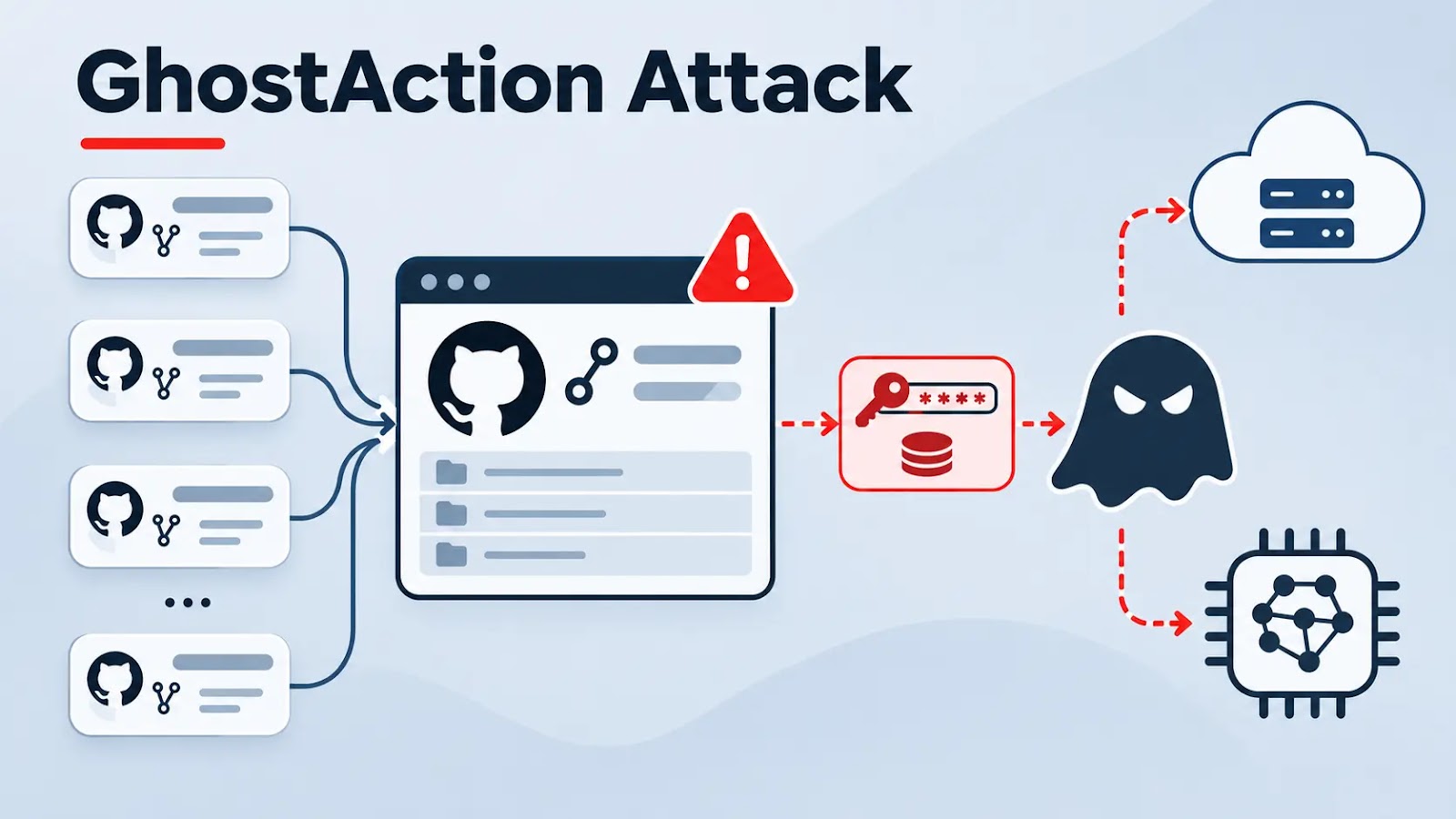
GhostAction Attack Hits Tens of Thousands of GitHub Repositories to Steal Cloud and AI Credentials

A new wave of the GhostAction supply chain campaign has pushed a credential-stealing GitHub Actions workflow into tens of thousands of repositories. It now hunts for cloud and AI keys buried in source code and git history, in addition to CI/CD secrets. Socket says it has identified more than 500 GitHub accounts that committed the […]

The post GhostAction Attack Hits Tens of Thousands of GitHub Repositories to Steal Cloud and AI Credentials appeared first on GBHackers Security | #1 Globally Trusted Cyber Security News Platform.

❌
❌