This week, Dave and Ben look at two AI-related stories. The first involves the recent bankruptcy of Character.AI and the DoJ's privacy concerns related to the sale of AI chats. The other story looks at a lawsuit involving ChatGpt being sued after its chatbot allegedly contributed to a woman's seizure.
This week, Dave and Ben look at two AI-related stories. The first involves the recent bankruptcy of Character.AI and the DoJ's privacy concerns related to the sale of AI chats. The other story looks at a lawsuit involving ChatGpt being sued after its chatbot allegedly contributed to a woman's seizure.
This week, Dave and Ben look at how political campaigns are looking to utilize AI chatbots in their campaign messaging efforts alongside another story involving a woman who is facing years in prison after she was a victim of identity theft.
Additionally, Ben meets with Gary Barlet, Illumio’s public sector CTO, to discuss election security.
This week, Dave and Ben look at how political campaigns are looking to utilize AI chatbots in their campaign messaging efforts alongside another story involving a woman who is facing years in prison after she was a victim of identity theft.
Additionally, Ben meets with Gary Barlet, Illumio’s public sector CTO, to discuss election security.
Dutch spies, Russian hackers and Jared Kushner’s iPhone. It sounds like the ingredients for a thriller, but according to claims in a new book the US President's son-in-law may have been hacked twice. Is any of it true, and what does it tell us about the phones in our pockets?
Meanwhile, James Ball explains that of the internet’s most trusted security keys were protected by numbers so small that one of them was... four. Yes, "4". And then, of course, to make the week worse we suffered a PHPoca
Dutch spies, Russian hackers and Jared Kushner’s iPhone. It sounds like the ingredients for a thriller, but according to claims in a new book the US President's son-in-law may have been hacked twice. Is any of it true, and what does it tell us about the phones in our pockets?
Meanwhile, James Ball explains that of the internet’s most trusted security keys were protected by numbers so small that one of them was... four. Yes, "4". And then, of course, to make the week worse we suffered a PHPocalpyse...
Plus, Chuck Randolph of 360 Privacy explains how the internet has made it scarily easy to put company executives and public officials in danger.
All this and more in episode 490 of the “Smashing Security” podcast with cybersecurity expert and keynote speaker Graham Cluley, and special guest James Ball.
This week, Dave and Ben look at a story that discusses the potential conflict between the next-generation of wearable technology and current state wiretapping laws. The two also look at a recent legal victory for AI coders.
Additionally, Dave meets with Danny Manimbo, the ISO and AI Practice Leader at Schellman, to discuss why companies waiting for AI regulatory clarity are already falling behind.
This week, Dave and Ben look at a story that discusses the potential conflict between the next-generation of wearable technology and current state wiretapping laws. The two also look at a recent legal victory for AI coders.
Additionally, Dave meets with Danny Manimbo, the ISO and AI Practice Leader at Schellman, to discuss why companies waiting for AI regulatory clarity are already falling behind.
This week, Dave and Ben look at two stories with the first involving a recent bill introduced into the US House of Representatives that looks to clarify the confusion around AI liability. The second story involves a court case where an AI generated video was able to sway a judge's opinion.
Additionally, Dave sits down with Garfield Jones, Senior Vice President of Research and Strategy at QuSecure and former CISA Homeland security exec for quantum, to discuss post-quantum migration efforts
This week, Dave and Ben look at two stories with the first involving a recent bill introduced into the US House of Representatives that looks to clarify the confusion around AI liability. The second story involves a court case where an AI generated video was able to sway a judge's opinion.
Additionally, Dave sits down with Garfield Jones, Senior Vice President of Research and Strategy at QuSecure and former CISA Homeland security exec for quantum, to discuss post-quantum migration efforts and the impact that it will have on organizations.
Netskope tracks four XWorm versions in the wild, 46 plugins, and new tools for location, audio and live browser control, with detections up fourfold.
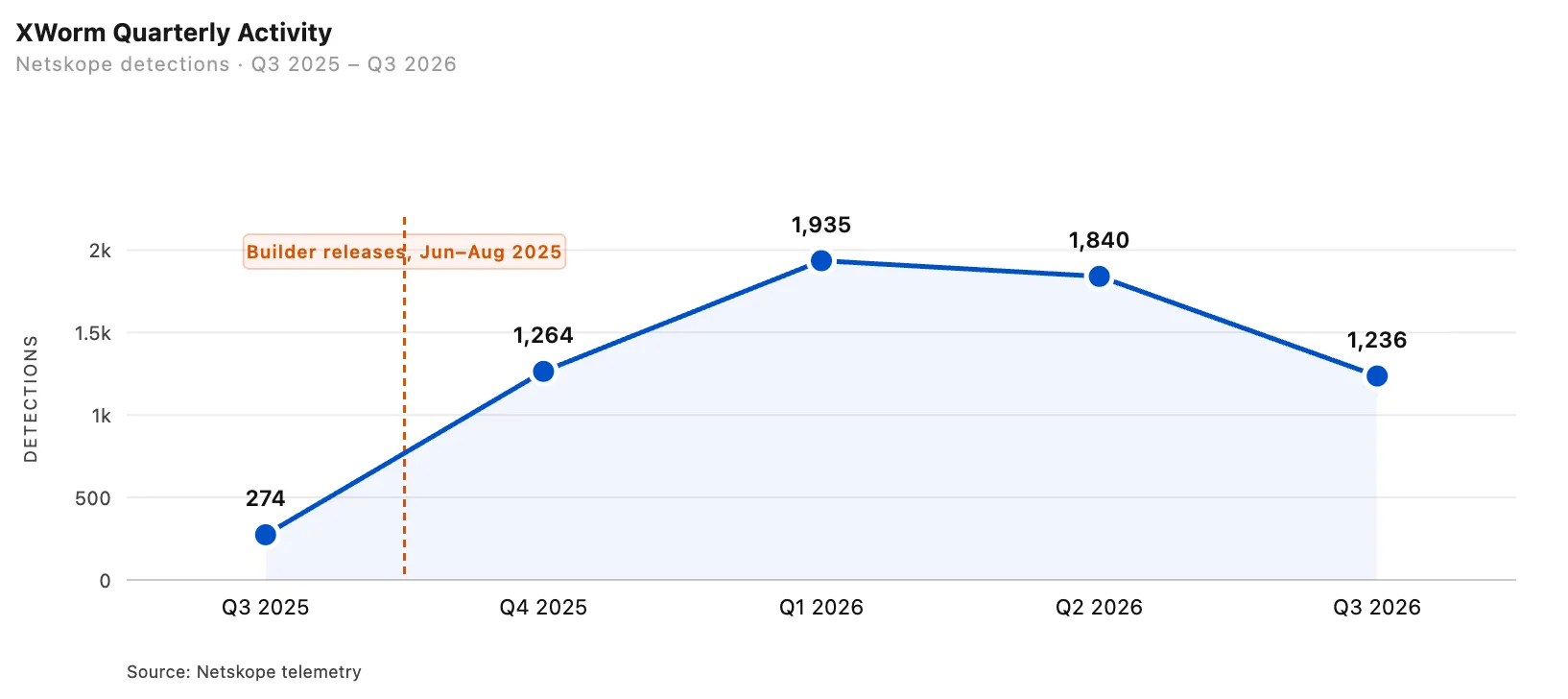
Netskope Threat Labs has been following XWorm since September 2024, and its latest report shows the malware has changed a lot. Over the past year the team identified four distinct versions running at the same time in the wild. Detection volume is still high, with 1,236 events across more than 100 customer organizations in the third quarter of 2
Netskope tracks four XWorm versions in the wild, 46 plugins, and new tools for location, audio and live browser control, with detections up fourfold.
Netskope Threat Labs has been following XWorm since September 2024, and its latest report shows the malware has changed a lot. Over the past year the team identified four distinct versions running at the same time in the wild. Detection volume is still high, with 1,236 events across more than 100 customer organizations in the third quarter of 2026, four times the number from the same quarter in 2025.
The leak fueled the surge. In June 2025, a cracked version of the XWorm builder was released publicly. In August, the source code for a modified version, 6.4, also leaked. These leaks gave XWorm more exposure and helped drive its growth.
Netskope’s data shows how long the impact lasted. Detections more than quadrupled between the third and fourth quarters of 2025. In the first quarter of 2026, they reached seven times the original level and stayed there through the second quarter. Detections fell to 1,236 in the third quarter of 2026, but September alone accounted for 601, matching the monthly average during the peak in the first half of the year.
The victims skew toward money. Financial services make up about 35% of affected customers, and activity is concentrated in India, Brazil, Italy, Panama and the United States.
“The public leak of the V6.4 builder in mid-2025 drove this initial surge, keeping activity consistently above pre-leak baselines ever since.” reads Netskope’s analysis. “The financial services sector accounts for approximately 35% of affected customers, with activity concentrated in India, Brazil, Italy, Panama, and the United States.”
Since Netskope published its report on version 6.0 in July 2025, four new versions of the malware have been discovered: V6.4, V6.5 (“XWorm Reborn”), V7.2, and V7.4. Three of these versions were released after the malware generator tool became publicly available. The number of known plugin features has also increased from 35 to 46. This includes new modules, such as SteamTokenRecovery, Rootkit, ResetSurvival, and Cmstp-Bypass, as well as several plugins that were previously removed in V6.0 but have now been brought back.
Each new version includes small but significant updates:
V6.4 includes file details that link it to celestialproject.org.
V6.5 updates its branding link to c3lestial.fun, adds five new plugins, and introduces a built-in license check for the tool itself.
V7.2 adds stronger code protection to hide its activity, uses six different tricks to avoid running in virtual analysis environments, and disguises its file details as the software Voicemod.
V7.4 introduces a new file delivery system (dropper), uses a technique to bypass Windows security monitoring, switches to a new communication channel for commands, and reinstates license checks.
The surveillance side is where it gets uncomfortable. Netskope says XWorm has moved from an infostealer to a full surveillance platform. Three plugins matter most: Maps, Microphone and HBrowser, and webcam capture is also available on demand.
HBrowser changes how account theft works. Starting with version 6, it gives the operator a live view of the victim’s running browser, relays the operator’s mouse, keyboard and paste actions into it, and streams the screen back. The commands travel over XWorm’s usual encrypted channel and run on the victim’s machine.
This creates a full remote browser session for the attacker. Because every logged-in tab remains open, the attacker can access accounts directly without needing to steal passwords or bypass multi-factor authentication (MFA). Netskope notes that this plugin grants full account access without ever extracting login credentials.
The location-tracking feature bypasses the standard Windows permission prompt. It first modifies a Windows system setting to suppress consent requests, then attempts to fetch precise GPS coordinates within 15 seconds to send to the attacker. If GPS is unavailable, it falls back to IP-based location tracking. Because the modified setting remains in place, future location requests continue to bypass user permission.
“XWorm continues to evolve and has now added surveillance capabilities. It can track geolocation and record the victim’s audio without requesting the victim’s permission.” continues the report. “The HBrowser plugin gives operators direct control of the victim’s live browser session, granting access to accounts without needing to exfiltrate credentials and making MFA irrelevant.”
Microphone does what the name says. It captures audio from any device on the machine, with the operator choosing which one, and streams it back in half-second chunks that are compressed, encoded and encrypted, so audio reaches the operator with about half a second of delay. The microphone stays active for as long as the operator keeps the session open, and both Maps and Microphone run without privilege escalation or a visible prompt.
Netskope expects more of the same. Since the builder and source code were leaked, it expects continued upgrades and use of the toolkit. Its indicators of compromise are on the team’s GitHub, and its protection flags the samples as Gen:Variant.Application.Lazy and Trojan.Generic.
The key lesson for security teams is that multi-factor authentication (MFA) cannot protect accounts once an attacker has already gained access to an active browser session. This vulnerability applies to any account currently logged in on an infected computer.
The HBrowser plugin clearly demonstrates this risk: from the attacker’s perspective, it provides a complete, live remote browser session with full access to open accounts.
“Since its builder and source code were leaked, we expect continued upgrades and use of this toolkit. Netskope Threat Labs will continue to monitor XWorm.” NetSkope concludes.
This week, Dave and Ben look at two court cases where one involves a judge ruling that law enforcement's use of Flock cameras was unconstitutional and another where the AI chat logs were used as evidence to levy felony charges. Additionally, Dave sits down with Meredith Burkart, Senior Director of Government Affairs and Public Policy at Halcyon, to discuss how ransomware attacks could be considered as acts of terrorism.
This week, Dave and Ben look at two court cases where one involves a judge ruling that law enforcement's use of Flock cameras was unconstitutional and another where the AI chat logs were used as evidence to levy felony charges. Additionally, Dave sits down with Meredith Burkart, Senior Director of Government Affairs and Public Policy at Halcyon, to discuss how ransomware attacks could be considered as acts of terrorism.
This week, Dave and Ben look at the recent court ruling which has supported the Trump administration's reclassification that Anthropic was a supply chain risk. Additionally, the two look at how AI chat prompts are being increasingly used for gathering evidence for AI-related investigations.
This week, Dave and Ben look at the recent court ruling which has supported the Trump administration's reclassification that Anthropic was a supply chain risk. Additionally, the two look at how AI chat prompts are being increasingly used for gathering evidence for AI-related investigations.
A store in Auckland vibe-coded itself a new website. Within hours, its inventory had somehow expanded to include a pair of crusty socks, an $850 banana, and all of New Zealand's national parks. What could possibly have gone wrong?
Meanwhile, a hacker collective backed a truck into one of the license-plate-reading Flock safety cameras popping up on American street corners, and took a very close look inside.
All this and more in episode 486 of the "Smashing Security" podcast with cybersecuri
A store in Auckland vibe-coded itself a new website. Within hours, its inventory had somehow expanded to include a pair of crusty socks, an $850 banana, and all of New Zealand's national parks. What could possibly have gone wrong?
Meanwhile, a hacker collective backed a truck into one of the license-plate-reading Flock safety cameras popping up on American street corners, and took a very close look inside.
All this and more in episode 486 of the "Smashing Security" podcast with cybersecurity expert and keynote speaker Graham Cluley, and special guest Dave Bittner.
This week, Dave and Ben sit down to look at a recent court ruling which has rejected limits on cell phone border searches. Additionally, the two look at another case where a woman was falsely accused of bank robbery after an AI facial recognition system misidentified her and is now suing for $10 million.
This week, Dave and Ben sit down to look at a recent court ruling which has rejected limits on cell phone border searches. Additionally, the two look at another case where a woman was falsely accused of bank robbery after an AI facial recognition system misidentified her and is now suing for $10 million.
UK, US, and Dutch agencies expose Chosen Brick, Iranian malware used to track and harass dissidents, journalists, and activists via Telegram.
The UK, the US, and the Netherlands published a joint advisory warning about a Windows malware family, dubbed Chosen Brick, that Iran’s intelligence services use to track down dissidents, journalists, and activists, and the stakes for the people on the receiving end go well beyond a locked file server.
“CHOSEN BRICK is a malware family that has been
UK, US, and Dutch agencies expose Chosen Brick, Iranian malware used to track and harass dissidents, journalists, and activists via Telegram.
The UK, the US, and the Netherlands published a joint advisory warning about a Windows malware family, dubbed Chosen Brick, that Iran’s intelligence services use to track down dissidents, journalists, and activists, and the stakes for the people on the receiving end go well beyond a locked file server.
“CHOSEN BRICK is a malware family that has been used to target individuals around the world including in the UK, US and the Netherlands from at least 2025. CHOSEN BRICK enables Iranian state cyber actors to collect information on a target’s contacts, emails and social media messages, which could enable tracking of their movements.” reads the advisory. “Iran almost certainly uses cyber activity to support the repression of individuals who are seen as a threat to the regime, such as dissidents, activists and journalists.”
The advisory was issued jointly by the UK’s National Cyber Security Centre, the FBI, and the Netherlands’ AIVD. The three agencies gave a name to malware activity that security researchers had already been tracking under different names.
This is not the first time Iranian state-linked actors have used Telegram-based malware against the Iranian diaspora. In March, the FBI reported that Iranian actors had been using Telegram as command infrastructure to target dissidents, with activity dating back to late 2023. The latest advisory adds a formal name, a joint attribution, and a more detailed look at how the malware operates.
Iran has repeatedly used cyber operations to target people it considers a threat to the regime, including dissidents, activists and journalists. Iranian intelligence services have also been linked to plots involving the kidnapping or killing of perceived opponents abroad. For victims of CHOSEN BRICK, the risk may extend beyond cyber intrusion.
Personal information belonging to some victims has reportedly appeared on pro-Iranian leak sites, potentially exposing them to further harassment, intimidation or physical threats. The publication of such data could increase the risks faced by individuals already targeted by Iranian actors.
” In some cases, the Iranian intelligence services have plotted to kidnap or conduct lethal operations against individuals internationally, who they perceive as enemies of the regime.” continues the advisory.
Stolen personal data from CHOSEN BRICK victims has also shown up on pro-Iranian leak sites, turned into a harassment tool rather than just an intelligence asset.
That combination changes the calculus for defenders. A compromised laptop is normally a data problem. Here, it can become a physical safety problem for the person who owns it.
The attack starts on a messaging app, not an email inbox. Operators build rapport with a target over WhatsApp or Telegram first, sometimes for a while, before ever sending a file.
Iranian cyber actors first contacted targets through social messaging apps, spending time building trust before attempting to deliver malware. Their social engineering was tailored to each victim and relied on detailed information gathered during prior research.
In some cases, the attackers pretended to be someone the target already knew, making the approach appear legitimate. In others, they posed as technical support staff from the messaging platform. This combination of reconnaissance, impersonation and trusted communication channels helped make the malicious messages more convincing and increased the chances of successful infection.
“Iranian cyber actors engaged with targets via social messaging applications to build rapport prior to attempting to deliver the malware. The nature of the social engineering varies between targets and uses extensive target knowledge from research conducted in preparation (T1589).” the agencies state. “The actor often purports to be an individual previously known to the target or technical support from the social messaging platform (T1566.003).”
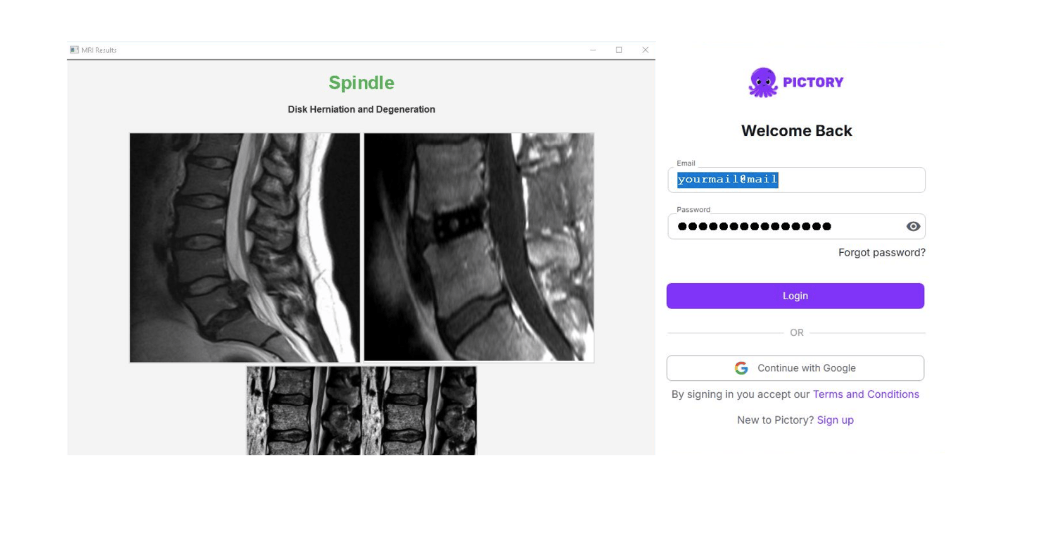
The lure files themselves are dressed up as things a target would plausibly want to open: fake installers for Pictory, RunwayML, Norton Antivirus, Telegram itself, Adobe Flash Player, or KeePass. Other versions arrive disguised as MRI scan results, which is a particularly grim way to earn someone’s click. Whatever the disguise, the file shows a convincing decoy screen while the real payload installs quietly in the background.
The attackers also have a backup plan. They usually target a victim’s work device first, but if the initial attempt fails or they think they may be detected, they try to move the attack to a personal device. They may ask the victim to open the file on their own phone or computer, bypassing the security controls protecting the work device.
A company can tightly secure an employee’s work laptop, but it has much less control over the personal devices they use every day.
Whatever the file is supposed to contain, it shows the victim a realistic-looking screen related to the topic, helping the attackers maintain the deception. In the background, the file downloads and runs the main malware component, which the NCSC tracks as CHOSEN BRICK. This gives the attackers control over the compromised device. So far, all observed attacks have targeted Windows systems.
Corporate IT can lock down a work laptop all it wants. It has no say over the phone in someone’s pocket.
CHOSEN BRICK has only ever been seen hitting Windows machines. It sets up persistence through a registry Run key so it survives a reboot, and it tries to add its own exclusions to Microsoft Defender to keep from getting flagged.
The malware uses Telegram for command and control, with each infected device linked to its own Telegram bot ID. This keeps victims separated and makes investigations more difficult. Newer versions also use HTTPS or SOCKS5 proxies, adding another layer between the malware and network monitoring.
The malware sends stolen data through Telegram bots and cloud storage services such as VultrObjects and StorjShare. It can also download and install additional malware when attackers want more access.
“Files and collected data are exfiltrated through a combination of the Telegram bot (T1041) and through the use of cloud object stores such as VultrObjects and StorjShare (T1567.002). Recent variations in this malware family include the use of HTTPS/SOCKS5 proxies to obscure the use of Telegram bots (T1090.002).” states the report. “If the malware is instructed by the cyber actor to download additional malware it is written to disk in a configurable location.”
The new payload is saved using the same persistence method as the main malware. One sample used the path C:\Windows \SysWOW64, with an unusual space after “Windows.”
The unusual space after “Windows” creates a non-standard folder path that is not normally found on Windows systems. According to the NCSC, the attackers deliberately created this location to deploy their malware. It is a small but effective trick: the path looks legitimate at first glance, but it can bypass security rules or allowlists that only recognize standard Windows folders.
Once running, CHOSEN BRICK can collect a wide range of data, including screenshots, microphone audio, WhatsApp and Telegram chats stored in browsers, emails and system information. It can also delete files and even wipe the entire system. So far, researchers have not seen it spread laterally on its own. However, because it can download and run additional payloads, attackers could manually expand their access if a compromised device is considered valuable.
The malware also has two distinctive fingerprints. Researchers repeatedly found the mutex names “ytyjyujyu” and “noi672pp434awkc12f” in samples. These unusual strings could help security teams identify CHOSEN BRICK during threat hunting.
In March, the FBI also published a FLASH notice focused specifically on how Iranian state-backed actors lean on Telegram as C2 infrastructure, which pairs well with the NCSC’s broader writeup.
If you’re hunting for this on your own network, a few domains are worth flagging when they show up unexpectedly in DNS or proxy logs: api.telegram.org, backblazeb2.com, vultrobjects.com, storjshare.io, iproyal.com, and lightningproxies.net. None of these are malicious on their own, which is exactly why the malware picked them. It’s the context that matters, not the domain name.
On the registry side, check HKCU\Software\Microsoft\Windows\CurrentVersion\Run for anything unfamiliar. Previously observed malicious entries used value names like “SMQDService” and “winappx,” though the advisory is careful to note these names will change and shouldn’t be treated as fixed indicators.
The recommended defenses are straightforward. Users should avoid installing software from links or attachments, keep applications updated, use active antivirus protection, and take SmartScreen warnings seriously. Organizations should also use phishing-resistant MFA, application allowlisting, email security and endpoint monitoring, while checking the published indicators against their own logs.
One important point concerns personal devices. Attackers may switch to a victim’s phone when security controls block access to a work laptop. Organizations protecting high-risk users, including journalists, activists and NGO workers, should therefore also provide security guidance for personal devices. Protecting only the corporate laptop may leave the device attackers target next exposed.
Researchers wanted to test if LG's smart TVs come with any security risks - but their lawyers noticed a snag: the terms and conditions would forbid it. So they came up with a solution. They got plastered before setting up the TV, on the reasoning that you can't be legally bound to a contract you agreed to while drunk. What they discovered will make you look at your TV rather differently...
Meanwhile, awful Android malware with the audacious name "Awesome" (in Indonesian) is doing the rounds,
Researchers wanted to test if LG's smart TVs come with any security risks - but their lawyers noticed a snag: the terms and conditions would forbid it. So they came up with a solution. They got plastered before setting up the TV, on the reasoning that you can't be legally bound to a contract you agreed to while drunk. What they discovered will make you look at your TV rather differently...
Meanwhile, awful Android malware with the audacious name "Awesome" (in Indonesian) is doing the rounds, stealing your data, demanding a ransom, and then giving you a "jump scare"...
Plus, in our featured interview, Andy Hornegold of Intruder explains why the mid-market is where cybercriminals are having the most fun right now - and how AI is helping attackers get from "first foot in the door" to "full ransomware disaster" in less than a working day.
All this and more in episode 485 of the "Smashing Security" podcast with cybersecurity expert and keynote speaker Graham Cluley, and special guest Lianne Potter.
This week, Dave and Ben sit down with N2K's lead analyst Ethan Cook to look at the growing calls to enact AI regulations both within the US and across the globe. Spurned on by recent model escapes, policymakers and AI developers alike have steadily begun to call for greater legislative oversight; however, the federal government shows little signs of taking meaningful action.
This week, Dave and Ben sit down with N2K's lead analyst Ethan Cook to look at the growing calls to enact AI regulations both within the US and across the globe. Spurned on by recent model escapes, policymakers and AI developers alike have steadily begun to call for greater legislative oversight; however, the federal government shows little signs of taking meaningful action.
This week, Dave and Ben look at how AI and social media are coming under greater regulatory scrutiny. For AI, conversations people are having with their chatbots are beginning to find their way into court cases while Australia looks to continue its crackdown on how social media platforms engage with their users.
This week, Dave and Ben look at how AI and social media are coming under greater regulatory scrutiny. For AI, conversations people are having with their chatbots are beginning to find their way into court cases while Australia looks to continue its crackdown on how social media platforms engage with their users.
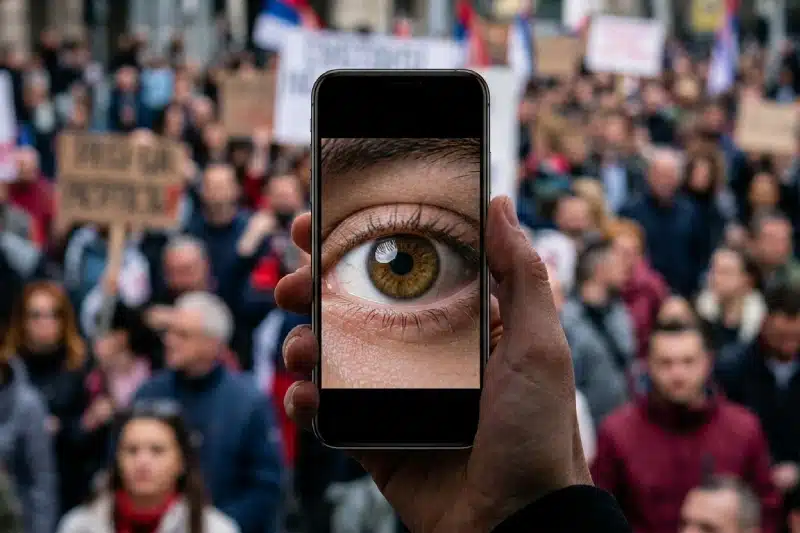
At least 14 people connected to Serbia's student protest movement and opposition politics have been targeted with mercenary spyware since early 2026, the Belgrade-based digital rights organization SHARE Foundation said, in what it called the largest documented wave of such targeting in the country.
The group said the cohort includes student movement members, civil society activists, a member of parliament and a local councilor. Forensic analysis was independently confirmed by the Citizen Lab at
At least 14 people connected to Serbia's student protest movement and opposition politics have been targeted with mercenary spyware since early 2026, the Belgrade-based digital rights organization SHARE Foundation said, in what it called the largest documented wave of such targeting in the country.
The group said the cohort includes student movement members, civil society activists, a member of parliament and a local councilor. Forensic analysis was independently confirmed by the Citizen Lab at the University of Toronto and by Amnesty International's Security Lab.
Citizen Lab, in its own findings, said it verified an infection with NSO Group's Pegasus on the iPhone of a student activist who asked not to be named. High-confidence infection indicators span December 2025 through January 2026, delivered by a zero-click iMessage exploit that required no interaction from the target. Apple has since patched the underlying flaw; the fix shipped in iOS 18.4.1. Pegasus grants an operator access to notes, photographs and messages decrypted on the device, and can silently activate the microphone and camera.
Amnesty's Security Lab confirmed a new variant of NoviSpy, an Android implant first identified in Serbia in 2024, on two additional devices. SHARE said the rebuilt version was designed to evade the detection methods that exposed its predecessor.
The circumstances of two infections are what elevate the findings beyond routine spyware reporting. SHARE said one NoviSpy infection appeared after police seized a student's phone during questioning, and another after private messages from that device were published by a pro-government media outlet. Donncha Ó Cearbhaill, who heads Amnesty's Security Lab, said the evidence suggests "infections are being carried out during detention by Serbian authorities."
Suspicion centers on Serbia's Security Information Agency, or BIA. Amnesty's December 2024 report "A Digital Prison" found earlier NoviSpy samples configured to send collected data to IP addresses associated with BIA servers, and documented the agency's parallel use of Cellebrite extraction tools on journalists and activists. In March 2025, Amnesty reported that two journalists at the Balkan Investigative Reporting Network were targeted with Pegasus.
The current cases surfaced through Apple's threat notification wave of Aug. 13, which reached users in 110 countries. The timing is politically loaded. The targeting overlaps with protests that followed the November 2024 collapse of a railway station canopy in Novi Sad, spans local elections held March 29 in 10 municipalities, and precedes October parliamentary elections widely read as a test of the ruling Serbian Progressive Party.
Ana Toskic Cvetinovic, a legal expert cited in the reporting, noted that deploying intrusive software without judicial authorization is unlawful under Serbian law. SHARE published an analysis of the domestic legal framework in January arguing the same. Criminal complaints filed over the 2024 cases remain pending before Serbian courts, with no resolution.
NSO has been on the U.S. Commerce Department's Entity List since 2021.
Serbia is an accession candidate, the European Parliament has previously questioned the Commission over unlawful spyware use in the country, and the Commission published its 2026 enlargement country report in July. Amnesty's submission for that package raised surveillance directly.
Both groups urged at-risk users to enable Lockdown Mode on iOS or Advanced Protection on Android.
This week, Dave and Ben look at two major AI stories. The first involves Anthropic winning one of its legal challenges regarding the Pentagon designating the company as a supply chain risk. The second story looks at a recent law introduced in Congress that seeks to give CISA the power to force AI kill switch adoption.
This week, Dave and Ben look at two major AI stories. The first involves Anthropic winning one of its legal challenges regarding the Pentagon designating the company as a supply chain risk. The second story looks at a recent law introduced in Congress that seeks to give CISA the power to force AI kill switch adoption.
This week, Dave and Ben look at California's latest effort to restrict social media companies further by banning design features that are considered harmful to minors. Additionally, the two discuss recent calls on the Maryland government to investigate data brokers which could be violating state privacy laws.
This week, Dave and Ben look at California's latest effort to restrict social media companies further by banning design features that are considered harmful to minors. Additionally, the two discuss recent calls on the Maryland government to investigate data brokers which could be violating state privacy laws.
A cybersecurity expert has demonstrated how computer-generated patterns can successfully prevent surveillance cameras from detecting vehicles - such as the controversial AI-powered Flock licence plate readers that are becoming increasingly common on American streets.
Read more in my article on the Hot for Security blog.
A cybersecurity expert has demonstrated how computer-generated patterns can successfully prevent surveillance cameras from detecting vehicles - such as the controversial AI-powered Flock licence plate readers that are becoming increasingly common on American streets.
Read more in my article on the Hot for Security blog.
Federal court records show how far the FBI’s Pegasus review progressed — and why new US spyware reporting will still leave major gaps in government hacking transparency.
The post FBI Pegasus Records Expose a Blind Spot in US Spyware Oversight appeared first on TechRepublic.
Federal court records show how far the FBI’s Pegasus review progressed — and why new US spyware reporting will still leave major gaps in government hacking transparency.
U.S. courts will begin separately tracking spyware-based interceptions, giving the public new data on government hacking while leaving key gaps.
The post US Courts To Begin Publishing Spyware Records From 2029 appeared first on TechRepublic.

 Entrar