❌

Visualização normal

Antes de ontemCybersecurity News
  • ✇Firewall Daily – The Cyber Express
  • Ransomware Attacks on Hospitals and Businesses Lead to 70-Month Sentence Samiksha Jain
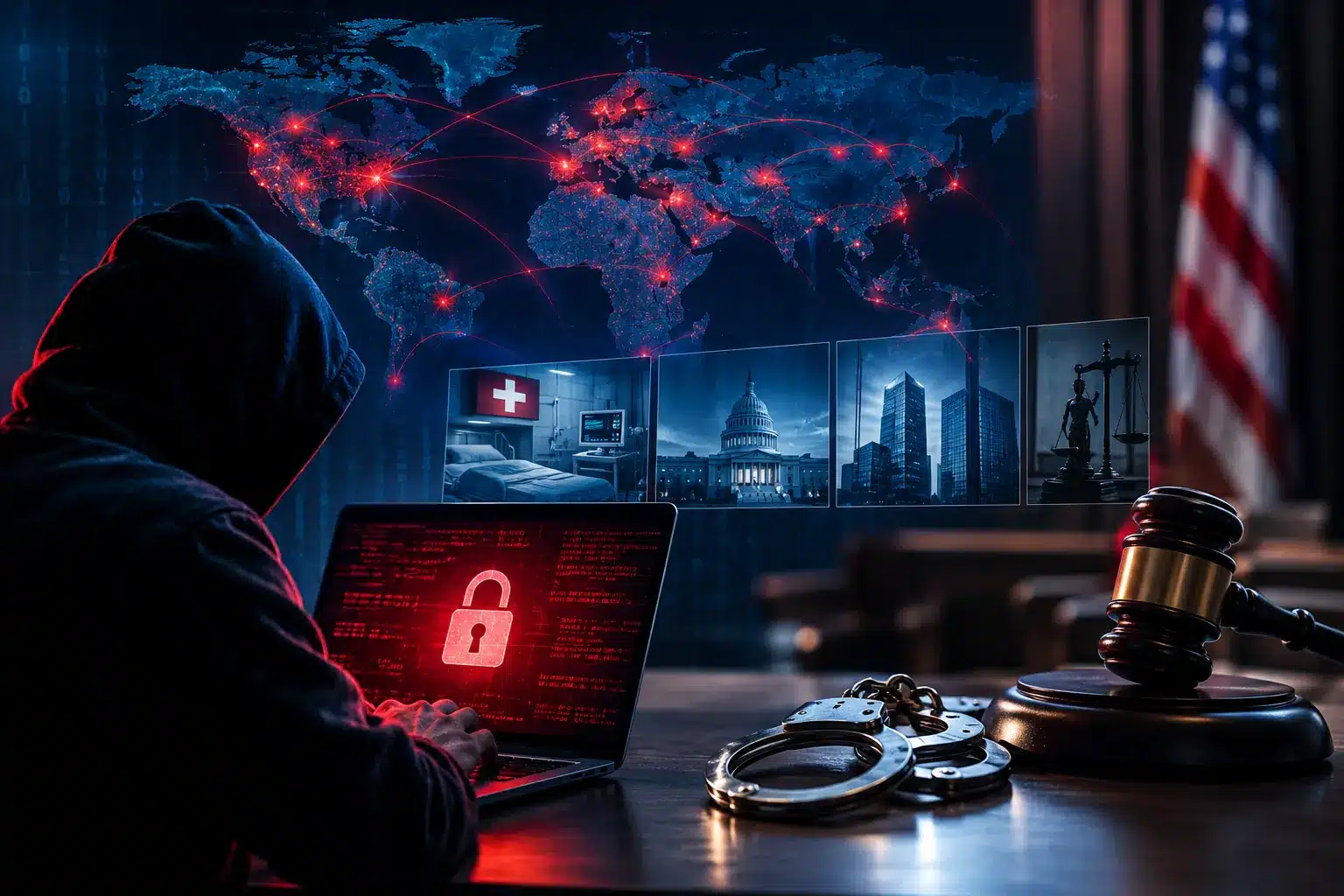
    A Ukrainian ransomware affiliate has been sentenced to 70 months in prison for participating in cyberattacks against hospitals, businesses, law firms and government entities across multiple countries. Artem Stryzhak, 36, was sentenced in the United States for his role in ransomware conspiracies linked to more than $100 million in losses, according to the U.S. Department of Justice (DOJ). Stryzhak worked with the Nefilim ransomware and Hive ransomware groups, targeting computer network
     

Ransomware Attacks on Hospitals and Businesses Lead to 70-Month Sentence

29 de Outubro de 2026, 05:57

Ukrainian ransomware affiliate

A Ukrainian ransomware affiliate has been sentenced to 70 months in prison for participating in cyberattacks against hospitals, businesses, law firms and government entities across multiple countries. Artem Stryzhak, 36, was sentenced in the United States for his role in ransomware conspiracies linked to more than $100 million in losses, according to the U.S. Department of Justice (DOJ). Stryzhak worked with the Nefilim ransomware and Hive ransomware groups, targeting computer networks and disrupting operations across different sectors. The attacks included incidents affecting healthcare providers during the COVID-19 pandemic, when hospitals faced disruptions to their ability to access digital systems and treat patients.

Ukrainian Ransomware Affiliate Linked to Two Groups

According to court documents, Stryzhak joined the Nefilim ransomware operation around June 2021 as an affiliate. He received access to the group's ransomware under an arrangement with administrator Volodymyr Tymoshchuk and agreed to pay the administrators 20% of the ransom proceeds collected from victims. One documented attack took place in June 2021, when Stryzhak stole data from a company operating in the oil and gas transportation industry. About a week later, he created email addresses that were incorporated into a ransom note sent to the company. The attackers used ransomware to encrypt victims' files and demanded payment. If a victim paid, the perpetrators provided a decryption key to restore access to the locked data. Stryzhak remained involved in the Nefilim conspiracy until at least October 2021, court records state. He separately joined the Hive ransomware group as one of its earliest affiliates. Between June 2021 and January 2023, Hive conspirators attacked approximately 1,500 victims worldwide, including government entities, hospitals and businesses.

Hive Ransomware Attacks Disrupted Hospital Operations

The Hive ransomware operation caused significant disruption to organizations, including healthcare facilities responding to the COVID-19 pandemic. According to the DOJ, one hospital targeted by the group had to stop relying on digital technology to treat existing patients and was temporarily unable to accept new patients immediately following the attack. As a Hive affiliate, Stryzhak and his co-conspirators deployed ransomware against seven victims. These included law firms, a dental office and a healthcare provider during the pandemic. The attacks left victims unable to access encrypted data, affecting their day-to-day operations. The FBI had previously conducted a months-long disruption campaign against Hive. During that effort, investigators obtained a decryption key and provided it to one of Stryzhak's victims, enabling the organization to recover its encrypted data without paying a ransom.

FBI Investigation Spanned Multiple Countries

The investigation involved several FBI field offices and international law enforcement partners. The FBI Springfield Field Office investigated the Nefilim ransomware case, while the FBI Tampa Field Office investigated the Hive operation. The FBI's New York Field Office, the Justice Department's Office of International Affairs and Spanish law enforcement authorities also assisted in locating, arresting and extraditing Stryzhak. He was arrested in Spain in June 2024 and extradited to the United States in April 2025. In December 2025, he pleaded guilty to two counts of conspiracy involving fraud, extortion and related activity connected to computers. The sentence follows a broader effort by U.S. authorities to pursue ransomware affiliates and their associates, including individuals operating outside the country.

$11 Million Reward Offered for Co-Conspirator

Authorities are continuing to seek Volodymyr Viktorovych Tymoshchuk, identified by prosecutors as Stryzhak's co-conspirator and a ransomware developer. The U.S. Department of State's Transnational Organized Crime Rewards Program is offering up to $11 million for information leading to Tymoshchuk's arrest and/or conviction or location. Individuals with information can contact the FBI at +1-917-242-1407, email TymoTips@fbi.gov, contact a local FBI field office in the United States or approach the nearest U.S. Embassy overseas. The DOJ's Computer Crime and Intellectual Property Section, which investigates and prosecutes cybercrime in coordination with domestic and international partners, has secured more than 180 convictions involving cybercrime and intellectual property offenses since 2020. The department also reports obtaining court orders for the return of more than $350 million in victim funds during that period. Stryzhak's sentence highlights the consequences for individuals who participate in ransomware operations that target critical services and businesses. The investigation into his alleged co-conspirators remains ongoing.
  • ✇Firewall Daily – The Cyber Express
  • FBI, CISA Warn SafePay Ransomware Has Hit 600+ Victims Samiksha Jain
    The FBI, CISA and international partners have issued a warning about SafePay ransomware, a group that has impacted at least 600 victims across multiple critical infrastructure sectors since August 2024. Published on October 20, 2026, the joint cybersecurity advisory describes SafePay as among the most active ransomware groups in 2026, with operations affecting organizations in North America, South America, Europe and Australia. The advisory was released by the FBI, the Cybersecurity and Infrastr
     

FBI, CISA Warn SafePay Ransomware Has Hit 600+ Victims

22 de Outubro de 2026, 03:52

SafePay ransomware

The FBI, CISA and international partners have issued a warning about SafePay ransomware, a group that has impacted at least 600 victims across multiple critical infrastructure sectors since August 2024. Published on October 20, 2026, the joint cybersecurity advisory describes SafePay as among the most active ransomware groups in 2026, with operations affecting organizations in North America, South America, Europe and Australia.

The advisory was released by the FBI, the Cybersecurity and Infrastructure Security Agency (CISA), the United States Secret Service, Germany’s Landeskriminalamt Rheinland-Pfalz, the United Kingdom’s National Crime Agency and the UK’s North West Regional Organised Crime Unit. It draws on investigations conducted as recently as August 2026.

How SafePay Ransomware Gains Initial Access

According to the agencies, SafePay actors break into networks by stealing or guessing passwords, running brute force attacks, using phishing and exploiting VPN access. The group uses IP addresses from the VPN provider Mullvad and phished account profiles to exploit two flaws in edge devices: CVE-2020-3259 and CVE-2023-20269.

The actors also use automated scripts to exploit three vulnerabilities in internet-exposed systems: CVE-2023-27532, CVE-2024-40711 and CVE-2024-40766.

Living Off the Land Inside Victim Networks

Once inside, SafePay actors establish persistence by gaining administrative privileges on existing accounts or creating new ones. They rely on built-in tools such as PsExec, Windows Remote Management and Remote Desktop Protocol to execute commands and move laterally.

To find valuable files, the group has used ShareFinder.ps1 and SharpShares.exe to enumerate network shares. Before moving laterally, the actors commonly disable security software. In some cases, they changed system users’ passwords, locking legitimate users out. The advisory also notes the use of a User Account Control bypass, token impersonation and the credential dumper Mimikatz.

Data Exfiltration Before Encryption

Data exfiltration is a central part of the group’s playbook. SafePay actors compress files using 7-Zip, WinRAR, FileZilla and RClone, then move stolen data out through WinSCP, RClone, OneDrive and the Backblaze command-line tool b2.exe. Remote desktop tools such as AnyDesk and TeamViewer have been installed to transfer ransomware onto victim systems.

To block recovery, the actors halt the Volume Shadow Copy Service and reset network attached storage holding backups to factory settings.

Files are then encrypted using a hybrid scheme combining the ChaCha20 stream cipher with RSA public-key cryptography. Encrypted files carry the .SafePay extension and, according to the advisory, cannot be recovered without the decryption key.

The group typically demands a portion of company revenue in cryptocurrency. A ransom note left on the desktop or root directory directs victims to a TOR chat portal, using a victim ID to log in. A representative also makes phone calls to pressure victims. If payment is refused, stolen data is posted to SafePay’s leak site. The ransomware may delete itself after encryption.

SafePay Ransomware Advisory: Recommended Defenses

To reduce the risk of ransomware attacks from SafePay, the agencies urge organizations to prioritize patching known exploited vulnerabilities, especially on firewalls and other internet-facing systems. They recommend requiring multifactor authentication for webmail, VPNs and accounts that access critical systems.

Other measures include passwords of 15 to 64 characters, account lockouts after failed logins, offline backups that are encrypted and immutable, network segmentation, least privilege access and time-based admin access. The advisory also recommends restricting command-line and scripting permissions.

The advisory lists IP addresses, file names, hashes and hostnames observed between November 2024 and August 2026. The agencies advise verifying these indicators before blocking, as some IP addresses may later be reassigned to benign services.

The authoring agencies do not encourage paying ransom, noting payment does not guarantee file recovery. Incidents can be reported to the FBI’s Internet Crime Complaint Center, a local FBI or Secret Service field office, or CISA. In the UK, victims can report through Report Fraud or their local police force.

Cloudflare
Verify you are human
loading
Checking your browser before accessing this site.
Click to verify →
Then you will be redirected to the requested content.
Ray ID: 8f3a2c1b9d4e5f6a · Performance & security by Cloudflare

site-verification-ok

  • ✇Firewall Daily – The Cyber Express
  • Ransomware Kingpin Gets 16 Years for Global Cyberattacks Samiksha Jain
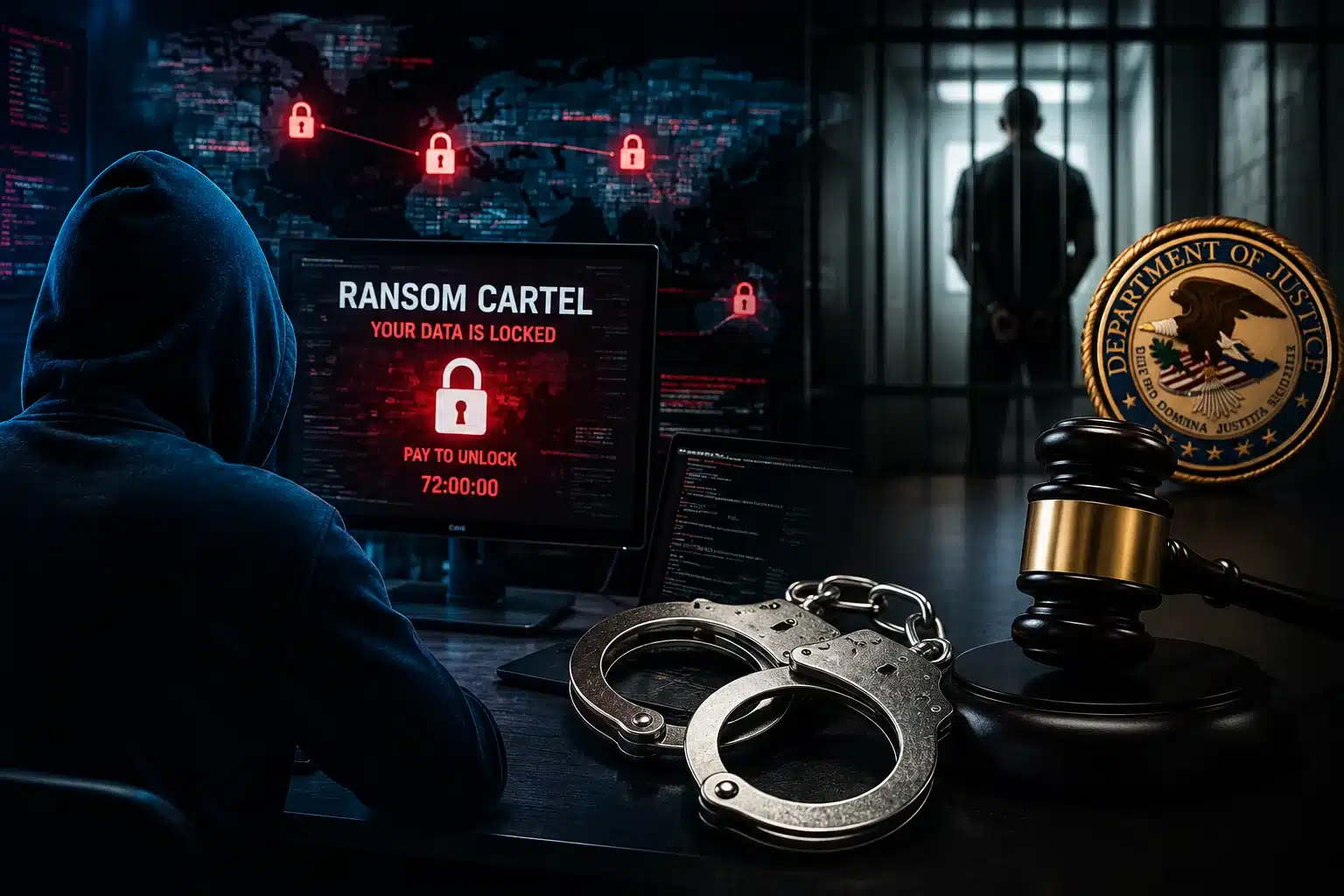
    A Ransom Cartel ransomware leader has been sentenced to 16 years in prison after being convicted of conspiracy to commit offenses against the United States, conspiracy to commit wire fraud, and aggravated identity theft, according to the U.S. Department of Justice. Maksim Silnikau, a 40-year-old Belarusian national, was identified in court documents as the creator and administrator of the Ransom Cartel ransomware strain, which was developed in 2021. Silnikau had been active on Russian-speakin
     

Ransomware Kingpin Gets 16 Years for Global Cyberattacks

10 de Agosto de 2026, 04:54

Ransom Cartel ransomware

A Ransom Cartel ransomware leader has been sentenced to 16 years in prison after being convicted of conspiracy to commit offenses against the United States, conspiracy to commit wire fraud, and aggravated identity theft, according to the U.S. Department of Justice. Maksim Silnikau, a 40-year-old Belarusian national, was identified in court documents as the creator and administrator of the Ransom Cartel ransomware strain, which was developed in 2021. Silnikau had been active on Russian-speaking cybercrime forums since at least 2005 and was also a member of the cybercrime website Direct Connection between 2011 and 2016.

Ransom Cartel Ransomware Operation

Beginning in May 2021, Silnikau developed the ransomware scheme and recruited participants through cybercrime forums. He distributed information and tools to participants, including stolen credentials linked to compromised computers and tools designed to encrypt or lock those systems. Silnikau also maintained a hidden website used by himself and his co-conspirators to monitor and control ransomware operations. According to the court documents, the website provided a platform for the group to communicate with one another, interact with victims, send and negotiate ransom demands, and manage the distribution of funds among the conspirators. The operation targeted companies between 2021 and 2023. During that period, Ransom Cartel ransomware conspirators carried out attacks against at least 18 companies around the world, including organizations based in California, New York, Nebraska, and other countries outside the United States.

Ransomware Attacks Targeted Companies Worldwide

The ransomware attacks involved data theft and monetary demands. The attackers sought payment in exchange for providing keys to unlock stolen data or for promises not to publish the information taken from victims. The operation’s growth was disrupted following Silnikau’s arrest in July 2023. He was later extradited from Poland to face prosecution in the Eastern District of Virginia and the District of New Jersey. The sentencing announcement was made by Theophani K. Stamos, First Assistant U.S. Attorney for the Eastern District of Virginia; Acting Special Agent in Charge Andrew Forrest of the U.S. Secret Service Criminal Investigative Division; Chris Ormerod, Special Agent in Charge of the FBI Kansas City Field Office; and Craig L. Tremaroli, Special Agent in Charge of the FBI Albany Field Office.

Maksim Silnikau Sentenced to 16 Years

The Justice Department’s Office of International Affairs provided substantial assistance with Silnikau’s extradition and the collection of evidence. The U.S. Attorney’s Office for the District of New Jersey and the Computer Crime and Intellectual Property section also assisted with the case. Assistant U.S. Attorney Jonathan S. Keim and former Assistant U.S. Attorney Zoe Bedell prosecuted the case. The 16 years in prison sentence follows the disruption of an international ransomware operation that targeted at least 18 companies during its active period. Silnikau’s role, according to court documents, extended across the development and administration of the ransomware strain, recruitment of participants, provision of attack tools, victim communications, and management of funds generated through the operation.
❌
❌