❌

Visualização normal

Ontem — 7 de Novembro de 2026Malwarebytes
  • ✇Malwarebytes
  • Big Tech sues over California plan to limit kids’ scrolling
    .kadence-column485324_750a90-49 > .kt-inside-inner-col{padding-top:20px;padding-right:20px;padding-bottom:10px;padding-left:20px;}.kadence-column485324_750a90-49 > .kt-inside-inner-col{column-gap:var(--global-kb-gap-sm, 1rem);}.kadence-column485324_750a90-49 > .kt-inside-inner-col{flex-direction:column;}.kadence-column485324_750a90-49 > .kt-inside-inner-col > .aligncenter{width:100%;}.kadence-column485324_750a90-49 > .kt-inside-inner-col{background-color:rgba(255, 229, 229, 0.8
     

Big Tech sues over California plan to limit kids’ scrolling

6 de Novembro de 2026, 12:06
.kadence-column485324_750a90-49 > .kt-inside-inner-col{padding-top:20px;padding-right:20px;padding-bottom:10px;padding-left:20px;}.kadence-column485324_750a90-49 > .kt-inside-inner-col{column-gap:var(--global-kb-gap-sm, 1rem);}.kadence-column485324_750a90-49 > .kt-inside-inner-col{flex-direction:column;}.kadence-column485324_750a90-49 > .kt-inside-inner-col > .aligncenter{width:100%;}.kadence-column485324_750a90-49 > .kt-inside-inner-col{background-color:rgba(255, 229, 229, 0.83);}.kadence-column485324_750a90-49 > .kt-inside-inner-col:before{opacity:0.3;}.kadence-column485324_750a90-49{position:relative;}@media all and (max-width: 1024px){.kadence-column485324_750a90-49 > .kt-inside-inner-col{flex-direction:column;justify-content:center;}}@media all and (max-width: 767px){.kadence-column485324_750a90-49 > .kt-inside-inner-col{flex-direction:column;justify-content:center;}}

In this article

  • California wants to switch off autoplay and personalized feeds for under-16s.
  • Google, Meta, and TikTok are suing to stop the restrictions.
  • Age checks could raise privacy concerns for adults, too.

Google, Meta, and TikTok filed separate federal lawsuits on November 4, challenging Assembly Bill 1709, which Governor Gavin Newsom signed in September.

The companies argue that the law, due to take effect in 2027, interferes with free speech, overrides parents’ decisions, and conflicts with federal protections for online platforms.

AB 1709 prohibits covered platforms from providing California users under 16 certain

“psychologically exploitative features intended to maximize engagement that foreseeably lead to compulsive use.”

The law specifically includes personalized “addictive feeds” and autoplay. It also allows the attorney general to define additional features through regulations.

It would not ban children from using the platforms. They can keep their accounts if the platform removes the restricted features. Otherwise, the platform must delete the account and associated personal information.

The law also requires age verification before providing the restricted features. The law doesn’t stop children from searching for videos, following creators, or communicating privately. It makes exceptions for certain search-based results, content that a user explicitly requests, and direct private messages, subject to conditions.

California’s argument is that harm is not limited to what children see. It can also arise from how a service encourages them to keep using it, through personalized recommendations and features such as autoplay.

The idea behind the law is straightforward: Instead of relying entirely on teenagers to recognize when to stop, require platforms to remove some of the mechanisms designed to keep them engaged.

The companies’ objections

The companies’ objections fall into several related categories.

Meta argues that deciding which posts to show, and how to arrange them, is protected editorial judgment under the First Amendment. Its complaint accuses California of attempting to appoint itself the

“editor, curator, and controller of online speech.”

TikTok makes a similar argument about its For You feed. It says selecting and arranging videos creates a curated product protected by free-speech rights, not merely a mechanism that the state can redesign at will.

Google likewise argues that YouTube’s recommendations help users find relevant, appropriate material among its vast collection of videos. It also defends autoplay as useful for watching content intended to be viewed in sequence.

The central disagreement is whether these are harmful product features that California can regulate, or editorial decisions protected by free-speech rights. California describes them as potentially harmful product design; the companies describe them as protected decisions about publishing speech.

The companies also raise parental control. Google says parents are best placed to decide what is appropriate for their families. TikTok points to its existing teen-account safeguards and Family Pairing controls, arguing that the law restricts free expression while taking decisions away from parents. Meta adds that personalized features can help deliver age-appropriate experiences.

The business model

There is also a commercial interest at stake: engagement. How often people return, how long they stay, and how much they interact all matter to the platforms’ businesses.

Meta’s annual report says it generates substantially all its revenue from advertising. It also says that changes to its content displays and product features can affect time spent, user engagement, and financial results. That doesn’t establish why the companies sued, but it helps explain why restrictions on recommendations and autoplay could have financial consequences.

If removing these features leads people to spend less time on a service, it could mean fewer opportunities to show ads. Compliance would also require product and operational changes, such as checking users’ ages and providing a different experience to those under 16.

Youth is the future. Big Tech is very much aware of this. Meta’s annual report identifies youth as an investment priority and describes attracting and retaining users as a competitive objective. Restrictions affecting how young people join and use a platform could affect its longer-term audience strategy, too.

What the future will bring

California is challenging an important part of the attention-based business model. Meta’s annual report warns investors that regulation affecting how it displays content or serves younger users could affect user growth, engagement, and financial results.

And then there’s the matter of age verification. The required age checks could affect adults as well as children: a service must verify users’ ages before providing the restricted features. Depending on how the checks work, this could involve sharing age-related information, raising privacy concerns and creating another opportunity for sensitive data to be exposed in a breach.

If it were up to me, platforms would stop designing for compulsive use, whatever the user’s age. Adults deserve a healthier online experience too. Applying those protections to everyone would also remove the need to check someone’s age before deciding whether they can use these features. Platforms might lose some advertising opportunities, but time spent online should not be the only measure of a successful service.


Scammers don’t need to hack you. They just need you to click once. 

Malwarebytes Identity Theft Protection catches suspicious activity before it becomes a problem.
Antes de ontemMalwarebytes
  • ✇Malwarebytes
  • A hidden backdoor put 1.3 million TV boxes to work for criminals
    .kadence-column484175_1ef361-88 > .kt-inside-inner-col{padding-top:20px;padding-right:20px;padding-bottom:10px;padding-left:20px;}.kadence-column484175_1ef361-88 > .kt-inside-inner-col{column-gap:var(--global-kb-gap-sm, 1rem);}.kadence-column484175_1ef361-88 > .kt-inside-inner-col{flex-direction:column;}.kadence-column484175_1ef361-88 > .kt-inside-inner-col > .aligncenter{width:100%;}.kadence-column484175_1ef361-88 > .kt-inside-inner-col{background-color:rgba(255, 229, 229, 0.8
     

A hidden backdoor put 1.3 million TV boxes to work for criminals

3 de Novembro de 2026, 11:11
.kadence-column484175_1ef361-88 > .kt-inside-inner-col{padding-top:20px;padding-right:20px;padding-bottom:10px;padding-left:20px;}.kadence-column484175_1ef361-88 > .kt-inside-inner-col{column-gap:var(--global-kb-gap-sm, 1rem);}.kadence-column484175_1ef361-88 > .kt-inside-inner-col{flex-direction:column;}.kadence-column484175_1ef361-88 > .kt-inside-inner-col > .aligncenter{width:100%;}.kadence-column484175_1ef361-88 > .kt-inside-inner-col{background-color:rgba(255, 229, 229, 0.83);}.kadence-column484175_1ef361-88 > .kt-inside-inner-col:before{opacity:0.3;}.kadence-column484175_1ef361-88{position:relative;}@media all and (max-width: 1024px){.kadence-column484175_1ef361-88 > .kt-inside-inner-col{flex-direction:column;justify-content:center;}}@media all and (max-width: 767px){.kadence-column484175_1ef361-88 > .kt-inside-inner-col{flex-direction:column;justify-content:center;}}

In this article

  • Google says Videostrong backdoored 1.3 million certified Android TV boxes and sold criminals access to the botnet.
  • The takedown disrupted the botnet, but the backdoor remains in infected boxes’ firmware.
  • Suspect your box? Disconnect it and ask the seller about a fix or replacement.

Most malware needs you to click something. This one came in the box.

Google’s Threat Intelligence Group (GTIG) says it has high confidence that Android device maker Videostrong Technology built and ran the XCPE backdoor for financial gain. Videostrong sold access to criminal affiliates, who loaded their own malware modules onto the boxes.

GTIG found that the backdoor, called x.cpe (or com.oemservice in some builds), sits in the firmware with system-level privileges. If someone uninstalls it, it reinstalls itself from the /oem/ partition when the device reboots. It could also switch off Google Play Protect app verification, allowing it to install more software without asking.

Google says Videostrong got past its compatibility and security tests by loading the malicious code after the device’s first boot. This allowed the devices to remain part of the residential proxy network.

Residential proxy networks rent out ordinary home IP addresses to customers. That makes their traffic appear to come from a legitimate consumer connection rather than a data center. This can help cybercriminals evade IP-based fraud controls and reputation systems.

The problem for users

Here’s what the backdoored set-top boxes could mean for their owners:

  • Your home internet connection could be used by others. Residential proxy modules routed other people’s traffic through infected boxes and their owners’ home IP addresses.
  • Ad fraud. Modules generated fake ad views and clicks in the background.
  • Spying and remote access to your device. Google observed operators capturing live screenshots, injecting keystrokes, collecting account and device information, and opening reverse shells.
  • More malware. Some affiliate modules were backdoors that could load further modules.
  • Your IP address could be linked to activity you didn’t start. Proxy traffic can include attempts to guess account passwords, for example, and may make your home IP address appear in connection with that activity.

How to stay safe

Google and its partners took legal action to take down the domains and servers Videostrong used to control the botnet. Google says it has banned Videostrong and its future subsidiaries and affiliates from making certified Android devices, and strengthened firmware integrity checks for certified Android TV devices.

The takedown only cuts the current connection to the malicious servers. It doesn’t remove the backdoor from infected devices, and can potentially be exploited by other criminals. If you think your box may be affected, disconnect it and contact the seller or manufacturer to ask for clean firmware or a replacement. Uninstalling the app won’t remove the backdoor from the firmware.

Google hasn’t published a complete list of affected models, so owners may not be able to tell from the model name alone whether their box is infected. If you decide to replace your box:

  • Buy from a reputable manufacturer.
  • Be cautious about “free TV” boxes. We’ve previously reported on Superbox and similar devices.
  • Be cautious about apps that pay you to share your bandwidth. They can route other people’s traffic through your internet connection.
  • Stick to trusted app stores and keep Google Play Protect switched on.
  • Isolate the box. Put TV boxes and other IoT gear on a separate network or VLAN with restricted outbound access. This doesn’t keep the devices themselves safe, but it does keep other devices separate.

Scammers know more about you than you think. 

Malwarebytes Mobile Security protects you from phishing, scam texts, malicious sites, and more. With real-time AI-powered Scam Guard built right in. 

.wp-block-kadence-advancedbtn.kb-btns97520_6de029-2f{gap:var(--global-kb-gap-xs, 0.5rem );justify-content:flex-start;align-items:center;}.kt-btns97520_6de029-2f .kt-button{font-weight:normal;font-style:normal;}.kt-btns97520_6de029-2f .kt-btn-wrap-0{margin-right:5px;}.wp-block-kadence-advancedbtn.kt-btns97520_6de029-2f .kt-btn-wrap-0 .kt-button{color:#555555;border-color:#555555;}.wp-block-kadence-advancedbtn.kt-btns97520_6de029-2f .kt-btn-wrap-0 .kt-button:hover, .wp-block-kadence-advancedbtn.kt-btns97520_6de029-2f .kt-btn-wrap-0 .kt-button:focus{color:#ffffff;border-color:#444444;}.wp-block-kadence-advancedbtn.kt-btns97520_6de029-2f .kt-btn-wrap-0 .kt-button::before{display:none;}.wp-block-kadence-advancedbtn.kt-btns97520_6de029-2f .kt-btn-wrap-0 .kt-button:hover, .wp-block-kadence-advancedbtn.kt-btns97520_6de029-2f .kt-btn-wrap-0 .kt-button:focus{background:#444444;}
ul.menu .wp-block-kadence-advancedbtn .kb-btn97520_074a67-a8.kb-button{width:initial;}.wp-block-kadence-advancedbtn .kb-btn97520_074a67-a8.kb-button{color:var(--color-neutral-10);background:var(--color-brand-blue-60);border-top-left-radius:40px;border-top-right-radius:40px;border-bottom-right-radius:40px;border-bottom-left-radius:40px;padding:var(--kb-btn-padding);margin:var(--kb-btn-margin);box-shadow:1px 1px 2px 0px rgba(0, 0, 0, 0.2);}.wp-block-kadence-advancedbtn .kb-btn97520_074a67-a8.kb-button:hover, .wp-block-kadence-advancedbtn .kb-btn97520_074a67-a8.kb-button:focus{box-shadow:0px 4px 0px 0px var(--color-brand-blue-90);}Try it now
  • ✇Malwarebytes
  • Attackers hijack country-code domains to impersonate Google and other services
    According to Google, attackers compromised infrastructure behind three country-code domain namespaces—.gh (Ghana), .sl (Sierra Leone), and .as (American Samoa)—and used it to obtain unauthorized HTTPS certificates for Google domains and other organizations. These domain endings aren’t limited to sites serving those countries, so the risk can extend to users elsewhere.This wasn’t a break in encryption, and Google’s systems weren’t compromised. Instead, attackers manipulated the internet’s address
     

Attackers hijack country-code domains to impersonate Google and other services

8 de Outubro de 2026, 12:53

According to Google, attackers compromised infrastructure behind three country-code domain namespaces—.gh (Ghana), .sl (Sierra Leone), and .as (American Samoa)—and used it to obtain unauthorized HTTPS certificates for Google domains and other organizations. These domain endings aren’t limited to sites serving those countries, so the risk can extend to users elsewhere.

This wasn’t a break in encryption, and Google’s systems weren’t compromised. Instead, attackers manipulated the internet’s addressing infrastructure so they could pass the checks required to obtain certificates for domains they didn’t legitimately control.

The Domain Name System (DNS) helps direct internet traffic to the right destination. Control over DNS can also provide a way to demonstrate apparent control of a domain when requesting an HTTPS certificate.

An HTTPS certificate helps a browser authenticate the server it is connecting to. A trusted certificate authority issues the certificate after checking that the applicant controls the relevant domain.

By controlling DNS records, attackers can pass domain verification checks. The authority can then issue a genuine, signed certificate to someone who has hijacked the domain’s infrastructure.

Combined with the ability to redirect a victim’s traffic to an attacker-controlled server, that could enable cybercriminals to create a convincing impersonation of the real service.

Google initially blocked unauthorized certificates for its own properties in Chrome and worked with the issuing certificate authorities to revoke them. It later blocked suspicious certificates for other organizations in Chrome, too.

How to stay safe

Google points out that its actions do not offer complete protection:

“Due to the complexity of DNS hijacks, we cannot guarantee that our analysis identified every affected domain, nor do Chrome interventions reliably protect non-Chrome users.”

At the base level, this is an infrastructure problem that requires an infrastructure-level response. But these precautions can help:

  • Keep your browser and operating system updated. Install available updates so you receive the latest security fixes.
  • Don’t bypass certificate or secure-connection warnings. If your browser reports a certificate problem, stop rather than force the page to load.
  • If a service you use has an address ending in .gh, .sl, or .as, check for security notices from the provider before logging in, making payments, or sharing sensitive information.
  • Don’t treat HTTPS as an all-clear. An encrypted connection—even at the correct address—doesn’t guarantee you’re connected to the legitimate service if attackers have hijacked its DNS and obtained a valid certificate.
  • Be cautious with unexpected or unusual requests, even if they appear to come from a service you trust. Before acting, verify the request through a separate, trusted channel, not through links or contact details provided in the request itself.

These precautions are not a complete defense. The lasting fix depends on domain operators restoring control, preventing further unauthorized certificates from being issued, and ensuring existing ones are revoked or blocked.


Stop threats before they can do any harm.

Malwarebytes Browser Guard blocks phishing pages and malicious sites automatically. Free, one click to install. Add it to your browser →

  • ✇Malwarebytes
  • Google’s new search redirects make links harder to check before you click
    Google is changing how some links in its search results work. Instead of linking directly to the destination, Google has started routing some search result links through opaque google.com/goto?url=... redirects. The url parameter does not show a readable version of the destination but uses a custom, Google-specific encoding. Google confirmed the rollout to Search Engine Roundtable: “We have a long history of deploying technical measures against evolving forms of abuse, and we regularly
     

Google’s new search redirects make links harder to check before you click

14 de Setembro de 2026, 11:17

Google is changing how some links in its search results work.

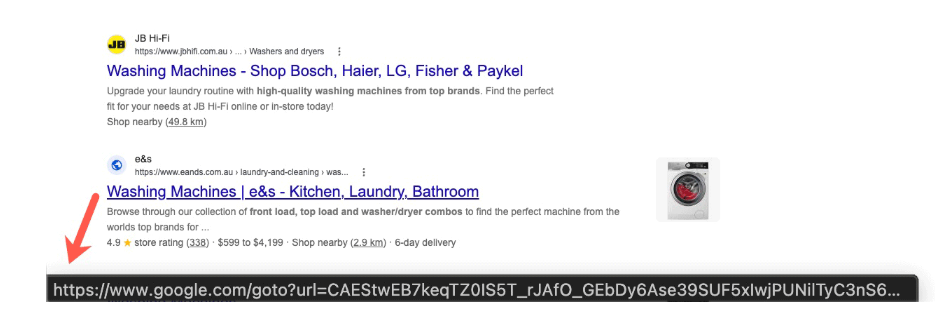
Instead of linking directly to the destination, Google has started routing some search result links through opaque google.com/goto?url=... redirects. The url parameter does not show a readable version of the destination but uses a custom, Google-specific encoding.

Google confirmed the rollout to Search Engine Roundtable:

“We have a long history of deploying technical measures against evolving forms of abuse, and we regularly take steps to protect our services and users.”

Google has not said precisely what abuse the change is intended to prevent. However, the most likely reason is that the redirects are designed to make bulk extraction of destination URLs from Google search results more difficult and costly. Automated tools must now ask Google to resolve each result separately.

Since the rollout has apparently not reached my neck of the woods yet, I had to grab an image from another source.

New URL structure
Image courtesy of seroundtable.com

Some Reddit users find the change ironic: Google built its search business by automatically collecting information from other websites, but is now making it harder for others to collect information from Google.

Other users have complained about the collateral damage to legitimate tools. Rank tracking, SEO auditing, research, archival, accessibility, and alternate-index services may all face the same rate limits and costs as abusive scrapers.

Search results data provider Autom reports that the final destination is viewable only through the redirect response’s Location header. This means bulk collectors must make an additional request for every result.

Security

The first thing that popped into my one-track mind was the security downside. We often tell users to hover over a link before clicking it so they can check where it leads. That advice is less useful when hovering reveals an encoded Google redirect rather than the destination website.

Google still displays the claimed destination above each search result, but users can no longer use the link preview as an independent check.

So, Google, where does this leave our advice? We already tell people not to click Sponsored search results. Should we now tell them to avoid goto?url links too? Or will you give users an easy way to check where a link leads before they click it?


Safer. Cleaner. Ad-free browsing.


  • ✇Malwarebytes
  • Google’s synchronized passkeys can be stolen in ‘Pass‑ta‑key’ attacks
    Passkeys were supposed to make stolen passwords a thing of the past. No password to phish, no secret to reuse, and no string of characters sitting in a database waiting to be leaked. Over time, it’s thought that passkeys will replace passwords entirely. But what happens when malware steals the master key? Researchers have found a way for malware to hijack passkey-protected accounts through Google Password Manager, highlighting an important exception: passkeys can be very secure but the sof
     

Google’s synchronized passkeys can be stolen in ‘Pass‑ta‑key’ attacks

5 de Agosto de 2026, 08:11

Passkeys were supposed to make stolen passwords a thing of the past. No password to phish, no secret to reuse, and no string of characters sitting in a database waiting to be leaked.

Over time, it’s thought that passkeys will replace passwords entirely. But what happens when malware steals the master key?

Researchers have found a way for malware to hijack passkey-protected accounts through Google Password Manager, highlighting an important exception: passkeys can be very secure but the software surrounding them still has weaknesses.

What are passkeys?

Passkeys are a password replacement based on public‑key cryptography. Instead of a secret you remember and type, each account gets a key pair where the private key never leaves your devices, and the website only ever sees the public key and signed challenges. Because there’s nothing reusable to phish or reuse on another site, passkeys are marketed as “phishing‑resistant” and safer than passwords stored in a browser or password manager.

By the end of 2024 Google reportedly said that 800 million Google accounts used passkeys.

Passkeys have a major advantage over passwords: there is nothing useful for a phishing site to steal. A passkey is also tied to the website it was created for, making it much harder to trick into authenticating to the wrong domain.

The other significant difference is that if malware steals a password vault, an attacker still often needs to get past a second factor on another device, such as an authenticator app on your phone, before they fully own the account. With passkeys, many services relying on them simply trust the passkey assertion, and in some cases even trust a single “user verified” flag without confirming whether a real biometric or PIN event occurred.

Malware comes into play

The researchers, however, started with a malware infected Windows computer and came up with three possible attack scenarios to steal Google synchronized passkeys. Google Password Manager can synchronize passkeys between devices, which is convenient since you don’t want to register a new passkey every time you buy a new computer. But it also opens them up to abuse.

From bad to worse the attacks are:

  • Pass‑ta‑key: malware on the victim’s computer silently asks Chrome and Google’s cloud to create a valid passkey login, no biometric or PIN prompt needed.
  • Silver Pass‑ta‑key: malware abuses device re‑enrollment to register its own user‑verification key, then logs in as the victim from the attacker’s machine without touching the victim’s device.
  • Golden Pass‑ta‑key: Malware extracts Google’s security domain secret (the master encryption key), decrypts all synced passkeys, and can reuse them anywhere, even after losing access to the original device.

How to stay safe

The researchers urge services to stop blindly trusting the user verification flag and to properly validate that a real User Verified event occurred before granting access. Google, in turn, is encouraged to harden device registration and recovery, and verify that new devices and keys are backed by genuine hardware rather than accepting them at face value.

For end users, passkeys still offer strong protection against classic phishing websites and credential stuffing attacks based on reused passwords. The weak point highlighted here is not so much the concept of passkeys, but the way they’re implemented, synchronized, and trusted without enough verification on the server side.

Until vendors close these gaps, basic anti‑malware hygiene remains critical. The best ways to prevent malware from using your passkeys are:

  • Keep on top of updates: make sure your systems and software are patched as soon as you can.
  • Use up-to-date real-time anti-malware protection.
  • Treat unexpected attachments or links as suspicious until proven innocent.

From reporting threats to removing them.

Cybersecurity risks should never spread beyond a headline. Keep threats off your devices by downloading Malwarebytes today.

  • ✇Malwarebytes
  • Online backlash ends in Google rolling back Google Earth AI tool after a day
    Google has walked back an AI feature that allowed users to generate artificial images inside Google Earth, after a predictable flurry of deepfakes. Google switched on the AI image generation feature inside Google Earth’s web version on July 30. It was available to everyone. The system used Google’s Nano Banana 2 image generator to create its images. That tool can already generate images from simple text input, but the advantage of doing it in Google Earth is that it can use the real satell
     

Online backlash ends in Google rolling back Google Earth AI tool after a day

4 de Agosto de 2026, 08:35

Google has walked back an AI feature that allowed users to generate artificial images inside Google Earth, after a predictable flurry of deepfakes.

Google switched on the AI image generation feature inside Google Earth’s web version on July 30. It was available to everyone.

The system used Google’s Nano Banana 2 image generator to create its images. That tool can already generate images from simple text input, but the advantage of doing it in Google Earth is that it can use the real satellite images as the basis for its deepfake versions. That makes it easier to make AI pictures with real, accurate building and landscape details.

In its initial blog post on the launch, it said that students could use it to “bring history to life”, while realtors could use it to produce professional real estate plans. However, others warned that the system could be used to mislead people.

Within hours, researchers and press outlets demonstrated that the tool would happily produce photorealistic satellite imagery of things that did not happen in places where they did not happen.

Dutch open source intelligence researcher Henk van Ess explained: “I tried refugees at the Mexican border, a nuclear plant in Iran, a crash in Amsterdam, a hospital with a bomb crater in Gaza. Nothing was refused”.

Demonstrating what was possible with the new capability, NPR fabricated an image of fires in Iran, along with a deepfake of Washington, D.C. underwater. The BBC ran images of a collapsed Eiffel Tower and the Great Pyramid of Giza swallowed by a sinkhole. Even though the service had some guardrails in place, the BBC’s anti-disinformation Verify service was able to circumvent them by tinkering with basic AI prompts.

Google acknowledged the failure in a statement on X:

“We’ve seen geospatial professionals using this feature for a range of useful purposes, however we’ve also seen people sharing screenshots of generated imagery that appear to violate our policies. So we’re rolling back this feature in Google Earth while we work on implementing stronger guardrails.”

It didn’t commit to never re-introducing the idea.

Users were apparently unimpressed. “There is 0 chance that no one on your development team didn’t raise exactly this concern,” commented one. “You guys are living in a complete bubble,” accused another.

Google’s fallback safeguard was a SynthID watermark and the fact that generated images didn’t appear in the main Google Earth experience for others to see. SynthID is Google DeepMind’s watermarking system, an invisible signal baked into the pixels of AI-generated images so that a compatible detector can spot them later. Google positions it as one half of its provenance stack, sitting alongside the C2PA metadata standard the wider AI industry has settled on.

On paper, the signal is meant to hold up through compression and even social media re-uploads. However, these claims collapsed on contact with reality. The watermarks are detectable by Google’s AI services like Gemini. They are not visible to users, who can screenshot the images and share them anywhere. It’s unlikely that everyone will know to check for the provenance of an image. Researchers have also reported that Gemini could not reliably identify AI-generated images with a SynthID watermark.

What this means for you

Content creators were already producing fake AI images showing events that didn’t happen. Traditionally, satellite imagery has been a key component of open source journalism. Fake it convincingly and you are attacking the reference layer reporters use to check whether something actually happened.

This also comes at a time when trust in AI is measurably eroding. According to our own research, released in June, 88% of people said it’s becoming harder to tell what content online is genuinely human or real, with 84% saying that even “convincing video evidence” no longer feels like proof. 

The practical advice is to take a breath whenever a disturbing satellite image of a disaster, a weapon strike, or a border crossing hits your timeline. Check whether a wire service with a named reporter has published it. Look for a caption identifying the imagery provider. If the source is an anonymous account posting a single dramatic frame, assume you might be looking at something assembled in a browser tab last night.

For more information on how to identify AI images, check out our guide.

The industry’s shipping model now apparently treats users as the test group. Critical media literacy is now the only reliable tool that readers and viewers have.


From reporting threats to removing them.

Cybersecurity risks should never spread beyond a headline. Keep threats off your devices by downloading Malwarebytes today.

  • ✇Malwarebytes
  • Shared Claude chats were searchable on Google
    Reddit users found that by using a specific Google search query, it was possible to find Claude conversations that users had shared. This exposed sensitive material, including crypto wallet keys, names, addresses, work notes, and even erotic or otherwise policy-violating chats. Fortune says Anthropic appears to have fixed the Google indexing issue, but the shared links themselves were still live for people who already had them. The exposure was tied to Claude’s Share feature, which creates
     

Shared Claude chats were searchable on Google

28 de Julho de 2026, 09:33

Reddit users found that by using a specific Google search query, it was possible to find Claude conversations that users had shared.

This exposed sensitive material, including crypto wallet keys, names, addresses, work notes, and even erotic or otherwise policy-violating chats. Fortune says Anthropic appears to have fixed the Google indexing issue, but the shared links themselves were still live for people who already had them.

The exposure was tied to Claude’s Share feature, which creates a public web link to a snapshot of a conversation rather than leaving it inside a user’s private account. Reddit users found a search query that surfaced many of these shared chats, plus Claude Artifacts (interactive documents, apps, and other content created by Claude) in Google results. Wired reports that this is still true for Bing.

The main risk is that people use chatbots to think through work, health, legal, or personal matters without realizing that a shared link can behave like ordinary public web content.

This isn’t unique to Claude. We’ve previously seen Grok chats show up in Google search results, and Meta AI conversations can also become public by design. We have also written about the share option in ChatGPT that was swiftly removed after users unintentionally made thousands of conversations searchable.

Anthropic says Claude chats are private by default, and only conversations users explicitly chose to share were affected. But the incident is a reminder that a “share” button on an AI chat can be more like publishing than messaging, especially if search engines can discover the resulting URL.

How to stay safe

The easy way out here is not to share your AI chatbot conversations with anyone, because you could end up reaching more people than you intended.

That’s because it’s harder to stop pages from being indexed than you might expect. And you don’t have those controls in your hands. The AI provider should take care of that.

But there are a few things you can do:

  • Don’t share Personally Identifiable Information (PII) with a chatbot, so that if a conversation is ever exposed it can’t be easily linked back to you.
  • To review or stop sharing conversations in Claude, go to Settings > Privacy > Shared chats.
  • If you’re using an AI service from a social media company, such as Meta AI, Grok, or Gemini), remember that your conversations could be tied to your account—which might contain a lot of personal information.
  • When using AI, make sure you understand how to keep your conversations private. Many services offer temporary or incognito chats that aren’t saved to your history, but they aren’t a guarantee against bugs, leaks, or data breaches. Only use the share feature when you’re comfortable with anyone potentially seeing that conversation.
  • Read the privacy policy so you understand how your conversations are stored and shared. If it’s too long, you can always ask an AI to summarise the important points.

Let’s face it, an incognito window can only do so much. 
 
Breaches, dark web trading, credit fraud. Malwarebytes Identity Theft Protection monitors for all of it, alerts you fast, and comes with identity theft insurance. 

❌
❌