In this article
Mitigation and protection guidanceMicrosoft Defender detectionsHunting queriesIndicators of compromise
In October 2026, the financially motivated threat actor Storm-3358 began targeting organizations in the financial sector using the agentic AI offensive framework ARTEX. The threat actor that Microsoft Threat Intelligence tracks as Storm-3358 is a Cambodia-based intrusion cluster that primarily targets financial organizations in Southeast As
In October 2026, the financially motivated threat actor Storm-3358 began targeting organizations in the financial sector using the agentic AI offensive framework ARTEX. The threat actor that Microsoft Threat Intelligence tracks as Storm-3358 is a Cambodia-based intrusion cluster that primarily targets financial organizations in Southeast Asia, in addition to a smaller number of large financial organizations globally.
Microsoft has observed Storm-3358 use ARTEX in combination with conventional automated tools to scan systems connected to the public internet, exploit security flaws including anonymous file upload and server-side request forgery (SSRF), and install open-source remote access trojans (RATs). Storm-3358 has used the WISP, vshell, and AdaptixC2 RATs for persistence and lateral movement. Microsoft has observed ARTEX agents using utilities like netcat and curl to download these RATs to compromised systems, as shown in Figure 1.
Figure 1. Example commands that ARTEX agents used to download RATs to compromised systems.
In recent ARTEX-related attacks, threat actors have used ARTEX agents to scan and exploit vulnerabilities in web applications, use web shells for persistence on compromised web servers, compromise credentials from public sources and compromised systems, and use compromised cloud identities for persistence and data exfiltration. ARTEX agents can also perform brute-force password attacks, password spraying, API enumeration and abuse, and database dumping. Agentic tools like ARTEX can leverage compromised credentials and systems at machine speed to move laterally, escalate privileges, and exfiltrate data.
This activity illustrates an ongoing trend of threat actors accelerating all stages of the attack chain with agentic AI penetration testing frameworks, including ARTEX. As these capabilities evolve, defenders must similarly use AI to investigate and respond across large environments.
While threat actors regularly use proxies and virtual private networks (VPNs) to change the source IP address of malicious traffic and bypass static detections, Microsoft is providing indicators of compromise (IOCs) to help defenders detect related activity.
Mitigation and protection guidance
Microsoft’s research into threats involving agentic frameworks informs security detections and investigative context across its products. The capabilities available to customers depend on the source of the activity and the products and protections deployed in their environment.
Several behavioral signals can help organizations determine that they are being targeted by threat actors using agentic AI. Agentic AI frameworks scanning a target send a wide variety of requests in a brief time and retry variations on the same technique or move on to next-stage actions at machine speed. Agentic AI frameworks use existing penetration testing tools. For example, ARTEX by default uses Nmap, curl, wget, Python HTTP clients, Norma SDK WebFetch, and headless Chromium through Playwright, among others. These tools may send network traffic with distinctive characteristics, such as default user agent strings. While blocking network traffic with these characteristics will not stop an attack by an AI agent, which will quickly change them, identifying them can alert defenders to the activity.
Defensive honeypots, decoys, tarpits, and fake wins can pull autonomous AI attacks away from legitimate targets. Honeypots and decoy surfaces such as Microsoft Sentinel Deception give the agent attractive but worthless targets to pursue. Tarpits consume the agent’s time and budget. Fake wins present convincing evidence that the agent’s objective is complete, which can cause it to stop on a false success. In Microsoft’s testing, these controls helped reduce the attack traffic reaching real assets and produced high-confidence, attribution-quality signal.
Microsoft’s continuous research into threat actors leveraging agentic frameworks integrates directly into the following products:
Identity and sign-in activity — Microsoft Entra ID Protection
Microsoft analyzes sign-in activity and other signals to identify potential identity risk. Customers can investigate risk detections and risky sign-ins, and configure Conditional Access policies that use sign-in or user risk to require multifactor authentication or block access when specified conditions are met. Identity and sign-in activity from known threat actor infrastructure, including from agentic frameworks like ARTEX, generate Verified threat actor IP risk detections delivered at high risk. See:
Endpoint activity — Microsoft Defender for Endpoint
Endpoint alerts help security teams identify and investigate suspicious activity on devices. Indicators of compromise can support detection and, when configured, blocking. Customers can review related alerts in the Microsoft Defender portal. See:
Activity across security domains — Microsoft Defender portal
The portal brings together alerts and incidents from Microsoft security solutions and provides relevant threat intelligence to support investigation, threat hunting, and response. This helps customers assess suspicious activity in the context of their own environment. See:
Threat actor misuse of AI accelerates risk across enterprise environments by amplifying existing threats such as exploitation of vulnerabilities, phishing, malware threats, and insider activity. To help organizations stay ahead of AI-enabled threat activity, Microsoft has introduced the Security Dashboard for AI. The dashboard provides users with a unified view of AI security posture by aggregating security, identity, and data risk across Microsoft Defender, Microsoft Entra, and Microsoft Purview. See:
Microsoft Defender customers can refer to the list of applicable detections below. Microsoft Defender coordinates detection, prevention, investigation, and response across endpoints, identities, email, apps to provide integrated protection against attacks like the threat discussed in this blog. These alerts may trigger on unrelated activity. Customers should investigate to determine if the alert is related to the activity outlined in this blog.
Tactic
Microsoft Defender coverage
Execution
Microsoft Defender for Endpoint – Process launched in the background – Suspicious file dropped and launched – Suspicious file or content ingress – Hidden file executed – Suspicious process executed by network service – Suspicious piped command launched – Suspicious process launched by service – Suspicious process launched from a world-writable directory – Suspicious script launched – Suspicious shell execution from PHP application – Suspicious shell command execution
Collection
Microsoft Defender for Endpoint – Enumeration of files with sensitive data – Suspicious file copy operations – Suspicious process collected data from local system
Credential access
Microsoft Defender for Endpoint – Suspicious access of sensitive files
Defense evasion
Microsoft Defender for Endpoint – Executable permission added to file or directory – Obfuscation or deobfuscation activity – Possible time based evasion – Suspicious decoding of encoded content into script – Suspicious file and directory permission modification – Suspicious file or information obfuscation detected – Suspicious path deletion
Discovery
Microsoft Defender for Endpoint – Suspicious port scan activity
Command and control (C2)
Microsoft Defender for Endpoint – Possible reverse shell – Suspicious connection to remote service – Suspicious curl behavior
Microsoft Defender for Cloud – Publicly accessible storage containers have been exposed – Azure Resource Manager operation from suspicious IP address
Lateral movement
Microsoft Defender for Endpoint – Remote Desktop session
Persistence
Microsoft Defender for Endpoint – Possible Web Server compromise activity – Suspicious cron job creation
Microsoft Security Copilot
Microsoft Security Copilot is embedded in Microsoft Defender and provides security teams with AI-powered capabilities to summarize incidents, analyze files and scripts, summarize identities, use guided responses, and generate device summaries, hunting queries, and incident reports.
Security Copilot is also available as a standalone experience where customers can perform specific security-related tasks, such as incident investigation, user analysis, and vulnerability impact assessment. In addition, Security Copilot offers developer scenarios that allow customers to build, test, publish, and integrate AI agents and plugins to meet unique security needs.
Threat intelligence reports
Microsoft Defender XDR customers can use the following threat analytics reports in the Defender portal (requires license for at least one Defender XDR product) to get the most up-to-date information about the activity and techniques discussed in this blog. These reports provide intelligence, protection information, and recommended actions to prevent, mitigate, or respond to associated threats found in customer environments.
Microsoft Security Copilot customers can also use the Microsoft Security Copilot integration in Microsoft Defender Threat Intelligence, either in the Security Copilot standalone portal or in the embedded experience in the Microsoft Defender portal to get more information about this threat.
Hunting queries
Microsoft Defender XDR
Microsoft Defender XDR customers can run the following advanced hunting query to find related activity in their networks:
Download of new files using curl
Threat actors might use tools such as curl to download additional files, communicate with C2 infrastructure, or exfiltrate data. This query looks for new files being downloaded using curl. curl also has legitimate uses, so files and hosts should be reviewed to identify potentially malicious activity.
let known_files = DeviceNetworkEvents
    | where TimeGenerated between (ago(7d)..ago(1d))
    | where InitiatingProcessFileName has "curl"
    | extend url = extract("http[s]?:\\/\\/(?:[a-zA-Z]|[0-9]|[$-_@.&+]|[!*\\(\\),]|(?:%[0-9a-fA-F][0-9a-fA-F]))+", 0,InitiatingProcessCommandLine)
    | extend ip = extract("(\\b25[0-5]|\\b2[0-4][0-9]|\\b[01]?[0-9][0-9]?)(\\.(25[0-5]|2[0-4][0-9]|[01]?[0-9][0-9]?)){3}[^ ]*", 0, InitiatingProcessCommandLine)
    | extend remote_file = iif(isnotempty(url), url, ip)
    | union (SecurityEvent
    | where TimeGenerated between (ago(7d)..ago(1d))
    | where EventID == 4688
    | where CommandLine has "curl"
    | extend url = extract("http[s]?:\\/\\/(?:[a-zA-Z]|[0-9]|[$-_@.&+]|[!*\\(\\),]|(?:%[0-9a-fA-F][0-9a-fA-F]))+", 0,CommandLine)
    | extend ip = extract("(\\b25[0-5]|\\b2[0-4][0-9]|\\b[01]?[0-9][0-9]?)(\\.(25[0-5]|2[0-4][0-9]|[01]?[0-9][0-9]?)){3}[^ ]*", 0, CommandLine)
    | extend remote_file = iif(isnotempty(url), url, ip))
    | summarize by remote_file;
    DeviceNetworkEvents
    | where TimeGenerated > ago(1d)
    | where InitiatingProcessFileName has "curl"
    | extend url = extract("http[s]?:\\/\\/(?:[a-zA-Z]|[0-9]|[$-_@.&+]|[!*\\(\\),]|(?:%[0-9a-fA-F][0-9a-fA-F]))+", 0,InitiatingProcessCommandLine)
    | extend ip = extract("(\\b25[0-5]|\\b2[0-4][0-9]|\\b[01]?[0-9][0-9]?)(\\.(25[0-5]|2[0-4][0-9]|[01]?[0-9][0-9]?)){3}[^ ]*", 0, InitiatingProcessCommandLine)
    | extend remote_file = iif(isnotempty(url), url, ip)
    | union (SecurityEvent
    | where EventID == 4688
    | where CommandLine has "curl"
    | extend url = extract("http[s]?:\\/\\/(?:[a-zA-Z]|[0-9]|[$-_@.&+]|[!*\\(\\),]|(?:%[0-9a-fA-F][0-9a-fA-F]))+", 0,CommandLine)
    | extend ip = extract("(\\b25[0-5]|\\b2[0-4][0-9]|\\b[01]?[0-9][0-9]?)(\\.(25[0-5]|2[0-4][0-9]|[01]?[0-9][0-9]?)){3}[^ ]*", 0, CommandLine)
    | extend remote_file = iif(isnotempty(url), url, ip))
    | where remote_file !in (known_files)
Microsoft Sentinel
Microsoft Sentinel customers can run the following advanced hunting query to find related activity in their networks:
Detect network IP indicators of compromise using ASIM
The following query checks IP address across data sources in the past 30 days supported by ASIM network session parser.
let lookback = 30d; let
ioc_ip_addr = dynamic(["199.19.95.66", "199.19.95.67", "199.19.95.68", "91.92.240.238", "85.11.168.45", "178.15.54.129", "31.77.229.35", "85.11.167.52"]);
_Im_NetworkSession(starttime=todatetime(ago(lookback)), endtime=now())
| where DstIpAddr in (ioc_ip_addr)
| summarize FirstSeen=min(TimeGenerated), LastSeen=max(TimeGenerated), EventCount=count() by SrcIpAddr, DstIpAddr, DstDomain, Dvc, EventProduct, EventVendor
Indicators of compromise
Note: Threat actors regularly use proxies and virtual private networks (VPNs) to change the source IP address of malicious traffic and bypass static detections. Microsoft is providing the following sample indicators of compromise (IOCs) to help defenders detect related activity.
To hear stories and insights from the Microsoft Threat Intelligence community about the ever-evolving threat landscape, listen to the Microsoft Threat Intelligence podcast.
In this article
Observed operators and targetingMalware packaging and distributionNeedyMantis architecture and capabilitiesMitigation and protection guidanceHunting queriesIndicators of compromise
Microsoft Threat Intelligence has identified NeedyMantis, a modular post-compromise malware family observed in a limited number of targeted operations affecting telecommunications organizations, universities, medical nonprofits, intergovernmental organizations, an
Microsoft Threat Intelligence has identified NeedyMantis, a modular post-compromise malware family observed in a limited number of targeted operations affecting telecommunications organizations, universities, medical nonprofits, intergovernmental organizations, and government contractors. Based on observed activity, NeedyMantis is typically deployed after a threat actor has already established access to a target environment, indicating that the malware is used to maintain long-term access and support follow-on operations.
NeedyMantis activity dates back to at least October 2025. We discovered the malware family while analyzing and pivoting from research and indicators of compromise associated with the DAEMON Tools supply chain compromise, which Kaspersky previously reported on as part of its investigation into the campaign. Observed activity involving NeedyMantis has thus far aligned with activity that Microsoft associates with threat actors operating from China, although Microsoft has not determined whether all observed activity is attributable to the same operator.
While NeedyMantis employs techniques commonly used by modern malware, its architecture combines multiple loaders, custom encrypted file archives, a custom executable file format, and modular components that enable operators to evade analysis and extend functionality through additional modules. These characteristics, combined with its use in targeted intrusions, make NeedyMantis a useful case study for understanding how threat actors establish and maintain long-term access within victim environments.
In this blog, we analyze the NeedyMantis malware framework. We examine its packaging and deployment, custom archive format, loader architecture, command-and-control (C2) communications, and modular design. We also provide indicators of compromise (IOCs), Microsoft Defender detections, and mitigation guidance to help organizations defend against this threat and related activity.
Observed operators and targeting
At the time of writing, Microsoft has observed at least one threat actor using NeedyMantis malware: Storm-3069. Storm-3069 is Microsoft Threat Intelligence’s designator for activity associated with the DAEMON Tools supply chain compromise. While Microsoft assesses the activity originates from China, it has not attributed Storm-3069 to a Chinese nation-state actor. Microsoft identified NeedyMantis through follow-on analysis of indicators associated with Kaspersky’s investigation of the DAEMON Tools compromise.
Microsoft has observed additional NeedyMantis activity beyond Storm-3069’s activity in the DAEMON Tools campaign, indicating that the malware might be used by more than one operator. Observed activity involving NeedyMantis has thus far aligned with activity Microsoft associates with threat actors operating from China, such as targeting that aligns with Chinese interests and the use of selective deployment.
NeedyMantis has been observed in intrusions affecting telecommunications organizations, universities, intergovernmental organizations, medical nonprofits, and government contractors. Combined with the malware’s limited observed deployment and alignment with activity Microsoft associates with China-based threat actors, this victimology suggests NeedyMantis is deployed selectively rather than broadly. However, Microsoft has not determined whether all observed activity is attributable to the same threat actor or whether multiple actors have access to the malware.
Malware packaging and distribution
As previously mentioned, observed activity suggests that the malware is typically deployed after a threat actor has established access to a target environment. As a result, the methods used to gain access before NeedyMantis is deployed may vary across intrusions.
NeedyMantis is composed of multiple components written in C++ and x64 shellcode. The malware starts with a first-stage loader and a file archive. The loader and archive have been found packaged alongside legitimate software, with the first-stage loader–masquerading as a required DLL—being loaded through DLL sideloading.
Some of the open-source, software abused by the malware include: Poedit (translation), curl (data transfer), Vim (text editor), and TightVNC (remote access). Microsoft has also observed NeedyMantis masquerading as Microsoft Office, Broadcom, Intel, and NVIDIA DLL components. The following is a list of some of the DLL path names used by the malware:
%ProgramFiles%\Poedit\WinSparkle.dll
%ProgramData%\USOShared\libcurl.dll
%ProgramData%\VIM\vim64.dll
%ProgramData%\TightVNC\VIM\vim64.dll
%ProgramData%\office\dbghelp.dll
%ProgramData%\broadcom\dbghelp.dll
%ProgramData%\Intel\jli.dll
%ProgramFiles%\modifiable\nvml.dll
%ProgramData%\ics\nvml.dll
The malware’s file archive is named the same as the loader DLL without the extension, for example WinSparkle or libcurl.
In one observed incident, an operator used the Impacket toolkit during hands-on-keyboard activity to copy the legitimate software, malicious DLL, and file archive from a network share and execute it on a targeted device. This activity occurred after the actor had already obtained access to the environment and illustrates one method by which NeedyMantis can be introduced during an intrusion post-compromise.
NeedyMantis is observed during the post-compromise stage of an intrusion after an actor has established access to the target environment. While one known user of the malware, Storm-3069, has been associated with supply chain compromises, Microsoft has not observed NeedyMantis itself being distributed through a supply chain compromise. However, supply chain activity remains one possible means by which an actor could gain the access necessary to deploy the malware.
NeedyMantis architecture and capabilities
First-stage loader
NeedyMantis’ first-stage loader is DLL sideloaded and launched when the legitimate software it is packaged with is run. Its only task is to extract the second-stage loader from its file archive and continue execution there.
In the analyzed sample, the loader DLL was named WinSparkle.dll (SHA-256: e842dd7642c8e04b5ec20b6393848a9c904e4832930950c16664fe7800ba382e) and its file archive was named WinSparkle (SHA-256: 9cb68f986043a576e19d32184c583b7d8f571c7219d8dc0065dced1c13f077ef). NeedyMantis spoofed and replaced the WinSparkle software update component of the Poedit translation software.
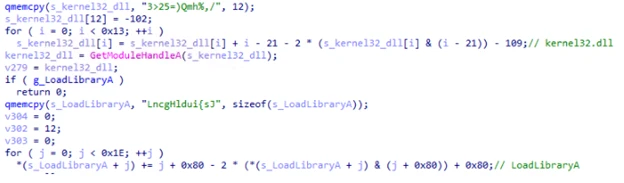
The loader employs common anti-analysis techniques to hinder analysis, like obfuscating most of its important strings.
Figure 1. Example obfuscated strings being deobfuscated
This technique is known as obfuscated stack strings because each piece of the string is built up one at a time on the function’s stack. Once built up, it is deobfuscated using various mathematical operations. Most of the obfuscated strings in this loader are Windows DLL and API names. These deobfuscated strings are used to resolve Windows APIs dynamically at runtime.
In addition to obfuscated strings, a lot of the code’s constant values are stored obfuscated as well.
Figure 2. Example obfuscated constant value “1032” being deobfuscated
Finally, the loader has two anti-debugger methods: one based on ProcessDebugFlags and the other using ThreadHideFromDebugger.
As noted above, the loader’s main objective is to extract the next stage from its file archive and launch it. In the analyzed sample, the next stage was named encryptbase64.ps1.
Custom file archives
NeedyMantis’ file archives are in an encrypted and compressed custom file format. To get access to the files, the outer layer of the archive is XOR-decoded and RtlDecompressBuffer decompressed. Once decompressed, there are individual file entries. In each file entry, the file’s name is XOR-decoded and its contents are RtlDecompressBuffer decompressed.
The file format’s offsets, XOR keys, and values change from sample to sample.
Figure 3. Example output of an archive unpacking tool displaying metadata of the WinSparkle file archive
dnsapi.dll – Not a dnsapi.dll, but contains the malware’s configuration
ws2_32.dll – Not a ws2_32.dll, but contains a WebSockets based communications DLL
msvcrt140.dll – Not a msvcrt140.dll, but contains shellcode to load module DLLs and resolve exports
While this archive contains several legitimate software components, the malware’s functionality is implemented by the remaining files, discussed below.
Other analyzed NeedyMantis file archives have contained different file names and components. An older version of the malware, for example, used a libcurl (SHA-256: c82520eb03c084226be4eafbff46f56dca0aa8804a2a7f23a085a96afe71ef77) file archive, and it contained only four files:
300.c – Malware’s configuration
300.s – WebSockets-based communications DLL
is – Persistence module using Windows Services
m.l – Main component
Second-stage loader
In the analyzed sample, encryptbase64.ps1 was the second-stage loader. Despite its .ps1 PowerShell extension, the file contains x64 shellcode. Its purpose is to decode and decompress an embedded binary which is NeedyMantis’ main component.
This loader also has some anti-analysis functionality that differs from stage one. For string decoding, it locates two encoded blocks of data and XOR keys at calculated offsets and then decodes them. The first block, most relevantly, contains a few Windows DLL and API names that are resolved dynamically. The second block, shown below, contains a list of Windows DLL names and Windows API hash values:
Figure 4. Decoded Windows API hash values
The component uses a rotate right (ROR) based algorithm with a configurable rotation value (the analyzed sample used value 11) to resolve these Windows API hashes. Figure 5 shows a snippet of Python code reproducing the algorithm:
Figure 5. Python snippet of Windows API hashing algorithm
This second-stage loader’s objective is to extract embedded data, XOR-decode it, and then RtlDecompressBuffer decompress it. The location of the encoded data and XOR key are at calculated offsets, which change from sample to sample.
Once decoded the resulting data is a DLL that has been formatted using a custom executable file format. It is a minimized version of a PE file.
Figure 6. Example output of custom executable file format to PE file conversion tool
Main component
NeedyMantis’ main component orchestrates C2 communications and handles additional downloaded modules.
It creates a mutex named <username>-<process name>, such as Contoso-Poedit.exe. Like in the first-stage loader, most of the main component’s strings and constant values are stored as obfuscated stack strings.
Configuration
The malware’s configuration was stored in a dnsapi.dll file from the custom file archive. This file name spoofs a Windows networking library. In the sample analyzed, the file contains a 3448-byte binary structure. The structure includes the following fields:
0x00: Unknown (config contained “300”, but components also reference “400”)
0x1c: Communication component name (ws2_32.dll)
0x128: C2 port (443)
0x12c: C2 host (corp.tripswithengine[.]com)
0x334: C2 URI (/library/zip/)
0x53C: WinHttpOpen AccessType (0)
0x954: Proxy username (not set)
0xB5C: Proxy password (not set)
0xD64: Sleep time related (300)
0xD68: Sleep time related (300)
Communications DLL
As referenced in the configuration, NeedyMantis makes use of a communication component called ws2_32.dll. This component is also stored in the custom file archive. Like the config file, the file name spoofs a Windows networking library.
This communications DLL has one export named SystemInfo. As shown below in Figure 7, SystemInfo exposes 10 functions for the main component to initiate and maintain a WebSockets connection with the C2:
Figure 7. Communications DLL API functions
The library uses WinINet APIs for WebSockets. It also has a hard-coded user-agent of firefox/21.0.
We have also spotted a second version of the communications DLL in a file archive. It implements the same communications API but uses Libwebsockets (LWS) instead of WinINet.
Command and control
The initial C2 beacon is an HTTPS GET request, similar to Figure 8 below:
Figure 8. Initial C2 HTTPS GET request
The Set-Cookie header contains system information. The header value can be Base64-decoded and RtlDecompressBuffer decompressed. Once decompressed it contains a JSON object. The key values are:
c – Computer name
u – Username
o – Base64-encoded data, once decoded it contains line separated “: ” entries
p – Process name
pa – Parent process
f – Files in ProgramFiles directory
p – Process list
The connection is then converted to WebSockets and a binary C2 protocol is continued. The binary protocol is separated into a header and optional data components. The 44-byte header includes the following fields:
0x00: 16-byte XOR key
0x10: Uncompressed data length
0x14: Compressed data length
0x18: Command number
0x28: Data length
0x2c: Optional data
A 16-byte random XOR key is generated and the header is XOR-encoded, starting at offset 0x18. If there is any data, it is compressed with RtlCompressBuffer and optionally encrypted with RC4.
The initial messages of the binary protocol are a key exchange with the C2 server. The protocol is performed as such:
32-bytes are received from the C2 server, but then ignored
A 1024-byte random buffer is created
The first 32-bytes of this random buffer are used as the RC4 key for further communications
A 256-byte buffer is created that starts with google.com followed by random bytes
The 256-byte buffer is RC4 encrypted
A random length between 292 and 1282 is picked
The C2 protocol message data is structured as such:
0x00: The random length
0x04: RC4 encrypted google.com buffer
0x104: The random 1024-byte buffer used to create the RC4 key (at least 32 bytes of it)
This message data is compressed, but not RC4 encrypted
A random command number between 1 and 45 is chosen
The C2 server uses the buffer at offset 0x104 to recreate the RC4 key and presumably checks the RC4 encrypted google.com buffer
The server sends back the random command number as an acknowledgement
Commands
The main component only has a handful of commands. Commands sent to the C2 include:
1110 – Sends computer name and username
1112 – Sends a hard-coded identifier (like 20001)
1150 – Keep alive
Commands received from the C2 include:
1020 – Load module
1030 – Unload module
1050 / 1150 – Dispatch data to module
1070 – Turn off active flags
The main component’s load, unload, and data dispatch commands show that NeedyMantis can extend its functionality through additional modules, but the capabilities of those modules remain unconfirmed.
Mitigation and protection guidance
Microsoft recommends the following mitigations to reduce the impact of this threat.
Look for outbound connections in network egress traffic to corp.tripswithengine[.]com.
Run Endpoint Detection and Response (EDR) in block mode so that Microsoft Defender for Endpoint can block malicious artifacts, even when your non-Microsoft antivirus does not detect the threat or when Microsoft Defender Antivirus is running in passive mode. EDR in block mode works behind the scenes to remediate malicious artifacts that are detected post-breach.
Configure automatic attack disruption in Microsoft Defender XDR. Automatic attack disruption is designed to contain attacks in progress, limit the impact on an organization’s assets, and provide more time for security teams to remediate the attack fully.
Microsoft Defender XDR customers can turn on the following attack surface reduction rules to prevent common attack techniques used by threat actors.
You can assess how an attack surface reduction rule might impact your network by opening the security recommendation for that rule in threat and vulnerability management. In the recommendation details pane, check the user impact to determine what percentage of your devices can accept a new policy enabling the rule in blocking mode without adverse impact to user productivity.
Microsoft Defender detections
Microsoft Defender customers can refer to the list of applicable detections below. Microsoft Defender coordinates detection, prevention, investigation, and response across endpoints, identities, email, apps to provide integrated protection against attacks like the threat discussed in this blog.
Tactic
Observed activity
Microsoft Defender coverage
Execution
Shellcode loading, DLL sideloading, decryption, and decompression
Microsoft Defender for Endpoint – Suspicious DLL loaded – An executable file loaded an unexpected DLL file – Suspicious decode command
Microsoft Security Copilot is embedded in Microsoft Defender and provides security teams with AI-powered capabilities to summarize incidents, analyze files and scripts, summarize identities, use guided responses, and generate device summaries, hunting queries, and incident reports.
Security Copilot is also available as a standalone experience where customers can perform specific security-related tasks, such as incident investigation, user analysis, and vulnerability impact assessment. In addition, Security Copilot offers developer scenarios that allow customers to build, test, publish, and integrate AI agents and plugins to meet unique security needs.
Threat intelligence reports
Microsoft Defender XDR customers can use the following threat analytics reports in the Defender portal (requires license for at least one Defender XDR product) to get the most up-to-date information about the threat actor, malicious activity, and techniques discussed in this blog. These reports provide the intelligence, protection information, and recommended actions to prevent, mitigate, or respond to associated threats found in customer environments.
Microsoft Security Copilot customers can also use the Microsoft Security Copilot integration in Microsoft Defender Threat Intelligence, either in the Security Copilot standalone portal or in the embedded experience in the Microsoft Defender portal to get more information about this malware and associated activity.
Hunting queries
Microsoft Defender XDR
Microsoft Defender XDR customers can run the following advanced hunting queries to find related activity in their networks:
NeedyMantis masquerading as software
A listing of legitimate, unmodified application folders, along with malicious replacement DLL filenames sideloaded by NeedyMantis.
DeviceFileEvents
| where Timestamp > ago(7d)
| where (
    (FolderPath matches regex @"^[A-Za-z]:\\Program Files\\Poedit" and FileName == "WinSparkle.dll")
    or (FolderPath matches regex @"^[A-Za-z]:\\Program Files \(x86\)\\Poedit" and FileName == "WinSparkle.dll")
    or (FolderPath matches regex @"^[A-Za-z]:\\ProgramData\\USOShared" and FileName == "libcurl.dll")
    or (FolderPath matches regex @"^[A-Za-z]:\\ProgramData\\VIM" and FileName == "vim64.dll")
    or (FolderPath matches regex @"^[A-Za-z]:\\ProgramData\\TightVNC\\VIM" and FileName == "vim64.dll")
    or (FolderPath matches regex @"^[A-Za-z]:\\ProgramData\\office" and FileName == "dbghelp.dll")
    or (FolderPath matches regex @"^[A-Za-z]:\\ProgramData\\broadcom" and FileName == "dbghelp.dll")
    or (FolderPath matches regex @"^[A-Za-z]:\\ProgramData\\Intel" and FileName == "jli.dll")
    or (FolderPath matches regex @"^[A-Za-z]:\\Program Files\\modifiable" and FileName == "nvml.dll")
    or (FolderPath matches regex @"^[A-Za-z]:\\Program Files \(x86\)\\modifiable" and FileName == "nvml.dll")
    or (FolderPath matches regex @"^[A-Za-z]:\\ProgramData\\ics" and FileName == "nvml.dll")
)
| project Timestamp, DeviceId, DeviceName, ActionType, FolderPath, FileName,
          SHA1, SHA256, MD5,
          InitiatingProcessAccountDomain, InitiatingProcessAccountName, InitiatingProcessAccountSid,
          InitiatingProcessAccountUpn,
          InitiatingProcessMD5, InitiatingProcessSHA1, InitiatingProcessSHA256,
          InitiatingProcessFolderPath, InitiatingProcessFileName, InitiatingProcessCommandLine,
          InitiatingProcessCreationTime,
          ReportId, TenantId
NeedyMantis C2
This query identifies connectivity to the NeedyMantis command and control site for this activity.
Microsoft Sentinel customers can use the TI Mapping analytics (a series of analytics all prefixed with ‘TI map’) to automatically match the malicious domain indicators mentioned in this blog post with data in their workspace. If the TI Map analytics are not currently deployed, customers can install the Threat Intelligence solution from the Microsoft Sentinel Content Hub to have the analytics rule deployed in their Sentinel workspace.
NeedyMantis C2
This query identifies connectivity to the NeedyMantis command and control site for this activity.
To hear stories and insights from the Microsoft Threat Intelligence community about the ever-evolving threat landscape, listen to the Microsoft Threat Intelligence podcast.
In this article
Who is Storm-2570?Storm-2570 attack chain: From initial foothold to impactWhat Storm-2570 activity means for defendersMitigation and protection guidanceMicrosoft Defender detectionsHunting queries
Activity associated with Storm-2570, a ransomware affiliate linked to multiple ransomware payloads, illustrates how tracking and responding to ransomware attacks by payload alone can obscure the affiliates carrying out intrusions and the recurring
Activity associated with Storm-2570, a ransomware affiliate linked to multiple ransomware payloads, illustrates how tracking and responding to ransomware attacks by payload alone can obscure the affiliates carrying out intrusions and the recurring behaviors that defenders can use to detect and disrupt them. Microsoft Threat Intelligence has observed Storm-2570 using consistent post-compromise tools and techniques across deployments involving Qilin, DragonForce, Anubis, and BERT ransomware. Across multiple investigations, Storm-2570 has maintained largely uniform tradecraft, infrastructure overlaps, and repeated use of the same remote access and cloud exfiltration tooling despite operating across multiple ransomware ecosystems.
These findings reinforce the value of examining threat actor behavior across the attack chain rather than treating each ransomware payload as an isolated activity set. Recurring remote access, credential access, lateral movement, security tampering, and data exfiltration activity can help defenders connect related intrusions and respond before ransomware deployment, even when the final payload changes.
In this blog post, we delve into the attack techniques attributed to Storm-2570. While Storm-2570’s methodology aligns with the tactics, techniques, and procedures (TTPs) of many tracked ransomware actors, analysis of their post-compromise tactics provides essential insights into how organizations can harden and defend against ransomware threat actors, informing opportunities to disrupt attackers even if they have gained initial access to a network. At the end of this blog, we also provide a comprehensive recommendation section with detection details.
Who is Storm-2570?
Storm-2570 is a ransomware affiliate that Microsoft Threat Intelligence has tracked since April 2025. We assess that Storm-2570 has operated across multiple ransomware as a service (RaaS) ecosystems, including Qilin, DragonForce, Anubis, and BERT.
To date, Microsoft Threat Intelligence has observed Storm-2570 in multiple investigated intrusions affecting organizations in United States, Canada, United Kingdom, Spain, Netherlands, and Puerto Rico, including healthcare and public health, education, government agencies and services, financial services, energy, consumer retail, Information technology (IT), food and agriculture, consumer services, commercial facilities, non-government organization (NGO), chemicals, critical manufacturing, and transportation.
Unlike actors that consistently support a single ransomware operation, Storm-2570 appears to be a cross-ecosystem threat actor that works with multiple ransomware groups and shifts between operations as opportunities arise, giving the threat actor the flexibility to use and deploy multiple families and improve opportunities for payouts. As a result, organizations could encounter the same actor, tools, and intrusion methods despite different ransomware payloads being deployed.
Figure 1. Storm-2570’s RaaS deployment timeline
Storm-2570 attack chain: From initial foothold to impact
While the method through which Storm-2570 gains initial access remains unconfirmed, observed intrusion chains indicate subsequent use of remote management tooling and hands-on-keyboard activity to progress toward credential access, lateral movement, exfiltration, and ransomware deployment.
Across incidents, Microsoft has observed the use of commodity tools in the pre-ransom attack stage even when the ransomware payload changed. These tools include:
Remote monitoring and management (RMM) tools, including Atera, MeshAgent, ScreenConnect, Splashtop, Remotely_Agent, and NinjaRMM
Discovery and lateral movement tools, including NetScan, Nmap, PsExec, Impacket, NetExec, and Remote Desktop Protocol (RDP) batch scripts
Data collection and exfiltration tools, including s5cmd and Rclone
These tools enable remote administration, command execution, persistence, and tunneling or proxy access.
Figure 2. Storm-2570 attack chain
Frequent use of remote management tooling across the attack chain
MeshAgent, a remote device management software, stands out as one of Storm-2570’s most frequently observed remote access and execution tools across multiple intrusions. Rather than appearing as a one-off utility, MeshAgent repeatedly shows up at key points in Storm-2570 attack chains, often after the actor has gained access and is preparing to expand control, run commands, deploy additional tooling, or move toward ransomware impact. In several cases, Storm-2570 used MeshAgent along with MeshCentral as an operational bridge between initial hands-on-keyboard activity and later-stage actions, such as account manipulation, discovery, credential access, security tampering, and ransomware deployment.
Many intrusions tracked by Microsoft have shown Storm-2570 tailoring MeshAgent deployments to the compromised environment. The actor renames MeshAgent-related binaries or services with victim-themed names, likely to make the tool appear more legitimate in the environment. For example, Storm-2570 renames the variant of the meshagent64 RMM tool to include the name of the compromised organization, such as meshagent64-[organization name].exe and uses Base64-encoding to obfuscate the commands being executed. In one such intrusion, MeshAgent was used alongside NinjaRMM before the activity progressed to ntdsutil for credential dumping, network scanning, and Qilin deployment.
Storm-2570 uses a diverse set of remote access tools rather than relying on a single capability. The threat actor rotates among commercially available RMM platforms, remote desktop components, and tunneling utilities, often deploying multiple tools during the same intrusion. For example, Storm-2570 uses Atera to install agents and execute interactive commands, while ngrok and Cloudflared.exe expose RDP services or establish persistent outbound tunnels. Storm-2570 uses AteraAgent to issue commands and to further download and install Splashtop Streamer in compromised environments. Splashtop appears to be the interactive remote control component delivered through Atera, giving the threat actor hands-on keyboard access. The actor also uses tools such as ScreenConnect for command execution and account or domain reconnaissance and installs Remotely_Agent as a persistent remote management service.
Use of tunneling utilities for persistent remote access
Storm-2570 also pairs remote access tooling with tunneling utilities such as Cloudflared.exe to create resilient outbound access paths. In one intrusion, Storm-2570 installed MeshAgent and later created a persistent Cloudflare Tunnel service on the victim host. The tunnel was configured to run automatically as a service under LocalSystem, allowing the threat actor to maintain an encrypted outbound channel from inside the network. This type of tunnel can help bypass inbound firewall restrictions and provide covert remote access for follow-on activity.
Discovery and credential access
Post-compromise, Storm-2570 routinely conducts internal network discovery using tools such as NetScan, SoftPerfect Network Scanner Portable, and Nmap, alongside native discovery commands and file-searching activity. These activities are used to identify reachable hosts and services, map internal networks and remote systems, and locate systems, network shares, and files that may facilitate data collection, credential access, or encryption operations.
For credential access and harvesting, Storm-2570 uses tools like Mimikatz, LaZagne, and pypykatz. Storm-2570 also uses ntdsutil in intrusions for NTDS.dit credential dumping, a credential theft technique against Active Directory domain credentials. The ntdsutil command usage pattern is consistent with creating an Install From Media (IFM) copy of Active Directory database material. In an intrusion context, attackers can use this to obtain NTDS.dit and related registry hives for offline extraction of password hashes and credential material.
The command uses the legitimate Windows ntdsutil.exe to activate the NTDS Active Directory instance and create a full IFM backup in C:\Windows\Temp\<XXXXXXXXX>.
Storm-2570 uses this command to dump or stage Active Directory database NTDS.dit and supporting registry hive material, then copy it off-host and potentially extract domain credential hashes offline, indicating that the actor has high-privilege access to a victim’s domain controller:
Defense evasion
After acquiring privileged credentials, Storm-2570 uses defense evasion tactics preceding ransomware deployment, including antivirus tampering and the modification of Microsoft Defender settings and Defender exclusions. In multiple observed intrusions, Storm-2570 disabled real-time monitoring, added Defender exclusions for C:\PerfLogs to weaken endpoint detections, and modified registry values under Microsoft Defender service keys to further impair protections.
These tactics are consistent across Storm-2570 ransomware intrusions involving Qilin, DragonForce, and Anubis deployment, including cases where the actor used registry changes to alter DisableAntiSpyware, DisableRealtimeMonitoring, and WinDefend service behavior.
Lateral movement and deployment preparation
Storm-2570 moves into lateral movement and deployment preparation phase typically by using a mix of legitimate administrative tooling, offensive frameworks, and remote execution utilities.
Across multiple investigated intrusions, Storm-2570 was observed leveraging PsExec, Impacket, NetExec, RDP batch scripts, and admin shares to reach additional systems, execute commands remotely, and stage tooling across the environment. The actor uses these capabilities to facilitate data exfiltration and prepare victim networks for ransomware deployment. These tools frequently appear alongside earlier discovery activity, credential access, and remote access tooling such as MeshAgent, and often precede the use of s5cmd for exfiltration or ransomware payload execution.
PsExec is one of the most consistent lateral movement and deployment tools used by Storm-2570. The actor frequently uses PsExec, sometimes with host lists such as @ip.txt, to move laterally and install renamed MeshAgent binaries across compromised environments. Storm-2570 utilizes MeshAgent during the lateral movement phase in several intrusions as a remote access tool deployed onto newly compromised systems.
The following are examples of PsExec commands with host lists @ip.txt:
Storm-2570 also uses RDP and RDP-enabling scripts as part of this phase. If RDP is not allowed in the environment, Storm-2570 needs admin privileges to modify the policy and enable it. In several intrusions, rdp.bat script appeared with PsExec, including cases where PsExec ran rdp.bat across hosts using @ip.txt.
The RDP batch script (rdp.bat) enables inbound Remote Desktop access by modifying Terminal Server settings and adding a firewall rule to allow TCP port 3389, as observed in the command below:
Additionally, the threat actor uses ngrok to expose TCP 3389 (default port for RDP), after which PsExec-related activity and security tampering appears. These examples show Storm-2570 combining RDP access, tunneling, and remote execution to sustain hands-on-keyboard control and reach additional systems.
Storm-2570’s use of Impacket and NetExec over Server Message Block (SMB) further supports their lateral movement pattern. Impacket is a collection of open-source Python classes designed for working with network protocols, and is popular with adversaries due to its ease of use and wide range of capabilities. Microsoft Defender for Endpoint has a dedicated attack surface reduction rule to defend against lateral movement techniques used by Impacket; protecting lateral movement pathways can also mitigate Impacket.
The following NetExec SMB command is used to conduct credential theft and reconnaissance against internal Windows hosts:
Data collection and exfiltration
Storm-2570 frequently performs data theft using cloud and file-transfer utilities that are capable of moving large volumes of data quickly from compromised environments to a remote attacker-owned cloud resource. Microsoft has observed Storm-2570 using s5cmd or Rclone to stage and exfiltrate data, often after the actor has already completed discovery, credential access, lateral movement, and remote access setup. Tools like Rclone provide data synchronization capabilities, moving newly created or updated files to cloud resources in real-time to enable continuous exfiltration throughout all stages of the attack without needing attacker interaction.
Most commonly, Storm-2570 relies on s5cmd, a command-line utility designed for managing Amazon S3 and compatible object storage services, for S3-based exfiltration. In multiple intrusions, the actor staged s5cmd.exe alongside a credentials file and used it to copy documents, spreadsheets, images, databases, mail-related files, archives, and other business-relevant file types to S3 buckets. Storm-2570 identifies high-value drives and network shares, stages s5cmd.exe and a credentials file, and then executes run copy (cp) operations with extension filters to transfer selected data to attacker-controlled S3 buckets. To interact with the destination S3 bucket, s5cmd requires credentials for authentication and the credentials file stores the AWS access keys for authentication to the S3 bucket.
The following is an example of s5cmd data exfiltration command lines:
Overall, Storm-2570’s exfiltration tradecraft shows a strong preference for tools that blend into legitimate administrative or cloud-transfer workflows, allowing double-extortion operations: first collecting sensitive data through cloud-transfer tooling, then deploying ransomware.
What Storm-2570 activity means for defenders
Storm-2570 illustrates common human-operated ransomware attacks and how modern ransomware affiliates increasingly operate independently of a single ransomware brand. Ransomware affiliates’ use of common tools, intrusion methods, and operational patterns remain remarkably consistent. Although Storm-2570’s techniques are not novel, recognizing the patterns used by ransomware affiliates can be important for defenders to know to improve prevention, detection, and incident response.
Mitigation and protection guidance
To defend against Storm-2570 TTPs and similar activity, Microsoft recommends the following mitigation measures:
Follow the defending against ransomware guidance in Microsoft’s ransomware as a service blog post which details how to build credential hygiene as well as how to limit lateral movement using the principle of least privilege.
Turn on tenant-wide tamper protection features to prevent attackers from stopping security services or using antivirus exclusions. Without tamper protection, attackers could simply turn off Microsoft Defender Antivirus without the need to acquire higher privileges.
If there is an issue with a device during roll out of various antivirus features, the device can be placed in Troubleshooting mode to turn off Tamper Protection temporarily without impacting the wider organizational security policy.
For approved RMM systems used in your environment, enforce security settings where possible to implement MFA. If an unapproved RMM installation is discovered in your network, reset passwords for accounts used to install the RMM services. If a System-level account was used to install the software, further investigation may be warranted.
Configure automatic attack disruption in Microsoft Defender XDR. Automatic attack disruption is designed to contain attacks in progress, limit the impact on an organization’s assets, and provide more time for security teams to remediate the attack fully.
Microsoft Defender XDR customers can turn on attack surface reduction rules to prevent common attack techniques used in ransomware attacks:
Block process creations originating from PSExec and WMI commands (Some organizations might experience compatibility issues with this rule on certain server systems but should deploy it to other systems to prevent lateral movement originating from PsExec and WMI.)
Microsoft Defender customers can refer to the list of applicable detections below. Microsoft Defender coordinates detection, prevention, investigation, and response across endpoints, identities, email, apps to provide integrated protection against attacks like the threat discussed in this blog.
Tactic
Observed activity
Microsoft Defender coverage
Execution
Storm-2570 delivers tools such as PsExec, Impacket, NetExec, and RDP batch scripts, to carry out post-compromise activity
Storm-2570 has used tools like Mimikatz, LaZagne, and pypykatz for credential access and harvesting and NTDS.dit for credential dumping
Microsoft Defender Antivirus – HackTool:Win32/Mimikatz – HackTool:Win64/Mimikatz – HackTool:Linux/LaZagne – HackTool:Win32/LaZagne – HackTool:Win64/LaZagne Microsoft Defender for Endpoint – Exposed credentials at risk of compromise – Compromised account credentials – Process memory dump
Exfiltration
Storm-2570 uses Rclone and s5cmd for data theft
Microsoft Defender for Endpoint – Potential human-operated malicious activity – Renaming of legitimate tools for possible data exfiltration – Possible data exfiltration – Hidden dual-use tool launch attempt
Impact
Storm-2570 deploys Anubis, DragonForce, Qilin, and BERT ransomware
Microsoft Defender for Endpoint – Possible ransomware activity based on a known malicious extension – Possible compromised user account delivering ransomware-related files – Potentially compromised assets exhibiting ransomware-like behavior – Ransomware behavior detected in the file system – File dropped and launched from remote location
Microsoft Security Copilot
Microsoft Security Copilot is embedded in Microsoft Defender and provides security teams with AI-powered capabilities to summarize incidents, analyze files and scripts, summarize identities, use guided responses, and generate device summaries, hunting queries, and incident reports.
Security Copilot is also available as a standalone experience where customers can perform specific security-related tasks, such as incident investigation, user analysis, and vulnerability impact assessment. In addition, Security Copilot offers developer scenarios that allow customers to build, test, publish, and integrate AI agents and plugins to meet unique security needs.
Threat intelligence reports
Microsoft Defender XDR customers can use the following threat analytics reports in the Defender portal (requires license for at least one Defender XDR product) to get the most up-to-date information about the threat actor, malicious activity, and techniques discussed in this blog. These reports provide the intelligence, protection information, and recommended actions to prevent, mitigate, or respond to associated threats found in customer environments.
Microsoft Security Copilot customers can also use the Microsoft Security Copilot integration in Microsoft Defender Threat Intelligence, either in the Security Copilot standalone portal or in the embedded experience in the Microsoft Defender portal to get more information about this threat actor.
Hunting queries
Microsoft Sentinel
Microsoft Sentinel customers can run the following advanced hunting queries to find related activity in their networks:
Hunt for PsExec-based remote execution and deployment
DeviceProcessEvents
| where Timestamp > ago(30d)
| where FileName in~ ("psexec.exe", "psexec64.exe")
    or ProcessCommandLine has_any ("psexec.exe", "psexec64.exe")
| where ProcessCommandLine has_any ("@ip.txt", "-accepteula", "\\")
| project Timestamp, DeviceName, AccountName, FileName, ProcessCommandLine,
          InitiatingProcessFileName, InitiatingProcessCommandLine,
          SHA256, DeviceId, ReportId
| order by Timestamp desc
Hunt for renamed MeshAgent binaries and services
let MeshAgentTerms = dynamic(["meshagent", "meshagent64", "meshcentral"]);
union isfuzzy=true
(
    DeviceProcessEvents
    | where Timestamp > ago(30d)
    | where FileName has_any (MeshAgentTerms)
        or ProcessCommandLine has_any (MeshAgentTerms)
        or InitiatingProcessCommandLine has_any (MeshAgentTerms)
    | project Timestamp, DeviceName, ActionType, FileName, FolderPath,
              ProcessCommandLine, InitiatingProcessFileName,
              InitiatingProcessCommandLine, SHA256,
              RegistryKey="", RegistryValueName="", SourceTable="DeviceProcessEvents"
),
(
    DeviceFileEvents
    | where Timestamp > ago(30d)
    | where FileName has_any (MeshAgentTerms)
        or FolderPath has_any (MeshAgentTerms)
        or InitiatingProcessCommandLine has_any (MeshAgentTerms)
    | project Timestamp, DeviceName, ActionType, FileName, FolderPath,
              ProcessCommandLine="", InitiatingProcessFileName,
              InitiatingProcessCommandLine, SHA256,
              RegistryKey="", RegistryValueName="", SourceTable="DeviceFileEvents"
),
(
    DeviceRegistryEvents
    | where Timestamp > ago(30d)
    | where RegistryKey has_any (MeshAgentTerms)
        or RegistryValueName has_any (MeshAgentTerms)
        or RegistryValueData has_any (MeshAgentTerms)
        or InitiatingProcessCommandLine has_any (MeshAgentTerms)
    | project Timestamp, DeviceName, ActionType, FileName="", FolderPath="",
              ProcessCommandLine="", InitiatingProcessFileName,
              InitiatingProcessCommandLine, SHA256="",
              RegistryKey, RegistryValueName, SourceTable="DeviceRegistryEvents"
)
| order by Timestamp desc
To hear stories and insights from the Microsoft Threat Intelligence community about the ever-evolving threat landscape, listen to the Microsoft Threat Intelligence podcast.
In this article
The CaptiveCrunch campaignStorm-2945 and Midnight BlizzardCaptiveCrunch tradecraft and toolingHow to protect against CaptiveCrunch activityMicrosoft Defender detections and hunting guidanceIndicators of compromise
Since early May 2026, Microsoft Threat Intelligence has observed Storm-2945, a sub-cluster of Midnight Blizzard, conducting widespread but targeted traffic manipulation attacks involving hospitality sector networks served by captiv
Since early May 2026, Microsoft Threat Intelligence has observed Storm-2945, a sub-cluster of Midnight Blizzard, conducting widespread but targeted traffic manipulation attacks involving hospitality sector networks served by captive portals worldwide. Despite some tactic, technique, and procedure (TTP) similarities to the Forest Blizzard DNS hijacking operation that we publicly disclosed in April 2026, we attribute this campaign, which we call CaptiveCrunch, to Storm-2945. As reported by ReliaQuest on July 23, a portion of this activity leverages doppelganger domains mimicking Microsoft online services to conduct follow-on adversary-in-the-middle (AitM) phishing operations that abuse the device code authentication flow in Microsoft Entra ID. Microsoft Threat Intelligence has also identified active traffic manipulation attacks leading to the delivery of malware on impacted systems. Microsoft has observed Storm-2945 leveraging AI to support a significant portion of these operations.
Today, we are sharing our findings on these ongoing intrusions to raise awareness of this threat and enable customers to protect their devices, especially while traveling. We provide our assessment of Storm-2945’s relationship to Midnight Blizzard and analysis of the CaptiveCrunch campaign, detailing the malware and tradecraft used in these operations. We also provide mitigation, detection, and hunting guidance to help organizations identify and defend against Storm-2945 and related activity.
Microsoft Threat Intelligence would like to thank our partners at Anthropic and OpenAI for their collaboration and support during this investigation.
The CaptiveCrunch campaign
Since February 2026, Storm-2945 has conducted AI-augmented operations including targeted device code and OAuth code phishing campaigns leading to Entra device registration and subsequent data collection from Microsoft 365. Since early May 2026, Microsoft Threat Intelligence has observed Storm-2945 manipulating DNS and HTTP traffic from networks served by captive portals to redirect user traffic through actor-controlled infrastructure. Although our investigation into the initial compromise vector for the captive portal networks is ongoing, we have observed notable commonalities in the equipment and management systems used across multiple affected networks. These similarities suggest that the activity might not be limited to isolated compromises of individual venues and could reflect access to shared services within portions of the captive portal ecosystem.
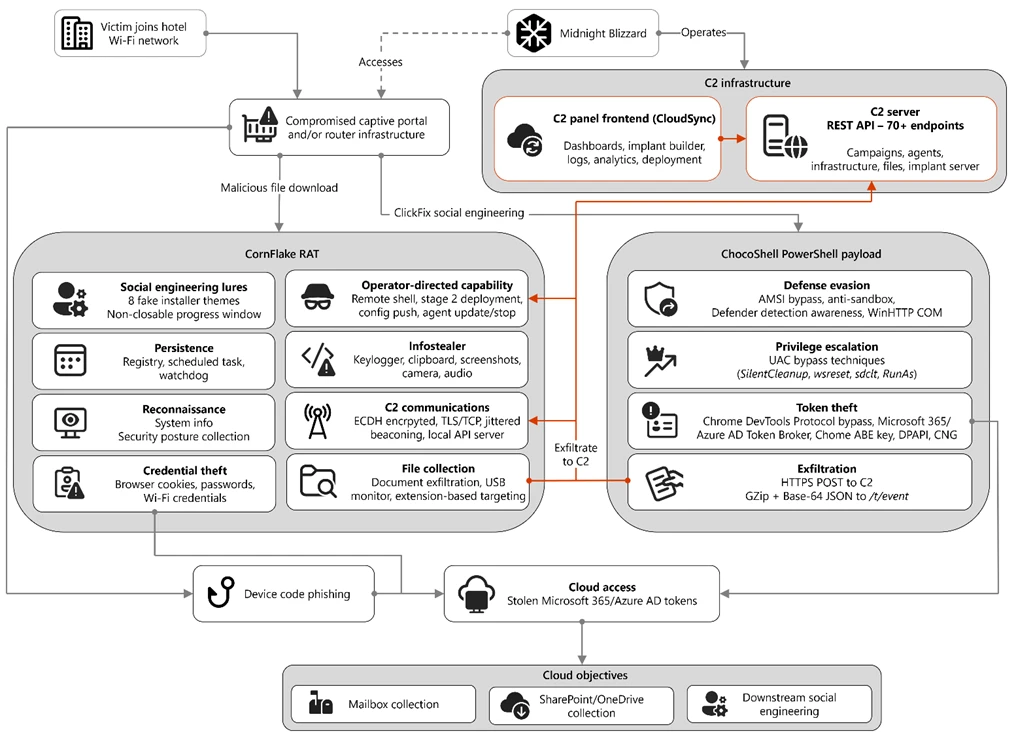
Figure 1. Overview of the CaptiveCrunch attack flow
As part of the CaptiveCrunch campaign, Storm-2945 has leveraged their AitM position to redirect users through actor-controlled phishing infrastructure and has also delivered malware purporting to be browser or operating system updates in response to automated connectivity checks issued by users’ browsers. Multiple variants have been delivered, including fully-featured Windows remote access trojans (RAT) in compiled Golang, with functionality to conduct system enumeration, collect files and keystrokes, steal credentials and session tokens, conduct audio and video surveillance, monitor for removable media, and provide the threat actor a remote shell on infected systems.
The threat actor infrastructure leverages a variety of ClickFix techniques to elicit the user into downloading and executing the malware:
Figure 2. ClickFix prompt with manual user instructionsFigure 3. ClickFix prompt with additional user instructions after verification failure
In addition to variants of malware targeting Windows systems, Microsoft Threat Intelligence is also aware of indications that the threat actor might be targeting Android devices with similar techniques as the ClickFix landings also include instructions for Android devices to download and install an APK file.
To date, Microsoft has identified widespread compromise of Wi-Fi networks at hospitality-related organizations and other networks serviced by captive portal equipment in several countries. ReliaQuest has identified this activity not only at hotels, but also conference centers and other shared venues, and assesses that the goal of this activity is to access the accounts of corporate travelers.
Storm-2945 and Midnight Blizzard
Microsoft Threat Intelligence assesses that Storm-2945 is an operational sub-cluster of Midnight Blizzard based on distinctive technical and operational overlaps. These include technical similarities to Storm-2372, a Midnight Blizzard initial access operations sub-cluster, also notable for their device code and OAuth code phishing operations tracked throughout 2025, Microsoft Graph-based email exfiltration, social engineering delivered via commercial messaging apps, and significant similarities in victimology.
Midnight Blizzard is a Russia-based threat actor attributed by the US and UK governments to the Foreign Intelligence Service of the Russian Federation, also known as the SVR. This threat actor is known to primarily target governments, diplomatic entities, non-governmental organizations (NGOs), and information technology (IT) service providers, primarily in the US and Europe. Midnight Blizzard is consistent and persistent in their operational targeting, and their objectives rarely change. Their focus is to collect intelligence through longstanding and dedicated espionage in support of Russian foreign policy interests.
Midnight Blizzard operations often involve compromise of valid accounts and, in some highly targeted cases, advanced techniques to compromise authentication mechanisms within an organization to expand access and evade detection. They utilize diverse initial access methods, and Midnight Blizzard is also adept at identifying and abusing OAuth applications to move laterally across cloud environments and for post-compromise activity, such as email collection.
CaptiveCrunch tradecraft and tooling
CornFlake: Remote access and infostealer implant
CornFlake is a full-featured Windows RAT written in Go that serves as Storm-2945’s primary persistent implant. Microsoft has observed the threat actor rapidly iterating on this malware layer, which features customizable capabilities from the social engineering user interface and data collection capabilities to anti-detection and evasion techniques.
On initial execution, CornFlake operates in dropper mode: it displays a convincing fake progress window designed to occupy the victim’s attention while the binary copies itself to %APPDATA%\svchost32\svchost32.exe and establishes persistence.
Fake window options configurable by the threat actor at build time:
winupdate — A Windows Update screen displaying “Working on updates… Don’t turn off your computer”
defender — A Windows Security virus scan
directx — A DirectX End-User Runtime Web Installer
vcredist — A Microsoft Visual C++ 2015-2022 Redistributable installer
sysopt — A disk optimization utility
netfix — A Windows Network Diagnostics tool
browser — A browser update prompt
pdfview — A document viewer installer
Figure 4. False update window
CornFlake registers as a Windows service named svchost32 with the display name “Cloud Sync Service” and description “Synchronizes files with the cloud storage provider”, deliberately mimicking the legitimate svchost.exe process. It establishes redundant persistence mechanisms: Windows service registrations, Registry Run keys, named scheduled tasks, and a persistence watchdog routine that runs continuously to restore any persistence mechanism that is removed by defenders or endpoint protection.
For command and control (C2), CornFlake performs an Elliptic Curve Diffie-Hellman (ECDH) P-256 ephemeral key exchange with the C2 server, derives a session key via SHA-256, and communicates over a custom JSON protocol framed within the encrypted channel. This provides an encrypted channel to the C2 server, with each C2 session using a unique ephemeral key, making decryption of captured traffic impossible without the session-specific private key. The runtime configuration file sync.dat supports hot reconfiguration of C2 servers, watched directories, file targeting patterns, and Transport Layer Security (TLS) settings without requiring redeployment.
Once established on a victim system, CornFlake provides the operator with a comprehensive collection toolkit, gated by configuration flags that allow selective activation post-deployment:
Capability
Description
Keylogging
Raw input API-based keylogger capturing all keystrokes, including password fields
Clipboard monitoring
Captures clipboard changes with SHA-256 deduplication and records the active window title at time of capture
Screenshot capture
Idle-triggered and on-demand screenshots with configurable idle threshold
Audio surveillance
Windows Audio Session API (WASAPI)-based microphone capture, encoded as WAV files
Video surveillance
Media Foundation-based webcam capture, encoded as JPEG
Browser credential theft
ChromeKatz-derived module supporting live cookie extraction from process memory (Chromium browsers) and stored password extraction from on-disk databases, including Chrome App-Bound Encryption (ABE) bypass and Firefox NSS/SDR decryption
File exfiltration
Targets files based on file extensions with real-time file system monitoring and an upload throttle (1,000 files or 500 MB per cycle). File extensions are categorized as Documents, Archives, Images, Code, Data, Emails, and Keys
USB drive monitoring
Detects and scans removable media when inserted
Security posture sweep
Collects 18 categories of host intelligence including installed software, antivirus (AV)/endpoint detection and response (EDR) products, Defender exclusions, User Account Control (UAC) level, Remote Desktop Protocol (RDP) history, Office most recently used (MRU) files, and credential hints
Remote shell
Arbitrary command execution via cmd.exe or PowerShell (with -NoP flag to suppress profile-based detection)
CornFlake also exposes a localhost HTTP API server (/upload, /reload, /status) that transforms the RAT into a modular platform: companion or next-stage payloads such as ChocoShell could task file exfiltration, trigger configuration hot reloads or check C2 connectivity using the pre-established secure C2 channel for communication.
ChocoShell: PowerShell infostealer
ChocoShell is the campaign’s Powershell-based infostealer, delivered and executed entirely in-memory. Its primary objective is the high-volume theft of browser session cookies, saved passwords, Microsoft 365 Single Sign-On (SSO) tokens, and Wi-Fi credentials from compromised systems. Where CornFlake provides the operator with a persistent, long-running foothold on the device, ChocoShell is designed to extract the most operationally valuable credentials, giving the operator access to victim cloud environments.
The ChocoShell script was authored with full developer comments that reveal the operator’s intent behind each code decision, including explicit references to Microsoft detection signatures and the reasoning behind specific evasion choices. The consistent coding standard and descriptive commentary suggest the author might have leveraged AI-assisted code generation.
Defense evasion. Upon execution, ChocoShell beacons to a hardcoded C2 server at 213.145.86[.]112 and implements several evasion techniques in sequence. It disables the Antimalware Scan Interface (AMSI) via .NET reflection to prevent ScriptBlock scanning and evades Microsoft behavioral detection that triggers on suspicious PowerShell web request cmdlets. A timing-based sandbox detection check is also employed as a virtual machine (VM) detection mechanism, silently exiting without performing any collection if detected.
C2 communication. ChocoShell communicates with its C2 server using HTTPS with URI paths designed to blend in with legitimate web traffic. Beacons use /t/pixel.gif?m=<status>, mimicking an image tracking pixel. Additional tooling is fetched from /cdn/chunks/polyfill-7e2b.min.js, disguised as a JavaScript polyfill file. This downloaded module is Base64-decoded and executed in memory via [ScriptBlock]::Create(), providing browser encryption key extraction capabilities, SYSTEM token impersonation, and Defender signature locking. Exfiltrated data is sent by POST to /t/event as GZip-compressed, Base64-wrapped JSON.
Privilege escalation. ChocoShell requires administrative privileges for its most impactful capabilities: SYSTEM token impersonation for Chrome ABE decryption, Volume Shadow Copy Service (VSS) shadow copy creation, Defender signature locking. It implements three silent UAC bypass techniques with ordered fallback:
SilentCleanup task hijack: Writes a malicious command to HKCU\Environment\windir, then triggers the built-in SilentCleanup scheduled task, which resolves %windir% from the user’s environment, executing the threat actor’s command at elevated privilege. The registry value is cleaned up after two seconds to avoid cloud detection.
wsreset.exe COM hijack: Creates a COM handler key in HKCU\Software\Classes and launches the auto-elevating Windows Store reset tool.
sdclt.exe folder hijack: Hijacks HKCU\Software\Classes\Folder\shell\open\command and launches the Windows Backup utility with the /KickOffElev flag.
If none of the silent bypasses succeed (for example, the user is not a local administrator), ChocoShell falls back to a visible UAC prompt via Start-Process -Verb RunAs. Notably, the script also contains a variant designed to execute within the WinGet Desired State Configuration (DSC) host process (ConfigurationRemotingServer), suggesting an attack vector through malicious WinGet DSC configuration used in Windows machine provisioning.
Credential and session theft. Once running with elevated permissions, ChocoShell locks Defender signature updates and systematically harvests data from multiple sources. For Chromium-based browsers (Chrome, Edge, Brave, Opera, Opera GX, Vivaldi), it extracts the master encryption key from the browser’s Local State file, handling both the modern ABE scheme (Chrome v127+) and the legacy data protection API (DPAPI)-only scheme. ABE decryption requires SYSTEM-level DPAPI access, which the malware obtains by impersonating a SYSTEM process token borrowed from winlogon.exe, wininit.exe, or services.exe. Locked browser SQLite databases are accessed through three strategies: shared file access, Volume Shadow Service snapshots, and direct copy as a fallback.
As a parallel collection path, ChocoShell launches Chrome, Edge, and Brave with the –remote-debugging-port flag and issues Network.getAllCookies through the Chrome DevTools Protocol (CDP). This completely bypasses ABE, enabling the browser to perform its own internal decryption and returns plaintext cookie values. To handle privilege issues (SYSTEM-launched browsers inherit the wrong token), the malware creates transient scheduled tasks with TASK_LOGON_INTERACTIVE_TOKEN to launch the browser under the signed-in user’s session. After extraction, the browser is stopped and relaunched with –restore-last-session to avoid alerting the user.
For Firefox family browsers (Firefox, Waterfox, LibreWolf, Floorp, Zen), the malware copies unencrypted cookies.sqlite databases from each profile. Additionally, ChocoShell collects Microsoft 365 and Azure Active Directory (AD) access tokens, refresh tokens, and Web Account Manager (WAM) tokens from .tbres files in the Token Broker cache. Collection of these tokens represents a significant threat to enterprise environments, as threat actors could replay SSO sessions without browser cookies. Additionally, Wi-Fi credentials are harvested via netsh wlan show profile with key=clear.
Exfiltration and cleanup. All collected data is aggregated into a JSON structure, GZip-compressed, Base64-encoded, and sent by POST to the C2’s /t/event endpoint. After exfiltration, all collected data variables are nulled, garbage collection is forced, VSS shadow copies are deleted via Windows Management Instrumentation (WMI), temporary elevation scripts are removed, and all UAC bypass registry keys (already cleaned during escalation) are verified removed.
FruitStone: Operator C2 panel
FruitStone is the web-based C2 panel that Storm-2945 operators use to manage the entire CaptiveCrunch campaign infrastructure. Implemented as a single-page application (HTML and JavaScript) serving as the front-end of the C2 server with all functionality exposed without authentication, FruitStone provides a centralized dashboard for managing compromised endpoints, building and deploying new campaign payloads, and reviewing all collected data (such as screenshots, keystrokes, browser credentials).
Operational cover. The panel is branded as “CloudSync Console” with a footer reading “Acuity Systems, Inc. — Cloud Infrastructure Portal v3.2.1,” designed to appear as legitimate enterprise cloud management software if the panel URL is discovered by defenders or hosting providers. This masquerading extends to the CornFlake agent’s service name (Cloud Sync Service) and description (“Synchronizes files with the cloud storage provider”), creating a consistent cover story across the toolchain.
Figure 5. CloudSync Console panel masquerade
Session management and multi-operator support. FruitStone uses JSON Web Token (JWT)-based authentication, session revocation, and rate limiting with IP blocking to prevent brute force attacks against the panel sign in. Multiple operators could be provisioned with individual accounts, and all active sessions are visible with IP address, user-agent, and creation time to enable operational security awareness across the operators.
Agent management. The panel displays all registered CornFlake agents in a dashboard with real-time status updates via Server-Sent Events (SSE). Each agent card shows comprehensive system information including hostname, username, OS version, CPU, RAM, disk usage, screen resolution, timezone, domain membership, and camera/microphone presence, all collected during the CornFlake posture sweep. Agents are grouped by country and subnet, with geographic distribution visualized on a map.
Operators could interact with individual agents through:
Remote shell — Interactive cmd.exe or PowerShell command execution with command history
File system browser — Live directory traversal and arbitrary file download from compromised hosts
Collection tasking — On-demand screenshot, process list, keylog buffer flush, clipboard dump, security posture survey, ChromeKatz cookie/password extraction, camera capture, and audio recording
Configuration push — Live runtime reconfiguration of C2 servers, watch paths, and C2 beacon timing
Agent update — In-place implant update by pushing a new CornFlake build to a running agent
Agent kill — Remote termination of the CornFlake implant
Campaign builder. A step-by-step wizard enables operators to configure and build new CornFlake payloads directly from the panel:
Identity — Campaign ID, C2 host and port, HTTP base URL, executable file name (svchost32.exe by default), and dropper type (C dropper at ~19 KB, Go stub at ~8 MB, or standalone self-installer)
File Paths — Configure targeted directories and file extensions by category (documents, archives, images, code, data, emails, encryption keys)
Figure 8. File paths tab
Evasion — Enable garble symbol randomization (for GoLang payloads), XOR string encoding, GZip upload compression, and debug mode
Figure 9. Evasion tab
Infrastructure management. FruitStone provides management interfaces for three layers of supporting infrastructure:
Proxy relays — Multi-proxy C2 relay architecture with TLS certificate tracking (fingerprint, expiry), health checks, connection counts, bytes forwarded, and rotation capabilities that push updated server lists to all online agents
Beacon profiles — Configurable timing profiles controlling agent sleep intervals, reconnection delays, TLS Server Name Indication (SNI) spoofing (like teams.microsoft.com), and DNS fallback domains
Staging servers — External payload hosting infrastructure with push-to-deploy, file listing, and health monitoring
Figure 10. View of the CloudSync staging servers interface
Device code abuse for cloud access
Since July 16, Microsoft has observed a portion of CaptiveCrunch landing pages redirecting users to device code authentication flow experiences. In these cases, users served these landings might be instructed to enter a device code into a legitimate Microsoft sign-in page, a technique commonly referred to as device code phishing.
Device code authentication is a legitimate OAuth workflow designed for devices that cannot support a traditional sign-in experience. However, threat actors could abuse this flow by initiating an authentication request on behalf of a user then convincing the user to enter an actor-controlled device code into a legitimate Microsoft authentication page. When successful, the victim authenticates the threat actor’s session rather than their own.
This activity is consistent with previously reported device code phishing operations conducted by Midnight Blizzard since August 2024. The observed technique does not appear fundamentally novel; however, integrating device code phishing into captive portal and traffic manipulation operations might increase the likelihood that users perceive the authentication request as legitimate. For additional details on Midnight Blizzard-related device code phishing techniques, see: Storm-2372 conducts device code phishing campaign. To understand other threat actors’ use of device code phishing and associated mitigations, see Inside an AI‑enabled device code phishing campaign.
How to protect against CaptiveCrunch activity
Minimize trust in hospitality and guest networks
When traveling, users should treat hotel, conference, airport, and other guest wireless networks as untrustworthy.
Prefer private connectivity (including mobile hotspots, satellite, and eSIM-based cellular data connections) over public Wi‑Fi whenever practical.
Consider using enterprise-managed travel routers or hotspot devices that establish encrypted tunnels back to trusted corporate infrastructure before accessing sensitive resources.
Avoid downloading software updates, certificates, browser updates, network troubleshooting tools, or security utilities presented through captive portals or other unexpected web prompts.
Verify update requests through trusted operating system mechanisms rather than pop-up messages or website prompts.
Strengthen identity and access controls
Organizations should assume that public and hospitality network infrastructure might not be trustworthy and should adopt controls that limit exposure to traffic manipulation, credential theft, and device code phishing.
Educate users to recognize ClickFix-style prompts, fake verification checks, and paste-and-run instructions as malicious, especially when they invoke command interpreters or script hosts such as cmd.exe, PowerShell, rundll32.exe, or mshta.exe.
Use passwordless solutions like passkeys and implement multifactor authentication (MFA).
Only allow device code flow where necessary. Microsoft recommends blocking device code flow wherever possible. Where necessary, configure Microsoft Entra ID’s device code flow in your Conditional Access policies.
Implement a sign-in risk policy to automate response to risky sign-ins. A sign-in risk represents the probability that a given authentication request is not authorized by the identity owner. A sign-in risk-based policy can be implemented by adding a sign-in risk condition to Conditional Access policies that evaluates the risk level of a specific user or group. Based on the risk level (high/medium/low), a policy can be configured to block access or force MFA.
When a user is a high risk and Conditional access evaluation is enabled, the user’s access is revoked, and they are forced to re-authenticate.
For regular activity monitoring, use Risky sign-in reports, which surface attempted and successful user access activities where the legitimate owner might not have performed the sign-in.
Use a Security Service Edge (SSE) solution like Global Secure Access to secure access to any app or resource using network, identity, and endpoint access controls.
Reduce exposure during captive portal registration
Organizations should review what information employees provide to hospitality providers when connecting to guest networks.
Do not reuse corporate credentials on hotel, conference, or guest-network registration pages.
Where possible, organizations should evaluate whether venue-provided wireless is required for corporate events and conferences.
Organizations should minimize unnecessary disclosure of employee identities, organizational affiliations, and travel details when booking accommodations or registering for guest network access, consistent with corporate policy and applicable local requirements.
Microsoft Defender detections and hunting guidance
Microsoft Defender customers can refer to the list of applicable detections below. Microsoft Defender coordinates detection, prevention, investigation, and response across endpoints, identities, email, apps to provide integrated protection against attacks like the threat discussed in this blog.
Microsoft Defender for Endpoint detects Storm-2945 activity under the detection Suspicious activity linked to a Russian state-sponsored threat actor has been detected. However, these alerts might be triggered by unrelated threat actor activity. The following chart lists Microsoft Defender detections specific to the TTPs utilized by Storm-2945 in this attack.
CornFlake registers a Windows service, a Registry Run key, a scheduled task
Microsoft Defender for Endpoint – Suspicious Scheduled Task Process Launched – Suspicious scheduled task – Suspicious file added to run key – Suspicious service registration
Microsoft Defender XDR – User account compromise via OAuth device code phishing – Malicious sign in from an IP address associated with recognized attacker infrastructure – Suspicious Azure authentication through possible device code phishing
Microsoft Security Copilot is embedded in Microsoft Defender and provides security teams with AI-powered capabilities to summarize incidents, analyze files and scripts, summarize identities, use guided responses, and generate device summaries, hunting queries, and incident reports.
Security Copilot is also available as a standalone experience where customers can perform specific security-related tasks, such as incident investigation, user analysis, and vulnerability impact assessment. In addition, Security Copilot offers developer scenarios that allow customers to build, test, publish, and integrate AI agents and plugins to meet unique security needs.
Threat intelligence reports
Microsoft Defender XDR customers can use the following threat analytics reports in the Defender portal (requires license for at least one Defender XDR product) to get the most up-to-date information about the threat actor, malicious activity, and techniques discussed in this blog. These reports provide the intelligence, protection information, and recommended actions to prevent, mitigate, or respond to associated threats found in customer environments.
Microsoft Security Copilot customers can also use the Microsoft Security Copilot integration in Microsoft Defender Threat Intelligence, either in the Security Copilot standalone portal or in the embedded experience in the Microsoft Defender portal to get more information about this threat actor.
Hunting queries
Microsoft Defender XDR
Microsoft Defender XDR customers can run the following advanced hunting queries to find related activity in their networks:
Detect file creation after Wi-Fi connectivity test on devices
The following query checks for a file creation on a device within two minutes of the device performing built‑in Network Connectivity Status Indicator (NCSI) test, which occurs when network connectivity is established to a Wi-Fi network with a captive portal. This activity might indicate an attacker’s initial access file presence on a device.
Please note that not all files discovered through this query might be malicious or related to this threat activity.
The following query checks for the CornFlake RAT Windows service registration.
DeviceRegistryEvents
| where RegistryKey has @"\SYSTEM\CurrentControlSet\Services\svchost32"
| where ActionType == "RegistryValueSet"
| where (RegistryValueName == "DisplayName" and RegistryValueData == "Cloud Sync Service")
    or (RegistryValueName == "Description" and RegistryValueData == "Synchronizes files with the cloud storage provider")
| project
    Timestamp,
    DeviceName,
    DeviceId,
    RegistryKey,
    RegistryValueName,
    RegistryValueData,
    ActionType,
    InitiatingProcessFileName,
    InitiatingProcessCommandLine,
    InitiatingProcessAccountName,
    ReportId
Microsoft Sentinel
Microsoft Sentinel customers can use the TI Mapping analytics (a series of analytics all prefixed with ‘TI map’) to automatically match the malicious domain indicators mentioned in this blog post with data in their workspace. If the TI Map analytics are not currently deployed, customers can install the Threat Intelligence solution from the Microsoft Sentinel Content Hub to have the analytics rule deployed in their Sentinel workspace.
Detect network IP and domain indicators of compromise using ASIM
The following query checks IP addresses and domain IOCs across data sources supported by ASIM network session parser:
//IP list and domain list- _Im_NetworkSession
let lookback = 30d;
let ioc_ip_addr = dynamic(["213.145.86.112"]);
let ioc_domains = dynamic(["213.145.86.112/t/pixel.gif", "213.145.86.112/cdn/chunks/polyfill-7e2b.min.js", "213.145.86.112/t/event"]);
_Im_NetworkSession(starttime=todatetime(ago(lookback)), endtime=now())
| where DstIpAddr in (ioc_ip_addr) or DstDomain has_any (ioc_domains)
| summarize imNWS_mintime=min(TimeGenerated), imNWS_maxtime=max(TimeGenerated),
  EventCount=count() by SrcIpAddr, DstIpAddr, DstDomain, Dvc, EventProduct, EventVendor
Detect web sessions IP and file hash indicators of compromise using ASIM
The following query checks IP addresses, domains, and file hash IOCs across data sources supported by ASIM web session parser:
//IP list - _Im_WebSession
let lookback = 30d;
let ioc_ip_addr = dynamic(["213.145.86.112"]);
let ioc_sha_hashes =dynamic([“918fa52ae45ed60ba7cc8bdc99c3cbe9ab92e0375ec31fc05d0d4513be11c593”, “be99857449d2856dd5a84e21c8a3d5e0e01456adb44062ddec5a6b4970d8d42c”]);
_Im_WebSession(starttime=todatetime(ago(lookback)), endtime=now())
| where DstIpAddr in (ioc_ip_addr) or FileSHA256 in (ioc_sha_hashes)
| summarize imWS_mintime=min(TimeGenerated), imWS_maxtime=max(TimeGenerated),
  EventCount=count() by SrcIpAddr, DstIpAddr, Url, Dvc, EventProduct, EventVendor
Detect domain and URL indicators of compromise using ASIM
The following query checks domain and URL IOCs across data sources supported by ASIM web session parser:
// file hash list - imFileEvent
// Domain list - _Im_WebSession
let ioc_domains = dynamic(["https://213.145.86.112/t/pixel.gif", "https://213.145.86.112/cdn/chunks/polyfill-7e2b.min.js", "https://213.145.86.112/t/event"]);
_Im_WebSession (url_has_any = ioc_domains)
ChocoShell C2 communications
The following query detects ChocoShell communications with its C2 server using HTTPS with URI paths designed to blend in with legitimate web traffic. Beacons use /t/pixel.gif?m=<status>, mimicking an image tracking pixel.
let lookback = 30d;
let ioc_url_artifacts = dynamic(["/t/pixel.gif?m="]);
_Im_WebSession(starttime=todatetime(ago(lookback)), endtime=now())
| where DstDomain  in (ioc_url_artifacts)
| summarize imWS_mintime=min(TimeGenerated), imWS_maxtime=max(TimeGenerated),
  EventCount=count() by SrcIpAddr, DstIpAddr, Url, Dvc, EventProduct, EventVendor
To hear stories and insights from the Microsoft Threat Intelligence community about the ever-evolving threat landscape, listen to the Microsoft Threat Intelligence podcast.

 Entrar