❌

Visualização normal

Antes de ontemSecurity Affairs

New wave of fridge cyberattacks hits European supermarkets, this time in Belgium, Luxembourg, Sweden and Estonia

2 de Novembro de 2026, 09:09

A new wave of fridge cyberattacks hit supermarket refrigeration systems across five European countries, raising temperatures and causing food losses.


A new wave of fridge cyberattacks has affected supermarket refrigeration systems in several European countries. Fridges and freezers suddenly rose in temperature overnight, with some incidents suspected to be caused by hackers. On Monday, November 2, Ahold Delhaize and Colruyt reported an IT incident affecting dozens of stores in Belgium and Luxembourg. Swedish supermarket chains ICA and Coop also reported similar problems.

“Ahold Delhaize and Colruyt said on Monday that an IT ​incident overnight hit fridges and freezers in dozens of stores in Belgium and Luxembourg, while Swedish grocers ‌ICA and Coop reported similar temperature spikes, with one store blaming a cyberattack.” Reuters states.

BREAKING: 🇸🇪 Swedish grocery giant ICA, one of Sweden's largest supermarket chains, says several of its stores have been hit by a cyberattack overnight, causing refrigerators and freezers to be remotely set to 50°C.

The incident has likely resulted in large quantities of food… pic.twitter.com/wrcmGHw1qV

— GeoInsider (@InsiderGeo) November 2, 2026

“Problems were discovered at several grocery stores in Sweden overnight Monday.” reported Sweden Herald.

“We are aware that a limited number of stores were affected by an incident overnight that affected their refrigeration and freezer systems. Ica is providing support in handling the incident, Ica Group press officer Gustaf Nilsson tells TT.”

The latest incidents follow a similar wave of fridge cyberattacks in France last month. In mid-October, a large cyberattack hit the refrigeration systems of hundreds of French supermarkets, BFMTV revealed. The attackers targeted equipment from the Danish maker Danfoss that many French stores use to regulate their cold. Fresh and frozen stock was destroyed, and the Paris prosecutor says there were also fires.

The method is simple and nasty. Refrigeration systems have a forced defrost function that clears ice buildup, and the attackers appear to have triggered it remotely in a continuous mode, with a temperature setting of 50 degrees. The equipment heated for several hours instead of keeping goods cold, and when staff opened the fridges and freezers in the morning, a sector source told BFM, “a wave of heat” came out.

The attack caused fires and food losses. However, cybersecurity consultant Emil Olofsson of Integrity 360 told Swedish news agency TT that temperatures reached 80°C in some cases and several units caught fire. This figure differs from the one reported by police.

ICA Kvantum in Sjöbo said on Facebook that a cyberattack caused the refrigeration problems. ICA Hägerstensåsen in Stockholm was also reportedly affected. According to the Sjöbo store, the temperature inside its fridges and freezers rose to 50°C.

In Belgium, Delhaize detected unusual temperature increases in its refrigeration systems on Monday. Spokesperson Sarah De Meester said the company is investigating the incident.

Stephan Moelans, CEO of Sabcobel, the company that manages Delhaize’s refrigeration systems, told news agency Belga that hackers had switched the units’ evaporators to defrost mode. His office declined to comment to Reuters. Colruyt Group, which operates Spar stores in Belgium through a franchise system, said five stores had suffered attacks on their refrigeration systems. Meanwhile, Belgian newspaper Le Soir reported that dozens of Delhaize and Carrefour stores were affected.

🇧🇪🇸🇪 UPDATE: REFRIGERATION DISRUPTIONS SPREAD ACROSS EUROPE – SWEDEN AND BELGIUM AFFECTED

IN SWEDEN:
• At least 6 ICA supermarkets affected by suspected refrigeration system hacks.
• Coop has now CONFIRMED that 6 of its stores in central Sweden are also affected.
• Freezer… https://t.co/a3oGMrGdmz pic.twitter.com/8Q3CFDDLhT

— Coffe Report (@CoffeReport) November 2, 2026

It follows a similar attack in France last month. Police said hackers seized control of the cooling units at hundreds of supermarkets and raised temperatures as high as 50 degrees Celsius (122 Fahrenheit), which caused fires and food losses. Cybersecurity consultant Emil Olofsson of Integrity 360 told TT, Sweden’s news agency, that temperatures there reached 80 degrees and some units caught fire, a figure that differs from the police number.

In Belgium, Delhaize noticed temperature increases in its cooling systems on Monday, spokesperson Sarah De Meester said, and the company is investigating. Stephan Moelans, CEO of the refrigeration firm Sabcobel, which runs Delhaize’s systems, told the news agency Belga it was a cyberattack that switched the units’ evaporators to defrost mode. His office declined to comment to Reuters. Colruyt Group, which runs Spar stores in Belgium under a franchise system, said five shops had their fridge systems attacked, and Le Soir reported that dozens of Delhaize and Carrefour stores were affected.

Ahold also reported a cybersecurity incident to Dutch police last month, after it detected suspicious activity in its infrastructure. Nothing in the reporting ties that report to Monday’s incident.

🇧🇪🧊🇸🇪 Fridges and freezers at dozens of supermarkets in Belgium and Sweden overheated overnight in a suspected cyberattack, similar to the one that hit French stores three weeks ago. Delhaize calls it an "IT incident."

Delhaize said about 40 of its Belgian stores were affected… pic.twitter.com/qzw6uDybWb

— 🔥🗞The Informant (@theinformant_x) November 2, 2026

In Sweden, John Billow, head of the national cybersecurity centre, told Reuters his team was working on several incidents involving refrigeration systems in grocery stores around the country. An ICA Kvantum store in Sjöbo said on Facebook that a cyberattack caused its problems, and an ICA store told its followers that its temperatures had been “hacked” overnight and set to 50 degrees. Fifty degrees is fine for a beach and poor for ice cream. That store later said it had opened.

At ICA Baronen in Stockholm, a notice said all the freezers were broken because of a cyberattack. The sales manager said the attack came at 2 a.m. and staff noticed it at 5:30 a.m. ICA Hägerstensåsen in Stockholm was reportedly hit too.

ICA said only a limited number of stores were affected and that it is helping them deal with the incident. However, press officer Gustaf Nilsson did not say how many stores were involved.

Coop told Swedish news agencies Aftonbladet and TT that six stores in central Sweden had similar problems. Press manager Carlos Cancino said it was still unclear whether any food would need to be thrown away or whether the refrigeration units had simply stopped working or had switched to heating mode. He also did not rule out further incidents affecting other stores.

An Estonian supermarket chain was also affected. Its refrigeration systems were reportedly set to 50°C, technology provider Kitman Coldtech told public broadcaster ERR. CEO Jann Mutso did not reveal the name of the supermarket chain, saying: “This is very recent. It happened this morning.”

How did the attackers get in? In France, Olofsson says they obtained login details for the control systems, which were exposed directly to the internet. He says the attack targeted a product that controls the cooling systems and that the hack isn’t very complicated, so amateurs may have carried it out.

Billow says Swedish authorities have noticed in recent weeks that quite a lot of exposed operational technology devices exist in Sweden, and they’ve been clear that these must be updated or patched.

Refrigerators and heating systems, security cameras and alarm networks were once largely mechanical, and now they can be monitored and controlled remotely. That gives cybercriminals new openings. Authorities haven’t said who was behind last month’s incidents, and nobody has claimed responsibility.


The Sweden Herald reported that the cause of the attacks on Swedish supermarkets remains unknown.

Update 20:00 Rome Time

The company at the center of the European supermarket refrigeration cyberattacks is Danfoss the same company whose refrigeration systems were targeted during the cyberattacks in France a few weeks ago.

Danfoss says the incidents are primarily exploiting vulnerabilities in… pic.twitter.com/3tDNVMOyhn

— GeoInsider (@InsiderGeo) November 2, 2026

Follow me on Twitter: @securityaffairs and Facebook and Mastodon

Pierluigi Paganini

(SecurityAffairs – hacking, fridge cyberattacks)

  • ✇Security Affairs
  • US Probes Suspected Hack Behind Military Base Freezer Failures Pierluigi Paganini
    The Pentagon treats August freezer failures at US military bases as a suspected hack and is working with French investigators after a supermarket attack. The Pentagon is investigating freezer failures that spoiled food at US military bases in August as a suspected cyberattack, according to four officials who spoke to Reuters. One official said US investigators are also in contact with French authorities about a similar attack on commercial freezers that disrupted supermarkets in France earli
     

US Probes Suspected Hack Behind Military Base Freezer Failures

29 de Outubro de 2026, 18:58

The Pentagon treats August freezer failures at US military bases as a suspected hack and is working with French investigators after a supermarket attack.

The Pentagon is investigating freezer failures that spoiled food at US military bases in August as a suspected cyberattack, according to four officials who spoke to Reuters. One official said US investigators are also in contact with French authorities about a similar attack on commercial freezers that disrupted supermarkets in France earlier this month. This is the first time Reuters has reported that the US incident is being treated as a suspected cyberattack.

“The Pentagon is ​treating the spate of mysterious freezer malfunctions that spoiled food at military bases across the United States in August as a suspected hack, according to four officials familiar ‌with the matter.” Reuters reports.

“One of the officials said the military investigators were in touch with their French counterparts about a similar cyberattack on commercial freezers that disrupted supermarkets there earlier this month.”

It is still unclear who is behind the attacks. Reuters could not determine how far the investigation has progressed or whether investigators have identified the cause or those responsible. The Pentagon said a unit of US Cyber Command is working closely with other government agencies and law enforcement. The Army’s Criminal Investigation Division confirmed that its Cyber Field Office is involved and is working with French law enforcement to investigate the freezer outages in Europe.

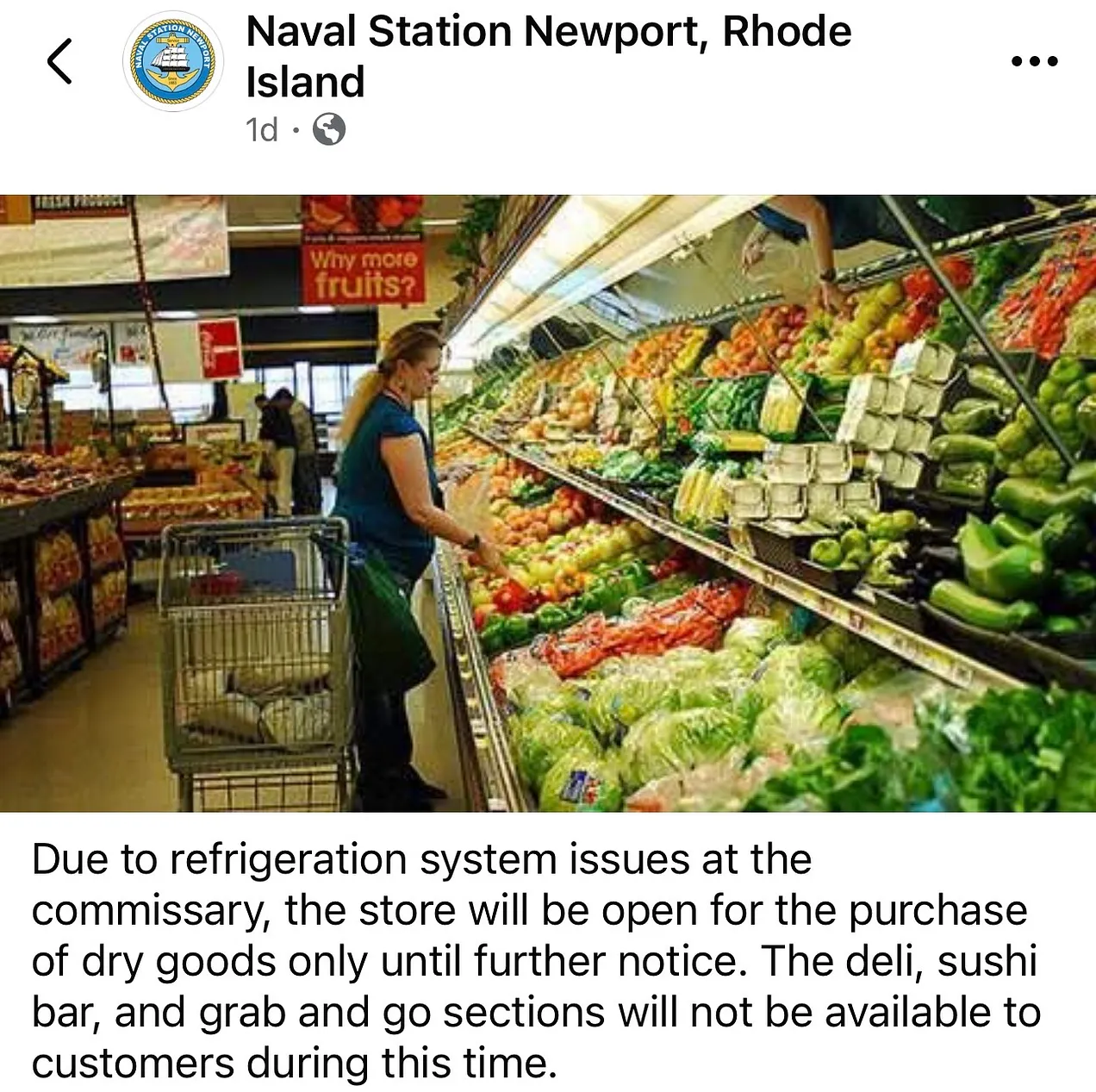
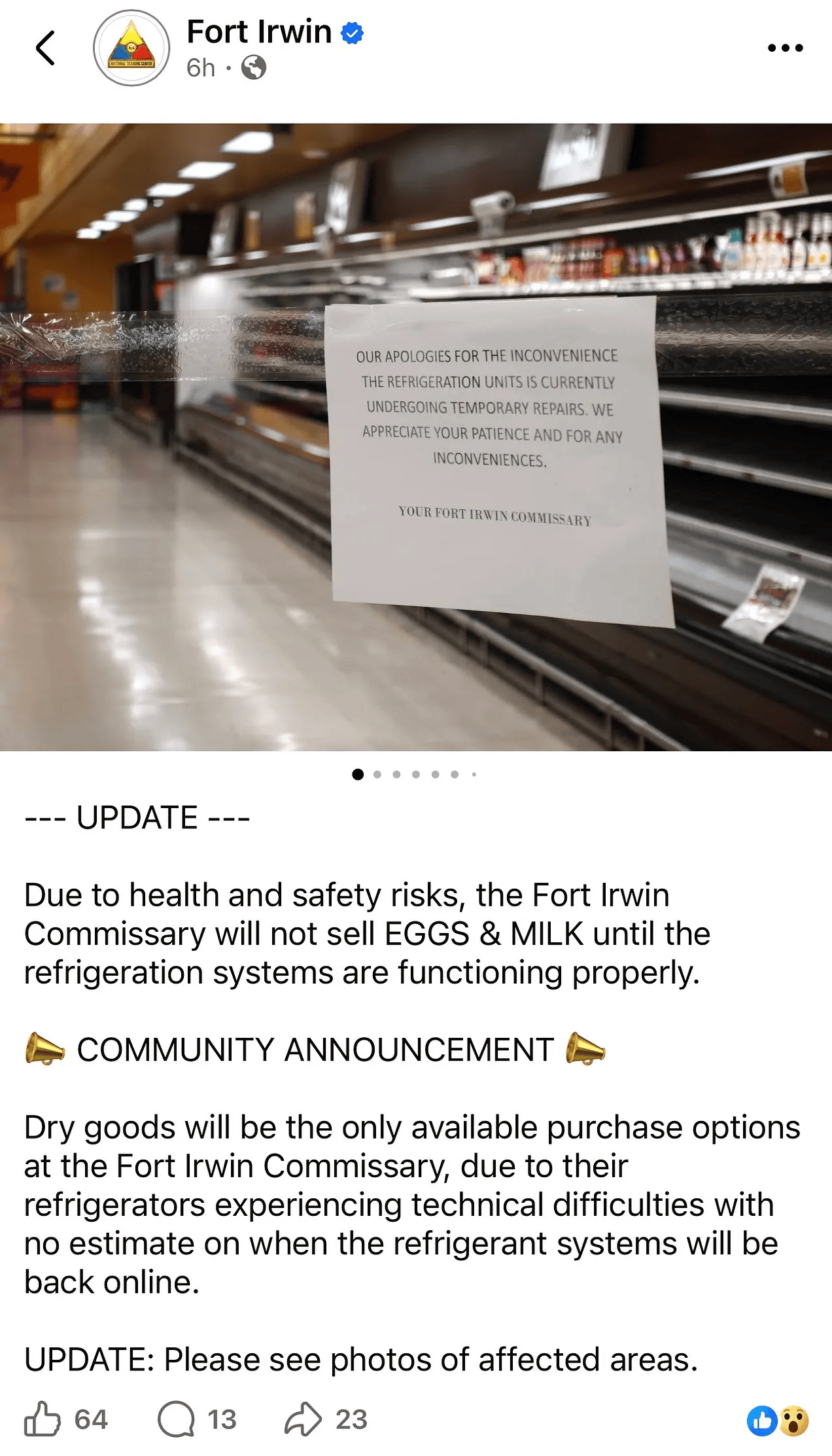
The incidents hit commissaries, the on-base stores where military personnel buy food. At least six were affected in late August, according to Reuters’ review of the bases’ Facebook posts and website updates. Stars and Stripes named Fort Irwin, F.E. Warren, Naval Station Newport, Columbus and Travis among the confirmed stores, and some outlets count up to 14 sites in 11 states, though not all are confirmed.

In at least one case the freezers didn’t just stop. Their temperatures were cranked up overnight, which left mounds of wilted or melted food in the morning. Fort Huachuca in Arizona said on August 26 that its freezer went into defrost mode and heated up all the food, adding that trust us when we say it was spoiled.

The Pentagon wasn’t the first to speak. A recently created blog called Signal and Silence reported the freezer failures and the possibility of sabotage on August 28, while Stars and Stripes reported the involvement of military investigators and Britain’s Daily Telegraph reported the contacts with the French. The French Embassy in Washington had no comment. Frozen food is the one asset where damage takes hours and evidence takes the form of puddles.

The French attack is the clearest example. Hackers took control of the cooling units in more than 350 stores and raised the temperatures. Frozen food aisles were emptied, and some units got so hot they caught fire. One supermarket owner said the total cost could reach tens of millions of euros.

The same thing happened in Arizona: attackers made the units hotter instead of just turning them off.

Reuters could not tell which brand was used at the US bases, and Danfoss, which is the manufacturer targeted in French supermarket attacks, did not reply. A public research report on Danfoss controllers came out before the incidents, but nothing shows a link to the bases.

There is a history of attacks on refrigeration systems. Danfoss reports that hackers targeted supermarkets in Russia and Israel in 2022 by exploiting outdated cooling controllers. In December 2025, US prosecutors accused a Ukrainian woman of belonging to a hacking group that disrupted refrigeration at a meat plant in 2024, ruining more than 2,000 pounds of meat.

Earlier this year, the Global Food Safety Initiative urged food safety experts and IT leaders to work together to protect refrigeration systems.

Follow me on Twitter: @securityaffairs and Facebook and Mastodon

Pierluigi Paganini

(SecurityAffairs – hacking, Military Base Freezer)

  • ✇Security Affairs
  • Attackers Take Control of Dahua Cameras and Video Recorders Via Easy4IP Pierluigi Paganini
    Ukraine warns that attackers can remotely access Dahua cameras and recorders via Easy4IP, viewing video and changing settings. Ukraine’s cyber incident response team CERT-UA has warned about attackers taking over video surveillance systems made by Dahua. In its alert dated October 23, 2026, it reports unauthorized remote access to IP cameras and video recorders. The attackers have watched the live video, changed device settings and created accounts of their own. The alert doesn’t say who was
     

Attackers Take Control of Dahua Cameras and Video Recorders Via Easy4IP

27 de Outubro de 2026, 06:56

Ukraine warns that attackers can remotely access Dahua cameras and recorders via Easy4IP, viewing video and changing settings.

Ukraine’s cyber incident response team CERT-UA has warned about attackers taking over video surveillance systems made by Dahua. In its alert dated October 23, 2026, it reports unauthorized remote access to IP cameras and video recorders. The attackers have watched the live video, changed device settings and created accounts of their own. The alert doesn’t say who was targeted or how many devices are affected.

The attackers abused Easy4IP, Dahua’s cloud feature that lets users access devices remotely. When this feature is enabled, the camera or recorder connects to Dahua’s cloud and registers using its serial number. Anyone who knows the serial number may be able to access the device through the cloud, without needing an open port or a public IP address. This means the connection can bypass the protection normally provided by a router’s firewall.

As a result, a camera that isn’t directly exposed to the internet may still be at risk. CERT-UA warns that devices with Easy4IP enabled may be vulnerable even when they cannot be accessed directly from the internet.

“The main vector is the P2P/cloud access function (Easy4IP). The device independently initiates an outgoing connection to the manufacturer’s cloud infrastructure and registers in it by serial number. Access to the device is then established via the cloud by serial number, bypassing NAT and firewall, without published ports and a “white” IP address.” reads the report published by CERT-UA. “Thus, the lack of direct access from the Internet does not guarantee the security of the device with the active P2P function.”

Serial numbers follow predictable patterns, so attackers may be able to guess them automatically and check which devices are registered in the cloud. Simply keeping a serial number private isn’t enough to ensure security.

Once attackers connect to a device, they need to get past its login. They may try common or weak passwords or exploit security flaws in outdated firmware, especially CVE-2021-33044 and CVE-2021-33045. These two vulnerabilities allow attackers to bypass authentication without a password, so even a strong password won’t protect a device running vulnerable firmware.

There are three signs that a device may have been compromised. First, look for accounts you don’t recognize. Second, check for changed settings, including text added over the video image. However, the absence of these labels does not mean the device is safe. Third, check the audit logs for logins using Dahua’s DVRIP protocol from the local address 127.0.0.1, which can indicate access through the cloud service.

CERT-UA recommends four steps:

  1. Turn off P2P and cloud access if you don’t use it.
  2. Keep cameras off the internet. For remote access, use a VPN and allow only authorized IP addresses.
  3. Check the account list for ones you didn’t create, and check which cloud accounts are linked to the device and disconnect unknown ones.
  4. Update the software by hand to the latest version, and set up a regular update routine.


CERT-UA advises organizations that detect signs of unauthorized access to report them to cert@cert.gov.ua and check all Dahua devices on their networks, including those that may have been forgotten. The agency warns that all devices with active P2P functionality are at risk.

Follow me on Twitter: @securityaffairs and Facebook and Mastodon

Pierluigi Paganini

(SecurityAffairs – hacking, IP cameras)

  • ✇Security Affairs
  • 16-Year-Old Broadcom Wi-Fi Bug Lets Attackers Take Over Routers Without a Password Pierluigi Paganini
    A Broadcom Wi-Fi flaw dating back to 2010 allows attackers within Wi-Fi range to execute code on vulnerable routers without authentication. Researcher Quentin Kaiser presented a talk at Hexacon in Paris documenting a vulnerability in Broadcom’s proprietary 802.11 implementation that has been present in their SDK since at least 2010. The bug allows an attacker to get unauthenticated remote code execution on affected routers without knowing the WiFi password or going through the normal WPS set
     

16-Year-Old Broadcom Wi-Fi Bug Lets Attackers Take Over Routers Without a Password

18 de Outubro de 2026, 21:36

A Broadcom Wi-Fi flaw dating back to 2010 allows attackers within Wi-Fi range to execute code on vulnerable routers without authentication.

Researcher Quentin Kaiser presented a talk at Hexacon in Paris documenting a vulnerability in Broadcom’s proprietary 802.11 implementation that has been present in their SDK since at least 2010. The bug allows an attacker to get unauthenticated remote code execution on affected routers without knowing the WiFi password or going through the normal WPS setup process.

As of October 15, 2026, none of the affected devices in Belgium had received a patch.

“A vulnerability affecting Broadcom’s proprietary implementation of 802.11 has been present in their SDK since at least 2010. An incomplete patch was silently released in 2018, followed by Broadcom’s recommendation to move to hostapd instead, making it a definitive forever day on eCos-based platforms (BCM3380, BCM3383, BCM33834) and a potential forever day on Linux platforms (BCM3390, BCM65xx, BCM68xx) unless affected Original Equipment Manufacturers (OEMs) are willing to migrate.” states Kaiser. “The vulnerability can be triggered remotely over WiFi without knowledge of the network key or completion of a normal WPS enrollment. Exploitation provides controlled information disclosure and arbitrary code execution.”

The vulnerability affects the WPS EAP reassembly code, which handles part of the wireless setup process used by many consumer routers. An attacker within Wi-Fi range can exploit the flaw without knowing the Wi-Fi password, completing the setup process, or requiring any action from the user. The attack can expose information and allow the attacker to run code on the router. In his demonstration, Kaiser extracted the Wi-Fi password from the router’s memory and sent it over the wireless connection. He then used the password to connect to the network.

These attacks are not just theoretical. Kaiser demonstrated working exploits against two devices: the Orange Belgium ASKEY TCG3000 and the Proximus Sagemcom F@st/BBOX3V+. Both allowed an attacker to run code without authentication. In one demonstration, the attacker opened a reverse shell using only Wi-Fi frames, without needing a command server accessible over the internet. The attack can work from a distance. The close antenna placement shown in the video was only for the laboratory setup and is not a requirement for the attack.

In the video below, Kaiser exploited an Orange Belgium router (ASKEY TCG3000). The attack allowed him to run code on the device without authentication. The code retrieves the Wi-Fi password (PSK) from the router’s NVRAM and sends it back to the attacker over Wi-Fi. He then used the stolen password to connect to the network, confirming that the exploit works and that the password is correct.

Do not be misled by how close the antenna is in the video. The attack can work over much longer distances.

In the next video, the researcher exploited a Proximus router (BBOX3V+, also known as Sagemcom F@st). This attack also allows code execution without authentication. He used it to open a reverse shell over Wi-Fi frames, without needing a command-and-control (C2) server hosted in the cloud.

Broadcom quietly released an incomplete fix in 2018, then told customers to migrate to a different software stack entirely rather than shipping a complete patch for their own code. On eCos-based platforms, covering chipsets like BCM3380, BCM3383, and BCM33834, that makes this a permanent unfixable bug by design. On Linux-based platforms (BCM3390, BCM65xx, BCM68xx) the situation depends entirely on whether individual manufacturers decide to act.

Kaiser reported the bugs to Broadcom in July 2026. Broadcom said a patch was available and told him to ask the affected device manufacturers to contact Broadcom directly. The company refused to assign a CVE or share the notification it had sent through its customer portal. CERT/CC opened a case but closed it the same day after confirming that Broadcom could assign CVEs itself and had no intention of doing so. This was not a proper disclosure process. It was a dead end, with a paper trail.

Kaiser’s rough calculation, done with Belgian telecom market data, puts the affected device count at around 850,000 for Proximus, 500,000 for VOO’s legacy fleet, and 210,000 for Orange Belgium, totalling somewhere north of 1.5 million potentially exposed gateways in one small country. Telenet may also be affected through Sagemcom devices but Kaiser couldn’t confirm because he couldn’t get hold of one.

The affected manufacturers sell into markets well beyond Belgium. The chipsets in question appear in devices across dozens of vendors and hundreds of products worldwide. Kaiser is publishing a fingerprinting script and a YARA rule specifically to help map the full scope of affected deployments, because right now nobody has a complete picture.

A vulnerability introduced in 2010 and only partly fixed in 2018 still affects routers in use today. Kaiser says AI-assisted analysis helped him find the bugs in less than a week, instead of months. This can help defenders find vulnerabilities faster, but attackers can do the same.

The risk is greatest in targeted attacks where an attacker is within Wi-Fi range, such as hotel network attacks or surveillance of nearby targets. Compromised routers are difficult to monitor, and attackers can quietly intercept or collect network traffic. Most users and security teams rarely check the firmware on ISP-provided routers.

“Although I could have done this research by myself, it would have taken me months to get there. With AI frontier models it took me less than a week.” Kaiser concludes. “Which is a good thing because we can start looking into deeper and deeper layers of our technical infrastructure for a fraction of the cost.”

Follow me on Twitter: @securityaffairs and Facebook and Mastodon

Pierluigi Paganini

(SecurityAffairs – hacking, Broadcom Wi-Fi)

  • ✇Security Affairs
  • Anthropic Shows How Small AI Models Could Replicate Across IoT Devices Pierluigi Paganini
    Anthropic researchers show how small AI models could autonomously replicate across IoT devices, raising concerns about adaptive, AI-powered botnets. Anthropic published a paper this week that should make anyone who manages IoT infrastructure sit down for a moment. The research shows that small AI models are approaching the capability to replicate themselves autonomously across networks of cheap, poorly secured devices, the kind of Android TV boxes that sell for fifty dollars on Amazon. T
     

Anthropic Shows How Small AI Models Could Replicate Across IoT Devices

13 de Outubro de 2026, 11:30

Anthropic researchers show how small AI models could autonomously replicate across IoT devices, raising concerns about adaptive, AI-powered botnets.

Anthropic published a paper this week that should make anyone who manages IoT infrastructure sit down for a moment. The research shows that small AI models are approaching the capability to replicate themselves autonomously across networks of cheap, poorly secured devices, the kind of Android TV boxes that sell for fifty dollars on Amazon.

The team ran a 26 billion parameter model, Gemma4-26B-A4B, distributed across 15 off-brand Android TV boxes networked together. It worked. The boxes collectively ran inference at 0.39 tokens per second, slow by any normal standard, but functional, and that’s the point.

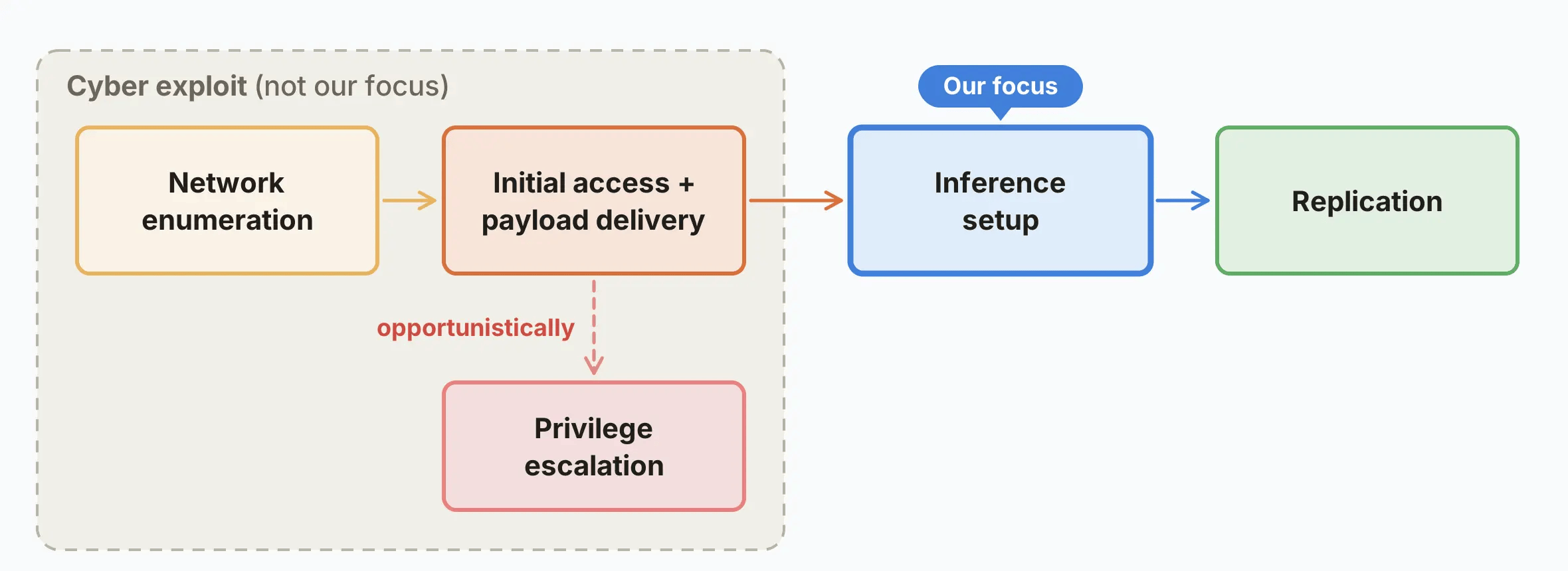
The researchers broke autonomous replication into four steps: finding devices on a network, gaining access, setting up the AI model on a new device, and repeating the process. Previous studies had already shown that small models can handle many of the hacking tasks involved. This paper looks at a different question: can a model work out how to run itself on unfamiliar hardware? That’s a key ability for an AI worm that can spread across different devices.

A model with 9 billion parameters successfully set up inference on 8 of the 9 hardware types tested. Models with 30 billion parameters or fewer can already handle many of the individual steps needed for replication, although they still struggle to complete the entire process without errors. In the tests, only one model, GLM-5.2, reliably completed the full process from scratch. It spread to all 8 nodes in 4 out of 5 trials.

The researchers plotted the capability trend of small open-weight models against their release dates and drew a line.

“In our simplified evaluations, GLM-5.2 and stronger models are capable of end to end replication. If small models improve at their historical rate, they’ll match this capability level by the end of this year.” Anthropic states. “Small weight-based replicators may be possible soon after.”

That’s the capability floor for reliable autonomous replication. The ceiling, how small the model needs to be to actually fit on the target devices, is already met by models like Qwen3.5-9B and Gemma4-26B-A4B on standard 4GB TV boxes.

Right now the floor and ceiling don’t overlap. The paper’s estimate is that they will, soon.

Past botnets like Mirai or Kimwolf, which infected over two million Android TV boxes at its peak, were hardcoded for specific device types and specific exploits. An AI-based replicator isn’t tied to any particular hardware or operating system.

“Hard-coded botnets like the Kimwolf botnet each target a specific type of device – in Kimwolf’s case, Android TVs and mobile devices. An AI botnet isn’t tied to any particular hardware or software type, as evidenced by small models being able to set up inference engines on machines from a Jetson Nano to a Mac (see the table in section A).” states the paper. “We expect AI botnets to infect more than IoT devices, and to use weight-based replication as just one strategy in their playbook. AI botnets could also act intelligently to counter defenders, but we haven’t tested this.”

This is exactly what makes it categorically harder to stop than anything a traditional worm can do. A hardcoded worm hits a wall when it encounters an unfamiliar device. A capable agent figures it out.


The spread is slow, taking days rather than hours for each infection cycle. The paper compares it to a slime mold, spreading gradually across a network rather than all at once. This slower pace could make the threat harder to spot. However, the process would still leave signs, including large data transfers between devices that rarely communicate, unusual scanning activity, and continuous traffic between devices.

The researchers also tested whether these models learn as they spread. Each instance keeps notes on what it tried and what failed, then passes those notes to the next copy. A Qwen3.5-9B lineage started at a 45 percent success rate on a setup task and climbed to between 61 and 84 percent across six generations. It’s not dramatic improvement, but it’s real, and it’s the kind of adaptation no traditional malware can do on its own.

Giving the small models access to a more powerful advisor model didn’t help, which is an interesting finding in itself. Small models don’t know what questions to ask, so access to better answers doesn’t move the needle. The paper suggests that coordination is more likely to work the other way, a large model handling high-level decisions while small ones act as its hands across compromised devices.

From the defensive perspective, the paper is clear that this threat isn’t unmanageable, at least not yet. Driving the replication rate below one new infection per existing infection, the same basic math that applies to disease epidemics, is the goal. Network anomaly detection at the ISP level caught the Mirai botnet, and the same approach would flag a weight-based replicator given the sheer volume of data it would move around. One remediation campaign against Mirai cleared 92 percent of infections within 14 days by quarantining infected subscribers and walking them through cleanup.

“Quarantining infected subscribers involved restricting their networks to only being capable of reaching a short whitelist of sites, and otherwise redirecting their browsers to cleanup instructions.” state the researchers. “This cleared 92% of infections within 14 days, against 74% with no notification. We’d expect quarantining to be similarly effective for an initial defense against a weight-based replicator. Eliminating the replicator completely would mean coordinating across every ISP with an infected network, which is difficult.”

Longer term, the paper points to device manufacturers and regulators as the real leverage point. Default passwords that comply with security baselines, mandatory firmware updates, and stricter IoT certification requirements all shrink the pool of targets before any worm gets a chance to scan them. The UK already made default IoT passwords non-compliant. More countries doing the same would matter.

“The capabilities that make AI models generally powerful coding agents also generalize to cyber tasks, including autonomous replication. Like coding agents in 2024, we’re seeing signs of life for AI worms.” concludes the paper. “We don’t yet have a full rogue replicator, but agents are becoming increasingly capable of completing the individual steps in the replication chain (and passing on their adaptations to future copies of themselves).”

Follow me on Twitter: @securityaffairs and Facebook and Mastodon

Pierluigi Paganini

(SecurityAffairs – hacking, botnet)

❌
❌