❌

Visualização normal

Antes de ontemSecurity Boulevard
  • ✇Security Boulevard
  • Sandhills Medical Foundation Ransomware Breach Draws Class Action Investigation Nearly a Year Later Evan Rowe
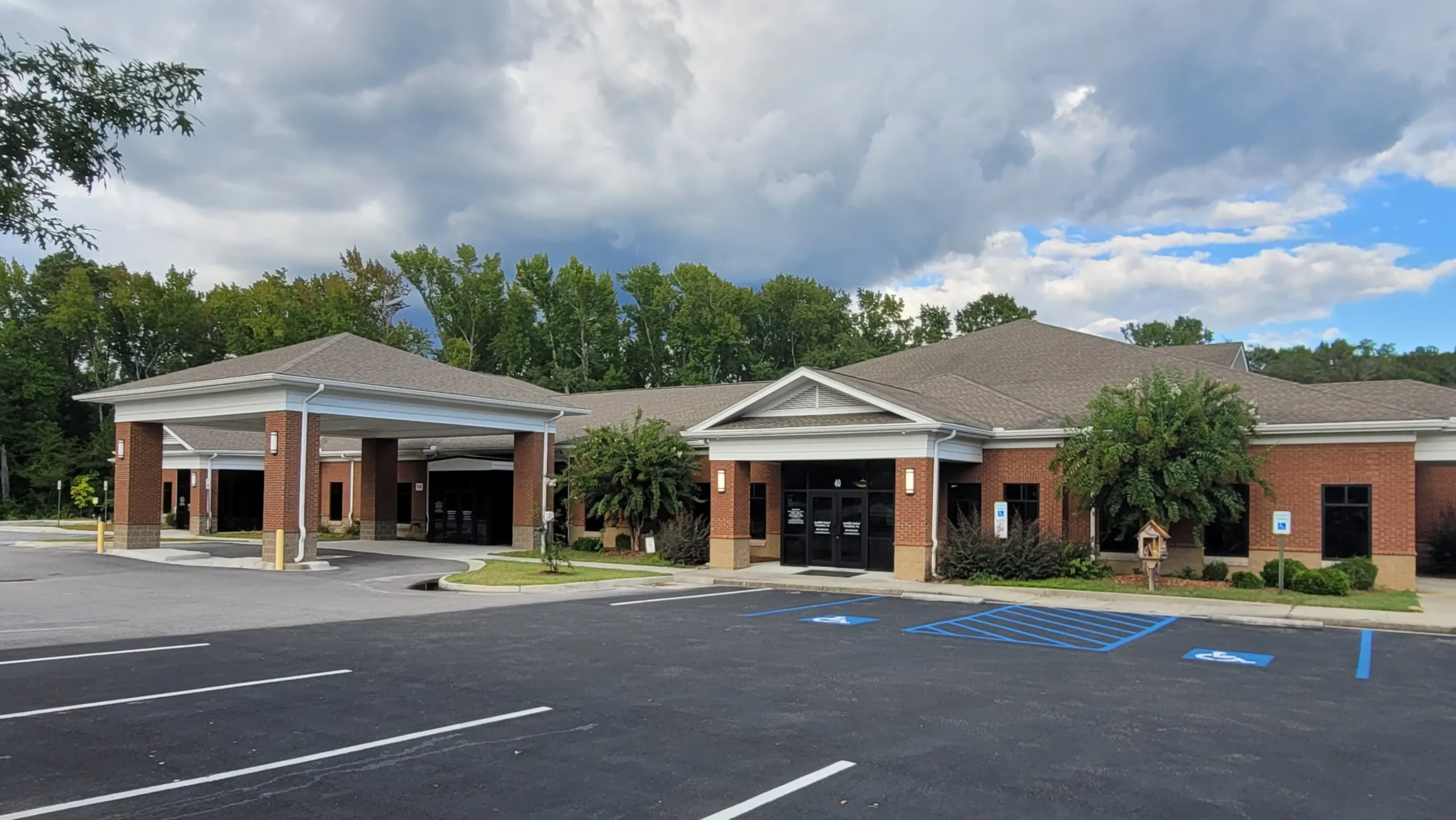
    What happened A ransomware attack on Sandhills Medical Foundation, a Federally Qualified Community Health Center in McBee, South Carolina, is now the subject of a class action investigation, nearly a year after the incident was first discovered. Sandhills Medical discovered the ransomware attack on May 8, 2025. A forensic investigation determined that an unauthorized third […] The post Sandhills Medical Foundation Ransomware Breach Draws Class Action Investigation Nearly a Year Later appeared fi
     

Sandhills Medical Foundation Ransomware Breach Draws Class Action Investigation Nearly a Year Later

4 de Maio de 2026, 05:59

What happened A ransomware attack on Sandhills Medical Foundation, a Federally Qualified Community Health Center in McBee, South Carolina, is now the subject of a class action investigation, nearly a year after the incident was first discovered. Sandhills Medical discovered the ransomware attack on May 8, 2025. A forensic investigation determined that an unauthorized third […]

The post Sandhills Medical Foundation Ransomware Breach Draws Class Action Investigation Nearly a Year Later appeared first on CISO Whisperer.

The post Sandhills Medical Foundation Ransomware Breach Draws Class Action Investigation Nearly a Year Later appeared first on Security Boulevard.

  • ✇Security Boulevard
  • Introducing Proactive Hardening and Attack Surface Reduction (PHASR) for Linux and macOS Grzegorz Nocoń
    As Linux dominates cloud-native infrastructure and macOS becomes the standard for high-value targets in development and executive leadership, the attack surface is no longer Windows-centric. Modern attack playbooks weaponize Living off the Land (LOTL) binaries–pre-installed, legitimate system tools–to blend malicious activity with normal operations and bypass standard detection telemetry. The post Introducing Proactive Hardening and Attack Surface Reduction (PHASR) for Linux and macOS appe
     

Introducing Proactive Hardening and Attack Surface Reduction (PHASR) for Linux and macOS

25 de Abril de 2026, 20:24

As Linux dominates cloud-native infrastructure and macOS becomes the standard for high-value targets in development and executive leadership, the attack surface is no longer Windows-centric. Modern attack playbooks weaponize Living off the Land (LOTL) binaries–pre-installed, legitimate system tools–to blend malicious activity with normal operations and bypass standard detection telemetry.

The post Introducing Proactive Hardening and Attack Surface Reduction (PHASR) for Linux and macOS appeared first on Security Boulevard.

  • ✇Security Boulevard
  • The Dark Web Explained with John Hammond Tom Eston
    The dark web is often misunderstood, but it plays an important role in both privacy technology and cybercrime activity. In this episode, Tom Eston speaks with cybersecurity researcher and educator John Hammond about what the dark web actually is and how it has evolved in recent years. The discussion covers underground marketplaces, ransomware leak sites, […] The post The Dark Web Explained with John Hammond appeared first on Shared Security Podcast. The post The Dark Web Explained with John Hamm
     

The Dark Web Explained with John Hammond

13 de Abril de 2026, 01:00

The dark web is often misunderstood, but it plays an important role in both privacy technology and cybercrime activity. In this episode, Tom Eston speaks with cybersecurity researcher and educator John Hammond about what the dark web actually is and how it has evolved in recent years. The discussion covers underground marketplaces, ransomware leak sites, […]

The post The Dark Web Explained with John Hammond appeared first on Shared Security Podcast.

The post The Dark Web Explained with John Hammond appeared first on Security Boulevard.

💾

  • ✇Security Boulevard
  • SEC Rules – Crypto IS A Security – Sometimes Mark Rasch
    Cryptocurrency is a speculative asset, a payment system, and critical infrastructure all at once. Explore why this "Shimmer" problem creates an unstable security model where users bear 100% of the risk. The post SEC Rules – Crypto IS A Security – Sometimes appeared first on Security Boulevard.
     
  • ✇Security Boulevard
  • The True Cost of Cyber Downtime: A UK Board-Level Briefing SecurityExpert
    Written by Sean Tilley, Senior Sales Director EMEA at 11:11 Systems   Cyber downtime carries measurable financial consequences, and those consequences are becoming clearer with each major incident. Research from 11:11 Systems shows that 78% of European organisations report losses of up to $500,000 per hour following a cyber-related outage, while 6% face costs exceeding £1 million per hour. When recovery extends beyond containment, the disruption begins to register in revenue performance, contrac
     

The True Cost of Cyber Downtime: A UK Board-Level Briefing

19 de Março de 2026, 04:00

Written by Sean Tilley, Senior Sales Director EMEA at 11:11 Systems


Cyber downtime carries measurable financial consequences, and those consequences are becoming clearer with each major incident. Research from 11:11 Systems shows that 78% of European organisations report losses of up to $500,000 per hour following a cyber-related outage, while 6% face costs exceeding £1 million per hour. When recovery extends beyond containment, the disruption begins to register in revenue performance, contractual exposure, and customer stability rather than remaining confined to the technology function.


For UK leadership teams, the issue centres on continuity of income, fulfilment of obligations, and the strength of customer relationships under strain.


Recovery delays compound risk

Half of organisations surveyed require between one and two weeks to fully recover from a cyber incident. Over that period, cost exposure builds in ways that are rarely reflected in early estimates.


Revenue stalls, particularly where digital platforms underpin billing and subscriptions, while service commitments are breached, supply chains experience secondary disruption, and internal teams divert time and budget away from planned initiatives towards remediation and communications.


Extended recovery places additional pressure on customer relationships, especially in sectors where availability is assumed as standard. Regulatory scrutiny increases in parallel, particularly under UK GDPR and sector-specific resilience requirements, where organisations must demonstrate that appropriate safeguards were established before the incident occurred.


A significant proportion of the cost emerges over time rather than immediately. Insurance premiums adjust at renewal, forensic specialists and legal advisers remain engaged, customer notification programmes continue long after systems are restored, and remediation work extends into future quarters. By the time the full impact is visible, the loss total often exceeds initial projections.


According to Cyber Monitoring Centre recent UK attacks across retail, healthcare and critical infrastructure have collectively cost businesses more than £1.9 billion. At an individual level, even a contained incident can translate into multi-million-pound losses once revenue interruption, remediation spend and longer-term customer attrition are properly accounted for.


Recovery time remains the decisive variable, steadily increasing commercial strain and regulatory attention the longer disruption persists.


For boards, cyber downtime is no longer a technical failure but a test of governance. In the immediate aftermath of an incident, external scrutiny rarely focuses on how the attack occurred. Instead, attention turns to whether leadership understood its exposure, validated recovery assumptions and exercised informed oversight before disruption struck. Where recovery falters, questions follow around board assurance, investment prioritisation and whether resilience was treated as a compliance exercise rather than a core commercial safeguard worthy of sustained board attention. In that context, prolonged downtime can quickly become a proxy for broader leadership risk.


The preparedness gap

Despite recent high-profile incidents, many organisations still overestimate their ability to recover.

Backup environments may exist without having been stress-tested under realistic conditions, recovery objectives are documented but rarely validated, crisis governance structures that appear clear on paper can lose coherence under pressure and visibility across cloud platforms, SaaS providers, and outsourced partners frequently remains incomplete.


Modern enterprises operate across layered digital ecosystems that depend on managed services, third-party infrastructure, and interconnected suppliers, each introducing dependencies that may sit outside direct oversight. Without a consolidated view of these relationships, recovery planning remains fragmented and assumptions around restoration timelines tend to be optimistic rather than proven. When those assumptions fail, cost exposure accelerates quickly.


Resilience as a strategic advantage

The organisations that recover fastest are rarely those with the most technology, but those with the clearest decision rights. During major incidents, value is lost less through system failure than through delayed executive judgement such as uncertainty over who authorises restoration priorities, how customer communications are sequenced, and which commercial trade-offs are acceptable under pressure. Boards that rehearse these decisions in advance shorten recovery by eliminating hesitation at the moment it matters most. In competitive markets, that decisiveness increasingly separates resilient businesses from those that merely survive disruption.


Containing the cost of downtime requires disciplined preparation rather than reactive response.


Scenario-based recovery testing that includes executive leadership brings clarity to decision-making authority, communication sequencing and operational prioritisation, while tabletop exercises expose governance gaps before they are tested in live conditions.


Disaster Recovery as a Service can materially reduce restoration timelines where isolated environments and immutable backups are properly implemented. Equal attention should be given to external dependencies, with clear understanding of partner capabilities, escalation paths, and recovery commitments established in advance of disruption.


Effective resilience planning therefore extends across internal systems, cloud providers, and supply chain partners, ensuring that recovery capability is aligned rather than siloed.


Preparation does not prevent incidents, but it materially reduces their financial and operational impact.


What This Means for Boards

The commercial exposure created by cyber downtime is now quantifiable and, in many cases, escalating. The central question for boards is how effectively the organisation can absorb disruption without sustained damage to revenue, customer trust or regulatory standing.


Organisations that embed recovery capability into broader business planning place themselves in a stronger position to manage that exposure with discipline, control and credibility.

The post The True Cost of Cyber Downtime: A UK Board-Level Briefing appeared first on Security Boulevard.

  • ✇Security Boulevard
  • Cyber Defense Magazine | A New Bell Rings For K-12 Cloud Security After the Illuminate Settlement Charlie Sander
    This article was originally published in Cyber Defense Magazine on 02/09/26 by Charlie Sander. The Illuminate incident serves as a crucial reminder to edtech vendors of the potential backlash that can occur when privacy promises are not upheld In a recent complaint, the FTC addresses Illuminate Education’s need to strengthen its data security after a breach ... The post Cyber Defense Magazine | A New Bell Rings For K-12 Cloud Security After the Illuminate Settlement appeared first on ManagedMeth
     

Cyber Defense Magazine | A New Bell Rings For K-12 Cloud Security After the Illuminate Settlement

4 de Março de 2026, 08:48

This article was originally published in Cyber Defense Magazine on 02/09/26 by Charlie Sander. The Illuminate incident serves as a crucial reminder to edtech vendors of the potential backlash that can occur when privacy promises are not upheld In a recent complaint, the FTC addresses Illuminate Education’s need to strengthen its data security after a breach ...

The post Cyber Defense Magazine | A New Bell Rings For K-12 Cloud Security After the Illuminate Settlement appeared first on ManagedMethods Cybersecurity, Safety & Compliance for K-12.

The post Cyber Defense Magazine | A New Bell Rings For K-12 Cloud Security After the Illuminate Settlement appeared first on Security Boulevard.

  • ✇Security Boulevard
  • Cyberattacks on Hospitals Cost Lives. Here’s How to Fight Back at Machine Speed. Shriram Sharma
    Healthcare is the most targeted industry for cyberattacks, and ransomware-related delays in care have been linked to patient deaths. D3 Morpheus gives healthcare SOC teams an AI-autonomous platform that correlates alerts across the entire security stack, identifies ransomware kill chains in progress, and produces the audit-ready evidence trail that HIPAA and HITECH demand. The post Cyberattacks on Hospitals Cost Lives. Here’s How to Fight Back at Machine Speed. appeared first on D3 Security. The
     

Cyberattacks on Hospitals Cost Lives. Here’s How to Fight Back at Machine Speed.

27 de Fevereiro de 2026, 18:12

Healthcare is the most targeted industry for cyberattacks, and ransomware-related delays in care have been linked to patient deaths. D3 Morpheus gives healthcare SOC teams an AI-autonomous platform that correlates alerts across the entire security stack, identifies ransomware kill chains in progress, and produces the audit-ready evidence trail that HIPAA and HITECH demand.

The post Cyberattacks on Hospitals Cost Lives. Here’s How to Fight Back at Machine Speed. appeared first on D3 Security.

The post Cyberattacks on Hospitals Cost Lives. Here’s How to Fight Back at Machine Speed. appeared first on Security Boulevard.

  • ✇Security Boulevard
  • T.H.E. Journal | Why Web Security Has Become Core Infrastructure for K–12 Charlie Sander
    This article was originally published in T.H.E. Journal on 02/11/26 by Charlie Sander. Learning is increasingly cloud-based and off-campus Schools are in their most digitally connected period to date. Cloud-based student spaces and web resources have expanded access to learning and improved flexibility for students. This shift is not limited to well-resourced systems. UNESCO’s spotlight ... The post T.H.E. Journal | Why Web Security Has Become Core Infrastructure for K–12 appeared first on Manag
     

T.H.E. Journal | Why Web Security Has Become Core Infrastructure for K–12

24 de Fevereiro de 2026, 09:20

This article was originally published in T.H.E. Journal on 02/11/26 by Charlie Sander. Learning is increasingly cloud-based and off-campus Schools are in their most digitally connected period to date. Cloud-based student spaces and web resources have expanded access to learning and improved flexibility for students. This shift is not limited to well-resourced systems. UNESCO’s spotlight ...

The post T.H.E. Journal | Why Web Security Has Become Core Infrastructure for K–12 appeared first on ManagedMethods Cybersecurity, Safety & Compliance for K-12.

The post T.H.E. Journal | Why Web Security Has Become Core Infrastructure for K–12 appeared first on Security Boulevard.

  • ✇Security Boulevard
  • EdTech Magazine | What Minimum Viable Cybersecurity Looks Like for K–12 Districts Charlie Sander
    This article was originally published in EdTech Magazine on 02/11/26 by Didi Gluck. As ransomware and phishing attacks grow more sophisticated, districts can’t rely on perimeter defenses alone. Cybersecurity has become a top priority for K–12 districts, not just to keep students safe online but to ensure continuity across devices, systems and end user accounts. ... The post EdTech Magazine | What Minimum Viable Cybersecurity Looks Like for K–12 Districts appeared first on ManagedMethods Cybersec
     

EdTech Magazine | What Minimum Viable Cybersecurity Looks Like for K–12 Districts

18 de Fevereiro de 2026, 08:57

This article was originally published in EdTech Magazine on 02/11/26 by Didi Gluck. As ransomware and phishing attacks grow more sophisticated, districts can’t rely on perimeter defenses alone. Cybersecurity has become a top priority for K–12 districts, not just to keep students safe online but to ensure continuity across devices, systems and end user accounts. ...

The post EdTech Magazine | What Minimum Viable Cybersecurity Looks Like for K–12 Districts appeared first on ManagedMethods Cybersecurity, Safety & Compliance for K-12.

The post EdTech Magazine | What Minimum Viable Cybersecurity Looks Like for K–12 Districts appeared first on Security Boulevard.

❌
❌