Visualização normal

Antes de ontemFirewall Daily – The Cyber Express

OpenAI Confirms Limited Impact From TanStack npm Supply Chain Attack, Urges macOS App Updates

TanStack npm supply chain attack

OpenAI has disclosed details of its response to the recent TanStack npm supply chain attack, confirming that two employee devices were affected during the broader malware campaign known as Mini Shai-Hulud. The company said it found no evidence that customer data, production systems, or intellectual property were compromised during the incident. The disclosure comes as software supply chain attacks continue to target widely used open-source dependencies and developer tooling. OpenAI stated that the attack involved a compromised version of the popular open-source library TanStack npm, which was used in parts of its internal environment. According to the company, the incident was identified on May 11, 2026 UTC. OpenAI said it quickly launched an investigation, isolated affected systems, revoked sessions, rotated credentials, and temporarily restricted parts of its code deployment workflows as part of its containment efforts.

TanStack npm Supply Chain Attack Hit Two Employee Devices

OpenAI said the malware activity was limited to two employee devices within its corporate environment. During the investigation, the company observed behavior consistent with publicly reported details of the Mini Shai-Hulud malware campaign, including credential theft and unauthorized access attempts involving a limited number of internal source code repositories. The company clarified that only a small amount of credential material was successfully exfiltrated and that no customer information or application code was affected. OpenAI also engaged a third-party digital forensics and incident response firm to support the investigation and remediation process. The impacted repositories included code-signing certificates used for OpenAI products across macOS, Windows, iOS, and Android platforms. As a precaution, the company is rotating those certificates and re-signing its applications with updated credentials.

macOS Users Required to Update OpenAI Apps

As part of the response to the TanStack npm supply chain attack, OpenAI is requiring all macOS users to update their applications before June 12, 2026. The company warned that older macOS versions signed with previous certificates may stop functioning after that date because Apple’s security protections will block applications signed with the outdated credentials once the certificates are fully revoked. Affected macOS applications include:
  • ChatGPT Desktop
  • Codex App
  • Codex CLI
  • Atlas
OpenAI said users can safely update through built-in application update mechanisms or official download pages. The company also warned users not to install apps from links shared through emails, messages, advertisements, or third-party download websites. The company emphasized that it has not detected any malicious software signed using OpenAI certificates. It also confirmed that existing software installations were reviewed and no unauthorized modifications were identified.

No Impact to Customer Passwords or API Keys

In its FAQ, OpenAI stated that customer passwords, API keys, and user data were not exposed during the incident. The company also said it found no evidence that attackers used compromised credentials for follow-on access or further malicious activity. Windows and iOS users are not required to take immediate action, though OpenAI noted that all applications are being re-signed with new certificates as part of the broader remediation effort. The company explained that it delayed full certificate revocation until June 12 to avoid disrupting legitimate users. OpenAI said it has already worked with platform providers to block any new notarization attempts using the impacted certificates, reducing the likelihood of fake applications being distributed as legitimate OpenAI software.

OpenAI Highlights Growing Risk of Software Supply Chain Attacks

The company said the TanStack npm supply chain attack reflects the growing cybersecurity risks tied to modern software ecosystems, where organizations rely heavily on shared open-source libraries, package managers, and CI/CD infrastructure. OpenAI noted that it had already been deploying additional security controls before the incident, including stricter package management protections, enhanced validation of third-party components, and stronger safeguards around sensitive CI/CD credentials. However, the company acknowledged that the two affected employee devices had not yet received the updated security configurations that could have prevented the malicious package from being downloaded. The incident adds to increasing industry concerns around software supply chain security, especially as threat actors continue targeting trusted development tools and widely used open-source packages to gain access to enterprise environments.
  • ✇Firewall Daily – The Cyber Express
  • Europe Moves to Tighten AI Rules While Easing Compliance Burden Samiksha Jain
    The European Union has reached a provisional agreement to amend parts of the EU AI Act, introducing simplification measures for businesses while also expanding restrictions on harmful AI applications, including so-called “nudifier” apps and AI-generated child sexual abuse material. The agreement, reached early Thursday by negotiators from the European Parliament and the Council, forms part of the EU’s broader “digital omnibus” package aimed at refining the implementation of the bloc’s landmar
     

Europe Moves to Tighten AI Rules While Easing Compliance Burden

EU AI Act

The European Union has reached a provisional agreement to amend parts of the EU AI Act, introducing simplification measures for businesses while also expanding restrictions on harmful AI applications, including so-called “nudifier” apps and AI-generated child sexual abuse material. The agreement, reached early Thursday by negotiators from the European Parliament and the Council, forms part of the EU’s broader “digital omnibus” package aimed at refining the implementation of the bloc’s landmark AI legislation. The updated proposal seeks to reduce compliance burdens and legal uncertainty for AI providers while maintaining the AI Act’s core risk-based framework. Lawmakers said the changes are designed to make the rules more practical without weakening safeguards tied to safety, privacy, and fundamental rights.

EU AI Act Deadlines Pushed to Reduce Legal Uncertainty

One of the biggest changes under the proposed amendments is the postponement of several obligations linked to high-risk AI systems. Under the revised timeline, rules for AI systems classified as high-risk due to their use cases will now apply from 2 December 2027. These systems include AI deployed in biometric identification, critical infrastructure, education, employment, law enforcement, and border management. Meanwhile, AI systems used as safety components under sector-specific EU product safety laws will face compliance obligations from 2 August 2028. The agreement also delays watermarking obligations for AI-generated content until 2 December 2026. The European Commission had earlier proposed a February 2027 implementation date. Watermarking tools are intended to help identify and trace AI-generated images, audio, and video content. Lawmakers said the postponements are necessary to ensure technical standards and implementation guidance are fully in place before the rules become enforceable.

EU Bans Nudifier Apps and AI-Generated Abuse Content

A major part of the agreement focuses on tightening restrictions around harmful AI-generated sexual content. Negotiators agreed to ban AI systems designed to create child sexual abuse material or generate explicit deepfake content involving identifiable individuals without consent. The restriction covers images, video, and audio content. The EU AI Act ban specifically applies to companies placing such AI systems on the EU market, providers failing to include reasonable safeguards against misuse, and users deploying the systems to create illegal or non-consensual explicit material. The decision directly targets “nudifier” apps, which use AI to digitally remove clothing or generate fake explicit imagery of individuals. Companies operating such systems will have until 2 December 2026 to comply with the new requirements. Michael McNamara, co-rapporteur for the Civil Liberties, Justice and Home Affairs committee, said the agreement strengthens the EU’s ability to act against AI systems that threaten human dignity and fundamental rights. “I’m pleased that this morning we reached an agreement on the AI Omnibus,” McNamara said. “Alongside simplification measures, we are banning nudification apps, a key part of the Parliament’s mandate, and, of course, the creation of child sexual abuse material using AI systems.”

Simplification Measures for AI Providers and SMEs

The amendments also introduce several simplification measures intended to reduce overlapping compliance requirements for companies developing AI technologies. Under the new framework, machinery products with AI features will no longer need to comply separately with both the EU AI Act and sector-specific safety laws if existing safety rules already provide equivalent protection. Lawmakers also narrowed the definition of “safety component” within the EU AI Act. This means AI functions designed only to assist users or improve product performance will not automatically be classified as high-risk unless their failure creates health or safety risks. Another change allows companies to process personal data where strictly necessary to detect and correct bias in AI systems, provided appropriate safeguards are in place. The agreement further extends certain exemptions previously available only to small and medium-sized enterprises (SMEs) to small mid-cap companies. EU officials said the move is intended to help startups and growing technology firms scale AI innovation more easily within Europe. Arba Kokalari, co-rapporteur for the Internal Market and Consumer Protection committee, said the revised rules strike a balance between innovation and regulation. “With this agreement, we show that politics can move just as quickly as technology,” Kokalari said. “We now make the AI rules more workable in practice, remove overlaps and pause the high-risk requirements.”

Next Steps for the EU AI Act Amendments

The provisional agreement still requires formal approval from both the European Parliament and the Council before it can become law. EU lawmakers are aiming to finalize adoption before 2 August 2026, which marks the scheduled start date for existing high-risk AI system rules under the original AI Act framework. The negotiations are part of the EU’s continuing effort to shape global standards around artificial intelligence governance while addressing concerns related to safety, transparency, and misuse of generative AI technologies.

  • ✇Firewall Daily – The Cyber Express
  • Poste Italiane, Postepay Fined €12.5M for Unlawful User Data Processing Samiksha Jain
    The Italian Data Protection Authority fine against Poste Italiane and Postepay has reached over €12.5 million, after regulators found unlawful processing of personal data affecting millions of users. Italy’s Italian Data Protection Authority imposed a €6.6 million penalty on Poste Italiane and €5.8 million on Postepay. The action follows an investigation launched in April 2024 after multiple complaints from users regarding how their data was being handled through mobile applications. Italian
     

Poste Italiane, Postepay Fined €12.5M for Unlawful User Data Processing

Italian Data Protection Authority fine

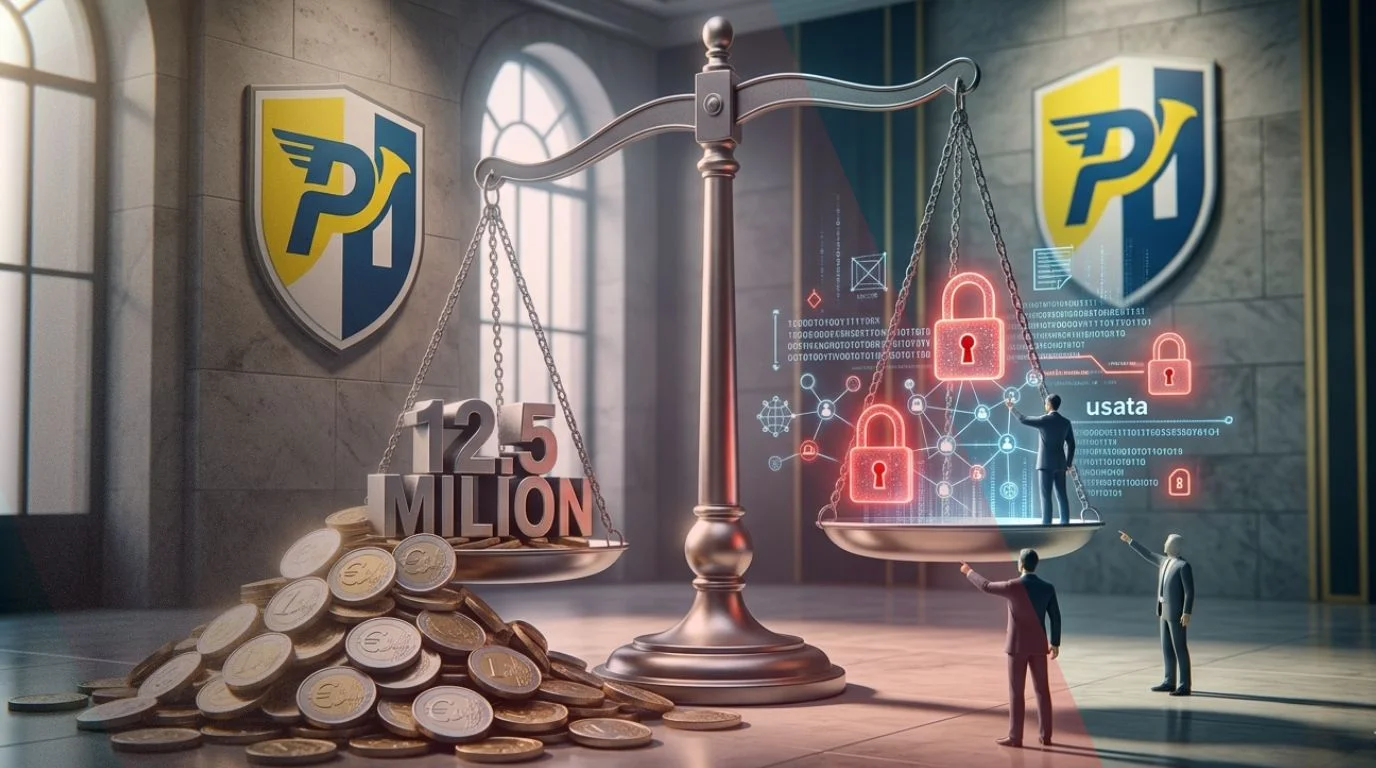
The Italian Data Protection Authority fine against Poste Italiane and Postepay has reached over €12.5 million, after regulators found unlawful processing of personal data affecting millions of users.

Italy’s Italian Data Protection Authority imposed a €6.6 million penalty on Poste Italiane and €5.8 million on Postepay. The action follows an investigation launched in April 2024 after multiple complaints from users regarding how their data was being handled through mobile applications.

Italian Data Protection Authority Fine Linked to Intrusive App Monitoring

The Italian Data Protection Authority fine centers on how BancoPosta and Postepay apps collected user data. Customers were required to allow monitoring of information stored on their devices, including details about installed and active applications.

According to the companies, this access was necessary to detect malware and prevent fraud in line with payment security requirements. However, the regulator found that the scope of monitoring went too far.

Authorities stated that the data collection methods were not proportionate and resulted in excessive intrusion into users’ private lives. The ruling emphasized that fraud prevention cannot justify blanket access to personal device data.

Multiple Compliance Failures Identified

The investigation behind the Italian Data Protection Authority fine also revealed broader compliance failures. Regulators flagged insufficient transparency in how users were informed about data collection practices.

The companies were also found to have not conducted an adequate Data Protection Impact Assessment. Such assessments are required when processing activities pose high risks to individual privacy.

Further issues included weak security measures, unclear policies on how long data was stored, and irregularities in defining data controller responsibilities. These gaps raised concerns about how user data was governed internally.

As part of the enforcement action, both companies have been ordered to stop the disputed data processing practices if still ongoing. They must also align their data retention policies with regulatory requirements and report compliance to the Authority.

Italian Regulator Steps Up Enforcement

The action reinforces a broader trend of stricter enforcement by the Italian Data Protection Authority across the financial sector. The Italian Data Protection Authority fines Poste Italiane and Postepay case follows another high-profile enforcement action earlier this year involving Intesa Sanpaolo. In March 2026, the regulator imposed a €31.8 million penalty on the bank after uncovering serious lapses in how customer data was protected. The case involved unauthorized access to sensitive information of more than 3,500 customers over a period of more than two years. Investigators found that a single employee had accessed customer records more than 6,600 times without any legitimate business reason. The breach went undetected for months, exposing weaknesses in the bank’s internal monitoring systems.

Insider Risks and Monitoring Gaps under Focus

The Intesa Sanpaolo case highlighted a different but equally critical issue. While Poste Italiane and Postepay were penalized for excessive data collection, the bank was fined for failing to detect misuse of legitimate access. According to the Authority, the bank’s monitoring systems were not designed to identify slow, repeated misuse of access over time. This allowed the unauthorized activity to continue without triggering alerts, even when it involved high-risk individuals such as public figures. Regulators concluded that the controls in place were not aligned with the risks associated with broad internal access to sensitive financial data. The case has since raised concerns about insider threats and the effectiveness of existing detection mechanisms within financial institutions.

Growing Pressure on Financial Services

Together, these cases reflect a tightening regulatory environment in Italy, where financial institutions are being held accountable for both overreach and underperformance in data protection. The Italian Data Protection Authority fines Poste Italiane and Postepay decision highlights the importance of balancing fraud prevention measures with user privacy. Security controls must be proportionate, transparent, and supported by proper risk assessments. At the same time, the Intesa Sanpaolo breach demonstrates that insufficient monitoring can be just as damaging, particularly when insider threats go unnoticed for extended periods. With enforcement actions increasing in scale and frequency, organizations operating in the financial sector are facing mounting pressure to reassess their data governance frameworks. The regulator’s recent decisions make it clear that both excessive data collection and weak oversight can lead to significant financial and reputational consequences.
❌
❌