Visualização normal

Antes de ontemFirewall Daily – The Cyber Express
  • ✇Firewall Daily – The Cyber Express
  • India Tightens Social Media Rules to Protect Children Online Samiksha Jain
    India online safety rules are being strengthened as the government steps up measures to protect children and other users from harmful digital content, cyber risks and emerging threats linked to artificial intelligence. The government said its policies are aimed at ensuring an open, safe, trusted and accountable internet, with recent measures focusing on child safety, privacy protection, faster content removal and stronger platform responsibilities. The Information Technology Act, 2000, and the
     

India Tightens Social Media Rules to Protect Children Online

India online safety rules

India online safety rules are being strengthened as the government steps up measures to protect children and other users from harmful digital content, cyber risks and emerging threats linked to artificial intelligence. The government said its policies are aimed at ensuring an open, safe, trusted and accountable internet, with recent measures focusing on child safety, privacy protection, faster content removal and stronger platform responsibilities.

The Information Technology Act, 2000, and the Information Technology (Intermediary Guidelines and Digital Media Ethics Code) Rules, 2021, form the core legal framework governing online safety and intermediary responsibilities in India. The government has also highlighted the Digital Personal Data Protection Act, 2023, and recent amendments to the IT Rules as part of its broader approach to digital safety.

India Online Safety Rules Tighten Platform Responsibilities

Under the IT Rules, intermediaries are required to observe due diligence and inform users that they must not host, display, upload, modify, publish, transmit, update or share content that is harmful to children or violates applicable laws.

Recent amendments require social media platforms and other intermediaries to remove unlawful content within three hours of receiving an order from a competent court or a reasoned intimation from the appropriate government or its agency.

The government has also outlined specific obligations related to content involving nudity, impersonation and other sensitive material. In cases involving certain complaints about content featuring full or partial nudity, exposed private areas or artificially morphed images, intermediaries must take reasonable and practicable measures to remove or disable access within two hours.

Government Targets Harmful Content and OTT Platforms

The government said it has taken action against online platforms and OTT services over unlawful and obscene content. In the last two years, 50 OTT platforms have been disabled for public access in India for displaying obscene content and violating provisions including Sections 67 and 67A of the IT Act, Section 294 of the Bharatiya Nyaya Sanhita and the Indecent Representation of Women (Prohibition) Act, 1986.

The government also said it has taken note of reports alleging the dissemination of advertisements linked to child sexual abuse material (CSAM) on social media platforms and sought a detailed report from the concerned intermediary. The National Commission for Protection of Child Rights has also issued notices to the concerned platforms.

India Strengthens AI-Generated Content Safeguards

The government has also expanded its regulatory focus to address risks associated with AI-generated content and synthetically generated information. Amendments to the IT Rules introduce requirements for clear labelling and traceable metadata for permissible AI-generated content, allowing users to identify synthetically generated material.

The framework also strengthens platform accountability and requires greater user awareness about the legal consequences of unlawful AI-generated content. The rules specifically cover harmful material including CSAM, non-consensual intimate imagery and impersonation.

Platforms are required to deploy reasonable and appropriate technical measures, including automated tools or other mechanisms, to prevent users from creating, modifying, publishing or sharing synthetically generated information that violates applicable laws.

Significant Social Media Intermediaries are also required to make reasonable efforts to deploy technical measures to proactively identify content depicting rape, child sexual abuse or conduct, as well as content identical to information previously removed.

Child Privacy and Digital Addiction Remain Key Concerns

The Digital Personal Data Protection Act, 2023, provides a framework for protecting children's privacy online. It mandates parental consent for processing children's personal data and prohibits practices considered detrimental to children's well-being, including tracking, behavioural monitoring and targeted advertising directed at children.

The government has also highlighted digital addiction as a serious challenge affecting children and young people. The Economic Survey 2025-26 noted potential impacts on cognitive development, academic performance, workplace productivity, social connectedness and mental health, alongside risks linked to cyberbullying, compulsive gaming, social media and online gambling.

Cyber Awareness Reaches 11.37 Lakh Participants

Alongside regulatory measures, the government is expanding cyber awareness initiatives through the Information Security Education and Awareness project. So far, 6,650 awareness workshops have been conducted nationwide, reaching more than 11.37 lakh participants, including students, teachers, law enforcement officials, government personnel and members of the public.

The government has also highlighted digital safety initiatives in education. The PRAGYATA Guidelines provide a framework for safe online learning and responsible use of social media and electronic devices. CBSE has introduced digital etiquette and cybersecurity training initiatives, while NCERT has incorporated cyber safety into its curriculum.

The measures were outlined by Union Minister for Electronics and Information Technology Ashwini Vaishnaw in the Lok Sabha on July 22, 2026, as the government continues to strengthen its approach to c child protection and accountability across India's digital ecosystem.

  • ✇Firewall Daily – The Cyber Express
  • Dubai Police Warns Against Online Scams Promising Work and Visit Visas Samiksha Jain
    The Dubai Police fraudulent visa ads warning has cautioned the public against scams offering work visas, residency visas, and visit visas in exchange for money. According to the Anti Fraud Centre at Dubai Police's General Department of Criminal Investigation, fraudsters are using social media platforms and messaging apps to circulate fake visa offers by impersonating official entities or using the names of unlicensed companies. The advisory was issued as part of Dubai Police's Be Aware of Fra
     

Dubai Police Warns Against Online Scams Promising Work and Visit Visas

Dubai Police fraudulent visa ads

The Dubai Police fraudulent visa ads warning has cautioned the public against scams offering work visas, residency visas, and visit visas in exchange for money. According to the Anti Fraud Centre at Dubai Police's General Department of Criminal Investigation, fraudsters are using social media platforms and messaging apps to circulate fake visa offers by impersonating official entities or using the names of unlicensed companies. The advisory was issued as part of Dubai Police's Be Aware of Fraud campaign, which aims to raise awareness about online scams and help residents identify fraudulent schemes.

Dubai Police Fraudulent Visa Ads Circulating on Social Media

According to Dubai Police, scammers are promoting visa services through advertisements and messages that claim to offer work, residency, or visit visas for a fee. The Anti Fraud Centre said these advertisements are designed to convince victims to transfer money by falsely claiming to represent government authorities or licensed visa service providers. Some also use the names of unlicensed companies or offices to appear legitimate. Dubai Police urged the public not to rely on such offers and reminded residents that all visa procedures should be completed only through competent authorities or legally approved offices.

Authorities Urge Public to Verify Visa Offers

The Anti Fraud Centre said verifying the source of a visa service is the first step in avoiding visa fraud. Residents have been advised to confirm the authenticity of any visa offer or application process through official channels before making payments or sharing personal information. The centre also warned against dealing with intermediaries or unknown individuals claiming they can arrange visas through unofficial means. Dubai Police said people should not be misled by promises of guaranteed visas or job opportunities that are offered outside the legal process.

How to Report Fraud Attempts

Dubai Police has asked members of the public to report any fraud or attempted fraud immediately. Reports can be submitted through the Dubai Police Smart App, the eCrime platform for cybercrime reports, or by calling 901. The Anti Fraud Centre reiterated that staying informed and verifying service providers through official channels remain the most effective ways to avoid falling victim to fraudulent visa schemes.
  • ✇Firewall Daily – The Cyber Express
  • EU to Review Social Media Age Limits After Child Safety Report Samiksha Jain
    The European Commission is moving closer to introducing new measures on Child Safety Online after President Ursula von der Leyen received recommendations from a Special Panel examining the impact of social media on children. The report, released Monday, calls for stronger safeguards, greater platform accountability, and age-appropriate restrictions as the EU prepares to review the findings and present legislative proposals after the summer. Speaking alongside the panel's co-chairs, von der Leye
     

EU to Review Social Media Age Limits After Child Safety Report

Child Safety Online

The European Commission is moving closer to introducing new measures on Child Safety Online after President Ursula von der Leyen received recommendations from a Special Panel examining the impact of social media on children. The report, released Monday, calls for stronger safeguards, greater platform accountability, and age-appropriate restrictions as the EU prepares to review the findings and present legislative proposals after the summer.

Speaking alongside the panel's co-chairs, von der Leyen said protecting children online has become one of the most pressing challenges facing governments. She stressed that parents, not algorithms, should shape children's development and warned that the current digital environment is exposing young users to growing risks.

Child Safety Online Becomes a Priority for the EU

Von der Leyen said the Special Panel examined both the opportunities and harms created by social media algorithms and their effects on children. According to the findings highlighted in her statement, young people across Europe now spend between four and six hours each day on screens, while nearly 60% of young children have experienced emotional or psychosocial problems online.

She said these challenges include loss of sleep, anxiety, depression, cyberbullying, exposure to harmful content, and unwanted online interactions, all occurring while children's brains are still developing.

"We believe that parents bring up our kids, and not predatory algorithms," von der Leyen said, adding that social media platforms should no longer have unrestricted access to children.

Digital Services Act Places Responsibility on Platforms

A key recommendation focuses on holding technology companies accountable for the safety of their services. Von der Leyen said platforms that build online systems should also be responsible for ensuring they do not harm users, particularly children.

She pointed to the Digital Services Act (DSA) as the EU's framework for requiring providers to remove harmful features, including addictive algorithms, dark patterns, harmful content, and unwanted contacts.

According to the Commission President, the EU has already taken action under the Digital Services Act against TikTok over its addictive design and recently against Meta. She said platforms have a duty of care toward users and must respond quickly when children report harmful experiences.

EU Considers Social Media Age Restrictions

The report also strengthens the case for introducing social media age restrictions, with von der Leyen arguing that the debate is no longer about whether children use social media but when platforms should be allowed to reach them.

She said the European Union's age verification app is designed to help parents by providing an easy-to-use, privacy-preserving, and open-source tool to verify age before accessing online platforms.

Von der Leyen also suggested that Europe should consider establishing a "social media start date," comparing it to existing age limits for driving and purchasing alcohol.

Panel Calls for Age-Appropriate Digital Access

According to the statement, children under the age of three should have no exposure to screens or digital platforms. Older children should only access social media under parental, caregiver, or teacher supervision and within limited time periods.

Von der Leyen said childhood is a critical stage of brain development and argued that children need opportunities to play, build real-world friendships, and develop their identities before algorithms begin shaping their online experiences.

She added that policymakers should first identify platforms with age-inappropriate and addictive features, describing the category as "social media plus," before considering phased access for different age groups.

EU to Review Recommendations Before New Proposal

The European Commission said the report comes after consultations with parents, educators, experts, young people, EU member states, and international partners, including Australia.

Von der Leyen confirmed that the Commission will now review the recommendations before presenting a formal proposal after the summer.

While no legislative measures have yet been announced, the report signals the EU's intent to strengthen Child Safety Online protections by expanding platform accountability, improving age verification, and evaluating new rules governing children's access to social media.

  • ✇Firewall Daily – The Cyber Express
  • Why India Temporarily Blocked Telegram Ahead of NEET UG 2026 Samiksha Jain
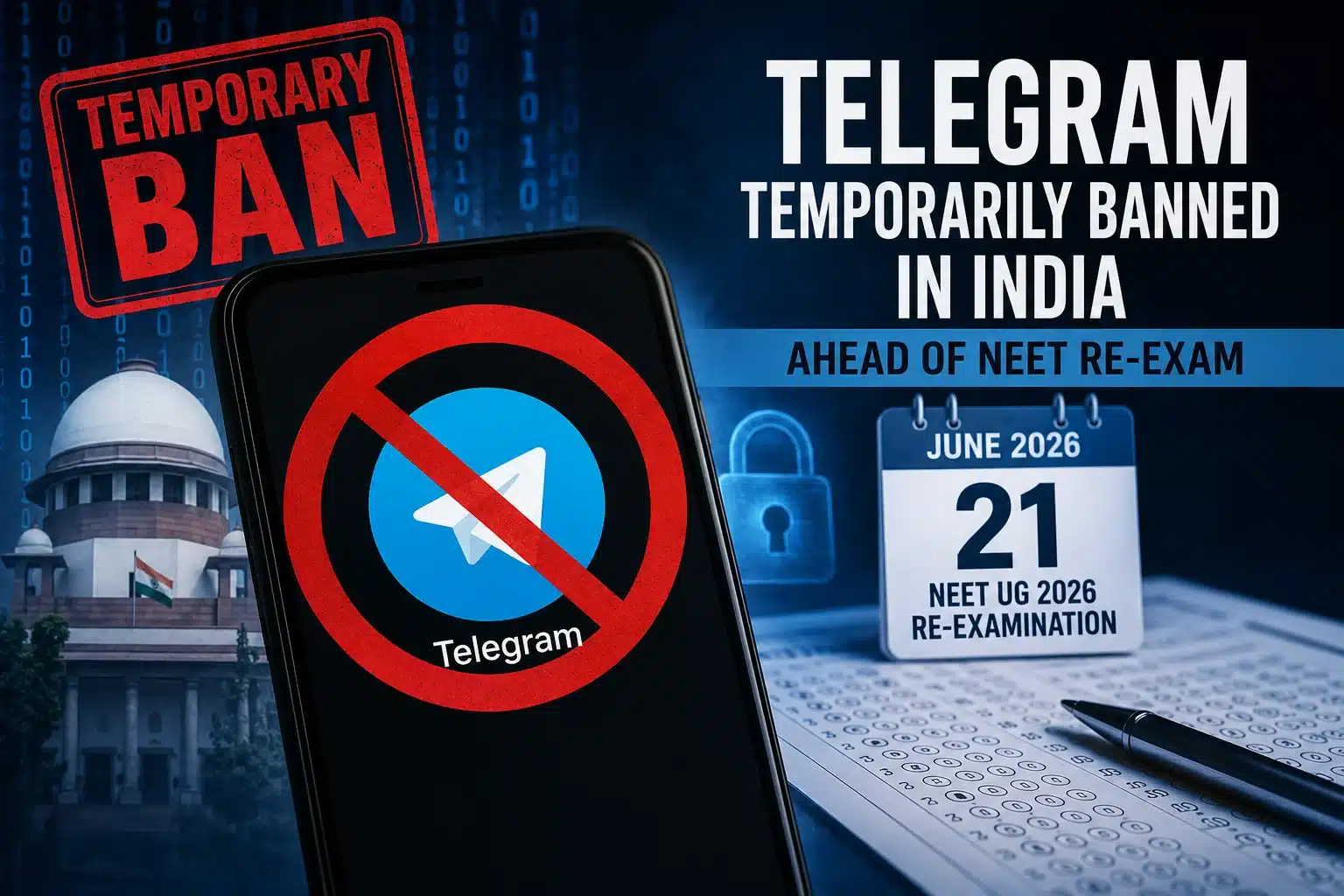
    India has temporarily enforced a Telegram Ban in India ahead of the NEET UG 2026 Re-examination, citing concerns that the platform could be used by organized cheating networks to target candidates. The restriction, recommended by the National Testing Agency (NTA) and implemented through directions issued by the Ministry of Electronics and Information Technology (MeitY), will remain in effect until June 22, 2026. According to the NTA, the measure is intended to support the safe and secure cond
     

Why India Temporarily Blocked Telegram Ahead of NEET UG 2026

Telegram Ban in India

India has temporarily enforced a Telegram Ban in India ahead of the NEET UG 2026 Re-examination, citing concerns that the platform could be used by organized cheating networks to target candidates. The restriction, recommended by the National Testing Agency (NTA) and implemented through directions issued by the Ministry of Electronics and Information Technology (MeitY), will remain in effect until June 22, 2026. According to the NTA, the measure is intended to support the safe and secure conduct of the NEET re-examination scheduled for June 21, 2026, and prevent the spread of fraudulent claims related to exam papers.

Telegram Ban in India Limited to Examination Period

The temporary Telegram Ban in India has been imposed under Section 69A of the Information Technology Act, 2000. The restriction is limited to a defined period covering the examination day and its immediate aftermath. In addition to restricting access to the platform, authorities have directed Telegram to disable its Telegram Message Editing Feature in India until June 30, 2026. The NTA stated that the feature has been misused in the past to create misleading claims of Paper Leak incidents after examinations had already taken place. The agency noted that the temporary measures were adopted after other enforcement actions had already been pursued and were intended to address concerns during the examination window with the minimum restriction considered necessary. Telegram Ban in India Ahead of NEET UG 2026

Coordinated Action Against NEET UG 2026 Exam Fraud Networks

The NTA credited the Indian Cyber Crime Coordination Centre (I4C), operating under the Ministry of Home Affairs, for coordinating action against channels and groups allegedly involved in Exam Fraud targeting NEET candidates. According to the agency, I4C worked with state law enforcement agencies and MeitY to identify and remove numerous Telegram channels, groups, and bots that openly advertised access to examination papers or related services. Authorities said several channels used names such as "PAPER LEAKED NEET," "Re-NEET 2026," and similar variations while demanding payments from candidates and their families in exchange for purported access to examination material. The NTA reiterated that no examination paper was available outside the secured examination process and described such offers as fraudulent.

Why the Message Editing Feature Was Restricted

The direction related to the Telegram Message Editing Feature addresses concerns about fabricated evidence of examination leaks. According to the NTA, Telegram administrators can edit previously published messages while retaining the original posting timestamp. Authorities stated that this capability has been used in multiple examinations to replace earlier content with actual question papers after an exam had concluded, creating the appearance that the material had been shared before the test. The temporary restriction on editing existing messages is intended to prevent the creation and circulation of such misleading content during the post-examination period.

Law Enforcement Investigations Continue

Authorities also pointed to ongoing enforcement actions in several states. The Bihar Police Economic Offences Unit issued a public advisory on June 9, warning candidates against fraudulent claims of pre-examination paper access circulating through Telegram and other online platforms. Separately, the Ahmedabad City Cyber Crime Branch arrested members of an alleged inter-state cyber fraud network accused of operating multiple Telegram channels linked to the same scheme. Investigators reported documented transactions worth approximately ₹1.5 crore and outreach to nearly 1,000 mobile numbers within a month.

NTA Reassures Candidates

The NTA acknowledged that the restriction affects users who rely on Telegram for educational, professional, and personal communication. However, the agency emphasized that the measure is temporary and focused on protecting the integrity of the NEET UG 2026 Re-examination. The examination will proceed as scheduled on June 21. The agency urged candidates to ignore unverified information circulating online and rely only on official NTA communication channels for updates. Officials also encouraged students and parents to report suspicious activities through the national cybercrime reporting mechanisms and remain cautious of claims related to examination papers circulating on any platform.
  • ✇Firewall Daily – The Cyber Express
  • UIDAI, NFSU Sign 5-Year Pact to Boost Cybersecurity and Digital Forensics Ashish Khaitan
    The collaboration between the Unique Identification Authority of India and the National Forensic Sciences University marks a significant development in India's security landscape and digital forensics. In a move aimed at strengthening the country’s digital infrastructure, UIDAI and NFSU have formalized a five-year partnership to advance research, training, and operational capabilities in cybersecurity and digital forensics.  According to an official statement, UIDAI and NFSU have established a
     

UIDAI, NFSU Sign 5-Year Pact to Boost Cybersecurity and Digital Forensics

UIDAI and NFSU

The collaboration between the Unique Identification Authority of India and the National Forensic Sciences University marks a significant development in India's security landscape and digital forensics. In a move aimed at strengthening the country’s digital infrastructure, UIDAI and NFSU have formalized a five-year partnership to advance research, training, and operational capabilities in cybersecurity and digital forensics. 

According to an official statement, UIDAI and NFSU have established a structured collaboration designed to address emerging challenges in cybersecurity and digital forensics.

UIDAI and NFSU Join Forces on Cybersecurity and Digital Forensics

The agreement, announced on May 5 in Ahmedabad, provides a comprehensive framework to bring together expertise from both institutions. It is intended to reinforce cyber resilience across UIDAI’s systems, which form the backbone of India’s digital identity ecosystem.  The Ministry of Electronics and Information Technology highlighted that this partnership creates an umbrella structure for coordinated efforts in research, technical development, and capacity building. The initiative underscores the growing importance of cybersecurity and digital forensics as critical components of national digital infrastructure. 

Six Strategic Pillars Driving UIDAI and NFSU Collaboration 

The UIDAI and NFSU partnership is structured around six key pillars, each targeting specific aspects of cybersecurity and digital forensics. These include academic and professional development, aimed at building skilled talent in the field, as well as strengthening information security and system integrity within UIDAI’s ecosystem.  Another major focus area is the development of advanced forensic infrastructure and laboratory capabilities. This will support deeper investigation and analysis of cyber incidents. Additionally, the agreement outlines provisions for technical support in cybersecurity operations, ensuring that UIDAI benefits from NFSU’s specialized expertise.  The collaboration also emphasizes joint research and technical advisory in emerging technologies. Areas such as artificial intelligence, blockchain, cryptography, and deepfake detection are expected to play a central role. The sixth pillar focuses on strategic placement and outreach, creating pathways for NFSU students to gain hands-on experience and career opportunities within UIDAI-related projects. 

Strengthening India’s Digital Backbone

India’s digital identity framework, powered by UIDAI, requires continuous upgrades to counter evolving cyber threats. The UIDAI and NFSU partnership aims to address this need by integrating advanced cybersecurity and digital forensics practices into the system’s core operations. UIDAI Chief Executive Officer Vivek Chandra Verma described the agreement as a crucial step toward enhancing the security architecture of India’s digital public infrastructure. He stated that the collaboration will significantly improve forensic readiness and resilience, ensuring stronger protection against cyber risks. The signing ceremony was attended by senior officials from both institutions, including Deputy Director General Abhishek Kumar Singh and NFSU Gujarat Campus Director S. O. Junare. Their presence highlighted the institutional commitment to advancing cybersecurity and digital forensics through sustained collaboration. 

Expanding Access While Enhancing Security 

Alongside this partnership, UIDAI has also taken steps to improve accessibility to its services. Collaborations with digital platforms like MapmyIndia and Google now allow users to locate authorized Aadhaar centers more easily. These platforms provide information on available services, operating hours, and accessibility features. While these initiatives focus on user convenience, they also align with the broader objective of strengthening the integrity of India’s digital identity system. By combining improved accessibility with robust cybersecurity and digital forensics measures, UIDAI aims to maintain trust in its infrastructure.
❌
❌