A major wave of cyberattacks on Tempo has disrupted access to one of Indonesia's leading news websites, with the media outlet reporting millions of malicious requests directed at its servers over several days. The Tempo cyberattack, which began on Friday, June 5, 2026, involved a distributed denial-of-service (DDoS) assault designed to overwhelm the company's infrastructure and hinder public access to its journalism.
According to Tempo's technology team, the attacks generated an extraordinary
A major wave of cyberattacks on Tempo has disrupted access to one of Indonesia's leading news websites, with the media outlet reporting millions of malicious requests directed at its servers over several days. The Tempo cyberattack, which began on Friday, June 5, 2026, involved a distributed denial-of-service (DDoS) assault designed to overwhelm the company's infrastructure and hinder public access to its journalism.According to Tempo's technology team, the attacks generated an extraordinary volume of fake internet traffic, placing significant pressure on the organization's servers and temporarily affecting the availability of the website for readers in Indonesia and elsewhere.
24.9 Million Requests Recorded During Cyberattacks on Tempo
Tempo Digital Chief Technology Officer Heru Tjatur Tjahja said the cyberattacks on Tempo had reached an unprecedented scale. By Monday, June 8, 2026, the company's monitoring systems had logged a total of 24.9 million requests aimed at its servers.“The total attacks flooding our website as of June 8 reached 24.9 million requests,” Tjahja said on Monday, June 8, 2026.The Tempo cyberattack relied on bot-generated traffic, a common tactic used in DDoS incidents. Such attacks typically involve networks of compromised devices sending enormous numbers of requests simultaneously, overwhelming targeted systems and making websites difficult or impossible to access.Tjahja explained that preliminary findings indicated the attacks occurred intermittently but intensified dramatically during certain periods.
Largest Wave Hit During Evening Hours
The investigation into the cyberattacks on Tempo revealed a pattern in the timing of the attacks. According to Tjahja, the attackers frequently launched their operations during evening and early morning hours, when activity surged sharply.One of the most significant attack waves occurred between 8:30 p.m. and midnight. During that period alone, Tempo recorded 12.97 million attack requests within a span of just two hours.“For example, the first major wave consisted of 12.97 million attacks in only two hours. From 8:30 p.m. until midnight, the attackers carried out a digital assault,” he said.The intensity of the attack highlighted the scale of resources being used against the Indonesian media organization.
Attack Traffic Traced Beyond Indonesia
Early analysis conducted by Tempo's technology team suggested that the sources of the malicious traffic extended well beyond Indonesia's borders.While the exact identities of those responsible remain unclear, investigators traced attack activity to multiple countries. According to Tempo, traffic associated with the cyberattacks on Tempo originated from Colombia, the United States, the Philippines, Bangladesh, Mexico, and Indonesia.The international nature of the attack traffic reflects the complexity of modern DDoS operations, which often use distributed networks of compromised devices globally to conceal the origin of an attack.
Possible Link to Earlier CMS Breach Attempt
Tjahja believes the Tempo cyberattack may be connected to an earlier security incident that targeted the organization's content management system (CMS) at the end of May 2026.During that earlier intrusion attempt, attackers managed to unpublish several articles that had already been published on the website. According to Tjahja, the content affected by the breach involved corruption-related reporting.However, the CMS architecture limited the level of access available to unauthorized users. As a result, the attackers were unable to permanently remove the articles and could only temporarily unpublish them.According to Tjahja, the sequence of events suggests a possible connection between the two incidents.“It appears that those behind the attacks were unhappy and then proceeded with the DDoS attack,” he said.
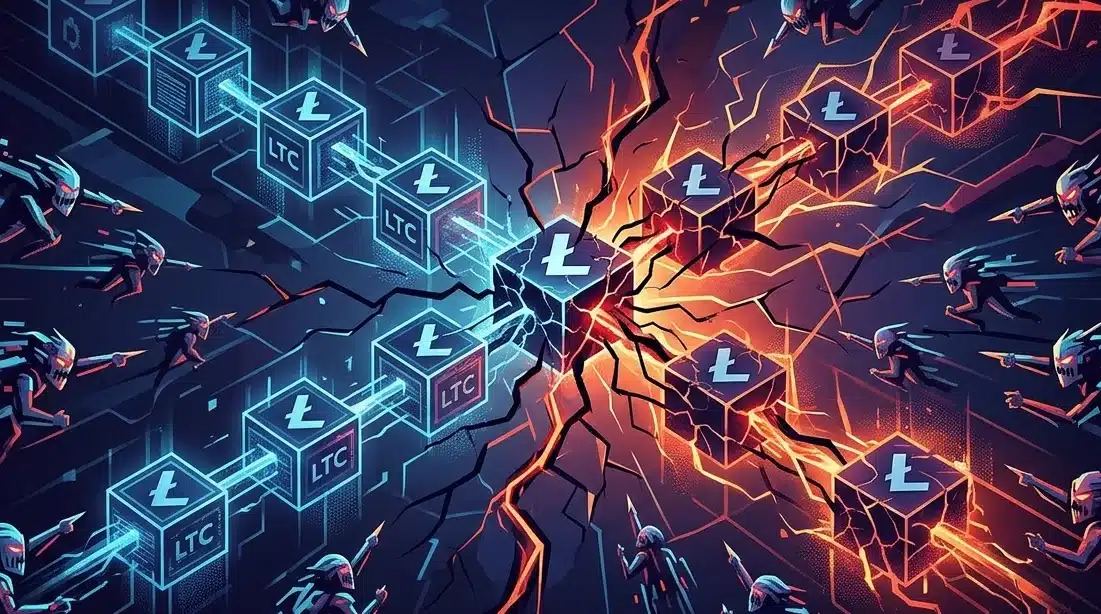
The Litecoin network faced a security breach when a zero-day vulnerability triggered a 13-block reorganization, impacting several major mining pools. This disruption led to a temporary halt in transaction finality, drawing attention to the potential risks within the Litecoin ecosystem.
The Litecoin team quickly confirmed the bug on their official X account and assured the community that a patch had been fully deployed to resolve the issue.
The Zero-Day Bug and Its Impact on the Litecoin Ne
The Litecoin network faced a security breach when a zero-day vulnerability triggered a 13-block reorganization, impacting several major mining pools. This disruption led to a temporary halt in transaction finality, drawing attention to the potential risks within the Litecoin ecosystem. The Litecoin team quickly confirmed the bug on their official X account and assured the community that a patch had been fully deployed to resolve the issue.
The Zero-Day Bug and Its Impact on the Litecoin Network
A zero-day vulnerability refers to a flaw that is unknown to the developers at the time of its exploitation. In this case, the bug targeted the handling of MimbleWimble Extension Block (MWEB) transactions, a privacy feature on the Litecoin network. The vulnerability allowed an attacker to exploit the network by triggering a Denial-of-Service (DoS) attack, flooding the network with invalid MWEB transactions.MWEB transactions are designed to offer enhanced privacy for Litecoin users by obscuring transaction details. However, due to the zero-day bug, some Litecoin nodes that had not updated their software accepted invalid MWEB transactions, violating the network’s consensus rules.As a result, a block reorganization (or “reorg”) took place when a competing chain of blocks replaced the existing chain, causing 13 blocks to be reorganized. A block reorg of this magnitude is a rare event and presents significant challenges, including the potential for double-spending and undermined user confidence.
Understanding the Denial-of-Service Attack and Its Impact on Miners
The core target of the attack was the mining pools, which play a critical role in securing the Litecoin network. Mining pools are groups of miners who pool their computational power to increase their chances of successfully finding a block. By launching a DoS attack, the attacker aimed to disrupt the mining process by overwhelming the network with invalid transactions.The impact on miners was particularly severe. Mining pools that failed to update their nodes were unable to process valid blocks during the attack. This resulted in temporary downtime for these pools, contributing to a short-term drop in the network’s hashrate. While the Litecoin network quickly recovered, the event highlighted the vulnerability of mining operations when software updates are delayed or ignored.
Quick Response and Deployment of the Patch
Despite the severity of the incident, the Litecoin team responded promptly. Within hours, the development team confirmed the bug and rolled out a patch that effectively closed the attack vector. The patch prevented nodes from accepting invalid MWEB transactions, thus stabilizing the network and mitigating further risks. The team urged all node operators to update their software immediately to ensure the security of their operations.Importantly, the Litecoin team confirmed that no funds were lost as a result of the reorganization. While users’ transactions that were part of the reorganized blocks were reversed, the overall integrity of the network remained intact. The incident, although disruptive, demonstrated the resilience and quick action of the Litecoin team.
The Role of MWEB and Zero-Day Bugs
Launched in 2011, Litecoin has earned a reputation as one of the oldest and most stable cryptocurrencies. As a fork of Bitcoin, it relies on a proof-of-work consensus mechanism to validate transactions. Over the years, Litecoin has faced relatively few security incidents, but the April 25 event serves as a stark reminder that even established networks are susceptible to vulnerabilities.The introduction of MWEB in 2022 marked a significant upgrade for Litecoin, providing users with enhanced privacy features. However, as seen with this recent zero-day vulnerability, new features can also introduce unforeseen risks.
The e-commerce platform eBay, a giant in online auctions and fixed-price listings, faced widespread disruptions beginning late Sunday, April 26, 2026, extending into Monday, as users across the globe reported severe technical issues. The eBay outage, which has crippled essential features of the site, particularly the API, has left many buyers and sellers frustrated, struggling to access critical functions, including search features, listings, and checkout processes.
As users faced slow page
The e-commerce platform eBay, a giant in online auctions and fixed-price listings, faced widespread disruptions beginning late Sunday, April 26, 2026, extending into Monday, as users across the globe reported severe technical issues. The eBay outage, which has crippled essential features of the site, particularly the API, has left many buyers and sellers frustrated, struggling to access critical functions, including search features, listings, and checkout processes.As users faced slow page loads, failed transactions, and difficulty completing sales, a series of unverified reports surfaced suggesting that the hacktivist group 313 Team was behind the massive denial-of-service (DDoS) attack, claiming responsibility for the outage. While the true cause remains unconfirmed by eBay, the timing and scale of the disruption have fueled speculation that a cyberattack was involved.
The Scope of the eBay Outage
The eBay outage first began to affect eBay users on the afternoon of April 26, when they began reporting issues with the platform’s functionality. According to Downdetector, a popular service that tracks online outages, the spike in complaints reached around 3:30 PM ET, with the situation worsening the evening. As of 10:30 PM ET, more than 1,300 outage reports were logged, although the number eventually decreased to about 600 by 11:50 PM ET.Users complained that essential functions like search were malfunctioning, and pages were loading extremely slowly. "I can't even search for anything or complete a purchase," one frustrated user posted on social media. Others echoed similar concerns, noting that critical transactions were unable to be completed, with error messages preventing them from checking out.Sellers also voiced their frustrations, noting that they could not access the API, which is crucial for the functioning of third-party tools used to manage listings, inventory, and sales. "It’s been nearly 6 hours since the API went down, and we have no word from support," one seller wrote, emphasizing the financial impact of the outage.
Social Media Users Complain About the Outage
While eBay has not officially confirmed the cause of the outage, rumors quickly began circulating on social media that the hacktivist group 313 Team was responsible for a DDoS attack targeting the platform. DDoS attacks, which flood a website with traffic to overwhelm its servers and take it offline, have become a frequent tactic for hacktivist groups in recent years.The group, which has previously targeted high-profile organizations, allegedly posted a claim on various forums, taking credit for the disruption. However, this attribution has not been independently verified, and eBay has not provided details about the nature of the attack. The company’s official status page displayed no alerts of a cyberattack, showing only minor updates on the system’s functionality.Despite these official updates, the community’s response has been vocal, with many users continuing to report issues well into the night. One individual posted, "It’s not just down for me, it’s down for everyone. Is this part of a bigger attack targeting e-commerce sites?"With eBay’s customer support channels largely silent or offering only generic responses, users took to social media to express their frustration. The company’s Instagram account, where many users had previously reached out for help, quickly became a forum for complaints. One commenter wrote, “Brooo you’re down—come on, get up! I need to pay for an auction.” Others left similar messages, questioning the reliability of the platform and demanding answers.
A service disruption at Bluesky last week exposed the growing challenges faced by fast-expanding social media platforms, after the company confirmed that a “sophisticated” distributed denial-of-service (DDoS) incident was behind widespread outages. The Bluesky cyberattack began late on April 15, 2026, and quickly escalated, interrupting core functions across the app and leaving users unable to reliably access feeds, notifications, threads, and search.
The incident occured at a time when Blue
A service disruption at Bluesky last week exposed the growing challenges faced by fast-expanding social media platforms, after the company confirmed that a “sophisticated” distributed denial-of-service (DDoS) incident was behind widespread outages. The Bluesky cyberattack began late on April 15, 2026, and quickly escalated, interrupting core functions across the app and leaving users unable to reliably access feeds, notifications, threads, and search.The incident occured at a time when Bluesky has been experiencing rapid user growth, making it a more visible target for large-scale attacks. While disruptions of this nature often raise concerns about potential data breaches or unauthorized access, the company repeatedly stated that the attack was limited to service availability. Throughout the outage, Bluesky issued a series of public updates to keep users informed about the platform’s status and the steps being taken to mitigate the attack.
The disruption began at approximately 11:40 PM PDT on April 15, when Bluesky received initial reports of intermittent outages. Engineers responded immediately, working overnight to contain what was later described as a “sophisticated” DDoS attack. As the attack intensified over the next several hours, it began to impact the platform’s functionality.In an early update, Bluesky stated:“We are experiencing some service interruptions, and our team is working on the issue. You can find the latest updates at status.bsky.app or follow @status.bsky.app.”As more users reported issues, the company clarified the extent of the disruption:“The attack is impacting our application, with users experiencing intermittent interruptions in service for their feeds, notifications, threads and search.”DDoS attacks function by overwhelming servers with massive volumes of traffic, effectively preventing legitimate users from accessing services. In this case, the cyberattack on Bluesky followed that pattern, focusing on disrupting availability rather than infiltrating systems or extracting sensitive data.
Platform Stabilizes While Attack Continues
By around 9 PM PDT on April 16, Bluesky reported that the platform had stabilized despite the continued presence of DDoS traffic. The company noted:“The application has remained stable since approximately 9 PM PDT, April 16 despite ongoing Distributed Denial-of-Service (DDoS) attacks. We have not seen any evidence of unauthorized access to private user data.”This message was reiterated in subsequent updates, reinforcing the company’s position that user data remained secure. In its final communication on the incident, Bluesky stated:“The application has remained stable since the evening of April 16 and we have seen no evidence of unauthorized access to private user data. Given the ongoing stability, this will be our final update.”
Attribution Remains Unclear as Platform Continues to Grow
The company has not officially attributed the attack to any specific group or actor. However, a group identifying itself as “313 Team,” reportedly claimed responsibility through a Telegram message, stating that it had carried out a “massive cyberattack” targeting Bluesky’s application programming interface (API).The incident comes amid a period of significant growth for the platform. Since its inception, Bluesky has expanded to approximately 43.7 million users, driven in part by users migrating from X following political developments in the United States.
 Entrar