Entrar
Liquid Network Hackers Demand Bug Fix Before Returning $320M BTC
7 de Setembro de 2026, 05:28



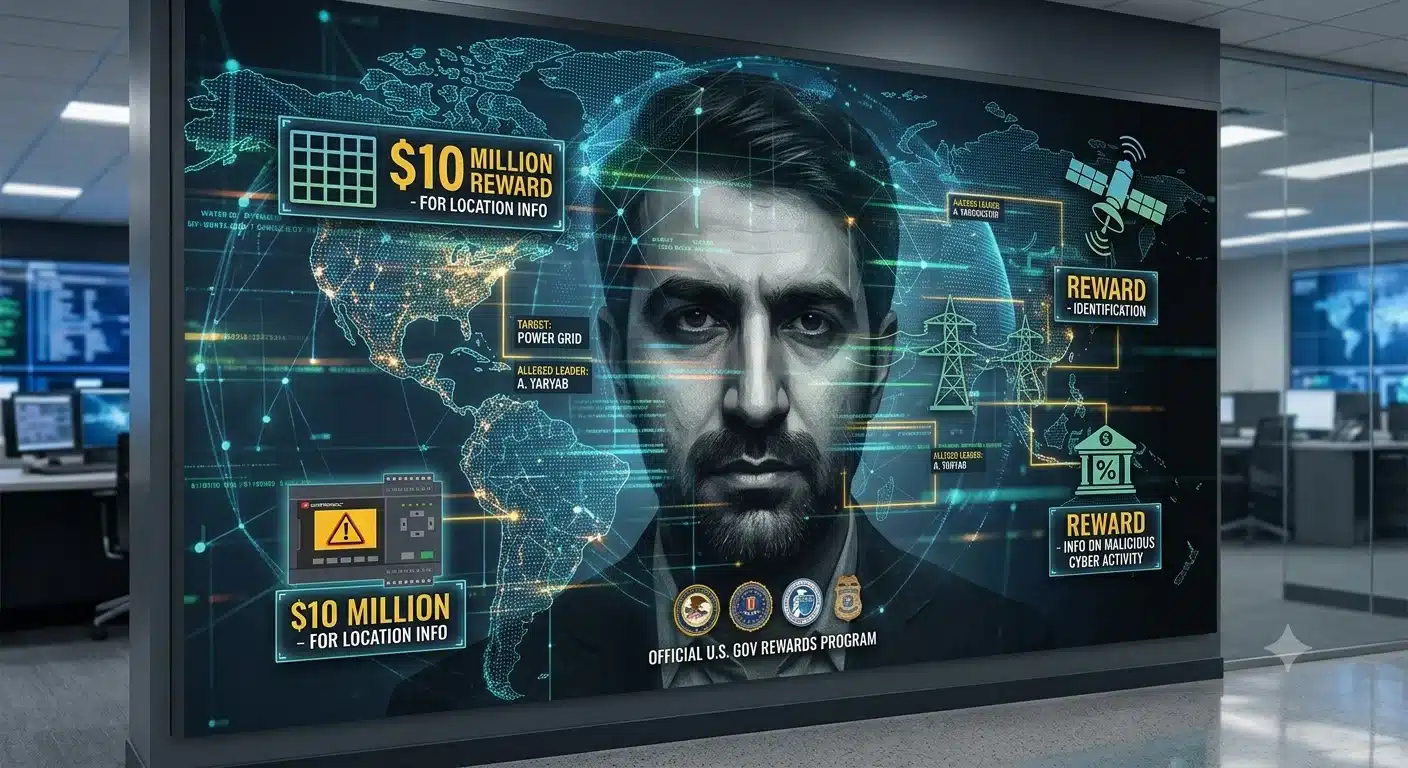
Image Source: https://rewardsforjustice.net/[/caption]
Yaryab is also accused of directing Shahid Hemmat and Shahid Shushtari, two groups linked to cyberattacks against U.S. organizations. The sectors allegedly targeted include defense, news, shipping, travel, energy, financial services and telecommunications.
The six Iranian officials named in the advisory are linked to Iran's Islamic Revolutionary Guard Corps and its Cyber-Electronic Command.
The CISA and FBI, along with cybersecurity agencies from Australia, Canada, New Zealand and the U.K., have released new guidance on outage communications for service providers dealing with major IT and OT outages. The guide calls for prompt, factual and audience-specific communication during disruptions caused by malicious cyber activity or non-malicious events.
Titled “Communicating Under Pressure: Best Practices for Service Providers,” the guidance says effective communication is critical to limiting operational impact when IT and OT outages affect customers, network defenders, critical infrastructure owners and operators, and the public. It recommends that organizations clearly communicate what is known, what remains unknown and what is still under investigation, while providing frequent updates as circumstances change.
The agencies recommend that service providers establish an outage communications plan before an incident occurs. The plan should define incident thresholds, escalation paths, target audiences and procedures for status pages, customer and partner notices, and regulatory communications. Organizations are also advised to establish cross-functional incident teams involving engineering and operations, communications, legal, risk and compliance, and customer support.
The guidance calls for clearly defined roles, including an incident lead, communications lead and spokesperson. It also recommends parallel workstreams so technical teams can focus on diagnosing and remediating the root cause while communications teams manage external messaging and leadership handles strategy and regulatory requirements.
For organizations responding to cyber incidents, the guidance places particular emphasis on balancing transparency with operational security. If malicious activity is suspected or confirmed, external communications should not compromise investigations, containment efforts or other response activities. Organizations are also advised against making premature conclusions when the root cause remains under investigation.
The guidance recommends segmenting communications for technical teams, executives and the public. Audiences can include enterprise IT teams and security operations centers, employees and customers, government partners and regulators, critical infrastructure owners and operators, as well as the media and general public.
During an outage, organizations should lead with a concise summary covering affected systems, user impact, scope and the known cause without speculation. The agencies also advise against vague descriptions such as “service degradation” and recommend messaging that can be understood quickly during high-pressure situations.
Transparency is another central principle. Service providers are advised to state what they know and do not know, use a single source of truth such as a status page, and focus communications on actionable guidance rather than reputation management. Customers should be told what actions they need to take or clearly informed when no action is required.
The guidance also calls for continuous, time-stamped updates that show the incident timeline, actions taken, and recovery milestones. Organizations should maintain a single status page and align external messaging with legal, contractual and sector-specific reporting obligations.
Agencies ultimately frame effective outage communications around five principles: immediate acknowledgement, technical and actionable information, transparency, accountability, and continuous updates. For service providers, the guidance positions communication as an important part of incident response, alongside technical remediation and recovery.
This week, sophisticated cyber criminals attempted a password-recovery attack on hundreds of thousands of X users. X disrupted the attack to prevent user accounts from being captured. But, as we’ve shown, the Justice Department will stop at nothing in its pursuit of cyber fraudsters and scammers. We are working closely with @X to track down the criminals behind this week’s attack. There is no refuge for those that perpetrate their criminal schemes from behind computer screens."The attorney general did not disclose additional technical details about the cyberattack on X users, including how the attackers attempted to exploit the recovery system, whether any individual accounts were compromised, or where the suspected criminals were operating from. The DOJ investigation is intended to identify those responsible for the attempted intrusion, with Blanche emphasizing that authorities would pursue individuals involved in cyber fraud and scams even when those activities are conducted remotely.
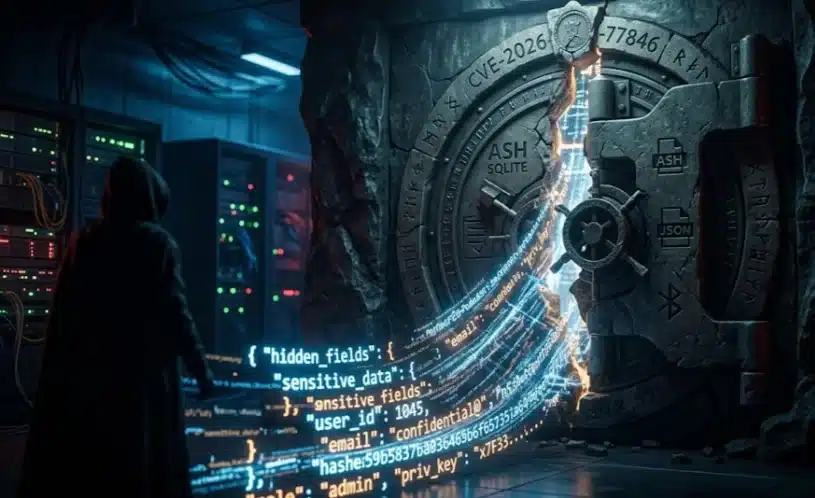
path = "$." <> Enum.join(right, ".")The individual path segments were neither escaped nor quoted. Consequently, a key intended to represent the literal name private.secret could instead be interpreted as two JSON levels. Characters such as ., [, ], and $ could similarly alter JSONPath interpretation. The GitHub advisory describes the flaw as “JSONPath injection in AshSqlite.SqlImplementation get_path”, stating that an attacker controlling a get_path/2 segment can traverse nested JSON and disclose private fields. The affected package is ash_sqlite, with versions 0.1.2-rc.0 through before 0.2.18 affected and 0.2.18 listed as the patched release. The flaw remains separate from SQL injection because the generated JSON path is supplied to SQLite's json_extract as a bound expression parameter. The attacker manipulates the JSONPath grammar, rather than injecting SQL commands.
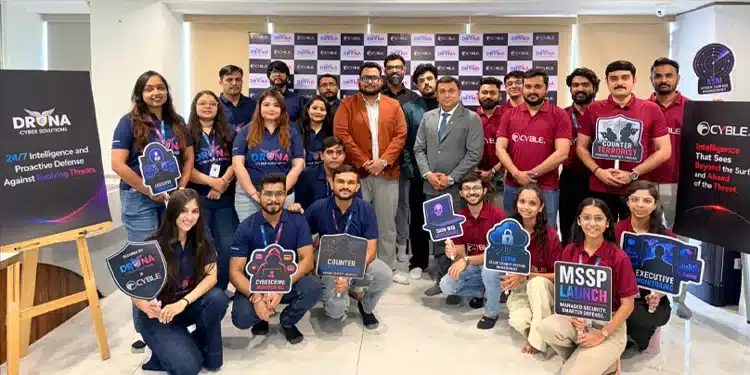
The AI-Powered Intelligence for Cyber Defense initiative was formally launched Tuesday at DRONA Cyber Solutions' Command and Control Centre, where the companies presented a live technical demonstration showing how an intrusion attempt can be detected, investigated and contained.
The launch comes as India faces a growing cybercrime burden. India recorded 28.15 lakh cybercrime cases in 2025, a 24 percent increase over the previous year, with reported losses reaching ₹22,495 crore. The government's 1930 cybercrime helpline received 32.4 million calls during the year. Of the complaints filed, 55,484 were converted into FIRs.
While large enterprises and banks increasingly have dedicated security teams, budgets and incident response capabilities, many manufacturers, hospital chains, schools and mid-sized businesses, particularly across Tier-2 and Tier-3 cities, continue to operate without comparable security resources.
The final containment action was authorised by a human analyst rather than executed automatically. The demonstration brought together multiple capabilities. Cyble Vision provided the initial detection through continuous monitoring of criminal marketplaces and leak sites.
Cyble Hawk supported the investigative process and attribution, while Cyble Titan handled endpoint enforcement, using hardware-level integrity checks to support its assessment. DRONA analysts remained at the centre of the process, making decisions that the system was deliberately not permitted to make independently.
Mandar Patil, Executive Vice President at Cyble, said the initiative was designed to address a longstanding gap between threat detection and action for mid-sized businesses.
"India is not short of alerts. It is short of what happens next," Patil said. "We have spent a long time in this industry watching mid-sized businesses get told about a threat and then having nowhere to take that information. What we are launching today is not another alert. It is a complete chain — intelligence before the attack, investigation that would stand up to scrutiny, enforcement on the device, and a person accountable for the decision at the end of it."Dhruv Pandit, Co-Founder and CEO of DRONA Cyber Solutions, said the initiative reflects the operational needs of organisations that require immediate action rather than another security dashboard.
"A factory owner calling us at two in the morning does not want to be shown a dashboard," Pandit said. "He wants to know what happened, he wants it contained, and he wants someone to take responsibility for what happens next."
The session brought together speakers from Cyble and DRONA Cyber Solutions to examine areas including dark web threat intelligence, government and PSU cybersecurity projects, digital forensics and incident response (DFIR), and the transition of threat intelligence from information to action.
Mandar Patil and Augustin Kurian of Cyble discussed the dark web threat intelligence landscape. Prathmesh Pawar spoke about government and PSU cybersecurity projects, while Brijesh Kapadiya addressed DFIR and Vijay Mali discussed moving threat intelligence from information to action. The keynote was delivered by Prof. Dr. Kapil Kumar, Coordinator, Department of Biochemistry and Forensic Science.
The session highlighted several practical aspects of cybersecurity work. The dark web was discussed not simply as a hidden part of the internet, but as a structured ecosystem requiring dedicated intelligence-gathering and threat-discovery methods. DFIR was presented as an area where speed and process are as important as technical expertise.
Another key takeaway was the importance of turning threat intelligence into action. Rather than treating intelligence as information alone, the session focused on how it can inform practical security decisions.
Patil told students that the cybersecurity industry faces a shortage of professionals with practical skills in analysing and validating threat intelligence."The gap this industry has is not a gap of ideas. It is a gap of people who know how to do the work," Patil said. "What separates a useful analyst from an alert-reader is the ability to ask whether a piece of intelligence is actually true before you act on it."Augustin Kurian, Editor-in-Chief of The Cyber Express, told students that threat intelligence and journalism share an emphasis on verification.
Every story we publish about a breach, a ransomware group or a leaked database starts exactly where today's demonstration started — with intelligence somebody had to go and find, verify, and decide was worth acting on," Kurian said. The instinct we have tried to build at The Cyber Express is the same instinct a good analyst needs: do not report, and do not act on, what you have not verified.The programme also involved technical and production teams supporting the session. Screen, sound and lighting were handled by the technical team under the guidance and supervision of Aditya More, while Misha Alagiya, Kavya Maharaja, Pathak Ami, Omi and Nandini supported stage management and photography.
"India's exposure is too large for any single partnership to take credit for solving," Patil said. "What matters is whether more of these collaborations exist a year from now, and whether the businesses we are talking about today — the ones without a security team — actually have somewhere to turn."
The AI-Powered Intelligence for Cyber Defense initiative will be delivered through DRONA's Ahmedabad command centre, with the companies indicating an intent to extend the service model to customers elsewhere in India over time.
The initiative also folds into DRONA's existing Cyber Yodha Campaign, a national programme aimed at building 50 integrated cybersecurity command centre labs and training more than 100,000 defenders.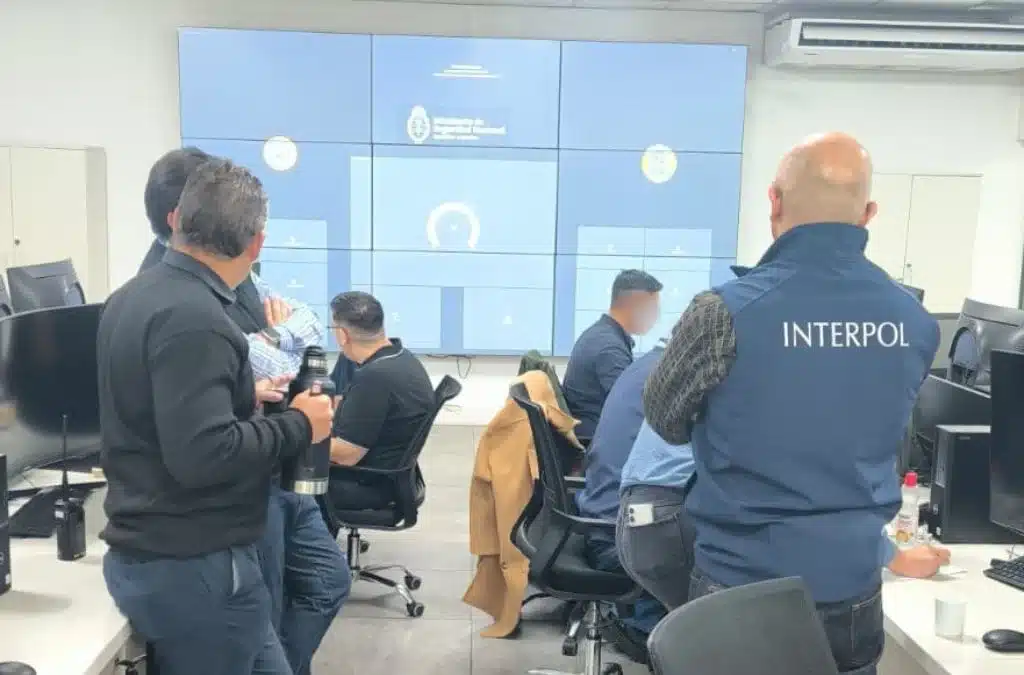
Image Source: INTERPOL[/caption]


"AI adoption without governance is not innovation — it is unmanaged risk. The next phase of enterprise security is about controlling what AI can access, what it can do, and who remains accountable." — Mohammad Arif, Head of Information Security, Guild Group