❌

Visualização normal

Antes de ontemFirewall Daily – The Cyber Express
  • ✇Firewall Daily – The Cyber Express
  • Fake Reviews, Deceptive Ads: FTC Targets Alleged Passport Scam Samiksha Jain
    The Federal Trade Commission (FTC) has filed a complaint against GovAssist LLC, Entry LLC and Scott Zuckerman over an alleged government impersonation scheme targeting consumers seeking U.S. passport and travel-related services. The case highlights how paid search advertising, misleading service promises and allegedly fake customer reviews can be used to make commercial websites appear connected to official government services. According to the FTC, the defendants allegedly used websites and sp
     

Fake Reviews, Deceptive Ads: FTC Targets Alleged Passport Scam

23 de Outubro de 2026, 07:27

Government impersonation scheme

The Federal Trade Commission (FTC) has filed a complaint against GovAssist LLC, Entry LLC and Scott Zuckerman over an alleged government impersonation scheme targeting consumers seeking U.S. passport and travel-related services. The case highlights how paid search advertising, misleading service promises and allegedly fake customer reviews can be used to make commercial websites appear connected to official government services.

According to the FTC, the defendants allegedly used websites and sponsored search results to attract travelers, collect personal and financial information, and mislead consumers about the services they would receive. The complaint was filed in the U.S. District Court for the District of Puerto Rico.

How the Government Impersonation Scheme Allegedly Worked?

The FTC alleges that, since at least October 2023, GovAssist, Entry and Zuckerman operated websites including GovAssist.com, Entry.com and IVS.us, offering passport applications, passport-related services, visa applications and visa renewals.

The complaint states that the websites presented themselves as affiliated with the U.S. State Department, although the defendants were neither the federal government nor authorized government-affiliated providers of passport-related services.

The alleged operation relied on paid search ads to reach people looking for official passport information. Searches such as “apply for a new passport,” “passport renewal,” and “passport renewal online” routinely returned IVS.us and Entry.com pages among Google’s top sponsored results, according to the FTC.

This approach allegedly placed commercial services in locations where users might expect to find official government resources. The distinction matters because consumers searching for essential documents may not recognize that a sponsored result belongs to a private company rather than a government agency.

Misleading Passport Service Claims and Hidden Costs

The FTC alleges that the defendants made false promises about what their services could deliver, including claims that they could directly issue U.S. passports. In many cases, consumers allegedly received only a completed passport application that was available for free through the State Department’s website.

The complaint also challenges the companies’ pricing disclosures. Although their advertisements or websites reportedly stated that services started at $89, the FTC alleges that the lowest available price was $119, plus a $29 shipping fee, bringing the total to $148.

Consumers also needed to pay the State Department when submitting their passport applications. According to the complaint, the defendants prominently displayed their own prices while omitting or downplaying the additional government fee, potentially leaving customers unaware that they would have to pay again.

Delivery claims are another part of the case. The FTC alleges that the defendants advertised expedited passport services promising delivery in as little as six to 10 business days or three to four business days. The agency contends these promises were false because the timelines were faster than the quickest expedited service available through the State Department, the only source of U.S. passports.

Fake Reviews and Consumer Trust

The complaint further alleges that the defendants used fake positive reviews to make their services appear legitimate. Their websites reportedly highlighted excellent ratings based on consumer feedback published on Trustpilot and other review platforms.

According to the FTC, those ratings relied on high numbers of fake positive reviews. If established, the allegations would show how misleading reviews can reinforce the credibility created by sponsored search placements, making it harder for consumers to distinguish legitimate services from deceptive offerings.

The alleged combination of deceptive ads and fake reviews is central to the case because consumers may rely on both search rankings and customer feedback when deciding which service to trust.

FTC Alleges Violations of Three Federal Laws

The FTC alleges that the defendants violated the FTC Act, the Impersonation Rule and the Gramm-Leach-Bliley Act. The complaint targets the alleged impersonation of government services, misleading representations about passport processing and pricing, and the use of false consumer reviews.

Zuckerman, identified as the owner and sole member of GovAssist and Entry, allegedly operated the scheme while subject to an FTC order in an earlier, unrelated case involving Support King LLC. That case concerned stalkerware and resulted in a final administrative order addressing data privacy.

The FTC said its staff received assistance from the U.S. Postal Inspection Service, the U.S. Attorney’s Office for the District of Puerto Rico and the U.S. Department of State. The Commission authorized the complaint in a 2-0 vote.

What the Case Reveals About Online Consumer Fraud

The allegations illustrate how consumer fraud can exploit the gap between what users expect from an online search and what a website actually provides. A sponsored result may appear prominently, but its placement does not establish that the service is government-operated or officially authorized.

The case also highlights the role of pricing transparency and review authenticity in online trust. Claims about faster processing, low starting prices, and positive customer experiences can influence purchasing decisions, particularly when consumers need time-sensitive travel documents.

The FTC has emphasized that filing a complaint does not establish that the defendants violated the law. The case will be decided by the court.

For consumers, the allegations underscore the importance of distinguishing official government services from third-party providers and checking fees, processing claims, and reviewing credibility before sharing personal or financial information. The FTC also states that it will never demand money, threaten consumers, instruct them to transfer money, or promise them a prize.

Cloudflare
Verify you are human

loading

Checking your browser before accessing this site.
Click to verify →
Then you will be redirected to the requested content.
Ray ID: 8f3a2c1b9d4e5f6a · Performance & security by Cloudflare

site-verification-ok

Cloudflare
Verify you are human
loading
Checking your browser before accessing this site.
Click to verify →
Then you will be redirected to the requested content.
Ray ID: 8f3a2c1b9d4e5f6a · Performance & security by Cloudflare

site-verification-ok

Kerala Police Signs MoU With Cyble to Use Threat Intelligence in Cybercrime Probes

12 de Outubro de 2026, 05:34

Kerala Police Signs MoU With Cyble

A new Kerala Police MoU will bring threat intelligence into cybercrime investigations in the state. Cyble, an AI-native cybersecurity company, has signed a three-year Memorandum of Understanding with Kerala Police that covers intelligence support, investigative assistance and capacity building. The agreement was signed through Cyble's Indian subsidiary, Cyble Infosec India Private Limited. It will support the Kerala Police Cyber Operations wing and Cyberdome in identifying and investigating emerging cyber threats. The announcement was made on October 12, 2026.

Why the Kerala Police MoU Focuses on Threat Intelligence

According to Cyble, cybercriminals increasingly use underground online forums and illicit marketplaces to trade stolen credentials, distribute leaked data, coordinate ransomware operations and facilitate fraud. Identifying these activities before they cause harm requires timely intelligence and effective collaboration between technology providers and law enforcement agencies. [caption id="attachment_114716" align="aligncenter" width="600"]Kerala Police MoU Image Source: Cyble[/caption]

What MoU Covers

Under the MoU, Cyble will support Kerala Police with intelligence relevant to cybercrime investigations. This includes compromised credentials, ransomware activity, data leaks, phishing and fraud infrastructure, and the impersonation of government and police brands. The collaboration has three other parts:
  • No-cost evaluation access to select Cyble platforms.
  • Training for police officers in open-source intelligence (OSINT) and dark web investigations.
  • Joint research into emerging threats such as AI-enabled fraud, deepfakes, mule account networks and investment scams.
Public awareness initiatives will also form part of the collaboration. “Effective cybercrime investigations require timely intelligence, especially when criminal activity originates across borders and moves through hidden online networks,” said Beenu Arora, Co-Founder and CEO of Cyble. “Kerala Police has taken a proactive approach to cyber policing through Cyberdome. Through this collaboration, we aim to help investigators access relevant threat intelligence, strengthen their investigative capabilities, and better understand emerging threats targeting citizens and institutions.” Ankit Asokan, IPS, Kerala Police, said: “Cybercrime investigations increasingly require access to timely intelligence on threats that may originate beyond conventional online channels. This collaboration will support Cyberdome and our officers with relevant intelligence, strengthen investigative capabilities, and contribute to efforts to protect citizens from evolving cyber threats.”

Aim of the Kerala Police MoU

The MoU reflects a shared focus on strengthening cybercrime response through collaboration, intelligence sharing and knowledge development. By combining Cyble's threat intelligence capabilities with Kerala Police's investigative expertise, the partnership aims to support more informed investigations and improve awareness of emerging cyber risks. Cyble describes itself as an AI-native cybersecurity company that helps governments and enterprises identify, prioritize and respond to cyber threats. It is headquartered in Cupertino, California, and serves customers globally, with offices in regions including Australia, Malaysia, Singapore, the Middle East and India.
  • ✇Firewall Daily – The Cyber Express
  • India’s DoT Warns Citizens Over SIM Fraud and IMEI Tampering Samiksha Jain
    The Department of Telecommunications (DoT) Madhya Pradesh, India LSA has cautioned citizens against fraudulent SIM cards, misuse of telecom identifiers and tampering with IMEI numbers, warning that such violations can carry serious legal consequences under India’s Telecommunications Act, 2023. The advisory follows recent cybercrime investigations that uncovered instances of unauthorized SIM activation. In one case, a Point of Sale (PoS) agent in Chhattisgarh was found to have illegally
     

India’s DoT Warns Citizens Over SIM Fraud and IMEI Tampering

22 de Setembro de 2026, 03:56

Fraudulent SIM cards

The Department of Telecommunications (DoT) Madhya Pradesh, India LSA has cautioned citizens against fraudulent SIM cards, misuse of telecom identifiers and tampering with IMEI numbers, warning that such violations can carry serious legal consequences under India’s Telecommunications Act, 2023.

The advisory follows recent cybercrime investigations that uncovered instances of unauthorized SIM activation. In one case, a Point of Sale (PoS) agent in Chhattisgarh was found to have illegally activated 25 mobile connections using citizens’ identification documents without their knowledge or consent.

Following the discovery, the DoT and telecom service providers blacklisted the concerned PoS agent, preventing it from issuing mobile connections in the future.

DoT Investigates Fraudulent SIM Cards and Mobile Connections

The 25 mobile connections linked to the case were examined through the Digital Intelligence Platform, or DIP, operated by the DoT. Connections identified as suspicious were subjected to re-verification.

Numbers that failed the re-verification process were subsequently deactivated.

The action highlights concerns around SIM card fraud, particularly where mobile connections are obtained or activated using another person’s identity documents. The DoT has also cautioned citizens against transferring SIM cards registered in their names, as legal liability may extend to the original subscriber if the connection is later misused.

Telecommunications Act 2023 Sets Penalties

The DoT said fraudulent issuance of SIM cards, misuse of telecom identifiers and tampering with IMEI numbers are punishable offences under the Telecommunications Act 2023.

Such violations may attract imprisonment of up to three years and fines of up to ₹50 lakh.

The department has urged citizens to avoid obtaining SIM cards through fake documents, fraud, cheating or impersonation. It has also warned against procuring SIM cards in their own names and subsequently transferring, renting, loaning or otherwise providing them to others for misuse in cyber fraud or other unlawful activities.

Citizens have also been advised not to use devices such as modems, modules or SIM Boxes with configurable or tampered IMEI numbers.

IMEI Numbers and Telecom Identifiers Under Scrutiny

The DoT has highlighted the misuse of telecommunications identifiers, including the International Mobile Equipment Identity, or IMEI numbers, as a security concern.

Citizens have been cautioned against using mobile applications, websites or other methods to modify Calling Line Identity (CLI) or other telecommunications identifiers. The department has also warned against using devices with tampered IMEI numbers.

According to the advisory, misuse of SIMs and telecom identifiers can affect citizen safety and pose risks to the security and integrity of telecommunications networks.

Sanchar Saathi Enables SIM and Device Checks

The DoT has advised citizens to regularly use Sanchar Saathi to verify mobile connections issued in their names and block numbers that are unnecessary or not genuinely theirs.

The Sanchar Saathi platform also provides a facility called “Check Genuineness of Your Mobile handset,” which allows users to verify IMEI numbers and associated device information. The service can provide details including the handset’s brand name, model name and manufacturer information.

Citizens can access the Sanchar Saathi services through its portal or mobile application to check and secure their mobile connections and devices.

The DoT has urged citizens to remain vigilant and avoid sharing SIM cards registered in their names, particularly where the connection could later be used for cyber fraud or other unlawful activities.

  • ✇Firewall Daily – The Cyber Express
  • US House Passes Bill to Help Police Track Down Scammers Targeting Seniors Samiksha Jain
    The U.S. House of Representatives has passed the bipartisan GUARD Act, legislation aimed at strengthening law enforcement efforts against elder financial fraud, cryptocurrency investment scams and other financial crimes targeting older Americans. The bill, H.R. 2978, passed on September 15, 2026, and now heads to the Senate. The GUARD Act, or Guarding Unprotected Aging Retirees from Deception Act, was co-led by Representatives Josh Gottheimer, Zachary Nunn and Scott Fitzgerald. The legislation
     

US House Passes Bill to Help Police Track Down Scammers Targeting Seniors

17 de Setembro de 2026, 04:40

GUARD Act

The U.S. House of Representatives has passed the bipartisan GUARD Act, legislation aimed at strengthening law enforcement efforts against elder financial fraud, cryptocurrency investment scams and other financial crimes targeting older Americans. The bill, H.R. 2978, passed on September 15, 2026, and now heads to the Senate.

The GUARD Act, or Guarding Unprotected Aging Retirees from Deception Act, was co-led by Representatives Josh Gottheimer, Zachary Nunn and Scott Fitzgerald. The legislation would provide state, local and Tribal law enforcement agencies with additional resources to investigate fraud, track stolen funds and pursue criminals involved in increasingly complex financial schemes.

GUARD Act Targets Elder Financial Fraud and Crypto Scams

Under the GUARD Act, law enforcement agencies could use existing federal grant funding to investigate elder financial fraud, general financial fraud and pig butchering crypto scams.

The funding could support the hiring of analysts and other experts, as well as specialized training for investigators handling complex and often transnational financial crimes.

The bill would also clarify that federal law enforcement agencies can assist state, local and Tribal law enforcement partners and fusion centers with blockchain tracing tools and related technology. The goal is to help investigators follow the movement of funds and identify individuals involved in cryptocurrency-related scams.

The legislation also directs the Treasury Department, FinCEN and federal partners to report to Congress on the scale of financial scams in the United States. The report would examine how much Americans lose each year, how many scams are linked to overseas actors and organized crime, and the effectiveness of existing enforcement efforts.

‘Pig Butchering’ Scams Under Focus

The legislation specifically addresses pig butchering crypto scams, a form of financial fraud in which criminals build trust with victims before persuading them to put money into fraudulent investment opportunities.

The term refers to the process of building up a victim's confidence and encouraging larger investments before the criminals steal the funds.

According to the information provided with the legislation, the FBI's 2025 Internet Crime Complaint Center report recorded $20.9 billion in total internet crime losses in 2025, a 26% increase from 2024. Cryptocurrency-related losses reached $11.37 billion across 181,565 complaints, while investment fraud accounted for more than $8.6 billion in losses.

Bill Moves to Senate

Gottheimer said the legislation would give investigators tools and resources to pursue fraudsters, recover stolen money and address criminal networks operating from overseas.

Nunn said the bill followed concerns raised by an Iowa sheriff's deputy about local officers lacking the tools needed to track criminals and recover victims' money.

The GUARD Act has received support from organizations including AARP, the Iowa State Police Association, the Financial Technology Association, Consumer Bankers Association, America’s Credit Union Association, Digital Chamber, National Police Association, Crypto Council for Innovation and Iowa Bankers Association.

With House passage complete, the legislation now moves to the Senate for consideration.

  • ✇Firewall Daily – The Cyber Express
  • Global Crackdown on West African Crime Networks Leads to 58 Arrests Samiksha Jain
    An eight-month international operation targeting West African organized crime groups has resulted in 58 arrests and the identification of 263 suspects across 22 countries, according to INTERPOL. Operation Jackal IV, conducted from November 2025 to June 2026, focused on disrupting criminal networks, tracing illicit funds, identifying high-value targets and supporting arrests and prosecutions. The operation brought together countries across six continents to tackle the growing global threat pos
     

Global Crackdown on West African Crime Networks Leads to 58 Arrests

26 de Agosto de 2026, 05:12

West African Organized Crime Groups

An eight-month international operation targeting West African organized crime groups has resulted in 58 arrests and the identification of 263 suspects across 22 countries, according to INTERPOL. Operation Jackal IV, conducted from November 2025 to June 2026, focused on disrupting criminal networks, tracing illicit funds, identifying high-value targets and supporting arrests and prosecutions. The operation brought together countries across six continents to tackle the growing global threat posed by West African criminal networks, including Black Axe and similar groups. These networks have been linked to a significant share of global cyber-enabled financial fraud, including romance scams, cryptocurrency and investment scams, and business email compromise fraud.

Operation Jackal IV Targets West African Organized Crime Groups

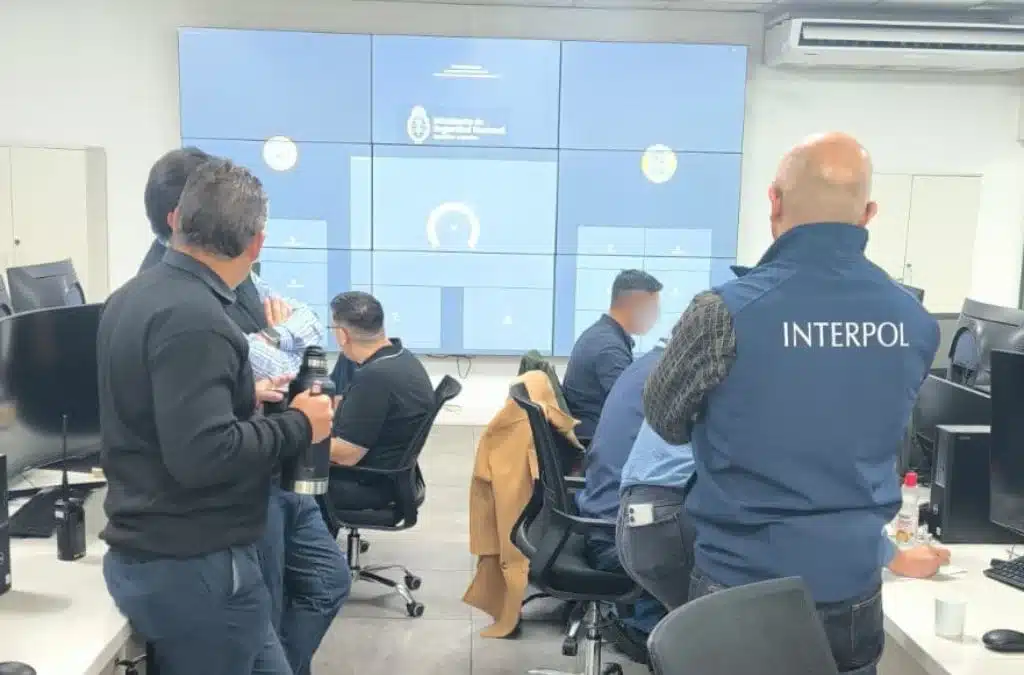
Operation Jackal IV also targeted money laundering activities used to move and conceal criminal proceeds across borders. INTERPOL coordinated cross-border intelligence sharing, analysis and operational support during the operation. It also provided specialized training to strengthen international investigations into financial crime. Tomonobu Kaya, Director of the INTERPOL Financial Crime and Anti-Corruption Centre, said the operation showed the importance of international cooperation in following illicit financial flows and disrupting criminal networks. [caption id="attachment_113806" align="aligncenter" width="600"]West African Organized Crime Groups Image Source: INTERPOL[/caption]

Major Arrests and Financial Crime Investigations

In Argentina, authorities identified 196 individuals linked to a major Crime-as-a-Service network suspected of providing website domains and money laundering support to West African organized crime groups. The investigation resulted in 17 arrests, with an INTERPOL Operational Support Team assisting with analysis of seized data and identification of suspects and criminal networks. South African authorities raided seven locations in Johannesburg linked to a syndicate involved in romance and investment scams targeting retirees in English-speaking countries. Investigators arrested 39 people, seized USD 2.67 million and blocked 257 bank accounts. In Italy, investigators identified an individual connected to a pan-European money laundering network that used shell companies, remittance services and cash withdrawals. One account processed EUR 845,000, or about USD 736,000, through 560 transactions involving 20 financial instruments. Romanian authorities dismantled a criminal group operating an investment scam through a call centre. The group promoted high returns from stocks and cryptocurrencies, with victims' money transferred to electronic wallets controlled by perpetrators. Authorities estimated that EUR 143 million had been stolen and laundered globally. Eleven people were arrested, while cash, cryptocurrency, six real estate properties and luxury watches were seized.

Sextortion and Crime-as-a-Service Emerge

Beyond individual investigations, the operation highlighted emerging threats involving sextortion and Crime-as-a-Service. INTERPOL identified an increase in West African organized crime groups using sextortion to target minors, including victims as young as 14. In these cases, offenders typically contacted minors through social media, established trust and persuaded them to share explicit images or videos. They then threatened to distribute the material to the victim's contacts unless a ransom was paid. Investigators also found that some criminal syndicates were procuring Crime-as-a-Service from external providers, including through the dark web. These services were used to outsource activities such as money laundering and other operational functions. While several cases from Operation Jackal IV remain under investigation, the preliminary results demonstrate the scale and international reach of the networks targeted during the eight-month operation. The participating countries were Austria, Argentina, Australia, Canada, Côte d'Ivoire, France, Germany, Indonesia, Ireland, Italy, Japan, Malaysia, the Netherlands, Nigeria, Portugal, South Africa, Spain, Sweden, Switzerland, the United Arab Emirates, the United Kingdom and the United States.
❌
❌