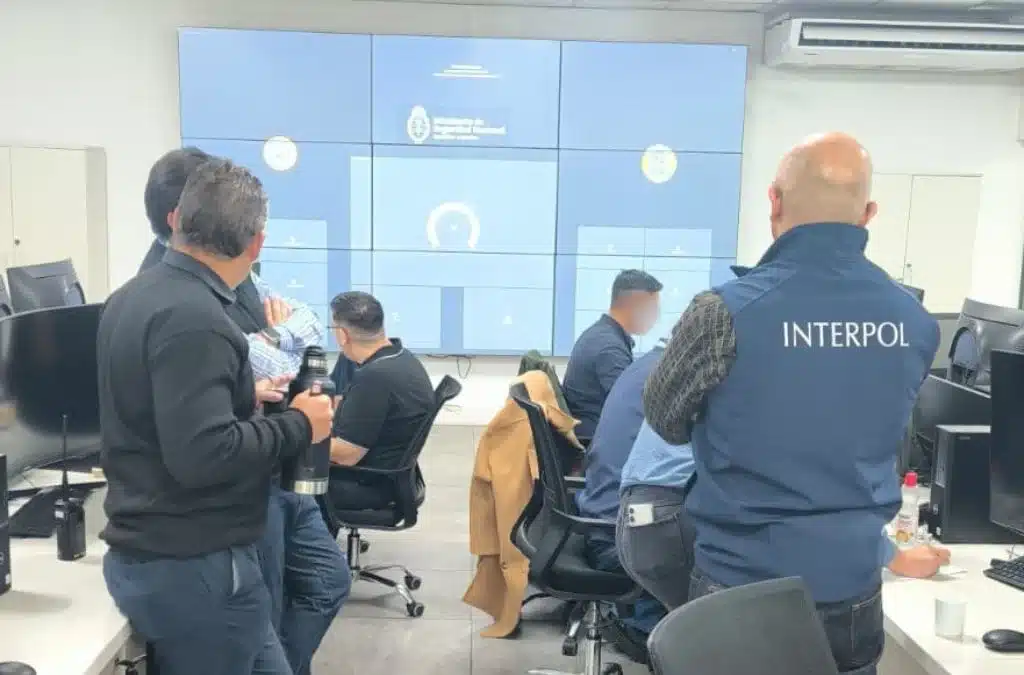
Global Crackdown on West African Crime Networks Leads to 58 Arrests
![]()

![]()

![]()

![]()
The FBI is warning the public about sexual exploitation actors illegally accessing social media and personal accounts to steal explicit images and videos from adult and underage victims. The stolen material, also known as non-consensual intimate images (NCII), is being posted or sold on criminal marketplaces, often without the victim's knowledge.
According to the FBI, these actors use social engineering and cyber intrusion tactics to target specific individuals or general targets of opportunity. After gaining access to accounts, they steal explicit content and share it through community forums or illicit marketplaces.
The FBI said personally identifiable information, including a victim's name, date of birth, email address, phone number and social media username, is often posted alongside the stolen material. This can expose victims to continued harassment and re-victimization.
The FBI has identified several methods used by sexual exploitation actors to gain access to victims' accounts.
In password/PIN targeting, actors use high-volume password and PIN attempts against social media and personal accounts. The information used in these attempts can come from data leak sites, social media and open-source information.
When victims are known to the actors, curated lists may include personal details such as names, date of birth or variations of those details.
Another tactic involves social media customer service impersonation through text messages. Victims may receive messages claiming their account is being disabled or locked unless they provide a verification code.
The actor then requests a password reset, causing a code to be sent to the victim. If the victim shares the code, the actor can reset the password and access the account.
The FBI also warns about phishing campaigns using look-alike domains and email accounts designed to appear as social media customer support.
These messages may claim there has been a new login and contain an embedded link asking the victim to change their password. Clicking the malicious link can give the actor access to the account.
Once explicit content is stolen, sexual exploitation actors may post or sell it while including personal information about the victim. The FBI said victims can subsequently face harassment, sextortion, stalking or other targeted attacks.
The actors may also advertise stolen content through a victim's own social media page, increasing the potential for further exposure.
The FBI advises people to avoid storing sensitive images or videos on social media platforms or other internet-accessible sites.
It recommends using unique, complex passphrases and PINs along with multi-factor authentication (MFA). Password information directly associated with a person's identity, including names or birthdays, should be avoided.
Users should also be cautious with links received through emails and text messages. The FBI recommends going directly to the relevant website to address account concerns and checking URLs before clicking.
Unrequested temporary passwords, PIN resets or access codes should also be treated with caution. The FBI advises users not to share login information, even when someone claims to represent a platform or service.
People who believe their explicit content was stolen or leaked can provide information through the FBI's NCII reporting site. The FBI also advises the public to continue reporting fraud, scams and cyber threats to the Internet Crime Complaint Center or a local FBI Field Office.
![]()

![]()
A vishing call to an overseas contact center agent. A fake IT ticket. A default setting nobody thought to lock down. That's all it took to expose the personal data of roughly 5 million Australians — and now the country's privacy regulator has decided Qantas isn't to blame for it.
The Office of the Australian Information Commissioner (OAIC) closed the book this week on its year-long preliminary inquiry into the June 2025 Qantas data breach, and the conclusion cuts against the instinct to punish the victim of a cyberattack.
According to the OAIC's report, the evidence gathered did not indicate a likelihood that Qantas had "failed" to take reasonable steps to protect the personal information it held, nor that it failed to ensure its overseas third-party provider complied with Australia's privacy principles. No investigation. No enforcement action.
"After more than a year of making inquiries and obtaining information on the data breach, we're satisfied that the evidence does not support the likelihood that a breach of privacy law occurred. As a result, we've decided not to commence a full investigation of Qantas at this stage." - Carly Kind, Australian Privacy Commissioner.
The breach traces back to a single phone call. A threat actor posing as "Qantas IT help" convinced a contact center agent to visit a website tied to the customer relationship management platform used by Qantas agents, walking them through steps framed as necessary to close an IT support ticket. That interaction connected the agent's CRM session to a data extraction tool controlled by the attacker, who then pulled data from every contact profile the agent could access. It was pure social engineering — no malware, no exploited vulnerability, just a convincing lie.
Qantas caught it fast. A staff member spotted an unusual spike in login-attempt alerts on the morning of June 30, two days after the call, and escalated it to the cybersecurity team. Within hours, the company had frozen the compromised account, assessed for data exfiltration, and triggered its incident response process. Public disclosure followed on July 2.
The regulator's numbers are more precise than what circulated publicly last year. Roughly 5.67 million customer records were compromised, with about 4 million exposing names, phone numbers, email addresses and Frequent Flyer details, and a further 1.7 million records including combinations of home or business addresses, dates of birth, gender and meal preferences. Critically, no credit card numbers, financial information or passport details lived on the compromised platform, and customer passwords and login credentials were never touched.
The OAIC's reasoning is a rare, explicit acknowledgment that good controls don't guarantee immunity. Investigators found that social engineering training generally targets credential theft, not the rarer tactic of talking an employee into authorizing a legitimate-looking system connection — meaning the attack likely would have succeeded even with standard training in place. They also noted the flaw was structural: a default configuration let the agent authorize a third-party app connection, a setting the CRM vendor has since changed for all its customers.
Commissioner Carly Kind put the broader stakes plainly in the OAIC's statement announcing the report, warning that AI-driven threats are only raising the bar. As she framed it, agentic and advanced AI will keep escalating the cybersecurity risks businesses face, making continuous review of security posture non-negotiable — not optional.
“Data breaches are a persistent feature of today’s digital world, and can occur despite organisations taking steps to protect personal information,” Commissioner Carly said. “Agentic and advanced AI will only increase the cybersecurity risks that businesses face, and it is critical that all organisations continuously review and enhance their security to protect against this growing threat.”The takeaway here isn't that Qantas got a pass. It's that a regulator has now drawn, in writing, the line between negligence and the limits of what training and access controls can realistically stop.

![]()
The investigation into the Odido cyberattack has uncovered possible involvement of Dutch nationals, according to Dutch police, as authorities continue to investigate the ShinyHunters ransomware-linked attack that exposed the personal data of approximately 6.39 million customers. Law enforcement has urged the public to come forward with information as investigators work to identify those responsible for one of the country's largest telecom data breaches.
The cyberattack took place on February 5 and 6 after attackers allegedly used voice phishing (vishing) to deceive Odido's customer service team.
According to the company, the attackers posed as members of its internal IT staff, gaining unauthorized access before exfiltrating customer data. Odido said its teams detected the unauthorized access immediately on both occasions and revoked the attackers' access, but the incident still resulted in a large-scale data breach.
Under the direction of the National Public Prosecution Service, the High Tech Crime Team (THTC) of the National Investigation and Intervention Unit launched an extensive investigation into the breach.
Authorities said investigators have found strong indications that Dutch criminals may have been involved. One key lead centers on a phone call made shortly before the breach in which a Dutch-speaking man allegedly impersonated an Odido IT employee while speaking with customer service representatives. Police are continuing efforts to identify the caller and have indicated that his voice could be made public if necessary.
Investigators believe people within cybercrime circles may have information about those responsible and are encouraging anyone with relevant details to contact law enforcement.
Odido attributed the attack to the cybercriminal group ShinyHunters, which the company said carried out the social engineering campaign.
Chief Executive Officer Søren Abildgaard acknowledged the incident in a public statement, apologizing to customers and outlining the company's commitment to strengthening its cybersecurity capabilities. He said Odido would continue investing in security, improve data protection practices, expand customer support, and share lessons learned from the incident.
The CEO also explained why the company refused to pay the ransom demand. According to Odido, paying cybercriminals would reward illegal activity and could encourage future attacks against other Dutch organizations. The company said the decision was made following guidance from authorities, despite knowing that stolen data could eventually be published.
Odido confirmed that approximately 6.39 million active and former customers of Odido and its Ben brand were affected by the breach. Customers of Simpel were not impacted.
The exposed information varied by individual and included names, addresses, mobile phone numbers, customer numbers, email addresses, IBAN numbers, dates of birth, identification details, nationality, and gender.
The company clarified that My Odido account passwords, call records, location data, billing information, and scans of identity documents were not compromised.
Odido also addressed reports claiming customer passwords had been leaked, stating that login passwords remain securely encrypted and were never accessible during the attack. Instead, a separate telephone verification field known as "password_c," used as a customer challenge code, was included for a limited number of customers. The company has since discontinued using that verification method.
Following the breach, Odido increased customer support by adding more than 140 service agents and introduced additional security measures. These include its "Check je Gesprek" verification service, allowing customers to confirm whether communications claiming to be from Odido are legitimate, along with access to the F-Secure digital security service.
The telecom provider said all customers identified as affected have been notified by email or SMS, while customer service teams continue assisting users with questions related to their specific data exposure.
Meanwhile, Dutch authorities expect investigations into the Odido cyberattack to continue for several months. Police have also warned that cyberattacks targeting businesses and institutions are becoming increasingly common, urging organizations to strengthen cybersecurity defenses and encouraging citizens to remain vigilant against follow-on fraud and phishing attempts.

![]()

![]()
The convergence of SRE and Security Engineering is reshaping how organizations build, operate, and protect modern cloud environments. As infrastructure grows more complex and distributed, reliability, security, identity management, and observability are becoming increasingly interconnected disciplines rather than separate functions.
Advait Patel, Senior Site Reliability Engineer at Broadcom and author of DockSec, has witnessed this shift firsthand. With experience spanning cloud infrastructure, DevSecOps, and observability platforms such as Wavefront (Tanzu Observability), he has worked on systems processing more than 10 million data points per second while leading initiatives in IAM, cloud migration, and security engineering.
In this interview, Patel shares his insights on securing observability platforms at scale, managing identity across multi-cloud environments, balancing automation with human oversight, and the role AI is playing in the future of DevSecOps and incident response.
From securing observability platforms handling millions of data points per second to managing identity across multi-cloud environments, Advait Patel's experience highlights the practical challenges facing today's infrastructure teams. His views on automation, AI, incident response, and container security reinforce a common theme throughout the discussion: the growing overlap between SRE and Security Engineering.
As organizations continue to modernize their cloud environments, the ability to balance reliability, security, and operational efficiency will become increasingly important. For teams navigating that shift, Patel's insights offer a grounded perspective on what it takes to build and secure systems at scale.

![]()
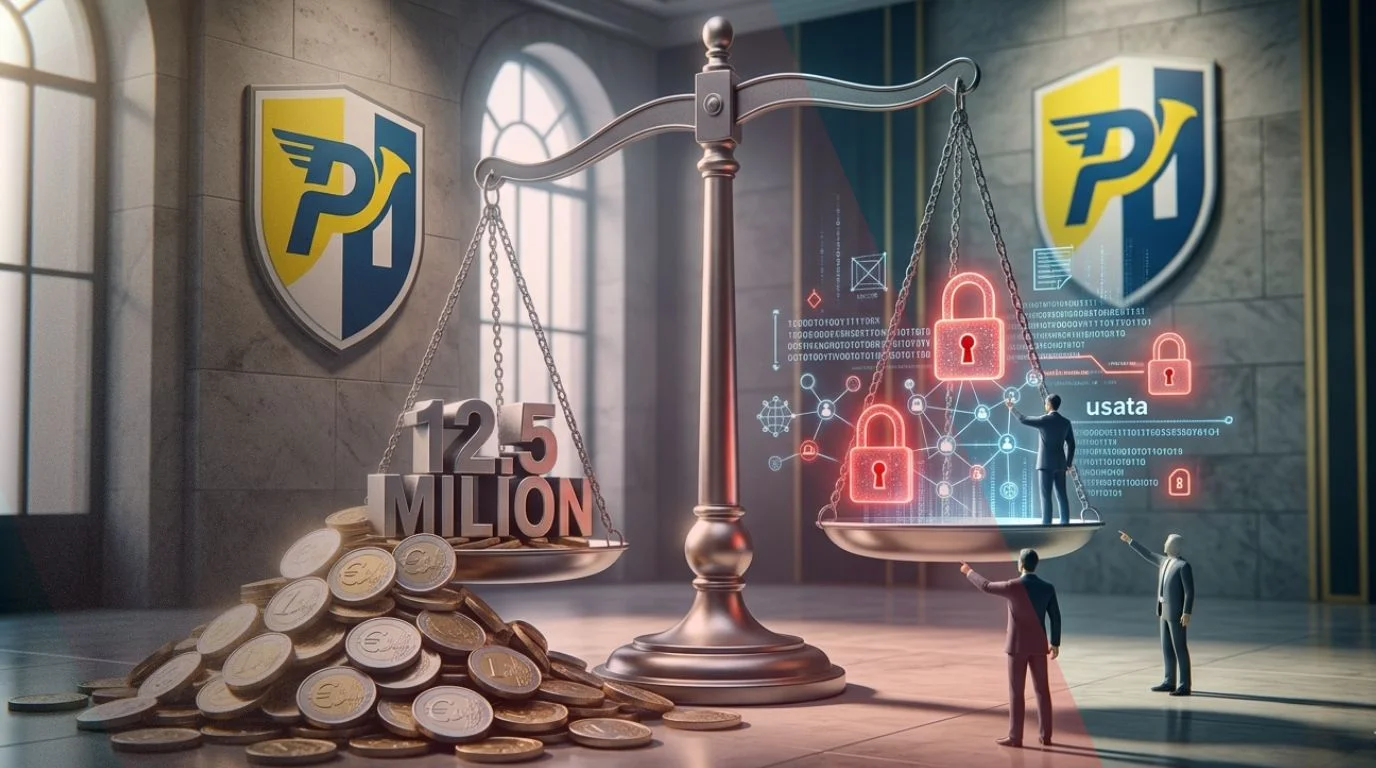
The Italian Data Protection Authority fine against Poste Italiane and Postepay has reached over €12.5 million, after regulators found unlawful processing of personal data affecting millions of users.
Italy’s Italian Data Protection Authority imposed a €6.6 million penalty on Poste Italiane and €5.8 million on Postepay. The action follows an investigation launched in April 2024 after multiple complaints from users regarding how their data was being handled through mobile applications.
The Italian Data Protection Authority fine centers on how BancoPosta and Postepay apps collected user data. Customers were required to allow monitoring of information stored on their devices, including details about installed and active applications.
According to the companies, this access was necessary to detect malware and prevent fraud in line with payment security requirements. However, the regulator found that the scope of monitoring went too far.
Authorities stated that the data collection methods were not proportionate and resulted in excessive intrusion into users’ private lives. The ruling emphasized that fraud prevention cannot justify blanket access to personal device data.
The investigation behind the Italian Data Protection Authority fine also revealed broader compliance failures. Regulators flagged insufficient transparency in how users were informed about data collection practices.
The companies were also found to have not conducted an adequate Data Protection Impact Assessment. Such assessments are required when processing activities pose high risks to individual privacy.
Further issues included weak security measures, unclear policies on how long data was stored, and irregularities in defining data controller responsibilities. These gaps raised concerns about how user data was governed internally.
As part of the enforcement action, both companies have been ordered to stop the disputed data processing practices if still ongoing. They must also align their data retention policies with regulatory requirements and report compliance to the Authority.

![]()