❌

Visualização normal

Antes de ontemFirewall Daily – The Cyber Express
  • ✇Firewall Daily – The Cyber Express
  • Russia and Ukraine Emergency Apps Hacked With Fake Threat Alerts Samiksha Jain
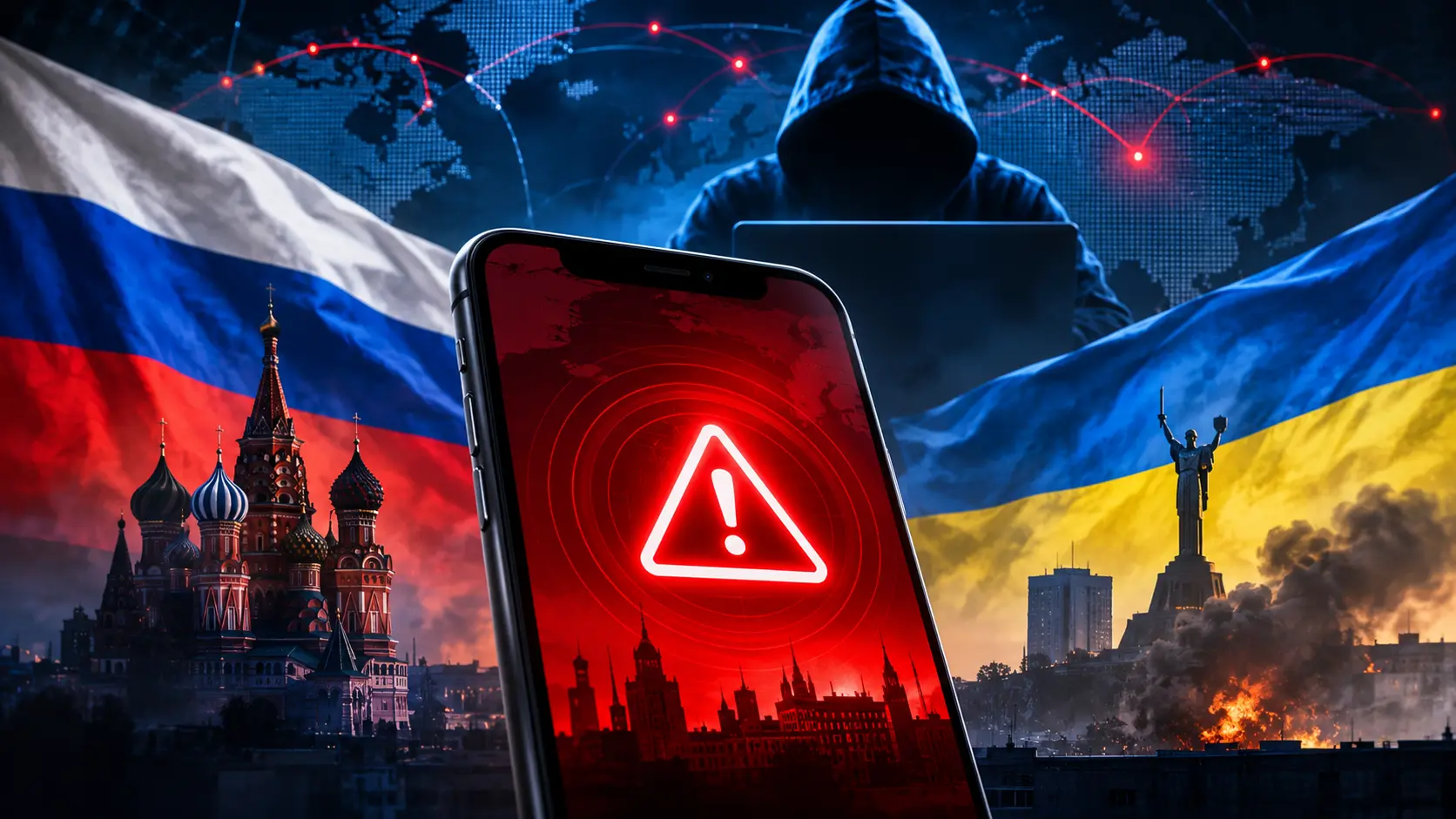
    Emergency alert app cyberattacks in Russia and Ukraine triggered a series of false warnings, including alerts about air raids, radiation threats, chemical attacks and alleged nuclear strikes. Ukrainian authorities said their air raid warning application had been affected, while Russian officials reported a separate attack on their emergency alert app hours later. The incidents raised concerns about the reliability of digital public warning systems during an ongoing conflict. According to BBC
     

Russia and Ukraine Emergency Apps Hacked With Fake Threat Alerts

2 de Novembro de 2026, 03:12

Emergency alert app cyberattacks

Emergency alert app cyberattacks in Russia and Ukraine triggered a series of false warnings, including alerts about air raids, radiation threats, chemical attacks and alleged nuclear strikes. Ukrainian authorities said their air raid warning application had been affected, while Russian officials reported a separate attack on their emergency alert app hours later. The incidents raised concerns about the reliability of digital public warning systems during an ongoing conflict. According to BBC live reporting, Ukraine's air raid app issued false red-level air raid warnings nationwide. Some residents, including people in Kyiv, also received warnings about radiation, chemical attacks and street fighting. Ukrainian authorities cancelled the alerts within an hour and urged residents to disregard suspicious messages. Russia subsequently reported that its emergency alert app had also been targeted. The extent of the false warnings distributed through the Russian application remained unclear.

Emergency Alert App Cyberattacks Trigger False Warnings

Ukraine was the first to report problems with its emergency alert application, which is supported by the country's Ministry of Digital Transformation and provides notifications about the beginning and end of air defence alerts. Following the incident, the Ukrainian Air Force said the application had probably experienced hostile interference. It specifically denied that Kyiv faced the radiation threat indicated by the false alerts and asked residents to remain calm and follow official updates. Ukraine's Centre for Strategic Communications also urged users to disregard strange messages appearing in the application. The centre blamed Russia for the incident in a post on X and highlighted an alert containing a message in Russian about the Oreshnik missile system. The supplied reporting does not establish how the attackers gained access to the application or how the false messages were inserted into the alert system.

Russia's Emergency App Issues False Nuclear Warning

Several hours after Ukraine reported the incident, Russian authorities said their emergency alert application had suffered what they described as a massive cyberattack. One false message reportedly warned Russian residents that nuclear warheads mounted on P1-Suns, identified in the message as a Ukrainian attack drone, had been launched towards all regions of Russia. The alert also instructed people to stock up on food for three weeks and hide. A Ukrainian espionage group claimed that fake nuclear strike warnings had been sent to users in Russia. However, the available reporting did not independently establish who was responsible for the Russian application incident. Russia's emergencies ministry said the mobile application was an additional information service and that the wider public warning system continued to operate normally. The ministry said emergency information was also distributed through sirens, loudspeakers, text messages, television and radio broadcasts. It added that specialists were working to restore the application and described the situation as under control.

Cybersecurity Expert Warns of Further Attacks

Herbert Lin, a senior research scholar specialising in cyber policy and security at Stanford University, described the reported compromise of Ukraine's air raid warning application as concerning. Speaking to the BBC's Newsday programme, Lin said he believed it was the first time an official Ukrainian information application had experienced such an incident. He warned that similar attacks could occur again but stressed that the method used to compromise the application was not yet known. The incident highlights the potential consequences of interference with emergency alert systems, which are designed to deliver time-sensitive information to people facing security threats. False warnings can create uncertainty about whether a reported threat is genuine, particularly when residents rely on mobile applications for immediate updates during military attacks. However, the supplied reporting does not establish the wider impact of the incidents on public behaviour or emergency response operations.

False Alerts Coincide With End of Kherson Ceasefire

The false warnings in Ukraine appeared just minutes before the scheduled end of a localised ceasefire in the frontline Kherson region, according to BBC reporting. The six-day ceasefire involving the area around Oleshky, which has been under Russian occupation since 2022, had enabled hundreds of people to evacuate. The arrangement was brokered with assistance from US First Lady Melania Trump and Pope Leo XIV. Both sides had accused each other of using the ceasefire period to strengthen their frontline positions. Ukrainian officials said the humanitarian operation could provide a basis for further solutions, although the Kremlin viewed such operations as separate from the wider peace process. The timing of the false alerts was reported, but the available information does not establish that the cyber incidents were connected to the ceasefire or its conclusion.

Russia and Ukraine Continue Exchanging Energy Strikes

The reported cyberattacks on Russia and Ukraine occurred amid continued strikes against energy infrastructure on both sides. Russian authorities reported drone strikes against an industrial enterprise east of Moscow, identified by Ukrainian media as the Kstovo oil refinery. Nizhny Novgorod regional governor Gleb Nikitin reported significant damage, possible power outages and reduced hot water supplies. One woman was reportedly injured by falling drone debris. Ukrainian President Volodymyr Zelensky also said Russian strikes had hit energy infrastructure in four Ukrainian regions, leaving hundreds of thousands of homes without power. The emergency application incidents add another layer of concern to the conflict, where digital information services are used to communicate immediate threats to civilians. Investigations into the reported attacks, including who was responsible and how the applications were compromised, remain unresolved in the supplied reporting.
  • ✇Firewall Daily – The Cyber Express
  • Britain Gains Access to Ukraine’s ‘Goldmine’ of Battlefield AI Data Samiksha Jain
    The UK Ukraine AI partnership will give Britain access to Ukraine’s Avengers AI Labs, bringing together Ukrainian battlefield experience, operational data and engineering expertise with the UK’s AI ecosystem. The agreement, signed by President Volodymyr Zelenskyy and Prime Minister Andy Burnham in Ukraine, will focus initially on defence and national security. Under the partnership, British innovators and researchers will gain access to data and insights collected across the battlefield. The
     

Britain Gains Access to Ukraine’s ‘Goldmine’ of Battlefield AI Data

26 de Agosto de 2026, 02:26

UK Ukraine AI partnership

The UK Ukraine AI partnership will give Britain access to Ukraine’s Avengers AI Labs, bringing together Ukrainian battlefield experience, operational data and engineering expertise with the UK’s AI ecosystem. The agreement, signed by President Volodymyr Zelenskyy and Prime Minister Andy Burnham in Ukraine, will focus initially on defence and national security. Under the partnership, British innovators and researchers will gain access to data and insights collected across the battlefield. The UK government described Avengers AI Labs as a “goldmine of battlefield data,” offering researchers access to real-world operational information used to train AI models.

How Avengers AI Labs Uses Battlefield Data

The data is collected through thousands of daylight cameras and infrared sensors deployed across the battlefield. The systems capture images and information involving tanks, artillery, air defence systems, infantry and aerial targets, including Shahed drones and reconnaissance UAVs. The data is used to train AI models to recognize and classify battlefield objects. Ukraine’s Defense Ministry has previously said that systems trained using the Avengers Labs platform analyze more than 100,000 drone video feeds each month and help identify about 70% of enemy targets in real time. The UK’s access to the platform is intended to allow British startups, researchers and engineers to work with operational insights and develop technologies based on real-world datasets. The partnership will initially bring together engineers, academics, businesses and military operational expertise from both countries to address national security challenges. The two countries will also explore additional platforms for future collaboration.

UK Ukraine AI Partnership Test New Defence Technology

Several pilot projects involving British startups have already been rolled out as part of the agreement. The companies named are Bristol-based Sintela, Oxford’s Mind Foundry and London’s Skyral. The first technology is due to be deployed at a UK defence site to help protect bases from protestors and hostile actors seeking intelligence. The project combines Ukrainian data with UK technology and turns buried fibre-optic cables into an AI-enabled sensor. The technology could also be used in other critical locations, including airports, prisons, railways and energy plants, according to the information released about the partnership. A second project will examine the development of next-generation low-power AI chips designed for future drones, robotics and autonomous systems. If successful, the technology could support machines designed to operate for longer, respond faster and function in environments where conventional systems face limitations.

AI Sovereignty and Defence Innovation

The agreement forms part of the UK and Ukraine’s 100 Year Partnership and expands cooperation between the two countries in AI and defence technology. The UK will provide access to its universities, researchers, technology companies and AI ecosystem, while Ukraine will provide access to operational experience and datasets generated during the war. Minister for AI Kanishka Narayan described the arrangement as AI sovereignty in practice, focused on developing national capabilities and turning frontline experience into technologies for military and critical infrastructure protection. The partnership also follows the UK government’s announcement that defence firm MBDA can release classified information on UK components for the long-range SCALP missile to establish local assembly lines in Ukraine. The broader agreement is intended to combine Ukrainian battlefield data with British scientific, engineering and technology expertise, with the initial focus remaining on defence, national security and the development of future defence technology.
  • ✇Firewall Daily – The Cyber Express
  • Cyberattack Hits Ukraine Agency Ahead of Major Asset Tender Samiksha Jain
    A suspected ARMA cyberattack has targeted Ukraine's Asset Recovery and Management Agency as it prepares to select a manager for assets linked to IDS Ukraine. ARMA said its servers experienced unauthorized interference ahead of the August 22 deadline for applications, prompting an investigation into whether the incident was part of a broader effort to disrupt its operations. The Asset Recovery and Management Agency, known as ARMA, manages assets seized by Ukrainian authorities, including asset
     

Cyberattack Hits Ukraine Agency Ahead of Major Asset Tender

19 de Agosto de 2026, 02:33

ARMA Cyberattack

A suspected ARMA cyberattack has targeted Ukraine's Asset Recovery and Management Agency as it prepares to select a manager for assets linked to IDS Ukraine. ARMA said its servers experienced unauthorized interference ahead of the August 22 deadline for applications, prompting an investigation into whether the incident was part of a broader effort to disrupt its operations. The Asset Recovery and Management Agency, known as ARMA, manages assets seized by Ukrainian authorities, including assets linked to sanctioned Russian individuals and alleged collaborators with Moscow.

ARMA Cyberattack Raises Questions Over IDS Ukraine Competition

ARMA said the attack occurred shortly before the August 22 deadline for applications to participate in the competition to select a manager for assets controlled by sanctioned Russian oligarch Mikhail Fridman. The agency said its experts and law enforcement authorities are examining the cyberattack and the events surrounding the IDS Ukraine competition. The Security Service of Ukraine, or SBU, is investigating the recent attack, while a broader National Anti-Corruption Bureau of Ukraine, or NABU, investigation is examining earlier alleged interference. According to ARMA, signs of illegal interference in processes connected to its work have been recorded since spring. These included unauthorized access to the agency's officials' register. ARMA said the combination of cyber incidents, information activity and increased inquiries from some media outlets and members of parliament had raised concerns about a possible coordinated campaign. The agency said investigators must determine whether these events were intended to disrupt its work, create pressure or affect the competition. ARMA has not identified those it believes may have organized or carried out the alleged campaign.

IDS Ukraine Selection Continues Despite Cyberattack

Despite the incident, ARMA said the competition to select the IDS Ukraine asset manager will proceed according to the procedures and timeframe established by law. The deadline for applications is August 22, 2026, with the competition announcement published through Ukraine's Prozorro public procurement system. The agency said it has also started an audit of the financial indicators of seized IDS group assets to support the legality, objectivity and transparency of the transfer process. ARMA said additional information concerning possible unauthorized access to officials' email accounts and official information will be provided to law enforcement authorities for investigation and legal assessment. Acting ARMA Head Yaroslava Maksymenko said the agency would continue the competition despite what it described as information pressure, political interference and attempts to gain unauthorized access to its resources.

Ukraine Investigates Possible Coordinated Interference

ARMA said the latest incident is not being viewed in isolation. The agency pointed to a similar episode earlier this year, when Reuters reported on a cyberattack involving attempts at interference and hacking alongside increased information activity and inquiries. The agency said each event could have an individual explanation, but their timing and combination warranted further investigation. The cyberattack comes as Ukraine continues efforts to prevent sanctioned Russian capital from retaining control over assets seized in the country. ARMA said this includes preventing control through management arrangements, intermediaries or influence groups. Fridman has been sanctioned by Ukraine and several Western governments since Russia's invasion. ARMA said the final responsibility for determining the organizers, customers and perpetrators of the attack rests with the ongoing investigations. The agency said it will continue the IDS Ukraine competition and act within the law while law enforcement agencies examine the reported cyber incidents and possible attempts to interfere with its activities.
❌
❌