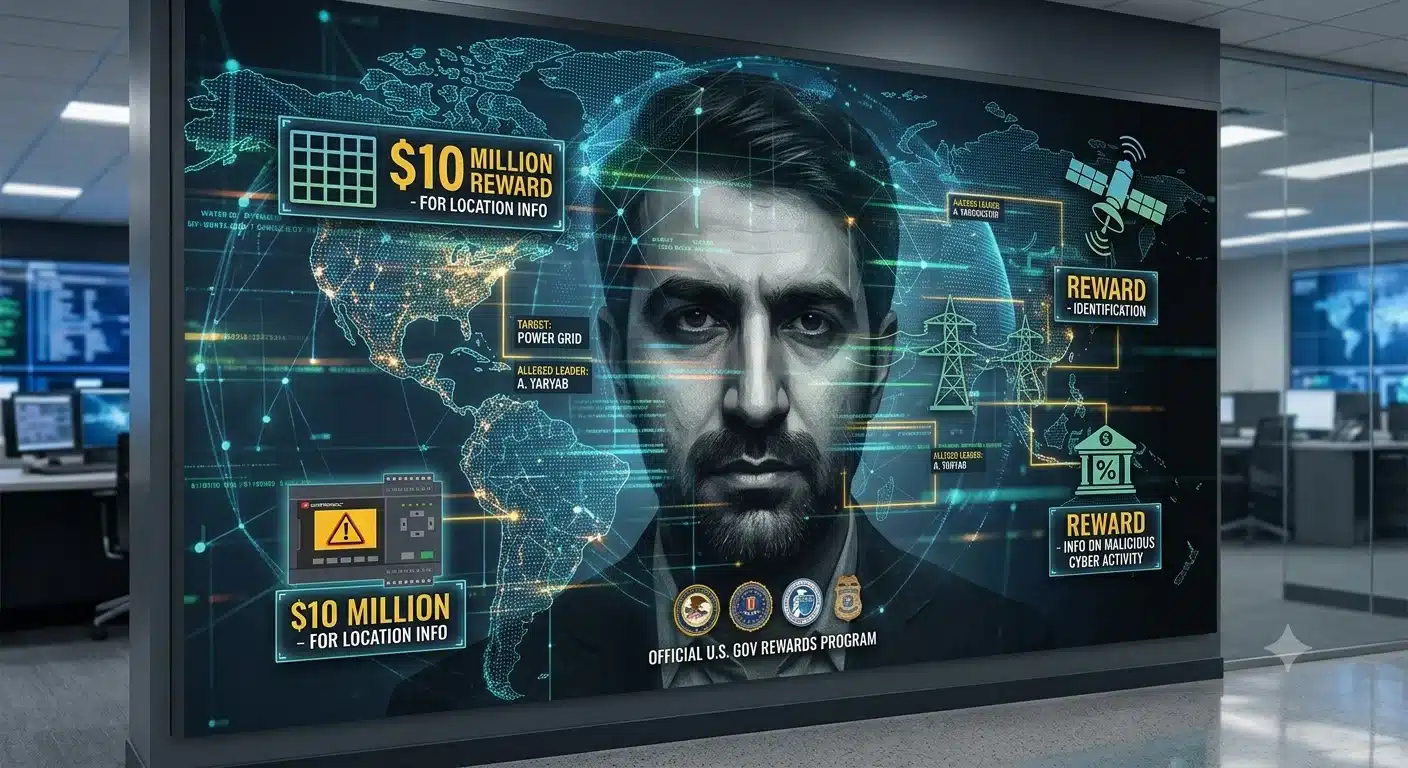
US Puts $10 Million Bounty on Alleged Iranian Cyber Chief
![]()

![]()

![]()
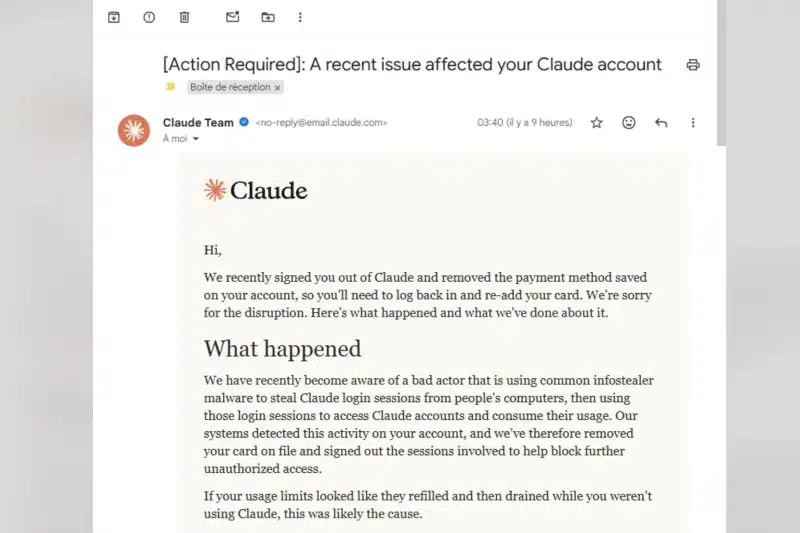
Anthropic warned users over the weekend that a threat actor is using widely available infostealer malware to hijack active Claude login sessions from infected computers, then using those sessions to run up victims' paid usage without ever needing a password or a two-factor code.
The company said it identified six malware families in the campaign: Vidar, LummaC2, StealC, RedLine and Acreed on Windows, and Atomic Stealer, known as AMOS, on a smaller number of macOS machines. None are novel or bespoke. All are commodity stealers sold or rented on criminal dark web marketplaces, and all work the same basic way - harvesting locally stored browser credentials, autofill data and authentication cookies from a compromised machine and shipping them to an operator's server.
What makes the campaign notable is the target rather than the technique. Session cookies represent an already-authenticated state, so an attacker who replays a stolen Claude session token steps past both the account password and multi-factor authentication entirely. This is textbook session hijacking; the new element is that paid AI assistant subscriptions have become worth stealing as a commodity in their own right, alongside the streaming and gaming accounts that stealer log markets have traded for years.
Anthropic told affected users that the tell sign for them was a usage pattern that made no sense. Limits appearing to refill and then drain while the account owner was not using Claude was the biggest red flag.
The company said it is signing affected users out of their sessions, removing saved payment methods from compromised accounts and refunding unauthorized charges identified during its investigation. It also stressed that the malware is not connected to Claude, was not installed through Claude and did not result from anything users did with the product. Infections trace to the usual vectors — pirated software and other illicit downloads.
A Reddit user going by the moniker "WorriedAssociate7029" received the notification from Anthropic and confirmed that he mistakenly installed an infostealer from "a reputable Russian underground forum" while downloading a pirated game. "I got fooled like a rookie by downloading a cracked game," he said.
Intrestingly though, the user claimed of using Claude's Opus model to detect and remove the malware.
"I use the models exclusively in permission-free mode on my entire computer," the Reddit user said."Opus was very efficient. It scanned for active processes, then listed my recent downloads. It found the virus almost instantly. My prompt was very simple: "I think I downloaded a virus recently. My login credentials were stolen. Audit the malware and remove it if you find it. Report on the extent of the damage. He deactivated the virus and created a folder on the desktop containing all the relevant information (including the deactivated virus, lol)."
Anthropic has not disclosed how many accounts were affected.
The security implications reach past the billing line. AI assistant accounts increasingly hold conversation histories, uploaded documents, connected data sources and, in developer configurations, API keys and repository access. A hijacked session inherits whatever the account can reach. Organizations that have rolled out AI tools without folding them into identity and access management now have a class of high-value session token sitting in employee browsers, largely outside the monitoring applied to corporate SaaS.
Anthropic's guidance to compromised users is the standard infostealer playbook. Change credentials across every service used on the affected machine, revoke active sessions, and actually remove the malware, since signing out does not clear an infection that will simply harvest the next session.
There is no formal regulatory hook here yet — no confirmed breach of the provider itself and no disclosure obligation triggered on Anthropic's side. But the episode lands as regulators and standards bodies are working out how AI system security fits existing frameworks, and it illustrates a gap those frameworks have barely addressed - the weakest point in an AI deployment may be an unmanaged endpoint rather than the model or the platform.

![]()

![]()
A De Bijenkorf cyberattack involving one of the retailer's external logistics partners has disrupted order processing, returns, and refunds while raising concerns over potential customer data exposure. The Dutch luxury department store chain said the security incident occurred within the systems of a third-party logistics provider, adding that there is currently no evidence that its own infrastructure was compromised.
The Amsterdam-based retailer confirmed that customers can continue placing online orders and stores remain open. However, deliveries, returns, and refunds are expected to take longer than usual as the investigation continues.
According to De Bijenkorf, unauthorized individuals gained access to part of its logistics partner's systems. The logistics provider responded by immediately blocking the unauthorized access and implementing additional security measures.
An external investigation is now underway to determine the cause of the incident, its scope, and whether customer information was affected.
As a precaution, De Bijenkorf has informed customers about the incident and submitted a report to the Dutch Data Protection Authority while awaiting the investigation's findings.
The retailer said investigators are still determining whether any personal information has been compromised.
Based on the information currently available, data that may be involved includes:
De Bijenkorf emphasized that sensitive financial information is not part of the incident. The company said payment details, bank account numbers, credit card information, usernames, and passwords were not accessed.
The retailer said it is still investigating whether individual customers have been affected. Customers whose information is confirmed to be involved will receive direct communication via email from info@debijenkorf.nl.
For those who have not yet received a notification, the company said it cannot currently rule out the possibility that their information was included in the incident until the investigation is completed.
De Bijenkorf also stressed that no login credentials were compromised, meaning unauthorized individuals cannot access customer accounts using stolen usernames or passwords.
Although the investigation remains ongoing, De Bijenkorf warned customers to stay alert for a possible phishing risk if personal information is ultimately found to have been exposed.
The retailer advised customers not to click on suspicious links or open unexpected attachments. It also reminded customers never to share passwords, payment information, or personal details through email or phone calls.
The company said it will never request credit card details, gift card information, or other sensitive information via email.
The incident adds to a growing list of attacks targeting organizations that support retail operations rather than retailers directly. A logistics cyberattack can interrupt deliveries, returns, and customer service even when the affected retailer's own systems remain operational.
In July 2026, a ransomware attack on Japan's largest refrigerated logistics company disrupted food deliveries across the country, causing supply shortages for restaurant chains, including Kentucky Fried Chicken. The incident demonstrated how cyberattacks on logistics providers can quickly impact downstream retail operations and customer services.
For now, De Bijenkorf said its stores remain open, online ordering continues to operate, and there are no indications that its own systems have been compromised. The retailer said it will provide additional updates as the external investigation establishes whether customer data was affected and the full extent of the incident.

![]()

![]()
Strip away the geopolitics, the hacktivist noise, and the espionage headlines, and one number from the first half of 2026 stands out above everything else: 1,721. That's how many ransomware attacks hit organizations in the United States between January and June, according to new research from Cyble Research and Intelligence Labs (CRIL). It's not just the highest total of any country tracked in the report — it's more than the next nine most-targeted countries combined.
Canada, in second place worldwide, recorded 179 attacks. Germany logged 155. The United Kingdom, 138. Add up the rest of the global top 10 — France, Italy, Spain, Thailand, India and Brazil — and the total still falls more than 600 attacks short of the U.S. figure alone. Out of 3,836 ransomware attacks CRIL tracked worldwide this half, roughly 45% landed on American soil.
Widen the lens slightly and the picture holds. North America as a whole recorded 1,981 ransomware attacks in H1 2026 — more than half of every ransomware incident Cyble observed globally — alongside 35 data breach and leak incidents and 9 initial access sale listings. The report describes the region as home to "a mature, persistently active RaaS ecosystem operating at high volume across a wide range of industries and geographies."
Two ransomware-as-a-service operators did much of the damage. Qilin, the single most prolific gang worldwide, claimed 370 of those North American attacks on its own — nearly 19% of the regional total. Akira followed with 268, and INC Ransom added another 164. Together, Qilin and Akira alone accounted for more than half of all recorded ransomware activity across the region, a level of concentration that points to a small number of highly organized affiliate networks doing the bulk of the damage rather than a diffuse swarm of opportunists.
Professional Services bore the brunt of North American ransomware activity, with INC Ransom showing a marked preference for law firms and other high-value services with sensitive client data. Construction, Manufacturing and Healthcare followed close behind.
One operator, AiLock, stood out for a coordinated wave of victim disclosures that all landed on the same day — March 3 — a pattern consistent with a mass-exploitation campaign rather than isolated intrusions. LockBit, despite years of law enforcement pressure and takedown attempts, kept up a steady tempo against public-sector and educational targets throughout the period, showcasing how difficult the group has been to fully dismantle.
On the data breach side, Technology and financial services (BFSI) were the most frequently targeted sectors in North America, together accounting for roughly 43% of incidents — a reflection of how much intellectual property and monetizable personal data those industries hold.
Notably, Agriculture & Livestock emerged as a significant target for initial access brokers, accounting for a third of all access listings tied to the region. Cyble flags this as a sign of "growing risk in the food supply chain," an area that has historically drawn less attention from ransomware operators than finance or healthcare.
The initial access market itself was strikingly concentrated: two sellers, tracked under the handles "redpin" and "xpl0itrs," accounted for nearly all listings targeting North American organizations. Threat actors also continued to lean on known and zero-day vulnerabilities in widely deployed enterprise platforms — including products from Ivanti and Palo Alto Networks — as their preferred way into corporate networks.
North America wasn't spared the hacktivism wave sweeping the rest of the world either. Collectives including SOLDADOS DIGITALES – UNIÓN AMERICANA and LYSTIC TEAM #ID drove roughly 56 data leak or dump posts and touched about 360 unique domains across the region, with Government, Technology, financial services and telecommunications entities most frequently in the crosshairs.
Cyble's broader findings suggest many groups marketing themselves as ideologically driven hacktivists are, in practice, running side businesses in stolen data brokerage and DDoS-for-hire services — a blurring of motive that complicates how defenders triage the threat.
The scale of the U.S. numbers doesn't necessarily mean American companies have weaker defenses than their global peers — the concentration also reflects the sheer size and digital density of the U.S. economy, and its outsized share of the high-value targets ransomware affiliates chase. But the data does argue for a shift in posture.
Cyble's broader recommendations — treating data exfiltration, not just encryption, as the primary risk; prioritizing patches for the recurring vendor list; and monitoring initial access markets as a leading indicator rather than an afterthought — apply nowhere more urgently than in a country absorbing this much of the world's ransomware volume on its own.

![]()
The ClickFix attacks technique has become a key initial access method for the UAC-0145 cyber threat cluster, according to a new report from Ukraine's Computer Emergency Response Team (CERT-UA). The agency said the threat group, also tracked as Sandworm, APT44, Seashell Blizzard, and a subcluster of UAC-0002, has shifted its tactics during 2026, increasingly relying on fake CAPTCHA prompts and social engineering to compromise systems.
CERT-UA said it has worked with Ukrainian cybersecurity agencies for several years to investigate the activities of UAC-0145. While the group previously relied on infected software installers distributed through torrent websites, recent campaigns have increasingly used ClickFix to trick users into executing malicious PowerShell commands.
According to CERT-UA, infections recorded during the spring and summer of 2026 frequently began when victims visited compromised websites displaying fake CAPTCHA pages. Users were instructed to copy and execute PowerShell commands in their terminal, a phishing technique commonly referred to as ClickFix.
The downloaded commands were designed to retrieve malicious files such as GHETTOVIBE, a Visual Basic Script (VBS) that establishes persistence by placing itself in the Windows Startup directory.
Once executed, attackers could deploy SCOUTCURL, a PowerShell reconnaissance tool capable of collecting information about the compromised system, including device specifications, installed software, browser data, and local files before exfiltrating the information.
CERT-UA also observed malware loaders including FLUIDLEECH, disguised as antivirus software, and LOADLOOP being used during these campaigns.
The report noted that attackers continue using malware families such as KALAMBUR, SUMBUR, and TAMBUR after gaining access to victim systems.
To maintain remote access, the group relied on legitimate utilities including OpenSSH and Tor, forwarding local network ports such as 445, 3389, and 22 to attacker-controlled infrastructure.
CERT-UA also found malware designed to steal messaging data from Signal and WhatsApp, with stolen information reportedly exfiltrated using RSYNC.
On infected systems examined during cyber defense operations, investigators additionally identified FREAKYPOLL, a Python-based backdoor distributed as compiled bytecode (.pyc), providing attackers with persistent unauthorized access.
During June and July 2026, CERT-UA analyzed more than ten compromised websites involved in ClickFix attacks.
Investigators found attackers using both the Cloaking.House service and custom malware called SMARTAXE to dynamically modify legitimate webpages. SMARTAXE retrieves remote domains from blockchain smart contracts through Ethereum's eth_call function before displaying fake CAPTCHA pages or redirecting visitors to malicious content.
CERT-UA warned that any website used in these attacks should be considered compromised, potentially through vulnerable content management systems (CMS), stolen credentials, web shells, malicious plugins, modified website scripts, or server-side backdoors.
The agency urged website administrators and hosting providers to strengthen website security and respond quickly to incident reports.
The report also highlighted growing use of Android malware distributed through messaging applications.
Attackers were observed sharing APK files disguised as security or antivirus tools. One such malware family, tracked as COWARDDUCK, functions as a full-featured Android backdoor capable of collecting device information, contacts, files, and real-time geolocation.
The malware targets files from directories including DCIM, Documents, Downloads, Pictures, and Alarms while searching for formats such as DOCX, XLSX, PPTX, ZIP, RAR, JSON, and OVPN files.
According to CERT-UA, COWARDDUCK uploads stolen files through the Dropbox API while receiving commands from legitimate services including Steam Community and StockMemory domains through proxy infrastructure.
Microsoft Threat Intelligence and Microsoft Defender Experts also reported that ClickFix campaigns have increased significantly since early 2024, targeting thousands of enterprise and consumer devices globally each day.
Microsoft said the technique commonly delivers malware such as Lumma Stealer by persuading users to copy and execute commands through Windows Run, Windows Terminal, or Windows PowerShell. The campaigns are often combined with phishing, malvertising, and drive-by compromise techniques that imitate trusted brands.
Because ClickFix attacks rely on user interaction rather than exploiting software vulnerabilities directly, Microsoft recommends organizations strengthen user awareness and apply security policies that restrict unnecessary use of command execution tools.

![]()

![]()
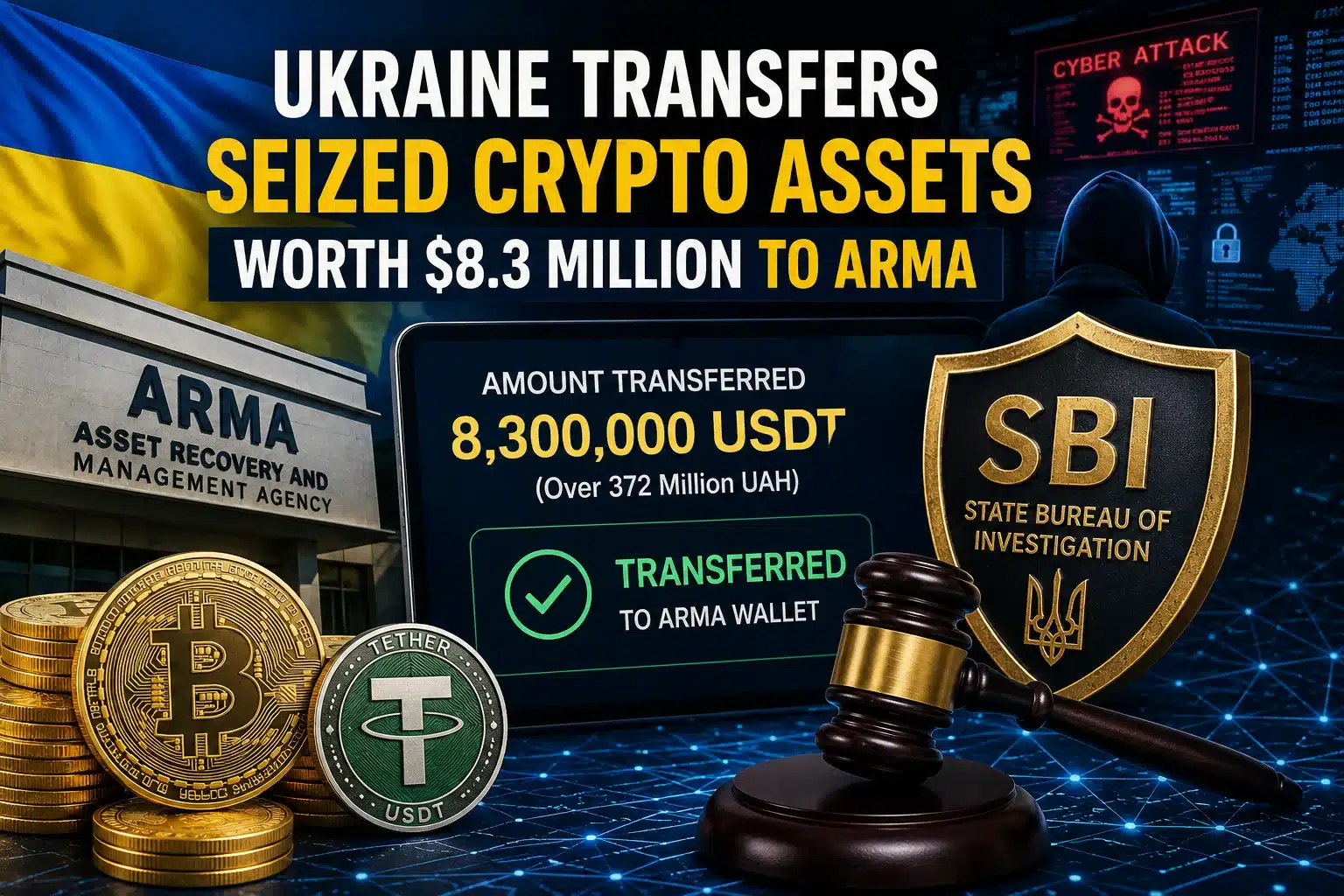
Ukraine has transferred Seized Crypto Assets worth more than 8.3 million USDT to the country's Asset Recovery and Management Agency (ARMA), marking the first time virtual assets have been placed under the agency's management following a court decision. The transfer follows an investigation led by the State Bureau of Investigation into an international hacking group accused of carrying out cyberattacks, extortion, and money laundering across Europe and the United States.
According to Ukrainian authorities, the transferred cryptocurrency is valued at more than 372 million hryvnias and represents a milestone in the country's efforts to manage digital assets linked to criminal investigations.
The State Bureau of Investigation said the transfer was completed as part of an ongoing criminal investigation conducted in cooperation with the DVB of the National Police and U.S. law enforcement agencies.
Investigators determined that the virtual assets were stored in crypto wallets controlled by a member of the organized hacking group. Following a court order, more than 8.3 million USDT was transferred to ARMA's official crypto wallet.
Authorities said this is the first practical case in Ukraine where seized digital assets have been transferred to ARMA for management, demonstrating the country's ability to handle new categories of assets within the legal system.
According to investigators, members of the international hacking group carried out large-scale cyberattacks against individuals and companies in Europe and the United States.
The investigation alleges the group stole confidential information, demanded ransom payments, and laundered criminal proceeds in Ukraine through the purchase of residential properties, vehicles, and other high-value assets.
Authorities estimate that the criminal group's activities caused losses exceeding $100 million.
As part of the pre-trial investigation, four members of the group, including its alleged organizer, were detained and placed in custody.
The investigation resulted in the cryptocurrency seizure and the confiscation of additional assets with a combined value exceeding $11.1 million.
According to the State Bureau of Investigation, the seized property includes residential buildings, apartments, vehicles, approximately $1 million in cash, and digital assets equivalent to more than $8.3 million.
The Office of the Prosecutor General is providing procedural oversight for the criminal proceedings.
The State Bureau of Investigation said that after converting the cryptocurrency into fiat currency, authorities plan to purchase military bonds.
According to the agency, the initiative is intended to support Ukraine's economy during martial law while ensuring that assets obtained through criminal activity are redirected for state purposes.
Officials described countering transnational cybercrime and ensuring effective mechanisms for the seizure and management of criminal assets as key priorities.
ARMA said receiving the cryptocurrency marks an important step in the evolution of Ukraine's asset management system.
The agency stated that the successful transfer reflects coordinated efforts between the State Bureau of Investigation and the Office of the Prosecutor General, enabling the execution of the court's decision and preserving the value of the seized assets.
ARMA added that it is continuing to develop mechanisms for managing all categories of seized property, including real estate, corporate rights, and virtual assets, to ensure their preservation in the interests of the state and society.
The agency said the case demonstrates that as cybercriminals increasingly use digital technologies to conceal illicit proceeds, authorities must also strengthen their ability to manage and preserve cryptocurrency and other digital assets seized during criminal investigations.

![]()
Operation Endgame has dealt another blow to cybercriminal operations after international law enforcement agencies and private sector partners dismantled infrastructure supporting the SocGholish, Amadey, and StealC malware families. The coordinated operation resulted in the seizure of more than EUR 41 million in criminal cryptocurrency assets, the recovery of 27 million stolen login credentials, and the disruption of hundreds of servers and domains used to distribute malware.
Led by Europol and Eurojust, the operation brought together authorities from Canada, Denmark, Germany, the Netherlands, the United Kingdom, the United States, Microsoft, and several cybersecurity organizations. Officials said the objective was to disrupt the infrastructure cybercriminals rely on to launch ransomware attacks, financial fraud, and attacks against critical infrastructure.
During the coordinated action, authorities targeted the infrastructure supporting malware delivery rather than focusing on a single malware family.
Law enforcement and industry partners took action against 326 servers and 142 domains, significantly disrupting malware distribution channels. Investigators also identified and restricted criminal cryptocurrency assets currently valued at more than EUR 41 million (USD 47 million) while recovering approximately 27 million stolen login credentials.
According to Europol, the operation aimed to disrupt the "assembly line" used by cybercriminals to gain initial access to victim systems before deploying ransomware or stealing sensitive information.
[caption id="attachment_112936" align="aligncenter" width="600"]The operation focused on three malware families that are commonly offered under the cybercrime-as-a-service model.
Microsoft reported that during the first two weeks of May 2026 alone, Amadey and StealC malware were linked to more than 140,000 infected computers worldwide.
One of the largest actions under Operation Endgame targeted SocGholish, also known as FakeUpdates.
Authorities remediated 14,971 infected WordPress websites, including websites belonging to restaurants, automotive repair businesses, and other organizations. Investigators also disabled the SocGholish botnet by taking control of domains and shutting down supporting servers.
Website owners whose credentials had been exposed were notified through platforms including Have I Been Pwned, DIVD, Spamhaus, CheckjeHack, NoMoreLeaks, Shadowserver, and NL-NCSC.
The Dutch Police urged WordPress administrators to change passwords, enable multi-factor authentication, remove unknown administrator accounts, and keep their websites updated to reduce future compromise risks.
Authorities said SocGholish has been linked to Evil Corp, a Russian cybercriminal group previously associated with the Zeus and Dridex malware families, as well as multiple ransomware and money laundering operations.
Rather than targeting only malware operators, investigators focused on disrupting the broader infrastructure supporting cybercriminal activity. Europol said this strategy increases operational costs for threat actors and makes large-scale cyberattacks more difficult to execute.
Europol's European Cybercrime Centre (EC3) coordinated operational intelligence sharing through SIENA while providing analytical, technical, and cryptocurrency tracing support throughout the investigation.
The operation forms part of Operation Endgame, described by Europol as the largest international initiative to disrupt ransomware enablers worldwide.
Officials said the latest disruption reflects a growing international strategy of targeting the infrastructure that enables cybercrime operations, rather than responding only after attacks have occurred.
![]()

![]()

![]()

![]()

![]()

![]()

![]()

![]()

![]()

![]()