Visualização normal

Antes de ontemArstechnica
  • ✇Arstechnica
  • Twin brothers wipe 96 gov't databases minutes after being fired Nate Anderson
    In the US, fired and laid-off workers often have their digital credentials deactivated before they learn about the loss of their jobs; indeed, the inability to log in to a corporate system may be the first an employee knows of the situation. Although not a generous or humane approach to staff reduction, it does follow from the simple fact that a fired employee with access to company systems is a security risk. Just ask the Akhter twin brothers, accused of wiping out 96 databases hosting US gover
     

Twin brothers wipe 96 gov't databases minutes after being fired

12 de Maio de 2026, 16:12

In the US, fired and laid-off workers often have their digital credentials deactivated before they learn about the loss of their jobs; indeed, the inability to log in to a corporate system may be the first an employee knows of the situation.

Although not a generous or humane approach to staff reduction, it does follow from the simple fact that a fired employee with access to company systems is a security risk.

Just ask the Akhter twin brothers, accused of wiping out 96 databases hosting US government information in the minutes after both were fired last year from their shared employer.

Read full article

Comments

© Getty Images

  • ✇Arstechnica
  • With developer verification, Google's Apple envy threatens to dismantle Android's open legacy Ryan Whitwam
    It's been nearly 20 years since Google revealed Android, which the company described as the first "truly open" mobile operating system, setting Google-powered phones apart from the iPhone's aggressively managed experience. Over time, though, Android has become more aligned with Apple's approach. For the moment, users still have the final say in what software runs on their increasingly locked-down smartphones. Later this year, though, Google plans to seriously curtail that freedom in the name of
     

With developer verification, Google's Apple envy threatens to dismantle Android's open legacy

3 de Março de 2026, 09:00

It's been nearly 20 years since Google revealed Android, which the company described as the first "truly open" mobile operating system, setting Google-powered phones apart from the iPhone's aggressively managed experience. Over time, though, Android has become more aligned with Apple's approach. For the moment, users still have the final say in what software runs on their increasingly locked-down smartphones. Later this year, though, Google plans to seriously curtail that freedom in the name of security.

In the coming weeks, Google will officially debut Android developer verification, which will require app makers outside the Play Store to register with their real names and pay a fee to Google. Failure to do so will block their apps from installation (sometimes called sideloading) on virtually all Android devices. Google says this is a necessary evolution of the platform's security model, but upending the status quo could push developers away from Android and risk the privacy of those that remain.

This might make your phone a little safer, sure, but it won't stop people from getting scammed. At the same time, it could rob the Android ecosystem of what made it special in the first place.

Read full article

Comments

© Aurich Lawson | Getty Images

  • ✇Arstechnica
  • New AirSnitch attack bypasses Wi-Fi encryption in homes, offices, and enterprises Dan Goodin
    It’s hard to overstate the role that Wi-Fi plays in virtually every facet of life. The organization that shepherds the wireless protocol says that more than 48 billion Wi-Fi-enabled devices have shipped since it debuted in the late 1990s. One estimate pegs the number of individual users at 6 billion, roughly 70 percent of the world’s population. Despite the dependence and the immeasurable amount of sensitive data flowing through Wi-Fi transmissions, the history of the protocol has been littered
     

New AirSnitch attack bypasses Wi-Fi encryption in homes, offices, and enterprises

26 de Fevereiro de 2026, 12:45

It’s hard to overstate the role that Wi-Fi plays in virtually every facet of life. The organization that shepherds the wireless protocol says that more than 48 billion Wi-Fi-enabled devices have shipped since it debuted in the late 1990s. One estimate pegs the number of individual users at 6 billion, roughly 70 percent of the world’s population.

Despite the dependence and the immeasurable amount of sensitive data flowing through Wi-Fi transmissions, the history of the protocol has been littered with security landmines stemming both from the inherited confidentiality weaknesses of its networking predecessor, Ethernet (it was once possible for anyone on a network to read and modify the traffic sent to anyone else), and the ability for anyone nearby to receive the radio signals Wi-Fi relies on.

Ghost in the machine

In the early days, public Wi-Fi networks often resembled the Wild West, where ARP spoofing attacks that allowed renegade users to read other users' traffic were common. The solution was to build cryptographic protections that prevented nearby parties—whether an authorized user on the network or someone near the AP (access point)—from reading or tampering with the traffic of any other user.

Read full article

Comments

© Getty Image | BlackJack3D

  • ✇Arstechnica
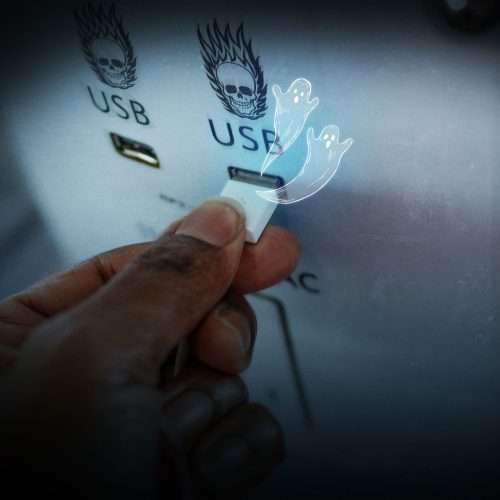
  • iOS and Android juice jacking defenses have been trivial to bypass for years Dan Goodin
    About a decade ago, Apple and Google started updating iOS and Android, respectively, to make them less susceptible to “juice jacking,” a form of attack that could surreptitiously steal data or execute malicious code when users plug their phones into special-purpose charging hardware. Now, researchers are revealing that, for years, the mitigations have suffered from a fundamental defect that has made them trivial to bypass. “Juice jacking” was coined in a 2011 article on KrebsOnSecurity detailing
     

iOS and Android juice jacking defenses have been trivial to bypass for years

28 de Abril de 2025, 08:00

About a decade ago, Apple and Google started updating iOS and Android, respectively, to make them less susceptible to “juice jacking,” a form of attack that could surreptitiously steal data or execute malicious code when users plug their phones into special-purpose charging hardware. Now, researchers are revealing that, for years, the mitigations have suffered from a fundamental defect that has made them trivial to bypass.

“Juice jacking” was coined in a 2011 article on KrebsOnSecurity detailing an attack demonstrated at a Defcon security conference at the time. Juice jacking works by equipping a charger with hidden hardware that can access files and other internal resources of phones, in much the same way that a computer can when a user connects it to the phone.

An attacker would then make the chargers available in airports, shopping malls, or other public venues for use by people looking to recharge depleted batteries. While the charger was ostensibly only providing electricity to the phone, it was also secretly downloading files or running malicious code on the device behind the scenes. Starting in 2012, both Apple and Google tried to mitigate the threat by requiring users to click a confirmation button on their phones before a computer—or a computer masquerading as a charger—could access files or execute code on the phone.

Read full article

Comments

© Aurich Lawson | Getty Images

❌
❌