Visualização normal

Antes de ontemArstechnica
  • ✇Arstechnica
  • Forgot your Google password? Now you can log in with a selfie. Ryan Whitwam
    Getting locked out of an account is no fun. Google has a few ways to help you regain access if you happen to forget your password or lose an authenticator, including recovery contacts and backup codes. Now, Google has a completely new option: your face. You can now give Google a video record of your face and sign into your account with a selfie, which sounds like something people are going to just love. You will have to set this feature up ahead of time if you want the option of regaining accoun
     

Forgot your Google password? Now you can log in with a selfie.

23 de Julho de 2026, 16:14

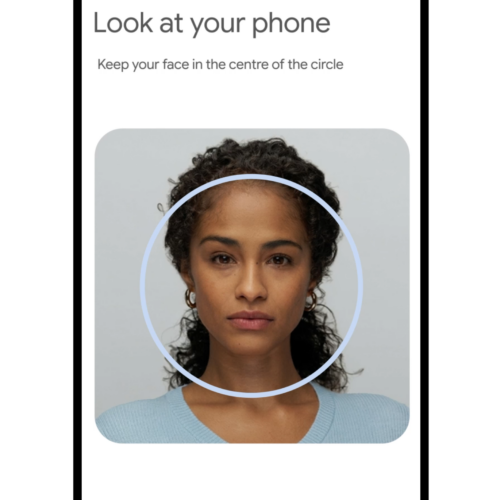
Getting locked out of an account is no fun. Google has a few ways to help you regain access if you happen to forget your password or lose an authenticator, including recovery contacts and backup codes. Now, Google has a completely new option: your face. You can now give Google a video record of your face and sign into your account with a selfie, which sounds like something people are going to just love.

You will have to set this feature up ahead of time if you want the option of regaining account access with a selfie later on. To get started, verify your account type is supported. You won't be able to configure selfie sign-ins for Workspace accounts, child accounts, or any account enrolled in Google's Advanced Protection Program.

Configuring selfie sign-in requires you to record a video, which Google will store on its servers. Google's selfie sign-in landing page includes the typical disclaimers about privacy and data access, promising that the company will keep the video encrypted and won't use it for any other purposes unless you opt in.

Read full article

Comments

© Google

  • ✇Arstechnica
  • With developer verification, Google's Apple envy threatens to dismantle Android's open legacy Ryan Whitwam
    It's been nearly 20 years since Google revealed Android, which the company described as the first "truly open" mobile operating system, setting Google-powered phones apart from the iPhone's aggressively managed experience. Over time, though, Android has become more aligned with Apple's approach. For the moment, users still have the final say in what software runs on their increasingly locked-down smartphones. Later this year, though, Google plans to seriously curtail that freedom in the name of
     

With developer verification, Google's Apple envy threatens to dismantle Android's open legacy

3 de Março de 2026, 09:00

It's been nearly 20 years since Google revealed Android, which the company described as the first "truly open" mobile operating system, setting Google-powered phones apart from the iPhone's aggressively managed experience. Over time, though, Android has become more aligned with Apple's approach. For the moment, users still have the final say in what software runs on their increasingly locked-down smartphones. Later this year, though, Google plans to seriously curtail that freedom in the name of security.

In the coming weeks, Google will officially debut Android developer verification, which will require app makers outside the Play Store to register with their real names and pay a fee to Google. Failure to do so will block their apps from installation (sometimes called sideloading) on virtually all Android devices. Google says this is a necessary evolution of the platform's security model, but upending the status quo could push developers away from Android and risk the privacy of those that remain.

This might make your phone a little safer, sure, but it won't stop people from getting scammed. At the same time, it could rob the Android ecosystem of what made it special in the first place.

Read full article

Comments

© Aurich Lawson | Getty Images

  • ✇Arstechnica
  • Many Bluetooth devices with Google Fast Pair vulnerable to “WhisperPair” hack Ryan Whitwam
    Pairing Bluetooth devices can be a pain, but Google Fast Pair makes it almost seamless. Unfortunately, it may also leave your headphones vulnerable to remote hacking. A team of security researchers from Belgium’s KU Leuven University has revealed a vulnerability dubbed WhisperPair that allows an attacker to hijack Fast Pair-enabled devices to spy on the owner. Fast Pair is widely used, and your device may be vulnerable even if you've never used a Google product. The bug affects more than a dozen
     

Many Bluetooth devices with Google Fast Pair vulnerable to “WhisperPair” hack

15 de Janeiro de 2026, 14:46

Pairing Bluetooth devices can be a pain, but Google Fast Pair makes it almost seamless. Unfortunately, it may also leave your headphones vulnerable to remote hacking. A team of security researchers from Belgium’s KU Leuven University has revealed a vulnerability dubbed WhisperPair that allows an attacker to hijack Fast Pair-enabled devices to spy on the owner.

Fast Pair is widely used, and your device may be vulnerable even if you've never used a Google product. The bug affects more than a dozen devices from 10 manufacturers, including Sony, Nothing, JBL, OnePlus, and Google itself. Google has acknowledged the flaw and notified its partners of the danger, but it's up to these individual companies to create patches for their accessories. A full list of vulnerable devices is available on the project's website.

The researchers say that it takes only a moment to gain control of a vulnerable Fast Pair device (a median of just 10 seconds) at ranges up to 14 meters. That's near the limit of the Bluetooth protocol and far enough that the target wouldn't notice anyone skulking around while they hack headphones.

Read full article

Comments

© Ryan Whitwam

  • ✇Arstechnica
  • Google will end dark web reports that alerted users to leaked data Ryan Whitwam
    Google began offering "dark web reports" a while back, but the company has just announced the feature will be going away very soon. In an email to users of the service, Google says it will stop telling you about dark web data leaks in February. This probably won't negatively impact your security or privacy because, as Google points out in its latest email, there's really nothing you can do about the dark web. The dark web reports launched in March 2023 as a perk for Google One subscribers. The r
     

Google will end dark web reports that alerted users to leaked data

15 de Dezembro de 2025, 15:13

Google began offering "dark web reports" a while back, but the company has just announced the feature will be going away very soon. In an email to users of the service, Google says it will stop telling you about dark web data leaks in February. This probably won't negatively impact your security or privacy because, as Google points out in its latest email, there's really nothing you can do about the dark web.

The dark web reports launched in March 2023 as a perk for Google One subscribers. The reports were expanded to general access in 2024. Now, barely a year later, Google has decided it doesn't see the value in this type of alert for users. Dark web reports provide a list of partially redacted user data retrieved from shadowy forums and sites where such information is bought and sold. However, that's all it is—a list.

The dark web consists of so-called hidden services hosted inside the Tor network. You need a special browser or connection tools in order to access Tor hidden services, and its largely anonymous nature has made it a favorite hangout for online criminals. If a company with your personal data has been hacked, that data probably lives somewhere on the dark web.

Read full article

Comments

© Getty Images | 400tmax

  • ✇Arstechnica
  • Leaker reveals which Pixels are vulnerable to Cellebrite phone hacking Ryan Whitwam
    Despite being a vast repository of personal information, smartphones used to have little by way of security. That has thankfully changed, but companies like Cellebrite offer law enforcement tools that can bypass security on some devices. The company keeps the specifics quiet, but an anonymous individual recently logged in to a Cellebrite briefing and came away with a list of which of Google's Pixel phones are vulnerable to Cellebrite phone hacking. This person, who goes by the handle rogueFed, p
     

Leaker reveals which Pixels are vulnerable to Cellebrite phone hacking

30 de Outubro de 2025, 17:29

Despite being a vast repository of personal information, smartphones used to have little by way of security. That has thankfully changed, but companies like Cellebrite offer law enforcement tools that can bypass security on some devices. The company keeps the specifics quiet, but an anonymous individual recently logged in to a Cellebrite briefing and came away with a list of which of Google's Pixel phones are vulnerable to Cellebrite phone hacking.

This person, who goes by the handle rogueFed, posted screenshots from the recent Microsoft Teams meeting to the GrapheneOS forums (spotted by 404 Media). GrapheneOS is an Android-based operating system that can be installed on select phones, including Pixels. It ships with enhanced security features and no Google services. Because of its popularity among the security-conscious, Cellebrite apparently felt the need to include it in its matrix of Pixel phone support.

The screenshot includes data on the Pixel 6, Pixel 7, Pixel 8, and Pixel 9 family. It does not list the Pixel 10 series, which launched just a few months ago. The phone support is split up into three different conditions: before first unlock, after first unlock, and unlocked. The before first unlock (BFU) state means the phone has not been unlocked since restarting, so all data is encrypted. This is traditionally the most secure state for a phone. In the after first unlock (AFU) state, data extraction is easier. And naturally, an unlocked phone is open season on your data.

Read full article

Comments

© Ryan Whitwam

  • ✇Arstechnica
  • Google confirms Android dev verification will have free and paid tiers, no public list of devs Ryan Whitwam
    As we careen toward a future in which Google has final say over what apps you can run, the company has sought to assuage the community's fears with a blog post and a casual "backstage" video. Google has said again and again since announcing the change that sideloading isn't going anywhere, but it's definitely not going to be as easy. The new information confirms app installs will be more reliant on the cloud, and devs can expect new fees, but there will be an escape hatch for hobbyists. Confirmi
     

Google confirms Android dev verification will have free and paid tiers, no public list of devs

3 de Outubro de 2025, 15:31

As we careen toward a future in which Google has final say over what apps you can run, the company has sought to assuage the community's fears with a blog post and a casual "backstage" video. Google has said again and again since announcing the change that sideloading isn't going anywhere, but it's definitely not going to be as easy. The new information confirms app installs will be more reliant on the cloud, and devs can expect new fees, but there will be an escape hatch for hobbyists.

Confirming app verification status will be the job of a new system component called the Android Developer Verifier, which will be rolled out to devices in the next major release of Android 16. Google explains that phones must ensure each app has a package name and signing keys that have been registered with Google at the time of installation. This process may break the popular FOSS storefront F-Droid.

It would be impossible for your phone to carry a database of all verified apps, so this process may require Internet access. Google plans to have a local cache of the most common sideloaded apps on devices, but for anything else, an Internet connection is required. Google suggests alternative app stores will be able to use a pre-auth token to bypass network calls, but it's still deciding how that will work.

Read full article

Comments

© Ryan Whitwam

  • ✇Arstechnica
  • Google says Gmail security is “strong and effective” as it denies major breach Ryan Whitwam
    The sky is falling, and Gmail has supposedly been hacked to bits by malicious parties unknown. Or has it? Reports circulated last week claiming that Gmail was the subject of a major data breach, citing a series of warnings Google has distributed and increasing reports of phishing attacks. The hysteria was short-lived, though. In a brief post on its official blog, Google says that Gmail's security is "strong and effective," and reports to the contrary are mistaken. This story seems to have develo
     

Google says Gmail security is “strong and effective” as it denies major breach

2 de Setembro de 2025, 15:39

The sky is falling, and Gmail has supposedly been hacked to bits by malicious parties unknown. Or has it? Reports circulated last week claiming that Gmail was the subject of a major data breach, citing a series of warnings Google has distributed and increasing reports of phishing attacks. The hysteria was short-lived, though. In a brief post on its official blog, Google says that Gmail's security is "strong and effective," and reports to the contrary are mistaken.

This story seems to have developed due to a random confluence of security events. Google experienced a Gmail data breach in June, but the attack was limited to the company's corporate Salesforce server. The hacker was able to access publicly available information like business names and contact details, but no private information was compromised.

Over the following weeks, Google alerted Gmail users to an increase in phishing attacks in July and August. It didn't offer many details, but many believed the spike in phishing was related to the corporate server breach. Indeed, more people are talking about hacking attempts on social media right now. This led to the claim that Gmail's entire user base of 2.5 billion people was about to be hacked at any moment, with some reports advising everyone to change their passwords and enable two-factor authentication. While that's generally good security advice, Google says the truth is much less dramatic.

Read full article

Comments

© Ryan Whitwam

  • ✇Arstechnica
  • Open source project curl is sick of users submitting “AI slop” vulnerabilities Kevin Purdy
    "A threshold has been reached. We are effectively being DDoSed. If we could, we would charge them for this waste of our time," wrote Daniel Stenberg, original author and lead of the curl project, on LinkedIn this week. Curl (cURL in some realms), which turned 25 years old in 2023, is an essential command-line tool and library for interacting with Internet resources. The open source project receives bug reports and security issues through many channels, including HackerOne, a reporting service th
     

Open source project curl is sick of users submitting “AI slop” vulnerabilities

7 de Maio de 2025, 13:49

"A threshold has been reached. We are effectively being DDoSed. If we could, we would charge them for this waste of our time," wrote Daniel Stenberg, original author and lead of the curl project, on LinkedIn this week.

Curl (cURL in some realms), which turned 25 years old in 2023, is an essential command-line tool and library for interacting with Internet resources. The open source project receives bug reports and security issues through many channels, including HackerOne, a reporting service that helps companies manage vulnerability reporting and bug bounties. HackerOne has fervently taken to AI tools in recent years. "One platform, dual force: Human minds + AI power," the firm's home page reads.

Stenberg, saying that he's "had it" and is "putting my foot down on this craziness," suggested that every suspected AI-generated HackerOne report will have its reporter asked to verify if they used AI to find the problem or generate the submission. If a report is deemed "AI slop," the reporter will be banned. "We still have not seen a single valid security report done with AI help," Stenberg wrote.

Read full article

Comments

© Aurich Lawson | Getty Images

  • ✇Arstechnica
  • iOS and Android juice jacking defenses have been trivial to bypass for years Dan Goodin
    About a decade ago, Apple and Google started updating iOS and Android, respectively, to make them less susceptible to “juice jacking,” a form of attack that could surreptitiously steal data or execute malicious code when users plug their phones into special-purpose charging hardware. Now, researchers are revealing that, for years, the mitigations have suffered from a fundamental defect that has made them trivial to bypass. “Juice jacking” was coined in a 2011 article on KrebsOnSecurity detailing
     

iOS and Android juice jacking defenses have been trivial to bypass for years

28 de Abril de 2025, 08:00

About a decade ago, Apple and Google started updating iOS and Android, respectively, to make them less susceptible to “juice jacking,” a form of attack that could surreptitiously steal data or execute malicious code when users plug their phones into special-purpose charging hardware. Now, researchers are revealing that, for years, the mitigations have suffered from a fundamental defect that has made them trivial to bypass.

“Juice jacking” was coined in a 2011 article on KrebsOnSecurity detailing an attack demonstrated at a Defcon security conference at the time. Juice jacking works by equipping a charger with hidden hardware that can access files and other internal resources of phones, in much the same way that a computer can when a user connects it to the phone.

An attacker would then make the chargers available in airports, shopping malls, or other public venues for use by people looking to recharge depleted batteries. While the charger was ostensibly only providing electricity to the phone, it was also secretly downloading files or running malicious code on the device behind the scenes. Starting in 2012, both Apple and Google tried to mitigate the threat by requiring users to click a confirmation button on their phones before a computer—or a computer masquerading as a charger—could access files or execute code on the phone.

Read full article

Comments

© Aurich Lawson | Getty Images

  • ✇Arstechnica
  • Android phones will soon reboot themselves after sitting unused for 3 days Ryan Whitwam
    A silent update rolling out to virtually all Android devices will make your phone more secure, and all you have to do is not touch it for a few days. The new feature implements auto-restart of a locked device, which will make your personal data harder to extract. It's coming as part of a Google Play Services update, though, so there's nothing you can do to speed along the process. Google is preparing to release a new update to Play Services (v25.14), which brings a raft of tweaks and improvement
     

Android phones will soon reboot themselves after sitting unused for 3 days

15 de Abril de 2025, 13:00

A silent update rolling out to virtually all Android devices will make your phone more secure, and all you have to do is not touch it for a few days. The new feature implements auto-restart of a locked device, which will make your personal data harder to extract. It's coming as part of a Google Play Services update, though, so there's nothing you can do to speed along the process.

Google is preparing to release a new update to Play Services (v25.14), which brings a raft of tweaks and improvements. First spotted by 9to5Google, the update was officially released on April 14, but as with all Play Services updates, it could take a week or more to reach all devices. When 25.14 arrives, Android devices will see a few minor improvements, including prettier settings screens, improved connection with cars and watches, and content previews when using Quick Share.

Most importantly, Play Services 25.14 adds a feature that Google describes thusly: "With this feature, your device automatically restarts if locked for 3 consecutive days."

Read full article

Comments

© Ryan Whitwam

❌
❌