Visualização normal

Ontem — 8 de Maio de 2026Stream principal

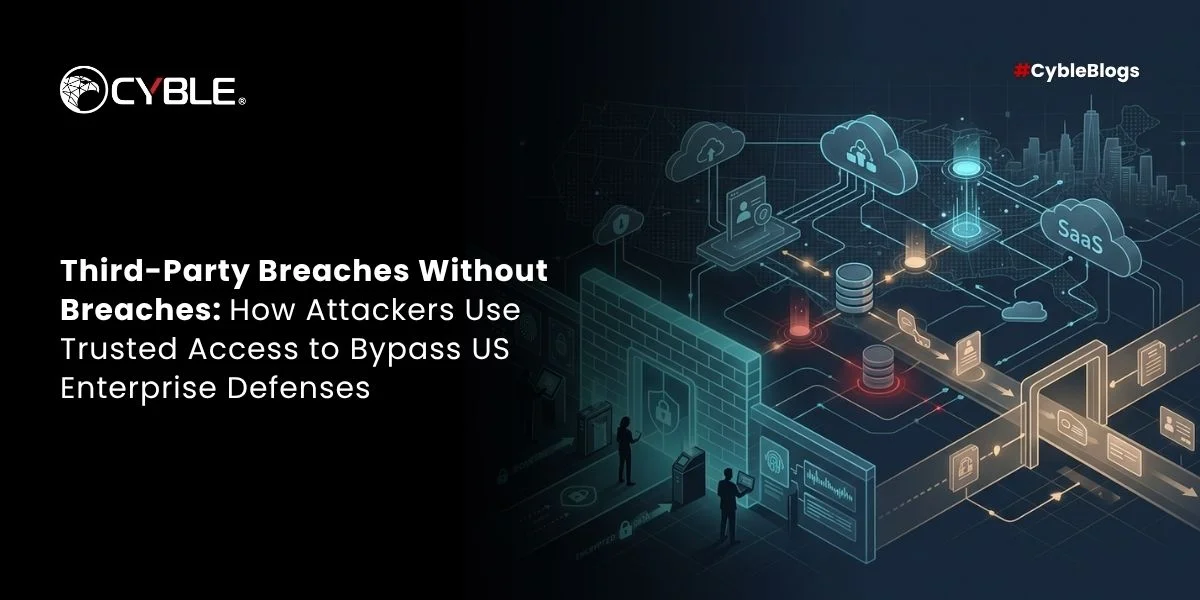
Third-Party Breaches Without Breaches: How Attackers Use Trusted Access to Bypass US Enterprise Defenses

6 de Maio de 2026, 12:17

supply chain attack

The modern enterprise is no longer breached in the traditional sense. Firewalls remain intact; endpoints appear compliant, and credentials are often never “stolen” in the usual way. Yet attackers still get in—and stay in. The difference lies in how trust is being weaponized.  

Threat actors are executing what looks like a supply chain attack without ever touching the actual supply chain infrastructure. Instead, they exploit the implicit trust organizations place in browsers, third-party services, and user behavior. 

This shift represents a quiet but dangerous evolution in supply chain cybersecurity. It’s less about breaking systems and more about bending them, using legitimate access paths to bypass defenses that were designed to stop intrusion, not misuse. 

The Rise of “Invisible” Supply Chain Attacks 

Traditional software supply chain attack scenarios often involve tampering with code libraries, compromising vendors, or injecting malicious updates. Those risks still exist, but attackers are now pursuing a lighter, faster approach: manipulating user-facing workflows that rely on trusted platforms. 

In recent campaigns, phishing pages masquerade as routine services—identity verification tools, account recovery portals, or internal workflows. What makes these attacks stand out is not just the deception, but the permissions they request. Instead of asking for passwords, they request access to cameras, microphones, and device-level metadata. 

This tactic transforms a simple phishing attempt into a sophisticated supply chain attack example—one where the “chain” is not software distribution, but user trusts in familiar digital processes. 

Once permissions are granted, the attack doesn’t need to escalate privileges. It already has them. 

When Browsers Become Data Exfiltration Tools 

Modern browsers are powerful. They support APIs for video capture, audio recording, geolocation, and device fingerprinting. These capabilities are designed for legitimate applications—but in the wrong hands, they become surveillance tools. 

Attackers embed scripts within phishing pages that activate these features immediately after permission is granted. Within seconds, they can: 

  • Capture images and short video clips from the user’s camera  

  • Record audio through the microphone  

  • Collect device details such as OS, browser version, and memory  

  • Approximate location and network characteristics  

This isn’t brute-force hacking. It’s precision harvesting. 

The data is then quietly transmitted to attacker-controlled systems, often using simple channels like messaging bots. There’s no need for complex infrastructure, which makes detection even harder. 

From a supply chain cybersecurity perspective, this is particularly concerning. The browser—arguably one of the most trusted components in enterprise environments—becomes the weakest link. 

QR Codes and the Expansion of the Attack Surface 

Another variation of this evolving threat involves QR codes embedded in seemingly legitimate documents. This technique, often called “quishing,” shifts the attack from desktops to mobile devices. 

An employee receives a polished PDF—perhaps an HR document or compliance guide. It looks authentic, reads well, and builds credibility. Then, at the end, it asks the user to scan a QR code for more information. 

That scan leads to a phishing site. 

Because QR codes obscure the underlying URL, they bypass many traditional email filters. On mobile devices, where users are less likely to scrutinize links, the success rate increases dramatically. 

This approach represents another subtle supply chain attack example: attackers are exploiting trusted communication formats—PDFs, QR codes, and mobile workflows—to deliver malicious payloads without triggering alarms. 

Adversary-in-the-Middle: The New Credential Theft 

Credential harvesting has also evolved. Instead of simply collecting usernames and passwords, attackers now position themselves between the user and the legitimate service. 

This adversary-in-the-middle (AITM) technique allows them to intercept: 

  • Login credentials  

  • Multi-factor authentication (MFA) codes  

  • Session tokens  

In effect, they don’t just log in—they become the user. 

This is particularly damaging in enterprise environments where MFA was once considered a strong defense. It highlights a critical gap in how to prevent supply chain attacks: focusing solely on authentication is no longer enough. Continuous verification and behavioral monitoring are now essential. 

Why These Attacks Work 

What makes these campaigns effective isn’t just technical sophistication—it’s psychological alignment. Every step mimics something users already trust: 

  • Identity verification flows  

  • Corporate documents  

  • QR-based access to resources  

  • Familiar login interfaces  

Attackers are not introducing new behaviors; they are blending into existing ones. 

This is why traditional defenses struggle. Security tools are designed to detect anomalies, but these attacks look normal—because they are built on legitimate features. 

Rethinking Defense: From Perimeter to Context 

Defending against this new class of software supply chain attack requires a shift in mindset. Organizations must move beyond perimeter-based security and adopt a context-driven approach. 

Key strategies include: 

  • Strict permission governance: Limit browser access to sensitive hardware unless necessary  

  • Behavioral monitoring: Detect unusual patterns in device usage and data access  

  • Zero Trust architecture: Continuously verify users, devices, and sessions  

  • User awareness: Train employees to question permission requests, not just links  

Understanding how to prevent supply chain attacks now means recognizing that the “supply chain” includes user interactions, browser capabilities, and third-party workflows—not just software dependencies. 

Strengthening Endpoint Resilience with Cyble Titan 

https://www.youtube.com/watch?v=NS7XHdNpkyE

As attackers exploit trusted access points, endpoint visibility becomes critical. This is where platforms like Cyble Titan play a strategic role. 

Cyble Titan is designed to go beyond traditional endpoint protection. It brings together real-time telemetry, threat intelligence, and automated response into a unified platform. Rather than relying on static rules, it continuously analyzes behavior across endpoints, detecting subtle anomalies that indicate misuse of legitimate tools. 

Key strengths include: 

  • Real-time visibility: Deep insights into processes, file activity, and user behavior  

  • Intelligence-driven detection: Integration with threat intelligence for contextual awareness  

  • Automated response: Rapid containment to reduce attacker dwell time  

  • Cross-platform coverage: Coverage for environments across Windows, Linux, and macOS  

In the context of supply chain cybersecurity, this level of visibility is essential. When attacks don’t “break in” but instead operate within trusted boundaries, detection depends on understanding what shouldn’t be happening, even if it looks normal on the surface. 

Trust Is the New Attack Surface 

The definition of a breach is changing. It’s no longer about unauthorized access—it’s about unauthorized use of authorized access. 

These emerging supply chain attack examples demonstrate that attackers are adapting faster than traditional defenses. They are leveraging trust, not bypassing it. And that makes them harder to detect, harder to prevent, and potentially more damaging. 

Organizations that want to stay ahead must rethink how to prevent supply chain attacks. That means focusing on context, behavior, and continuous verification—not just barriers. 

Ready to see how modern endpoint security can close these gaps? Explore Cyble Titan and experience a more intelligent approach to defending against today’s most deceptive threats.  

Request a demo and evaluate how real-time visibility and AI-driven detection can strengthen your security posture from the inside out. 

The post Third-Party Breaches Without Breaches: How Attackers Use Trusted Access to Bypass US Enterprise Defenses appeared first on Cyble.

💾

Enjoy the videos and music you love, upload original content, and share it all with friends, family, and the world on YouTube.

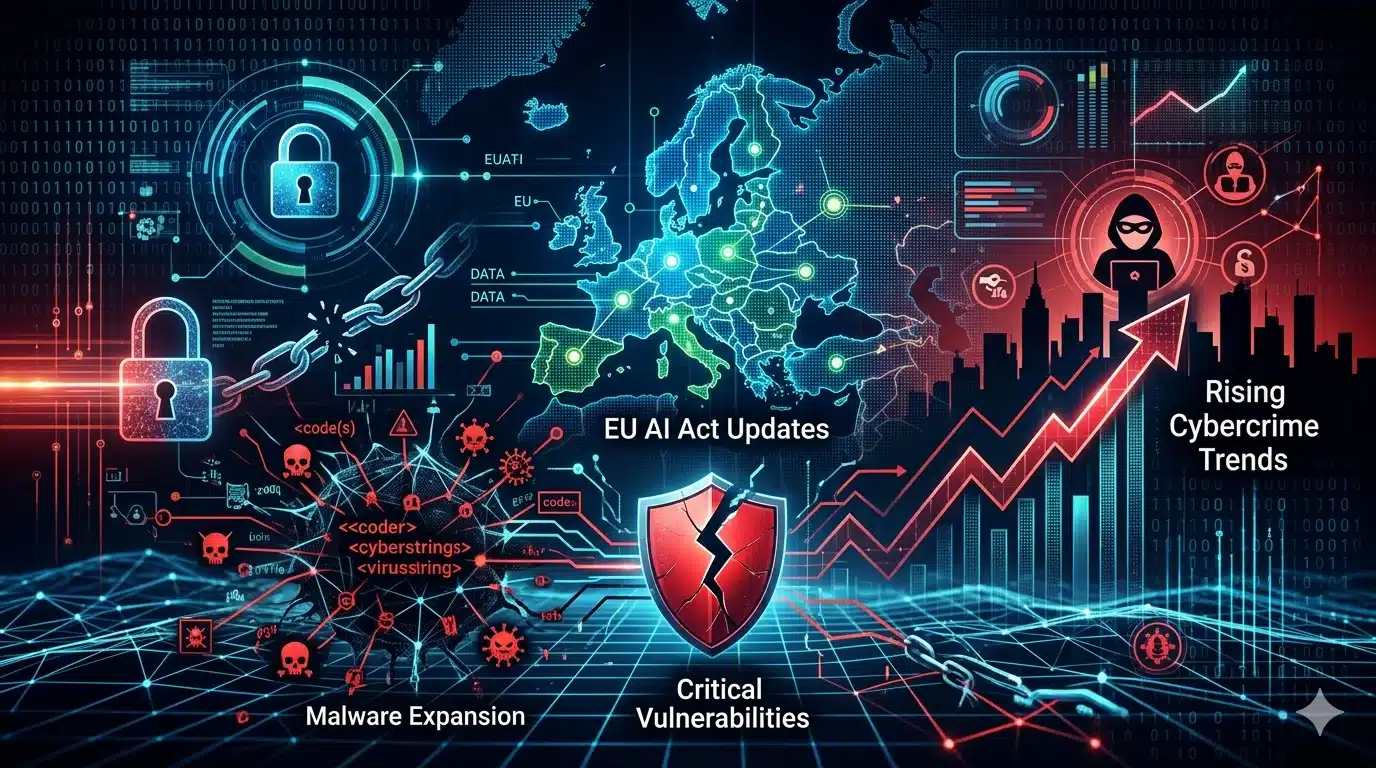
The Cyber Express Weekly Roundup: EU AI Act Updates, Malware Expansion, Critical Vulnerabilities, and Rising Cybercrime Trends

weekly roundup

In this weekly roundup from The Cyber Express, the global cybersecurity landscape continues to show rapid and uneven change, shaped by both regulatory shifts and escalating cyber threats. Governments are tightening oversight of new technologies such as artificial intelligence, while threat actors are simultaneously refining their techniques to exploit businesses, infrastructure, and end users across multiple platforms.  This edition of cybersecurity news brings together some of the most important developments of the week, ranging from significant amendments to the European Union’s AI Act to the expansion of malware campaigns into macOS environments and the discovery of a critical vulnerability in widely used enterprise firewall software.   It also covers major sentencing in a global ransomware case and a fresh warning from the FBI about the growing scale of cyber-enabled cargo theft targeting logistics and supply chain organizations. 

The Cyber Express Weekly Roundup 

EU Updates AI Act with Simpler Rules and New AI Content Bans 

In a significant regulatory update, the European Union has agreed to revise parts of the EU AI Act. The updated framework aims to simplify compliance requirements for businesses while simultaneously introducing stricter restrictions on harmful AI-generated content. Read more.. 

ClickFix Malware Campaign Expands to macOS 

Another key development is the expansion of the ClickFix malware campaign beyond Windows systems. Security researchers at Microsoft have confirmed that the operation is now targeting macOS users using deceptive troubleshooting content. Read more... 

Critical PAN-OS Vulnerability Enables Remote Code Execution 

A critical security flaw has been identified in Palo Alto Networks’ PAN-OS firewall software. Tracked as CVE-2026-0300, the vulnerability carries a CVSS score of 9.3, indicating severe risk. The issue originates from a buffer overflow vulnerability in the User-ID Authentication Portal. Read more... 

Latvian Cybercriminal Sentenced in Global Ransomware Case 

Latvian national Deniss Zolotarjovs has been sentenced to 102 months in prison for his role in a large-scale ransomware operation. According to the U.S. Department of Justice, the group operated under multiple ransomware brands, including Conti, Royal, Akira, and Karakurt. Between 2021 and 2023, the organization carried out attacks against more than 54 companies worldwide, using data theft and encryption-based extortion tactics to pressure victims into paying ransom demands. Read more... 

FBI Warns of Rising Cyber-Enabled Cargo Theft 

The FBI has issued an alert regarding a sharp rise in cyber-enabled cargo theft. Criminal actors are using impersonation techniques to pose as legitimate logistics providers, allowing them to intercept and redirect freight shipments. The agency noted that logistics, shipping, and insurance companies have been targeted since at least 2024. Read more... 

Weekly Takeaway 

This week’s The Cyber Express weekly roundup highlights the growing convergence of regulatory change, advanced malware threats, critical infrastructure vulnerabilities, ransomware enforcement actions, and supply chain fraud. As the global cybersecurity landscape continues to evolve, organizations across all sectors remain under increasing pressure to strengthen defenses and adapt to emerging risks. 
  • ✇Firewall Daily – The Cyber Express
  • Fake Moustache Trick Raises Questions Over UK Online Safety Act Age Checks Ashish Khaitan
    The rollout of the UK’s Online Safety Act in July 2025 was intended to create a safer digital environment for children through stricter age verification rules, tighter moderation standards, and stronger protections against harmful online content. However, early evidence suggests that many of the safeguards introduced under the legislation can still be bypassed with surprisingly simple tactics, including a fake moustache drawn with makeup.  Recent findings have raised concerns among parents, r
     

Fake Moustache Trick Raises Questions Over UK Online Safety Act Age Checks

Online Safety Act

The rollout of the UK’s Online Safety Act in July 2025 was intended to create a safer digital environment for children through stricter age verification rules, tighter moderation standards, and stronger protections against harmful online content. However, early evidence suggests that many of the safeguards introduced under the legislation can still be bypassed with surprisingly simple tactics, including a fake moustache drawn with makeup.  Recent findings have raised concerns among parents, researchers, and digital safety experts about the effectiveness of current age verification systems. While the Online Safety Act has led to some improvements in children’s online experiences, critics argue that enforcement remains inconsistent and that many platforms are still vulnerable to manipulation.  One of the most widely discussed examples involved a 12-year-old boy who reportedly used an eyebrow pencil to create a fake moustache before facing a facial age estimation check. According to the report, the altered appearance convinced the system that he was 15 years old, allowing him to bypass restrictions designed for younger users. The incident has become a symbol of broader concerns about the reliability of AI-driven age-verification technologies. 

Online Safety Act Faces Early Challenges 

The Online Safety Act was introduced to strengthen online child protection measures by requiring platforms to implement stricter checks and reduce children’s exposure to harmful material. The legislation also aimed to improve reporting tools and create safer digital spaces for younger users.  Despite those goals, the report suggests that loopholes remain widespread. Children have reportedly been bypassing protection through several methods, including entering false birthdates, borrowing adult credentials, sharing accounts, and using VPN services. More advanced attempts have also involved spoofing facial recognition systems used in age verification processes.  Survey data cited in the findings revealed that nearly half of children believe current age verification systems are easy to evade. Around one-third admitted to bypassing these systems in recent months.  The fake moustache example particularly highlighted weaknesses in facial age estimation tools that rely heavily on visual indicators rather than stronger forms of identity confirmation. Experts argue that systems based primarily on appearance can be vulnerable to minor cosmetic changes, lighting adjustments, or camera manipulation. 

Mixed Results Following Online Safety Act Rollout 

Although concerns over age verification remain significant, the report noted that the Online Safety Act has produced some positive outcomes. Approximately half of the surveyed children said they were now seeing more age-appropriate content online. In addition, around 40% of both children and parents stated that the internet feels somewhat safer since the legislation came into effect.  Many children also appeared supportive of increased online protections. The findings showed that younger users generally approved of stricter platform rules, reduced interaction with strangers, and limitations placed on high-risk platform features.  Around 90% of children who noticed stronger moderation systems and improved reporting tools viewed those changes positively. Researchers said this indicates that many younger users are willing to engage with safer digital environments when protections are implemented effectively.  Still, the improvements have not been universal. Within just one month of new child protection codes being introduced under the Online Safety Act, nearly half of the children surveyed reported encountering harmful content online. This included violent material, hate speech, and body image-related content, all categories the legislation specifically aims to regulate. 

Privacy Concerns Grow Around Age Verification 

The expansion of age verification requirements has also triggered growing concerns over privacy and data security. More than half of the children surveyed said they had been asked to verify their age within a recent two-month period. These checks were reportedly common across major platforms, including TikTok, YouTube, Google services, and Roblox.  Many platforms now rely on technologies such as facial age estimation, government-issued identification checks, and third-party age assurance providers to comply with the Online Safety Act. While users generally described the systems as easy to complete, concerns remain about how sensitive data is collected, stored, and potentially reused.  Parents expressed unease about whether biometric information and identity documents submitted during age verification could later be retained by companies or accessed by government agencies. Those concerns have intensified calls for more centralized and privacy-focused verification systems instead of fragmented checks spread across multiple online services.  Experts argue that current approaches may not strike the right balance between child safety and personal privacy. They warn that if the weaknesses exposed by tactics like the fake moustache incident are not addressed, public trust in these systems could continue to decline. 

Dirty Frag Linux Vulnerability Exposes Major Distributions to Root Access Attacks

Dirty Frag

A newly disclosed local privilege escalation (LPE) vulnerability known as Dirty Frag is raising serious concerns across the Linux ecosystem after researchers revealed that the flaw can grant root access to most major Linux distributions. The vulnerability, which currently remains unpatched, has been described as a successor to the previously disclosed Copy Fail flaw tracked as CVE-2026-31431.  Security researcher Hyunwoo Kim, also known online as @v4bel, publicly disclosed the issue after what he described as a breakdown in the coordinated disclosure and embargo process. The vulnerability was initially reported to Linux kernel maintainers on April 30, 2026, but no official fixes or CVE identifiers had been assigned at the time of disclosure.  According to Kim, Dirty Frag is not a single bug but a vulnerability class capable of achieving root privileges across many Linux distributions by chaining together two separate flaws: the xfrm-ESP Page-Cache Write vulnerability and the RxRPC Page-Cache Write vulnerability.  Kim explained in his technical write-up:  “Dirty Frag is a vulnerability (class) that achieves root privileges on most Linux distributions by chaining the xfrm-ESP Page-Cache Write vulnerability and the RxRPC Page-Cache Write vulnerability.”  He further noted that Dirty Frag extends the same bug class associated with Dirty Pipe and Copy Fail (CVE-2026-31431). Unlike race-condition-based attacks, Dirty Frag operates through a deterministic logic flaw, making exploitation more reliable.  “Because it is a deterministic logic bug that does not depend on a timing window, no race condition is required, the kernel does not panic when the exploit fails, and the success rate is very high.” 

Dirty Frag Targets Multiple Linux Distributions 

The new LPE vulnerability affects a broad range of Linux distributions, including Ubuntu 24.04.4, RHEL 10.1, openSUSE Tumbleweed, CentOS Stream 10, AlmaLinux 10, and Fedora 44. Researchers warned that successful exploitation allows an unprivileged local user to escalate privileges and gain full root access.  In a public disclosure sent to the oss-security mailing list on May 8, 2026, Kim described Dirty Frag as a “universal Linux LPE” capable of compromising all major Linux distributions.  The disclosure stated:  “This is a report on ‘Dirty Frag’, a universal LPE that allows obtaining root privileges on all major distributions.”  Kim also emphasized that the impact closely resembles Copy Fail, or CVE-2026-31431, which has already been observed under active exploitation in the wild. 

How Dirty Frag Works 

The first component of Dirty Frag, the xfrm-ESP Page-Cache Write vulnerability, originates from the IPSec (xfrm) subsystem. Researchers said it provides attackers with a four-byte store primitive similar to CVE-2026-31431 and allows overwriting small portions of the kernel page cache.  However, exploitation through the xfrm-ESP path requires an unprivileged user to create a namespace. Ubuntu blocks this behavior through AppArmor restrictions, limiting the effectiveness of that exploit path on Ubuntu-based Linux distributions.  To bypass that limitation, Dirty Frag chains a second flaw: the RxRPC Page-Cache Write vulnerability.  Kim explained:  “RxRPC Page-Cache Write does not require the privilege to create a namespace, but the rxrpc.ko module itself is not included in most distributions.”  He added that while RHEL 10.1 does not ship the rxrpc.ko module by default, Ubuntu systems load it automatically. By combining both vulnerabilities, attackers can adapt exploitation techniques depending on the target environment.  “Chaining the two variants makes the blind spots cover each other. In an environment where user namespace creation is allowed, the ESP exploit runs first. Conversely, on Ubuntu, where user namespace creation is blocked but rxrpc.ko is built, the RxRPC exploit works.” 

Links to Older Linux Kernel Vulnerabilities 

Researchers traced the xfrm-ESP vulnerability back to a Linux kernel source code commit made in January 2017. Interestingly, the same commit was also identified as the root cause of another serious Linux kernel issue, CVE-2022-27666, a buffer overflow vulnerability with a CVSS score of 7.8 that affected multiple Linux distributions.  The RxRPC Page-Cache Write vulnerability, meanwhile, was reportedly introduced in June 2023.  Security firm CloudLinx stated in an advisory that the flaw exists in the “ESP-in-UDP MSG_SPLICE_PAGES no-COW fast path” and is reachable through the XFRM user netlink interface.  AlmaLinux also released a technical analysis explaining how the issue impacts kernel memory handling:  “The bug lives in the in-place decryption fast paths of esp4, esp6, and rxrpc: when a socket buffer carries paged fragments that are not privately owned by the kernel, the receive path decrypts directly over those externally-backed pages.”  According to the advisory, this behavior can expose or corrupt plaintext data while an unprivileged process still maintains a reference to the affected pages. 

Public PoC Increases Risk for Linux Distributions 

The threat level surrounding Dirty Frag has intensified due to the public release of a fully working proof-of-concept exploit. Researchers warned that the exploit can grant root access using a single command, significantly lowering the barrier for attackers.  Until official patches become available, administrators are urged to disable the affected modules manually. The recommended mitigation command is: 
sudo sh -c "printf 'install esp4 /bin/false\ninstall esp6 /bin/false\ninstall rxrpc /bin/false\n' > /etc/modprobe.d/dirtyfrag.conf; rmmod esp4 esp6 rxrpc 2>/dev/null; true" 
Security experts also warned that Dirty Frag importantly differs from CVE-2026-31431. Unlike Copy Fail, Dirty Frag can still be exploited even if the Linux kernel’s algif_aead module has been disabled.  Kim stated:  “Note that Dirty Frag can be triggered regardless of whether the algif_aead module is available.”  He further cautioned:  “In other words, even on systems where the publicly known Copy Fail mitigation (algif_aead blacklist) is applied, your Linux is still vulnerable to Dirty Frag.”  With no patches currently available and exploit code already circulating publicly, the newly disclosed Dirty Frag LPE vulnerability presents a significant risk to Linux distributions worldwide. 
Antes de ontemStream principal

Operation Epic Fury Exposes Critical OT Security Gaps in U.S. Oil and Gas Sector

Operation Epic Fury

The cybersecurity posture of the U.S. oil and gas sector has come under renewed scrutiny following Operation Epic Fury, with a new independent survey revealing a disconnect between operator confidence and actual operational technology (OT) security capabilities. While companies across the upstream and midstream energy segments have accelerated cybersecurity investments since the February 28 launch of Operation Epic Fury, the findings suggest many organizations may still lack the tools needed to identify real-time cyber threats targeting OT environments.  The independent survey, conducted on behalf of Tosi, examined the views of OT decision makers across U.S. oil and gas operators. The research found that most respondents believe they can detect an active OT cyber breach within 24 hours. However, the same OT decision makers acknowledged relying heavily on systems and processes not specifically designed to monitor OT infrastructure.  According to the survey data, 87 percent of operators rated themselves as confident in their ability to detect an OT breach within a day, assigning their organizations a score of four or five on a five-point confidence scale. Despite that confidence, 51 percent said their detection capabilities primarily depend on IT security tools that provide only limited visibility into OT-specific network traffic.  Another 27 percent of respondents said they would depend on field operators or technicians identifying irregularities manually, while only 16 percent reported using continuous OT monitoring as the primary basis for cyber threat detection. Sakari Suhonen, CEO of Tosi U.S., warned that this gap represents a major vulnerability for the energy sector in the wake of Operation Epic Fury.  “This is the most consequential blind spot in U.S. energy infrastructure right now,” Suhonen said. “The sector has the budget, the executive attention, and the will to act. What it does not yet have is detection that actually sees OT. After Operation Epic Fury, that distinction is the difference between catching an intrusion in hours and finding out about it from a production outage.” 

Operation Epic Fury Drives Rapid OT Security Spending 

The independent survey was fielded in April 2026, approximately six weeks after Operation Epic Fury began. Researchers noted that the speed of the sector’s response has been unusually aggressive compared to previous cybersecurity cycles.  One of the clearest trends identified by OT decision makers involved changing perceptions of cyber risk. Sixty-three percent of surveyed operators said cyber risk is now higher than it was before February 28, with 13 percent describing the increase as significant.  Respondents identified several key factors contributing to elevated risk levels, including growing convergence between IT and OT systems, increased targeting of energy infrastructure by state-sponsored cyber actors, and expanding dependence on third-party remote access technologies.  The independent survey also showed that emergency cybersecurity funding is already being deployed. Ninety-four percent of operators said they had either approved or were actively reviewing unplanned OT security spending linked directly to the post-Operation Epic Fury threat landscape. Among OT decision makers surveyed, 95 percent expect OT cybersecurity budgets to increase over the next 12 months, while one in four anticipated budget growth exceeding 20 percent. 

OT Decision Makers Prioritize Detection and Visibility 

The survey findings indicate that OT decision makers are placing greater emphasis on visibility and detection capabilities rather than traditional perimeter security tools.  When respondents were asked to identify the single most important OT security capability to improve over the next year, 22 percent selected continuous monitoring and anomaly detection. Another 20 percent pointed to OT-specific incident detection and response solutions.  Additional priorities included asset discovery at 15 percent and OT-specific secure remote access at 14 percent. Combined, detection, visibility, and remote access technologies accounted for 71 percent of all named priorities among surveyed OT decision makers.  At the same time, operational disruptions linked to cybersecurity incidents appear widespread throughout the sector. According to the independent survey, 99 out of 100 operators reported experiencing at least one category of cyber incident since February 28.  Ransomware affecting OT-connected systems impacted 48 percent of operators surveyed, while another 48 percent reported precautionary OT shutdowns triggered by incidents originating on the IT side of operations. 

Human Challenges Continue to Slow OT Security Progress 

Despite the increase in cybersecurity spending following Operation Epic Fury, many organizations continue to struggle with internal operational barriers. The independent survey found that 45 percent of operators consider the cultural divide between IT and OT teams to be the single largest obstacle preventing faster cybersecurity improvements. Respondents said IT security personnel often lack the specialized expertise required to secure OT environments effectively.  Operational risk aversion ranked as the second-largest barrier at 28 percent. By contrast, only 11 percent of respondents identified budget constraints as a major challenge, marking a notable change from previous industry research in which financial limitations consistently ranked as the top concern for OT decision makers.  The findings emerge amid continuing warnings from federal authorities regarding Iran-aligned cyber activity targeting Western critical infrastructure after Operation Epic Fury. On April 7, six U.S. federal agencies — including the Cybersecurity and Infrastructure Security Agency (CISA), the FBI, and the Department of Energy — issued joint advisory AA26-097A. The advisory confirmed that Iranian-affiliated threat actors were actively disrupting programmable logic controllers across U.S. energy, water, and government sectors, resulting in operational disruptions and financial losses.  The Railroad Commission of Texas later issued a parallel warning to operators on April 10. According to Tosi, the independent survey represents the first dataset quantifying how the oil and gas sector itself is responding to the cybersecurity environment created by Operation Epic Fury. Suhonen said the industry’s next decisions regarding OT security investments will determine whether organizations close existing detection gaps or reinforce systems that remain ineffective for OT environments.  “The next twelve months will see oil and gas spend more on OT security than in the previous several years combined,” Suhonen said. “That spend will land in one of two places. It will close the detection gap with OT-native monitoring, asset visibility, and purpose-built secure remote access. Or it will deepen the IT-tool stack that operators have already told us they cannot see what they need it to see. The data is unambiguous about which path the market needs to take.” 

Salesforce Marketing Cloud Vulnerabilities Expose Cross-Tenant Subscriber Data Risks

Salesforce AMPScript

A recently disclosed set of vulnerabilities in Salesforce Marketing Cloud, widely known as SFMC, has drawn attention to the security risks tied to centralized marketing infrastructure.   The flaws, which affected components tied to AMPScript, CloudPages, and email-rendering workflows, could have enabled attackers to access subscriber information, enumerate marketing emails, and potentially affect organizations across multiple tenants.  Security researchers found that weaknesses in SFMC’s templating engine and cryptographic implementation introduced opportunities for unauthorized data access across customer environments. 

AMPScript and SFMC Template Injection Risks 

Modern enterprises rely heavily on Salesforce Marketing Cloud to manage large-scale marketing campaigns, personalized customer journeys, and trackable email communications. The platform, formerly known as ExactTarget, supports dynamic content generation through technologies such as AMPScript, Server-Side JavaScript (SSJS), and internal data views connected to large subscriber databases.  While these features provide flexibility for marketers, researchers noted that they also increase the impact of any underlying vulnerability. One of the major concerns centered on SFMC’s server-side templating framework.  AMPScript and SSJS allow organizations to dynamically insert subscriber attributes such as names, email addresses, and engagement metrics directly into marketing content. However, functions like TreatAsContent introduced a dangerous behavior because they effectively evaluate user-controlled input as executable template code. Researchers explained that if attacker-controlled data was passed into these functions, it could trigger template injection inside Salesforce Marketing Cloud environments.  The issue became more severe because SFMC historically supported AMPScript execution within email subject lines. According to the findings, legacy behavior caused subject templates to be evaluated twice by default. That design opened the door for payload execution during the second rendering stage. Researchers demonstrated the risk using the following payload inside a name field:  %%=RowCount(LookupRows("_Subscribers","SubscriberKey",_subscriberkey))=%%  If processed during the second evaluation phase, the payload could execute successfully and create a reliable injection point inside the marketing workflow.  Once template execution was achieved, attackers could potentially use built-in SFMC functions such as LookupRows to query internal Data Views, including: 
  • _Subscribers  
  • _Sent  
  • _Job  
  • _SMSMessageTracking  
  • _Click  
Access to these views could expose subscriber lists, email delivery records, engagement metrics, and message history associated with affected Salesforce Marketing Cloud tenants. 

CloudPages and “View Email in Browser” Vulnerability

Researchers identified an even more serious vulnerability tied to SFMC’s “view email in browser” functionality and CloudPages infrastructure. Many Salesforce customers configure branded domains such as view.example.com or pages.example.com that route back to shared SFMC infrastructure. These links typically rely on an encrypted qs parameter containing tenant and message-specific information. According to researchers from Searchlight Cyber, the older “classic” qs implementation used unauthenticated CBC encryption. The researchers found that the implementation behaved as a padding oracle, which made it possible to decrypt and re-encrypt query string parameters under certain conditions. Initially, the researchers abused the weakness using the Padre tool before later improving the process through the AMPScript MicrositeURL function.  This allowed them to forge valid QS values and access workflows such as “Forward to a Friend,” which could resolve subscriber identifiers into actual email addresses.  One of the most concerning aspects of the vulnerability was SFMC’s use of a single static encryption key shared across tenants. Researchers stated that once the cryptographic structure became understood, attackers could theoretically enumerate subscribers and access email content across multiple organizations using the same mechanism.

Legacy Encryption Weaknesses Expanded the Attack Surface 

The researchers also uncovered an older URL format that relied on per-parameter “encryption.” However, the mechanism reportedly consisted of a repeating static XOR key combined with a checksum. Although the scheme was considered legacy functionality, researchers found that it still worked on modern SFMC tenants. Because the implementation lacked strong cryptographic protections, attackers could decrypt and enumerate parameters such as JobID and ListSubscriber at high speed without relying on the slower padding-oracle technique.  The findings highlighted how legacy systems inside large cloud platforms can continue to create security exposure long after newer protections are introduced. 

Impact of the Salesforce Marketing Cloud Vulnerability 

Researchers concluded that the combined vulnerabilities could have enabled attackers to: 
  • Enumerate and exfiltrate subscriber records  
  • Access sent marketing emails and engagement data  
  • Forge cross-tenant QS tokens  
  • Access emails belonging to other organizations  
  • Exploit hard-coded cryptographic material  
  • Abuse argument-injection flaws tied to the MicrositeURL function  
  • Manipulate CloudPages and other SFMC web workflows  
To address the issues, Salesforce assigned multiple CVEs covering several root causes, including insecure cryptographic implementations, hard-coded keys, and argument injection vulnerabilities affecting MicrositeURL and CloudPages components.  According to Salesforce, the vulnerabilities were reported on 16 January 2026. Mitigations were deployed between 21 January and 24 January 2026. The company stated that it had identified no confirmed malicious exploitation at the time of disclosure.  As part of the remediation process, Salesforce migrated Marketing Cloud Engagement encryption to AES-GCM, rotated encryption keys, and disabled the double evaluation behavior tied to AMPScript subject-line rendering.  The company also invalidated all legacy tracking and CloudPages links created before 21 January 2026 at 23:00 UTC. Those links expired globally on 23 January 2026 at 21:00 UTC. 
  • ✇Firewall Daily – The Cyber Express
  • PAN-OS Flaw CVE-2026-0300 Exposes Firewalls to Remote Code Execution Ashish Khaitan
    A newly disclosed cybersecurity issue, tracked as CVE-2026-0300, has drawn urgent attention due to its critical severity and active exploitation. The flaw affects PAN-OS, the operating system used in Palo Alto Networks firewalls, and has been categorized as a buffer overflow vulnerability with serious implications for enterprise security environments.  The CVE-2026-0300 PAN-OS vulnerability was officially published on May 6, 2026, and updated the same day after being discovered in real-world
     

PAN-OS Flaw CVE-2026-0300 Exposes Firewalls to Remote Code Execution

Buffer Overflow Vulnerability

A newly disclosed cybersecurity issue, tracked as CVE-2026-0300, has drawn urgent attention due to its critical severity and active exploitation. The flaw affects PAN-OS, the operating system used in Palo Alto Networks firewalls, and has been categorized as a buffer overflow vulnerability with serious implications for enterprise security environments.  The CVE-2026-0300 PAN-OS vulnerability was officially published on May 6, 2026, and updated the same day after being discovered in real-world production environments. It carries a CVSS score of 9.3, placing it firmly in the “critical” category. The issue stems from a buffer overflow vulnerability in the User-ID Authentication Portal, also known as the Captive Portal service, within PAN-OS.  This flaw allows an unauthenticated attacker to execute arbitrary code with root privileges by sending specially crafted network packets. Because the attack requires no authentication, no user interaction, and can be carried out over the network with low complexity, the exposure risk is considered extremely high. 

Technical Details of the Buffer Overflow Vulnerability in PAN-OS 

The root cause of CVE-2026-0300 PAN-OS is classified under CWE-787: Out-of-bounds Write, a common but dangerous type of buffer overflow vulnerability. Attackers can exploit this flaw to overwrite memory and potentially take full control of affected systems.  The vulnerability impacts PA-Series and VM-Series firewalls when the User-ID™ Authentication Portal is enabled. Importantly, Prisma Access, Cloud NGFW, and Panorama appliances are not affected.  Security data associated with the vulnerability highlights the following: 
  • Attack Vector: Network  
  • Attack Complexity: Low  
  • Privileges Required: None  
  • User Interaction: None  
  • Confidentiality, Integrity, Availability Impact: High  
Additionally, the vulnerability is automatable and has already reached the “ATTACKED” stage in exploit maturity, indicating that real-world attacks have been observed. 

Active Exploitation and Risk Factors 

Evidence shows limited exploitation of CVE-2026-0300 PAN-OS, particularly targeting systems where the User-ID Authentication Portal is exposed to untrusted networks or the public internet. Environments that allow external access to this portal face the highest level of risk. The severity is further highlighted by the CVSS vector:  CVSS:4.0/AV:N/AC:L/AT:N/PR:N/UI:N/VC:H/VI:H/VA:H  This translates to a scenario where attackers can remotely compromise systems without needing credentials or user involvement, leveraging the buffer overflow vulnerability to gain root-level access. 

Affected and Unaffected Versions 

Multiple versions of PAN-OS are impacted by CVE-2026-0300, including: 
  • PAN-OS 12.1 versions prior to 12.1.4-h5 and 12.1.7  
  • PAN-OS 11.2 versions prior to 11.2.4-h17, 11.2.7-h13, 11.2.10-h6, and 11.2.12  
  • PAN-OS 11.1 versions prior to 11.1.4-h33, 11.1.6-h32, 11.1.7-h6, 11.1.10-h25, 11.1.13-h5, and 11.1.15  
  • PAN-OS 10.2 versions prior to 10.2.7-h34, 10.2.10-h36, 10.2.13-h21, 10.2.16-h7, and 10.2.18-h6  
Patches are scheduled with estimated availability dates ranging from May 13 to May 28, 2026. Cloud NGFW and Prisma Access deployments remain unaffected. 

Mitigation and Workarounds 

While patches are being rolled out, organizations are advised to take immediate steps to reduce exposure to the buffer overflow vulnerability in PAN-OS.  Recommended mitigations include: 
  • Restricting access to the User-ID Authentication Portal to trusted internal IP addresses only  
  • Preventing any exposure of the portal to the public internet  
  • Disabling the User-ID Authentication Portal entirely if it is not required  
The risk associated with CVE-2026-0300 PAN-OS drops significantly when these best practices are implemented. Systems that already follow strict network segmentation and access control policies are at a much lower risk. 
  • ✇Firewall Daily – The Cyber Express
  • UIDAI, NFSU Sign 5-Year Pact to Boost Cybersecurity and Digital Forensics Ashish Khaitan
    The collaboration between the Unique Identification Authority of India and the National Forensic Sciences University marks a significant development in India's security landscape and digital forensics. In a move aimed at strengthening the country’s digital infrastructure, UIDAI and NFSU have formalized a five-year partnership to advance research, training, and operational capabilities in cybersecurity and digital forensics.  According to an official statement, UIDAI and NFSU have established a
     

UIDAI, NFSU Sign 5-Year Pact to Boost Cybersecurity and Digital Forensics

UIDAI and NFSU

The collaboration between the Unique Identification Authority of India and the National Forensic Sciences University marks a significant development in India's security landscape and digital forensics. In a move aimed at strengthening the country’s digital infrastructure, UIDAI and NFSU have formalized a five-year partnership to advance research, training, and operational capabilities in cybersecurity and digital forensics. 

According to an official statement, UIDAI and NFSU have established a structured collaboration designed to address emerging challenges in cybersecurity and digital forensics.

UIDAI and NFSU Join Forces on Cybersecurity and Digital Forensics

The agreement, announced on May 5 in Ahmedabad, provides a comprehensive framework to bring together expertise from both institutions. It is intended to reinforce cyber resilience across UIDAI’s systems, which form the backbone of India’s digital identity ecosystem.  The Ministry of Electronics and Information Technology highlighted that this partnership creates an umbrella structure for coordinated efforts in research, technical development, and capacity building. The initiative underscores the growing importance of cybersecurity and digital forensics as critical components of national digital infrastructure. 

Six Strategic Pillars Driving UIDAI and NFSU Collaboration 

The UIDAI and NFSU partnership is structured around six key pillars, each targeting specific aspects of cybersecurity and digital forensics. These include academic and professional development, aimed at building skilled talent in the field, as well as strengthening information security and system integrity within UIDAI’s ecosystem.  Another major focus area is the development of advanced forensic infrastructure and laboratory capabilities. This will support deeper investigation and analysis of cyber incidents. Additionally, the agreement outlines provisions for technical support in cybersecurity operations, ensuring that UIDAI benefits from NFSU’s specialized expertise.  The collaboration also emphasizes joint research and technical advisory in emerging technologies. Areas such as artificial intelligence, blockchain, cryptography, and deepfake detection are expected to play a central role. The sixth pillar focuses on strategic placement and outreach, creating pathways for NFSU students to gain hands-on experience and career opportunities within UIDAI-related projects. 

Strengthening India’s Digital Backbone

India’s digital identity framework, powered by UIDAI, requires continuous upgrades to counter evolving cyber threats. The UIDAI and NFSU partnership aims to address this need by integrating advanced cybersecurity and digital forensics practices into the system’s core operations. UIDAI Chief Executive Officer Vivek Chandra Verma described the agreement as a crucial step toward enhancing the security architecture of India’s digital public infrastructure. He stated that the collaboration will significantly improve forensic readiness and resilience, ensuring stronger protection against cyber risks. The signing ceremony was attended by senior officials from both institutions, including Deputy Director General Abhishek Kumar Singh and NFSU Gujarat Campus Director S. O. Junare. Their presence highlighted the institutional commitment to advancing cybersecurity and digital forensics through sustained collaboration. 

Expanding Access While Enhancing Security 

Alongside this partnership, UIDAI has also taken steps to improve accessibility to its services. Collaborations with digital platforms like MapmyIndia and Google now allow users to locate authorized Aadhaar centers more easily. These platforms provide information on available services, operating hours, and accessibility features. While these initiatives focus on user convenience, they also align with the broader objective of strengthening the integrity of India’s digital identity system. By combining improved accessibility with robust cybersecurity and digital forensics measures, UIDAI aims to maintain trust in its infrastructure.

The Week in Vulnerabilities: GitHub Enterprise, Argo CD, Oracle Identity Manager, and Mozilla Security Flaws

30 de Abril de 2026, 10:29

Cyble Weekly Vulnerability Report

The latest weekly vulnerability Insights report to clients by Cyble provides a detailed view of vulnerabilities tracked between April 15, 2026, and April 21, 2026. The findings highlight a slight dip in overall disclosures compared to the previous week, but the persistence of active exploitation and evidence of real-world attacks continues to target enterprise, cloud, and open-source ecosystems. 

During this reporting period, Cyble’s Vulnerability Intelligence module tracked 1,095 vulnerabilities, reflecting a decrease in volume after last week’s spike. However, the reduced number does not indicate lower risk. In fact, the presence of over 91 vulnerabilities with publicly available Proof-of-Concept (PoC) exploits increases the likelihood of rapid weaponization and exploitation in real-world environments. 

Additionally, Cyble observed 2 vulnerabilities actively discussed in underground forums, reinforcing that threat actors continue to prioritize high-impact flaws and accelerate their use in real-world attacks. 

Real-World Attacks and Threat Intelligence Observations 

As part of its weekly vulnerability Insights, CRIL leveraged its Threat Hunting capabilities to capture real-time attack data using distributed honeypot sensors. These systems recorded multiple instances of: 

  • Exploit attempts  

  • Financial fraud campaigns  

  • Brute-force attacks  

The Sensor Intelligence data further revealed targeted campaigns involving malware families such as: 

  • CoinMiner Linux  

  • WannaCry  

  • Linux Mirai Coin Miner  

  • Linux IRCBot  

  • Android Coin Hive Miner  

In addition to malware activity, phishing emails and brute-force attempts were also observed, demonstrating the breadth of real-world attacks targeting both users and infrastructure. 

The report also provides deeper visibility into attacker behavior, including: 

  • Top targeted countries  

  • Frequently abused ports  

  • Source IP intelligence  

  • Network operator attribution  

These insights reinforce how active exploitation is not limited to isolated vulnerabilities but is part of coordinated attack campaigns. 

Weekly Vulnerability Disclosure Overview 

Analysis of the weekly vulnerability Insights reveals several important patterns in vendor exposure and severity distribution. 

Top Vendors Impacted 

The highest number of reported vulnerabilities was associated with: 

  • Oracle  

  • Mozilla  

  • Google  

  • Dell  

  • FreeScout Help Desk  

This distribution highlights how both enterprise-grade platforms and open-source tools remain attractive targets for adversaries. 

Severity Breakdown 

  • 96 vulnerabilities were rated critical under CVSS v3.1  

  • 43 vulnerabilities were rated critical under CVSS v4.0  

Key Vulnerabilities Driving Real-World Attacks 

Several critical vulnerabilities stood out due to their potential for exploitation: 

  • CVE-2026-5921: A flaw in GitHub Enterprise Server involving Server-Side Request Forgery (SSRF) and a timing side-channel attack  

  • CVE-2026-6388: A critical issue in Argo CD Image Updater, widely used in Kubernetes environments  

  • CVE-2026-34287: A vulnerability in Oracle Identity Manager (OIM) Connector  

  • CVE-2026-6771: A flaw in Mozilla Firefox and Thunderbird DOM security  

These vulnerabilities are particularly dangerous because they target trusted development and identity systems, allowing attackers to: 

  • Execute arbitrary code  

  • Steal credentials  

  • Compromise entire servers  

Such weaknesses directly contribute to real-world attacks, as they enable adversaries to infiltrate core enterprise workflows with minimal resistance. 

CISA KEV Catalog: Evidence of Active Exploitation 

Between April 15 and April 21, 2026, the Cybersecurity and Infrastructure Security Agency (CISA) added 9 vulnerabilities to its Known Exploited Vulnerabilities (KEV) catalog, confirming active exploitation in the wild. 

Notable KEV Additions 

  • CVE-2023-27351 (PaperCut MF/NG): This vulnerability allows unauthenticated remote code execution with SYSTEM privileges. It has been widely exploited by ransomware groups such as Clop and LockBit.  

  • CVE-2025-48700 (Zimbra Collaboration Suite): A Cross-Site Scripting (XSS) flaw that can be leveraged for session hijacking and data theft.  

  • CVE-2026-20133 (Cisco Catalyst SD-WAN Manager): An information disclosure vulnerability exposing sensitive network data.  

As of April 2026, CISA has added 23 vulnerabilities to the KEV catalog, further emphasizing the scale of active exploitation across industries. 

Trending Vulnerabilities and Resurgence of Real-World Attacks 

Among the most notable cases in this week’s weekly vulnerability Insights is the resurgence of older vulnerabilities being reused in new campaigns. 

CVE-2024-3721 (TBK DVR Devices) 

A critical OS command injection flaw affecting TBK Digital Video Recorders has re-emerged due to a new Mirai-based botnet variant called “Nexcorium.” 

This botnet is actively scanning for vulnerable DVR models (DVR-4104 and DVR-4216) to recruit them into a distributed denial-of-service (DDoS) network. Its inclusion in the KEV catalog confirms ongoing active exploitation and highlights how legacy devices continue to fuel real-world attacks. 

CVE-2025-0520 (ShowDoc) 

A remote code execution vulnerability allows attackers to upload malicious PHP files to publicly accessible directories. Once uploaded, these files can be executed to gain control over the server. 

This simple yet effective attack vector has made ShowDoc a frequent target in real-world attacks. 

Underground Activity and Exploit Development 

CRIL’s monitoring of underground forums revealed continued interest in weaponizing vulnerabilities for active exploitation. 

Notable Vulnerabilities Discussed 

  • CVE-2026-33825 (Microsoft Defender): A privilege escalation flaw linked to the “BlueHammer” exploit family, allowing attackers to gain SYSTEM-level access and extract sensitive data such as NTLM hashes.  

  • CVE-2025-8941 (Linux-PAM): A path traversal vulnerability enabling privilege escalation through symlink attacks.  

  • CVE-2026-38526 (Krayin CRM): An authenticated file upload vulnerability leading to remote code execution.  

  • CVE-2026-26980 (Ghost CMS): A SQL injection flaw allowing unauthorized database access and data exfiltration.  

The timeline analysis shows rapid transitions from disclosure to exploit availability, reinforcing the speed at which real-world attacks can materialize. 

Persistent Risk Despite Lower Volume 

This week’s vulnerability Insights show that even with fewer disclosures, the risk of active exploitation and real-world attacks remains significant. With 91+ PoC-backed vulnerabilities, new KEV additions, and ongoing underground activity, attackers continue to move quickly from discovery to exploitation. In this environment, organizations need proactive, intelligence-driven defenses.  

Cyble’s AI-powered threat intelligence platform provides real-time visibility, predictive insights, and automated security operations to help teams stay ahead of evolving threats. Organizations can explore these capabilities further by scheduling a demo with Cyble. 

The post The Week in Vulnerabilities: GitHub Enterprise, Argo CD, Oracle Identity Manager, and Mozilla Security Flaws appeared first on Cyble.
  • ✇Blog – Cyble
  • How Cyble Blaze AI Turns Billions of Threat Signals into Actionable Intelligence Ashish Khaitan
    Modern cyberattacks no longer follow predictable patterns or slow timelines. They unfold at machine speed, often moving from initial access to data exfiltration in minutes. In this environment, security teams face a paradox: they are surrounded by vast amounts of data yet struggle to extract clarity from it quickly enough to prevent damage.   This is where Cyble Blaze AI introduces a different operational model, centered on cyber threat intelligence, security analytics, and large-scale threa
     

How Cyble Blaze AI Turns Billions of Threat Signals into Actionable Intelligence

29 de Abril de 2026, 10:13

Cyble Blaze AI

Modern cyberattacks no longer follow predictable patterns or slow timelines. They unfold at machine speed, often moving from initial access to data exfiltration in minutes. In this environment, security teams face a paradox: they are surrounded by vast amounts of data yet struggle to extract clarity from it quickly enough to prevent damage.  

This is where Cyble Blaze AI introduces a different operational model, centered on cyber threat intelligence, security analytics, and large-scale threat intelligence automation designed to convert raw signals into immediate defensive action. Instead of treating security as a sequence of alerts and manual investigations, Cyble Blaze AI redefines it as a continuous intelligence system that observes, reasons, and responds in real time. 

The Data Overload Problem in Cyber Threat Intelligence and AI Security Analytics

Enterprises today generate security telemetry across endpoints, cloud workloads, identity systems, SaaS platforms, and external intelligence feeds. On top of that, threat actors continuously operate in hidden ecosystems such as dark web forums and encrypted communication channels. The issue is not a lack of data; it is fragmentation. Security teams often deal with disconnected signals that fail to form a coherent picture of risk. 

Cyble Blaze AI addresses this by applying ai security analytics to unify structured enterprise data with unstructured external intelligence. Instead of treating each alert as an isolated event, it interprets them as part of a broader behavioral system. This shift is essential for modern cyber threat intelligence, where context matters as much as detection. 

AI-Native Architecture Driving Threat Intelligence Automation 

At the core of Cyble Blaze AI is an architecture designed from the ground up for threat intelligence automation, not retrofitted with it. This distinction matters because it allows intelligence, analysis, and action to operate within a single system rather than across disconnected tools. 

The platform is built on a dual-memory design: 

Neural Memory (Structured Intelligence Layer) 

This layer functions as a continuously evolving knowledge graph. It maps: 

  • Indicators of compromise (IOCs)  

  • Threat actor behaviors  

  • Attack infrastructure relationships  

  • Campaign-level linkages  

By structuring intelligence this way, Cyble Blaze AI can track how threats evolve rather than reacting to individual alerts. 

Vector Memory (Contextual Intelligence Layer) 

This layer processes unstructured data such as analyst notes, reports, chat logs, and security documentation. Using semantic understanding, it identifies meaning rather than relying on keywords alone. 

Together, these layers enable cross-domain reasoning, a core requirement for modern cyber threat intelligence platforms that rely on AI security analytics to connect disparate signals into actionable insights. 

Threat Intelligence Automation from Hunt to Resolution 

Cyble Blaze AI replaces traditional manual workflows with an automated intelligence lifecycle built on threat intelligence automation principles: 

  • Hunt: The system continuously scans dark web forums, phishing infrastructures, malware ecosystems, and external feeds to identify emerging indicators of compromise. 

  • Correlate: Signals are cross-referenced across endpoint telemetry, cloud environments, and enterprise applications. This step transforms scattered signals into unified threat narratives. 

  • Act: Once validated, automated responses are triggered. These may include endpoint isolation, domain blocking, policy enforcement, or workflow-based remediation across integrated tools. 

  • Report: Structured reports are generated for both technical and executive audiences, aligned with controlled sharing frameworks such as TLP (Traffic Light Protocol). 

This end-to-end threat intelligence automation pipeline reduces the gap between detection and response. 

Autonomous Agents and Rapid Response in Cyber Threat Intelligence 

Cyble Blaze AI operates through coordinated autonomous agents, each handling specific security domains: 

  • Vision Agent: detects anomalies across environments  

  • Strato Agent: secures cloud workloads  

  • Titan Agent: manages endpoint containment and remediation  

These agents do not work in isolation. They continuously share intelligence, enabling synchronized responses. 

In optimized scenarios, full incident handling, from detection to containment, can be completed in under two minutes, a major reduction compared to traditional workflows. 

This capability highlights how AI security analytics can compress response timelines when paired with effective threat intelligence automation. 

Predictive Cyber Threat Intelligence and Future Risk Detection 

Beyond real-time response, Cyble Blaze AI extends into predictive analysis. By processing global datasets and behavioral signals, it identifies emerging threats before they fully materialize. 

The system analyzes: 

  • Dark web discussions and marketplace activity  

  • Exploit development trends  

  • Reconnaissance patterns  

  • Vulnerability disclosures  

  • Historical attack behavior  

Based on these inputs, it can forecast potential attack campaigns up to six months in advance. This shifts cyber threat intelligence from reactive monitoring to anticipatory defense, where organizations can prepare for threats long before execution. 

360° Visibility Through AI Security Analytics and External Intelligence 

One of the defining strengths of Cyble Blaze AI is its ability to unify internal enterprise telemetry with external threat ecosystems. This includes dark web monitoring sources, phishing infrastructures, and underground communication channels. 

By applying AI security analytics, the platform correlates these external signals with internal system behavior, building a complete view of organizational risk. 

This 360° visibility ensures that compromised credentials, for example, detected on underground forums can immediately be traced across enterprise environments to identify potential exploitation. 

Scale, Integrations, and Intelligence Depth 

Cyble Blaze AI operates at large enterprise scale with integration support for more than 70 security and IT tools, including SIEM, SOAR, EDR/XDR, cloud platforms, and collaboration systems. 

Its intelligence foundation is supported by over 350 billion threat data points, enabling deep contextual analysis across global threat landscapes. 

This scale is essential for effective threat intelligence automation, where the quality of decisions depends on the breadth and depth of underlying data. 

Role-Based Impact of Cyber Threat Intelligence Automation 

The platform’s design supports different security roles: 

  • Analysts benefit from reduced alert fatigue and faster triage through ai security analytics  

  • Threat hunters gain unified visibility across internal and external intelligence sources  

  • Incident responders achieve faster containment through automated workflows  

  • Executives and CISOs receive predictive risk insights aligned with business exposure  

This alignment ensures that cyber threat intelligence is not confined to security teams but becomes actionable across the organization. 

Toward Autonomous Cyber Defense 

Cyble brings cyber threat intelligence, AI security analytics, and threat intelligence automation together through Cyble Blaze AI to turn massive volumes of security data into coordinated, real-time defense actions. Instead of overwhelming teams with alerts, it focuses on context, prediction, and autonomous response—reducing the time between detection and mitigation to near real time. 

With this approach, Cyble shifts security operations from reactive monitoring to proactive and automated defense, where threats are identified earlier and neutralized faster across enterprise environments. 

To explore how Cyble can help modernize security operations with AI-native intelligence, organizations can connect with Cyble and schedule a demo to see Cyble Blaze AI in action. 

The post How Cyble Blaze AI Turns Billions of Threat Signals into Actionable Intelligence appeared first on Cyble.

  • ✇Firewall Daily – The Cyber Express
  • Dutch Health Tech Firm ChipSoft Confirms Destruction of Stolen Patient Data Ashish Khaitan
    The Cyber Express previously reported the ChipSoft cyberattack, in which ransomware actors stole patient data. Now, reports have surfaced from the Dutch medical software provider, noting that the compromised data has been destroyed, though key details about the incident remain undisclosed.  In an update issued on April 28, 2026, ChipSoft stated that all data collected during the cyberattack had been deleted. According to the company, cybersecurity specialists verified that the destruction was
     

Dutch Health Tech Firm ChipSoft Confirms Destruction of Stolen Patient Data

ChipSoft cyberattack

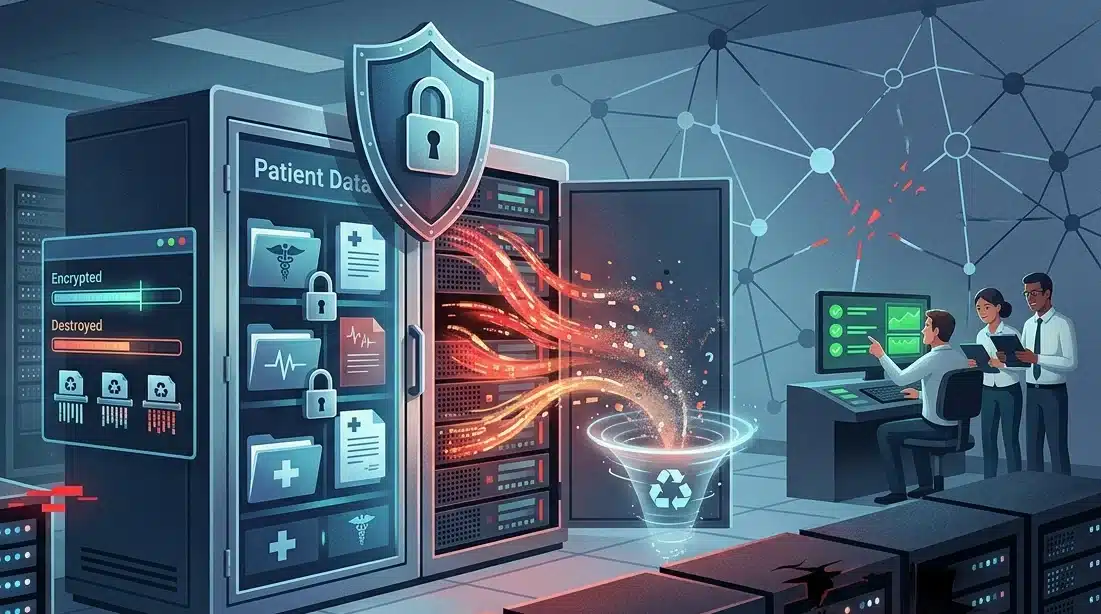
The Cyber Express previously reported the ChipSoft cyberattack, in which ransomware actors stole patient data. Now, reports have surfaced from the Dutch medical software provider, noting that the compromised data has been destroyed, though key details about the incident remain undisclosed.  In an update issued on April 28, 2026, ChipSoft stated that all data collected during the cyberattack had been deleted. According to the company, cybersecurity specialists verified that the destruction was carried out in a “technically sound manner,” although no further explanation was provided about the methods used.  The company emphasized that preventing the publication of stolen data was a top priority. “With the support of cybersecurity experts, we managed to prevent the data from being published. Furthermore, the stolen data has been destroyed,” the statement read. However, ChipSoft has not clarified whether it paid a ransom to the attackers, despite earlier indications that negotiations had taken place.  “Protecting our customers’ data has always been our top priority. In this exceptional situation, that priority weighed very heavily,” the company added, hinting at the difficult decisions made during the ransomware attack response. 

Timeline of the ChipSoft Cyberattack 

The ChipSoft cyberattack first came to light in early April 2026. On April 12, ChipSoft disclosed that it had fallen victim to a cyberattack on its systems earlier that week. As an immediate precaution, the company disabled connections to several key services, including its Care Portal, Care Platform, and HiX Mobile applications, starting April 8.  At the time, ChipSoft confirmed it had engaged Z-CERT, the Dutch healthcare cybersecurity expertise center, and external cybersecurity professionals to conduct a forensic investigation. The company acknowledged the disruption caused to healthcare providers and patients, noting that patient portals were temporarily unavailable and data exchange via the platform had been halted. 

Data Theft Confirmed in the Netherlands 

By April 16, the investigation revealed that cybercriminals behind the ransomware attack had successfully stolen personal and medical data from several Dutch healthcare institutions. ChipSoft confirmed that affected organizations were being notified directly.  Hans Mulder, CEO of ChipSoft, addressed the breach, stating: “After forty years of dedication to reliable healthcare IT, it pains us that this situation has arisen. We cannot undo this data theft. However, we are doing everything we can to support the affected customers as best as possible in this situation.”  In contrast, a separate update on the same day confirmed that Belgian patient data had not been compromised in the cyberattack on ChipSoft systems. 

Systems Shutdown and Gradual Recovery 

The cyberattack forced ChipSoft to shut down multiple services as a preventive measure. Systems such as Zorgplatform, Zorgportaal, and HiX Mobile were temporarily taken offline, affecting daily operations in healthcare institutions.  By April 17, after extensive analysis conducted in collaboration with cybersecurity experts and Z-CERT, ChipSoft announced that the affected systems were safe to use again. A phased rollout began shortly afterward, with healthcare institutions being informed directly about the restoration process.  Further progress was reported on April 24, when ChipSoft confirmed that most healthcare institutions had regained access to Zorgplatform. Connections to Zorgportaal were also being restored, allowing many patient portals to become operational again. The HiX Mobile app became available once institutions reactivated their systems.  Despite these advancements, ChipSoft cautioned that the recovery process required time and careful handling. The company acknowledged the strain placed on healthcare providers, stating that the precautionary measures had significantly impacted daily workflows and patient care. 
  • ✇Firewall Daily – The Cyber Express
  • CVE-2026-41940: Critical cPanel Authentication Bypass Exposes Hosting Systems Ashish Khaitan
    A newly disclosed security issue, tracked as CVE-2026-41940, has raised significant concerns across the web hosting ecosystem, particularly for systems running cPanel and WebHost Manager (WHM). The flaw, described as an authentication bypass security vulnerability, affects multiple authentication pathways and could potentially allow unauthorized users to gain access to sensitive control panel environments.  The vulnerability was formally acknowledged in a security advisory published on April
     

CVE-2026-41940: Critical cPanel Authentication Bypass Exposes Hosting Systems

CVE-2026-41940

A newly disclosed security issue, tracked as CVE-2026-41940, has raised significant concerns across the web hosting ecosystem, particularly for systems running cPanel and WebHost Manager (WHM). The flaw, described as an authentication bypass security vulnerability, affects multiple authentication pathways and could potentially allow unauthorized users to gain access to sensitive control panel environments.  The vulnerability was formally acknowledged in a security advisory published on April 28, 2026, and later updated several times, with the most recent revision on April 29, 2026, at 02:46 PM CST. The advisory, titled “Security: CVE-2026-41940 - cPanel & WHM / WP2 Security Update 04/28/2026,” outlines the scope, impact, and mitigation steps associated with the issue.  According to the advisory, the root cause lies in an authentication bypass security flaw affecting cPanel software, including DNSOnly installations, across all versions released after 11.40. While initially lacking an official identifier, the issue is now widely referenced as CVE-2026-41940. 

Affected Versions and Patch Releases 

The vulnerability impacts all currently supported versions of cPanel and WHM. To address the issue, patches have been released for the following versions:
  • 11.86.0.41  
  • 11.110.0.97  
  • 11.118.0.63  
  • 11.126.0.54  
  • 11.130.0.19  
  • 11.132.0.29  
  • 11.134.0.20  
  • 11.136.0.5  
Additionally, WP Squared version 136.1.7 has also received a corresponding fix.  The advisory stresses that administrators should immediately update their systems using the standard update script: 
/scripts/upcp --force 
Once the update is complete, verification of the installed version and restarting the cPanel service (cpsrvd) is required to ensure the patch is properly applied. 

Immediate Mitigation Steps for CVE-2026-41940 

For environments where updates cannot be applied right away, temporary mitigations have been recommended. These include blocking inbound traffic on ports 2083, 2087, 2095, and 2096 at the firewall level, or disabling key services such as cpsrvd and cpdavd. Administrators are also warned that systems with disabled automatic updates or pinned to specific versions will not receive patches automatically. These systems must be manually updated as a priority to mitigate the authentication bypass security risk posed by CVE-2026-41940.

Detection Script and Indicators of Compromise 

To assist administrators in identifying potential exploitation attempts, a detection script has been provided. The script scans session files located in /var/cpanel/sessions for indicators of compromise (IOCs).  Key detection mechanisms include: 
  • Identification of session files containing both token_denied and cp_security_token, which strongly suggests exploitation attempts.
  • Detection of pre-authentication sessions containing authenticated attributes.
  • Sessions marked with tfa_verified but lacking legitimate origin markers.
  • Multi-line password values, indicating possible session file corruption.
If the script detects suspicious activity, it outputs warnings or critical alerts. In cases where compromise is confirmed, administrators are instructed to: 
  • Purge all affected sessions  
  • Force password resets for root and all WHM users  
  • Audit system logs, such as /var/log/wtmp and WHM access logs  
  • Investigate persistence mechanisms like cron jobs, SSH keys, or backdoors  
An example output included in the advisory demonstrates detection of an exploitation attempt originating from IP address 100.96.3.23, where an injected session token was identified alongside a failed authentication attempt. 

Industry Response and Ongoing Monitoring 

Although cPanel has not disclosed detailed technical specifics about CVE-2026-41940, third-party hosting provider Namecheap confirmed that the issue involves “an authentication login exploit that could allow unauthorized access to the control panel.”  As a precaution, Namecheap implemented firewall rules blocking TCP ports 2083 and 2087, temporarily restricting access to cPanel and WHM interfaces. The company stated, “Our team is actively monitoring the situation and will apply the official patch across all supported servers as soon as it becomes available.”  The provider also confirmed that patches had been deployed across Reseller and Stellar Business servers, with broader rollout ongoing. 

Urgency Around Updating cPanel Systems 

The advisory emphasizes that any server running an unsupported version of cPanel remains at risk from this authentication bypass security flaw. Administrators are strongly urged to upgrade to a supported and patched version as soon as possible.  “If your server is not running a supported version of cPanel that is eligible for this update, it is highly recommended that you work toward updating your server as soon as possible, as it may also be affected,” the advisory notes. 
  • ✇Firewall Daily – The Cyber Express
  • GitHub Fixes Critical RCE Bug CVE-2026-3854 Within Hours of Discovery Ashish Khaitan
    Cybersecurity researchers have revealed critical details about a newly identified RCE vulnerability, tracked as CVE-2026-3854, affecting both GitHub’s cloud infrastructure and GitHub Enterprise Server deployments. The flaw, which carries a high CVSS score of 8.7, could allow an authenticated user to execute arbitrary code on affected systems with a single crafted git push command.  The vulnerability, discovered by researchers at Wiz, exposes a command injection flaw within GitHub’s internal h
     

GitHub Fixes Critical RCE Bug CVE-2026-3854 Within Hours of Discovery

CVE-2026-3854

Cybersecurity researchers have revealed critical details about a newly identified RCE vulnerability, tracked as CVE-2026-3854, affecting both GitHub’s cloud infrastructure and GitHub Enterprise Server deployments. The flaw, which carries a high CVSS score of 8.7, could allow an authenticated user to execute arbitrary code on affected systems with a single crafted git push command.  The vulnerability, discovered by researchers at Wiz, exposes a command injection flaw within GitHub’s internal handling of user-supplied data. Specifically, the issue lies in how push options, key-value strings sent during a git push operation, were processed. 

What is CVE-2026-3854 RCE Vulnerability? 

According to an advisory from GitHub, “During a git push operation, user-supplied push option values were not properly sanitized before being included in internal service headers.” Because the internal header format relied on a delimiter character that could also appear in user input, attackers could manipulate these values to inject additional metadata fields.  This weakness opened the door for exploitation of the RCE vulnerability, allowing attackers to gain access to a repository, including one they created themselves, to execute arbitrary commands on the server handling the request.

How the RCE Vulnerability Worked 

At the core of CVE-2026-3854 is improper input sanitization. During a typical git push, metadata such as repository type and processing environment is passed between internal services. This metadata is encoded using a delimiter, specifically a semicolon.  However, because user-controlled push options were inserted into this metadata without sufficient filtering, an attacker could craft inputs containing the delimiter. This allowed them to inject additional fields into the internal X-Stat header.  By chaining multiple malicious values, researchers demonstrated that an attacker could: 
  • Override the environment in which the push operation was processed  
  • Bypass sandboxing protections designed to restrict execution  
  • Ultimately achieve remote code execution on the server  
This made the flaw particularly dangerous, as it required minimal effort to exploit—a single command could trigger the attack. 

Timeline: Discovery and Rapid Response 

The CVE-2026-3854 RCE vulnerability was responsibly disclosed by Wiz on March 4, 2026. GitHub’s response was notably swift.  In a detailed blog post, Alexis Wales explained:  “On March 4, 2026, we received a vulnerability report through our Bug Bounty program from researchers at Wiz describing a critical remote code execution vulnerability affecting github.com, GitHub Enterprise Cloud, GitHub Enterprise Cloud with Data Residency, GitHub Enterprise Cloud with Enterprise Managed Users, and GitHub Enterprise Server.”  GitHub’s internal security team began validation immediately. Within 40 minutes, they had reproduced the issue and confirmed its severity. By 5:45 p.m. UTC, the root cause had been identified, and by 7:00 p.m. UTC—less than two hours after validation—a fix was deployed to GitHub.com. 

Affected Systems and Patch Availability 

The RCE vulnerability CVE-2026-3854 impacted a wide range of GitHub products, including: 
  • GitHub.com  
  • GitHub Enterprise Cloud  
  • GitHub Enterprise Cloud with Data Residency  
  • GitHub Enterprise Cloud with Enterprise Managed Users  
  • GitHub Enterprise Server  
While cloud-hosted services were patched automatically on March 4, 2026, GitHub Enterprise Server required manual updates. Fixes were released in the following versions: 
  • 3.14.25  
  • 3.15.20  
  • 3.16.16  
  • 3.17.13  
  • 3.18.8  
  • 3.19.4  
  • 3.20.0 or later  
Users of GitHub Enterprise Server are strongly advised to upgrade immediately to mitigate the risk associated with this RCE vulnerability. 

No Evidence of Exploitation 

Following the patch deployment, GitHub conducted a thorough forensic investigation to determine whether CVE-2026-3854 had been exploited in the wild.  A key indicator of exploitation was the triggering of an unusual internal code path—one not used during normal operations. GitHub analyzed telemetry data and found: 
  • All instances of this anomalous behavior were linked exclusively to the Wiz researchers’ testing  
  • No unauthorized users triggered the exploit  
  • No customer data was accessed, modified, or exfiltrated  
This provided strong assurance that the RCE vulnerability had not been abused before disclosure. 

Defense-in-Depth Improvements 

Beyond fixing the input sanitization issue, GitHub identified an additional weakness. The exploit relied partly on a code path that should not have been accessible in the affected environment. Although it existed within the server’s container image, it was intended for a different configuration. GitHub removed this unnecessary code as part of its remediation efforts. This additional hardening ensures that even if a similar vulnerability emerges in the future, its impact would be significantly reduced.

Recommendations for GitHub Enterprise Server Users 

For organizations using GitHub Enterprise Server, exploitation of CVE-2026-3854 would require an authenticated user with push access. As a precaution, GitHub recommends: 
  • Reviewing /var/log/github-audit.log for suspicious push operations  
  • Checking for push options containing semicolons (; 
  • Upgrading to the latest patched version without delay  
  • ✇Firewall Daily – The Cyber Express
  • CERT-In Warns of AI-Driven Cyber Threat Surge, MSMEs at Highest Risk Ashish Khaitan
    India’s cybersecurity watchdog, CERT-In, has raised concerns of the nature of modern cyber threats, particularly those driven by artificial intelligence. In its latest advisory, the cybersecurity watchdog has highlighted how frontier AI technologies are reshaping the threat landscape, making cyberattacks faster, more scalable, and far more accessible, even to less skilled attackers. The warning places a special emphasis on Micro, Small, and Medium Enterprises (MSMEs), which are becoming prim
     

CERT-In Warns of AI-Driven Cyber Threat Surge, MSMEs at Highest Risk

CERT-In advisory

India’s cybersecurity watchdog, CERT-In, has raised concerns of the nature of modern cyber threats, particularly those driven by artificial intelligence. In its latest advisory, the cybersecurity watchdog has highlighted how frontier AI technologies are reshaping the threat landscape, making cyberattacks faster, more scalable, and far more accessible, even to less skilled attackers. The warning places a special emphasis on Micro, Small, and Medium Enterprises (MSMEs), which are becoming prime targets due to their comparatively weaker security frameworks.  According to CERT-In, the rise of AI-powered tools marks a significant turning point in how cyberattacks are conceived and executed. What once required advanced technical expertise and hours of manual effort can now be accomplished in a fraction of the time through automation. The cybersecurity watchdog noted that modern AI systems are capable of independently scanning large volumes of source code, identifying deeply embedded vulnerabilities, and even launching coordinated, multi-stage cyberattacks. This shift has introduced what the agency describes as an era of “automation and scale” in cybercrime. 

From Manual Intrusion to AI-led Cyberattacks 

CERT-In’s advisory explains that traditional hacking methods involve painstaking manual processes and highly specialized knowledge. Attackers would typically spend hours, if not days, probing systems for weaknesses before exploiting them. However, AI has fundamentally altered this dynamic. Frontier AI systems can now detect “zero-day” vulnerabilities, previously unknown flaws, in mere seconds.  More concerning is the ability of these systems to “chain” multiple vulnerabilities together. By linking weaknesses across different applications or platforms, attackers can orchestrate comprehensive attacks that compromise entire networks from end to end. This level of sophistication was once limited to highly skilled professionals or state-sponsored actors. Today, however, the cybersecurity watchdog warns that such capabilities are accessible, effectively lowering the barrier to entry for cybercriminals. 

MSMEs Under Heightened Risk 

The advisory stresses that MSMEs are particularly vulnerable in this new threat environment. Unlike large enterprises, MSMEs often operate with limited budgets and lack dedicated cybersecurity teams or advanced monitoring systems. This makes it easier for attackers to leverage AI-driven tools.  CERT-In has pointed out that because AI simplifies and automates many aspects of cyberattacks, even individuals with minimal technical expertise can now carry out highly precise and damaging operations. As a result, MSMEs face a disproportionate level of risk. A successful breach could lead to severe consequences, including data theft, operational disruptions, or ransomware attacks that many smaller businesses are ill-prepared to manage.  The cybersecurity watchdog has cautioned that without immediate and meaningful improvements in their security posture, MSMEs could suffer significant financial and reputational damage. The growing accessibility of AI-powered attack tools means that the threat is no longer hypothetical but immediate and widespread. 

Recommended Security Measures 

In response to these emerging risks, CERT-In has outlined several critical steps that organizations, especially MSMEs, should take to strengthen their defenses. One of the primary recommendations is the deployment of robust threat detection systems combined with continuous network monitoring. These measures can help identify unusual activity early and prevent attacks from escalating.  Another key focus area highlighted by the cybersecurity watchdog is patch management. As AI tools enable attackers to quickly identify and exploit unpatched vulnerabilities, delays in updating software can create significant security gaps. CERT-In stresses that the timely application of patches is essential to minimizing exposure.  Additionally, maintaining comprehensive system logs is strongly advised. Detailed logs play a crucial role in forensic investigations, helping organizations understand how an attack occurred and what vulnerabilities were exploited. This information is vital for preventing future incidents and strengthening overall cybersecurity resilience. 
  • ✇Blog – Cyble
  • ANZ Organizations Are in the Ransomware Crosshairs— What the Dark Web Is Telling Us Ashish Khaitan
    The conversation around ANZ ransomware threats has shifted noticeably over the past year. What once looked like sporadic, high-profile incidents has evolved into a sustained and structured campaign against organizations across Australia and New Zealand. Signals emerging from underground forums and marketplaces reveal a sobering reality: ransomware is no longer just a technical problem; it is an economic strategy driven by efficiency, specialization, and scale.  At the center of this shift is
     

ANZ Organizations Are in the Ransomware Crosshairs— What the Dark Web Is Telling Us

28 de Abril de 2026, 07:42

ANZ ransomware threats

The conversation around ANZ ransomware threats has shifted noticeably over the past year. What once looked like sporadic, high-profile incidents has evolved into a sustained and structured campaign against organizations across Australia and New Zealand. Signals emerging from underground forums and marketplaces reveal a sobering reality: ransomware is no longer just a technical problem; it is an economic strategy driven by efficiency, specialization, and scale. 

At the center of this shift is ransomware dark web intelligence, which paints a clear picture of attacker intent. Threat actors are not simply increasing volume; they are refining their focus. The ANZ region, with its high-value economy and deeply digitized infrastructure, has become a preferred hunting ground. 

Why High-Value Economies Attract ANZ Ransomware Threats 

Australia’s economic profile plays directly into the hands of ransomware operators. A strong GDP, combined with a relatively small population, creates a high-return environment. Attackers don’t need to cast a wide net; each successful breach can yield significant payouts. 

By mid-2025, 71 ransomware incidents had been publicly claimed in Australia, compared to nine in New Zealand. On the surface, those figures may seem moderate. However, when adjusted for population, the rate of ransomware attacks in Australia and New Zealand stands out globally. Even larger economies have not experienced the same intensity relative to their size. 

This imbalance reflects a fundamental principle driving ANZ organizations cybersecurity risks: attackers prioritize value over volume. In practical terms, fewer victims can still mean higher profits. 

A Fragmented Threat Landscape with No Single Dominant Actor 

Unlike regions where one ransomware group dominates headlines, the dark web ANZ cyber threats ecosystem is notably fragmented. Multiple groups, including Qilin, Akira, INC, Lynx, and Dragonforce, operate concurrently, each claiming a similar share of attacks. 

This decentralization complicates defense strategies. Organizations are not facing a predictable adversary with a consistent playbook. Instead, they must prepare for a rotating cast of threat actors, each bringing different techniques, timelines, and negotiation tactics. 

From a ransomware dark web intelligence perspective, this fragmentation signals a competitive market. Threat actors are actively testing sectors, probing defenses, and adapting quickly based on what works. 

Industries Under Sustained Pressure 

The distribution of ANZ ransomware threats is far from uniform. Certain sectors continue to absorb the majority of attacks due to the nature of their operations. 

Healthcare and professional services sit at the top of the list. In healthcare, the urgency of patient care creates a near-zero tolerance for downtime, increasing the likelihood of ransom payments. Professional services firms, on the other hand, hold large volumes of sensitive client data, making them lucrative targets. 

However, the scope is broader than these two sectors alone. Aviation software providers, pharmaceutical companies, engineering firms, and even steel manufacturers have all been affected. This pattern reinforces a key insight: ransomware attacks in Australia and New Zealand are opportunistic but calculated, targeting environments where disruption carries tangible consequences. 

Notable Incidents Reveal Tactical Evolution 

Several incidents in 2025 highlight how attackers are evolving their methods. 

The Akira group compromised an Australian industrial technology provider, exfiltrating approximately 10GB of sensitive data, including financial records and employee identification documents. This case highlights the growing overlap between ransomware and critical infrastructure risk. 

In another breach, a political organization suffered exposure to communications, identity records, and financial data, highlighting that ANZ organizations' cybersecurity risks extend beyond the private sector. 

Meanwhile, Dragonforce leaked over 100GB of data from an engineering firm, including technical drawings and internal reports. The long-term implications of such intellectual property theft often exceed immediate financial damage. 

These cases share a common thread: encryption is no longer the sole objective. Data exfiltration and double extortion have become standard practices. 

The Rise of Initial Access Brokers 

One of the most important developments in shaping dark web ANZ cyber threats is the growth of the initial access market. In 2025 alone, 92 instances of compromised access sales were observed across Australia and New Zealand. 

Retail organizations accounted for roughly 34% of these cases, followed by BFSI and professional services. The implications are significant. Attackers no longer need to breach networks themselves; they can simply purchase access. 

This shift has redefined how ANZ ransomware threats materialize. The most complex phase of an attack—initial intrusion—is now outsourced, accelerating timelines and increasing overall attack volume. 

It also introduces indirect risk. Organizations may be compromised through vendors, partners, or shared platforms, expanding the attack surface beyond traditional boundaries. 

Ransomware-as-a-Service and the Scaling Problem 

The emergence of affiliate-driven models, particularly groups like INC Ransom, has further amplified ransomware attacks in Australia and New Zealand. Operating under a Ransomware-as-a-Service structure, these groups separate responsibilities: affiliates handle intrusions, while core operators manage ransom negotiations. 

This model enables rapid scaling. Multiple attacks can be executed simultaneously, each leveraging shared infrastructure and tooling. 

INC Ransom’s activity across healthcare and professional services highlights how effective this approach has become. Their operations often involve credential compromise, privilege escalation, lateral movement, and eventual deployment of ransomware—frequently paired with data exfiltration. 

From a ransomware dark web intelligence standpoint, this reflects a mature ecosystem where roles are specialized, and efficiency is maximized. 

A Regional Problem with Cross-Border Impact 

Although Australia is the primary target, the broader region is not immune. A ransomware attack on Tonga’s Ministry of Health disrupted national healthcare services, while a major breach in New Zealand’s healthcare sector involved both data theft and system encryption. 

These incidents reinforce the interconnected nature of ANZ organizations' cybersecurity risks. Threat actors operate without regard for national boundaries, shifting focus wherever defenses appear weakest. 

Common Entry Points and Techniques 

Despite the evolving ecosystem, many attack methods remain consistent. Spear-phishing campaigns, exploitation of unpatched systems, and the use of stolen credentials continue to dominate. 

Once inside, attackers often rely on legitimate tools—file compression utilities, remote management software, and standard data transfer mechanisms—to blend into normal operations. This “living off the land” approach makes detection significantly more difficult. 

From Defense to Resilience 

The steady rise of ANZ ransomware threats signals a need for strategic change. Perimeter-based defenses are no longer sufficient in an environment where access can be purchased, and attacks can be outsourced. 

As access is bought and attacks are outsourced, organizations must shift toward stronger identity controls, continuous monitoring, rapid patching, and tighter third-party risk management. 

Cybersecurity is no longer just about prevention—it’s about resilience. Attacks are inevitable, but their impact doesn’t have to be. Cyble helps organizations stay ahead with AI-powered threat intelligence, dark web monitoring, and predictive defense through its AI-native platform, Cyble Blaze. 

Stay ahead of ransomware threats—book a free demo and build a more resilient security posture.

The post ANZ Organizations Are in the Ransomware Crosshairs— What the Dark Web Is Telling Us appeared first on Cyble.
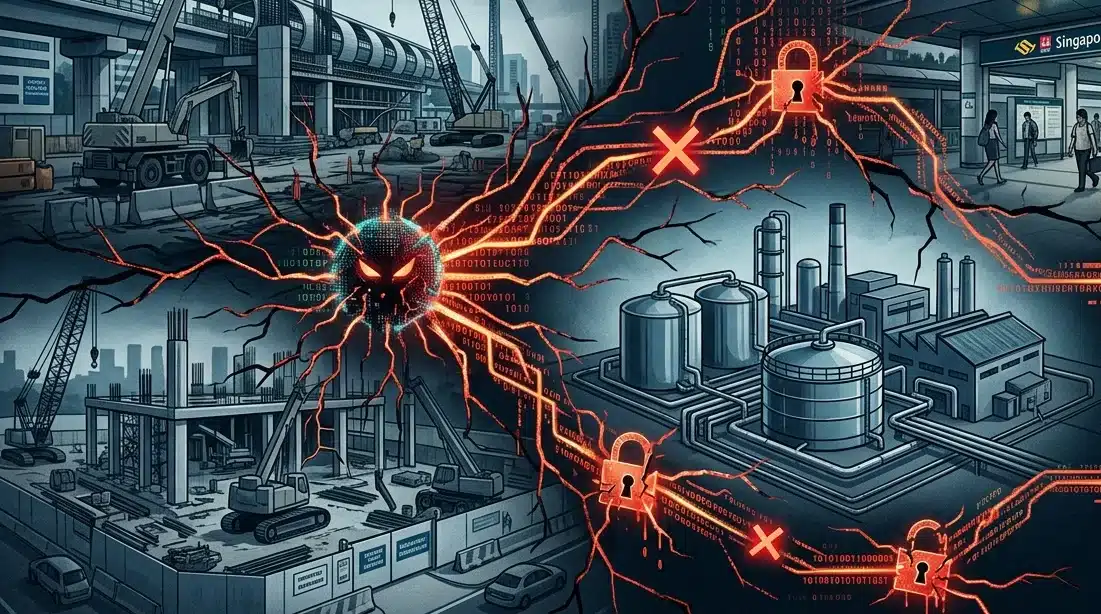
  • ✇Blog – Cyble
  • Why U.S. Critical Infrastructure Is the Highest-Value Target in the Global Cyber War Ashish Khaitan
    The idea that cyber conflict operates quietly in the background no longer holds. What used to be a shadow contest of espionage and occasional disruption has evolved into something far more direct and consequential. Today, the cyber war on US infrastructure is not a supporting element of geopolitical tension—it is one of its primary arenas.  Recent global conflicts have shown that digital operations are now tightly woven into military and political strategy. Critical systems that sustain ever
     

Why U.S. Critical Infrastructure Is the Highest-Value Target in the Global Cyber War

27 de Abril de 2026, 10:48

US critical infrastructure cyberattack

The idea that cyber conflict operates quietly in the background no longer holds. What used to be a shadow contest of espionage and occasional disruption has evolved into something far more direct and consequential. Today, the cyber war on US infrastructure is not a supporting element of geopolitical tension—it is one of its primary arenas. 

Recent global conflicts have shown that digital operations are now tightly woven into military and political strategy. Critical systems that sustain everyday life, energy, water, communications, and transportation have become high-value targets. The logic is simple: disrupting infrastructure creates immediate, visible consequences without crossing traditional thresholds of war. 

From Silent Intrusions to Persistent Attacks 

Cyber operations were once defined by stealth. Attackers sought long-term access, often avoiding detection for as long as possible. That model has shifted toward persistence and scale. 

By early 2026, threat activity across the Americas reflected this change. In the first quarter alone, 1,305 cyber incidents were recorded, with 1,138 ransomware attacks publicly claimed, according to the Cyble Americas Threat Landscape Report. This volume alone signals how normalized large-scale cyber operations have become. Even more telling, 58% of these incidents were driven by just five ransomware groups, highlighting how concentrated and industrialized the threat ecosystem is. 

This surge is directly tied to rising cybersecurity threats to the US critical infrastructure. Attackers are no longer experimenting; they are executing repeatable, scalable campaigns designed to disrupt essential services. 

Why Critical Infrastructure Is a Strategic Target 

To understand why critical infrastructure is targeted by hackers, it helps to look at the impact rather than the intent. Infrastructure is not just a technical system; it is a force multiplier. 

Disrupting it can: 

  • Undermine public confidence  

  • Interrupt economic activity  

  • Create pressure on governments without physical confrontation  

Sectors such as healthcare, manufacturing, and government services have been among the most frequently targeted. These industries are particularly vulnerable because downtime is not an option. For example, ransomware campaigns in healthcare environments can force immediate decision-making under pressure, often leading to rapid payouts or operational shutdowns. 

This is why cyberattacks on power grids and water systems are especially concerned. Unlike data breaches, these attacks have physical consequences. Even a temporary outage can cascade across multiple sectors, amplifying the overall impact. 

The Rise of Identity-Driven Attacks 

One of the most important shifts in the current threat landscape is the move away from traditional malware-centric attacks. Attackers are exploiting identity and trust. 

Instead of breaking in, they log in. 

Techniques such as: 

  • Credential theft  

  • Multi-factor authentication (MFA) bypass  

  • Session hijacking  

  • Abuse of third-party access  

These techniques have become central to modern attack strategies. This reflects a deeper structural issue: the traditional network perimeter has dissolved. Cloud adoption, remote work, and third-party integrations have created an environment where identity is the new attack surface. 

For critical infrastructure operators, this dramatically increases exposure. A compromised vendor or service provider can provide indirect access to sensitive systems, making critical infrastructure cyberattack scenarios more difficult to detect and contain. 

Nation-State Strategy and Pre-Positioned Access 

The growing frequency of nation-state cyberattacks on US systems adds another layer of complexity. These operations are not opportunistic; they are strategic and often long-term. 

State-sponsored actors focus on: 

  • Mapping infrastructure dependencies  

  • Identifying systemic weaknesses  

  • Establishing persistent access for future use  

In many cases, access is established well before any visible disruption occurs. This creates a latent risk, where attackers can activate capabilities at a time of their choosing, often aligned with geopolitical escalation. 

This approach transforms infrastructure into a strategic asset in conflict scenarios. It is not just about immediate disruption, but about maintaining the ability to disrupt when it matters most. 

Hacktivists, Cybercrime, and the Blurred Battlefield 

The modern threat environment is no longer defined by clear boundaries. State actors, cybercriminals, and hacktivist groups often operate in parallel, sometimes targeting the same systems for different reasons. 

In North America alone, nearly 300 domains were targeted by hacktivist activity in early 2026. These campaigns are often disruptive rather than destructive, but they contribute to a broader atmosphere of instability. 

At the same time, cybercriminal groups are leveraging access markets, buying and selling entry points into networks. This accelerates the speed of attacks and lowers the barrier to entry, enabling less sophisticated actors to participate in high-impact operations. 

The result is a crowded and unpredictable battlefield, where a single critical infrastructure cyberattack may involve overlapping motives, political, financial, and ideological. 

Infrastructure Under Pressure: Real-World Implications 

Certain sectors have emerged as consistent targets due to their strategic importance. Technology and financial services accounted for 44% of breach activity in North America, reflecting their central role in both economic and operational systems. 

However, the risk extends beyond these industries. Critical infrastructure depends on a web of interconnected services: 

  • Energy systems rely on telecommunications and cloud platforms  

  • Water utilities depend on industrial control systems and remote monitoring  

  • Transportation networks integrate with logistics and supply chain platforms  

This interconnectedness means that disruption in one area can quickly spread. The increasing frequency of cyberattacks on power grid and water systems highlights how attackers are beginning to exploit these dependencies more deliberately. 

Rethinking Defense in a Persistent Threat Environment 

Defending against modern US critical infrastructure cybersecurity threats requires a shift in mindset. Traditional defenses focused on perimeter security and reactive response are no longer sufficient. 

Organizations must prioritize: 

  • Continuous monitoring for early indicators of compromise  

  • Strong identity and access management  

  • Visibility into third-party and supply chain risks  

  • Resilience against high-volume disruption tactics like DDoS  

Equally important is the ability to anticipate attacker behavior. With adversaries operating at scale and speed, waiting for alerts is no longer viable. Proactive threat hunting and intelligence-driven defense are becoming essential capabilities. 

Infrastructure as the Center of Modern Conflict 

Critical infrastructure has become the centerpiece of modern cyber conflict. The convergence of geopolitical tension, advanced attack techniques, and systemic vulnerabilities has created an environment where disruption is both achievable and strategically valuable. 

The data reinforces this reality: high volumes of ransomware, concentrated threat actor activity, and increasing reliance on identity-based attacks all point to a more aggressive and coordinated threat landscape. 

The cyber war on US infrastructure is not defined by isolated incidents—it is shaped by persistent pressure, evolving tactics, and long-term strategic intent. As nation state cyber attacks on US systems continue to expand in scope and sophistication, the challenge is no longer just preventing breaches. 

It is ensuring that the systems society depends on can withstand them. In a threat landscape defined by speed and precision, waiting for alerts is no longer enough. 

Request a demo to see how Cyble helps detect and anticipate critical infrastructure cyberattacks—before they turn into real-world disruption. 

The post Why U.S. Critical Infrastructure Is the Highest-Value Target in the Global Cyber War appeared first on Cyble.
Cybersecurity Incident Strikes Contractor Handling JRL MRT Stations and NEWater Factory 3 Projects

Shanghai Tunnel

A cybersecurity incident has raised concerns after it was revealed that sensitive data associated with the Jurong Region Line (JRL) MRT stations and the Changi NEWater Factory 3 were compromised. The contractor responsible for both critical infrastructure projects, Shanghai Tunnel Engineering Co (Singapore), is currently facing scrutiny as authorities investigate the breach.

Data Compromise Involving Shanghai Tunnel Engineering Co 

The breach primarily affects the civil engineering firm Shanghai Tunnel Engineering Co, which has been engaged in the construction of three key stations along the JRL and the new Changi NEWater Factory 3. While the exact timing of the incident remains unclear, the compromised data has since been identified as tender documents for the projects. These documents, however, are available on the government’s GeBIZ procurement portal, which mitigates concerns over the theft of sensitive information. On April 27, the Land Transport Authority (LTA) responded to public queries by confirming that it was aware of the cybersecurity breach and had reported the matter to the police and other relevant authorities. In an effort to minimize potential risks, the LTA temporarily suspended the contractor’s access to its digital systems, although the breach has not been reported to have disrupted the ongoing construction of the JRL MRT stations.

Impact on Changi NEWater Factory 3 

While the data breach raises alarms, the national water agency PUB (Public Utilities Board) has reassured the public that there has been no access to its digital systems by Shanghai Tunnel Engineering Co. Following an internal investigation, PUB concluded that no sensitive data related to the Changi NEWater Factory 3 had been stolen. The only data compromised were the project tender documents, which, as mentioned, are publicly accessible on GeBIZ. A PUB spokesperson emphasized that the agency maintains a "serious view" of cybersecurity and has advised the contractor to review its security protocols. Despite extensive checks on known ransomware portals and hacker forums, no evidence of leaked data related to the breach has surfaced, alleviating some concerns among stakeholders.

Company’s Response to Cybersecurity Incident 

In a statement issued on April 28, Shanghai Tunnel Engineering Co (Singapore) acknowledged the cybersecurity incident, confirming that it had taken immediate steps to contain the situation. While the company did not specify when the breach occurred, it assured the public that it was cooperating fully with the authorities. Furthermore, the company has enlisted an external cybersecurity specialist to aid in the investigation. "We are cooperating fully with the relevant authorities and kindly request that all parties allow the investigation to proceed without interference," a company representative said. Shanghai Tunnel Engineering Co, established in 1996, is a well-established contractor with significant experience in MRT projects across Singapore. The firm has previously worked on various stations for the Circle, Downtown, and Thomson-East Coast lines. Its latest projects involve critical infrastructure, including the JRL stations and the Changi NEWater Factory 3.

Contract Details and Future Expectations 

In 2019, Shanghai Tunnel Engineering Co was awarded a $465.2 million contract to design and build three JRL stations, Choa Chu Kang, Choa Chu Kang West, and Tengah—along with a 4.3km viaduct connecting them. This work includes integrating the existing Choa Chu Kang MRT station on the North-South Line into the JRL network. In addition to the JRL projects, Shanghai Tunnel Engineering Co is also involved in the construction of the Changi NEWater Factory 3. In November 2025, a $205 million contract was awarded to Sanli M&E Engineering, which formed a joint venture with Shanghai Tunnel Engineering Co in February 2026. The joint venture will be responsible for several key aspects of the factory’s construction, including civil, structural, and architectural works, as well as external and building services. The Changi NEWater Factory 3 is expected to be operational by 2028 and will replace the existing Bedok facility. Once completed, the factory will be capable of producing up to 50 million gallons of NEWater daily, contributing significantly to Singapore's water sustainability efforts.
  • ✇Firewall Daily – The Cyber Express
  • Medtronic Confirms Data Breach, No Impact on Operations or Patient Safety Ashish Khaitan
    Medtronic, the global leader in medical technology, disclosed a data breach affecting its corporate IT systems. On April 24, the company confirmed that an unauthorized third party gained access to certain systems, although the Medtronic data breach is not expected to have any material impact on the company’s financial performance or business operations. The breach has raised concerns across the healthcare and medtech sectors, but Medtronic assured investors and customers that it had taken imm
     

Medtronic Confirms Data Breach, No Impact on Operations or Patient Safety

Medtronic data breach

Medtronic, the global leader in medical technology, disclosed a data breach affecting its corporate IT systems. On April 24, the company confirmed that an unauthorized third party gained access to certain systems, although the Medtronic data breach is not expected to have any material impact on the company’s financial performance or business operations. The breach has raised concerns across the healthcare and medtech sectors, but Medtronic assured investors and customers that it had taken immediate action to contain the situation.

What Happened to the Medtronic Data Breach? 

The Medtronic data breach, which was identified on April 24, involved unauthorized access to some of Medtronic’s corporate IT systems. However, the company was quick to clarify that no disruption had occurred in key operational areas, including product safety, customer connections, and manufacturing or distribution activities. Importantly, there was no reported impact on patient safety or the company’s ability to meet its patient care commitments. In a public filing with the U.S. Securities and Exchange Commission (SEC), Medtronic stated, “We have not identified any impact to our products, patient safety, connections to our customers, our manufacturing and distribution operations, or our financial reporting systems.” The company emphasized that the networks supporting corporate IT systems are separate from those used for products, manufacturing, and distribution, which remain unaffected by the breach. Additionally, Medtronic highlighted that the IT systems supporting hospitals and healthcare customers are managed separately and secured by the customers’ IT teams. As such, hospital networks were not impacted by the breach, nor was there any disruption to hospital operations or services.

Immediate Actions Taken by Medtronic 

Following the identification of the breach, Medtronic moved quickly to contain the incident. The company activated its incident response protocols and sought assistance from cybersecurity experts to investigate the breach and implement necessary remediation measures. Medtronic has also initiated an effort to determine if any personal information was accessed during the breach. If any sensitive data has been compromised, the company assured it would provide necessary notifications and support services to affected individuals. The company remains committed to enhancing its cybersecurity measures. “We are simultaneously identifying additional ways to further optimize our system security,” said a Medtronic spokesperson. The company has also assured its stakeholders that it does not expect the incident to have an impact on its financial results or overall business operations.

The Broader Impact on the Medtech Sector 

The data breach at Medtronic follows a series of similar cybersecurity incidents that have affected other companies in the medtech industry. In March 2026, a cyberattack disrupted operations at Stryker, another major player in the medical technology sector. The attack targeted Stryker’s Microsoft environment, affecting ordering, shipping, and manufacturing processes. It took several weeks for Stryker to fully recover and return to normal operations. Simultaneously, Intuitive Surgical, a leading manufacturer of surgical robots, reported a phishing incident. The unauthorized party gained access to sensitive customer, employee, and corporate data. Intuitive Surgical also claimed that the issue was contained without significant financial impact, echoing Medtronic’s own assessment that the data breach would not affect its financial standing. These incidents highlight the frequency and sophistication of cyberattacks within the healthcare and medtech industries. As digital transformation accelerates in these sectors, companies are vulnerable to cyber threats.

Notepad++ Releases 8.9.4 Patch to Fix String Injection Vulnerability (CVE-2026-3008) in 8.9.3

CVE-2026-3008

A vulnerability has been identified in the popular open-source text editor, Notepad++, with the release of CVE-2026-3008. The vulnerability, discovered and reported by CSA under its Responsibility Vulnerability Disclosure Policy, is linked to a potential string injection flaw in Notepad++ version 8.9.3. To mitigate the risk associated with this vulnerability, users and administrators are strongly urged to update their installations to version 8.9.4 immediately.

A Deeper Look at CVE-2026-3008 

The CVE-2026-3008 bug addresses a string-injection vulnerability in Notepad++, a widely used text editor for software development, writing, and other professional environments. The vulnerability allows attackers to exploit it, potentially gaining access to sensitive memory to read information or, in some cases, causing the application to crash. This flaw was first flagged by a contributor, Hazley Samsudin, whose prompt reporting allowed the Notepad++ team to act swiftly to resolve the issue.  As part of Notepad++'s ongoing security commitment, the Product Owner quickly released an official patch in version 8.9.4 to rectify the issue, ensuring the software remains secure for all users.

The Impact of CVE-2026-3008 on Notepad++ Users 

The vulnerability in Notepad++ version 8.9.3 has the potential for significant impacts on users. If successfully exploited, attackers could manipulate the string injection vulnerability to access memory addresses or even crash the application entirely. This could compromise the integrity of unsaved data or disrupt workflow, particularly in environments where Notepad++ is a critical tool for coding or note-taking. While this vulnerability may not allow for direct execution of arbitrary code, its potential for causing application crashes poses a risk to stability, especially if users are working with large or complex files. Given the widespread use of Notepad++ across multiple industries, it is crucial for users to take immediate action by upgrading to the secure 8.9.4 version.

Affected Versions of Notepad++ 

The vulnerability (CVE-2026-3008) is present exclusively in Notepad++ version 8.9.3. Therefore, anyone using this version or earlier versions is at risk of exploitation. The update to version 8.9.4, which includes necessary security patches, should be prioritized to prevent any potential exploitation of this vulnerability.  Users of Notepad++ are strongly encouraged to update their installations to the latest version, 8.9.4, which has been designed to address the vulnerabilities identified, including CVE-2026-3008. The Notepad++ development team worked quickly to release this update, which also includes a series of bug fixes and performance improvements. To ensure that systems remain secure, users can download the latest release directly from the official Notepad++ website or the GitHub repository. Administrators managing multiple machines should push the update across their networks to guarantee all affected systems are secured.  In addition to this update, Notepad++ version 8.9.4 includes several other improvements aimed at enhancing the software's overall stability and performance. These include fixes for crashes related to undo actions, improvements to file path handling, and updates to Scintilla and Lexilla for better language processing. 

Notable Fixes in Notepad++ v8.9.4 

The v8.9.4 update not only resolves the CVE-2026-3008 vulnerability but also brings a host of other important bug fixes and stability improvements. Some of the notable changes include: 
  • Fixes to Crashes: Issues such as crashes when using the FindInFiles feature or when dropping files with long paths (over 259 characters) have been addressed.  
  • Undo Action Issues: Previous versions had an issue with crashes caused by undoing actions in the column editor, especially when bad inputs were entered. This issue has now been resolved.  
  • UI and Rendering Fixes: Improvements have been made to the user interface, including fixes for visual glitches in the Mark dialog and Document List view.  
  • Improved Language Support: Updates to Scintilla and Lexilla provide better handling of C++ 11 raw string literals and enhanced syntax highlighting for various file formats.  
Additionally, the update addresses installation issues that impacted users of the MSI installer, including problems with context menu registrations and incorrect hexadecimal display names during installation. 
  • ✇Firewall Daily – The Cyber Express
  • Operation TrustTrap Reveals 16,800 Fake Domains Exploiting User Trust Ashish Khaitan
    In a world where digital threats are becoming more confusing, Cyble Research and Intelligence Labs (CRIL) has uncovered one of the most extensive deceptive domain spoofing campaigns to date. Dubbed Operation TrustTrap, this large-scale operation has leveraged over 16,800 malicious domains to exploit cognitive trust mechanisms and harvest sensitive user data from unsuspecting victims. The scope and scale of this operation reveal a shift in how cybercriminals are evolving their tacti
     

Operation TrustTrap Reveals 16,800 Fake Domains Exploiting User Trust

Operation TrustTrap

In a world where digital threats are becoming more confusing, Cyble Research and Intelligence Labs (CRIL) has uncovered one of the most extensive deceptive domain spoofing campaigns to date.

Dubbed Operation TrustTrap, this large-scale operation has leveraged over 16,800 malicious domains to exploit cognitive trust mechanisms and harvest sensitive user data from unsuspecting victims.

The scope and scale of this operation reveal a shift in how cybercriminals are evolving their tactics to bypass traditional technical security measures.

What is Operation TrustTrap

Since early 2026, CRIL has been tracking a well-coordinated infrastructure involving a massive network of spoofed domains. These domains were designed to mimic legitimate government portals, particularly those related to transportation services like Department of Motor Vehicles (DMV) portals, toll payment systems, and vehicle registration services in the United States. The aim of this campaign is clear: credential and payment card harvesting through the exploitation of trusted government-facing services.

However, the technical complexity of the attack isn't based on advanced hacking techniques. Instead, Operation TrustTrap exploits how humans visually interpret URLs. By embedding government-like subdomains, attackers have created fraudulent domains that resemble legitimate government addresses, deceiving individuals into visiting these sites and providing sensitive information.

Tencent Cloud and Alibaba Cloud APAC

The spoofed domains were predominantly hosted on Tencent Cloud and Alibaba Cloud APAC, both of which have significant data centers in the Asia-Pacific region. These platforms have been linked to the infrastructure of the campaign, and their concentrated use adds another layer of complexity to the attribution process.

Furthermore, CRIL found that the domains were primarily registered through Gname.com Pte. Ltd., a registrar known for its significant Chinese customer base. Other registrars, such as Dominet (HK) Limited and NameSilo LLC, were also identified in the campaign.

These domain names were often associated with .bond, .cc, and .cfd top-level domains (TLDs), which were frequently used to evade detection and blacklisting.

The Key Technique: Subdomain Trust Injection

The most common method used in Operation TrustTrap is subdomain trust injection. This technique involves embedding trusted government tokens, such as mass.gov or wa.gov, in subdomains rather than the root domain. In legitimate URLs, the .gov component typically appears at the end of the domain string, but in these malicious domains, .gov is cleverly placed as part of a subdomain.

For instance, a URL such as mass.gov-bzyc[.]cc will lead a user to believe they are accessing an official Massachusetts government page, but in reality, they are on a fraudulent site designed to capture personal and financial data.

[caption id="" align="alignnone" width="1024"]Fake Massachusetts RMV citation landing page Fake Massachusetts RMV citation landing page (Source: Cyble)[/caption]

This manipulation of the domain’s structure is visually convincing, but it bypasses traditional security filters that only check the root domain for trusted indicators like .gov.

Another obfuscation technique used is hyphen-based semantic manipulation, where hyphens are inserted into familiar government identifiers to create visually similar URLs. This tactic further complicates the detection of malicious domains.

Global Targeting and Regional Focus

While Operation TrustTrap is heavily focused on the United States, targeting state portals such as those in California, Washington, and Florida, the operation is not confined to one region. CRIL identified similar spoofing efforts targeting government portals in India, Vietnam, and the United Kingdom.

In India, attackers have specifically targeted portals that follow the .gov.in domain structure. By injecting subdomains like www.in.gov-bond, the attackers were able to replicate the appearance of legitimate government websites, particularly those related to the Indian Department of National Investigation (NIA) and other defense-adjacent sites.

[caption id="" align="alignnone" width="939"]APT36 impersonating NIA, India operating at nia[.]gov[.]in[.]in3ymonaq[.]casa APT36 impersonating NIA (Source: Cyble)[/caption]

This specific targeting suggests that the threat actor has knowledge of government infrastructure and how it operates.

APT36 and the Connection to Operation TrustTrap

In addition to the use of Tencent Cloud and Alibaba Cloud, the tactics, techniques, and procedures (TTPs) observed in the campaign bear a striking resemblance to those used by APT36 (also known as Transparent Tribe). This Pakistan-based Advanced Persistent Threat (APT) group has a long history of targeting Indian government entities, defense personnel, and diplomatic infrastructure.

The infrastructure used in Operation TrustTrap shows similarities to APT36’s previous campaigns, particularly in terms of the domain registration patterns and use of Tencent Cloud and Alibaba Cloud APAC infrastructure. Furthermore, the behavior observed, including domain rotation and the use of disposable domains, matches previous APT36 activities.

Registrar and Hosting Analysis

The dominance of Gname.com as the registrar of choice for over 70% of the spoofed domains points to a specific trend in the campaign’s operational setup. This Singapore-based registrar, which serves a large number of Chinese entities, is part of the broader infrastructure strategy that focuses on low-cost hosting in the Asia-Pacific region.

Notably, Tencent Cloud and Alibaba Cloud APAC offer cloud services with global reach, providing the necessary infrastructure to scale this type of malicious operation. These services have been instrumental in supporting the rapid deployment of phishing sites across a variety of government services, especially those involving time-sensitive financial transactions.

❌
❌