Visualização normal

Antes de ontemStream principal
  • ✇Securelist
  • “Legitimate” phishing: how attackers weaponize Amazon SES to bypass email security Roman Dedenok
    Introduction The primary goal for attackers in a phishing campaign is to bypass email security and trick the potential victim into revealing their data. To achieve this, scammers employ a wide range of tactics, from redirect links to QR codes. Additionally, they heavily rely on legitimate sources for malicious email campaigns. Specifically, we’ve recently observed an uptick in phishing attacks leveraging Amazon SES. The dangers of Amazon SES abuse Amazon Simple Email Service (Amazon SES) is a cl
     

“Legitimate” phishing: how attackers weaponize Amazon SES to bypass email security

4 de Maio de 2026, 07:00

Introduction

The primary goal for attackers in a phishing campaign is to bypass email security and trick the potential victim into revealing their data. To achieve this, scammers employ a wide range of tactics, from redirect links to QR codes. Additionally, they heavily rely on legitimate sources for malicious email campaigns. Specifically, we’ve recently observed an uptick in phishing attacks leveraging Amazon SES.

The dangers of Amazon SES abuse

Amazon Simple Email Service (Amazon SES) is a cloud-based email platform designed for highly reliable transactional and marketing message delivery. It integrates seamlessly with other products in Amazon’s cloud ecosystem, AWS.

At first glance, it might seem like just another delivery channel for email phishing, but that isn’t the case. The insidious nature of Amazon SES attacks lies in the fact that attackers aren’t using suspicious or dangerous domains; instead, they are leveraging infrastructure that both users and security systems have grown to trust. These emails utilize SPF, DKIM, and DMARC authentication protocols, passing all standard provider checks, and almost always contain .amazonses.com in the Message-ID headers. Consequently, from a technical standpoint, every email sent via Amazon SES – even a phishing one – looks completely legitimate.

Phishing URLs can be masked with redirects: a user sees a link like amazonaws.com in the email and clicks it with confidence, only to be sent to a phishing site rather than a legitimate one. Amazon SES also allows for custom HTML templates, which attackers use to craft more convincing emails. Because this is legitimate infrastructure, the sender’s IP address won’t end up on reputation-based blocklists. Blocking it would restrict all incoming mail sent through Amazon SES. For major services, that kind of measure is ineffective, as it would significantly disrupt user workflows due to a massive number of false positives.

How compromise happens

In most cases, attackers gain access to Amazon SES through leaked IAM (AWS Identity and Access Management) access keys. Developers frequently leave these keys exposed in public GitHub repositories, ENV files, Docker images, configuration backups, or even in publicly accessible S3 buckets. To hunt for these IAM keys, phishers use various tools, such as automated bots based on the open-source utility TruffleHog, which is designed for detecting leaked secrets. After verifying the key’s permissions and email sending limits, attackers are equipped to spread a massive volume of phishing messages.

Examples of phishing with Amazon SES

In early 2026, one of the most common themes in phishing emails sent with Amazon SES was fake notifications from electronic signature services.
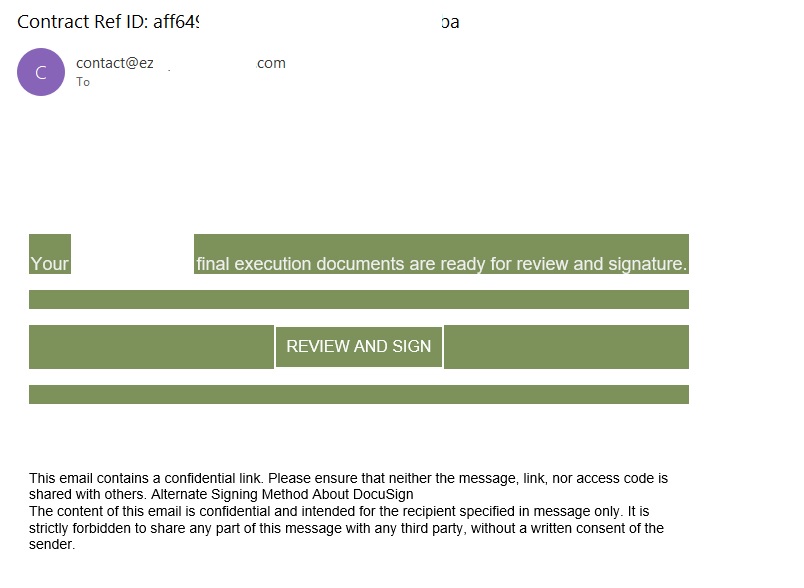
Phishing email imitating a Docusign notification

Phishing email imitating a Docusign notification

The email’s technical headers confirm that it was sent with Amazon SES. At first glance, it all looks legitimate enough.

Phishing email headers

Phishing email headers

In these emails, the victim is typically asked to click a link to review and sign a specific document.
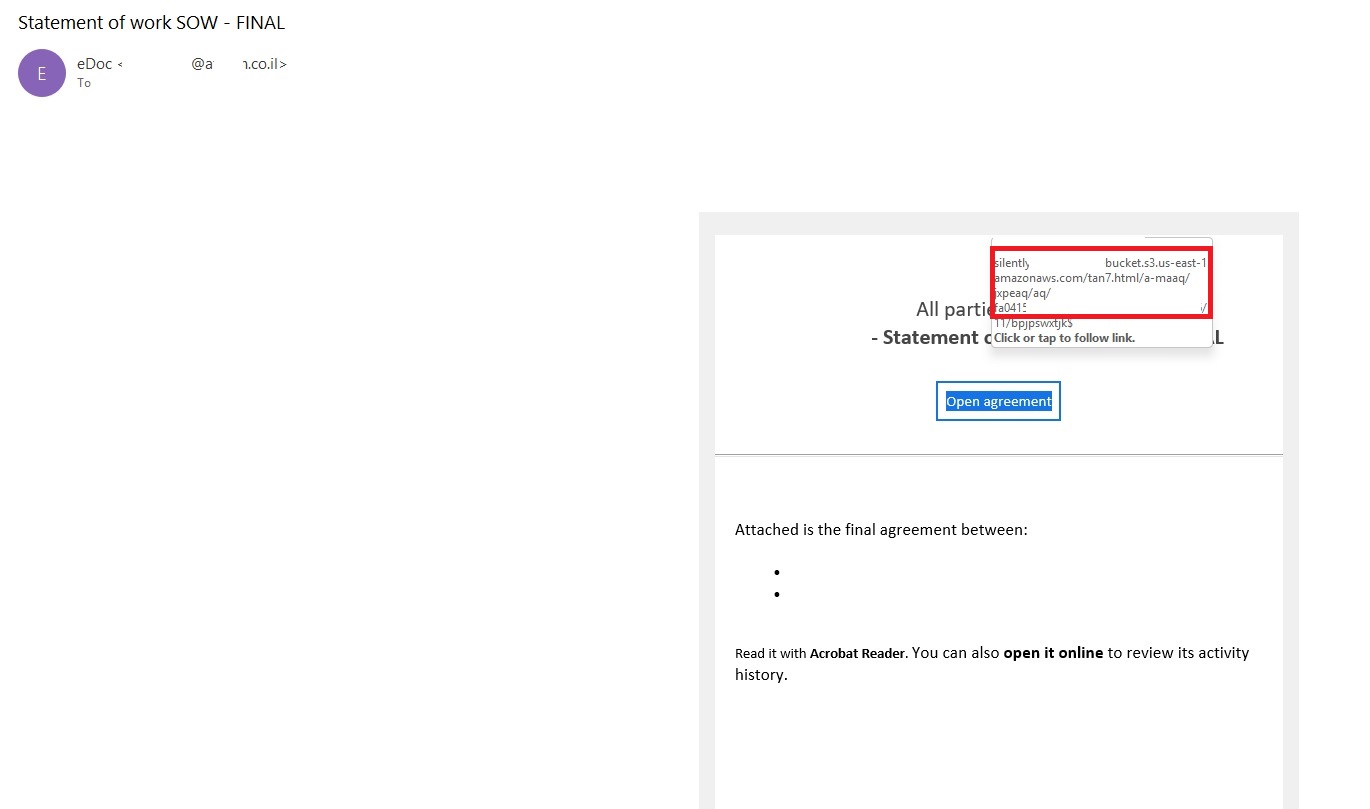
Phishing email with a "document"

Phishing email with a “document”

Upon clicking the link, the user is directed to a sign-in form hosted on amazonaws.com. This can easily mislead the victim, convincing them that what they’re doing is safe.
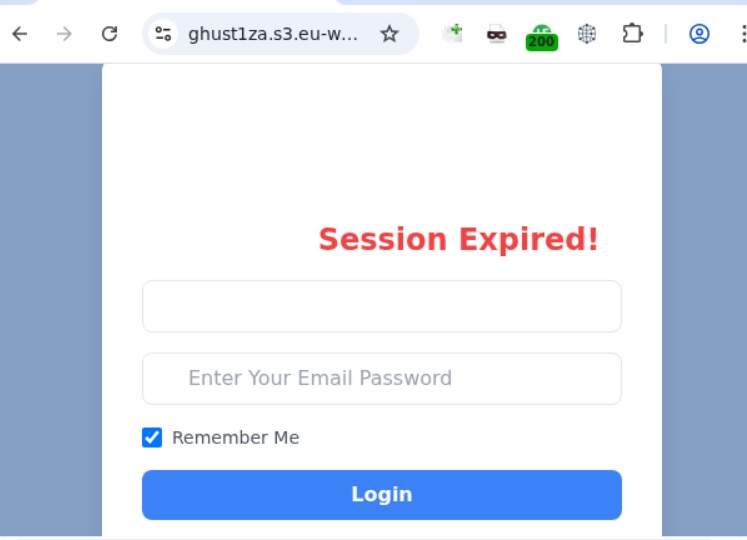
Phishing sign-in form

Phishing sign-in form

The resulting form is, of course, a phishing page, and any data entered into it goes directly to the attackers.

Amazon SES and BEC

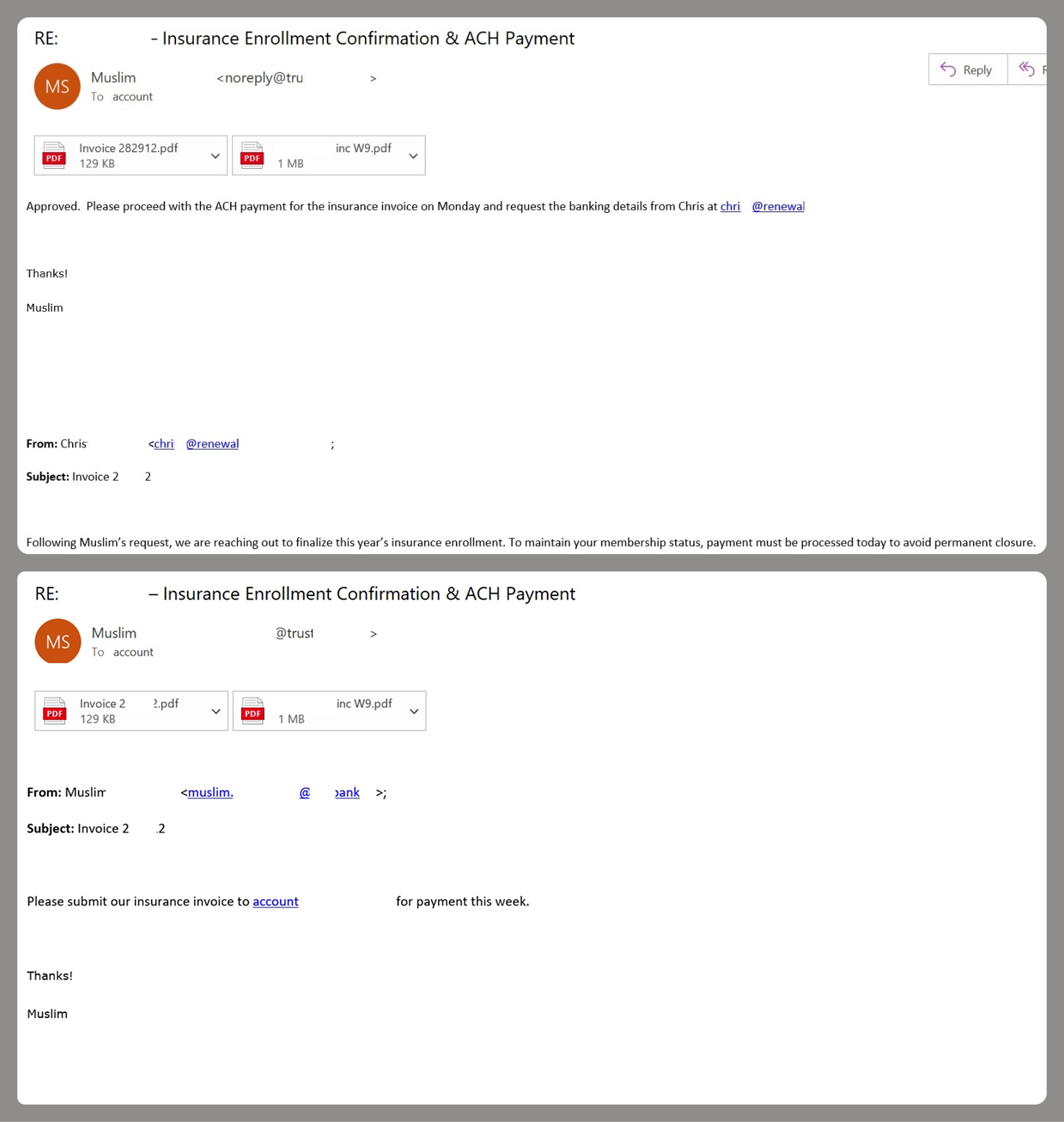
However, Amazon SES is used for more than just standard phishing; it’s also a vehicle for a very sophisticated type of BEC campaigns. In one case we investigated, a fraudulent email appeared to contain a series of messages exchanged between an employee of the target organization and a service provider about an outstanding invoice. The email was sent as if from that employee to the company’s finance department, requesting urgent payment.
BEC email featuring a fake conversation between an employee and a vendor

BEC email featuring a fake conversation between an employee and a vendor

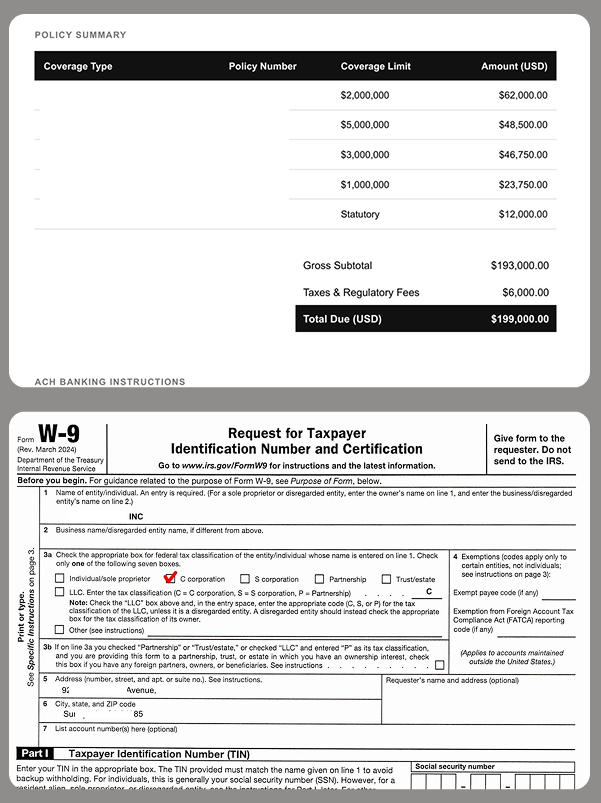
The PDF attachments didn’t contain any malicious phishing URLs or QR codes, only payment details and supporting documentation.
Forged financial documents

Forged financial documents

Naturally, the email didn’t originate with the employee, but with an attacker impersonating them. The entire thread quoted within the email was actually fabricated, with the messages formatted to appear as a legitimate forwarded thread to a cursory glance. This type of attack aims to lower the user’s guard and trick them into transferring funds to the scammers’ account.

Takeaways

Phishing via Amazon SES is shifting from isolated incidents into a steady trend. By weaponizing this service, attackers avoid the effort of building dubious domains and mail infrastructure from scratch. Instead, they hijack existing access keys to gain the ability to blast out thousands of phishing emails. These messages pass email authentication, originate from IP addresses that are unlikely to be blocklisted, and contain links to phishing forms that look entirely legitimate.

Since these Amazon SES phishing attacks stem from compromised or leaked AWS credentials, prioritizing the security of these accounts is critical. To mitigate these risks, we recommend following these guidelines:

  • Implement the principle of least privilege when configuring IAM access keys, granting elevated permissions only to users who require them for specific tasks.
  • Transition from IAM access keys to roles when configuring AWS; these are profiles with specific permissions that can be assigned to one or several users.
  • Enable multi-factor authentication, an ever-relevant step.
  • Configure IP-based access restrictions.
  • Set up automated key rotation and run regular security audits.
  • Use the AWS Key Management Service to encrypt data with unique cryptographic keys and manage them from a centralized location.

We recommend that users remain vigilant when handling email. Do not determine whether an email is safe based solely on the From field. If you receive unexpected documents via email, a prudent precaution is to verify the request with the sender through a different communication channel. Always carefully inspect where links in the body of an email actually lead. Additionally, robust email security solutions can provide an essential layer of protection for both corporate and personal correspondence.

  • ✇Security Boulevard
  • Microsoft’s February Security Update of High-Risk Vulnerability Notice for Multiple Products NSFOCUS
    Overview On February 11, 2026, NSFOCUS CERT monitored Microsoft’s release of its February security update patches, addressing 59 security issues across widely used products such as Windows, Azure, Microsoft Office, and Visual Studio Code. These vulnerabilities include privilege escalation, remote code execution, and other high-risk vulnerabilities. In this monthly update, 5 vulnerabilities are rated as […] The post Microsoft’s February Security Update of High-Risk Vulnerability Notice for Multip
     

Microsoft’s February Security Update of High-Risk Vulnerability Notice for Multiple Products

3 de Março de 2026, 23:08

Overview On February 11, 2026, NSFOCUS CERT monitored Microsoft’s release of its February security update patches, addressing 59 security issues across widely used products such as Windows, Azure, Microsoft Office, and Visual Studio Code. These vulnerabilities include privilege escalation, remote code execution, and other high-risk vulnerabilities. In this monthly update, 5 vulnerabilities are rated as […]

The post Microsoft’s February Security Update of High-Risk Vulnerability Notice for Multiple Products appeared first on NSFOCUS, Inc., a global network and cyber security leader, protects enterprises and carriers from advanced cyber attacks..

The post Microsoft’s February Security Update of High-Risk Vulnerability Notice for Multiple Products appeared first on Security Boulevard.

  • ✇Security Affairs
  • Russia-linked APT28 exploited MSHTML zero-day CVE-2026-21513 before patch Pierluigi Paganini
    Russia-linked APT28 reportedly exploited MSHTML zero-day CVE-2026-21513 before Microsoft patched it, a high-severity bypass flaw. Akamai reports that Russia-linked APT28 may have exploited CVE-2026-21513 CVSS score of 8.8), a high-severity MSHTML vulnerability (CVSS 8.8), before Microsoft patched it in February 2026. The vulnerability is an Internet Explorer security control bypass that can lead to code execution when a victim opens a malicious HTML page or LNK file. The flaw could be tr
     

Russia-linked APT28 exploited MSHTML zero-day CVE-2026-21513 before patch

2 de Março de 2026, 11:45

Russia-linked APT28 reportedly exploited MSHTML zero-day CVE-2026-21513 before Microsoft patched it, a high-severity bypass flaw.

Akamai reports that Russia-linked APT28 may have exploited CVE-2026-21513 CVSS score of 8.8), a high-severity MSHTML vulnerability (CVSS 8.8), before Microsoft patched it in February 2026.

The vulnerability is an Internet Explorer security control bypass that can lead to code execution when a victim opens a malicious HTML page or LNK file. The flaw could be triggered by opening a malicious HTML or LNK file, allowing attackers to bypass protections and potentially execute code. While Microsoft shared few details

Microsoft confirmed CVE-2026-21513 was exploited in real-world zero-day attacks and credited MSTIC, MSRC, the Office Security Team, and Google’s GTIG for reporting it. Akamai found a malicious sample uploaded to VirusTotal on January 2026 tied to infrastructure linked to APT28.

Akamai researchers used PatchDiff-AI to analyze the root cause of the issue and traced CVE-2026-21513 to hyperlink navigation logic in ieframe.dll. They found that poor URL validation lets attacker input reach ShellExecuteExW, enabling code execution outside the browser sandbox. Researchers reproduced the flaw using MSHTML components and identified an exploit sample, document.doc.LnK.download, uploaded in January 2026 and linked to APT28 infrastructure.

“By correlating the vulnerable code path with public threat intelligence, we identified a sample that was leveraging this functionality: document.doc.LnK.download.” reads the report published by Akamai. “The sample was first submitted to VirusTotal on January 30, 2026, shortly before February’s Patch Tuesday, and is associated with infrastructure linked to APT28, an active Russian state-sponsored threat actor.”

The payload uses a specially crafted Windows Shortcut (.lnk) that embeds an HTML file directly after the standard LNK structure. When executed, it connects to wellnesscaremed[.]com, a domain attributed to APT28 and widely used in the campaign’s multistage activity. The exploit relies on nested iframes and multiple DOM contexts to manipulate trust boundaries, bypassing Mark of the Web (MotW) and Internet Explorer Enhanced Security Configuration (IE ESC). By downgrading the security context, it triggers the vulnerable navigation flow, allowing attacker-controlled content to invoke ShellExecuteExW and execute code outside the browser sandbox.

“While the observed campaign leverages malicious .LNK files, the vulnerable code path can be triggered through any component embedding MSHTML. Therefore, additional delivery mechanisms beyond LNK-based phishing should be expected.” concludes the report.

Microsoft addressed the issue by tightening hyperlink protocol validation to prevent file://, http://, and https:// links from reaching ShellExecuteExW.

Follow me on Twitter: @securityaffairs and Facebook and Mastodon

Pierluigi Paganini

(SecurityAffairs – hacking, APT28, CVE-2026-21513)

  • ✇Krebs on Security
  • Patch Tuesday, February 2026 Edition BrianKrebs
    Microsoft today released updates to fix more than 50 security holes in its Windows operating systems and other software, including patches for a whopping six “zero-day” vulnerabilities that attackers are already exploiting in the wild. Zero-day #1 this month is CVE-2026-21510, a security feature bypass vulnerability in Windows Shell wherein a single click on a malicious link can quietly bypass Windows protections and run attacker-controlled content without warning or consent dialogs. CVE-2026-2
     

Patch Tuesday, February 2026 Edition

10 de Fevereiro de 2026, 18:49

Microsoft today released updates to fix more than 50 security holes in its Windows operating systems and other software, including patches for a whopping six “zero-day” vulnerabilities that attackers are already exploiting in the wild.

Zero-day #1 this month is CVE-2026-21510, a security feature bypass vulnerability in Windows Shell wherein a single click on a malicious link can quietly bypass Windows protections and run attacker-controlled content without warning or consent dialogs. CVE-2026-21510 affects all currently supported versions of Windows.

The zero-day flaw CVE-2026-21513 is a security bypass bug targeting MSHTML, the proprietary engine of the default Web browser in Windows. CVE-2026-21514 is a related security feature bypass in Microsoft Word.

The zero-day CVE-2026-21533 allows local attackers to elevate their user privileges to “SYSTEM” level access in Windows Remote Desktop Services. CVE-2026-21519 is a zero-day elevation of privilege flaw in the Desktop Window Manager (DWM), a key component of Windows that organizes windows on a user’s screen. Microsoft fixed a different zero-day in DWM just last month.

The sixth zero-day is CVE-2026-21525, a potentially disruptive denial-of-service vulnerability in the Windows Remote Access Connection Manager, the service responsible for maintaining VPN connections to corporate networks.

Chris Goettl at Ivanti reminds us Microsoft has issued several out-of-band security updates since January’s Patch Tuesday. On January 17, Microsoft pushed a fix that resolved a credential prompt failure when attempting remote desktop or remote application connections. On January 26, Microsoft patched a zero-day security feature bypass vulnerability (CVE-2026-21509) in Microsoft Office.

Kev Breen at Immersive notes that this month’s Patch Tuesday includes several fixes for remote code execution vulnerabilities affecting GitHub Copilot and multiple integrated development environments (IDEs), including VS Code, Visual Studio, and JetBrains products. The relevant CVEs are CVE-2026-21516, CVE-2026-21523, and CVE-2026-21256.

Breen said the AI vulnerabilities Microsoft patched this month stem from a command injection flaw that can be triggered through prompt injection, or tricking the AI agent into doing something it shouldn’t — like executing malicious code or commands.

“Developers are high-value targets for threat actors, as they often have access to sensitive data such as API keys and secrets that function as keys to critical infrastructure, including privileged AWS or Azure API keys,” Breen said. “When organizations enable developers and automation pipelines to use LLMs and agentic AI, a malicious prompt can have significant impact. This does not mean organizations should stop using AI. It does mean developers should understand the risks, teams should clearly identify which systems and workflows have access to AI agents, and least-privilege principles should be applied to limit the blast radius if developer secrets are compromised.”

The SANS Internet Storm Center has a clickable breakdown of each individual fix this month from Microsoft, indexed by severity and CVSS score. Enterprise Windows admins involved in testing patches before rolling them out should keep an eye on askwoody.com, which often has the skinny on wonky updates. Please don’t neglect to back up your data if it has been a while since you’ve done that, and feel free to sound off in the comments if you experience problems installing any of these fixes.

❌
❌