
Visualização normal

Antes de ontemStream principal
  • ✇Krebs on Security
  • Microsoft Patch Tuesday, March 2026 Edition BrianKrebs
    Microsoft Corp. today pushed security updates to fix at least 77 vulnerabilities in its Windows operating systems and other software. There are no pressing “zero-day” flaws this month (compared to February’s five zero-day treat), but as usual some patches may deserve more rapid attention from organizations using Windows. Here are a few highlights from this month’s Patch Tuesday. Image: Shutterstock, @nwz. Two of the bugs Microsoft patched today were publicly disclosed previously. CVE-2026-21262
     

Microsoft Patch Tuesday, March 2026 Edition

10 de Março de 2026, 21:32

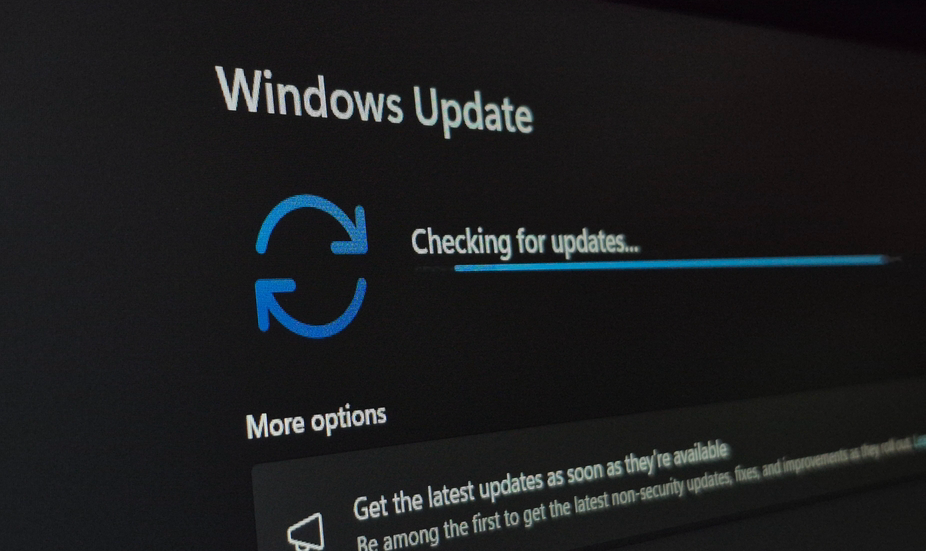
Microsoft Corp. today pushed security updates to fix at least 77 vulnerabilities in its Windows operating systems and other software. There are no pressing “zero-day” flaws this month (compared to February’s five zero-day treat), but as usual some patches may deserve more rapid attention from organizations using Windows. Here are a few highlights from this month’s Patch Tuesday.

Image: Shutterstock, @nwz.

Two of the bugs Microsoft patched today were publicly disclosed previously. CVE-2026-21262 is a weakness that allows an attacker to elevate their privileges on SQL Server 2016 and later editions.

“This isn’t just any elevation of privilege vulnerability, either; the advisory notes that an authorized attacker can elevate privileges to sysadmin over a network,” Rapid7’s Adam Barnett said. “The CVSS v3 base score of 8.8 is just below the threshold for critical severity, since low-level privileges are required. It would be a courageous defender who shrugged and deferred the patches for this one.”

The other publicly disclosed flaw is CVE-2026-26127, a vulnerability in applications running on .NET. Barnett said the immediate impact of exploitation is likely limited to denial of service by triggering a crash, with the potential for other types of attacks during a service reboot.

It would hardly be a proper Patch Tuesday without at least one critical Microsoft Office exploit, and this month doesn’t disappoint. CVE-2026-26113 and CVE-2026-26110 are both remote code execution flaws that can be triggered just by viewing a booby-trapped message in the Preview Pane.

Satnam Narang at Tenable notes that just over half (55%) of all Patch Tuesday CVEs this month are privilege escalation bugs, and of those, a half dozen were rated “exploitation more likely” — across Windows Graphics Component, Windows Accessibility Infrastructure, Windows Kernel, Windows SMB Server and Winlogon. These include:

CVE-2026-24291: Incorrect permission assignments within the Windows Accessibility Infrastructure to reach SYSTEM (CVSS 7.8)
CVE-2026-24294: Improper authentication in the core SMB component (CVSS 7.8)
CVE-2026-24289: High-severity memory corruption and race condition flaw (CVSS 7.8)
CVE-2026-25187: Winlogon process weakness discovered by Google Project Zero (CVSS 7.8).

Ben McCarthy, lead cyber security engineer at Immersive, called attention to CVE-2026-21536, a critical remote code execution bug in a component called the Microsoft Devices Pricing Program. Microsoft has already resolved the issue on their end, and fixing it requires no action on the part of Windows users. But McCarthy says it’s notable as one of the first vulnerabilities identified by an AI agent and officially recognized with a CVE attributed to the Windows operating system. It was discovered by XBOW, a fully autonomous AI penetration testing agent.

XBOW has consistently ranked at or near the top of the Hacker One bug bounty leaderboard for the past year. McCarthy said CVE-2026-21536 demonstrates how AI agents can identify critical 9.8-rated vulnerabilities without access to source code.

“Although Microsoft has already patched and mitigated the vulnerability, it highlights a shift toward AI-driven discovery of complex vulnerabilities at increasing speed,” McCarthy said. “This development suggests AI-assisted vulnerability research will play a growing role in the security landscape.”

Microsoft earlier provided patches to address nine browser vulnerabilities, which are not included in the Patch Tuesday count above. In addition, Microsoft issued a crucial out-of-band (emergency) update on March 2 for Windows Server 2022 to address a certificate renewal issue with passwordless authentication technology Windows Hello for Business.

Separately, Adobe shipped updates to fix 80 vulnerabilities — some of them critical in severity — in a variety of products, including Acrobat and Adobe Commerce. Mozilla Firefox v. 148.0.2 resolves three high severity CVEs.

For a complete breakdown of all the patches Microsoft released today, check out the SANS Internet Storm Center’s Patch Tuesday post. Windows enterprise admins who wish to stay abreast of any news about problematic updates, AskWoody.com is always worth a visit. Please feel free to drop a comment below if you experience any issues apply this month’s patches.
  • ✇Krebs on Security
  • Microsoft Patch Tuesday, August 2025 Edition BrianKrebs
    Microsoft today released updates to fix more than 100 security flaws in its Windows operating systems and other software. At least 13 of the bugs received Microsoft’s most-dire “critical” rating, meaning they could be abused by malware or malcontents to gain remote access to a Windows system with little or no help from users. August’s patch batch from Redmond includes an update for CVE-2025-53786, a vulnerability that allows an attacker to pivot from a compromised Microsoft Exchange Server dire
     

Microsoft Patch Tuesday, August 2025 Edition

12 de Agosto de 2025, 19:14

Microsoft today released updates to fix more than 100 security flaws in its Windows operating systems and other software. At least 13 of the bugs received Microsoft’s most-dire “critical” rating, meaning they could be abused by malware or malcontents to gain remote access to a Windows system with little or no help from users.

August’s patch batch from Redmond includes an update for CVE-2025-53786, a vulnerability that allows an attacker to pivot from a compromised Microsoft Exchange Server directly into an organization’s cloud environment, potentially gaining control over Exchange Online and other connected Microsoft Office 365 services. Microsoft first warned about this bug on Aug. 6, saying it affects Exchange Server 2016 and Exchange Server 2019, as well as its flagship Exchange Server Subscription Edition.

Ben McCarthy, lead cyber security engineer at Immersive, said a rough search reveals approximately 29,000 Exchange servers publicly facing on the internet that are vulnerable to this issue, with many of them likely to have even older vulnerabilities.

McCarthy said the fix for CVE-2025-53786 requires more than just installing a patch, such as following Microsoft’s manual instructions for creating a dedicated service to oversee and lock down the hybrid connection.

“In effect, this vulnerability turns a significant on-premise Exchange breach into a full-blown, difficult-to-detect cloud compromise with effectively living off the land techniques which are always harder to detect for defensive teams,” McCarthy said.

CVE-2025-53779 is a weakness in the Windows Kerberos authentication system that allows an unauthenticated attacker to gain domain administrator privileges. Microsoft credits the discovery of the flaw to Akamai researcher Yuval Gordon, who dubbed it “BadSuccessor” in a May 2025 blog post. The attack exploits a weakness in “delegated Managed Service Account” or dMSA — a feature that was introduced in Windows Server 2025.

Some of the critical flaws addressed this month with the highest severity (between 9.0 and 9.9 CVSS scores) include a remote code execution bug in the Windows GDI+ component that handles graphics rendering (CVE-2025-53766) and CVE-2025-50165, another graphics rendering weakness. Another critical patch involves CVE-2025-53733, a vulnerability in Microsoft Word that can be exploited without user interaction and triggered through the Preview Pane.

One final critical bug tackled this month deserves attention: CVE-2025-53778, a bug in Windows NTLM, a core function of how Windows systems handle network authentication. According to Microsoft, the flaw could allow an attacker with low-level network access and basic user privileges to exploit NTLM and elevate to SYSTEM-level access — the highest level of privilege in Windows. Microsoft rates the exploitation of this bug as “more likely,” although there is no evidence the vulnerability is being exploited at the moment.

Feel free to holler in the comments if you experience problems installing any of these updates. As ever, the SANS Internet Storm Center has its useful breakdown of the Microsoft patches indexed by severity and CVSS score, and AskWoody.com is keeping an eye out for Windows patches that may cause problems for enterprises and end users.

GOOD MIGRATIONS

Windows 10 users out there likely have noticed by now that Microsoft really wants you to upgrade to Windows 11. The reason is that after the Patch Tuesday on October 14, 2025, Microsoft will stop shipping free security updates for Windows 10 computers. The trouble is, many PCs running Windows 10 do not meet the hardware specifications required to install Windows 11 (or they do, but just barely).

If the experience with Windows XP is any indicator, many of these older computers will wind up in landfills or else will be left running in an unpatched state. But if your Windows 10 PC doesn’t have the hardware chops to run Windows 11 and you’d still like to get some use out of it safely, consider installing a newbie-friendly version of Linux, like Linux Mint.

Like most modern Linux versions, Mint will run on anything with a 64-bit CPU that has at least 2GB of memory, although 4GB is recommended. In other words, it will run on almost any computer produced in the last decade.

There are many versions of Linux available, but Linux Mint is likely to be the most intuitive interface for regular Windows users, and it is largely configurable without any fuss at the text-only command-line prompt. Mint and other flavors of Linux come with LibreOffice, which is an open source suite of tools that includes applications similar to Microsoft Office, and it can open, edit and save documents as Microsoft Office files.

If you’d prefer to give Linux a test drive before installing it on a Windows PC, you can always just download it to a removable USB drive. From there, reboot the computer (with the removable drive plugged in) and select the option at startup to run the operating system from the external USB drive. If you don’t see an option for that after restarting, try restarting again and hitting the F8 button, which should open a list of bootable drives. Here’s a fairly thorough tutorial that walks through exactly how to do all this.

And if this is your first time trying out Linux, relax and have fun: The nice thing about a “live” version of Linux (as it’s called when the operating system is run from a removable drive such as a CD or a USB stick) is that none of your changes persist after a reboot. Even if you somehow manage to break something, a restart will return the system back to its original state.

❌
❌