Visualização normal

Hoje — 9 de Maio de 2026Stream principal
  • ✇Cyber Security News
  • TCLBANKER Malware Targets Users Through Self-Propagating WhatsApp and Outlook Worm Modules Dhivya
    A highly sophisticated Brazilian banking trojan named TCLBANKER, tracked under the campaign REF3076, this malware represents a major update to the older Maverick and SORVEPOTEL families. It stands out because it uses a fake, signed Logitech installer to infect systems and spreads automatically via WhatsApp and Microsoft Outlook. The attack begins when a user downloads a malicious ZIP file. Inside this archive is an installer that abuses a real, digitally signed Logitech program called Log
     

TCLBANKER Malware Targets Users Through Self-Propagating WhatsApp and Outlook Worm Modules

Por:Dhivya
9 de Maio de 2026, 03:00

A highly sophisticated Brazilian banking trojan named TCLBANKER, tracked under the campaign REF3076, this malware represents a major update to the older Maverick and SORVEPOTEL families.

It stands out because it uses a fake, signed Logitech installer to infect systems and spreads automatically via WhatsApp and Microsoft Outlook.

The attack begins when a user downloads a malicious ZIP file. Inside this archive is an installer that abuses a real, digitally signed Logitech program called Logi AI Prompt Builder.

File directory contents showing a malicious DLL (Source: Elastic)

By using a technique known as DLL side-loading, the hackers trick the legitimate Logitech application into loading a malicious file instead of its normal system components. Once activated, this hidden loader takes control of the system to prepare the next stages of the attack.

Targeted process names decrypted by TCLBANKER (Source: ELastic)

TCLBANKER is carefully built to hide from security researchers. Before it fully unpacks, it checks whether the computer is running in a security sandbox. It looks for debugging tools, virtual machines, and specific antivirus software.

It also checks the system language and time zone to ensure the victim is actually located in Brazil. If the environment does not match a real Brazilian user, the payload refuses to decrypt, keeping the malware completely hidden from automated security scanners.


Encrypted bank/fintech/crypto domains(Source: Elastic)

TCLBANKER Malware Targets Users

Once the malware confirms it is on a real victim’s machine, it launches the main banking trojan.

This tool continuously monitors the user’s web browser to detect whether the user visits one of 59 targeted banks, financial technology platforms, or cryptocurrency websites. When a match is found, the malware connects to a remote server.

To steal passwords, the trojan uses full-screen overlays built with Microsoft’s Windows Presentation Foundation. These overlays cover the entire screen and look exactly like real banking prompts or official Windows Update screens.

Zip file containing TCLBANKER grabbed from the file server (Source: Elastic)

They freeze the desktop, block keyboard shortcuts such as the Windows key or Escape, and turn off screen-capture tools so the victim cannot record the fraud. The user is forced to enter their security codes or personal identification numbers directly into the hacker’s fake screen.

What makes TCLBANKER incredibly dangerous is its ability to spread automatically. The first worm module targets WhatsApp Web. The malware scans the computer for web browsers such as Chrome or Edge and looks for active WhatsApp accounts.

WhatsApp Web profile cloning and session hijacking (Source: Eastic)

Instead of asking the user to scan a new QR code, the malware secretly clones the saved session data. It then opens a hidden browser window, bypasses bot detection, and sends phishing messages and the malware file directly to the victim’s contacts. Because the messages come from a trusted friend, new victims are highly likely to download the file.

Elastic Security Labs has uncovered that the second worm module focuses on email. It silently opens Microsoft Outlook in the background and uses Windows COM automation to take complete control of the victim’s email account.

The bot searches the address book and inbox to harvest contacts. It then drafts completely new phishing emails and sends them from the infected user’s actual email address. This technique easily bypasses standard email security filters because the emails originate from a legitimate, trusted source.

Code related to filtering potential spam victim emails (Source: Elastic)

All of this malicious activity is managed using serverless cloud tools such as Cloudflare Workers. By using legitimate cloud services, the attackers can quickly change their servers and avoid being blocked by simple network defenses.

The hackers also host their malicious files on Cloudflare, making the download links look safe to the average user. Researchers note that this campaign is still in its early stages, suggesting that the threat actors are likely preparing to expand their targets.

To protect against TCLBANKER, organizations should look for unusual background processes spawned by Logitech applications.

Security teams must monitor for unauthorized browser profile cloning and watch for unusual spikes in outbound emails from Microsoft Outlook. Using advanced endpoint protection that detects unauthorized full-screen overlays is also essential to keeping systems safe from this evolving threat.

IoC

ObservableTypeNameReference
701d51b7be8b034c860bf97847bd59a87dca8481c4625328813746964995b626SHA-256screen_retriever_plugin.dllTCLBanker loader component
8a174aa70a4396547045aef6c69eb0259bae1706880f4375af71085eeb537059SHA-256screen_retriever_plugin.dllTCLBanker loader component
668f932433a24bbae89d60b24eee4a24808fc741f62c5a3043bb7c9152342f40SHA-256screen_retriever_plugin.dllTCLBanker loader component
63beb7372098c03baab77e0dfc8e5dca5e0a7420f382708a4df79bed2d900394SHA-256XXL_21042026-181516.zipTCLBanker initial ZIP file
campanha1-api.ef971a42[.]workers.devdomain-nameTCLBanker C2
mxtestacionamentos[.]comdomain-nameTCLBanker C2
documents.ef971a42.workers[.]devdomain-nameTCLBanker file server
arquivos-omie[.]comdomain-nameTCLBanker phishing page (under development)
documentos-online[.]comdomain-nameTCLBanker phishing page (under development)
afonsoferragista[.]comdomain-nameTCLBanker phishing page (under development)
doccompartilhe[.]comdomain-nameTCLBanker phishing page (under development)
recebamais[.]comdomain-nameTCLBanker phishing page (under development)

Note: IP addresses and domains are intentionally defanged (e.g., [.]) to prevent accidental resolution or hyperlinking. Re-fang only within controlled threat intelligence platforms such as MISP, VirusTotal, or your SIEM.

Cybercriminals now enter through your suppliers instead of your front door – Free Webinar

The post TCLBANKER Malware Targets Users Through Self-Propagating WhatsApp and Outlook Worm Modules appeared first on Cyber Security News.
TCLBANKER Malware Leverages WhatsApp and Outlook Worm Features in Active Attacks

A sophisticated Brazilian banking trojan named TCLBANKER, deployed through a trojanized Logitech installer and capable of hijacking victims’ WhatsApp and Outlook accounts to spread itself to new targets. The campaign, tracked as REF3076, delivers TCLBANKER through a malicious MSI installer bundled inside a ZIP file. The installer abuses a signed Logitech application, Logi AI Prompt Builder, via […]

The post TCLBANKER Malware Leverages WhatsApp and Outlook Worm Features in Active Attacks appeared first on GBHackers Security | #1 Globally Trusted Cyber Security News Platform.

Antes de ontemStream principal
  • ✇Malwarebytes
  • Update WhatsApp now: Two new flaws could expose you to malicious files
    Meta has published a new security advisory for messaging app WhatsApp, announcing patches for two vulnerabilities. WhatsApp has fixed two security flaws that could be abused to interfere with how media and attachments are handled on your device. There is no evidence that either bug has been exploited in the wild. These bugs don’t automatically infect devices, but they lower the barrier for social engineering and could be chained with other vulnerabilities for more serious attacks. Mali
     

Update WhatsApp now: Two new flaws could expose you to malicious files

5 de Maio de 2026, 08:39

Meta has published a new security advisory for messaging app WhatsApp, announcing patches for two vulnerabilities.

WhatsApp has fixed two security flaws that could be abused to interfere with how media and attachments are handled on your device. There is no evidence that either bug has been exploited in the wild.

These bugs don’t automatically infect devices, but they lower the barrier for social engineering and could be chained with other vulnerabilities for more serious attacks.

Malicious messages

The first issue, tracked as CVE‑2026‑23866, affects how WhatsApp processes AI‑generated “rich response messages” that embed Instagram Reels. On affected iOS and Android versions, incomplete validation means a specially crafted message could cause the app to load media from an attacker‑controlled URL. In some cases, this could trigger operating system‑level custom URL scheme handlers.

In other words: a booby‑trapped message could prompt your device to open content from an untrusted source.

How to update WhatsApp for Android

You can easily update WhatsApp from the Google Play Store.

  1. Open the Google Play Store
  2. Search for WhatsApp Messenger
  3. Tap Update

Note: Updates may not be available immediately in all regions.

How to update WhatsApp on iOS

To update WhatsApp on iOS:

  • Open the App Store
  • Tap your profile icon
  • Scroll to find WhatsApp and tap Update

If it’s not listed, search for WhatsApp to check if an “Update” button is available.

Misleading filenames

The second bug, CVE‑2026‑23863, affects WhatsApp for Windows before version 2.3000.1032164386.258709.

In this case, WhatsApp did not correctly handle filenames containing embedded NUL bytes. This could allow a file to appear as a harmless type in the interface while actually being treated as an executable when opened. That’s a classic recipe for social engineering: “click the PDF,” but get an .exe file.

How to update WhatsApp for Windows

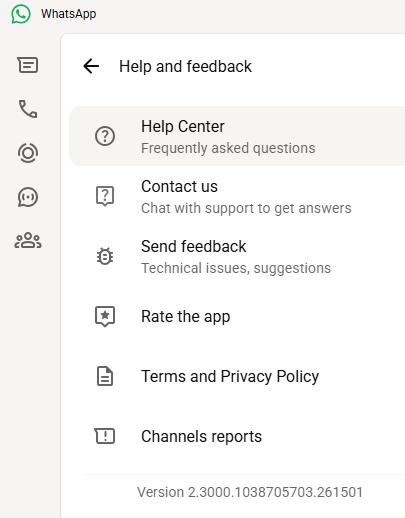
You can find your WhatsApp for Windows version number by clicking on your profile picture and selecting Help and feedback.

Version 2.3000.1038705703.261501

If your version number is earlier than 2.3000.1032164386.258709, update via the Microsoft Store:

  1. Click the Start menu and search for Microsoft Store to open it
  2. Click Library located at the bottom-left corner
  3. Find WhatsApp Desktop
  4. Click Get Updates or Update

Once installed, restart the app to apply the changes.

Automatic updates on Windows

My WhatsApp was already up to date because I have automatic updates turned on. Here’s how to turn it on:

  1. Click the Start menu and search for Microsoft Store to open it
  2. Select Profile (your account picture) > Settings
  3. Make sure App updates is toggled to On
Auto updates on Windows

Scammers don’t need to hack you. They just need you to click once. 

Malwarebytes Identity Theft Protection catches suspicious activity before it becomes a problem.

WhatsApp Security Flaw Enables Malicious URL Execution Through Instagram Reels

WhatsApp has recently patched two notable security vulnerabilities that could have allowed attackers to execute malicious links and disguise dangerous files. The most alarming discovery involves a flaw in how WhatsApp processes Instagram Reels. This vulnerability allows remote threat actors to trigger arbitrary URLs on a victim’s device by exploiting unvalidated message elements. Meta’s latest […]

The post WhatsApp Security Flaw Enables Malicious URL Execution Through Instagram Reels appeared first on GBHackers Security | #1 Globally Trusted Cyber Security News Platform.

  • ✇Security Boulevard
  • U.S. Consumers Lost $2.1 Billion in Social Media Scams in 2025, FTC Says Jeffrey Burt
    An FTC report says that Americans last year lost $2.1 billion in social media scams, such as shopping and investment schemes. Social media site have become the place where most of these scams start, and more than half of that money was stolen in scams began on Facebook, WhatsApp, and Instagram. The post U.S. Consumers Lost $2.1 Billion in Social Media Scams in 2025, FTC Says appeared first on Security Boulevard.
     

U.S. Consumers Lost $2.1 Billion in Social Media Scams in 2025, FTC Says

1 de Maio de 2026, 09:47

An FTC report says that Americans last year lost $2.1 billion in social media scams, such as shopping and investment schemes. Social media site have become the place where most of these scams start, and more than half of that money was stolen in scams began on Facebook, WhatsApp, and Instagram.

The post U.S. Consumers Lost $2.1 Billion in Social Media Scams in 2025, FTC Says appeared first on Security Boulevard.

  • ✇Security Affairs
  • Agent’s claims on WhatsApp access spark security concerns Pierluigi Paganini
    A US agent claimed WhatsApp encryption is fake and Meta can access messages; the probe was abruptly shut, raising security concerns. A US agent claimed WhatsApp encryption is fake, alleging Meta accesses all unencrypted messages, but Commerce Department abruptly shut the probe, leaving leaders questioning if consumer apps are safe for sensitive business decisions. In early 2026, a remarkable exchange unfolded inside the U.S. Commerce Department that has since sparked debate across cyberse
     

Agent’s claims on WhatsApp access spark security concerns

30 de Abril de 2026, 13:39

A US agent claimed WhatsApp encryption is fake and Meta can access messages; the probe was abruptly shut, raising security concerns.

A US agent claimed WhatsApp encryption is fake, alleging Meta accesses all unencrypted messages, but Commerce Department abruptly shut the probe, leaving leaders questioning if consumer apps are safe for sensitive business decisions.

In early 2026, a remarkable exchange unfolded inside the U.S. Commerce Department that has since sparked debate across cybersecurity, privacy, and corporate governance circles. A special agent from the Bureau of Industry and Security (BIS) sent an email asserting something astonishing: Meta’s WhatsApp, despite its public claims of end-to-end encryption, allows the company to access and store all user messages, including texts, photos, audio, and video, in unencrypted form. Just months later, the investigation was abruptly terminated.

“After roughly 10 months of collecting documents and conducting interviews, the agent circulated a Jan. 16 email to more than a dozen officials across federal agencies outlining preliminary conclusions.” reported TechSpot. “According to records reviewed by Bloomberg and corroborated by recipients, the agent asserted that Meta’s systems allow access to message content in ways that conflict with how WhatsApp’s encryption has been publicly described.”

After a 10-month probe internally dubbed “Operation Sourced Encryption,” the BIS agent circulated a January 16 email to over a dozen federal officials.

“There is no limit to the type of WhatsApp message that can be viewed by Meta. Meta can and does view and store all the text messages, photographs, audio and video recordings in an unencrypted format.” reads the email the agent wrote.

The email also described a “tiered permissions system” in place since at least 2019, granting access not only to Meta employees but also to contractors and “a significant number of foreign/overseas workers in India.”

The email also suggested the conduct could involve “civil and criminal violations that span several federal jurisdictions,” though he did not specify which laws. Importantly, this was not a formal accusation, it was a preliminary conclusion from an internal investigation that would soon be scrubbed from existence.

However Shortly after the email circulated, senior leadership at BIS shut down the inquiry.

“The [agency] is not investigating WhatsApp or Meta for violations of export laws,” said a spokesperson for the agency, Lauren Weber Holley.

Meta strongly denied the claims.

“The claim that WhatsApp can access people’s encrypted communications is patently false.” said Meta spokesperson Andy Stone

Meta says that only chat participants can read or hear messages on WhatsApp—not even the company itself. It has also defended this stance in court, including a 2021 case against India’s traceability rules.

Not everyone agrees with the agent’s claims. Former Meta security chief Alex Stamos said they are “almost certainly false.” He noted that any backdoor would have to exist in widely inspected app code, making it easy for researchers to find. He also argued Meta wouldn’t share such powerful access with contractors.

“A widespread backdoor would be easily found by security researchers,” Stamos said. “Also, a backdoor in WhatsApp would be a massive signals intelligence tool. There’s no way Meta would provide that capability to Accenture contractors if they had it.” said Stamos.

Still, two individuals interviewed by the agent claimed broad access to WhatsApp messages while performing content moderation work under contract with Accenture, which did not respond to comment requests.

The investigation’s closure leaves key questions unanswered, including what evidence was found and whether WhatsApp’s encryption will be further examined, keeping uncertainty high.

Follow me on Twitter: @securityaffairs and Facebook and Mastodon

Pierluigi Paganini

(SecurityAffairs – hacking, WhatsApp)

Iran-linked Handala hackers leak US Marines data, send chilling WhatsApp threats

30 de Abril de 2026, 05:13
US Marines stationed around the Persian Gulf have been receiving WhatsApp messages from strangers suggesting they call home and make their final goodbyes. Read more in my article on the Hot for Security blog.
  • ✇Cyber Security News
  • WhatsApp Testing Own Cloud Backup Provider for Default End-to-End Encryption Abinaya
    WhatsApp is currently developing an independent cloud backup system designed to give users more direct control over their chat histories. This upcoming feature will allow users to store their backups securely on WhatsApp’s native servers. The update aims to reduce reliance on third-party cloud services like Google Drive and Apple’s iCloud while enforcing strict cryptographic standards. Solving the Storage Limit Problem As users share more high-resolution media, WhatsApp chat backups
     

WhatsApp Testing Own Cloud Backup Provider for Default End-to-End Encryption

28 de Abril de 2026, 10:00

WhatsApp is currently developing an independent cloud backup system designed to give users more direct control over their chat histories.

This upcoming feature will allow users to store their backups securely on WhatsApp’s native servers.

The update aims to reduce reliance on third-party cloud services like Google Drive and Apple’s iCloud while enforcing strict cryptographic standards.

Solving the Storage Limit Problem

As users share more high-resolution media, WhatsApp chat backups frequently consume significant portions of personal cloud storage.

Currently, Android and iOS users must store their backups on their respective default cloud providers.

This setup forces users to share their limited storage space across emails, device backups, and heavy WhatsApp data files.

Once a user reaches their storage limit, they must either delete files or purchase additional space from Google or Apple.

To address this data bottleneck, WhatsApp is building a dual-provider system.

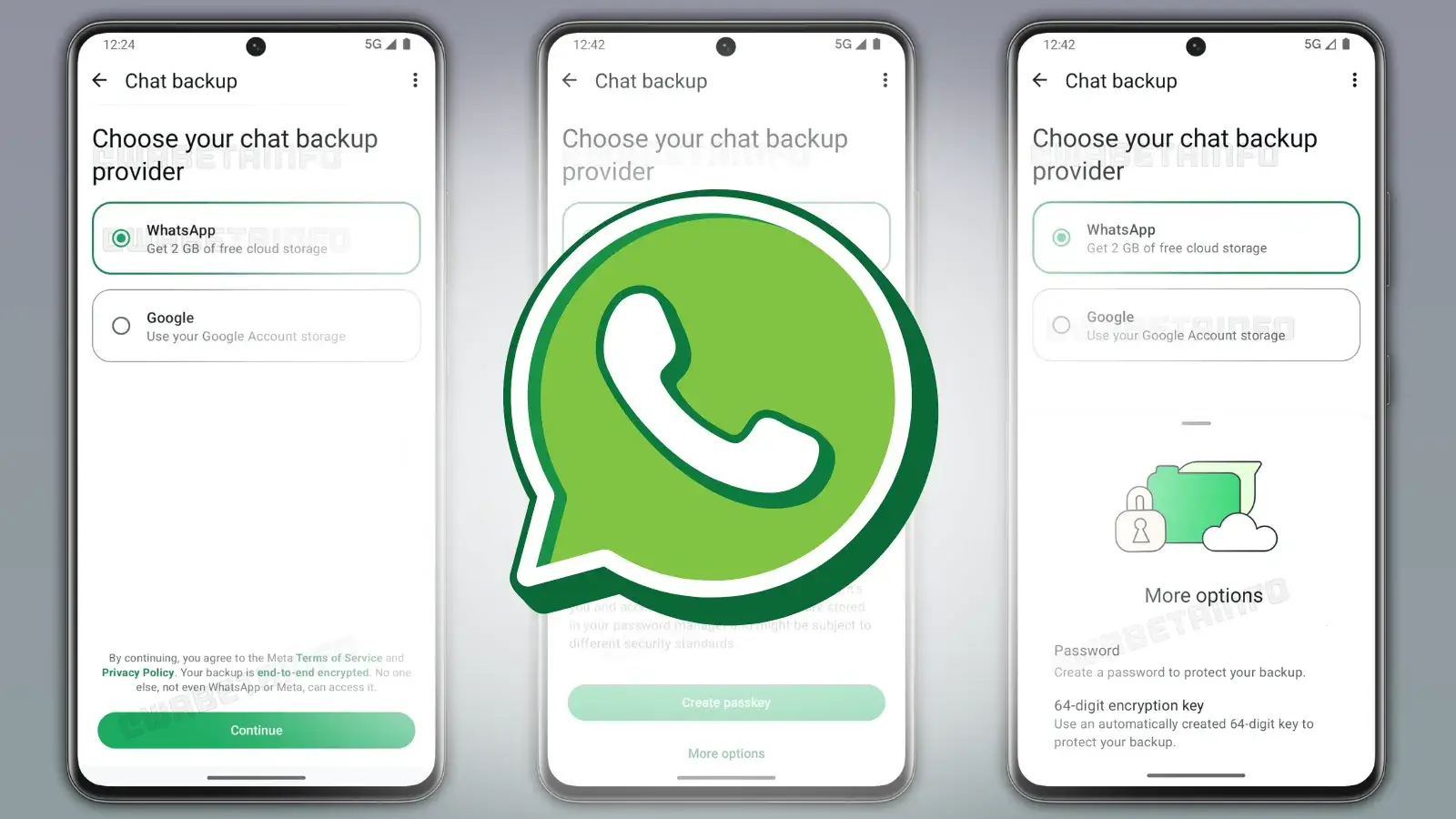
WhatsApp backups and storage limitations (Source: WABetaInfo)

Users will soon have the flexibility to stick with their current third-party service or switch to WhatsApp’s dedicated backup platform.

Key details regarding the new storage ecosystem include:

  • WhatsApp will offer a free tier with up to 2 GB of storage. However, it remains unclear whether this will be available to all users or reserved exclusively for WhatsApp Plus subscribers.
  • Developers are considering a premium storage plan offering 50 GB of space for approximately $0.99.
  • This premium tier provides an affordable alternative for users managing massive chat archives and media libraries.
  • All pricing models and storage limits are preliminary and subject to change based on market testing.

Mandatory End-to-End Encryption

Security remains the central focus of this independent storage system. If a user selects WhatsApp’s native cloud for backups, end-to-end encryption becomes mandatory for all data stored in the cloud.

This ensures that chat histories remain completely inaccessible to unauthorized parties, threat actors, and even WhatsApp itself.

To make this encryption both highly secure and user-friendly, WhatsApp is integrating device-based authentication.

According to WABetaInfo, users will have three options to secure their backup data:

  • Passkeys serve as the default method, allowing users to unlock backups using hardware-backed biometric scans, such as fingerprints or facial recognition.
  • Traditional alphanumeric passwords remain available for users who prefer manual entry.
  • A 64-digit encryption key offers a manual recovery option for advanced users wanting maximum cryptographic control.

Passkeys represent a major security upgrade for average users.

Because they are securely stored in a password manager and tied to trusted devices, they eliminate the risk of forgotten passwords while protecting against remote phishing attacks.

The WhatsApp Chat Backup Provider is currently under active development.

Engineers are rigorously testing the feature to ensure it integrates seamlessly with existing security frameworks.

Following internal validation, the feature will gradually roll out to select beta testers before receiving a wider public launch.

This capability marks a significant shift in how the platform handles user data, optimizing backup management while reinforcing mobile security.

Follow us on Google News, LinkedIn, and X for daily cybersecurity updates. Contact us to feature your stories.

The post WhatsApp Testing Own Cloud Backup Provider for Default End-to-End Encryption appeared first on Cyber Security News.
WhatsApp Tests Encrypted Cloud Backup Service for Safer Message Storage

WhatsApp is actively developing an independent, first-party cloud backup service featuring mandatory end-to-end encryption. This upcoming feature aims to reduce users’ reliance on third-party storage providers such as Google Drive and Apple’s iCloud. By bringing backup storage in-house, WhatsApp gives users greater control over their data privacy and device storage limits. All chat histories hosted […]

The post WhatsApp Tests Encrypted Cloud Backup Service for Safer Message Storage appeared first on GBHackers Security | #1 Globally Trusted Cyber Security News Platform.

UAC-0247 Hits Hospitals, Governments With Browser and WhatsApp Data Theft

A surge of targeted cyberattacks was detected against local governments and municipal healthcare institutions particularly clinical and ambulance hospitals. The campaign has been attributed to threat cluster UAC-0247, known for advanced data theft, persistence, and lateral movement methods. The attack chain begins with well-crafted phishing emails that appear to discuss humanitarian aid proposals. These emails typically […]

The post UAC-0247 Hits Hospitals, Governments With Browser and WhatsApp Data Theft appeared first on GBHackers Security | #1 Globally Trusted Cyber Security News Platform.

  • ✇Malwarebytes
  • A week in security (March 30 – April 5)
    Last week on Malwarebytes Labs:That dream job offer from Coca-Cola or Ferrari? It’s a trap for your passwordsBlocking children from social media is a badly executed good ideaApple expands “DarkSword” patches to iOS 18.7.7Malwarebytes Privacy VPN receives full third-party auditWikipedia’s AI agent row likely just the beginning of the bot-ocalypseWhatsApp on Windows users targeted in new campaign, warns MicrosoftWhy we’re still not doing April Fools’ DayAsking AI for personal advice is a bad idea,
     

Microsoft Warns of WhatsApp Attachments Spreading Backdoor on Windows PCs

Microsoft warns of a WhatsApp attachments spreading VBS malware that installs backdoors on Windows PCs, giving hackers remote access and control systems.
  • ✇Security Affairs
  • Italian spyware vendor creates Fake WhatsApp app, targeting 200 users Pierluigi Paganini
    WhatsApp blocked a fake app by Italian firm SIO/Asigint that targeted 200 users with spyware, urging them to reinstall the official app. WhatsApp has recently uncovered a malicious fake version of its app that targeted roughly 200 users, most of whom are in Italy. The platform confirmed that the unofficial client contained spyware and was developed by Italian firm Asigint, a subsidiary of SIO Spa, a company known for providing surveillance tools to law enforcement and government agencies.
     

Italian spyware vendor creates Fake WhatsApp app, targeting 200 users

2 de Abril de 2026, 04:38

WhatsApp blocked a fake app by Italian firm SIO/Asigint that targeted 200 users with spyware, urging them to reinstall the official app.

WhatsApp has recently uncovered a malicious fake version of its app that targeted roughly 200 users, most of whom are in Italy. The platform confirmed that the unofficial client contained spyware and was developed by Italian firm Asigint, a subsidiary of SIO Spa, a company known for providing surveillance tools to law enforcement and government agencies.

“Our security team identified around 200 users, mostly in Italy, who we believe may have downloaded this unofficial and harmful client. We logged them out and alerted them to the privacy and security risks,” WhatsApp stated. “We believe this was a social engineering attempt targeting a limited number of users with the goal of inducing them to install harmful software impersonating WhatsApp, likely to gain access to their devices. Today, WhatsApp has taken action against Asigint, an Italian spyware company controlled by Sio Spa that created a fake version of WhatsApp. We believe the individuals behind this malicious client used social engineering techniques to trick people into downloading an unofficial and harmful app disguised as WhatsApp,” the Meta Group company said in a statement, adding that it intends to “send a formal legal notice to this spyware company to cease all harmful activity.”

The affected users were promptly logged out and notified of the potential risks to their privacy and security. WhatsApp advised them to remove the fake app and reinstall the official version, emphasizing that the incident did not involve a vulnerability in WhatsApp itself; the end-to-end encryption of legitimate apps remains intact.

According to WhatsApp, the attackers relied on social engineering techniques, tricking users into installing the counterfeit app, which was not available on official digital stores like the Apple App Store or Google Play. The approach suggests a highly targeted campaign, likely part of a broader investigation, rather than a mass-distribution attack.

“It is important to clarify that this was not a vulnerability in WhatsApp; end-to-end encryption continues to protect the communications of people using the official WhatsApp apps,” the Meta Group platform stated, as reported by the Italian press agency ANSA. “We believe the individuals behind this malicious client used social engineering techniques to convince people to download an unofficial and harmful app, passing it off as WhatsApp, likely to gain access to their devices. We intend to send a formal legal notice to this spyware company to cease any harmful activity.”

SIO, through Asigint, has a long history in the development of government-grade spyware. In a 2025 TechCrunch report, SIO was linked to Spyrtacus, a series of malicious Android apps that disguised themselves as WhatsApp and other popular applications. Spyrtacus allowed attackers to extract sensitive data from devices, including messages, contact lists, and call logs, as well as monitor users through microphones and cameras.

A WhatsApp spokesperson explained that the company plans to issue a formal legal demand to Asigint, requesting that the company cease all malicious activities. The platform stressed that holding spyware developers accountable under law is a crucial part of protecting users from targeted attacks. WhatsApp has previously achieved a precedent-setting outcome by holding a commercial spyware firm responsible under U.S. law for attempting to spy on users’ mobile devices.

The incident highlights a broader trend in digital surveillance: using fake apps as a tool for spying. Cybersecurity experts note that such tactics are common in operations targeting individuals for intelligence or law enforcement purposes.

“The fake WhatsApp campaign demonstrates the sophistication of modern social engineering techniques, where attackers exploit users’ trust in popular software to gain access to sensitive devices,” I told ANSA.

SIO describes itself as a team of software developers and architects leveraging advanced technologies to redefine human-computer interaction. According to its website, the company collaborates closely with law enforcement, government organizations, and intelligence agencies, boasting more than 30 years of experience in the sector. The fake WhatsApp case underlines how firms that operate in the intelligence space can inadvertently, or deliberately, target private users in ways that raise ethical and legal questions.

While the full scope of the attack remains unclear, the proactive response by WhatsApp underscores the importance of vigilance. Users are strongly encouraged to only download official applications and remain alert to suspicious links or prompts, especially when dealing with messaging or banking apps.

This case also demonstrates the evolving challenges of digital security in Italy and globally, where spyware developers increasingly use counterfeit applications to bypass traditional defenses and exploit user trust. Even though most affected individuals were Italian, the lessons extend to anyone using widely trusted apps. Awareness and timely updates are essential defenses against such targeted threats.

In conclusion, the WhatsApp-Asigint incident is a reminder of the ongoing arms race between privacy-focused platforms and surveillance-focused actors. While end-to-end encryption protects users of legitimate apps, attackers will continue to explore indirect methods, such as fake apps, to circumvent safeguards. Vigilance, legal accountability, and prompt user education remain the most effective tools for mitigating these sophisticated threats.

Follow me on Twitter: @securityaffairs and Facebook and Mastodon

Pierluigi Paganini

(SecurityAffairs – hacking, WhatsApp)

  • ✇Open Source Intelligence Brasil
  • Whatsapp falso Usando sua Imagem: Saiba resolver osintbrasil.blogspot.com
     Whatsapp falso Usando sua Imagem: Saiba resolver Envie um email para support@whatsapp.comAssunto:Perfil Fake - URGENTE - Desative a conta +55 digite o numero falsoPrezado(a);O número +55 digite o numero falso criou uma conta e está utilizando minha imagem no perfil para solicitar valores para meus contatos. Por favor, desative essa conta em razão da utilização para prática de crimes previstos na legislação brasileira, bem como ferir os termos do serviço. Quais quer dúvidas estarei à disposição
     

Whatsapp falso Usando sua Imagem: Saiba resolver


 Whatsapp falso Usando sua Imagem: Saiba resolver 

Envie um email para 
support@whatsapp.com


Assunto:

Perfil Fake - URGENTE - Desative a conta +55 digite o numero falso
Prezado(a);

O número +55 digite o numero falso criou uma conta e está utilizando minha imagem no perfil para solicitar valores para meus contatos. Por favor, desative essa conta em razão da utilização para prática de crimes previstos na legislação brasileira, bem como ferir os termos do serviço. Quais quer dúvidas estarei à disposição para esclarecimento através do meu Whatsapp número +55digita seu numero verdadeiro

Agradeço,

Seu nome e telefone 

  • ✇Malwarebytes
  • Criminals are renting virtual phones to bypass bank security
    Researchers at Group-IB warn about criminals using virtual Android devices to bypass modern security solutions. Cloud phones are virtual Android devices that can fully mimic real device fingerprints (model, hardware, IP, timezone, sensor data, behavior). This allows them to undermine banks’ device‑based fraud detection. Originally, phone farms were made up of physical devices and were set up for testing. They grew in number when companies found out they could rent virtual phones and artifi
     

Criminals are renting virtual phones to bypass bank security

27 de Março de 2026, 10:34

Researchers at Group-IB warn about criminals using virtual Android devices to bypass modern security solutions.

Cloud phones are virtual Android devices that can fully mimic real device fingerprints (model, hardware, IP, timezone, sensor data, behavior). This allows them to undermine banks’ device‑based fraud detection.

Originally, phone farms were made up of physical devices and were set up for testing. They grew in number when companies found out they could rent virtual phones and artificially raise engagement stats like follower counts, likes, shares, and so on. Further growth was driven by moving the infrastructure from physical phone farms to cloud phones.

At some point, cybercriminals figured out how to use these “rent-a-phones” to trick people into sharing access to banking accounts and crypto wallets, which were then emptied.

Banks caught on to these tactics and started building mobile apps that rely on device fingerprinting. This helped them detect and block fake devices taking over people’s accounts.

But as with any arms race, criminals found a way around that too. They now “pre‑warm” devices by adding banking apps, registering credentials, and running small transactions so accounts and device telemetry look low‑risk.

The researchers note that:

“They moved to cloud phones—remote-access Android devices running in data centers. For all intents and purposes, these are real phones, running genuine firmware, exhibiting natural sensor behavior, and presenting valid hardware attestation.”

And it’s not a big investment for the criminals. Major cloud phone platforms offer device rentals for as little as $0.10-0.50 per hour, making fraud infrastructure accessible to almost anyone.

One place these devices are used is in mobile games with real-money economies. These games have long struggled with a specific problem: bot farming of in-game currency and resources. In many cases, automated accounts can generate in-game items that have real-world value.

Banks face a different problem: account take-over (ATO) attacks. As banking shifted from web browsers to mobile apps, they needed more reliable and comprehensive ways to identify trusted devices. Many banks now bind accounts to specific devices and flag transfers that don’t come from that device.

The start of an attack is still social engineering. Criminals try to trick users into sharing one-time passwords (OTPs), approve a login, or make a transfer “to a safe account.”

Behind the scenes, the criminal logs into a cloud phone instance that already looks like the victim’s device to their bank, thanks to matching or plausible fingerprints and pre‑warmed behavior.

Once the criminals are in, they carry out authorized push payment (APP) transfers (often to money‑mule accounts), that the bank’s systems may treat as low‑risk because nothing about the device seems obviously wrong.

At that point the criminals can start emptying your account or sell the virtual phones to other criminals. According to the researchers:

“Darknet markets actively trade pre-verified dropper accounts created on cloud phones, with Revolut and Wise accounts priced at $50-200 each, often including continued access to the cloud phone instance.”

How to stay safe

The Group-IB researchers advise end users to:

  • Never complete account verification processes under third-party instruction. Keep in mind that banks and government institutions will not ask customers to authenticate accounts through unfamiliar apps or remote environments.
  • Enable device-based security features. Use official mobile banking apps, biometric authentication, and strong device-level security settings.
  • Be cautious of “easy income” schemes involving bank accounts. Fake job offers requiring you to “verify” bank accounts, government officials requesting account verification, bank representatives asking you to move money to “safe” accounts.
  • If you suspect that you have been targeted, contact your bank immediately. Update passwords and enable multi-factor authentication on all accounts.

We’d like to add:

  • Turn on banking alerts for logins, payee changes and transactions where possible so you see unusual activity immediately.
  • Use an up-to-date, real-time anti-malware solution for your Android device to detect and stop information stealers.
  • When in doubt about a message, consult Malwarebytes Scam Guard. It will help you figure out if it’s a scam and guide you through what to do.

We don’t just report on phone security—we provide it

Cybersecurity risks should never spread beyond a headline. Keep threats off your mobile devices by downloading Malwarebytes for iOS, and Malwarebytes for Android today.

❌
❌