The post The Cloud Runs Dry: ClawCloud Abruptly Terminates Container Services—Is Your Data Safe? appeared first on Daily CyberSecurity.
Related posts:
The Egress Explosion: Google Cloud to Double Interconnect Prices in May 2026
Breaking the AI Silo: How Google’s New “Import AI Chats” Feature Ends Context Lock-In
How to Finally Change Your Gmail Address Without Losing Your Data
This investigation is part of a collaboration between Bellingcat, Evident Media and CalMatters. You can watch Evident’s investigative video here, and read CalMatters’ report here.
In early January 2025, a gardener named Ernesto Campos was pulled over by Border Patrol agents in the city of Bakersfield, California.
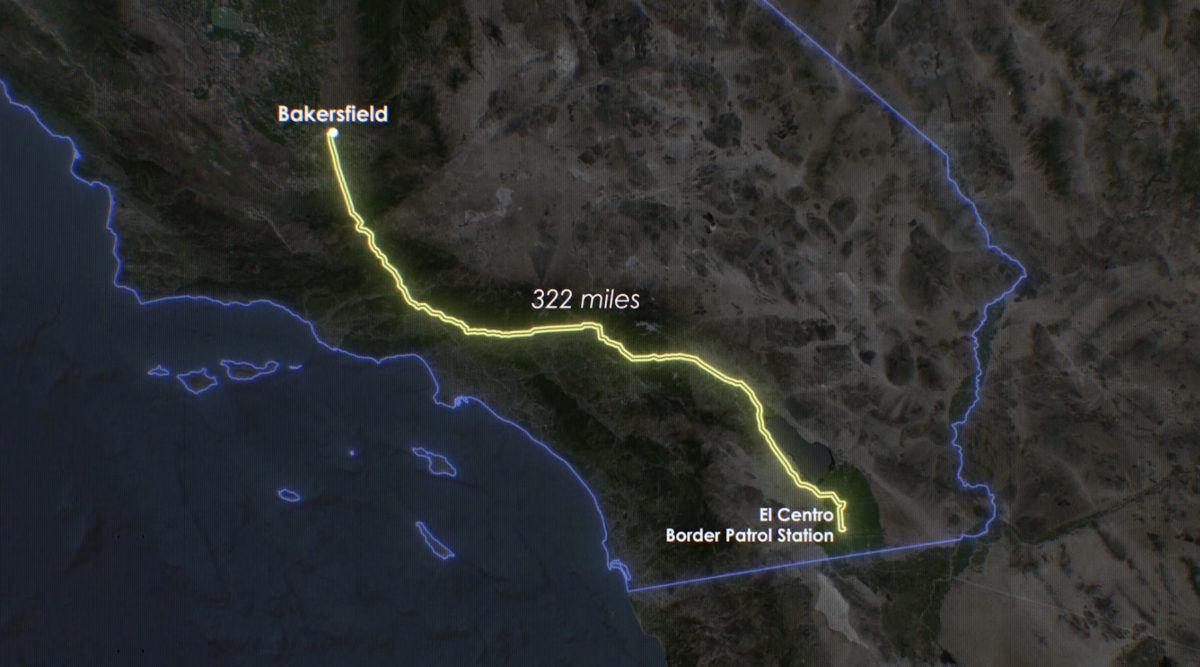
The agents were a long way from home: Bakersfield is over 240 miles (386km) from the US border with Mexico.
They were there as part of Operation Return to Sender, a Border Pa
This investigation is part of a collaboration between Bellingcat, Evident Media and CalMatters. You can watch Evident’s investigative video here, and read CalMatters’ report here.
In early January 2025, a gardener named Ernesto Campos was pulled over by Border Patrol agents in the city of Bakersfield, California.
The agents were a long way from home: Bakersfield is over 240 miles (386km) from the US border with Mexico.
They were there as part of Operation Return to Sender, a Border Patrol surge in the city that acted as a portent of what was to come across the US in 2025.
Support Bellingcat
Your donations directly contribute to our ability to publish groundbreaking investigations and uncover wrongdoing around the world.
Video footage shows one agent threatening to break Campos’ car window as they believed he was transporting an undocumented individual.
Campos filmed the agents, who he said slashed his tyres before arresting him and a passenger. The agents’ faces later appeared on local news reports detailing the incident.
Ten months later, two of the agents visible in footage recorded by Campos were filmed in Chicago as Border Patrol agents descended on the city for what was dubbed “Operation Midway Blitz”.
An image from court documents shows a Border Patrol agent unholstering his gun at an incident in Evanston, Illinois.
A federal judge in Illinois said in November that the use of force by federal agents in Chicago – including the use of tear gas and other less lethal munitions on multiple occasions – “shocks the conscience”.
A restraining order issued by that Illinois judge was vacated on appeal earlier this month. But what took place on the streets of Chicago also happened in other locations, with some of the same agents involved.
Bellingcat has worked with our partners at Evident Media and CalMatters to analyse over 85 hours of social media and bodycam footage, as well as court documents and incident reports, to try to unpack the actions of Border Patrol agents across the country.
With agents often masked and badge or identification numbers not always visible, understanding exactly who has enforced the immigration surges of the past year has been difficult. This, in turn, has made public questioning and accountability around use-of-force incidents challenging.
Subscribe to the Bellingcat newsletter
Subscribe to our newsletter for first access to our published content and events that our staff and contributors are involved with, including interviews and training workshops.
Nonetheless, we observed over 25 agents who appeared in more than one city, either by recognising their faces or matching badge numbers that were visible on their vests or arm patches. Many were seen alongside former Border Patrol Commander at Large, Gregory Bovino, on at least one occasion.
But this is likely just a fraction of the agents who moved around the country to take part in Border Patrol surges in cities like Los Angeles, Chicago and Minneapolis. When speaking to reporters in January, Border Czar Tom Homan said he had spoken to some agents who had “been in theatre for eight months”. Many wore masks in the videos viewed by Bellingcat, and it was not always possible to identify number patches from social media or bodycam footage alone.
Although some of the agents we logged appeared on neighbourhood walkabouts or in footage where little happened, others could be seen using force on multiple occasions. For this story, we have focused on the actions of five agents whom we have been able to identify and who appear to have repeatedly used force in at least two, but often more, locations. We have decided to name those we have been able to identify just as we would name any officer involved in incidents like those detailed. But these were by no means the only agents whom we saw using force across one or multiple cities.
The footage we analysed also appears to show a steady escalation of violence and confrontational incidents as 2025 progressed, culminating in widespread use-of-force incidents in Chicago and Minneapolis, where two people, Renee Good and Alex Pretti, were killed by Immigration and Customs Enforcement (ICE) and Border Patrol agents, respectively, in early 2026.
Agents on the Move
While former Border Patrol Commander at Large Gregory Bovino is no longer in a national role, some of the agents observed and documented for this report appear to have travelled from his El Centro sector over the past year.
These included agent Timothy Donahue and Georgy Simeon, who were filmed by Ernesto Campos in Bakersfield. Donahue was the agent who was subsequently pictured pointing his gun at citizens just outside Chicago after a traffic incident (Donahue stated in his incident report that his car was rammed by an activist – something also described in Illinois federal judge Sara Ellis’ opinion – although Donahue’s report made no mention of punching a man in the face or unholstering his weapon). It was Simeon, meanwhile, who was filmed slamming a man to the ground after grabbing him by the throat.
Donahue was also spotted in social media footage in Los Angeles in June last year pushing a citizen who was blocking his vehicle, as well as grabbing a man on an immigration raid inside a car wash.
The Chicago publication, Unraveled Press, previously reported that Donahue was the owner of a social media account that made seemingly racist and sexist posts. Bellingcat and others have checked this account and found that an old profile picture showed an image of Donahue. Bodycam footage from outside a detention centre near Chicago also showed Donahue tackle a journalist from Unraveled without apparent warning.
Footage from Donahue’s own bodycam on Oct. 3 also appears to show him compiling an incident report with ChatGPT. The possibility of CBP agents using ChatGPT to compile incident reports was addressed by Judge Ellis in her ruling issuing a restraining order in November. She wrote that using ChatGPT to write reports “undermines their credibility and may explain the inaccuracy of some reports filed by CBP officers”.
The evidence doesn’t enable us to determine if Donahue used ChatGPT to compile the Oct. 31 incident report in which he did not mention he punched a man and unholstered his gun.
Bodycam footage released with court documents shows a Border Patrol agent using ChatGPT to compile an incident report.
Our reporting partners CalMatters emailed and called Donahue prior to publication. The email received no response. Donahue answered his cellphone but said, “never, ever call my cellphone again,” and hung up.
Simeon did not respond to emailed questions prior to publication, and calls to a number listed under his name went unanswered.
The Department of Homeland Security (DHS) did not respond to questions posed about the actions of Donahue and Simeon detailed in this report or the agency’s use-of-force policies. They also did not respond to questions about whether it was permissible for agents to use generative AI platforms like ChatGPT to compile incident reports.
While the actions of Donahue and Simeon made news reports in various cities, the pair were far from alone in having their actions filmed and documented across the country.
Kristopher Hewson, a supervisory agent based out of Bovino’s El Centro sector, was seen on bodycam footage in Chicago spraying an individual who was being held down by agents with what he detailed in his incident report as oleoresin capsicum (OC), also known as pepper spray, from what appears to be just a few inches away. The individual was on the ground and had one hand behind his back, but agents could be heard asking for his other hand during the incident. Hewson said in his incident report (see here and here) that the individual had been resisting arrest, but he also stated that he deployed the pepper spray from two feet away. Bodycam footage (see below) showed the canister beside the individual’s head right after a burst of spray can be heard.
Bodycam footage shows an individual being held down before pepper spray is released while he remains on the ground. Annotations after 15 seconds made by Bellingcat.
Hewson, who wore a mask but was identifiable in several videos by the C-29 ID number on his uniform, was later spotted in Minneapolis. He also said his name during one incident that allowed us to find other bodycam footage releases that belonged to him. In one video, his mask slipped, which allowed us to compare his face to images on his social media accounts.
Court testimony revealed that he was present in Los Angeles during a Border Patrol surge in the city in the summer of 2025. He was also seen alongside Bovino on numerous occasions, including in Chicago, where Bovino can be heard greeting him by saying, “Hey, Hewson”, in one video captured by the filmmaker Jeff Perlman.
In bodycam footage from Chicago a man can be heard saying that the person Hewson pepper-sprayed was his son, who was just 15 years old. This appears to be backed up by an incident report showing the individual’s date of birth. A short time later, Hewson can be heard shouting “get back or you will be gassed” at a group of protesters immediately before deploying tear gas towards them. As he throws the canister, a person can be heard shouting, “You’re not de-escalating shit, bro”. Hewson stated in his incident report (see here and here) that he gave a warning that CS gas was coming, but he did not detail how that warning was virtually instantaneous.
All of these actions came two weeks after a judge issued a temporary restraining order on Oct. 9, preventing agents from using chemical agents on protesters and journalists unless there was an imminent threat of physical danger to federal forces. While that order was lifted in March 2026, it was still in force during the incidents detailed in this story.
Hewson was seen in Minneapolis in early 2026 alongside Bovino. He was captured on footage marching towards and tackling a Target employee, a teenage US citizen, who was directing insults at agents. A melee ensued at the front door of the Target store before two people were handcuffed and taken away by agents. Hewson’s C-29 number was visible as he led one of the men away. Both of those arrested were later released.
Hewson was questioned as part of a preliminary injunction hearing in Chicago, where, among other things, he stated (pages 183 and 184) that protesters have the right to shout and even swear at officers as long as they aren’t impeding their ability to carry out their work. He also said during questioning that tear gas “doesn’t harm people” (page 189). Multiple individuals who were impacted by the release of gas and chemical irritants in Chicago stated otherwise in incidents detailed in Judge Ellis’ ruling.
When reached on the phone by CalMatters, Hewson said he could not comment. DHS did not respond to questions posed about the actions of Hewson detailed in this report or the agency’s use-of-force policies.
El Paso Agents
Hewson was present and visible in footage when ex-Border Patrol Commander at Large Bovino appeared to push and manhandle a protester who crossed his path on Nicollet Avenue in Minneapolis.
Also beside Bovino and Hewson that day were two officers based out of El Paso bearing the ID numbers EZ-2 and EZ-17. Both of these agents are seen wearing vests of the Border Patrol Tactical Division (BORTAC), a specialised unit that, according to the CBP, has a selection process “designed to mirror aspects of the US Special Operations Forces’ selection courses”.
Bellingcat and Evident Media previously reported how EZ-17 fired less lethal munitions at protesters from close range a day after Renee Good was shot and killed by an Immigration and Customs Enforcement (ICE) officer in Minneapolis.
EZ-17 was accompanied during that incident by EZ-2, who could be seen spraying a chemical irritant in the face of a man who appeared to have thrown a snowball at him. EZ-2 was also seen throwing two female protesters to the ground outside Roosevelt High School in Minneapolis on Jan. 7.
Both EZ-17 and EZ-2 were present in Chicago. EZ-17 was seen passing a tear gas canister to Bovino at an incident in the city’s Little Village neighbourhood on Oct. 23.
The Chicago publication, Unraveled, previously identified EZ-17 as Edgar Vazquez and EZ-2 as Michael Sveum. Bellingcat was able to corroborate these identifications using similar techniques. Firstly, for Vazquez we compared images on his Facebook page with footage from EZ-2’s bodycam, which showed Vazquez inside a vehicle without a mask.
Ernesto Vazquez photo taken from Facebook (left) and image taken from bodycam footage in Chicago (right). Source: CBP via Loevy.com
EZ-2 was identified in a similar manner. Bodycam footage from EZ-2 showed him looking at his phone. On the lockscreen was a picture of a man smiling and wearing a blue jacket. That same picture was posted on Sveum’s social media accounts and appeared to have been taken at an ultramarathon event whose organisers posted Sveum’s name alongside that same image.
Bodycam footage (left) shows a lockscreen with a picture of a man that matches images seen on archived posts from the social media accounts of Michael Sveum.
When reached by phone by CalMatters reporters, Vazquez said that he could not comment. Sveum hung up immediately after CalMatters’ reporter introduced himself. DHS did not respond to questions posed about the actions of Vazquez or Sveum detailed in this report or the agency’s use-of-force policies.
Dozens of other incidents where agents appeared to escalate rather than de-escalate situations, as well as use force or less lethal munitions, were logged as part of this investigation. This included agents pointing guns at protesters (see here and here) as well as using violent force and less lethal munitions on protesters, journalists and bystanders.
Bovino himself appeared to instigate confrontations with people, such as in Chicago, when he can be seen throwing a man to the ground before agents pounce on him, although he stated during his Illinois deposition that he did not think such actions represented a use-of-force incident.
The former Border Patrol Commander at Large told CalMatters that he could not speak to the media without DHS approval prior to publication of this story. Requests sent to DHS to speak with Bovino went unanswered.
‘Unusual and Beyond the Pale’
According to John Roth, a former DHS Inspector General, and Steve Burnell, a former DHS General Counsel, the events of the past year, involving masked agents descending on select cities, have eroded trust and credibility in DHS and law enforcement.
While both agreed that there had to be professional immigration enforcement operations, they said that has to be done in a way that is responsible and ensures accountability when lines are crossed.
“This is sort of a scary Orwellian thing”, Roth said. “I don’t think the public understands how unusual and beyond the pale it is to have these roving sort of groups of masked agents, out there handling the public.”
Burnell said that the inability to identify agents carrying out their work as enforcement officers was a particular concern: “At the end of the day, ICE and everybody at DHS are public servants. They’re supposed to be working for the public. And, you know, if somebody is working for you, you should have a right to know who they are, and you should have a right to hold them accountable and protest what they’re doing.”
Roth and Burnell both served under President Barack Obama and during President Donald Trump’s first term. The pair have testified to Congress in recent months, raising the alarm about what they see as a dismantling of accountability at DHS. Prominent members of the US government, including President Trump, have offered repeated support to Border Patrol agents, even after the death of protesters such as Renee Good.
Our partners at Evident and CalMatters showed Roth and Burnell some of the footage described in this report. While they refrained from commenting on individual incidents, Roth described the footage generally as “difficult to watch”.
“The question I’d ask. Have [agents] inserted themselves into something that requires them to use force,” said Roth. “In which case that would be a violation of DHS policy,” he added, referring to use-of-force policies that detail how law enforcement officers may use force when no “reasonably, safe and feasible alternative appears to exist”.
“It’s actually DHS policy that you [are required] to attempt to de-escalate when that’s possible. I mean, they don’t have a duty to retreat, but they do have a duty not to insert themselves into a place where use of force is necessary,” Roth said.
Burnell described a lot of what has happened over the past year as a type of “dominance display”.
“It’s there to send a message. And that is not de-escalatory. It’s the opposite,” he said.
Bellingcat, CalMatters and Evident Media jointly sought to contact DHS as well as all of the agents mentioned in this story prior to publication.
We asked DHS whether any of the incidents detailed in this report violated DHS use-of-force policies or whether those policies had been updated under the current administration.
We also asked if DHS was taking any action or providing further training to agents to ensure the public’s constitutional rights are respected during immigration enforcement operations carried out by Border Patrol.
DHS did not respond before publication.
Youri van der Weide, Kolina Koltai and Eoghan Macguire from Bellingcat, as well as Sergio Olmos from CalMatters and Kevin Clancy from Evident Media, contributed reporting to this piece.
Bellingcat is a non-profit and the ability to carry out our work is dependent on the kind support of individual donors. If you would like to support our work, you can do so here. You can also subscribe to our Patreon channel here. Subscribe to our Newsletter and follow us on Bluesky here, Instagram here, Reddit here and YouTube here.
Collaboration is more important than ever—and doable—according to the WEF’s Global Security Outlook 2026 report.
The post Collaboration Critical As Geopolitical Pressures, AI Reshape Cybersecurity appeared first on Security Boulevard.
To stay up to date on our latest investigations, join Bellingcat’s WhatsApp channel here.
Federal agents have frequently used so-called “less-lethal” weapons against protesters, including impact projectiles, tear gas and pepper spray, since the Trump administration’s nationwide immigration raids began last year.
The use of less-lethal weapons (LLWs) has been controversial. While designed to incapacitate or control a person without causing death or permanent injury, they can cause serious
To stay up to date on our latest investigations, join Bellingcat’s WhatsApp channel here.
Federal agents have frequently used so-called “less-lethal” weapons against protesters, including impact projectiles, tear gas and pepper spray, since the Trump administration’s nationwide immigration raids began last year.
Earlier this month, two protesters in California were reportedly blinded after US federal agents fired less-lethal rounds at their faces from close range. These incidents were part of a wave of violent clashes between agents from the Department of Homeland Security (DHS) and protesters across the country after the deadly shooting of US citizen Renee Good by an Immigration and Customs Enforcement (ICE) agent in Minneapolis.
Federal agents armed with less-lethal weapons in Minneapolis on Friday, Jan. 9, 2026. Source: Cristina Matuozzi/Sipa USA via Reuters Connect
In protests in Minneapolis immediately following Good’s death, one Customs and Border Patrol (CBP) officer was captured on camera firing a 40mm less-lethal launcher five times in less than five minutes, with several of these shots appearing to target protesters’ faces, which is against CBP’s own use-of-force policy.
A Bellingcat investigation of DHS incidents in October 2025 also found about 30 incidents that appeared to violate a temporary restraining order (TRO) issued by an Illinois judge restricting how DHS agents could use LLWs.
Support Bellingcat
Your donations directly contribute to our ability to publish groundbreaking investigations and uncover wrongdoing around the world.
It is not always obvious whether the use of a LLW is authorised or not, as DHS component agencies such as ICE and CBP have varying guidance on factors such as the level of resistance an individual needs to show before a certain type of force can be used, as well as how specific types of less-lethal weapons and munitions can be used.
While CBP’s use-of-force policy as of January 2021 is available on its website, ICE does not include specific guidance on less-lethal weapons in its 2023 “Firearms and Use of Force” Directive, and does not appear to have any publicly available policy that outlines this guidance.
DHS did not respond by publication time to Bellingcat’s request for the most recent DHS, CBP and ICE use-of-force policies, or to questions about what less-lethal weapons were authorised for use by the department and its component agencies.
The DHS use-of-force policy, updated in February 2023, states that the department’s law enforcement officers and agents may use force, including LLWs, “only when no reasonably effective, safe and feasible alternative appears to exist”. It also says agents may only use a level of force that is “objectively reasonable in light of the facts and circumstances” that they face at the time.
DHS has repeatedlydefended its use of riot-control weapons in protests across the country, stating that it was “taking reasonable and constitutional measures to uphold the rule of law and protect [its] officers”.
Here’s how to identify some of the less-lethal weapons that DHS agents, including those from ICE and CBP, have been seen using during recent immigration operations.
Compressed Air Launchers or ‘PepperBall Guns’
Left: A Border Patrol Agent in Chicago carrying an orange TAC-SF series PepperBall gun in Illinois on Oct. 24, 2025. Right: Agent aiming a Pepperball gun at someone filming them in Illinois on Oct. 19, 2025. Source: Youtube / @BlockClubChicago and Tiktok / @ericcervantes25
Compressed air, or pneumatic launchers, are essentially paintball guns that fire 0.68mm balls which break on impact. Often, this releases a powdered chemical irritant such as oleoresin capsicum (OC) or PavaPowder – the same compounds typically found in pepper spray.
Compressed air launchers can also be used with other projectiles, such as “marking” projectiles that use paint to mark an individual for later arrest, and projectiles intended to break glass.
These weapons are often referred to as “PepperBall” guns, named after the leading brand PepperBall. However, DHS agents have also been seen carrying compressed air launchers from different brands, such as the FN303, produced by FN America.
Many compressed air launchers resemble standard paintball guns, with a distinct hopper or loader, which holds the ball projectiles, mounted to the top. They also have a compressed air tank that might be mounted to the side, bottom, or inside the buttstock (or back) of the weapon.
Many compressed air launchers, and less-lethal weapons in general, have very bright colours such as orange to distinguish them from lethal weapons.
The TAC-SF PepperBall gun features a compressed air tank and a top-mounted EL-2 hopper, which has a distinctive shape. Graphic: Justin Baird for Bellingcat
The PepperBall TAC-SA Pro’s hopper is a slightly different shape from the TAC-SF, but serves the same purpose. Graphic: Justin Baird for Bellingcat
PepperBall VKS Pro features a compressed air tank located inside the buttstock and a magazine rather than a top-mounted hopper. Graphic: Justin Baird for Bellingcat
However, some compressed air launchers require closer scrutiny to distinguish them from firearms.
For example, federal agents have been seen carrying FN303 compressed air launchers in videos of immigration enforcement activities. This weapon may resemble a rifle or other firearm, as it is usually all-black and, unlike the TAC-SF series PepperBall guns, lacks a visible hopper.
Left: Agent holding an FN303 in California on June 11, 2025. Right: Federal Agent aiming a FN303 compressed air launcher at someone filming them in Illinois on Oct. 7, 2025. Source: TikTok / @anthony.depice and TikTok / @krisvvec
If closer examination is possible, this weapon can be identified by its distinct features, including a circular magazine, side-mounted compressed air tank and a hose connecting the firearm to the air tank.
The FN303’s air tank is mounted on the side and connected to the firearm by a hose. Graphic: Justin Baird for Bellingcat
The January 2021 CBP Use of Force Policy places several restrictions on the use of compressed air launchers, including that they should not be used against small children, the elderly, visibly pregnant women, or people operating a vehicle. It also states that PepperBall guns should not be used within 3 feet “unless the use of deadly force is reasonable and necessary”. When using the FN303, the minimum distance is increased to 10 feet.
The CBP Use of Force Policy says that the intentional targeting of areas where there is a “substantial risk of serious bodily injury or death is considered a use of deadly force.” Agents are instructed not to target “the head, neck, spine, or groin of the intended subject, unless the use of deadly force is reasonable”. PepperBall and FN America provide similar warnings about avoiding vital areas to prevent serious injury or death.
According to a 2021 report by the US Office of Inspector General, CBP requires its agents to recertify their training to use PepperBall guns and FN303s every year, but ICE does not.
40mm Launchers
Left: CBP agent “EZ-17” with a B&T GL06 40mm launcher and a belt with a variety of Defense Technology 40mm less lethal munitions, including one Direct Impact OC round and two Direct Impact CS rounds in Illinois on Oct. 24, 2025. Centre: EZ-17 firing a B&T GL06 launcher at a man in Minneapolis on Jan. 7, 2026. Right: A federal agent with a B&T GL06 in Illinois on Oct. 24, 2025. Source: YouTube / Block Club Chicago, X / Dymanh, Facebook / Draco Nesquik
DHS agents also use 40mm launchers to fire “Less-Lethal Specialist Impact and Chemical Munitions (LLSI-CM)”. These launchers resemble military grenade launchers, but are used to fire less-lethal ammunition, including “sponge” rounds that can disperse chemical irritants on impact.
The B&T GL06 (pictured) and other 40mm launchers have a visibly wider barrel than compressed air launchers or standard firearms. Graphic: Justin Baird for Bellingcat
There are various less-lethal munitions available for 40mm launchers, including those whose primary function is “pain compliance” through the force of impact, chemical irritants or a combination of both.
Videos of clashes between Border Patrol agents and protesters show these launchers being used with combination rounds designed to hit the target for pain compliance while also delivering a chemical irritant such as OC or CS.
Direct Impact munitions by Defense Technology have distinctive rounded sponge foam noses and colours that indicate their chemical fill. Graphic: Justin Baird for Bellingcat
Other munitions dispense chemical irritants or smoke after being launched. For example, in the protests immediately following Good’s death, a Border Patrol agent was seen firing a 40mm munition that released multiple projectiles emitting chemical irritants in a single shot, consistent with the “SKAT Shell” by Defense Technology.
The SKAT Shell by Defense Technology (left) fires multiple projectiles, while the company’s SPEDE-Heat shell launches a single projectile. Graphic: Justin Baird for Bellingcat
Defense Technology’s technical specifications for its 40mm Direct Impact Rounds, which agents have been seen armed with, state that the munitions are considered less-lethal when fired at a minimum safe range of 5 feet and at the large muscle groups of the buttocks, thigh and knees, which “provide sufficient pain stimulus, while greatly reducing serious or life-threatening injuries”.
A DHS Office of Inspector General Report in 2021 noted varying guidance on the use of 40mm launchers among the department’s component agencies: “ICE’s use of force policy indicates that the 40MM launcher is deadly force when fired at someone, while the CBP use of force policy only directs officers not to target a person’s head or neck.”
CBP’s 2021 use-of-force policy states that agents should “not intentionally target the head, neck, groin, spine, or female breast”, and that anyone in custody who has been subject to such munitions should be seen by a medical professional “as soon as practicable”.
As of publication, DHS had not replied to Bellingcat’s questions about whether the department had an internal policy or provided training to staff on the minimum safe distance for 40mm less-lethal launchers as recommended by the manufacturers.
Hand-Thrown Munitions
Top Left: Border Patrol Commander of Operations At Large Greg Bovino with two Triple-Chaser CS Grenades on his vest in Minneapolis on Jan. 8, 2026. Top Right: Person holding a used Pocket Tactical Green Smoke grenade in Minneapolis, Jan. 21, 2026. Bottom Left: Top third of a Triple-Chaser Grenade in Illinois, Oct. 25, 2025. Bottom Right: Used Riot Control CS Grenade in Minneapolis, Jan. 23, 2026. Source: Nick Sortor, Rollofthedice, Bluesky / Unraveled Press, Andrew Hazzard
DHS agents have also been seen throwing some less-lethal munitions, such as flash-bangs, smoke and “tear gas” grenades or canisters by hand.
These munitions activate a short delay after the grenade is employed. When they activate, flash-bangs or “stun” grenades emit a bright flash of light and a loud sound that is designed to disorient targets. Both smoke grenades and tear gas (also known as “CS gas” or “OC gas”) emit thick smoke, but the former just impedes visibility, whereas the latter also contains chemical irritants that sting the eyes.
The shape and general construction, colour, and any text can help identify these munitions.
Less-lethal munitions typically feature the manufacturer’s logo, the model name of the munition, and the model or part number. The text and manufacturer logo are typically colour-coded to indicate the type of payload the munition has, with blue indicating CS, orange indicating OC, yellow indicating smoke, green indicating a marking composition and black indicating munitions with no chemical payload.
The “Triple-Chaser” grenade by Defense Technology (left) has three distinct segments that separate after the grenade is thrown, with each emitting smoke or chemical irritants, while other chemical grenades by the same company have a single smooth body (right). Graphic: Justin Baird for Bellingcat
A 2021 analysis by Bellingcat and Newsy found that Defense Technology and Combined Tactical Systems, the two manufacturers which produce most of the less-lethal munitions used by federal agents, both list the model numbers of their products online. Publicly available price lists for Defense Technology and Combined Tactical Systems can also be used to identify specific munitions by their model numbers.
CBP’s 2021 use-of-force policy states that hand-thrown munitions are subject to the same restrictions for use as munition launcher-fired impact and chemical munitions.
Chemical Irritant Sprays
Left: DHS agent using a chemical irritant spray on a protester in Minneapolis on Nov. 25, 2025. Centre: CBP Agent spraying Alex Pretti with what appears to be OC spray moments before he is killed in Minneapolis on Jan. 24, 2026. Right: Federal Agent with a SABRE MK-9 spray threatening to spray a journalist if they do not move back in Minneapolis on Dec. 11, 2025. Source: Reddit / I_May_Have_Weed, TikTok/ShitboxHyundai, Instagram / Status Coup
DHS agents have also been using handheld chemical irritant sprays, often colloquially referred to as “pepper spray” or “mace”.
These sprays come in a variety of sizes and concentrations containing CS, OC, or both. Sprays used by law enforcement usually have a canister size designated “MK-” followed by a number, with higher numbers indicating larger canister sizes. The concentration of chemical irritants contained in the spray is also indicated on the canister.
The .2% MK-9 OC Spray by Defense Technology (left). The MK-9 produced by various companies with various concentrations has been seen often used by federal agents on protestors (right). Graphic: Justin Baird for Bellingcat
The effectiveness of OC sprays is determined by the concentration of major capsaicinoids, which are the active compounds in OC that cause irritation. These sprays are also affected by the type of aerosol dispersion, or stream, used. Different types of streams increase or decrease the range of the spray as well as the coverage area.
Civilian and law enforcement sprays range from 0.18 percent to 1.33 percent major capsaicinoids, according to SABRE, a producer of law enforcement and civilian sprays. Civilian sprays in the US can have the same major capsaicinoid content as law enforcement sprays, but are restricted to smaller-sized canisters.
Subscribe to the Bellingcat newsletter
Subscribe to our newsletter for first access to our published content and events that our staff and contributors are involved with, including interviews and training workshops.
Defense Technology sprays have different colour bands to indicate the percentage of major capsaicinoids in the spray for OC. If the spray is CS, the CS concentration is standardised at 2 percent. The company uses a white band for .2 percent, yellow band for .4 percent, orange band for .7 percent, red band for 1.3 percent and a grey band for sprays containing either CS or a combination of OC and CS.
SABRE sells a variety of concentrations and sprays as law enforcement products, including 0.33 percent, 0.67 percent, and 1.33 percent major capsaicinoid concentrations of OC, as well as CS, and combination CS and OC sprays. The specific concentrations of SABRE sprays and the type of stream can also be identified by the text on the canister.
One Air Force Research Laboratory study found that some sprays may pose a significant risk of severe eye damage due to pressure injuries resulting from large aerosol droplets hitting the eye.
Defense Technology’s technical specifications recommend a minimum distance of between 3 and 6 feet, depending on the specific spray. SABRE does not publicly provide their minimum safe deployment distances, but a Mesa Police Department document lists a minimum distance of six feet for the SABRE Red MK-9. CBP’s 2021 use-of-force policy does not provide any minimum use distances.
CBP’s 2021 use-of-force policy states that OC Spray may only be used on individuals offering “active resistance”, and that it should not be used on “small children; visibly pregnant; and operators of motor vehicles”.
Electronic Control Weapons
Left: Federal Agent pointing an Axon Taser 10 at a bystander who was filming an arrest in Los Angeles in June 2025. Right: DHS Agent with an Axon Taser 10 during an arrest in California on June 24, 2025. Source: Instagram / @dianaluespeciales, Instagram / Joe Knows Ventura
ECWs can deliver a shock upon direct contact or launch probes that embed in the targeted person, incapacitating them.
A shock on contact, or a “drive-stun” feature, delivers localised pain while in direct contact. When properly deployed, the probes send signals to the body that cause muscles to contract. A person’s body “locking up” from muscle contractions is an indicator that an ECW has been deployed. ECWs may be capable of using either or both methods. ECWs are typically painted a combination of black and bright yellow, but this varies between models. The bright colour of parts of tasers is a common feature to help distinguish an ECW from handguns used by federal agents. When viewed from the front, a circular gun barrel is visible on handguns, while ECWs feature multiple circular probes or rectangular covers on the cartridge. ECWs also usually have flashlights and lasers, although handguns may also be equipped with these features. Some ECWs may make audible sounds when armed or deployed.
The Axon TASER 10. Graphic: Justin Baird for Bellingcat
Axon, the predominant manufacturer of ECWs, produces several models including the TASER 10 and TASER 7. Axon provides a policy guide on recommended use of its TASER models to law enforcement agencies, which recommends targeting below the neck from behind, or the lower torso from the front. It recommends avoiding sensitive areas including the head, face, throat, chest and groin.
Axon also recommends against using ECWs against small children, the elderly, pregnant people, very thin people and individuals in positions of increased risks such as running, operating a motor vehicle, or in an elevated position “unless the situation justifies an increased risk”.
CBP’s 2021 use-of-force policy, in addition to restricting the use of ECWs against small children, the elderly, visibly pregnant women, and people operating a vehicle, states that they should not be used against someone who is running or handcuffed. However, the policy does state that there may be an exception to the rule against using ECWs on a running person if an agent has a “reasonable belief that the subject presents an imminent threat of injury” to an agent or another person. This threat, according to the policy, must “outweigh the risk of injury to the subject that might occur as a result of an uncontrolled fall while the subject is running”.
Bellingcat is a non-profit and the ability to carry out our work is dependent on the kind support of individual donors. If you would like to support our work, you can do so here. You can also subscribe to our Patreon channel here. Subscribe to our Newsletter and follow us on Bluesky here and Mastodon here.
To stay up to date on our latest investigations, join Bellingcat’s WhatsApp channel here
On January 24, Alex Pretti, a 37-year-old intensive care unit nurse at the Minneapolis Veterans Affairs Health Care System, was shot and killed by federal agents on Nicollet Avenue in Minneapolis, Minnesota. The shooting comes just over two weeks after Renee Good was shot and killed by a federal agent in the same city.
The United States Department of Homeland Security claimed Pretti was killed after a
To stay up to date on our latest investigations, join Bellingcat’s WhatsApp channel here
On January 24, Alex Pretti, a 37-year-old intensive care unit nurse at the Minneapolis Veterans Affairs Health Care System, was shot and killed by federal agents on Nicollet Avenue in Minneapolis, Minnesota. The shooting comes just over two weeks after Renee Good was shot and killed by a federal agent in the same city.
The United States Department of Homeland Security claimed Pretti was killed after an “armed struggle” with DHS officers and that it seemed he had wanted to “do maximum damage”. Yet video footage shared online, showing shortly before and during the incident, appears to contradict that claim.
Some of the earliest available footage of the encounter was posted to Instagram and shows an agent crossing the street to talk to Pretti who appears to be filming with his phone, which he is holding in his right hand. According to DHS, agents were conducting an immigration arrest in the area.
The agent can be seen placing his hand on Pretti’s torso to push him back and away from the middle of the road towards the sidewalk.
Another video shared on Reddit shows what happened after this initial contact, as well as the lead-up to the shooting. Pretti appears to put himself between two women after they were both shoved by a DHS agent. He is holding a cellphone, held sideways in his right hand.
A video shows Pretti recording federal agents roughly a minute before he is shot. Pretti’s right hand is holding a cellphone, filming. Source: Neuroscissus/Reddit
An agent can then be seen spraying Pretti with a substance from a canister, and continuing to spray him as he turns his back to him. At least five additional federal agents approach and attempt to force Pretti to the ground while one appears to strike him with a spray can.
Twenty-five seconds after Pretti is first sprayed, a shot is heard followed by nine more shots in the span of about six seconds. Additional video from the scene shows Pretti lying motionless on the ground.
Video Analysis
Bellingcat further analysed the Reddit video, a separate video posted to Facebook and others taken at the scene to break down the key moments of the shooting, splicing them together (see Bluesky post below) to view in more granular detail.
We’ve placed the available videos of the shooting of Alex Pretti by federal agents in Minneapolis today into the same synchronised timeline and are continuing to analyse further.
Closer inspection of the videos shows that an agent appears to remove a weapon from the melee before the first shots are fired.
In both the Reddit and Facebook video, a federal agent wearing a grey jacket can be seen approaching federal agents who are on top of and struggling with Pretti. Notably, the agent’s hands are empty as he approaches. He can be seen reaching into and rummaging amid the bodies. About twelve seconds later, he is seen carrying a handgun away from the scene.
Another video, also posted to Reddit, shows the agent removing a gun from a holster in Pretti’s waistband before he is shot.
Federal Agent in grey jacket can be seen reaching to pull the gun out of Pretti’s holster. Brightness increased by Bellingcat. ChaseTacos/Reddit. Annotations by Bellingcat.
Several aspects of the gun the federal agent is seen moving away with appear to match the gun DHS claim belonged to Pretti (and which they posted to X), a Sig Sauer P320, chambered in 9mm. Some posts online mistakenly claimed the photo of the gun was old due to a misunderstanding of Google Reverse Image Search.
While some law enforcement agencies issue Sig Sauer P320 guns to their agents, the gun that DHS claims Pretti had is customized, and visually distinct from those that are standard issue.
These distinct features include a white pistol grip, black pistol frame, brown slide, and a red dot sight mounted atop the slide. The red dot sight and these various colours are visible on the gun the federal agent is seen leaving with.
Left: Screenshot showing a federal agent retreating with a gun retrieved from Pretti’s rear waistband, as Pretti is shot by another federal agent. Right: Photo released by DHS of the gun they say belonged to Pretti.Sources: Philophon/Reddit and Department of Homeland Security Annotations by Bellingcat.
Before the agent who takes the gun leaves the scene, it appears someone shouts “gun”, as can be heard in this video that was posted to X, and another video posted to Reddit.
This Reddit video also shows that almost immediately after the agent in the grey jacket leaves with the gun, a single gunshot can be heard, followed by nine other shots.
Slowing it down, the same video shows that as the federal agent in the grey jacket removes Pretti’s gun, an agent in a black beanie, who appears to have a line of sight on the gun being removed, begins to draw his own weapon. As soon as the agent in the grey jacket moves away with the gun and leaves, the agent in the black beanie steps to where the agent in the grey jacket had been with his finger on the trigger and fires the first shot.
Two agents appear to fire their weapons from the footage available, one wearing a black beanie and another wearing a brown beanie, as can be seen in this video.
A screengrab from a Facebook video shows the agent in the brown beanie (left) and the agent in the black beanie (right), both in white box, who fired the shots.Annotations by Bellingcat.
At the same time as the first shot is fired, the agent in the grey jacket is leaving with the gun taken from Pretti’s holster. An alternate angle appears shows that the slide of this firearm does not move to the rear. This would indicate that it was not fired. Multiple agents, including the agent in the grey jacket, look towards the man in the black beanie immediately after the first shot. Despite some online speculation, there is as yet no evidence that Pretti’s gun was fired.
Bellingcat synced and slowed three videos to show where the agent in the black beanie, and grey jacket, with both drawn guns are when the first shot occurs. What some commenters have suggested is impact marks appear to be snow, that is visible before any shots occur.
Three-way video sync and slow+zoom showing the moment of the first shot before Alex Pretti was killed by DHS agents in Minneapolis yesterday.
There’s some claims that Pretti’s gun was the source of the first shot after it was taken from him, though in these videos it doesn’t appear that’s the case.
What’s more, the agent with the black beanie’s right arm that was seen holding the gun moves backwards as the first shot is heard, likely due to the recoil from firing.
After firing once, the agent in the black beanie repositions, and then quickly fires three more shots at Pretti’s back at close range while he appears to try to stand up.
Left: Federal agent in grey jacket reaching for Pretti’s holster as the agent in the black beanie stands over him and begins drawing his gun. Right: Federal agent in the grey jacket begins to retreat, with Pretti’s holster now visibly empty, shortly before the agent in the black beanie fires. Bellingcat increased the brightness of the screenshots. Source: ChaseTacos/Reddit. Annotations by Bellingcat.
In this video, multiple agents are piled on top of Pretti while his hands can be seen in front of him, on the ground. His hands remain in front of him as the agent in the grey jacket recovers the gun and moves away.
Pretti on the ground moments before the first shot is fired, while the agent in the grey jacket removes his gun. We see that both of his hands are on the ground in front of him (white box) and not near his holstered weapon near his back. Source: Reddit Annotations by Bellingcat.
Pretti collapses onto the ground after the first shots and the agents back away. A second agent (the one wearing the brown beanie hat) then draws his gun and fires at least one shot. This is the fifth shot that is heard. The agent in the black beanie can be seen and heard firing more shots. Shots five through ten all fired at Pretti’s motionless body.
Left: Pretti on the ground (white box) and the two federal agents who have fired, one with a black beanie, and one with a brown beanie. Right: Federal agent firing at Pretti’s motionless body. Source: Social Media. Annotations by Bellingcat.
The agents can be seen from another angle, with the agent in the black beanie visibly firing into Pretti’s motionless body.
Two federal agents with guns drawn pointing at Pretti, whose body has been blurred by Bellingcat. The federal agent in the black beanie can be seen firing. Source: Neuroscissus/Reddit.
Bellingcat contacted the Department of Homeland Security to ask why Pretti was shot and killed and whether he was in possession of his gun when the first shots were fired.
DHS did not respond by time of publication.
DHS and CBP statements have so far only stated that one agent fired shots, identifying them as an eight year veteran of Customs and Border Patrol who fired “defensive shots”. It is not known which of the two agents who appeared to fire shots in the videos analysed by Bellingcat is an eight year veteran of CBP.
Border Patrol Commander Greg Bovino, on CNN the day after the shooting, when shown video of the gun being removed before the shooting and asked why border patrol agents shot an unarmed man said, “You don’t know he was unarmed. I don’t know he was unarmed.” Deputy Attorney General Todd Blanche, when asked if Pretti was unarmed, said on Meet the Press, “I do not know and nobody else knows either, which is why we’re doing an investigation”.
In the same CNN interview, Bovino also said that “The victims are the Border Patrol agents.” and that “The suspect [Pretti] put himself in that situation.”
Jake Godin, Trevor Ball, Kolina Koltai and Carlos Gonzales contributed to this report.
Bellingcat is a non-profit and the ability to carry out our work is dependent on the kind support of individual donors. If you would like to support our work, you can do so here. You can also subscribe to our Patreon channel here. Subscribe to our Newsletter and follow us on Bluesky here and Mastodon here.
This investigation is part of a collaboration between Bellingcat and Evident Media. You can watch Evident’s video here.
The fatal shooting of Renee Nicole Good by Immigration and Customs Enforcement (ICE) agent Jonathan Ross in Minneapolis on Jan. 7 sparked nationwide protests, with often violent clashes breaking out between protesters and federal agents. Some of the most intense protests took place in Minneapolis itself, with an agent using a less-lethal launcher in ways that experts told B
This investigation is part of a collaboration between Bellingcat and Evident Media. You can watch Evident’s video here.
The fatal shooting of Renee Nicole Good by Immigration and Customs Enforcement (ICE) agent Jonathan Ross in Minneapolis on Jan. 7 sparked nationwide protests, with often violent clashes breaking out between protesters and federal agents. Some of the most intense protests took place in Minneapolis itself, with an agent using a less-lethal launcher in ways that experts told Bellingcat were “punitive” and “questionable at best”.
This agent, an elite Border Patrol officer who was masked but identifiable through the uniform number patch EZ-17, was captured on camera firing his B&T GL06 40mm less-lethal launcher at protesters five times in five minutes as he travelled down a street adjacent to where Good was killed.
EZ-17 on the streets of Minneapolis on Jan. 8. Source: Michael Nigro/Sipa USA via Reuters Connect
While “less-lethal” weapons are not designed to kill, they can still result in serious injuries and even death when misused. In California, a protester said he was permanently blinded in one eye after he was shot with a less-lethal weapon at a protest on Jan. 13. Footage shows a DHS officer firing a PepperBall gun at his face at close range, causing him to bleed.
Last year, a judge in Illinois ordered an injunction limiting federal agents’ use of force in the state due to what she described as aggressive use of force against peaceful protesters that “shocks the conscience”. However, Bellingcat found multiple examples of force and riot control weapons being used during immigration raids and in apparent violation of that order in the weeks immediately after.
Experts told Bellingcat that most of the less-lethal shots fired by EZ-17 after arriving at the site of Good’s shooting with Border Patrol Commander Gregory Bovino on Jan. 7, also appear to breach CBP’s use-of-force policy.
Bellingcat analysed videos from news outlets and social media and mapped out all five shots the agent fired.
Five shots EZ-17 fired in five minutes near the location of Good’s shooting, numbered by the order they occurred with approximate locations. The general path of travel of EZ-17 and the location of where Renee Good was shot and killed is marked. Sources: Status Coup News, Dymanh and Google Earth. Graphic: Evident Media / Jennifer Smart
Four of these shots appeared to be aimed directly at protesters’ faces at close range, while a fifth was fired from a distance towards a crowd after tear gas had already been deployed. A sixth shot, captured at another location on the same day, also shows EZ-17 firing a shot from the same launcher at someone at head-level.
As of publication, DHS had not responded to Bellingcat’s requests for comment.
The Agent
In footage captured by independent news outlet Mercado Media, EZ-17 is seen inside the crime scene tape perimeter, standing near Bovino, with eight 40mm munitions on his belt.
EZ-17 with eight visible munitions on his belt, including a 40mm CS “Muzzle Blast” (red box), and three sponge-nosed direct impact munitions (blue box) approximately 30 minutes before he fires his first shot. Annotations by Bellingcat. Source: Mercado Media @ 36:28Annotations by Bellingcat
These included three sponge-nose impact rounds, which are designed for “pain compliance” through the direct force of impact, and five cylindrical munitions that can be filled with different payloads and chemical irritants. “BLAST” in blue text is visible on one munition, indicating a “Muzzle Blast” munition with a CS gas fill – commonly known as tear gas. At least three additional 40mm munitions are visible in his plate carrier.
Another video by independent news network Status Coup News showed uninterrupted footage capturing five shots from the time the agent exited the crime scene perimeter (at 5:02) shortly before firing the first shot, to when he left in a truck with other agents (9:23) immediately after firing the fifth shot.
The back of EZ-17’s vest shows that he belongs to CBP’s Border Patrol Tactical Unit (BORTAC). BORTAC is a specialised and highly trained unit that, according to the CBP, has a selection process “designed to mirror aspects of the US Special Operations Forces’ selection courses”.
The patch on the back of EZ-17’s vest (centre) shows that he belongs to BORTAC. Source: Status Coup News
Members of BORTAC have regularly accompanied Bovino as he leads Trump’s immigration raids, including EZ-17 and EZ-2, another CBP agent that was frequently seen beside EZ-17 in the footage from Jan. 7. Both agents have continued to accompany Bovino on raids in Minnesota in subsequent days.
Five shots EZ-17 fired in five minutes near the location of Good’s shooting, numbered by the order they occurred. Sources: Status Coup News and Dymanh
First Shot
In the Status Coup Media video, EZ-17, and three other CBP agents, including EZ-2, can be seen leaving the crime scene tape perimeter set up after Good’s death, pushing protesters who are physically blocking them. Snowballs are thrown at the CBP agents.
EZ-17’s belt is visible after he and EZ-2 push a man who was physically blocking them to the ground, seconds before EZ-17 fires his first shot, at 5:15. Source: Status Coup News
EZ-17 initially aims at the man he had pushed to the ground, but then turns and aims at the face of another nearby protester who did not appear to be involved in any previous physical contact with the agents. As EZ-17 aims at the face of this protester, the man raises his arms to shield himself before EZ-17 fires.
EZ-17 fires his first shot, at 5:19. Source: Status Coup News.Blurring by Bellingcat
The large cloud of chemical irritant appears to disperse from the barrel immediately on firing for this shot as well as the next three shots EZ-17 fires.
This is consistent with the “Muzzle Blast” 40mm munitions produced by Defense Technology, which were seen in images of the agent’s belt. Defense Technology says in its product specifications for 40mm “Muzzle Blast” munitions that these rounds provide “instantaneous emission” of a chemical agent in the immediate area (30 feet) of the person shooting them.
Second Shot
Seconds later, after EZ-17 is hit by a snowball, he turns and fires towards the face of a man who is filming in the direction the snowball came from. It is unclear if this man is the intended target or someone else in the crowd behind him.
EZ-17 firing the second shot. This shot can be heard and partially seen at 5:37 in the Status Coup News video. Left: Screenshot before firing. Centre and Right: Screenshots taken after firing. Source: Dymanh/TikTok at 0:22
Third Shot
The third shot is at a man who was seen on video throwing a snowball that hits EZ-2.
Man throwing snowballs at CBP agents after the second shot. Source: Mercado Media; annotation by Bellingcat
Vexor exclusively produces various types of OC spray, and does not list any chemical irritant sprays that do not contain OC on its website.
Top: EZ-2 visibly deploys at least two streams of OC spray at the man. Bottom: EZ-2 is seen leaving the crime scene tape perimeter earlier with a “Vexor Professional” branded canister. Vexor manufactures various OC spray products. Source: Status Coup News. Annotations by Bellingcat
The man slowly walks closer to the agents, saying that he has been maced. EZ-17 pushes the man, then aims at the man’s face and fires.
The seals that keep the chemical irritant inside the 40mm canister before it is fired can be seen hitting the man in this shot, with the smoke surrounding his face.
Seals from the 40mm Muzzle Blast munition. Source: Dymanh Chhoun. Annotations by Bellingcat
Fourth Shot
After the third shot, an unmarked white CBP truck turns off the street and tries to drive down an alley. Protestors begin physically blocking the vehicle, throwing snowballs and other objects at it. The windshield gets cracked, and the back window gets broken. EZ-17 and EZ-2 physically push the protesters blocking the truck out of the way, with EZ-2 also deploying what appears to be a canister of OC spray.
EZ-17 is seen firing his fourth shot at a person who was banging on the truck windows at 9:02. Source: Status Coup News
University of St. Thomas School of Law professor Rachel Moran, who reviewed the videos at Bellingcat’s request, said that of the six shots we identified as being fired by EZ-17 this one appeared to be “the most reasonably related to carrying out the duty of helping the vehicle evacuate” as the person targeted was “still pounding aggressively” on the vehicle when EZ-17 fired the shot.
Fifth Shot
After EZ-17’s fourth shot, EZ-2 deploys a tear gas grenade, and the CBP truck moves down the alley, away from protesters.
EZ-2 deploying a tear gas grenade at 9:09. Source: Status Coup News
EZ-17 can be seen reloading next to EZ-2, who is holding a canister that appears to be OC spray, and another CBP agent holding a PepperBall gun.
EZ-17 (in red box) reloading the 40mm launcher at 9:18. Source: Status Coup News. Annotations by Bellingcat
The CBP agent with the PepperBall gun appears to cross over to the other side of the truck, and EZ-2 appears to begin to enter the vehicle.
CBP agent with PepperBall gun (yellow box) walking to the opposite side of the truck, EZ-2 standing in front of EZ-17 (red box) at 9:20. Source: Status Coup News. Annotations by Bellingcat
As soon as the back right door on the truck closes, gas from the muzzle can be seen from where EZ-17 was standing.
Visible gas exiting the muzzle at 9:22. Source: Status Coup News
This fifth shot appears to be “skip-fired” or aimed towards the ground before ricocheting upwards, at close range, resulting in three visible projectiles going towards the crowd of people, narrowly missing some.
Although the footage is blurry with the tear gas from the grenade EZ-2 threw still clouding the air, EZ-17 appears to be the only agent who could have fired this: EZ-2 was not armed with a projectile launcher, and PepperBall guns like the one carried by the other CBP agent do not have munitions that release multiple projectiles with a single shot.
Three different projectiles visible after the muzzle gas, at 9:22. Source: Status Coup News
Chemical irritant smoke was seen being released by the projectiles from this last shot as it travelled through the air.
One projectile visibly emits chemical irritants as it travels through the air, at 9:23. Source: Status Coup News
The multiple projectiles are consistent with the 40mm “SKAT Shell” by Defense Technology, which ejects four separate submunitions upon firing, each dispensing chemical irritants. In one of the videos, a SKAT Shell is seen in EZ-17’s belt.
EZ-17’s belt before firing the second shot, with a visible SKAT-SHELL SAF-SMOKE to the right of the direct impact munitions on his belt. Source: Dymanh/TikTok at 0:21
This video showed EZ-17 again firing his B&T GL06, apparently towards someone’s head, this time someone who threw a snowball at a CBP agent.
EZ-17 after firing his B&T GL06 launcher at a high school student’s face. Source: Matthew Moore/Facebook
‘Punitive and Unlawful’
Patrick Wilcken, Amnesty International’s Researcher on Military, Security and Policing issues, said that while the overall situation shown in the videos was tense, with “verbal abuse, some shoving/throwing of snowballs and the attempted obstruction of a vehicle”, there did not seem to be any substantial physical threat to the agents that would have justified the use of less-lethal weapons.
Wilcken, who reviewed the videos of all six shots fired by EZ-17 at Bellingcat’s request, said the actions of agents shown in these videos – pursuing fleeing protesters and in some instances firing at protesters who appeared to be trying to protect themselves – were “punitive and unlawful”.
CBP’s use-of-force policy states that weapons such as 40mm launchers are only authorised for use against subjects offering “active” or “assaultive” resistance. Similarly, DHS’ use-of-force policy guidance says agents may use force “only when no reasonably effective, safe and feasible alternative appears to exist”, and may only use the level of force “objectively reasonable in light of the facts and circumstances” that they face at the time force is applied.
“Officers should only resort to less lethal weapons when faced by a serious physical violence posing a threat to themselves or others that is not possible to diffuse in any other way,” Wilcken said. “They must exercise force with restraint, to the minimum extent possible while respecting and enabling the right to peaceful assembly.”
University of St. Thomas School of Law professor Rachel Moran agreed that whether the use of less-lethal weapons is justified largely depends on the level of threat or aggression the agent faces from the person targeted. Although she said the fourth shot could be justified in helping the CBP vehicle evacuate, Moran said the justification for the other shots was “questionable at best” based on the footage.
For example, Moran noted that although the man in the third shot had thrown a snowball at another officer, any threat had dissipated by the time EZ-17 shot him because the man had already run away and clearly had his hands up with nothing in them. “The shot appears to be more retaliatory than defensive”, she said.
Similarly, for the incident at Roosevelt High School, Moran noted that EZ-17 did not appear to be in any danger from the snowball, as the person who threw it was already retreating before the agent fired.
Moran said that if EZ-17 was carrying a B&T GL06 40mm launcher, he did appear to violate CBP policy by directly aiming at people’s faces.
The weapon used by EZ-17 is visible as he points it towards a protester. Source: Status Coup News. Blurring by Bellingcat
CBP’s use-of-force policy states that agents using munitions launchers, including 40mm launchers “shall not intentionally target the head, neck, groin, spine, or female breast”. However, Bellingcat’s analysis of the six shots fired by EZ-17 showed that he appeared to be aiming at the head of targets in five of these cases.
Travis Norton, a retired police lieutenant and use-of-force consultant, told Bellingcat that standard training and manufacturer guidance for 40mm launchers recommended aiming at “large muscle groups of the lower body” while avoiding “prohibited target areas” like the head, neck, chest, spine and groin. This helps to reduce the risk of significant injury, Norton said.
Norton said that 40mm launchers are not intended for random or area fire: “Their use is limited to clearly identified individuals who are engaging in violent or dangerous behaviour and cannot be safely addressed by other means.”
Although he declined to comment on specific incidents based solely on video footage, Norton said that skip-firing – which was used in the fifth shot identified by Bellingcat, and the only shot where a person did not appear to be targeted at head-level – was generally not a standard or recommended practice in most law-enforcement training programs.
“Because ground conditions, angles, and projectile behaviour are unpredictable, skip-firing reduces accuracy and control and increases the risk of unintended injury,” Norton said.
Pooja Chaudhuri contributed research to this piece.
Bellingcat is a non-profit and the ability to carry out our work is dependent on the kind support of individual donors. If you would like to support our work, you can do so here. You can also subscribe to our Patreon channel here. Subscribe to our Newsletter and follow us on Bluesky here and Mastodon here.
To stay up to date on our latest investigations, join Bellingcat’s WhatsApp channel here
On Jan. 7 Renee Good, a 37-year-old mother of three, was shot and killed by a federal agent on Portland Avenue in Minneapolis, Minnesota. The incident was captured on several separate videos and spread rapidly on social media. The videos were soon accompanied by competing analysis and narratives as to what had happened.
Bellingcat looked at five videos filmed during the incident, including one apparent
To stay up to date on our latest investigations, join Bellingcat’s WhatsApp channel here
On Jan. 7 Renee Good, a 37-year-old mother of three, was shot and killed by a federal agent on Portland Avenue in Minneapolis, Minnesota. The incident was captured on several separate videos and spread rapidly on social media. The videos were soon accompanied by competing analysis and narratives as to what had happened.
Bellingcat looked at five videos filmed during the incident, including one apparently from the phone of Jonathan Ross, the ICE agent who shot and killed Good.
While each video alone provides valuable information, the five together provide a fuller picture of the situation as it unfolded.
Synced Overview
One of the ways to visualise the full incident was by tracking the movements of the key players on an overview map, which Bellingcat did shortly after the incident on Jan. 7.
Using eyewitness video shared by Daniel Suitor on Bluesky we tracked the movements of federal agents at the scene – including Ross as he moved around the street. The video also captured the position and movements of Good’s vehicle before, during and after the shots were fired.
We’ve also updated our animated map of the positions of agents and vehicles during the incident here with new footage published by @cnn.com that shows the shooter closer to a white SUV prior to the shootingbsky.app/profile/bell…
Another video, filmed by a bystander and later shared by the Minnesota Reformer, shows a closer view of Ross’ movements in the moments immediately before the shooting.
In the video, Ross can be seen with his phone in his left hand filming Good before he pulls his gun out of its holster with his right hand. Roughly one second elapses before he fires the first round through Good’s front window. Two more shots follow.
A still from that same video captures Ross as he walks past in the seconds after the shooting. A camera app appears open on his phone.
A still image in a video published by the Minnesota Reformer. A video app can be seen open in the federal agent’s phone.
Agent’s Phone
On Jan. 9, a video filmed by Ross was published on X by a conservative news outlet called Alpha News.
By syncing this video up with the other four available videos, it was possible to observe more of what occurred, including from Ross’ rough perspective. However, it is important to note that Ross was holding the phone slightly away from his body, so what appears in the video would be marginally different to what would have been his line of sight.
Support Bellingcat
Your donations directly contribute to our ability to publish groundbreaking investigations and uncover wrongdoing around the world.
In the footage, Good can be seen backing up before veering to the right as Ross and the camera move to her left. It is not clear from this footage exactly how close the car came to Ross, as the cellphone points up and away as the vehicle moves forward. Someone can be heard saying “whoa” before gunshots are heard.
An angle captured from down the street (middle lower right in the synchronised video below and in full view here) – which some have suggested shows Ross being hit by the vehicle – does appear to show the vehicle pass close to the agent as he fires. However, the close-up video shared by the Minnesota Reformer (middle top and in full view here) shows Ross moving out of the way and to the side of the vehicle as he fires.
Another video published by CNN (middle lower left) shows a head-on view of the incident from surveillance footage.
New footage from the ICE agent’s phone who shot at Renee Nicole Good in Minneapolis has emerged, posted by AlphaNews on X. We’ve placed that footage in a synced timeline with the other currently available footage.
Almost one week after the incident, protests have been held in Minneapolis and other cities in the US.
US President, Donald Trump, and Department of Homeland Security, Kristi Noem, initially said that Good had tried to run over an ICE officer after blocking the road, labelling her a “domestic terrorist”. However, the Democratic mayor of Minneapolis, Jacob Frey, said that version of events was “garbage” and disproven by the video footage.
On Monday Jan. 12, Noem, told FOX News that more ICE agents would be sent to Minnesota.
Individual links to each of the five videos detailed above can be found here, here, here, here and here.
Bellingcat is a non-profit and the ability to carry out our work is dependent on the kind support of individual donors. If you would like to support our work, you can do so here. You can also subscribe to our Patreon channel here. Subscribe to our Newsletter and follow us on Bluesky here and Mastodon here.
In early January, agents from the El Centro division of US Customs and Border Protection (CBP) descended on the central Californian city of Bakersfield and the surrounding Kern County as part of “Operation Return to Sender”. The unit said the mission was highly targeted and aimed to apprehend immigrants with criminal records.
Yet exactly how targeted the mission was has become a point of significant tension, with rights and labour groups claiming it was anything but.
El Centro sector, whi
In early January, agents from the El Centro division of US Customs and Border Protection (CBP) descended on the central Californian city of Bakersfield and the surrounding Kern County as part of “Operation Return to Sender”. The unit said the mission was highly targeted and aimed to apprehend immigrants with criminal records.
Yet exactly how targeted the mission was has become a point of significant tension, with rights and labour groups claiming it was anything but.
El Centro sector, which is based in the southern United States border city of the same name, said the operation resulted in the arrest of 78 people. Most were Mexican nationals and many had lived in the US for decades. According to a lawsuit, 40 people were deported after the operation. Some were removed from the US within days of being arrested.
The raids – which saw officers operating at gas stations, a Latino shopping market and during traffic stops – shocked many in Bakersfield. They were also unique given they were carried out by CBP officers, rather than by Immigration and Customs Enforcement (ICE), many hundreds of miles from the southern border.
Bellingcat worked with our partners at Evident and CalMatters, two US-based nonprofit newsrooms, to build a picture of the raids from available social media footage. We analysed close to 90 videos and geolocated just over 50 of them, highlighting 24 unique spots where CBP units were operating during the mission.
Evident and CalMatters also visited El Centro and spoke to border agents, including the unit’s leader.
While they claimed to have a targeted list of people they wanted to arrest, CBP documents obtained by Evident and CalMatters appear to reveal that there was no prior knowledge of criminal or immigration history for 77 of the 78 people arrested. Only one had been flagged for prior removal, suggesting that the rest had been captured after chance encounters or stops by border agents.
Gregory Bovino, the head of the El Centro CBP sector, said that any immigrants that agents encounter during the course of their work can expect to be arrested given they have already broken the law simply by entering the US.
CBP units conducting an operation so far in land (more than 320 miles from El Centro and the border with Mexico as well as over 100 miles of the California coast) was also something that Bovino suggested could continue further north in California.
Graphic Credit: Evident/Jennifer Smart
But groups like the Americans for Civil Liberties Union (ACLU) have vowed to fight such tactics, telling Evident and CalMatters that they are a violation of constitutional rights and an overreach by CBP.
Bree Bernwanger, Senior Staff Attorney at the ACLU for northern California said that there is some authorityfor CBP to make immigration arrests. But Bernwagner added that the incidents in Bakersfield and the surrounding area were not “rooted in law”.
“There’s a limit on their ability to arrest people without a warrant. They have to figure out if they’re a flight risk first. That means asking them about their community ties. It means trying to figure out are they going to escape, or are they just going to go home and live with their families,” Bernwagner said.
The ACLU has since asked for a temporary injunction to halt CBP units using such tactics.
But for those deported in the Bakersfield operation, it is already too late.
“Their families, their homes are left behind, and the community is devastated. That is not public safety”, Bernwanger said.
Watch the full Evident documentary here and read CalMatters’ version of the story here.
Sergio Olmos and Wendy Fry reported this story for CalMatters. Kevin Clancy reported for Evident.
Bellingcat is a non-profit and the ability to carry out our work is dependent on the kind support of individual donors. If you would like to support our work, you can do so here. You can also subscribe to our Patreon channel here. Subscribe to our Newsletter and follow us on Bluesky here, Instagram here and YouTube here.

 Entrar