❌

Visualização normal

Antes de ontemStream principal
  • ✇Firewall Daily – The Cyber Express
  • Death Threats, Laptop Farms, Stolen IDs: Inside North Korea’s Job Scam Samiksha Jain
    North Korean IT workers are paying Americans to help them get and keep remote jobs at U.S. companies, the FBI said in an updated FBI public service announcement. At the same time, the Justice Department announced charges, two arrests, and the seizure of about 187 computer devices linked to the scheme. The FBI said these workers use stolen identities, extort victims, and threaten physical violence to demand payments. North Korea's government receives an estimated 85 to 90 percent of the revenu
     

Death Threats, Laptop Farms, Stolen IDs: Inside North Korea’s Job Scam

14 de Outubro de 2026, 04:49

North Korean IT workers

North Korean IT workers are paying Americans to help them get and keep remote jobs at U.S. companies, the FBI said in an updated FBI public service announcement. At the same time, the Justice Department announced charges, two arrests, and the seizure of about 187 computer devices linked to the scheme. The FBI said these workers use stolen identities, extort victims, and threaten physical violence to demand payments. North Korea's government receives an estimated 85 to 90 percent of the revenue they generate, money that helps fund its nuclear weapons and other military programs.

How North Korean IT Workers Use American Facilitators

According to the FBI, North Korean IT workers are hiring Americans for a growing list of tasks. These include appearing on camera, sitting for job interviews, verifying fake identities, lending social media or professional networking accounts, shipping packages, completing urinalysis tests or fingerprint submissions, and keeping work laptops online from their homes. [caption id="attachment_114769" align="aligncenter" width="600"]North Korean IT workers Image Source: FBI Cyber Division[/caption] The FBI said some workers deliberately target people under financial stress, looking for those more likely to follow instructions without questions if paid. Taking part in these activities is illegal. Home setups that host company laptops, known as laptop farms, have helped the workers hide their locations for years. The FBI said they now run more laptop farms with fewer laptops at each to avoid single points of failure. Some also land remote IT jobs and then subcontract the work to freelancers in Pakistan, India, Nigeria, or nearby countries for a fraction of the salary.

Extortion, Threats, and Identity Theft

Identity theft sits at the center of the scheme. Most names and addresses given to employers come from stolen identities, and workers often buy accounts from identity verification providers to check that stolen details will pass background checks. The FBI said that after being fired, some workers made death threats against former managers and their families to collect more money. Others threatened to leak sensitive corporate data unless paid large lump sums. Some hired U.S.-based facilitators to show up in person at victim companies to intimidate staff. The workers also target jobs requiring U.S. government security clearances, positions with cleared defense contractors, and active-duty U.S. military members to host laptops.

Justice Department Charges Linked to North Korean IT Workers

In Ohio, a four-count indictment charges a scheme that ran from 2019 to around July 2025. U.S. nationals Michael James Bostelle of Pennsylvania and Juan Cecilio Pena Carrillo of Texas were arrested. Ten China-based individuals were also charged, and two more defendants remain under seal. Prosecutors say the scheme affected more than 70 U.S. employers and generated about $3 million, believed to have gone to sanctioned DPRK-controlled entities. Victims included health care, communications, cyber support, retail, and manufacturing firms across Ohio, 16 other states, and the District of Columbia. Under Operation Lonestar Roundup, the FBI carried out searches and other actions at more than 40 Texas residences between Sept. 21 and Sept. 25. Agents seized about 187 laptops and KVM devices. Cybersecurity firm CrowdStrike tracks the group as "Famous Chollima. FBI Cyber Division Assistant Director Brett Leatherman said 14 individuals have been charged and called close coordination with the private sector central to the operation.

What Companies Should Know About North Korean IT Workers

The FBI said no single red flag reliably identifies North Korean IT workers. It recommends an "identity in depth" approach, using layered checks throughout employment. Warning signs include remote desktop tools such as AnyDesk and TeamViewer, KVM over IP devices like TinyPilot and PiKVM, unrelated software on work devices, and frequent changes in bank accounts or addresses. Using E-Verify, requiring a U.S. passport, and live identity checks can add friction, the FBI said, while relying only on name ban lists may block real applicants. Individuals who receive threats should call 911. Victims or anyone approached can contact a local FBI field office and file a complaint at www.ic3.gov. The State Department has offered rewards of up to $5 million for information that disrupts North Korea's illicit financial activities.

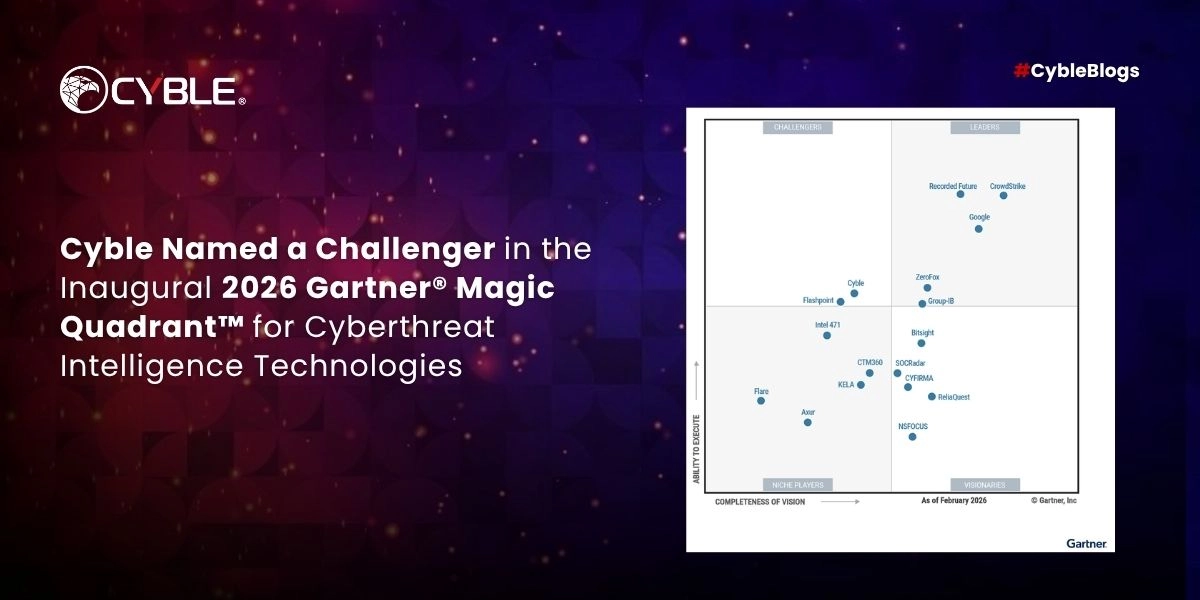
Cyble Named a Challenger in the Inaugural 2026 Gartner® Magic Quadrant™ for Cyberthreat Intelligence Technologies

19 de Maio de 2026, 06:46

Cyberthreat Intelligence Technologies, Gartner Magic Quadrant, Gartner

In a digital landscape that moves at the speed of AI, we feel recognition is more than just a market positioning—it is a validation of vision.

We are proud to announce that Cyble has been named a Challenger in the first-ever Gartner® Magic Quadrant™ for Cyberthreat Intelligence Technologies.

For us, being positioned in the Challengers Quadrant in this inaugural report is a testament to our rapid disruption of the CTI market. It reflects our commitment to moving beyond "static" threat feeds and providing our customers with a proactive, AI-native shield that sees what others miss.

Why CTI Needs a New Perspective

The threat intelligence market is at a crossroads. As this inaugural Gartner report suggests, “the CTI technologies market has undergone a significant transformation, driven by the increasing sophistication of cyberthreats and the growing need for proactive security strategies.”. For too long, organizations have been "intelligence-rich but insight-poor," drowning in data without the context to act.

Cyble was founded to bridge this "Defense Gap." We believe our recognition as a Challenger highlights our ability to execute on a massive scale while maintaining a vision that looks six months ahead of the adversary.

The Engine Behind the Excellence: AI-Native Intelligence

What sets Cyble apart in a crowded field? We believe it comes down to our core philosophy, “Intelligence must be autonomous to be effective.”

Our placement in the Magic Quadrant follows a year of significant technical breakthroughs, centered around three core pillars:

  • Blaze AI™ & Agentic Reasoning: While traditional tools act as libraries, Cyble Vision acts as an analyst. Our Blaze AI uses an agentic architecture to hunt, reason, and prioritize threats across the deep, dark, and surface web in real-time.
  • A Unified Surface of Truth: We have eliminated the need for fragmented tools. By unifying Attack Surface Management (ASM), Brand Protection, and Dark Web Monitoring into a single AI-powered pane of glass, we provide a 360-degree view of risk.
  • High-Fidelity, Zero Noise: Our platform processes over 350 billion threat signals daily. By leveraging AI to achieve a 95% signal-to-noise ratio, we ensure that SOC teams focus on the 5% of threats that actually matter.

“I feel being named a Challenger validates what our customers have known for years: that the old way of doing CTI is broken,” said Beenu Arora, Co-founder and CEO of Cyble. “We didn't build Cyble to fit into the existing market; we built it to redefine it. To us, this recognition is just the beginning. Our goal is to move from challenging the market to leading the world in autonomous threat prevention.”

Selecting an analyst-recognized vendor can often be a smarter move, especially if your business prioritizes reliability over "bleeding-edge" experimentation.

In our view, here are the main positives of choosing a vendor that is recognized by industry analysts

  • Reliable Execution: They have a proven track record of meeting client expectations today. You are not buying a promise of future tech; you are buying a platform that works right now at a high level.
  • Operational Stability: Trusted vendors typically have established, efficient sales and distribution structures. They are often well-capitalized with high financial viability, meaning there is very little risk of the company disappearing or failing to support you.
  • Customer-Centric Performance: They often focus more on perfecting current offerings and keeping their existing customer base happy through better support and responsiveness.
  • In short, if you need a strong, consistent, and well-supported solution that fits your current needs exactly, we believe a Challenger is often the most practical choice.

Looking Ahead

As we celebrate this recognition, our focus remains on our mission: democratizing dark web intelligence. Whether it’s forecasting a ransomware attack before it happens or identifying a leaked credential in seconds, Cyble is committed to ensuring that organizations of all sizes have the "unfair advantage" they need to stay secure.

We want to thank our customers, our partners, and our incredible team of researchers and engineers who have made this recognition possible.

Get the Full Story
To understand the shifts in the CTI landscape and see why Cyble is being recognized as a market Challenger, you can access the full report here:
Download the 2026 Gartner® Magic Quadrant™ for Cyberthreat Intelligence Technologies

Book a demo today and get a tailored walkthrough for your environment and needs.

Report Citation

Gartner, Magic Quadrant for Cyber Threat Intelligence Technologies, Jonathan Nunez, Carlos De Sola Caraballo, Jaime Anderson, May 4, 2026.

Trademark and Disclaimer

Gartner and Magic Quadrant are trademarks of Gartner, Inc. and/or its affiliates. Gartner does not endorse any company, vendor, product or service depicted in its publications, and does not advise technology users to select only those vendors with the highest ratings or other designation. Gartner publications consist of the opinions of Gartner’s business and technology insights organization and should not be construed as statements of fact. Gartner disclaims all warranties, expressed or implied, with respect to this publication, including any warranties of merchantability or fitness for a particular purpose. This graphic was published by Gartner, Inc. as part of a larger research document and should be evaluated in the context of the entire document. The Gartner document is available upon request from Cyble.

The post Cyble Named a Challenger in the Inaugural 2026 Gartner® Magic Quadrant™ for Cyberthreat Intelligence Technologies appeared first on Cyble.

❌
❌