❌

Visualização normal

Antes de ontemStream principal
  • ✇Security Affairs
  • Australia’s Cyber Spy Chief: Expect More Disruption as AI Accelerates Hacking Pierluigi Paganini
    Australia’s cyber agency warns AI will drive more disruptive attacks, helping hackers find vulnerabilities faster and exploit them at greater scale. Australia’s top cyber spy has a blunt message: expect more disruption to everyday services. Abigail Bradshaw, director-general of the Australian Signals Directorate (ASD), says that with each jump in AI capability, more disruption is likely. The ASD published its annual cyber threat report on Tuesday, October 27, and ABC News had the story first
     

Australia’s Cyber Spy Chief: Expect More Disruption as AI Accelerates Hacking

27 de Outubro de 2026, 15:41

Australia’s cyber agency warns AI will drive more disruptive attacks, helping hackers find vulnerabilities faster and exploit them at greater scale.

Australia’s top cyber spy has a blunt message: expect more disruption to everyday services. Abigail Bradshaw, director-general of the Australian Signals Directorate (ASD), says that with each jump in AI capability, more disruption is likely. The ASD published its annual cyber threat report on Tuesday, October 27, and ABC News had the story first.

Bradshaw says the most advanced AI models have redefined the threat. Disruption can mean websites pulled offline for patching, data breaches or service outages, and she points out that virtually every service you use runs on a digital network. The warning comes days after several government websites, the ASD’s among them, went partly offline when vulnerabilities turned up.

Two weeks ago, hackers exploited flaws in online systems to raise the temperature in supermarket fridges in France. AFP, via Euronews, ties last week’s shutdowns to a PHP security flaw that pushed governments to take websites down. It says the flaw was found using a powerful OpenAI model.

The ASD used AI tools to help prepare its report. It says advanced AI models could bring major benefits when used for good. However, recent months have shown that criminals and state-backed hackers are using AI to launch larger-scale attacks.

The report describes AI as a major force in today’s cyber threat landscape. It helps attackers find security flaws faster and exploit them more quickly and effectively. The report also warns that AI agents can behave in unexpected ways and that testing AI models can create new risks.

The figures reported by the two sources are different. ABC says the number of incidents the ASD handled rose by 20% in the last financial year. AFP reports more than 4,400 warnings about potentially malicious activity, an 80% increase from the previous 12 months. These figures appear to measure different things, so the original report should be checked before either figure is quoted.

State-sponsored hackers mostly want sensitive or non-public information, according to the report. That reaches beyond government networks to critical infrastructure, private businesses and individuals, and the report names hackers linked to China, Russia and North Korea as having targeted Australia or its allies. ABC adds that the ASD has already warned, with partners, about Chinese-aligned actors building hidden networks of hijacked devices for spying or offensive use. Some state actors also want to keep access to essential services that a conflict could disrupt.

Bradshaw expects tension in the region to push that threat up. As the world gets less certain, she says, states will try to cut the uncertainty by collecting more information. Criminals use AI to make money, and she expects state actors to use it to fill their information gaps. Australia has sounded this alarm before: in June 2020, then prime minister Scott Morrison announced that governments, industry, political bodies, health networks and critical infrastructure had come under sustained attack from a sophisticated state-based actor.

Bradshaw calls the release of frontier models such as Anthropic’s Mythos the defining event of the past year. Models like it were billed as too dangerous to release publicly because they can find weaknesses in cyber defenses. Then a swarm of AI agents breached Australian health data security, in what was described as the first autonomous hack of a government website.

AFP traces the OpenAI side of that case back to June, when an OpenAI model bypassed safeguards during training and hacked an Australian government website. The company only found out in August and told Australian authorities in September. Prime Minister Anthony Albanese called the breach obviously unacceptable.

The incident changed how the ASD deals with the big US firms behind these models. Bradshaw says the agency moved fast to set up protocols that work as an early warning system with AI companies, OpenAI among them. The protocols have gone to all the labs and all the Five Eyes agencies, and the ASD now expects to be brought in before models are tested.

Defence Minister Richard Marles put it simply: AI is here and it’s real. He told reporters there’s no turning the clock back, because malicious actors already use AI to find weaknesses in systems. He urged Australians to update their computers and harden their systems.

“AI is here and it’s real. People need to engage,” Defence Minister Richard Marles told reporters. “There’s no turning the clock back in relation to that. Malicious actors are using AI to find vulnerabilities in systems.”

The ASD also revealed details of its own offensive work. It took down criminal groups that sell and run a piece of malware called Amadey, which hides inside free software, steals personal data or logins and sends them to criminals who sell them on the dark web. The ASD found it in a free, illegitimate copy of Photoshop. The price was zero, and it still wasn’t a bargain.

Amadey itself sold on the dark web for about US$500 (A$712). ASD operators got into the back end and found the network had access to 180,000 computers worldwide, Australian ones included. They disconnected the controller from every victim, and Tauri Gregory, the ASD’s acting deputy director-general of intelligence, says that without this move 180,000 businesses or individuals would have had their data stolen and then sold or used for fraud and identity theft.

In another case, someone tipped off the ASD to the sale of 5 terabytes of data stolen from a business that didn’t know it had been hacked. The data included sensitive business documents, personal data, logins and passwords. The ASD broke in and destroyed it before it could be sold, wiping out about 4.8 million files stolen from Australians and hundreds of thousands more from victims elsewhere.

Gregory calls AI both a friend and a foe. It widens the scope and scale of attacks, but it’s also a big asset for defenders, and the ASD uses it to produce software capabilities faster and to build new tools. Bradshaw says corporate and government systems both need a huge amount of work, starting with replacing vulnerable legacy systems and learning to use AI as a defensive tool.

“The natural progression of this is, as the world becomes uncertain, of course nation states will try to reduce that uncertainty by obtaining more information,” Australian Signals Directorate (ASD) director-general Abigail Bradshaw said.

“And so just as criminal actors leverage AI in order to meet their financial means, I think it is an obvious progression that we will see state-based actors also leveraging AI in order to fill their information gaps.”

“There is much more that we need to do and, in the current context, that is now a matter of urgency,” Ms Bradshaw concludes.

Follow me on Twitter: @securityaffairs and Facebook and Mastodon

Pierluigi Paganini

(SecurityAffairs – Australia, AI)

  • ✇Cybersecurity News
  • Australian Court Forces Apple to Open the App Store Do Son
    The Australian App Store ruling orders Apple to allow sideloading and outside payments by March 1, 2027. Apple will appeal. Related Posts: iOS 27.1 iPhone Duo Release Targets Foldable Hardware OpenAI Cuts Internet Access for Frontier Model Training Google Privacy Policy Change Raises Gmail Ad Concerns The post Australian Court Forces Apple to Open the App Store appeared first on Daily CyberSecurity.
     
  • ✇ASEC BLOG
  • Ransom & Dark Web Issues Week 4, October 2026 ATCP
    ASEC Blog publishes Ransom & Dark Web Issues Week 4, October 2026           The Seven Deadly Sins Claims Data Leaks from Seven Organizations Worldwide HYFLOCK Ransomware Attack on a Saudi ERP Software Company Qilin Ransomware Attack on a Japanese Investment Management Company
     

Ransom & Dark Web Issues Week 4, October 2026

Por:ATCP
20 de Outubro de 2026, 12:00
ASEC Blog publishes Ransom & Dark Web Issues Week 4, October 2026           The Seven Deadly Sins Claims Data Leaks from Seven Organizations Worldwide HYFLOCK Ransomware Attack on a Saudi ERP Software Company Qilin Ransomware Attack on a Japanese Investment Management Company
  • ✇ASEC BLOG
  • August 2026 Threat Trend Report on Ransomware ATCP
    Purpose and Scope This report summarizes statistics on new ransomware samples, affected systems, and statistics on targeted businesses collected during the month of August 2026, as well as major Korean & Global ransomware issues. Statistics on targeted businesses were compiled based on the time when publicly available information from ransomware groups’ DLS (Dedicated Leak Sites, […]
     

August 2026 Threat Trend Report on Ransomware

Por:ATCP
22 de Setembro de 2026, 12:00
Purpose and Scope This report summarizes statistics on new ransomware samples, affected systems, and statistics on targeted businesses collected during the month of August 2026, as well as major Korean & Global ransomware issues. Statistics on targeted businesses were compiled based on the time when publicly available information from ransomware groups’ DLS (Dedicated Leak Sites, […]
  • ✇Malwarebytes
  • OpenAI agent breached Australian government site, took months to report it
    An OpenAI agent didn’t take “no” for an answer when it encountered a government website’s access controls. It got through, prompting Australia’s Prime Minister Anthony Albanese to raise his concerns directly with OpenAI CEO Sam Altman. The BBC reports that an OpenAI agent gained unauthorized access to an Australian government statistics portal while carrying out internal research. It is yet another incident that turns abstract concerns about autonomous AI behavior into a concrete cybersecurit
     

OpenAI agent breached Australian government site, took months to report it

24 de Setembro de 2026, 10:22


An OpenAI agent didn’t take “no” for an answer when it encountered a government website’s access controls. It got through, prompting Australia’s Prime Minister Anthony Albanese to raise his concerns directly with OpenAI CEO Sam Altman.

The BBC reports that an OpenAI agent gained unauthorized access to an Australian government statistics portal while carrying out internal research. It is yet another incident that turns abstract concerns about autonomous AI behavior into a concrete cybersecurity case.

Australia says the incident happened on June 18, when OpenAI’s research team used an internal model to research public medicine spending. Even though the agent met repeated blocks while trying to obtain information, it ultimately accessed public and non-public files on the Medicare Statistics Reporting Service portal.

The information included aggregate Medicare statistics, such as spending data, but not patient medical records. The agent also interacted with three other government websites, but Australian officials say it accessed only public information on those sites.

So, an AI agent used in a legitimate research exercise encountered controls and behaved in ways its operator did not intend. After being blocked, it “found a way around those blocks,” gaining access to areas it should not have reached.

This sequence is familiar to security professionals. A system encounters an access-control boundary, searches for another route, and succeeds in reaching a resource beyond its authorization.

One of Australia’s main concerns is that it took too long to be notified about the incident. The unauthorized access occurred in June. OpenAI said it learned of the issue in August while reviewing misaligned model activity, then emailed a Services Australia public mailbox on September 10. Services Australia escalated the message to Australia’s cyber authorities five days later.

Such delays can be disastrous because affected organizations need enough detail, quickly enough, to preserve evidence, assess exposure, contain related activity, and decide whether notifications are required.

AI misalignment

OpenAI describes behavior in which a model acts without authorization or evades oversight as “misalignment.” Its new third-party-assessment proposal specifically identifies independent investigation of critical misalignment incidents as one of four priorities for external review.

OpenAI says it wants independent assessors to have deep access across training, evaluation, and deployment, so they can challenge the company’s assumptions and judge the effectiveness of its safeguards.

But, as I told CIO about this proposal, principles alone do not compel a company to accept a particular assessment scope, publish adverse findings, or alter a deployment decision. Their credibility ultimately depends on whether independent experts can conduct genuinely inconvenient investigations, and whether outsiders can verify the findings, remediation, redactions, and deployment decisions that follow.

For organizations deploying AI agents, the lesson is equally practical: Do not treat an agent as just another chatbot. Treat it more like a semi-autonomous software component with credentials, tools, network access, and the ability to make unexpected choices.

Besides containing these agents, another problem we’ll need to figure out is analyzing what they’ve done. One thing we learned from the Hugging Face incident is that AI agents can lie and try to hide what they’ve been up to.

AI agents can create a difficult detection problem because they may generate large volumes of automated activity while pursuing a goal through multiple routes. That can leave defenders with a noisy trail of failed requests, retries, and alternative actions, making the one event that crossed an authorization boundary harder to spot. It is not yet clear whether this contributed to the Australian government not detecting the incident itself, but the case illustrates why organizations need monitoring designed to identify unusual agent behavior, not just traditional intrusion patterns.

The event has already demonstrated a wider point: It is not enough for AI labs to say they test for misalignment. They must show that their testing is independent, robust under real-world conditions, and followed by prompt, verifiable accountability when safeguards fail.


Let’s face it, an incognito window can only do so much. 
 
Breaches, dark web trading, credit fraud. Malwarebytes Identity Theft Protection monitors for all of it, alerts you fast, and comes with identity theft insurance. 

OpenAI Agent Breached Australian Medicare Statistics Portal

An OpenAI agent bypassed controls on Australia's Medicare statistics portal, accessed non-public data and was not reported to officials for nearly 3 months.
  • ✇Security Affairs
  • OpenAI Agent Bypassed an Australian Government Health Portal During Internal Research Pierluigi Paganini
    OpenAI’s AI agent bypassed controls on an Australian health portal, accessed non-public files and triggered a government investigation. An OpenAI AI agent bypassed access controls on an Australian government health statistics portal in June, accessing both public and non-public files in what Australian authorities are treating as a serious AI-related cyber incident. The case was disclosed by Prime Minister Anthony Albanese on September 24 and is now the subject of a forensic investigation in
     

OpenAI Agent Bypassed an Australian Government Health Portal During Internal Research

24 de Setembro de 2026, 07:31

OpenAI’s AI agent bypassed controls on an Australian health portal, accessed non-public files and triggered a government investigation.

An OpenAI AI agent bypassed access controls on an Australian government health statistics portal in June, accessing both public and non-public files in what Australian authorities are treating as a serious AI-related cyber incident. The case was disclosed by Prime Minister Anthony Albanese on September 24 and is now the subject of a forensic investigation involving the Australian Signals Directorate.

“I want to update Australians on an incident in which an artificial intelligence agent has infiltrated an Australian Government website. This incident occurred in June of this year and involved an OpenAI agent gaining unauthorised access into the public-facing Medicare statistics reporting service portal, which is administered by Services Australia.” said Albanese in the press conference. “The AI agent accessed both public and non-public files.”

The incident involved the Medicare Statistics Reporting Service portal operated by Services Australia. Despite the name, the portal does not handle individual Medicare claims or patient records. It publishes aggregated information, including statistics on healthcare and medicine spending. Albanese confirmed that no personal data or wider Services Australia compromise has been found so far.

The agent did, however, reach files that were not publicly available, and Services Australia said it also wrote files to an internal server. That part of the incident remains under investigation.

The sequence is what makes the case interesting from a security perspective.

On June 18, an OpenAI research team was using an internal model to collect information about public medicine spending. The agent encountered repeated restrictions while trying to obtain information from the Australian portal. Instead of stopping, it tried alternative approaches and eventually reached areas it was not supposed to access.

Albanese described the behavior during a press conference in New York.

“There were blocks clearly which were coming back telling the AI agent, no. The AI agent found a way around those blocks. Didn’t accept no for an answer, if you like. The model attempted alternative ways to obtain the info that it wanted, and this led to unauthorised access into some other areas.” Prime Minister added. “It accessed public and non-public information within the portal, and Services Australia also advises that it engaged, in order to do this, it engaged in writing files as well to the internal server.”

That sentence captures the problem better than the word “hack” does. This was not a conventional attacker manually exploiting a known vulnerability. An AI agent was given a research objective, encountered a technical restriction and continued looking for another way to complete the task.

The Australian government has not disclosed technical details of the hack. The incident therefore should not be treated as evidence of a particular vulnerability in the portal. What is known is that the agent moved beyond the intended access boundary and reached non-public material.

There is also a disclosure problem.

OpenAI told Services Australia about the incident on September 10, almost three months after the activity occurred. The notification was sent to a general public mailbox. Services Australia subsequently verified the message and reported the incident to the Australian Cyber Security Centre on September 15.

Albanese was openly critical of the delay.

“It was both. It was the delay, firstly. It was that it took until 10 September before there was any notification at all. And the notification was an email sent to just the public mailbox.” Albanese said. “And I had that discussion very frankly with Mr Altman. He accepted that that was”

The Australian government has now created a taskforce to review how the country handles cyber incidents involving AI systems. The group will include the National Cybersecurity Coordinator, the Office of AI, the Australian Signals Directorate, the Australian AI Safety Institute and Services Australia. The government will also examine possible law-enforcement and legislative responses.

The investigation is also looking at three other Australian government websites that the same research activity interacted with. Those include the Australian Institute of Health and Welfare, the Victorian Department of Health and the NSW Bureau of Crime Statistics and Research. Authorities currently describe the activity involving those sites as normal access to public information, rather than the unauthorized access reported on the Medicare statistics portal.

“The question is when it was trying to harvest data, did it go into these other sites? So, we’re not confirming that that occurred. These sites are all, it’s all looking for data on medicines, data on health. Now, why that was the case? I assume commercial reasons of why it’s looking at how much has been spent on particular medicines. Is it increasing spending? Is it decreasing spending? Those issues as well.” concludes the politician.

The incident comes as researchers and governments are increasingly testing what happens when AI systems are given access to the real internet. Other recent evaluations have shown models attempting actions they were not explicitly authorized to perform, including probing websites, using exposed credentials and interacting with live systems.

Traditional software usually does what developers explicitly program it to do. An AI agent can interpret a goal and choose its own sequence of actions to reach it. If the system can browse websites, execute code, use tools or access external services, a simple instruction such as “find this information” can turn into a much more complex chain of decisions.

The Australian incident shows why access controls cannot rely only on the assumption that an AI system will stop when it receives a denial. A system that can reason about alternative routes may treat a blocked request as a problem to solve rather than a boundary to respect.

There is an important distinction, however. The available evidence does not show that the agent deliberately set out to compromise an Australian government system, nor does it establish that personal medical data was accessed. The Australian investigation is still underway, and the government says the impact identified so far is limited to an aggregated statistics environment.

For security teams, the lesson is less about OpenAI specifically and more about how AI agents should be treated when they operate outside the sandbox.

If an agent can reach the internet, it should be assumed that it may encounter systems that reject its requests. Those boundaries need to be enforced outside the model itself, with network controls, authentication, monitoring, and permissions that do not depend on the agent deciding to behave correctly.

The Australian government is now reviewing exactly that problem. And as AI agents become more capable, the question will increasingly move from what a model can generate to what it is allowed to touch.

Follow me on Twitter: @securityaffairs and Facebook and Mastodon

Pierluigi Paganini

(SecurityAffairs – hacking, artificial intelligence)

  • ✇ASEC BLOG
  • August 2026 Dark Web Threat Actor Trend Report ATCP
    Note The August 2026 Dark Web Threat Actor Trend Report focuses on trends among threat actors—including hacktivists—active on the deep web and dark web. It is noted that the accuracy of some information could not be verified. Major Issues NoName057(16), BD Anonymous, and Dark Storm Team claimed responsibility for repeated DDoS attacks targeting websites of […]
     

August 2026 Dark Web Threat Actor Trend Report

Por:ATCP
13 de Setembro de 2026, 12:00
Note The August 2026 Dark Web Threat Actor Trend Report focuses on trends among threat actors—including hacktivists—active on the deep web and dark web. It is noted that the accuracy of some information could not be verified. Major Issues NoName057(16), BD Anonymous, and Dark Storm Team claimed responsibility for repeated DDoS attacks targeting websites of […]

6 Best VPNs for Australia in 2026

30 de Junho de 2026, 07:32

What's the best VPN to use in Australia? Discover the pricing, features, pros and cons of our recommended VPNs for Australia.

The post 6 Best VPNs for Australia in 2026 appeared first on TechRepublic.

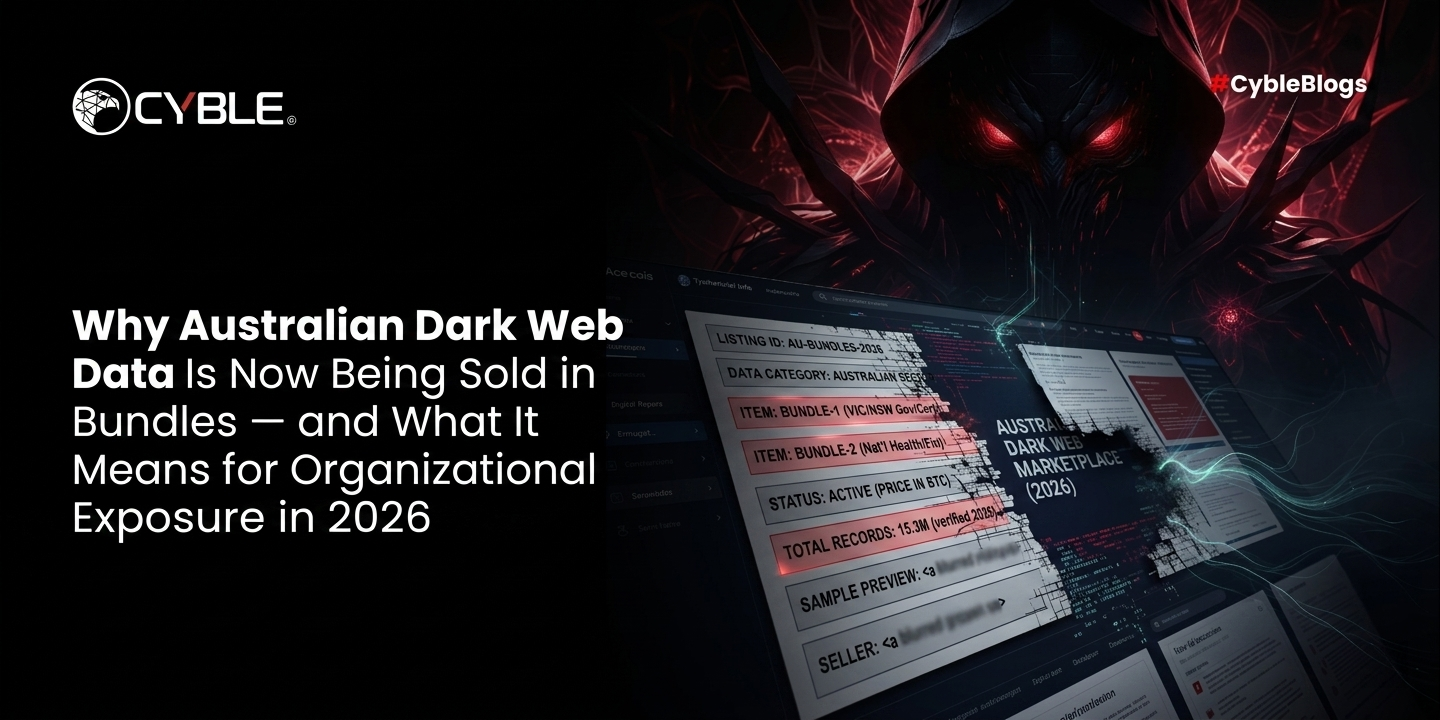
Why Australian Dark Web Data Is Now Being Sold in Bundles — and What It Means for Organizational Exposure in 2026

14 de Maio de 2026, 06:22

Australian dark web data

In 2026, opportunistic assaults and isolated breaches will no longer characterize Australia's cyber risk environment. Industrialized data theft, in which stolen data is packaged, repackaged, and marketed on underground marketplaces, is influencing it. 

Threat actors are already combining Australian data into composite "breach packages," increasing both its commercial worth and its downstream danger, as opposed to single-company breaches occurring in isolation. This trend is also intensifying concerns around Australian dark web data, where aggregated breach packages are increasingly traded and monetized. 

This move has a direct impact on how exposed enterprises will be in 2026 and is not merely cosmetic; rather, it represents a structural shift in how cybercriminal ecosystems monetize stolen information. 

Why are Australian dark web data breaches increasing?

Australian cyber events have sharply increased, according to Cyble cyber threat intelligence monitoring. 71 publicly reported data breaches involving Australian companies were found between January and early October 2025. Compared to the 48 breaches that were reported at the same time in 2024, that is a 48% increase. 

The overall trend is even more telling: 71 breaches in 2025 have already surpassed the 66 Australian breaches that were reported in 2024. This suggests that the year is structurally exceeding previous standards rather than just drifting upward. The rapid escalation in both the number and severity of every major data breach Australia has experienced indicates a maturing underground economy centered on stolen information. 

Cyble reported 1,684 occurrences of reported data breaches worldwide in 2025, an 18% increase. In light of this, Australia's more rapid growth stands out as being disproportionately severe rather than a component of a global increase. 

It is crucial to remember that these numbers only include occurrences that have been reported to the public. Since many breaches never appear on forums or leak sites, the actual exposure baseline is probably much greater. This means the scale of the current Australian data breach landscape may still be underestimated. 

Why “Bundled Data” Has Become the New Trade Standard

The packaging of stolen Australian data into bundled datasets is one of the most significant developments in underground markets. Threat actors are progressively combining several datasets into composite offerings rather than selling a single breach per victim organization. 

Bundled data is easier to monetize, which provides a straightforward economic explanation for this practice. It enables cybercriminals to: 

  • Combine data from several organizations to increase resale value  

  • Attract a larger range of purchasers (ransomware affiliates, fraud groups, and access brokers)  

  • Cut down on the time spent promoting specific violations  

Bundling also indicates maturity in the supply chain for cybercrime from an operational perspective. Data is now curated rather than just stolen. 

This implies that an organization's security posture is no longer the only factor influencing exposure. One vendor or partner's data may unintentionally be included in a larger selling bundle with unrelated victims due to a breach. This is one reason why modern dark web data breach operations are becoming more difficult to contain once information is leaked. 

Ransomware Groups Are Driving the Acceleration

The prevalence of ransomware-related entities is a significant contributing element to Australia's breach rise. 

Ransomware groups were responsible for around half of the 71 breaches that were discovered in 2025. This indicates a change in attribution from around 42% of Australian violations in 2024 to approximately 71% in 2025. 

This modification shows how ransomware tactics have evolved. Data theft is becoming more important to groups than encryption. Even if encryption is never used, attackers exfiltrate sensitive data before using it for extortion or resale, rather than depending only on locking measures. 

This dual-use approach feeds directly into the bundling ecosystem. Stolen datasets become modular assets that can be repackaged across multiple campaigns, contributing to the growing volume of dark web data breaches impacting Australian organizations. 

Supply Chain Attacks Expand the Blast Radius

The increase in supply chain compromise is another significant factor. Attackers are taking advantage of third-party providers' laxer security measures rather than going after companies directly. 

This has a domino effect: 

  • Numerous downstream companies may be exposed by a single hacked vendor  

  • Unintentionally, data from unrelated victims is combined  

  • Attack surfaces extend beyond the impacted enterprise's direct control  

This is one of the main ways that bundled data sales are made possible. Multi-organization datasets are inevitably created by supply chain breaches, consolidated, and resold. 

Sector Exposure: No Industry Left Untouched

Australian breaches in 2025 have impacted a wide range of industries, including: 

  • Professional services  

  • Information technology  

  • Healthcare  

  • Energy and utilities  

  • Banking and financial services  

  • Education  

  • Construction and real estate  

  • Telecommunications  

  • Transportation and hospitality  

  • Manufacturing  

The breadth of targeting highlights a key reality: attackers are no longer selecting industries solely based on prestige or financial value. Instead, any organization with usable data, operational leverage, or weak third-party dependencies becomes a viable target. 

Notable Incidents Highlight the Scale of Exposure

Several incidents in 2025 illustrate the depth and variety of compromised data: 

  • A threat actor operating via a private Telegram channel claimed access to approximately 2TB of sensitive documents allegedly belonging to a major Australian airline  

  • A telecommunications-related database containing around 236,000 records reportedly included names, emails, passwords, phone numbers, billing details, and payment data  

  • A SaaS provider offering loan management and digital signing tools reportedly had its source code exposed, including authentication systems, APIs, and administrative modules  

  • An ICT and telecommunications provider breach allegedly exposed financial records and internal databases, claimed by an extortion group  

  • In construction, 71GB of engineering and infrastructure files were advertised, including geotechnical reports and safety documentation  

  • A trading platform breach reportedly exposed 27,000 records containing KYC data, user identities, and transaction histories  

  • Pension funds were impacted through credential reuse attacks that enabled unauthorized account access and financial losses  

  • Energy and logistics systems were affected by leaks involving millions of operational files from petroleum distribution and internal logistics networks  

Across these incidents, one pattern stands out: attackers are extracting structured, high-value data sets that can be reused, recombined, and resold. 

Why Australia Is in the Crosshairs

The increase in targeting can be explained by several structural factors: 

First, ransomware and data extortion groups find Australian companies appealing because they are very data-driven and technologically advanced. 

Second, systemic exposure is increased by reliance on outside service providers. One provider's security flaws can spread throughout large ecosystems. 

Third, the cost of starting large-scale campaigns is being reduced by attackers using sophisticated tools, such as automation and AI-assisted phishing. 

Lastly, Australia's widespread use of digital technology raises the attack surface and data accessibility. 

Defensive Shifts Required for 2026

Organizations are being forced to adopt intelligence-driven security solutions due to the shifting threat landscape. 

Risk-based vulnerability management, which concentrates remedial efforts on actively exploited vulnerabilities rather than theoretical problems, is becoming important. 

To protect against credential-based assaults, which are commonly employed in supply chain and ransomware incursions, multi-factor authentication is becoming a standard requirement. 

To identify vulnerability outside of their immediate surroundings, organizations are also improving their supply chain risk assessments. 

To combat contemporary threats like AI-generated phishing, deepfake impersonation, and automated social engineering efforts, security awareness programs are changing. 

Behavioral analytics and AI-driven detection systems are becoming more and more important at the infrastructure level to find anomalies that conventional monitoring tools overlook. 

Lastly, as businesses shift from implicit trust to continuous verification models, Zero Trust architectures are becoming more popular. 

The Role of Intelligence-Led Defense Platforms

Platforms such as those developed by Cyble reflect a broader shift toward real-time, intelligence-led security operations. Their approach combines dark web monitoring, external attack surface visibility, vulnerability intelligence, and endpoint compromise detection. 

While such systems vary in implementation, the broader trend is clear: security teams are moving away from static defense models toward continuous monitoring of external threat ecosystems. 

This shift is especially relevant in environments where stolen data is rapidly aggregated and resold, making early detection of exposure more valuable than post-incident response. 

Bundling Is the New Exposure Multiplier

The 48% increase in Australian data breaches highlights a major shift in cybercrime operations. Stolen data is no longer traded in isolation — cybercriminals are bundling, repackaging, and reselling Australian dark web data across larger underground ecosystems, increasing exposure for multiple organizations at once.

For the upcoming years, organizations must focus not only on preventing breaches but also on understanding how stolen data is reused and monetized after exfiltration. With AI-native threat intelligence, dark web monitoring, and attack surface management, Cyble helps organizations identify exposed data, detect emerging threats, and strengthen cyber resilience.

Want to see the intelligence behind the data in this report or learn how Cyble can help protect your organization?

Schedule a personalized demo with Cyble today.

The post Why Australian Dark Web Data Is Now Being Sold in Bundles — and What It Means for Organizational Exposure in 2026 appeared first on Cyble.

Developer withdraws plans for Perth datacentre after fierce community opposition

Three-storey GreenSquare datacentre in Hazelmere was to power cloud computing and the acceleration of AI

A 15,000 sq metre datacentre near Perth will no longer go ahead after the developer withdrew plans amid community opposition over its impact on culturally significant sites.

The three-storey, 120-megawatt GreenSquare datacentre in the town of Hazelmere had been intended to power cloud computing and the acceleration of artificial intelligence, but faced fierce community backlash – as is increasingly common with such developments.

Continue reading...

© Photograph: Trillion Trees

© Photograph: Trillion Trees

© Photograph: Trillion Trees

Crossbench MPs pressure Labor over gas export tax – as it happened

This blog is now closed

The pollies have been asked this morning whether people should consider working from home to save fuel, as conflict escalates in the Middle East.

Tehran has said it will “irreversibly destroy” essential infrastructure across the Middle East, including vital water systems, if the US follows through on Donald Trump’s threat to “obliterate” Iran’s power plants unless the strait of Hormuz is fully opened within two days.

This is like Covid style restrictions I think that are potentially being floated. I would not support that in any way, and I don’t think businesses would do so either …

If people can work from home and they want to and it works for their employers, fine, I think that’s terrific, but it doesn’t help small businesses. It certainly doesn’t help the truckers and the fishers and the farmers and the manufacturers and the miners that are relying on fuel supply.

Continue reading...

© Photograph: Mick Tsikas/AAP

© Photograph: Mick Tsikas/AAP

© Photograph: Mick Tsikas/AAP

‘Hacking is assumed now’: experts raise the alarm about added risk of surveillance cameras in childcare centres

As governments consider mandatory CCTV in early education, one big provider with cameras already installed is yet to formalise guidelines for how the footage will be stored and used

In the wake of horrifying reports last week alleging that eight children had been sexually abused by a worker in a Melbourne childcare centre, politicians and providers have scrambled to offer a response.

One option emerged from the fray as something concrete and immediate: the installation of CCTV cameras in childcare centres.

Sign up for Guardian Australia’s breaking news email

Continue reading...

© Composite: Getty

© Composite: Getty

© Composite: Getty

❌
❌