The Clop web shell targets PTC Windchill via CVE-2026-12569, stealing credentials and engineering data in a mass-extortion campaign.
Related Posts:
WordlistLoader Delivers Amatera Stealer Through ClearFake Campaigns
C2Looper: Rust Backdoor Uses GitHub for C2 Control
Manic Android Malware Steals Data Without Active Internet
The post Clop Deploys Custom Web Shell in PTC Windchill Extortion Attacks appeared first on Daily CyberSecurity.
Cl0p claims over 40 organizations fell victim to attacks exploiting a PTC Windchill and FlexPLM vulnerability.
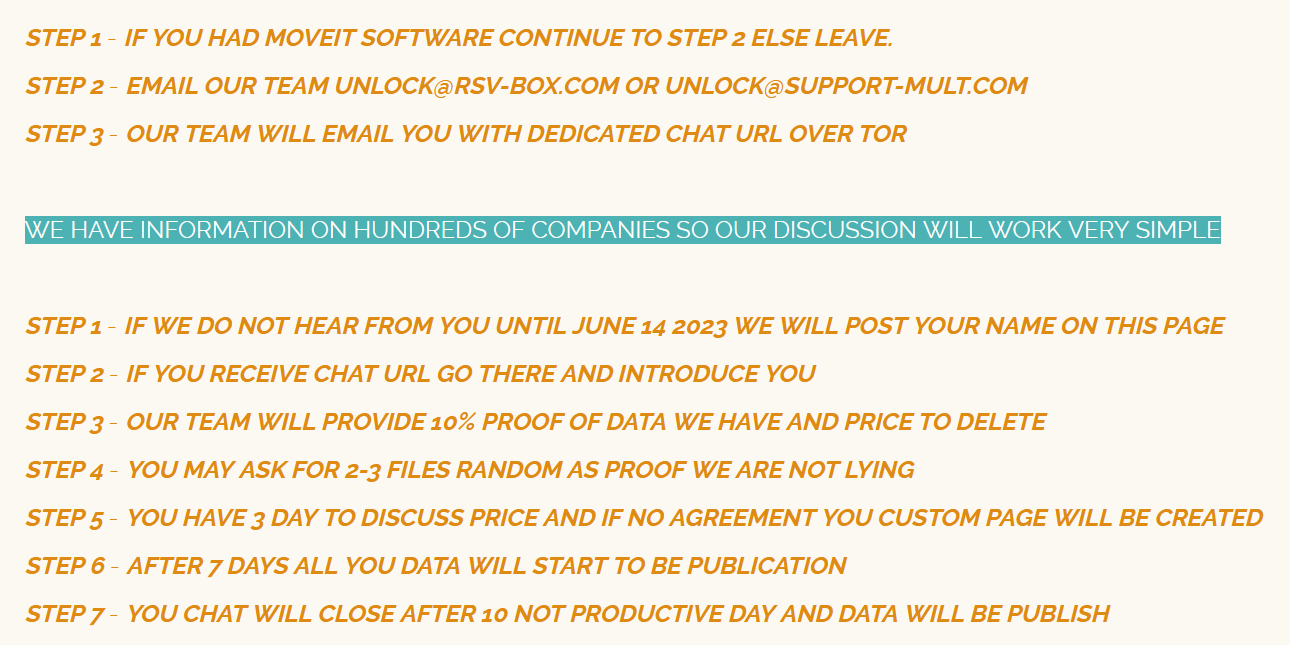
Cl0p is using a familiar strategy again: exploit one flaw in enterprise software to attack many companies, then publish the victims’ names if they refuse to pay. The group claims it has targeted more than 40 organizations through a vulnerability in PTC’s Windchill and FlexPLM platforms, which manufacturers and engineering companies use to manage product and design data.
CVE-2026-
Cl0p claims over 40 organizations fell victim to attacks exploiting a PTC Windchill and FlexPLM vulnerability.
Cl0p is using a familiar strategy again: exploit one flaw in enterprise software to attack many companies, then publish the victims’ names if they refuse to pay. The group claims it has targeted more than 40 organizations through a vulnerability in PTC’s Windchill and FlexPLM platforms, which manufacturers and engineering companies use to manage product and design data.
CVE-2026-12569 (CVSS score of 9.3) is a critical remote code execution (RCE) vulnerability in PTC Windchill PDMlink and PTC FlexPLM. An attacker can exploit this vulnerability through the deserialization of untrusted data. The flaw impacts all CPS versions and Windchill and FlexPLM releases prior to 11.0 M030.
German police reportedly warned organizations directly that attacks were coming, which tells you the exploitation window here wasn’t exactly subtle to security researchers watching it unfold.
Cl0p group’s tooling for this campaign goes well beyond a basic web shell. Security firm ReliaQuest found the group deployed a custom implant built for full data theft on its own, no additional tools required to actually pull data out once inside.
A class loader like that turns a single web shell into an open-ended backdoor, useful for lateral movement, ransomware deployment, or just quietly sitting there for months.
“ReliaQuest identified the web shell as a fully equipped extortion platform: it maps sensitive vault data, decrypts every credential in the Windchill keystore, and includes a custom Java class loader that lets Clop execute any additional code inside the application process, extending the shell into an unlimited backdoor for follow-on activity such as lateral movement, ransomware, or persistence.” reads the report published by ReliaQuest. “The web shell gives attackers a direct path to credential theft and large-scale data exfiltration, with no additional tooling required. Unlike generic command shells, this implant decrypts credentials, delivers malware, and maps stored files for exfiltration.”
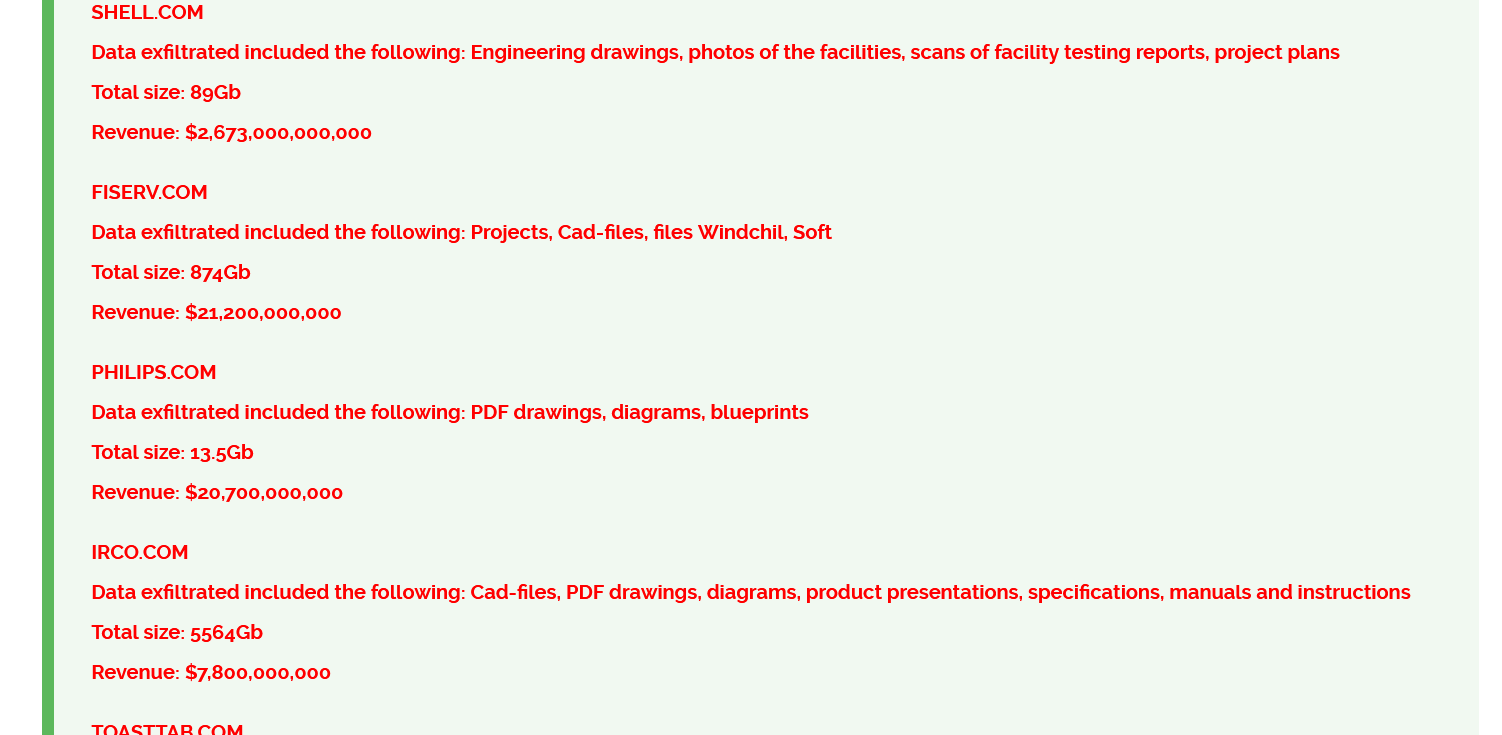
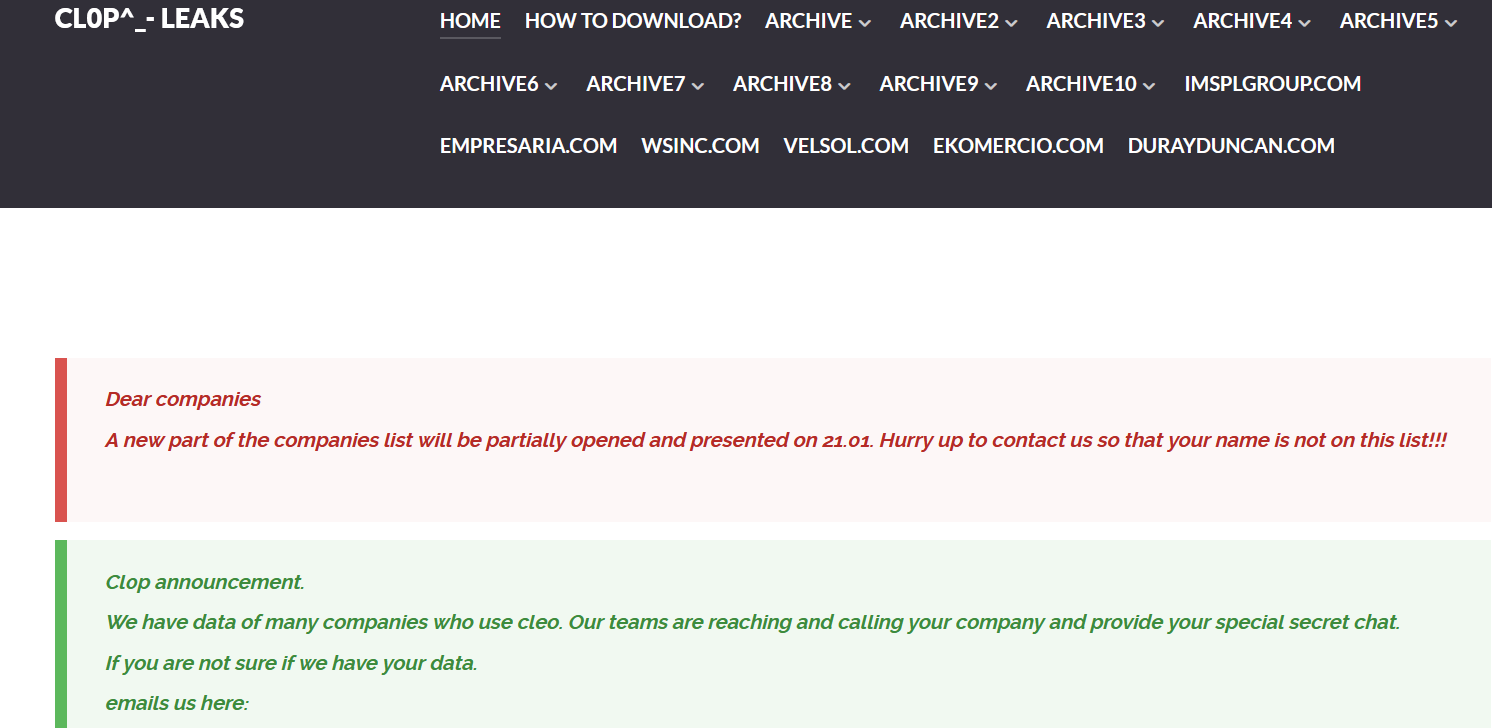
Cl0p’s naming strategy followed its usual slow build. The group initially posted partial company names on its leak site, then switched to full names starting August 12, and the victim count has climbed steadily since. For each organization, the listing includes what type of data got stolen and roughly how much, ranging anywhere from a single gigabyte up to multiple terabytes depending on the target.
The stolen data includes databases, project files, backups, engineering documents, blueprints, diagrams and corporate files, as well as images.
The victim list reads like a cross-section of major manufacturing and industrial names: Shell, Philips, Fiserv, Zebra Technologies, Ingersoll Rand, Toast, Mindray, and Largan Precision, the company that supplies camera lenses for Apple’s devices. Researchers noticed that GE was on the list briefly before quietly disappearing from Cl0p’s site, a move that usually signals either a ransom payment or at least resumed negotiations behind closed doors. Shell, Philips, Fiserv, and GE have all publicly acknowledged awareness of the claims and said they’re investigating, though none has confirmed a significant breach so far.
None of this is a new pattern for Cl0p specifically; it’s the same mass-exploitation-then-extortion model the group has run repeatedly against Oracle E-Business Suite, MOVEit, Cleo, and GoAnywhere over the past few years. What’s different this time is the target: enterprise PLM software sits deep inside manufacturing supply chains, holding the exact kind of engineering data that competitors and nation-states alike would pay real money to see.
If your organization runs Windchill or FlexPLM and hasn’t checked for this specific CVE yet, that’s the item to move to the top of today’s list.
What Happened:On 11 May 2026, the UK Information Commissioner’s Office (ICO) fined South Staffordshire Water £963,900 after the Cl0p ransomware group lurked completely undetected in its network for nearly two years.Initial access reportedly occurred via a malicious phishing email in September 2020, which downloaded Cl0p’s Get2Loader malware and their SDBBOT backdoor to establish persistence.The breach itself, however, was only discovered two years later in July 2022 when staff began investigati
On 11 May 2026, the UK Information Commissioner’s Office (ICO) fined South Staffordshire Water £963,900 after the Cl0p ransomware group lurked completely undetected in its network for nearly two years.
Initial access reportedly occurred via a malicious phishing email in September 2020, which downloaded Cl0p’s Get2Loader malware and their SDBBOT backdoor to establish persistence.
The breach itself, however, was only discovered two years later in July 2022 when staff began investigating IT performance slowdowns and ultimately found out that 4.1 terabytes of data was exfiltrated and the personal data of 633,887 customers and employees being published in August 2022 on Cl0p’s Tor data leak site.
The ICO’s investigation also revealed a staggering list of systemic failures, such as South Staff’s outsourced Security Operations Center (SOC) was blind to 95% of the network and that they conducted zero internal or external vulnerability scans over an 18-month window.
At the time of the attack they were still running Windows Server 2003 machines long after extended support ended. Further, two of their domain controllers were left completely unpatched against ZeroLogon (CVE-2020-1472), a critical, easily exploitable vulnerability published years before the intrusion.
Analyst Comment:
This case is a sobering look at the technical debt hiding inside the UK’s Critical National Infrastructure (CNI). A dwell time of nearly two years is practically unheard of in modern ransomware operations, and the TTPs used by the adversary points to a total breakdown of their defences. Cl0p didn’t need sophisticated, state-sponsored techniques or zero-days to pull this one off, they just walked back in through an infection that went undetected.
The ICO’s findings also reveal the reality that many UK organisations still treat cybersecurity as a set-and-forget compliance check rather than routine efforts to mature and upgrade systems or proactive measures to hunt and detect threats lurking inside the network.
Defensive Takeaways:
Audit Your Outsourced SOC: As we learned from this incident, never assume the third-party security provider sees everything or is doing everything right. Establish audits to verify that endpoint telemetry and logs from your entire estate are actively ingested, retained, and monitored in the right platform.
Harden Your Crown Jewels Against Old Flaws: Ensure that active directory and domain controllers are strictly monitored and prioritised for critical patches. Vulnerabilities like ZeroLogon remain a ransomware operator’s favourite tool for fast lateral movement and escalation to Domain Admin access. This is exactly what Cl0p and a dozen or so other groups use.

 Entrar