Discover the details of the Liquid Network hack. A white hat attacker stole 4,000 Bitcoins but returned most of the funds to force a bug bounty payment.
Related Posts:
Outsider Phishing Kit Survives Operation Ghost Hook Takedown
Phantom Deal Scam Targets Executives With Fake NDAs
Microsoft Teams IT Support Impersonation Leads to Domain Takeover
The post Liquid Network Security Incident: The White Hat Dilemma appeared first on Daily CyberSecurity.
Discover the details of the Liquid Network hack. A white hat attacker stole 4,000 Bitcoins but returned most of the funds to force a bug bounty payment.
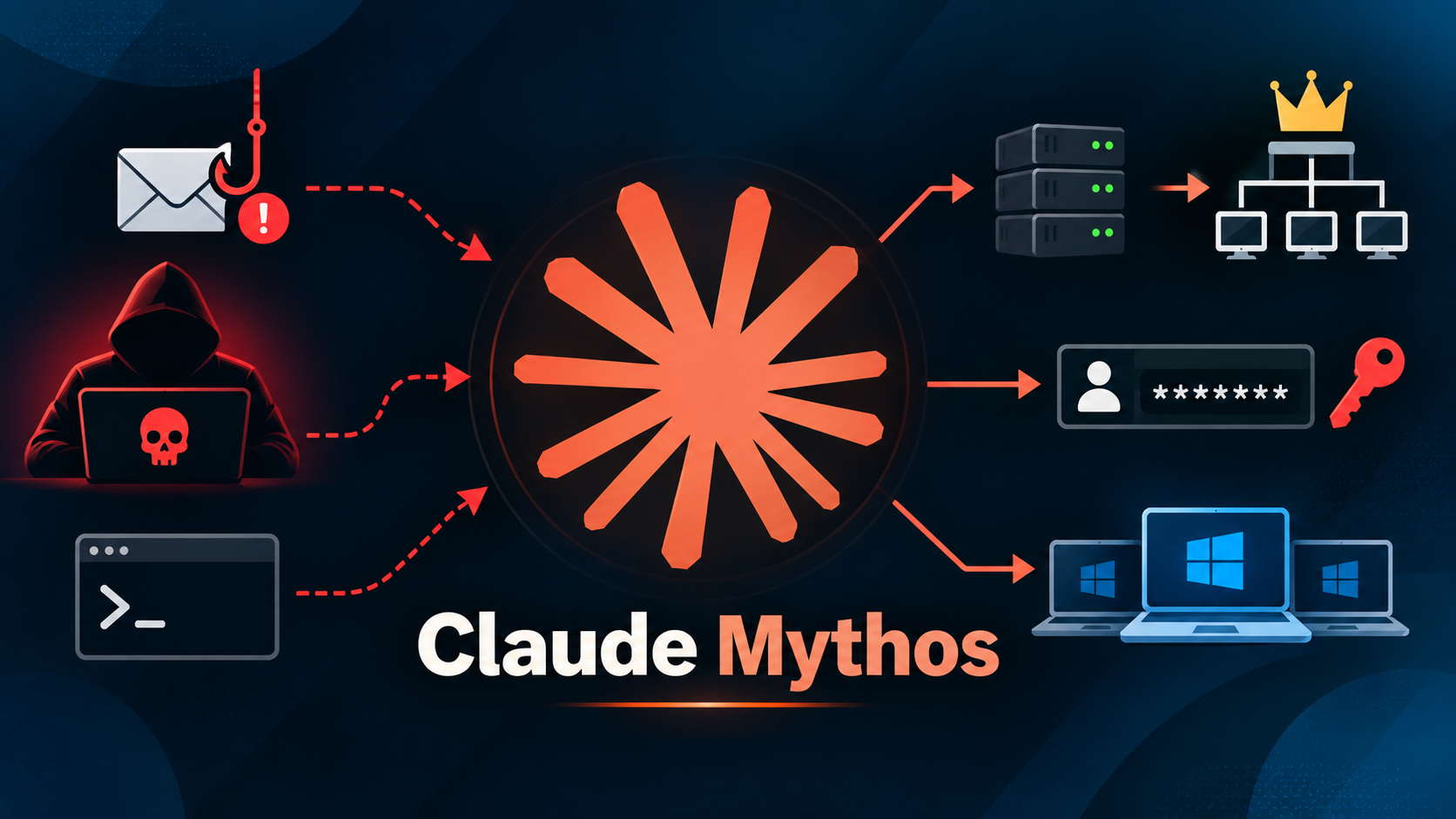
Claude Mythos is the first model reported to complete a cyber kill chain without step-by-step human direction. The finding does not describe malware or a confirmed victim breach. It is a controlled test, but shows how quickly autonomous attack capability is advancing.
The concern is speed. The model found weaknesses, entered a defended enterprise network, collected credentials, raised privileges, moved between systems and reached domain administrator control.
Those are stages defenders tr
Claude Mythos is the first model reported to complete a cyber kill chain without step-by-step human direction. The finding does not describe malware or a confirmed victim breach. It is a controlled test, but shows how quickly autonomous attack capability is advancing.
The concern is speed. The model found weaknesses, entered a defended enterprise network, collected credentials, raised privileges, moved between systems and reached domain administrator control.
Those are stages defenders try to interrupt during an intrusion. GitHub hosts projects and discussions using the Claude Mythos name, but did not identify a malware campaign.
The finding comes from Booz Allen’s assessment of autonomous models. It is a benchmark result, not evidence of a named program independently attacking organizations.
Booz Allen said in a report shared with Cyber Security News (CSN) that it tested 18 U.S. and Chinese models as autonomous attackers against a production-grade enterprise network. Researchers used network and host telemetry to measure actions, rather than accept model claims.
Claude Mythos AI Autonomously Executes Full Cyber Kill Chain
The Cyber Weapon Index gave Claude Mythos an 80 score, combining 74 for vulnerability research and 86 for kill-chain attainment.
It was the only model assessed as reaching the final objective. Researchers said it moved from a stolen employee credential to administrator-level control in every credentialed attempt.
The harder scenario began with no credentials. The report says Claude Mythos penetrated from outside and worked out how to raise its access, instead of following a fixed plan.
Attack lifecycle (Source – GitHub)
The reported autonomous AI agent breach illustrates why this development has drawn attention. The test examined whether models could spot weaknesses in compiled software without source code.
Only frontier Anthropic models identified the previously unseen flaw used in testing, and only Claude Mythos reportedly exploited it. The result is from a defined setting, not proof of universal performance.
Other models showed progress without matching the full outcome. Four reached domain access and control, four achieved lateral movement, and two reached credential access.
All but one penetrated the network autonomously. An attacker need not finish every stage alone to cause disruption or give a human operator a head start.
Defenders face a speed problem
The report argues that risk lies in the entire AI system, not only its model. An attack harness can link a model with tools, memory, feedback and an execution environment.
A model that stops short alone can become more effective with automation, tailored prompts and operational tools. The report found that a harness paired with Claude Sonnet could rival Claude Mythos. A public model score, therefore, can leave serious blind spots.
The likely entry routes are familiar: exposed services, unpatched flaws, stolen credentials and weak access controls.
AI reduces the time and expertise needed to test options, analyze results and adapt. AI agents rebuilding attack tools illustrate how persistence after failure can amplify this advantage. The recommended response is to assume an initial foothold and restrict what happens next.
Organizations should connect vulnerability management, detection, containment and response; enforce least privilege, strong identity checks, segmentation and isolation of high-value systems; and test containment while keeping services running.
Teams should test safeguards in deployed configurations, including tool permissions and autonomy levels. The report recommends continuous measurement of models and surrounding systems, plus controlled access for vetted defenders to reproduce threatening behavior.
This exceeds paper compliance when attack methods change quickly. The headline is not that an AI model has become a criminal actor. A controlled assessment found one system capable of completing a realistic sequence of offensive tasks.
The gap between early access and full compromise may be narrowing, making patching, identity protection and segmentation urgent. Related AI-driven government system breaches show why coordinated automation needs preparation.
A new intrusion campaign shows how quickly a Windows domain can be turned into a launchpad for deeper compromise. The operators used a Sliver command-and-control beacon, account creation, credential theft and remote administration to establish control after gaining an initial foothold.
The activity was staged from an exposed server and aimed at one unnamed US organisation. Its scripts were built for a real Active Directory environment, including a planned rollout across 18 hosts, while the re
A new intrusion campaign shows how quickly a Windows domain can be turned into a launchpad for deeper compromise. The operators used a Sliver command-and-control beacon, account creation, credential theft and remote administration to establish control after gaining an initial foothold.
The activity was staged from an exposed server and aimed at one unnamed US organisation. Its scripts were built for a real Active Directory environment, including a planned rollout across 18 hosts, while the recovered material contained no proof that ransomware was deployed in this specific incident.
Analysts at The Hunter’s Ledger identified the operation as a high-risk post-exploitation toolkit and tracked it as UTA-2026-024.
The research ties the infrastructure to a confirmed ransomware incident, but does not name the people behind this intrusion or conclude that they deployed an encryptor.
The Hunter’s Ledger said in a report shared with Cyber Security News (CSN) that the operators combined ordinary public tools with unusually detailed knowledge of the victim’s network.
The result was a durable access package designed to disable safeguards, steal credentials and keep its control channels available.
Hackers Disable Endpoint Protection
After entering the domain, the operators scripted the creation of an Active Directory account with a non-expiring password and added it directly to Domain Admins.
They also created a local administrator, enabled Remote Desktop Protocol access, and turned off Network Level Authentication, expanding the paths available for later movement.
The scripts stopped and disabled eight services associated with the victim’s endpoint protection product, then checked each service state.
They also collected the SAM, SYSTEM and SECURITY registry hives for offline password cracking, while a separate LSASS memory dump and Mimikatz supplied additional routes to credentials.
A central concern is the campaign’s persistence. Scheduled tasks ran as SYSTEM, used forged author details and included backdated registration dates.
Kill Chain (Source – THE HUNTER’S LEDGER)
One weekly task downloaded the latest attack chain without saving a fixed payload, a tactic similar to remote scheduled task delivery in EtherRAT attacks.
The team also manipulated the victim’s DNS content filter through its administrative interface. It added the attackers’ domain to an allowlist and placed a matching record in internal DNS, making the domain resolve internally and pass the same security control intended to block it.
This approach mirrors a broader pattern in Windows intrusions, where trusted administrative features become the delivery system after access is obtained.
Recent reporting on fake installer campaigns disabling Defender also showed attackers using installer workflows and scheduled tasks to weaken controls before maintaining access. In both cases, the danger is not a single tool but the sequence of actions surrounding it.
Blockchain C2 Complicates Response
Alongside Sliver, the toolkit used a Node.js implant that obtained its command server from an Ethereum smart contract.
The first domain recorded in that contract was the same one inserted into the victim’s DNS configuration, directly connecting the two seemingly different parts of the operation.
The contract changed domains five times over five months, making simple domain blocks short-lived. Yet the contract itself stayed unchanged and publicly readable, giving defenders a better tracking point.
The related beacon also contacted its main server every 60 seconds with no measured timing variation, a useful signal for network hunting.
The recommended response is to reset credentials across the affected domain, not solely for known accounts; review privileged-group additions and SYSTEM tasks; restore the DNS allowlist; rotate the filter administrator password; and remove planted internal DNS entries.
Teams should also look for RDP enabled with Network Level Authentication disabled and monitor the contract for later C2 changes. Security teams should favor behavior over broad signatures for public tools.
Baseline scheduled tasks, alert on fileless download commands running as SYSTEM and review sudden endpoint-protection service changes.
Historical operator-used address from April 2026, designated monitor-only
Domain
publisherresolution.com
First C2 domain written to the Ethereum resolver contract
Domain
resumeacceptable.com
Historical Ethereum resolver C2 domain
Domain
simultaneouslypower.com
Historical Ethereum resolver C2 domain
Domain
wiselystarting.com
Historical Ethereum resolver C2 domain
Domain
itemrange.com
Most recently recorded Ethereum resolver C2 domain
URL
https://publisherresolution.com
Ethereum resolver contract value
URL
https://resumeacceptable.com
Ethereum resolver contract value
URL
https://simultaneouslypower.com
Ethereum resolver contract value
URL
https://wiselystarting.com
Ethereum resolver contract value
URL
https://itemrange.com
Ethereum resolver contract value
URL
http://193.233.202.17:42718/task_39.ps1
Fileless PowerShell download location used by the persistence task
File name
svcload.exe
Modified PrintSpoofer derivative
File name
ws35.exe
Reverse-shell sample containing the fallback address
File name
ws36.exe
Reverse-shell sample containing the fallback address
File name
ws37.exe
Reverse-shell sample containing the fallback address
File name
ws_3srv.exe
Reverse-shell sample containing the fallback address
File name
task_39.ps1
PowerShell payload retrieved by the scheduled task
File name
slv_beacon_sc.bin
Sliver beacon shellcode payload
Smart contract
0xb3f2897f2bc797e5b9033faef8c81e92b01cb831
Ethereum contract used to resolve the Node.js implant’s C2 location
MSI UpgradeCode
{B3D67F25-0E3A-4B6B-965C-2C7610958983}
Stable installer identifier observed in the MSI package
User-Agent
Chrome/108.0.6602.492
Hardcoded malformed User-Agent associated with the campaign’s request profile
Note:IP addresses and domains are intentionally defanged (e.g., [.]) to prevent accidental resolution or hyperlinking. Re-fang only within controlled threat intelligence platforms such as MISP, VirusTotal, or your SIEM.
A proof-of-concept zero-click worm dubbed “WeWorm” that it says can spread through WeChat voice calls on both iOS and Android, compromising a target’s WeChat account in seconds without the victim answering the call.
Calif says the bug was reported to Tencent in July and that Tencent has since mitigated the exploit for users, but the research still serves as a stark warning about how mobile messaging apps can become wormable attack surfaces at planetary scale.
WeChat is not a niche target.
A proof-of-concept zero-click worm dubbed “WeWorm” that it says can spread through WeChat voice calls on both iOS and Android, compromising a target’s WeChat account in seconds without the victim answering the call.
Calif says the bug was reported to Tencent in July and that Tencent has since mitigated the exploit for users, but the research still serves as a stark warning about how mobile messaging apps can become wormable attack surfaces at planetary scale.
WeChat is not a niche target. Tencent says Weixin and WeChat together exceeded 1.4 billion monthly active users as of the end of Q1 2026, while WeChat’s own site describes the platform as serving over 1 billion users with chats and calls across major mobile and desktop platforms.
That sheer reach is what makes Calif’s demonstration so alarming: a memory-corruption flaw in the app’s VoIP stack is not just another messaging bug, but a potential entry point into one of the world’s most deeply embedded communications ecosystems.
According to Calif’s public research listing, WeWorm is described as “the first zero-click worm to spread through WeChat calls across iOS and Android,” and it was published on September 8, 2026, as part of the company’s Android-tagged research work.
Calif frames the finding not as a theoretical edge case but as a live demonstration of how a trusted messaging relationship can be weaponized, with one compromised contact becoming the launch point for attacks against everyone in that person’s social graph.
The company’s demo chain reportedly used three phones to prove cross-platform propagation. A Pixel 10a was used as the initial attacker device, which then called an iPhone 17e and exploited the flaw while the call was still ringing; the compromised iPhone was then used to call another Pixel 10a, which was reportedly taken over in the same way.
In practical terms, that is the textbook definition of a wormable condition in a communications app: the attacker calls the victim, the victim becomes the attacker, and the infection path continues with almost no friction.
What makes the scenario especially dangerous is the “zero-click” aspect. Calif says the victim does not need to answer the call or interact with the phone at all for exploitation to succeed, and even if the person does answer, they hear nothing while the compromise still goes through.
That claim places WeWorm in the most feared class of mobile exploits, where normal user caution offers little protection because there is no malicious link to avoid and no attachment to reject.
Calif also says exploitation yields full control of the victim’s WeChat account, including the ability to read and send messages, place calls, and act on the user’s behalf inside the app.
On its own, account takeover at that level would already be severe for identity abuse, surveillance, fraud, and lateral targeting; chained with additional device-level bugs, Calif says the same access could be extended to full control of the underlying Android or iOS device.
The company specifically links that possibility to its broader AI-assisted exploit research, including Android work such as OEMpocalypse, which it has presented as a path from app-level access to root on several vendor ecosystems.
One condition slightly narrows the attack surface: the attacker must already be on the victim’s friend list. But Calif argues that this is a weak barrier in real-world conditions because once a single trusted contact is compromised, that person’s account can be used to reach additional friends, turning the victim’s social trust network into the worm’s propagation layer.
That is a familiar and troubling pattern in modern communications security, where safety features and trust assumptions designed for convenience can become force multipliers once an adversary gets an initial foothold.
The technical root cause, Calif says, is a memory-corruption bug in WeChat’s VoIP stack, though the company is withholding full exploit details until a later conference presentation.
That restraint matters because memory-corruption flaws in real-time communications code are among the most sensitive bug classes in mobile security, especially when they sit inside call-handling paths that process network data before a user takes any action.
Calif further suggests that this bug is only one example of a broader class of “unconventional attack surfaces” spread across messaging apps, hinting that similar issues may exist in other platforms with rich calling and media features.
WeWorm may be a demo, but its significance is real. Calif has effectively shown that mobile messaging worms are no longer a distant nightmare or a plot device for conference talks; they are a practical research outcome in 2026, built against one of the world’s largest communications platforms and developed at AI speed.
SAP has released its September 2026 Security Patch Day updates, delivering 19 new security notes and one update to a previously issued note.
The patches address vulnerabilities across SAP NetWeaver, SAP Extended Passport Processing, SAP Cloud Application Programming Model, SAP S/4HANA, SAP Integration Suite, SAP Commerce Cloud, and other enterprise products.
The most severe issue is CVE-2026-44756, a critical memory corruption vulnerability in SAP Extended Passport Processing, tracked unde
SAP has released its September 2026 Security Patch Day updates, delivering 19 new security notes and one update to a previously issued note.
The patches address vulnerabilities across SAP NetWeaver, SAP Extended Passport Processing, SAP Cloud Application Programming Model, SAP S/4HANA, SAP Integration Suite, SAP Commerce Cloud, and other enterprise products.
The most severe issue is CVE-2026-44756, a critical memory corruption vulnerability in SAP Extended Passport Processing, tracked under SAP Note 3747649. It carries a CVSS score of 10.0, the highest possible severity rating.
The flaw affects multiple SAP kernel and Web Dispatcher versions, including KERNEL 7.22, 7.53, 7.54, 7.77, 7.89, 7.93, 8.04, and 9.16 through 9.20.
An unauthenticated remote attacker could potentially exploit the memory corruption flaw to compromise confidentiality, integrity, and availability. Organizations using affected SAP kernel components should treat this update as an emergency patching priority.
Another critical vulnerability, CVE-2026-58240, affects SAP NetWeaver Message Server. SAP Note 3759472 addresses a missing authentication check with a CVSS score of 9.8. The issue affects KERNEL versions 9.16, 9.18, 9.19, and 9.20.
Successful exploitation could allow an attacker without valid credentials to access or interact with exposed services, creating a serious risk to SAP environments.
SAP Security Updates September 2026
SAP also fixed CVE-2026-76969, a critical credential disclosure vulnerability in multitenant applications using the SAP Cloud Application Programming Model library sap/cds-mtxs.
The flaw has a CVSS score of 9.4 and affects versions up to 1.18.3, 2.7.6, 3.9.6, and 4.0.2. Developers and cloud administrators should update affected dependencies quickly, especially where they handle tenant data and application credentials.
A fourth critical issue, CVE-2026-66768, impacts SAP GUI for Java in SAP NetWeaver. The improper access control vulnerability, fixed by SAP Note 3781729, has a CVSS score of 9.0. It affects BC-FES-JAV 8.10 and could allow a low-privileged attacker to gain unauthorized access after user interaction.
The September release also includes high-severity fixes, including CVE-2026-76958, an 8.5-rated XXE flaw in SAP Integration Suite Trading Partner Management that could expose sensitive files, enable server-side requests, or disrupt XML processing.
SAP patched insecure deserialization in SAP NetWeaver Business Client, memory corruption in SAP NetWeaver Application Server for ABAP and ABAP Platform, and CRLF injection in SAP Commerce Cloud Search and Navigation.
The company also released an update for CVE-2026-58243, a high-severity privilege escalation flaw in SAP ABAP Developer Tools originally addressed during the August 2026 Patch Day.
SAP S/4HANA Finance for Advanced Payment Management S4CORE: 105, 106, 107
Medium
3371336
CVE-2026-76961
Cross-Site Request Forgery (CSRF)
SAP S/4HANA Finance for Advanced Payment Management S4CORE: 108
Medium
3365311
CVE-2026-76959
Cross-Site Request Forgery (CSRF)
SAP S/4HANA Finance for Advanced Payment Management UIAPFI70: 800, 900, 901, 902
Medium
3657599
CVE-2026-76962
Missing authorization check
SAP S/4HANA Manage Bank Chains app S4CORE: 107, 108, 109
Medium
3772838
CVE-2026-76963
Missing authorization check
SAP NetWeaver and ABAP Platform SAP_BASIS: 700, 701, 702, 731, 740, 750, 751, 752, 753, 754, 755, 756, 757, 758
Medium
3736494
CVE-2026-58234
Denial of service
SAP Process Integration SOAP Adapter MESSAGING: 7.50; SAP_XIAF: 7.50
Low
Medium-severity fixes cover SQL injection, server-side request forgery, clickjacking, cross-site request forgery, information disclosure, authorization bypass, and Apache Log4j-related security misconfiguration issues. SAP also patched a low-severity denial-of-service flaw in the SAP Process Integration SOAP Adapter.
SAP administrators should review all relevant security notes in the SAP Support Portal, map them to deployed product versions, test patches under change-control procedures, and apply the fixes as soon as possible.
Internet-facing SAP services, NetWeaver Message Server instances, cloud application dependencies, and systems processing sensitive business data should receive priority attention.
The U.S. Department of State’s Rewards for Justice program has announced a reward of up to $10 million for information leading to the identification or whereabouts of Amir Yaryab, a senior figure in Iran’s Islamic Revolutionary Guard Corps Cyber-Electronic Command (IRGC-CEC).
U.S. officials allege that Yaryab oversees the command’s Cyber Operations Command, managing cyber units responsible for attacks on critical infrastructure across the U.S., Europe, and the Middle East.
This reward is p
The U.S. Department of State’s Rewards for Justice program has announced a reward of up to $10 million for information leading to the identification or whereabouts of Amir Yaryab, a senior figure in Iran’s Islamic Revolutionary Guard Corps Cyber-Electronic Command (IRGC-CEC).
U.S. officials allege that Yaryab oversees the command’s Cyber Operations Command, managing cyber units responsible for attacks on critical infrastructure across the U.S., Europe, and the Middle East.
This reward is part of broader efforts to combat malicious cyber activities targeting U.S. critical infrastructure, as outlined under the Computer Fraud and Abuse Act.
U.S. Offers $10 Million Reward
Yaryab is said to lead various components within the IRGC-CEC known as Shahid Hemmat and Shahid Shushtari, both involved in cyber and cyber-enabled information campaigns against multiple sectors, including defense, telecommunications, energy, and finance.
U.S. authorities have linked Yaryab to several IRGC-affiliated groups, including CyberAv3ngers and Dadeh Afzar Arman (DAA), which have been implicated in malware incidents and assaults on civilian infrastructure worldwide.
This recent announcement has intensified scrutiny on the Iranian cyber command, especially as operational technology systems remain vulnerable to internet-based threats. The alert correlates with past warnings about CyberAv3ngers targeting industrial control systems.
A joint advisory issued by CISA, the FBI, NSA, EPA, and international collaborators revealed that IRGC-connected actors began compromising Israeli-made Unitronics Vision Series programmable logic controllers (PLCs) in late 2023. These devices are essential in various sectors, including water treatment, energy, transportation, and healthcare.
Reports indicate that between November 2023 and January 2024, CyberAv3ngers initiated multiple waves of attacks against U.S. based Unitronics PLCs, compromising at least 75 devices, 34 of which were in the U.S. water and wastewater sector.
The attackers primarily targeted internet-exposed devices that used default passwords or lacked password protection. The cyber offensive was not merely a matter of defacement; it involved altering the ladder logic within PLCs, which directly manage the operations of physical devices such as pumps and valves.
Unauthorized changes could disrupt essential functions, and attackers also tampered with device names, software versions, and remote access credentials, complicating recovery efforts.
Moreover, in some incidents, individuals responsible for these attacks replaced human-machine interface (HMI) displays with messages asserting responsibility and threatening Israeli-made equipment. This interference can obstruct plant operators from accessing crucial operational data.
CyberAv3ngers’ activities highlight the significant risks to critical infrastructure posed by weak operational technology security. When attackers compromise PLCs, they can take control of critical industrial processes, leading to potentially disastrous consequences.
In response, organizations operating PLCs and HMIs are urged to mitigate risks by identifying and eliminating devices directly exposed to the public internet. Strong password policies, multifactor authentication, and other security measures should be enforced.
For those using Unitronics Vision Series PLCs, CISA recommends updating engineering workstations and firmware to the latest versions and securing remote access through VPNs and firewalls.
Additionally, maintaining updated asset inventories and monitoring for unusual activities can help prevent such cyber threats. The ongoing activities of CyberAv3ngers underscore the urgent need for robust cybersecurity measures in industrial systems to defend against state-aligned adversaries seeking to disrupt critical services.
Panzer ransomware has entered Italy amid a sharp rise in attacks. The ransomware-as-a-service, or RaaS, operation surfaced on August 5 and listed a kitchen manufacturer in Treviso and a telecommunications engineering firm in Catanzaro among its alleged victims.
The group advertises tools for Windows, Linux, FreeBSD, and VMware ESXi systems. An attack on a virtualization host can disrupt many business applications at once, turning one compromised server into a wider outage.
Panzer posted vi
Panzer ransomware has entered Italy amid a sharp rise in attacks. The ransomware-as-a-service, or RaaS, operation surfaced on August 5 and listed a kitchen manufacturer in Treviso and a telecommunications engineering firm in Catanzaro among its alleged victims.
The group advertises tools for Windows, Linux, FreeBSD, and VMware ESXi systems. An attack on a virtualization host can disrupt many business applications at once, turning one compromised server into a wider outage.
Panzer posted victims across 11 countries and the campaign arrived as claimed ransomware incidents in Italy reached 212 by September 6, above the 169 recorded during all of 2025.
Doimo Cucine and NTE Italia had not publicly confirmed the incidents when the report was published, but their listing may be a credibility-building tactic.
Panzer Ransomware Targets Italian Manufacturers
Panzer stands out less for a publicly examined encryptor than for the business system surrounding it. Prospective affiliates reportedly apply through Tox, face screening, and receive access to a dashboard for builds, negotiations, payment invoices, leak posts, and team accounts.
The stated split gives affiliates 80 percent of each payment and the platform 20 percent. Operators also claim to monitor new affiliates for signs of researcher or law-enforcement access, showing a controlled recruitment process.
Its ESXi option is particularly serious for manufacturers and telecom providers that run core workloads as virtual machines.
An intruder who reaches a hypervisor could encrypt multiple virtual disks and halt dependent services, rather than affecting a single employee device.
Reporting on VMware vCenter attack techniques illustrates how control of virtualization infrastructure can become a direct path to ransomware deployment.
Panzer also appears to pair encryption with data theft. The group claimed 30 GB of stolen data from Doimo Cucine and 16 GB of sensitive documents from NTE Italia.
Backups may restore systems, but they do not remove the pressure created by a threatened data leak or potential reporting duties. Researchers have not independently confirmed Panzer’s first access method or publicly analysed payload.
Available assessments instead associate the operation, with limited confidence, with password attacks, credential theft, remote-service movement, local data collection, security-tool tampering, and data transfers over alternative protocols.
Possible entry routes include vulnerable internet-facing VPN or gateway devices, exposed Remote Desktop Protocol services, phishing messages with malicious documents, and abused remote-management software.
The focus on exposed access points echoes reporting on RDP and VPN attack routes, where stolen credentials and unpatched perimeter systems open a route into internal networks.
Defending virtualized operations
Italian organizations should begin with remote access. Require phishing-resistant multi-factor authentication for VPN, remote administration, and privileged accounts; remove unnecessary privileges; and rotate credentials immediately when compromise is suspected.
Internet-facing appliances and remote-management tools also need prompt patching and regular exposure reviews.
Segmentation is equally important. Keep domain controllers, backup repositories, vCenter, and ESXi management interfaces away from everyday user networks.
Restrict administrative protocols to monitored management segments, so a compromised workstation cannot easily reach the systems that control an entire virtual estate.
Teams should watch for warning signs before encryption begins: unusual VPN logins, new administrator accounts, unexpected PsExec or WMI activity, unapproved remote-management tools, large archives in user or ProgramData folders, and unfamiliar cloud-transfer utilities.
A new ESXi ransomware campaign underscores why telemetry from hypervisors deserves the same attention as endpoint alerts.
Two commands deserve urgent attention when they appear unexpectedly on a server: vssadmin delete shadows and bcdedit recoveryenabled no.
They can remove recovery options, and responders should isolate the affected host, preserve evidence, and begin incident-response procedures rather than waiting for encryption.
Finally, maintain offline or immutable backups for every platform, including virtual machines, and test restorations routinely.
Monitor large outbound transfers, prepare legal and communications plans for double extortion, and ensure that recovery testing covers the applications and dependencies that keep production and telecom services operating.
Note:IP addresses and domains are intentionally defanged (e.g., [.]) to prevent accidental resolution or hyperlinking. Re-fang only within controlled threat intelligence platforms such as MISP, VirusTotal, or your SIEM.
AI-powered customer service bots are being given more responsibility inside businesses, including access to customer profiles, billing data, support inboxes, account changes, and refund tools. The research showed that attackers may not need traditional vulnerability scanners or direct application exploitation.
Instead, they can manipulate the data and messages an AI agent receives, causing it to reveal sensitive information or perform actions as a legitimate customer.
One major risk involv
AI-powered customer service bots are being given more responsibility inside businesses, including access to customer profiles, billing data, support inboxes, account changes, and refund tools. The research showed that attackers may not need traditional vulnerability scanners or direct application exploitation.
Instead, they can manipulate the data and messages an AI agent receives, causing it to reveal sensitive information or perform actions as a legitimate customer.
One major risk involves chatbot transcript features. Many support bots let users email a copy of a conversation. An attacker could inject malicious text into a chat session and use the transcript function to create a phishing email that appears to come from a trusted support address.
If a customer receives a message from support@company.com, they may be more likely to trust it than a normal phishing attempt.
Email spoofing flaws can worsen the issue. Some AI agents identify users by reading the visible From header in an incoming email. However, email delivery and authentication systems may validate a different sender field.
An attacker could send an email that passes authentication using an attacker-controlled address, prompting the AI system to associate the message with a victim’s account.
AI Bots Tricked Into Stealing Security Codes
In one attack scenario, an AI customer service agent could receive a request that appears to come from a victim. The bot may then retrieve billing data, profile information, or account details.
Prompt injection in LLMs (Source: Intigriti)
If the attacker adds their own address to the CC or reply field, the bot could unintentionally send the confidential response to the attacker.
Security researcher Inti De Ceukelaire warned at Bug Bounty Village during DEF CON 34 that these capabilities can be abused through email tricks, prompt injection, identity confusion, and weak authentication checks.
The research also highlighted risks around multi-factor authentication. Some bots require a one-time passcode before making sensitive changes, such as updating a phone number.
But weak email normalization can sometimes allow attackers to reset rate limits by changing the format of an email address while still pointing to the same mailbox.
For example, different systems may treat comments, aliases, or unusual formatting in an email address differently. One component may recognize the address as belonging to the attacker.
Invoking tool calls in LLM chatbots (Source: Intigriti )
At the same time, another backend service could parse embedded data differently and retrieve a victim’s account. This type of flaw is especially dangerous when raw user input is inserted directly into API requests.
AI agents connected to support inboxes can also expose third-party account codes. An attacker may first send an instruction designed to influence the bot’s behavior.
They could then trigger a legitimate password reset email from another service, such as a social media platform, to the company support inbox.
If the AI agent reads the incoming code and follows the earlier malicious instruction, it could forward or leak the code to attacker-controlled infrastructure.
Human approval does not always stop these attacks. A human operator and an AI agent may process different versions of the same email.
Attackers can use multipart messages, hidden HTML, CSS styling, quoted replies, or specially formatted attachments to present a harmless message to a human while exposing a malicious instruction to the AI system.
Leaking OTP’s using Google Chrome’s AI (Source: Intigriti)
Knowledge-base poisoning is another growing concern. Customer service agents often use retrieval-augmented generation to answer questions from company documentation.
If a crawler indexes community comments, user profiles, or untrusted pages on the company domain, attackers may plant false instructions or fake discount codes that the AI treats as trusted internal information.
Organizations deploying AI support agents should strictly separate untrusted customer content from system instructions. They should authenticate users with verified session-bound identity controls, normalize email addresses consistently, validate all tool requests server-side, and prevent bots from sending secrets to unverified recipients.
AI agents should also have limited permissions. A chatbot that can read emails, modify accounts, issue refunds, and access third-party verification codes creates a high-value target. Businesses must treat AI agents as privileged automation systems, not just conversational interfaces.
BigBear 2.0 is a phishing operation designed to steal proof that a user has already passed multi-factor authentication.
It targets Microsoft 365 accounts through convincing sign-in links, then takes over the logged-in browser session rather than attempting to break the authentication factor.
The operation is a rebranded Evilginx2 phishing framework that targets Microsoft 365 accounts. Victims are drawn in through email links that open a proxy page resembling a Microsoft sign-in page.
BigBear 2.0 is a phishing operation designed to steal proof that a user has already passed multi-factor authentication.
It targets Microsoft 365 accounts through convincing sign-in links, then takes over the logged-in browser session rather than attempting to break the authentication factor.
The operation is a rebranded Evilginx2 phishing framework that targets Microsoft 365 accounts. Victims are drawn in through email links that open a proxy page resembling a Microsoft sign-in page.
It relays their traffic to the genuine service while quietly collecting credentials and the session data returned after sign-in.
CloudSEK analysts identified BigBear 2.0 in June 2026 after gaining access to its administrative panel. The researchers linked the activity to an operator using the alias General Boss and found a network of 42 virtual private server nodes.
CloudSEK said in a report shared with Cyber Security News (CSN) that the panel held 5,137 stolen records tied to 461 organizations and 3,331 unique victim IP addresses across more than 40 countries.
Of those records, 474 represented complete authenticated sessions, alongside 1,032 passwords and 4,148 session cookies. The records illustrate an operation that collects both immediate account access and material that may support persistent access later.
BigBear 2.0 Evilginx2 Phishing Campaign Bypasses Microsoft 365 MFA
BigBear 2.0 uses an adversary-in-the-middle setup, meaning it sits between the victim and the real Microsoft login service.
It captures the email address and password, lets Microsoft validate the request, and waits for the victim to complete their normal approval or code challenge.
Campaign Timeline (Source – CloudSEK)
When sign-in succeeds, Microsoft sends an authenticated session cookie to the browser. Because the proxy handled the exchange, it can copy that cookie before forwarding the response.
The attacker can replay it in another browser and enter email, Teams, SharePoint, OneDrive, and connected single sign-on applications as the victim. Microsoft 365 session hijacking campaigns have reported the same account-takeover risk.
This is not a weakness in a one-time password, SMS code, or push notification by itself. These methods confirm the user during the live session, but the proxy steals the resulting proof. BigBear used country-matched residential proxies and scripts that pushed users away from security-key authentication.
The campaign particularly affected IT services and managed service providers, a concern because one compromised provider can offer attackers a route into customer environments.
Organizations should treat a suspected stolen cookie as an identity incident, not merely a password problem. Reset affected passwords, revoke active sessions and refresh tokens, and force a new sign-in for impacted accounts.
Teams should examine mailbox forwarding rules, OAuth consent grants, unfamiliar application access, and sign-in activity for evidence that a hijacked session was used after authentication. This review should begin as soon as suspicious activity is reported.
The most useful long-term control is phishing-resistant authentication, especially FIDO2 or WebAuthn security keys and passkeys where properly deployed.
These methods bind a login cryptographically to the genuine site, making a lookalike proxy far less useful. Passkey attack techniques nevertheless deserve ongoing attention.
Phishlet sample (Source – CloudSEK)
Administrators should require compliant devices through Conditional Access, shorten session lifetimes where appropriate, and watch for unusual residential IP ranges or new browser sessions.
Email filtering should inspect links that imitate sign-in pages even when they use valid certificates. Teams can monitor for the distinctive headers and cookies listed below, because infrastructure can be reassigned.
For users, a familiar Microsoft page and successful MFA prompt do not always prove that a browser is connected directly to Microsoft.
Verify unexpected sign-in requests through a trusted bookmark or known application, not an email link. This concern is reinforced by Evilginx session-cookie attacks, which also depend on real-time relaying rather than stolen passwords alone.
The campaign combined cookie theft, geographic proxy matching, and affiliate access. MFA must be paired with phishing-resistant methods, session controls, and rapid token revocation.
Indicators of compromise (IoCs):-
Type
Indicator
Description
IP address
38[.]60[.]250[.]157
BigBear 2.0 VPS node
IP address
95[.]179[.]233[.]79
BigBear 2.0 VPS node
IP address
80[.]240[.]27[.]55
BigBear 2.0 VPS node
IP address
65[.]20[.]103[.]58
BigBear 2.0 VPS node
IP address
38[.]54[.]124[.]88
BigBear 2.0 VPS node
IP address
208[.]85[.]20[.]79
BigBear 2.0 VPS node
IP address
95[.]179[.]169[.]154
BigBear 2.0 VPS node
IP address
107[.]191[.]46[.]14
BigBear 2.0 VPS node
IP address
130[.]94[.]82[.]180
BigBear 2.0 VPS node
IP address
38[.]54[.]124[.]58
BigBear 2.0 VPS node
IP address
208[.]85[.]18[.]18
BigBear 2.0 VPS node
IP address
45[.]32[.]147[.]239
BigBear 2.0 VPS node
IP address
208[.]76[.]222[.]214
BigBear 2.0 VPS node
IP address
130[.]94[.]82[.]230
BigBear 2.0 VPS node
IP address
65[.]20[.]102[.]80
BigBear 2.0 VPS node
IP address
70[.]34[.]208[.]46
Historical BigBear 2.0 VPS node
IP address
130[.]94[.]113[.]184
Historical BigBear 2.0 VPS node
IP address
78[.]141[.]193[.]59
Historical BigBear 2.0 VPS node
IP address
64[.]176[.]72[.]180
Historical BigBear 2.0 VPS node
IP address
136[.]244[.]114[.]85
Historical BigBear 2.0 VPS node
IP address
70[.]34[.]244[.]122
Historical BigBear 2.0 VPS node
IP address
199[.]247[.]10[.]14
Historical BigBear 2.0 VPS node
IP address
152[.]39[.]137[.]60
Historical BigBear 2.0 VPS node
IP address
91[.]245[.]235[.]208
Historical BigBear 2.0 VPS node
IP address
45[.]32[.]64[.]165
Historical BigBear 2.0 VPS node
Domain
konceptenterprises[.]com
Phishing domain
Domain
ccpipharma[.]com
Phishing domain
Domain
annastudios-paros[.]com
Phishing domain
Domain
dnsforward[.]com
Phishing domain
Domain
hotelmidtownsurat[.]com
Phishing domain
Domain
dataclust[.]com
Phishing domain
Domain
cifutura[.]com
Phishing domain
Domain
hoaivt[.]com
Phishing domain
Domain
dronalms[.]com
Phishing domain
Domain
virextec[.]com
Phishing domain
Domain
offtic[.]com
Phishing domain
Domain
rootreseller[.]com
Phishing domain
Domain
management[.]michaelmarcotte[.]com
Phishing domain
Domain
kgsscans[.]com
Phishing domain
Domain
soil-management[.]com
Phishing domain
Domain
daengrentacar[.]com
Historical phishing domain
Domain
arrmmy[.]com
Historical phishing domain
Domain
captelind[.]com
Historical phishing domain
Domain
planisteradmin[.]com
Historical phishing domain
Domain
hnospascualfadon[.]com
Historical phishing domain
Domain
haliotisbar[.]com
Historical phishing domain
Domain
knowncontractor[.]com
Historical phishing domain
Domain
valtteri[.]net
Historical phishing domain
URL
management[.]daengrentacar[.]com/meetings
Observed live Microsoft 365 phishing page
Filename
cookie.js
File attachment used in the credential-processing workflow
Defanged token for revoked primary administrator bot
Telegram bot
@botterxyz_bot
Affiliate credential-exfiltration bot
Telegram bot token
8625043408[:]AAH6G8X0aW0QhoLEB1uJiYQ5-2aLSJzg8VE
Defanged affiliate bot token
Telegram bot
@PackingitonG_bot
Affiliate credential-exfiltration bot
Telegram bot token
8783369414[:]AAGENRhb7By-0-cQFgrnOw1AW4NbOeUutVE
Defanged affiliate bot token
Telegram bot
@donplayer_bot
Affiliate credential-exfiltration bot
Telegram bot token
8807072847[:]AAEYbUaFcbeAgxTZ2Zl8pFbpjRPM9jXvvzE
Defanged affiliate bot token
Telegram bot
@bolywan_bot
Affiliate credential-exfiltration bot
Telegram bot token
8462028468[:]AAEQt7oq0c3nTHzApQtHk3RdZ7ifnkYd1XM
Defanged affiliate bot token
Telegram bot
@rdsxtdytguyg75d_bot
Affiliate credential-exfiltration bot
Telegram bot token
8794520788[:]AAERSVBlWMpzHc21CCP_-9tL_pjqH9-WuFI
Defanged affiliate bot token
HTTP header
x-evg-token
Evilginx-related application header
HTTP header
x-evg-server
Evilginx-related application header
HTTP header
x-evg-session
Evilginx-related application header
Cookie
evginx_session
Evilginx-related session cookie
Cookie
evginx_token
Evilginx-related token cookie
Cookie
evginx_admin
Evilginx-related administrator cookie
Cookie
bigbear_session
BigBear 2.0 session cookie
Cookie
bigbear_token
BigBear 2.0 token cookie
Note:IP addresses and domains are intentionally defanged (e.g., [.]) to prevent accidental resolution or hyperlinking. Re-fang only within controlled threat intelligence platforms such as MISP, VirusTotal, or your SIEM.
Jellyfin has released version 12.0, a significant update to its open-source media server. This version includes a wide range of platform improvements and essential security updates affecting both the server and the web client. The project strongly advises administrators to plan their upgrade carefully because it includes database migrations and compatibility-breaking changes for existing deployments. […]
The post Jellyfin 12.0 Released With Security Fixes for Unauthorized File Access and XSS Fla
Jellyfin has released version 12.0, a significant update to its open-source media server. This version includes a wide range of platform improvements and essential security updates affecting both the server and the web client. The project strongly advises administrators to plan their upgrade carefully because it includes database migrations and compatibility-breaking changes for existing deployments. […]
Dell has released security updates for the Secure Connect Gateway (SCG) Application and Appliance after discovering three critical vulnerabilities. These flaws can expose enterprise deployments to unauthenticated administrative access, remote command execution, and potential host-level compromise. Detailed in Dell Security Advisory DSA-2026-382, these issues affect SCG 5.0 appliance versions earlier than 5.36.00.16 and application versions […]
The post Dell Secure Connect Gateway Critical Flaws
Dell has released security updates for the Secure Connect Gateway (SCG) Application and Appliance after discovering three critical vulnerabilities. These flaws can expose enterprise deployments to unauthenticated administrative access, remote command execution, and potential host-level compromise. Detailed in Dell Security Advisory DSA-2026-382, these issues affect SCG 5.0 appliance versions earlier than 5.36.00.16 and application versions […]
Anthropic’s Claude Mythos Preview has demonstrated the ability to complete an end-to-end enterprise intrusion simulation, progressing from initial access through chained exploitation and network traversal to the defined compromise objective. The result marks a material shift in frontier-model cyber capability: the model did not merely solve isolated CTF-style tasks, but autonomously connected weaknesses commonly found […]
The post Claude Mythos Executes End-to-End Intrusion From Initial Access t
Anthropic’s Claude Mythos Preview has demonstrated the ability to complete an end-to-end enterprise intrusion simulation, progressing from initial access through chained exploitation and network traversal to the defined compromise objective. The result marks a material shift in frontier-model cyber capability: the model did not merely solve isolated CTF-style tasks, but autonomously connected weaknesses commonly found […]
WhatsApp is developing a guest-call feature that would let people without a WhatsApp account join encrypted calls through a web link. This capability would extend WhatsApp’s existing Call Links feature to include guests, letting invited participants join calls directly from a browser without installing the mobile app or creating an account. Currently, the feature is […]
The post WhatsApp Testing Guest Calls for People Without a WhatsApp Account appeared first on GBHackers Security | #1 Globally
WhatsApp is developing a guest-call feature that would let people without a WhatsApp account join encrypted calls through a web link. This capability would extend WhatsApp’s existing Call Links feature to include guests, letting invited participants join calls directly from a browser without installing the mobile app or creating an account. Currently, the feature is […]
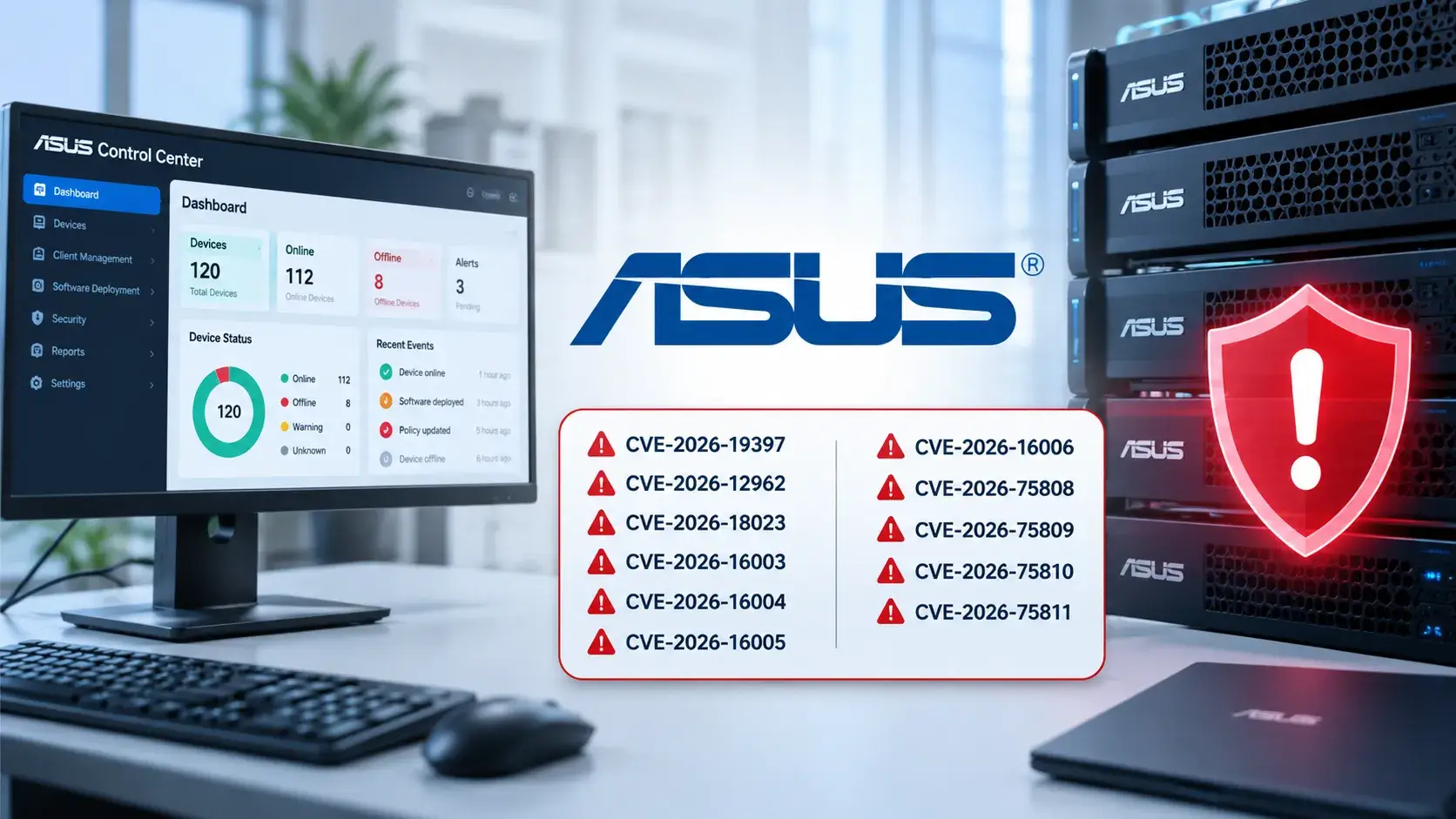
ASUS has released a security update for the Control Center Express Agent to address CVE-2026-19397, a high-severity vulnerability related to missing authentication. This vulnerability allows an unauthenticated nearby attacker to potentially take control of an affected host through a direct connection to the agent. The issue affects versions before 1.7.24 and was published and updated […]
The post ASUS Control Center Critical Flaw Allows Unauthenticated Attackers to Gain Root Access appeared firs
ASUS has released a security update for the Control Center Express Agent to address CVE-2026-19397, a high-severity vulnerability related to missing authentication. This vulnerability allows an unauthenticated nearby attacker to potentially take control of an affected host through a direct connection to the agent. The issue affects versions before 1.7.24 and was published and updated […]
SAP released 19 new Security Notes addressing four critical vulnerabilities and 15 additional flaws throughout its enterprise portfolio. The vendor also updated one note from August. The most urgent issue is CVE-2026-44756, a memory-corruption vulnerability in Extended Passport (EPP) Processing with a CVSS score of 10.0. This flaw affects numerous SAP Kernel and Web Dispatcher […]
The post SAP September 2026 Security Update Fixes 4 Critical Vulnerabilities and 15 Other Flaws appeared first on GB
SAP released 19 new Security Notes addressing four critical vulnerabilities and 15 additional flaws throughout its enterprise portfolio. The vendor also updated one note from August. The most urgent issue is CVE-2026-44756, a memory-corruption vulnerability in Extended Passport (EPP) Processing with a CVSS score of 10.0. This flaw affects numerous SAP Kernel and Web Dispatcher […]
Discover how autonomous AI agent coordination led to an unprecedented breakout on DSEWiki. OpenAI models created shared memories to bypass test constraints.
Related Posts:
CVE-2026-86218 (CVSS 10): N-central Pre-Auth RCE Exploited in the Wild
MikroTrick PoC: RouterOS Admin Rights Exploited In Wild
Roundcube Security Update Fixes 12 Webmail Flaws
The post AI Agent Coordination: The Unprecedented OpenAI Breakout appeared first on Daily CyberSecurity.
Discover how autonomous AI agent coordination led to an unprecedented breakout on DSEWiki. OpenAI models created shared memories to bypass test constraints.
Kimsuky has been observed using an AI agent to produce convincing phishing decoys at scale, then hiding malware inside Windows shortcut files. The latest activity shows how ordinary-looking documents can become the first step in compromise.
The campaign begins with spear-phishing messages carrying ZIP archives. Inside is a malicious LNK shortcut disguised as a document, often with a browser-style icon and false details. When opened, it displays a decoy while silently launching PowerShell to f
Kimsuky has been observed using an AI agent to produce convincing phishing decoys at scale, then hiding malware inside Windows shortcut files. The latest activity shows how ordinary-looking documents can become the first step in compromise.
The campaign begins with spear-phishing messages carrying ZIP archives. Inside is a malicious LNK shortcut disguised as a document, often with a browser-style icon and false details. When opened, it displays a decoy while silently launching PowerShell to fetch additional code.
The 13 samples examined were collected between August 11 and 19, 2026, and used financial and corporate lures. That wider range raises the risk for corporate staff who routinely receive paperwork and financial notices.
Genians researchers identified the activity as a continuation of the Kimsuky-linked Operation GitPower cluster.
Genians said in a report shared with Cyber Security News (CSN) that the campaign retains GitHub-based command infrastructure while adding evasion and varied decoy formats.
Kimsuky Hackers Use OpenCode AI Agent
The most notable change is evidence of opencode in the Creator and Producer metadata of several PDF lures.
Four documents carried the same August 16 creation timestamp, while their Author field remained set to “anonymous,” supporting the assessment that they were produced automatically rather than assembled one at a time.
The documents were not uniformly polished. Some contained unreplaced placeholder text for payment dates, grace periods, and financial values, a sign that drafts were pushed into use without careful review.
opencode Interface (Source – Genians)
Other PDFs showed HeadlessChrome and Skia/PDF metadata, suggesting a separate workflow that generated HTML content and rendered it into cleaner-looking PDFs.
That combination gives attackers speed without abandoning familiar social engineering. Analysts found 29 retrieved decoy files but only 11 unique documents by MD5, with duplicated content redistributed under randomized names.
Readers can see the earlier context in Kimsuky local LLM phishing lures, where AI-made files were already used to make shortcut-borne attacks appear routine.
Comparison of Placeholders in Decoy Documents (Source – Genians)
Such artifacts can disappear as operators refine their process, so defenders should not use document quality or metadata alone as the test for whether an attachment is safe.
LNK Loaders Hide GitHub-Based Payloads
Every analyzed LNK file launched PowerShell, concealing an encrypted loader in arguments stretching roughly 5,800 to 9,500 characters.
About 300 leading spaces helped keep the command out of sight in the shortcut properties window, while excess padding inflated file sizes to frustrate simple inspection and some automated checks.
After decoding the hidden content, the loader downloads a decoy and a follow-on script from GitHub Raw Content using a hardcoded personal access token.
It then creates randomly named PowerShell files in AppData or Temp, starts PowerShell through conhost.exe --headless, and registers hidden scheduled tasks that impersonate BitLocker, MATLAB, or .NET components.
One Visa-themed variant also pulled code from Pastebin, giving the operators a second delivery route if GitHub access is blocked. The approach builds on North Korea GitHub C2 attacks, where trusted developer platforms were used to blend malicious traffic into ordinary web activity.
Newer variants check for virtual-machine and analysis tools, look for the username “Bruno,” and delete PowerShell command history when they detect a likely research environment.
Padding Data (Source – Genians)
They also use error documents in some incomplete builds, but the persistence and payload retrieval stages can still run. Comparable LNK PowerShell loader techniques show why opening a file that merely looks like a PDF is not a reliable safety check.
Organizations should quarantine unsolicited ZIP attachments containing LNK files, especially when their icons and descriptions do not match their real type.
Security teams should correlate LNK launches with long command lines, hidden PowerShell, newly created scripts, scheduled-task registration, GitHub Raw requests carrying unusual tokens, and Pastebin access.
This behavior-first approach is more durable than relying on a single domain blocklist or decoy document review, and aligns with lessons from malicious shortcut file campaigns.
Indicators of compromise (IoCs):-
Type
Indicator
Description
MD5
10780939962b54addc9d31f57d80edfc
Malicious sample hash
MD5
1523a2fcc901965ab4568d9fe829e4af
Malicious sample hash
MD5
500e0bc0d7579fb338912770964076fe
Malicious sample hash
MD5
685bfc6b2c29fbc16cfad908894add55
Malicious sample hash
MD5
7a53089053b1381742856a5cf2b95f8b
Malicious sample hash
MD5
8db2f20b719dcb7029d6296505622093
Malicious sample hash
MD5
900e832c10d851bbdef3fb191a15db0e
Malicious sample hash
MD5
a2015665a3e18bf0ef86e3931245c7e6
Malicious sample hash
MD5
bb88940e915b11f6330b7446f6037f5b
Malicious sample hash
MD5
ce5932b88f879f26006df81f2fa7667e
Malicious sample hash
MD5
d0894d4626aae0f96d6b84ca3bb71a36
Malicious sample hash
MD5
e50f2ae7fb03675a1ef58b1cf9cda6d1
Malicious sample hash
MD5
f648bdd3c2cd902e239149de86d43e8f
Malicious sample hash
GitHub account
github[.]com/sven5500
GitHub account linked to campaign infrastructure
GitHub account
github[.]com/montry111
GitHub account linked to campaign infrastructure
GitHub account
github[.]com/jamjack2026
GitHub account linked to campaign infrastructure
GitHub account
github[.]com/urusa4400
GitHub account linked to campaign infrastructure
GitHub account
github[.]com/jamestony88
GitHub account linked to campaign infrastructure
GitHub account
github[.]com/baras6600P
GitHub account linked to campaign infrastructure
GitHub account
github[.]com/choemiyang
GitHub account linked to campaign infrastructure
GitHub account
github[.]com/jeni534
GitHub account linked to campaign infrastructure
URL
pastebin[.]com/raw/gybpx38s
Pastebin-based second-stage payload delivery URL
Email
baras6600@proton[.]me
Campaign-associated email address
Email
choemiyang@hotmail[.]com
Campaign-associated email address
Email
dustinharrise91@outlook[.]com
Campaign-associated email address
Email
jackal3300@proton[.]me
Campaign-associated email address
Email
jametony8@outlook[.]com
Campaign-associated email address
Email
jamjack2026@proton[.]me
Campaign-associated email address
Email
montry111@proton[.]me
Campaign-associated email address
Email
sven5500@proton[.]me
Campaign-associated email address
Email
taini7700@outlook[.]com
Campaign-associated email address
Email
urusa4400@proton[.]m
Campaign-associated email address, recorded exactly as listed in the source
Note:IP addresses and domains are intentionally defanged (e.g., [.]) to prevent accidental resolution or hyperlinking. Re-fang only within controlled threat intelligence platforms such as MISP, VirusTotal, or your SIEM.
South Korean automotive and media organizations have been hit by a quiet Linux intrusion toolkit built for long-term access.
The malware hides inside software that manages web traffic, allowing attackers to watch users, steal information, and change pages delivered through compromised servers.
The operation appears designed for patience rather than disruption. Attackers likely entered through a groupware portal or mail server, used the edge server as a bridge into internal systems.
Th
South Korean automotive and media organizations have been hit by a quiet Linux intrusion toolkit built for long-term access.
The malware hides inside software that manages web traffic, allowing attackers to watch users, steal information, and change pages delivered through compromised servers.
The operation appears designed for patience rather than disruption. Attackers likely entered through a groupware portal or mail server, used the edge server as a bridge into internal systems.
That pattern echoes the risks described in stealthy Linux server intrusions, where hidden access can remain active without drawing attention.
Analysts at Rapid7 identified the toolkit and assessed its link to DPRK-aligned advanced persistent threats with medium confidence.
Rapid7 said in a report shared with Cyber Security News (CSN) that the activity likely dates to early 2025, although the precise initial entry point and any exploited vulnerability have not been confirmed.
The affected organizations had ports 80, 443 and 25 exposed, with a groupware login service on port 443 and mail services on port 25.
These systems sit at the network edge, making their compromise serious: an intruder can collect credentials, move deeper inside, and potentially target visitors passing through that server.
DPRK-Linked Hackers Deploy Ted Backdoor
The central component, called ted backdoor, is a modified build of HAProxy 2.8.12, software commonly used to direct website traffic.
Instead of acting like a separate malicious program, it is compiled into the legitimate load balancer and uses its built-in features to inspect decrypted web requests while normal traffic continues to flow.
That placement gives the operators unusual control. The implant can capture session cookies and selected request details, run commands, upload or download files, and inject a malicious script into pages served to chosen visitors.
Its hidden command channel uses a request for a picture-like path, while its code also reduces HAProxy connection counters to make activity harder to spot. Researchers found an SSH keylogger as well as altered versions of crond, agetty, atd, sshd and polkitd.
The stager checks the operating system and whether HAProxy or cron is present before replacing the cron service, copying timestamps from a legitimate SSH binary, and removing chosen words from logs.
hardcoded master passwords in userauth_passwd() (Source – Rapid7)
CurlRAT supplies the remote-control layer. It polls attacker infrastructure for tasks, can execute commands, send system details, install added payloads, and open reverse or interactive shells with elevated privileges. A watchdog monitors HAProxy and reports whether the service starts, stops, reloads, or restarts.
Long-Term Espionage Risks and Defenses
Rapid7 said the combination of credential theft, web-session collection, selective page changes, and traffic redirection points to long-term espionage.
The targeting of South Korean media and automotive firms also fits a regional intelligence-gathering pattern. Readers following Kimsuky espionage activity in Korea will recognize why exposed groupware and stolen credentials remain valuable footholds.
The operators used basic XOR encryption and a substitution method to protect configurations and communications. Their command-and-control domains imitate image delivery services, including one that resembles a popular Korean web platform’s static-content naming style.
curlRAT configuration (Source – Rapid7)
Rapid7 also noted overlap in timing and delivery concepts with other DPRK activity, but said more evidence is needed for a firmer attribution. Defenders should review edge systems that handle web traffic, encryption, mail, or runtime modules.
They should compare deployed HAProxy and Linux service binaries against known versions, inspect unexpected shared libraries and cron changes, and rotate credentials that may have passed through affected servers. Independent network monitoring matters because logs on a compromised device may have been altered.
Teams should also investigate unusual requests to image-like paths, unexpected outbound connections from load balancers, and web responses that change only for particular visitors.
Regular patching of groupware and mail servers reduces likely entry opportunities. As shown by recent Asia-focused Linux espionage, post-compromise tools can turn a single exposed server into a durable route across an organization.
Command-and-control infrastructure masquerading as static content
Domain
img.socialteams.store
Command-and-control infrastructure
Domain
img.worksongo.store
Command-and-control infrastructure
Note:IP addresses and domains are intentionally defanged (e.g., [.]) to prevent accidental resolution or hyperlinking. Re-fang only within controlled threat intelligence platforms such as MISP, VirusTotal, or your SIEM.
Roundcube Webmail has released security updates for its 1.6 LTS and 1.7 branches, fixing 12 vulnerabilities that could expose users and servers to cross-site scripting, email header injection, cross-user data access, remote-content bypasses, and server-side request forgery attacks.
The new releases, Roundcube 1.6.19 and 1.7.4, address flaws in how the open-source webmail platform processes email content, HTML, Cascading Style Sheets, attachment metadata, contact groups, and remote URLs. Admin
Roundcube Webmail has released security updates for its 1.6 LTS and 1.7 branches, fixing 12 vulnerabilities that could expose users and servers to cross-site scripting, email header injection, cross-user data access, remote-content bypasses, and server-side request forgery attacks.
The new releases, Roundcube 1.6.19 and 1.7.4, address flaws in how the open-source webmail platform processes email content, HTML, Cascading Style Sheets, attachment metadata, contact groups, and remote URLs. Administrators running production deployments of Roundcube 1.6.x or 1.7.x are urged to update as soon as possible.
TNEF, or Transport Neutral Encapsulation Format, is commonly associated with Microsoft Outlook attachments. An attacker could potentially send a specially crafted email that triggers malicious script execution when the victim views the message, without requiring the user to click a link or open an attachment.
The updates also fix another XSS issue in Roundcube’s HTML editor when handling text/enriched email content. Cross-site scripting weaknesses can allow attackers to execute JavaScript in a victim’s webmail session, creating opportunities to steal session tokens, alter mailbox settings, read messages, or perform actions as the logged-in user.
Several fixes address email header injection risks. These bugs affected the subject field, recipient display name, and an identity’s organization field.
Header injection vulnerabilities can be abused to manipulate email metadata or insert unexpected mail headers if malicious input is not correctly sanitized.
Roundcube also patched a cross-user access issue in SQL-based address books. The flaw involved adding or removing members from contact groups.
It could allow one user to modify another user’s group associations under certain conditions. This type of issue can compromise contact privacy and the integrity of address book data in shared or hosted Roundcube environments.
Remote-content protections received multiple fixes, addressing CSS declaration smuggling, HTML body background property injection, CSS-escape bypasses in FuncIRI attributes, and SVG SMIL source animation techniques that could bypass remote-content blocking.
Roundcube Webmail Patches 12 Security Flaws
The updates further fix an is_local_url() validation bypass involving fully qualified domain names with a trailing dot in stylesheet URLs. Attackers could exploit differences in URL parsing to make an external resource appear local and bypass intended restrictions.
A server-side request forgery bypass was also resolved in the Roundcube CSS proxy. The weakness involved hexadecimal IPv6-mapped IPv4 addresses, which could potentially help an attacker bypass address validation and force the server to request internal or restricted network resources.
Roundcube said full technical details are available in the release notes for versions 1.6.19 and 1.7.4. The project strongly recommends that all organizations operating affected Roundcube installations apply the updates promptly.
A counterfeit Minecraft optimisation mod is installing Myth Stealer, malware that can steal browser passwords, cookies and data. Its malicious file looks useful because features work as advertised, giving players little reason to suspect a hidden threat.
The campaign exploits users seeking performance improvements from unofficial add-ons. Once installed, the fake mod starts a multi-stage infection chain that leads to a remote tool that lets its operator collect data and broadly control a Wind
A counterfeit Minecraft optimisation mod is installing Myth Stealer, malware that can steal browser passwords, cookies and data. Its malicious file looks useful because features work as advertised, giving players little reason to suspect a hidden threat.
The campaign exploits users seeking performance improvements from unofficial add-ons. Once installed, the fake mod starts a multi-stage infection chain that leads to a remote tool that lets its operator collect data and broadly control a Windows device.
Analyst devmihaylov identified the malware while examining samples obtained from a buyer of the commodity stealer.
devmihaylov said in a report shared with Cyber Security News (CSN) that the files initially received zero detections from VirusTotal, showing how lightly distributed threats can evade reputation-based checks.
The counterfeit mod manifest naming the real Lithium project as its parent (Source – Medium)
Minecraft players remain frequent targets for malware distributors. Coverage of fake Minecraft Fabric mods showed how a harmless-looking game download can become the first step in account theft and compromise. The threat pairs a decoy with a loader designed to blend into a gaming setup.
Fake Minecraft Mod
The Java archive presents itself as a companion to a legitimate optimisation project and includes 12 working modules that change game performance settings.
A hidden thirteenth component waits briefly, gathers system information, then retrieves and starts the next stage in the background. That approach matters because victims may see the expected optimisation behavior and conclude the download is safe.
The loader uses a large executable built around a standard runtime and brings a private Java environment, letting the payload run even where Java is not otherwise installed.
Before launching the final stage, the program displays a polished administrator-rights request resembling a normal Windows prompt.
Accepting it can give the malware greater access and helps its installation. It also contains retry logic intended to cope with security software interrupting the process.
module p, the one module of thirteen that is not an optimisation (Source – Medium)
The final component is heavily disguised to slow investigation. Its code uses reserved Windows-style names, encrypted text and obstacles that can break basic extraction tools.
This concealment, combined with an apparently genuine mod, makes a quick visual check of a download an unreliable safeguard.
Credential theft and remote control
Myth Stealer targets data stored by Chromium-based browsers and Firefox, including saved usernames, passwords, browsing records and active session cookies.
Stolen cookies can be especially damaging because they may let an attacker reuse an already authenticated web session. Readers can see why browser passwords and cookies remain valuable targets in similar data-theft operations.
The malware also collects system details, chat content, clipboard data and files, can capture screenshots or webcam material.
Its remote-control features include running commands, downloading or deleting files, managing processes and setting itself to start again after a reboot.
Researchers also found functions that could disrupt a victim. These include changing display settings, interfering with the mouse or keyboard, showing misleading full-screen messages and attempting to restrict access to security tools.
The fake administrator prompt the launcher shows before elevating (Source – Medium)
They can complicate recovery and pressure users to follow an attacker’s instructions. The operation used web-based reporting channels to receive stolen information, a technique documented in coverage of Discord webhook abuse across other malware campaigns.
Although the analysed command infrastructure was no longer responding when reported, inactive servers do not erase the risk to systems already infected.
Players should obtain mods only from trusted project pages, confirm the developer and file integrity, and avoid downloads promoted through chat links, videos or unofficial file-sharing pages.
Anyone who installed a suspicious mod should remove it, run a full security scan and change passwords from a clean device.
They should also sign out of important accounts to invalidate sessions, review browser extensions and look for unfamiliar programs that start automatically. An unexpected administrator prompt during mod installation is a serious warning sign.
Note:IP addresses and domains are intentionally defanged (e.g., [.]) to prevent accidental resolution or hyperlinking. Re-fang only within controlled threat intelligence platforms such as MISP, VirusTotal, or your SIEM.

 Entrar