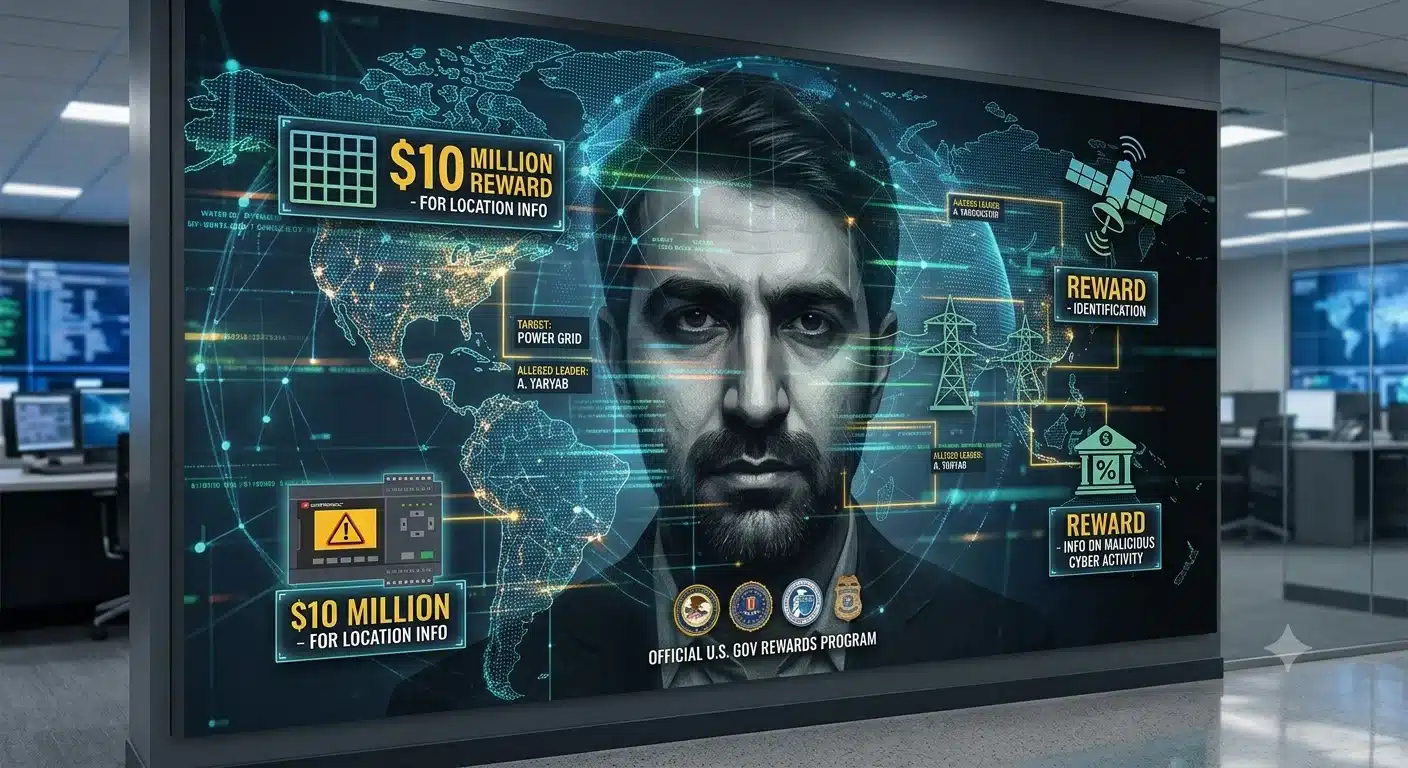
US Puts $10 Million Bounty on Alleged Iranian Cyber Chief
![]()

![]()
CISA added CVE-2023-49105 to its exploited-flaws catalog after researchers tied the old ownCloud bug to reported Philippine nuclear data theft.
The post CISA Flags Old ownCloud Flaw After Reported Philippine Nuclear Data Theft appeared first on TechRepublic.

![]()
The CISA and FBI, along with cybersecurity agencies from Australia, Canada, New Zealand and the U.K., have released new guidance on outage communications for service providers dealing with major IT and OT outages. The guide calls for prompt, factual and audience-specific communication during disruptions caused by malicious cyber activity or non-malicious events.
Titled “Communicating Under Pressure: Best Practices for Service Providers,” the guidance says effective communication is critical to limiting operational impact when IT and OT outages affect customers, network defenders, critical infrastructure owners and operators, and the public. It recommends that organizations clearly communicate what is known, what remains unknown and what is still under investigation, while providing frequent updates as circumstances change.
The agencies recommend that service providers establish an outage communications plan before an incident occurs. The plan should define incident thresholds, escalation paths, target audiences and procedures for status pages, customer and partner notices, and regulatory communications. Organizations are also advised to establish cross-functional incident teams involving engineering and operations, communications, legal, risk and compliance, and customer support.
The guidance calls for clearly defined roles, including an incident lead, communications lead and spokesperson. It also recommends parallel workstreams so technical teams can focus on diagnosing and remediating the root cause while communications teams manage external messaging and leadership handles strategy and regulatory requirements.
For organizations responding to cyber incidents, the guidance places particular emphasis on balancing transparency with operational security. If malicious activity is suspected or confirmed, external communications should not compromise investigations, containment efforts or other response activities. Organizations are also advised against making premature conclusions when the root cause remains under investigation.
The guidance recommends segmenting communications for technical teams, executives and the public. Audiences can include enterprise IT teams and security operations centers, employees and customers, government partners and regulators, critical infrastructure owners and operators, as well as the media and general public.
During an outage, organizations should lead with a concise summary covering affected systems, user impact, scope and the known cause without speculation. The agencies also advise against vague descriptions such as “service degradation” and recommend messaging that can be understood quickly during high-pressure situations.
Transparency is another central principle. Service providers are advised to state what they know and do not know, use a single source of truth such as a status page, and focus communications on actionable guidance rather than reputation management. Customers should be told what actions they need to take or clearly informed when no action is required.
The guidance also calls for continuous, time-stamped updates that show the incident timeline, actions taken, and recovery milestones. Organizations should maintain a single status page and align external messaging with legal, contractual and sector-specific reporting obligations.
Agencies ultimately frame effective outage communications around five principles: immediate acknowledgement, technical and actionable information, transparency, accountability, and continuous updates. For service providers, the guidance positions communication as an important part of incident response, alongside technical remediation and recovery.
The DOJ and FBI seized QScan and QTRouter, platforms run by China state-sponsored hackers to hide attacks on U.S. critical infrastructure.
Related Posts:
The post FBI Seizes QScan and QTRouter Platforms Run by China State Hackers appeared first on Daily CyberSecurity.
CISA published an advisory (AA26-237A) documenting two simultaneous red team assessments at critical infrastructure organizations. Both organizations lost full domain control and had their cloud environments compromised. One of them didn’t know until CISA told them afterward.
“The Cybersecurity and Infrastructure Security Agency (CISA) conducted simultaneous red team assessments at two organizations and observed different defensive outcomes. In both environments, the red team achieved full domain compromise and accessed sensitive business systems (SBSs) and cloud resources.” states CISA. “Organization A failed to detect or contain the activity, but Organization B rapidly identified initial compromise attempts, isolated affected systems, and forced the red team into an assume breach model.”
Organization A is a Government Services and Facilities Sector entity. Organization B operates in the Water and Wastewater Systems Sector. The red team used comparable techniques against both. The difference in outcome was entirely about detection and response, not the sophistication of the attack.
At Organization A, the red team found a web application that still used default credentials. They used it to send phishing emails from a trusted internal address and gained access to four workstations. From there, they exploited a misconfigured Active Directory Certificate Services template with the ESC1 flaw. This allowed a low-privileged user to request certificates for other users, including administrators. They then reached all the targeted sensitive business systems without anyone noticing. After moving into the cloud, they even read SOC staff emails to see if the attack had been detected. It hadn’t.
“Without well-defined baselines and alert filtering, false positives and routine alerts overwhelm defenders, obscuring real threats.” CISA continues. “Organizations that tune alerts to highlight anomalies and filter out normal business activity enable defenders to focus on genuine incidents and respond rapidly.”
Organization A’s SOC was receiving thousands of false positive alerts, many at higher severity than the actual intrusion alerts the red team was generating. Staff eventually reviewed SCCM-related alerts from real red team activity, couldn’t identify the system’s owner or function, and marked it a false positive.
The red team confirmed the miss by reading SOC email. Then they used keyloggers and screenshot capture on SOC workstations to make sure nothing was coming. Nothing was. The organization had multiple separate SOCs with different EDR solutions and no cross-team visibility, which meant that even if one team noticed something, there was no mechanism to act on it across the relevant systems.
“Detection tools are only as effective as the people, processes, and procedures supporting them. SOC staff should not operate in silos and should have clear authority unhindered by bureaucracy to effectively contain and resolve incidents.” add CISA.
At Organization A, SOC analysts were managing systems they didn’t fully understand and had no written escalation procedures, so their default response to ambiguity was to wait. At Organization B, staff triaged, investigated, coordinated with engineering, and reimaged machines before handing them back to users.
At Organization B, the red team still found important security gaps. They discovered a password stored in plain text inside an XML file on an SCCM distribution point. They used the related service account to gain powerful rights over a domain controller and then performed a DCSync attack, obtaining the krbtgt hash. This allowed them to create Golden Tickets and impersonate users across the domain.
They also found a path into the OT network through RDP files pointing to a bastion host. Using FTP credentials found on a jump server, they connected to the bastion through SSH. The bastion had no outbound internet access, so their payload could not run, and the SOC quarantined the host. Still, the access path was there.
Both organizations also had the same cloud security problem: neither had enabled Conditional Access for workload identities. This Microsoft feature applies access controls to applications and service accounts, not just human users. Without it, applications with broad Microsoft Graph permissions can bypass normal Conditional Access rules. CISA’s red team used this gap in both organizations to access emails across the companies.
In Organization A, the team also found AWS IAM credentials stored in users’ home directories with no expiration date. Those credentials could remain valid indefinitely, creating another long-term risk.
In Organization B’s cloud environment, the red team abused Seamless SSO by using Kerberos tickets obtained via DCSync to authenticate to Azure without needing any user’s cleartext password. They found a disabled AD-synced account that owned an application with permission to read, write, and send emails for every user in the tenant. They re-enabled the account, DCSynced its credentials, added a client secret to the application, and could then access the full mailbox of every employee from the public internet. Organization B’s detections flagged the AzureHound tool by user agent and caught anomalous Microsoft Graph API request volumes, but those controls arrived after the initial cloud access was already established.
CISA recommends several practical steps to improve security. These include hardening ADCS by disabling CT_FLAG_ENROLLEE_SUPPLIES_SUBJECT on templates and limiting who can enroll, setting the Machine Account Quota to zero when there is no operational need, and removing cleartext credentials from workstations and network shares.
Organizations should also enable Conditional Access for workload identities, create procedures to revoke tokens, and treat SCCM and similar endpoint management platforms as Tier 0 assets, giving them the same level of protection as domain controllers.
The full advisory also maps each red team technique to its MITRE ATT&CK identifier and compares how well the two organizations detected the different stages of the attacks.
Follow me on Twitter: @securityaffairs and Facebook and Mastodon
(SecurityAffairs – hacking, CISA)
Five U.S. federal agencies issued a joint advisory this week warning of an active hacking campaign against Siemens S7 Series programmable logic controllers. The advisory, CISA AA26-231A, is co-signed by NSA, FBI, DOE, and EPA and covers every S7 generation, from the S7-200 to the S7-1500 F-series safety controllers.
The advisory is direct about one thing from the first paragraph: this is not a theoretical risk.
“The threat actors are conducting reconnaissance and capability development against U.S.-based Siemens PLC installations using AI-generated exploitation scripts disguised as legitimate monitoring tools. The actors leverage Internet scanning services to find Internet-exposed PLCs running outdated software or that are otherwise poorly protected.” reads the advisory. “The U.S. critical infrastructure sectors most targeted by this threat activity include Critical Manufacturing, Energy, Water and Wastewater, Chemical, Food and Agriculture, and Commercial Facilities. This is not a theoretical risk—it is an active threat. “
The key detail is how the attackers try to hide their activity. They make their scripts look like legitimate OT monitoring software, making it harder for security teams to notice them while they map the target environment.
The tools themselves are not custom malware. The attackers use the open-source snap7.dll and python-snap7 libraries, which are legitimate industrial automation tools. These libraries can communicate directly with Siemens PLCs over S7comm on TCP port 102, allowing access to PLC memory, configuration data and ladder logic programs.
“Using AI to generate exploitation scripts represents an evolution in threat actor capabilities, dramatically reducing the technical expertise and time required to develop working ICS exploitation scripts and malicious tools. In addition, AI enables adversaries to rapidly leverage additional attack vectors and adapt to defensive measures.” continues the advisory. “Threat actors can easily collect public information about vulnerabilities and weaknesses, find exposed and exploitable PLCs, and use AI-generated scripts to act on that information. If PLCs are exposed to the Internet, they are at high risk for exploitation.”
Researchers warn that a defender who patches a vulnerability may now find the attacker’s tooling already adapted before the change window closes.
The observed activity breaks into two phases. Actors use scanning services like Censys and ZoomEye to locate Internet-exposed PLCs, then run read operations to understand the target environment before any writes happen. The authoring agencies assess this as pre-positioning: the actors are building a map and testing their techniques against specific CPU models, refining as they go, before they’re ready to cause disruption.
The target list covers Critical Manufacturing, Energy, Water and Wastewater, Chemical, Food and Agriculture, and Commercial Facilities. The Defense Industrial Base is also named, given its use of S7-series hardware. If these actors move from read to write, the potential consequences include process disruption, equipment damage, and safety incidents through manipulation of interlocks or emergency shutdown systems, and cascading effects across interconnected supply chains.
The advisory flags third-party exposure as a specific problem. Asset owners who rely on system integrators or managed service providers for remote PLC access may not know their controllers are reachable from the Internet. If an external support partner holds credentials for your S7 devices and you haven’t recently verified that those connections are segmented and monitored, this advisory is a good prompt to check.
There are several clear signs defenders can monitor. They should look for S7comm connections from devices that are not normally used for engineering, PLC read or write activity outside scheduled maintenance, and scans of multiple IP addresses on TCP port 102. It is also worth checking for Python processes loading snap7.dll on systems where it should not be present. Connections from unexpected countries or locations should also raise an alert.
On the mitigation side, the agencies prioritize inventory first, then patching with Internet-facing controllers at the top of the queue. Block TCP port 102 at the perimeter firewall, require password protection on all controllers, configure protection levels to limit what an unauthenticated or low-privilege session can read or write, and deploy ICS-aware monitoring capable of baselining legitimate S7comm behavior. Disabling the PLC web server where it’s not needed and limiting simultaneous S7comm sessions also appear in the guidance, alongside TIA Portal’s know-how protection and complete restart protection features.
The advisory closes by recommending direct engagement with Siemens ProductCERT for model-specific hardening and patch compatibility verification, which matters in OT environments where a firmware update can interact badly with third-party integrations and can’t simply be rolled back.
Follow me on Twitter: @securityaffairs and Facebook and Mastodon
(SecurityAffairs – hacking, CISA)
CISA and the NSA warn of an active Siemens PLC cyber threat using AI-generated exploit scripts disguised as monitoring tools. Protect your OT now.
Related Posts:
The post US Agencies Warn of AI-Generated Exploits Targeting Siemens S7 PLCs appeared first on Daily CyberSecurity.
U.S. and South Korean authorities warn about the growing Gunra ransomware threat as the operation expands its capabilities and affiliate network.
The post US, South Korea Warn of Growing Gunra Ransomware Threat appeared first on TechRepublic.
A quarter million commercial vehicles in India and sensitive data on tens of thousands of drivers were vulnerable to attacks because of flaws in widely used fleet management software maintained by a VE Commercial Vehicles, a joint venture between the Volvo Group and Eicher Motors, a security researcher has revealed.
The post Researcher: Flaw In Fleet Management Service Exposes 250k Commercial Vehicles To Attack appeared first on The Security Ledger with Paul F. Roberts.
IBM found AI-enabled breaches cost organizations $6 million on average, exposing gaps in vulnerability management, access controls, and AI governance.
The post IBM: AI-Enabled Data Breaches Cost Organizations $6 Million on Average appeared first on TechRepublic.
Phishing played a part in more than half of all incident response engagements undertaken by Talos, Cisco's threat research organization, during the second quarter of 2026, with healthcare organizations and manufacturing firms among the top targets.
The post Talos: Attackers Refine Phishing Playbook To Target Critical Infrastructure appeared first on The Security Ledger with Paul F. Roberts.
In this episode of the podcast, host Paul Roberts interviews Nishawn Smagh of the firm GreyNoise Intelligence about the findings of their State of the Edge report, an analysis of GreyNoise data on risks stemming from compromised edge devices such as broadband routers, VPN gateways, smart home devices and more. Shawn and Paul talk about how attackers are turning edge devices into their favorite entry point, and strategies for organizations to counter the growing risk of compromised edge devices.
The post Edge Devices Are Your Cyber Underbelly. Here’s Why. appeared first on The Security Ledger with Paul F. Roberts.
Google announced that it helped take down NetNut, a 2 million strong malicious residential proxy network. The incident highlights the growing risks posed by residential proxy networks that quietly conscript consumer devices into services used by cybercriminals and nation-state actors alike.
The post Residential Proxy Risks: Understanding Google’s Latest Action Against 2 Million Strong NetNut appeared first on The Security Ledger with Paul F. Roberts.

![]()

![]()

Europe’s plan to build sovereign search infrastructure highlights a growing security concern: dependence on foreign platforms for access to information and AI knowledge may represent a systemic vulnerability.
The post Europe’s Sovereign Search Plan is Really a Security Strategy appeared first on Security Boulevard.
A recent CISA red team assessment of a United States critical infrastructure organization revealed systemic vulnerabilities in modern cybersecurity. Among the most pressing issues was a heavy reliance on endpoint detection and response (EDR) solutions, paired with a lack of network-level protections.
These findings underscore a familiar challenge: Why do organizations place so much trust in EDR alone, and what must change to address its shortcomings?
A cornerstone of cyber resilience strategy, EDR solutions are prized for their ability to monitor endpoints for malicious activity. But as the CISA report demonstrated, this reliance can become a liability when paired with inadequate network defenses. Here’s why:
The challenges highlighted in the CISA report mirror broader issues organizations face with EDR:
Recognizing these shortcomings, cybersecurity is rapidly evolving beyond traditional EDR. Here’s how:
Even with these advancements, many organizations struggle to fully address EDR’s limitations:
The CISA red team findings are a wake-up call: Endpoint protection alone is no longer enough. To outsmart today’s sophisticated adversaries, organizations must adopt a layered defense strategy that integrates endpoint, network and cloud security. Solutions like XDR, zero trust principles and advanced behavioral analysis offer a path forward — but they require strategic investments and cultural shifts.
The post Insights from CISA’s red team findings and the evolution of EDR appeared first on Security Intelligence.
On September 25, CISA issued a stark reminder that critical infrastructure remains a primary target for cyberattacks. Vulnerable systems in industrial sectors, including water utilities, continue to be exploited due to poor cyber hygiene practices. Using unsophisticated methods like brute-force attacks and leveraging default passwords, threat actors have repeatedly managed to compromise operational technology (OT) and industrial control systems (ICS).
Attacks on the industrial sector have been particularly costly. The 2024 IBM Cost of a Data Breach report found the average total cost of a data breach in the industrial sector was $5.56 million — an 18% increase for the industry compared to 2023. This represents the highest data breach cost increase of all industries surveyed in the report, rising by an average of $830,000 per breach over last year.
Ongoing vulnerabilities pose a serious threat to public safety and national security, especially as water systems and other critical infrastructure providers remain underprepared in the current threat landscape. Let’s take a closer look at the current state of critical infrastructure security, highlighting recent incidents, efforts to address vulnerabilities and the need for further collaboration between the government and private sectors.
The cybersecurity incident at the Arkansas City Water Treatment Facility on September 22 exemplifies the growing risks. While city officials emphasized that the water supply remained safe and no disruption to service occurred, the breach still forced the facility to switch to manual operations. The incident is currently under investigation, with local authorities and cybersecurity experts collaborating to resolve the issue and prevent further attacks. But the Arkansas City breach is not an isolated incident; it mirrors a larger trend of attacks on water systems.
CISA has issued multiple warnings regarding the susceptibility of water and wastewater systems to cyber threats. Intruders often exploit outdated and unsecured OT and ICS environments, where systems are exposed to the internet or still using default credentials. This means cyber criminals can gain access using relatively simple techniques, which raises concerns about the overall preparedness of critical infrastructure operators.
CISA’s September alert is not the first indication of the heightened threat to water and other critical infrastructure providers. Earlier in 2024, the agency warned that Russia-affiliated hacktivists were actively targeting ICS and OT environments in U.S. critical infrastructure facilities. Water systems, dams and sectors, such as energy and food, were particularly vulnerable to these attacks.
The situation worsened with the rise of the Cyber Army of Russia Reborn, a hacktivist group tied to Advanced Persistent Threat 44 (APT44), commonly known as Sandworm. The group has been quite busy exploiting weak cybersecurity postures of smaller water systems that lack adequate cyber defense resources.
According to Keith Lunden of Mandiant, “We expect these attacks to continue for the foreseeable future given the lack of dedicated cybersecurity personnel for many small- and mid-sized organizations operating OT.” Unfortunately, hacktivist groups have exploited these gaps with relative ease. And without rapid intervention, these attacks will likely continue.
Read the Threat Intelligence IndexAmidst the growing cyber threats, the U.S. Department of Homeland Security (DHS) has recognized the need for more support for state and local government cybersecurity. In fiscal year 2024, DHS announced the allocation of $280 million in grant funding for the State and Local Cybersecurity Grant Program (SLCGP). This funding aims to assist state, local, tribal and territorial governments in enhancing their cyber resilience. A special emphasis has been placed on protecting critical infrastructure systems like water utilities, energy grids and emergency services.
These grants will help organizations improve monitoring systems, patch vulnerabilities and implement critical cybersecurity measures such as multi-factor authentication and regular system audits. In states like Michigan, for example, government agencies are already working with local water utilities to provide cybersecurity training and support. The DHS funding could greatly expand these efforts, offering a much-needed boost to the security posture of critical infrastructure providers.
In 2019, the Cyberspace Solarium Commission (CSC) was established by the U.S. Congress to develop a national cyber defense strategy. Currently, approximately 80% of its recommendations have been implemented. However, a final push is needed to address critical gaps, particularly regarding private-sector collaboration and insurance reforms.
One major challenge is identifying the “minimum security burdens” for systemically important entities critical to national security. This would ensure that high-priority infrastructure providers, such as key transportation systems and water utilities, receive the necessary support to prevent catastrophic events.
The CSC also highlighted the need to develop an economic continuity plan for cyber events. This would be nothing less than an incident response and resilience plan to protect the U.S. economy in the face of a major cyberattack. The commission also emphasized the need for better information sharing between government agencies, private industries and international partners to protect critical infrastructure from evolving cyber threats.
During a recent panel discussion, Senator Angus King, co-chair of CSC 2.0, pointed to the difficulties of building trust between the government and private sectors. Private entities own and operate the majority of the nation’s critical infrastructure, but historical tensions make collaboration challenging. King noted that the situation mirrors early tensions that existed between state officials and CISA. Nonetheless, the collaboration between private industry and government is essential to address the growing threat to critical infrastructure.
The cybersecurity posture of U.S. critical infrastructure remains a concern. As seen in attacks like the Arkansas City Water Treatment Facility and other incidents targeting internet service providers, threat actors are increasingly focusing on essential services. These attacks are not limited to small municipalities. Larger-scale infrastructure providers, including ISPs and managed service providers, have also been targets.
The FBI recently disclosed that China-linked hackers compromised more than 260,000 network devices, underscoring the scale of the problem. Meanwhile, attacks attributed to the Chinese government have targeted ISPs and managed service providers through vulnerabilities in Versa Networks’ SD-WAN software, demonstrating the growing sophistication of these threats.
While the U.S. government is actively working to improve critical infrastructure cybersecurity, the attacks on water treatment systems and other essential services clearly reveal that more needs to be done. The DHS grant program and the recommendations of the Cyberspace Solarium Commission represent critical steps in this effort, but collaboration between government, private industry and international partners will be key to building a resilient defense against evolving threats.
The safety of critical infrastructure remains a pressing concern. Recent events should serve as a wake-up call for operators, policymakers and the public to take action before a cyberattack occurs that impacts human life and health. Undoubtedly, the threats are real — and any meaningful response requires a concerted effort.
The post Is the water safe? The state of critical infrastructure cybersecurity appeared first on Security Intelligence.

At the end of 2024, we’ve reached a moment in artificial intelligence (AI) development where government involvement can help shape the trajectory of this extremely pervasive technology.
In the most recent example, the Department of Homeland Security (DHS) has released what it calls a “first-of-its-kind” framework designed to ensure the safe and secure deployment of AI across critical infrastructure sectors. The framework could be the catalyst for what could become a comprehensive set of regulatory measures, as it brings into focus the significant role AI will play in securing key infrastructure systems.
As Secretary Alejandro N. Mayorkas put it, “AI offers a once-in-a-generation opportunity to improve the strength and resilience of U.S. critical infrastructure, and we must seize it while minimizing its potential harms. The framework, if widely adopted, will go a long way to better ensure the safety and security of critical services that deliver clean water, consistent power, internet access and more.”
Mayorkas’ statement underscores the urgency of getting it right, as today’s decisions will profoundly shape how AI impacts vital systems in the future.
The framework lays out clear roles and responsibilities for the parties involved in AI development and deployment for critical infrastructure.
Risk management guidance: DHS suggests an approach that incorporates ongoing risk management, advising stakeholders to continually identify, assess and mitigate potential AI risks. The recommendation includes adopting transparent mechanisms to track AI decisions that could impact essential services.
Ethical standards for developers: The guidelines stress the importance of incorporating ethical considerations into AI design, and make a push for responsible practices that minimize harm and ensure equitable treatment.
Collaboration across sectors: Recognizing the interconnected nature of infrastructure, DHS is promoting collaboration between public and private sectors to share best practices and vulnerabilities effectively. Information sharing is always a great way to minimize the risks brought about by both deliberate attacks and unintended failures.
Incident response preparedness: The framework also outlines how AI developers and operators should prepare for potential incidents; clear protocols must be in place to quickly address issues before they escalate.
Explore AI cybersecurity solutionsOne of the most notable aspects of the DHS report is the explicit focus on the responsibilities of AI developers.
The guidelines set a new precedent by outlining clear expectations, especially for those creating AI tools meant to operate in or interact with critical infrastructure.
This focus on developers is particularly important because they are at the forefront of creating technology that directly influences critical systems. The decisions made during the design, development and deployment phases can have significant consequences and impact everything from public safety to national security. By giving developers a structured set of responsibilities, DHS is hoping to create a culture of accountability and foresight in the AI community.
As such, AI developers are encouraged to take the following actions to align with the new guidelines.
Design with risk in mind: Developers are urged to build AI systems that prioritize safety and resilience from the ground up, especially when the technology is intended to interact with critical services like power grids or communication networks. This means integrating fail-safes, conducting stress tests and simulating potential failure scenarios during the design phase.
Adopt explainable AI practices: Transparency is crucial for AI developers. The framework urges the adoption of explainable AI techniques that allow human operators to understand why certain decisions were made. This practice boosts trust while also providing an audit trail that can be useful in identifying the root causes of any issues that arise.
Collaborate for broader impact: Developers should not just work alone but actively engage with a broader community of stakeholders, including policymakers, users and other tech creators. After all, collaboration helps ensure that AI tools are safe, reliable and ready to operate under real-world conditions.
By following these guidelines, developers can help build AI systems that meet technical standards and also align with societal values and safety requirements. The focus on explainable AI, risk-based design and collaboration creates a balanced approach that can maximize the benefits of AI and minimize its potential downsides.
The release of the AI framework is a good reminder that AI technology is not evolving in a vacuum. Today, AI is more pervasive than ever before, but its use in critical infrastructure demands the highest level of care and responsibility. With the focus on developers as important players in minimizing risks, the DHS is creating an environment where AI can thrive without compromising essential public services.
It’s important to note that the responsibility for secure AI extends beyond the developer stage. Tech organizations will play a key role as well. Arvind Krishna, Chairman and CEO of IBM, says, “The DHS Roles and Responsibilities Framework for Artificial Intelligence in Critical Infrastructure is a powerful tool to help guide the responsible deployment of AI across America’s critical infrastructure, and IBM is proud to support its development. We look forward to continuing to work with the Department to promote shared and individual responsibilities in the advancement of trusted AI systems.”
Secretary Mayorkas echoes those sentiments, adding, “The choices organizations and individuals involved in creating AI make today will determine the impact this technology will have in our critical infrastructure tomorrow.”
The secretary’s words capture the essence of why this framework matters: We need to shape the future of AI in a way that protects and enhances the services that are foundational to our society.
The post DHS: Guidance for AI in critical infrastructure appeared first on Security Intelligence.