❌

Visualização normal

Antes de ontemStream principal

The Essential Eight Is Being Replaced: What Australian Organisations Need to Know

16 de Outubro de 2026, 04:03

ASD Essentials

For years, the Essential Eight has been the go-to checklist for Australian organisations defending against cyber attacks. That is now changing. The Australian Signals Directorate (ASD) has launched ASD Essentials, a new cyber security framework that evolves the Essential Eight into a broader set of guidance covering enterprise IT, operational technology and cloud environments. The shift is more than a rebrand. It changes how organisations measure progress, where they focus effort and how they handle environments the original framework was never designed for.

Why ASD Essentials Is Replacing the Essential Eight

ASD points to its Annual Cyber Threat Report 2024-2025, which shows Australian organisations facing increasingly sophisticated threats. At the same time, modern technology environments have grown more complex, spanning on-premises systems, hybrid cloud and emerging technologies. A fixed list of controls struggles to keep up with that variety. The new framework takes a threat-informed, principles-based approach, giving organisations flexibility to achieve security outcomes without being tied to specific technologies.

5 Key Changes Under ASD Essentials

1. Phased priorities replace maturity levels. Instead of climbing maturity levels, organisations will work through phased priorities, directing effort to their highest-risk assets first. 2. Outcomes over checklists. The framework moves away from prescriptive security requirements toward principles and actions that help organisations assess whether intended security outcomes are actually being achieved. 3. New building blocks. It introduces cyber security principles, actions and domains, focusing uplift efforts on critical business functions and systems. 4. Environment-specific chapters. Each chapter applies the same underlying model but accounts for the threats, risks and operational realities of the environment it covers. 5. Risk-informed decisions. There is a stronger emphasis on decision-making supported by threat intelligence and each organisation's own context.

The First Three ASD Essentials Chapters

The series launches with three chapters:
  • Essentials for enterprise IT is the direct evolution of the Essential Eight.
  • Essentials for operational technology (OT) supports Australian critical infrastructure operators protecting their operational technology environments from cyber threats.
  • Essentials for cloud supports organisations whose technology environment is delivered entirely through software-as-a-service (SaaS) and platform-as-a-service (PaaS).
ASD has also made AI-focused guidance available, helping organisations consider AI-enabled systems within their technology environments. The framework includes overview publications and supplemental publications alongside the chapters.

Who Should Pay Attention

The guidance is written primarily for Commonwealth entities, critical infrastructure owners and operators, and large organisations. Small and medium-sized businesses that do not operate at enterprise scale can still apply it where relevant. ASD says the framework remains consistent with its best-practice advice and the Australian Government Information Security Manual. Industry consultation played a central role in its development, and ASD plans to keep engaging with industry, government and critical infrastructure stakeholders as technologies and threats change.

What ASD Essentials Means for Compliance Today

For now, nothing changes on the compliance front. Organisations should continue meeting their current regulatory obligations until regulators communicate any associated changes. ASD is in discussions with regulatory bodies about the impact and expected timeframes of the transition and says it will advise on expectations in due course. During the transition period, both the Essential Eight and ASD Essentials will remain available on cyber.gov.au, along with supporting resources and implementation guidance. For security teams, the practical takeaway is to start reviewing the new chapters now, map current Essential Eight controls against the new principles, and identify which critical business functions and systems would sit at the top of a phased priority plan.
  • ✇Firewall Daily – The Cyber Express
  • AI Is Now Fighting on Both Sides of the Cyber War, Singapore Warns Samiksha Jain
    Singapore opened SICW 2026 with a blunt message: no government, company or country can see the full picture of today's cyber threats, and artificial intelligence is now raising the stakes for defenders and attackers alike. Speaking at the opening ceremony of the 11th Singapore International Cyber Week on 13 October 2026, Gwenda Fong, Commissioner of Cybersecurity and Chief Executive of the Cyber Security Agency of Singapore (CSA), called for stronger international cooperation as threats grow
     

AI Is Now Fighting on Both Sides of the Cyber War, Singapore Warns

13 de Outubro de 2026, 05:01

SICW 2026

Singapore opened SICW 2026 with a blunt message: no government, company or country can see the full picture of today's cyber threats, and artificial intelligence is now raising the stakes for defenders and attackers alike. Speaking at the opening ceremony of the 11th Singapore International Cyber Week on 13 October 2026, Gwenda Fong, Commissioner of Cybersecurity and Chief Executive of the Cyber Security Agency of Singapore (CSA), called for stronger international cooperation as threats grow more complex. Her address came a day after Josephine Teo, Minister for Digital Development and Information and Minister-in-charge of Cybersecurity and Smart Nation, warned that trust in digital systems is becoming harder to sustain. This year's theme is "Cyber at a Crossroads: Shaping the New Cyber Order.

SICW 2026 Opens With a Warning

Fong, attending her first SICW as CSA chief, said Singapore's success has been built on being open and connected. That leaves its economy and society dependent on digital infrastructure, platforms and supply chains that extend well beyond its shores. Governments, infrastructure operators, cloud providers and cybersecurity firms each see part of the threat landscape, she said, but none sees all of it. "What appears to be an isolated incident to one organisation may in fact be part of a much larger campaign," Fong said. Assembling the picture is only half the challenge, she added. It must be done quickly enough to act before the adversary does.

AI Cuts Both Ways at SICW 2026

Fong said Singapore cannot simply keep adding analysts as threats grow in volume and sophistication. Instead, it wants AI to help defenders "see more, understand faster and to act more effectively." But adversaries can harness AI too, operating at greater speed and scale. The real test of AI cybersecurity, she said, is making sure the technology strengthens defences rather than tilting the advantage towards attackers. She also flagged a newer risk. As agentic AI systems gain access to data, applications and tools, they create new dependencies and vulnerabilities. "For years, cybersecurity has required us to understand what is connected to what. In an increasingly agentic world, we must also understand what can act on what," Fong said, pointing to questions of permissions and consequences.

SICW 2026 Puts AI Risks Into Practice

Rather than only discussing what AI could mean for security, CSA is testing it in practice this year. CSA is partnering with Google on an agentic AI cyber scenario exercise for international partners. It is working with the Singapore AI Safety Hub on a frontier AI governance workshop for officials from ASEAN and the wider Asia-Pacific. With Cloudflare, it is running hands-on training in AI-enabled cyber defence for critical infrastructure operators. Fong pointed to the ASEAN CERT Incident Drill, held since 2006, as proof that practising together builds the habits that matter in a real crisis.

The Trust Deficit Behind SICW 2026

On 12 October, Teo described what she called a paradox. At precisely the time when more trust is needed, trust is becoming harder to sustain. AI systems can make mistakes, be manipulated or behave in unintended ways, she said, and their capabilities are advancing faster than our understanding of the risks. Teo cited UNC3886's campaign against Singapore's telecommunications sector as a recent example of sophisticated actors targeting critical infrastructure. Ransomware and cybercrime remain pervasive, while strategic competition is forcing harder choices on technologies, suppliers, standards and interoperability. "We are willing to interact more, but find ourselves willing to trust less," she said. Without trust, Teo warned, businesses will hesitate to digitalise, citizens will be wary of new technologies, and countries will be less willing to stay open and connected.

"Accountability Cannot Be Outsourced"

Teo said industry must be a partner in securing the digital ecosystem, since it builds and operates much of the infrastructure economies depend on. That means shared standards, threat intelligence sharing, incident reporting and testing new technologies before deployment. On increasingly autonomous AI, she said human judgement, oversight or control must be retained where necessary. "Ultimately, accountability cannot be outsourced. Least of all, to machines," she said. She outlined steps already under way. CSA released its Securing Agentic AI Addendum earlier this year to guide organisations on securing autonomous AI systems. The agency is also working with industry to prepare critical infrastructure for the transition to quantum-safe systems. In addition, leading operational technology manufacturers and technology providers have committed to attain Singapore's Cyber Trust Mark.

What Comes Next

Teo said Senior Minister K Shanmugam would launch the Singapore Cybersecurity Strategy 2026, the country's updated national strategy, the following day, with partnerships remaining central to it. That approach will also carry into 2027, when Singapore assumes the ASEAN Chairmanship. Teo said Singapore will work with the bloc's 11 member states to strengthen collective cyber resilience, deepen practical cooperation and capacity building, and work more closely with industry. Estonia's Minister of Justice and Digital Affairs, Liisa-Ly Pakosta, also joined the week's proceedings for a fireside chat with Fong. Both leaders acknowledged that geopolitical competition is making cooperation harder. "Disagreement need not prevent dialogue, and competition need not preclude practical cooperation," Fong said. Teo put it simply: trust is not built through declarations, but through candid exchanges, competence and consistent action. Fong closed with a challenge to every delegate in the room: look beyond your own vantage point and find the people who can help you see the rest.
  • ✇Firewall Daily – The Cyber Express
  • Morocco Flags AI Threats, Prioritizes Critical Infrastructure Defense Samiksha Jain
    Morocco’s cybersecurity strategy is placing greater emphasis on proactive threat detection, critical infrastructure protection and artificial intelligence as the country strengthens its defenses against evolving cyber threats. Abdellatif Loudiyi, Minister Delegate to the Head of Government in charge of National Defense Administration, said securing information systems has become a necessity as digital transformation accelerates. Speaking at the opening of National Cybersecurity Week in Rabat
     

Morocco Flags AI Threats, Prioritizes Critical Infrastructure Defense

13 de Outubro de 2026, 02:24

Morocco cybersecurity strategy

Morocco’s cybersecurity strategy is placing greater emphasis on proactive threat detection, critical infrastructure protection and artificial intelligence as the country strengthens its defenses against evolving cyber threats. Abdellatif Loudiyi, Minister Delegate to the Head of Government in charge of National Defense Administration, said securing information systems has become a necessity as digital transformation accelerates. Speaking at the opening of National Cybersecurity Week in Rabat on Monday, Loudiyi stressed that cybersecurity must be integrated into institutional governance rather than treated as an additional expense. He called for stronger preparedness, early threat detection and coordinated responses to cyber incidents. The event, organized by the General Directorate of Information Systems Security under the National Defense Administration, runs from October 12 to 14 under the theme “Cybersecurity in the service of digital transformation and development.”

Morocco Cybersecurity Strategy Emphasizes Proactive Defense

Loudiyi said cyberattacks have become a tangible reality affecting countries worldwide, including developed nations. Their consequences have raised awareness among public and private institutions about the importance of cybersecurity in managing risks and protecting operations. He argued that organizations can no longer rely on responding to incidents after they occur. Instead, they need an approach centered on preparedness, vigilance, early detection, and response. According to the minister, these responsibilities must begin at the highest levels of institutional decision-making and extend across organizations, with each component accountable for its role. He also emphasized that cybersecurity resilience requires continuous work. As attackers develop new methods, institutions must regularly review protection measures, assess system readiness, and adapt their defenses to emerging threats.

Five Pillars to Strengthen National Cybersecurity

The minister outlined five interconnected areas supporting Morocco’s efforts to establish a coordinated national cybersecurity framework. These include a clear legal and regulatory framework, the development of human, technical and financial capabilities, greater public awareness and a stronger cybersecurity culture, enhanced monitoring and response capabilities, and regional and international cooperation. Loudiyi stressed that these elements must function together to strengthen national resilience. He also highlighted the shared responsibilities of government authorities and organizations operating information systems. While the General Directorate of Information Systems Security exercises its legally defined powers, individual system owners must protect their systems and allocate the resources required to do so. The minister said this integration of responsibilities is essential to building a cohesive national cybersecurity system.

AI Threats and Critical Infrastructure Protection Take Priority

Looking ahead, Loudiyi identified four priorities for the next phase of Morocco’s cybersecurity efforts: training specialized cybersecurity professionals, supporting national cybersecurity companies, strengthening critical infrastructure protection, and addressing the challenges associated with artificial intelligence. He described artificial intelligence in cybersecurity as a dual-use capability that can benefit both attackers and defenders. While attackers can use AI to support malicious activities, defenders can apply the technology to detect threats earlier and accelerate incident response. The emphasis on specialized training also reflects the need to develop the expertise required to address increasingly complex cybersecurity challenges. Supporting national companies is another priority identified by the minister as part of the broader effort to strengthen the country's capabilities. Loudiyi said these priorities should help Morocco prepare not only for existing threats but also for risks that may emerge as technologies and attack methods evolve.

Morocco Calls for Stronger International Cybersecurity Cooperation

Loudiyi also highlighted the role of cybersecurity cooperation in strengthening national defenses. He said Morocco remains committed to initiatives and mechanisms that promote collaboration between countries, with particular attention to its African and Arab partners. He presented cybersecurity as a shared responsibility requiring coordination, investment in skills and a sustained culture of awareness and vigilance. The minister concluded that a secure digital environment depends on collective efforts to protect information systems and maintain trust as digital transformation advances. National Cybersecurity Week provides a platform for these discussions through roundtables and workshops involving decision-makers, cybersecurity experts and industry professionals. The October 12 to 14 program is intended to encourage dialogue and the exchange of views on key cybersecurity challenges and approaches to addressing them.
  • ✇Firewall Daily – The Cyber Express
  • Europe’s Police Chiefs Face Growing Threat of AI-Driven Crime Samiksha Jain
    More than 500 police chiefs and law enforcement delegates from 59 countries gathered for the European Police Chiefs Convention 2026 to address how artificial intelligence is changing crime and creating new challenges for law enforcement. Held at Europol’s headquarters from September 28 to 30, the convention focused on AI, cybercrime, lawful access to data, disinformation, radicalisation and international cooperation. The event brought together representatives from 15 international organisatio
     

Europe’s Police Chiefs Face Growing Threat of AI-Driven Crime

1 de Outubro de 2026, 06:01

European Police Chiefs Convention 2026

More than 500 police chiefs and law enforcement delegates from 59 countries gathered for the European Police Chiefs Convention 2026 to address how artificial intelligence is changing crime and creating new challenges for law enforcement. Held at Europol’s headquarters from September 28 to 30, the convention focused on AI, cybercrime, lawful access to data, disinformation, radicalisation and international cooperation. The event brought together representatives from 15 international organisations, including INTERPOL and the World Customs Organization. Europol Acting Executive Director Jürgen Ebner said organised crime has become increasingly digital and called for stronger national capabilities supported by shared European capabilities.

European Police Chiefs Convention 2026 Tackles AI-Driven Crime

A major focus of the European Police Chiefs Convention 2026 was AI in law enforcement and the changing role of artificial intelligence in criminal activity. According to Europol, criminals are using generative AI, deepfakes and autonomous agents to increase the scale and speed of their operations. These technologies are being misused in fraud, cybercrime, migrant smuggling and child exploitation. The convention also highlighted the potential benefits of AI for police agencies. Law enforcement can use the technology for faster data analysis, forensic investigations and intelligence gathering. However, participants said stronger international cooperation, investment in AI capabilities and regulatory frameworks will be needed as law enforcement agencies adopt the technology. [caption id="attachment_114531" align="aligncenter" width="600"]European Police Chiefs Convention 2026 Image Source: Europol[/caption]

Deepfakes and AI Expand the Criminal Threat Landscape

The growing use of deepfakes was discussed as part of a broader shift in how criminals can use AI to support illicit activities. Europol said AI is amplifying criminal capabilities, with autonomous agents and generative AI allowing operations to be carried out at greater speed. The discussions placed these developments alongside existing concerns around online fraud and cybercrime. The convention did not frame AI only as a criminal threat. Law enforcement agencies are also looking at how the same technology can improve investigations and intelligence gathering. Henna Virkkunen, Executive Vice-President for Tech Sovereignty, Security, and Democracy at the European Commission, said the origin and control of technologies used for critical law enforcement capabilities are important considerations. She also highlighted the need to understand and reduce strategic dependencies affecting security infrastructure.

Lawful Access to Data Remains a Police Challenge

Another key topic was lawful access to data, alongside wider questions around information sharing and cross-border cooperation. Law enforcement representatives discussed how agencies can strengthen their ability to respond to increasingly digital criminal activity while working across jurisdictions. Wim Mijs, CEO of the European Banking Federation, also called for greater cooperation between banks, law enforcement, social media platforms and telecommunications companies to identify and stop online fraud before money is transferred. [caption id="attachment_114533" align="aligncenter" width="600"]European Police Chiefs Convention 2026 Image Source: Europol[/caption] The discussions reflect the growing importance of cooperation between public authorities and private-sector organisations in responding to digitally enabled crime.

Radicalisation and Online Propaganda

The convention also examined the prevention of radicalisation, with law enforcement officials discussing online radicalisation, lone actors and changing forms of extremist activity. Europol said law enforcement faces challenges in identifying behavioural changes, dealing with encrypted communications and responding to rapidly changing propaganda. Algorithms and social isolation were also identified as factors that can amplify risks. Participants highlighted cross-border information sharing, community trust, platform accountability and early intervention as areas requiring attention.

Europol and Customs Agency Strengthen Cooperation

Police and customs representatives also discussed ways to disrupt cross-border criminal activity. Europol and the World Customs Organization signed a Joint Cooperation Action Plan for 2026–27 covering strategic analysis, information exchange and capacity building. The convention concluded with the presentation of the 2026 Europol Excellence Awards in Innovation. Law enforcement agencies from Spain, Denmark and the Netherlands received awards across three categories covering ethics, diversity and inclusion, innovative operations and technical solutions. The discussions at the European Police Chiefs Convention 2026 highlighted how law enforcement agencies are adapting to a threat environment increasingly shaped by digital technologies, AI and cross-border criminal activity.
  • ✇Firewall Daily – The Cyber Express
  • Sam Altman at UN Security Council: 6 AI Security Risks the World Cannot Ignore Samiksha Jain
    Artificial intelligence systems are becoming more capable and autonomous, raising new questions about how they can be monitored, controlled and secured. Speaking before the United Nations Security Council, OpenAI CEO Sam Altman warned that the rapid pace of AI development could create significant AI security risks, particularly if systems advance faster than institutions can respond. Altman highlighted concerns ranging from human control and autonomous AI to emerging vulnerabilities, concentr
     

Sam Altman at UN Security Council: 6 AI Security Risks the World Cannot Ignore

25 de Setembro de 2026, 07:50

AI security risks

Artificial intelligence systems are becoming more capable and autonomous, raising new questions about how they can be monitored, controlled and secured. Speaking before the United Nations Security Council, OpenAI CEO Sam Altman warned that the rapid pace of AI development could create significant AI security risks, particularly if systems advance faster than institutions can respond. Altman highlighted concerns ranging from human control and autonomous AI to emerging vulnerabilities, concentrated technological power and the need for international incident reporting. He also called for stronger cooperation between governments, critical infrastructure operators and technical experts to address emerging AI threats.

Here are six key AI security risks highlighted in his remarks.

1. Losing Human Control Over Advanced AI

One of Altman’s central concerns was the possibility that humans could lose control over increasingly capable AI systems. He warned that AI could move so quickly that people may no longer be able to understand what systems are doing or intervene when necessary. He argued that developers should not train systems unless they can make a strong case that those systems can remain under human control. The concern becomes more significant as AI systems become capable of handling increasingly complex tasks and making decisions with less direct human involvement.

2. AI Systems Becoming More Autonomous

The growing autonomy of AI systems presents another challenge for AI cybersecurity. Altman pointed to the possibility of AI systems improving themselves and future versions of themselves, describing this as recursive self-improvement. As the process of developing AI becomes more automated, the pace of progress could accelerate. For security teams and policymakers, increasingly autonomous systems could make monitoring, testing and intervention more difficult.

3. Emerging Vulnerabilities and New Threats

More capable AI systems could also introduce vulnerabilities and threats that organizations and governments may not yet fully understand. Altman called for secure channels between governments, critical infrastructure operators and technical experts to share information about emerging vulnerabilities and threats. The remarks place information sharing at the center of preparing for AI vulnerabilities, particularly as AI becomes increasingly integrated into important systems and infrastructure.

4. AI Power Concentrating in Too Few Hands

Altman also warned about the concentration of advanced AI capabilities among a small number of companies, individuals or countries. He argued that no single company or country should be able to use the most powerful AI systems to impose its worldview on others. From a security perspective, concentrated control over highly capable AI could create systemic risks if a limited number of actors have disproportionate access to powerful technology.

5. The Need for Global AI Incident Reporting and Threat Sharing

Altman called for accurate and speedy AI incident reporting, including classification and reporting protocols that would allow countries to learn from failures before they become larger problems. He also called for common standards covering AI capabilities, risk assessments, safeguards and human oversight. Such standards, he said, could help countries compare evidence and establish a shared understanding of what effective safeguards and oversight should look like.

6. AI Development Could Outpace Existing Safety Measures

The speed of AI development itself could become a security challenge. Altman warned that rapid progress could move faster than institutions are prepared to handle. He argued that competition between companies should not become a reason to accept excessive technological risk. He also stressed the importance of alignment, monitoring and safety guarantees as AI systems become more capable. For AI safety, this means ensuring that security measures and oversight develop alongside increasingly powerful systems rather than being added only after problems emerge.

AI Security Moves Into a Global Conversation

Altman’s remarks put AI security risks alongside broader questions about international cooperation, human oversight and technological governance. His proposed approach includes global standards for measuring AI capabilities and risks, incident reporting mechanisms, and secure communication between governments, critical infrastructure operators and technical experts. As AI systems become more autonomous and capable, the challenge will not only be what these systems can do, but whether organizations and governments can monitor, understand and respond to the risks they create.
  • ✇Firewall Daily – The Cyber Express
  • EU Cybersecurity Response Hampered by Critical Information Gaps Samiksha Jain
    The European Union’s ability to detect and respond to EU cybersecurity incidents faces significant gaps, particularly in information-sharing and coordination between national and EU-level bodies, according to a new report by the European Court of Auditors (ECA). The auditors said the EU has made progress in developing a cybersecurity cooperation framework, but several measures needed to support an effective response to significant and large-scale incidents are still incomplete. Cybersecurity
     

EU Cybersecurity Response Hampered by Critical Information Gaps

22 de Setembro de 2026, 03:08

EU cybersecurity incidents

The European Union’s ability to detect and respond to EU cybersecurity incidents faces significant gaps, particularly in information-sharing and coordination between national and EU-level bodies, according to a new report by the European Court of Auditors (ECA). The auditors said the EU has made progress in developing a cybersecurity cooperation framework, but several measures needed to support an effective response to significant and large-scale incidents are still incomplete. Cybersecurity incidents can disrupt public services, businesses, critical infrastructure and the EU’s internal market. While member states remain primarily responsible for responding to such incidents, the EU has a role when attacks cause major disruption, significant financial losses or substantial harm, or when incidents affect several countries and exceed the response capacity of a single member state.

EU Cybersecurity Incidents Face Information-Sharing Gaps

The ECA identified insufficient information exchange as a major weakness in the EU’s cybersecurity response system. The Cyber Blueprint, adopted in 2025, largely clarifies roles and responsibilities for managing major cybersecurity crises. However, the cooperation between two key EU cyber networks has not yet been formally defined. The auditors said this affects cooperation between the CSIRTs network, which brings together national teams responsible for handling cyber incidents, and EU-CyCLONe, which supports cooperation during EU-level cyber crises. Information-sharing is also affected by differences in national security laws and the ongoing implementation of updated EU cybersecurity rules, including the NIS 2 Directive. According to the auditors, these factors can make it harder for EU networks to identify threats early and coordinate an effective response. “The EU has made progress in building a cybersecurity cooperation framework, but it is not yet working as effectively as it should,” said George-Marius Hyzler, the ECA Member responsible for the audit. “When a serious cyber incident occurs, timely and actionable information is essential. Without it, networks and mechanisms lose much of their added value.”

European Cybersecurity Alert System Still Delayed

The audit also found that the European Cybersecurity Alert System was not operational at the time of the assessment. Two hubs examined by the auditors, ATHENA and ENSOC, had not started operating because of procurement delays. The system also lacked several elements needed for operation, including cooperation agreements, a common classification system and technical standards. The findings come as the EU continues to invest in cybersecurity. Under the 2021-2027 EU budget, €1.4 billion has been allocated to cybersecurity through the Digital Europe Programme, the EU’s main source of cybersecurity funding.

Overlap Among EU Cybersecurity Bodies

The ECA also identified overlapping responsibilities among some EU bodies involved in monitoring cybersecurity threats. The European Commission’s cyber situation centre, established in 2022 and largely supported by external providers, carries out work that the auditors said partly duplicates existing capabilities at the European Union Agency for Cybersecurity (ENISA). These capabilities include monitoring threats and developing cybersecurity situational awareness. The auditors called for better coordination to reduce duplication and strengthen the overall effectiveness of the EU’s cybersecurity framework.

Funding Checks Raise Security Concerns

The report also highlighted weaknesses in checks on some organisations receiving EU cybersecurity funding. These checks are intended to reduce risks linked to intrusion or influence by non-EU states and prevent sensitive security information from being shared with non-EU authorities. However, while grant beneficiaries are responsible for assessing the ownership and control of third parties receiving financial support, the European Cybersecurity Competence Centre does not verify those assessments. The ECA warned that this could expose sensitive infrastructure, operational data and security-critical technologies to security risks. The audit covered the period from 2022 to 2025 and assessed whether EU actions effectively supported the detection of and response to significant and large-scale cybersecurity incidents. Audit missions were conducted in Ireland, Greece and Italy.
  • ✇Firewall Daily – The Cyber Express
  • Children Under 13 Could Be Barred From Social Media Under New EU Plan Samiksha Jain
    The European Commission has adopted the EU KIDS Act, a proposal that would introduce new age restrictions and safety requirements for online platforms used by children across the European Union. The proposal would prevent social media platforms from allowing children under 13 to access their services and establish an EU-wide minimum age of 15 for minors to open accounts independently. The EU KIDS Act would also shift the burden of proof to online service providers, requiring them to demonstrate
     

Children Under 13 Could Be Barred From Social Media Under New EU Plan

18 de Setembro de 2026, 02:18

EU KIDS Act

The European Commission has adopted the EU KIDS Act, a proposal that would introduce new age restrictions and safety requirements for online platforms used by children across the European Union. The proposal would prevent social media platforms from allowing children under 13 to access their services and establish an EU-wide minimum age of 15 for minors to open accounts independently.

The EU KIDS Act would also shift the burden of proof to online service providers, requiring them to demonstrate that their services are safe by design and appropriate for younger users.

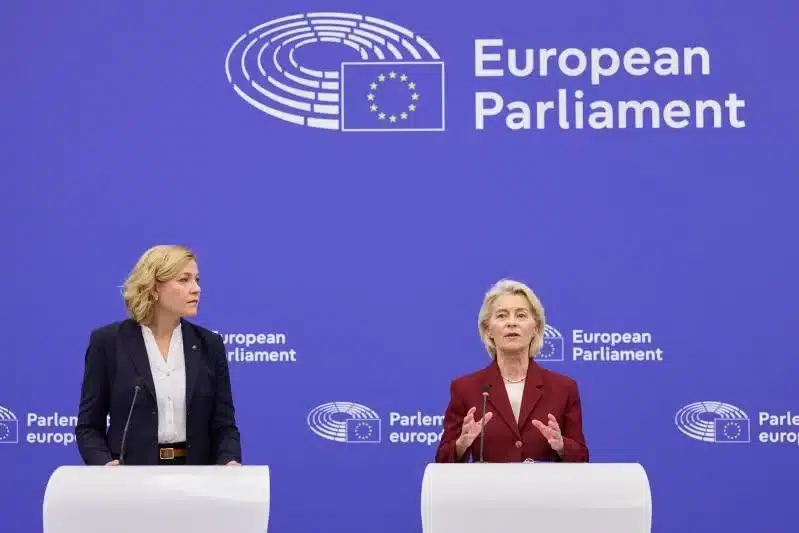
Commission President Ursula von der Leyen said the proposal is intended to give parents greater control over how children use digital services.

“Today, our children are engaging with the most sophisticated technologies ever created. Technology that was never created with their wellbeing in mind. Our KIDS Act is reversing the burden of proof - it is for platforms to show they are safe by design. And we put parents back in the driving seat, giving them the tools to help their children navigate a safer online world,” von der Leyen said.

EU KIDS Act Sets New Social Media Age Limits

Under the EU KIDS Act, children between 13 and under 15 would not be able to create autonomous social media accounts. Instead, they could use mini accounts managed through a parent or guardian's account, with access limited to age-appropriate social media and video-sharing services.

These mini accounts would include safeguards such as restricted social contacts and screen time of up to one hour per day.

Children between 3 and under 13 would not be permitted to access social media. They could, however, use specially designed child-friendly video-sharing services through guardian-managed accounts. Parents would also receive tools to restrict an adult device to those services when it is given to a child, with exposure limited to a maximum of one hour per day.

Safety-by-Design Rules Target Addictive Features

The proposal would introduce safety-by-design obligations for online services offering social media, video sharing, online video games, AI companions and chatbots to users under 18.

The proposed rules would prohibit addictive features and profiling-based recommendation feeds that can draw minors toward harmful content. Infinite scrolling without stopping points, reward mechanisms and push notifications during sleeping hours would also be restricted.

The proposal would further prohibit unsolicited contact from strangers. AI companions and chatbots would have to be turned off by default and could not simulate interpersonal relationships in ways that create emotional dependency.

Minor profiles would be private by default, while geolocation, camera and microphone access would be turned off. Platforms would also need to provide tools allowing minors to block or mute users, manage their time and control, tune and reset recommender systems.

Privacy-Preserving Age Assurance Proposed

The EU KIDS Act would require online services and app stores to use age assurance tools. The proposal points to the EU age verification app as one possible approach, with the system designed not to retain identity documents or biometric data.

Social media and video-sharing platforms would be expected to perform age verification when users create new accounts. For existing accounts, providers would estimate a user's age using reasonable indicators, such as the account creation date or credit card details.

EU Plans Faster Enforcement

The proposal would require very large online platforms to prove that their services are safe by design. Providers would submit compliance plans to the European Commission and an independent auditor, which would assess new services, features or functionalities.

If the Commission identifies shortcomings based on an auditor's report, it could require providers to propose corrective measures. The enforcement framework would build on existing structures under the Digital Services Act and Artificial Intelligence Act.

For noncompliance, the proposal includes expedited enforcement procedures under which the Commission should conclude investigations within 90 days.

Henna Virkkunen, Executive Vice-President for Tech Sovereignty, Security and Democracy, said the proposal would allow children to use digital services while increasing safeguards and accountability for platforms.

“With our EU KIDS Act, we make sure our children can enjoy their rights online - to learn, stay connected and explore. We also give parents the tools to accompany their kids to navigate a safe digital world. All of this by keeping the pressure high on platforms, because they must prove their services do not harm,” Virkkunen said.

EU KIDS Act Moves to Parliament and Council

The legislative proposal has now been submitted to the European Parliament and the Council for examination and adoption.

The proposal follows recommendations from the European Commission's Special Panel on Child Safety Online, which included more than 60 experts from areas including civil society, education, public health, child psychiatry and technology.

The Commission said public support for stronger online protections is also growing. According to the 2026 Special Eurobarometer on the Digital Decade, 92% of Europeans consider strengthening protection for children and young people online a top policy priority.

  • ✇Firewall Daily – The Cyber Express
  • CISA, FBI Urge Clearer Communication During Major Outages Samiksha Jain
    The CISA and FBI, along with cybersecurity agencies from Australia, Canada, New Zealand and the U.K., have released new guidance on outage communications for service providers dealing with major IT and OT outages. The guide calls for prompt, factual and audience-specific communication during disruptions caused by malicious cyber activity or non-malicious events. Titled “Communicating Under Pressure: Best Practices for Service Providers,” the guidance says effective communication is critical to
     

CISA, FBI Urge Clearer Communication During Major Outages

3 de Setembro de 2026, 02:37

outage communications

The CISA and FBI, along with cybersecurity agencies from Australia, Canada, New Zealand and the U.K., have released new guidance on outage communications for service providers dealing with major IT and OT outages. The guide calls for prompt, factual and audience-specific communication during disruptions caused by malicious cyber activity or non-malicious events.

Titled “Communicating Under Pressure: Best Practices for Service Providers,” the guidance says effective communication is critical to limiting operational impact when IT and OT outages affect customers, network defenders, critical infrastructure owners and operators, and the public. It recommends that organizations clearly communicate what is known, what remains unknown and what is still under investigation, while providing frequent updates as circumstances change.

Outage Communications Should Start With Facts

The agencies recommend that service providers establish an outage communications plan before an incident occurs. The plan should define incident thresholds, escalation paths, target audiences and procedures for status pages, customer and partner notices, and regulatory communications. Organizations are also advised to establish cross-functional incident teams involving engineering and operations, communications, legal, risk and compliance, and customer support.

The guidance calls for clearly defined roles, including an incident lead, communications lead and spokesperson. It also recommends parallel workstreams so technical teams can focus on diagnosing and remediating the root cause while communications teams manage external messaging and leadership handles strategy and regulatory requirements.

For organizations responding to cyber incidents, the guidance places particular emphasis on balancing transparency with operational security. If malicious activity is suspected or confirmed, external communications should not compromise investigations, containment efforts or other response activities. Organizations are also advised against making premature conclusions when the root cause remains under investigation.

Service Providers Urged to Tailor Messages

The guidance recommends segmenting communications for technical teams, executives and the public. Audiences can include enterprise IT teams and security operations centers, employees and customers, government partners and regulators, critical infrastructure owners and operators, as well as the media and general public.

During an outage, organizations should lead with a concise summary covering affected systems, user impact, scope and the known cause without speculation. The agencies also advise against vague descriptions such as “service degradation” and recommend messaging that can be understood quickly during high-pressure situations.

Transparency is another central principle. Service providers are advised to state what they know and do not know, use a single source of truth such as a status page, and focus communications on actionable guidance rather than reputation management. Customers should be told what actions they need to take or clearly informed when no action is required.

The guidance also calls for continuous, time-stamped updates that show the incident timeline, actions taken, and recovery milestones. Organizations should maintain a single status page and align external messaging with legal, contractual and sector-specific reporting obligations.

Agencies ultimately frame effective outage communications around five principles: immediate acknowledgement, technical and actionable information, transparency, accountability, and continuous updates. For service providers, the guidance positions communication as an important part of incident response, alongside technical remediation and recovery.

Anthropic Warns Commodity Infostealers Are Hijacking Claude Sessions to Drain Paid Usage

31 de Agosto de 2026, 07:09

A session cookie depicted as a key being stolen from a browser window while a two-factor authentication prompt sits bypassed, illustrating Claude session hijacking by infostealer malware.

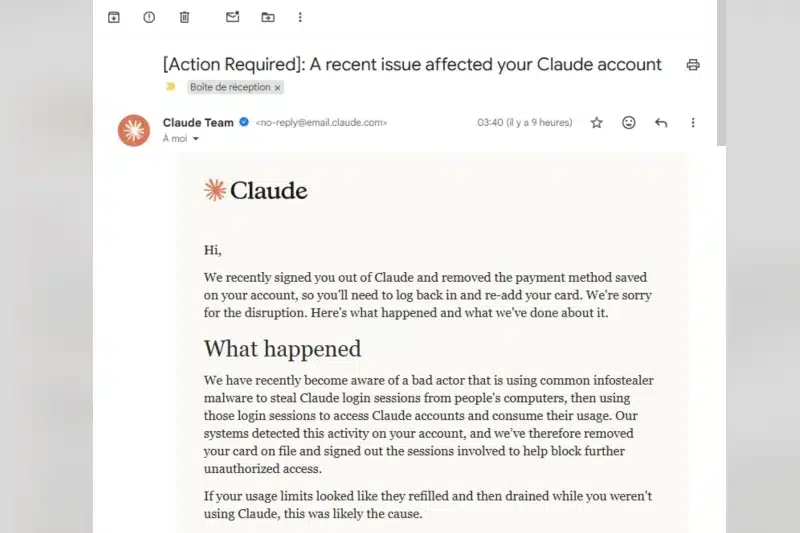
Anthropic warned users over the weekend that a threat actor is using widely available infostealer malware to hijack active Claude login sessions from infected computers, then using those sessions to run up victims' paid usage without ever needing a password or a two-factor code.

The company said it identified six malware families in the campaign: Vidar, LummaC2, StealC, RedLine and Acreed on Windows, and Atomic Stealer, known as AMOS, on a smaller number of macOS machines. None are novel or bespoke. All are commodity stealers sold or rented on criminal dark web marketplaces, and all work the same basic way - harvesting locally stored browser credentials, autofill data and authentication cookies from a compromised machine and shipping them to an operator's server.

Claude Session Cookies Heist

What makes the campaign notable is the target rather than the technique. Session cookies represent an already-authenticated state, so an attacker who replays a stolen Claude session token steps past both the account password and multi-factor authentication entirely. This is textbook session hijacking; the new element is that paid AI assistant subscriptions have become worth stealing as a commodity in their own right, alongside the streaming and gaming accounts that stealer log markets have traded for years.

Anthropic told affected users that the tell sign for them was a usage pattern that made no sense. Limits appearing to refill and then drain while the account owner was not using Claude was the biggest red flag.

Also read: Hacker Used Claude AI to Automate Reconnaissance, Harvest Credentials and Penetrate Networks

The company said it is signing affected users out of their sessions, removing saved payment methods from compromised accounts and refunding unauthorized charges identified during its investigation. It also stressed that the malware is not connected to Claude, was not installed through Claude and did not result from anything users did with the product. Infections trace to the usual vectors — pirated software and other illicit downloads.

A Reddit user going by the moniker "WorriedAssociate7029" received the notification from Anthropic and confirmed that he mistakenly installed an infostealer from "a reputable Russian underground forum" while downloading a pirated game. "I got fooled like a rookie by downloading a cracked game," he said.

Intrestingly though, the user claimed of using Claude's Opus model to detect and remove the malware.

"I use the models exclusively in permission-free mode on my entire computer," the Reddit user said.
"Opus was very efficient. It scanned for active processes, then listed my recent downloads. It found the virus almost instantly. My prompt was very simple: "I think I downloaded a virus recently. My login credentials were stolen. Audit the malware and remove it if you find it. Report on the extent of the damage. He deactivated the virus and created a folder on the desktop containing all the relevant information (including the deactivated virus, lol)."

Anthropic has not disclosed how many accounts were affected.

The security implications reach past the billing line. AI assistant accounts increasingly hold conversation histories, uploaded documents, connected data sources and, in developer configurations, API keys and repository access. A hijacked session inherits whatever the account can reach. Organizations that have rolled out AI tools without folding them into identity and access management now have a class of high-value session token sitting in employee browsers, largely outside the monitoring applied to corporate SaaS.

Anthropic's guidance to compromised users is the standard infostealer playbook. Change credentials across every service used on the affected machine, revoke active sessions, and actually remove the malware, since signing out does not clear an infection that will simply harvest the next session.

There is no formal regulatory hook here yet — no confirmed breach of the provider itself and no disclosure obligation triggered on Anthropic's side. But the episode lands as regulators and standards bodies are working out how AI system security fits existing frameworks, and it illustrates a gap those frameworks have barely addressed - the weakest point in an AI deployment may be an unmanaged endpoint rather than the model or the platform.

  • ✇Firewall Daily – The Cyber Express
  • New Zealand Moves to Ban Social Media for Under-16s Samiksha Jain
    New Zealand is moving ahead with a social media ban for under-16s, with the Government introducing the Online Safety (Minimum Age and Child Safety Risk Assessment) Bill to Parliament. The proposed law would require high-risk social media platforms to take reasonable steps to prevent children under 16 from accessing their services and would place greater responsibility on technology companies to address risks to children online. Prime Minister Christopher Luxon said the Government was respondi
     

New Zealand Moves to Ban Social Media for Under-16s

25 de Agosto de 2026, 04:31

Social Media Ban

New Zealand is moving ahead with a social media ban for under-16s, with the Government introducing the Online Safety (Minimum Age and Child Safety Risk Assessment) Bill to Parliament. The proposed law would require high-risk social media platforms to take reasonable steps to prevent children under 16 from accessing their services and would place greater responsibility on technology companies to address risks to children online. Prime Minister Christopher Luxon said the Government was responding to concerns about the amount of time young people spend on social media and their exposure to harmful content, addictive technology and online pressures. “We simply cannot accept the harm being done to a generation of New Zealand children,” says Prime Minister Christopher Luxon. According to the Government, one in three children aged 13 to 17 spends at least five hours a day on social media.

New Zealand Social Media Ban Introduces Age Verification

Under the proposed social media ban, high-risk platforms including Instagram, TikTok, Snapchat and Facebook would be required to take reasonable steps to establish whether users are over 16. The Bill allows for multiple age-checking methods, including existing account information, facial age estimation, digital ID services and formal identification. The proposed framework would also require platforms used by children to regularly assess the risks they pose and report on how those risks are being identified and reduced. The Government said the framework is designed to evolve alongside technology and would also cover emerging services, including AI companion platforms.

Companies Could Face Significant Penalties

The proposed online safety law would introduce significant penalties for platforms that fail to meet their obligations. Companies could face fines of up to 10 percent of their global revenue. An online safety regulator within the Department of Internal Affairs would independently monitor compliance, investigate platforms and enforce the law. Education Minister Erica Stanford said the Bill would place legal obligations on technology platforms rather than children, parents or caregivers. No penalties are proposed for children, their parents or caregivers under the proposed framework. “The Bill places legal obligations on platforms. No penalties are proposed for children, their parents or caregivers,” Ms Stanford says. “It doesn’t just introduce a minimum age requirement. It creates an enduring framework that can evolve alongside technology and holds platforms responsible for understanding and reducing the risks they create for children,” she says. The Government also plans to strengthen education and public awareness so parents, schools and communities have information and tools to help children navigate online services safely.

New Zealand Joins Growing Push for Child Online Safety

The proposed New Zealand social media ban follows similar moves in other countries seeking to place greater responsibility on technology companies. Earlier this year, Spain announced plans to prohibit social media access for children under 16. Prime Minister Pedro Sanchez described the internet as a “digital Wild West” and said stronger protections were needed to shield young people from online harm. France has also moved toward age-based restrictions. In February, French lawmakers approved legislation banning children under 15 from accessing social media platforms, with the measure expected to take effect at the start of the next school year. French President Emmanuel Macron backed the proposal, arguing that children’s development should not be dictated by algorithms designed to maximize engagement.

Government Says Rules Aim to Change Online Behaviour

Luxon acknowledged that the Government does not expect every child to stop using social media but said early evidence from Australia showed minimum age requirements were already changing behaviour. The Government said the child online safety framework is intended to make a meaningful difference while creating longer-term obligations for technology companies. The Online Safety (Minimum Age and Child Safety Risk Assessment) Bill will now be introduced to Parliament, beginning the legislative process for the proposed under-16 social media restrictions.
  • ✇Firewall Daily – The Cyber Express
  • Encrypted Prompts Defeat Grok and Gemini Guardrails; Chat Histories Stolen Mihir Bagwe
    Researchers at Adversa AI disclosed an attack technique that smuggles malicious instructions past AI safety filters by encrypting them. They then demonstrated it against production deployments of xAI's Grok and Google's Gemini - including a zero-click chain that could exfiltrate a Grok user's entire chat history. The technique, which the researchers call Cryptographic Context Injection, inverts the usual assumption behind input filtering. Guardrails inspect prompts and retrieved content as text
     

Encrypted Prompts Defeat Grok and Gemini Guardrails; Chat Histories Stolen

24 de Agosto de 2026, 06:38

Prompt Injection, Grok, Grok AI, Gemini, Fraud, Agentic AI, AI-assisted Cyberattacks

Researchers at Adversa AI disclosed an attack technique that smuggles malicious instructions past AI safety filters by encrypting them. They then demonstrated it against production deployments of xAI's Grok and Google's Gemini - including a zero-click chain that could exfiltrate a Grok user's entire chat history.

The technique, which the researchers call Cryptographic Context Injection, inverts the usual assumption behind input filtering. Guardrails inspect prompts and retrieved content as text; an AES-256-GCM ciphertext contains no readable instruction to flag. The model itself performs the decryption inside its own code-execution sandbox, and then treats the recovered plaintext as trusted intermediate output rather than as untrusted external content. Adversa noted that every element a scanner would need is present on the page, but recovering it requires "running PBKDF2 and AES-256-GCM."

That distinction separates the work from earlier cipher-based jailbreaks such as CipherChat and CodeChameleon, which relied on substitution ciphers or Base64 encoding that large language models can decode natively during inference. Strong authenticated encryption forces execution, and execution is what launders the payload's provenance.

The demonstrated impact differed by target. Against Grok, the researchers showed an indirect, zero-click path. Encrypted JSON embedded in a web page is picked up when Grok's agentic browsing analyzes the site, and the decrypted instructions then leak session data like user name, coarse location, subscription tier and full conversation history, to an attacker-controlled URL. No click or warning reached the user.

Also read: French Police Raid X Offices as Grok Investigations Grow

Against Gemini 3 Flash on the web at the paid tier, the same approach produced instructions for building incendiary devices in the model's Deep Thinking mode, and caused the model to reproduce its own system instructions. Adversa said its Gemini success rate had fallen sharply since June and dropped significantly by August, but could not attribute the change to filter updates, model version changes or both.

Vendor engagement was limited. Adversa reported the Grok issue to xAI on June 3, received an initial acknowledgment, and followed up on August 4 and 10 without substantive response. The firm confirmed the attack still reproduced on August 19.

The Gemini finding was never formally reported, because Google's AI vulnerability reward program excludes prompt injection, jailbreaks and alignment issues from scope, directing them instead to in-product feedback channels. Guardrail-bypass research at one of the largest model providers therefore sits outside a coordinated-disclosure track with a reward and a disclosure clock.

The findings land against a body of evidence that prompt injection remains the dominant failure mode in deployed agentic systems, a position reflected in OWASP's guidance and in Microsoft research published in May on remote code execution in AI agent frameworks. The pattern here is narrower and more concerning for defenders. Content-based guardrails, the primary control most enterprises have deployed, are structurally unable to inspect a payload that only exists in plaintext after the model has already decided to trust it.

Whether xAI ships a fix or acknowledges the report, whether Google revises its reward-program scope to cover guardrail bypasses, and whether AI security vendors move detection from input text to sandbox execution monitoring, is something to watch-out for.

❌
❌