

Visualização normal

Antes de ontemStream principal
  • ✇Firewall Daily – The Cyber Express
  • Dutch Police Arrest Key Suspect in €100M Global Crypto Investment Scam Samiksha Jain
    A major global crypto investment scam investigation has led to the arrest of an alleged key figure behind an international criminal organization accused of defrauding victims of more than €100 million every month. Dutch police announced multiple arrests across Europe following a long-running investigation into a fraud network that allegedly employed over 700 people operating from around 20 call centers worldwide. The main suspect, a 46-year-old dual Israeli and Polish national,
     

Dutch Police Arrest Key Suspect in €100M Global Crypto Investment Scam

global crypto investment scam

A major global crypto investment scam investigation has led to the arrest of an alleged key figure behind an international criminal organization accused of defrauding victims of more than €100 million every month. Dutch police announced multiple arrests across Europe following a long-running investigation into a fraud network that allegedly employed over 700 people operating from around 20 call centers worldwide.

The main suspect, a 46-year-old dual Israeli and Polish national, was arrested at an airport in Poland on May 26 at the request of Dutch authorities. Investigators believe he played an indispensable role in the organization, which allegedly carried out large-scale investment fraud targeting victims across multiple countries.

Global Crypto Investment Scam Network Operated Through Worldwide Call Centers

According to Dutch police, the organization functioned like a professional company with approximately 700 employees spread across nearly 20 offices globally. Individuals working as financial advisors scam operators allegedly contacted victims daily through online platforms and telephone calls while posing as legitimate investment professionals.

Authorities said the organization was structured with a central headquarters overseeing multiple teams, each assigned to target victims in specific countries. Employees reportedly worked under pseudonyms and used technical measures to hide their identities and locations.

[caption id="attachment_113134" align="aligncenter" width="600"]global crypto investment scam Excerpts from emails that victims sent to scammers[/caption]

As part of the investigation, Belgian police arrested five individuals believed to have worked as fraudulent financial advisors.

Multiple Arrests Made Across Europe

The investigation resulted in several coordinated arrests during May and July.

On July 7, authorities arrested two Dutch nationals aged 45 and 34, along with a 34-year-old Belgian, all residing in Cyprus. A 25-year-old suspect was also arrested in Belgium the same day. On July 10, police arrested a 44-year-old Dutch national in Athens.

The main suspect has since been extradited to the Netherlands, where an examining magistrate ordered 14 days of pre-trial detention. Dutch authorities indicated that additional arrests remain possible as the investigation continues.

How the Global Crypto Investment Scam Worked

Investigators said the online investment scam relied on building long-term trust with victims. Individuals posing as account managers or financial advisors maintained frequent contact through phone calls and online communication, sometimes over several months.

Victims were encouraged to begin with relatively small investments that appeared to generate immediate returns. Police said the investment platforms displayed convincing but fabricated profits, even though no actual investments were being made.

As confidence grew, victims were persuaded to transfer increasingly larger amounts, often in the form of cryptocurrency fraud payments. Instead of being invested, investigators said the funds were diverted directly to the criminal organization.

Authorities also warned that victims who stop investing may later be contacted by so-called recovery companies requesting upfront deposits to recover lost funds. Police believe these recovery operations may also be connected to the same fraud networks.

Hundreds of Complaints Linked to Investment Fraud

Dutch authorities have received approximately 550 reports connected to the organization, while Belgian police have recorded around 200 complaints. Investigators estimate the total number of victims worldwide could reach tens of thousands.

The financial losses reported by victims in the Netherlands alone amount to nearly €25 million, with many individuals losing well over €10,000.

Dutch police said officers proactively contacted some victims after discovering that many remained unaware they had fallen victim to cyber fraud.

Financial investigators are now examining whether assets linked to the suspects can be frozen or seized.

Digital Infrastructure Taken Offline

Investigators said the criminal organization remained active since at least 2021 and relied heavily on concealed digital infrastructure to evade law enforcement.

By tracing financial transactions, IP addresses, and other digital evidence, the Dutch police identified offices, suspects, and critical infrastructure supporting the operation. Authorities worked with commercial service providers to take key elements of the network offline.

The investigation also involved Europol, with intelligence shared across multiple countries to support ongoing criminal prosecutions.

Officials said the case demonstrates the scale and sophistication of modern investment fraud operations and highlighted continued international cooperation to dismantle cyber-enabled financial crime networks.

  • ✇Firewall Daily – The Cyber Express
  • Why India Temporarily Blocked Telegram Ahead of NEET UG 2026 Samiksha Jain
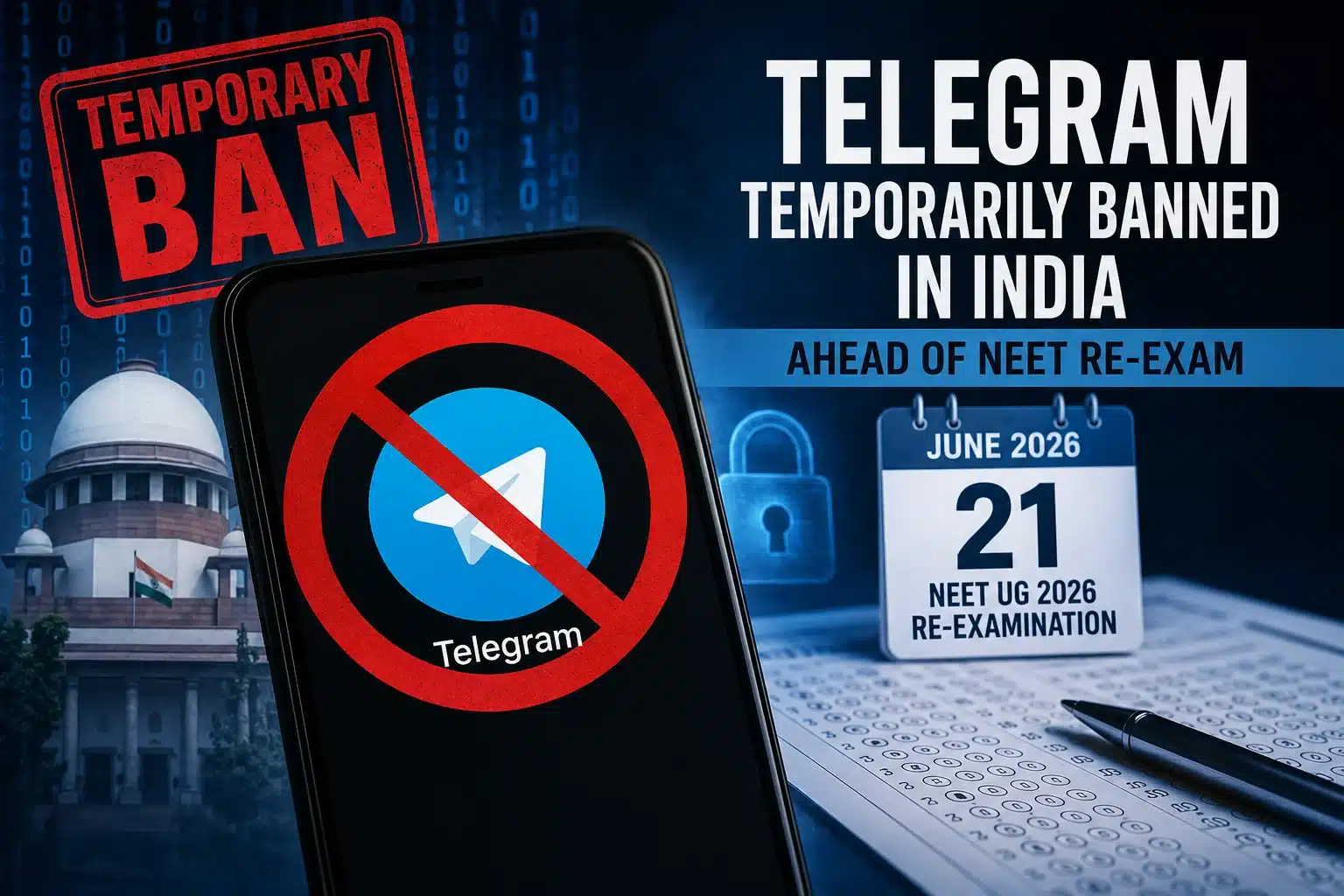
    India has temporarily enforced a Telegram Ban in India ahead of the NEET UG 2026 Re-examination, citing concerns that the platform could be used by organized cheating networks to target candidates. The restriction, recommended by the National Testing Agency (NTA) and implemented through directions issued by the Ministry of Electronics and Information Technology (MeitY), will remain in effect until June 22, 2026. According to the NTA, the measure is intended to support the safe and secure cond
     

Why India Temporarily Blocked Telegram Ahead of NEET UG 2026

Telegram Ban in India

India has temporarily enforced a Telegram Ban in India ahead of the NEET UG 2026 Re-examination, citing concerns that the platform could be used by organized cheating networks to target candidates. The restriction, recommended by the National Testing Agency (NTA) and implemented through directions issued by the Ministry of Electronics and Information Technology (MeitY), will remain in effect until June 22, 2026. According to the NTA, the measure is intended to support the safe and secure conduct of the NEET re-examination scheduled for June 21, 2026, and prevent the spread of fraudulent claims related to exam papers.

Telegram Ban in India Limited to Examination Period

The temporary Telegram Ban in India has been imposed under Section 69A of the Information Technology Act, 2000. The restriction is limited to a defined period covering the examination day and its immediate aftermath. In addition to restricting access to the platform, authorities have directed Telegram to disable its Telegram Message Editing Feature in India until June 30, 2026. The NTA stated that the feature has been misused in the past to create misleading claims of Paper Leak incidents after examinations had already taken place. The agency noted that the temporary measures were adopted after other enforcement actions had already been pursued and were intended to address concerns during the examination window with the minimum restriction considered necessary. Telegram Ban in India Ahead of NEET UG 2026

Coordinated Action Against NEET UG 2026 Exam Fraud Networks

The NTA credited the Indian Cyber Crime Coordination Centre (I4C), operating under the Ministry of Home Affairs, for coordinating action against channels and groups allegedly involved in Exam Fraud targeting NEET candidates. According to the agency, I4C worked with state law enforcement agencies and MeitY to identify and remove numerous Telegram channels, groups, and bots that openly advertised access to examination papers or related services. Authorities said several channels used names such as "PAPER LEAKED NEET," "Re-NEET 2026," and similar variations while demanding payments from candidates and their families in exchange for purported access to examination material. The NTA reiterated that no examination paper was available outside the secured examination process and described such offers as fraudulent.

Why the Message Editing Feature Was Restricted

The direction related to the Telegram Message Editing Feature addresses concerns about fabricated evidence of examination leaks. According to the NTA, Telegram administrators can edit previously published messages while retaining the original posting timestamp. Authorities stated that this capability has been used in multiple examinations to replace earlier content with actual question papers after an exam had concluded, creating the appearance that the material had been shared before the test. The temporary restriction on editing existing messages is intended to prevent the creation and circulation of such misleading content during the post-examination period.

Law Enforcement Investigations Continue

Authorities also pointed to ongoing enforcement actions in several states. The Bihar Police Economic Offences Unit issued a public advisory on June 9, warning candidates against fraudulent claims of pre-examination paper access circulating through Telegram and other online platforms. Separately, the Ahmedabad City Cyber Crime Branch arrested members of an alleged inter-state cyber fraud network accused of operating multiple Telegram channels linked to the same scheme. Investigators reported documented transactions worth approximately ₹1.5 crore and outreach to nearly 1,000 mobile numbers within a month.

NTA Reassures Candidates

The NTA acknowledged that the restriction affects users who rely on Telegram for educational, professional, and personal communication. However, the agency emphasized that the measure is temporary and focused on protecting the integrity of the NEET UG 2026 Re-examination. The examination will proceed as scheduled on June 21. The agency urged candidates to ignore unverified information circulating online and rely only on official NTA communication channels for updates. Officials also encouraged students and parents to report suspicious activities through the national cybercrime reporting mechanisms and remain cautious of claims related to examination papers circulating on any platform.
  • ✇Firewall Daily – The Cyber Express
  • Zimbabwe Boosts Cybersecurity as AI-Driven Cyber Fraud Surges Ashish Khaitan
    Zimbabwe is intensifying efforts to reinforce cybersecurity in Zimbabwe as the nation confronts a rise of digital crime. As internet access expands and digital financial services become more embedded in everyday life, authorities warn that these developments are simultaneously exposing weaknesses in Zimbabwe's cybersecurity systems.  At the Cyber Fraud & AI Conference in Nyanga, Information and Communication Technology Minister Tatenda Mavetera highlighted the rise of cyber fraud, noting
     

Zimbabwe Boosts Cybersecurity as AI-Driven Cyber Fraud Surges

cyber fraud in Zimbabwe

Zimbabwe is intensifying efforts to reinforce cybersecurity in Zimbabwe as the nation confronts a rise of digital crime. As internet access expands and digital financial services become more embedded in everyday life, authorities warn that these developments are simultaneously exposing weaknesses in Zimbabwe's cybersecurity systems.  At the Cyber Fraud & AI Conference in Nyanga, Information and Communication Technology Minister Tatenda Mavetera highlighted the rise of cyber fraud, noting that cybercriminals are no longer relying on simple tactics. Instead, they are leveraging cutting-edge tools such as deepfake voice cloning, automated phishing platforms, and adaptive malware to exploit individuals, businesses, and public systems.  “The enemy now has artificial intelligence. You cannot fight an intelligent machine with a manual rulebook — you must fight AI with AI,” Mavetera said. 

Rising Cyber Fraud Threats Challenge Zimbabwe's Cybersecurity Systems 

The scale of the problem is further highlighted by recent data. Authorities estimate that mobile money-related cyber fraud costs Zimbabwe more than US$30 million annually. Meanwhile, phishing and social engineering attacks have surged by over 40% in recent years. Across Africa, cybercrime is estimated to cost more than US$4 billion each year, while global losses are projected to exceed US$10 trillion annually.  Mavetera denoted that the impact of cyber fraud extends beyond financial losses. “Cyber fraud erodes trust in digital systems, and without trust, there is no digital transformation,” she said. This erosion of trust threatens not only individuals and businesses but also the broader stability of the digital economy. 

Government Expands Cybersecurity in Zimbabwe with AI-Driven Solutions 

In response to these challenges, the government is implementing a range of measures aimed at strengthening cybersecurity in Zimbabwe. A National Security Operations Centre is nearing completion, with progress estimated at 85%, and is expected to centralize threat monitoring and response.  Additionally, a Computer Incident Response Team is being established to coordinate national responses to cyberattacks. These institutional developments are intended to improve the country’s ability to detect, manage, and mitigate cyber fraud and other digital threats.  A key initiative is the planned launch of the “Zimbabwe AI Cyber Shield” within the next 12 months. This AI-powered platform will focus on real-time fraud detection, representing a major step forward in modernizing Zimbabwe's cybersecurity capabilities.  Alongside technological investments, the government is prioritizing skills development. Training programs are underway to prepare 10,000 cybersecurity professionals, supported by broader digital literacy initiatives aimed at strengthening public awareness and resilience against cyber fraud. 

Policy and Collaboration Key to Strengthening Zimbabwe Cybersecurity 

Zimbabwe is also working to enhance its legal and policy frameworks. Authorities are introducing legislation to criminalize the misuse of artificial intelligence, particularly in cases involving deepfakes and identity-related cyber fraud. A National Cybersecurity Strategy has been finalized and is awaiting cabinet approval, while the National Artificial Intelligence Strategy (2026–2030), introduced in March, seeks to balance innovation with security.  Despite these efforts, Zimbabwe continues to face structural challenges. The country is currently ranked in the fourth tier of the International Telecommunication Union’s Global Cybersecurity Index, with a score of 39.85 out of 100. While legal measures are relatively strong, gaps remain in technical capacity, organizational readiness, international cooperation, and skills development.  Mavetera stressed that addressing these gaps will require coordinated action from multiple stakeholders. She called for stronger collaboration between the government, the private sector, academia, and citizens to build a resilient digital ecosystem.  She reiterated that cyber fraud is not just a financial issue but a threat to national progress. Without trust in digital systems, the country’s broader digital transformation goals could be undermined. 
❌
❌