Visualização normal

Antes de ontemStream principal
  • ✇Security Affairs
  • Hackers Cross From IT to OT Through a Private APN in Poland Pierluigi Paganini
    Attackers breached a Polish CHP plant through a Fortinet device and private APN, reaching PLCs and disrupting turbine and water treatment systems. Poland’s CERT has described a second attack on the country’s energy sector, and this one matters for a simple reason: it shows how an ordinary-looking network design can turn into a route into OT. The target was a smaller combined heat and power plant feeding heat to around 50,000 residents, and the attackers used a private APN as the path in, som
     

Hackers Cross From IT to OT Through a Private APN in Poland

10 de Agosto de 2026, 13:17

Attackers breached a Polish CHP plant through a Fortinet device and private APN, reaching PLCs and disrupting turbine and water treatment systems.

Poland’s CERT has described a second attack on the country’s energy sector, and this one matters for a simple reason: it shows how an ordinary-looking network design can turn into a route into OT. The target was a smaller combined heat and power plant feeding heat to around 50,000 residents, and the attackers used a private APN as the path in, something CERT says it saw for the first time in this incident.

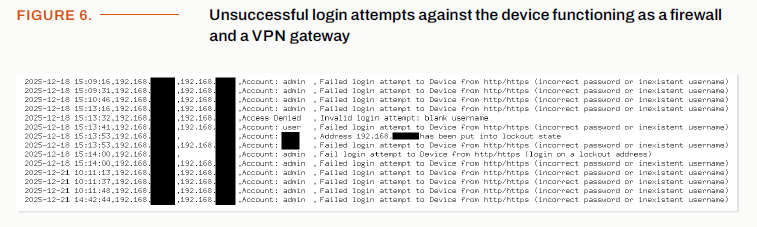
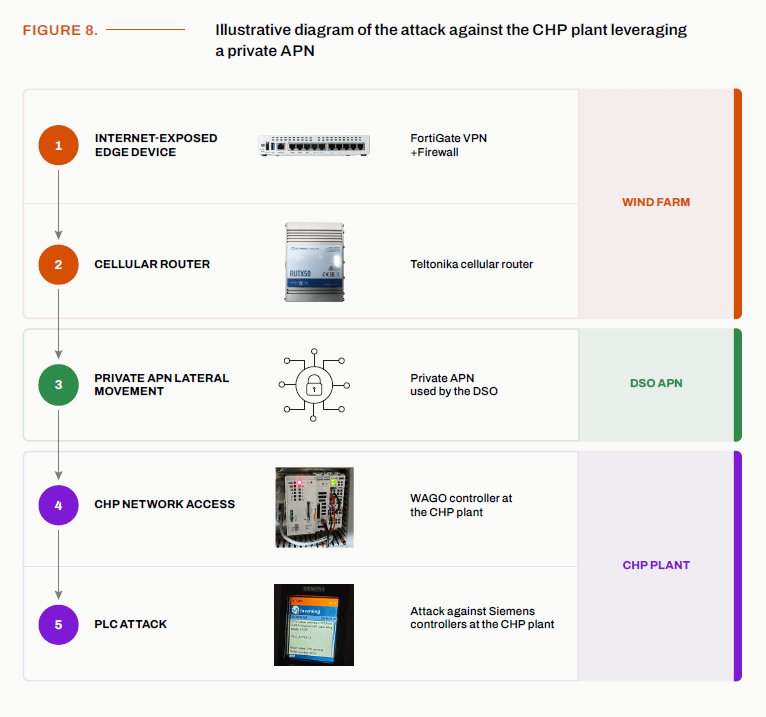
The report says the intrusion began at a wind farm, where the attackers hit a Fortinet VPN and firewall device exposed to the internet.
Poland

From there they found a Teltonika cellular router, used SSH to build a tunnel, reached the private APN managed by the distribution system operator, and then moved toward the plant’s OT network.

“On 29 December 2025, coordinated attacks targeted the energy sector in Poland, including 30 renewable energy facilities and a large combined heat and power (CHP) plant. These attacks were described in detail in the report published on 30 January 2026*. At the same time, another incident occurred at a smaller CHP plant supplying heat to 50,000 residents.” reads the report published by Poland’s CERT. “The analysis of this incident took more than three months to complete, which is why it was not included in the initial report. To the best of our knowledge, the attack vector used in this case has not previously been observed in any known incidents.”

Once inside, the attackers found a Wago PLC at the CHP plant and used SSH access on that controller to reach the operational network. After roughly a week of reconnaissance, they connected to Siemens PLCs, switched them to stop mode, and set a password that blocked operators from changing the controllers’ state and control logic.
Poland

That is where the physical impact started. The steam turbine and water treatment system shut down, the cogeneration process broke, and the plant lost service continuity for a while, though staff restored the affected systems quickly enough to avoid a heat or electricity outage.

“The attacker then damaged the WAGO controller that had been used as a gateway into the network by corrupting its partition table, preventing it from being read by the device. In an attempt to restore the controller, the affected entity performed a factory reset; however, this did not repair the partition table and the device remained unable to boot.” continues the report. “No valuable logs could be recovered from the device during the investigation.”

The report also shows how messy real intrusions get once the attacker is inside the control environment. Moxa serial device servers and Moxa network switches were reconfigured to block legitimate access, ABB and Schneider Electric variable frequency drives were touched as well, and some connection attempts failed or were only partially successful.

“An important aspect of this architecture is that DSOs require all communication between the DSO’s ICT network and the RTU to take place over a serial protocol, in this case DNP3.0. At the compromised facility, a Teltonika RUTX50 router was used, and the DSO’s requirements were met. However, no requirements had been defined regarding the handling of the cellular router’s administrative interface.” continues the report. “As a result, the router was configured with two physical interfaces: a serial link connected to the RTU and a second interface, Ethernet, connected to a VLAN managed by the central firewall that had been compromised by the attacker.”

That is the uncomfortable part. The attackers did not need some exotic zero-day chain to do damage. They used a reachable edge device, a private APN that was already in the path, weak or exposed access points, and enough patience to move from reconnaissance to disruption.

CERT notes that the attackers damaged some devices while trying to cover their tracks, and in the WAGO case the controller could not be brought back by a simple reset. The agency also says this kind of private APN setup is not rare, which is exactly why the finding matters beyond Poland.

“As maintenance work was being carried out at the facility, the entity initially assumed that the process interruption had been caused by an error made by the contractor’s engineers and reported the event for informational purposes only.” continues the report. “However, due to its awareness of other similar events, CERT Polska initiated incident handling under the assumption that the event may have resulted from a cyberattack. Further analysis confirmed this hypothesis.”

The practical lesson is not subtle. Private APNs, edge routers and OT gateways need the same discipline as any other exposed infrastructure, because once an attacker can pivot from a field device into control systems, the difference between “maintenance” and “incident” gets very thin.

The original report is here: CERT Polska Energy Sector Incident Follow-up Report 2025.

In early 2026, ESET linked a late-2025 cyberattack on Poland’s energy system to the Russia-linked Sandworm APT.

“Based on our analysis of the malware and associated TTPs, we attribute the attack to the Russia-aligned Sandworm APT with medium confidence due to a strong overlap with numerous previous Sandworm wiper activity we analyzed,” said ESET researchers. “We’re not aware of any successful disruption occurring as a result of this attack,” ESET researchers said.

ESET researchers uncovered DynoWiper, a destructive wiper malware used in an attempted cyberattack against Poland’s energy sector on December 29, 2025. While no successful disruption has been confirmed, the malware’s architecture shows clear destructive intent. ESET attributes the operation with medium confidence to the Russia-aligned Sandworm APT group, citing strong overlaps in tactics, techniques, and behavior with previous Sandworm-linked wiper attacks analyzed by the team.

The attempted attack occurred during peak winter demand and coincided with the 10-year anniversary of Sandworm’s 2015 cyberattack on Ukraine’s power grid, the first malware-induced blackout that left around 230,000 people without electricity. ESET tracks the DynoWiper malware as Win32/KillFiles.NMO. Subscribers to ESET’s private Threat Intelligence APT reports have already received further technical details and indicators of compromise to aid rapid detection and incident response. The cybersecurity firm also shared an associated IoC hash for defensive use.

Follow me on Twitter: @securityaffairs and Facebook and Mastodon

Pierluigi Paganini

(SecurityAffairs – hacking, Poland)

  • ✇Firewall Daily – The Cyber Express
  • Origin Energy Data Breach Affects 900,000 Current and Former Customers Ashish Khaitan
    The Origin Energy data breach has affected approximately 900,000 current and former customers after Australia's largest energy retailer confirmed unauthorized access to customer information. The company also revealed it had received a warning about the potential breach weeks before it publicly disclosed the incident.  Origin Energy said a significant proportion of those affected by the data breach at Origin Energy were former customers. The compromised information may include names, addresses
     

Origin Energy Data Breach Affects 900,000 Current and Former Customers

Origin Energy data breach

The Origin Energy data breach has affected approximately 900,000 current and former customers after Australia's largest energy retailer confirmed unauthorized access to customer information. The company also revealed it had received a warning about the potential breach weeks before it publicly disclosed the incident.  Origin Energy said a significant proportion of those affected by the data breach at Origin Energy were former customers. The compromised information may include names, addresses, dates of birth, phone numbers and account details, along with the last four digits of a credit card or the last three digits of a bank account.  The company said incomplete credit card and bank account details cannot be used to make purchases or access customer accounts.  Origin provides electricity, fossil gas, LPG and internet services to households and businesses across Australia and has approximately 4.8 million customer accounts. 

Frank Calabria Apologizes After Origin Energy Data Breach 

Origin Chief Executive Frank Calabria apologized to customers following confirmation of the breach and warned that affected individuals should remain alert to suspicious activity and a heightened risk of scams.  "We are sorry," Calabria said. "We don't take for granted the trust customers place in Origin, and we're here to support them."  Calabria said Origin first received emails on 2 July from an individual claiming to have accessed customer records. However, the company did not initially consider the threat credible because there was no evidence confirming customer data had been accessed.  The company received proof of customer data access on 22 July, after which Origin announced the incident publicly.  Calabria said the information accessed appeared to be historical customer data obtained "on an unauthorised basis". He said Origin had taken steps to secure its systems and prevent further unauthorised access, adding that the company did not believe any customer information had been published on the dark web. 

Timeline of the Data Breach at Origin Energy 

Origin said it had been reviewing a potential security threat since early July and had worked to assess its credibility and possible impact.  In its update, the company said the threat was not considered credible based on the information available at the time.  "On 22 July, new information emerged that indicated a potential security incident may have occurred. We acted immediately, providing updates to the market and notifying our customers as a precaution," Calabria said.  The Origin Energy data breach remains under investigation by relevant authorities. Calabria said the company could not provide further details about the incident because it was a criminal matter.  "It is a criminal matter which is under active investigation and, given that, we are constrained by the level of information we can provide at this time," he said.  Calabria declined to comment on several issues, including when the breach occurred, whether any employees were involved, whether a ransom had been demanded or paid, and whether there remained an active risk of further data leaks. 

Origin Confirms Investigation into Customer Data Breach 

In its first statement on 23 July 2026, Origin announced it was investigating a potential security incident involving unauthorized access to some customer data.  The company said it did not believe the affected information included customer credit card or bank account details.  "We understand an incident like this may raise concerns and acknowledge the impact of this uncertainty on Origin customers," Origin said.  The company confirmed it had notified the Australian Cyber Security Centre, the Australian Federal Police and the Office of the Australian Information Commissioner.  A later update confirmed there had been unauthorised access and disclosure of customer information. Origin said it was working to identify all affected customers and would contact those whose information had been compromised. 

Around 900,000 Customers Affected by Origin Energy Data Breach 

Following an initial review, Origin confirmed that approximately 900,000 current and former customers had been affected by the breach.  "We have now completed the initial phase of our review into Origin's customer data security incident," Frank Calabria said.  "At this point in time, we believe the information of approximately 900,000 current and former customers was accessed."  Calabria again apologized to customers and said protecting affected individuals remained the company's priority.  "To our customers, I am sorry. We don't take for granted the trust customers place in Origin and our safeguarding of their information," he said.  "We are contacting those customers whose information has been accessed and are providing support to them."  Origin said it had extended customer support hours, established a dedicated contact number and was working with cybersecurity and forensic specialists to contain the incident.  The company also confirmed ongoing cooperation with government agencies, including the Australian Cyber Security Centre, the National Office of Cyber Security, the Australian Federal Police and the Office of the Australian Information Commissioner. 

Customers Warned about Scams Following Data Breach at Origin Energy 

Origin has made specialist identity and cybersecurity support services available to affected customers.  Customers with concerns can contact Origin through its dedicated support line on +61 8 9922 7000 or email hello@origin.com.au.  The company advised customers to be cautious of unexpected calls, emails or text messages referring to their Origin accounts. It recommended avoiding links in unsolicited messages, independently verifying callers through official channels, never sharing passwords, and not providing personal or financial information unless the recipient's identity is confirmed.  Origin also encouraged customers to use two-step authentication, such as authentication applications, for personal email accounts and other online services where available.  We are acutely aware that others may exploit this incident, including by impersonating Origin or through other scam activity," Calabria said.  "We recommend that all our customers remain vigilant to suspicious activity and a heightened risk of scams." 
  • ✇Security Affairs
  • Australian energy provider Origin Energy disclosed a data breach impacting customer data Pierluigi Paganini
    Origin Energy confirmed a data breach after a hacker claimed to have stolen data from 2 million customers and threatened to leak it. Origin Energy disclosed a cyberattack that exposed customer data after a hacker claimed to have stolen records belonging to 2 million customers and threatened to publish them. An alleged hacker calling themselves “John Doe” claimed responsibility for the Origin Energy breach, saying they accessed the company’s customer systems and stole customers’ personal data
     

Australian energy provider Origin Energy disclosed a data breach impacting customer data

25 de Julho de 2026, 12:21

Origin Energy confirmed a data breach after a hacker claimed to have stolen data from 2 million customers and threatened to leak it.

Origin Energy disclosed a cyberattack that exposed customer data after a hacker claimed to have stolen records belonging to 2 million customers and threatened to publish them. An alleged hacker calling themselves “John Doe” claimed responsibility for the Origin Energy breach, saying they accessed the company’s customer systems and stole customers’ personal data.

“Most are loyal, long-term customers,” reads an email sent by the hacker to Australian media outlet 7News. 

“Despite my outreach to their board members, security teams, and customer care departments, Origin hasn’t made a public announcement about the breach or responded to negotiate next steps.

“They’ve shown no interest in resolving it before the data goes public.” 

Origin Energy
Source 7News

The claim prompted an urgent investigation by the Australian energy provider.

The Australian energy provider said unauthorized access affected some customer information and is still investigating the incident to determine how many people were impacted.

“Origin can confirm there has been unauthorised access and disclosure of some customers’ data. We are working to understand the total number of impacted customers, and we will contact any customers where we can confirm they have been affected.” reads the update on data security incident published by the company on July 23.

“For affected customers, impacted data may include name, address, date of birth, contact phone number and account information, as well as the last four digits of a credit card, or the last three digits of a bank account. Incomplete credit card or bank account information cannot be used to make purchases or access accounts.”

Origin Energy is one of Australia’s largest integrated energy companies, with approximately 4.8 million customers. Headquartered in Sydney, it operates across the electricity and natural gas sectors.

The firm is investigating the security breach with the help of external cybersecurity experts.

The company said the attacker may have stolen customers’ names, addresses, dates of birth, phone numbers, account details, and partial payment card or bank account numbers. The energy firm is notifying affected customers and has informed Australian law enforcement, cyber, and privacy authorities, including the Australian Cyber Security Centre, the Australian Federal Police and the Office of the Australian Information Commissioner.

Origin Energy pointed out that its operations have not been impacted.

The “John Doe” gave Origin 14 days to respond and threatened to release the stolen data if the company does not reach an agreement.

Follow me on Twitter: @securityaffairs and Facebook and Mastodon

Pierluigi Paganini

(SecurityAffairs – hacking, newsletter)

Personal and banking details among customer data stolen in Origin Energy hack

Hackers access Australian customers’ names, addresses, dates of birth, phone numbers and some bank account details, company says

Origin Energy customers’ addresses, phone numbers and partial bank account data have been accessed in a hack, the company has confirmed.

The firm has 4.8m customer accounts in Australia, providing electricity, fossil gas, LPG and internet services to homes and businesses.

Continue reading...

© Photograph: Jason Reed/Reuters

© Photograph: Jason Reed/Reuters

© Photograph: Jason Reed/Reuters

❌
❌