❌

Visualização normal

Ontem — 6 de Novembro de 2026Stream principal
  • ✇Malwarebytes
  • Scammers use AI-generated images of missing pets to extort owners
    When your pet goes missing, it can be totally heartbreaking. So hearing that they’ve been found is no doubt very welcome news. Even better to see a photo of them looking safe and well.But while the photo may look exactly like your pet, that doesn’t mean the person who sent it has your pet or even ever saw it.The BBC reports how criminals are sending owners AI-generated images of their missing pets, demanding money for their return, and sometimes threatening to harm the animals when owners refuse
     

Scammers use AI-generated images of missing pets to extort owners

5 de Novembro de 2026, 18:34

When your pet goes missing, it can be totally heartbreaking.

So hearing that they’ve been found is no doubt very welcome news. Even better to see a photo of them looking safe and well.

But while the photo may look exactly like your pet, that doesn’t mean the person who sent it has your pet or even ever saw it.

The BBC reports how criminals are sending owners AI-generated images of their missing pets, demanding money for their return, and sometimes threatening to harm the animals when owners refuse to pay.

The BBC interviewed two targets of this scam who were both contacted after posting a missing pet message on social media. The scammers sent them pictures of their beloved pets and demanded a ransom for their safe return.

Messages like these exploit two powerful emotions in quick succession: relief that a beloved pet has been found, followed by fear that something terrible will happen unless the owner acts immediately.

The scam typically follows this pattern:

  • A scammer finds a missing pet appeal, which is typically posted to social media or local sites with an accompanying photo and contact details.
  • The scammer contacts the owner and claims to have found the animal. An image fabricated with the help of AI makes the claim appear more convincing.
  • They ask for money which may be described as a reward or as payment for emergency treatment.
  • They add pressure. They might refuse to meet until payment arrives, or threaten to sell or harm the pet.

Our data backs this report up. Over the last month, people anonymously submitted three distinctive types of pet related scam attempts to Malwarebytes Scam Guard:

  • “We found your missing cat” message, with photos: Someone claimed to have found a user’s missing cat and had images of it.
  • Found pet callback lure: A voicemail claimed to have found a lost cat and supplied a callback number.
  • Humane Society impersonation and payment demand: A caller claimed a missing cat needed emergency surgery, and demanded successive Zelle payments.

How to stay safe

Sadly, while it can be very useful to use social media to retrieve lost pets, it also attracts scammers and other abuse.

You don’t have to stop asking for help online, but you can put some safeguards between an unexpected message and any payment.

  • Keep some identifying details private. Leave a distinctive feature out of the public description so you can ask a supposed finder about it later.
  • Do not pay in advance to secure a reunion. Be particularly wary of someone who insists that you send money before they will let you see the animal. Arrange any legitimate handover in a safe, public location, and verify that it is your pet before paying a reward.
  • Verify veterinary claims independently. If someone says your pet is at an animal hospital, find the hospital’s contact details yourself and call it directly. Do not rely on the number or payment link in the message.
  • A second pair of eyes can help you assess a demand without the same emotional pressure. Malwarebytes Scam Guard can help you identify whether a message might be a scam and how to proceed.
  • If someone is threatening your pet, remember that when they make threats to your pet, it is very likely they don’t have a clue where it is either, so don’t let them extort you.

Something feel off? Check it before you click.  

Malwarebytes Scam Guard helps you analyze suspicious links, texts, and screenshots instantly.  

Available with Malwarebytes Premium Security for all your devices, and in the Malwarebytes app for iOS and Android.  

Try it free → 

Antes de ontemStream principal

Unit 42 Threat Intelligence Highlights - Nov. 2, 2026

2 de Novembro de 2026, 20:00

Unit 42 details recent threat intelligence, highlighting cyberespionage, financial extortion, and the rapid adoption of AI across offensive workflows.

The post Unit 42 Threat Intelligence Highlights - Nov. 2, 2026 appeared first on Unit 42.

  • ✇Cybersecurity News
  • GMO Internet Ransom Demand Slashed After Cloud Breach Do Son
    Hackers reduced the GMO Internet ransom demand from $50M to $1M and leaked victim files after the Japanese conglomerate ignored multiple bug warnings. Related Posts: UAT-11473 Deploys KeyDrift Malware on Cisco SD-WAN Controllers via CVE-2026-20127 Chained PHP2Shell Exploit Roots 25 Firewall Servers Including US Government Systems Hive Ransomware Affiliate Artem Stryzhak Sentenced to 70 Months in US Prison The post GMO Internet Ransom Demand Slashed After Cloud Breach appeared first on Daily C
     
  • ✇ASEC BLOG
  • Security Issues in the Korean & Global Financial Sector in September 2026 ATCP
    Statistics on Malware Distributed to the Financial Sector In Attack Stage 1, phishing (attacks that trick users into revealing information) had the highest rate at 2.1, Up from 1.8 The previous month. In Attack Stage 2, “Dropper/Downloader” (a type that downloads additional malware) was the most common at 1.1, Though this was a decrease from […]
     

Security Issues in the Korean & Global Financial Sector in September 2026

Por:ATCP
11 de Outubro de 2026, 12:00
Statistics on Malware Distributed to the Financial Sector In Attack Stage 1, phishing (attacks that trick users into revealing information) had the highest rate at 2.1, Up from 1.8 The previous month. In Attack Stage 2, “Dropper/Downloader” (a type that downloads additional malware) was the most common at 1.1, Though this was a decrease from […]
  • ✇ASEC BLOG
  • September 2026 Threat Trend Report on Ransomware ATCP
    Purpose and Scope This report summarizes the quantity of new ransomware samples collected, the number of compromised systems, and statistics on targeted businesses during the month of September 2026, as well as major Korean & global ransomware issues. The analysis is based on data collected through ATIP (AhnLab Threat Intelligence Platform) and AhnLab Smart Defense, […]
     

September 2026 Threat Trend Report on Ransomware

Por:ATCP
11 de Outubro de 2026, 12:00
Purpose and Scope This report summarizes the quantity of new ransomware samples collected, the number of compromised systems, and statistics on targeted businesses during the month of September 2026, as well as major Korean & global ransomware issues. The analysis is based on data collected through ATIP (AhnLab Threat Intelligence Platform) and AhnLab Smart Defense, […]

US Ransomware Negotiator Suspected of Helping ShinyHunters Extort Victims

Federal investigators suspect a US ransomware negotiator helped ShinyHunters operate an extortion site used to pressure nearly 100 organisations.
  • ✇Malwarebytes
  • A sextortion conspiracy killed his son (Lock and Code S07E21)
    This week on the Lock and Code podcast… At just 17 years old, Jordan DeMay was murdered by strangers online. That’s how Jordan’s father, John DeMay, described what happened to his son four years ago. At home in Michigan, Jordan was readying for a weekend trip when he received a friend request on Instagram. The invite was sent by a user named “dani.robertts” whose profile showed an attractive young woman. After accepting the request, Jordan and the account chatted about nothing in particula
     

A sextortion conspiracy killed his son (Lock and Code S07E21)

19 de Outubro de 2026, 09:10

This week on the Lock and Code podcast…

At just 17 years old, Jordan DeMay was murdered by strangers online.

That’s how Jordan’s father, John DeMay, described what happened to his son four years ago. At home in Michigan, Jordan was readying for a weekend trip when he received a friend request on Instagram. The invite was sent by a user named “dani.robertts” whose profile showed an attractive young woman. After accepting the request, Jordan and the account chatted about nothing in particular—teenage matters, getting to know one another—before “dani” became flirtatious, eventually sending Jordan what she claimed was a nude photograph of herself.

Jordan responded in kind with an explicit photograph of himself.

But here, a trap was revealed.

“Dani Robertts” was not a young, friendly, interested woman. Dani Robertts was several men, sending messages from thousands of miles away in Lagos, Nigeria, who had followed a script to pressure young men into handing over their money. This was not the first time these men had run this scam. But with a great deal of investigative work, it hopefully has become the last.

What happened to Jordan can happen to anyone—and it has happened to far too many young men and women today. It is a type of attack commonly referred to as “sextortion.”

Today, on the Lock and Code podcast with host David Ruiz, we speak with John DeMay about his son Jordan, his family’s relationship with social media, and what parents should know.

Tune in today to listen to the full conversation.

Show notes and credits:

Intro Music: “Spellbound” by Kevin MacLeod (incompetech.com)
Licensed under Creative Commons: By Attribution 4.0 License
http://creativecommons.org/licenses/by/4.0/
Outro Music: “Good God” by Wowa (unminus.com)


Listen up—Malwarebytes doesn’t just talk cybersecurity, we provide it.

Protect yourself from online attacks that threaten your identity, your files, your system, and your financial well-being with our exclusive offer for Malwarebytes Premium for Lock and Code listeners.

  • ✇Malwarebytes
  • Sextortion “help” firm took $60 million from victims, FTC alleges
    The Federal Trade Commission (FTC) has filed a complaint accusing Digital Forensics Corporation of exploiting people already targeted by sextortionists. We have talked about sextortion and recovery scams in the past, but we never looked specifically at the combination. Apparently, there is a lot of money to be made for those ruthless enough to take money from victims already in a state of panic. The FTC has accused Digital Forensics Corporation, its owner Dmitry Belkin, and affiliated comp
     

Sextortion “help” firm took $60 million from victims, FTC alleges

15 de Outubro de 2026, 08:48

The Federal Trade Commission (FTC) has filed a complaint accusing Digital Forensics Corporation of exploiting people already targeted by sextortionists.

We have talked about sextortion and recovery scams in the past, but we never looked specifically at the combination. Apparently, there is a lot of money to be made for those ruthless enough to take money from victims already in a state of panic.

The FTC has accused Digital Forensics Corporation, its owner Dmitry Belkin, and affiliated companies of misleading sextortion victims into paying at least $60 million for assistance that, in numerous instances, they did not provide. A federal court has temporarily halted the defendants’ activities while the case proceeds.

Most of the time, sextortion emails are a bluff sent to a large number of targets to see if one takes the bait. But sextortion can also involve intimate images that someone really possesses. In those cases, a criminal threatens to share the material unless the victim pays, sends more images, or complies with other demands.

In those cases, victims can feel desperate, especially when the demands keep coming, and may look for help to make it stop. According to the FTC, Digital Forensics targeted people searching for that help through advertisements on Google, YouTube, X, and other platforms. The company allegedly claimed it could track down criminals worldwide, identify perpetrators, and provide law enforcement with evidence needed to make arrests.

Digital Forensics allegedly charged between $1,499 and $20,000 for a “Phase 1” package. That was supposed to include communicating with the sextortionist, tracking their location, producing an investigative report, and reporting the crime to law enforcement.

According to the FTC, Digital Forensics Corporation changed the victims’ account settings to block the sextortionist, fabricated chat transcripts, and presented pre-saved coordinates, often in Nigeria or the Philippines, as the sextortionist’s location.

After collecting the first payment, the company allegedly pressured customers to purchase “Phase 2” services, supposedly providing ongoing account monitoring and further assistance. The FTC says the company did not follow through on those promises either.

Another huge red flag was that the company also allegedly discouraged victims from blocking their blackmailers, contrary to law enforcement and expert advice.

The allegations against Digital Forensics Corporation have not yet been decided by the court.

How to stay safe

Be wary of anyone who promises to stop the threats or pressures you to pay immediately. Help should offer clear information and realistic options. It should not turn your fear into another payment deadline.

If someone is threatening to share intimate images, you do not have to handle it alone.

  • Preserve the threats and account details. Keep the messages, usernames, and payment demands. Block the offender but do not delete your account or the messages, since they may help real investigators.
  • Stop communicating and block the blackmailer. Do not pay them or give them access to your devices or financial accounts. Report the account using the platform’s safety tools.
  • Tell someone you trust about the sextortion. A friend, family member, counselor, or other trusted adult can provide support while you decide what to do next.
  • Report the crime. Contact local police. In the US, you can also report sextortion to the FBI. If it involves a minor, report it through the National Center for Missing and Exploited Children’s CyberTipline.

If you have already paid a service that you believe misled you, keep its ads, messages, contract, and receipts, and report your experience to the FTC through ReportFraud.ftc.gov.

If you’re unsure whether something is a scam or not, ask Malwarebytes Scam Guard. It can help you assess it and provide advice on next steps.


Something feel off? Check it before you click.  

Malwarebytes Scam Guard helps you analyze suspicious links, texts, and screenshots instantly.  

Available with Malwarebytes Premium Security for all your devices, and in the Malwarebytes app for iOS and Android.  

Try it free → 

  • ✇ASEC BLOG
  • September 2026 Dark Web Breach Incident Trend Report ATCP
    Note The September 2026 Dark Web Breach Incident Trend Report focuses on data breach cases and the sale of initial access credentials posted on the deep web and dark web forums. The report explicitly states that the accuracy of some of its content cannot be fully verified due to the nature of the sources. Major […]
     

September 2026 Dark Web Breach Incident Trend Report

Por:ATCP
11 de Outubro de 2026, 12:00
Note The September 2026 Dark Web Breach Incident Trend Report focuses on data breach cases and the sale of initial access credentials posted on the deep web and dark web forums. The report explicitly states that the accuracy of some of its content cannot be fully verified due to the nature of the sources. Major […]
  • ✇ASEC BLOG
  • September 2026 Dark Web Threat Actor Trend Report ATCP
    Note The September 2026 Dark Web Threat Actor Trend Report focuses on threat actors active on the deep web and dark web, as well as publicly reported cyberattack incidents. It is noted that the factual accuracy of some content cannot be independently verified. Major Issues Some hacktivist groups claimed responsibility for DDoS attacks targeting the […]
     

MonsterCloud CEO Zohar Pinhasi Accused of Paying Hackers, Defrauding Victims

The DOJ accuses MonsterCloud CEO Zohar Pinhasi of secretly paying ransomware gangs for decryption keys while charging victims…
  • ✇Graham Cluley
  • N0n ransomware: what you need to know Graham Cluley
    N0n is a newly-emerged cyber extortion gang. The group was first spotted in the middle of September 2026, and within days it had published on its dark web leak site details of what it claimed to be around a dozen victims. Since then, the tally has continued to grow. Read more in my article on the Fortra blog.
     

N0n ransomware: what you need to know

3 de Outubro de 2026, 05:29
N0n is a newly-emerged cyber extortion gang. The group was first spotted in the middle of September 2026, and within days it had published on its dark web leak site details of what it claimed to be around a dozen victims. Since then, the tally has continued to grow. Read more in my article on the Fortra blog.
  • ✇Cybersecurity News
  • ShinyHunters Renews Oracle PeopleSoft Attacks With One-Character WAF Bypass Do Son
    ShinyHunters PeopleSoft attacks are back. A one-letter WAF bypass lets the group exploit CVE-2026-35273 and plant web shells on unpatched servers. Related Posts: Operation Master Turns GlobalProtect Breaches Into Brazilian Invoice Fraud Konni Launches Operation Conflict Compass Against Ukraine Kiteworks Mandates Global Precautionary Server Shutdown The post ShinyHunters Renews Oracle PeopleSoft Attacks With One-Character WAF Bypass appeared first on Daily CyberSecurity.
     

Exclusive: ShinyHunters Says FBI Data Won’t Be Leaked When Ultimatum Ends

ShinyHunters tells Hackread it never planned to publish or sell stolen FBI data and says its ultimatum was part of a marketing campaign to counter FBI claims.
  • ✇ASEC BLOG
  • August 2026 Threat Trend Report on Ransomware ATCP
    Purpose and Scope This report summarizes statistics on new ransomware samples, affected systems, and statistics on targeted businesses collected during the month of August 2026, as well as major Korean & Global ransomware issues. Statistics on targeted businesses were compiled based on the time when publicly available information from ransomware groups’ DLS (Dedicated Leak Sites, […]
     

August 2026 Threat Trend Report on Ransomware

Por:ATCP
22 de Setembro de 2026, 12:00
Purpose and Scope This report summarizes statistics on new ransomware samples, affected systems, and statistics on targeted businesses collected during the month of August 2026, as well as major Korean & Global ransomware issues. Statistics on targeted businesses were compiled based on the time when publicly available information from ransomware groups’ DLS (Dedicated Leak Sites, […]
  • ✇@BushidoToken Threat Intel
  • UK Cybercrime Journal: Manchester Airport Group Breached by FulcrumSec BushidoToken
     What HappenedOn 25 August 2026, Manchester Airports Group (MAG), the operator of Manchester Airport, London Stansted Airport, and East Midlands Airport, reported they recently suffered data breach.Personal information belonging to approximately 8.7 million customers was reportedly accessed. The majority of affected records involve email addresses collected via in-airport Wi-Fi sign ups, alongside customer data from car parking, airport lounge, and Fast Track security bookings.According to BBC r
     

UK Cybercrime Journal: Manchester Airport Group Breached by FulcrumSec

23 de Setembro de 2026, 06:00


What Happened

  • On 25 August 2026, Manchester Airports Group (MAG), the operator of Manchester Airport, London Stansted Airport, and East Midlands Airport, reported they recently suffered data breach.
  • Personal information belonging to approximately 8.7 million customers was reportedly accessed. The majority of affected records involve email addresses collected via in-airport Wi-Fi sign ups, alongside customer data from car parking, airport lounge, and Fast Track security bookings.
  • According to BBC reports, the cybercriminals behind the attack issued a ransom demand to MAG. MAG said it had to temporarily suspended access to its online "Manage My Booking" service but importantly said that passenger safety, aviation security, and flight operations remained uncompromised and operated normally.
  • On 30 August, the MAG breach was then claimed by an known data extortion group called FulcrumSec, which told BleepingComputer that it stole approximately 86 GB of data. 
  • The FulcrumSec group claims it obtained access using airport-specific Iterable API credentials exposed in client-side JavaScript and that the stolen material includes nearly 200,000 records related to upcoming travel during the remainder of 2026.

Analyst Comment 
This breach highlights a common cyber risk pattern around secondary customer services (Wi-Fi portals, parking systems, lounge bookings) often present softer targets than core operational networks. While MAG’s air traffic control and aviation security systems remained segregated and secure, external customer-facing web applications harboured large volumes of Personally Identifiable Information (PII). Although the no payment card details were stolen, the exfiltrated dataset (email, phone, home postcode, vehicle registration) is ideal for tailored targeted phishing and smishing (SMS scams) campaigns, as well as identity theft fraud.

The ransom demand cited by the BBC and claims by FulcrumSec reflects the modern trend of cybercriminals increasingly focus on exfiltrating sensitive PII for extortion, monetising stolen data foregoing the need to encrypt internal infrastructure and cause operational downtime.

The reason MAG’s system was exploited was allegedly due to exposed API credentials in client-side JavaScript. Notably, this is a well-known TTP of FulcrumSec who has stated they leveraged the same issue to target Arup. 

While many cybercriminals utilise stolen PII for financial fraud and phishing, state-sponsored advanced persistent threat (APT) groups are likely to also look to exploit this specific combination of datasets as a goldmine for espionage, counter-intelligence, surveillance, and strategic targeting.

Defensive Takeaways 
  • Hunt for Credential Exposure: FulcrumSec has had success multiple times identifying exposed credentials in web app code. Arup Group was also victimised this way. This highlights the importance of thorough and continuous testing during active development and changes pushed to production environments. A basic procedural review of the application’s security could have caught and mitigated this issue.
  • Review Your Security Architecture: This breach highlighted the importance of segregated ancillary web platforms (such as guest Wi-Fi and parking reservation tools) from core networks. Due to segregation, MAG was able to suspend certain portals while keeping core business operations running without significant disruption.
  • Proactive Public Communication: MAG did well to proactively issue clear public guidance advising customers on what was and was not taken, helping mitigate downstream fraud risk before attackers exploit the data and before the threat actors publicly claimed the breach.

Clop Ransomware Responds to ShinyHunters Amid Eight-Figure Demands

Clop responds to ShinyHunters after its leak site takeover as the group demands an eight-figure payment, interest and a public apology in their escalating feud.

ShinyHunters Hacks and Defaces Clop Ransomware Leak Site

ShinyHunters hacked and defaced Clop's ransomware leak site, replacing its content with ShinyHunters branding as its own onion site goes offline.
  • ✇@BushidoToken Threat Intel
  • UK Cybercrime Journal: ExfilSquad Emerges BushidoToken
    What HappenedIn mid-2026, an emerging cybercriminal group known as ExfilSquad launched a high-profile extortion campaign targeting prominent UK organisations across the public sector, education, and law enforcement, as well as other firms worldwide.Unlike traditional ransomware groups, ExfilSquad does not deploy encryptors or destructive malware. Instead, they operate as a pure data extortion group, stealing data and threatening to publish it on their onion-based Data Leak Site (DLS) if a ransom
     

UK Cybercrime Journal: ExfilSquad Emerges

2 de Setembro de 2026, 06:00

What Happened

  • In mid-2026, an emerging cybercriminal group known as ExfilSquad launched a high-profile extortion campaign targeting prominent UK organisations across the public sector, education, and law enforcement, as well as other firms worldwide.
  • Unlike traditional ransomware groups, ExfilSquad does not deploy encryptors or destructive malware. Instead, they operate as a pure data extortion group, stealing data and threatening to publish it on their onion-based Data Leak Site (DLS) if a ransom is not paid.
  • Several prominent UK entities have confirmed breaches linked to the group:
    • UK Department for Education (DfE): Approximately 600,000 records stolen from its Help Portal containing parent and staff contact details (names, emails, phone numbers, job titles), plus around 7,000 records from the Turing Portal.
    • Police National Legal Database (PNLD): Stole 1.9 GB of data (around 135,000 records) containing contact information for over 100,000 serving police officers, staff, and criminal justice professionals, alongside around 21,000 "Ask the Police" public inquiry records.
    • Newcastle University: Approximately 440,000 records compromised containing applicant and student contact information, personally identifiable information (PII), and admissions database records caused by a technical configuration flaw connecting to an admissions system.
  • Analysis of the details left on the data leak site revealed that ExfilSquad's primary attack vector involves exploiting misconfigurations in cloud portals, customer relationship management (CRM) platforms, internal case management systems, as well as Microsoft Power Pages data tables left publicly accessible without proper authentication.
  • To force compliance and prove their claims are real, ExfilSquad uploaded multi-gigabyte torrent files for each victim to their TOR leak site. Resecurity noted that ExfilSquad assigns a distinct Torrent Tracker and initial Web Seed per victim.

Analyst Comment

While ExfilSquad is a new group, they appear to be already experienced at running these types of attacks, suggesting they have a history of cybercrime. Plus, ExfilSquad’s recent campaign highlights the growing trend of transitioning from file-encrypting ransomware to extortion driven entirely by cloud and SaaS misconfigurations. Organisations that have invested in defending against endpoint-based threats are often leaving critical business application interfaces exposed.

SaaS platforms continue to be primary targets of English-speaking cybercrime communities. In recent years,  customers of major SaaS providers, such as Salesloft, Salesforce, and Snowflake have all been extorted. Microsoft Power Pages portals, CRM databases, and customer support helpdesks frequently hold vast repositories of sensitive contact data and interaction histories. When internet-facing API endpoints or data table permissions are left unauthenticated or unpatched, cybercriminals can systematically scrape massive volumes of data without ever needing to drop a payload or escalate privileges internally.

ExfilSquad’s reliance on torrent distribution further amplifies reputational and operational damage. While gangs like LockBit, Clop, and Akira have previously utilised torrents, ExfilSquad’s operational twist of assigning unique Torrent Trackers and dedicated Web Seeds to individual victims ensures that leaked files distribute rapidly across P2P networks, making it extremely difficult to perform a takedown.

While ExfilSquad’s breaches have largely compromised contact directories and administrative support records, the real-world risks remain significant. Exposing work emails, names, and organisational structures for over 100,000 police officers and civil servants poses distinct social engineering, spear-phishing, and physical security concerns that impacted institutions will have to manage long after the breach occurs.

Defensive Takeaways

  • Audit Microsoft Power Pages and Public SaaS Tables: Regularly review public data table permissions, web API settings, and unauthenticated browser views across Microsoft Power Pages, CRMs, and customer support portals to ensure backend data tables are not exposed to the public internet.
  • Harden CRM and Case Management Integrations: Treat external-facing admissions portals, helpdesks, and case management systems as high-risk platforms. Implement strict access controls, conduct routine configuration audits, and enforce proper API token security.
  • Deploy External Attack Surface Management (EASM): Utilise continuous external attack surface scanning to detect newly exposed web endpoints, misconfigured database connectors, and publicly exposed storage buckets before malicious actors locate them.
  • Incorporate Pure Extortion into Incident Response Plans: Security teams must adapt incident response playbooks for data-theft-only scenarios. Organisations may seek to establish protocols for monitoring peer-to-peer (P2P) networks and managing public disclosures when stolen data is distributed via torrents.

Relevant Sources

  1. https://www.computing.co.uk/news/2026/security/newcastle-university-data-breach-exfilsquad
  2. https://www.thetimes.com/uk/crime/article/who-are-exfilsquad-hackers-cyberattacks-dtzhvvzgj
  3. https://www.ncl.ac.uk/press/articles/latest/2026/07/statementonpotentialunauthoriseddataaccess/
  4. https://www.bbc.co.uk/news/articles/cq6dmgrp21po
  5. https://www.pnld.co.uk/article/?id=7ebf3c0e-598e-f111-8077-7ced8d3aa78f

Relevant CTI Sources

  1. https://www.ransomware.live/group/ExfilSquad
  2. https://www.resecurity.com/blog/article/exfilsquad-targets-new-victims-shares-data-via-torrents
  3. https://socradar.io/blog/dark-web-profile-exfilsquad/
  4. https://www.sans.org/blog/hunting-saas-threats-insights-for589-course-cybercriminal-campaigns

  • ✇Firewall Daily – The Cyber Express
  • Global Crackdown on West African Crime Networks Leads to 58 Arrests Samiksha Jain
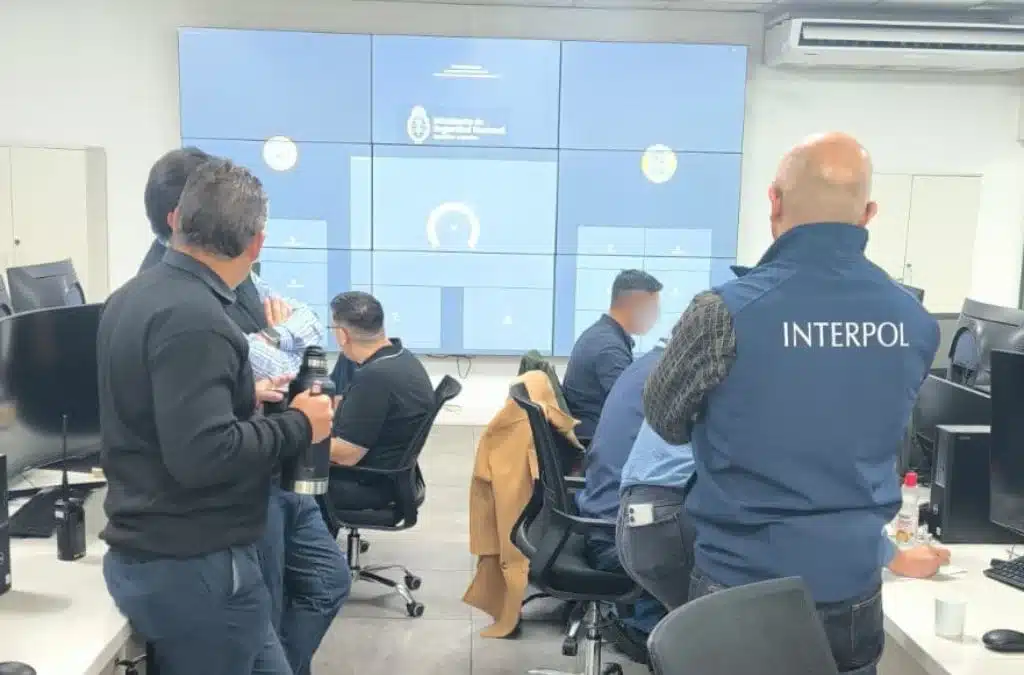
    An eight-month international operation targeting West African organized crime groups has resulted in 58 arrests and the identification of 263 suspects across 22 countries, according to INTERPOL. Operation Jackal IV, conducted from November 2025 to June 2026, focused on disrupting criminal networks, tracing illicit funds, identifying high-value targets and supporting arrests and prosecutions. The operation brought together countries across six continents to tackle the growing global threat pos
     

Global Crackdown on West African Crime Networks Leads to 58 Arrests

26 de Agosto de 2026, 05:12

West African Organized Crime Groups

An eight-month international operation targeting West African organized crime groups has resulted in 58 arrests and the identification of 263 suspects across 22 countries, according to INTERPOL. Operation Jackal IV, conducted from November 2025 to June 2026, focused on disrupting criminal networks, tracing illicit funds, identifying high-value targets and supporting arrests and prosecutions. The operation brought together countries across six continents to tackle the growing global threat posed by West African criminal networks, including Black Axe and similar groups. These networks have been linked to a significant share of global cyber-enabled financial fraud, including romance scams, cryptocurrency and investment scams, and business email compromise fraud.

Operation Jackal IV Targets West African Organized Crime Groups

Operation Jackal IV also targeted money laundering activities used to move and conceal criminal proceeds across borders. INTERPOL coordinated cross-border intelligence sharing, analysis and operational support during the operation. It also provided specialized training to strengthen international investigations into financial crime. Tomonobu Kaya, Director of the INTERPOL Financial Crime and Anti-Corruption Centre, said the operation showed the importance of international cooperation in following illicit financial flows and disrupting criminal networks. [caption id="attachment_113806" align="aligncenter" width="600"]West African Organized Crime Groups Image Source: INTERPOL[/caption]

Major Arrests and Financial Crime Investigations

In Argentina, authorities identified 196 individuals linked to a major Crime-as-a-Service network suspected of providing website domains and money laundering support to West African organized crime groups. The investigation resulted in 17 arrests, with an INTERPOL Operational Support Team assisting with analysis of seized data and identification of suspects and criminal networks. South African authorities raided seven locations in Johannesburg linked to a syndicate involved in romance and investment scams targeting retirees in English-speaking countries. Investigators arrested 39 people, seized USD 2.67 million and blocked 257 bank accounts. In Italy, investigators identified an individual connected to a pan-European money laundering network that used shell companies, remittance services and cash withdrawals. One account processed EUR 845,000, or about USD 736,000, through 560 transactions involving 20 financial instruments. Romanian authorities dismantled a criminal group operating an investment scam through a call centre. The group promoted high returns from stocks and cryptocurrencies, with victims' money transferred to electronic wallets controlled by perpetrators. Authorities estimated that EUR 143 million had been stolen and laundered globally. Eleven people were arrested, while cash, cryptocurrency, six real estate properties and luxury watches were seized.

Sextortion and Crime-as-a-Service Emerge

Beyond individual investigations, the operation highlighted emerging threats involving sextortion and Crime-as-a-Service. INTERPOL identified an increase in West African organized crime groups using sextortion to target minors, including victims as young as 14. In these cases, offenders typically contacted minors through social media, established trust and persuaded them to share explicit images or videos. They then threatened to distribute the material to the victim's contacts unless a ransom was paid. Investigators also found that some criminal syndicates were procuring Crime-as-a-Service from external providers, including through the dark web. These services were used to outsource activities such as money laundering and other operational functions. While several cases from Operation Jackal IV remain under investigation, the preliminary results demonstrate the scale and international reach of the networks targeted during the eight-month operation. The participating countries were Austria, Argentina, Australia, Canada, Côte d'Ivoire, France, Germany, Indonesia, Ireland, Italy, Japan, Malaysia, the Netherlands, Nigeria, Portugal, South Africa, Spain, Sweden, Switzerland, the United Arab Emirates, the United Kingdom and the United States.
❌
❌