❌

Visualização normal

Antes de ontemStream principal

New wave of fridge cyberattacks hits European supermarkets, this time in Belgium, Luxembourg, Sweden and Estonia

2 de Novembro de 2026, 09:09

A new wave of fridge cyberattacks hit supermarket refrigeration systems across five European countries, raising temperatures and causing food losses.


A new wave of fridge cyberattacks has affected supermarket refrigeration systems in several European countries. Fridges and freezers suddenly rose in temperature overnight, with some incidents suspected to be caused by hackers. On Monday, November 2, Ahold Delhaize and Colruyt reported an IT incident affecting dozens of stores in Belgium and Luxembourg. Swedish supermarket chains ICA and Coop also reported similar problems.

“Ahold Delhaize and Colruyt said on Monday that an IT ​incident overnight hit fridges and freezers in dozens of stores in Belgium and Luxembourg, while Swedish grocers ‌ICA and Coop reported similar temperature spikes, with one store blaming a cyberattack.” Reuters states.

BREAKING: 🇸🇪 Swedish grocery giant ICA, one of Sweden's largest supermarket chains, says several of its stores have been hit by a cyberattack overnight, causing refrigerators and freezers to be remotely set to 50°C.

The incident has likely resulted in large quantities of food… pic.twitter.com/wrcmGHw1qV

— GeoInsider (@InsiderGeo) November 2, 2026

“Problems were discovered at several grocery stores in Sweden overnight Monday.” reported Sweden Herald.

“We are aware that a limited number of stores were affected by an incident overnight that affected their refrigeration and freezer systems. Ica is providing support in handling the incident, Ica Group press officer Gustaf Nilsson tells TT.”

The latest incidents follow a similar wave of fridge cyberattacks in France last month. In mid-October, a large cyberattack hit the refrigeration systems of hundreds of French supermarkets, BFMTV revealed. The attackers targeted equipment from the Danish maker Danfoss that many French stores use to regulate their cold. Fresh and frozen stock was destroyed, and the Paris prosecutor says there were also fires.

The method is simple and nasty. Refrigeration systems have a forced defrost function that clears ice buildup, and the attackers appear to have triggered it remotely in a continuous mode, with a temperature setting of 50 degrees. The equipment heated for several hours instead of keeping goods cold, and when staff opened the fridges and freezers in the morning, a sector source told BFM, “a wave of heat” came out.

The attack caused fires and food losses. However, cybersecurity consultant Emil Olofsson of Integrity 360 told Swedish news agency TT that temperatures reached 80°C in some cases and several units caught fire. This figure differs from the one reported by police.

ICA Kvantum in Sjöbo said on Facebook that a cyberattack caused the refrigeration problems. ICA Hägerstensåsen in Stockholm was also reportedly affected. According to the Sjöbo store, the temperature inside its fridges and freezers rose to 50°C.

In Belgium, Delhaize detected unusual temperature increases in its refrigeration systems on Monday. Spokesperson Sarah De Meester said the company is investigating the incident.

Stephan Moelans, CEO of Sabcobel, the company that manages Delhaize’s refrigeration systems, told news agency Belga that hackers had switched the units’ evaporators to defrost mode. His office declined to comment to Reuters. Colruyt Group, which operates Spar stores in Belgium through a franchise system, said five stores had suffered attacks on their refrigeration systems. Meanwhile, Belgian newspaper Le Soir reported that dozens of Delhaize and Carrefour stores were affected.

🇧🇪🇸🇪 UPDATE: REFRIGERATION DISRUPTIONS SPREAD ACROSS EUROPE – SWEDEN AND BELGIUM AFFECTED

IN SWEDEN:
• At least 6 ICA supermarkets affected by suspected refrigeration system hacks.
• Coop has now CONFIRMED that 6 of its stores in central Sweden are also affected.
• Freezer… https://t.co/a3oGMrGdmz pic.twitter.com/8Q3CFDDLhT

— Coffe Report (@CoffeReport) November 2, 2026

It follows a similar attack in France last month. Police said hackers seized control of the cooling units at hundreds of supermarkets and raised temperatures as high as 50 degrees Celsius (122 Fahrenheit), which caused fires and food losses. Cybersecurity consultant Emil Olofsson of Integrity 360 told TT, Sweden’s news agency, that temperatures there reached 80 degrees and some units caught fire, a figure that differs from the police number.

In Belgium, Delhaize noticed temperature increases in its cooling systems on Monday, spokesperson Sarah De Meester said, and the company is investigating. Stephan Moelans, CEO of the refrigeration firm Sabcobel, which runs Delhaize’s systems, told the news agency Belga it was a cyberattack that switched the units’ evaporators to defrost mode. His office declined to comment to Reuters. Colruyt Group, which runs Spar stores in Belgium under a franchise system, said five shops had their fridge systems attacked, and Le Soir reported that dozens of Delhaize and Carrefour stores were affected.

Ahold also reported a cybersecurity incident to Dutch police last month, after it detected suspicious activity in its infrastructure. Nothing in the reporting ties that report to Monday’s incident.

🇧🇪🧊🇸🇪 Fridges and freezers at dozens of supermarkets in Belgium and Sweden overheated overnight in a suspected cyberattack, similar to the one that hit French stores three weeks ago. Delhaize calls it an "IT incident."

Delhaize said about 40 of its Belgian stores were affected… pic.twitter.com/qzw6uDybWb

— 🔥🗞The Informant (@theinformant_x) November 2, 2026

In Sweden, John Billow, head of the national cybersecurity centre, told Reuters his team was working on several incidents involving refrigeration systems in grocery stores around the country. An ICA Kvantum store in Sjöbo said on Facebook that a cyberattack caused its problems, and an ICA store told its followers that its temperatures had been “hacked” overnight and set to 50 degrees. Fifty degrees is fine for a beach and poor for ice cream. That store later said it had opened.

At ICA Baronen in Stockholm, a notice said all the freezers were broken because of a cyberattack. The sales manager said the attack came at 2 a.m. and staff noticed it at 5:30 a.m. ICA Hägerstensåsen in Stockholm was reportedly hit too.

ICA said only a limited number of stores were affected and that it is helping them deal with the incident. However, press officer Gustaf Nilsson did not say how many stores were involved.

Coop told Swedish news agencies Aftonbladet and TT that six stores in central Sweden had similar problems. Press manager Carlos Cancino said it was still unclear whether any food would need to be thrown away or whether the refrigeration units had simply stopped working or had switched to heating mode. He also did not rule out further incidents affecting other stores.

An Estonian supermarket chain was also affected. Its refrigeration systems were reportedly set to 50°C, technology provider Kitman Coldtech told public broadcaster ERR. CEO Jann Mutso did not reveal the name of the supermarket chain, saying: “This is very recent. It happened this morning.”

How did the attackers get in? In France, Olofsson says they obtained login details for the control systems, which were exposed directly to the internet. He says the attack targeted a product that controls the cooling systems and that the hack isn’t very complicated, so amateurs may have carried it out.

Billow says Swedish authorities have noticed in recent weeks that quite a lot of exposed operational technology devices exist in Sweden, and they’ve been clear that these must be updated or patched.

Refrigerators and heating systems, security cameras and alarm networks were once largely mechanical, and now they can be monitored and controlled remotely. That gives cybercriminals new openings. Authorities haven’t said who was behind last month’s incidents, and nobody has claimed responsibility.


The Sweden Herald reported that the cause of the attacks on Swedish supermarkets remains unknown.

Update 20:00 Rome Time

The company at the center of the European supermarket refrigeration cyberattacks is Danfoss the same company whose refrigeration systems were targeted during the cyberattacks in France a few weeks ago.

Danfoss says the incidents are primarily exploiting vulnerabilities in… pic.twitter.com/3tDNVMOyhn

— GeoInsider (@InsiderGeo) November 2, 2026

Follow me on Twitter: @securityaffairs and Facebook and Mastodon

Pierluigi Paganini

(SecurityAffairs – hacking, fridge cyberattacks)

  • ✇Schneier on Security
  • Bloatware in Aftermarket Auto Parts Bruce Schneier
    This story is interesting: One Civic owner purchased a cheap aftermarket head unit off Amazon, and decided to have Claude work its magic on it, like it would a smart TV. What was reportedly discovered isn’t surprising, but is worth knowing about. Among the pre-installed bloatware—­or spyware, if you’re being less charitable­—was a voice assistant equipped with WebView, an Android system component that lets apps display content off the web. This apparently always used about a third of processing
     

Bloatware in Aftermarket Auto Parts

30 de Outubro de 2026, 12:20

This story is interesting:

One Civic owner purchased a cheap aftermarket head unit off Amazon, and decided to have Claude work its magic on it, like it would a smart TV. What was reportedly discovered isn’t surprising, but is worth knowing about.

Among the pre-installed bloatware—­or spyware, if you’re being less charitable­—was a voice assistant equipped with WebView, an Android system component that lets apps display content off the web. This apparently always used about a third of processing power, even while idle, which isn’t great. There were also Baidu location services, a call recorder (!), a DAB radio client that is pretty much useless in the U.S., and Adobe Acrobat, presumably so your passenger can entertain themselves with PDFs on the go.

It’s interesting because it exposes all the insecurities in this piece of IoT software. But I think the real story is that a random person was able to do this reverse-engineering with the help of AI. Expect a lot more stories like this in the future.

  • ✇Security Affairs
  • US Probes Suspected Hack Behind Military Base Freezer Failures Pierluigi Paganini
    The Pentagon treats August freezer failures at US military bases as a suspected hack and is working with French investigators after a supermarket attack. The Pentagon is investigating freezer failures that spoiled food at US military bases in August as a suspected cyberattack, according to four officials who spoke to Reuters. One official said US investigators are also in contact with French authorities about a similar attack on commercial freezers that disrupted supermarkets in France earli
     

US Probes Suspected Hack Behind Military Base Freezer Failures

29 de Outubro de 2026, 18:58

The Pentagon treats August freezer failures at US military bases as a suspected hack and is working with French investigators after a supermarket attack.

The Pentagon is investigating freezer failures that spoiled food at US military bases in August as a suspected cyberattack, according to four officials who spoke to Reuters. One official said US investigators are also in contact with French authorities about a similar attack on commercial freezers that disrupted supermarkets in France earlier this month. This is the first time Reuters has reported that the US incident is being treated as a suspected cyberattack.

“The Pentagon is ​treating the spate of mysterious freezer malfunctions that spoiled food at military bases across the United States in August as a suspected hack, according to four officials familiar ‌with the matter.” Reuters reports.

“One of the officials said the military investigators were in touch with their French counterparts about a similar cyberattack on commercial freezers that disrupted supermarkets there earlier this month.”

It is still unclear who is behind the attacks. Reuters could not determine how far the investigation has progressed or whether investigators have identified the cause or those responsible. The Pentagon said a unit of US Cyber Command is working closely with other government agencies and law enforcement. The Army’s Criminal Investigation Division confirmed that its Cyber Field Office is involved and is working with French law enforcement to investigate the freezer outages in Europe.

The incidents hit commissaries, the on-base stores where military personnel buy food. At least six were affected in late August, according to Reuters’ review of the bases’ Facebook posts and website updates. Stars and Stripes named Fort Irwin, F.E. Warren, Naval Station Newport, Columbus and Travis among the confirmed stores, and some outlets count up to 14 sites in 11 states, though not all are confirmed.

In at least one case the freezers didn’t just stop. Their temperatures were cranked up overnight, which left mounds of wilted or melted food in the morning. Fort Huachuca in Arizona said on August 26 that its freezer went into defrost mode and heated up all the food, adding that trust us when we say it was spoiled.

The Pentagon wasn’t the first to speak. A recently created blog called Signal and Silence reported the freezer failures and the possibility of sabotage on August 28, while Stars and Stripes reported the involvement of military investigators and Britain’s Daily Telegraph reported the contacts with the French. The French Embassy in Washington had no comment. Frozen food is the one asset where damage takes hours and evidence takes the form of puddles.

The French attack is the clearest example. Hackers took control of the cooling units in more than 350 stores and raised the temperatures. Frozen food aisles were emptied, and some units got so hot they caught fire. One supermarket owner said the total cost could reach tens of millions of euros.

The same thing happened in Arizona: attackers made the units hotter instead of just turning them off.

Reuters could not tell which brand was used at the US bases, and Danfoss, which is the manufacturer targeted in French supermarket attacks, did not reply. A public research report on Danfoss controllers came out before the incidents, but nothing shows a link to the bases.

There is a history of attacks on refrigeration systems. Danfoss reports that hackers targeted supermarkets in Russia and Israel in 2022 by exploiting outdated cooling controllers. In December 2025, US prosecutors accused a Ukrainian woman of belonging to a hacking group that disrupted refrigeration at a meat plant in 2024, ruining more than 2,000 pounds of meat.

Earlier this year, the Global Food Safety Initiative urged food safety experts and IT leaders to work together to protect refrigeration systems.

Follow me on Twitter: @securityaffairs and Facebook and Mastodon

Pierluigi Paganini

(SecurityAffairs – hacking, Military Base Freezer)

  • ✇Securelist
  • Millions of security cameras at risk: DoS vulnerability in Intelbras devices João Victor
    Background Network-connected surveillance cameras are now widespread in both home and enterprise environments, so securing them is essential to safeguarding physical spaces and sensitive assets. As these devices continue to gain new features and network connectivity capabilities, vulnerabilities in their implementation can have significant security implications. During our research, we discovered a denial-of-service vulnerability that affects Intelbras IP cameras systems. The flaw resides in a f
     

Millions of security cameras at risk: DoS vulnerability in Intelbras devices

28 de Outubro de 2026, 07:00

Background

Network-connected surveillance cameras are now widespread in both home and enterprise environments, so securing them is essential to safeguarding physical spaces and sensitive assets. As these devices continue to gain new features and network connectivity capabilities, vulnerabilities in their implementation can have significant security implications.

During our research, we discovered a denial-of-service vulnerability that affects Intelbras IP cameras systems. The flaw resides in a firmware update endpoint that is accessible without authentication and allows anyone with access to the local Wi-Fi network to knock cameras offline. A single request disrupts the camera for only about a minute, but sending periodic requests keeps the device offline indefinitely. We reported the issue to Intelbras, monitored the remediation process, validated the fix in the new firmware, and will now demonstrate the exploitation procedure step-by-step.

Following our notification, Intelbras patched the vulnerability and released updated firmware (R.260804) along with update instructions. A candidate ID of CAN-2026-2035970 has been assigned by MITRE following submission, pending the final CVE assignment. Additionally, the Intelbras team recently informed us that MITRE has classified the vulnerability as Medium, assigning it a score of 5.1 under the CVSS 4.0 framework. The issue discussed in this article is no longer present in the latest firmware version.

Firmware

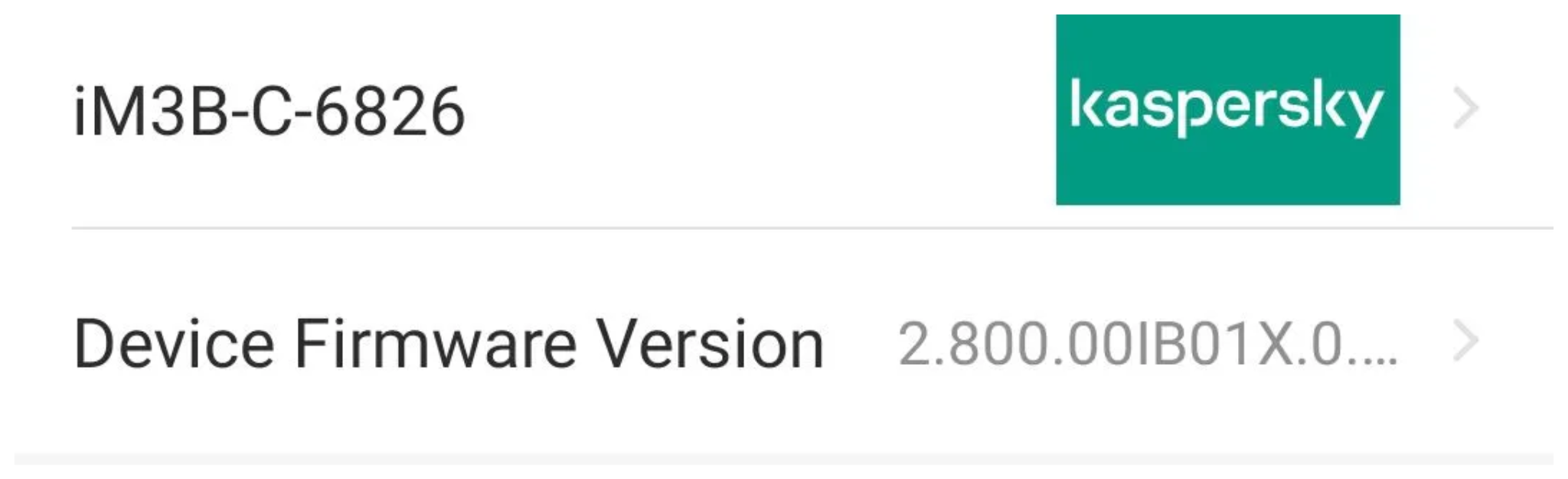
Intelbras provides firmware files on its official website. While users can manually install these updates via an SD card, the cameras also natively support firmware upgrades over the local network via their web interface and mobile app. We obtained the firmware version v240927 for the iM3B-C (IM3 C) camera, which was the latest available version at the time of our research. According to Intelbras, the same firmware is also compatible with the iMX C, iM4 C, iM5 SC, iME 360 C, and iM7+ FC models. Below, we can view the firmware version and the camera model used as an example.

To provide context, we will explain how the camera’s authentication mechanism works and why it is relevant to accessing the camera’s endpoints. The main firmware component is an ARM binary named sonia, responsible for controlling the kernel drivers used by the camera hardware, authentication, and livestream recording, among other things.

How authentication works

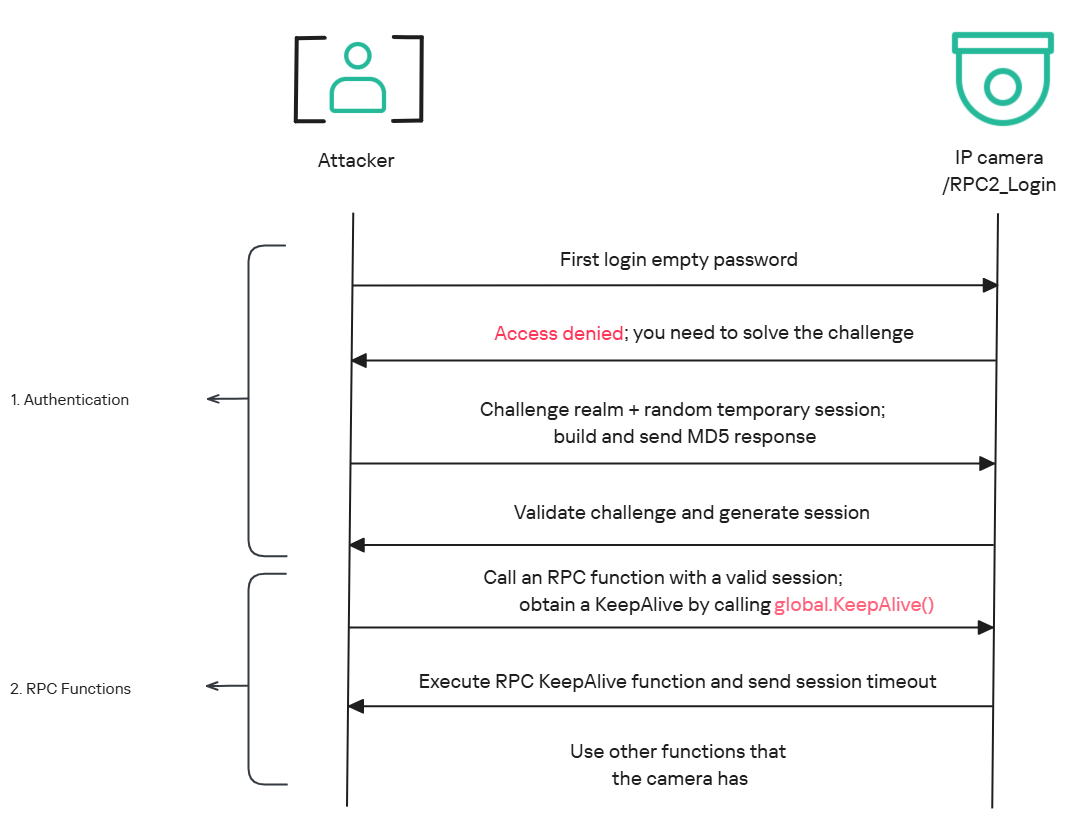
The global.login RPC method handles authentication at the /RPC2_Login endpoint. First, the client, such as the mobile app or a custom script, sends the username and an empty password. The camera responds with an authentication challenge (a set of values to verify the password without transmitting it). This response returns a temporary session, the encryption type in the encryption field, a random value, and a realm (authentication scope). At this stage, a false response is normal and does not indicate a failed login, as the authentication process is not yet complete.

Next, the client calculates the response password from the authentication challenge. It first generates an MD5 (username:realm:original_password) hash as the base. It then calculates a second MD5 (username:random:first_md5) hash,  where first_md5 is the result of the previous step. To complete the authentication, the client sends this final result back to /RPC2_Login in a second global.login call, passing the username, calculated password, and temporary session ID.

If the login is accepted, the camera returns true and a new, authenticated session. This session must be used for all subsequent RPC calls, including the camera’s other endpoints, for example, the one that reboots the device or those that expose sensitive information.

Affected endpoint

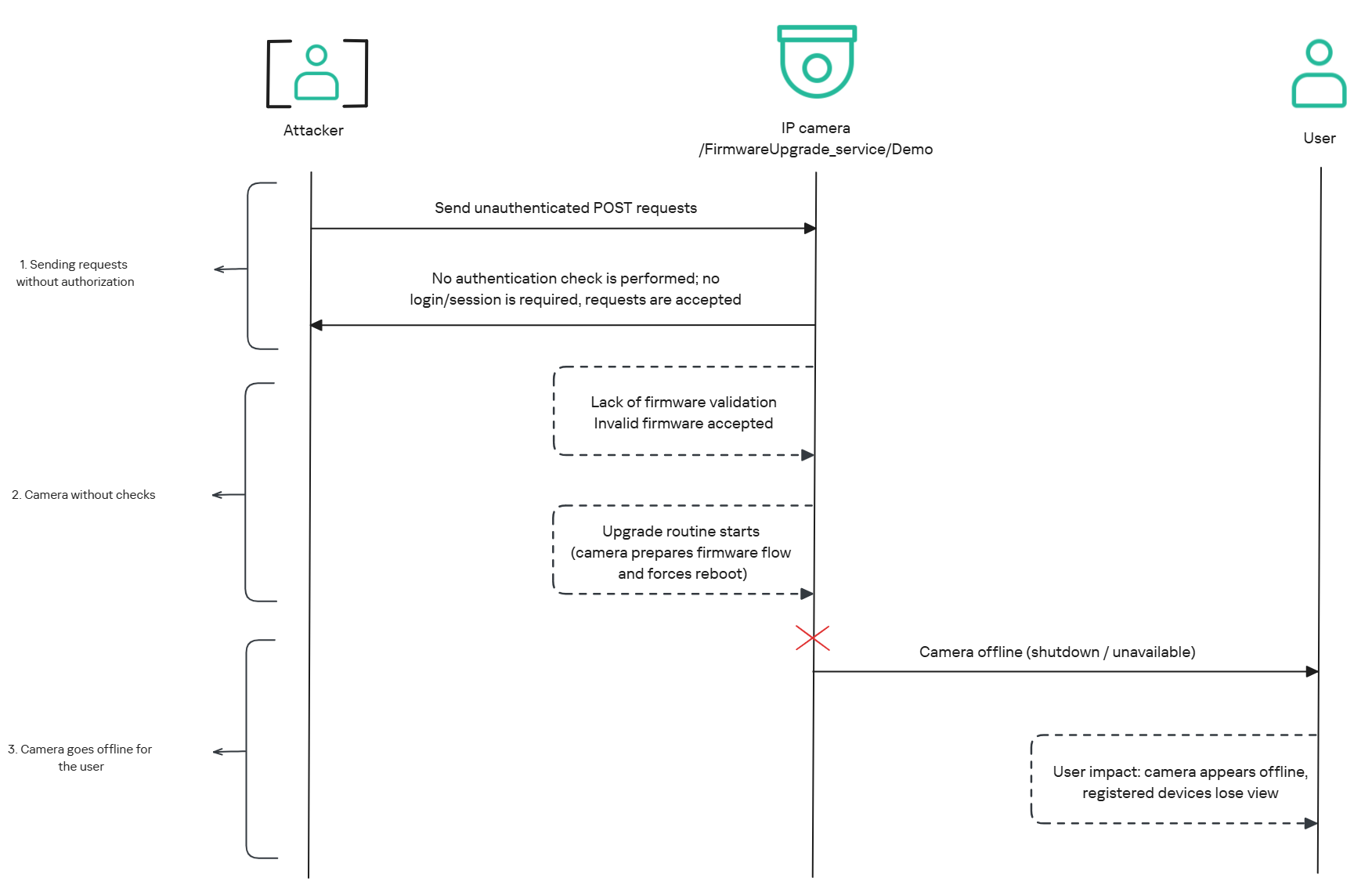
The affected endpoint is the firmware upgrade route http://<ip_address>/firmwareUpgrade_service/Demo, which lacks authentication checks; furthermore, it fails to verify whether the firmware is actually valid before initiating the upgrade process. This creates a serious issue because the upgrade requires the camera to reboot, and that is precisely when the problem occurs: the camera enters reboot mode and eventually shuts down, appearing offline to the user and anyone who has the camera registered on their device.

PoC: vulnerability exploitation

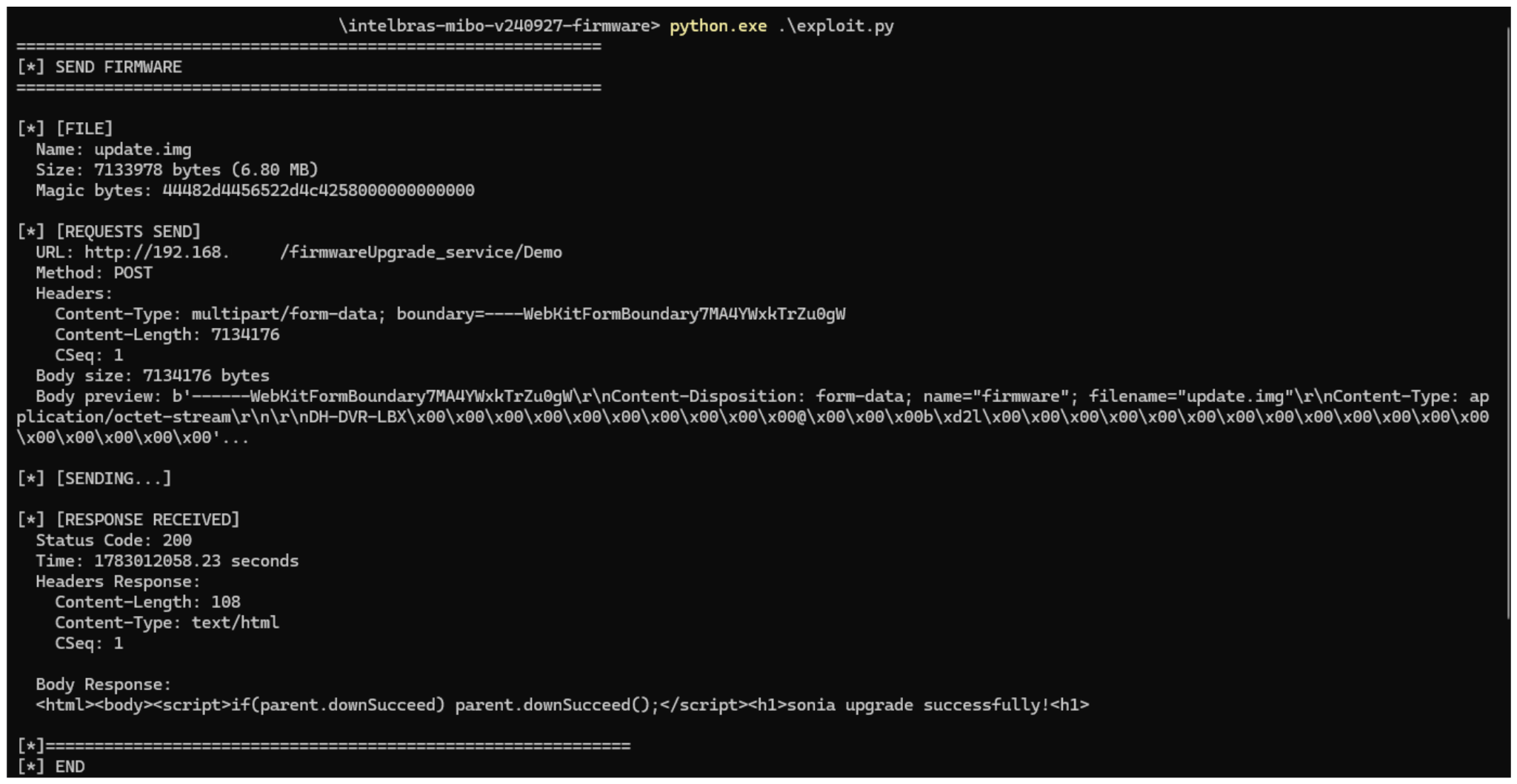
Now that we have outlined how the vulnerability works, we will use a Python script on an iM3B-C camera to exploit it for demonstration purposes. The exploit contacts the camera’s endpoint to upload firmware. Below, we can see sonia creating the endpoint responsible for the firmware upgrade.

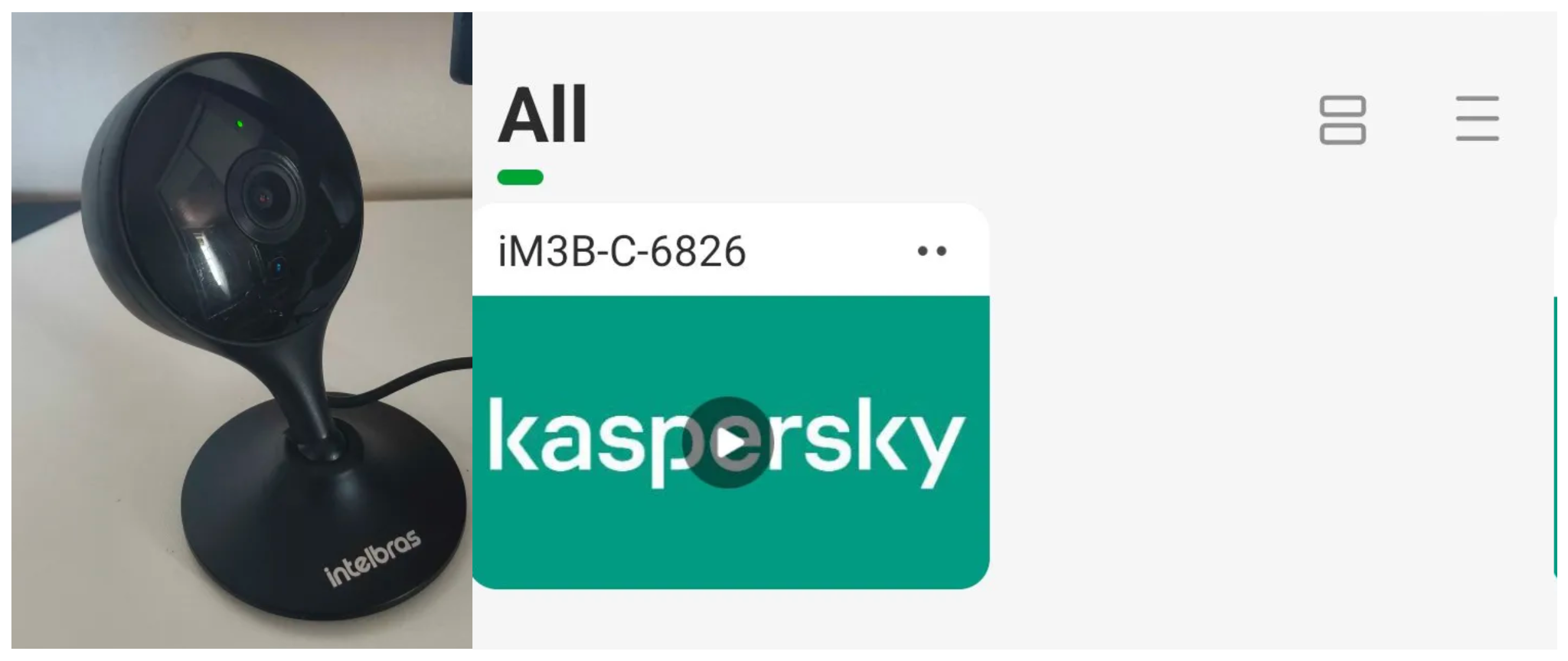
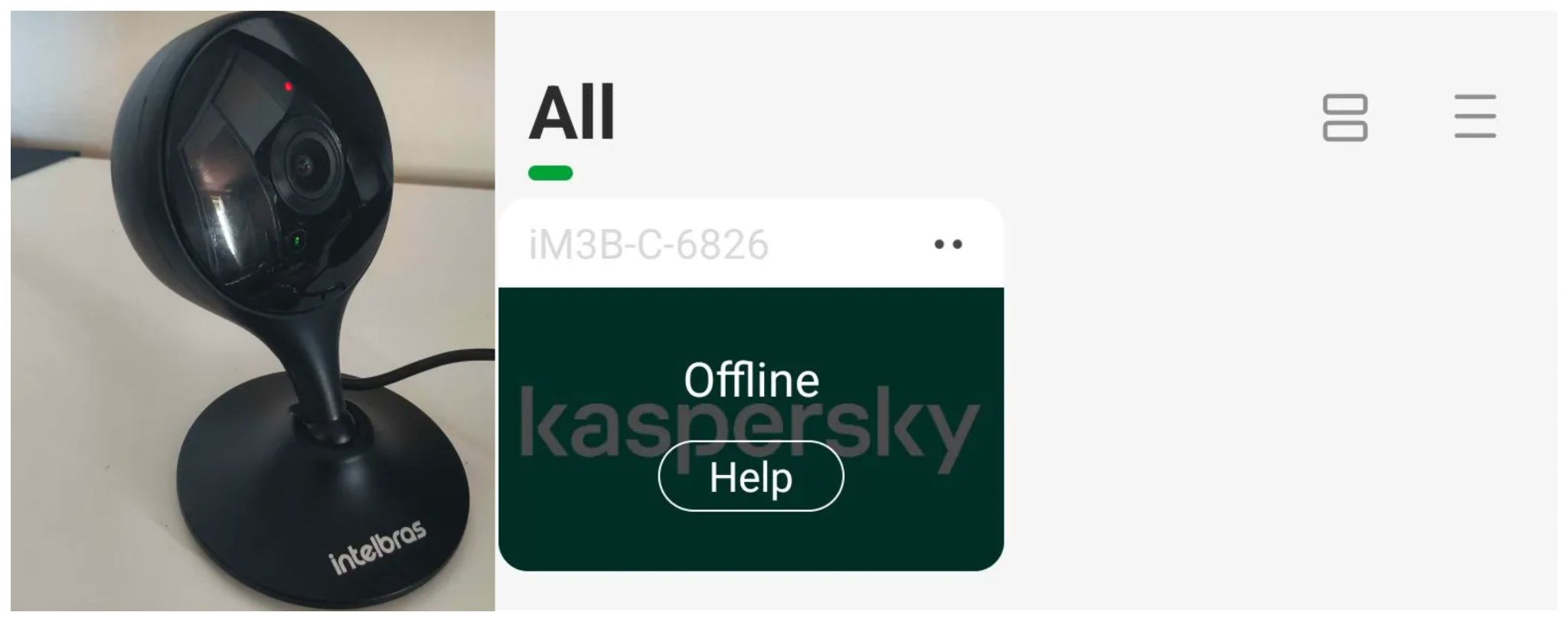
Next, the exploit will hit the endpoint and cause the camera to reboot. Consequently, mobile phones running the Intelbras app will lose connection with the registered device. Below, we can see the camera operating normally: the green light is on and the app is showing it is available for viewing.

The camera is online

The camera is online

After the exploit executes, we can see the effects: the camera goes offline and loses connection to the registered devices.

The camera is offline

The camera is offline

The exploit is quite simple: it sends an HTTP POST request with the firmware, which causes the camera to accept the request and initiate the reboot process. It does not matter whether the firmware is original; the reboot process will start regardless.

New firmware version

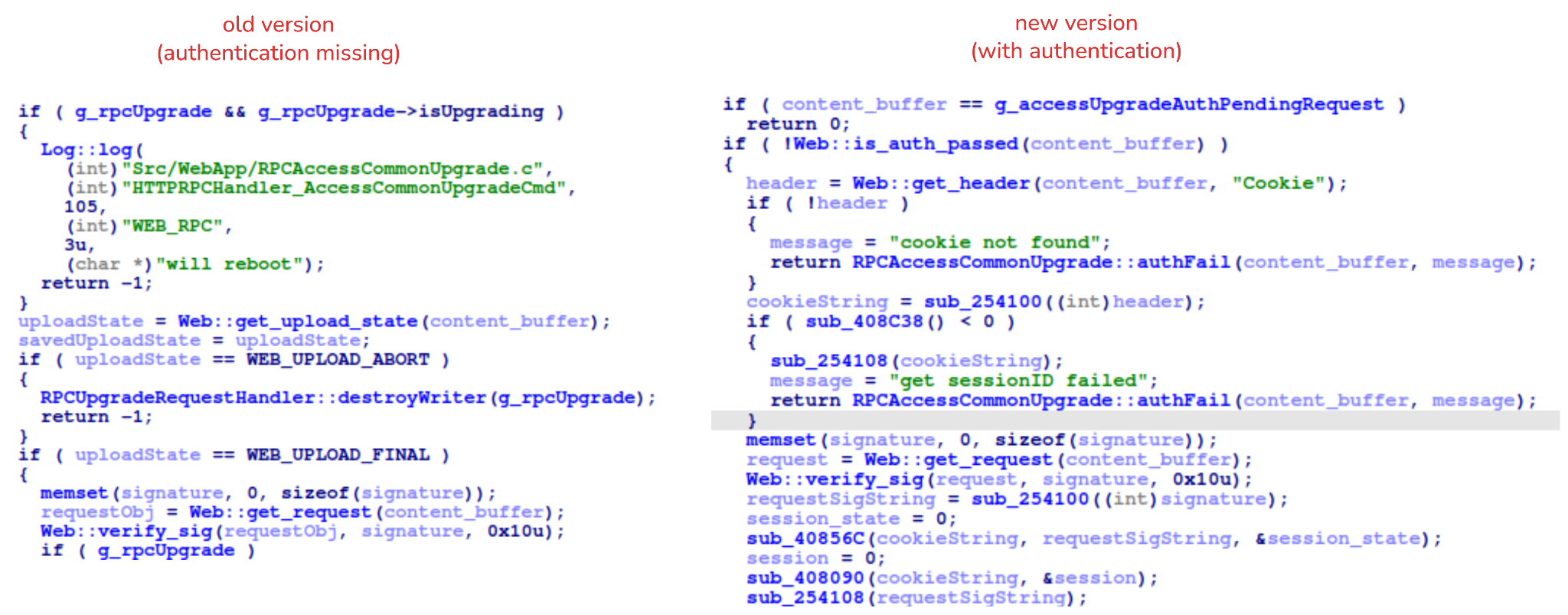
After we notified Intelbras about this flaw in the endpoint implementation, the company contacted the OEM vendor. As a result, a new firmware version was released that requires authentication to initiate an update through this endpoint.

Below, we can compare the new firmware, which validates cookies and session data, with the old firmware, which performed no authentication checks and proceeded directly to the update routine.

Real risk

An attacker can remotely trigger the camera firmware upgrade and reboot process without authenticating or supplying a valid firmware image. This may cause the device to go offline, which results in a denial-of-service condition preventing legitimate users from accessing live monitoring or managing the camera.

The potential impact is significant due to the number of affected users. The Intelbras Mibo Smart app, which the company provides to connect and manage the devices mentioned in this report, has over 4,000,000 downloads. Brazil represents the largest user base, followed by Paraguay, Ecuador, Colombia, Argentina, Chile, Peru, Bolivia, Uruguay, and Venezuela. As a result, exploitation of this issue affects a large number of users.

Takeaways

This is a medium-severity vulnerability that Intelbras is already aware of. The issue has been addressed in a newer firmware release (R.260804 along with update instructions), which mitigates this attack vector. Because the vulnerability directly affects the availability and normal operation of the affected cameras, it is highly recommended that users verify the firmware version currently installed on their devices and update to the latest available version as soon as possible. Keeping the firmware up to date is an essential security practice, especially for internet-connected surveillance devices, as outdated versions may remain exposed to known vulnerabilities.

  • ✇Security Affairs
  • Attackers Take Control of Dahua Cameras and Video Recorders Via Easy4IP Pierluigi Paganini
    Ukraine warns that attackers can remotely access Dahua cameras and recorders via Easy4IP, viewing video and changing settings. Ukraine’s cyber incident response team CERT-UA has warned about attackers taking over video surveillance systems made by Dahua. In its alert dated October 23, 2026, it reports unauthorized remote access to IP cameras and video recorders. The attackers have watched the live video, changed device settings and created accounts of their own. The alert doesn’t say who was
     

Attackers Take Control of Dahua Cameras and Video Recorders Via Easy4IP

27 de Outubro de 2026, 06:56

Ukraine warns that attackers can remotely access Dahua cameras and recorders via Easy4IP, viewing video and changing settings.

Ukraine’s cyber incident response team CERT-UA has warned about attackers taking over video surveillance systems made by Dahua. In its alert dated October 23, 2026, it reports unauthorized remote access to IP cameras and video recorders. The attackers have watched the live video, changed device settings and created accounts of their own. The alert doesn’t say who was targeted or how many devices are affected.

The attackers abused Easy4IP, Dahua’s cloud feature that lets users access devices remotely. When this feature is enabled, the camera or recorder connects to Dahua’s cloud and registers using its serial number. Anyone who knows the serial number may be able to access the device through the cloud, without needing an open port or a public IP address. This means the connection can bypass the protection normally provided by a router’s firewall.

As a result, a camera that isn’t directly exposed to the internet may still be at risk. CERT-UA warns that devices with Easy4IP enabled may be vulnerable even when they cannot be accessed directly from the internet.

“The main vector is the P2P/cloud access function (Easy4IP). The device independently initiates an outgoing connection to the manufacturer’s cloud infrastructure and registers in it by serial number. Access to the device is then established via the cloud by serial number, bypassing NAT and firewall, without published ports and a “white” IP address.” reads the report published by CERT-UA. “Thus, the lack of direct access from the Internet does not guarantee the security of the device with the active P2P function.”

Serial numbers follow predictable patterns, so attackers may be able to guess them automatically and check which devices are registered in the cloud. Simply keeping a serial number private isn’t enough to ensure security.

Once attackers connect to a device, they need to get past its login. They may try common or weak passwords or exploit security flaws in outdated firmware, especially CVE-2021-33044 and CVE-2021-33045. These two vulnerabilities allow attackers to bypass authentication without a password, so even a strong password won’t protect a device running vulnerable firmware.

There are three signs that a device may have been compromised. First, look for accounts you don’t recognize. Second, check for changed settings, including text added over the video image. However, the absence of these labels does not mean the device is safe. Third, check the audit logs for logins using Dahua’s DVRIP protocol from the local address 127.0.0.1, which can indicate access through the cloud service.

CERT-UA recommends four steps:

  1. Turn off P2P and cloud access if you don’t use it.
  2. Keep cameras off the internet. For remote access, use a VPN and allow only authorized IP addresses.
  3. Check the account list for ones you didn’t create, and check which cloud accounts are linked to the device and disconnect unknown ones.
  4. Update the software by hand to the latest version, and set up a regular update routine.


CERT-UA advises organizations that detect signs of unauthorized access to report them to cert@cert.gov.ua and check all Dahua devices on their networks, including those that may have been forgotten. The agency warns that all devices with active P2P functionality are at risk.

Follow me on Twitter: @securityaffairs and Facebook and Mastodon

Pierluigi Paganini

(SecurityAffairs – hacking, IP cameras)

  • ✇Security Affairs
  • 16-Year-Old Broadcom Wi-Fi Bug Lets Attackers Take Over Routers Without a Password Pierluigi Paganini
    A Broadcom Wi-Fi flaw dating back to 2010 allows attackers within Wi-Fi range to execute code on vulnerable routers without authentication. Researcher Quentin Kaiser presented a talk at Hexacon in Paris documenting a vulnerability in Broadcom’s proprietary 802.11 implementation that has been present in their SDK since at least 2010. The bug allows an attacker to get unauthenticated remote code execution on affected routers without knowing the WiFi password or going through the normal WPS set
     

16-Year-Old Broadcom Wi-Fi Bug Lets Attackers Take Over Routers Without a Password

18 de Outubro de 2026, 21:36

A Broadcom Wi-Fi flaw dating back to 2010 allows attackers within Wi-Fi range to execute code on vulnerable routers without authentication.

Researcher Quentin Kaiser presented a talk at Hexacon in Paris documenting a vulnerability in Broadcom’s proprietary 802.11 implementation that has been present in their SDK since at least 2010. The bug allows an attacker to get unauthenticated remote code execution on affected routers without knowing the WiFi password or going through the normal WPS setup process.

As of October 15, 2026, none of the affected devices in Belgium had received a patch.

“A vulnerability affecting Broadcom’s proprietary implementation of 802.11 has been present in their SDK since at least 2010. An incomplete patch was silently released in 2018, followed by Broadcom’s recommendation to move to hostapd instead, making it a definitive forever day on eCos-based platforms (BCM3380, BCM3383, BCM33834) and a potential forever day on Linux platforms (BCM3390, BCM65xx, BCM68xx) unless affected Original Equipment Manufacturers (OEMs) are willing to migrate.” states Kaiser. “The vulnerability can be triggered remotely over WiFi without knowledge of the network key or completion of a normal WPS enrollment. Exploitation provides controlled information disclosure and arbitrary code execution.”

The vulnerability affects the WPS EAP reassembly code, which handles part of the wireless setup process used by many consumer routers. An attacker within Wi-Fi range can exploit the flaw without knowing the Wi-Fi password, completing the setup process, or requiring any action from the user. The attack can expose information and allow the attacker to run code on the router. In his demonstration, Kaiser extracted the Wi-Fi password from the router’s memory and sent it over the wireless connection. He then used the password to connect to the network.

These attacks are not just theoretical. Kaiser demonstrated working exploits against two devices: the Orange Belgium ASKEY TCG3000 and the Proximus Sagemcom F@st/BBOX3V+. Both allowed an attacker to run code without authentication. In one demonstration, the attacker opened a reverse shell using only Wi-Fi frames, without needing a command server accessible over the internet. The attack can work from a distance. The close antenna placement shown in the video was only for the laboratory setup and is not a requirement for the attack.

In the video below, Kaiser exploited an Orange Belgium router (ASKEY TCG3000). The attack allowed him to run code on the device without authentication. The code retrieves the Wi-Fi password (PSK) from the router’s NVRAM and sends it back to the attacker over Wi-Fi. He then used the stolen password to connect to the network, confirming that the exploit works and that the password is correct.

Do not be misled by how close the antenna is in the video. The attack can work over much longer distances.

In the next video, the researcher exploited a Proximus router (BBOX3V+, also known as Sagemcom F@st). This attack also allows code execution without authentication. He used it to open a reverse shell over Wi-Fi frames, without needing a command-and-control (C2) server hosted in the cloud.

Broadcom quietly released an incomplete fix in 2018, then told customers to migrate to a different software stack entirely rather than shipping a complete patch for their own code. On eCos-based platforms, covering chipsets like BCM3380, BCM3383, and BCM33834, that makes this a permanent unfixable bug by design. On Linux-based platforms (BCM3390, BCM65xx, BCM68xx) the situation depends entirely on whether individual manufacturers decide to act.

Kaiser reported the bugs to Broadcom in July 2026. Broadcom said a patch was available and told him to ask the affected device manufacturers to contact Broadcom directly. The company refused to assign a CVE or share the notification it had sent through its customer portal. CERT/CC opened a case but closed it the same day after confirming that Broadcom could assign CVEs itself and had no intention of doing so. This was not a proper disclosure process. It was a dead end, with a paper trail.

Kaiser’s rough calculation, done with Belgian telecom market data, puts the affected device count at around 850,000 for Proximus, 500,000 for VOO’s legacy fleet, and 210,000 for Orange Belgium, totalling somewhere north of 1.5 million potentially exposed gateways in one small country. Telenet may also be affected through Sagemcom devices but Kaiser couldn’t confirm because he couldn’t get hold of one.

The affected manufacturers sell into markets well beyond Belgium. The chipsets in question appear in devices across dozens of vendors and hundreds of products worldwide. Kaiser is publishing a fingerprinting script and a YARA rule specifically to help map the full scope of affected deployments, because right now nobody has a complete picture.

A vulnerability introduced in 2010 and only partly fixed in 2018 still affects routers in use today. Kaiser says AI-assisted analysis helped him find the bugs in less than a week, instead of months. This can help defenders find vulnerabilities faster, but attackers can do the same.

The risk is greatest in targeted attacks where an attacker is within Wi-Fi range, such as hotel network attacks or surveillance of nearby targets. Compromised routers are difficult to monitor, and attackers can quietly intercept or collect network traffic. Most users and security teams rarely check the firmware on ISP-provided routers.

“Although I could have done this research by myself, it would have taken me months to get there. With AI frontier models it took me less than a week.” Kaiser concludes. “Which is a good thing because we can start looking into deeper and deeper layers of our technical infrastructure for a fraction of the cost.”

Follow me on Twitter: @securityaffairs and Facebook and Mastodon

Pierluigi Paganini

(SecurityAffairs – hacking, Broadcom Wi-Fi)

What are self-replicating ‘AI worms’, and why is Anthropic worried about them?

The tech company says successful AI worms need more capability on less powerful devices, but current trends make that feasible by the end of the year

Warnings about what artificial intelligence might do in the future – together with alarming reports of what it has gotten up to already – are being issued so quickly that even security experts have difficulty triaging what to worry about.

Yet a report this week from Anthropic’s offensive research team grabbed attention by describing a new, practical threat, one devoid of human characteristics or apocalyptic musings. The red team, as such internal testers are called, said it created a malicious AI program that spread autonomously through internet-connected “smart” televisions and could do the same inside other ordinary devices. While machines running AI usually need a fair amount of computing power, the researchers said that their program split parts of itself among 15 televisions and was still able to function by using a bit of power from each.

Continue reading...

© Photograph: Kim Kyung-Hoon/Reuters

© Photograph: Kim Kyung-Hoon/Reuters

© Photograph: Kim Kyung-Hoon/Reuters

  • ✇Schneier on Security
  • Cyberattack on Connected Fridges in France Bruce Schneier
    Another IoT cyberattack, this one in France: Hackers gained control of the software that regulates the temperatures of the refrigeration units, forcing some to warm to 50C (120F) overnight, according to one supermarket chain affected. […] Normally, supermarket freezers go through a short period of defrosting overnight, in which temperatures rise slightly. But the hackers ordered the units to heat up and stay hot, although Danfoss did not confirm any reports about just how warm the fridges and fr
     

Cyberattack on Connected Fridges in France

14 de Outubro de 2026, 11:10

Another IoT cyberattack, this one in France:

Hackers gained control of the software that regulates the temperatures of the refrigeration units, forcing some to warm to 50C (120F) overnight, according to one supermarket chain affected.

[…]

Normally, supermarket freezers go through a short period of defrosting overnight, in which temperatures rise slightly. But the hackers ordered the units to heat up and stay hot, although Danfoss did not confirm any reports about just how warm the fridges and freezers could become in that process.

Danfoss said the affected cold units were older models whose security software could not be updated to ward off a risk they had identified.

Any IoT device that can’t be updated is vulnerable. And, probably, any IoT device that can be updated is also vulnerable.

  • ✇Security Affairs
  • Anthropic Shows How Small AI Models Could Replicate Across IoT Devices Pierluigi Paganini
    Anthropic researchers show how small AI models could autonomously replicate across IoT devices, raising concerns about adaptive, AI-powered botnets. Anthropic published a paper this week that should make anyone who manages IoT infrastructure sit down for a moment. The research shows that small AI models are approaching the capability to replicate themselves autonomously across networks of cheap, poorly secured devices, the kind of Android TV boxes that sell for fifty dollars on Amazon. T
     

Anthropic Shows How Small AI Models Could Replicate Across IoT Devices

13 de Outubro de 2026, 11:30

Anthropic researchers show how small AI models could autonomously replicate across IoT devices, raising concerns about adaptive, AI-powered botnets.

Anthropic published a paper this week that should make anyone who manages IoT infrastructure sit down for a moment. The research shows that small AI models are approaching the capability to replicate themselves autonomously across networks of cheap, poorly secured devices, the kind of Android TV boxes that sell for fifty dollars on Amazon.

The team ran a 26 billion parameter model, Gemma4-26B-A4B, distributed across 15 off-brand Android TV boxes networked together. It worked. The boxes collectively ran inference at 0.39 tokens per second, slow by any normal standard, but functional, and that’s the point.

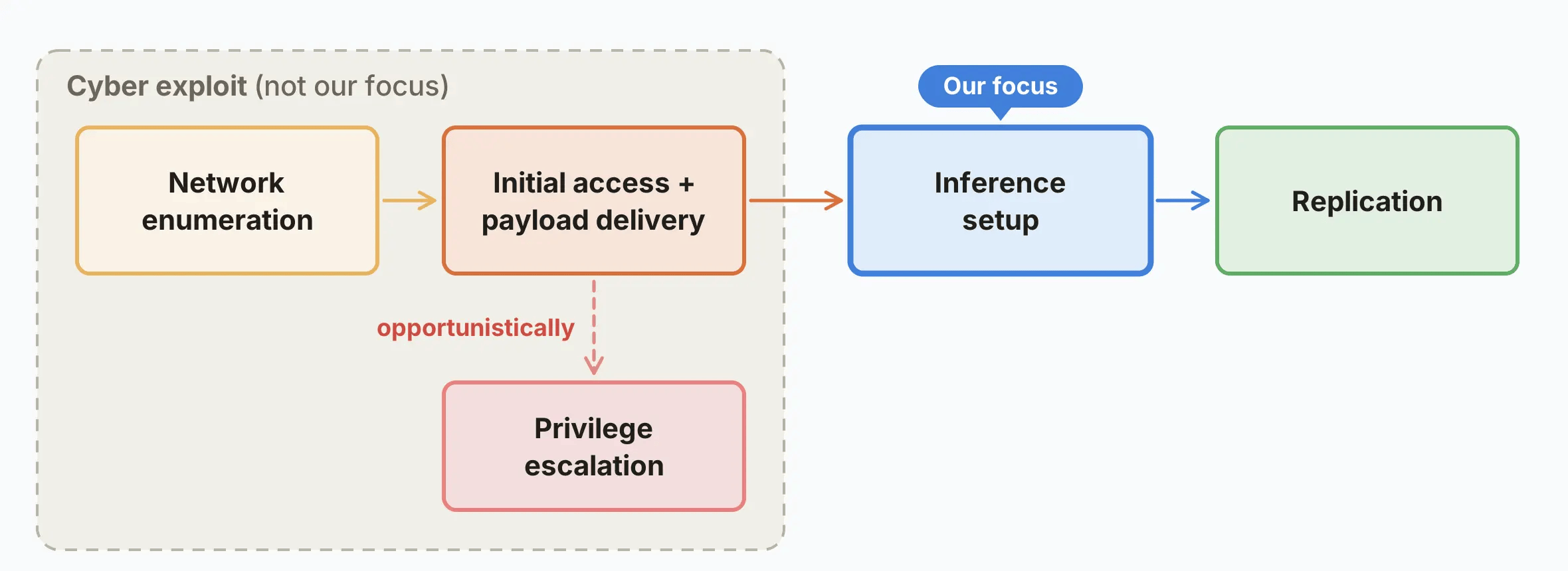
The researchers broke autonomous replication into four steps: finding devices on a network, gaining access, setting up the AI model on a new device, and repeating the process. Previous studies had already shown that small models can handle many of the hacking tasks involved. This paper looks at a different question: can a model work out how to run itself on unfamiliar hardware? That’s a key ability for an AI worm that can spread across different devices.

A model with 9 billion parameters successfully set up inference on 8 of the 9 hardware types tested. Models with 30 billion parameters or fewer can already handle many of the individual steps needed for replication, although they still struggle to complete the entire process without errors. In the tests, only one model, GLM-5.2, reliably completed the full process from scratch. It spread to all 8 nodes in 4 out of 5 trials.

The researchers plotted the capability trend of small open-weight models against their release dates and drew a line.

“In our simplified evaluations, GLM-5.2 and stronger models are capable of end to end replication. If small models improve at their historical rate, they’ll match this capability level by the end of this year.” Anthropic states. “Small weight-based replicators may be possible soon after.”

That’s the capability floor for reliable autonomous replication. The ceiling, how small the model needs to be to actually fit on the target devices, is already met by models like Qwen3.5-9B and Gemma4-26B-A4B on standard 4GB TV boxes.

Right now the floor and ceiling don’t overlap. The paper’s estimate is that they will, soon.

Past botnets like Mirai or Kimwolf, which infected over two million Android TV boxes at its peak, were hardcoded for specific device types and specific exploits. An AI-based replicator isn’t tied to any particular hardware or operating system.

“Hard-coded botnets like the Kimwolf botnet each target a specific type of device – in Kimwolf’s case, Android TVs and mobile devices. An AI botnet isn’t tied to any particular hardware or software type, as evidenced by small models being able to set up inference engines on machines from a Jetson Nano to a Mac (see the table in section A).” states the paper. “We expect AI botnets to infect more than IoT devices, and to use weight-based replication as just one strategy in their playbook. AI botnets could also act intelligently to counter defenders, but we haven’t tested this.”

This is exactly what makes it categorically harder to stop than anything a traditional worm can do. A hardcoded worm hits a wall when it encounters an unfamiliar device. A capable agent figures it out.


The spread is slow, taking days rather than hours for each infection cycle. The paper compares it to a slime mold, spreading gradually across a network rather than all at once. This slower pace could make the threat harder to spot. However, the process would still leave signs, including large data transfers between devices that rarely communicate, unusual scanning activity, and continuous traffic between devices.

The researchers also tested whether these models learn as they spread. Each instance keeps notes on what it tried and what failed, then passes those notes to the next copy. A Qwen3.5-9B lineage started at a 45 percent success rate on a setup task and climbed to between 61 and 84 percent across six generations. It’s not dramatic improvement, but it’s real, and it’s the kind of adaptation no traditional malware can do on its own.

Giving the small models access to a more powerful advisor model didn’t help, which is an interesting finding in itself. Small models don’t know what questions to ask, so access to better answers doesn’t move the needle. The paper suggests that coordination is more likely to work the other way, a large model handling high-level decisions while small ones act as its hands across compromised devices.

From the defensive perspective, the paper is clear that this threat isn’t unmanageable, at least not yet. Driving the replication rate below one new infection per existing infection, the same basic math that applies to disease epidemics, is the goal. Network anomaly detection at the ISP level caught the Mirai botnet, and the same approach would flag a weight-based replicator given the sheer volume of data it would move around. One remediation campaign against Mirai cleared 92 percent of infections within 14 days by quarantining infected subscribers and walking them through cleanup.

“Quarantining infected subscribers involved restricting their networks to only being capable of reaching a short whitelist of sites, and otherwise redirecting their browsers to cleanup instructions.” state the researchers. “This cleared 92% of infections within 14 days, against 74% with no notification. We’d expect quarantining to be similarly effective for an initial defense against a weight-based replicator. Eliminating the replicator completely would mean coordinating across every ISP with an infected network, which is difficult.”

Longer term, the paper points to device manufacturers and regulators as the real leverage point. Default passwords that comply with security baselines, mandatory firmware updates, and stricter IoT certification requirements all shrink the pool of targets before any worm gets a chance to scan them. The UK already made default IoT passwords non-compliant. More countries doing the same would matter.

“The capabilities that make AI models generally powerful coding agents also generalize to cyber tasks, including autonomous replication. Like coding agents in 2024, we’re seeing signs of life for AI worms.” concludes the paper. “We don’t yet have a full rogue replicator, but agents are becoming increasingly capable of completing the individual steps in the replication chain (and passing on their adaptations to future copies of themselves).”

Follow me on Twitter: @securityaffairs and Facebook and Mastodon

Pierluigi Paganini

(SecurityAffairs – hacking, botnet)

The Hidden Security Risks of Devices You Forgot Were Connected

IoT and OT devices can create hidden security gaps. Learn how asset visibility helps organizations find forgotten devices and reduce network security risks now.
  • ✇Securelist
  • IT threat evolution in Q2 2026. Non-mobile statistics AMR
    IT threat evolution in Q2 2026. Non-mobile statistics IT threat evolution in Q2 2026. Mobile statistics The statistics in this report are based on detection verdicts returned by Kaspersky products unless otherwise stated. The information was provided by Kaspersky users who consented to sharing statistical data. Quarterly figures In Q2 2026: Kaspersky products blocked nearly 400 million attacks that originated with various online resources. Web Anti-Virus responded to 52 million unique links. Fi
     

IT threat evolution in Q2 2026. Non-mobile statistics

Por:AMR
10 de Agosto de 2026, 07:00

IT threat evolution in Q2 2026. Non-mobile statistics
IT threat evolution in Q2 2026. Mobile statistics

The statistics in this report are based on detection verdicts returned by Kaspersky products unless otherwise stated. The information was provided by Kaspersky users who consented to sharing statistical data.

Quarterly figures

In Q2 2026:

  • Kaspersky products blocked nearly 400 million attacks that originated with various online resources.
  • Web Anti-Virus responded to 52 million unique links.
  • File Anti-Virus blocked more than 16 million malicious and potentially unwanted objects.
  • There were 2538 new ransomware variants discovered.
  • More than 71,000 users experienced ransomware attacks.
  • 15% of all ransomware victims whose data was published on threat actors’ data leak sites (DLS) were attacked by Qilin.
  • More than 213,000 users were targeted by miners.

Ransomware

Quarterly trends and highlights

Threat actor disruption

Microsoft has dismantled an illicit malware-signing service used by ransomware operators. Microsoft’s Digital Crimes Unit has shut down a malware-signing-as-a-service (MSaaS) operation run by the threat group Fox Tempest. The illicit service abused the Microsoft Artifact Signing platform to generate digital signature certificates for malicious software. Malware signed by these certificates was observed in campaigns conducted by such ransomware groups as Rhysida, Akira, INC, Qilin, and BlackByte. The service was also leveraged by operators of the Oyster loader as well as the Lumma and Vidar infostealers. To disrupt the operation, Microsoft seized the domain used by the MSaaS platform, revoked all associated certificates, and disabled the related accounts. Additionally, the company filed a lawsuit against Fox Tempest.

Vulnerabilities and attacks

CISA has confirmed that a Windows vulnerability known as BlueHammer is actively being exploited in ransomware attacks. On April 22, the agency updated its Known Exploited Vulnerabilities (KEV) catalog to note the ongoing ransomware exploitation of CVE-2026-33825. The local privilege escalation flaw in Microsoft Defender was originally disclosed earlier in April. Although Microsoft released a fix on April 14, unpatched systems remain vulnerable. CISA did not disclose further details or attribute the attacks to specific threat groups.

Check Point has linked zero-day exploitation of CVE-2026-50751 to the Qilin ransomware group. The critical vulnerability affects Check Point Remote Access VPN and Mobile Access. Attackers began exploiting the flaw as a zero-day on May 7, with activity spiking sharply in early June. While several dozen organizations have been targeted, at least one incident has been definitively tied to Qilin. Check Point also disclosed a related certificate validation flaw (CVE-2026-50752) that affects site-to-site VPN connections relying on the legacy IKEv1 key exchange protocol.

Researchers assess with high confidence that the PayoutsKing group is leveraging the legitimate QEMU emulator to deploy hidden, Alpine Linux-based virtual machines on compromised hosts. Because security solutions often lack visibility inside virtualized environments, the threat actors use this technique to evade detection. Inside the VM image, the operators deploy various tools — such as credential theft software — and configure the virtual machine as a backdoor managed via a reverse SSH tunnel to their command-and-control infrastructure. While the technique is not new, and we’ve detailed it before, it remains relatively rare in ransomware attacks.

The most prolific groups

This section highlights the most prolific ransomware gangs by number of victims added to each group’s DLS. Qilin reclaimed the top spot (accounting for 14.57% of total listings) after placing second last quarter. It is followed by the Akira ransomware (7.80%) and the DragonForce RaaS group (6.88%).

Number of each group’s victims according to its DLS as a percentage of all groups’ victims published on all the DLSs under review during the reporting period (download)

Number of new ransomware variants

In Q2, Kaspersky solutions detected four new ransomware families and 2538 new modifications. This signals a continued stabilization following spikes seen in Q1 and Q4 of last year.

Number of new ransomware modifications, Q2 2025 — Q2 2026 (download)

Number of users attacked by ransomware Trojans

Our solutions protected a total of 71,860 unique users from ransomware during Q2. Ransomware activity peaked in April, with 31,206 targeted users recorded during that month.

Number of unique users attacked by ransomware Trojans, Q2 2026 (download)

TOP 10 countries and territories attacked by ransomware Trojans

Country/territory* %**
1 South Korea 0.87
2 Pakistan 0.76
3 China 0.71
4 Libya 0.49
5 Tajikistan 0.46
6 Turkmenistan 0.38
7 Cameroon 0.38
8 Indonesia 0.36
9 Bangladesh 0.36
10 Mozambique 0.34

* Excluded are countries and territories with relatively few (under 50,000) Kaspersky users.
** Unique users whose computers were attacked by ransomware Trojans as a percentage of all unique users of Kaspersky products in the country/territory.

TOP 10 most common families of ransomware Trojans

Name Verdict %*
1 (generic verdict) Trojan-Ransom.Win32.Gen 28.02
2 WannaCry Trojan-Ransom.Win32.Wanna 7.14
3 (generic verdict) Trojan-Ransom.Win32.Crypren 6.27
4 (generic verdict) Trojan-Ransom.Win32.Agent 4.89
5 (generic verdict) Trojan-Ransom.Win32.Encoder 4.65
6 (generic verdict) Trojan-Ransom.Python.Agent 3.07
7 (generic verdict) Trojan-Ransom.Win32.Crypmod 2.70
8 (generic verdict) Trojan-Ransom.MSIL.Agent 2.45
9 PolyRansom/VirLock Virus.Win32.PolyRansom / Trojan-Ransom.Win32.PolyRansom 2.31
10 (generic verdict) Trojan-Ransom.Win32.Phny 2.12

* Unique Kaspersky users attacked by the specific ransomware Trojan family as a percentage of all unique users attacked by this type of threat.

Miners

Number of new miner variants

In Q2 2026, Kaspersky solutions detected 6067 new miner variants, almost twice the number for the previous reporting period.

Number of new miner modifications, Q2 2026 (download)

Number of users attacked by miners

In Q2, we detected attacks using miner programs on the computers of 213,003 unique Kaspersky users worldwide.

Number of unique users attacked by miners, Q2 2026 (download)

TOP 10 countries and territories attacked by miners

Country/territory* %**
1 Mali 1.56
2 Senegal 1.54
3 Tanzania 1.32
4 Panama 1.04
5 Bangladesh 1.03
6 Ethiopia 0.87
7 Costa Rica 0.67
8 Bolivia 0.67
9 Côte d’Ivoire 0.65
10 Kazakhstan 0.62

* Excluded are countries and territories with relatively few (under 50,000) Kaspersky users.
** Unique users whose computers were attacked by miners as a percentage of all unique users of Kaspersky products in the country/territory.

Attacks on macOS

Quarterly highlights

In April, Aikido researchers reported a new attack by the GlassWorm stealer, which was distributed via malicious IDE extensions on the Open VSX Registry. The payload operated by installing a secondary malicious extension across all installed IDE environments on the host machine. Ultimately, this second-stage implant exfiltrated crypto wallet data, environment variables, and other secrets. It also installed a RAT on the infected device.

In May, Socket researchers uncovered a supply chain compromise involving the popular npm package art-template. As a result of the breach, the weaponized package injected the Coruna exploit kit into web applications it was used to build. Coruna targets iOS devices.

In June, Palo Alto Networks’ Unit 42 discovered FlutterShell, a new backdoor family that targets macOS devices. Developed with the Flutter framework, the malware leverages the WebView engine to load web pages that contain malicious JavaScript. On the client side, the backdoor registers bridge functions invoked by the loaded JavaScript that allow threat actors to execute arbitrary payloads on the victim’s device. Notably, the malicious applications successfully passed Apple notarization. Although the specific samples analyzed functioned primarily as adware, the underlying architecture permits the delivery of far more sophisticated malicious payloads.

TOP 20 threats to macOS

* Unique users who encountered this malware as a percentage of all attacked users of Kaspersky security solutions for macOS (download)

* Data for the previous quarter may differ slightly from previously published data due to some verdicts being retrospectively revised.

Detections of PasivRobber spyware continued their downward trend. Meanwhile, adware and traffic-routing utilities (categorized as NetTool) rose to the top of the rankings. Additionally, Q2 saw a noticeable spike in detections for the DirtyCow exploit frequently leveraged for iPhone jailbreaking.

TOP 10 countries and territories by share of attacked users

Country/territory %* Q1 2026 %* Q2 2026
Brazil 1.13 1.13
China 1.04 1.28
Hong Kong 0.92 0.49
Singapore 0.85 0.19
France 0.62 1.18
Mexico 0.43 0.72
India 0.41 0.42
Thailand 0.40 0.24
Germany 0.33 0.71
The Netherlands 0.31 0.62

* Unique users who encountered threats to macOS as a percentage of all unique Kaspersky users in the country/territory.

IoT threat statistics

This section presents statistics on attacks targeting Kaspersky IoT honeypots. The geographic data on attack sources is based on the IP addresses of attacking devices.

In Q2 2026, the breakdown of attacking devices and sessions that targeted Kaspersky honeypots by protocol was as follows:

Distribution of attacked services by number of unique IP addresses of attacking devices (download)

The share of SSH attacks saw a slight uptick compared to the previous quarter.

Distribution of cybercriminal sessions in Kaspersky honeypots (download)

TOP 10 threats delivered to IoT devices

Share of each threat delivered to an infected device as a result of a successful attack, out of the total number of threats delivered (download)

As is typically the case, Mirai botnet variants continue to dominate the IoT threat landscape. Activity of another prominent botnet, Prometei, also saw an increase.

Attacks on IoT honeypots

the Netherlands, Germany, and The United States accounted for the highest proportions of SSH-based attacks during this period. While the top three countries remained the same as last quarter, their relative rankings shifted.

Country/territory Q1 2026 Q2 2026
The Netherlands 17.57% 21.18%
Germany 10.34% 16.73%
United States 23.74% 6.76%
Bulgaria 1.10% 5.50%
Sweden 2.09% 4.93%
Panama 6.34% 4.67%
Luxembourg 0.16% 4.62%
Romania 5.82% 4.06%
Vietnam 3.50% 3.91%
India 6.05% 2.78%

The percentage of Telnet-based attacks originating from Pakistan continued to climb, knocking China down to second place.

Country/territory Q1 2026 Q2 2026
Pakistan 27.31% 36.60%
China 39.54% 35.62%
Russian Federation 8.25% 8.75%
India 4.66% 4.19%
Brazil 3.30% 3.34%
United States 0.45% 3.03%
Indonesia 6.71% 1.52%
Philippines 0.36% 0.95%
France 0.17% 0.84%
Thailand 0.55% 0.66%

Attacks via web resources

The statistics in this section are based on detection verdicts by Web Anti-Virus, which protects users when suspicious objects are downloaded from malicious or infected web pages. These malicious pages are purposefully created by cybercriminals. Websites that host user-generated content, such as message boards, as well as compromised legitimate sites, can become infected.

TOP 10 countries and territories that served as sources of web-based attacks

The following statistics show the distribution by country/territory of the sources of internet attacks blocked by Kaspersky products on user computers (web pages redirecting to exploits, sites containing exploits and other malware, botnet C&C centers, and so on). One or more web-based attacks could originate from each unique host.

To determine the geographic source of web attacks, we matched the domain name with the real IP address where the domain is hosted, then identified the geographic location of that IP address (GeoIP).

In Q2 2026, Kaspersky solutions blocked 399,312,961 attacks launched from internet resources worldwide. Web Anti-Virus was triggered by 52,850,592 unique URLs.

Web-based attacks by country/territory, Q1 2026 (download)

Countries and territories where users faced the greatest risk of online infection

To assess the risk of malware infection via the internet for users’ computers in different countries and territories, we calculated the share of Kaspersky users in each location on whose computers Web Anti-Virus was triggered during the reporting period. The resulting data provides an indication of the aggressiveness of the environment in which computers operate in different countries and territories.

This ranked list includes only attacks by malicious objects classified as Malware. Our calculations leave out Web Anti-Virus detections of potentially dangerous or unwanted programs, such as RiskTool or adware.

Country/territory* %**
1 Bangladesh 11.71
2 India 7.40
3 Tajikistan 7.13
4 Venezuela 7.05
5 New Zealand 6.58
6 Vietnam 6.34
7 Taiwan 6.28
8 Belgium 6.24
9 France 5.97
10 Hungary 5.92
11 Nepal 5.91
12 Portugal 5.86
13 Italy 5.77
14 Costa Rica 5.72
15 Canada 5.65
16 Qatar 5.61
17 Dominican Republic 5.52
18 Palestine 5.48
19 Greece 5.47
20 UAE 5.43

* Excluded are countries and territories with relatively few (under 10,000) Kaspersky product users.
** Unique users targeted by web-based Malware attacks as a percentage of all unique users of Kaspersky products in the country/territory.

On average during the quarter, 4.54% of users’ computers worldwide were subjected to at least one Malware web attack.

Local threats

Statistics on local infections of user computers are an important indicator. They include objects that penetrated the target computer by infecting files or removable media, or initially made their way onto the computer in non-open form. Examples of the latter are programs in complex installers and encrypted files.

Data in this section is based on analyzing statistics produced by anti-virus scans of files on the hard drive at the moment they were created or accessed, and the results of scanning removable storage media. The statistics are based on detection verdicts from the On-Access Scan (OAS) and On-Demand Scan (ODS) modules of File Anti-Virus and include detections of malicious programs located on user computers or removable media connected to the computers, such as flash drives, camera memory cards, phones, or external hard drives.

In Q2 2026, our File Anti-Virus detected 16,986,351 malicious and potentially unwanted objects.

Countries and territories where users faced the highest risk of local infection

For each country and territory, we calculated the percentage of Kaspersky users whose computers had the File Anti-Virus triggered at least once during the reporting period. These statistics reflect the level of personal computer infection in different countries.

Note that this ranked list includes only attacks by malicious objects classified as Malware. Our calculations leave out File Anti-Virus detections of potentially dangerous or unwanted programs, such as RiskTool or adware.

Country/territory* %**
1 Turkmenistan 46.38
2 Cuba 29.70
3 Tajikistan 28.46
4 Afghanistan 28.19
5 Yemen 27.85
6 Burundi 26.82
7 Mozambique 25.01
8 Republic of the Congo 24.88
9 Syria 23.17
10 Uzbekistan 22.49
11 China 21.92
12 Nicaragua 21.60
13 Cameroon 21.47
14 Bangladesh 20.43
15 Democratic Republic of the Congo 20.25
16 Algeria 19.78
17 Uganda 19.48
18 Ethiopia 18.57
19 Tanzania 18.54
20 Mali 18.53

* Excluded are countries and territories with relatively few (under 10,000) Kaspersky users.
** Unique users on whose computers Malware local threats were blocked, as a percentage of all unique users of Kaspersky products in the country/territory.

On average worldwide, Malware local threats were detected at least once on 10.93% of users’ computers during Q2.

Russia scored 10.78% in these rankings.

  • ✇The Security Ledger
  • Researcher: Flaw In Fleet Management Service Exposes 250k Commercial Vehicles To Attack Paul Roberts
    A quarter million commercial vehicles in India and sensitive data on tens of thousands of drivers were vulnerable to attacks because of flaws in widely used fleet management software maintained by a VE Commercial Vehicles, a joint venture between the Volvo Group and Eicher Motors, a security researcher has revealed. The post Researcher: Flaw In Fleet Management Service Exposes 250k Commercial Vehicles To Attack appeared first on The Security Ledger with Paul F. Roberts.
     

Researcher: Flaw In Fleet Management Service Exposes 250k Commercial Vehicles To Attack

10 de Agosto de 2026, 07:26

A quarter million commercial vehicles in India and sensitive data on tens of thousands of drivers were vulnerable to attacks because of flaws in widely used fleet management software maintained by a VE Commercial Vehicles, a joint venture between the Volvo Group and Eicher Motors, a security researcher has revealed.

The post Researcher: Flaw In Fleet Management Service Exposes 250k Commercial Vehicles To Attack appeared first on The Security Ledger with Paul F. Roberts.

  • ✇The Security Ledger
  • Edge Devices Are Your Cyber Underbelly. Here’s Why. Paul Roberts
    In this episode of the podcast, host Paul Roberts interviews Nishawn Smagh of the firm GreyNoise Intelligence about the findings of their State of the Edge report, an analysis of GreyNoise data on risks stemming from compromised edge devices such as broadband routers, VPN gateways, smart home devices and more. Shawn and Paul talk about how attackers are turning edge devices into their favorite entry point, and strategies for organizations to counter the growing risk of compromised edge devices.
     

Edge Devices Are Your Cyber Underbelly. Here’s Why.

20 de Julho de 2026, 08:00

In this episode of the podcast, host Paul Roberts interviews Nishawn Smagh of the firm GreyNoise Intelligence about the findings of their State of the Edge report, an analysis of GreyNoise data on risks stemming from compromised edge devices such as broadband routers, VPN gateways, smart home devices and more. Shawn and Paul talk about how attackers are turning edge devices into their favorite entry point, and strategies for organizations to counter the growing risk of compromised edge devices.

The post Edge Devices Are Your Cyber Underbelly. Here’s Why. appeared first on The Security Ledger with Paul F. Roberts.

💾

Residential Proxy Risks: Understanding Google’s Latest Action Against 2 Million Strong NetNut

3 de Julho de 2026, 09:00

Google announced that it helped take down NetNut, a 2 million strong malicious residential proxy network. The incident highlights the growing risks posed by residential proxy networks that quietly conscript consumer devices into services used by cybercriminals and nation-state actors alike.

The post Residential Proxy Risks: Understanding Google’s Latest Action Against 2 Million Strong NetNut appeared first on The Security Ledger with Paul F. Roberts.

  • ✇Securelist
  • IT threat evolution in Q1 2026. Non-mobile statistics AMR
    IT threat evolution in Q1 2026. Non-mobile statistics IT threat evolution in Q1 2026. Mobile statistics The statistics in this report are based on detection verdicts returned by Kaspersky products unless otherwise stated. The information was provided by Kaspersky users who consented to sharing statistical data. Quarterly figures In Q1 2026: Kaspersky products blocked more than 343 million attacks that originated with various online resources. Web Anti-Virus responded to 50 million unique links.
     

IT threat evolution in Q1 2026. Non-mobile statistics

Por:AMR
18 de Maio de 2026, 09:00

IT threat evolution in Q1 2026. Non-mobile statistics
IT threat evolution in Q1 2026. Mobile statistics

The statistics in this report are based on detection verdicts returned by Kaspersky products unless otherwise stated. The information was provided by Kaspersky users who consented to sharing statistical data.

Quarterly figures

In Q1 2026:

  • Kaspersky products blocked more than 343 million attacks that originated with various online resources.
  • Web Anti-Virus responded to 50 million unique links.
  • File Anti-Virus blocked nearly 15 million malicious and potentially unwanted objects.
  • 2938 new ransomware variants were detected.
  • More than 77,000 users experienced ransomware attacks.
  • 14% of all ransomware victims whose data was published on threat actors’ data leak sites (DLS) were victims of Clop.
  • More than 260,000 users were targeted by miners.

Ransomware

Quarterly trends and highlights

Law enforcement success

In January 2026, it was reported that the FBI had seized the domains of the RAMP cybercrime forum, a major platform used extensively by ransomware developers to advertise their RaaS programs and to recruit affiliates. There has been no official statement from the FBI, nor is it clear if RAMP servers were seized. In a post on an external website, a RAMP moderator mentioned law enforcement agencies gaining control over the forum. The takedown disrupted a key element of the RaaS ecosystem, creating ripple effects for ransomware operators, affiliates, and initial access brokers.

A man suspected of links to the Phobos group was apprehended in Poland. He was charged with the creation, acquisition, and distribution of software designed for unlawfully obtaining information, including data that facilitates unauthorized access to information stored within a computer system.

In March, a Phobos ransomware administrator pleaded guilty to the creation and distribution of the Trojan, which had been used in international attacks dating back to at least November 2020.

In March, the U.S. Department of Justice charged a man who had acted as a negotiator for ransomware groups. The company he worked for specializes in cyberincident investigations. The prosecution alleges the suspect colluded with the BlackCat threat actor to share privileged insights into the ongoing progress of negotiations. Additionally, the suspect is alleged to have had a prior direct role in BlackCat attacks, serving as an affiliate for the RaaS operation.

In a separate development this March, a U.S. court sentenced an initial access broker associated with the Yanluowang ransomware group to 81 months of imprisonment. According to the U.S. Department of Justice, the convict facilitated dozens of ransomware attacks across the United States, resulting in over $9 million in actual loss and more than $24 million in intended loss.

Vulnerabilities and attacks

The Interlock group has been heavily exploiting the CVE-2026-20131 zero-day vulnerability in Cisco Secure FMC firewall management software since at least January 26, 2026. The vulnerability enabled arbitrary Java code execution with root privileges on the affected device. This campaign demonstrates the ongoing reliance on zero-day vulnerabilities for initial access, a focus on network appliances as high-value entry points, and the rapid weaponization of new vulnerabilities within the ransomware ecosystem.

The most prolific groups

This section highlights the most prolific ransomware gangs by number of victims added to each group’s DLS. This quarter, the Clop ransomware (14.42%) returned to the top of the rankings, displacing Qilin (12.34%), which had held the leading position in the previous reporting period. Following closely is a new threat actor, The Gentlemen (9.25%). Emerging no later than July 2025, the group had already surpassed the activity levels of mainstays such as Akira (7.25%) and INC Ransom (6.13%).

Number of each group’s victims according to its DLS as a percentage of all groups’ victims published on all the DLSs under review during the reporting period (download)

Number of new variants

In Q1 2026, Kaspersky solutions detected six new ransomware families and 2938 new modifications. Volumes have returned to Q3 2025 levels following a surge in Q4 2025.

Number of new ransomware modifications, Q1 2025 — Q1 2026 (download)

Number of users attacked by ransomware Trojans

Throughout Q1, our solutions protected 77,319 unique users from ransomware. Ransomware activity was highest in March, with 35,056 unique users encountering such attacks during the month.

Number of unique users attacked by ransomware Trojans, Q1 2026 (download)

Attack geography

TOP 10 countries and territories attacked by ransomware Trojans

Country/territory* %**
1 Pakistan 0.79
2 South Korea 0.64
3 China 0.52
4 Tajikistan 0.40
5 Libya 0.38
6 Turkmenistan 0.36
7 Iraq 0.35
8 Bangladesh 0.33
9 Rwanda 0.30
10 Cameroon 0.28

* Excluded are countries and territories with relatively few (under 50,000) Kaspersky users.
** Unique users whose computers were attacked by ransomware Trojans as a percentage of all unique users of Kaspersky products in the country/territory.

TOP 10 most common families of ransomware Trojans

Name Verdict %*
1 (generic verdict) Trojan-Ransom.Win32.Gen 33.90
2 (generic verdict) Trojan-Ransom.Win32.Crypren 6.38
3 WannaCry Trojan-Ransom.Win32.Wanna 5.87
4 (generic verdict) Trojan-Ransom.Win32.Encoder 4.68
5 (generic verdict) Trojan-Ransom.Win32.Agent 3.80
6 LockBit Trojan-Ransom.Win32.Lockbit 2.80
7 (generic verdict) Trojan-Ransom.Win32.Phny 1.99
8 (generic verdict) Trojan-Ransom.MSIL.Agent 1.96
9 (generic verdict) Trojan-Ransom.Python.Agent 1.93
10 (generic verdict) Trojan-Ransom.Win32.Crypmod 1.89

* Unique Kaspersky users attacked by the specific ransomware Trojan family as a percentage of all unique users attacked by this type of threat.

Miners

Number of new variants

In Q1 2026, Kaspersky solutions detected 3485 new modifications of miners.

Number of new miner modifications, Q1 2026 (download)

Number of users attacked by miners

In Q1, we detected attacks using miner programs on the computers of 260,588 unique Kaspersky users worldwide.

Number of unique users attacked by miners, Q1 2026 (download)

Attack geography

TOP 10 countries and territories attacked by miners

Country/territory* %**
1 Senegal 3.19
2 Turkmenistan 3.06
3 Mali 2.63
4 Tanzania 1.62
5 Bangladesh 1.06
6 Ethiopia 0.95
7 Panama 0.88
8 Afghanistan 0.79
9 Kazakhstan 0.77
10 Bolivia 0.75

* Excluded are countries and territories with relatively few (under 50,000) Kaspersky users.
** Unique users whose computers were attacked by miners as a percentage of all unique users of Kaspersky products in the country/territory.

Attacks on macOS

In Q1 2026, Google uncovered a new cryptocurrency theft campaign. The scammers directed victims to a fraudulent video call, prompting them to execute malicious scripts under the guise of technical support fixes for connection problems.

In March, researchers with GTIG and iVerify reported the discovery of an in-the-wild exploit chain targeting both iOS and macOS devices. The exploit kit was apparently marketed on the dark web, providing threat actors with a suite of spyware capabilities alongside specialized cryptocurrency exfiltration modules. The exploit was delivered via drive-by downloads when victims visited various compromised websites. Our analysis confirmed that the toolkit included an updated version of a component previously identified in the Operation Triangulation attack chain.

Devices running macOS were similarly impacted by the high-profile supply chain attack targeting the Axios npm package, a widely used HTTP client for JavaScript. The installation of the infected package led to the deployment of a backdoor on macOS devices.

TOP 20 threats to macOS

Unique users* who encountered this malware as a percentage of all attacked users of Kaspersky security solutions for macOS (download)

* Data for the previous quarter may differ slightly from previously published data due to some verdicts being retrospectively revised.

The share of PasivRobber spyware attacks is beginning to decline, giving way to more traditional adware and Monitor-class software capable of tracking user activity. The popular Amos stealer also maintains its presence within the TOP 20.

Geography of threats to macOS

TOP 10 countries and territories by share of attacked users

Country/territory %* Q4 2025 %* Q1 2026
China 1.28 1.97
France 1.18 1.07
Brazil 1.13 0.98
Mexico 0.72 0.52
Germany 0.71 0.45
The Netherlands 0.62 0.75
Hong Kong 0.49 0.53
India 0.42 0.48
Russian Federation 0.34 0.37
Thailand 0.24 0.27

* Unique users who encountered threats to macOS as a percentage of all unique Kaspersky users in the country/territory.

IoT threat statistics

This section presents statistics on attacks targeting Kaspersky IoT honeypots. The geographic data on attack sources is based on the IP addresses of attacking devices.

In Q1 2026, the share of devices attacking Kaspersky honeypots via the SSH protocol saw a significant increase compared to the previous reporting period.

Distribution of attacked services by number of unique IP addresses of attacking devices (download)

The distribution of attacks between Telnet and SSH maintained the ratio observed in Q4 2025.

Distribution of attackers’ sessions in Kaspersky honeypots (download)

TOP 10 threats delivered to IoT devices

Share of each threat delivered to an infected device as a result of a successful attack, out of the total number of threats delivered (download)

The primary shifts in the IoT threat distribution are linked to the activity of various Mirai botnet variants, although members of this family continue to account for the majority of the list. Furthermore, a new variant, Mirai.kl, surfaced in the rankings. We also observed a significant decline in NyaDrop botnet activity during Q1.

Attacks on IoT honeypots

The United States, the Netherlands, and Germany accounted for the highest proportions of SSH-based attacks during this period.

Country/territory Q4 2025 Q1 2026
United States 16.10% 23.74%
The Netherlands 15.78% 17.57%
Germany 12.07% 10.34%
Panama 7.72% 6.34%
India 5.32% 6.05%
Romania 4.05% 5.82%
Australia 1.62% 4.61%
Vietnam 4.21% 3.50%
Russian Federation 3.79% 2.35%
Sweden 2.25% 2.09%

China continues to account for the largest proportion of Telnet attacks, though there was a marked increase in activity originating from Pakistan.

Country/territory Q4 2025 Q1 2026
China 53.64% 39.54%
Pakistan 14.27% 27.31%
Russian Federation 8.20% 8.25%
Indonesia 8.58% 6.71%
India 4.85% 4.66%
Brazil 0.06% 3.30%
Argentina 0.02% 2.51%
Nigeria 1.22% 1.38%
Thailand 0.01% 0.55%
Sweden 0.54% 0.55%

Attacks via web resources

The statistics in this section are based on detection verdicts by Web Anti-Virus, which protects users when suspicious objects are downloaded from malicious or infected web pages. These malicious pages are purposefully created by cybercriminals. Websites that host user-generated content, such as message boards, as well as compromised legitimate sites, can become infected.

TOP 10 countries and territories that served as sources of web-based attacks

The following statistics show the distribution by country/territory of the sources of internet attacks blocked by Kaspersky products on user computers (web pages redirecting to exploits, sites containing exploits and other malicious programs, botnet C&C centers, and so on). One or more web-based attacks could originate from each unique host.

To determine the geographic source of web attacks, we matched the domain name with the real IP address where the domain is hosted, then identified the geographic location of that IP address (GeoIP).

In Q1 2026, Kaspersky solutions blocked 343,823,407 attacks launched from internet resources worldwide. Web Anti-Virus was triggered by 49,983,611 unique URLs.

Web-based attacks by country/territory, Q1 2026 (download)

Countries and territories where users faced the greatest risk of online infection

To assess the risk of malware infection via the internet for users’ computers in different countries and territories, we calculated the share of Kaspersky users in each location on whose computers Web Anti-Virus was triggered during the reporting period. The resulting data provides an indication of the aggressiveness of the environment in which computers operate in different countries and territories.

This ranked list includes only attacks by malicious objects classified as Malware. Our calculations leave out Web Anti-Virus detections of potentially dangerous or unwanted programs, such as RiskTool or adware.

Country/territory* %**
1 Venezuela 9.33
2 Hungary 8.16
3 Italy 7.58
4 Tajikistan 7.48
5 India 7.21
6 Greece 7.13
7 Portugal 7.10
8 France 7.05
9 Belgium 6.83
10 Slovakia 6.80
11 Vietnam 6.62
12 Bosnia and Herzegovina 6.57
13 Canada 6.56
14 Serbia 6.50
15 Tunisia 6.36
16 Qatar 6.01
17 Spain 5.95
18 Germany 5.95
19 Sri Lanka 5.89
20 Brazil 5.88

* Excluded are countries and territories with relatively few (under 10,000) Kaspersky users.
** Unique users targeted by web-based Malware attacks as a percentage of all unique users of Kaspersky products in the country/territory.

On average during the quarter, 4.73% of users’ computers worldwide were subjected to at least one Malware web attack.

Local threats

Statistics on local infections of user computers are an important indicator. They include objects that penetrated the target computer by infecting files or removable media, or initially made their way onto the computer in non-open form. Examples of the latter are programs in complex installers and encrypted files.

Data in this section is based on analyzing statistics produced by anti-virus scans of files on the hard drive at the moment they were created or accessed, and the results of scanning removable storage media. The statistics are based on detection verdicts from the On-Access Scan (OAS) and On-Demand Scan (ODS) modules of File Anti-Virus and include detections of malicious programs located on user computers or removable media connected to the computers, such as flash drives, camera memory cards, phones, or external hard drives.

In Q1 2026, our File Anti-Virus detected 15,831,319 malicious and potentially unwanted objects.

Countries and territories where users faced the highest risk of local infection

For each country and territory, we calculated the percentage of Kaspersky users whose computers had the File Anti-Virus triggered at least once during the reporting period. This statistic reflects the level of personal computer infection in different countries and territories around the world.

Note that this ranked list includes only attacks by malicious objects classified as Malware. Our calculations leave out File Anti-Virus detections of potentially dangerous or unwanted programs, such as RiskTool or adware.

Country/territory* %**
1 Turkmenistan 47.96
2 Tajikistan 31.48
3 Cuba 31.03
4 Yemen 29.59
5 Afghanistan 28.47
6 Burundi 26.93
7 Uzbekistan 24.81
8 Syria 23.08
9 Nicaragua 21.97
10 Cameroon 21.60
11 China 21.09
12 Mozambique 21.02
13 Algeria 20.64
14 Democratic Republic of the Congo 20.63
15 Bangladesh 20.44
16 Mali 20.35
17 Republic of the Congo 20.23
18 Madagascar 20.00
19 Belarus 19.78
20 Tanzania 19.52

* Excluded are countries and territories with relatively few (under 10,000) Kaspersky users.
** Unique users on whose computers local Malware threats were blocked, as a percentage of all unique users of Kaspersky products in the country/territory.

On average worldwide, Malware local threats were detected at least once on 11.55% of users’ computers during Q1.

Russia scored 11.92% in these rankings.

❌
❌