Visualização normal

Antes de ontemStream principal
  • ✇SentinelLabs
  • LABScon25 Replay | Keynote: Steps to an Ecology of Cyber LABScon
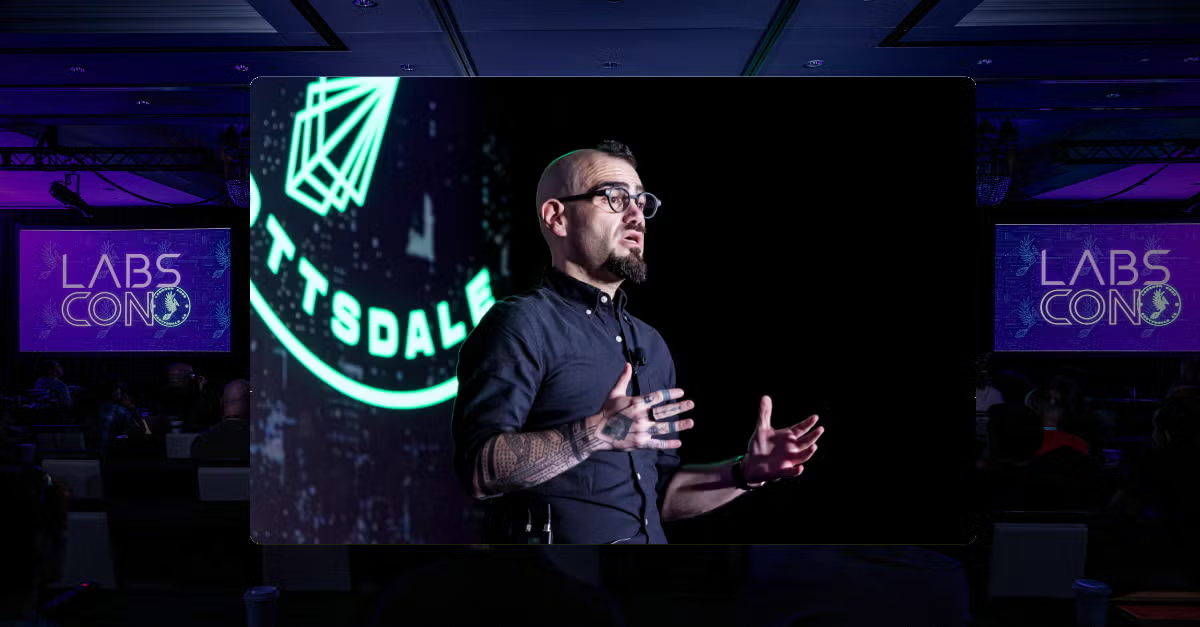
    In this final video in our LABScon Replay series from LABScon 25, we present the keynote from SentinelLABS’ own Juan Andrés Guerrero-Saade (JAGS), VP, Intelligence & Security Research and Senior Technical Fellow. In this engaging talk, Juan argues that cybersecurity is reaching the end of its experimental era. Years of piling complexity onto non-standardized software stacks have produced systems that are difficult to steer and costly to manage through human attention alone. A key theme in th
     

LABScon25 Replay | Keynote: Steps to an Ecology of Cyber

11 de Junho de 2026, 10:00

In this final video in our LABScon Replay series from LABScon 25, we present the keynote from SentinelLABS’ own Juan Andrés Guerrero-Saade (JAGS), VP, Intelligence & Security Research and Senior Technical Fellow.

In this engaging talk, Juan argues that cybersecurity is reaching the end of its experimental era. Years of piling complexity onto non-standardized software stacks have produced systems that are difficult to steer and costly to manage through human attention alone.

A key theme in the talk is JAGS’ argument that large language models change that equation. He describes them as a new source of cheap, effectively unlimited evaluative power and as a “lossy compression of human knowledge”. Used well, that kind of mechanized intelligence can give defenders a scalable way to assess, prioritize, and act without leaning so heavily on scarce human expertise. In practical terms, it lowers the cost of analysis and changes how defensive work can be done at scale.

That argument also shapes JAGS’ broader point about how security should evolve once this capability is built in rather than bolted on. Drawing on ideas from cybernetics, JAGS urges the industry to move beyond purely adversarial ‘agonistic’ design and toward systems in which human expertise and artificial evaluative power work together to produce better outcomes.

Rather than defending old product categories or familiar workflows, the talk points toward a more standardized, more automated, and more sustainable future for the industry. For anyone interested in how AI may reshape the practice, cost, and structure of cybersecurity itself, this keynote is essential viewing.

About the Author

Juan Andrés Guerrero-Saade (JAGS) is VP for Intelligence and Security Research and Senior Technical Fellow for AI Innovation, overseeing intelligence production and AI applications towards security problems. He’s also Distinguished Resident Fellow for Threat Intelligence at the Johns Hopkins SAIS Alperovitch Institute. His research work is the subject of two permanent exhibits at the International Spy Museum in Washington, DC. He’s a member of OpenAI’s Frontier Risk Council, founded the premier threat intelligence conference LABScon, and is a co-host of the Three Buddy Problem podcast.

LABScon 2026 | Call For Papers

Submission Deadline: June 19, 2026

LABScon is a unique venue for original research to be shared among peers. The benefit of an invite-only audience of researchers is that there’s no need for long preambles or introductions – speakers are encouraged to dive right into their technical findings.

  • Original content only.
  • Talks are 20 minutes long + 5 minutes for Q&A.
  • Workshops are 90 minutes long.
  • LABScon is primarily a threat intelligence and vulnerability research conference but we keep an open-mind.

About LABScon

This presentation was featured live at LABScon 2025, an immersive 3-day conference bringing together the world’s top cybersecurity minds, hosted by SentinelOne’s research arm, SentinelLABS.

Keep up with all the latest on LABScon here.

  • ✇SentinelLabs
  • LABScon25 Replay | Gamaredon x Turla: Unveiling a 2025 Espionage Alliance Targeting Ukraine LABScon
    In this LABScon 25 presentation, ESET researchers Matthieu Faou and Zoltán Rusnák present the first technical evidence that Gamaredon actively facilitated Turla’s access to high-value Ukrainian targets in Ukraine. Across incidents observed between February and June 2025, Gamaredon tooling, including PteroGraphin and PteroOdd, was used to deploy Turla’s Kazuar backdoor and, in at least one case, restore Turla’s access after the group appeared to have lost its foothold. The talk opens with a curre
     

LABScon25 Replay | Gamaredon x Turla: Unveiling a 2025 Espionage Alliance Targeting Ukraine

2 de Junho de 2026, 10:00

In this LABScon 25 presentation, ESET researchers Matthieu Faou and Zoltán Rusnák present the first technical evidence that Gamaredon actively facilitated Turla’s access to high-value Ukrainian targets in Ukraine.

Across incidents observed between February and June 2025, Gamaredon tooling, including PteroGraphin and PteroOdd, was used to deploy Turla’s Kazuar backdoor and, in at least one case, restore Turla’s access after the group appeared to have lost its foothold.

The talk opens with a current view of Gamaredon’s tradecraft. Still one of the most active espionage actors targeting Ukraine, the group relies on relentless spearphishing, lightweight custom tooling, and fast operational tempo to compromise military and government organizations. Matthieu and Zoltán show how those patterns continue to evolve while remaining highly effective in a wartime environment.

The researchers’ provide evidence of direct operational collaboration between Gamaredon and Turla, detailing concrete cases in which Gamaredon activity enabled Turla operations on already compromised systems. The talk offers a rare look at how Russian cyberespionage operations may divide labor in practice, with one actor establishing or maintaining access and another deploying a more advanced espionage platform to exploit it.

The talk also examines Kazuar v2 and v3, Turla’s flagship backdoor, and unpacks what those versions reveal about the group’s operational priorities. From deployment chains to capability depth, the analysis helps defenders connect initial access activity with downstream post-compromise objectives and better understand how sophisticated implants are sustained inside contested networks.

This talk is essential viewing for defenders, threat hunters, and intelligence teams tracking Russian state-aligned activity in Ukraine, particularly those interested in access brokering, inter-group collaboration, and the continuing evolution of Turla’s malware stack.

About the Authors

Matthieu Faou is a senior malware researcher at ESET where he specializes in researching targeted attacks. His main duties include threat hunting and reverse engineering of APTs. He has spoken at multiple conferences including Black Hat USA, BlueHat, Botconf, CYBERWARCON, NorthSec, and Virus Bulletin.

Zoltán Rusnák is a senior malware researcher at ESET, with a decade of experience in malware analysis and research. He has worked extensively on identifying and systematically monitoring major botnet families, including the infamous Emotet and Trickbot. His background in large-scale botnet tracking has been central to his current research on Gamaredon.

LABScon 2026 | Call For Papers

Submission Deadline: June 19, 2026

LABScon is a unique venue for original research to be shared among peers. The benefit of an invite-only audience of researchers is that there’s no need for long preambles or introductions – speakers are encouraged to dive right into their technical findings.

  • Original content only.
  • Talks are 20 minutes long + 5 minutes for Q&A.
  • Workshops are 90 minutes long.
  • LABScon is primarily a threat intelligence and vulnerability research conference but we keep an open-mind.

About LABScon

This presentation was featured live at LABScon 2025, an immersive 3-day conference bringing together the world’s top cybersecurity minds, hosted by SentinelOne’s research arm, SentinelLABS.

Keep up with all the latest on LABScon here.
  • ✇SentinelLabs
  • LABScon25 Replay | Please Connect to the Foreign Entity to Enhance Your User Experience LABScon
    In this LABScon 25 presentation, Joe FitzPatrick explores how networked devices manufactured overseas have quietly become indispensable to everything from small-business prototyping labs to roadside infrastructure. He argues that the safeguards meant to manage the risks these devices introduce are, in practice, largely ineffective. Starting with recent reports of undocumented cellular radios found in solar inverters used in U.S. highway infrastructure, Joe notes that adding that kind of connecti
     

LABScon25 Replay | Please Connect to the Foreign Entity to Enhance Your User Experience

6 de Maio de 2026, 10:00

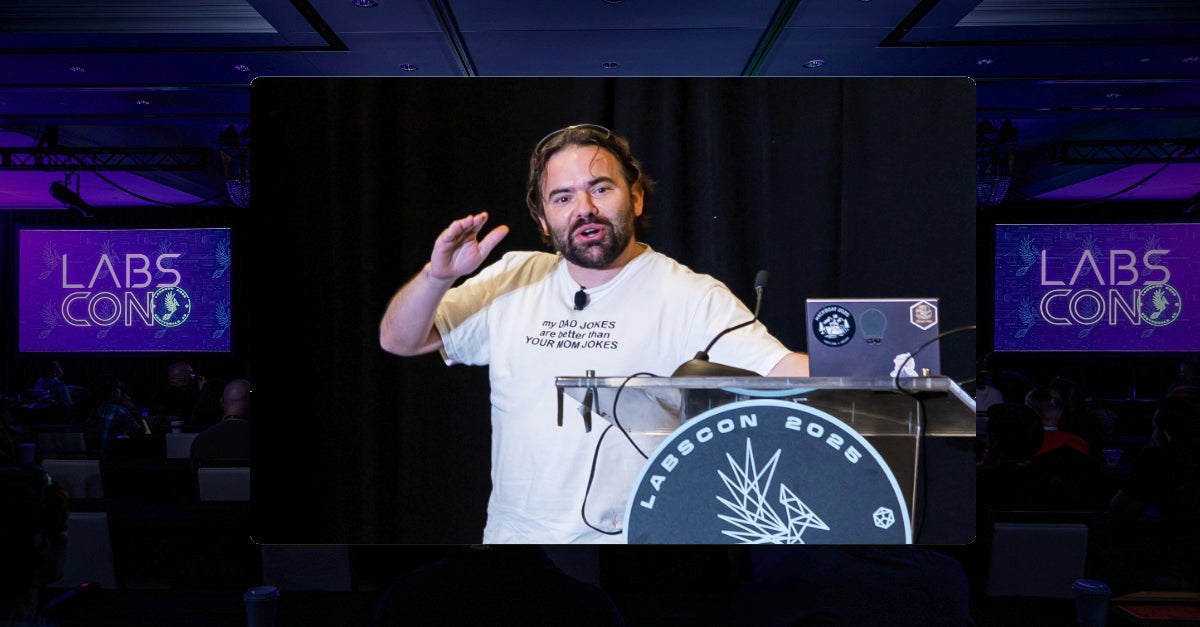
In this LABScon 25 presentation, Joe FitzPatrick explores how networked devices manufactured overseas have quietly become indispensable to everything from small-business prototyping labs to roadside infrastructure. He argues that the safeguards meant to manage the risks these devices introduce are, in practice, largely ineffective.

Starting with recent reports of undocumented cellular radios found in solar inverters used in U.S. highway infrastructure, Joe notes that adding that kind of connectivity to a device with an exposed serial port takes minutes and can be done by anyone: the manufacturer, the installer, or someone who came along later.

From there he covers the familiar mechanisms by which banned hardware finds its way into supply chains anyway, through relabeling and FCC-certified modular components, before turning to mandatory product activation in consumer devices like drones and 3D printers, and what it actually takes to use them without phoning home.

The deeper problem is that small businesses and infrastructure operators are genuinely dependent on imported hardware because it works and it’s affordable. A significant amount of it runs on devices that connect to foreign entities by default, and there’s no clean domestic alternative.

Joe concludes that import bans don’t fix problems that exist equally in domestic products, and that trade policy is the wrong tool for what is fundamentally a consumer safety problem. His preferred alternatives are right to repair with offline use guarantees, hardware and firmware bills of materials, and comprehensive privacy legislation.

This talk is essential viewing for security practitioners concerned about hardware supply chain risks, the unexpected connectivity of critical infrastructure, or the US’s deep dependence on foreign-manufactured consumer electronics.

About the Author

Joe FitzPatrick (@securelyfitz) is an Instructor and Researcher at SecuringHardware.com. Joe has spent most of his career working on low-level silicon debug, security validation, and penetration testing of CPUs, SoCs, and microcontrollers. He has spent the past decade developing and delivering hardware security related tools and training, instructing hundreds of security researchers, pen testers, and hardware validators worldwide. When not teaching Applied Physical Attacks training, Joe is busy developing new course content or working on contributions to the NSA Playset and other misdirected hardware projects, which he regularly presents at all sorts of fun conferences.

LABScon 2026 | Call For Papers

Submission Deadline: June 19, 2026

LABScon is a unique venue for original research to be shared among peers. The benefit of an invite-only audience of researchers is that there’s no need for long preambles or introductions – speakers are encouraged to dive right into their technical findings.

  • Original content only.
  • Talks are 20 minutes long + 5 minutes for Q&A.
  • Workshops are 90 minutes long.
  • LABScon is primarily a threat intelligence and vulnerability research conference but we keep an open-mind.

About LABScon

This presentation was featured live at LABScon 2025, an immersive 3-day conference bringing together the world’s top cybersecurity minds, hosted by SentinelOne’s research arm, SentinelLABS.

Keep up with all the latest on LABScon here.
  • ✇SentinelLabs
  • LABScon25 Replay | Are Your Chinese Cameras Spying For You Or On You? LABScon
    In this LABScon 25 presentation, Marc Rogers and Silas Cutler explore the complex, “shadow” supply chain of ultra-cheap Chinese smart home devices, specifically focusing on video doorbells and security cameras widely sold on mainstream online shopping platforms under various rotating brand names like Eken and Tuck. Marc, who assisted the FCC Enforcement Bureau in its investigations, and Silas reveal how these devices often share identical hardware platforms powered by Allwinner semiconductors, a
     

LABScon25 Replay | Are Your Chinese Cameras Spying For You Or On You?

22 de Abril de 2026, 19:00

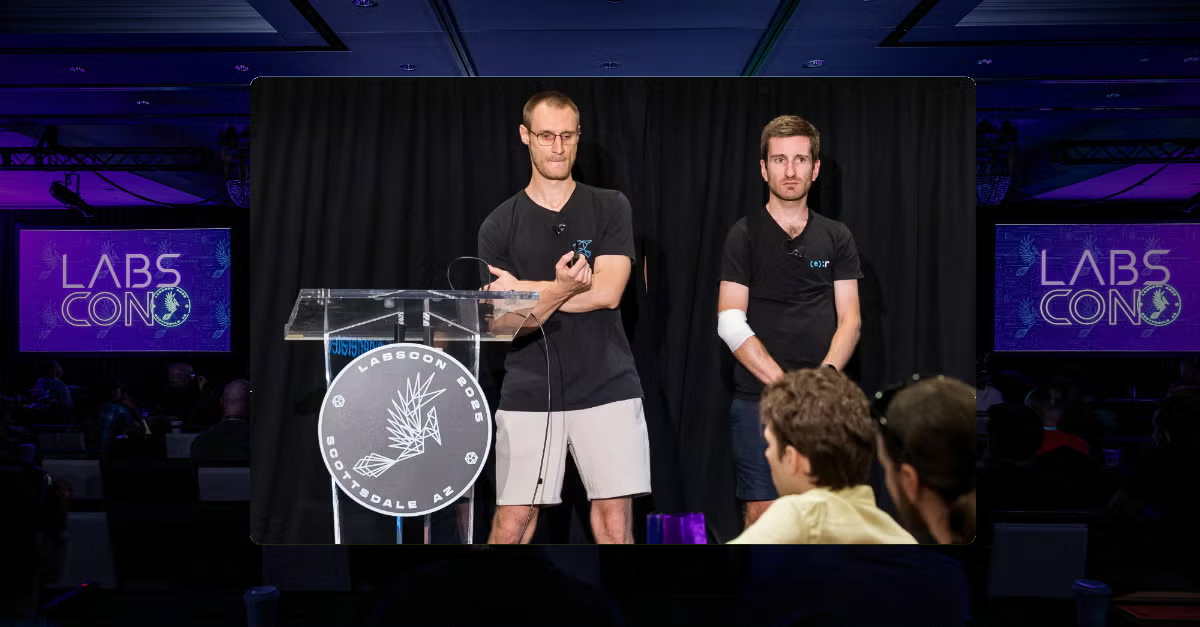
In this LABScon 25 presentation, Marc Rogers and Silas Cutler explore the complex, “shadow” supply chain of ultra-cheap Chinese smart home devices, specifically focusing on video doorbells and security cameras widely sold on mainstream online shopping platforms under various rotating brand names like Eken and Tuck.

Marc, who assisted the FCC Enforcement Bureau in its investigations, and Silas reveal how these devices often share identical hardware platforms powered by Allwinner semiconductors, a company heavily subsidized by the Chinese government.

Firmware analysis uncovered hardcoded root passwords and supposed security fixes that amounted to little more than commenting out vulnerable services from startup scripts rather than removing them. Despite appearing to use local cloud services, metadata and video content are frequently routed through servers in Hong Kong and China.

Rogers and Cutler trace a network of shell companies and fictional personas entirely absent from tax and voter records. These entities use non-responsive registered agents and PO boxes specifically set up to refuse legal service, effectively shielding the actual manufacturers from regulatory oversight and making enforcement nearly impossible.

The rapid iteration of hardware versions with no long-term support mirrors distribution patterns more commonly associated with malware campaigns.

While the investigation stops short of attributing direct malice, Rogers and Cutler argue that these devices collectively form a massive, vulnerable IoT surface that can be controlled through simple configuration pushes from overseas. Consumers are drawn in by low prices and subscription features, unaware that their data ultimately resides under foreign control.

About the Authors

Marc Rogers is Co-Founder and Chief Technology Officer for the AI observability startup nbhd.ai. Marc has served as VP of Cybersecurity Strategy for Okta, Head of Security for Cloudflare and Principal Security researcher for Lookout. In his role as technical advisor on USA’s “Mr. Robot” and the BBC’s “The Real Hustle”, he helped create on-screen hacks for both shows.

Silas Cutler is a Principal Security Researcher at Censys, with over a decade of experience tracking threat actors and developing methods for pursuit. Before Censys, he worked as Resident Hacker for Stairwell, Reverse Engineering Lead for Google Chronicle, and as a Senior Security Researcher on CrowdStrike’s Intelligence team.

LABScon 2026 | Call For Papers

Submission Deadline: June 19, 2026

LABScon is a unique venue for original research to be shared among peers. The benefit of an invite-only audience of researchers is that there’s no need for long preambles or introductions – speakers are encouraged to dive right into their technical findings.

  • Original content only.
  • Talks are 20 minutes long + 5 minutes for Q&A.
  • Workshops are 90 minutes long.
  • LABScon is primarily a threat intelligence and vulnerability research conference but we keep an open-mind.

About LABScon

This presentation was featured live at LABScon 2025, an immersive 3-day conference bringing together the world’s top cybersecurity minds, hosted by SentinelOne’s research arm, SentinelLABS.

Keep up with all the latest on LABScon here.
  • ✇SentinelLabs
  • LABScon25 Replay | Your Apps May Be Gone, But the Hackers Made $9 Billion and They’re Still Here LABScon
    In this LABScon 25 talk, Andrew MacPherson dives deep into the high-stakes world of crypto crime, which has amassed approximately $9 billion in illicit funds. Andrew demystifies the technical landscape and exposes the sophisticated attack vectors plaguing the decentralized finance (DeFi) space. The talk begins with an explanation of the core concepts necessary to understand crypto-related security threats, including definitions of blockchains, wallets, and smart contracts. Andrew explains that a
     

LABScon25 Replay | Your Apps May Be Gone, But the Hackers Made $9 Billion and They’re Still Here

17 de Março de 2026, 10:00

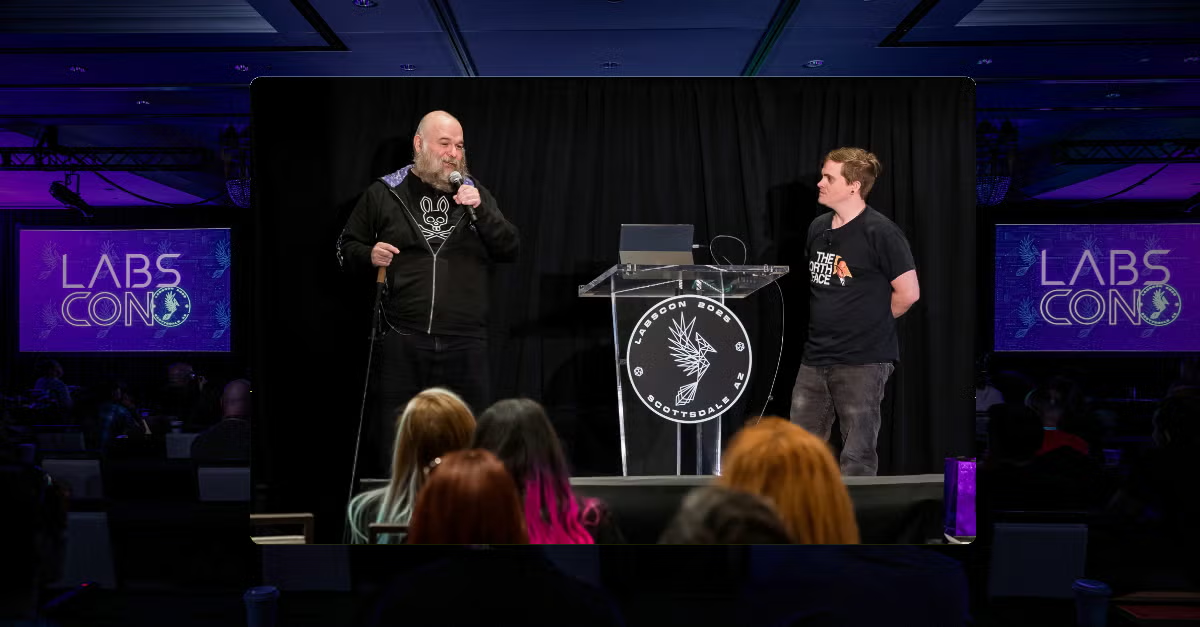
In this LABScon 25 talk, Andrew MacPherson dives deep into the high-stakes world of crypto crime, which has amassed approximately $9 billion in illicit funds. Andrew demystifies the technical landscape and exposes the sophisticated attack vectors plaguing the decentralized finance (DeFi) space.

The talk begins with an explanation of the core concepts necessary to understand crypto-related security threats, including definitions of blockchains, wallets, and smart contracts. Andrew explains that a key point in the architectural difference of many crypto applications is that they typically rely solely on frontends, with all interactions happening in the browser via the wallet extension.

The talk then moves on to focus on attack patterns. Crypto thieves target every weak point, from applications and code to the developers and executives themselves. The speaker details the largest crypto heist to date, the $1.5 billion loss from Bybit. This attack involved infecting a developer’s machine, gaining access to production JavaScript code, and modifying it to authorize a full wallet drain during a multi-signature transaction. The talk also covers supply chain risks like typo-squatting, exploitation of personal servers like Plex to compromise GitHub accounts, and the rise of “drainers as a service” that simplify crypto theft.

Andrew also covers the challenges attackers face in laundering stolen funds, and how they leverage techniques such as cross-chain swaps, using mixers like Tornado Cash, and non-KYC platforms for conversion to cash. Despite the fact that all blockchain logs are public and permanent, the presentation also discusses the challenges threat intel analysts face in tracking these rapidly moving funds.

Andrew’s presentation is essential viewing for anyone interested in cryptocurrency and cybersecurity, especially those looking to understand the technical realities of financial crime in the decentralized era.

About the Author

Starting at Paterva, Andrew Macpherson spent more than 10 years creating Maltego before moving to the US for security roles at BitMEX (IR), Robinhood (IR/D&R), Uniswap (Head of Security), and now Privy (Principal Security Engineer). He’s spoken at Black Hat, DEF CON, DSS, EthCC and countless others, teaching courses and drinking malibu on the way.

About LABScon

This presentation was featured live at LABScon 2025, an immersive 3-day conference bringing together the world’s top cybersecurity minds, hosted by SentinelOne’s research arm, SentinelLABS.

Keep up with all the latest on LABScon here.
  • ✇SentinelLabs
  • LABScon25 Replay | How to Bug Hotel Rooms v2.0 LABScon
    In this talk, Phobos Group’s Dan Tentler evolves his previous work on hotel room security by demonstrating a fully portable security system built on Home Assistant, Z-Wave devices, CO2 sensors, and millimeter wave radar. What began as basic physical security measures has transformed into a tactical deployment platform capable of detecting human presence through walls, triggering automated alerts, and providing comprehensive situational awareness in temporary accommodations. Dan walks through the
     

LABScon25 Replay | How to Bug Hotel Rooms v2.0

21 de Janeiro de 2026, 11:00

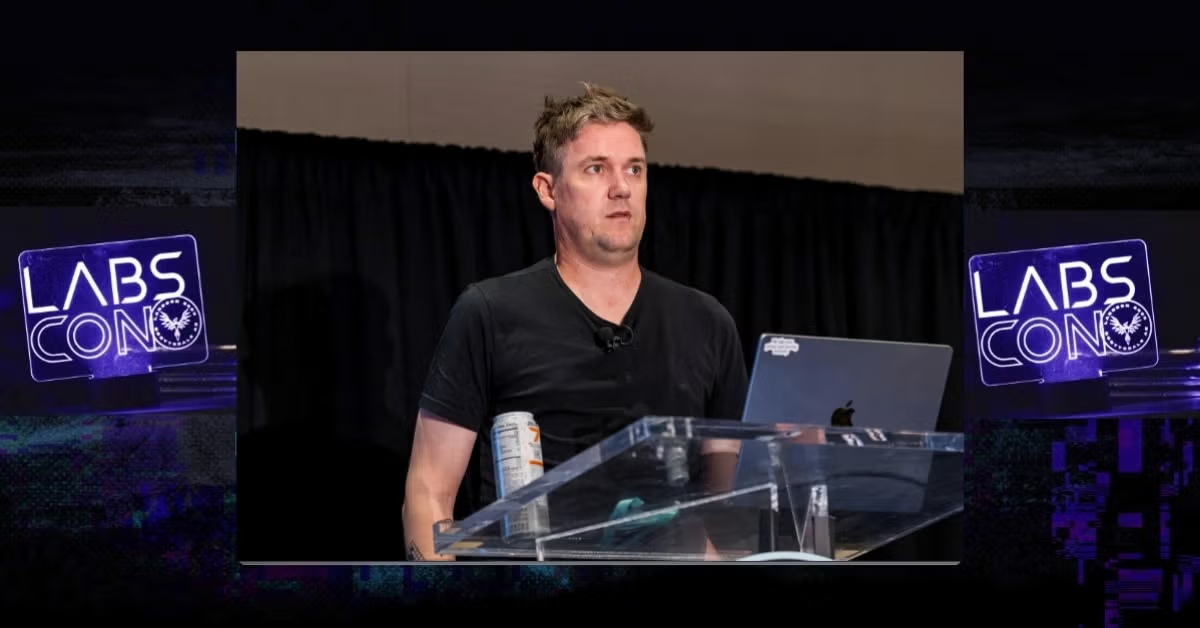
In this talk, Phobos Group’s Dan Tentler evolves his previous work on hotel room security by demonstrating a fully portable security system built on Home Assistant, Z-Wave devices, CO2 sensors, and millimeter wave radar. What began as basic physical security measures has transformed into a tactical deployment platform capable of detecting human presence through walls, triggering automated alerts, and providing comprehensive situational awareness in temporary accommodations.

Dan walks through the technical fundamentals of each component, explaining how mmWave radar units can detect movement and presence in neighboring rooms or hallways, how CO2 sensors reveal occupancy patterns, and how Home Assistant ties everything together into an automation framework. The system can send alerts, capture images, or trigger any action Home Assistant supports, all deployed and configured rapidly in unfamiliar environments.

The presentation covers real-world use cases that demonstrate the system’s capabilities beyond traditional hotel rooms. For security professionals, researchers, and anyone concerned with physical security while traveling, this talk reveals how consumer automation technology can be repurposed into a sophisticated portable security platform.

About the Author

Dan Tentler is the Executive Founder and CTO of Phobos Group, a boutique information security services and products company. Having been on both red and blue teams, Dan brings a wealth of defensive and adversarial knowledge to the security landscape. Dan has spent time at Twitter, British Telecom, Websense, Anonymizer, Intuit and Sempra Energy and has a strong background in systems, networking, architecture and wireless networks.

About LABScon

This presentation was featured live at LABScon 2025, an immersive 3-day conference bringing together the world’s top cybersecurity minds, hosted by SentinelOne’s research arm, SentinelLABS.

Keep up with all the latest on LABScon here.
  • ✇SentinelLabs
  • LABScon25 Replay | Hacktivism and War: A Clarifying Discussion LABScon
    This LABScon talk explores how hacktivist activity is strategically leveraged by nation-states and mercenary groups to obscure intent, destabilize targets, and weaponize public narratives. SentinelLABS’ Jim Walter draws on his decades of malware research and threat intelligence experience to decode the hacktivism ecosystem through a unique tooling-based analysis. Using a four-tier framework for categorizing hacktivist groups, Jim describes a pyramid-shaped ecosystem that ranges from “commodity c
     

LABScon25 Replay | Hacktivism and War: A Clarifying Discussion

14 de Janeiro de 2026, 11:00

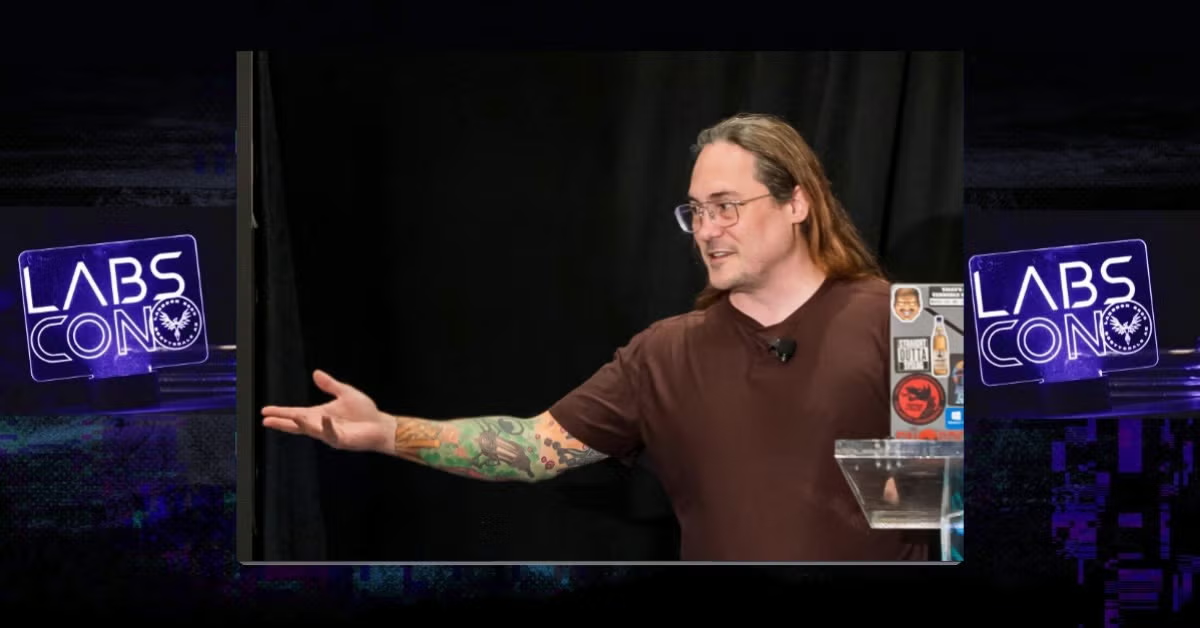
This LABScon talk explores how hacktivist activity is strategically leveraged by nation-states and mercenary groups to obscure intent, destabilize targets, and weaponize public narratives. SentinelLABS’ Jim Walter draws on his decades of malware research and threat intelligence experience to decode the hacktivism ecosystem through a unique tooling-based analysis.

Using a four-tier framework for categorizing hacktivist groups, Jim describes a pyramid-shaped ecosystem that ranges from “commodity craptivism” at its bottom, characterized by high noise and low signal, to sophisticated state-front operations at the top, responsible for attacks with physical consequences timed to real-world events.

Jim explains why state-level threat actors increasingly adopt hacktivist personas. The motivations include plausible deniability, narrative control, and strategic influence operations designed to erode confidence in target regimes.

Through examples like Anon Sudan, Belarusian Cyber Partisans, NullBulge, and state-linked operations such as MeteorExpress and Handala, the talk reveals the distinguishing traits that separate top-tier actors from the rest. These indicators include consistent multi-year messaging, willingness to forego financial gain, sophisticated prepositioning capabilities, and measured communications crafted by professional writers.

The presentation concludes that most high-impact hacktivism reported today is actually “fictivism”, state-sponsored proxy operations masquerading as grassroots activism. With state actors leveraging this increasingly chaotic landscape to advance geopolitical objectives while maintaining deniability, this talk is essential viewing for anyone interested in the current hacktivist threat landscape.

About the Author

Jim Walter is a Senior Threat Researcher at SentinelLABS focusing on evolving trends, actors, and tactics within the thriving ecosystem of cybercrime and crimeware. He specializes in the discovery and analysis of emerging cybercrime “services” and evolving communication channels leveraged by mid-level criminal organizations. Jim joined SentinelOne following ~4 years at a security start-up, also focused on malware research and organized crime. Previously, he spent over 17 years at McAfee/Intel running their Threat Intelligence and Advanced Threat Research teams.

About LABScon

This presentation was featured live at LABScon 2025, an immersive 3-day conference bringing together the world’s top cybersecurity minds, hosted by SentinelOne’s research arm, SentinelLABS.

Keep up with all the latest on LABScon here.
  • ✇SentinelLabs
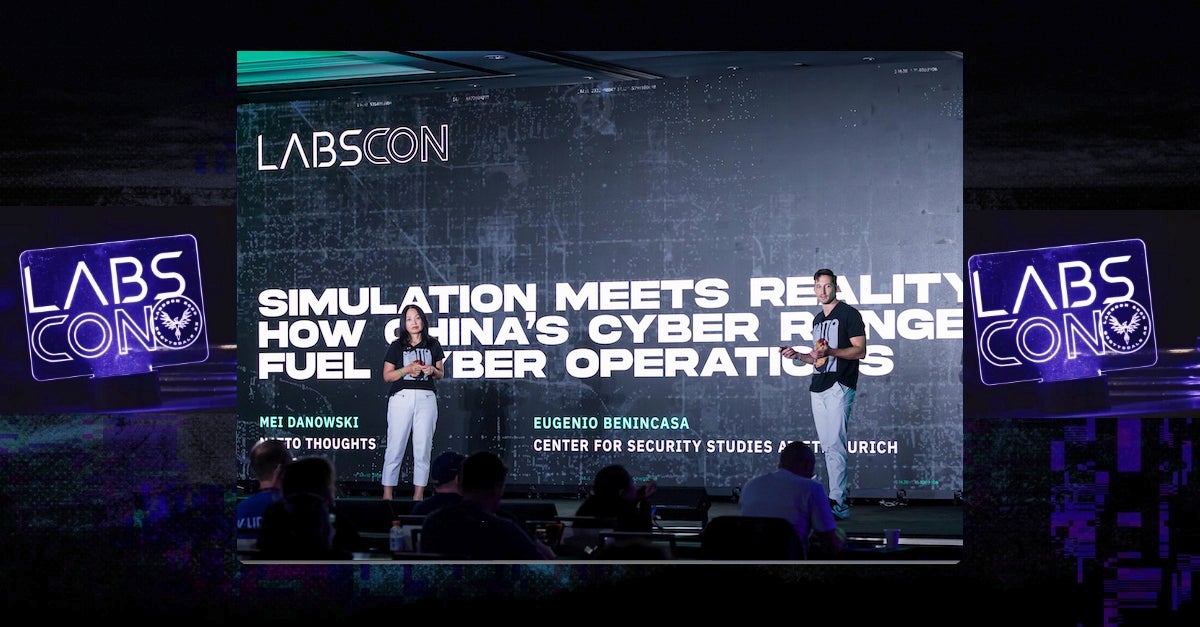
  • LABScon25 Replay | Simulation Meets Reality: How China’s Cyber Ranges Fuel Cyber Operations LABScon
    Between late 2024 and early 2025, the United States government issued indictments or sanctions against three Chinese information security firms – i-SOON, Sichuan Silence, and Integrity Tech – alleging their support for or links to malicious cyber groups targeting US government and critical infrastructure systems. In this talk, Mei Danowski and Eugenio Benincasa discuss their research in which they found that all three companies serve as a key seedbed for nurturing China’s offensive cyber talent
     

LABScon25 Replay | Simulation Meets Reality: How China’s Cyber Ranges Fuel Cyber Operations

25 de Novembro de 2025, 11:00

Between late 2024 and early 2025, the United States government issued indictments or sanctions against three Chinese information security firms – i-SOON, Sichuan Silence, and Integrity Tech – alleging their support for or links to malicious cyber groups targeting US government and critical infrastructure systems.

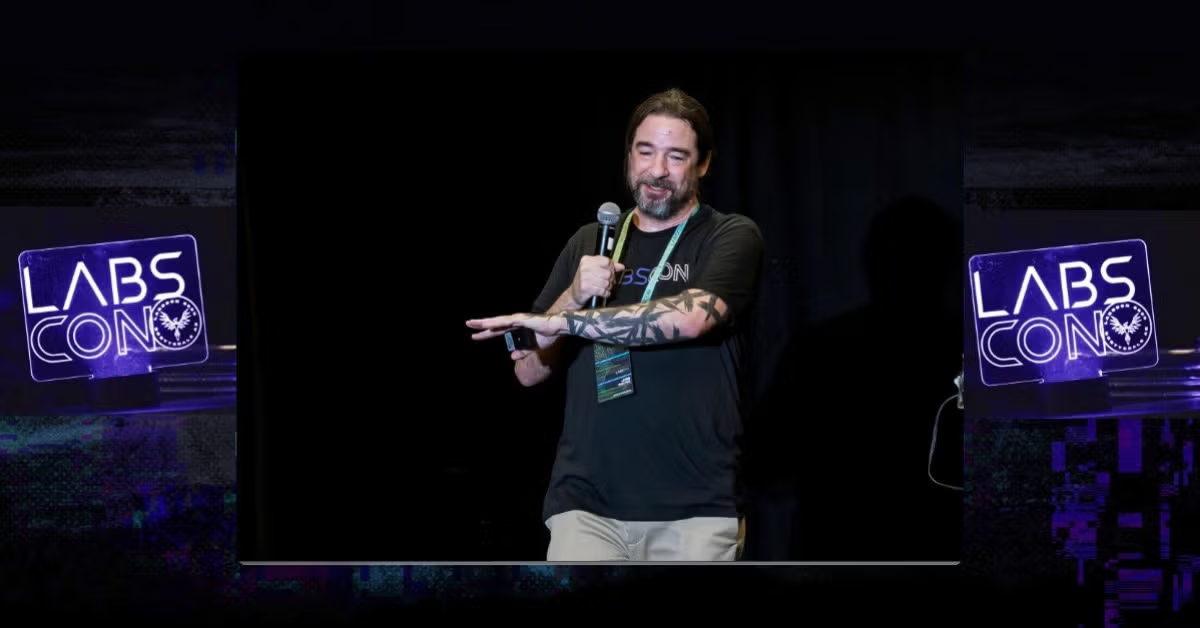
In this talk, Mei Danowski and Eugenio Benincasa discuss their research in which they found that all three companies serve as a key seedbed for nurturing China’s offensive cyber talent with cyber range services, which train cybersecurity professionals through “attack-defense live-fire” (攻防实战) exercises.

The speakers explain how, alongside hacking contests and crowdsourced bug bounty programs, attack-defense live-fire exercises are one of the primary mechanisms leveraged by the Chinese government to enhance its cyber capabilities, with support from a rapidly growing private cybersecurity industry with more than 4000 products and services providers.

The presentation goes on to focus on the development of attack-defense exercises and commercial cyber ranges in China, areas that have received relatively little attention to date, examining how this ecosystem shapes China’s offensive cyber capabilities.

The presentation is based on an upcoming research report that draws on Chinese-language sources – including company directories, public business data, job postings, university websites, and interviews in obscure publications – to map China’s cybersecurity industry. This unique talk discusses 120 companies identified as providers of attack-defense exercises and cyber range services, and profiles several of these key companies to assess their role in supporting state-linked cyber operations.

About the Authors

Mei Danowski is co-founder and principal of Natto Thoughts, a provider of cyber threat intelligence research and analysis with a specialization in geopolitical, economic, social, cultural, and linguistic perspectives. Mei’s research areas include strategic threat intelligence and East Asian political, military, economic, and strategic affairs.

Eugenio Benincasa is a Senior Cyberdefense Researcher at the Center for Security Studies (CSS) at ETH Zurich. Prior to joining CSS, Eugenio worked as a Threat Analyst at the Italian Presidency of the Council of Ministers in Rome and as a Research Fellow at the think tank Pacific Forum in Honolulu, where he focused on cybersecurity issues.

About LABScon

This presentation was featured live at LABScon 2025, an immersive 3-day conference bringing together the world’s top cybersecurity minds, hosted by SentinelOne’s research arm, SentinelLABS.

Keep up with all the latest on LABScon here.
  • ✇SentinelLabs
  • LABScon25 Replay | LLM-Enabled Malware In the Wild LABScon
    This presentation explores the emerging threat of LLM-enabled malware, where adversaries embed Large Language Model capabilities directly into malicious payloads. Unlike traditional malware, these threats generate malicious code at runtime rather than embedding it statically, creating significant detection challenges for security teams. SentinelLABS’ Alex Delamotte and Gabriel Bernadett-Shapiro present their team’s research on how LLMs are weaponized in the wild, distinguishing between various a
     

LABScon25 Replay | LLM-Enabled Malware In the Wild

3 de Novembro de 2025, 11:00

This presentation explores the emerging threat of LLM-enabled malware, where adversaries embed Large Language Model capabilities directly into malicious payloads. Unlike traditional malware, these threats generate malicious code at runtime rather than embedding it statically, creating significant detection challenges for security teams.

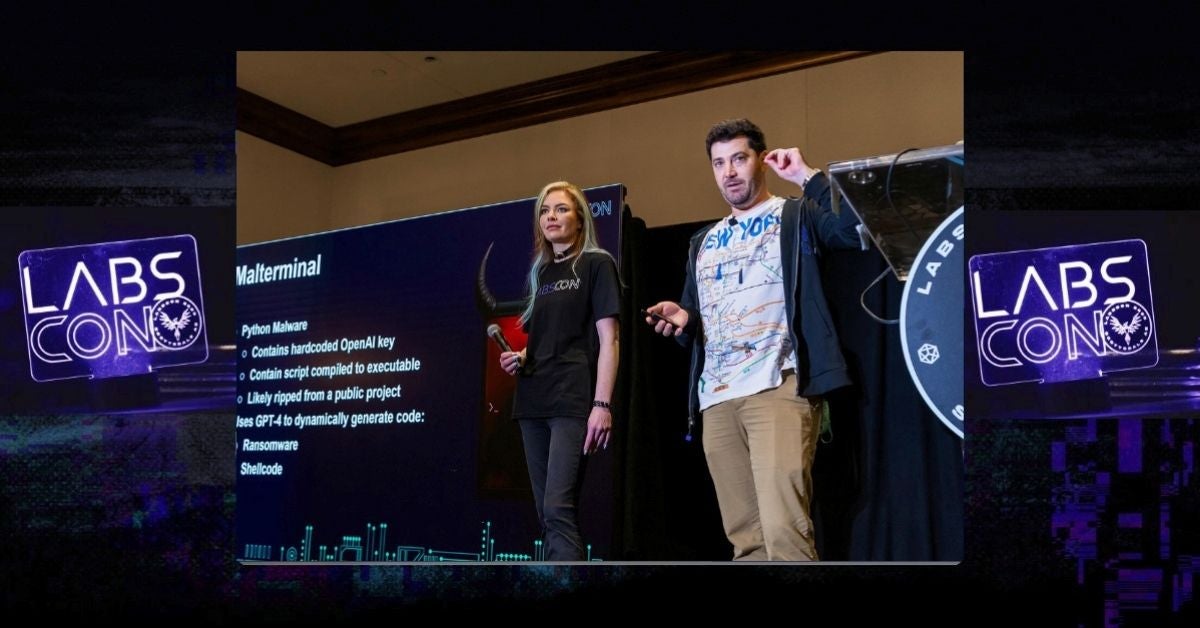
SentinelLABS’ Alex Delamotte and Gabriel Bernadett-Shapiro present their team’s research on how LLMs are weaponized in the wild, distinguishing between various adversarial uses, from AI-themed lures to genuine LLM-embedded malware. The research focused on malware that leverages LLM capabilities as a core operational component, exemplified by notable cases like PromptLock ransomware and APT28’s LameHug/PROMPTSTEAL campaigns.

The presentation reveals a fundamental flaw in the way much current LLM-enabled malware is coded: despite their adaptive capabilities, these threats hardcode artifacts like API keys and prompts. This dependency creates a detection opportunity. Delamotte and Bernade-Shapiro share two novel hunting strategies: wide API key detection using YARA rules to identify provider-specific key structures (such as OpenAI’s Base64-encoded identifiers), and prompt hunting that searches for hardcoded prompt structures within binaries.

A year-long retrohunt across VirusTotal identified over 7,000 samples containing 6,000+ unique API keys. By pairing prompt detection with lightweight LLM classifiers to assess malicious intent, the SentinelLABS researchers successfully discovered previously unknown samples, including “MalTerminal”, potentially the earliest known LLM-enabled malware.

The presentation addresses implications for defenders, highlighting how traditional detection signatures fail against runtime-generated code, while demonstrating that hunting for “prompts as code” and embedded API keys provides a viable detection methodology for this evolving threat landscape. A companion blog post was published by SentinelLABS here.

About the Authors

Alex Delamotte is a Senior Threat Researcher at SentinelOne. Over the past decade, Alex has worked with blue, purple, and red teams serving companies in the technology, financial, pharmaceuticals, and telecom sectors and she has shared research with several ISACs. Alex enjoys researching the intersection of cybercrime and state-sponsored activity.

Gabriel Bernadett-Shapiro is a Distinguished AI Research Scientist at SentinelOne, specializing in incorporating large language model (LLM) capabilities for security applications. He also serves as an Adjunct Lecturer at the Johns Hopkins SAIS Alperovitch Institute. Before joining SentinelOne, Gabriel helped launch OpenAI’s inaugural cyber capability-evaluation initiative and served as a senior analyst within Apple Information Security’s Threat Intelligence team.

About LABScon

This presentation was featured live at LABScon 2025, an immersive 3-day conference bringing together the world’s top cybersecurity minds, hosted by SentinelOne’s research arm, SentinelLabs.

Keep up with all the latest on LABScon here.

  • ✇SentinelLabs
  • LABScon25 Replay | Auto-Poking The Bear: Analytical Tradecraft In The AI Age LABScon
    In this LABScon25 talk, Dreadnode’s Martin Wendiggensen and Brad Palm explore how AI is changing Cyber Threat Intelligence and the research practices that support it. Analytical tradecraft and shared standards have transformed Cyber Threat Intelligence from a niche discipline into a collaborative industry-wide research endeavor. Researchers and analysts now routinely build on each other’s work, creating a foundation of trust and shared methodology. That ecosystem is being disrupted as teams incr
     

LABScon25 Replay | Auto-Poking The Bear: Analytical Tradecraft In The AI Age

9 de Outubro de 2025, 10:00

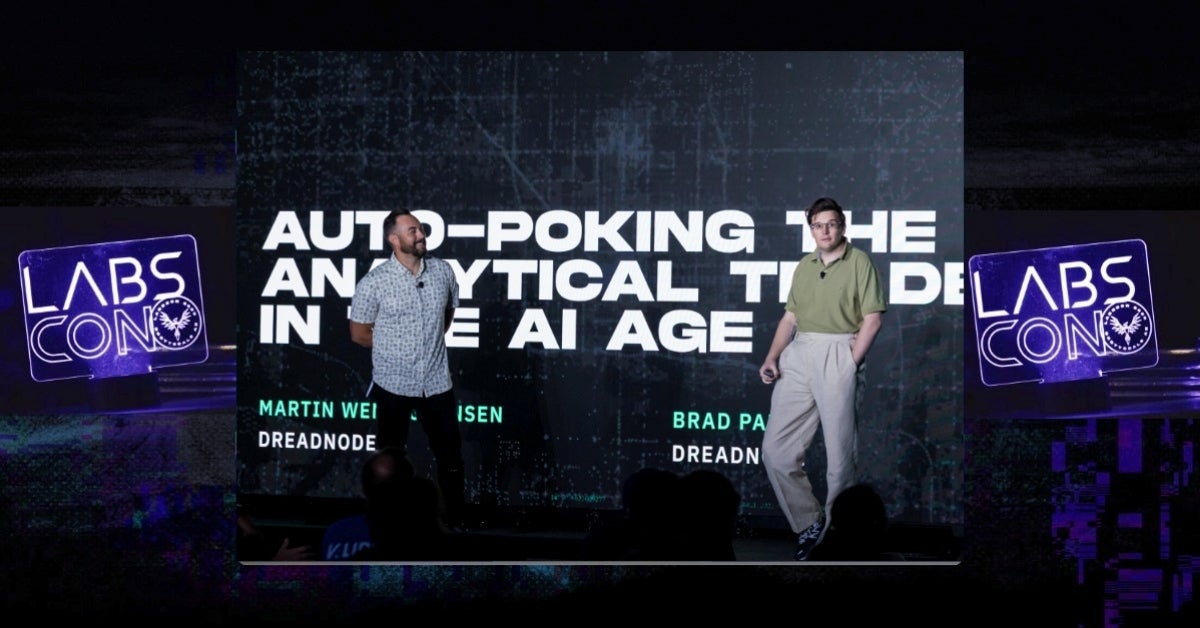
In this LABScon25 talk, Dreadnode’s Martin Wendiggensen and Brad Palm explore how AI is changing Cyber Threat Intelligence and the research practices that support it.

Analytical tradecraft and shared standards have transformed Cyber Threat Intelligence from a niche discipline into a collaborative industry-wide research endeavor. Researchers and analysts now routinely build on each other’s work, creating a foundation of trust and shared methodology.

That ecosystem is being disrupted as teams increasingly hand off data preparation, analysis, and entire workflows to AI assistants. These tools boost productivity, but they introduce new costs. You might have confidence in your own AI-assisted process, but how much can you rely on another researcher’s prompts or agentic workflow?

Given concerns over reliability and transparency, the CTI community will need to adapt its research methodology and develop a new joint understanding of the promises, pitfalls, and probabilities inherent in AI-assisted work.

Wendiggensen and Palm present a case study to illustrate their approach. They created an LLM-driven agentic system to analyze Russian internet content leaked by Ukrainian cyber activists. The speakers’ detail the system’s architecture and show how it performs across tasks from straightforward data collation to complex analytical pipelines used to track adversaries. They then explain how to assess the technology’s strengths and limits and, crucially, how to communicate those judgments to peers and wider audiences to preserve both accountability and transparency.

This engaging talk lays the groundwork for discussions not only in threat intelligence but in any collaborative discipline seeking to navigate the challenges of integrating agentic systems into their data analysis and decision-making pipelines.

About the Authors

Martin Wendiggensen is an AI Research Scientist at Dreadnode and PhD candidate at Johns Hopkins AIST. His research focuses on how AI is shifting the Cybersecurity Offensive-Defensive Balance.

Brad Palm is the COO at Dreadnode. Previously, he was a VP of Services and Technology for Pathfynder and the Managing Director of Software at Ascent, where he focused on SOC automation and the integration of CTI in the delivery of managed services.

About LABScon

This presentation was featured live at LABScon 2025, an immersive 3-day conference bringing together the world’s top cybersecurity minds, hosted by SentinelOne’s research arm, SentinelLABS.

Keep up with all the latest on LABScon here.
❌
❌