
Visualização normal

Antes de ontemStream principal
  • ✇Firewall Daily – The Cyber Express
  • ClickFix Attacks Drive UAC-0145 Cyber Campaigns, CERT-UA Warns Samiksha Jain
    The ClickFix attacks technique has become a key initial access method for the UAC-0145 cyber threat cluster, according to a new report from Ukraine's Computer Emergency Response Team (CERT-UA). The agency said the threat group, also tracked as Sandworm, APT44, Seashell Blizzard, and a subcluster of UAC-0002, has shifted its tactics during 2026, increasingly relying on fake CAPTCHA prompts and social engineering to compromise systems. CERT-UA said it has worked with Ukrainian cybersecurity agenc
     

ClickFix Attacks Drive UAC-0145 Cyber Campaigns, CERT-UA Warns

ClickFix Attacks

The ClickFix attacks technique has become a key initial access method for the UAC-0145 cyber threat cluster, according to a new report from Ukraine's Computer Emergency Response Team (CERT-UA). The agency said the threat group, also tracked as Sandworm, APT44, Seashell Blizzard, and a subcluster of UAC-0002, has shifted its tactics during 2026, increasingly relying on fake CAPTCHA prompts and social engineering to compromise systems.

CERT-UA said it has worked with Ukrainian cybersecurity agencies for several years to investigate the activities of UAC-0145. While the group previously relied on infected software installers distributed through torrent websites, recent campaigns have increasingly used ClickFix to trick users into executing malicious PowerShell commands.

ClickFix Attacks Emerging as Primary Initial Access Vector

According to CERT-UA, infections recorded during the spring and summer of 2026 frequently began when victims visited compromised websites displaying fake CAPTCHA pages. Users were instructed to copy and execute PowerShell commands in their terminal, a phishing technique commonly referred to as ClickFix.

The downloaded commands were designed to retrieve malicious files such as GHETTOVIBE, a Visual Basic Script (VBS) that establishes persistence by placing itself in the Windows Startup directory.

Once executed, attackers could deploy SCOUTCURL, a PowerShell reconnaissance tool capable of collecting information about the compromised system, including device specifications, installed software, browser data, and local files before exfiltrating the information.

CERT-UA also observed malware loaders including FLUIDLEECH, disguised as antivirus software, and LOADLOOP being used during these campaigns.

Backdoors and Data Theft Tools Widely Deployed

The report noted that attackers continue using malware families such as KALAMBUR, SUMBUR, and TAMBUR after gaining access to victim systems.

To maintain remote access, the group relied on legitimate utilities including OpenSSH and Tor, forwarding local network ports such as 445, 3389, and 22 to attacker-controlled infrastructure.

CERT-UA also found malware designed to steal messaging data from Signal and WhatsApp, with stolen information reportedly exfiltrated using RSYNC.

On infected systems examined during cyber defense operations, investigators additionally identified FREAKYPOLL, a Python-based backdoor distributed as compiled bytecode (.pyc), providing attackers with persistent unauthorized access.

Compromised Websites Used to Deliver Fake CAPTCHA Pages

During June and July 2026, CERT-UA analyzed more than ten compromised websites involved in ClickFix attacks.

Investigators found attackers using both the Cloaking.House service and custom malware called SMARTAXE to dynamically modify legitimate webpages. SMARTAXE retrieves remote domains from blockchain smart contracts through Ethereum's eth_call function before displaying fake CAPTCHA pages or redirecting visitors to malicious content.

CERT-UA warned that any website used in these attacks should be considered compromised, potentially through vulnerable content management systems (CMS), stolen credentials, web shells, malicious plugins, modified website scripts, or server-side backdoors.

The agency urged website administrators and hosting providers to strengthen website security and respond quickly to incident reports.

Android Malware Also Part of UAC-0145 Operations

The report also highlighted growing use of Android malware distributed through messaging applications.

Attackers were observed sharing APK files disguised as security or antivirus tools. One such malware family, tracked as COWARDDUCK, functions as a full-featured Android backdoor capable of collecting device information, contacts, files, and real-time geolocation.

The malware targets files from directories including DCIM, Documents, Downloads, Pictures, and Alarms while searching for formats such as DOCX, XLSX, PPTX, ZIP, RAR, JSON, and OVPN files.

According to CERT-UA, COWARDDUCK uploads stolen files through the Dropbox API while receiving commands from legitimate services including Steam Community and StockMemory domains through proxy infrastructure.

Microsoft Sees Global Rise in ClickFix Campaigns

Microsoft Threat Intelligence and Microsoft Defender Experts also reported that ClickFix campaigns have increased significantly since early 2024, targeting thousands of enterprise and consumer devices globally each day.

Microsoft said the technique commonly delivers malware such as Lumma Stealer by persuading users to copy and execute commands through Windows Run, Windows Terminal, or Windows PowerShell. The campaigns are often combined with phishing, malvertising, and drive-by compromise techniques that imitate trusted brands.

Because ClickFix attacks rely on user interaction rather than exploiting software vulnerabilities directly, Microsoft recommends organizations strengthen user awareness and apply security policies that restrict unnecessary use of command execution tools.

  • ✇Firewall Daily – The Cyber Express
  • Operation Endgame Disrupts SocGholish, StealC Malware Networks Samiksha Jain
    Operation Endgame has dealt another blow to cybercriminal operations after international law enforcement agencies and private sector partners dismantled infrastructure supporting the SocGholish, Amadey, and StealC malware families. The coordinated operation resulted in the seizure of more than EUR 41 million in criminal cryptocurrency assets, the recovery of 27 million stolen login credentials, and the disruption of hundreds of servers and domains used to distribute malware. Led by Europol and
     

Operation Endgame Disrupts SocGholish, StealC Malware Networks

Operation Endgame Disrupts SocGholish

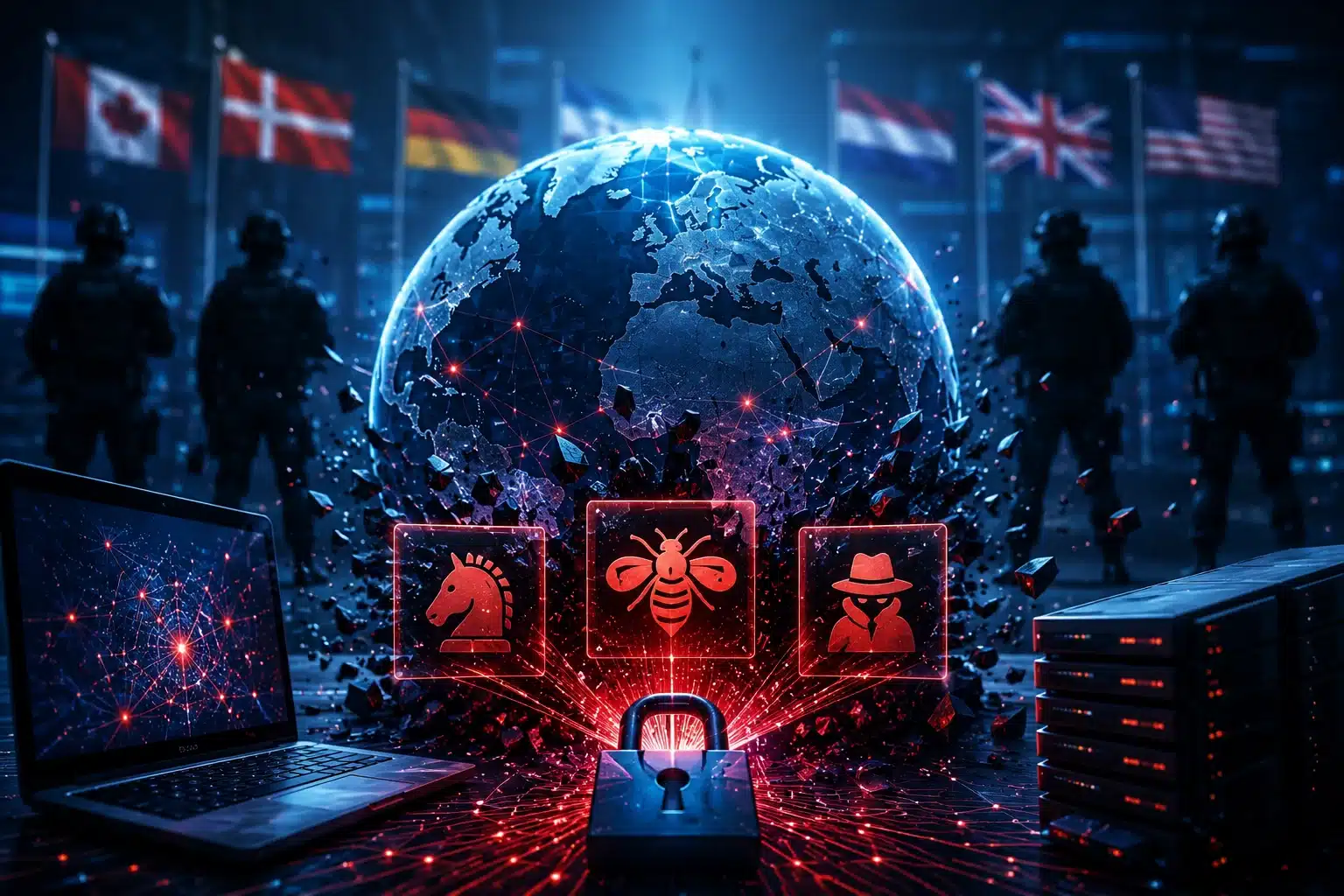
Operation Endgame has dealt another blow to cybercriminal operations after international law enforcement agencies and private sector partners dismantled infrastructure supporting the SocGholish, Amadey, and StealC malware families. The coordinated operation resulted in the seizure of more than EUR 41 million in criminal cryptocurrency assets, the recovery of 27 million stolen login credentials, and the disruption of hundreds of servers and domains used to distribute malware.

Led by Europol and Eurojust, the operation brought together authorities from Canada, Denmark, Germany, the Netherlands, the United Kingdom, the United States, Microsoft, and several cybersecurity organizations. Officials said the objective was to disrupt the infrastructure cybercriminals rely on to launch ransomware attacks, financial fraud, and attacks against critical infrastructure.

Operation Endgame Targets Cybercrime Infrastructure

During the coordinated action, authorities targeted the infrastructure supporting malware delivery rather than focusing on a single malware family.

Law enforcement and industry partners took action against 326 servers and 142 domains, significantly disrupting malware distribution channels. Investigators also identified and restricted criminal cryptocurrency assets currently valued at more than EUR 41 million (USD 47 million) while recovering approximately 27 million stolen login credentials.

According to Europol, the operation aimed to disrupt the "assembly line" used by cybercriminals to gain initial access to victim systems before deploying ransomware or stealing sensitive information.

[caption id="attachment_112936" align="aligncenter" width="600"]Operation Endgame Image Soure: Europol[/caption] [caption id="attachment_112937" align="aligncenter" width="600"]Operation Endgame Strikes Malware Image Source: Europol[/caption]

SocGholish, Amadey and StealC Malware Played Different Roles

The operation focused on three malware families that are commonly offered under the cybercrime-as-a-service model.

  • SocGholish functioned as a malware loader that distributed fake browser updates through compromised WordPress websites. Users who installed these fake updates unknowingly infected their systems, allowing attackers to gain initial access and later deploy ransomware or other malicious tools.
  • StealC malware primarily targeted sensitive information stored on infected devices, including passwords, authentication data, and digital identities. The stolen information was later used for fraud or traded within cybercriminal marketplaces.
  • Amadey was mainly distributed through phishing campaigns. It provided attackers with initial access to compromised systems while also offering information-stealing capabilities that enabled the theft of sensitive user data.

Microsoft reported that during the first two weeks of May 2026 alone, Amadey and StealC malware were linked to more than 140,000 infected computers worldwide.

Thousands of Infected WordPress Sites Cleaned

One of the largest actions under Operation Endgame targeted SocGholish, also known as FakeUpdates.

Authorities remediated 14,971 infected WordPress websites, including websites belonging to restaurants, automotive repair businesses, and other organizations. Investigators also disabled the SocGholish botnet by taking control of domains and shutting down supporting servers.

Website owners whose credentials had been exposed were notified through platforms including Have I Been Pwned, DIVD, Spamhaus, CheckjeHack, NoMoreLeaks, Shadowserver, and NL-NCSC.

The Dutch Police urged WordPress administrators to change passwords, enable multi-factor authentication, remove unknown administrator accounts, and keep their websites updated to reduce future compromise risks.

SocGholish Linked to Evil Corp

Authorities said SocGholish has been linked to Evil Corp, a Russian cybercriminal group previously associated with the Zeus and Dridex malware families, as well as multiple ransomware and money laundering operations.

Rather than targeting only malware operators, investigators focused on disrupting the broader infrastructure supporting cybercriminal activity. Europol said this strategy increases operational costs for threat actors and makes large-scale cyberattacks more difficult to execute.

Europol Coordinates Global Cyber Operation

Europol's European Cybercrime Centre (EC3) coordinated operational intelligence sharing through SIENA while providing analytical, technical, and cryptocurrency tracing support throughout the investigation.

The operation forms part of Operation Endgame, described by Europol as the largest international initiative to disrupt ransomware enablers worldwide.

Officials said the latest disruption reflects a growing international strategy of targeting the infrastructure that enables cybercrime operations, rather than responding only after attacks have occurred.
  • ✇Firewall Daily – The Cyber Express
  • ATM Jackpotting Gang Members Sentenced for Ploutus Malware Attacks Samiksha Jain
    Two Venezuelan nationals have been sentenced to 78 months in prison for their role in an ATM jackpotting scheme that used malware to force cash machines across the United States to dispense money illegally. The operation, which authorities say was part of a broader transnational criminal network, involved the deployment of Ploutus malware on ATMs and resulted in losses exceeding $1.5 million. Carlos Javier Padron, 36, was sentenced after pleading guilty to conspiracy to commit bank burglary and
     

ATM Jackpotting Gang Members Sentenced for Ploutus Malware Attacks

ATM jackpotting

Two Venezuelan nationals have been sentenced to 78 months in prison for their role in an ATM jackpotting scheme that used malware to force cash machines across the United States to dispense money illegally. The operation, which authorities say was part of a broader transnational criminal network, involved the deployment of Ploutus malware on ATMs and resulted in losses exceeding $1.5 million.

Carlos Javier Padron, 36, was sentenced after pleading guilty to conspiracy to commit bank burglary and computer fraud. His co-defendant, Oddry Arnoldo Cabrera Torrealba, 37, received the same sentence on June 11 after pleading guilty to identical charges.

Ploutus Malware Used to Trigger Unauthorized Cash Withdrawals

According to court documents, Padron and Torrealba were members of a criminal network responsible for carrying out ATM jackpotting attacks across the United States. Their role involved physically installing a variant of Ploutus malware on targeted ATMs.

Once activated, the malware enabled attackers to send commands directly to the ATM's cash dispensing module, allowing unauthorized withdrawals of currency. Investigators said the malware was also designed to erase traces of its presence, making it more difficult for financial institutions to detect the compromise.

The two men were arrested by the Lincoln Police Department during an ATM jackpotting incident in October 2024.

More Than $1.5 Million Ordered in Restitution

Along with their prison sentences, Padron and Torrealba were jointly ordered to pay $1,537,696 in restitution to the affected financial institutions.

Officials said the investigation uncovered a much larger criminal operation following their arrests. Authorities have since indicted 96 additional individuals connected to the conspiracy on charges including bank burglary conspiracy, money laundering, computer fraud, unauthorized access to protected computers, bank fraud, and providing material support to a designated foreign terrorist organization.

Authorities Link Scheme to Tren de Aragua

U.S. officials stated that the investigation established direct and indirect links between several indicted co-conspirators and Tren de Aragua, a transnational criminal organization that originated in Venezuela.

According to investigators, the group has expanded its operations throughout the Western Hemisphere and has been involved in crimes including drug trafficking, firearms trafficking, kidnapping, robbery, extortion, commercial sex trafficking, and financial fraud.

Authorities allege that ATM jackpotting became one of the organization's revenue-generating activities, targeting financial institutions across the United States through coordinated cyber-enabled attacks.

Justice Department Says Financial Crimes Fund Organized Crime

Assistant Attorney General A. Tysen Duva said the defendants helped deploy malware as part of a criminal network that stole millions of dollars from ATMs across the country. He added that disrupting such operations is critical to protecting financial institutions from technology-enabled fraud.

U.S. Attorney Lesley Woods for the District of Nebraska described ATM jackpotting as a significant revenue source used to finance the criminal activities attributed to the organization and said federal prosecutors would continue targeting its financial networks.

The FBI's Omaha Field Office said it continues to adapt its investigative efforts as criminal organizations increasingly rely on cyber-enabled financial crimes. Homeland Security Investigations also stated that the prosecution was intended to protect both consumers and the U.S. financial system from organized criminal activity.

Multi-Agency Investigation Continues

The investigation was led by the FBI Omaha Field Office and Homeland Security Investigations, with assistance from numerous federal, state, and local law enforcement agencies across the United States.

The case is being prosecuted by the Justice Department's Computer Crime and Intellectual Property Section, the U.S. Attorney's Office for the District of Nebraska, and Joint Task Force Vulcan.

Officials said the case forms part of a broader federal effort targeting transnational criminal organizations involved in cybercrime, financial fraud, and other organized criminal activities. The investigation into the wider network remains ongoing.

  • ✇Firewall Daily – The Cyber Express
  • Hacker Active Well Beyond Context.ai Compromise, Says Vercel CEO Mihir Bagwe
    Vercel CEO Guillermo Rauch, in an update today said that after scanning through petabytes of logs of the company's networks and APIs, his security team concluded that the threat actor behind the Vercel breach had been active well beyond Context.ai's compromise. Rauch said that the "threat intel points to the distribution of malware to computers in search of valuable tokens like keys to Vercel accounts and other providers. Once the attacker gets ahold of those keys, our logs show a repeated p
     

Hacker Active Well Beyond Context.ai Compromise, Says Vercel CEO

23 de Abril de 2026, 05:35

Vercel, Vercel Breach, APIs, npm Packages

Vercel CEO Guillermo Rauch, in an update today said that after scanning through petabytes of logs of the company's networks and APIs, his security team concluded that the threat actor behind the Vercel breach had been active well beyond Context.ai's compromise. Rauch said that the "threat intel points to the distribution of malware to computers in search of valuable tokens like keys to Vercel accounts and other providers. Once the attacker gets ahold of those keys, our logs show a repeated pattern: rapid and comprehensive API usage, with a focus on enumeration of non-sensitive environment variables." Researchers at Hudson Rock had earlier confirmed that the attack actually initiated in February itself when a Context.ai employee’s computer was infected with Lumma Stealer malware after they searched for Roblox game exploits, a common vector for infostealer deployments. What the latest findings mean is that there could be a wider net of victims that the threat actor may have phished for and what we know is just the tip of the iceberg - or not.
Also read: Vercel Incident Linked to AI Tool Hack, Internal Access Gained

Vercel Finds Customers Breached in Separate Malware, Social Engineering Attacks

In an official update, the company also stated that initially it identified a limited subset of customers whose non-sensitive environment variables stored on Vercel were compromised. However, a deeper assessment of the their network, as well as environment variable read events in the company's logs uncovered two additional findings.

"First, we have identified a small number of additional accounts that were compromised as part of this incident," the company noted.

But the main concern is the next finding: "Second, we have uncovered a small number of customer accounts with evidence of prior compromise that is independent of and predates this incident, potentially as a result of social engineering, malware, or other methods." 

The company did not disclose who were the attackers, what was the motive, or the impact on customers, and is yet to respond to these queries from The Cyber Express. It only stated: "In both cases, we have notified the affected customers."

Meanwhile, Rauch said, Vercel had notified other suspected victims and encouraged them to rotate credentials and adopt best practices.

No Compromise of npm Packages

The news of npm packages being compromised has surfaced a lot in recent times. To cover that front, Vercel's security team in collaboration with GitHub, Microsoft, npm, and Socket, confirmed that no npm packages published by Vercel had been compromised. "There is no evidence of tampering, and we believe the supply chain remains safe," the company said.
❌
❌