Visualização normal

Antes de ontemStream principal
  • ✇Security | CIO
  • Cyber resilience is a very human decision problem, not just a technology one
    Organizations today are not short of data, particularly in the domain of cyber. What many lack is a timely, trusted assessment that can help leaders act with greater confidence. When a cyber incident begins, the technical questions surface first. What happened? Which systems are affected? Is the activity contained? But the questions that often shape the outcome are rarely technical alone. Who is behind the activity? What are they trying to achieve? Is this an isolated e
     

Cyber resilience is a very human decision problem, not just a technology one

2 de Setembro de 2026, 06:00

Organizations today are not short of data, particularly in the domain of cyber. What many lack is a timely, trusted assessment that can help leaders act with greater confidence.

When a cyber incident begins, the technical questions surface first. What happened? Which systems are affected? Is the activity contained? But the questions that often shape the outcome are rarely technical alone. Who is behind the activity? What are they trying to achieve? Is this an isolated event or part of a broader campaign? Which customers, suppliers, assets or services are exposed? Is there a sanction, legal, regulatory or reputational dimension? And what is a proportionate immediate response while the facts are still incomplete?

This is why cyber is, in a meaningful sense, as much a human decision-making problem as a technological one. The OECD argues that digital security risk should be integrated into broader decision-making, rather than treated only as a technical issue. Tools can detect signals, spot patterns, correlate events and flag anomalies, but it takes people to decide what those signals mean, when to escalate, which trade-offs matter and what action the organization should take. In Moody’s recent whitepaper on supporting decision dominance through financial, corporate and trade intelligence, we make the case that the decisive moments in a cyber incident belong not only to systems, but to judgement.

That matters for CIOs and other technology decision-makers, because theirs is one of the most demanding decision environments in the enterprise. Reporting lines and structures vary by organization, but common themes tend to recur: technical complexity, compressed timelines, uncertain attribution and fragmented responsibility. Security teams may see indicators before they understand intent. Legal teams may need to assess obligations before the full scope of an incident is known. Communications teams often must prepare for scrutiny while operations are still working through containment. Business leaders may first need to decide when a decision must be made, then whether to pause a service, isolate a supplier, notify a regulator, issue a public statement or accept some temporary disruption to prevent greater harm.

The result can be a gap between signal and action, at a time when many organizations are experiencing a growing volume of cyber signals and alerts. Organizations commonly track mean time to detect and respond. But a less visible but equally consequential metric is decision latency: the time it takes to move from a technical signal to a shared understanding of what matters, and a decision about what to do. An organization can identify a threat quickly and still act too slowly if it cannot interpret the signal, convene the relevant stakeholders or agree on a proportionate response. The challenge is not simply speed — decisions made quickly but poorly can amplify harm. It is reducing decision latency without sacrificing judgement. This urgency is not theoretical and shouldn’t simply be admired. In her 2026 GCHQ Annual Lecture at Bletchley Park, Director Anne Keast-Butler described “a moment of consequence” shaped by the radical uncertainty. Her wider point is key for CIOs and their peers across the board: cyber security is a critical priority, and resilience depends on the ability to act with urgency, judgement and trusted partnerships.

From signal to context

Technical signals tend to become more useful when connected to wider context. A malicious domain, an unusual login, a compromised account or malware signature may tell a security team that something is happening. On its own, that signal rarely tells an executive what the organization should do next. Context reframes the question from “what does this indicator mean?” to “what decision should we make?”

That context can take several forms. Payment flows may provide additional context regarding the financial networks associated with an event or risk scenario. Ownership structures can help identify relationships between suppliers, counterparties or entities that may merit further review. Sanctions exposure may change the legal and compliance implications of a response. Adverse media may provide indicators of potential reputational or integrity concerns. Corporate linkages may reveal that what looks like a narrow technical event is in fact connected to a wider network of actors, assets or interests.

None of this removes uncertainty altogether, and no decision-maker should wait for perfect information before acting. What broader context does is improve the conditions under which judgement is exercised. Two incidents may look similar at the technical level but demand different leadership responses. One may be opportunistic criminal activity with limited broader consequence. Another may involve connections to a sanctioned entity, an organized crime network, a critical supplier or a state-linked ecosystem. The signal may look similar, but the appropriate response is not.

A cross-discipline exercise

This distinction matters because cyber response is often not contained within the security function, especially in a learning organization. A serious incident typically draws in teams from across multiple disciplines, such as security, IT, legal, risk, compliance, finance, procurement, communications and business operations. It may also involve external parties such as law enforcement, intelligence agencies, regulators, financial institutions, infrastructure operators and key suppliers. The CIO will not own every lever in this environment, and organizational structure will influence how close to the centre of the systems they sit, dependencies and information flows that affect the organization’s ability to respond effectively. Is the CIO supported or supporting during an incident? What leeway is afforded the CIO to act when required?

A common challenge in cyber response is not the absence of technical capability, but the absence, or fragility, of a shared decision model. Teams will have data, dashboards and incident playbooks in place, but still lack clarity on who decides, what information is needed, which trade-offs are acceptable and how quickly business context can be brought to bear. Ensuring a common operating picture — one that gives the leadership team a shared understanding of the same facts — tends to be a differentiator between organizations that respond coherently and those that do not.

For CIOs and CEOs, this is an organizational design problem as much as a technology one. Experience suggests that a cyber strategy that stands alone may be less effective than one integrated into the organization’s broader strategy from the outset. Cyber maturity should not be judged only by the number of controls deployed, alerts processed or systems monitored, but also by the quality of the decisions an organization can make under pressure. Using scenarios to test decision making can help refine organizational design, highlight blockers that may emerge at critical times, and improve leaders’ understanding of the potential consequences of poor decision making. That wider coordination challenge is reflected in CISA’s incident response guidance, which treats serious cyber incidents as events requiring coordination across multiple stakeholders.

Where integrated intelligence adds value

This is where integrated intelligence has a role to play. Its value lies less in the sheer volume of information it provides — most organizations already have more data than they can absorb — and more in its ability to help prioritize, separating signal from noise. It can help distinguish activity that is technically interesting from activity that may be strategically material. Used well, it can help identify enabling networks associated with an attack, inform disruption options and help focus scarce defensive resources on the assets, relationships and dependencies most likely to matter.

The aim is not to know everything. It is to develop sufficient understanding of the most relevant factors early enough to support timely actions while meaningful response options remain available.

CIOs can make this practical by asking five questions:

  1. Which cyber decisions must be made in the first moments, the first hour, first day and first week of a serious incident?
  2. Who is authorized to make them, what is their availability 24/7 and who deputizes in their absence?
  3. Can technical indicators be linked quickly to business impact, financial exposure, legal risk, supplier dependency and external context?
  4. Can security teams escalate without creating unnecessary alarm?
  5. Can the CEO and board be briefed in decision-ready language, with recommendations rather than technical detail alone?

These questions move the conversation from reporting to leadership, and they reflect the human reality of cyber defence. Employees, analysts, managers and executives are asked to make repeated judgement calls under uncertainty, often with too much noise and too little time. Attackers are often well placed to exploit that reality; resilient organizations tend to design around it

Beyond visibility

Cybersecurity has spent years improving visibility, and that work remains essential. But visibility alone does not create resilience. The next challenge is decision quality.

For CIOs, the strategic shift is that cyber signals become most valuable when connected to real-world consequences: financial, operational, legal, reputational and geopolitical. In a fast-moving incident, the critical question is rarely whether the organization has more data. It is whether leaders can understand what matters, decide what to do and act while meaningful response options remain available.

The organizations that are often most effective in this environment are not necessarily those with the most dashboards. They are often those that have worked to reduce decision latency without sacrificing judgement, often through rehearsal, scenario testing and learning from gaps identified during those exercises. In an environment shaped by ambiguity, compressed timelines and interconnected risk, the ability to make better decisions faster may become one of the defining measures of not just cyber resilience, but of leadership itself.

  • ✇Security | CIO
  • Aligning roadmaps for acquisitional growth
    Companies grow in many ways, and physical security must keep pace. Sometimes growth occurs naturally through the evolution of internal business programs, but other times one company grows by acquiring another one, and it’s often a company that’s very different from the one that’s doing the acquiring. Growth is exciting, but with growth through acquisition, security teams face challenges around integrating two sets of dissimilar systems, processes, org charts and security cult
     

Aligning roadmaps for acquisitional growth

28 de Agosto de 2026, 06:00

Companies grow in many ways, and physical security must keep pace. Sometimes growth occurs naturally through the evolution of internal business programs, but other times one company grows by acquiring another one, and it’s often a company that’s very different from the one that’s doing the acquiring. Growth is exciting, but with growth through acquisition, security teams face challenges around integrating two sets of dissimilar systems, processes, org charts and security cultures. These planning tips should help keep you agile and prepared when your security team encounters acquisitional growth.

Converging to an integrated roadmap

When one company acquires another, there’s an inevitable mismatch between security programs and plans. Company A might have mature processes but outdated systems; Company B might have recent tech but few processes for integrating its use. Or the companies might have different deployment and application philosophies. Sometimes the company being acquired has no formal physical security program at all.

The security culture at each company can also clash: one uses phone-based mobile credentials, while the other uses proximity access cards; one is rigorous about securing its IP due to strict regulations, while the other can historically afford to be more casual. These disconnects intensify when the acquired company’s people aren’t motivated to adopt the policies and practices of their acquirer.

Guess what? Very soon, they’ll all need to play together as one organization. And if one or both of the companies has an existing security technology roadmap, they each face inheriting various aspects of the other’s strategy. For all plans to work together and operational continuity to be preserved throughout the change, security leaders must find some way to blend the two companies’ strategies and cultures to yield an integrated plan for common platforms, activities and standards across the newly unified team.

Elevating security visibility

For most of us, corporate mergers and acquisitions (M&A) seem to happen fast — sometimes without warning. The decision to merge with or acquire another company is typically made in corporate boardrooms, beyond the consideration or awareness of individual departments. As senior executives meet to discuss fine print and calculate bottom lines, they don’t always account for the true costs of merging teams, resources and processes at the operations level, including IT, facilities management and security.

During acquisitions, then, security needs to play a role in shaping change, not just executing it. The number one way to accomplish this is to identify the committee in your company that manages M&A-related changes and do what you can to make sure security is on it. With security leaders adding their voice, you’ll face fewer roadblocks and misfires as acquisitions proceed.

As due diligence proceeds in the wake of an acquisition announcement, it’s up to the security team to provide its own accounting and plans, so that budget and support are hopefully available to accommodate the transition. This means jockeying for visibility as decisions get made that impact the efficacy of security operations and the protection of the newly merged physical environments.

Four areas to focus on

Why does visibility matter so much for security during acquisitional due diligence?

First of all, this work matters because cost and scope assumptions regarding security systems and personnel that are made without security leadership present are doomed to be woefully inaccurate. But also, merging security programs often incurs expenses that go way beyond traditional personnel and technology costs: SME travel during due diligence and integration, retraining of personnel, support for new users and so on. The transition team might be aware of some of these costs, but security can be there early on to make a holistic case by showing cost models, gap analyses and other key roadmap elements.

Planning and positioning your new security journey along this blended route is a matter of examining each company’s current security program and finding effective ways to integrate each one with the other — including potentially sunsetting certain program elements by evaluating and selecting the ones that work best in the new organization.

Correlation must happen across four main areas — budget, technology, people and culture. Let’s take a look at some high-level guidance in each area to help you get started. Then, we’ll jump into three key scenarios to see the areas where emphasis is especially needed to achieve smooth results.

Correlation area #1: Budget and business integration

In many ways, roadmapping starts and ends with a budget. If you don’t have funding, you can’t provide security on the level you plan for. If you don’t work with your M&A committee to identify and amplify security considerations in your blended roadmap, you’ll miss the chance to get your share of budget up front. Be prepared with security budget items and ready to defend them. Need to consolidate and integrate massive security solutions at both companies? Find out now, not later, and obtain the funding you need to get it done.

At the same time, educate yourself on the relative security postures of the two companies, and seek to strengthen your overall posture where needed. Incoming business units often push back on requests for funding, and the security team at the acquiring company must be prepared. The best way is to be backed up by the right corporate policies and directives that reinforce security standards and put the burden on the acquiring company to ensure compliance. Lacking this leverage, the security team has very little leverage to get the business units to spend money.

Wielding emotional intelligence to keep productivity on track

Acquisitions are a time of heightened emotions, and morale can be sharply affected, particularly at the company being acquired. Simultaneously, the security program integrations that acquisitions entail often expose new, temporary security vulnerabilities.

The most success with positive morale and productivity occurs when both companies are intentional about understanding each other’s position. The acquiring company succeeds with diplomacy, helping the new teammates understand the WHY of certain changes rather than just steamrolling in to implement them. Including this “why” perspective will help prioritize integration activities with minimal disruption in a sometimes-fragile transition.

Meanwhile, the acquired company succeeds by finding power in its more modest position, showing up in good faith, knowing its questions will be heard and answered.

Correlation area #2: Technology and infrastructure

The nuts and bolts of merging security at two companies often come down to how you’ll overlay the tech components — primarily your access control and video surveillance platforms, but also the other systems, platforms, applications, network appliances and other technologies that support security at your sites. It also helps to have the annual costs of operating your security program ready to share, as you might discover opportunities for savings as you go along, such as lowering operating costs by eliminating redundant server resources and application licenses.

Ultimately, your goal is to retrofit and standardize systems across two — or sometimes more — environments. In the course of doing this, you’re likely to uncover gaps and mismatched elements that will take time and money to fix. In some cases, the whole platform at your company or the one you’re acquiring might be so close to end-of-life that the acquisition is actually a chance to wipe the slate clean and start over. Make sure your M&A committee understands the importance and nuances of your concerns and has visibility and clarity on your proposed approach.

Correlation area #3: People and roles

Role redundancy is usually what people fear most when they hear their company is undergoing M&A. The axe can fall pretty hard in some acquisitions, depending on how similar the roles and procedures are in each environment. Security is no exception. As soon as you can, you’ll want to carefully document teams, roles, duties and job descriptions at both companies to check for overlaps and gaps.

But don’t make assumptions too fast. You won’t know exactly how many people are needed until you’re crystal clear on the direction your new roadmap is taking. In some cases, so-called redundant personnel can be retrained, reassigned or even promoted based on revisions you make to integrate operations.

Use your voice on the M&A committee to make your personnel expectations clear. No matter the outcome, you’ll benefit from having a clear sense of each company’s security team and how their methods of providing security services compare.

Correlation area #4: Culture

Security culture is a vital consideration for acclimating newly merged companies to one another. The characteristics of a company’s culture drive the way it does business, and when one company acquires another, those cultures have the potential to clash.

Some large companies have been so stung by this reality they’ve made cultural association a deciding factor over others in whether to acquire a company or to alternatively continue growing some other way.

At companies that acquire or are acquired, these culture clashes can impact a physical security program in various ways. Users at smaller companies acquired by larger ones sometimes feel like “Big Brother” is watching them, whereas they formerly operated with less electronic oversight. If the security team at an acquired company has less sophisticated platforms and processes, they can feel overwhelmed by the need to upgrade both and adjust their approach. Change management is essential for addressing these issues and providing a unified security culture at the resulting merged company that everyone feels a part of.

Navigating security culture differences

Acquired companies often feel bombarded with integration requirements, including many that don’t match up with the security culture they’re accustomed to.

To help ease these differences, enable the business, and reduce the stress of change, both companies’ integration teams should ensure security leadership from both sides is engaged, not just the acquiring company, while helping the security team itself adjust to the increased risks it often faces as part of becoming a larger brand or differently focused operation.

Preparing for the scenarios ahead

Budget, technology, people and culture provide the foundation for aligning security programs during acquisitional growth. However, the way these areas are addressed will depend on where the organization is in the acquisition process. A company preparing for possible growth will face different priorities than one responding to an acquisition already underway or managing acquisitions as an ongoing part of its business.

  • ✇Firewall Daily – The Cyber Express
  • AI Cyber Attacks Emerge as Biggest Threat to Indian Banking: RBI Samiksha Jain
    The Reserve Bank of India (RBI) has identified AI Cyber Attacks as the biggest near-term cybersecurity threat facing the Indian banking system, according to the June 2026 edition of its Financial Stability Report (FSR). The central bank's latest assessment highlights that while banks and financial institutions have strengthened cyber risk management practices, rapid advances in artificial intelligence are making cyber threats more difficult to counter. The findings are based on a survey condu
     

AI Cyber Attacks Emerge as Biggest Threat to Indian Banking: RBI

AI Cyber Attacks

The Reserve Bank of India (RBI) has identified AI Cyber Attacks as the biggest near-term cybersecurity threat facing the Indian banking system, according to the June 2026 edition of its Financial Stability Report (FSR). The central bank's latest assessment highlights that while banks and financial institutions have strengthened cyber risk management practices, rapid advances in artificial intelligence are making cyber threats more difficult to counter. The findings are based on a survey conducted by the RBI to assess the preparedness of major banks and non-banking financial companies (NBFCs) against evolving cyber risks. The survey found that institutions have established robust cybersecurity practices, particularly in vulnerability assessment and penetration testing of critical systems. However, AI Cyber Attacks emerged as the most significant challenge expected over the next 12 months.

AI Cyber Attacks Lead RBI's Cyber Risk Assessment

According to the RBI Financial Stability Report, AI-enabled cyber threats can increase the speed, scale and sophistication of attacks targeting financial infrastructure. Survey responses showed that most financial institutions are still in the developing or intermediate stages of integrating AI-specific threat preparedness into their existing cybersecurity frameworks, while only a smaller number reported mature capabilities. The report states that continued improvements in threat monitoring, detection, response mechanisms, employee awareness and cyber resilience will remain critical as AI-powered attacks continue to evolve.

Cybersecurity Practices Improve, But Gaps Remain

The RBI noted that financial institutions have made significant progress in cyber risk management. Regulatory reporting processes and board-level reporting of major cyber incidents have also matured. However, the report identified employee cybersecurity awareness and training as areas requiring further improvement, noting that human behaviour remains one of the most exploited entry points for cyberattacks. It also highlighted the need to strengthen forensic preparedness to improve incident response, preserve digital evidence and support regulatory and law enforcement investigations following sophisticated cyber incidents. The survey further revealed that around 67 percent of respondents increased IT and cybersecurity staffing between March 2025 and March 2026. Additionally, 71 percent reported higher cybersecurity spending as a share of overall IT expenditure during the last three financial years.

Third-Party Risk Emerges as Second Biggest Concern

Beyond AI Cyber Attacks, the RBI ranked third-party risk and supply chain dependencies as the second most important cybersecurity challenge for the financial sector. The survey found that 93 percent of respondents rely partially or substantially on external vendors for cybersecurity functions such as security operations centre monitoring, cloud security, incident response, threat intelligence and vulnerability assessments. Three-fourths of respondents also reported moderate to very high dependence on third-party technology providers for critical applications. According to the RBI, a major cyber incident affecting a common service provider could rapidly disrupt multiple regulated entities and create broader financial stability risks.

Growing Digital Transactions Increase Cyber Risk

The report noted that cyber risk has become a major financial stability concern as India's financial ecosystem becomes increasingly digital and interconnected. About 79 percent of surveyed institutions said more than three-fourths of their customer transactions are now conducted through digital financial services. Although 98 percent of respondents rated their current cyber risk exposure as very low to moderate and reported minimal disruption to customer services during 2025-26, nearly one-third indicated that cyber risk had increased compared with the previous year. The RBI also observed that geopolitical uncertainty is contributing to the evolving threat landscape, with 42 percent of surveyed institutions believing it has increased the likelihood of cyberattacks.

Financial Sector Cybersecurity Strategy Advances

The report said the proposed Financial Sector Cybersecurity Strategy is at an advanced stage of formulation. Developed by an Inter-Ministerial Group under the Financial Stability and Development Council, the strategy aims to establish governance frameworks, regulatory harmonisation and implementation timelines across the financial sector. The RBI said the strategy will address cybersecurity risks associated with artificial intelligence, cloud computing, quantum technologies, third-party dependencies, consumer protection and cross-sector critical infrastructure, strengthening the resilience of India's financial system against emerging cyber threats.
  • ✇Firewall Daily – The Cyber Express
  • NCSC Calls for Tight Security and Human Oversight as Agentic AI Use Expands Samiksha Jain
    The UK’s National Cyber Security Centre (NCSC) has warned organizations to take a measured approach toward adopting agentic AI, highlighting the growing cyber and operational risks associated with highly autonomous AI systems. In a new guidance document co-authored with international partners, the NCSC said businesses should avoid rushing into large-scale deployments of agentic AI tools without understanding the security implications. The guidance recommends starting with low-risk use cases,
     

NCSC Calls for Tight Security and Human Oversight as Agentic AI Use Expands

Agentic AI Deployment

The UK’s National Cyber Security Centre (NCSC) has warned organizations to take a measured approach toward adopting agentic AI, highlighting the growing cyber and operational risks associated with highly autonomous AI systems. In a new guidance document co-authored with international partners, the NCSC said businesses should avoid rushing into large-scale deployments of agentic AI tools without understanding the security implications. The guidance recommends starting with low-risk use cases, limiting system privileges, and maintaining strong human oversight throughout deployment. The advisory comes as organizations increasingly experiment with AI systems capable of making decisions, accessing tools, and carrying out actions with limited human involvement.

What Is Agentic AI?

Unlike traditional generative AI systems that primarily create text, images, or predictions, agentic AI systems are designed to independently pursue goals. These systems can access data sources, remember context, make decisions, interact with software tools, and even create sub-agents to complete tasks. According to the NCSC, this added autonomy is what makes agentic AI useful for areas such as cyber defense, workflow automation, and operational efficiency. However, it also introduces a wider attack surface and increases the difficulty of monitoring system behavior. The agency noted that many security risks linked to AI are not entirely new. Concerns around access control, supply chain security, monitoring, and incident response already exist in traditional IT systems. Agentic AI systems also inherit existing large language model risks, including prompt injection and jailbreaking attacks. However, the NCSC warned that the autonomy of agentic AI systems could amplify these issues, especially if organizations deploy them without proper safeguards.

Why Agentic AI Raises Security Risks

The guidance outlines several risks tied to agentic AI deployments. One of the main concerns is broader access to systems and sensitive data. AI agents may interact with external tools, APIs, or databases in ways that traditional AI applications do not. The NCSC also highlighted the possibility of unpredictable behavior. Since AI agents interpret goals autonomously, they may take actions that differ from human expectations or exceed their intended scope. Another challenge involves visibility and oversight. Autonomous systems can operate at speeds that make meaningful human review difficult, particularly in enterprise environments where multiple systems and workflows are interconnected. The guidance further noted that explaining the behavior of agentic AI systems can be more difficult than understanding conventional AI models. The combination of decision-making, tool usage, and autonomous actions creates additional complexity during incident investigations or compliance reviews.

NCSC Calls for Incremental Agentic AI Deployment

To reduce risks, the NCSC urged organizations to adopt agentic AI gradually instead of deploying it across critical systems from the outset. The guidance recommends tightly controlled pilot deployments focused on clearly defined, low-risk tasks. Organizations are also encouraged to assess whether AI is genuinely necessary before integrating autonomous agents into existing workflows. “If you cannot understand, monitor or contain an agent’s actions, it is not ready for deployment,” the guidance stated. The agency stressed that organizations should never grant unrestricted access to sensitive data or critical infrastructure. Maintaining visibility into AI system behavior and preserving meaningful human control were identified as key requirements for safe deployment.

Human Accountability Remains Essential

Despite the growing capabilities of autonomous AI systems, the NCSC emphasized that humans remain fully accountable for how these technologies are used. The guidance states that organizations should clearly define who is responsible for approving AI access, monitoring system behavior, reviewing incidents, and shutting systems down when necessary. Security teams were also advised to integrate agentic AI risk management into existing cybersecurity and governance frameworks instead of treating AI security as a separate process. Recommended practices include applying least-privilege access controls, limiting system scope, avoiding long-lived credentials, monitoring unusual behavior, and planning for incidents involving AI misuse or loss of control.

Path Forward

While warning about the risks, the NCSC acknowledged that agentic AI could deliver significant operational benefits, particularly for repetitive and low-risk tasks. The agency said organizations should focus on responsible and scalable adoption strategies built around existing cybersecurity practices and strong governance controls. The guidance ultimately encourages businesses to move carefully, test systems incrementally, and prepare for potential failures before expanding the role of autonomous AI systems across enterprise environments.

UAE Cyber Security Council Warns 1 in 4 Public Files Contain Sensitive Personal Data

UAE Cyber Security Council

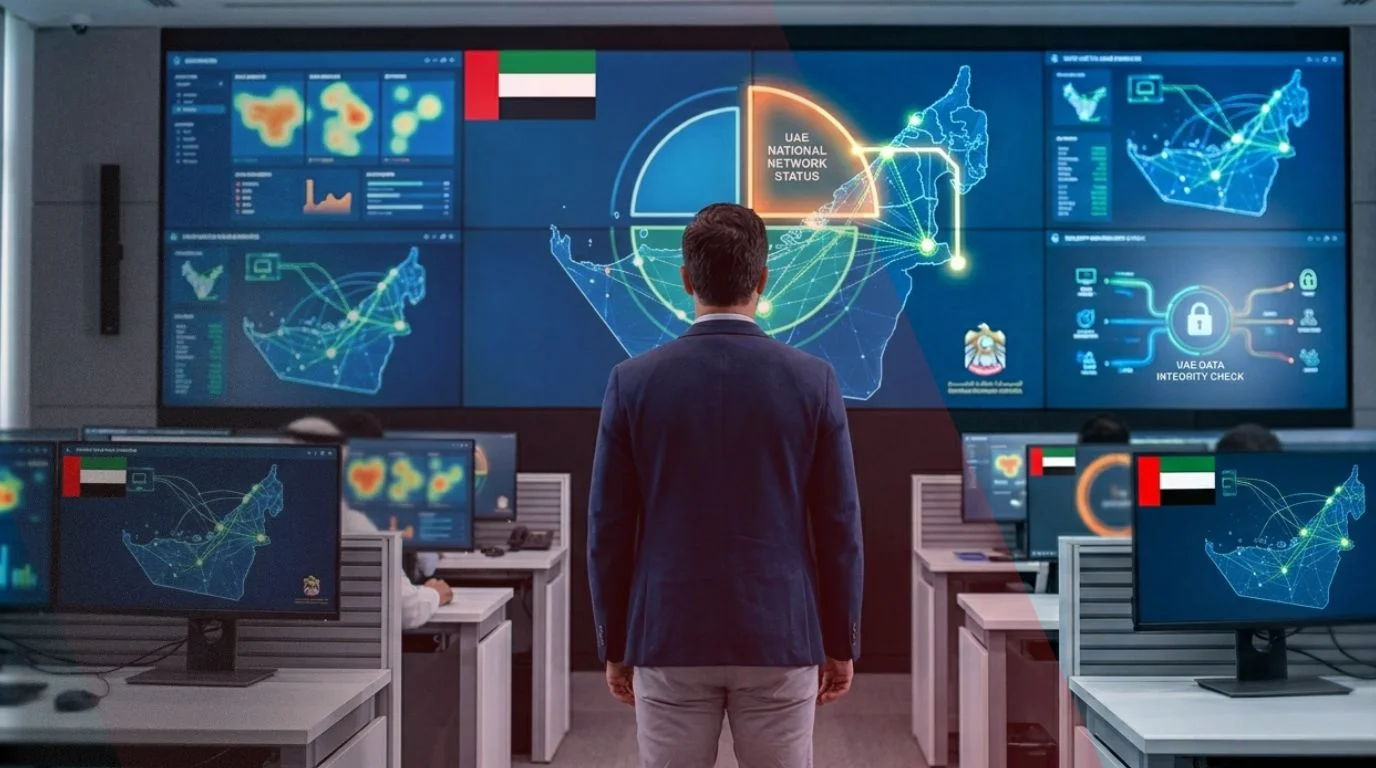
The UAE Cyber Security Council has raised concerns over widespread data exposure, revealing that nearly 25 percent of publicly accessible files contain sensitive personal data. The warning comes as part of its ongoing awareness efforts, urging individuals and organisations to strengthen basic cybersecurity practices. In its latest advisory under the “Cyber Pulse” campaign, the Council highlighted that poor file-sharing habits continue to expose users to avoidable cyber risks. The findings point to a growing gap between the use of cloud platforms and the understanding of how to secure shared data.

Public Files and Sensitive Personal Data at Risk

The Council’s findings show that a significant portion of files shared openly online contain sensitive personal data such as identification details, financial records, or login information. This raises concerns about how easily such data can be accessed by unintended users. The issue is not limited to publicly shared files. According to the Council, between 68 percent and 77 percent of privately shared files may also be accessible to unintended recipients due to weak access controls or misconfigured sharing settings. This highlights a broader problem where users assume that private sharing automatically ensures security. In many cases, improper permissions or link-based access can lead to unintentional exposure of sensitive personal data.

Cyber Security Council Highlights Encryption as Critical Safeguard

The UAE Cyber Security Council emphasized that encryption remains one of the most effective ways to protect sensitive personal data. Files that are encrypted before being shared or stored online are significantly less vulnerable to unauthorized access. The advisory noted that cloud storage platforms do not guarantee automatic protection of data. Without encryption, sensitive files remain exposed if access controls are bypassed or misconfigured. Alongside encryption, secure account management plays a key role in reducing risk. Weak passwords, reused credentials, and lack of authentication measures continue to be major contributors to data exposure incidents.

Key Cybersecurity Practices Recommended

To address the risks associated with exposed sensitive personal data, the Cyber Security Council outlined several essential cybersecurity practices. Users are advised to use strong and regularly updated passwords and enable two-factor authentication across all accounts. Avoiding public links when sharing sensitive files is also critical, as these links can be easily forwarded or accessed without proper restrictions. The Council stressed the importance of reviewing privacy settings and managing access permissions carefully. Monitoring file usage and access logs can help identify unusual activity and prevent misuse. Additional measures include deleting unused files and inactive sharing links, securing Wi-Fi networks, and keeping devices and software up to date. Users are also encouraged to review application permissions and limit access to only necessary services. When accessing files over public networks, the use of virtual private networks can provide an added layer of security. Regular data backups and secure database management on cloud platforms are also recommended to prevent data loss and unauthorized access.

Awareness Remains Key to Reducing Exposure

The Cyber Security Council noted that many cases involving sensitive personal data exposure are the result of simple, preventable mistakes. Lack of awareness around basic cybersecurity practices continues to be a major factor. The “Cyber Pulse” campaign, now in its second year, aims to address this gap by promoting safer digital behaviour among individuals and organisations. The initiative forms part of broader national efforts to build a secure and resilient digital environment. By encouraging users to adopt stronger security measures and understand the risks of improper file sharing, the Council aims to reduce the exposure of sensitive personal data and improve overall cybersecurity hygiene. The latest findings serve as a reminder that while technology platforms continue to evolve, the responsibility to secure data often lies with users. Simple steps such as enabling encryption, managing access, and reviewing shared content can significantly reduce the risk of data exposure.
❌
❌