Ubiquiti patched 22 UniFi flaws. Three hit CVSS 10.0, including command injection CVE-2026-77537. Update UniFi Protect, OS, and Talk now.
Related Posts:
CVE-2026-19042: TeamViewer Command Injection Enables Remote Code Execution
CVE-2026-72137 (CVSS 9.8): Linux Kernel Flaw Enables Root Privilege Escalation, PoC Public
CISA Adds Six Exploited Vulnerabilities Including Citrix NetScaler Flaw
The post UniFi CVE-2026-77537 (CVSS 10.0): Command Injection Flaws Hit 22 Ubiquiti Products appeared first
1. Executive summary
Modern software is assembled, not written. A single application routinely draws on hundreds of third-party components, pulled in on demand and updated continuously as part of normal process. That convenience has quietly become a dependable initial-access route that bypasses traditional perimeter and endpoint defenses. Rather than breaching a hardened production perimeter, adversaries increasingly compromise the developer, the maintainer account, the build pipeline, or the p
Modern software is assembled, not written. A single application routinely draws on hundreds of third-party components, pulled in on demand and updated continuously as part of normal process. That convenience has quietly become a dependable initial-access route that bypasses traditional perimeter and endpoint defenses. Rather than breaching a hardened production perimeter, adversaries increasingly compromise the developer, the maintainer account, the build pipeline, or the package registry — and let trusted automation carry their code the rest of the way.
RDS | Investigação Defensiva & Perícia OSINT — Rogério Souza (@RDSWEB)
RDS · @RDSWEB · Investigação Digital Defensiva
Prova digital que resiste ao contraditório.
"Quem não controla a informação, vira alvo dela." Investigação defensiva, OSINT, CTI e SOCMINT aplicados à defesa técnica — para advogados, departamentos jurídicos e compliance corporativo.
Falar no WhatsApp
Ver no LinkedIn
Perfil
Sobre Rogério
"Quem não controla a informação, vira alvo dela." Investigação defensiva, OSINT, CTI e SOCMINT aplicados à defesa técnica — para advogados, departamentos jurídicos e compliance corporativo.
Toda decisão estratégica nasce da mesma pergunta: quem sabe mais, decide primeiro. Rogério Souza atua na linha de frente da ciberinteligência, cibersegurança e contraespionagem, transformando dados dispersos em vantagem decisória para quem não pode se dar ao luxo de ser surpreendido.
Com especialização em Segurança da Informação pela ULT Grupo América, construiu sua trajetória em parceria com a MPSafe CyberSecurity & CounterEspionage e com atuação junto ao CIASC — Centro de Informática e Automação do Estado de Santa Catarina, somando-se a diversos cases de sucesso em investigação digital, due diligence e proteção de marca para clientes corporativos e jurídicos. Opera como Analista de Open Source Intelligence (OSINT) — planejando e conduzindo operações de coleta de informação, mitigação de risco e produção de inteligência estratégica nas frentes política, militar, econômico-financeira, criminal, social e de contrapropaganda. Para o C-level, isso se traduz em cenários antecipados antes de virarem crise, leitura profunda do ambiente competitivo e decisões blindadas por inteligência verificável — não por achismo.
Sua trajetória inclui vivência em cyber comando privado, com estágio internacional e participação em operações globais de caráter cibernético, antecipando e neutralizando anormalidades, crimes cibernéticos e ataques, com identificação de agentes e grupos. Atua na instrução de fontes abertas (OSINT) e, a convite, apoia ações de polícia e agências governamentais nacionais e internacionais — um nível de confiança que poucos profissionais do mercado carregam.
Faz parte do time de instrutores do Criminal Player, a maior comunidade de direito criminal do Brasil, formando advogados e profissionais do direito em investigação digital, prova técnica e metodologia OSINT aplicada ao processo penal. É autor de curso e apresentação técnica sobre Open Source Intelligence (OSINT), utilizada como material de referência para formação de investigadores e defensores técnicos.
Sua atuação é construída em rede: parcerias recorrentes com advogados criminalistas, peritos e demais profissionais de cybersecurity, CTI, InfoSec e SOCMINT para a resolução conjunta de casos complexos — combinando profundidade técnica investigativa com defensibilidade jurídica em cada entrega.
Tem experiência consolidada em compliance e mitigação de risco, apoiando empresas e escritórios na antecipação de exposições reputacionais, regulatórias e probatórias antes que se tornem contencioso. Atendimento 100% virtual, para todo o Brasil.
Atuação
Frentes de Investigação Defensiva
Processo Penal
Investigação defensiva
Coleta e análise técnica de provas favoráveis à defesa, com metodologia documentada e rastreável, pronta para o contraditório.
Perícia
Cadeia de custódia digital
Preservação e documentação de evidências digitais com integridade probatória, do primeiro contato ao laudo final.
Inteligência
OSINT, CTI & SOCMINT
Inteligência de fontes abertas, ciclo formal de inteligência e Diamond Model aplicados a investigações e due diligence.
Formação
Treinamento jurídico e institucional
Capacitação de advogados e forças de aplicação da lei em investigação digital, via Criminal Player e programas próprios.
Corporativo
Compliance & mitigação de risco
Due diligence, identificação de exposição digital e planos de mitigação antes da judicialização ou crise reputacional.
Colaboração
Rede multidisciplinar
Atuação conjunta com advogados, peritos e especialistas em cybersecurity/infosec para casos de alta complexidade.
Impacto Organizacional
Por que investigação defensiva importa para a empresa
CEO / BoardContinuidade e risco reputacional sob controle antes de virar manchete.
JurídicoProvas tecnicamente defensáveis e aderentes à LGPD.
ComplianceDue diligence e evidência estruturada para decisões regulatórias.
CFOExposição financeira mapeada antes da escalada do litígio.
AuditoriaRastreabilidade de evidências e cadeia de custódia documentada.
RHIdentificação de risco interno com abordagem discreta e legal.
Credenciais
Formação e Trajetória
› Especialização em Segurança da Informação — ULT Grupo América
› Ciberinteligência, Cibersegurança e Contraespionagem — em parceria com a MPSafe CyberSecurity & CounterEspionage
› Atuação junto ao CIASC — Centro de Informática e Automação do Estado de Santa Catarina
› Diversos cases de sucesso em investigação digital, due diligence e proteção de marca para clientes corporativos e jurídicos
› Instrutor de investigação digital — Criminal Player (maior comunidade de direito criminal do Brasil)
› Autor de curso e apresentação técnica sobre OSINT (RDSWEB)
› Estágio internacional em cyber comando privado e operações globais de inteligência proativa
› Rede de colaboração com advogados, peritos e especialistas em CTI/InfoSec/SOCMINT
Dúvidas
Perguntas Frequentes
O que é investigação defensiva?
É a coleta, análise e documentação técnica de provas digitais e de fontes abertas a favor da defesa em processos judiciais, administrativos ou de compliance, sempre observando cadeia de custódia e legalidade probatória.
Como o OSINT é usado como prova técnica em um processo?
Dados publicamente disponíveis são coletados, correlacionados e documentados com metodologia rastreável, permitindo que o laudo seja submetido ao contraditório e resista a questionamentos técnicos da parte contrária.
O atendimento é presencial?
Não. O atendimento é 100% virtual, para advogados, escritórios e empresas em todo o Brasil, via WhatsApp e videochamada.
CISA and five agencies warn that Gunra ransomware is hitting critical infrastructure with double extortion. A Linux flaw may let victims recover free.
Related Posts:
Apple Sends Mercenary Spyware Alerts to Users in 110+ Countries
ChainDrop npm Worm Hits 400+ Packages via Blockchain C2
Fake Zoom Installer Drops Overlord RAT on macOS
The post Gunra Ransomware Hits Critical Infrastructure, CISA Warns appeared first on Daily CyberSecurity.
Microsoft Corp. today released software updates to plug at least 570 security holes in its Windows operating systems and other software, almost triple the number of vulnerabilities the software giant fixed in its record-smashing Patch Tuesday release last month. Microsoft attributed the burgeoning patch counts to vulnerability discoveries aided by artificial intelligence.
Nearly 60 of the bugs quashed in July’s Patch Tuesday earned a “critical” severity rating, meaning miscreants or malware cou
Microsoft Corp. today released software updates to plug at least 570 security holes in its Windows operating systems and other software, almost triple the number of vulnerabilities the software giant fixed in its record-smashing Patch Tuesday release last month. Microsoft attributed the burgeoning patch counts to vulnerability discoveries aided by artificial intelligence.
Nearly 60 of the bugs quashed in July’s Patch Tuesday earned a “critical” severity rating, meaning miscreants or malware could use them to seize remote control over a Windows device with little or no help from the user. Microsoft also addressed three zero-day flaws, including two that are already being exploited in the wild.
Two of the zero-day weaknesses allow an attacker to elevate their user rights on a Windows system, as do approximately 250 other elevation of privilege flaws fixed this month; they include CVE-2026-56155 — an Active Directory Federation Services bug — and CVE-2026-56164, a Microsoft Sharepoint vulnerability.
CVE-2026-50661 is a security feature bypass in Windows BitLocker that could allow attackers to gain access to encrypted data if they have physical access to the device. Microsoft said this bug has been detailed publicly, but that it is not aware of any active exploitation.
In a blog post on July 9, Microsoft Executive Vice President Pavan Davuluri wrote that Windows users will notice “a higher volume of security updates included in each security release” as a result of AI aiding in the discovery of vulnerabilities.
“The pace of vulnerability discovery is changing with advances in AI making it possible to find more issues, faster, across more code, with new mechanisms that can accelerate both discovery and analysis,” Davuluri wrote.
Jack Bicer, director of vulnerability research at Action1, called attention to CVE-2026-48561, a remote code execution flaw in Microsoft Copilot (with a 9.6 CVSS threat score) that allows an unauthorized attacker to execute code over the network. Microsoft says an attacker could exploit this bug by hosting a malicious website that causes Microsoft Edge for Android to automatically send crafted prompts to Copilot when a user visits the site.
As AI advances the state of vulnerability discovery and remediation, it is also making it easier for attackers to quickly devise working exploits for known software flaws. Microsoft has long labeled security bugs using its “exploitability index,” which is Redmond’s best guess as to how likely it is that attackers will be able to figure out a reliable way to exploit a given vulnerability.
But Satnam Narang, senior staff research engineer at Tenable, argues that Microsoft’s exploitability index needs to do a better job of shifting with the machine speed of discovery. For example, Microsoft originally gave this month’s SharePoint zero-day an exploitability rating of “less likely,” although the flaw was added to CISA’s Known Exploited Vulnerabilities list on July 1.
“Anthropic’s Red Team’s own findings for known vulnerabilities (n-days) revealed how fragile this system has become, with its Mythos Preview model being able to produce proof-of-concept exploits for 13 of 14 vulnerabilities that were rated ‘Exploitation Less Likely’ or ‘Exploitation Unlikely,'” Narang said. “What this means is that our way of looking at Patch Tuesday has changed, because the exploitability index is centered around humans, not AI tools, and as these tools continue to improve, defense needs to improve alongside it.”
Chris Goettl at Ivanti observed that the record patch numbers from Microsoft come as a number of other major software makers are increasing their patch cadence, including Adobe which announced today it is moving to twice-monthly security bulletins published on the 2nd and 4th Tuesday of each month (Adobe also cited AI for accelerating their patch cycles). Cisco, Mozilla and Oracle also are shipping updates more frequently, while Google’s patch batches in June 2026 totaled more than 900 security fixes, Goettl noted.
Backing up your Windows system and/or data is always a good idea before applying operating system updates. Given the volume of patches addressed this month it may be wise for end users to wait a few days before applying these fixes. It’s not uncommon for security patches to introduce system stability issues, and those chances probably increase quite a bit with the gigantic patch count released today.
Note The June 2026 Dark Web Breach Incident Trend Report is based on major data breach cases posted on the deep web and dark web forums. Due to the nature of some sources, it was difficult to fully verify the accuracy of certain information, so the report includes content that requires further verification. Major Issue […]
Note The June 2026 Dark Web Breach Incident Trend Report is based on major data breach cases posted on the deep web and dark web forums. Due to the nature of some sources, it was difficult to fully verify the accuracy of certain information, so the report includes content that requires further verification. Major Issue […]
Ubiquiti patched seven UniFi OS flaws, including critical CVE-2026-50746, which allows command injection in UniFi Connect Application.
Ubiquiti released security updates for seven critical UniFi OS vulnerabilities, including a maximum-severity flaw, tracked as CVE-2026-50746 (CVSS score of 10.0), enabling command injection attacks.
The issue affects UniFi Connect Application versions 3.4.16 and earlier, a platform used to manage commercial building systems such as smart lighting and EV c
Ubiquiti patched seven UniFi OS flaws, including critical CVE-2026-50746, which allows command injection in UniFi Connect Application.
Ubiquiti released security updates for seven critical UniFi OS vulnerabilities, including a maximum-severity flaw, tracked as CVE-2026-50746 (CVSS score of 10.0), enabling command injection attacks.
The issue affects UniFi Connect Application versions 3.4.16 and earlier, a platform used to manage commercial building systems such as smart lighting and EV chargers. Organizations using affected versions should update promptly to reduce compromise risks.
“A malicious actor with access to the network could exploit an Improper Access Control vulnerability found in UniFi Connect Application to execute a Command Injection on the host device.” reads the advisory.
The vendor also addressed thcritical vulnerabilities:
CVE-2026-50747 (CVSS score of 9.9): The vulnerability affects UniFi Talk Application and consists of authenticated SQL injection flaws. A low-privileged attacker with network access can exploit the issue to escalate privileges and gain greater control over the host device.
CVE-2026-50748 (CVSS score of 9.9): The vulnerability affects UniFi Access Application and is caused by improper input validation. A low-privileged attacker with network access can exploit the flaw to execute commands on the host device.
CVE-2026-54400 (CVSS score of 9.1): The vulnerability affects UniFi Access Application and is caused by improper access control. A high-privileged attacker can exploit it to escalate privileges on the affected host device.
CVE-2026-54402 (CVSS score of 9.9): The vulnerability affects multiple UniFi OS devices and allows a low-privileged attacker with network access to exploit an SSRF vulnerability, potentially leading to privilege escalation within UniFi OS environments.
CVE-2026-55115 (CVSS score of 9.9): The vulnerability affects UniFi OS/UniFi Protect environments and is related to a CORS misconfiguration. An attacker can abuse a victim’s authenticated session to perform unauthorized actions.
CVE-2026-55116 (CVSS score of 9.0): The vulnerability affects certain UniFi OS devices and allows unauthorized changes through an improper access control issue under specific network conditions.
Ubiquiti recommends updating affected products to the fixed versions listed in Security Advisory Bulletin 066.
Ubiquiti has not confirmed whether any of the vulnerabilities were exploited in attacks in the wild.
Investigação Defensiva e Provas Digitais para Departamentos Jurídicos | RDS Consultoria
Acione Suporte
RDS Consultoria // Investigação Defensiva
Quem não controla a informação, vira alvo dela.
Investigação digital, provas periciais e inteligência OSINT para departamentos jurídicos, escritórios de advocacia e empresas que não podem se dar ao luxo de decidir no escuro. Metodologia técnica, fontes lícitas, cadeia de
Investigação Defensiva e Provas Digitais para Departamentos Jurídicos | RDS Consultoria
Acione Suporte
RDS Consultoria // Investigação Defensiva
Quem não controla a informação, vira alvo dela.
Investigação digital, provas periciais e inteligência OSINT para departamentos jurídicos, escritórios de advocacia e empresas que não podem se dar ao luxo de decidir no escuro. Metodologia técnica, fontes lícitas, cadeia de custódia documentada.
Onde a falta de prova vira prejuízo. Ecossistemas em expansão acelerada concentram oportunidade — e também risco. Mapeamos os pontos cegos mais comuns nos setores que mais crescem, para que jurídicos e empresas ajam antes do problema virar litígio.
Tecnologia & Startups
Disputas societárias e fuga de IP
Ecossistemas de inovação em forte expansão multiplicam conflitos entre sócios, vazamento de propriedade intelectual e fraudes internas em equipes que crescem mais rápido do que os controles internos.
Mercado Imobiliário
Identidade falsa em contratos
A explosão de locações por temporada e negociações à distância abriu espaço para documentos forjados e golpes de identidade que só aparecem depois que o prejuízo já ocorreu.
Jurídico & Compliance
Prova sem validade técnica
Advogados e departamentos jurídicos precisam de provas digitais que resistam à perícia contrária — sem cadeia de custódia documentada, a evidência mais forte pode ser anulada em audiência.
Turismo & Eventos Corporativos
Rotatividade e engenharia social
Alta sazonalidade, fornecedores terceirizados e grandes eventos corporativos aumentam a exposição a fraude documental, golpes e vazamento de dados sensíveis.
Metodologia
O que a RDS entrega
01
OSINT Investigativo
Mapeamento de pessoas, empresas e vínculos usando exclusivamente fontes públicas e lícitas de inteligência.
02
Provas Digitais & Cadeia de Custódia
Coleta, hash de integridade e documentação técnica prontas para juntada em processos judiciais.
03
Due Diligence Corporativa
Verificação de sócios, fornecedores e contrapartes antes de fechar negócios ou contratos sensíveis.
04
Resposta a Incidentes Digitais
Análise técnica em casos de vazamento, fraude ou uso indevido de identidade, com relatório pericial.
Por que a RDS
Investigação defensiva, feita para resistir ao contraditório
Cada relatório é construído para ser lido por um juiz, um perito contrário e um cliente ao mesmo tempo — técnico o bastante para resistir, claro o bastante para orientar a decisão.
+20 anos em OSINTConformidade com a LGPDAtendimento 100% virtualMetodologia alinhada ao Marco Civil da InternetSigilo e discrição contratual
Fale com a RDS
Acione o suporte antes que o problema vire manchete
Preencha o formulário para receber um diagnóstico inicial ou fale agora mesmo pelo WhatsApp.
IntroductionThis blog is a focused update on the latest updates to the Ransomware Tool Matrix (RTM) and the Ransomware Vulnerability Matrix (RVM) covering three groups that I have published profiles for to help defenders home in on the threats most relevant to them: TheGentlemen, DragonForce, and WarLock.Rather than write another broad ecosystem summary, the goal of this post is to introduce these profiles, briefly explain why each group matters right now, and give readers direct links to them
This blog is a focused update on the latest updates to the Ransomware Tool Matrix (RTM) and the Ransomware Vulnerability Matrix (RVM) covering three groups that I have published profiles for to help defenders home in on the threats most relevant to them: TheGentlemen, DragonForce, and WarLock.
Rather than write another broad ecosystem summary, the goal of this post is to introduce these profiles, briefly explain why each group matters right now, and give readers direct links to them so defenders can pivot straight into hunting, detection engineering, and patch prioritisation.
For anyone new to the projects, please read the descriptions on GitHub or feel free to watch my talk explaining the project at BSides London.
Why these three groups?
Each of the three groups added in this update represents a different slice of the current ransomware ecosystem:
TheGentlemen
TheGentlemen is a newer operation that has matured quickly, with a large and varied toolkit that reflects how cross-pollinated the affiliate ecosystem has become. The recent internal chat leak gave researchers a rare look into their tradecraft, and the profiles capture both the tooling and the exploited CVEs that have been observed across multiple intrusions. TheGentlemen’s RTM profile is here and RVM profile is here.
DragonForce
DragonForce has continued to escalate throughout 2025 and into 2026, branching into MSP-focused attacks and standing up its own "cartel" model that other affiliates can plug into. Its exploitation of edge devices (Ivanti, Fortinet, SonicWall) and SimpleHelp RMM make it a high-priority threat for any organisation using such systems. DragonForce’s RTM profile is here and RVM profile is here.
WarLock
WarLock jumped onto everyone's radar after the ToolShell SharePoint zero-day exploitation campaign, and has since been linked to a string of edge-application exploits including SmarterMail, SolarWinds Web Help Desk, and Gladinet CentreStack. It is a strong example of a likely China-based operator that lives on zero-day exploitation of internet-facing software. WarLock’s RTM profile is here and RVM profile is here.
Observations and Trends
A few themes are worth flagging across all three profiles:
BYOVD is now standard, not novel. All three groups have been observed bringing vulnerable drivers to disable or blind EDR. TheGentlemen with ThrottleStop driver, DragonForce with the TrueSight and Hangzhou Shunwang drivers, and WarLock with Antiy, NsecSoft, Rising, and VMTools drivers. If your detection stack is not yet hunting on or blocking suspicious driver loads and known-bad driver hashes, that is a high-priority gap to close.
Network edge devices and other internet-facing systems remain the front door to victim networks for these groups. Fortinet, Ivanti, SonicWall, SimpleHelp, Microsoft SharePoint, SmarterMail, SolarWinds Web Help Desk, and Gladinet CentreStack all appear across these three profiles. Patch prioritisation that focuses on internet-exposed appliances and admin tooling continues to give defenders a valuable return on effort.
Legitimate tooling continues to blur the line. Velociraptor, Cloudflared, VSCode Tunnels, AnyDesk, MeshCentral, FreeRDP, PuTTY, OpenSSH, and a long list of legitimate cloud services are all being repurposed for ransomware operations. Defender should use these lists to begin baselining what should exist in their environment and start alerting on the rest.
Conclusion
My recommendation for defenders remains the same as in previous updates: take the tools and CVEs from the RTM and RVM profiles and start threat hunting for their presence, writing detection rules to alert on certain behaviours, and blocking what is not expected or permitted in your environment. These three new profiles should make that easier to scope by group when you need to brief leadership, prioritise a hunt, or map your exposure to a specific campaign.
Here's a few sites that can help with turning the threat intel in these new profiles into detections:
As always, feedback and pull requests are very welcome on both repos. Thanks to everyone who has contributed reports, corrections, and ideas. These projects only stay useful because the community keeps feeding them one way or another.
Ukrainian national Oleksii Lytvynenko has pleaded guilty in the US to wire fraud conspiracy linked to Conti ransomware, which hit more than 1,000 victims and generated at least $150 million in ransom payments.
Ukrainian national Oleksii Lytvynenko has pleaded guilty in the US to wire fraud conspiracy linked to Conti ransomware, which hit more than 1,000 victims and generated at least $150 million in ransom payments.
Notes the May 2026 Dark Web Threat Actor Trend Report summarizes the trends of threat actors and hacktivists operating on the deep web and dark web. some statements are not factually verifiable. Major Issues hacktivist activity targeting the South Korean Region was concentrated. some hacktivist groups claimed DDoS attacks against the website of the South […]
Notes the May 2026 Dark Web Threat Actor Trend Report summarizes the trends of threat actors and hacktivists operating on the deep web and dark web. some statements are not factually verifiable. Major Issues hacktivist activity targeting the South Korean Region was concentrated. some hacktivist groups claimed DDoS attacks against the website of the South […]
Authorities in the Netherlands have arrested the co-owners of two related Internet hosting companies for operating IT infrastructure used by Russia to carry out cyberattacks, influence operations and disinformation campaigns inside the European Union. The two men were the focus of a 2025 KrebsOnSecurity story about how their hosting companies had assumed control over the technical infrastructure of Stark Industries Solutions, an Internet service provider sanctioned last year by the EU as a frequ
Authorities in the Netherlands have arrested the co-owners of two related Internet hosting companies for operating IT infrastructure used by Russia to carry out cyberattacks, influence operations and disinformation campaigns inside the European Union. The two men were the focus of a 2025 KrebsOnSecurity story about how their hosting companies had assumed control over the technical infrastructure of Stark Industries Solutions, an Internet service provider sanctioned last year by the EU as a frequent staging ground for cyber mischief from Russia’s intelligence agencies.
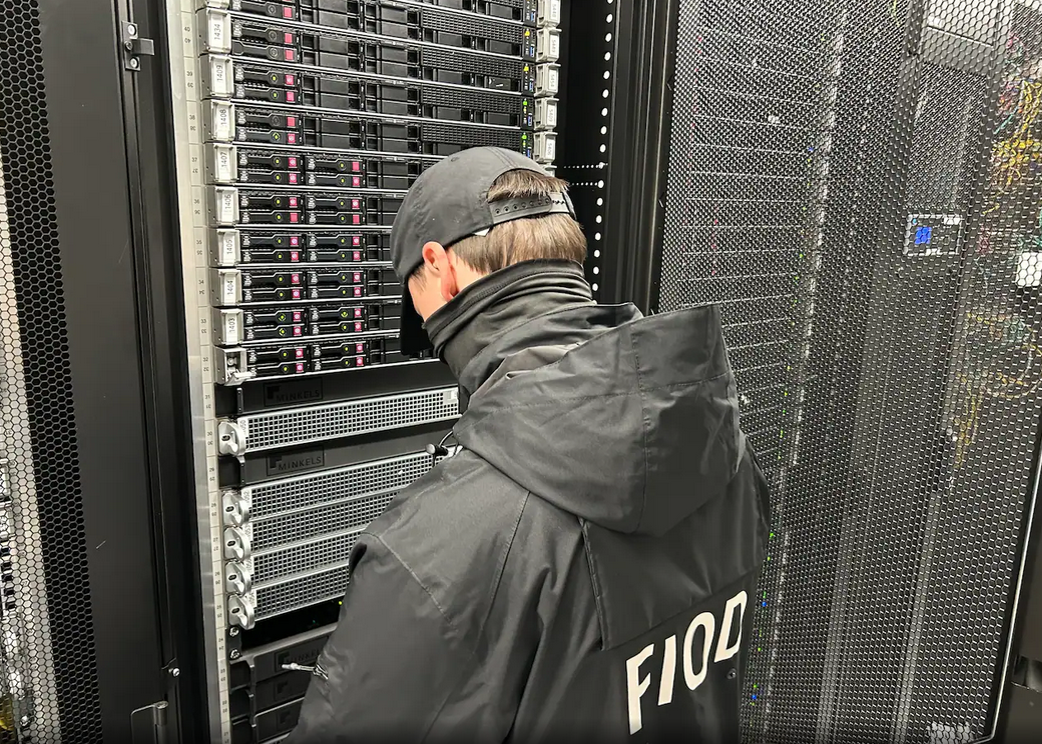
An investigator with the Tax Intelligence and Investigation Service (FIOD), the Dutch financial crimes agency, during the raid. Image: FIOD.
The Dutch daily news outlet de Volkskrantreports that the Dutch financial crime agency FIOD on May 18 arrested a 57-year-old from Amsterdam and a 39-year-old from The Hague, charging them with violating sanctions law by directly or indirectly making economic resources available to EU-sanctioned entities.
The Dutch investigation focuses on Stark Industries, a sprawling hosting provider that materialized just two weeks before Russia invaded Ukraine. As detailed in this May 2024 deep-dive, Stark quickly became the source of massive distributed denial-of-service (DDoS) attacks against European targets, and emerged as a top supplier of proxy and anonymity services that showed up time and again in cyberattacks linked to Russia-backed hacking groups.
That report identified two Moldovan brothers — Ivan and Yuri Neculiti and their company PQHosting — who were providing one of Stark’s two main conduits to the larger Internet. In May 2025, the EU sanctioned PQHosting and the Neculiti brothers for aiding Russia’s hybrid warfare efforts. But as KrebsOnSecurity observed in September 2025, those sanctions failed to target Stark’s remaining connection to the Internet — an Internet service provider based in the Netherlands called MIRhosting.
MIRhosting is operated by Andrey Nesterenko, a 39-year-old Russian native who runs the business out of the Netherlands. News that PQHosting and the Neculiti brothers were about to be sanctioned by the EU leaked in the media nearly two weeks before the sanctions were announced last year. During that time, the Stark network assets were transferred from PQHosting to a new entity called the[.]hosting, under the control of the Dutch entity WorkTitans BV.
And as our September 2025 report showed, WorkTitans was controlled by Nesterenko and a 57-year-old from Amsterdam named Youssef Zinad. On top of that, WorkTitans was getting connectivity to the larger Internet solely through MIRhosting, where Zinad had worked previously.
On May 18, Dutch financial crime investigators arrested Nesterenko and Zinad, and searched three businesses in Enschede and Almere and two data centers in Dronten and Schiphol-Rijk. A statement from the Dutch authorities said they also seized laptops, telephones and more than 800 servers.
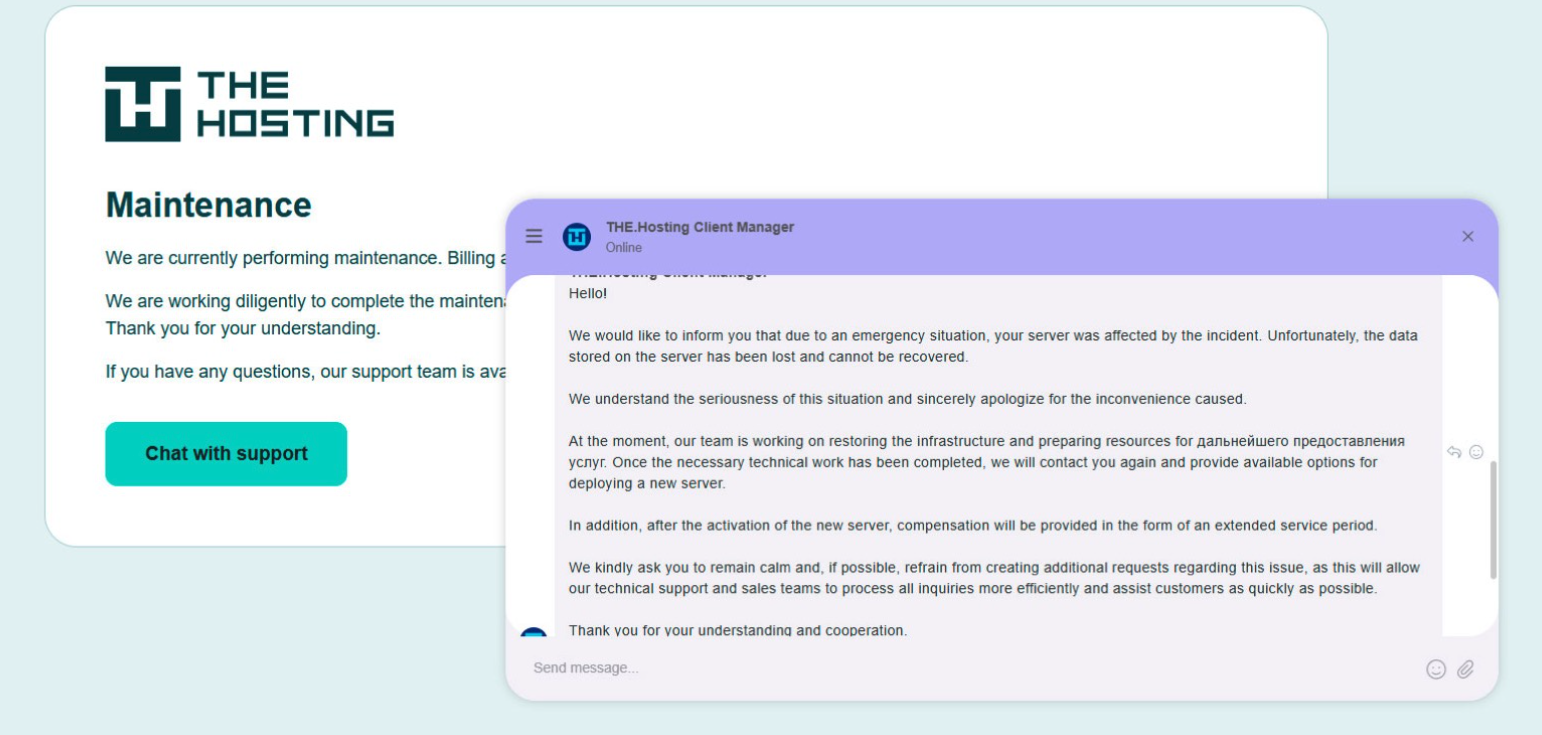
A message to the-hosting customers immediately after 800 of its servers were seized by Dutch authorities. The message says that unfortunately data stored on the server has been lost and cannot be recovered.
De Volkskrant said it reviewed data showing WorkTitans and MIRhosting were the most-used networks in pro-Russian attacks on Danish government bodies between November 13 and 19, 2025, the week of Denmark’s municipal elections.
The publication wrote that prior to Nesterenko’s arrest, the MIRhosting founder denied that he knew his servers had been misused by pro-Russian cybercriminals. “He said he had ended all services with the Neculiti brothers when the EU sanctions came into force in May 2025,” and the he “reserved all rights to take action against ‘harmful and incorrect publications,” de Volkskrant wrote.
MIRhosting released a statement saying it has initiated an internal investigation into the alleged facts concerning the elections in Denmark, and that it has temporarily paused services to WorkTitans as a precautionary measure while the matter is being reviewed further.
“Based on our preliminary findings, there are no indications that the services over which we exercise control were actually used to influence the Danish elections,” the statement reads. “No anomalies or spikes were observed in our network traffic during the period mentioned in the publication; had large-scale DDoS attacks occurred, such activity would have been evident. Furthermore, prior to the media publication, we had not received any complaints, abuse reports, or official requests regarding suspicious activities or misuse of our network. Meanwhile, our regular operational activities continue, and our service to our other clients remains fully intact.”
Born in Nizhny Novgorod, Russia, Mr. Nesterenko grew up as a piano prodigy who performed publicly at a young age. In 2004, Nesterenko founded MIRhosting’s parent Innovation IT Solutions Corp., which has the notable distinction of being the company responsible for hosting stopgeorgia[.]ru, a hacktivist website for organizing cyberattacks against Georgia that appeared at the same time Russian forces invaded the former Soviet nation in 2008. That conflict was thought to be the first war ever fought in which a notable cyberattack and an actual military engagement happened simultaneously.
Responding to questions shared via email, Nesterenko said MIRhosting does not support cybercrime, sanctions evasion, or illegal activity, and that the allegations and arrest by Dutch authorities have been extremely harmful to him and his company.
“The transition to the.hosting was not intended to evade sanctions,” Nesterenko wrote. “The hardware and customer portfolio had already been transferred to WorkTitans before the sanctions appeared. Closing or damaging a legitimate Dutch infrastructure company will not stop cybercrime, but it will harm many people who have done nothing wrong.”
Far less is public about the 57-year-old Zinad, who reportedly has been keeping a low profile since our story last year. De Volkskrant reported that Zinad blocked access to his LinkedIn account, had gone months without responding to emails, WhatsApp messages and phone calls, and told a colleague that illness was forcing him to lead a somewhat more reclusive life.
Mr. Zinad’s now-defunct LinkedIn profile. It was full of posts for MIRhosting’s services.
Mr. Nesterenko claims Zinad was never an employee of MIRhosting.
“He helped me and MIRhosting with certain business tasks under a normal business-to-business arrangement between companies,” Nesterenko explained.
However, in previous emails to KrebsOnSecurity, Nesterenko carbon copied Mr. Zinad (who had a @mirhosting.com email), explaining that he was part of the company’s legal team. Also, the Dutch website stagemarkt[.]nl lists Youssef Zinad as an official contact for MIRhosting’s offices in Almere.
Mr. Zinad has never responded to requests for comment. Nor did de Volkskrant have any luck tracking him down. The publication said it repeatedly asked Mr. Zinad (referred to here as simply “Z”), but he reportedly avoided every form of contact.
“‘I am unavailable but will respond to your message as soon as possible,’ reads an automated reply on WhatsApp on 2 October 2025,” de Volkskrant reported. “It is the only response de Volkskrant would receive in months. He did not pick up his phone and did not call back. When an acquaintance asked him via LinkedIn to contact the reporter, he blocked access to his LinkedIn page. At an address in Almere where Z.’s personal limited company is registered, no one was present in April. The corner house’s blinds were drawn, and a pile of rubbish bags lay outside next to a container, as if someone had recently left. A neighbour said he knew the man but did not know where he was staying. Z. was later arrested at a residence in Amsterdam.”
Artificial intelligence platforms may be just as susceptible to social engineering as human beings, but they are proving remarkably good at finding security vulnerabilities in human-made computer code. That reality is on full display this month with some of the more widely-used software makers — including Apple, Google, Microsoft, Mozilla and Oracle — fixing near record volumes of security bugs, and/or quickening the tempo of their patch releases.
As it does on the second Tuesday of every month,
Artificial intelligence platforms may be just as susceptible to social engineering as human beings, but they are proving remarkably good at finding security vulnerabilities in human-made computer code. That reality is on full display this month with some of the more widely-used software makers — including Apple, Google, Microsoft, Mozilla and Oracle — fixing near record volumes of security bugs, and/or quickening the tempo of their patch releases.
As it does on the second Tuesday of every month, Microsoft today released software updates to address at least 118 security vulnerabilities in its various Windows operating systems and other products. Remarkably, this is the first Patch Tuesday in nearly two years that Microsoft is not shipping any fixes to deal with emergency zero-day flaws that are already being exploited. Nor have any of the flaws fixed today been previously disclosed (potentially giving attackers a heads up in how to exploit the weakness).
Sixteen of the vulnerabilities earned Microsoft’s most-dire “critical” label, meaning malware or miscreants could abuse these bugs to seize remote control over a vulnerable Windows device with little or no help from the user. Rapid7 has done much of the heavy lifting in identifying some of the more concerning critical weaknesses this month, including:
CVE-2026-41089: A critical stack-based buffer overflow in Windows Netlogon that offers an attacker SYSTEM privileges on the domain controller. No privileges or user interaction are required, and attack complexity is low. Patches are available for all versions of Windows Server from 2012 onwards.
CVE-2026-41096: A critical RCE in the Windows DNS client implementation worthy of attention despite Microsoft assessing exploitation as less likely.
CVE-2026-41103: A critical elevation of privilege vulnerability that allows an unauthorized attacker to impersonate an existing user by presenting forged credentials, thus bypassing Entra ID. Microsoft expects that exploitation is more likely.
May’s Patch Tuesday is a welcome respite from April, which saw Microsoft fix a near-record 167 security flaws. Microsoft was among a few dozen tech giants given access to a “Project Glasswing,” a much-hyped AI capability developed by Anthropic that appears quite effective at unearthing security vulnerabilities in code.
Apple, another early participant in Project Glasswing, typically fixes an average of 20 vulnerabilities each time it ships a security update for iOS devices, said Chris Goettl, vice president of product management at Ivanti. On May 11, Apple shipped updates to address at least 52 vulnerabilities and backported the changes all the way to iPhone 6s and iOS 15.
Last month, Mozilla released Firefox 150, which resolved a whopping 271 vulnerabilities that were reportedly discovered during the Glasswing evaluation.
“Since Firefox 150.0.0 released, they have been on a more aggressive weekly cadence for security updates including the release of Firefox 150.0.3 on May Patch Tuesday resolving between three to five CVEs in each release,” Goettl said.
The software giant Oracle likewise recently increased its patch pace in response to their work with Glasswing. In its most recent quarterly patch update, Oracle addressed at least 450 flaws, including more than 300 fixes for remotely exploitable, unauthenticated flaws. But at the end of April, Oracle announced it was switching to a monthly update cycle for critical security issues.
On May 8, Google started rolling out updates to its Chrome browser that fixed an astonishing 127 security flaws (up from just 30 the previous month). Chrome automagically downloads available security updates, but installing them requires fully restarting the browser.
If you encounter any weirdness applying the updates from Microsoft or any other vendor mentioned here, feel free to sound off in the comments below. Meantime, if you haven’t backed up your data and/or drive lately, doing that before updating is generally sound advice. For a more granular look at the Microsoft updates released today, checkout this inventory by the SANS Internet Storm Center.
In 2026, AI agents are being widely used. OpenClaw has become a high-frequency efficiency improvement tool for enterprises and developers with its autonomous decision-making and local execution capabilities. However, several authoritative security agencies have recently issued warnings: OpenClaw is facing multi-dimensional security threats from supply chain poisoning to remote control. When internal employees privately deploy […]
The post NSFOCUS Threat Intelligence: Building an OpenClaw Defense
In 2026, AI agents are being widely used. OpenClaw has become a high-frequency efficiency improvement tool for enterprises and developers with its autonomous decision-making and local execution capabilities. However, several authoritative security agencies have recently issued warnings: OpenClaw is facing multi-dimensional security threats from supply chain poisoning to remote control. When internal employees privately deploy […]
Microsoft today released updates to fix more than 50 security holes in its Windows operating systems and other software, including patches for a whopping six “zero-day” vulnerabilities that attackers are already exploiting in the wild.
Zero-day #1 this month is CVE-2026-21510, a security feature bypass vulnerability in Windows Shell wherein a single click on a malicious link can quietly bypass Windows protections and run attacker-controlled content without warning or consent dialogs. CVE-2026-2
Microsoft today released updates to fix more than 50 security holes in its Windows operating systems and other software, including patches for a whopping six “zero-day” vulnerabilities that attackers are already exploiting in the wild.
Zero-day #1 this month is CVE-2026-21510, a security feature bypass vulnerability in Windows Shell wherein a single click on a malicious link can quietly bypass Windows protections and run attacker-controlled content without warning or consent dialogs. CVE-2026-21510 affects all currently supported versions of Windows.
The zero-day flaw CVE-2026-21513 is a security bypass bug targeting MSHTML, the proprietary engine of the default Web browser in Windows. CVE-2026-21514 is a related security feature bypass in Microsoft Word.
The zero-day CVE-2026-21533 allows local attackers to elevate their user privileges to “SYSTEM” level access in Windows Remote Desktop Services. CVE-2026-21519 is a zero-day elevation of privilege flaw in the Desktop Window Manager (DWM), a key component of Windows that organizes windows on a user’s screen. Microsoft fixed a different zero-day in DWM just last month.
The sixth zero-day is CVE-2026-21525, a potentially disruptive denial-of-service vulnerability in the Windows Remote Access Connection Manager, the service responsible for maintaining VPN connections to corporate networks.
Chris Goettl at Ivanti reminds us Microsoft has issued several out-of-band security updates since January’s Patch Tuesday. On January 17, Microsoft pushed a fix that resolved a credential prompt failure when attempting remote desktop or remote application connections. On January 26, Microsoft patched a zero-day security feature bypass vulnerability (CVE-2026-21509) in Microsoft Office.
Kev Breen at Immersive notes that this month’s Patch Tuesday includes several fixes for remote code execution vulnerabilities affecting GitHub Copilot and multiple integrated development environments (IDEs), including VS Code, Visual Studio, and JetBrains products. The relevant CVEs are CVE-2026-21516, CVE-2026-21523, and CVE-2026-21256.
Breen said the AI vulnerabilities Microsoft patched this month stem from a command injection flaw that can be triggered through prompt injection, or tricking the AI agent into doing something it shouldn’t — like executing malicious code or commands.
“Developers are high-value targets for threat actors, as they often have access to sensitive data such as API keys and secrets that function as keys to critical infrastructure, including privileged AWS or Azure API keys,” Breen said. “When organizations enable developers and automation pipelines to use LLMs and agentic AI, a malicious prompt can have significant impact. This does not mean organizations should stop using AI. It does mean developers should understand the risks, teams should clearly identify which systems and workflows have access to AI agents, and least-privilege principles should be applied to limit the blast radius if developer secrets are compromised.”
The SANS Internet Storm Center has a clickable breakdown of each individual fix this month from Microsoft, indexed by severity and CVSS score. Enterprise Windows admins involved in testing patches before rolling them out should keep an eye on askwoody.com, which often has the skinny on wonky updates. Please don’t neglect to back up your data if it has been a while since you’ve done that, and feel free to sound off in the comments if you experience problems installing any of these fixes.
Microsoft today issued patches to plug at least 113 security holes in its various Windows operating systems and supported software. Eight of the vulnerabilities earned Microsoft’s most-dire “critical” rating, and the company warns that attackers are already exploiting one of the bugs fixed today.
January’s Microsoft zero-day flaw — CVE-2026-20805 — is brought to us by a flaw in the Desktop Window Manager (DWM), a key component of Windows that organizes windows on a user’s screen. Kev Breen, sen
Microsoft today issued patches to plug at least 113 security holes in its various Windows operating systems and supported software. Eight of the vulnerabilities earned Microsoft’s most-dire “critical” rating, and the company warns that attackers are already exploiting one of the bugs fixed today.
January’s Microsoft zero-day flaw — CVE-2026-20805 — is brought to us by a flaw in the Desktop Window Manager (DWM), a key component of Windows that organizes windows on a user’s screen. Kev Breen, senior director of cyber threat research at Immersive, said despite awarding CVE-2026-20805 a middling CVSS score of 5.5, Microsoft has confirmed its active exploitation in the wild, indicating that threat actors are already leveraging this flaw against organizations.
Breen said vulnerabilities of this kind are commonly used to undermine Address Space Layout Randomization (ASLR), a core operating system security control designed to protect against buffer overflows and other memory-manipulation exploits.
“By revealing where code resides in memory, this vulnerability can be chained with a separate code execution flaw, transforming a complex and unreliable exploit into a practical and repeatable attack,” Breen said. “Microsoft has not disclosed which additional components may be involved in such an exploit chain, significantly limiting defenders’ ability to proactively threat hunt for related activity. As a result, rapid patching currently remains the only effective mitigation.”
Chris Goettl, vice president of product management at Ivanti, observed that CVE-2026-20805 affects all currently supported and extended security update supported versions of the Windows OS. Goettl said it would be a mistake to dismiss the severity of this flaw based on its “Important” rating and relatively low CVSS score.
“A risk-based prioritization methodology warrants treating this vulnerability as a higher severity than the vendor rating or CVSS score assigned,” he said.
Among the critical flaws patched this month are two Microsoft Office remote code execution bugs (CVE-2026-20952 and CVE-2026-20953) that can be triggered just by viewing a booby-trapped message in the Preview Pane.
Our October 2025 Patch Tuesday “End of 10” roundup noted that Microsoft had removed a modem driver from all versions after it was discovered that hackers were abusing a vulnerability in it to hack into systems. Adam Barnett at Rapid7 said Microsoft today removed another couple of modem drivers from Windows for a broadly similar reason: Microsoft is aware of functional exploit code for an elevation of privilege vulnerability in a very similar modem driver, tracked as CVE-2023-31096.
“That’s not a typo; this vulnerability was originally published via MITRE over two years ago, along with a credible public writeup by the original researcher,” Barnett said. “Today’s Windows patches remove agrsm64.sys and agrsm.sys. All three modem drivers were originally developed by the same now-defunct third party, and have been included in Windows for decades. These driver removals will pass unnoticed for most people, but you might find active modems still in a few contexts, including some industrial control systems.”
According to Barnett, two questions remain: How many more legacy modem drivers are still present on a fully-patched Windows asset; and how many more elevation-to-SYSTEM vulnerabilities will emerge from them before Microsoft cuts off attackers who have been enjoying “living off the land[line] by exploiting an entire class of dusty old device drivers?”
“Although Microsoft doesn’t claim evidence of exploitation for CVE-2023-31096, the relevant 2023 write-up and the 2025 removal of the other Agere modem driver have provided two strong signals for anyone looking for Windows exploits in the meantime,” Barnett said. “In case you were wondering, there is no need to have a modem connected; the mere presence of the driver is enough to render an asset vulnerable.”
Immersive, Ivanti and Rapid7 all called attention to CVE-2026-21265, which is a critical Security Feature Bypass vulnerability affecting Windows Secure Boot. This security feature is designed to protect against threats like rootkits and bootkits, and it relies on a set of certificates that are set to expire in June 2026 and October 2026. Once these 2011 certificates expire, Windows devices that do not have the new 2023 certificates can no longer receive Secure Boot security fixes.
Barnett cautioned that when updating the bootloader and BIOS, it is essential to prepare fully ahead of time for the specific OS and BIOS combination you’re working with, since incorrect remediation steps can lead to an unbootable system.
“Fifteen years is a very long time indeed in information security, but the clock is running out on the Microsoft root certificates which have been signing essentially everything in the Secure Boot ecosystem since the days of Stuxnet,” Barnett said. “Microsoft issued replacement certificates back in 2023, alongside CVE-2023-24932 which covered relevant Windows patches as well as subsequent steps to remediate the Secure Boot bypass exploited by the BlackLotus bootkit.”
Goettl noted that Mozilla has released updates for Firefox and Firefox ESR resolving a total of 34 vulnerabilities, two of which are suspected to be exploited (CVE-2026-0891 and CVE-2026-0892). Both are resolved in Firefox 147 (MFSA2026-01) and CVE-2026-0891 is resolved in Firefox ESR 140.7 (MFSA2026-03).
“Expect Google Chrome and Microsoft Edge updates this week in addition to a high severity vulnerability in Chrome WebView that was resolved in the January 6 Chrome update (CVE-2026-0628),” Goettl said.
As ever, the SANS Internet Storm Center has a per-patch breakdown by severity and urgency. Windows admins should keep an eye on askwoody.com for any news about patches that don’t quite play nice with everything. If you experience any issues related installing January’s patches, please drop a line in the comments below.
Microsoft this week pushed security updates to fix more than 60 vulnerabilities in its Windows operating systems and supported software, including at least one zero-day bug that is already being exploited. Microsoft also fixed a glitch that prevented some Windows 10 users from taking advantage of an extra year of security updates, which is nice because the zero-day flaw and other critical weaknesses affect all versions of Windows, including Windows 10.
Affected products this month include the W
Microsoft this week pushed security updates to fix more than 60 vulnerabilities in its Windows operating systems and supported software, including at least one zero-day bug that is already being exploited. Microsoft also fixed a glitch that prevented some Windows 10 users from taking advantage of an extra year of security updates, which is nice because the zero-day flaw and other critical weaknesses affect all versions of Windows, including Windows 10.
Affected products this month include the Windows OS, Office, SharePoint, SQL Server, Visual Studio, GitHub Copilot, and Azure Monitor Agent. The zero-day threat concerns a memory corruption bug deep in the Windows innards called CVE-2025-62215. Despite the flaw’s zero-day status, Microsoft has assigned it an “important” rating rather than critical, because exploiting it requires an attacker to already have access to the target’s device.
“These types of vulnerabilities are often exploited as part of a more complex attack chain,” said Johannes Ullrich, dean of research for the SANS Technology Institute. “However, exploiting this specific vulnerability is likely to be relatively straightforward, given the existence of prior similar vulnerabilities.”
Ben McCarthy, lead cybersecurity engineer at Immersive, called attention to CVE-2025-60274, a critical weakness in a core Windows graphic component (GDI+) that is used by a massive number of applications, including Microsoft Office, web servers processing images, and countless third-party applications.
“The patch for this should be an organization’s highest priority,” McCarthy said. “While Microsoft assesses this as ‘Exploitation Less Likely,’ a 9.8-rated flaw in a ubiquitous library like GDI+ is a critical risk.”
Microsoft patched a critical bug in Office — CVE-2025-62199 — that can lead to remote code execution on a Windows system. Alex Vovk, CEO and co-founder of Action1, said this Office flaw is a high priority because it is low complexity, needs no privileges, and can be exploited just by viewing a booby-trapped message in the Preview Pane.
Many of the more concerning bugs addressed by Microsoft this month affect Windows 10, an operating system that Microsoft officially ceased supporting with patches last month. As that deadline rolled around, however, Microsoft began offering Windows 10 users an extra year of free updates, so long as they register their PC to an active Microsoft account.
Judging from the comments on last month’s Patch Tuesday post, that registration worked for a lot of Windows 10 users, but some readers reported the option for an extra year of updates was never offered. Nick Carroll, cyber incident response manager at Nightwing, notes that Microsoft has recently released an out-of-band update to address issues when trying to enroll in the Windows 10 Consumer Extended Security Update program.
“If you plan to participate in the program, make sure you update and install KB5071959 to address the enrollment issues,” Carroll said. “After that is installed, users should be able to install other updates such as today’s KB5068781 which is the latest update to Windows 10.”
Chris Goettl at Ivanti notes that in addition to Microsoft updates today, third-party updates from Adobe and Mozilla have already been released. Also, an update for Google Chrome is expected soon, which means Edge will also be in need of its own update.
The SANS Internet Storm Center has a clickable breakdown of each individual fix from Microsoft, indexed by severity and CVSS score. Enterprise Windows admins involved in testing patches before rolling them out should keep an eye on askwoody.com, which often has the skinny on any updates gone awry.
As always, please don’t neglect to back up your data (if not your entire system) at regular intervals, and feel free to sound off in the comments if you experience problems installing any of these fixes.
[Author’s note: This post was intended to appear on the homepage on Tuesday, Nov. 11. I’m still not sure how it happened, but somehow this story failed to publish that day. My apologies for the oversight.]
The EclecticIQ AI features have already been helping you work faster and smarter, from using AI assistant as your on-demand research partner, to querying complex data sets using NLP search, aligning requirements with Intelligence Compass, and extracting key entities with AI entity extraction. With the upcoming 3.6 release of Intelligence Center, we’re expanding the EclecticIQ AI Suite with the productivity-boosting features: Summarization , Content generation with templates and Translation. The
The EclecticIQ AI features have already been helping you work faster and smarter, from using AI assistant as your on-demand research partner, to querying complex data sets using NLP search, aligning requirements with Intelligence Compass, and extracting key entities with AI entity extraction. With the upcoming 3.6 release of Intelligence Center, we’re expanding the EclecticIQ AI Suite with the productivity-boosting features: Summarization , Content generation with templates and Translation. These tools are built to help you move faster, go broader, and stay focused on what matters most.
The exploitation of vulnerabilities targeting remote access technologies to gain initial access is continuing relentlessly also during 2025, with initial access brokers, and in general opportunistic and targeted threat actors, quite active in leveraging software flaws to break into organizations.
The exploitation of vulnerabilities targeting remote access technologies to gain initial access is continuing relentlessly also during 2025, with initial access brokers, and in general opportunistic and targeted threat actors, quite active in leveraging software flaws to break into organizations.
It seems like every manufacturer of anything electrical that goes in the house wants to be part of the IoT story these days. Further, they all want their own app, which means you have to go to gazillions of bespoke software products to control your things. And they're all - with very few exceptions - terrible:That's to control the curtains in my office and the master bedroom, but the hubs (you need two, because the range is rubbish) have stopped communicating.That one is for the spa, but it look
It seems like every manufacturer of anything electrical that goes in the house wants to be part of the IoT story these days. Further, they all want their own app, which means you have to go to gazillions of bespoke software products to control your things. And they're all - with very few exceptions - terrible:
That's to control the curtains in my office and the master bedroom, but the hubs (you need two, because the range is rubbish) have stopped communicating.
That one is for the spa, but it looks like the service it's meant to authenticate to has disappeared, so now, you can't.
And my most recent favourite, Advantage Air, which controls the many tens of thousands of dollars' worth of air conditioning we've just put in. Yes, I'm on the same network, and yes, the touch screen has power and is connected to the network. I know that because it looks like this:
That might look like I took the photo in 2013, but no, that's the current generation app, complete with Android tablet now fixed to the wall. Fortunately, I can gleefully ignore it as all the entities are now exposed in Home Assistant (HA), then persisted into Apple Home via HomeKit Bridge, where they appear on our iThings. (Which also means I can replace that tablet with a nice iPad Mini running Apple Home and put the Android into the server rack, where it still needs to act as the controller for the system.)
Anyway, the point is that when you go all in on IoT, you're dealing with a lot of rubbish apps all doing pretty basic stuff: turn things on, turn things off, close things, etc. HA is great as it abstracts away the crappy apps, and now, it also does something much, much cooler than just all this basic functionality...
Start by thinking of the whole IoT ecosystem as simply being triggers and actions. Triggers can be based on explicit activities (such as pushing a button), observable conditions (such as the temperature in a room), schedules, events and a range of other things that can be used to kick off an action. The actions then include closing a garage door, playing an audible announcement on a speaker, pushing an alert to a mobile device and like triggers, many other things as well. That's the obvious stuff, but you can get really creative when you start considering devices like this:
That's a Sonoff IoT water valve, and yes, it has its own app 🤦♂️ But because it's Zigbee-based, it's very easy to incorporate it into HA, which means now, the swag of "actions" at my disposal includes turning on a hose. Cool, but boring if you're just watering the garden. Let's do something more interesting instead:
The valve is inline with the hose which is pointing upwards, right above the wall that faces the road and has one of these mounted on it:
That's a Ubiquiti G4 Pro doorbell (full disclosure: Ubiquiti has sent me all the gear I'm using in this post), and to extend the nomenclature used earlier, it has many different events that HA can use as triggers, including a press of the button. Tie it all together and you get this:
Not only does a press of the doorbell trigger the hose on Halloween, it also triggers Lenny Troll, who's a bit hard to hear, so you gotta lean in real close 🤣 C'mon, they offered "trick" as one of the options!
Enough mucking around, let's get to the serious bits and per the title, the AI components. I was reading through the new features of HA 2025.8 (they do a monthly release in this form), and thought the chicken counter example was pretty awesome. Counting the number of chickens in the coop is a hard problem to solve with traditional sensors, but if you've got a camera that take a decent photo and an AI service to interpret it, suddenly you have some cool options. Which got me thinking about my rubbish bins:
The red one has to go out on the road by about 07:00 every Tuesday (that's general rubbish), and the yellow one has to go out every other Tuesday (that's recycling). Sometimes, we only remember at the last moment and other times, we remember right as the garbage truck passes by, potentially meaning another fortnight of overstuffing the bin. But I already had a Ubiquiti G6 Bullet pointing at that side of the house (with a privacy blackout configured to avoid recording the neighbours), so now it just takes a simple automation:
- id: bin_presence_check
  alias: Bin presence check
  mode: single
  trigger:
    - platform: state
      entity_id: binary_sensor.laundry_side_motion
      to: "off"
      for:
        minutes: 1
  condition:
    - condition: time
      weekday:
        - mon
        - tue
  action:
    - service: ai_task.generate_data
      data:
        task_name: Bin presence check
        instructions: >-
          Look at the image and answer ONLY in JSON with EXACTLY these keys:
          - bin_yellow_present: true if a rubbish bin with a yellow lid is visible, else false
          - bin_red_present: true if a rubbish bin with a red lid is visible, else false
          Do not include any other keys or text.
        structure:
          bin_yellow_present:
            selector:
              boolean:
          bin_red_present:
            selector:
              boolean:
        attachments:
          media_content_id: media-source://camera/camera.laundry_side_medium
          media_content_type: image/jpeg
      response_variable: result
    - service: "input_boolean.turn_{{ 'on' if result.data.bin_yellow_present else 'off' }}"
      target:
        entity_id: input_boolean.yellow_bin_present
    - service: "input_boolean.turn_{{ 'on' if result.data.bin_red_present else 'off' }}"
      target:
        entity_id: input_boolean.red_bin_present
Ok, so it's a 40-line automation, but it's also pretty human-readable:
When there's motion that's stopped for a minute...
And it's a Monday or Tuesday...
Create an AI task that requests a JSON response indicating the presence of the yellow and red bin...
And attach a snapshot of the camera that's pointing at them...
Then set the values of two input booleans
From that, I can then create an alert if the correct bin is still present when it should be out on the road. Amazing! I'd always wanted to do something to this effect but had assumed it would involve sensors on the bins themselves. Not with AI though 😊
And then I started getting carried away. I already had a Ubiquiti AI LPR (that's a "license plate reader") camera on the driveway and it just happened to be pointing towards the letter box. Now, I've had Zigbee-based Aqara door and window sensors (they're effectively reed switches) on the letter box for ages now (one for where the letters go in, and one for the packages), and they announce the presence of mail via the in-ceiling Sonos speakers in the house. This is genuinely useful, and now, it's even better:
I screen-capped that on my Apple Watch whilst I was out shopping, and even though it was hard to make out the tiny picture on my wrist, I had no trouble reading the content of the alert. Here's how it works:
- id: letterbox_and_package_alert
  alias: Letterbox/Package alerts
  mode: single
  trigger:
    - id: letter
      platform: state
      entity_id: binary_sensor.letterbox
      to: "on"
    - id: package
      platform: state
      entity_id: binary_sensor.package_box
      to: "on"
  variables:
    event: "{{ trigger.id }}"  # "letter" or "package"
    title: >-
      {{ "You've got mail" if event == "letter" else "Package delivery" }}
    message: >-
      {{ "Someone just left you a letter" if event == "letter" else "Someone just dropped a package" }}
    tts_message: >-
      {{ "You've got mail" if event == "letter" else "You've got a package" }}
    file_prefix: "{{ 'letterbox' if event == 'letter' else 'package_box' }}"
    file_name: "{{ file_prefix }}_{{ now().strftime('%Y%m%d_%H%M%S') }}"
    snapshot_path: "/config/www/snapshots/{{ file_name }}.jpg"
    snapshot_url: "/local/snapshots/{{ file_name }}.jpg"
  action:
    - service: camera.snapshot
      target:
        entity_id: camera.driveway_medium
      data:
        filename: "{{ snapshot_path }}"
    - service: script.hunt_tts
      data:
        message: "{{ tts_message }}"
    - service: ai_task.generate_data
      data:
        task_name: "Mailbox person/vehicle description"
        instructions: >-
          Look at the image and briefly describe any person
          and/or vehicle standing near the mailbox. They must
          be immediately next to the mailbox, and describe
          what they look like and what they're wearing.
          Keep it under 20 words.
        attachments:
          media_content_id: media-source://camera/camera.driveway_medium
          media_content_type: image/jpeg
      response_variable: description
    - service: notify.adult_iphones
      data:
        title: "{{ title }}"
        message: "{{ (description | default({})).data | default('no description') }}"
        data:
          image: "{{ snapshot_url }}"
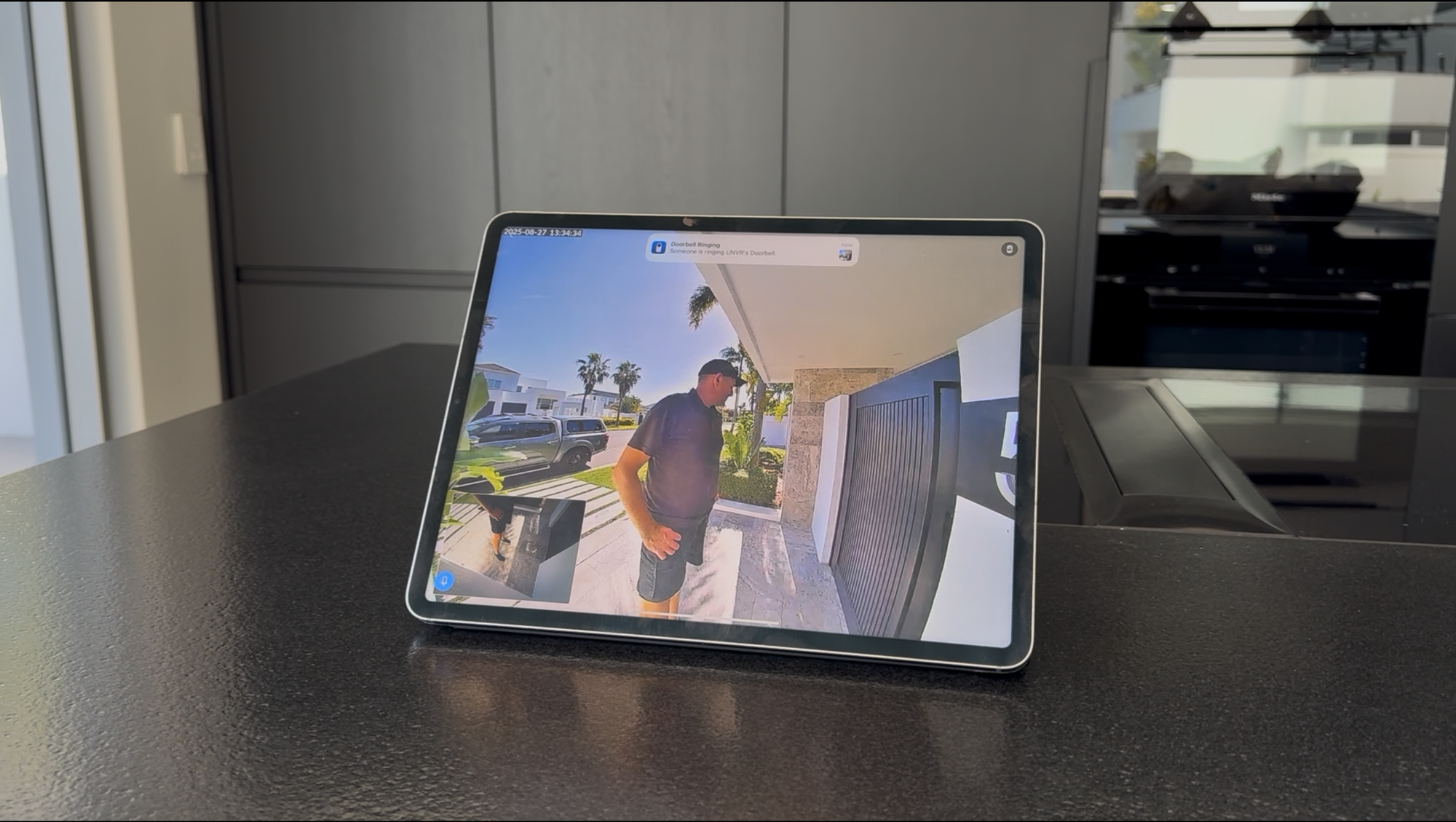
This is really helpful for figuring out which of the endless deliveries we seem to get are worth "downing tools" for and going out to retrieve mail. Equally useful is the most recent use of an AI task, recorded just today (and shared with the subject's permission):
Like packages, we seem to receive endless visitors and getting an idea of who's at the door before going anywhere near it is pretty handy. We do get video on phone (and, as you can see, iPad), but that's not necessarily always at hand, and this way the kids have an idea of who it is too. Here's the code (it's a separate automation that plays the doorbell chime):
- id: doorbell_ring_play_ai
  alias: The doorbell is ringing, use AI to describe the person
  trigger:
    platform: state
    entity_id: binary_sensor.doorbell_ring
    to: 'on'
  action:
  - service: ai_task.generate_data
    data:
      task_name: "Doorbell visitor description"
      instructions: >-
        Look at the image and briefly describe how many people you see and what they're wearing, but don't refer to "the image" in your response.
        If they're carrying something, also explain that but don't mention it if they're not.
        If you can recognise what job they might, please include this information too, but don't mention it if you don't know.
        If you can tell their gender or if they're a child, mention that too.
        Don't tell me anything you don't know, only what you do know.
        This will be broadcast inside a house so should be conversational, preferably summarised into a single sentence.
      attachments:
        media_content_id: media-source://camera/camera.doorbell
        media_content_type: image/jpeg
    response_variable: description
  - service: script.hunt_tts
    data:
      message: "{{ (description | default({})).data | default('I have no idea who is at the door') }}"
I've been gradually refining that prompt, and it's doing a pretty good job of it at the moment. Hear how the response noted his involvement in "detailing"? That's because the company logo on his shirt includes the word, and indeed, he was here to detail the cars.
This is all nerdy goodness that has blown hours of my time for what, on the surface, seems trivial. But it's by playing with technologies like this and finding unusual use cases for them that we end up building things of far greater significance. To bring it back to my opening point, IoT is starting to go well beyond the rubbish apps at the start of this post, and we'll soon be seeing genuinely useful, life-improving implementations. Bring on more AI-powered goodness for Halloween 2025!
Edit: I should have included this in the original article, but the ai_task service is using OpenAI so all processing is done in the cloud, not locally on HA. That requires and API key and payment, although I reckon that pricing is pretty reasonable (and the vast majority of those requests are from testing):

 Entrar