❌

Visualização normal

Antes de ontemStream principal
  • ✇Security Affairs
  • ENISA Warns of Cyberattacks Targeting Refrigeration Systems Across Europe Pierluigi Paganini
    ENISA warns of cyberattacks on European refrigeration systems, exposing risks to supermarkets, food supplies and industrial controls. The European Union has issued a coordinated cybersecurity warning after a series of attacks hit commercial refrigeration systems in several Member States. The incidents, which began in October and continued with a new wave on November 1 and 2, have raised concerns about the security of equipment that plays an essential role in food distribution and other criti
     

ENISA Warns of Cyberattacks Targeting Refrigeration Systems Across Europe

6 de Novembro de 2026, 06:46

ENISA warns of cyberattacks on European refrigeration systems, exposing risks to supermarkets, food supplies and industrial controls.

The European Union has issued a coordinated cybersecurity warning after a series of attacks hit commercial refrigeration systems in several Member States. The incidents, which began in October and continued with a new wave on November 1 and 2, have raised concerns about the security of equipment that plays an essential role in food distribution and other critical operations.

In a joint statement published on November 4, ENISA, the European Commission, Europol and European cybersecurity coordination bodies urged organisations to take immediate steps to protect vulnerable systems.

“Following a new wave of incidents having occurred on 1-2 November, ENISA, the European Commission (DG CNECT), Europol’s European Cybercrime Centre (EC3), the Network of the EU national computer security incident response teams (EU CSIRTs Network) and the European cyber crisis liaison organisation Network (EU- CyCLONe), advise organisations to take immediate action to mitigate exposure in the affected systems.” reads the advisory.

The warning highlights the need for “immediate action to mitigate exposure”, as attackers continue to target systems that are often overlooked in traditional cybersecurity strategies.

The attacks have already had tangible consequences. In France, hackers targeted refrigeration management systems used by hundreds of supermarkets, remotely changing their settings and forcing freezers into continuous defrost mode. Some systems reportedly reached temperatures of up to 50 degrees Celsius, destroying large quantities of fresh and frozen food. According to reports, around 300 Intermarché and Netto stores and fewer than 100 Coopérative U outlets were affected. Other retailers also reported disruptions to their cooling equipment.

The French incidents also exposed a broader problem: the security of industrial control systems that manage physical processes. These systems are increasingly connected to corporate networks and remotely accessible, but they don’t always receive the same security attention as traditional IT infrastructure.

BFMTV revealed the attackers targeted equipment from the Danish maker Danfoss that many French stores use to regulate their cold. Fresh and frozen stock was destroyed, and the Paris prosecutor says there were also fires.

Targeted devices were older Danfoss refrigeration controllers that had reached the end of their support life and no longer received security updates. Other systems were running outdated firmware. Researchers had previously identified vulnerabilities in some Danfoss controllers, including weaknesses that could allow attackers to bypass authentication. However, authorities haven’t confirmed whether those specific flaws were exploited in the attacks.

The European response reflects the fact that these incidents aren’t isolated technical problems. ENISA says national cybersecurity teams and EU crisis management authorities are sharing information and coordinating their investigations. The agencies also stress the importance of “rapid information-sharing” and a coordinated response to understand the scale of the campaign and help affected organisations.

ENISA has also published a collection of technical advisories from national CSIRTs to help organisations identify the risks and apply appropriate protective measures. These recommendations are particularly relevant to companies operating refrigeration equipment, supermarkets, food distribution networks and other facilities that depend on industrial control systems.

The statement also draws attention to existing European cybersecurity legislation. Since September 11, 2026, manufacturers of hardware and software products have been required to report severe incidents and actively exploited vulnerabilities through the Cyber Resilience Act’s Single Reporting Platform. The main cybersecurity requirements of the CRA will apply from December 11, 2027, requiring manufacturers to adopt security-by-design principles and provide security support throughout the product lifecycle, including timely vulnerability fixes.

The NIS2 Directive also requires organisations within its scope to manage cybersecurity risks affecting their operations and report significant incidents to their national CSIRT or competent authority. ENISA is supporting these efforts through its Secure by Design and Default Playbook, technical advisories and initiatives aimed at improving product security across the European market.

The refrigeration attacks are a reminder that cybersecurity failures can have consequences well beyond data theft or temporary IT outages. Manipulating an industrial controller can destroy food stocks, disrupt business operations and potentially affect services that people depend on every day. Organisations must therefore treat the security of operational technology as a core part of their risk management strategy, rather than an issue to address only after an incident.

“The main cybersecurity requirements laid down in the Cyber Resilience Act (CRA) will apply as of 11 December 2027. Manufacturers of hardware and software products (‘products with digital elements’) will be required to implement security-by-design and ensure security support during the lifecycle of such products, including the remediation of vulnerabilities without delay.” concludes the Agency’s advisory. “In addition, entities to which the NIS2 Directive (Directive (EU) 2022/2555) applies must implement measures to manage the cybersecurity risks to their operations, and report significant incidents to their national CSIRT or authority. Furthermore, ENISA is actively contributing to strengthening cybersecurity across the EU by promoting secure-by-design and secure-by-default principles in the EU market.”

Follow me on Twitter: @securityaffairs and Facebook and Mastodon

Pierluigi Paganini

(SecurityAffairs – hacking, refrigeration systems)
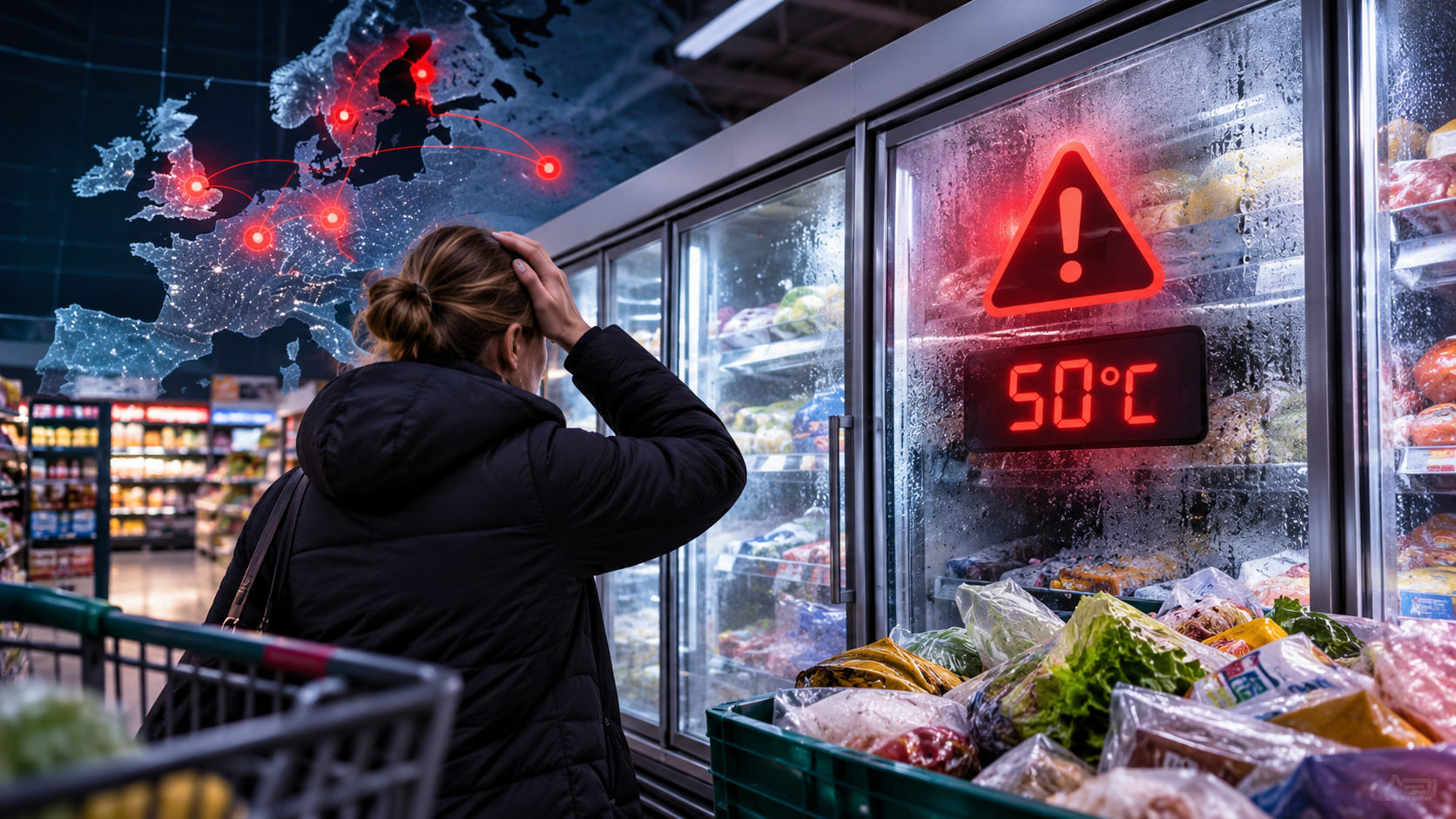
European Supermarket Freezers Set to 122°F in Suspected Hacks

3 de Novembro de 2026, 11:46

Suspected cyberattacks disrupted refrigeration across seven European countries. Learn how stores were affected and what EMEA retailers should do next.

The post European Supermarket Freezers Set to 122°F in Suspected Hacks appeared first on TechRepublic.

  • ✇Firewall Daily – The Cyber Express
  • Why Would Anyone Hack a Supermarket Freezer? Europe Is Finding Out Samiksha Jain
    Supermarkets in Sweden, Belgium, Luxembourg, Ireland and Estonia were throwing out spoiled food on Monday after their fridges and freezers stopped doing their job. In at least two cases, temperatures had been pushed to 50 degrees Celsius (122 degrees Fahrenheit). The apparent supermarket cyberattack came only weeks after attackers took control of cooling equipment in hundreds of stores across France. That raises an obvious question: why are supermarket freezers suddenly a target, and why now?
     

Why Would Anyone Hack a Supermarket Freezer? Europe Is Finding Out

3 de Novembro de 2026, 03:24

supermarket cyberattack

Supermarkets in Sweden, Belgium, Luxembourg, Ireland and Estonia were throwing out spoiled food on Monday after their fridges and freezers stopped doing their job. In at least two cases, temperatures had been pushed to 50 degrees Celsius (122 degrees Fahrenheit). The apparent supermarket cyberattack came only weeks after attackers took control of cooling equipment in hundreds of stores across France. That raises an obvious question: why are supermarket freezers suddenly a target, and why now?

How the Supermarket Cyberattack Unfolded Across Europe

Sweden saw some of the clearest signs of tampering. ICA Group spokesperson Gustaf Nilsson told the TT news agency that "a limited number" of stores were affected overnight by an incident involving refrigeration systems. One ICA Kvantum store in Sjöbo, in southern Sweden, was more direct. In a Facebook post, it said its fridges and freezers had been hacked and set to 50 degrees Celsius, and that staff were discarding affected products. The Coop chain also reported problems with fridges and freezers at six stores in central Sweden, according to TT, though it did not immediately share details. In Belgium, Delhaize said an "IT incident" had affected refrigeration in several dozen stores, mostly in Belgium and a few in neighbouring Luxembourg. "In the affected stores, the range of fresh and frozen products is temporarily somewhat limited. Our distribution centers are operating normally, and there has been no disruption to deliveries to our stores," spokesperson Sarah De Meester said. Carrefour said a cyberattack targeting refrigeration had affected 15 of its more than 700 Belgian stores, and described the impact as "extremely limited. supermarket cyberattack In Ireland, Musgrave Group said refrigeration systems in 13 SuperValu stores were affected by the "cyber incident." Chilled and frozen products were removed from sale as a precaution. By Monday afternoon, the company said the incident had been "fully resolved" and that restocking of chilled and frozen ranges was "well under way." In Estonia, refrigeration technology company Kitman Coldtech said attackers had accessed a computer controlling a client's refrigeration system and raised the temperature to 50 degrees Celsius, public broadcaster ERR reported. Chief executive Jann Mutso declined to name the store but said the attack was addressed within minutes and caused no significant damage. The Selver supermarket chain confirmed that one of its outlets was affected.

Is This Supermarket Cyberattack Linked to France?

None of the companies has publicly linked Monday's incidents to France, but the pattern is hard to miss. Last month, attackers remotely took control of refrigeration systems in hundreds of supermarkets and independent stores across France. They pushed fridge and freezer temperatures as high as 50 degrees Celsius. French TV channel BFM reported that the attackers appeared to trigger a forced defrost option, which kept units heating instead of cooling. By morning, tonnes of food had perished. Some equipment had melted, and in some stores the heat had sparked fires. Five of France's major retail groups were hit: E.Leclerc, Intermarché, Carrefour, Monoprix and Coopérative U. At least 300 Intermarché and Netto stores were affected. Coopérative U reported more than 100 stores, Carrefour said 80, and Monoprix said about 5% of its roughly 490 stores were targeted. Bruce Hallas, CEO at Re-thinking the Human Factor, who lives in France, noted on LinkedIn that current estimates sit around 400 stores. He added that some individual branches reported losses of about €250,000. Retailers say millions of euros' worth of food was spoiled, which makes food losses the most visible cost of the attack.

Why the Supermarket Cyberattack Targeted Fridges

The French case offers the strongest clue. The attack did not rely on a new exploit. It targeted ageing systems: internet-connected devices that were still online years after their manufacturer stopped supporting them. Experts say this weakness is common across retail and industry. The cyberattacks in France appeared to target old systems in particular. Timing made the damage worse. In France, the attackers struck while shops were closed, so temperatures kept rising for hours with no one in the store to notice. Monday's incidents in Sweden also happened overnight. Estonia shows the other side of the picture. There, the intrusion was caught within minutes and caused no significant damage. The difference between tonnes of ruined stock and almost no loss came down to how quickly someone noticed.

What We Still Don't Know

Key questions remain open. The reports do not say who is behind the attacks or what they want. The full scale is also unclear. Estimates for France range from around 400 to more than 500 stores, and ICA has not said how many of its Swedish stores were hit. The chains affected on Monday have not confirmed whether their equipment shares the ageing, unsupported setup seen in France. What is clear is that the same tactic has now reached at least five European countries, with fridge temperatures set to 50 degrees Celsius each time.
❌
❌