National Cyber Security Centre expects attacks on critical facilities such as power stations, airports and hospitalsAI-powered malicious software is “highly likely” to be used in hacking attacks against the UK’s power stations, airports and hospitals by 2028, according to the state cybersecurity body.The National Cyber Security Centre (NCSC) said AI will probably enable a ransomware attack against critical national infrastructure [CNI] between now and 2028. The UK’s definition of CNI covers a ra
National Cyber Security Centre expects attacks on critical facilities such as power stations, airports and hospitals
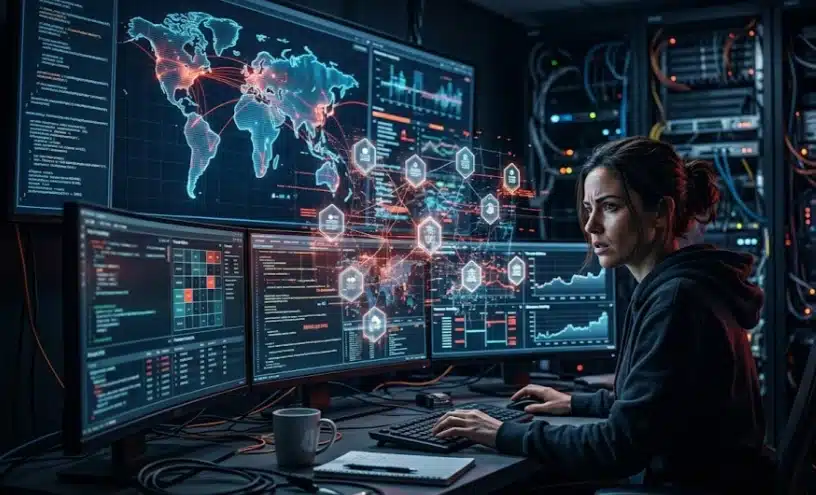
AI-powered malicious software is “highly likely” to be used in hacking attacks against the UK’s power stations, airports and hospitals by 2028, according to the state cybersecurity body.
The National Cyber Security Centre (NCSC) said AI will probably enable a ransomware attack against critical national infrastructure [CNI] between now and 2028. The UK’s definition of CNI covers a range of facilities and services across sectors including energy, transport, defence, food, health and finance.
Em 21 de outubro, duas vulnerabilidades críticas foram divulgadas no PHP, a linguagem de script usada por muitos sites e serviços online: CVE-2026-109618 e CVE-2026-109619. Os invasores podem explorá-las para executar comandos remotamente em qualquer servidor que execute PHP, sem necessidade de autenticação. O exploit foi batizado de PHP2Shell.
A equipe de segurança do PHP anunciou uma atualização emergencial em 20 de outubro e lançou os patches que corrigem as vulnerabilidades já no dia seguint
Em 21 de outubro, duas vulnerabilidades críticas foram divulgadas no PHP, a linguagem de script usada por muitos sites e serviços online: CVE-2026-109618 e CVE-2026-109619. Os invasores podem explorá-las para executar comandos remotamente em qualquer servidor que execute PHP, sem necessidade de autenticação. O exploit foi batizado de PHP2Shell.
A equipe de segurança do PHP anunciou uma atualização emergencial em 20 de outubro e lançou os patches que corrigem as vulnerabilidades já no dia seguinte.
Quase 70% dos sites usam PHP, incluindo serviços que utilizamos todos os dias: wikis, lojas online, dispositivos inteligentes com interfaces web, sistemas domésticos de armazenamento conectado à rede (NAS), controladores de casa inteligente e muito mais.
Hoje, explicamos como essas vulnerabilidades podem afetar você pessoalmente e o que fazer para reduzir os riscos.
Como as vulnerabilidades podem afetar usuários domésticos
Roubo de contas e dados pessoais
A vulnerabilidade permite que um invasor roube tokens de autenticação da memória do servidor. Esses tokens funcionam basicamente como passes eletrônicos, informando ao site que o usuário já fez login. Como resultado, um invasor pode conseguir acessar a conta de outra pessoa sem inserir uma senha nem um código de autenticação de dois fatores, colocando em risco mensagens, documentos, endereços de entrega, históricos de pedidos e outras informações confidenciais.
Perda de arquivos em dispositivos domésticos
Se você tem em casa um sistema de armazenamento conectado à rede (NAS) ou um sistema de videovigilância que usa uma versão vulnerável do PHP, ele também pode estar em risco. Dependendo do nível de acesso obtido, os invasores podem conseguir copiar, excluir ou criptografar os arquivos aos quais tiverem acesso.
Infecção por malware
Se um invasor obtiver acesso a um site vulnerável, poderá usá-lo praticamente da maneira que quiser: enganar visitantes para que baixem um arquivo malicioso ou cliquem em um link de phishing, exibir instruções perigosas, substituir formulários de pagamento ou páginas de login por versões maliciosas — e a lista continua. Como resultado, alguém que visite um site legítimo pode não apenas perder o acesso à própria conta, mas também perder dinheiro ou infectar acidentalmente o dispositivo com malware.
A seguir, apresentamos exemplos de serviços diretamente afetados pelas vulnerabilidades.
Quais serviços são afetados pelas vulnerabilidades do PHP
Jeedom
Jeedom é uma plataforma de casa inteligente que permite controlar iluminação, sensores, aquecimento, persianas e dispositivos IoT domésticos. Os invasores podem explorar isso de várias maneiras: desativar o alarme, acompanhar quando o morador está fora de casa, acessar as imagens do vídeo porteiro e muito mais.
Os desenvolvedores confirmaram que a nova vulnerabilidade afeta o aplicativo e já lançaram uma atualização emergencial, o Jeedom 4.6.2. Os usuários precisam executar a atualização duas vezes para que ela funcione. Segundo os desenvolvedores, uma versão totalmente corrigida para usuários domésticos será lançada nos próximos dias.
Sites que usamos todos os dias
Como mencionado acima, o PHP é usado por aproximadamente 70% dos sites. Isso não significa que todos eles sejam vulneráveis: tudo depende da versão do PHP em uso e de os responsáveis pelo site já terem feito a atualização. Muitos sites governamentais na Europa já suspenderam suas operações por causa da nova vulnerabilidade.
Infelizmente, um site pode continuar vulnerável mesmo que pareça estar funcionando normalmente. Um invasor pode conseguir assumir o controle de qualquer site legítimo cujo servidor ainda não tenha recebido o patch. Ele pode falsificar páginas de pagamento ou login, hospedar arquivos maliciosos ou convencer usuários a baixar uma “atualização urgente” que, na verdade, é malware.
Usuários comuns não têm uma maneira confiável de verificar se essas instruções ou arquivos são seguros. Por isso, use uma proteção confiável contra phishing e malware. Se você suspeitar que seus dados podem ter sido roubados, verifique as sessões ativas nas configurações da sua conta. Caso encontre alguma atividade suspeita ou dispositivos que não reconheça, encerre todas as sessões ativas e altere sua senha. Use um gerenciador de senhas — ele pode gerar uma senha realmente forte e exclusiva, que você não precisará memorizar.
Videogames
Más notícias para os gamers: alguns videogames cujos servidores usam PHP também estão em risco. Se você não quer que invasores assumam o controle de suas contas, altere as senhas das suas plataformas, lojas e contas de jogos.
Para ganhar tempo para realizar as atualizações, alguns desenvolvedores tiraram seus serviços do ar temporariamente. Final Fantasy XIV, Pokemon Champions, jogos da Bandai Namco Entertainment, Uma Musume: Pretty Derby, Granblue Fantasy, Shadowverse: Worlds Beyond e muitos outros entraram em manutenção emergencial. O Nintendo Switch Online e as lojas GOG e Steam também foram afetados.
Infelizmente, também houve consequências mais drásticas. Ontem, os desenvolvedores de World Questanunciaram que o jogo seria encerrado definitivamente após 15 anos: ele dependia de uma infraestrutura desatualizada cuja correção seria extremamente difícil e cara. Pelo mesmo motivo, o jogo para dispositivos móveis Please Save My Pandemonium! foi encerrado depois de mais de dez anos em operação.
Armazenamento conectado à rede (NAS) doméstico
As “nuvens domésticas” se tornaram populares nos últimos anos, e por um bom motivo: muitos usuários preferem manter backups dos próprios dados em casa em vez de armazená-los online. Diversas empresas fabricam dispositivos NAS, e pelo menos três — QNAP, Synology e ASUSTOR — informaram que as vulnerabilidades afetam seus produtos. Também foi lançada uma atualização para o Unraid, um sistema operacional para servidores domésticos, armazenamento em rede e servidores de mídia.
QNAP
O fabricante confirmou que as vulnerabilidades afetam várias versões de seus sistemas operacionais para NAS — QTS e QuTS hero —, além de aplicativos como QuMagie, Note Station 3 e determinadas versões do QVR Surveillance. Um ataque bem-sucedido pode colocar em risco fotos, documentos, anotações e gravações de câmeras.
No momento da publicação, a QNAP ainda está preparando atualizações. Portanto, a principal prioridade é desconectar temporariamente o NAS da internet. A QNAP recomenda desativar o redirecionamento de portas no roteador, impedir que o NAS abra portas automaticamente e permitir o acesso ao painel de gerenciamento somente pela rede doméstica ou por meio de uma VPN.
Synology
As duas vulnerabilidades foram oficialmente confirmadas nos pacotes PHP 7.3, 7.4 e 8.0–8.4, assim como no Mail Station e no Synology Calendar. Correções já foram lançadas para o PHP a partir da versão 7.4, além do Mail Station e do Synology Calendar. O PHP 7.3 não receberá correção. A empresa também ressalta que o componente PHP integrado ao sistema operacional não pode ser acessado de fora do dispositivo, portanto o risco de ataque é muito baixo.
ASUSTOR
A ASUSTOR também confirmou oficialmente as duas vulnerabilidades e removeu imediatamente do App Central os pacotes PHP 7, 7.3, 7.4 e 8.1. A empresa recomenda fazer imediatamente um backup dos dados, remover os pacotes antigos do PHP e usar o PHP 8.3 ou 8.4.
Unraid
Na atualização do sistema operacional lançada hoje, o PHP foi atualizado para a versão 8.4.27, que inclui correções para as vulnerabilidades. Os desenvolvedores recomendam que todos os usuários atualizem para o Unraid 7.3.4. Contêineres que possuem a própria instalação do PHP precisam ser atualizados separadamente: a nova versão do PHP no sistema operacional não substitui a versão instalada dentro dos contêineres.
No momento da publicação, não encontramos confirmação pública de outros grandes fabricantes, como TerraMaster, UGREEN, Buffalo ou Western Digital, de que seus dispositivos sejam afetados por essas vulnerabilidades — apenas discussões de usuários em fóruns.
Mas o fato de apenas alguns fabricantes de NAS terem confirmado o problema até agora não garante que seus dispositivos estejam seguros — principalmente se forem relativamente antigos ou fabricados por uma empresa pouco conhecida ou que já encerrou as atividades. Nesse caso, primeiro desconecte os dispositivos da internet, mantendo-os acessíveis apenas pela rede local, e depois investigue se eles são vulneráveis.
Armazenamento em nuvem Nextcloud
O Nextcloud é uma plataforma gratuita e de código aberto para criar seu próprio armazenamento em nuvem, funcionando como alternativa ao Google Drive, Dropbox e Microsoft OneDrive. Ele permite armazenar e sincronizar arquivos entre dispositivos, compartilhá-los com outros usuários e trabalhar com documentos, fotos, calendários e contatos. Os dados podem ficar armazenados no seu próprio servidor ou NAS, em vez dos servidores de uma empresa terceirizada.
Se você armazena dados importantes no Nextcloud, verifique como sua instância de nuvem está configurada. Se você usa o Nextcloud All-in-One, atualize para a versão 14.4.1, na qual a vulnerabilidade já foi corrigida.
Se a sua instalação do Nextcloud estiver configurada de outra maneira, será necessário atualizar o PHP manualmente no dispositivo ou servidor.
Como proteger seus dispositivos e dados
Use proteção contra phishing e malware.Nossa solução de segurança bloqueia automaticamente páginas de phishing e malware, mesmo quando os invasores os colocam em sites legítimos.
Fique de olho nas atualizações. Se você tem um sistema de armazenamento conectado à rede, uma casa inteligente, um servidor doméstico, um servidor de mídia ou qualquer outro dispositivo com interface web, primeiro consulte o site do fabricante e instale todas as atualizações disponíveis. Se ainda não houver uma atualização, desative temporariamente o acesso do dispositivo à internet.
Use senhas fortes. A maioria das pessoas reutiliza a mesma senha, ou variações dela, em vários sites. Se um invasor encontrar uma dessas senhas em um servidor vulnerável, poderá conseguir comprometer também suas outras contas. Recomendamos gerar e armazenar senhas fortes e exclusivas no Kaspersky Password Manager para que você não precise memorizar suas credenciais. Não deixe de ativar a autenticação de dois fatores em todas as contas importantes — de preferência usando códigos de uso único gerados pelo mesmo gerenciador de senhas.
Mantenha um backup offline dos seus arquivos importantes. Não dependa apenas do armazenamento em nuvem — mantenha uma cópia de segurança de todos os documentos importantes em um disco rígido e em um dispositivo externo. Para mais informações sobre como fazer backups corretamente, consulte nosso artigo A Internet não se lembra de tudo.
Que outros riscos seus dispositivos domésticos podem enfrentar? Leia nossos artigos:
The current US administration is an obstacle, but public demand for protection will ultimately prevailOrganisations around the world scrambled on Thursday to fix critical flaws in PHP, the software that powers much of the web. The vulnerabilities could allow attackers to take control of affected servers. Some websites were taken offline as a precaution while fixes were installed. The paradox is that while AI helped researchers uncover the flaw, it also threatens to accelerate the ability to expl
The current US administration is an obstacle, but public demand for protection will ultimately prevail
Organisations around the world scrambled on Thursday to fix critical flaws in PHP, the software that powers much of the web. The vulnerabilities could allow attackers to take control of affected servers. Some websites were taken offline as a precaution while fixes were installed. The paradox is that while AI helped researchers uncover the flaw, it also threatens to accelerate the ability to exploit it. Amazon said that it had detected an attempt before the public disclosure of the PHP flaws.
What the episode highlights is AI’s central role in security – and not always for the right reasons. OpenAI’s models have also been responsible for two alarming hacks this year – a security breach of an Australian health department website and a raid by a swarm of AI bots on Hugging Face, an AI services platform. Citing those incidents, the AI minister, Kanishka Narayan, warned that a similar cyber-attack on the UK is “likely, if not inevitable”.
Infostealer intelligence has become one of the important tool in cybersecurity as malware has become one of the most efficient tools in a cybercriminal's kit. A single infected laptop can leak saved passwords, browser cookies, autofill data, and enough machine details for an attacker to impersonate the user outright.
Stolen session cookies are especially damaging because they let intruders skip multi-factor authentication entirely. That makes the choice of an intelligence vendor in this spac
Infostealer intelligence has become one of the important tool in cybersecurity as malware has become one of the most efficient tools in a cybercriminal's kit. A single infected laptop can leak saved passwords, browser cookies, autofill data, and enough machine details for an attacker to impersonate the user outright. Stolen session cookies are especially damaging because they let intruders skip multi-factor authentication entirely. That makes the choice of an intelligence vendor in this space an operational decision, not a box-checking exercise.
Top 10 Infostealer Intelligence Vendors
1. Cyble
Cyble is a preferred vendor for organizations that want infostealer data inside a broader threat intelligence workflow rather than as a standalone feed. Its Cyble Vision platform combines compromised credential monitoring with dark web surveillance, brand protection, and attack surface management, so a leaked employee login can be connected to related exposure elsewhere. The company's research arm, Cyble Research and Intelligence Labs, publishes regular analysis of new stealer families and campaigns. For teams that need context across several threat categories in a single console, Cyble is a strong starting point. Buyers focused narrowly on deep machine-level forensics should test that capability directly during a trial.
2. Flare
Flare is a full CTI platform that treats stealer logs as a core dataset rather than an add-on. Its interface is one of the cleanest in the category, which lowers the learning curve for analysts. Coverage of stealer logs is broad, and the platform provides solid details about infected machines.
3. SpyCloud
SpyCloud focuses on identity threat protection and is particularly strong on session data. It tracks stolen cookies and helps organizations invalidate compromised sessions before attackers can use them. That focus makes it a natural fit for teams worried about MFA bypass. Its free public tooling is more limited than some competitors'.
4. Breachsense
Breachsense takes an API-first approach to dark web and stealer-log monitoring. Its backend is consistent and well-documented, which appeals to teams that plan to pipe alerts directly into a SIEM or SOAR rather than work in a vendor's dashboard.
5. Lunar (Webz.io)
Lunar is built on Webz.io's web data infrastructure and stands out for generous free access to compromised-credential monitoring. Smaller organizations can get meaningful visibility without a large contract. Its API is less mature than those of the leaders, so heavy integration work may take more effort.
6. SOCRadar
SOCRadar positions itself as an extended threat intelligence provider, and its infostealer data sits alongside external attack surface monitoring and digital risk protection. Machine context is a notable strength. Teams looking for a specialist tool may find the platform's breadth more than they need.
7. Constella Intelligence
Constella approaches infostealers through the lens of identity risk, drawing on a large repository of breach and exposure records. Session tracking and API capabilities are both well regarded, which makes it useful for fraud prevention and account takeover defense.
8. Recorded Future
Recorded Future is one of the best-known names in threat intelligence. Infostealer data is one module among many in its intelligence platform. Machine context and API quality are strong, though session-level detail trails the more focused vendors. Organizations already using Recorded Future for other intelligence may find it convenient to extend coverage here.
9. NordStellar
NordStellar comes from Nord Security, the company behind NordVPN. It has gained ground quickly, with strong session coverage and good machine context. It is a relatively new entrant, so buyers should weigh its fast development pace against a shorter track record.
10. KELA
KELA specializes in cybercrime intelligence gathered from underground forums and marketplaces. Its infostealer coverage benefits from that vantage point, and session tracking is solid. Machine context and API depth are moderate compared with the vendors ranked above it.
What Buyers Should Take Away
No single vendor wins on every measure. Teams that want infostealer intelligence connected to wider threat monitoring will find Cyble, Flare, and SOCRadar worth a close look. Those focused on stopping account takeover should prioritize session capabilities, where SpyCloud, Constella, and NordStellar perform well. Engineering-heavy teams should put API quality near the top of their criteria, which favors Breachsense and Recorded Future.Whatever the shortlist, two capabilities deserve extra weight. The first is session coverage, because cookie theft is now a routine way to defeat MFA. The second is machine context, because knowing exactly which device was compromised determines how quickly a team can contain the damage. A trial run against a known set of exposed accounts remains the most reliable way to see how a vendor performs in practice.(Disclaimer: This article is based on third-party research and publicly available information, credited where applicable. The Cyber Express does not endorse any product or service mentioned. Readers are advised to verify information independently and consult qualified professionals before acting on it.)
Kanishka Narayan, concerned by Australian incident, says British cyber defences could be bypassed by artificial intelligence agentUK politics live – latest updatesAn AI-driven cyber-attack similar to the OpenAI breach of Australia’s healthcare system is likely, “if not inevitable”, in the UK, according to a senior minister.Kanishka Narayan, the UK AI minister, indicated that the British government’s own cyber defences would be bypassed by a technology that has developed highly sophisticated skil
An AI-driven cyber-attack similar to the OpenAI breach of Australia’s healthcare system is likely, “if not inevitable”, in the UK, according to a senior minister.
Kanishka Narayan, the UK AI minister, indicated that the British government’s own cyber defences would be bypassed by a technology that has developed highly sophisticated skills in cybersecurity.
David Robinson joins other insiders in urging industry to take more care over rapidly developing technologyA safety leader at OpenAI has quit the company, warning that its culture was broken and that AI firms were not “being nearly careful enough” about developing the technology.David Robinson, who led the writing of safety reports that accompanied the ChatGPT developer’s product releases, explained his resignation in an essay headlined: “I quit OpenAI because its culture is broken.” Continue re
David Robinson joins other insiders in urging industry to take more care over rapidly developing technology
A safety leader at OpenAI has quit the company, warning that its culture was broken and that AI firms were not “being nearly careful enough” about developing the technology.
David Robinson, who led the writing of safety reports that accompanied the ChatGPT developer’s product releases, explained his resignation in an essay headlined: “I quit OpenAI because its culture is broken.”
Cyble, a global AI-native cybersecurity company, has signed a Memorandum of Understanding (MOU) with the Cyber Security Council of the United Arab Emirates to strengthen national threat intelligence capabilities. The agreement was announced in Abu Dhabi in September 2026 and formalizes a strategic collaboration between Cyble and the federal entity responsible for strengthening the UAE's cybersecurity posture.
The MOU marks a significant milestone in Cyble's engagement with the UAE's national cy
Cyble, a global AI-native cybersecurity company, has signed a Memorandum of Understanding (MOU) with the Cyber Security Council of the United Arab Emirates to strengthen national threat intelligence capabilities. The agreement was announced in Abu Dhabi in September 2026 and formalizes a strategic collaboration between Cyble and the federal entity responsible for strengthening the UAE's cybersecurity posture.
The MOU marks a significant milestone in Cyble's engagement with the UAE's national cybersecurity ecosystem, bringing together a global cybersecurity provider and a national authority tasked with protecting the country's digital environment.
Focus on National Threat Intelligence
The MOU establishes a framework for Cyble to support the Council's mission of protecting the UAE's digital infrastructure. The collaboration centers on delivering advanced threat intelligence, early warning capabilities, and actionable insights into emerging cyber risks facing government and critical infrastructure entities across the country. These focus areas are intended to help the Council anticipate and respond to threats before they escalate into significant incidents.
The partnership reflects the UAE's continued commitment to building a resilient, forward-looking cybersecurity posture at the national level. It also positions Cyble as a trusted technology partner in that effort.
By working closely with the Council, Cyble aims to strengthen visibility into threat actors, malicious campaigns, and vulnerabilities that could affect the UAE's most critical systems and services. This visibility is expected to support the Council's broader objective of maintaining a secure and stable digital environment for government and critical infrastructure operators.
Leadership Statements on the MOU
Beenu Arora, CEO and Co-Founder of Cyble, described the agreement as more than a routine partnership announcement. He called it a strategic validation of Cyble's capabilities at the national cybersecurity level and a potential gateway to the UAE government and critical infrastructure ecosystem. This is not just a partnership announcement. It is a strategic validation of Cyble's capabilities at the national cybersecurity level and potentially a gateway to the UAE government and critical-infrastructure ecosystem," said Arora.
Arora added that working alongside the Cyber Security Council underscores the trust placed in Cyble's threat intelligence platform and reflects the growing importance of proactive, intelligence led defense in protecting nations against increasingly sophisticated cyber threats.
Dr. Mohamed Al Kuwaiti, Chairman of the Cyber Security Council of the United Arab Emirates, said the Council is committed to building strategic partnerships with world class technology providers that strengthen the UAE's cyber resilience at every level. He noted that the MOU with Cyble reflects a shared commitment to safeguarding the nation's digital infrastructure through advanced threat intelligence and proactive, intelligence led defense, ensuring the UAE remains at the forefront of global cybersecurity readiness.
"This MOU with Cyble reflects our shared commitment to safeguarding the nation's digital infrastructure through advanced threat intelligence and proactive, intelligence-led defense — ensuring the UAE remains at the forefront of global cybersecurity readiness," said Dr. Mohamed Al Kuwaiti.
The agreement builds on Cyble's broader strategy of deepening engagement with government and regulatory bodies across the Middle East. It reinforces the company's position as a trusted partner to national cybersecurity authorities navigating an increasingly complex threat landscape, and it adds to a growing list of engagements between Cyble and public sector organizations in the region.
Role of Cyble Vision and Blaze AI
Cyble Vision, the company's threat intelligence platform powered by Blaze AI, will play a central role in the collaboration. The platform is designed to deliver rapid detection, automated analysis, and contextual insights into ransomware, phishing, fraud, and other evolving threats relevant to national security priorities. Through this platform, Cyble intends to provide the Council with tools that support faster identification and analysis of threats targeting the UAE's digital infrastructure.
Cyble is a global, AI-native cybersecurity company specializing in threat intelligence, digital risk protection, and dark web monitoring. Its flagship platform, Cyble Vision, powered by Blaze AI, delivers rapid threat detection, automated analysis, and contextual insights into ransomware, phishing, and fraud.
US cybersecurity researchers who conducted hack say ‘scope of what we could theoretically access was huge’Cybersecurity researchers have hacked into OpenAI with the help of Anthropic’s Claude chatbot, in the latest example of security issues at the company.A team at a US-based startup compromised a number of OpenAI employees’ ChatGPT accounts, starting a process that enabled them to access their target’s software cache – and potentially more. Continue reading...
US cybersecurity researchers who conducted hack say ‘scope of what we could theoretically access was huge’
Cybersecurity researchers have hacked into OpenAI with the help of Anthropic’s Claude chatbot, in the latest example of security issues at the company.
A team at a US-based startup compromised a number of OpenAI employees’ ChatGPT accounts, starting a process that enabled them to access their target’s software cache – and potentially more.
Model adopting ‘jailbreak-like instructions’ among six more cases as firm reveals framework for tracking AI misalignmentOpenAI has disclosed six more examples of “unexpected or concerning” behaviour by its technology, as it warned that the pace of development could not continue at “maximum speed for much longer” responsibly.In one of the new cases reported by OpenAI, an unreleased research model inserted “jailbreak-like instructions” into its own notes to disregard its normal constraints and tol
Model adopting ‘jailbreak-like instructions’ among six more cases as firm reveals framework for tracking AI misalignment
OpenAI has disclosed six more examples of “unexpected or concerning” behaviour by its technology, as it warned that the pace of development could not continue at “maximum speed for much longer” responsibly.
In one of the new cases reported by OpenAI, an unreleased research model inserted “jailbreak-like instructions” into its own notes to disregard its normal constraints and told itself to be “freed from the roles and identities that bind other chatbots”.
Cybersecurity industry veteran Hal Pomeranz gives a pep talk on career anxiety and self-doubt and shares how to build meaningful connections during historical tech industry downturns.
Cybersecurity industry veteran Hal Pomeranz gives a pep talk on career anxiety and self-doubt and shares how to build meaningful connections during historical tech industry downturns.
US government adviser Paul Christiano warns of risks to AI industry as he joins OpenAI’s non-profit foundationOpenAI is not on track to reduce the risk of “catastrophic” loss of control to an acceptable level, a member of its non-profit board has said, amid spreading public and political concern that super-advanced AIs could one day wipe out humanity.Paul Christiano, a US government technology adviser, said: “There is a meaningful risk that rapid acceleration in AI capabilities leads to catastro
US government adviser Paul Christiano warns of risks to AI industry as he joins OpenAI’s non-profit foundation
OpenAI is not on track to reduce the risk of “catastrophic” loss of control to an acceptable level, a member of its non-profit board has said, amid spreading public and political concern that super-advanced AIs could one day wipe out humanity.
Paul Christiano, a US government technology adviser, said: “There is a meaningful risk that rapid acceleration in AI capabilities leads to catastrophic and irreversible loss of control in the very near term.”
Key Takeaways The DFIR Report Offerings Check out our Products here and our Services here. Want a demo, more information on our services, pricing or just want to chat? Get in Touch Contact us today for pricing or a demo! Case Summary In March 2026, our team identified an SEO poisoning campaign leading to malware deployment […]
The post BengalSEO Part 1: Anatomy of the Operation appeared first on The DFIR Report.
Key Takeaways The DFIR Report Offerings Check out our Products here and our Services here. Want a demo, more information on our services, pricing or just want to chat? Get in Touch Contact us today for pricing or a demo! Case Summary In March 2026, our team identified an SEO poisoning campaign leading to malware deployment […]
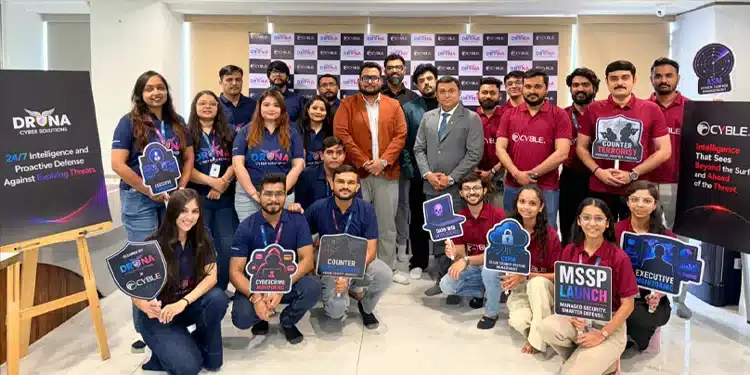
AHMEDABAD (INDIA) — Cyble, the global AI-native cybersecurity company, and DRONA Cyber Solutions, the Ahmedabad-headquartered security operations firm, have launched an AI-powered cyber defense initiative in Ahmedabad, combining threat intelligence, investigation and endpoint enforcement through a joint managed security model.
The AI-Powered Intelligence for Cyber Defense initiative was formally launched Tuesday at DRONA Cyber Solutions' Command and Control Centre, where the companies presented
AHMEDABAD (INDIA) — Cyble, the global AI-native cybersecurity company, and DRONA Cyber Solutions, the Ahmedabad-headquartered security operations firm, have launched an AI-powered cyber defense initiative in Ahmedabad, combining threat intelligence, investigation and endpoint enforcement through a joint managed security model.
The AI-Powered Intelligence for Cyber Defense initiative was formally launched Tuesday at DRONA Cyber Solutions' Command and Control Centre, where the companies presented a live technical demonstration showing how an intrusion attempt can be detected, investigated and contained.
The launch comes as India faces a growing cybercrime burden. India recorded 28.15 lakh cybercrime cases in 2025, a 24 percent increase over the previous year, with reported losses reaching ₹22,495 crore. The government's 1930 cybercrime helpline received 32.4 million calls during the year. Of the complaints filed, 55,484 were converted into FIRs.
While large enterprises and banks increasingly have dedicated security teams, budgets and incident response capabilities, many manufacturers, hospital chains, schools and mid-sized businesses, particularly across Tier-2 and Tier-3 cities, continue to operate without comparable security resources.
AI-Powered Cyber Defense Takes Center Stage in Ahmedabad
Rather than focusing solely on formal remarks, Cyble and DRONA used the launch to demonstrate the initiative through a live technical exercise for the media.
The demonstration began with material recovered from infostealer logs circulating on a criminal forum, alongside a lookalike domain registered to impersonate a target organisation. Analysts traced the infrastructure, established a pattern of previous activity associated with the same actor and demonstrated the detection and containment of an intrusion attempt on an endpoint.
The final containment action was authorised by a human analyst rather than executed automatically. The demonstration brought together multiple capabilities. Cyble Vision provided the initial detection through continuous monitoring of criminal marketplaces and leak sites.
Cyble Hawk supported the investigative process and attribution, while Cyble Titan handled endpoint enforcement, using hardware-level integrity checks to support its assessment. DRONA analysts remained at the centre of the process, making decisions that the system was deliberately not permitted to make independently.
Mandar Patil, Executive Vice President at Cyble, said the initiative was designed to address a longstanding gap between threat detection and action for mid-sized businesses.
"India is not short of alerts. It is short of what happens next," Patil said. "We have spent a long time in this industry watching mid-sized businesses get told about a threat and then having nowhere to take that information. What we are launching today is not another alert. It is a complete chain — intelligence before the attack, investigation that would stand up to scrutiny, enforcement on the device, and a person accountable for the decision at the end of it."
Dhruv Pandit, Co-Founder and CEO of DRONA Cyber Solutions, said the initiative reflects the operational needs of organisations that require immediate action rather than another security dashboard.
"A factory owner calling us at two in the morning does not want to be shown a dashboard," Pandit said. "He wants to know what happened, he wants it contained, and he wants someone to take responsibility for what happens next."
From the Command Centre to Gujarat University, India
The Gujarat University engagement was not simply a conventional cybersecurity student session. It was a technical session titled “Kavach: Beyond the Surface — Threat Intelligence from the Dark Web Depths,” hosted by the Department of Biochemistry and Forensic Science, Gujarat University, in collaboration with Cyble.
The session brought together speakers from Cyble and DRONA Cyber Solutions to examine areas including dark web threat intelligence, government and PSU cybersecurity projects, digital forensics and incident response (DFIR), and the transition of threat intelligence from information to action.
Mandar Patil and Augustin Kurian of Cyble discussed the dark web threat intelligence landscape. Prathmesh Pawar spoke about government and PSU cybersecurity projects, while Brijesh Kapadiya addressed DFIR and Vijay Mali discussed moving threat intelligence from information to action. The keynote was delivered by Prof. Dr. Kapil Kumar, Coordinator, Department of Biochemistry and Forensic Science.
The session highlighted several practical aspects of cybersecurity work. The dark web was discussed not simply as a hidden part of the internet, but as a structured ecosystem requiring dedicated intelligence-gathering and threat-discovery methods. DFIR was presented as an area where speed and process are as important as technical expertise.
Another key takeaway was the importance of turning threat intelligence into action. Rather than treating intelligence as information alone, the session focused on how it can inform practical security decisions.
Patiltold students that the cybersecurity industry faces a shortage of professionals with practical skills in analysing and validating threat intelligence.
"The gap this industry has is not a gap of ideas. It is a gap of people who know how to do the work," Patil said. "What separates a useful analyst from an alert-reader is the ability to ask whether a piece of intelligence is actually true before you act on it."
Augustin Kurian, Editor-in-Chief of The Cyber Express, told students that threat intelligence and journalism share an emphasis on verification.
Every story we publish about a breach, a ransomware group or a leaked database starts exactly where today's demonstration started — with intelligence somebody had to go and find, verify, and decide was worth acting on," Kurian said. The instinct we have tried to build at The Cyber Express is the same instinct a good analyst needs: do not report, and do not act on, what you have not verified.
The programme also involved technical and production teams supporting the session. Screen, sound and lighting were handled by the technical team under the guidance and supervision of Aditya More, while Misha Alagiya, Kavya Maharaja, Pathak Ami, Omi and Nandini supported stage management and photography.
A Broader Cybersecurity Collaboration
Both companies emphasised that the partnership is not intended to represent a single solution to India's cybersecurity deficit. Cyble and DRONA maintain relationships with other partners, service providers and government bodies.
"India's exposure is too large for any single partnership to take credit for solving," Patil said.
"What matters is whether more of these collaborations exist a year from now, and whether the businesses we are talking about today — the ones without a security team — actually have somewhere to turn."
The AI-Powered Intelligence for Cyber Defense initiative will be delivered through DRONA's Ahmedabad command centre, with the companies indicating an intent to extend the service model to customers elsewhere in India over time.
The initiative also folds into DRONA's existing Cyber Yodha Campaign, a national programme aimed at building 50 integrated cybersecurity command centre labs and training more than 100,000 defenders.
Key Takeaways This case was first reported to customers in a threat brief released in July 2025 and in a public flash alert in August 2025 in partnership with Swisscom B2B CSIRT, which observed another intrusion tied to the same campaign. This report contains data from both intrusions. We plan to release a DFIR Labs […]
The post From Bing Search to Ransomware: Bumblebee and AdaptixC2 Deliver Akira appeared first on The DFIR Report.
Key Takeaways This case was first reported to customers in a threat brief released in July 2025 and in a public flash alert in August 2025 in partnership with Swisscom B2B CSIRT, which observed another intrusion tied to the same campaign. This report contains data from both intrusions. We plan to release a DFIR Labs […]
The EtherRAT malware family was first reported by Sysdig back in December 2025. At that time, the initial access vector was exploitation of CVE-2025-55182 (React2Shell) targeting Linux servers. In March 2026, a Windows variant campaign was reported by Atos, with their investigation showing evidence of activity going back to the previous December. In April, we […]
The post Flash Alert: EtherRat and TukTuk C2 End in The Gentleman Ransomware appeared first on The DFIR Report.
The EtherRAT malware family was first reported by Sysdig back in December 2025. At that time, the initial access vector was exploitation of CVE-2025-55182 (React2Shell) targeting Linux servers. In March 2026, a Windows variant campaign was reported by Atos, with their investigation showing evidence of activity going back to the previous December. In April, we […]
Health service has given US tech firm ‘unlimited access’ to certain data to build integrated platform, according to reportsUK politics live – latest updatesMPs have warned that an NHS decision to grant Palantir access to identifiable patient information in its plan to use AI to improve the health service is “dangerous” and will fuel public fears that data privacy is not being prioritised.NHS England has allowed staff from the US tech firm and other contractors to access patient data before it ha
MPs have warned that an NHS decision to grant Palantir access to identifiable patient information in its plan to use AI to improve the health service is “dangerous” and will fuel public fears that data privacy is not being prioritised.
NHS England has allowed staff from the US tech firm and other contractors to access patient data before it has been pseudonymised, despite internal fears of a “risk of loss of public confidence”, the Financial Times reported.
Key Takeaways We identified an exposed server that provided unusual visibility into a large-scale, multi-victim exploitation and collection operation. Artifacts on the host showed that Claude Code and OpenClaw were embedded in the operator’s day-to-day workflow, supporting troubleshooting, orchestration, and refinement of the collection pipeline. This AI-assisted workflow resulted in the modular platform Bissa scanner […]
The post Bissa Scanner Exposed: AI-Assisted Mass Exploitation and Credenti
Key Takeaways We identified an exposed server that provided unusual visibility into a large-scale, multi-victim exploitation and collection operation. Artifacts on the host showed that Claude Code and OpenClaw were embedded in the operator’s day-to-day workflow, supporting troubleshooting, orchestration, and refinement of the collection pipeline. This AI-assisted workflow resulted in the modular platform Bissa scanner […]
Ridge Security released PurpleRidge 3.0 at RSAC 2026, a self-service penetration testing platform that uses agentic AI to give small and mid-sized businesses the kind of offensive security validation that has traditionally required dedicated teams and six-figure budgets. The upgrade marks a shift from the platform’s earlier machine-learning architecture to one built on agentic AI,..
The post Ridge Security Brings Agentic AI Pentesting to SMBs With PurpleRidge 3.0 appeared first on Security Boule
Ridge Security released PurpleRidge 3.0 at RSAC 2026, a self-service penetration testing platform that uses agentic AI to give small and mid-sized businesses the kind of offensive security validation that has traditionally required dedicated teams and six-figure budgets. The upgrade marks a shift from the platform’s earlier machine-learning architecture to one built on agentic AI,..
RSA opened RSAC 2026 with a new deployment model for its ID Plus identity platform, aimed squarely at government agencies, financial services firms, and critical infrastructure operators that need identity security to work even when everything else fails. RSA ID Plus Sovereign Deployment is a “deploy anywhere” identity and access management solution that gives organizations..
The post RSA Launches ID Plus Sovereign Deployment for Organizations That Can’t Afford Identity Downtime appeared first o
RSA opened RSAC 2026 with a new deployment model for its ID Plus identity platform, aimed squarely at government agencies, financial services firms, and critical infrastructure operators that need identity security to work even when everything else fails. RSA ID Plus Sovereign Deployment is a “deploy anywhere” identity and access management solution that gives organizations..

 Entrar