Visualização de leitura

SonicWall Warns of Two Actively Exploited SMA1000 Zero-Days, One Rated Maximum Severity
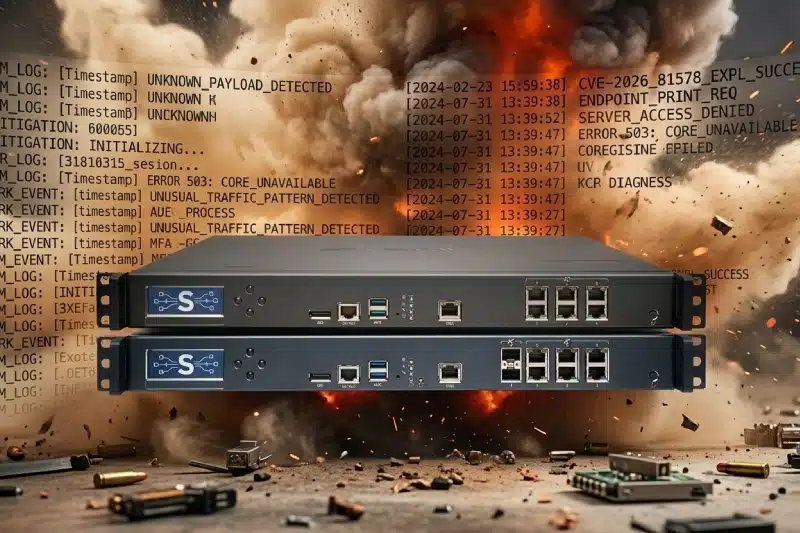
Graphic showing SonicWall SMA1000 devices, CVE-2026-83548, the maximum-severity SonicWall SMA1000 pre-authentication vulnerability

SonicWall disclosed this week that attackers are chaining two previously unknown vulnerabilities in its SMA1000 secure access appliances to run commands on unpatched devices, and urged customers to install an emergency hotfix.

The more severe flaw, CVE-2026-83548, is a pre-authentication server-side request forgery weakness in the appliance's Appliance Work Place interface, rated 10.0 on the CVSS scale. It lets a remote attacker with no credentials reach sensitive internal functionality. The second, CVE-2026-83549, is an operating-system command injection bug in the Appliance Management Console rated 7.8; on its own it requires administrative authentication, but paired with the SSRF flaw it yields remote code execution.

The vendor said it found both issues internally and then observed them being used together in live attacks. SonicWall has not published indicators of compromise or described the attackers.

Affected products are the SMA1000 series 6210, 7210 and 8200v, in both hardware and virtual form. Fixed builds are 12.4.3-03526 and later, and 12.5.0-02952 and later. SonicWall firewalls running SSL-VPN and the separate SMA 100 line are not affected.

Remediation guidance goes beyond patching. SonicWall told customers to contact its support organization to review appliances for signs of intrusion and, where compromise is suspected, to re-image or redeploy the device, rotate all credentials and reset TOTP tokens — an acknowledgment that one-time-password seeds stored on a breached appliance survive a software update. The company said customers should move to the hotfix release as quickly as possible.

Shadowserver Foundation scanning has tracked more than 400 internet-exposed SMA1000 appliances, though an unknown share of those are already patched. The small install base belies the risk profile. These are remote-access gateways that sit at the network edge and hold credentials for the environments behind them.

The disclosure extends a difficult run for the product line. Attackers exploited a separate pair of SMA1000 zero-days in July 2026, tracked as CVE-2026-15409 and CVE-2026-15410, to deploy custom malware; CISA later confirmed ransomware operators were abusing that access.

Read: CISA Adds SonicWall SMA1000 Vulnerabilities to KEV Catalog Following Active Exploitation

Another zero-day surfaced in December 2025. Seventeen SonicWall vulnerabilities across the company's product families currently sit in CISA's Known Exploited Vulnerabilities catalog. Edge appliances from SonicWall, Ivanti, Citrix and Fortinet have collectively become the preferred initial-access route for ransomware affiliates and espionage crews, because they are internet-facing by design and rarely instrumented with endpoint detection.

Miraak Post Exploitation Framework Adopts Database C2

The novel Miraak post exploitation framework uses PostgreSQL databases for stealthy C2 operations. Discover how this modular malware avoids HTTP beacons.

Related Posts:

The post Miraak Post Exploitation Framework Adopts Database C2 appeared first on Daily CyberSecurity.

Microsoft Reverses Its Own ‘Exploitation’ Warning on Entra ID Flaw CVE-2026-69836

CVE-2026-69836, Entra ID, Microsoft

Microsoft disclosed and fixed a maximum-severity remote code execution vulnerability in Entra ID, its cloud identity platform, on August 20, then quietly reversed the advisory's exploitation status a day later - leaving enterprise defenders without a clear account of whether the flaw was ever used in attacks.

The vulnerability, tracked as CVE-2026-69836, carries a CVSS score of 10.0, the highest possible rating. It stems from unsafe deserialization of untrusted data, a class of defect catalogued as CWE-502, in which an application reconstructs objects from attacker-supplied input without validating it first. Microsoft's advisory said the weakness "allows an unauthorized attacker to execute code over a network." No authentication, elevated privileges or user interaction were required.

Entra ID, formerly Azure Active Directory, is the authentication layer for Microsoft 365, Azure and thousands of federated third-party applications. Code execution inside that service sits upstream of nearly every access decision an affected tenant makes, which is why identity infrastructure flaws draw scrutiny disproportionate to their raw CVE count.

Because Entra ID is a hosted service rather than on-premises software, Microsoft was able to remediate it server-side. The company said the issue is fully mitigated and that customers need take no additional action - an unusual advantage of cloud delivery, and one that removes the patch-deployment race that normally follows a perfect-10 disclosure. Microsoft credited principal security engineer Robert Fitzpatrick with finding the bug.

"Exploited: Yes"...Sorry "No"

The disclosure itself became the story. Microsoft's Security Response Center bulletin initially carried an "Exploited: Yes" designation, prompting coverage on August 21 describing the flaw as under active attack.

Read our earlier coverage: Microsoft Says CVSS 10.0 Entra ID Code Execution Flaw Was Exploited Before Server-Side Fix

Microsoft flipped that field to "No" the same day, for reasons unknown, and offered no explanation for the change. In a follow-up statement the company said it had identified and fixed the issue and published the CVE for greater transparency.

The reversal leaves several questions open. Microsoft has not said how it detected the flaw, whether any tenant data was accessed, over what period the service was vulnerable, or what evidence supported either exploitation determination.

The episode intersects with a live regulatory question. The Securities and Exchange Commission's cyber disclosure rules require public companies to report material incidents on Form 8-K, and the Cybersecurity and Infrastructure Security Agency's reporting regime is still being finalized. Neither framework clearly addresses how a downstream customer should assess materiality when the only party holding the facts is the cloud provider.

The CVE was itself issued under MSRC's June 2024 policy of publishing CVEs for cloud service vulnerabilities that require no customer action - a transparency commitment made in the wake of criticism over the 2023 Storm-0558 intrusion. This episode is an early test of how much visibility that policy actually delivers.

Also read: Microsoft Security Lapse Exposed Sensitive Credentials and Internal Resources of Employees

Cisco Warns of Active Exploitation of Catalyst SD-WAN Flaw With No Patch Available

CVE-2026-20245

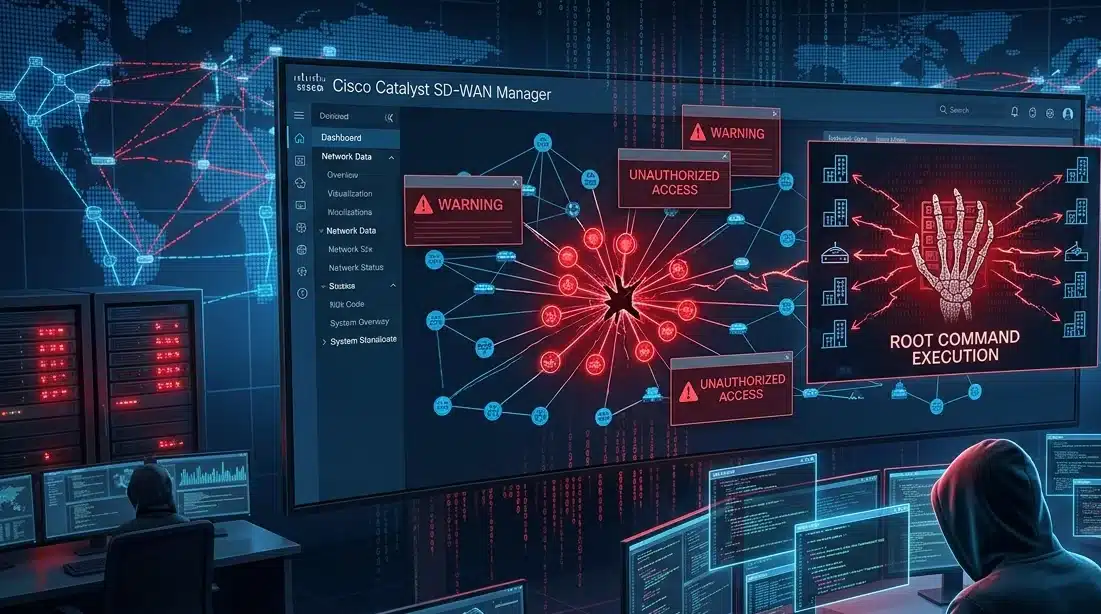
Cisco has issued an urgent warning that a high-severity vulnerability in its Catalyst SD-WAN Manager platform is being actively exploited in the wild—and no patch exists yet. CVE-2026-20245 allows authenticated attackers with netadmin privileges to execute arbitrary commands as root, placing wide-area network infrastructure at severe risk.
The disclosure is particularly alarming because Catalyst SD-WAN Manager controls and orchestrates SD-WAN deployments across enterprise and carrier networks. A successful exploit could allow attackers to push malicious configurations to thousands of edge devices simultaneously.

Understanding CVE-2026-20245

CVE-2026-20245 exists in the command-line interface (CLI) of Cisco Catalyst SD-WAN Manager, resulting from insufficient validation of user-supplied input when processing file arguments. The vulnerability carries a CVSS base score of 7.8 (High), with a vector of CVSS:3.1/AV:L/AC:L/PR:L/UI:N/S:U/C:H/I:H/A:H.
To exploit the flaw, an attacker must have netadmin-level credentials on the affected system. While this limits the immediate attack surface, Cisco noted in its advisory that attackers are chaining CVE-2026-20245 with two related vulnerabilities—CVE-2026-20182 and CVE-2026-20127—to achieve initial access before escalating to root execution. This chaining technique effectively reduces the privilege prerequisite in practice.
An attacker supplies a specially crafted file to the Catalyst SD-WAN Manager CLI. Insufficient input validation allows the crafted file to execute arbitrary OS-level commands with root privileges. Cisco confirmed "limited cases" in which exploitation resulted in configuration changes being pushed to downstream edge devices—a significant escalation of potential impact.

No Patch Available — Cisco Plans Future Release

Unlike most critical vulnerability advisories, Cisco has disclosed CVE-2026-20245 without an accompanying patch. The company stated it plans to address the vulnerability in a future software release but did not provide a specific timeline.
This leaves organisations with only partial mitigations at their disposal. Cisco advises restricting CLI access to only trusted users and applying strict controls on file upload functionality within SD-WAN Manager administrative interfaces.
A vulnerability without a patch and with confirmed in-the-wild exploitation is a worst-case scenario for network defenders," noted a network security practitioner familiar with SD-WAN infrastructure. Every day without a patch is another day of active risk.

Why It Matters

SD-WAN infrastructure occupies a privileged position in modern enterprise networks, providing policy control over traffic routing across branches, data centres, and cloud environments. Compromising the management plane—which CVE-2026-20245 enables—gives attackers visibility into traffic flows, the ability to redirect connectivity, and the power to inject backdoor configurations across all managed edges.
The impact extends beyond a single organisation. Managed service providers (MSPs) and telecommunications carriers that use Cisco Catalyst SD-WAN to manage multiple customer environments face the prospect of cross-tenant compromise if their management platform is breached.

Mitigation Steps

  • Immediately audit who holds netadmin credentials on Catalyst SD-WAN Manager deployments and revoke unnecessary access.
  • Enable multi-factor authentication (MFA) for all SD-WAN Manager administrative accounts to reduce credential-theft risk.
  • Restrict file upload functionality within the SD-WAN Manager interface to the absolute minimum required for operations.
  • Monitor SD-WAN Manager CLI logs for unusual file upload activity or unexpected root-level command executions.
  • Apply network segmentation to isolate the SD-WAN management plane from general enterprise networks.
  • Subscribe to Cisco Security Advisories (tools.cisco.com/security/center) and apply the patch immediately upon release.
  • Conduct a configuration audit of all managed edge devices to identify any unauthorized configuration pushes already applied.

Ransomware and Geopolitical Tensions Drive Cyber Threats Across META in Q1 2026

META Threat Landscape Report

Cyber threats across the Middle East, Turkey, and Africa (META) continued to intensify in the first quarter of 2026, with ransomware groups, hacktivist campaigns, and large-scale data breaches shaping a volatile threat landscape for organizations across the region. According to Cyble’s latest META Threat Landscape Report, ransomware remained one of the most disruptive threats during Q1 2026, with attacks targeting industries ranging from government and construction to banking and energy. The findings also point to a growing overlap between financially motivated cybercrime and geopolitically driven cyber activity.

Ransomware Attacks Continue to Rise

Researchers observed 116 ransomware incidents publicly disclosed across the META region during the first three months of 2026. Turkey recorded the highest number of attacks, followed by the UAE, while countries including South Africa and Egypt also faced significant ransomware activity. Among the most active threat groups was Gentlemen, which accounted for a notable share of observed attacks during the quarter. Other ransomware operators including INC Ransom, Qilin, Tengu, and LockBit also remained highly active. Construction emerged as the most targeted industry, followed closely by government agencies, law enforcement organizations, financial services, and energy companies. These sectors often manage sensitive operations and critical infrastructure, making them attractive targets for cybercriminals seeking maximum disruption and financial leverage. The Cyble report also highlights how ransomware operations are becoming increasingly organized, with many groups continuing to operate under ransomware-as-a-service models that allow affiliates to scale attacks rapidly.

Data Breaches Expose Sensitive Information

Beyond ransomware, underground forums remained flooded with stolen databases and claims of unauthorized access linked to organizations across the region. Threat actors allegedly offered access to sensitive data connected to sectors such as hospitality, healthcare, sports, influencer marketing, and energy. In one case, a threat actor claimed to possess terabytes of information linked to Qatar’s energy sector, including credentials and cloud backups. Government and public sector organizations also remained frequent targets, reflecting growing concerns around espionage, politically motivated operations, and long-term intelligence gathering.

Vulnerability Exploitation Driving Intrusions

The report notes that attackers continue to move quickly after new vulnerabilities become public. Several high-severity flaws disclosed during the quarter were rapidly added to the CISA Known Exploited Vulnerabilities catalog, reinforcing how threat actors are actively monitoring enterprise technologies for exploitable weaknesses. Enterprise management systems, security tools, and internet-facing applications remained among the most targeted technologies. One of the more notable cases involved a critical Ivanti Endpoint Manager Mobile vulnerability that could allow unauthenticated remote code execution. Researchers say such flaws continue to attract threat actors because they provide a pathway into enterprise environments without requiring stolen credentials.

META Threat Landscape Report Highlights Geopolitical Tensions

Hacktivist activity also remained elevated throughout Q1 2026. Researchers tracked hundreds of posts related to data leaks, website defacements, and distributed denial-of-service attacks affecting thousands of domains across the META region. Much of this activity appeared linked to ongoing geopolitical tensions, particularly conflicts involving Israel, Iran, and neighboring regions. Threat actors increasingly used cyber operations not just for disruption, but also to amplify political messaging and influence public narratives online. The report suggests that organizations operating in politically sensitive regions may continue to face elevated cyber risks throughout the year.

A Growing Need for Proactive Cyber Defense

The findings from Q1 2026 reflect a broader shift in the threat landscape, where cyberattacks are becoming faster, more coordinated, and more difficult to contain. For organizations across the META region, visibility into emerging threats, exposed assets, ransomware activity, and vulnerability exploitation is becoming increasingly important as attackers continue to evolve their tactics. The full META Threat Landscape Report offers a closer look at the threat groups, industries, and attack trends shaping the region’s cybersecurity environment in early 2026. Readers interested in ransomware trends, regional targeting patterns, and emerging cyber risks can explore the Cyble report for deeper insights into how the threat landscape is evolving.

Vulnerability Exploitation Overtakes Stolen Credentials in AI-Driven Cyberattacks

Vulnerability Exploitation

Vulnerability exploitation has officially become the leading cause of cybersecurity breaches for the first time in nearly two decades, according to the latest Data Breach Investigations Report (DBIR) released by Verizon. The findings highlight how artificial intelligence is rapidly reshaping the threat landscape, enabling attackers to weaponize software flaws faster than security teams can respond. The 19th edition of the DBIR revealed that 31% of all recorded breaches now begin with vulnerability exploitation, surpassing stolen credentials as the most common attack entry point. Researchers warned that AI-driven automation is dramatically reducing the time between vulnerability disclosure and active exploitation, shrinking defensive response windows from months to just hours. The report paints a broader picture of an evolving cybersecurity environment where AI-powered attacks, mobile-focused social engineering, shadow AI usage, and supply chain compromises are all expanding organizational risk.

Vulnerability Exploitation Surpasses Stolen Credentials

For years, stolen usernames and passwords remained the primary method used by cybercriminals to breach corporate systems. However, the latest DBIR findings show a major shift in attacker behavior. Researchers found that threat actors are increasingly prioritizing vulnerability exploitation because AI tools can quickly identify weak systems, automate reconnaissance, and accelerate exploit development. According to the report, attackers are now moving much faster after vulnerabilities become public. Organizations that previously had weeks or months to deploy security patches are now facing exploitation attempts within hours of disclosure. Security experts said this trend is creating significant pressure on security operations teams already struggling to manage patching priorities across complex environments. Daniel Lawson, Senior Vice President of Global Solutions at Verizon Business, said the growing speed of cyberattacks reinforces the importance of strong cybersecurity fundamentals. “While the velocity of cyber threats driven by AI and faster vulnerability exploitation is increasing, the foundational principles of security and strong risk management remain the most effective defense,” Lawson said.

AI Reshaping the Cyber Threat Landscape

The report repeatedly emphasized the growing influence of artificial intelligence on cybercrime operations. Researchers noted that AI is not only helping defenders identify vulnerabilities more efficiently, but also allowing attackers to automate exploitation at unprecedented scale and speed. The DBIR warned that AI-assisted attack workflows are creating what researchers described as a “capacity crisis” for many security teams. Organizations are being forced to process increasing numbers of vulnerabilities while facing shorter remediation timelines. The report recommended that enterprises:
  • Strengthen patch management programs
  • Reduce overall attack surface exposure
  • Integrate AI into secure-by-design frameworks
  • Expand defense-in-depth strategies
  • Improve visibility into internet-facing assets
Researchers also highlighted rapid growth in AI bot activity across the internet. According to the report, AI bot crawler traffic is increasing by 21% month over month, while human-driven traffic growth remains almost flat at just 0.3%.

Mobile Social Engineering Attacks Rising

Beyond vulnerability exploitation, the DBIR identified major changes in social engineering tactics. As users become more cautious about traditional phishing emails, attackers are increasingly shifting toward mobile-based scams involving text messages and voice calls. The report found that conversational and interactive mobile attacks now achieve success rates roughly 40% higher than traditional email phishing campaigns. Researchers said attackers are leveraging:
  • Fake SMS messages
  • Voice phishing calls
  • Messaging app impersonation
  • Mobile account verification scams
Cybersecurity analysts warned that mobile devices continue to represent a major blind spot for many organizations because security monitoring on smartphones often remains less mature than on corporate desktops and servers.

Shadow AI Creates New Data Leakage Risks

Another major concern highlighted in the DBIR involves the rapid rise of “shadow AI” usage inside organizations. The term refers to employees using unapproved artificial intelligence tools without formal oversight from security or compliance teams. According to Verizon’s findings, frequent use of AI platforms by employees surged from 15% to 45% within a single year. Researchers said shadow AI has now become the third most common cause of non-malicious data leakage incidents. Security experts warned that employees may unknowingly expose:
  • Confidential corporate data
  • Customer information
  • Source code
  • Internal business documents
  • Sensitive communications
The report stressed that organizations need clearer governance policies around AI usage as adoption continues accelerating across workplaces.

Supply Chain Breaches Continue to Grow

The DBIR also documented a significant rise in third-party and supply chain compromises. Researchers found that breaches involving external vendors increased by 60% compared to previous reporting periods. Third-party involvement now accounts for 48% of all recorded breaches. As organizations rely more heavily on cloud providers, software vendors, and outsourced services, attackers are increasingly targeting weaker links within interconnected supply chains. The report concluded that the cybersecurity industry is entering a period where resilience, rapid response capabilities, and basic security hygiene remain critical despite rapid advances in AI-powered attack techniques. While artificial intelligence is changing the speed and scale of cyber threats, researchers stressed that organizations must continue focusing on foundational cybersecurity practices to defend against the growing wave of vulnerability exploitation and AI-driven attacks.

Dark Web Article Contest Offers $10,000 for Exploit Writing on TierOne Forum

dark web article contest

In an unusual development within the underground cyber world, a dark web article contest has been announced on a well-known dark web forum, TierOne forum. The initiative is backed by a $10,000 prize pool. The contest places a spotlight on technical writing centered around vulnerability exploitation, offering insight into how knowledge is shared and rewarded in these spaces.  Traditionally, dark web forums have been linked to illicit activities such as trading stolen data, coordinating ransomware attacks, and distributing malware. However, this contest introduces a different dynamic, one that mirrors legitimate cybersecurity ecosystems, where researchers document findings and share exploit techniques.  

The Dark Web Article Contest Overview and Prize Structure 

According to an official announcement shared by an administrator on the forum, the post states: “Всем привет! Мы рады сообщить T1 erone [КОНКУРС СТАТЕЙ #1 - 2026]. Победители конкурса получают призы: 1 место 5.000$, 2 место - 3.000$, 3 место - 2.000$, [Призовой фонд 10.000$]. Прием статей начинается 13.04.2026 и заканчивается 14.05.2026.”   The announcement indicates that the dark web article contest will run from April 13, 2026, to May 14, 2026, with prize amounts set at $5,000 for first place, $3,000 for second place, and $2,000 for third place, making up a total prize pool of $10,000, reportedly sponsored by the ransomware group cry0. 

Topics Focused on Vulnerability Exploitation 

The contest invites submissions covering a wide range of advanced topics related to vulnerability exploitation with real-world applicability. These include: 
  • Remote Code Execution (RCE) through deserialization flaws in React and Node.js frameworks. 
  • Command injection attacks in APIs and backend systems. 
  • Insecure Direct Object Reference (IDOR) vulnerabilities in SaaS platforms. 
  • Server-Side Template Injection (SSTI) in modern templating engines. 
  • Exploitation of insecure deserialization in PHP and Java. 
  • Client-side RCE via Markdown or Office file rendering. 
  • Firmware attacks targeting routers and cameras. 
  • Privilege escalation techniques in RouterOS and similar systems. 
  • Exploitation methods for products from Cisco, MikroTik, Oracle, and Ubiquiti. 
  • Zero-day discovery in browser components like WebGPU and Blink. 
  • AI-assisted vulnerability discovery and reverse engineering. 
  • Techniques for bypassing AV and EDR security systems. 
  • Exploitation of Remote Procedure Call (RPC) mechanisms. 
For context, vulnerabilities such as RCE, IDOR, and SSTI allow attackers to execute arbitrary code or access restricted data, while firmware attacks enable persistent control over hardware devices. Similarly, AV/EDR bypass techniques are designed to evade detection by modern security solutions. 

Participation Rules and Requirements 

The TierOne forum has outlined strict guidelines for participants. Articles must be published within the forum’s designated section and include a specific prefix to qualify: 
  • Submissions must be posted under the Articles section with the prefix “[Contest]”. 
  • A link to the article must be shared in the contest thread with a participation note. 
  • All users are eligible, regardless of registration date or activity level. 
  • The use of multiple accounts is strictly prohibited. 
In addition, the contest enforces content quality standards: 
  • Articles must be original and based on the author’s own experience. 
  • Copy-pasted or reposted material is not allowed. 
  • Submissions should comprehensively cover the chosen topic, including tools, techniques, and methodologies. 
  • Minimum length requirement is at least one A4 page. 
  • Excessive filler content is discouraged. 
  • Including video demonstrations may improve chances of winning. 

A Glimpse into Dark Web Knowledge Sharing 

While the existence of such a contest may seem surprising, it notes a bigger trend within dark web forums. Beyond illegal marketplaces and data trading, these platforms also function as hubs for technical exchange, where members document and refine vulnerability exploitation techniques. In many ways, the structure resembles legitimate bug bounty programs and penetration testing workflows, where cybersecurity professionals publish detailed reports on discovered flaws. The key difference lies in the intent and environment in which this knowledge is applied. It is important to note that this article does not endorse participation in such activities. Instead, it aims to shed light on how these underground ecosystems operate. The TierOne forum contest highlights that even within the dark web, there are organized efforts to produce structured, experience-based technical content, albeit in a context that raises ethical and legal concerns.
❌