Visualização de leitura

The EU AI Act just gave you a breach notification clock you didn’t know about

Most security teams already have a breach clock memorized. GDPR gives you 72 hours. SEC rules give public companies four business days after determining an incident is material. Those numbers get built into incident response runbooks, tabletop exercises and escalation paths, because the clock starts the moment the team confirms something happened.

Article 73 of the EU AI Act adds a third clock, and in my work advising enterprise clients on AI governance, I have yet to see one with a runbook for it.

The obligation took effect on August 2, and it did so alone. The EU’s Digital Omnibus on AI, in force since late July, pushed the rest of the Act’s high-risk enforcement wave — classification, conformity assessment, technical documentation — back to December 2027. Article 73 was not part of that reprieve, though the extra time elsewhere is worth using to get ready. It requires providers of high-risk AI systems to report serious incidents to national market surveillance authorities within 15 days by default, 10 days if a death is involved and just 2 days for incidents the Act classifies as widespread or as a serious disruption to critical infrastructure. Coverage of Article 73 so far has treated it as a legal filing requirement, handled through the same channel as a data protection filing. That framing misses what the obligation is. It is an incident response deadline, and it runs on a different trigger than the breach clocks most security teams already know.

A client once asked me, almost as an aside, whether their customer-facing AI tool would trigger a reporting duty if it simply gave someone bad information rather than getting hacked. At the time, the honest answer was probably not, under any framework they were tracking. Article 73 changes that, and most organizations building or buying AI for the EU market have not caught up yet.

What counts as a trigger here is broader than most teams expect

GDPR’s 72-hour clock starts when you become aware of a personal data breach. That is a bounded question. Did data leave the environment? Was it accessed without authorization? Article 73 asks something harder. The European Commission’s draft guidance takes the position that an indirect causal link between an AI system and a downstream harm is enough to trigger the reporting duty. Their example is a loan denial that traces back to a flawed AI credit assessment. The AI system does not cause harm the moment it produces the assessment, only once a human acts on it and denies the loan. The fundamental rights category requires the infringement to interfere with Charter-protected rights at scale, which is why the Commission illustrates that threshold with patterns, a recruitment tool that discriminates systematically or a credit system that categorically rejects an entire neighborhood. Under the Commission’s reading, once a pattern like that exists, the clock starts when the provider becomes aware of it, not when the system generated the output.

Here’s a plainer version of that pattern. A public benefits agency uses an AI system to match applicants against its records. A flaw in the matching logic occasionally conflates applicants, and over several weeks it happens to a run of different people, each flagged as already receiving the same benefit elsewhere and suspended. Nobody catches the pattern at the time, because each flag looks unremarkable on its own. Applicants don’t find out until their payments stop arriving, weeks after the first mismatch. The system never malfunctioned in any way security tooling would catch. It just produced bad matches until people started missing payments.

That is a different kind of determination than “Did we get breached?” It requires tracing a causal chain from a model output through a downstream decision to an actual harm, then judging how confident you are in that link before you are required to report it. Most incident response teams have a well-practiced instinct for confirming unauthorized access, but few have one for confirming that an AI system caused a harm that surfaced elsewhere in the business, days or weeks later. I have watched security leaders confidently answer, “Were we breached?” in minutes, then go quiet when asked, “Did our AI system cause this?” because nobody owns that second question yet.

Why this does not fit into an existing IR playbook

Most incident response programs are built around a single moment: detection. Something trips an alert, a SOC analyst confirms it and the clock starts. Article 73 incidents will not look like that at all. The AI system that produced the flawed output may show no signs of compromise. Nothing gets flagged by a SIEM. The first sign might come from a customer complaint, an internal audit finding or a pattern a compliance analyst notices months after the AI system made the decision.

That means the “becoming aware” clause in Article 73 is doing real work, and most organizations have not decided who is responsible for noticing. Is it the team monitoring the AI system’s technical performance, the business unit acting on its outputs, or whoever eventually hears the complaint? Under Article 73, the clock starts when any of them establishes, or suspects, the causal link, and 15 days is not a long runway if the first internal conversation about “is this our incident” does not happen until day six or seven. I have seen governance structures where a business unit head, a model risk team and security each assumed someone else owned this judgment call. In practice nobody did, and that gap is where a 15-day clock burns down to five.

Some security teams are already mapping agent governance to a maturity model, arguing that oversight must scale with autonomy, moving from agent identities that are barely inventoried toward ones that are bounded, monitored and revocable in real time. Article 73 raises the stakes on that model considerably. The less a human reviews an AI system’s output before it reaches a customer, the more likely a downstream harm surfaces without anyone watching for it in real time, which is exactly the blind spot Article 73 is designed to close.

What needs to change

A few additions belong in an existing incident response program before this becomes a live problem instead of a paper requirement.

First, a defined owner for the causal link determination. Data breach response usually has a clear owner: security confirms the technical facts, legal makes the materiality call. Article 73 needs an equivalent split: Someone technical enough to trace an AI system’s output to a downstream decision and someone with authority to make the reporting call once that link looks plausible rather than certain. In practice, I recommend naming this owner in the incident response plan, not leaving it to be sorted out during the first real incident, when the clock is already running.

Second, a lower bar for opening an investigation. If GDPR taught teams to investigate the moment unauthorized access is suspected, Article 73 requires investigating the moment a downstream harm is suspected to trace back to an AI system, when the system looks normal to security monitoring. That means feeding business unit complaints and customer escalations into the same triage process that currently only starts from technical alerts.

Third, a documented decision log for the indirect link judgment call. Given how broadly the Commission has defined what counts as reportable, organizations will make defensible calls not to report many ambiguous situations. Those decisions need to be documented with the reasoning behind them, the way a security team documents a false positive call, because a regulator revisiting that judgment months later will expect to see how it was made rather than take the outcome on faith.

Fourth, controls built into the AI system, not bolted on after the fact. A defined owner and a lower investigation bar help catch a problem once it surfaces, but neither reduces how often a flawed output reaches a customer first. Scoped credentials, tool allowlists and pre-action approval hooks cut down on how many incidents exist to report.

The AI Act’s high-risk obligations have absorbed most of the attention this year, because conformity assessments and technical documentation are heavy lifts with long lead times. Article 73 looks lighter by comparison, a reporting duty rather than a certification process. It is not lighter. It asks security and compliance teams to build a new kind of judgment into their incident response programs, on a clock as tight as anything GDPR or the SEC have required. Treat the deferral on the rest of the high-risk package as what it actually is, extra runway to build that judgment and name its owner, because the conformity paperwork still gives you months and Article 73 still gives you days.

Federal judge rules for Anthropic in Pentagon dispute, nullifies government supply chain risk designation

The Trump Administration’s decision to punish Anthropic for its stance forbidding Claude’s use in domestic surveillance and autonomous weapons by identifying it as a supply chain risk to national security was “arbitrary and capricious,” a federal judge ruled on Thursday.

US District Court Judge Rita Lin said federal authorities had no legitimate reason to tell companies with government contracts that they couldn’t work with Anthropic.

“The undisputed record shows that the challenged actions constituted unlawful retaliation in violation of the First Amendment and that Anthropic was denied the pre-deprivation process required under the Fifth Amendment,” Lin said in her ruling, calling the designation “arbitrary and capricious.”

She stressed that the government action seemed punitive, and was not based on legal and national security risks.

The government’s words and deeds “confirm that the challenged actions were based on a desire to make a public example out of Anthropic for its ‘arrogance’ in criticizing the government, not based on any articulable basis to believe that Anthropic would actually sabotage its model,” Lin wrote.

She pointed out, “a few days before the challenged actions began, Secretary Hegseth proposed applying the Defense Production Act to Anthropic, which would mean the company was essential to national security rather than a threat to it. Even now, the government is discussing collaboration with Anthropic on its new model, Mythos, in an array of sensitive contexts. None of that is consistent with a genuine fear that Anthropic is a saboteur [that] would poison its software to harm national security.”

The judge added that the stated government fears made no sense, noting that the usage policy applicable to Pentagon work is a purely contractual limit. “Anthropic is incapable of enforcing it technologically, and does not have direct visibility into how DoW [Department of War] uses its model,” she pointed out.

“Nothing in the Administrative Record describes, even at a high level, what technological means would give rise to the so-called ‘backdoors’ or could otherwise allow Anthropic to ‘disable’ or affect Claude during a DoW operation,” the judge wrote. “Anthropic has submitted unrebutted evidence that it lacks any technological means to access or control deployed models.”

Lawyers, consultants, and analysts who looked at the decision were confident that the case would be appealed, and that it will end up in the US Supreme Court. 

Alan Webber, program VP for national security, defense, and intelligence at IDC, said that Lin’s ruling “was that the label [supply chain risk] was retaliation for Anthropic refusing to loosen safety guardrails DoD [Department of Defense, aka the Department of War] wanted lifted, dressed up in national security language. Put another way, a government customer tried to use a supply chain risk designation as leverage in a contract dispute over model behavior and application, and not because of an actual vulnerability.”

Implications for CIOs

Webber said the implications for CIO strategy are concerning.

“If a government CIO is relying on a vendor’s contractual guardrails, this case says those commitments can potentially become the trigger for exactly the kind of blacklisting that risk registers are supposed to protect against,” Webber said, noting that anyone who paused Claude usage or froze a subcontract because of the DoD mandate has a legal basis to resume the initiatives. “But obviously that doesn’t mean they will, or even should, as this will be appealed.”

He added that competing AI vendors have been using the government action as a sales tool, and with this ruling, the argument that Anthropic is a designated supply chain risk ”just got weaker, which could lead to contract award disputes.”

Consultant Brian Levine, executive director of FormerGov, recommended that CIOs do what they should have always done: Evaluate all products based solely on their merits. 

“CIOs should focus on using the frontier models that they believe make the most sense for their business, considering factors such as effectiveness, cost, security, safety, and confidentiality,” he said. “Anthropic and the other large frontier models each have too much market share to make retaliation for their use realistic, and the administration seems to have already moved on from this particular battle.”

Justin Greis, CEO of consulting firm Acceligence, agreed that this case has profound implications for CIOs and their AI decisions. 

What the federal judge did was reject the leap from a commercial and policy disagreement to an expansive supply chain risk designation without a sufficiently grounded technical rationale or process, Greis pointed out.

“The court found that Anthropic did not have the ability to access, alter, or shut down models once deployed in the government environment, and that the government ultimately conceded Anthropic’s technology was not inherently riskier than other comparable black box AI models,” he said.

“I think that distinction matters enormously for CIOs and CISOs,” he stressed. “As AI becomes part of the operating fabric of an enterprise, ‘We don’t trust the vendor’ cannot become a substitute for a defined risk model. Organizations need to be able to articulate what the actual technical risk is, how it manifests, what controls exist, and whether the response is proportional to that risk.”

“That becomes particularly important with AI,” he added, “because people can easily conflate disagreements over model behavior, usage policies, ethics, contractual restrictions, and cybersecurity into one amorphous category called ‘AI risk.’”

Original government edict still problematic

Mark Rasch, a former federal prosecutor who is now general counsel at Unit221B, a threat intel and security consulting company, said he was surprised by how quickly government attorneys surrendered on this case. 

“One of the things that struck me is that the government appears to have abandoned any rationale it might have had for its decision about Anthropic,” he said. The government “came back with all these reasons, but then they abandoned them all when they had to prove them.”

But, he said, the government instruction to all government contractors to also shun Anthropic was problematic. 

“It’s one thing for the government to say ‘We’re not going to do business with you.’ It’s quite another thing to say ‘Nobody we do business with can do business with you either,’” Rasch said. “This says that if you are disfavored by the administration, they’re not just going to blacklist you and say they won’t do business with you. They’re going to say that nobody can do business with you.”

Supreme Court arguments will likely be very different

Rasch predicted that the legal arguments in the Supreme Court will be quite different, and will potentially sidestep the lack of evidence.

“In the Supreme Court, [the government’s] biggest argument will not be that ‘We are right that it is a supply chain risk,’ but that, ‘Whether we’re right or wrong is irrelevant. We get to make that [supply chain risk designation] decision, not the court.’”

That would mean that the Supreme Court Justices could avoid exploring whether the government made the right decision, and instead focus on whether the government has the unlimited right to decide who is a national security risk.

This article originally appeared on Computerworld.

Why every country wants a data center — and most will lose

Every decade or so, a new form of infrastructure becomes the thing that separates economies that compound from economies that stagnate. In the 20th century, it was ports, highways and power grids. Right now, it’s compute. And governments around the world are scrambling to get a piece of it — offering land, tax breaks and power guarantees to a small group of American and Chinese technology companies — without fully understanding what they’re trading away or what they’re actually competing for.

I’ve spent my career designing and building these facilities. Here’s what I see.

What a country is really signing up for

When a government announces it’s attracting a hyperscale data center, the press release usually mentions jobs, digital transformation and becoming a regional tech hub. What it rarely mentions is what the country is giving up and what it will need to sustain the facility for the next 20 years.

A large data center — say, 100 megawatts — needs roughly the same power as a small city. It needs that power reliably, 24 hours a day, with redundancy built in so that a grid fluctuation doesn’t take down critical systems. It needs water, often millions of gallons per month, for cooling. It needs fiber connectivity with multiple diverse routes. It needs a construction workforce that understands raised floor systems, precision cooling, high-voltage electrical distribution and fire suppression. And it needs all of this before a single server is installed.

Most developing countries don’t have this. Not yet. And the gap between “we want a data center” and “we can sustain one” is exactly where deals fall apart, projects stall or facilities get built and then underperform.

The countries pulling away

The United States has roughly 4,000 data center facilities, more than any other country by a wide margin. That number is growing faster than most of the rest of the world combined. The reasons are structural: deregulated power markets in key states, established fiber networks, deep capital markets, a legal system investors trust and decades of operational knowledge in the industry.

China is building at comparable speed but inside a closed system. Its facilities serve Chinese companies under strict data localization rules. For global capital allocators, China is largely a separate game.

The EU is growing but constrained by its own regulations. GDPR and data sovereignty laws mean European data often must stay in Europe, which is creating demand — but also creating friction. Energy costs, permitting timelines and land constraints in Western Europe are pushing investment toward Nordic countries (cheap hydropower, natural cooling) and Central and Eastern Europe (lower costs, EU membership).

Singapore, Australia and Japan are the established APAC anchors. They have the rule of law, the connectivity and the enterprise demand. But Singapore banned new data center construction outright from 2019 to 2022 over resource concerns, and even its 2025 reopening came with strict sustainability quotas that leave hundreds of megawatts of demand unmet. The pressure is redistributing. 

Where developing countries actually stand

India is the clearest breakout story. It has real enterprise demand, a growing hyperscaler presence and government policy actively supporting data center investment — including a 20-year tax holiday for foreign cloud operators announced in the 2026 budget. The challenges are grid reliability and water scarcity in key metro areas — solvable problems, but they require serious infrastructure investment alongside the facilities themselves.

Southeast Asia — Indonesia, Malaysia, Thailand, Vietnam — is attracting genuine capital. Malaysia in particular has moved fast, drawing more than $24 billion in approved data center investment and positioning Johor (just across the border from Singapore) as an overflow market. The risk is that these countries are capturing construction investment and some jobs, but the operational expertise and long-term value is still flowing out.

Sub-Saharan Africa and Latin America are earlier. There is demand — mobile internet penetration is driving real data needs — but the power infrastructure in most markets isn’t ready for hyperscale. What’s viable today is edge computing: smaller, distributed facilities closer to users that don’t require the same power density. This is where early investors are looking.

What developing countries are getting wrong in negotiations

When a government announces it has attracted a hyperscale data center, the story is always the same: jobs, digital transformation, becoming a regional tech hub. What’s missing from that story is the question of who controls what.

A data center is not an economic anchor the way a factory is. A factory transfers skills, builds supplier ecosystems and creates middle-class employment at scale. A data center run by a foreign hyperscaler employs a small local facilities team, sends all operational decision-making offshore and keeps every dollar of the value it generates inside its own balance sheet. The host country gets the electricity bill and the water consumption. The technology company gets the asset.

What countries are actually competing for is not a building. It’s the right to be inside the infrastructure layer that runs the global economy for the next 30 years. That requires a completely different negotiation — one about data rights, local engineering capacity, grid co-investment and long-term operational control. Almost nobody is having that negotiation. They’re haggling over tax rates instead.

The governments that are negotiating well understand this. They’re demanding local data processing requirements, commitments to train and hire local engineers, co-investment in grid upgrades and technology transfer agreements. They’re treating compute infrastructure the way Gulf states treated oil infrastructure in the 1970s — the leverage point is during the negotiation, not after.

The governments that are not doing this will look back in 20 years and realize they subsidized someone else’s infrastructure empire.

What this means if you’re allocating capital

The investment thesis in this space is not “find the next Singapore.” That window has closed. The actual opportunity is in the infrastructure gaps.

Power is the binding constraint everywhere. Companies that can solve reliable, cheap, clean power for data centers — whether through grid modernization, on-site generation or small modular nuclear reactors — are sitting on the scarcest input in the industry. This is where I’d be looking.

Second-tier markets are real. The “big four” US markets — Northern Virginia, Silicon Valley, Dallas, Chicago — are land-constrained, power-constrained and increasingly expensive. Capital is moving to the Midwest, the Southwest and internationally to markets with available power and land. The facilities being built in these markets today are the critical infrastructure of the next decade.

The countries that get the policy right — stable regulation, reliable power, fair contract enforcement — will attract disproportionate capital. The ones that don’t will keep making announcements and watching projects stall.

In the 19th century, the countries that owned the ports controlled trade. In the 20th century, the countries that controlled oil set the terms for industrial growth. Compute is next. The physical layer of AI infrastructure — the land, the power, the cooling, the fiber — is being locked up right now, mostly by a handful of private companies operating across borders with very little accountability to the countries hosting them.

For capital allocators, the opportunity is real and the window is open but not indefinitely. Power solutions, second-tier markets and policy-stable emerging economies are where the uncaptured value sits.

For governments, the window to negotiate from a position of strength is also now — before the facilities are built and the leverage is gone. Once the servers are in the ground, the terms are set.

The countries and investors who understand this in 2025 will look very smart in 2040. The ones who are still thinking about data centers as a real estate play will not.

Britain Gains Access to Ukraine’s ‘Goldmine’ of Battlefield AI Data

UK Ukraine AI partnership

The UK Ukraine AI partnership will give Britain access to Ukraine’s Avengers AI Labs, bringing together Ukrainian battlefield experience, operational data and engineering expertise with the UK’s AI ecosystem. The agreement, signed by President Volodymyr Zelenskyy and Prime Minister Andy Burnham in Ukraine, will focus initially on defence and national security. Under the partnership, British innovators and researchers will gain access to data and insights collected across the battlefield. The UK government described Avengers AI Labs as a “goldmine of battlefield data,” offering researchers access to real-world operational information used to train AI models.

How Avengers AI Labs Uses Battlefield Data

The data is collected through thousands of daylight cameras and infrared sensors deployed across the battlefield. The systems capture images and information involving tanks, artillery, air defence systems, infantry and aerial targets, including Shahed drones and reconnaissance UAVs. The data is used to train AI models to recognize and classify battlefield objects. Ukraine’s Defense Ministry has previously said that systems trained using the Avengers Labs platform analyze more than 100,000 drone video feeds each month and help identify about 70% of enemy targets in real time. The UK’s access to the platform is intended to allow British startups, researchers and engineers to work with operational insights and develop technologies based on real-world datasets. The partnership will initially bring together engineers, academics, businesses and military operational expertise from both countries to address national security challenges. The two countries will also explore additional platforms for future collaboration.

UK Ukraine AI Partnership Test New Defence Technology

Several pilot projects involving British startups have already been rolled out as part of the agreement. The companies named are Bristol-based Sintela, Oxford’s Mind Foundry and London’s Skyral. The first technology is due to be deployed at a UK defence site to help protect bases from protestors and hostile actors seeking intelligence. The project combines Ukrainian data with UK technology and turns buried fibre-optic cables into an AI-enabled sensor. The technology could also be used in other critical locations, including airports, prisons, railways and energy plants, according to the information released about the partnership. A second project will examine the development of next-generation low-power AI chips designed for future drones, robotics and autonomous systems. If successful, the technology could support machines designed to operate for longer, respond faster and function in environments where conventional systems face limitations.

AI Sovereignty and Defence Innovation

The agreement forms part of the UK and Ukraine’s 100 Year Partnership and expands cooperation between the two countries in AI and defence technology. The UK will provide access to its universities, researchers, technology companies and AI ecosystem, while Ukraine will provide access to operational experience and datasets generated during the war. Minister for AI Kanishka Narayan described the arrangement as AI sovereignty in practice, focused on developing national capabilities and turning frontline experience into technologies for military and critical infrastructure protection. The partnership also follows the UK government’s announcement that defence firm MBDA can release classified information on UK components for the long-range SCALP missile to establish local assembly lines in Ukraine. The broader agreement is intended to combine Ukrainian battlefield data with British scientific, engineering and technology expertise, with the initial focus remaining on defence, national security and the development of future defence technology.

Apple Challenges UK Demand For Access To Encrypted iCloud Data

Apple is challenging a UK order reportedly requiring access to encrypted iCloud data, reviving a wider dispute over privacy, security, and lawful access.

The post Apple Challenges UK Demand For Access To Encrypted iCloud Data appeared first on TechRepublic.

How AI helps the US Senate Federal Credit Union better manage risk

The United States Senate Federal Credit Union (USSFCU) is a nonprofit financial cooperative that provides traditional retail banking services to entities within the US government, such as the Senate and the Supreme Court.At present, the credit union’s headcount stands at nearly 150 people, managing around $1.6 billion in assets.

A few years back, when it started to expand its use of technology, cybersecurity was a key focus area, but the financial institution faced two major challenges in boosting security as it scaled. The USSFCU was carrying significant technical debt, and there were holes in the organization’s defenses.

“We found gaps where we needed more systems, tools, and people, and then there were instances where we had technologies in place that weren’t being used effectively,” says Mark Fournier, CIO at the credit union. “We weren’t buying a bunch of shiny new things without thinking about it. We were actually quite prescriptive every year, performing a number of different exercises to identify our shortcomings and then finding the right solution to fill the gaps. But over time this adds up. It was clear we couldn’t keep hiring more people and bringing in new solutions.”

The USSFCU needed a more efficient way to bring everything together and make its cyber estate easier to manage. For Fournier and his team, vulnerability management was the hardest hill to climb since they have to deal with about 100 new possible breach points every day.

“When we looked at the problem more closely, the impact of these vulnerabilities was far greater than we realized,” he says. “Not only because of the volume but because of a lack of clear understanding around the potential impact of each one across the broader business.”

Improved risk management

The USSFCU didn’t lack security tools, however. In fact, it had plenty, from scanners and endpoint tools to asset records, tickets, and internal documentation. But each tool saw only a slice of the environment, so there was little to no context. This made it difficult for the security team to separate real business risk from noise.

So for each new vulnerability, the security team had to run a manual investigation, which could take days. And while doing this, they still had to triage the next wave of findings. The organization, therefore, needed a way to know what mattered, why it mattered, who owned it, and whether taking the time to make a fix actually reduced risk. The USSFCU also required a solution to be deployed entirely in-house, leveraging its internal inferences.

Working with Tonic Security, the organization deployed an exposure management solution that pulls together data from different tools and data sources to create a clear picture of business risk. “One of the key functions of the platform is the ability to ingest anything,” says Fournier. “Breaking down silos between disparate systems is essential to unlock valuable contextual information.”

For the USSFCU, transparency and explainability are critical, he adds. This tool uses an AI data fabric to extract context from structured and unstructured data. This context drives prioritization, ensuring the right owner gets the right evidence, not a vague ticket. And once the work is done, the solution checks whether the exposure was reduced.

Because the AI is grounded in the customer’s own environment, it isn’t just guessing from a generic risk model. It reasons over USSFCU’s assets, owners, services, tickets, controls, and business context. But it isn’t using this data to train external models.

Describing one particular incident, Fournier explains that shortly after the initial deployment, various stakeholders met to assess progress. “We thought we were smart because we found an error with the platform,” he says. “The solution had labelled an asset as internet exposed, which we knew was incorrect.” But after a review and lengthy discussion, they were proven wrong. “Almost immediately, the value of bringing this information together became apparent.”

A template for bigger things

Before this solution, a high-severity finding could send an analyst on a lengthy scavenger hunt because of data located in so many different places. They’d check the scanner, asset inventory, tickets, and maybe even ask around to find the owner. But now they can find the asset, the owner, the business relevance, the exposure path, and the recommended action in one place. The solution has reduced the time taken to resolve a vulnerability by 75%. And with a clearer idea of what is and isn’t important, and what adds practical value, the number of incidents someone needs to respond to has reduced from about 100 a month to just 10.

Sharing his lessons from the project, Fournier says one needs to keep an open mind because the problem you think you have is often very different from the one you actually have. “This project has also been an eye-opener around how people can collaborate and operate across different areas of the business,” he says. “When I talk to my peers, they regularly highlight the disconnect between different departments and business functions. But with a project like this, when you’re crossing traditional boundaries, you need to have open lines of communication to succeed.”

The blueprint for innovation: 3 ways regulatory readiness is a competitive advantage

Too often, brands treat compliance as a downstream exercise. Teams build products, launch new capabilities and then tack on controls afterward.

The pace of technology evolution and adoption has never been faster, and regulatory bodies are doing their best to keep up. For brands, that means they’re standing on shifting ground. They need  to modernize legacy infrastructure, adopt AI responsibly, deliver better customer experiences, maintain trust and navigate increasingly complex regulatory requirements – all at once.

I’ve witnessed this shift firsthand in payments. Fraudsters adapt faster than regulatory cycles, and customer expectations continue to rise regardless of where legislation stands. In one of the most highly regulated sectors, waiting for new mandates to arrive is a losing strategy.

The brands that lead have embraced regulatory readiness as an advantage to better inform technology architecture, operating models and partner strategy.

If I had one piece of advice for CIOs, it would be to treat compliance as part of the blueprint instead of the punch list at the end of a build. With a controls-by-design approach, a collaborative culture, and the right partnerships, any brand can embrace change with confidence and resilience.

3 ways regulatory readiness is a competitive advantage

1. Build a solid foundation

One of the most impactful strategies I’ve seen is the shift from compliance-after-the-fact to controls-by-design.

Forward-thinking financial institutions increasingly treat regulatory frameworks like DORA and the EU AI Act as design principles rather than external requirements. Instead of asking how to retrofit compliance into modern systems, they are asking how thoughtful governance can shape modernization from day one.

For example, the EU AI Act mandates transparency for high-risk AI systems like automated credit scoring. Instead of burying disclosures in the fine print, a smart bank builds an interactive feature directly into its digital banking app, which allows customers to simulate how adjustments will improve their approval odds. By doing so, they transform a regulatory obligation into innovation that builds trust.

After all, when an AI-driven decision fails, customers do not blame the algorithm. They blame the brand. The controls-by-design approach helps ensure those risks are anticipated and managed before they reach the customer.

This feels particularly urgent in the payments industry, where FedNow and stablecoins allow funds to move instantly – and irrevocably. As settlement windows shrink from days to seconds, brands need to embed capabilities like behavioral monitoring, AI-driven fraud detection, account verification and orchestration functionality directly into the transaction architecture itself – as part of the initial design – to identify and mitigate fraudulent activity as it evolves. Regulation, like Nacha’s new rules around ACH fraud, reinforces that direction, but for trust-focused brands, the work begins long before the rules change.

Each of these examples points to the same trend. Brands that embrace a controls-by-design philosophy are constructing technology architectures that are ready to adapt long before the inspectors arrive on site.

2. Align your crew

Technology architecture is only half of the story. The other half is how well your crew works together to bring that architecture to life.

For years, compliance lived in its own lane. Governance acted like a checkpoint. When technology evolved in predictable cycles, that made sense. But today, the brands making the greatest progress build shared accountability into their operating models so they can adapt to regulation in a more coordinated, consistent way.

After all, a construction project is only successful when electricians, plumbers, framers and masons coordinate every step and trust the work happening around them.

The same is true in the enterprise. Instead of focusing on separate priorities, product, engineering, operations, risk and compliance must align around shared outcomes, with greater transparency into how decisions are made, ongoing oversight and continuous feedback loops between teams. As a result, regulatory readiness becomes part of how the business works every day, change becomes easier and the broader benefits across the organization become clear.

In many organizations, I’ve observed how harmony between teams not only increases compliance but also fosters greater customer-centric innovation. When teams operate from a shared, real-time view of the customer, every interaction becomes more connected. Customers experience one brand, not a collection of disconnected teams.

That spirit of collaboration becomes even more important as AI moves deeper into customer-facing and operational workflows. AI innovation has outpaced AI regulation, which makes it even more important for brands to take the initiative to ensure proper controls are in place.

We are already seeing this play out with SR 26-2, the Federal Reserve’s latest guidance on AI for banks. While it establishes important expectations around model risk management, it leaves room for institutions to determine how agentic AI and generative AI should be governed. Instead of treating this as carte blanche, banking leaders should see this as an opportunity to build trust. By leading the way with governed, responsible GenAI and agentic AI operating models, banks can win customers’ trust long before regulation requires it.

No single department should shoulder that responsibility alone. Product teams understand how AI shapes the customer experience. Engineering teams understand how models are built, deployed and monitored. Risk and compliance teams understand governance expectations, while operations teams see how those decisions play out every day. Effective AI governance and innovation emerge when those perspectives come together around a shared view of accountability.

3. Expand your toolkit

Innovation in today’s regulatory environment requires more tools than you may have in your own toolkit.

Technology is more complex, fraud threats evolve faster and AI capabilities require significant investment and ongoing tuning. At the same time, brands have to stay ahead of customer expectations, market dynamics and evolving risk requirements.

It just doesn’t make sense to build every capability yourself when trust, resilience, compliance and speed-to-value are such integral parts of the equation. 

Throughout my career, I’ve seen success with a build-buy-partner approach that brings together the right tools for the right project.

This is particularly important in highly regulated environments, where implementation risk can be as significant as technical risk. That’s where proven results – especially through partnership – might take precedence over experimentation.

I went through this consideration just recently. CSG Forte partnered with IBM to launch PaymentsProtection.ai.

We set out to provide customers with AI-powered fraud detection and financial risk management without spending years recreating capabilities that already existed. By partnering with IBM, we were able to access additional specialty tools: AI capabilities, real-time monitoring, financial risk management expertise and external validation in one of the most sensitive areas of payments. The collaboration reduced fraud losses by 50-70%, lowered false positives and offered customers a smoother, safer experience.

In a market that never stands still, the right tools give brands the freedom to build with greater precision, adaptability and purpose.

Raise the standard

Successful brands are changing how they think about regulation. Instead of looking at it as a burden or a constraint on innovation, they are treating it like a key factor in architectural decisions, crew alignment and partner strategy.

That approach increasingly separates the brands raising the standard from those struggling to keep up. It changes the role regulation plays within the business. It infuses trust, governance and adaptability into a brand’s foundation.

Those capabilities make it easier to scale new builds, navigate future change and innovate with confidence as markets, customer expectations and regulatory requirements continue to charge ahead.

The brands shaping the future won’t be scrambling to reinforce the structure after the cracks appear. They’ll be the ones that construct resilience from the very beginning.

This article is published as part of the Foundry Expert Contributor Network.
Want to join?

Talos: Attackers Refine Phishing Playbook To Target Critical Infrastructure

Phishing played a part in more than half of all incident response engagements undertaken by Talos, Cisco's threat research organization, during the second quarter of 2026, with healthcare organizations and manufacturing firms among the top targets.

The post Talos: Attackers Refine Phishing Playbook To Target Critical Infrastructure appeared first on The Security Ledger with Paul F. Roberts.

Edge Devices Are Your Cyber Underbelly. Here’s Why.

In this episode of the podcast, host Paul Roberts interviews Nishawn Smagh of the firm GreyNoise Intelligence about the findings of their State of the Edge report, an analysis of GreyNoise data on risks stemming from compromised edge devices such as broadband routers, VPN gateways, smart home devices and more. Shawn and Paul talk about how attackers are turning edge devices into their favorite entry point, and strategies for organizations to counter the growing risk of compromised edge devices.

The post Edge Devices Are Your Cyber Underbelly. Here’s Why. appeared first on The Security Ledger with Paul F. Roberts.

💾

Residential Proxy Risks: Understanding Google’s Latest Action Against 2 Million Strong NetNut

Google announced that it helped take down NetNut, a 2 million strong malicious residential proxy network. The incident highlights the growing risks posed by residential proxy networks that quietly conscript consumer devices into services used by cybercriminals and nation-state actors alike.

The post Residential Proxy Risks: Understanding Google’s Latest Action Against 2 Million Strong NetNut appeared first on The Security Ledger with Paul F. Roberts.

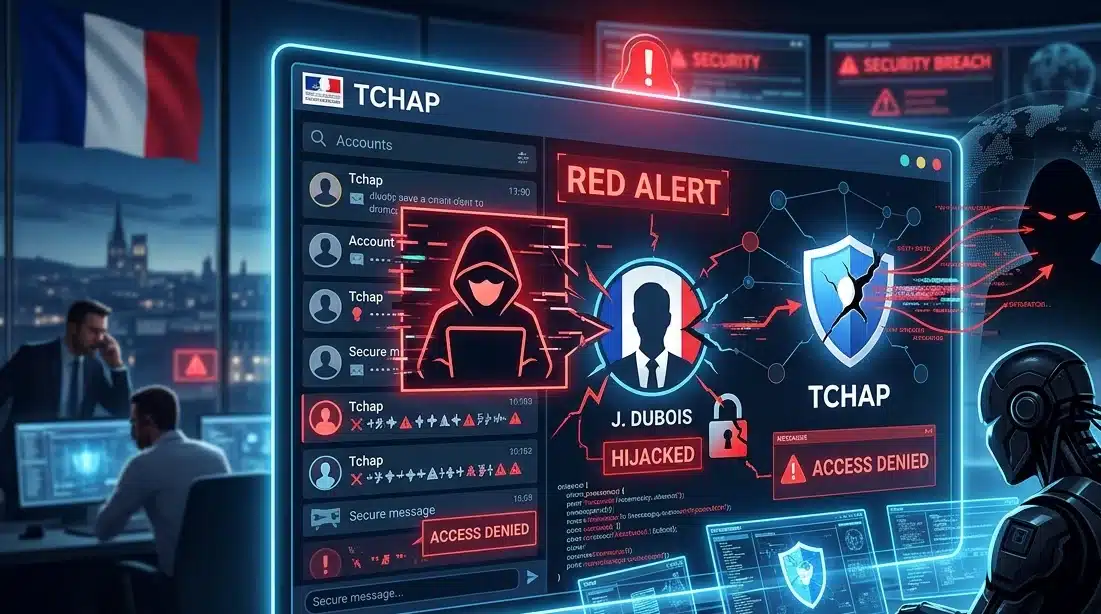
French Government’s Tchap Messaging Platform Breached via Compromised Account

Tchap Breach

French authorities are investigating a security incident involving Tchap, the encrypted messaging platform used by the French government, after attackers reportedly gained access through a compromised user account. The Tchap Breach incident, which ANSSI detected, has prompted an ongoing investigation led by DINUM, the digital affairs directorate of the French government.  According to information released on Monday, the Tchap breach was identified on Sunday when ANSSI, France’s national cybersecurity agency, detected suspicious activity on the platform. Officials said a threat actor accessed the service using a hijacked account, raising concerns about potential exposure of user conversations and shared data.  The breach comes as Tchap continues to expand across the French public sector, serving hundreds of thousands of users following a government-wide push to reduce reliance on foreign communication applications. 

Tchap’s Growing Role Within the French Government 

Tchap was launched in 2018 through a collaboration between DINUM and ANSSI. Built on the decentralized Matrix protocol, the platform was developed specifically for use within the French public sector as a secure messaging and collaboration tool.  The service has experienced significant growth in recent years. According to available figures, Tchap now records more than 300,000 monthly active users and has surpassed 500,000 downloads on Google’s Play Store.  Its adoption accelerated after French Prime Minister François Bayrou introduced a directive in early August 2025 requiring civil servants to use Tchap for professional communications while prohibiting the use of foreign messaging applications for official work-related discussions. 

DINUM Alerts CNIL Following Potential Data Exposure 

In response to the Tchap breach, DINUM informed France’s data protection authority, the CNIL, because of the possibility that personal information shared by users may have been exposed. Authorities also notified all Tchap users and reminded them about the security limitations of public chat rooms on the platform.  Officials emphasized that public channels can be discovered and joined by any Tchap user and that messages exchanged in these rooms are not encrypted.  Providing an update on the investigation, DINUM stated:  "At this stage, the account originating the malicious requests has been identified. It was immediately blocked to remove the attacker's persistent access and allow for a thorough analysis of the data they were able to access. The investigation continues, including the study of event logs, to identify the conversations that the attacker was able to access and the nature of the exfiltrated data."  The French government agency further noted:  "A message has been sent to all Tchap users reminding them that a public chat room can be found and joined by any user and that its content is not encrypted. In accordance with Tchap's terms of service, no personal, sensitive, or confidential information should be exchanged in public chat rooms: such exchanges should be reserved for private chat rooms." 

Threat Actor Claims Social Engineering Led to the Tchap Breach 

While DINUM has not released additional technical details regarding how the intrusion occurred, an individual claiming responsibility for the Tchap breach publicly shared alleged evidence over the weekend and described the attack as the result of a social engineering operation.  The threat actor stated:  "I social engineered a valid account on the education shard (matrix.agent.education.tchap.gouv.fr). Everything below is what that one account could reach; other shards will have more."  According to the claims, access to a legitimate account enabled visibility into a substantial amount of information available through the platform.  The individual also shared samples of files allegedly obtained during the intrusion and claimed to have uncovered hardcoded LDAP credentials. Those credentials were reportedly exposed through a PowerShell script shared by a regional director within a French tax authority. 

Alleged Theft of Documents, Messages, and User Information 

The threat actor further alleged that more than 13.5GB of documents and media files were taken from Tchap. These files were reportedly shared by public servants using the messaging service.  In addition to the documents, the attacker claimed to have collected nearly 650,000 messages and information associated with more than 73,000 user accounts. The purported dataset allegedly includes email addresses, organizational details, meeting links, account information, device metadata, and other user-related records.  The individual also made allegations regarding the accessibility of shared files on the platform, stating:  "Every file ever shared on Tchap, on any shard, is downloadable without a token."  They added:  "The media IDs come from the messages. Once you have a message with a media URL you can pull the file freely regardless of which shard hosts it."  These claims have not been independently verified by French authorities. 

Smashing Security podcast #470: This AI security flaw might be impossible to fix

A website called "UK visa portal" has been quietly collecting passport scans, selfies, and personal data from thousands of travellers who thought they were applying through official channels. They weren't. And when a journalist tried to warn the company, it was lawyers who responded. Meanwhile, a paper from Cornell suggests that prompt injection - the technique malicious actors use to trick AI agents into doing things they really shouldn't - may be fundamentally unsolvable. Which is err... awkward, because everyone is rushing to plug AI agents into their email, files, and corporate networks. Plus don't miss our featured interview with Andrea Sivieri of CoreView, who tells us how hackers can lock your entire organisation out of its Microsoft 365 environment... without having to trick you into running a single piece of malicious code or handing over a password. All this and more in episode 470 of the "Smashing Security" podcast with cybersecurity expert and keynote speaker Graham Cluley, and special guest Tanya Janca.

UK Cybersecurity Innovation SilentGlass Goes Global After Licensing Deal

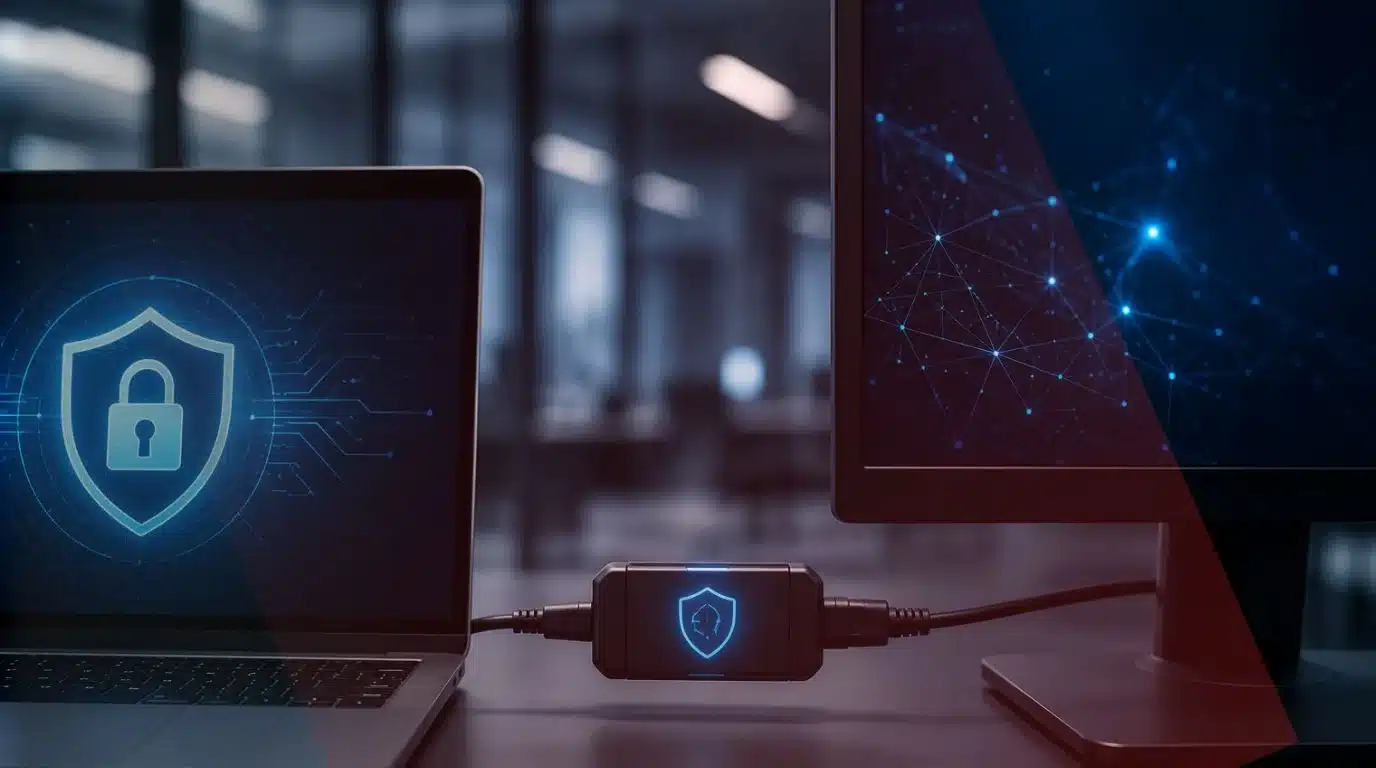
cyber security device

The UK government has officially licensed SilentGlass, a government-developed cyber security device, for global commercial use, marking a major step in expanding public sector cybersecurity innovation into international markets. Developed by the National Cyber Security Centre, a part of Government Communications Headquarters, SilentGlass was originally designed to protect sensitive government systems from cyber threats linked to smart display connections. The technology is now being commercialized with support from the Government Office for Technology Transfer through a global intellectual property licensing agreement with a UK-based company. The launch highlights growing concerns around hardware-based cyber risks in modern workplaces, especially as organizations increasingly adopt hybrid work environments, shared office spaces, and connected devices.

SilentGlass Designed to Block Video Connection Cyber Threats

According to the NCSC, the cyber security device was created to address risks associated with modern smart monitors and digital video connections. Security experts have warned that video connections between laptops and monitors can potentially be exploited by attackers to compromise connected systems. The threat becomes more serious in environments where devices with different security levels are connected to shared displays. SilentGlass works as a small plug-and-play hardware device positioned between a laptop and monitor. Its primary role is to prevent the physical video connection from being used as a pathway for cyberattacks. By blocking that attack route, the cyber security device helps organizations reduce exposure to hardware-level threats while enabling safer flexible working arrangements, including hot desking and remote work setups. The NCSC stated that the technology was initially developed for internal government operations before demonstrating broader commercial potential across multiple sectors.

UK Government Expands Cyber Security Innovation to Global Market

Following a competitive commercial process, the UK government approved a global intellectual property licensing agreement for SilentGlass with a UK-based company. The agreement allows the cyber security device to be distributed internationally, expanding access to technology that was originally built for high-security government environments. Officials said the move reflects a wider effort to commercialize public sector innovation while ensuring strong governance and protection of government-developed intellectual property. The NCSC noted that SilentGlass could support:
  • Government departments
  • Public sector organizations
  • Critical national infrastructure operators
  • Businesses with advanced cybersecurity requirements
  • Employers supporting hybrid work environments
The technology is expected to benefit sectors where device trust, network security, and hardware protection are considered critical operational requirements.

GOTT Supported Commercialization of SilentGlass

The Government Office for Technology Transfer played a key role in helping the NCSC bring the cyber security device to market. According to officials, GOTT supported the project by advising on intellectual property licensing strategies, funding commercialization initiatives, and connecting the NCSC with technology transfer and investment experts. The organization also provided mentoring support for knowledge asset management and helped guide the licensing process through market engagement and competitive partner selection. The UK government has increasingly focused on turning public sector-developed technologies into commercially viable products that can deliver broader economic and security benefits.

Growing Focus on Hardware-Level Cybersecurity

The release of SilentGlass comes as cybersecurity experts continue raising concerns about hardware-level attack vectors that are often overlooked in traditional cybersecurity strategies. Modern monitors, docking stations, USB-connected devices, and display interfaces are increasingly viewed as potential entry points for attackers targeting enterprise and government systems. As hybrid work models expand globally, organizations are under pressure to secure not only software environments but also physical device connections used in day-to-day operations. The NCSC said SilentGlass was specifically designed to address these emerging risks without requiring complex deployment or major infrastructure changes.

NCSC Highlights Future Commercialization Plans

Ollie Whitehouse, Chief Technology Officer at the NCSC, described the commercialization of SilentGlass as an example of how government-developed innovation can support both national cybersecurity and economic growth. According to Whitehouse, the partnership demonstrates how UK government departments can derive greater value from intellectual property while making advanced security technologies more widely available. The NCSC also indicated that additional government-developed cybersecurity technologies could be commercialized in the future following the success of the SilentGlass initiative.

UK Regulator Ofcom Cracks Down on Viral Deepfake Nude Content

non-consensual intimate image

Ofcom has announced tougher measures aimed at stopping the spread of non-consensual intimate images and AI-generated deepfake abuse online, as the UK regulator pushes tech companies to strengthen user safety protections. The updated guidance, released Monday, will require platforms to do more to identify, detect, and remove illegal intimate content shared without consent. The changes are part of Ofcom’s strengthened Illegal Content Codes under the UK’s Online Safety Act and are expected to come into force in autumn 2026, subject to parliamentary approval. At the centre of the updated rules is the growing concern over deepfake intimate images, including AI-generated nude content and manipulated explicit media targeting women and girls online.

Tech Platforms Asked to Deploy Hash Matching Technology

Under the proposed measures, Ofcom is recommending that certain platforms and apps expand their use of automated detection systems known as “hash matching” technology to identify and block illegal intimate images before they spread further online. Hash matching works by converting harmful images into unique digital fingerprints, or hashes, which are then stored in a database. When users attempt to upload the same or similar content again, platforms can automatically detect and block the material. Ofcom specifically referenced the use of databases such as StopNCII, one of the leading systems designed to combat the spread of non-consensual intimate imagery online. The regulator said the move is aimed at providing stronger protections for women and girls who are increasingly being targeted through AI-enabled abuse and image manipulation. According to Ofcom, the updated recommendations, combined with new UK legislation banning “nudification tools,” could significantly reduce the circulation of harmful intimate content online.

UK Government Pushes Faster Removal of Non-Consensual Intimate image

The tougher stance follows recent action by the UK government to pressure technology companies into removing abusive content more quickly. Earlier this year, UK Prime Minister Keir Starmer backed legislation introducing heavy penalties for platforms that fail to promptly remove illegal intimate images. Under the law, companies may face substantial fines if they do not take down reported content within 48 hours. Authorities have also warned that services repeatedly failing to comply could face restrictions or blocking in the UK. The government said the rules are intended to prevent victims from repeatedly reporting the same harmful images while waiting for action from online platforms. The push for stricter enforcement comes amid rising global concern over the misuse of generative AI tools to create realistic explicit deepfake content without consent.

Deepfake Concerns Grew After Viral AI Image Abuse Cases

The UK government’s increased focus on deepfake intimate images follows widespread concern over reports that millions of manipulated nude images involving women and children circulated online through AI-powered tools and chatbots earlier this year. Regulators and child safety advocates have warned that the rapid growth of generative AI platforms has made it easier to create convincing fake explicit images, raising concerns around online abuse, harassment, and exploitation. Ofcom said technology companies must take greater responsibility for detecting harmful content and preventing its distribution across their platforms.

Ofcom Investigation Into Online Platforms Continues

The latest action also comes as Ofcom continues broader investigations into online platforms under the Online Safety Act.

In April, the regulator expanded an ongoing probe into Telegram, Teen Chat, and Chat Avenue over concerns linked to child sexual abuse material (CSAM) and online grooming.

According to Ofcom, the investigation began after receiving evidence suggesting that harmful content and predatory behaviour may have been taking place across these services.

A major focus of the investigation involves Telegram’s potential exposure to CSAM. Authorities said intelligence shared by the Canadian Centre for Child Protection indicated the alleged presence and distribution of abusive material on the platform.

Following its own assessment, Ofcom launched a formal investigation into whether Telegram may have failed to meet its legal responsibilities under the Online Safety Act.

The regulator stated that platforms offering user-to-user communication services are legally required to assess risks related to illegal content and implement safeguards to prevent its spread.

High Court Backs UK Police Use of Live Facial Recognition Technology

Facial Recognition Policy

A Live Facial Recognition Policy used by the Metropolitan Police Service has been upheld by the High Court of Justice, marking a significant legal development in the use of surveillance technology in the UK. The ruling, delivered on April 21, 2026, dismissed a legal challenge that questioned whether the policy allows excessive discretion in how facial recognition is deployed. The case, brought by civil liberties campaigners, focused on whether the Live Facial Recognition Policy complies with protections under the European Convention on Human Rights, particularly rights related to privacy, expression, and assembly.

Challenge to Live Facial Recognition Policy and Legal Grounds

The judicial review was filed by Shaun Thompson and Silkie Carlo, director of Big Brother Watch. The claimants argued that the Live Facial Recognition Policy gives police officers too much freedom to decide where and how the technology is used, potentially leading to arbitrary surveillance. Their case relied on Articles 8, 10, and 11 of the ECHR, which protect the right to privacy and freedom of expression and assembly. They argued that the policy lacked sufficient clarity and safeguards, making it incompatible with legal standards that require laws to be foreseeable and constrained. However, the court clarified that the case was not about whether facial recognition technology itself is appropriate, but whether the policy governing its use meets legal requirements.

Court Finds Safeguards and Structure in Live Facial Recognition Policy

In its judgment, the court ruled that the Live Facial Recognition Policy contains clear rules and does not grant unchecked powers to police officers. Judges highlighted that the policy limits deployment to three defined scenarios: crime hotspots, protective security operations, and cases involving specific intelligence about a suspect’s presence. The court noted that each deployment must undergo a proportionality assessment, ensuring that potential impacts on privacy and civil liberties are considered. It also emphasized that decisions are subject to oversight and follow a structured chain of command. According to the ruling, these safeguards distinguish the current policy from earlier concerns raised in previous cases. The judges concluded that the Live Facial Recognition Policy meets the legal requirement of being “in accordance with the law.”

Evidence and Concerns Around Misuse Rejected

The claimants pointed to concerns about wrongful identification and potential misuse of facial recognition technology. One claimant described being mistakenly stopped after being incorrectly matched to a suspect. Despite these concerns, the court found that much of the supporting evidence did not directly address the legality of the policy. Some submissions were dismissed as opinion rather than factual or expert evidence relevant to the legal issues being considered. The court also rejected arguments that the policy enables widespread surveillance in crowded areas. It clarified that deployment decisions are based on crime data and intelligence, not simply on the number of people in a location.

Discrimination Concerns and Broader Debate

Concerns about bias in facial recognition systems were raised during the proceedings, particularly following earlier findings by the National Physical Laboratory. However, the court stated that no substantial legal challenge on discrimination grounds had been properly presented. As a result, it did not find evidence that the Live Facial Recognition Policy is unlawful on those grounds. Separately, the UK government has signaled plans to expand the use of facial recognition technology. The Home Office has proposed increasing its deployment and is consulting on a stronger legal framework to support wider use.

Operational Impact and Future of Facial Recognition

The Metropolitan Police has defended the use of facial recognition, stating that the technology has supported thousands of arrests angd helped identify suspects in serious crimes, including violent and sexual offenses. Officials also highlighted improvements in accuracy and safeguards, including the immediate deletion of non-matching data and human review of alerts. Commissioner Mark Rowley described the ruling as a major step forward for public safety, emphasizing that the technology is carefully controlled and effective. With the court confirming that the Live Facial Recognition Policy meets legal standards, the decision is likely to influence how surveillance tools are used and regulated in the UK. It also sets a precedent for future legal challenges as governments and law enforcement agencies continue to expand the use of biometric technologies.

Things Were Even Worse at CISA Than We Thought

Just last week I wrote that CISA was on life support. That was before we knew how bad it really was. When Jen Easterly stepped down and the agency was left without a Senate-confirmed director, it was already troubling. The Cybersecurity and Infrastructure Security Agency — the nerve center for defending federal networks and coordinating..

The post Things Were Even Worse at CISA Than We Thought appeared first on Security Boulevard.

❌