Visualização de leitura

US Puts $10 Million Bounty on Alleged Iranian Cyber Chief

$10 Million Reward for Amir Yaryab

The U.S. State Department has posted a $10 million reward for Amir Yaryab, a senior Iranian official accused of leading the Islamic Revolutionary Guard Corps Cyber-Electronic Command (IRGC-CEC) Cyber Operations Command and directing multiple hacking groups targeting critical infrastructure across the United States, Europe and the Middle East. According to the Rewards for Justice program, Yaryab allegedly oversees cyber operations conducted by IRGC-CEC-affiliated groups including CyberAv3ngers, Dadeh Afzar Arman (DAA) and Mehrsam Andisheh Saz Nik (MASN). U.S. officials accuse these groups of using malware and conducting cyber and cyber-enabled information operations against civilian infrastructure worldwide.

$10 Million Reward for Amir Yaryab

The $10 million reward for Amir Yaryab seeks information leading to his identification or location. The offer applies to individuals acting at the direction or under the control of a foreign government who participate in malicious cyber activities against U.S. critical infrastructure in violation of the Computer Fraud and Abuse Act. [caption id="attachment_113961" align="aligncenter" width="600"]$10 million reward for Amir Yaryab Image Source: https://rewardsforjustice.net/[/caption] Yaryab is also accused of directing Shahid Hemmat and Shahid Shushtari, two groups linked to cyberattacks against U.S. organizations. The sectors allegedly targeted include defense, news, shipping, travel, energy, financial services and telecommunications. The six Iranian officials named in the advisory are linked to Iran's Islamic Revolutionary Guard Corps and its Cyber-Electronic Command.

Iranian Cyberattacks Target PLCs

The allegations also involve attacks against programmable logic controllers (PLCs), highlighting concerns around Iranian cyberattacks targeting industrial systems rather than focusing only on data theft. U.S. officials said Iranian-linked hackers compromised industrial control systems, specifically targeting the Vision series of PLCs manufactured by Israel-based Unitronics. These devices are used across water and wastewater, energy, food and beverage, manufacturing and healthcare sectors. The attackers exploited default credentials on the devices and left anti-Israel messages. Some of the compromises reportedly rendered the PLCs inoperative. The CyberAv3ngers group, which is linked to the IRGC-CEC, claimed responsibility for attacks against Unitronics Vision PLCs in October 2023. Beginning in November 2023, the group compromised default credentials in PLCs across the United States and left messages on the devices' digital screens.

CyberAv3ngers Attacks Critical Infrastructure

CyberAv3ngers has also claimed responsibility for attacks affecting other infrastructure. In October 2023, the group claimed it had breached ORPAK Systems, a provider of gas station solutions in Israel. The group said it had obtained the company's database and intended to publish it through its Telegram channel. The attack was reported to have disconnected 200 gasoline pumps from the system in the occupied Palestinian territories. In December 2023, CyberAv3ngers also claimed to possess and sell 1TB of data allegedly linked to Israel's electricity infrastructure. The group advertised the dataset for 5 Bitcoin, with an initial 100GB portion also offered at the same price.

U.S. Agencies Warn of PLC Cyberattacks

Concerns over critical infrastructure attacks involving PLCs continued into 2026. A joint advisory issued on April 7 by the FBI, CISA, NSA and other agencies warned that Iran-linked threat actors were actively exploiting internet-facing PLCs. The advisory said several organizations had experienced operational disruptions and financial losses after attackers interfered with industrial processes. The developments come amid broader U.S. actions against Iranian-linked cyber activity. The Justice Department accused Iran-connected hackers of breaching employee email accounts associated with the Department of Labor, the Federal Energy Regulatory Commission and multiple United Nations organizations. The Treasury Department also sanctioned Iranian nationals over cyberattacks targeting critical infrastructure. The State Department's reward offer places Amir Yaryab and the alleged activities of IRGC-CEC-linked groups at the center of the U.S. effort to identify individuals responsible for malicious cyber activity targeting critical infrastructure.

CISA, FBI Urge Clearer Communication During Major Outages

outage communications

The CISA and FBI, along with cybersecurity agencies from Australia, Canada, New Zealand and the U.K., have released new guidance on outage communications for service providers dealing with major IT and OT outages. The guide calls for prompt, factual and audience-specific communication during disruptions caused by malicious cyber activity or non-malicious events.

Titled “Communicating Under Pressure: Best Practices for Service Providers,” the guidance says effective communication is critical to limiting operational impact when IT and OT outages affect customers, network defenders, critical infrastructure owners and operators, and the public. It recommends that organizations clearly communicate what is known, what remains unknown and what is still under investigation, while providing frequent updates as circumstances change.

Outage Communications Should Start With Facts

The agencies recommend that service providers establish an outage communications plan before an incident occurs. The plan should define incident thresholds, escalation paths, target audiences and procedures for status pages, customer and partner notices, and regulatory communications. Organizations are also advised to establish cross-functional incident teams involving engineering and operations, communications, legal, risk and compliance, and customer support.

The guidance calls for clearly defined roles, including an incident lead, communications lead and spokesperson. It also recommends parallel workstreams so technical teams can focus on diagnosing and remediating the root cause while communications teams manage external messaging and leadership handles strategy and regulatory requirements.

For organizations responding to cyber incidents, the guidance places particular emphasis on balancing transparency with operational security. If malicious activity is suspected or confirmed, external communications should not compromise investigations, containment efforts or other response activities. Organizations are also advised against making premature conclusions when the root cause remains under investigation.

Service Providers Urged to Tailor Messages

The guidance recommends segmenting communications for technical teams, executives and the public. Audiences can include enterprise IT teams and security operations centers, employees and customers, government partners and regulators, critical infrastructure owners and operators, as well as the media and general public.

During an outage, organizations should lead with a concise summary covering affected systems, user impact, scope and the known cause without speculation. The agencies also advise against vague descriptions such as “service degradation” and recommend messaging that can be understood quickly during high-pressure situations.

Transparency is another central principle. Service providers are advised to state what they know and do not know, use a single source of truth such as a status page, and focus communications on actionable guidance rather than reputation management. Customers should be told what actions they need to take or clearly informed when no action is required.

The guidance also calls for continuous, time-stamped updates that show the incident timeline, actions taken, and recovery milestones. Organizations should maintain a single status page and align external messaging with legal, contractual and sector-specific reporting obligations.

Agencies ultimately frame effective outage communications around five principles: immediate acknowledgement, technical and actionable information, transparency, accountability, and continuous updates. For service providers, the guidance positions communication as an important part of incident response, alongside technical remediation and recovery.

CISA Red Team Fully Compromised Two Critical Infrastructure Orgs

CISA red teams fully compromised two critical infrastructure orgs. One SOC isolated hosts in minutes; the other never detected the breach.

CISA published an advisory (AA26-237A) documenting two simultaneous red team assessments at critical infrastructure organizations. Both organizations lost full domain control and had their cloud environments compromised. One of them didn’t know until CISA told them afterward.

“The Cybersecurity and Infrastructure Security Agency (CISA) conducted simultaneous red team assessments at two organizations and observed different defensive outcomes. In both environments, the red team achieved full domain compromise and accessed sensitive business systems (SBSs) and cloud resources.” states CISA. “Organization A failed to detect or contain the activity, but Organization B rapidly identified initial compromise attempts, isolated affected systems, and forced the red team into an assume breach model.”

Organization A is a Government Services and Facilities Sector entity. Organization B operates in the Water and Wastewater Systems Sector. The red team used comparable techniques against both. The difference in outcome was entirely about detection and response, not the sophistication of the attack.

At Organization A, the red team found a web application that still used default credentials. They used it to send phishing emails from a trusted internal address and gained access to four workstations. From there, they exploited a misconfigured Active Directory Certificate Services template with the ESC1 flaw. This allowed a low-privileged user to request certificates for other users, including administrators. They then reached all the targeted sensitive business systems without anyone noticing. After moving into the cloud, they even read SOC staff emails to see if the attack had been detected. It hadn’t.

“Without well-defined baselines and alert filtering, false positives and routine alerts overwhelm defenders, obscuring real threats.” CISA continues. “Organizations that tune alerts to highlight anomalies and filter out normal business activity enable defenders to focus on genuine incidents and respond rapidly.”

Organization A’s SOC was receiving thousands of false positive alerts, many at higher severity than the actual intrusion alerts the red team was generating. Staff eventually reviewed SCCM-related alerts from real red team activity, couldn’t identify the system’s owner or function, and marked it a false positive.

The red team confirmed the miss by reading SOC email. Then they used keyloggers and screenshot capture on SOC workstations to make sure nothing was coming. Nothing was. The organization had multiple separate SOCs with different EDR solutions and no cross-team visibility, which meant that even if one team noticed something, there was no mechanism to act on it across the relevant systems.

“Detection tools are only as effective as the people, processes, and procedures supporting them. SOC staff should not operate in silos and should have clear authority unhindered by bureaucracy to effectively contain and resolve incidents.” add CISA.

At Organization A, SOC analysts were managing systems they didn’t fully understand and had no written escalation procedures, so their default response to ambiguity was to wait. At Organization B, staff triaged, investigated, coordinated with engineering, and reimaged machines before handing them back to users.

At Organization B, the red team still found important security gaps. They discovered a password stored in plain text inside an XML file on an SCCM distribution point. They used the related service account to gain powerful rights over a domain controller and then performed a DCSync attack, obtaining the krbtgt hash. This allowed them to create Golden Tickets and impersonate users across the domain.

They also found a path into the OT network through RDP files pointing to a bastion host. Using FTP credentials found on a jump server, they connected to the bastion through SSH. The bastion had no outbound internet access, so their payload could not run, and the SOC quarantined the host. Still, the access path was there.

Both organizations also had the same cloud security problem: neither had enabled Conditional Access for workload identities. This Microsoft feature applies access controls to applications and service accounts, not just human users. Without it, applications with broad Microsoft Graph permissions can bypass normal Conditional Access rules. CISA’s red team used this gap in both organizations to access emails across the companies.

In Organization A, the team also found AWS IAM credentials stored in users’ home directories with no expiration date. Those credentials could remain valid indefinitely, creating another long-term risk.

In Organization B’s cloud environment, the red team abused Seamless SSO by using Kerberos tickets obtained via DCSync to authenticate to Azure without needing any user’s cleartext password. They found a disabled AD-synced account that owned an application with permission to read, write, and send emails for every user in the tenant. They re-enabled the account, DCSynced its credentials, added a client secret to the application, and could then access the full mailbox of every employee from the public internet. Organization B’s detections flagged the AzureHound tool by user agent and caught anomalous Microsoft Graph API request volumes, but those controls arrived after the initial cloud access was already established.

CISA recommends several practical steps to improve security. These include hardening ADCS by disabling CT_FLAG_ENROLLEE_SUPPLIES_SUBJECT on templates and limiting who can enroll, setting the Machine Account Quota to zero when there is no operational need, and removing cleartext credentials from workstations and network shares.

Organizations should also enable Conditional Access for workload identities, create procedures to revoke tokens, and treat SCCM and similar endpoint management platforms as Tier 0 assets, giving them the same level of protection as domain controllers.

The full advisory also maps each red team technique to its MITRE ATT&CK identifier and compares how well the two organizations detected the different stages of the attacks.

Follow me on Twitter: @securityaffairs and Facebook and Mastodon

Pierluigi Paganini

(SecurityAffairs – hacking, CISA)

NSA, CISA, FBI, DOE, and EPA Warn of Active AI-Assisted Attacks on Siemens S7 PLCs

NSA, CISA, FBI, DOE, and EPA warn of active AI-assisted attacks against Siemens S7 PLCs across US critical infrastructure sectors.

Five U.S. federal agencies issued a joint advisory this week warning of an active hacking campaign against Siemens S7 Series programmable logic controllers. The advisory, CISA AA26-231A, is co-signed by NSA, FBI, DOE, and EPA and covers every S7 generation, from the S7-200 to the S7-1500 F-series safety controllers.

The advisory is direct about one thing from the first paragraph: this is not a theoretical risk.

“The threat actors are conducting reconnaissance and capability development against U.S.-based Siemens PLC installations using AI-generated exploitation scripts disguised as legitimate monitoring tools. The actors leverage Internet scanning services to find Internet-exposed PLCs running outdated software or that are otherwise poorly protected.” reads the advisory. “The U.S. critical infrastructure sectors most targeted by this threat activity include Critical ManufacturingEnergyWater and WastewaterChemicalFood and Agriculture, and Commercial Facilities. This is not a theoretical risk—it is an active threat. “

The key detail is how the attackers try to hide their activity. They make their scripts look like legitimate OT monitoring software, making it harder for security teams to notice them while they map the target environment.

The tools themselves are not custom malware. The attackers use the open-source snap7.dll and python-snap7 libraries, which are legitimate industrial automation tools. These libraries can communicate directly with Siemens PLCs over S7comm on TCP port 102, allowing access to PLC memory, configuration data and ladder logic programs.

“Using AI to generate exploitation scripts represents an evolution in threat actor capabilities, dramatically reducing the technical expertise and time required to develop working ICS exploitation scripts and malicious tools. In addition, AI enables adversaries to rapidly leverage additional attack vectors and adapt to defensive measures.” continues the advisory. “Threat actors can easily collect public information about vulnerabilities and weaknesses, find exposed and exploitable PLCs, and use AI-generated scripts to act on that information. If PLCs are exposed to the Internet, they are at high risk for exploitation.”

Researchers warn that a defender who patches a vulnerability may now find the attacker’s tooling already adapted before the change window closes.

The observed activity breaks into two phases. Actors use scanning services like Censys and ZoomEye to locate Internet-exposed PLCs, then run read operations to understand the target environment before any writes happen. The authoring agencies assess this as pre-positioning: the actors are building a map and testing their techniques against specific CPU models, refining as they go, before they’re ready to cause disruption.

The target list covers Critical Manufacturing, Energy, Water and Wastewater, Chemical, Food and Agriculture, and Commercial Facilities. The Defense Industrial Base is also named, given its use of S7-series hardware. If these actors move from read to write, the potential consequences include process disruption, equipment damage, and safety incidents through manipulation of interlocks or emergency shutdown systems, and cascading effects across interconnected supply chains.

The advisory flags third-party exposure as a specific problem. Asset owners who rely on system integrators or managed service providers for remote PLC access may not know their controllers are reachable from the Internet. If an external support partner holds credentials for your S7 devices and you haven’t recently verified that those connections are segmented and monitored, this advisory is a good prompt to check.

There are several clear signs defenders can monitor. They should look for S7comm connections from devices that are not normally used for engineering, PLC read or write activity outside scheduled maintenance, and scans of multiple IP addresses on TCP port 102. It is also worth checking for Python processes loading snap7.dll on systems where it should not be present. Connections from unexpected countries or locations should also raise an alert.

On the mitigation side, the agencies prioritize inventory first, then patching with Internet-facing controllers at the top of the queue. Block TCP port 102 at the perimeter firewall, require password protection on all controllers, configure protection levels to limit what an unauthenticated or low-privilege session can read or write, and deploy ICS-aware monitoring capable of baselining legitimate S7comm behavior. Disabling the PLC web server where it’s not needed and limiting simultaneous S7comm sessions also appear in the guidance, alongside TIA Portal’s know-how protection and complete restart protection features.

The advisory closes by recommending direct engagement with Siemens ProductCERT for model-specific hardening and patch compatibility verification, which matters in OT environments where a firmware update can interact badly with third-party integrations and can’t simply be rolled back.

Follow me on Twitter: @securityaffairs and Facebook and Mastodon

Pierluigi Paganini

(SecurityAffairs – hacking, CISA)

US, South Korea Warn of Growing Gunra Ransomware Threat

U.S. and South Korean authorities warn about the growing Gunra ransomware threat as the operation expands its capabilities and affiliate network.

The post US, South Korea Warn of Growing Gunra Ransomware Threat appeared first on TechRepublic.

Iran-Linked Hackers Target More US Water Infrastructure in New Jersey and Alabama

Iran-linked hackers targeted Water Infrastructure in New Jersey and Alabama, bringing confirmed attacks to at least 12 states, with limited disruption.

The wave of cyberattacks targeting US water infrastructure has reached New Jersey and Alabama, bringing the confirmed count to at least 12 states since late July. The attacks are linked to Iranian hackers targeting industrial control systems made by Rockwell Automation and potentially other major vendors. Minnesota was the first to confirm over 30 affected water systems, followed by Michigan, South Dakota, and Georgia, and now two more states.

“The City of Cape May Sewer Department and the Borough of Woodbine Water Department reported the attacks on Thursday. Officials said the attacks happened nearly simultaneously early in the morning on July 27.” reports Fox29 “Both systems were impacted for approximately 12 hours.”

Water kept running in both New Jersey districts throughout the incident, and tests afterward confirmed no impact on water quality or safety. Cape May city manager Paul Dietrich told Fox29 that hackers changed settings to prevent remote access to the system, but did not take control of the systems to do anything — which is a meaningful distinction, and not the kind anyone wants to be making about their water supply.

“Cybersecurity experts say hackers could control a lot after breaking into a local water system. ‘They’re actually having the ability to control the water pressure, meaning that they could increase the pressure and cause flooding, or they could decrease the pressure so that you would have a reduced pressure, or ultimately, have no water flow at all,’ said Ian Marlow, CEO of FITECH.” continues Fox29.

In Alabama, the Childersburg Water, Sewer and Gas system was hit the same day, July 27, with hackers targeting industrial control systems. The attack didn’t disrupt water services there either. Neither department’s customer data was accessed in New Jersey, and no significant service disruption was reported in Alabama.

“The Childersburg Water, Sewer, and Gas Board reported that its computerized monitoring and control network was targeted in a cyberattack late last month, prompting officials to temporarily disconnect the system while additional safeguards are put in place.” reports Sylacauga News. “According to the utility, the incident occurred on Monday, July 27 and involved a programmable logic controller, a type of industrial device used to help manage utility operations. Officials said the attack was part of a broader effort that also targeted several other public utilities.”

The pattern across all confirmed states is consistent: attacks targeted operational technology and industrial control systems, some facilities shut down systems as a precaution, disruptions were limited, and drinking water remained safe in every case. The FBI confirmed at least seven states had been targeted as of July 30. Wisconsin, Pennsylvania, and Washington have issued warnings to water utilities without confirming attacks. New York has not said whether its utilities were hit but announced more than $9 million in grants to strengthen water sector cybersecurity.

The practical lesson from every confirmed case so far is the same one CISA has been repeating since its July 30 alert: get PLCs and industrial control systems off direct internet exposure, because the attackers are scanning for exactly that exposure and finding it.

Follow me on Twitter: @securityaffairs and Facebook and Mastodon

Pierluigi Paganini

(SecurityAffairs – hacking, Water Infrastructure)

Researcher: Flaw In Fleet Management Service Exposes 250k Commercial Vehicles To Attack

A quarter million commercial vehicles in India and sensitive data on tens of thousands of drivers were vulnerable to attacks because of flaws in widely used fleet management software maintained by a VE Commercial Vehicles, a joint venture between the Volvo Group and Eicher Motors, a security researcher has revealed.

The post Researcher: Flaw In Fleet Management Service Exposes 250k Commercial Vehicles To Attack appeared first on The Security Ledger with Paul F. Roberts.

Hugging Face Deepfake Tests Raise New Risks for AI Procurement

Researchers found that seven of nine tested Hugging Face image-editing tools produced sexualized alterations, highlighting gaps in model oversight, provenance, and enterprise vendor controls.

The post Hugging Face Deepfake Tests Raise New Risks for AI Procurement appeared first on TechRepublic.

Two Joyfill npm Packages Found Delivering DEV#POPPER Malware

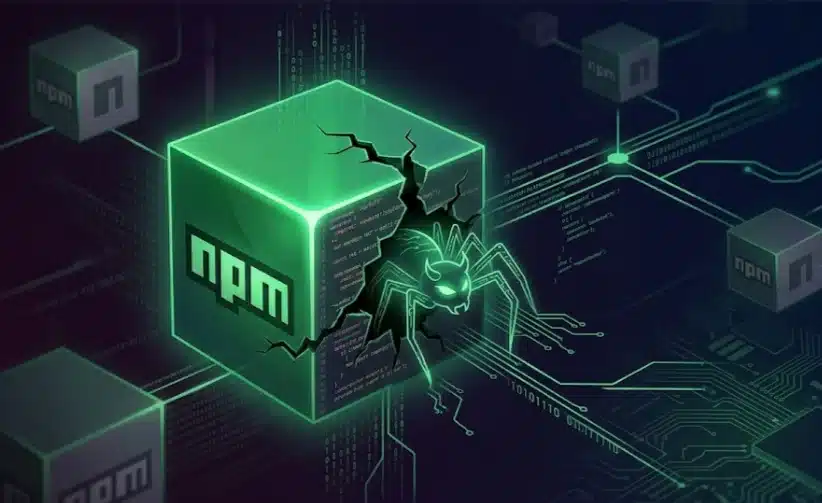
joyfill npm Packages

Two beta releases of joyfill npm Packages have been found distributing a malware implant capable of delivering the DEV#POPPER remote access trojan (RAT) . The compromised Node.js packages use an import-time loader that retrieves encrypted payloads through blockchain transactions instead of traditional command-and-control infrastructure.  The affected releases are @joyfill/layouts@0.1.2-2773.beta.0 and @joyfill/components@4.0.0-rc24-2773-beta.4. Joyfill develops software development kits for embedding forms, documents, and PDFs into web and mobile applications. While both packages collectively receive around 16,000 weekly npm downloads, researchers noted that the figure overlaps because @joyfill/components depends on @joyfill/layouts, and it does not represent installations of the compromised beta versions. 

Joyfill npm Packages Deliver DEV#POPPER RAT Malware

Unlike conventional npm attacks that rely on lifecycle scripts, the malicious code executes when the Node.js module is imported. This means the implant activates during package loading, making npm install --ignore-scripts ineffective once the affected module is used.  Socket's analysis identified code patterns matching the PolinRider loader family and linked the final payload to the DEV#POPPER malware family. Researchers emphasized that these findings are based on technical similarities and published research rather than attributing the compromise to a specific threat actor.  According to the report, the compromised joyfill npm Packages are capable of arbitrary code execution across development environments, CI runners, test systems, server-side rendering environments, and production builds. The recovered 77 KB Node.js RAT can collect host information, establish a Socket.IO remote-control channel, execute JavaScript or shell commands, upload files, access clipboard data, and modify developer-related files to maintain persistence. 

Blockchain Infrastructure Powers Multi-Stage Malware 

Investigators found that both malicious releases were published on 28 July 2026 using Node.js 18.20.0 and npm 10.5.0, with the shared prerelease build marker 2773. Source maps indicate the malicious code was present during the build process, although the report states this does not determine whether attackers compromised a developer workstation, source repository, CI pipeline or publishing credentials.  The malware uses a multi-stage delivery process, retrieving encrypted payloads through Tron, Aptos and BNB Smart Chain transactions. Researchers warned that this blockchain-based approach enables attackers to update payloads without publishing new npm releases.  Additional payloads downloaded by the malware included a detached Node.js bootstrap and a Python credential stealer believed, with medium confidence, to be a variant of OmniStealer. 

Recommendations for Developers and Security Teams 

The report also noted significant similarities to an incident analysed by eSentire earlier in 2026, in which DEV#POPPER was deployed via a weaponised GitHub repository. However, researchers believe the current campaign most likely resulted from a maintainer compromise rather than a malicious project clone.  Security teams are advised to remove both affected joyfill npm Packages, replace them with verified versions @joyfill/layouts@0.1.1 and @joyfill/components@4.0.0-rc24, isolate any systems that imported the malicious releases, and rotate credentials from unaffected machines. The researchers also recommend monitoring Node.js environments for unusual blockchain RPC traffic and reviewing systems for persistence mechanisms that may remain even after the packages are removed. 

Talos: Attackers Refine Phishing Playbook To Target Critical Infrastructure

Phishing played a part in more than half of all incident response engagements undertaken by Talos, Cisco's threat research organization, during the second quarter of 2026, with healthcare organizations and manufacturing firms among the top targets.

The post Talos: Attackers Refine Phishing Playbook To Target Critical Infrastructure appeared first on The Security Ledger with Paul F. Roberts.

Edge Devices Are Your Cyber Underbelly. Here’s Why.

In this episode of the podcast, host Paul Roberts interviews Nishawn Smagh of the firm GreyNoise Intelligence about the findings of their State of the Edge report, an analysis of GreyNoise data on risks stemming from compromised edge devices such as broadband routers, VPN gateways, smart home devices and more. Shawn and Paul talk about how attackers are turning edge devices into their favorite entry point, and strategies for organizations to counter the growing risk of compromised edge devices.

The post Edge Devices Are Your Cyber Underbelly. Here’s Why. appeared first on The Security Ledger with Paul F. Roberts.

💾

Residential Proxy Risks: Understanding Google’s Latest Action Against 2 Million Strong NetNut

Google announced that it helped take down NetNut, a 2 million strong malicious residential proxy network. The incident highlights the growing risks posed by residential proxy networks that quietly conscript consumer devices into services used by cybercriminals and nation-state actors alike.

The post Residential Proxy Risks: Understanding Google’s Latest Action Against 2 Million Strong NetNut appeared first on The Security Ledger with Paul F. Roberts.

Denmark Ordered to Pay $12M Over Huawei Equipment Removal

A Danish court ordered the state to compensate TDC NET after the removal of Huawei fiber-network equipment, raising questions about telecom security costs.

The post Denmark Ordered to Pay $12M Over Huawei Equipment Removal appeared first on TechRepublic.

❌